

Recent advances in the molecular mechanisms determining tissue sensitivity to glucocorticoids: novel mutations, circadian rhythm and ligand-induced repression of the human glucocorticoid receptor
Open accessThe DOI matches its Crossref record; 69 of the 69 references it cites were found in a registry or an index.
Abstract
Glucocorticoids are pleiotropic hormones, which are involved in almost every cellular, molecular and physiologic network of the organism, and regulate a broad spectrum of physiologic functions essential for life. The cellular response to glucocorticoids displays profound variability both in magnitude and in specificity of action. Tissue sensitivity to glucocorticoids differs among individuals, within tissues of the same individual and within the same cell. The actions of glucocorticoids are mediated by the glucocorticoid receptor, a ubiquitously expressed intracellular, ligand-dependent transcription factor. Multiple mechanisms, such as pre-receptor ligand metabolism, receptor isoform expression, and receptor-, tissue-, and cell type-specific factors, exist to generate diversity as well as specificity in the response to glucocorticoids. Alterations in the molecular mechanisms of glucocorticoid receptor action impair glucocorticoid signal transduction and alter tissue sensitivity to glucocorticoids. This review summarizes the recent advances in our understanding of the molecular mechanisms determining tissue sensitivity to glucocorticoids with particular emphasis on novel mutations and new information on the circadian rhythm and ligand-induced repression of the glucocorticoid receptor.
Overview
The claims and statistics of this paper haven’t been checked yet.
Free: it reads the open-access text and checks the first 5 claims that cite a source we can check. Create a free account to check every claim.
Integrity signals
Registry
Cites
Statistics
Figures
Verification
Claims the paper makes
The claims and statistics of this paper haven’t been checked yet.
Free: it reads the open-access text and checks the first 5 claims that cite a source we can check. Create a free account to check every claim.
Self-check
Percentages, sums and reported differences re-computed from the paper’s own numbers.
The self-check needs the paper’s full text.
Citations
Cites
Epigenetic programming by maternal behavior
Weaver, I. C. G., Cervoni, N., Champagne, F. A., D'Alessio, A. C., Sharma, S., Seckl, J. R., Dymov, S., Szyf, M., & Meaney, M. J. (2004) · Nature Neuroscience · doi:10.1038/nn1276 · Cited by 6,177
Antiinflammatory Action of Glucocorticoids — New Mechanisms for Old Drugs
Rhen, T., & Cidlowski, J. A. (2005) · New England Journal of Medicine · doi:10.1056/nejmra050541 · Cited by 3,149 · cited 4×
“However, a number of patients are often resistant to treatment with glucocorticoids [1-4].”
BackgroundInfluentialThe genetics of mammalian circadian order and disorder: implications for physiology and disease
Takahashi, J. S., Hong, H.-K., Ko, C. H., & McDearmon, E. L. (2008) · Nature Reviews Genetics · doi:10.1038/nrg2430 · Cited by 1,611
Cole, T. J., Blendy, J. A., Monaghan, A. P., Krieglstein, K., Schmid, W., Aguzzi, A., Fantuzzi, G., Hummler, E., Unsicker, K., & Schütz, G. (1995) · Genes & Development · doi:10.1101/gad.9.13.1608 · Cited by 946 · cited 1×
“Consistent with the pleiotropic effects of glucocorticoids, the hGR is ubiquitously expressed in all human tissues and cells, and is necessary for life after birth [6].”
BackgroundSchibler, U., & Sassone-Corsi, P. (2002) · Cell · doi:10.1016/s0092-8674(02)01225-4 · Cited by 755 · cited 7×
“On the other hand, the circadian secretion of cortisol is generated by an evolutionary conserved molecular ‘clock’, the circadian clock system, which consists of central and peripheral components [54,55].”
BackgroundInfluentialCryptochromes mediate rhythmic repression of the glucocorticoid receptor
Lamia, K. A., Papp, S. J., Yu, R. T., Barish, G. D., Uhlenhaut, N. H., Jonker, J. W., Downes, M., & Evans, R. M. (2011) · Nature · doi:10.1038/nature10700 · Cited by 590 · cited 2×
“administration of synthetic glucocorticoids [60].”
BackgroundSurjit, M., Ganti, K. P., Mukherji, A., Ye, T., Hua, G., Metzger, D., Li, M., & Chambon, P. (2011) · Cell · doi:10.1016/j.cell.2011.03.027 · Cited by 551 · cited 6×
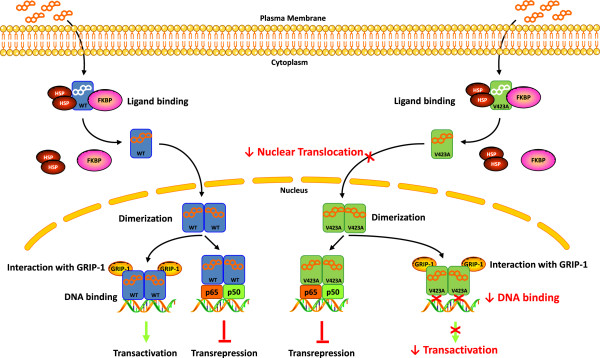
“Upon ligand-induced activation, the receptor undergoes conformational changes that result in dissociation from this multiprotein complex and translocation into the nucleus, where it binds to glucocorticoid-response elements (GREs) in the promoter region of target genes [2,11,12].”
BackgroundInfluentialInteractions of the circadian CLOCK system and the HPA-axis
Nader, N., Chrousos, G. P., & Kino, T. (2010) · Trends in Endocrinology & Metabolism · doi:10.1016/j.tem.2009.12.011 · Cited by 449 · cited 6×
“Disrupted coupling of cortisol secretion and target tissue sensitivity to glucocorticoids may account for i) the development of central obesity and the metabolic syndrome in chronically stressed individuals, whose HPA axis circadian rhythm is characterized by blunting of the evening decreases of circulating glucocorti…”
BackgroundSelf-citationThe human glucocorticoid receptor: molecular basis of biologic function
Nicolaides, N. C., Galata, Z., Kino, T., Chrousos, G. P., & Charmandari, E. (2010) · Steroids · doi:10.1016/j.steroids.2009.09.002 · Cited by 436 · cited 13×
“Upon ligand-induced activation, the receptor undergoes conformational changes that result in dissociation from this multiprotein complex and translocation into the nucleus, where it binds to glucocorticoid-response elements (GREs) in the promoter region of target genes [2,11,12].”
BackgroundSelf-citationRapid non-genomic effects of corticosteroids and their role in the central stress response
Groeneweg, F. L., Karst, H., de Kloet, E. R., & Joëls, M. (2011) · Journal of Endocrinology · doi:10.1530/joe-10-0472 · Cited by 414 · cited 1×
“The non-genomic rapid glucocorticoid actions appear to be mediated by membrane bound GRs, which trigger the activation of kinase signaling pathways, thus influencing many CNS and other tissue functions [14].”
Background
Cited by
Gene–Stress–Epigenetic regulation of FKBP5: clinical and translational implications
Zannas, A. S., Wiechmann, T., Gassen, N. C., & Binder, E. B. (2016) · Neuropsychopharmacology · doi:10.1038/npp.2015.235 · Cited by 622
“Both are intracellular receptors, which after nuclear translocation can activate or repress a large number of glucocorticoid-responsive genes (Nicolaides et al, 2014).”
BackgroundHormonal Treatments for Major Depressive Disorder: State of the Art
Dwyer, J. B., Aftab, A., Radhakrishnan, R., Widge, A., Rodriguez, C. I., Carpenter, L. L., Nemeroff, C. B., McDonald, W. M., Kalin, N. H., & APA Council of Research Task Force on Novel Biomarkers and Treatments (2020) · American Journal of Psychiatry · doi:10.1176/appi.ajp.2020.19080848 · Cited by 252
Etiology and pathogenesis of oral lichen planus: an overview
Kurago, Z. B. (2016) · Oral Surgery, Oral Medicine, Oral Pathology and Oral Radiology · doi:10.1016/j.oooo.2016.03.011 · Cited by 239
Mitochondrial Glucocorticoid Receptors and Their Actions
Kokkinopoulou, I., & Moutsatsou, P. (2021) · International Journal of Molecular Sciences · doi:10.3390/ijms22116054 · Cited by 143
“Mutations and polymorphisms in the hGR gene have been associated with-generalized or tissue specific- increased (hypersensitivity) or decreased (resistance) glucocorticoid sensitivity [35].”
BackgroundGlucocorticoid Signaling and Epigenetic Alterations in Stress-Related Disorders
Mourtzi, N., Sertedaki, A., & Charmandari, E. (2021) · International Journal of Molecular Sciences · doi:10.3390/ijms22115964 · Cited by 86
“Regarding the genomic-dependent pathway, GRs can regulate the expression of a wide variety of genes either through direct binding in glucocorticoid response elements (GREs) of GC-responsive genes [10] or through”
BackgroundSelf-citationHormones and the Evolution of Complex Traits: Insights from Artificial Selection on Behavior
Garland, T., Zhao, M., & Saltzman, W. (2016) · Integrative and Comparative Biology · doi:10.1093/icb/icw040 · Cited by 89
Facchinello, N., Skobo, T., Meneghetti, G., Colletti, E., Dinarello, A., Tiso, N., Costa, R., Gioacchini, G., Carnevali, O., Argenton, F., et al. (2017) · Scientific Reports · doi:10.1038/s41598-017-04535-6 · Cited by 82
“Th is resulted in a frame-shi ft which led to a premature stop codon, thus blocking translation upstream of DBD, LBD and AF2 domains of the corresponding protein.”
InfluentialChrousos syndrome: from molecular pathogenesis to therapeutic management
Nicolaides, N. C., & Charmandari, E. (2015) · European Journal of Clinical Investigation · doi:10.1111/eci.12426 · Cited by 67
Self-citationDai, T.-T., Wang, B., Xiao, Z.-Y., You, Y., & Tian, S.-W. (2018) · Neuroscience · doi:10.1016/j.neuroscience.2018.08.018 · Cited by 61
Glucocorticoid Receptor Signaling in Diabetes
Kokkinopoulou, I., Diakoumi, A., & Moutsatsou, P. (2021) · International Journal of Molecular Sciences · doi:10.3390/ijms222011173 · Cited by 70
“GCs regulate a variety of physiologic processes in central nervous system (crucial in stress response) and peripheral tissues while their availability is regulated at a tissue or cellular level [22,23].”
BackgroundInfluentialPrimary Generalized Glucocorticoid Resistance and Hypersensitivity Syndromes: A 2021 Update
Nicolaides, N. C., & Charmandari, E. (2021) · International Journal of Molecular Sciences · doi:10.3390/ijms221910839 · Cited by 58
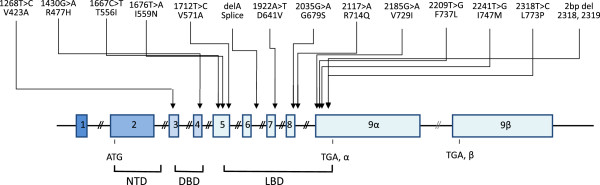
“Reference cDNA Amino Acid Molecular Mechanisms Genotype Phenotype Donner et al. 2012 [73] 2317_2318delCT Leu773Valfs* Protein expression: slightly reduced Transactivation: Decreased Dominant negative effect: No Ligand binding: (−) Heterozygous Hypertension Roberts et al. 2013 [74] 1268 (T→C) 423 (V→A) Transactivation…”
Self-citationSomvanshi, P. R., Mellon, S. H., Yehuda, R., Flory, J. D., Makotkine, I., Bierer, L., Marmar, C., Jett, M., & Doyle, F. J. (2020) · American Journal of Physiology-Endocrinology and Metabolism · doi:10.1152/ajpendo.00398.2019 · Cited by 55
Skeletal Muscle Response to Deflazacort, Dexamethasone and Methylprednisolone
Fappi, A., Neves, J. D. C., Sanches, L. N., Silva, P. V. M. E., Sikusawa, G. Y., Brandão, T. C. P., Chadi, G., & Zanoteli, E. (2019) · Cells · doi:10.3390/cells8050406 · Cited by 58
“Glucocorticoid treatment comprises several conditions including endocrine and non-endocrine scenarios, as well as hormonal replacement in adrenal insufficiency besides inflammatory/auto-immune and lymphoproliferative disorders [5,6].”
BackgroundSabban, E. L., Lauková, M., Alaluf, L. G., Olsson, E., & Serova, L. I. (2015) · Journal of Neurochemistry · doi:10.1111/jnc.13347 · Cited by 63
Nicolaides, N. C., & Charmandari, E. (2017) · Hormones · doi:10.14310/horm.2002.1728 · Cited by 52
Self-citationNutrients against Glucocorticoid-Induced Muscle Atrophy
Lee, M., Jeong, H. H., Kim, M., Ryu, H., Baek, J.-W., & Lee, B. (2022) · Foods · doi:10.3390/foods11050687 · Cited by 66
Smith, S. S., Dole, N. S., Franceschetti, T., Hrdlicka, H. C., & Delany, A. M. (2016) · Journal of Biological Chemistry · doi:10.1074/jbc.m116.737890 · Cited by 54
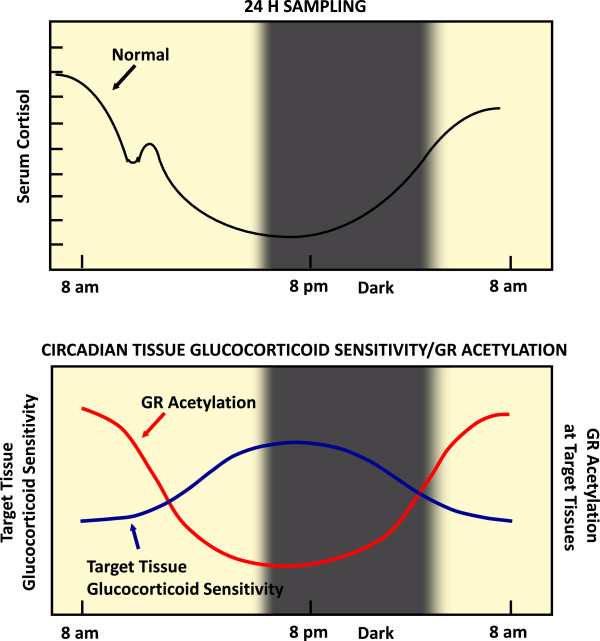
“Moreover, as circulating glucocorticoid levels fluctuate diurnally, so does the sensitivity of tissues to glucocorticoids (17).”
BackgroundA novel mutation of the hGR gene causing Chrousos syndrome
Nicolaides, N. C., Geer, E. B., Vlachakis, D. P., Roberts, M. L., Psarra, A. G., Moutsatsou, P., Sertedaki, A., Κοσσίδα, Σ., & Charmandari, E. (2015) · European Journal of Clinical Investigation · doi:10.1111/eci.12470 · Cited by 42
Self-citationApproach to the Patient With Glucocorticoid-induced Adrenal Insufficiency
Borresen, S. W., Klose, M., Glintborg, D., Watt, T., Andersen, M., & Feldt‐Rasmussen, U. (2022) · The Journal of Clinical Endocrinology & Metabolism · doi:10.1210/clinem/dgac151 · Cited by 48
Somvanshi, P. R., Mellon, S. H., Flory, J. D., Abu-Amara, D., PTSD Systems Biology Consortium;, Wolkowitz, O. M., Yehuda, R., Jett, M., Hood, L., Marmar, C., et al. (2019) · American Journal of Physiology-Endocrinology and Metabolism · doi:10.1152/ajpendo.00065.2019 · Cited by 43
Moreira, A. C., Antonini, S. R. R., & de Castro, M. (2018) · European Journal of Endocrinology · doi:10.1530/eje-18-0102 · Cited by 41
Glucocorticoids Influencing Wnt/β-Catenin Pathway; Multiple Sites, Heterogeneous Effects
Mészáros, K. V., & Patócs, A. (2020) · Molecules · doi:10.3390/molecules25071489 · Cited by 43
Casey, T., & Plaut, K. I. (2022) · Journal of Animal Science · doi:10.1093/jas/skac233 · Cited by 43
“…glucocorticoids regulate peripheral clocks through multiple mechanisms that include activation of its receptor and binding the glucocorticoid response elements (GRE) present in the promoter regions of PER1 and PER2 (So et al., 2009; Lamia et al., 2011; Cheon et al., 2013; Nicolaides et al., 2014).”
BackgroundRelationship Between Glucocorticoids and Insulin Resistance in Healthy Individuals
Zhou, P.-Z., Zhu, Y., Zou, G.-H., Sun, Y., Xiu, X., Huang, X. Y., & Zhang, Q. (2016) · Medical Science Monitor · doi:10.12659/msm.895251 · Cited by 39
“Glucocorticoids (GCs) are steroid hormones synthesized by the adrenal cortex and stimulated to release after the hypothalamic-pituitary-adrenal axis is activated, and also play a predominant role in the maintenance of resting- and stress-related homeostasis [1,2].”
BackgroundRecent advances in the molecular mechanisms causing primary generalized glucocorticoid resistance
Nicolaides, N. C., Lamprokostopoulou, A., Sertedaki, A., & Charmandari, E. (2016) · HORMONES · doi:10.14310/horm.2002.1660 · Cited by 36
Self-citationBae, S.-A., & Androulakis, I. P. (2017) · Gene Regulation and Systems Biology · doi:10.1177/1177625017702393 · Cited by 33
Functional characterization of the hGRαT556I causing Chrousos syndrome
Nicolaides, N. C., Skyrla, E., Vlachakis, D. P., Psarra, A. G., Moutsatsou, P., Sertedaki, A., Κοσσίδα, Σ., & Charmandari, E. (2015) · European Journal of Clinical Investigation · doi:10.1111/eci.12563 · Cited by 25
Self-citationBrandt, J., Warnke, K., Jörgens, S., Arolt, V., Beer, K., Domschke, K., Haverkamp, W., Kuhlmann, S. L., Müller‐Nordhorn, J., Rieckmann, N., et al. (2020) · Journal of Neural Transmission · doi:10.1007/s00702-020-02243-6 · Cited by 24
Alternative dimerization interfaces in the glucocorticoid receptor-α ligand binding domain
Bianchetti, L., Waßmer, B., Defosset, A., Smertina, A., Tiberti, M. L., Stote, R. H., & Dejaegere, A. P. (2018) · Biochimica et Biophysica Acta (BBA) - General Subjects · doi:10.1016/j.bbagen.2018.04.022 · Cited by 21
Nicolaides, N. C., & Charmandari, E. (2019) · Experientia supplementum · doi:10.1007/978-3-030-25905-1_6 · Cited by 25
Self-citationMuráni, E., Ponsuksili, S., Jaeger, A., Görres, A., Tuchscherer, A., & Wimmers, K. (2016) · Open Biology · doi:10.1098/rsob.150193 · Cited by 22
Roa, S. L. R., Martínez, E. Z., Martins, C. S., Antonini, S. R. R., de Castro, M., & Moreira, A. C. (2017) · Endocrinology · doi:10.1210/en.2016-1782 · Cited by 20
Serón‐Ferré, M., Torres‐Farfan, C., Valenzuela, F. J., Castillo‐Galán, S., Rojas, A., Méndez, N., Reynolds, H. E., Valenzuela, G. J., & Llanos, A. J. (2017) · Endocrinology · doi:10.1210/en.2017-00254 · Cited by 20
The human glucocorticoid receptor
Nicolaides, N. C., & Chrousos, G. P. (2023) · Vitamins and hormones · doi:10.1016/bs.vh.2023.06.005 · Cited by 17
Self-citationChen, P., Shen, T., Wang, H., Ke, Z., Liang, Y., Ouyang, J., & Jiang, T. (2017) · Leukemia & lymphoma/Leukemia and lymphoma · doi:10.1080/10428194.2017.1296143 · Cited by 15
Nuclear Receptors as Regulators of Pituitary Corticotroph Pro-Opiomelanocortin Transcription
Zhang, D., & Heaney, A. P. (2020) · Cells · doi:10.3390/cells9040900 · Cited by 13
“Seventeen natural GR mutations in more than 20 kindreds and sporadic cases, associated with altered GR expression, ligand affinity, GR protein turnover, and cellular translocation have been described [181].”
BackgroundFappi, A., Neves, J. D. C., Kawasaki, K. A., Bacelar, L., Sanches, L. N., da Silva, F. P., Larina-Neto, R., Chadi, G., & Zanoteli, E. (2019) · Physiological Reports · doi:10.14814/phy2.13966 · Cited by 17
Stepanov, Y. K., Speidel, J. D., Herrmann, C., Schmid, N., Behr, R., Köhn, F., Stöckl, J. B., Pickl, U., Trottmann, M., Fröhlich, T., et al. (2022) · Cells · doi:10.3390/cells11193164 · Cited by 12
Pharmacological plasticity—How do you hit a moving target?
Parnham, M. J., & Geißlinger, G. (2019) · Pharmacology Research & Perspectives · doi:10.1002/prp2.532 · Cited by 13
Liu, J., Zheng, K., Dong, L., Lin, J., Zhang, C., Xie, Y., & Wang, Y. (2025) · International Journal of Surgery · doi:10.1097/js9.0000000000003160 · Cited by 13
Bergmann, T. K., Isbel, N. M., Ostini, R., Barraclough, K. A., Campbell, S. B., McWhinney, B. C., Inder, W. J., Russell, A. W., & Staatz, C. E. (2015) · Clinical Drug Investigation · doi:10.1007/s40261-015-0334-2 · Cited by 11
“Furthermore, glucocorticoid sensitivity is altered by differences in expression of the glucocorticoid receptor isoforms, glucocorticoid receptor mutations and polymorphisms [27].”
BackgroundHernández‐Díaz, Y., González‐Castro, T. B., Tovilla‐Zárate, C. A., Juárez‐Rojop, I. E., López‐Narváez, M. L., Pérez‐Hernández, N., Rodríguez-Pérez, J. M., & Mendoza, A. D. G. (2020) · Brain Research Bulletin · doi:10.1016/j.brainresbull.2020.11.002 · Cited by 13
A Novel Glucocorticoid Receptor Mutation in Primary Generalized Glucocorticoid Resistance Disease
Ma, L., Tan, X., Li, J., Yang, L., Xiao, Z., De, J., Ren, Y., Tian, H., & Chen, T. A. O. (2020) · Endocrine Practice · doi:10.4158/ep-2019-0475 · Cited by 11
Altered expression of circadian clock genes in polyglandular autoimmune syndrome type III
Angelousi, A. G., Ansari, N. N., Spilioti, E., Mantzou, A., Kalotyxou, V., Chrousos, G. P., Kaltsas, G., & Kassi, E. N. (2017) · Endocrine · doi:10.1007/s12020-017-1407-1 · Cited by 12
Self-citationA novel human glucocorticoid receptor SNP results in increased transactivation potential
Green, T. L., Tung, K. L., Lim, D., Leventhal, S. M., Cho, K., & Greenhalgh, D. G. (2016) · Biochemistry and Biophysics Reports · doi:10.1016/j.bbrep.2016.12.003 · Cited by 12
Paul, B., & Buchholz, D. R. (2023) · Integrative and Comparative Biology · doi:10.1093/icb/icad119 · Cited by 8
A hotspot in the glucocorticoid receptor DNA-binding domain susceptible to loss of function mutation
Banuelos, J., Shin, S. C., & Lu, N. Z. (2015) · Steroids · doi:10.1016/j.steroids.2015.01.022 · Cited by 8
“GR mutations in lymphoid malignancies decrease the effectiveness of GC therapy [3].”
BackgroundA novel mutation in the NR3C1 gene associated with reversible glucocorticoid resistance
Laulhé, M., Kuhn, E., Bouligand, J., Amazit, L., Perrot, J., Lebigot, É., Kamenický, P., Lombès, M., Fagart, J., Viengchareun, S., et al. (2024) · European Journal of Endocrinology · doi:10.1093/ejendo/lvae031 · Cited by 6
Diagnosis and management of secondary adrenal crisis
Martel‐Duguech, L., Poirier, J., Bourdeau, I., & Lacroix, A. (2024) · Reviews in Endocrine and Metabolic Disorders · doi:10.1007/s11154-024-09877-x · Cited by 8
Ghazalli, N., Wu, X., Walker, S., Trieu, N., Hsin, L.-Y., Choe, J., Chen, C., Hsu, J., LeBon, J. M., Kozlowski, M. T., et al. (2018) · Stem Cells and Development · doi:10.1089/scd.2017.0160 · Cited by 6
“GR is a transcription factor that belongs to a large family of nuclear hormone receptors and plays multiple roles in development, immune response, and metabolism [14].”
BackgroundVillela, T. R., Barra, C. B., Belisário, A. R., Luizon, M. R., Silva, A. C. S. E., & Silva, I. N. (2021) · Molecular and Cellular Endocrinology · doi:10.1016/j.mce.2021.111399 · Cited by 6
Sivapalan, P., Borresen, S. W., Eklöf, J. V., Klose, M., Holm, F. S., Feldt‐Rasmussen, U., Rossing, M., Jørgensen, N. R., Marvig, R. L., Saeed, M. I., et al. (2022) · PLoS ONE · doi:10.1371/journal.pone.0262898 · Cited by 9
“It has previously been shown that GR is involved in iatrogenic suppression of the HPA axis [31, 32].”
BackgroundRijsdijk, M., Agalave, N. M., van Wijck, A. J. M., Kalkman, C. J., Ramachandran, R., Baharpoor, A., Svensson, C. I., & Yaksh, T. L. (2017) · Scandinavian Journal of Pain · doi:10.1016/j.sjpain.2016.12.008 · Cited by 7
HGCA2.0: An RNA-Seq Based Webtool for Gene Coexpression Analysis in Homo sapiens
Zogopoulos, V. L., Malatras, A., Kyriakidis, K., Charalampous, C., Makrygianni, E. A., Duguez, S., Koutsi, M. A., Pouliou, M., Vasileiou, C., Duddy, W. J., et al. (2023) · Cells · doi:10.3390/cells12030388 · Cited by 6
Self-citationTrandafir, A.-I., Ghemigian, A. M., Ciobica, M.-L., Nistor, C., Gurzun, M., Nistor, T. V. I., Petrova, E. N., & Carşote, M. (2024) · Biomedicines · doi:10.3390/biomedicines12071606 · Cited by 6
“Some polymorphisms have been connected to a higher risk of metabolic traits, including T2DM [130,134,135], such as N363S polymorphism [136], while the ER22/23EK polymorphism was associated with reduced first-phase glucose-stimulated insulin secretion [137].”
BackgroundCugliari, G. (2023) · International Journal of Molecular Sciences · doi:10.3390/ijms24098183 · Cited by 5
“By modulating GR signaling, FKBP5 has the potential to modulate the actions of glucocorticoids, hormones with pleiotropic effects that can affect essentially every body tissue [6].”
BackgroundRationale and design of the CORE (COrticosteroids REvised) study: protocol
Stam, S. P., Vulto, A., Vos, M. J., Kerstens, M. N., Rutgers, A., Kema, I. P., Touw, D. J., Bakker, S. J. L., & van Beek, A. P. (2022) · BMJ Open · doi:10.1136/bmjopen-2022-061678 · Cited by 3
Kállai, B. M., Csöndes, J., Kiss, G., Bodrogi, L., Rónai, Z., & Mészáros, T. (2021) · Scientific Reports · doi:10.1038/s41598-021-03451-0 · Cited by 3
Isola, G., Santonocito, S., Leonardi, R. M., & Polizzi, A. (2023) · Springer eBooks · doi:10.1007/978-3-031-29765-6_4 · Cited by 2
Safwat, S. M., Ghaffar, D. M. A., Eldesoqui, M. B., Mostafa, S. A., Farrag, E. A. E., El‐Senduny, F. F., Osman, B. H., Nashar, E. M. E., Alshehri, S. H. S., Alhefzi, A. I., et al. (2024) · Tissue and Cell · doi:10.1016/j.tice.2024.102602 · Cited by 2
Liu, L., Chen, X., Li, X., Zhao, Z., & Xiao, B. (2026) · Microbial Pathogenesis · doi:10.1016/j.micpath.2026.108356 · Cited by 1
Hu, C., Cui, Z., Dou, Y., & Yuan, B. (2026) · Naunyn-Schmiedeberg s Archives of Pharmacology · doi:10.1007/s00210-026-05426-2 · Cited by 1
“…transactivation, while simultaneously exerting a transrepressive effect by interacting with pro-inflammatory transcription factors such as NF-κB and AP-1, thereby achieving anti-inflammatory and immunomodulatory functions (Smoak and Cidlowski 2004; Nicolaides 2014; Ramamoorthy and Cidlowski 2016).”
Colina, M., & Campana, G. (2026) · Frontiers in Immunology · doi:10.3389/fimmu.2026.1889058 · Cited by 1
Adverse Effects of Ramadan Fasting in a Girl with Salt‐Losing Congenital Adrenal Hyperplasia
Calcaterra, V., Bassanese, F., Clemente, A. M., Amariti, R., Regalbuto, C., Sala, A., & Zuccotti, G. (2020) · Case Reports in Endocrinology · doi:10.1155/2020/6688927 · Cited by 1
Lei, J., Wang, Y., Song, Y., Peng, C. X., Wu, Z., Xiong, Y., He, F., Luo, T., Yu, F., Xu, Y., et al. (2025) · Endocrine · doi:10.1007/s12020-025-04280-1 · Cited by 1
[Research progress on the effect of glucocorticoid receptor signaling pathways in bladder cancer].
Feng, S., Chen, J., & Zheng, Y. (2016) · PubMed Central · doi:10.3785/j.issn.1008-9292.2016.11.16 · Cited by 1
Dimerization of the Mineralocorticoid Receptor Ligand Binding Domain by helix 9, 10 and the F-domainPreprint
Bianchetti, L., Sinar, D., Depenveiller, C., & Dejaegere, A. P. (2020) · bioRxiv (Cold Spring Harbor Laboratory) · doi:10.1101/2020.11.05.369587 · Cited by 1
Sivapalan, P., Borresen, S. W., Eklöf, J. V., Klose, M., Holm, F. S., Feldt‐Rasmussen, U., Rossing, M., Jørgensen, N. R., Marvig, R. L., Saeed, M. I., et al. (2020) · Research Square · doi:10.21203/rs.3.rs-126008/v1 · Cited by 1
“It has previously been shown that GR is involved in suppression of the HPA axis(24, 25).”
BackgroundWehmeyer, L. (2015) · Open University of Cape Town (University of Cape Town) · Cited by 1
Smith, S. S. (2016) · OpenCommons - UConn (University of Connecticut)
Nicolaides, N. C., Lamprokostopoulou, A., Sertedaki, A., Chrousos, G. P., & Charmandari, E. (2016) · Springer eBooks · doi:10.1007/978-3-319-45950-9_13
Self-citationFappi, A. (2018) · Digital Library of Theses and Dissertations (Universidade de São Paulo) · doi:10.11606/t.5.2018.tde-14082018-103310
The Role of the Glucocorticoid Receptor Signalling Pathway within the Human Endometrium
Thomas, S. J. (2019) · Cronfa (Swansea University) · doi:10.23889/suthesis.50584
Sanches, L. N. (2020) · Digital Library of Theses and Dissertations (Universidade de São Paulo) · doi:10.11606/d.5.2020.tde-19082021-104636
Glucocorticoid Resistance Syndromes and States
Nicolaides, N. C., & Chrousos, G. P. (2018) · Elsevier eBooks · doi:10.1016/b978-0-12-801238-3.95741-6
Self-citationDysregulated Expression of Circadian Genes in Lymphoblastoid Cells of Patients with ASDPreprint
Ding, H., Kuang, S., & Chen, C.-F. (2022) · bioRxiv (Cold Spring Harbor Laboratory) · doi:10.1101/2022.10.03.510736
“Taken together, these observations suggest that CLOCK is a negative regulator of action in target tissues (Nicolaides et al., 2014).”
BackgroundMarino, L. O., Gómez, L. M. G., Barbeiro, D. F., Barbeiro, H. V., Brandao, R. A., Menezes, M. C. S., Bachegda, T. A. S. S., & de Sousa, H. P. (2023) · SSRN Electronic Journal · doi:10.2139/ssrn.4667597
Glucocorticoid resistance syndromes and states
Nicolaides, N. C., & Chrousos, G. P. (2026) · Elsevier eBooks · doi:10.1016/b978-0-443-13825-6.00252-1
Self-citationAhmad, S. N., Nasir, M., & Ahmad, K. R. (2026) · IntechOpen eBooks · doi:10.5772/intechopen.1011154 · Cited by 1
Bianchetti, L. (2019) · theses.fr (ABES) · doi:10.70675/8c0410e5zb455z44d6z8522z8cbe8649e112
Olivieri, C.-V. (2018) · theses.fr (ABES) · doi:10.70675/ce1fe865za4bdz43c1za3f9z7755587225cf
Soares, R. M., Araújo, E. O., Teixeira, F. G., Cunha, P. B., Richeti, F., Alvarenga, R., Costa, T. M., Silva, T. S., & Longui, C. A. (2026) · Hormone and Metabolic Research · doi:10.1055/a-2948-4276
Metadata
- Authors
- Nicolaides, N. C., Charmandari, E., Chrousos, G. P., & Kino, T.
- Affiliations
- National and Kapodistrian University of Athens (GR)
- King Abdulaziz University (SA)
- National Institutes of Health (US)
- Corresponding author
- Nicolaides, Nicolas C
- Venue
- BMC Endocrine Disorders
- Published
- 2014-08-25
- Volume
- 14
- Issue
- 1
- Pages
- 71-71
- ISSN
- 1472-6823 (ISSN-L)
- PMC
- PMC4155765
- OpenAlex
- W2152833835
- Semantic Scholar
- 9d026ae7e9c59b36353e5391830748939250123a
- Cited by
- 83
- References
- 69
- Citations by year
- 2026: 7 · 2025: 2 · 2024: 4 · 2023: 6 · 2022: 7 · 2021: 6 · 2020: 11 · 2019: 7 · 2018: 7 · 2017: 8 · 2016: 10 · 2015: 8
- FWCI
- 1.15
- Type
- journal article
- Language
- en
- Open access
- gold
- doi.org
- Licence
- Locations
- BMC Endocrine Disorders (publishedVersion, cc-by)
- Europe PMC (PubMed Central) (publishedVersion, cc-by)
- PubMed Central (publishedVersion, cc-by)
- PubMed (publishedVersion)
- Funders
- European Commission
- National and Kapodistrian University of Athens
- National Institutes of Health
- National Institute of Child Health and Human Development
- Eunice Kennedy Shriver National Institute of Child Health and Human Development
- European Social Fund
- Topics
- Life Sciences › Biochemistry, Genetics and Molecular Biology › Endocrinology › Estrogen and related hormone effects
- Health Sciences › Medicine › Endocrinology, Diabetes and Metabolism › Adrenal Hormones and Disorders
- Life Sciences › Biochemistry, Genetics and Molecular Biology › Molecular Biology › Receptor Mechanisms and Signaling
- Keywords
- glucocorticoid receptor, circadian rhythm, receptor isoforms, glucocorticoid resistance
- MeSH terms
- Circadian Rhythm, Drug Resistance, Glucocorticoids, Humans, Ligands, Models, Biological, Mutation, Receptors, Glucocorticoid, Signal Transduction, Protein Isoforms
About these checks
Registry, retraction, Cites and statistics results are computed, not judged, with one exception: a printed reference that no index lists is read once by a model before it counts as a citation error. Claims are extracted by a model and kept only when their quote appears verbatim in the text; each cited source is then checked, with a model’s help, for whether it says what the claim relies on. Those verdicts can be wrong — read the claim’s quote and the cited source before relying on one.
Statistics and arithmetic are recomputed, not judged.
Confidence bands are shown only for fields calibrated on our annotated test set. None is calibrated yet, so no band is shown.
What counts as a claim ›How we measure confidence ›How we check this ›
Are you an author, or do you see a problem with this page? Request a review
Data sources
Bibliographic data: Semantic Scholar, OpenAlex, Crossref.
Contains information from the Semantic Scholar Academic Graph Datasets, made available under the ODC Attribution License (ODC-BY 1.0).
Semantic Scholar’s data is described in: Kinney, R., et al. (2023). The Semantic Scholar Open Data Platform. arXiv:2301.10140.
