

Mindfulness-and body-psychotherapy-based group treatment of chronic tinnitus: a randomized controlled pilot study
Open accessThe DOI matches its Crossref record; 40 of the 40 references it cites were found in a registry or an index.
Abstract
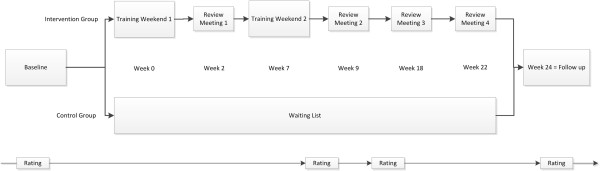
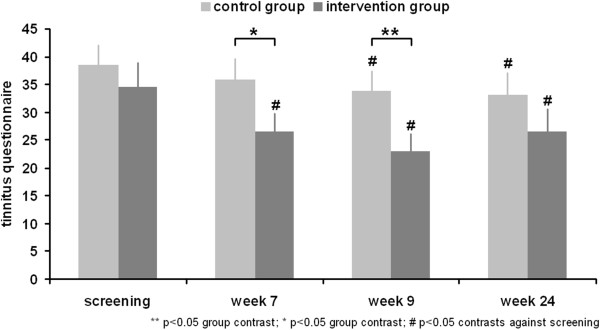
BACKGROUND: Tinnitus, the perception of sound in absence of an external acoustic source, impairs the quality of life in 2% of the population. Since in most cases causal treatment is not possible, the majority of therapeutic attempts aim at developing and strengthening individual coping and habituation strategies. Therapeutic interventions that incorporate training in mindfulness meditation have become increasingly popular in the treatment of stress-related disorders. Here we conducted a randomized, controlled clinical study to investigate the efficacy of a specific mindfulness- and body-psychotherapy based program in patients suffering from chronic tinnitus. METHODS: Thirty-six patients were enrolled in this pilot study. The treatment was specifically developed for tinnitus patients and is based on mindfulness and body psychotherapy. Treatment was performed as group therapy at two training weekends that were separated by an interval of 7 weeks (eleven hours/weekend) and in four further two-hour sessions (week 2, 9, 18 and 22). Patients were randomized to receive treatment either immediately or after waiting time, which served as a control condition. The primary study outcome was the change in tinnitus complaints as measured by the German Version of the Tinnitus Questionnaire (TQ). RESULTS: ANOVA testing for the primary outcome showed a significant interaction effect time by group (F = 7.4; df = 1,33; p = 0.010). Post hoc t-tests indicated an amelioration of TQ scores from baseline to week 9 in both groups (intervention group: t = 6.2; df = 17; p < 0.001; control group: t = 2.5; df = 16; p = 0.023), but the intervention group improved more than the control group. Groups differed at week 7 and 9, but not at week 24 as far as the TQ score was concerned. CONCLUSIONS: Our results suggest that this mindfulness- and body-psychotherapy-based approach is feasible in the treatment of tinnitus and merits further evaluation in clinical studies with larger sample sizes.The study is registered with clinicaltrials.gov (NCT01540357).
Overview
The claims and statistics of this paper haven’t been checked yet.
Free: it reads the open-access text and checks the first 5 claims that cite a source we can check. Create a free account to check every claim.
Integrity signals
Registry
Cites
Statistics
Figures
Verification
Claims the paper makes
The claims and statistics of this paper haven’t been checked yet.
Free: it reads the open-access text and checks the first 5 claims that cite a source we can check. Create a free account to check every claim.
Self-check
Percentages, sums and reported differences re-computed from the paper’s own numbers.
The self-check needs the paper’s full text.
Citations
Cites
Kabat-Zinn, J. (1982) · General Hospital Psychiatry · doi:10.1016/0163-8343(82)90026-3 · Cited by 4,255
The effect of mindfulness based therapy on anxiety and depression: A meta analytic review
Hofmann, S. G., Sawyer, A. T., Witt, A. A., & Oh, D. (2010) · Journal of Consulting and Clinical Psychology · doi:10.1037/a0018555 · Cited by 3,846 · cited 2×
“They have demonstrated efficacy in the treatment of a variety of stress-related disorders [10,11] such as anxiety and mood disorders [12] or chronic pain [13,14].”
BackgroundAnalysing controlled trials with baseline and follow up measurements
Vickers, A. J., & Altman, D. G. (2001) · BMJ · doi:10.1136/bmj.323.7321.1123 · Cited by 2,116 · cited 1×
“[24-26].”
Chiesa, A., & Serretti, A. (2009) · The Journal of Alternative and Complementary Medicine · doi:10.1089/acm.2008.0495 · Cited by 1,681 · cited 1×
“They have demonstrated efficacy in the treatment of a variety of stress-related disorders [10,11] such as anxiety and mood disorders [12] or chronic pain [13,14].”
BackgroundInternal consistencies of the original and revised beck depression inventory
Beck, A. T., & Steer, R. A. (1984) · Journal of Clinical Psychology · doi:10.1002/1097-4679(198411)40:6<1365::aid-jclp2270400615>3.0.co;2-d · Cited by 1,146
Bohlmeijer, E., Prenger, R., Taal, E., & Cuijpers, P. (2010) · Journal of Psychosomatic Research · doi:10.1016/j.jpsychores.2009.10.005 · Cited by 822
Veehof, M. M., Oskam, M.-J., Schreurs, K. M. G., & Bohlmeijer, E. T. (2011) · PAIN · doi:10.1016/j.pain.2010.11.002 · Cited by 792 · cited 1×
“Mindfulness-based therapeutic approaches have demonstrated beneficial effects in other stress-related disorders such as chronic pain [13,29] or anxiety [12].”
BackgroundVan Breukelen, G. J. P. (2006) · Journal of Clinical Epidemiology · doi:10.1016/j.jclinepi.2006.02.007 · Cited by 765
Chiesa, A., & Serretti, A. (2011) · Psychiatry Research · doi:10.1016/j.psychres.2010.08.011 · Cited by 650 · cited 1×
“A significant increase in alpha power through meditation has been revealed by electroencephalographic [30] and magnetencephalographic [31] studies.”
BackgroundMorone, N. E., Greco, C. M., & Weiner, D. K. (2008) · Pain · doi:10.1016/j.pain.2007.04.038 · Cited by 546 · cited 2×
“They have demonstrated efficacy in the treatment of a variety of stress-related disorders [10,11] such as anxiety and mood disorders [12] or chronic pain [13,14].”
BackgroundHölzel, B. K., Ott, U., Hempel, H., Hackl, A., Wolf, K., Stark, R., & Vaitl, D. (2007) · Neuroscience Letters · doi:10.1016/j.neulet.2007.04.074 · Cited by 535 · cited 1×
“Moreover, brain areas which are known to be involved in tinnitus such as the left hippocampus [35], the posterior cingulate cortex [36], the temporo-parietal junction [37], and the cerebellum [38] have recently been shown to be altered by mindfulness meditation [39].”
BackgroundCognitive behavioural therapy for tinnitus
Martinez-Devesa, P., Perera, R., Theodoulou, M., & Waddell, A. (2010) · Cochrane Database of Systematic Reviews · doi:10.1002/14651858.cd005233.pub3 · Cited by 477
Huck, S. W., & McLean, R. A. (1975) · Psychological Bulletin · doi:10.1037/h0076767 · Cited by 449 · cited 1×
“[24-26].”
The neural correlates of tinnitus-related distress
Vanneste, S., Plazier, M., der Loo, E. V., de Heyning, P. V., Congedo, M., & De Ridder, D. (2010) · NeuroImage · doi:10.1016/j.neuroimage.2010.04.029 · Cited by 401 · cited 1×
“Moreover, brain areas which are known to be involved in tinnitus such as the left hippocampus [35], the posterior cingulate cortex [36], the temporo-parietal junction [37], and the cerebellum [38] have recently been shown to be altered by mindfulness meditation [39].”
BackgroundA selective imaging of tinnitus
Giraud, A. L., Chéry-Croze, S., Fischer, G., Fischer, C., Vighetto, A., Grégoire, M.-C., Lavenne, F., & Collet, L. (1999) · NeuroReport · doi:10.1097/00001756-199901180-00001 · Cited by 342 · cited 1×
“Moreover, brain areas which are known to be involved in tinnitus such as the left hippocampus [35], the posterior cingulate cortex [36], the temporo-parietal junction [37], and the cerebellum [38] have recently been shown to be altered by mindfulness meditation [39].”
BackgroundLangguth, B., Landgrebe, M., Kleinjung, T., Sand, G. P., & Hajak, G. (2011) · The World Journal of Biological Psychiatry · doi:10.3109/15622975.2011.575178 · Cited by 321 · cited 1×
“Severe tinnitus is frequently related to comorbidities such as insomnia [2], somatoform disorders, depression [3] or anxiety [4,5].”
BackgroundSelf-citationNeural activity underlying tinnitus generation: Results from PET and fMRI
Lanting, C. P., de Kleine, E., & van Dijk, P. (2009) · Hearing Research · doi:10.1016/j.heares.2009.06.009 · Cited by 318 · cited 1×
“Moreover, brain areas which are known to be involved in tinnitus such as the left hippocampus [35], the posterior cingulate cortex [36], the temporo-parietal junction [37], and the cerebellum [38] have recently been shown to be altered by mindfulness meditation [39].”
BackgroundGoebel, G., & Hiller, W. F. A. (1994) · PubMed · Cited by 306
Structural brain changes in tinnitus: Grey matter decrease in auditory and non-auditory brain areas
Landgrebe, M., Langguth, B., Rosengarth, K., Braun, S., Koch, A., Kleinjung, T., May, A., de Ridder, D., & Hajak, G. (2009) · NeuroImage · doi:10.1016/j.neuroimage.2009.01.069 · Cited by 278
Self-citationHesser, H., Gustafsson, T., Lundén, C., Henrikson, O., Fattahi, K., Johnsson, E., Westin, V. Z., Carlbring, P., Mäki-Torkko, E., Kaldo, V., et al. (2012) · Journal of Consulting and Clinical Psychology · doi:10.1037/a0027021 · Cited by 257 · cited 2×
“Mindfulness also constitutes an integral element of the cognitive behavioral treatment programs for tinnitus that have shown convincing results in this indication so far [17,18].”
BackgroundSystematic review and meta-analyses of randomized controlled trials examining tinnitus management.
Hoare, D. J., Kowalkowski, V. L., Kang, S., & Hall, D. A. (2011) · The Laryngoscope · doi:10.1002/lary.21825 · Cited by 255 · cited 2×
“; licensee BioMed Central Commons Attribution License (http://creativec reproduction in any medium, provided the or treatment options up to now [6].”
BackgroundA review of tinnitus symptoms beyond ‘ringing in the ears’: a call to action
Langguth, B. (2011) · Current Medical Research and Opinion · doi:10.1185/03007995.2011.595781 · Cited by 219 · cited 1×
“Severe tinnitus is frequently related to comorbidities such as insomnia [2], somatoform disorders, depression [3] or anxiety [4,5].”
BackgroundSelf-citationKrog, N. H., Engdahl, B., & Tambs, K. (2010) · Journal of Psychosomatic Research · doi:10.1016/j.jpsychores.2010.03.008 · Cited by 188 · cited 1×
“Severe tinnitus is frequently related to comorbidities such as insomnia [2], somatoform disorders, depression [3] or anxiety [4,5].”
BackgroundTinnitus: A Multidisciplinary Approach
Baguley, D., Andersson, G., McFerran, D., & McKenna, L. (2013) · Wiley eBooks · doi:10.1002/9781118783009 · Cited by 187
Westin, V. Z., Schulin, M., Hesser, H., Karlsson, M., Noe, R. Z., Olofsson, U., Stalby, M., Wisung, G., & Andersson, G. (2011) · Behaviour Research and Therapy · doi:10.1016/j.brat.2011.08.001 · Cited by 175 · cited 2×
“Mindfulness also constitutes an integral element of the cognitive behavioral treatment programs for tinnitus that have shown convincing results in this indication so far [17,18].”
BackgroundCrönlein, T., Langguth, B., Geisler, P., & Hajak, G. (2007) · Progress in Brain Research · doi:10.1016/s0079-6123(07)66021-x · Cited by 173 · cited 1×
“Severe tinnitus is frequently related to comorbidities such as insomnia [2], somatoform disorders, depression [3] or anxiety [4,5].”
BackgroundSelf-citationThe relevance of spontaneous activity for the coding of the tinnitus sensation
Weisz, N., Dohrmann, K., & Elbert, T. (2007) · Progress in Brain Research · doi:10.1016/s0079-6123(07)66006-3 · Cited by 170 · cited 1×
“Alpha power in sensory areas is considered an indicator of inhibitory function [32] and an increase of alpha activity by neurobiofeedback or transcranial magnetic stimulation has been shown to result in reduced tinnitus perception [33,34].”
BackgroundKerr, C. E., Jones, S. R., Wan, Q., Pritchett, D. L., Wasserman, R. H., Wexler, A., Villanueva, J. J., Shaw, J. R., Lazar, S. W., Kaptchuk, T. J., et al. (2011) · Brain Research Bulletin · doi:10.1016/j.brainresbull.2011.03.026 · Cited by 170 · cited 1×
“A significant increase in alpha power through meditation has been revealed by electroencephalographic [30] and magnetencephalographic [31] studies.”
BackgroundLandgrebe, M., Zeman, F., Koller, M., Eberl, Y., Mohr, M., Reiter, J., Staudinger, S., Hajak, G., & Langguth, B. (2010) · BMC Medical Informatics and Decision Making · doi:10.1186/1472-6947-10-42 · Cited by 160 · cited 2×
“Prospective assessment of treatment effects was performed using standardized procedures as established in the Tinnitus Research Initiative (TRI) database [23].”
MethodSelf-citationKleinjung, T., Eichhammer, P., Landgrebe, M., Sand, P., Hajak, G., Steffens, T., Strutz, J., & Langguth, B. (2008) · Otolaryngology–Head and Neck Surgery · doi:10.1016/j.otohns.2007.12.022 · Cited by 142 · cited 1×
“Secondary outcome measures included chi-square tests for the variables group and treatment response, which was defined as amelioration of at least 5 points in the TQ [27].”
MethodSelf-citationNeurofeedback for treating tinnitus
Dohrmann, K., Weisz, N., Schlee, W., Hartmann, T., & Elbert, T. R. (2007) · Progress in brain research · doi:10.1016/s0079-6123(07)66046-4 · Cited by 138 · cited 1×
“Alpha power in sensory areas is considered an indicator of inhibitory function [32] and an increase of alpha activity by neurobiofeedback or transcranial magnetic stimulation has been shown to result in reduced tinnitus perception [33,34].”
BackgroundHesser, H., Westin, V., Hayes, S. C., & Andersson, G. (2009) · Behaviour Research and Therapy · doi:10.1016/j.brat.2009.02.002 · Cited by 112 · cited 2×
“For example, in a sample of 19 tinnitus patients the frequency of cognitive defusion behaviors and peak level of cognitive defusion as well as peak level of acceptance rated in session 2, predicted a symptom reduction 6 months following treatment, indicating that clients’ in-session acceptance and cognitive defusion b…”
BackgroundWong, S. Y.-S., Chan, F. W.-K., Wong, R. L.-P., Chu, M.-C., Kitty Lam, Y.-Y., Mercer, S. W., & Ma, S. H. (2011) · The Clinical Journal of Pain · doi:10.1097/ajp.0b013e3182183c6e · Cited by 100 · cited 1×
“They have demonstrated efficacy in the treatment of a variety of stress-related disorders [10,11] such as anxiety and mood disorders [12] or chronic pain [13,14].”
BackgroundClinical trials for tinnitus: study populations, designs, measurement variables, and data analysis
Tyler, R. S., Oleson, J., Noble, W. G., Coelho, C., & Ji, H. (2007) · Progress in brain research · doi:10.1016/s0079-6123(07)66048-8 · Cited by 95
A Randomized Controlled Trial of Mindfulness‐Based Cognitive Therapy for Treating Tinnitus
Philippot, P., Nef, F., Clauw, L., de Romrée, M., & Segal, Z. (2012) · Clinical Psychology & Psychotherapy · doi:10.1002/cpp.756 · Cited by 94 · cited 6×
“Very recently, first results were presented from a randomized controlled study investigating mindfulness-based therapy in tinnitus patients [16].”
BackgroundResultInfluentialValidierung einer deutschsprachigen Version des „Tinnitus Handicap Inventory”
Kleinjung, T., Fischer, B., Langguth, B., Sand, P., Hajak, G., Dvorakova, J., & Eichhammer, P. (2007) · Psychiatrische Praxis · doi:10.1055/s-2006-940218 · Cited by 91
Self-citationTinnitus rehabilitation: a mindfulness meditation cognitive behavioural therapy approach
Sadlier, M., Stephens, S. D. G., & Kennedy, V (2008) · The Journal of Laryngology & Otology · doi:10.1017/s0022215107007438 · Cited by 70 · cited 1×
“proposed for the treatment of tinnitus [15-18].”
Qigong for the treatment of tinnitus: A prospectiverandomized controlled study
Biesinger, E., Kipman, U., Schätz, S., & Langguth, B. (2010) · Journal of Psychosomatic Research · doi:10.1016/j.jpsychores.2010.04.013 · Cited by 45 · cited 1×
“[28].”
Self-citationKortikale Plastizität und Veränderungen bei Tinnitus: Therapeutische Optionen
Weisz, N., & Langguth, B. (2010) · HNO · doi:10.1007/s00106-010-2178-7 · Cited by 12
Self-citationKortikale Plastizität und Veränderungen bei Tinnitus: Therapeutische Optionen
Weisz, N., & Langguth, B. (2010) · KOPS (University of Konstanz) · Cited by 6
Self-citation
Research works printed but not linked: 1
- Holl M: Die Tinnitus-Atemtherapie: So gehen Sie aktiv gegen Ihr Ohrgeräusch vor. Hannover: Schluetersche; 2011.
Cited by
A multidisciplinary European guideline for tinnitus: diagnostics, assessment, and treatment
Cima, R. F. F., Mazurek, B., Haider, H., Kikidis, D., Lapira, A., Noreña, A., & Hoare, D. J. (2019) · HNO · doi:10.1007/s00106-019-0633-7 · Cited by 442
Cognitive behavioural therapy for tinnitus
Fuller, T., Cima, R., Langguth, B., Mazurek, B., Vlaeyen, J. W., & Hoare, D. J. (2020) · Cochrane Database of Systematic Reviews · doi:10.1002/14651858.cd012614.pub2 · Cited by 212
Self-citationHeeren, A., Maurage, P., Perrot, H., Volder, A. D., Renier, L. A., Araneda, R., Lacroix, É., Decat, M., Deggouj, N., & Philippot, P. (2014) · Behavioural Brain Research · doi:10.1016/j.bbr.2014.04.043 · Cited by 129
Kreuzer, P. M., Landgrebe, M., Resch, M., Hüsser, O., Schecklmann, M., Geisreiter, F., Poeppl, T. B., Prasser, S. J., Hajak, G., Rupprecht, R., et al. (2014) · Brain stimulation · doi:10.1016/j.brs.2014.05.003 · Cited by 112
Self-citationMcKenna, L., Marks, E. M., Hallsworth, C. A., & Schaette, R. (2017) · Psychotherapy and Psychosomatics · doi:10.1159/000478267 · Cited by 93
Metadata
- Authors
- Kreuzer, P. M., Goetz, M., Holl, M., Schecklmann, M., Landgrebe, M., Staudinger, S., & Langguth, B.
- Affiliations
- University of Regensburg (DE)
- Corresponding author
- Kreuzer, Peter M
- Venue
- BMC Complementary and Alternative Medicine
- Published
- 2012-11-28
- Volume
- 12
- Issue
- 1
- Pages
- 235-235
- ISSN
- 1472-6882 (ISSN-L)
- PMC
- PMC3517771
- OpenAlex
- W2130056252
- Cited by
- 51
- References
- 40
- Citations by year
- 2026: 1 · 2025: 1 · 2024: 2 · 2023: 6 · 2022: 5 · 2021: 4 · 2020: 5 · 2019: 8 · 2018: 2 · 2017: 6 · 2016: 5 · 2015: 4 · 2014: 2
- FWCI
- 1.07
- Type
- journal article
- Language
- en
- Open access
- gold
- doi.org
- Licence
- cc-by
- creativecommons.org/licenses/by/2.0 (tdm)
- Locations
- BMC Complementary and Alternative Medicine (publishedVersion, cc-by)
- Europe PMC (PubMed Central) (publishedVersion, cc-by)
- PubMed Central (publishedVersion, cc-by)
- PubMed (publishedVersion)
- University of Regensburg Publication Server (University of Regensburg) (acceptedVersion)
- DOAJ (DOAJ: Directory of Open Access Journals) (submittedVersion, cc-by-sa)
- University of Regensburg Publication Server (University of Regensburg)
- Topics
- Life Sciences › Neuroscience › Sensory Systems › Hearing, Cochlea, Tinnitus, Genetics
- Physical Sciences › Physics and Astronomy › Acoustics and Ultrasonics › Noise Effects and Management
- Health Sciences › Health Professions › Speech and Hearing › Hearing Loss and Rehabilitation
- Keywords
- chronic tinnitus, mindfulness meditation, body psychotherapy, group therapy, tinnitus treatment, Tinnitus Questionnaire, coping strategies, habituation, treatment feasibility
- MeSH terms
- Adaptation, Psychological, Adult, Aged, Analysis of Variance, Chronic Disease, Female, Habituation, Psychophysiologic, Humans, Male, Middle Aged, Pilot Projects, Psychotherapy, Psychotherapy, Group, Surveys and Questionnaires, Stress, Psychological, Tinnitus, Treatment Outcome, Meditation
About these checks
Registry, retraction, Cites and statistics results are computed, not judged, with one exception: a printed reference that no index lists is read once by a model before it counts as a citation error. Claims are extracted by a model and kept only when their quote appears verbatim in the text; each cited source is then checked, with a model’s help, for whether it says what the claim relies on. Those verdicts can be wrong — read the claim’s quote and the cited source before relying on one.
Statistics and arithmetic are recomputed, not judged.
Confidence bands are shown only for fields calibrated on our annotated test set. None is calibrated yet, so no band is shown.
What counts as a claim ›How we measure confidence ›How we check this ›
Are you an author, or do you see a problem with this page? Request a review
Data sources
Bibliographic data: Semantic Scholar, OpenAlex, Crossref.
Contains information from the Semantic Scholar Academic Graph Datasets, made available under the ODC Attribution License (ODC-BY 1.0).
Semantic Scholar’s data is described in: Kinney, R., et al. (2023). The Semantic Scholar Open Data Platform. arXiv:2301.10140.
