

Hypoglycemic and antilipidemic properties of kombucha tea in alloxan-induced diabetic rats
Open accessThe DOI matches its Crossref record; 59 of the 60 references it cites were found in a registry or an index.
Abstract
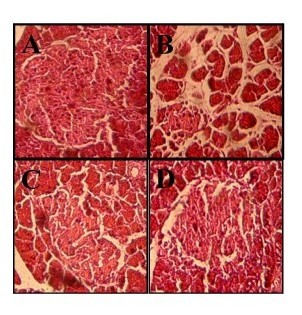
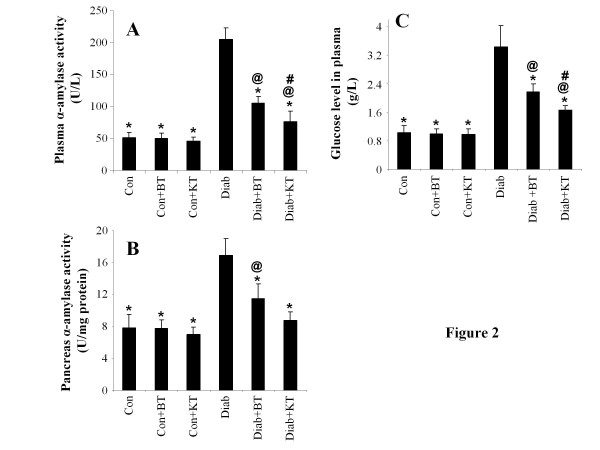
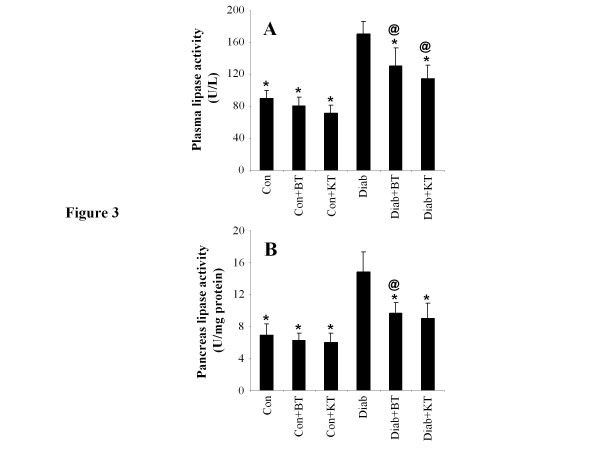
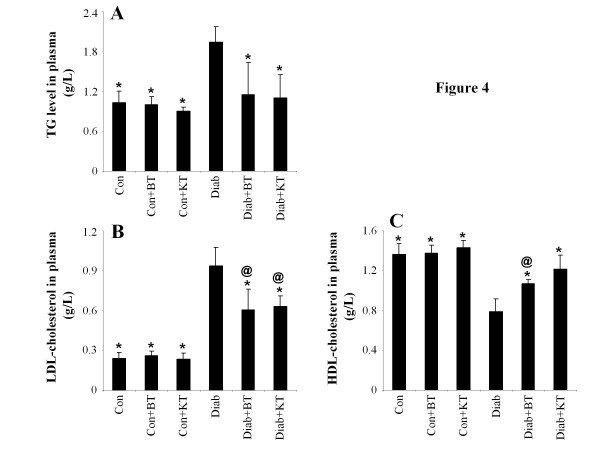
BACKGROUND: Diabetes has become a serious health problem and a major risk factor associated with troublesome health complications, such as metabolism disorders and liver-kidney dysfunctions. The inadequacies associated with conventional medicines have led to a determined search for alternative natural therapeutic agents. The present study aimed to investigate and compare the hypoglycemic and antilipidemic effects of kombucha and black tea, two natural drinks commonly consumed around the world, in surviving diabetic rats. METHODS: Alloxan diabetic rats were orally supplied with kombucha and black tea at a dose of 5 mL/kg body weight per day for 30 days, fasted overnight, and sacrificed on the 31st day of the experiment. Their bloods were collected and submitted to various biochemical measurements, including blood glucose, cholesterol, triglcerides, urea, creatinine, transaminases, transpeptidase, lipase, and amylase activities. Their pancreases were isolated and processed to measure lipase and α-amylase activities and to perform histological analysis. RESULTS: The findings revealed that, compared to black tea, kombucha tea was a better inhibitor of α-amylase and lipase activities in the plasma and pancreas and a better suppressor of increased blood glucose levels. Interestingly, kombucha was noted to induce a marked delay in the absorption of LDL-cholesterol and triglycerides and a significant increase in HDL-cholesterol. Histological analyses also showed that it exerted an ameliorative action on the pancreases and efficiently protected the liver-kidney functions of diabetic rats, evidenced by significant decreases in aspartate transaminase, alanine transaminase, and gamma-glytamyl transpeptidase activities in the plasma, as well as in the creatinine and urea contents. CONCLUSIONS: The findings revealed that kombucha tea administration induced attractive curative effects on diabetic rats, particularly in terms of liver-kidney functions. Kombucha tea can, therefore, be considered as a potential strong candidate for future application as a functional supplement for the treatment and prevention of diabetes.
Overview
The claims and statistics of this paper haven’t been checked yet.
Free: it reads the open-access text and checks the first 5 claims that cite a source we can check. Create a free account to check every claim.
Integrity signals
Registry
Cites
Statistics
Figures
Verification
Claims the paper makes
The claims and statistics of this paper haven’t been checked yet.
Free: it reads the open-access text and checks the first 5 claims that cite a source we can check. Create a free account to check every claim.
Claims other papers make about this one
Each is checked against this paper’s own text: does it say what the citing paper says it does?
The cited source says what the claim attributes to it.
In the citing paper
“Kombucha has been shown to exert effects in animal studies on blood glycaemia [72], oxidative stress [73], diabetes-induced weight loss [74], chemically-induced nephrotoxicity [75], hypercholesterolaemia [72,76] and indomethacin-induced gastric ulceration [77].”
From Fermented foods: definitions and characteristics, impact on the gut microbiota and effects on gastrointestinal health and disease (2019) · cites this paper as [72]
Self-check
Percentages, sums and reported differences re-computed from the paper’s own numbers.
The self-check needs the paper’s full text.
Citations
Cites
PROTEIN MEASUREMENT WITH THE FOLIN PHENOL REAGENT
Lowry, O., Rosebrough, N., Farr, A. L., & Randall, R. (1951) · Journal of Biological Chemistry · doi:10.1016/s0021-9258(19)52451-6 · Cited by 317,331 · cited 1×
“[32].”
AFRC, R. F. (1989) · Journal of Applied Bacteriology · doi:10.1111/j.1365-2672.1989.tb05105.x · Cited by 4,149
Probiotics in man and animals.
Fuller, R. (1989) · PubMed · Cited by 1,292
Pancreatic lipase inhibitors from natural sources: Unexplored potential
Birari, R. B., & Bhutani, K. K. (2007) · Drug Discovery Today · doi:10.1016/j.drudis.2007.07.024 · Cited by 871 · cited 2×
“Several therapeutic strategies are currently available for the treatment of this chronic metabolic disorder, including the stimulation of endogenous insulin secretion, enhancement of insulin action at the target tissues, inhibition of dietary starch and lipid degradation, and treatment with oral hypoglycemic agents [8…”
BackgroundCOSKUN, O., KANTER, M., KORKMAZ, A., & OTER, S. (2005) · Pharmacological Research · doi:10.1016/j.phrs.2004.06.002 · Cited by 814 · cited 1×
“have reported that the administration of polyphenols, such as quercetin and epicatechin, to surviving diabetic rats protects the architecture of pancreatic β-cells, preserves the secretion of insulin, and stimulates the regeneration of this type of cells [57].”
BackgroundAnti-diabetic effect of cinnamon extract on blood glucose in db/db mice
Kim, S. H., Hyun, S. H., & Choung, S. Y. (2006) · Journal of Ethnopharmacology · doi:10.1016/j.jep.2005.08.059 · Cited by 503 · cited 1×
“4% in 2025 [1].”
Inhibitory Effects of Oolong Tea Polyphenols on Pancreatic Lipase in Vitro
Nakai, M., Fukui, Y., Asami, S., Toyoda-Ono, Y., Iwashita, T., Shibata, H., Mitsunaga, T., Hashimoto, F., & Kiso, Y. (2005) · Journal of Agricultural and Food Chemistry · doi:10.1021/jf047814+ · Cited by 492
Tea, Kombucha, and health: a review
Dufresne, C., & Farnworth, E. (2000) · Food Research International · doi:10.1016/s0963-9969(00)00067-3 · Cited by 484 · cited 1×
“Kombucha has also been reported to constitute a potent therapeutic supplement that improved resistance against cancer, prevented cardiovascular diseases, promoted digestive functions, stimulated the immune system, and reduced inflammatory problems [17,21-23].”
BackgroundThe inhibitory effects of berry polyphenols on digestive enzymes
Mcdougall, G. J., & Stewart, D. (2005) · BioFactors · doi:10.1002/biof.5520230403 · Cited by 415 · cited 1×
“The inhibition of pancreatic α-amylase activity in the human digestive tract represents one of the therapeutic approaches commonly used for the control and prevention of postprandial hyperglycemia in non-insulin-dependent diabetic patients through reducing the uptake of glucose released by those enzymes from starch [4…”
BackgroundLactic acid bacteria and their effect on the immune system.
Perdigón, G., Fuller, R., & Raya, R. R. (2001) · PubMed · Cited by 393
Cited by
Items 201–206 of 206
Miller, B. C., Hoover, J., Yadav, H., & Jain, S. (2026) · Frontiers in Molecular Neuroscience · doi:10.3389/fnmol.2026.1815079
“…diarrhea and constipation (Merenstein et al., 2009), and (3) improve inflammatory bowel disease symptoms (Yılmaz et al., 2018; Nielsen et al., 2018), hyperlipidemia, hyperglycemia (Aloulou et al., 2012; Korem et al., 2017; Miller et al., 2021), cancer pathology, and psychiatric conditions.”
Literature review: Safety aspects and halal status of Kombucha
Sari, F. M., Widianti, R. C., Deliaz, M. F., & Kurniawan, A. R. (2026) · Journal of Halal Industry Studies · doi:10.53088/jhis.v5i2.3039
“…contribute to enhanced immune response (Ulfah et al., 2015), reduction of inflammation, improvement of joint conditions such as rheumatism (Jayabalan et al., 2014), antihypertensive effects (Aloulou et al., 2012), and antimicrobial activity against pathogenic microorganisms (Fadhilah et al., 2024).”
Korkmaz, D., & Mutlu, A. G. (2026) · Nutrition and Health · doi:10.1177/02601060261485647
Reitenbach, A. F., Morais, R. A., Oliveira, A. R., Broch, A. M. C., Suhre, T., Álvarez, L., Guimarães, M. G., Falcão, E. D. S. M., Ellia, D., & Ghesti, G. F. (2026) · Journal of Food Biochemistry · doi:10.1155/jfbc/1404058
Soemarie, Y. B., Su’aida, N., Fadillah, A., & Pratama, R. R. (2024) · JMM (Jurnal Masyarakat Mandiri) · doi:10.31764/jmm.v8i3.22946
“Selama proses fermentasi, teh kombucha akan memberikan aroma dan rasa asam khas dari minuman fermentasi (Jayabalan et al., 2011) ; (Aloulou et al., 2012) ; (Bhattacharya, S. and Gachhui, R.”
Effect of Kombucha intake on postprandial blood glucose in non-diabetic adults
Bento, D. (2026) · Athena health & research journal. · doi:10.62741/ahrj.v3isuppl.2.163
Metadata
- Authors
- Aloulou, A., Hamden, K., Elloumi, D., Ali, M. B., Hargafi, K., Jaouadi, B., Ayadi, F., Elfeki, A., & Ammar, E.
- Affiliations
- University of Sfax (TN)
- Corresponding author
- Aloulou, Ahmed
- Venue
- BMC Complementary and Alternative Medicine
- Published
- 2012-05-16
- Volume
- 12
- Issue
- 1
- Pages
- 63-63
- ISSN
- 1472-6882 (ISSN-L)
- PMC
- PMC3403982
- OpenAlex
- W2028754040
- Cited by
- 201
- References
- 59
- Citations by year
- 2026: 16 · 2025: 12 · 2024: 16 · 2023: 27 · 2022: 26 · 2021: 19 · 2020: 19 · 2019: 15 · 2018: 10 · 2017: 7 · 2016: 7 · 2015: 9 · 2014: 10 · 2013: 7
- FWCI
- 6.67
- Type
- journal article
- Language
- en
- Open access
- gold
- doi.org
- Licence
- cc-by
- creativecommons.org/licenses/by/2.0 (tdm)
- Locations
- BMC Complementary and Alternative Medicine (publishedVersion, cc-by)
- Europe PMC (PubMed Central) (publishedVersion, cc-by)
- PubMed Central (publishedVersion, cc-by)
- PubMed (publishedVersion)
- DOAJ (DOAJ: Directory of Open Access Journals) (submittedVersion, cc-by-sa)
- Topics
- Health Sciences › Medicine › Endocrinology, Diabetes and Metabolism › Natural Antidiabetic Agents Studies
- Life Sciences › Agricultural and Biological Sciences › Food Science › Probiotics and Fermented Foods
- Life Sciences › Agricultural and Biological Sciences › Food Science › Tea Polyphenols and Effects
- Keywords
- kombucha, black tea, diabetes mellitus, alloxan-induced diabetes, hypoglycemic effect, hypolipidemic effect, α-amylase inhibition, lipase inhibition, blood glucose, cholesterol, triglycerides, HDL cholesterol, LDL cholesterol, liver function, renal function, pancreatic histology, functional food supplement
- MeSH terms
- alpha-Amylases, Animals, Hypolipidemic Agents, Blood Glucose, Creatinine, Diabetes Mellitus, Experimental, Enzymes, Hypoglycemic Agents, Kidney, Lipase, Cholesterol, HDL, Cholesterol, LDL, Liver, Male, Phytotherapy, Pancreas, Tea, Triglycerides, Urea, Rats, Wistar, Camellia sinensis, Plant Preparations, Rats
About these checks
Registry, retraction, Cites and statistics results are computed, not judged, with one exception: a printed reference that no index lists is read once by a model before it counts as a citation error. Claims are extracted by a model and kept only when their quote appears verbatim in the text; each cited source is then checked, with a model’s help, for whether it says what the claim relies on. Those verdicts can be wrong — read the claim’s quote and the cited source before relying on one.
Statistics and arithmetic are recomputed, not judged.
Confidence bands are shown only for fields calibrated on our annotated test set. None is calibrated yet, so no band is shown.
What counts as a claim ›How we measure confidence ›How we check this ›
Are you an author, or do you see a problem with this page? Request a review
Data sources
Bibliographic data: Semantic Scholar, OpenAlex, Crossref.
Contains information from the Semantic Scholar Academic Graph Datasets, made available under the ODC Attribution License (ODC-BY 1.0).
Semantic Scholar’s data is described in: Kinney, R., et al. (2023). The Semantic Scholar Open Data Platform. arXiv:2301.10140.
