

The DOI matches its Crossref record; 24 of the 24 references it cites were found in a registry or an index.
Physician assessments of medication adherence and decisions to intensify medications for patients with uncontrolled blood pressure: still no better than a coin toss
Open accessAbstract
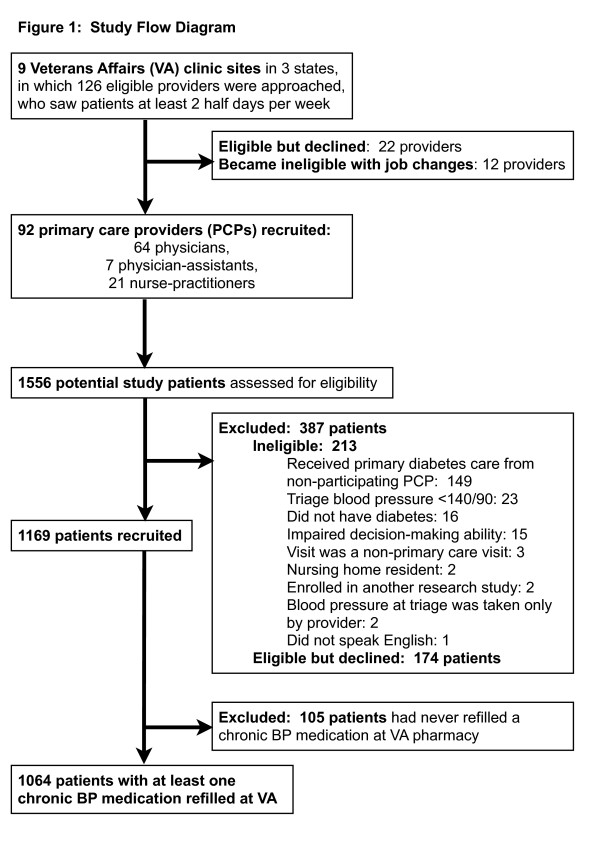
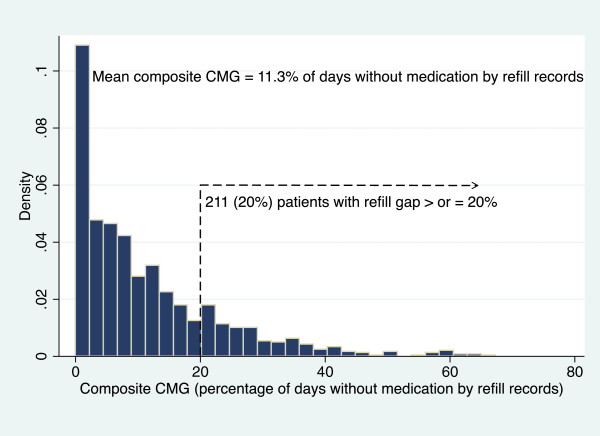
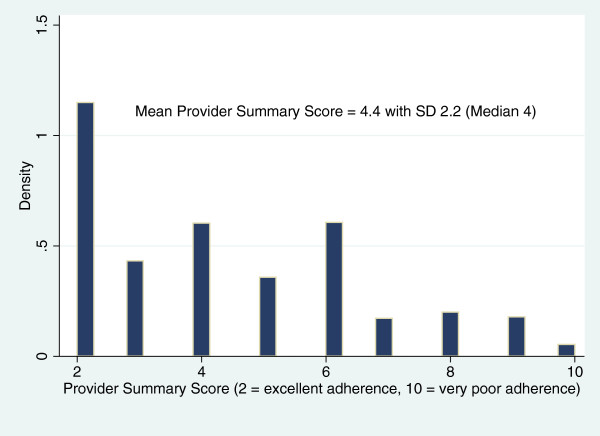
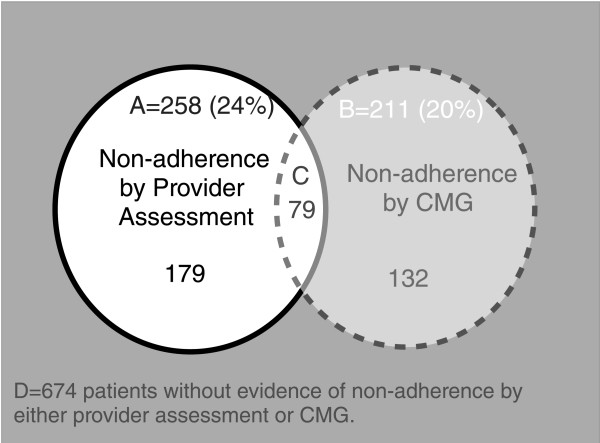
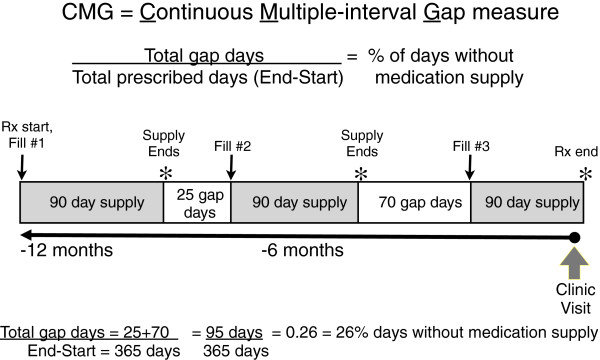
BACKGROUND: Many patients have uncontrolled blood pressure (BP) because they are not taking medications as prescribed. Providers may have difficulty accurately assessing adherence. Providers need to assess medication adherence to decide whether to address uncontrolled BP by improving adherence to the current prescribed regimen or by intensifying the BP treatment regimen by increasing doses or adding more medications. METHODS: We examined how provider assessments of adherence with antihypertensive medications compared with refill records, and how providers' assessments were associated with decisions to intensify medications for uncontrolled BP. We studied a cross-sectional cohort of 1169 veterans with diabetes presenting with BP ≥140/90 to 92 primary care providers at 9 Veterans Affairs (VA) facilities from February 2005 to March 2006. Using VA pharmacy records, we utilized a continuous multiple-interval measure of medication gaps (CMG) to assess the proportion of time in prior year that patient did not possess the prescribed medications; CMG ≥20% is considered clinically significant non-adherence. Providers answered post-visit Likert-scale questions regarding their assessment of patient adherence to BP medications. The BP regimen was considered intensified if medication was added or increased without stopping or decreasing another medication. RESULTS: 1064 patients were receiving antihypertensive medication regularly from the VA; the mean CMG was 11.3%. Adherence assessments by providers correlated poorly with refill history. 211 (20%) patients did not have BP medication available for ≥ 20% of days; providers characterized 79 (37%) of these 211 patients as having significant non-adherence, and intensified medications for 97 (46%). Providers intensified BP medications for 451 (42%) patients, similarly whether assessed by provider as having significant non-adherence (44%) or not (43%). CONCLUSIONS: Providers recognized non-adherence for less than half of patients whose pharmacy records indicated significant refill gaps, and often intensified BP medications even when suspected serious non-adherence. Making an objective measure of adherence such as the CMG available during visits may help providers recognize non-adherence to inform prescribing decisions.
Overview
The claims and statistics of this paper haven’t been checked yet.
Run the check — free, no account needed. It reads the open-access text and checks the sources it cites.
Integrity signals
Registry
Cites
Statistics
Figures
Verification
Claims the paper makes
The claims and statistics of this paper haven’t been checked yet.
Run the check — free, no account needed. It reads the open-access text and checks the sources it cites.
Claims other papers make about this one
Each is checked against this paper’s own text: does it say what the citing paper says it does?
In the citing paper
“However, clinician assessment of adherence is poor.105”
From Resistant Hypertension: Detection, Evaluation, and Management: A Scientific Statement From the American Heart Association (2018) · cites this paper as [105]
Self-check
Percentages, sums and reported differences re-computed from the paper’s own numbers.
The self-check needs the paper’s full text.
Citations
Cites
Chobanian, A. V. (2003) · JAMA · doi:10.1001/jama.289.19.2560 · Cited by 25,386
(2005) · PubMed · Cited by 7,011
The assessment of refill compliance using pharmacy records: Methods, validity, and applications
Steiner, J. F., & Prochazka, A. V. (1997) · Journal of Clinical Epidemiology · doi:10.1016/s0895-4356(96)00268-5 · Cited by 1,198
The Handbook of health behavior change
(2009) · Choice Reviews Online · doi:10.5860/choice.46-6233 · Cited by 616
Choo, P. W., Rand, C. S., Inui, T. S., Lee, M. T., Cain, E., Cordeiro-Breault, M., Canning, C. F., & Platt, R. G. (1999) · Medical Care · doi:10.1097/00005650-199909000-00002 · Cited by 546
Factors associated with medication refill adherence in cardiovascular-related diseases
Gazmararian, J. A., Kripalani, S. B., Miller, M. J., Echt, K. V., Ren, J., & Rask, K. J. (2006) · Journal of General Internal Medicine · doi:10.1111/j.1525-1497.2006.00591.x · Cited by 351
Measuring Adherence To Asthma Medication Regimens
Rand, C. S., & Wise, R. A. (1994) · American Journal of Respiratory and Critical Care Medicine · doi:10.1164/ajrccm/149.2_pt_2.s69 · Cited by 334
Lau, D. T., & Nau, D. P. (2004) · Diabetes Care · doi:10.2337/diacare.27.9.2149 · Cited by 317
The Handbook of health behavior change
(1991) · Choice Reviews Online · doi:10.5860/choice.28-5108 · Cited by 214
Kerr, E. A., Zikmund‐Fisher, B. J., Klamerus, M. L., Subramanian, U., Hogan, M. M., & Hofer, T. P. (2008) · Annals of Internal Medicine · doi:10.7326/0003-4819-148-10-200805200-00004 · Cited by 176
Self-citation
Research works printed but not linked: 1
- Hogan MM, Heisler M, Kerr EA, Hofer TP: Harnessing the power of VA data for identifying medication adherence for hypertension. 2007, In VA Health Services Research and Development Meeting. Crystal City: VA
Cited by
Sorted by citations
Carey, R. M., Calhoun, D. A., Bakris, G. L., Brook, R. D., Daugherty, S. L., Dennison-Himmelfarb, C. R., Egan, B. M., Flack, J. M., Gidding, S. S., Judd, E., et al. (2018) · Hypertension · doi:10.1161/hyp.0000000000000084 · Cited by 1,153
Adherence in Hypertension: A Review of Prevalence, Risk Factors, Impact, and Management
Burnier, M., & Egan, B. M. (2019) · Circulation Research · doi:10.1161/circresaha.118.313220 · Cited by 878
Choudhry, N. K., Kronish, I. M., Vongpatanasin, W., Ferdinand, K. C., Pavlik, V. N., Egan, B. M., Schoenthaler, A., Houston Miller, N., Hyman, D. J., & on behalf of the American Heart Association Council on Hypertension; Council on Cardiovascular and Stroke Nursing; and Council on Clinical Cardiology (2022) · Hypertension · doi:10.1161/hyp.0000000000000203 · Cited by 349
Current Situation of Medication Adherence in Hypertension
Vrijens, B., Antoniou, S., Burnier, M., de la Sierra, A., & Volpe, M. (2017) · Frontiers in Pharmacology · doi:10.3389/fphar.2017.00100 · Cited by 292
Lee, E. K. P., Poon, P. K.-M., Yip, B. H. K., Bo, Y., Zhu, M., Yu, C., Ngai, A. C. H., Wong, M. C. S., & Wong, S. Y. S. (2022) · Journal of the American Heart Association · doi:10.1161/jaha.122.026582 · Cited by 196
Metadata
- Authors
- Meddings, J., Kerr, E. A., Heisler, M., & Hofer, T. P.
- Affiliations
- University of Michigan (US)
- Corresponding author
- Meddings, Jennifer
- Venue
- BMC Health Services Research
- Published
- 2012-08-21
- Volume
- 12
- Issue
- 1
- Pages
- 270-270
- ISSN
- 1472-6963 (ISSN-L)
- PMC
- PMC3570326
- OpenAlex
- W2140341066
- Cited by
- 117
- References
- 24
- Citations by year
- 2026: 8 · 2025: 12 · 2024: 8 · 2023: 15 · 2022: 14 · 2021: 13 · 2020: 11 · 2019: 7 · 2018: 7 · 2017: 8 · 2016: 5 · 2015: 3 · 2014: 3 · 2013: 1
- FWCI
- 1.93
- Type
- journal article
- Language
- en
- Open access
- gold
- doi.org
- Licence
- Locations
- BMC Health Services Research (publishedVersion, cc-by)
- Europe PMC (PubMed Central) (publishedVersion, cc-by)
- PubMed Central (publishedVersion, cc-by)
- PubMed (publishedVersion)
- Deep Blue (University of Michigan) (submittedVersion)
- DOAJ (DOAJ: Directory of Open Access Journals) (submittedVersion)
- Funders
- U.S. Department of Veterans Affairs
- Health Services Research and Development
- National Institutes of Health
- Agency for Healthcare Research and Quality (K08-HS1976701)
- National Institute of Diabetes and Digestive and Kidney Diseases (P60DK020572, P60 DK 20572, P30DK092926)
- Topics
- Health Sciences › Medicine › Family Practice › Medication Adherence and Compliance
- Health Sciences › Medicine › Cardiology and Cardiovascular Medicine › Blood Pressure and Hypertension Studies
- Health Sciences › Medicine › Cardiology and Cardiovascular Medicine › Atrial Fibrillation Management and Outcomes
- Keywords
- medication adherence, uncontrolled hypertension, antihypertensive drugs, medication intensification, medication gaps, prescription refills
- MeSH terms
- Adult, Aged, Aged, 80 and over, Antihypertensive Agents, Cross-Sectional Studies, Decision Making, Humans, Hypertension, Middle Aged, Practice Patterns, Physicians', Physicians, Surveys and Questionnaires, Socioeconomic Factors, United States, Drug Monitoring
About these checks
Registry, retraction, Cites and statistics results are computed, not judged, with one exception: a printed reference that no index lists is read once by a model before it counts as a citation error. Claims are extracted by a model and kept only when their quote appears verbatim in the text; each cited source is then checked, with a model’s help, for whether it says what the claim relies on. Those verdicts can be wrong — read the claim’s quote and the cited source before relying on one.
Statistics and arithmetic are recomputed, not judged.
Confidence bands are shown only for fields calibrated on our annotated test set. None is calibrated yet, so no band is shown.
What counts as a claim ›How we measure confidence ›How we check this ›
Are you an author, or do you see a problem with this page? Request a review
