

Adult ADHD patient experiences of impairment, service provision and clinical management in England: a qualitative study
Open accessThe DOI matches its Crossref record; 46 of the 46 references it cites were found in a registry or an index.
Abstract
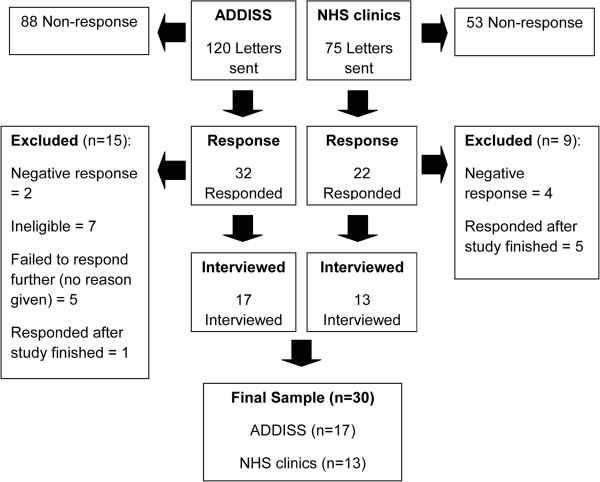
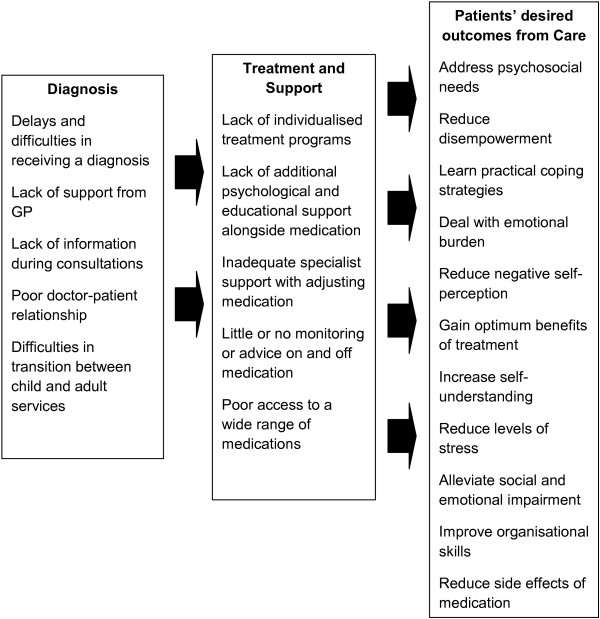
BACKGROUND: There is limited evidence of the unmet needs and experiences of adults with Attention Deficit Hyperactivity Disorder (ADHD) in the published scientific literature. This study aimed to explore the experiences of adults in England with ADHD regarding access to diagnostic and treatment services, ADHD-related impairment and to compare experiences between patients diagnosed during adulthood and childhood. METHODS: In this qualitative study, 30 adults with ADHD were recruited through an ADHD charity (n = 17) and two hospital outpatient clinics for adults with ADHD in England (n = 13). Half of the participants were diagnosed with ADHD during childhood or adolescence and the remainder during adulthood. Semi-structured interviews were conducted and data was analysed using a thematic approach based on Grounded Theory principles. RESULTS: Analysis revealed five core themes: 'An uphill struggle': the challenge of accessing services, 'Accumulated Psychosocial Burden and the Impact of ADHD', 'Weighing up Costs vs. Benefits of ADHD Pharmacological Treatment', 'Value of Non-pharmacological Treatment' and 'Barriers to Treatment Adherence'. Accessing services and the challenges associated with securing a definitive diagnosis of ADHD in adulthood was an 'uphill struggle', often due to sceptical and negative attitudes towards ADHD by healthcare professionals. ADHD-related impairment had an overwhelmingly chaotic impact on every aspect of patients' lives and many felt ill equipped to cope. A persistent sense of failure and missed potential from living with the impact of ADHD impairment had led to an accumulated psychosocial burden, especially among those diagnosed from late adolescence onwards. In contrast, positive adjustment was facilitated by a younger age at diagnosis. Although medication was perceived as necessary in alleviating impairment, many felt strongly that by itself, it was inadequate. Additional support in the form of psychological therapies or psycho-education was strongly desired. However, few patients had access to non-pharmacological treatment. In some, medication use was often inadequately monitored with little or no follow-up by healthcare professionals, leading to poor adherence and a sense of abandonment from the healthcare system. CONCLUSION: The findings suggest that the unmet needs of adults with ADHD are substantial and that there is a wide gap between policy and current practice in England.
Overview
The claims and statistics of this paper haven’t been checked yet.
Free: it reads the open-access text and checks the first 5 claims that cite a source we can check. Create a free account to check every claim.
Integrity signals
Registry
Cites
Statistics
Figures
Verification
Claims the paper makes
The claims and statistics of this paper haven’t been checked yet.
Free: it reads the open-access text and checks the first 5 claims that cite a source we can check. Create a free account to check every claim.
Claims other papers make about this one
Each is checked against this paper’s own text: does it say what the citing paper says it does?
In the citing paper
“and strain to communicate their thoughts and feelings to others (Matheson et al., 2013; Nyström et al., 2020).”
From The experiences of adults with ADHD in interpersonal relationships and online communities: A qualitative study (2023) · cites this paper as Matheson et al., 2013
In the citing paper
“Adults with ADHD have reported to struggle with maintaining relationships over their lifespan (Kwon et al., 2018; Matheson et al., 2013; Waite & Tran, 2010)”
From The experiences of adults with ADHD in interpersonal relationships and online communities: A qualitative study (2023) · cites this paper as Matheson et al., 2013
Self-check
Percentages, sums and reported differences re-computed from the paper’s own numbers.
The self-check needs the paper’s full text.
Citations
Cites
(2006) · Cited by 18,730
(1998) · Cited by 13,501
Constructing grounded theory. A practical guide through qualitative analysis
Brink, E., Dellve, L., Hallberg, U., Abrahamsson, K. H., Klingberg, G., & Wentz, K. (2006) · International Journal of Qualitative Studies on Health and Well-being · doi:10.3402/qhw.v1i3.4932 · Cited by 6,862
Diagnostic and Statistical Manual of Mental Disorders ( DSM ‐ IV ‐ TR )
Segal, D. L. (2010) · The Corsini Encyclopedia of Psychology · doi:10.1002/9780470479216.corpsy0271 · Cited by 4,666
Qualitative research in health care: Assessing quality in qualitative research
Mays, N. (2000) · BMJ · doi:10.1136/bmj.320.7226.50 · Cited by 3,742 · cited 2×
“In order to further ensure validity, member checking [29] was conducted with a random sample of participants (n = 4), who were sent a short lay summary of their individual interviews.”
BackgroundMethodMorse, J. M. (2000) · Qualitative Health Research · doi:10.1177/104973200129118183 · Cited by 3,215
Pope, C., & Mays, N. (1995) · BMJ · doi:10.1136/bmj.311.6996.42 · Cited by 2,336
Understanding and Evaluating Qualitative Research
Fossey, E., Harvey, C., Mcdermott, F., & Davidson, L. (2002) · Australian & New Zealand Journal of Psychiatry · doi:10.1046/j.1440-1614.2002.01100.x · Cited by 2,311 · cited 1×
“Moreover, the technique is particularly useful at improving knowledge of poorly understood areas of health care [19,23].”
FARAONE, S. V., BIEDERMAN, J., & MICK, E. (2006) · Psychological Medicine · doi:10.1017/s003329170500471x · Cited by 2,267 · cited 2×
“In the majority of patients diagnosed in childhood, ADHD impairment and symptoms continue to be problematic in adult life [3,8].”
BackgroundThe Prevalence of DSM-IV Attention-Deficit/Hyperactivity Disorder: A Meta-Analytic Review
Willcutt, E. G. (2012) · Neurotherapeutics · doi:10.1007/s13311-012-0135-8 · Cited by 2,160 · cited 1×
“Additionally, although the gender ratio of patients with ADHD is almost 1:1 in adults [43,44], there were more female participants in the sample.”
Background
Research works printed but not linked: 2
- QSR International Pty Ltd NVivo qualitative data analysis software, version 9 2010
- Wong IC Asherson P Bilbow A Clifford S Coghill D DeSoysa R Hollis C McCarthy S Murray M Planner C Potts L Sayal K Taylor E Cessation of attention deficit hyperactivity disorder drugs in the young (CADDY)–a pharmacoepidemiological and qualitative study Health Technol Assess 2009 13 50 1 120 19883527
Cited by
ADHD in Children and Young People: Prevalence, Care Pathways, and Service Provision
Sayal, K., Prasad, V., Daley, D., Ford, T., & Coghill, D. (2018) · The Lancet Psychiatry · doi:10.1016/s2215-0366(17)30167-0 · Cited by 1,223
Dwyer, P., Mineo, E., Mifsud, K., Lindholm, C., Gurba, A., & Waisman, T. C. (2023) · Autism in Adulthood · doi:10.1089/aut.2021.0042 · Cited by 164
Young, S., Asherson, P. J., Lloyd, T., Absoud, M., Arif, M., Colley, W., Cortese, S., Cubbin, S., Doyle, N., Dunn-Morua, S., et al. (2021) · Frontiers in Psychiatry · doi:10.3389/fpsyt.2021.649399 · Cited by 152
“Patients report accumulated psychosocial burden from delays in diagnosis and treatment (46).”
BackgroundSelf-citationPsychiatric Comorbidity at the Time of Diagnosis in Adults With ADHD: The CAT Study
Piñeiro-Dieguez, B., Balanzá-Martínez, V., García-García, P., Soler-López, B., & the CAT Study Group (2016) · Journal of Attention Disorders · doi:10.1177/1087054713518240 · Cited by 111
“…complex condition which sparks particular interest in different medical, social, academic, cultural, and economic areas given its impact during patient’s life (Gibbins & Weiss, 2007; Klein et al., 2012; Kooij et al., 2010; Laufkötter, Eichhammer, & Hajak, 2004; Matheson et al., 2013; Waite, 2010).”
BackgroundMitchell, J. T., Zylowska, L., & Kollins, S. H. (2015) · Cognitive and Behavioral Practice · doi:10.1016/j.cbpra.2014.10.002 · Cited by 109
“This often lifelong condition is characterized by pervasive impairment in multiple domains, including but not limited to academic, occupational, relational, mental health, and self-concept (Matheson et al., 2013; Stein, 2008).”
BackgroundJanssen, L., Kan, C. C., Carpentier, P. J., Sizoo, B., Hepark, S., Schellekens, M. P. J., Donders, A. R. T., Buitelaar, J. K., & Speckens, A. E. M. (2019) · Psychological Medicine · doi:10.1017/s0033291718000429 · Cited by 78
“This is in line with the findings of a qualitative study (Matheson et al. 2013) under adults with ADHD that there is an unmet need for additional psychosocial interventions alongside medication to improve functioning, since for many access to non-pharmacological treatment is lacking.”
BackgroundResultInfluentialAsherson, P. J., Leaver, L., Adamou, M., Arif, M., Askey, G., Butler, M., Cubbin, S., Newlove‐Delgado, T., Kustow, J., Lanham-Cook, J., et al. (2022) · BMC Psychiatry · doi:10.1186/s12888-022-04290-7 · Cited by 90
“In other instances, barriers to shared care include stigma and concerns around the legitimacy of an ADHD diagnosis [13, 54, 77, 108, 109].”
BackgroundSelf-citationExperienced consequences of being diagnosed with ADHD as an adult – a qualitative study
Hansson Halleröd, S. L., Anckarsäter, H., Råstam, M., & Hansson Scherman, M. (2015) · BMC Psychiatry · doi:10.1186/s12888-015-0410-4 · Cited by 69
“Studies suggest that early diagnosis can improve quality of life, self-esteem, overall functioning, outcome, and long-term prognosis [16,23-26].”
BackgroundResultWho is in the transition gap? Transition from CAMHS to AMHS in the Republic of Ireland
McNicholas, F., Adamson, M., McNamara, N., Gavin, B. E., Paul, M., Ford, T. J., Barry, S., Dooley, B. A., Coyne, I., Cullen, W., et al. (2015) · Irish Journal of Psychological Medicine · doi:10.1017/ipm.2015.2 · Cited by 79
“A qualitative follow-up by the same authors found that adults with ADHD experienced the pursuit of treatment and adult care as an ‘uphill struggle’, influenced by the ‘sceptical and negative attitudes towards ADHD by healthcare professionals’ (Matheson et al. 2013).”
BackgroundGinapp, C. M., Greenberg, N. R., Macdonald-Gagnon, G., Angarita, G. A., Bold, K. W., & Potenza, M. N. (2023) · SSM - Qualitative Research in Health · doi:10.1016/j.ssmqr.2023.100223 · Cited by 67
“, 2016), and strain to communicate their thoughts and feelings to others (Matheson et al., 2013; Nyström et al., 2020).”
BackgroundStandardised assessment of functioning in ADHD: consensus on the ICF Core Sets for ADHD
Bölte, S., Mahdi, S., Coghill, D., Gau, S. S.-F., Granlund, M., Holtmann, M., Karande, S., Levy, F., Rohde, L. A., Segerer, W., et al. (2018) · European Child & Adolescent Psychiatry · doi:10.1007/s00787-018-1119-y · Cited by 65
“This is especially relevant when considering the transition of adolescents with ADHD to adulthood, as health care and intervention programs appropriate for individuals with ADHD undergoing this period of transition are limited [55, 56].”
An international clinical study of ability and disability in ADHD using the WHO-ICF framework
Mahdi, S., Ronzano, N., Knüppel, A., Dias, J. C., Albdah, A., Chien-Ho, L., Almodayfer, O., Bluschke, A., Karande, S., Huang, H.-L., et al. (2018) · European Child & Adolescent Psychiatry · doi:10.1007/s00787-018-1124-1 · Cited by 65
“Despite the extensive impact of ADHD on individual functioning, there is still a growing demand for services that can be offered in addition to pharmacological treatments [56].”
BackgroundGinapp, C. M., Macdonald-Gagnon, G., Angarita, G. A., Bold, K. W., & Potenza, M. N. (2022) · Frontiers in Psychiatry · doi:10.3389/fpsyt.2022.949321 · Cited by 79
Exploring women’s experiences of diagnosis of ADHD in adulthood: a qualitative study
Morgan, J. (2023) · Advances in Mental Health · doi:10.1080/18387357.2023.2268756 · Cited by 86
“…were discharged from specialist mental health care, back to their GP, with follow-ups and monitoring of medication often being inadequate, leading to feelings of invisibility, a lack of support, questions left unanswered and frustration, all fi ndings which align with those from Matheson (2013).”
Implications of DSM-5 for recognising adults with developmental coordination disorder (DCD)
Purcell, C., Scott-Roberts, S., & Kirby, A. (2015) · British Journal of Occupational Therapy · doi:10.1177/0308022614565113 · Cited by 62
“This is particularly problematic in light of the evidence that suggests there is poor awareness amongst practitioners of the overlap between neurodevelopmental disorders (Matheson et al., 2013).”
BackgroundThe unmet needs of all adults with ADHD are not the same: a focus on Europe
Ginsberg, Y., Beusterien, K. M., Amos, K., Jousselin, C., & Asherson, P. (2014) · Expert Review of Neurotherapeutics · doi:10.1586/14737175.2014.926220 · Cited by 48
“[34] found that some participants deemed treatments such as CBT, counselling or life coaching beneficial, particularly at helping patients learn practical coping strategies and deal with the psychosocial burden.”
BackgroundSelf-citationJui, S. J. J., Deo, R. C., Barua, P. D., Devi, A., Soar, J., & Acharya, U. R. (2023) · IEEE Access · doi:10.1109/access.2023.3294473 · Cited by 64
“In most cases, early detection and treatment can greatly benefit patients [31], [32].”
BackgroundEliasson, A., & Holmefur, M. (2014) · Developmental Medicine & Child Neurology · doi:10.1111/dmcn.12589 · Cited by 47
Sehlin, H., Ahlström, B. H., Andersson, G., & Wentz, E. (2018) · BMC Psychiatry · doi:10.1186/s12888-018-1599-9 · Cited by 44
“Prior studies suggest that an experience of insufficient support might be common among individuals with both ASD and ADHD, especially when it comes to nonmedical alternatives [16, 17, 49, 50].”
BackgroundPrice, A., Newlove-Delgado, T., Eke, H., Paul, M., Young, S., Ford, T., & Janssens, A. (2019) · BMC Psychiatry · doi:10.1186/s12888-019-2284-3 · Cited by 42
Martinez-Raga, J., Ferreros, A., Knecht, C., de Alvaro, R., & Carabal, E. (2017) · Therapeutic Advances in Drug Safety · doi:10.1177/2042098616679636 · Cited by 43
Bjerrum, M. B., Pedersen, P. U., & Larsen, P. (2017) · The JBI Database of Systematic Reviews and Implementation Reports · doi:10.11124/jbisrir-2017-003357 · Cited by 58
Newlove‐Delgado, T., Blake, S., Ford, T. J., & Janssens, A. I. W. A. (2019) · BMC Family Practice · doi:10.1186/s12875-019-1046-0 · Cited by 50
Price, A., Janssens, A. I. W. A., Woodley, A. L., Allwood, M., & Ford, T. J. (2018) · Child and Adolescent Mental Health · doi:10.1111/camh.12297 · Cited by 42
“Notably, they were not mentioned in the two papers that only inter-viewed young people (Cheung et al., 2015; Matheson et al., 2013).”
InfluentialCheung, K. K., Wong, I. C. K., Ip, P., Chan, P. K., Lin, C. H., Wong, L. Y. L., & Chan, E. W. (2015) · BMC Psychiatry · doi:10.1186/s12888-015-0478-x · Cited by 51
“We adapted and translated interview questions from our earlier study conducted in the United Kingdom (UK) [6], designed to address the study hypotheses.”
BackgroundMethodInfluentialSelf-citationLauder, K., McDowall, A., & Tenenbaum, H. R. (2022) · Frontiers in Psychology · doi:10.3389/fpsyg.2022.893469 · Cited by 36
“Qualitative research has identified forgetfulness, a challenge for ADHDers, and lack of guidance from clinicians as potential barriers to medication treatment adherence (Matheson et al., 2013).”
Background“Dysregulated not deficit”: A qualitative study on symptomatology of ADHD in young adults
Ginapp, C. M., Greenberg, N. R., Macdonald-Gagnon, G., Angarita, G. A., Bold, K. W., & Potenza, M. N. (2023) · PLoS ONE · doi:10.1371/journal.pone.0292721 · Cited by 60
“It has been well described that adults with ADHD report intense emotions and emotional lability [32, 33, 37, 38, 40, 41, 45] and often experience unpleasant emotions such as anxiety, depression, and frustration [31, 32, 35, 38, 45, 46].”
BackgroundMaassen, E. F., Schrevel, S. J. C., Dedding, C. W. M., Broerse, J. E. W., & Regeer, B. J. (2016) · Journal of Mental Health · doi:10.3109/09638237.2016.1167848 · Cited by 57
“The desire of adults with ADHD for more accessible and continuous care, which includes treatments not typically offered for ADHD, have also been described in the UK in a study on patients’ experiences of impairment, service provision and clinical management (Matheson et al., 2013).”
BackgroundThe impact of attention deficit hyperactivity disorder (ADHD) in adulthood: A qualitative study
Watters, C., Adamis, D., McNicholas, F., & Gavin, B. (2018) · Irish Journal of Psychological Medicine · doi:10.1017/ipm.2017.21 · Cited by 32
“Like any illness or disability, early intervention can improve quality of life, self-esteem, overall functioning, outcome and long-term prognosis (Agarwal et al. 2012; Shaw et al. 2012; Harpin et al. 2013; Matheson et al. 2013).”
BackgroundSilver linings of ADHD: a thematic analysis of adults’ positive experiences with living with ADHD
Nordby, E. S., Guribye, F., Nordgreen, T., & Lundervold, A. J. (2023) · BMJ Open · doi:10.1136/bmjopen-2023-072052 · Cited by 65
Lensing, M. B., Zeiner, P., Sandvik, L., & Opjordsmoen, S. (2013) · The Journal of Clinical Psychiatry · doi:10.4088/jcp.12m07714 · Cited by 34
Janssens, A. I. W. A., Eke, H., Price, A., Newlove‐Delgado, T., Blake, S., Ani, C. C., Asherson, P. J., Beresford, B., Emmens, T., Hollis, C. P., et al. (2020) · Health Services and Delivery Research · doi:10.3310/hsdr08420 · Cited by 34
Self-citationPrice, A., Janssens, A. I. W. A., Dunn-Morua, S., Eke, H., Asherson, P. J., Lloyd, T., & Ford, T. J. (2019) · BMC Health Services Research · doi:10.1186/s12913-019-4287-7 · Cited by 38
Self-citationSobanski, E., Retz, W., Fischer, R. J., Ose, C., Alm, B., Hennig, O., & Rösler, M. (2014) · European Psychiatry · doi:10.1016/j.eurpsy.2013.08.004 · Cited by 36
McCarthy, S. (2014) · Patient Preference and Adherence · doi:10.2147/ppa.s42145 · Cited by 36
“However, in some of the studies, patients reported restarting medication either on a continuous basis or on an “as-required” basis.(39,44,46) This was often due to issues P at ie nt P re fe re nc e an d A dh er en ce d ow nl oa de d fr om h ttp s: //w w w .”
BackgroundResultJanssen, L., de Vries, A. M., Hepark, S., & Speckens, A. E. M. (2020) · Journal of Attention Disorders · doi:10.1177/1087054717727350 · Cited by 28
“A qualitative study in adult patients with ADHD showed that although medication was perceived as necessary by most, many of them felt that medication by itself was insufficient and would wish for additional psychosocial therapy (Matheson et al., 2013).”
BackgroundAoki, Y., Tsuboi, T., Furuno, T., Watanabe, K., & Kayama, M. (2020) · BMC Psychiatry · doi:10.1186/s12888-020-02774-y · Cited by 53
Price, A., Janssens, A. I. W. A., Newlove‐Delgado, T., Eke, H., Paul, M., Sayal, K. S., Hollis, C. P., Ani, C. C., Young, S., Dunn-Morua, S., et al. (2020) · BJPsych Open · doi:10.1192/bjo.2020.65 · Cited by 30
Self-citationEklund, H., Cadman, T., Findon, J. L., Hayward, H., Howley, D., Beecham, J. K., Xenitidis, K., Murphy, D., Asherson, P. J., & Glaser, K. (2016) · BMC Health Services Research · doi:10.1186/s12913-016-1509-0 · Cited by 39
“Likely reasons for the low use of adult health services among those with ADHD include a lack of (or difficulty accessing) appropriate services during this transitional period alongside individual and caregiver factors that are unique to this developmental stage [18–22].”
BackgroundSelf-citationAntshel, K. M., VanderDrift, L. E., & Pauline, J. S. (2016) · Journal of Clinical Sport Psychology · doi:10.1123/jcsp.2015-0028 · Cited by 34
“Given the strong positive relationship between high levels of inattention and difficulties concentrating and negative academic outcomes reported in late adolescents and young adults (Gjervan, Hjemdal, & Nordahl, 2012; Matheson et al., 2013; Sibley et al., 2012), we hypothesized high levels of self-reported difficultie…”
BackgroundGhosh, M., Fisher, C. M., Preen, D. B., & Holman, C. D. J. (2016) · BMC Health Services Research · doi:10.1186/s12913-016-1399-1 · Cited by 29
“with ADHD perceived that being accepted by others as a normal, responsible social being was important [43, 63], and that the medication enabled a sense of normality and social belonging to occur [43, 64].”
BackgroundSchrevel, S. J. C., Dedding, C. W. M., & Broerse, J. E. W. (2016) · SAGE Open · doi:10.1177/2158244016662498 · Cited by 29
“The difficulties of adults to obtain a formal ADHD diagnosis, such as frequent misdiagnoses and longstanding contacts in mental health care before an ADHD diagnosis, are known in literature (Kooij et al., 2010; Matheson et al., 2013).”
BackgroundPrice, A., Mitchell, S. B., Janssens, A. I. W. A., Eke, H., Ford, T. J., & Newlove‐Delgado, T. (2022) · BMC Psychiatry · doi:10.1186/s12888-022-03813-6 · Cited by 24
“Identified barriers include cultural differences between child and adult services [5, 34], lack of shared transition planning between services [37], the unsupported ‘default’ role of primary care in treatment of adult ADHD [28], premature discharge from services [34], unmet need for accessible and age-appropriate serv…”
BackgroundAhlström, B. H., & Wentz, E. (2014) · International Journal of Qualitative Studies on Health and Well-Being · doi:10.3402/qhw.v9.23376 · Cited by 33
“This is in line with Matheson et al. (2013) who described how impairments related to ADHD resulted in chaos as the persons with ADHD did not feel sufficiently equipped to manage everyday life.”
BackgroundNewlove‐Delgado, T., Ford, T. J., Hamilton, W. T., Stein, K., & Ukoumunne, O. C. (2017) · European Child & Adolescent Psychiatry · doi:10.1007/s00787-017-1011-1 · Cited by 28
Newlove‐Delgado, T., Ford, T. J., Stein, K., & Garside, R. (2018) · Emotional and Behavioural Difficulties · doi:10.1080/13632752.2018.1461476 · Cited by 29
“Nonetheless, few studies have successfully managed to recruit to plan when carrying out research with this population and most achieved similar sample sizes (Wong et al. 2009; Hovish et al. 2012b; Swift et al. 2013; Matheson et al. 2013).”
BackgroundVanzin, L., Mauri, V., Valli, A., Pozzi, M., Presti, G., Oppo, A., Ristallo, A., Molteni, M., & Nobile, M. (2020) · Journal of Child and Family Studies · doi:10.1007/s10826-019-01546-x · Cited by 21
Long, N., & Coats, H. (2022) · Family Practice · doi:10.1093/fampra/cmac038 · Cited by 21
Titheradge, D., Godfrey, J., Eke, H., Price, A., Ford, T. J., & Janssens, A. I. W. A. (2022) · Child Care Health and Development · doi:10.1111/cch.12978 · Cited by 19
“The challenges faced by young people returning to services is in keeping with findings from qualitative research into adult ADHD services (Matheson et al., 2013; Price, Janssens, et al., 2019).”
BackgroundScarpellini, F., & Bonati, M. R. (2022) · Child Care Health and Development · doi:10.1111/cch.13070 · Cited by 21
Tromans, S. J., Drewett, A., Lee, P. H., & O’Reilly, M. J. (2023) · BJPsych Open · doi:10.1192/bjo.2023.508 · Cited by 25
“25,26 Within the autistic and ADHD groups, subgroup data are reported according to sex (male or female), year of birth ( 1980 or ≥ 1980), c year joining the police force (<2006 or ≥ 2006) d and presence of clinical diagnosis (clinical diagnosis or self-diagnosis only).”
Medication-taking experiences in attention deficit hyperactivity disorder: a systematic review
Rashid, A., Lovick, S., & Llanwarne, N. R. (2017) · Family Practice · doi:10.1093/fampra/cmx088 · Cited by 23
Ogrodnik, M., Karsan, S., Malamis, B., KWAN, M. Y. W., Fenesi, B., & Heisz, J. J. (2023) · Journal of Developmental and Physical Disabilities · doi:10.1007/s10882-023-09908-6 · Cited by 30
“Because executive functions are needed for effective decision making (Cristofori et al., 2019), individuals with ADHD often struggle to complete routine tasks, resulting in a sense of underachievement that negatively impacts their daily life (Matheson et al., 2013).”
Adamo, N., Singh, S. P., Bölte, S., Coghill, D., Newcorn, J. H., Parlatini, V., Purper‐Ouakil, D., Rausch, J., Rohde, L. A., Santosh, P., et al. (2024) · Journal of Child Psychology and Psychiatry · doi:10.1111/jcpp.14036 · Cited by 16
“(Janssens et al., 2020; Matheson et al., 2013; McNi-cholas et al., 2015; Swift et al., 2013).”
French, B., & Cassidy, S. (2024) · Autism in Adulthood · doi:10.1089/aut.2024.0085 · Cited by 25
“Matheson et al. 50 showed that the persistent sense of failure and missed potential from living with the impact of unsupported ADHD impairment led to an accumulated psychosocial burden and mental health dif fi culties.”
InfluentialPrice, A., Smith, J. R., Mughal, F., Salimi, A., Meléndez‐Torres, G. J., & Newlove‐Delgado, T. (2023) · BMJ Open · doi:10.1136/bmjopen-2022-068184 · Cited by 15
Eke, H., Janssens, A. I. W. A., Newlove‐Delgado, T., Paul, M., Price, A., Young, S., & Ford, T. J. (2019) · Child Care Health and Development · doi:10.1111/cch.12718 · Cited by 18
Fort, M. L., Lefevre, C., Kieny, P., Perrouin-Verbe, B., & Ravaud, J. (2020) · Annals of Physical and Rehabilitation Medicine · doi:10.1016/j.rehab.2020.10.007 · Cited by 19
Newlove‐Delgado, T., Hamilton, W. T., Ford, T. J., Stein, K., & Ukoumunne, O. C. (2019) · ADHD Attention Deficit and Hyperactivity Disorders · doi:10.1007/s12402-019-00288-6 · Cited by 19
Björk, A., Rönngren, Y., Hellzèn, O., & Wall, E. (2020) · Issues in Mental Health Nursing · doi:10.1080/01612840.2020.1793247 · Cited by 23
“Likewise, Matheson et al. (2013) found that a lack of support causes feelings of being abandoned.”
BackgroundMüller, V., Mellor, D., & Pikó, B. F. (2024) · Learning Disabilities Research & Practice · doi:10.1177/09388982241271511 · Cited by 13
“Qualitative studies, for example, have revealed that adults with ADHD symptoms struggle with maintaining relationships (Kwon et al., 2018; Matheson et al., 2013) and moderating their behavior to conform to social norms (Schreuer & Dorot, 2017).”
Nordby, E. S., Gjestad, R., Kenter, R. M. F., Guribye, F., Mukhiya, S. K., Lundervold, A. J., & Nordgreen, T. (2022) · Frontiers in Digital Health · doi:10.3389/fdgth.2022.821031 · Cited by 18
“However, many adults with ADHD also seek supplementary non-pharmacological treatments due to residual impairments or side-effects (14).”
BackgroundAdamou, M., Graham, K., MacKeith, J., Burns, S., & Emerson, L. (2016) · BMC Health Services Research · doi:10.1186/s12913-016-1894-4 · Cited by 16
“It is now accepted that ADHD can persist into adulthood for the majority of individuals [5–7] and as a result, adults experience pervasive impairment across multiple domains including academic [8, 9], occupational [10], relational and self-concept [11] and is associated with psychiatric comorbidity [12], selfperceived…”
Newlove‐Delgado, T., Ford, T. J., Hamilton, W. T., Janssens, A. I. W. A., Stein, K., & Ukoumunne, O. C. (2019) · European Child & Adolescent Psychiatry · doi:10.1007/s00787-019-01325-5 · Cited by 14
Jensen, C. M., Lange, A., Thomsen, P. H., & Daley, D. (2020) · Nordic Journal of Psychiatry · doi:10.1080/08039488.2020.1740781 · Cited by 10
“…experienced that discontinuation was unwillingly forced upon them e.g. because of encountering reluctance from general practitioners towards providing follow-up care, or that transition from child and adolescent mental health services to adult services were delayed or not carried through [24].”
BackgroundResultInfluentialManaging Complexity: Exploring Decision Making on Medication by Young Adults with ADHD
Druedahl, L. C., & Sporrong, S. K. (2018) · Pharmacy · doi:10.3390/pharmacy6020033 · Cited by 9
“The latter may not have been reported due to cultural differences in the health-care systems in England and Denmark.”
ResultSeery, C., Cochrane, R. H., Mulcahy, M., Kilbride, K., Wrigley, M., & Bramham, J. (2025) · Internet Interventions · doi:10.1016/j.invent.2025.100807 · Cited by 7
“The app was developed to address the limited access to psychoeducation and gaps in information provision in the area of ADHD (Price et al., 2019; Matheson et al., 2013).”
Rowe, K., Bailey, S., Teague, B., Mattless, K., & Notley, C. (2021) · Mental Health and Social Inclusion · doi:10.1108/mhsi-11-2020-0075 · Cited by 4
Capp, S., Burca, A. D., Aydın, Ü., Agnew‐Blais, J. C., Lautarescu, A., Ronald, A., Happe, F. G. E., & McLoughlin, G. (2025) · JCPP Advances · doi:10.1002/jcv2.70003 · Cited by 16
“While promoting psychoeducation is crucial, given that autistic adults (Camm - Crosbie et al., 2019; Mason et al., 2019) and adults with ADHD (Matheson et al., 2013) frequently report barriers accessing care, improving awareness alone may be inadequate without addressing inequalities in access.”
Nagae, M., Tokunaga, A., Morifuji, K., Matsuzaki, J., Ozawa, H., Motoyama, K., Honda, S., Hanada, H., Tanaka, G., & Nakane, H. (2019) · Institutional Repositories DataBase (IRDB) · doi:10.11343/amn.62.77 · Cited by 7
Young patients’ views about provided psychiatric care
Malmström, E., Hörberg, N., Kouros, I., Haglund, K., & Ramklint, M. (2016) · Nordic Journal of Psychiatry · doi:10.1080/08039488.2016.1176251 · Cited by 17
“There are other studies reporting that patients highly value a diagnosis that explains their symptoms (15,24,25).”
BackgroundResultDemographics, Services, and Practices in Attention-Deficit/Hyperactivity Disorder Coaching in the US
Sibley, M. H., Graham, E. D., Holbrook, J. K., Dvorsky, M. R., Yegüez, C. E., Rosier, T., Coghill, D., Page, T. F., Fouché, R., & Demuth, J. (2026) · JAMA Network Open · doi:10.1001/jamanetworkopen.2025.52407 · Cited by 6
D’Amelio, R., Betz, L. T., Jow, S. M., Retz, W., Philipsen, A., Klein, J. P., Faßbinder, E., Jacob, G. A., & Retz‐Junginger, P. (2026) · Psychological Medicine · doi:10.1017/s0033291726103390 · Cited by 8
“Importantly, many adults with ADHD report that pharmacological treatment alone is inadequate and express a desire for psychoeducation and psychosocial support (AWMF, 2017; Matheson et al., 2013).”
Navigating the care of families with a child or children with autistic spectrum disorder
Harvey, C. L., Willis, E. P. E., Brown, J. A., Byrne, A., Baldwin, A. P. A., Heard, D., & Augutis, W. (2022) · Journal of Intellectual Disabilities · doi:10.1177/17446295221106001 · Cited by 12
“In a study undertaken by Matheson et al., (2013), adults with attention de fi cit hyperactivity disorder described multiple barriers to accessing health care that ranged from the negative attitudes of health professional towards them, to challenges in securing an appointment to see a specialist.”
BackgroundThe Use of Novel Stimulants in ADHD Self-Medication: A Mixed Methods Analysis
Holborn, T., Schifano, F., Smith, E., & Deluca, P. (2025) · Brain Sciences · doi:10.3390/brainsci15030292 · Cited by 8
“This resonates with data suggesting a complete absence of psychological therapy and limited follow-up once medication had been prescribed [114].”
Buadze, A., Friedl, N., Schleifer, R., Young, S., Schneeberger, A. R., & Liebrenz, M. (2021) · Frontiers in Psychiatry · doi:10.3389/fpsyt.2020.600005 · Cited by 9
Björk, A., Rönngren, Y., Selander, J., Vinberg, S., & Hellzèn, O. (2017) · Open Journal of Nursing · doi:10.4236/ojn.2017.75044 · Cited by 6
“As the results of other studies have shown, interviewees have stated that much of their suffering could have been avoided if they had received the diagnosis earlier [30] [31] [32].”
ResultCao, C., Deakin, C., & Gill, S. (2023) · Australasian Psychiatry · doi:10.1177/10398562231211132 · Cited by 7
Rosenthal, E. A., Mitchell, J. T., Weisner, T. S., Silverstein, N. A., Yi, C., Arnold, L. E., Hechtman, L. T., Hinshaw, S. P., & Jensen, P. S. (2025) · Journal of Attention Disorders · doi:10.1177/10870547251352589 · Cited by 6
“…to interpersonal challenges (conflict, inconsistent communication, etc.; Ginapp et al., 2023; Matheson et al., 2013; Oscarsson et al., 2022), stress (e.g., Oscarsson et al., 2022), sleep problems (Matheson et al., 2013), and emotion dysregulation (Matheson et al., 2013; Oscarsson et al., 2022).”
InfluentialFort, M. L., Lefevre, C., Kieny, P., Perrouin-Verbe, B., & Ravaud, J. (2022) · Annals of Physical and Rehabilitation Medicine · doi:10.1016/j.rehab.2022.101629 · Cited by 5
Sharman, R. J., & Seedorf, T. (2025) · Neurodiversity · doi:10.1177/27546330251359958 · Cited by 6
“Similarly, people with ADHD are described as having dif fi culty in maintaining or developing relationships (Matheson et al., 2013).”
Integrating care for neurodevelopmental disorders by unpacking control: A grounded theory study
Waxegård, G., & Thulesius, H. (2016) · International Journal of Qualitative Studies on Health and Well-being · doi:10.3402/qhw.v11.31987 · Cited by 2
“…Chakrabarti, Haubus, Dugmore, Orgill, & Devine, 2005; Kleinman et al., 2008), and a general poor accessibility to care and information for children as well as adults with ND (De Vries, Glavina, Major, Mayern, & Shellshear, 2007; Mansell & Morris, 2004; Matheson et al., 2013; Miller et al., 2008).”
BackgroundImproving attention-deficit/hyperactivity disorder recognition in family practice
Modesto‐Lowe, V., Boninsegna, K., & Fredeen, M. (2023) · Family Practice · doi:10.1093/fampra/cmad026 · Cited by 4
Disparities in Adult ADHD Care Delivery Among U.S. Telepsychology Providers
Rout, M. R., Gaddis, A., Yegüez, C. E., Sibley, M. H., & Groves, N. B. (2026) · Journal of Attention Disorders · doi:10.1177/10870547251409862 · Cited by 3
“…low priority diagnosis when triaging from waitlists, may avoid clients with ADHD due to their difficulties with memory, procrastination, and follow-through during treatment, and may not have specialized training in working with ADHD (Matheson et al., 2013; William et al., 2024; Young et al., 2021).”
Attention-deficit/hyperactivity disorder and serial missed appointments in general practice
McQueenie, R., Ellis, D. A., Williamson, A. E., & Wilson, P. (2024) · PLOS mental health. · doi:10.1371/journal.pmen.0000045 · Cited by 4
“Many factors could contribute to this low level of therapeutic support including stigma and lack of awareness or knowledge among health care providers about the importance and benefits of treatment [15].”
Gudka, R., Salimi, A., Gaywood, R., Hendrick, D., Becker, K., Medzinskii, O., Mughal, F., Meléndez‐Torres, G. J., Smith, J. R., Newlove‐Delgado, T., et al. (2025) · Health Expectations · doi:10.1111/hex.70200 · Cited by 3
“Qualitative research has identified this process as an “ uphill struggle ” for individuals with ADHD [15].”
Rudden, H., Bramham, J., Wrigley, M., Adamis, D., Liddy, N., Smith, B., Belmar, C. S., Boyd, C., Basak, F., Gallagher, K., et al. (2025) · Irish Journal of Psychological Medicine · doi:10.1017/ipm.2025.25 · Cited by 4
“2012; Fleischmann & Fleischmann, 2012; Matheson et al .”
Yavuz, B. G., Yavuz, M., & Sönmez, A. Ö. (2018) · Perspectives In Psychiatric Care · doi:10.1111/ppc.12290 · Cited by 7
Adult Persons with ADHD and Their Lifestyle
Björk, A., Rönngren, Y., & Våge, L. (2023) · Autism and child psychopathology series · doi:10.1007/978-3-031-41709-2_7 · Cited by 3
Jousselin, C. (2018) · Anthropology Matters · doi:10.22582/am.v18i1.497 · Cited by 3
“The extended wait for the appointment also caused individuals to live through prolonged chaos and to despair at their persistent experiences of symptoms (Ginsberg et al. 2014; Matheson et al. 2013), which, as in the case of Nick, contributed to their missing of appointments.”
BackgroundAttention deficit hyperactivity disorder: Transition to adult care
Pitts, M. E. (2014) · Nurse Prescribing · doi:10.12968/npre.2014.12.7.345 · Cited by 3
Co-investigators Astrid Janssens, Ani, C. C., Asherson, P. J., Sayal, K. S., Paul, M., Hollis, C. P., Beresford, B., Young, S., Newlove‐Delgado, T., Logan, S., et al. (2015) · Cited by 2
Self-citationMore than meets the eye: A Foucauldian perspective on treating ADHD with medicine
Druedahl, L. C., & Sporrong, S. K. (2019) · Research in Social and Administrative Pharmacy · doi:10.1016/j.sapharm.2019.12.008 · Cited by 2
Kooij, J. J. S. (2021) · Springer eBooks · doi:10.1007/978-3-030-82812-7_4 · Cited by 2
Taelman, A., Goffart, K., Dijck, A. V., & Lebeer, J. (2023) · Tijdschrift voor Geneeskunde · doi:10.47671/tvg.78.22.145 · Cited by 2
Diagnosis and Management of Comorbid ADHD in Patients with Substance Use Disorders
Busch, B. (2024) · Springer eBooks · doi:10.1007/978-3-031-72219-6_50 · Cited by 1
Johnson, B. H., Seal, S., Wu, L., Glasgow, S., Connor, J. P., & Chan, G. (2025) · Journal of Affective Disorders · doi:10.1016/j.jad.2025.04.118 · Cited by 2
Reeves, L., & Tickle, A. (2025) · Journal of Attention Disorders · doi:10.1177/10870547251349952 · Cited by 2
“Once participants managed to access stimulant medication, finding the right medication and dosage was also a challenge: “ there isn’t really a kind of willingness or the time available or the knowledge available to tweak around with it [medication] ” (Matheson et al., 2013, p. 6).”
InfluentialWinogrodzki, I., Trzciński, B., Kowalczyk, P., Gugała, O., Stryczek-Schlusche, A., Furczyńska, A. M., Bracichowicz, F., Gęsińska, A., Paszkiewicz, H., & Nowak, K. (2025) · International Journal of Innovative Technologies in Social Science · doi:10.31435/ijitss.3(47).2025.3606 · Cited by 1
Carr‐Fanning, K., Lynam, A., Nicholson, T., & Guckin, C. M. (2025) · Brain Sciences · doi:10.3390/brainsci15101045 · Cited by 3
“Some evidence from the pre-diagnosis stage suggests that the impact of ADHD, especially undiagnosed ADHD, is “overwhelmingly chaotic” [26].”
Influential
Metadata
- Authors
- Matheson, L., Asherson, P., Wong, I. C. K., Hodgkins, P., Setyawan, J., Sasane, R., & Clifford, S.
- Affiliations
- Oxford Brookes University (GB)
- King's College London (GB)
- University of Hong Kong (HK)
- Corresponding author
- Matheson, Lauren
- Venue
- BMC Health Services Research
- Published
- 2013-05-21
- Volume
- 13
- Issue
- 1
- Pages
- 184-184
- ISSN
- 1472-6963 (ISSN-L)
- PMC
- PMC3665585
- OpenAlex
- W2130572724
- Cited by
- 126
- References
- 46
- Citations by year
- 2026: 15 · 2025: 14 · 2024: 6 · 2023: 14 · 2022: 13 · 2021: 5 · 2020: 8 · 2019: 9 · 2018: 10 · 2017: 7 · 2016: 10 · 2015: 6 · 2014: 7 · 2013: 2
- FWCI
- 5.90
- Type
- journal article
- Language
- en
- Open access
- gold
- doi.org
- Licence
- cc-by
- creativecommons.org/licenses/by/2.0 (tdm)
- Locations
- BMC Health Services Research (publishedVersion, cc-by)
- Europe PMC (PubMed Central) (publishedVersion, cc-by)
- PubMed Central (publishedVersion, cc-by)
- PubMed (publishedVersion)
- UCL Discovery (University College London) (submittedVersion)
- The HKU Scholars Hub (University of Hong Kong) (submittedVersion, cc-by-nc-nd)
- Research Portal (King's College London) (submittedVersion)
- Radar (Oxford Brookes University) (submittedVersion)
- Funders
- University College London
- School of Pharmacy, University College London
- Topics
- Health Sciences › Medicine › Psychiatry and Mental health › Attention Deficit Hyperactivity Disorder
- Social Sciences › Psychology › Clinical Psychology › Psychology and Mental Health
- Life Sciences › Neuroscience › Cognitive Neuroscience › Autism Spectrum Disorder Research
- Keywords
- adult ADHD, patient experience, ADHD diagnosis, access to mental health care, psychosocial burden, ADHD medication, non-pharmacological treatment, medication adherence, therapeutic drug monitoring, clinician attitudes, age at diagnosis, unmet needs
- MeSH terms
- Adolescent, Adult, Age Factors, Attention Deficit Disorder with Hyperactivity, England, Female, Health Services Accessibility, Health Services Needs and Demand, Humans, Interviews as Topic, Male, Middle Aged, Physician-Patient Relations, Quality of Life, Socioeconomic Factors, Cost of Illness, Qualitative Research, Young Adult, Delayed Diagnosis
About these checks
Registry, retraction, Cites and statistics results are computed, not judged, with one exception: a printed reference that no index lists is read once by a model before it counts as a citation error. Claims are extracted by a model and kept only when their quote appears verbatim in the text; each cited source is then checked, with a model’s help, for whether it says what the claim relies on. Those verdicts can be wrong — read the claim’s quote and the cited source before relying on one.
Statistics and arithmetic are recomputed, not judged.
Confidence bands are shown only for fields calibrated on our annotated test set. None is calibrated yet, so no band is shown.
What counts as a claim ›How we measure confidence ›How we check this ›
Are you an author, or do you see a problem with this page? Request a review
Data sources
Bibliographic data: Semantic Scholar, OpenAlex, Crossref.
Contains information from the Semantic Scholar Academic Graph Datasets, made available under the ODC Attribution License (ODC-BY 1.0).
Semantic Scholar’s data is described in: Kinney, R., et al. (2023). The Semantic Scholar Open Data Platform. arXiv:2301.10140.
