

Developing and testing an instrument to measure the presence of conditions for successful implementation of quality improvement collaboratives
Open accessThe DOI matches its Crossref record; 39 of the 40 references it cites were found in a registry or an index.
Abstract
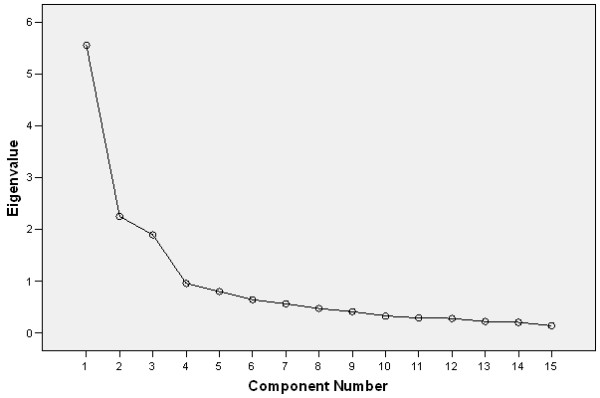
BACKGROUND: In quality improvement collaboratives (QICs) teams of practitioners from different health care organizations are brought together to systematically improve an aspect of patient care. Teams take part in a series of meetings to learn about relevant best practices, quality methods and change ideas, and share experiences in making changes in their own local setting. The purpose of this study was to develop an instrument for measuring team organization, external change agent support and support from the team's home institution in a Dutch national improvement and dissemination programme for hospitals based on several QICs. METHODS: The exploratory methodological design included two phases: a) content development and assessment, resulting in an instrument with 15 items, and b) field testing (N = 165). Internal consistency reliability was tested via Cronbach's alpha coefficient. Principal component analyses were used to identify underlying constructs. Tests of scaling assumptions according to the multi trait/multi-item matrix, were used to confirm the component structure. RESULTS: Three components were revealed, explaining 65% of the variability. The components were labelled 'organizational support', 'team organization' and 'external change agent support'. One item not meeting item-scale criteria was removed. This resulted in a 14 item instrument. Scale reliability ranged from 0.77 to 0.91. Internal item consistency and divergent validity were satisfactory. CONCLUSION: On the whole, the instrument appears to be a promising tool for assessing team organization and internal and external support during QIC implementation. The psychometric properties were good and warrant application of the instrument for the evaluation of the national programme and similar improvement programmes.
Overview
The claims and statistics of this paper haven’t been checked yet.
Free: it reads the open-access text and checks the first 5 claims that cite a source we can check. Create a free account to check every claim.
Integrity signals
Registry
Cites
Statistics
Figures
Verification
Claims the paper makes
The claims and statistics of this paper haven’t been checked yet.
Free: it reads the open-access text and checks the first 5 claims that cite a source we can check. Create a free account to check every claim.
Claims other papers make about this one
Each is checked against this paper’s own text: does it say what the citing paper says it does?
In the citing paper
“measures of organizational support or ‘buy in’ for implementation of the innovation [61-63]”
Self-check
Percentages, sums and reported differences re-computed from the paper’s own numbers.
The self-check needs the paper’s full text.
Citations
Cites
Tabachnick, B. G., & Fidell, L. S. (1983) · Cited by 80,058
Discovering Statistics Using SPSS
Field, A. P., & Miles, J. N. V. (2000) · Medical Entomology and Zoology · Cited by 28,294
Convergent and discriminant validation by the multitrait-multimethod matrix.
Campbell, D. T., & Fiske, D. W. (1959) · Psychological Bulletin · doi:10.1037/h0046016 · Cited by 17,116
(1991) · Cited by 15,554
An Index of Factorial Simplicity
Kaiser, H. F. (1974) · Psychometrika · doi:10.1007/bf02291575 · Cited by 14,898 · cited 1×
“5 for a satisfactory analysis to proceed [27].”
Sample size in factor analysis.
MacCallum, R. C., Widaman, K. F., Zhang, S., & Hong, S. (1999) · Psychological Methods · doi:10.1037/1082-989x.4.1.84 · Cited by 5,497 · cited 1×
“5 and there are relatively few factors each with only a small number of indicator variables.[36] Table 4: Rotated component matrices and Cronbach's alpha: 14 items”
A First Course in Factor Analysis
Comrey, A. L., & Lee, H. B. (2013) · doi:10.4324/9781315827506 · Cited by 4,546
What Makes Teams Work: Group Effectiveness Research from the Shop Floor to the Executive Suite
Cohen, S. G., & Bailey, D. E. (1997) · Journal of Management · doi:10.1177/014920639702300303 · Cited by 3,526
A First Course in Factor Analysis
Price, B. (1993) · Technometrics · doi:10.1080/00401706.1993.10485363 · Cited by 3,512
Relation of sample size to the stability of component patterns.
Guadagnoli, E., & Velicer, W. F. (1988) · Psychological Bulletin · doi:10.1037/0033-2909.103.2.265 · Cited by 2,880 · cited 2×
“6 then it is reliable regardless of sample size.[37]”
Overview of the SF-36 Health Survey and the International Quality of Life Assessment (IQOLA) Project
Ware, J. E., & Gandek, B. (1998) · Journal of Clinical Epidemiology · doi:10.1016/s0895-4356(98)00081-x · Cited by 2,605
Disrupted Routines: Team Learning and New Technology Implementation in Hospitals
Edmondson, A. C., Bohmer, R. M., & Pisano, G. P. (2001) · Administrative Science Quarterly · doi:10.2307/3094828 · Cited by 1,729 · cited 1×
“[13] Team training can be more effective than individual training especially when the learning is about a complex technology.[21] The purpose of a QIC is that teams are empowered and motivated to implement new working methods in order to alter a quality aspect of their care delivery.”
A First Course in Factor Analysis 2nd Ed
Comrey, A. L., & Lee, H. B. (1973) · Cited by 1,367
Karlsson, J., Persson, L.-O., Sjöström, L., & Sullivan, M. (2000) · International Journal of Obesity · doi:10.1038/sj.ijo.0801442 · Cited by 1,104 · cited 2×
“This approach extends the logic of the multi-traitmulti-method technique [24] from the level of traits to the level of items.[25] To test item-internal consistency items were correlated with their scale corrected for overlap (a correlation corrected for overlap is the correlation of an item with the sum of the other i…”
Russell, D. W. (2002) · Personality and Social Psychology Bulletin · doi:10.1177/014616702237645 · Cited by 954
Toward an understanding of team performance and training.
Eduardo Salas, A., Dickinson, T. L., Converse, S. A., & Tannenbaum, S. I. (1992) · Cited by 909
Teams: Their Training and Performance
Swezey, R. W., & Salas, E. (1992) · Medical Entomology and Zoology · Cited by 891
Quality collaboratives: lessons from research
Ovretveit, J. (2002) · Quality and Safety in Health Care · doi:10.1136/qhc.11.4.345 · Cited by 568 · cited 4×
“[11] The notion that QICteams are responsible and in charge of the progress of the project [3] is in line with literature suggesting that operational decision making during implementation processes should be devolved to teams.”
InfluentialDeveloping and Testing Changes in Delivery of Care
Berwick, D. M. (1998) · Annals of Internal Medicine · doi:10.7326/0003-4819-128-8-199804150-00009 · Cited by 526 · cited 3×
“instance, fit within this line of reasoning, as does the 'Breakthrough Series', launched in 1995 by the Institute for Healthcare Improvement (IHI) [1,2].”
Discovering Statistics Using spss. Second Edition
Gigliotti, E. (2007) · Journal of Advanced Nursing · doi:10.1111/j.1365-2648.2007.04270_1.x · Cited by 343
O'Dwyer, P. (1997) · The Lancet · doi:10.1016/s0140-6736(05)63120-0 · Cited by 327
Health Care Management : Organization Design and Behavior
Shortell, S. M., & Kaluzny, A. D. (1997) · Cited by 326
Developing and Testing a Model to Predict Outcomes of Organizational Change
Gustafson, D. H., Sainfort, F., Eichler, M., Adams, L., Bisognano, M., & Steudel, H. (2003) · Health Services Research · doi:10.1111/1475-6773.00143 · Cited by 298 · cited 2×
“[13] Within QICs internal or organizational support has to do with leadership, support and active involvement by top management.[12,14,15] There should be regular contact between team and organization leaders, and the innovation must fit within the goals of the management.”
Creating the Evidence Base for Quality Improvement Collaboratives
Mittman, B. S. (2004) · Annals of Internal Medicine · doi:10.7326/0003-4819-140-11-200406010-00011 · Cited by 279
Sparks, J. R., & Schenk, J. A. (2001) · Journal of Organizational Behavior · doi:10.1002/job.116 · Cited by 265 · cited 1×
“External change agents should provide teams with an applicable model together with high performance expectations.[22] This implies and requires a gap between a perceived and an actual situation, as well as outlining the potential added value of the innovation to the teams.”
Kass, R. A., & Tinsley, H. E. A. (1979) · Journal of Leisure Research · doi:10.1080/00222216.1979.11969385 · Cited by 248
Weiner, B. J., Shortell, S. M., & Alexander, J. A. (1997) · Europe PMC (PubMed Central) · Cited by 247
WESTAWAY, M. S. (2003) · International Journal for Quality in Health Care · doi:10.1093/intqhc/mzg042 · Cited by 205 · cited 1×
“only those items scoring higher than this threshold were retained for further analyses [31].”
Landon, B. E., Wilson, I. B., McInnes, K., Landrum, M. B., Hirschhorn, L., Marsden, P. V., Gustafson, D., & Cleary, P. D. (2004) · Annals of Internal Medicine · doi:10.7326/0003-4819-140-11-200406010-00010 · Cited by 176
Implementation of Industrial Process Innovations: Factors, Effects, and Marketing Implications
Meyers, P. W., Sivakumar, K., & Nakata, C. (1999) · Journal of Product Innovation Management · doi:10.1016/s0737-6782(98)00044-7 · Cited by 151 · cited 2×
“[11] The notion that QICteams are responsible and in charge of the progress of the project [3] is in line with literature suggesting that operational decision making during implementation processes should be devolved to teams.[12]”
Adoption of smart cards in the medical sector:
Aubert, B. A., & Hamel, G. (2001) · Social Science & Medicine · doi:10.1016/s0277-9536(00)00388-9 · Cited by 138 · cited 1×
“[3] Besides the presence of necessary means and instruments [16] many of the internal support tasks are to be executed by the strategic management in particular.”
Mills, P. D., & Weeks, W. B. (2004) · The Joint Commission Journal on Quality and Safety · doi:10.1016/s1549-3741(04)30017-1 · Cited by 128 · cited 2×
“Other imperatives for team success are strong organizational support and integration with the organization's key values.[13] Within QICs internal or organizational support has to do with leadership, support and active involvement by top management.”
Enhancing adaptability: leadership strategies to accommodate change in local government settings
Parry, K. W. (1999) · Journal of Organizational Change Management · doi:10.1108/09534819910263677 · Cited by 94 · cited 1×
“[17,18] They must also stimulate the organization's and employee's willingness to change.[19] Tasks such as these fall within the priority setting areas as defined by Reeleeder et al.”
Leadership and priority setting: The perspective of hospital CEOs
Reeleder, D., Goel, V., SINGER, P. A., & Martin, D. K. (2005) · Health Policy · doi:10.1016/j.healthpol.2005.11.009 · Cited by 69 · cited 1×
“[20]”
Lee, S. (2002) · International Journal for Quality in Health Care · doi:10.1093/intqhc/14.5.383 · Cited by 67 · cited 2×
“instance, fit within this line of reasoning, as does the 'Breakthrough Series', launched in 1995 by the Institute for Healthcare Improvement (IHI) [1,2].”
Managing Organizational Transformations: Lessons from the Veterans Health Administration
Young, G. J. (2000) · California Management Review · doi:10.2307/41166066 · Cited by 41
Improving Clinical Effectiveness in an Integrated Care Delivery System
Green, P. L. (1998) · Journal for Healthcare Quality · doi:10.1111/j.1945-1474.1998.tb00289.x · Cited by 22 · cited 1×
“[13] Within QICs internal or organizational support has to do with leadership, support and active involvement by top management.[12,14,15] There should be regular contact between team and organization leaders, and the innovation must fit within the goals of the management.”
Simon, J., Kiss, N., Łaszewska, A., & Mayer, S. (2015) · Cited by 10
(2008) · International Journal of Health Care Quality Assurance · doi:10.1108/ijhcqa.2008.06221gae.001 · Cited by 10
Research works printed but not linked: 3
- Schellekens W Rouppe Voort M van der Van Splunteren P Stone in the pond: stimulating hospitals to implement evidence based innovations (in Dutch) Medisch Contact 2003 35 1302 1304
- Nunnally JC Bernstein IH Psychometric theory 1994 3 New York: McGraw-Hill
- Nunnally JC Psychometric theory 1978 second New York: McGraw-Hill
Cited by
Pfadenhauer, L. M., Gerhardus, A., Mozygemba, K., Lysdahl, K. B., Booth, A., Hofmann, B., Wahlster, P., Polus, S., Burns, J., Brereton, L., et al. (2017) · Implementation Science · doi:10.1186/s13012-017-0552-5 · Cited by 1,016
Chaudoir, S. R., Dugan, A. G., & Barr, C. H. (2013) · Implementation Science · doi:10.1186/1748-5908-8-22 · Cited by 800
Kaplan, H. C., Provost, L. P., Froehle, C. M., & Margolis, P. A. (2012) · BMJ Quality & Safety · doi:10.1136/bmjqs-2011-000010 · Cited by 572
Measuring Teamwork in Health Care Settings: A Review of Survey Instruments
Valentine, M. A., Nembhard, I. M., & Edmondson, A. C. (2015) · Medical Care · doi:10.1097/mlr.0b013e31827feef6 · Cited by 374
Brennan, S., Bosch, M., Buchan, H., & Green, S. (2013) · Implementation Science · doi:10.1186/1748-5908-8-20 · Cited by 102
“Other measures are tailored to specific projects or provide narrower coverage of constructs (see Lukas 2009 [85], Mills 2004 [19], Irvine 2002 [72], Duckers 2008 [18], Lubomski 2008 [90]).”
Metadata
- Authors
- Dückers, M. L., Wagner, C., & Groenewegen, P. P.
- Affiliations
- Netherlands Institute for Health Services Research (NL)
- Utrecht University (NL)
- Corresponding author
- Dückers, Michel LA
- Venue
- BMC Health Services Research
- Published
- 2008-08-11
- Volume
- 8
- Issue
- 1
- Pages
- 172-172
- ISSN
- 1472-6963 (ISSN-L)
- PMC
- PMC2533657
- OpenAlex
- W2132503576
- Cited by
- 46
- References
- 40
- Citations by year
- 2026: 1 · 2025: 2 · 2024: 2 · 2023: 1 · 2022: 1 · 2021: 2 · 2020: 3 · 2019: 1 · 2018: 2 · 2017: 3 · 2016: 3 · 2015: 1 · 2014: 3 · 2013: 4 · 2012: 4
- FWCI
- 8.38
- Type
- journal article
- Language
- en
- Open access
- gold
- doi.org
- Licence
- cc-by
- creativecommons.org/licenses/by/2.0 (tdm)
- Locations
- BMC Health Services Research (publishedVersion, cc-by)
- PubMed Central (publishedVersion, cc-by)
- PubMed (publishedVersion)
- Pure Amsterdam UMC (publishedVersion, other-oa)
- Amsterdam UMC (VU Amsterdam) - Institutional Repository (publishedVersion, other-oa)
- Digital Academic REpository of VU University Amsterdam (Vrije Universiteit Amsterdam) (submittedVersion)
- DOAJ (DOAJ: Directory of Open Access Journals) (submittedVersion)
- University of Groningen research database (University of Groningen / Centre for Information Technology) (submittedVersion, cc-by)
- Data Archiving and Networked Services (DANS) (submittedVersion, other-oa)
- Funders
- ZonMw
- Topics
- Health Sciences › Health Professions › General Health Professions › Health Policy Implementation Science
- Health Sciences › Medicine › Public Health, Environmental and Occupational Health › Healthcare Quality and Management
- Health Sciences › Nursing › Research and Theory › Health Education and Validation
- Keywords
- quality improvement collaborative, quality improvement implementation, team organization, organizational support, instrument development, scale validation, psychometric properties, hospital quality improvement, dissemination of best practices
- MeSH terms
- Cooperative Behavior, Health Services Research, Humans, Management Audit, Netherlands, Patient Care Team, Psychometrics, Quality Assurance, Health Care, Surveys and Questionnaires, Reproducibility of Results, Organizational Culture
About these checks
Registry, retraction, Cites and statistics results are computed, not judged, with one exception: a printed reference that no index lists is read once by a model before it counts as a citation error. Claims are extracted by a model and kept only when their quote appears verbatim in the text; each cited source is then checked, with a model’s help, for whether it says what the claim relies on. Those verdicts can be wrong — read the claim’s quote and the cited source before relying on one.
Statistics and arithmetic are recomputed, not judged.
Confidence bands are shown only for fields calibrated on our annotated test set. None is calibrated yet, so no band is shown.
What counts as a claim ›How we measure confidence ›How we check this ›
Are you an author, or do you see a problem with this page? Request a review
Data sources
Bibliographic data: Semantic Scholar, OpenAlex, Crossref.
Contains information from the Semantic Scholar Academic Graph Datasets, made available under the ODC Attribution License (ODC-BY 1.0).
Semantic Scholar’s data is described in: Kinney, R., et al. (2023). The Semantic Scholar Open Data Platform. arXiv:2301.10140.
