

The effect of empagliflozin on arterial stiffness and heart rate variability in subjects with uncomplicated type 1 diabetes mellitus
Open accessThe DOI matches its Crossref record; 63 of the 63 references it cites were found in a registry or an index.
Abstract
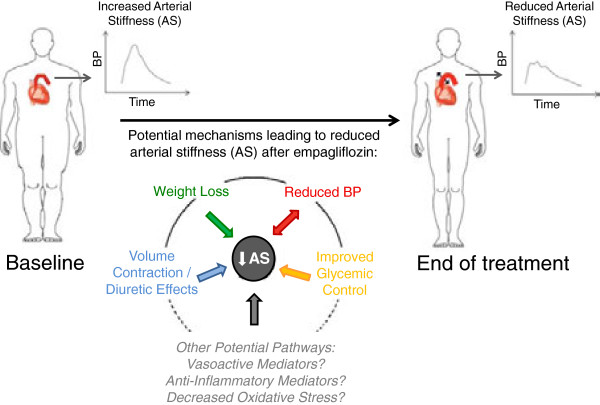
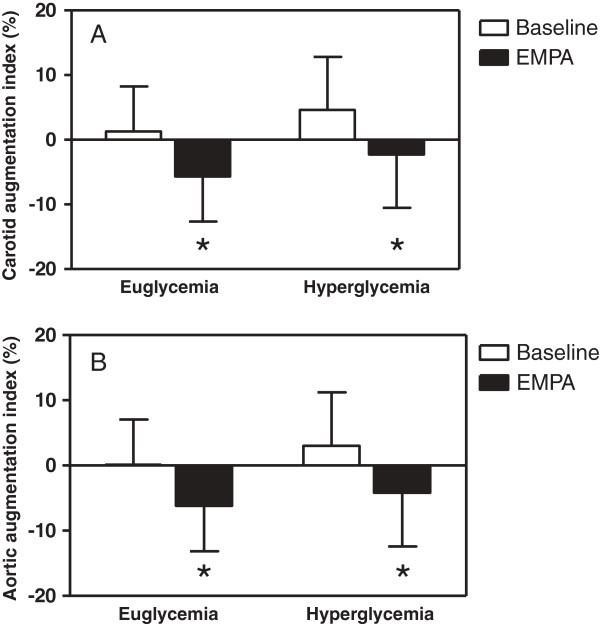
BACKGROUND: Individuals with type 1 diabetes mellitus are at high risk for the development of hypertension, contributing to cardiovascular complications. Hyperglycaemia-mediated neurohormonal activation increases arterial stiffness, and is an important contributing factor for hypertension. Since the sodium glucose cotransport-2 (SGLT2) inhibitor empagliflozin lowers blood pressure and HbA1c in type 1 diabetes mellitus, we hypothesized that this agent would also reduce arterial stiffness and markers of sympathetic nervous system activity. METHODS: Blood pressure, arterial stiffness, heart rate variability (HRV) and circulating adrenergic mediators were measured during clamped euglycaemia (blood glucose 4-6 mmol/L) and hyperglycaemia (blood glucose 9-11 mmol/L) in 40 normotensive type 1 diabetes mellitus patients. Studies were repeated after 8 weeks of empagliflozin (25 mg once daily). RESULTS: In response to empagliflozin during clamped euglycaemia, systolic blood pressure (111 ± 9 to 109 ± 9 mmHg, p = 0.02) and augmentation indices at the radial (-52% ± 16 to -57% ± 17, p = 0.0001), carotid (+1.3 ± 1 7.0 to -5.7 ± 17.0%, p < 0.0001) and aortic positions (+0.1 ± 13.4 to -6.2 ± 14.3%, p < 0.0001) declined. Similar effects on arterial stiffness were observed during clamped hyperglycaemia without changing blood pressure under this condition. Carotid-radial pulse wave velocity decreased significantly under both glycemic conditions (p ≤ 0.0001), while declines in carotid-femoral pulse wave velocity were only significant during clamped hyperglycaemia (5.7 ± 1.1 to 5.2 ± 0.9 m/s, p = 0.0017). HRV, plasma noradrenalin and adrenaline remained unchanged under both clamped euglycemic and hyperglycemic conditions. CONCLUSIONS: Empagliflozin is associated with a decline in arterial stiffness in young type 1 diabetes mellitus subjects. The underlying mechanisms may relate to pleiotropic actions of SGLT2 inhibition, including glucose lowering, antihypertensive and weight reduction effects. CLINICAL TRIAL REGISTRATION: NCT01392560.
Overview
The claims and statistics of this paper haven’t been checked yet.
Free: it reads the open-access text and checks the first 5 claims that cite a source we can check. Create a free account to check every claim.
Integrity signals
Registry
Cites
Statistics
Figures
Verification
Claims the paper makes
The claims and statistics of this paper haven’t been checked yet.
Free: it reads the open-access text and checks the first 5 claims that cite a source we can check. Create a free account to check every claim.
Claims other papers make about this one
Each is checked against this paper’s own text: does it say what the citing paper says it does?
The source backs part of the claim, not all of it — or backs it for a different population, condition or comparison.
In the citing paper
“Regardless of the underlying mechanisms, relatively modest reductions in BP with SGLT2 inhibition are unlikely to fully explain the substantial risk reductions in kidney failure and cardiovascular outcomes with these agents, 9,[35][36][37] a conclusion supported by the finding that less than 10% of treatment effects on kidney and cardiovascular outcomes were explained by change in systolic BP.”
From Blood Pressure Effects of Canagliflozin and Clinical Outcomes in Type 2 Diabetes and Chronic Kidney Disease: Insights From the CREDENCE Trial (2021) · cites this paper as [36]
Experimental — accuracy not yet measured
Self-check
Percentages, sums and reported differences re-computed from the paper’s own numbers.
The self-check needs the paper’s full text.
Citations
Cites
(1993) · New England Journal of Medicine · doi:10.1056/nejm199309303291401 · Cited by 24,667
Adler, A. I. (2000) · BMJ · doi:10.1136/bmj.321.7258.412 · Cited by 2,133 · cited 1×
“Figure 1 Physiological mechanisms implicated in arterial stiffness low lowering strategies also increase the risk of severe hypoglycemic events [15-17] and promote weight gain and sodium retention resulting in higher blood pressure [16-18], thereby mitigating the benefit that can be achieved through tight glycemic con…”
Mann, J. F., Schmieder, R. E., McQueen, M., Dyal, L., Schumacher, H., Pogue, J., Wang, X., Maggioni, A., Budaj, A., Chaithiraphan, S., et al. (2008) · The Lancet · doi:10.1016/s0140-6736(08)61236-2 · Cited by 1,589 · cited 1×
“Unfortunately, blockade of RAAS pathways provides incomplete protection against the development of diabetic complications [6] and dual RAAS blockade strategies may increase the risk of serious adverse effects such as acute kidney injury and hyperkalemia [7,8].”
Severe hypoglycemia and risks of vascular events and death
Zoungas, S., Patel, A., Chalmers, J., de Galan, B. E., Li, Q., Billot, L., Woodward, M., Ninomiya, T., Neal, B., MacMahon, S., et al. (2010) · New England Journal of Medicine · doi:10.1056/nejmoa1003795 · Cited by 1,471 · cited 1×
“Figure 1 Physiological mechanisms implicated in arterial stiffness low lowering strategies also increase the risk of severe hypoglycemic events [15-17] and promote weight gain and sodium retention resulting in higher blood pressure [16-18], thereby mitigating the benefit that can be achieved through tight glycemic con…”
Cherney, D. Z. I., Perkins, B. A., Soleymanlou, N., Maione, M., Lai, V., Lee, A., Fagan, N. M., Woerle, H. J., Johansen, O. E., Broedl, U. C., et al. (2014) · Circulation · doi:10.1161/circulationaha.113.005081 · Cited by 1,329
Self-citationSkyler, J. S., Bergenstal, R., Bonow, R. O., Buse, J., Deedwania, P., Gale, E. A. M., Howard, B. V., Kirkman, M. S., Kosiborod, M., Reaven, P., et al. (2009) · Diabetes Care · doi:10.2337/dc08-9026 · Cited by 881
Renal and retinal effects of enalapril and losartan in type 1 diabetes
Mauer, M., Zinman, B., Gardiner, R., Suissa, S., Sinaiko, A., Strand, T., Drummond, K., Donnelly, S., Goodyer, P., Gubler, M. C., et al. (2009) · New England Journal of Medicine · doi:10.1056/nejmoa0808400 · Cited by 791 · cited 2×
“Unfortunately, blockade of RAAS pathways provides incomplete protection against the development of diabetic complications [6] and dual RAAS blockade strategies may increase the risk of serious adverse effects such as acute kidney injury and hyperkalemia [7,8].”
Sodium-Glucose Cotransport Inhibition With Dapagliflozin in Type 2 Diabetes
List, J. F., Woo, V., Morales, E., Tang, W., & Fiedorek, F. T. (2009) · Diabetes Care · doi:10.2337/dc08-1863 · Cited by 698
The Diabetes Control and Complications (DCCT) Research Group (1995) · Kidney International · doi:10.1038/ki.1995.236 · Cited by 694
Barnett, A. H., Mithal, A., Manassie, J., Jones, R., Rattunde, H., Woerle, H. J., & Broedl, U. C. (2014) · The Lancet Diabetes & Endocrinology · doi:10.1016/s2213-8587(13)70208-0 · Cited by 574
Self-citation
Research works printed but not linked: 1
- Perkins BA Cherney DZI Partridge H Soleymanlou N Tschirhart H Zinman B Fagan N Kaspers S Woerle HJ Broedl UC The sodium glucose co-transporter-2 (SGLT2) inhibitor empagliflozin improves glycemic control in patients with type 1 diabetes: a single-arm clinical trial Diabetes Care 2013 in press
Cited by
Items 201–300 of 468
Chiang, C., Ueng, K.-C., Chao, T., Lin, T., Wu, Y.-J., Wang, K.-L., Sung, S., Yeh, H., Li, Y., Liu, P., et al. (2020) · Journal of the Chinese Medical Association · doi:10.1097/jcma.0000000000000359 · Cited by 31
SGLT2 Inhibitors in the Treatment of Diabetic Kidney Disease: More than Just Glucose Regulation
Klen, J., & Dolžan, V. (2023) · Pharmaceutics · doi:10.3390/pharmaceutics15071995 · Cited by 38
Vaziri, Z., Saleki, K., Aram, C., Alijanizadeh, P., Pourahmad, R., Azadmehr, A., & Ziaei, N. (2023) · Biomedicine & Pharmacotherapy · doi:10.1016/j.biopha.2023.115686 · Cited by 31
Research advances in the diagnosis and treatment of MASLD/MASH
Wang, D., Miao, J., Zhang, L., & Zhang, L. (2024) · Annals of Medicine · doi:10.1080/07853890.2024.2445780 · Cited by 47
Provenzano, M., Pelle, M. C., Zaffina, I., Tassone, B., Pujia, R., Ricchio, M., Serra, R., Sciacqua, A., Michael, A., Andreucci, M., et al. (2021) · Frontiers in Medicine · doi:10.3389/fmed.2021.654557 · Cited by 36
“They improve endothelial dysfunction and reduced oxidative stress and inflammation, all of which are largely related to the effect of glucose on renal vascular and tubular cells (60).”
Sarzani, R., Giulietti, F., Pentima, C. D., & Spannella, F. (2020) · Nutrition Metabolism and Cardiovascular Diseases · doi:10.1016/j.numecd.2020.05.030 · Cited by 31
Gordin, D., & Groop, P. (2016) · Journal of Diabetes Science and Technology · doi:10.1177/1932296816636894 · Cited by 31
SGLT2-Inhibition in Patients With Alport Syndrome
Boeckhaus, J., Gale, D. P., Simon, J. F., Ding, J., Zhang, Y., Bergmann, C., Turner, N., Hall, M., Sayer, J. A., Srivastava, S., et al. (2024) · Kidney International Reports · doi:10.1016/j.ekir.2024.09.014 · Cited by 33
Cardiovascular effects of sodium glucose cotransporter 2 inhibitors
Cavaiola, T. S., & Pettus, J. (2018) · Diabetes Metabolic Syndrome and Obesity · doi:10.2147/dmso.s154602 · Cited by 27
“The mechanistic basis for the observed BP reduction with SGLT2 inhibitors is not fully understood,(66) but proposed mechanisms include diuretic effects,(72,73) reduction in weight,(74) and decreased arterial stiffness.(75) Lowering BP by one or a combination of these mechanisms would be expected to provide prompt redu…”
Cintra, R. M. R., Moura, F. A., de Carvalho, L. S. F., Barreto, J., Tambascia, M. A., Pecoits‐Filho, R., & Sposito, A. C. (2019) · Revista da Associação Médica Brasileira · doi:10.1590/1806-9282.65.1.70 · Cited by 32
Tanaka, A., Shimabukuro, M., Machii, N., Teragawa, H., Okada, Y., Shima, K. R., Takamura, T., Taguchi, I., Hisauchi, I., Toyoda, S., et al. (2020) · Journal of Diabetes Investigation · doi:10.1111/jdi.13289 · Cited by 30
Kolwelter, J., Bosch, A., Jung, S., Stabel, L., Kannenkeril, D., Ott, C., Bramlage, P., Schiffer, M., Achenbach, S. S., & Schmieder, R. E. (2021) · ESC Heart Failure · doi:10.1002/ehf2.13622 · Cited by 29
“previously analysed post hoc the data of five trials conducted in patients with type 2 diabetes and demonstrated not only a reduction in BP but also a significantly reduced cPP under the treatment of empagliflozin compared with placebo.(25) In a previous study of our group, a 6 week empagliflozin treatment in patients…”
On behalf of the PROTECT Study Investigators, Tanaka, A., Murohara, T., Taguchi, I., Eguchi, K., Suzuki, M., Kitakaze, M., Sato, Y., Ishizu, T., Higashi, Y., et al. (2016) · Cardiovascular Diabetology · doi:10.1186/s12933-016-0449-7 · Cited by 27
“In clinical studies, direct effects on arterial stiffness were also observed in patients with type 1and type 2 diabetes [70, 71].”
Treating Disease Mechanisms in Patients With Heart Failure and Diabetes Mellitus
Trang, A., & Aguilar, D. A. (2017) · Current Heart Failure Reports · doi:10.1007/s11897-017-0371-7 · Cited by 28
Sodium-glucose cotransporter 2 inhibitors and heart failure: the best timing for the right patient
Severino, P., D’Amato, A., Prosperi, S., Costi, B., Angotti, D., Birtolo, L. I., Chimenti, C., Lavalle, C., Maestrini, V., Mancone, M., et al. (2021) · Heart Failure Reviews · doi:10.1007/s10741-021-10170-1 · Cited by 32
Cardiovascular Risks and Benefits of Medications Used for Weight Loss
Bramante, C. T., Raatz, S. J., Bomberg, E. M., Bensignor, M. O., & Ryder, J. R. (2020) · Frontiers in Endocrinology · doi:10.3389/fendo.2019.00883 · Cited by 27
“Accompanying these metabolic changes (lowering of glucose and insulin with increases in glucagon), improvements in BP and arterial stiffness have been observed (34, 35).”
Sodium glucose cotransporters inhibitors in type 1 diabetes
Dellepiane, S., Nasr, M. B., Assi, E., Usuelli, V., Letizia, T., D’Addio, F., Zuccotti, G., & Fiorina, P. (2018) · Pharmacological Research · doi:10.1016/j.phrs.2018.04.018 · Cited by 26
SGLT2 inhibition increases serum copeptin in young adults with type 1 diabetes
Lytvyn, Y., Bjornstad, P., Katz, A., Singh, S. K. S., Godoy, L. C., Chung, L. T., VINOVSKIS, C. L., Pyle, L., Roussel, R., Perkins, B. A., et al. (2019) · Diabetes & Metabolism · doi:10.1016/j.diabet.2019.11.006 · Cited by 27
“gov NCT01392560), the results of which were published previously [13, 14].”
Self-citationSridhar, V. S., Rahman, H. U., & Cherney, D. Z. I. (2020) · Diabetes, Obesity and Metabolism · doi:10.1111/dom.13965 · Cited by 24
“glycaemic control; (b) body weight loss; (c) blood pressure lowering, which occurs regardless of eGFR level or HbA1c lowering effects,(10,11) possibly via decreases in arterial stiffness.(12,13) While not yet fully”
Self-citationCai, D., Chen, Q., Mao, L., Xiao, T., Wang, Y., Gu, Q., Wang, Q., Ji, Y., & Sun, L. V. (2024) · European Journal of Clinical Pharmacology · doi:10.1007/s00228-024-03623-7 · Cited by 27
“It was also found that SGLT2 inhibitors could activate anti-inflammatory and antifibrotic pathways, improve renal oxygenation, and reduce glomerular hypertension and hyperfiltration, in addition to their obvious benefits in lowering blood pressure and reducing body weight [26, 27].”
Sodium Glucose Cotransporter 2 (SGLT2) Inhibitors Across the Spectrum of Hypertension
Sanidas, E. A., Papadopoulos, D. P., Hatziagelaki, E. E., Grassos, C. A., Velliou, M., & Barbetseas, J. D. (2019) · American Journal of Hypertension · doi:10.1093/ajh/hpz157 · Cited by 24
Is it time to think about the sodium glucose co‐transporter 2 sympathetically?
Elliott, R. H., Matthews, V. B., Rudnicka, C., & Schlaich, M. P. (2016) · Nephrology · doi:10.1111/nep.12620 · Cited by 23
Empagliflozin for the treatment of type 2 diabetes
Jahagirdar, V. R., & Barnett, A. H. (2014) · Expert Opinion on Pharmacotherapy · doi:10.1517/14656566.2014.966078 · Cited by 24
“The mechanism by which empagliflozin reduces BP has not been established, but may be related to improved glycemic control, diuretic effects, weight loss, reduced arterial stiffness, and/or direct vascular effects [47-49].”
Sodium-Glucose Cotransporter 2 (SGLT2) Inhibitors and Cardiovascular Disease: A Systematic Review
Kalra, S. (2016) · Cardiology and Therapy · doi:10.1007/s40119-016-0069-z · Cited by 23
“No significant changes in sympathetic nervous system activity were reported [28], further suggesting that SGLT2 inhibitors reduce afterload.”
Cardiovascular effects of anti-diabetes drugs
Younk, L. M., Lamos, E. M., & Davis, S. N. (2016) · Expert Opinion on Drug Safety · doi:10.1080/14740338.2016.1195368 · Cited by 24
“In young patients with type 1 diabetes mellitus (T1DM), arterial stiffness was reduced during clamped euglycemia and hyperglycemia following treatment with empagliflozin for 8 weeks [82].”
Chiang, C., Lin, S.-Y., Lin, T., Wang, T., Yeh, H., Chen, J., Tsai, C., Hung, Y.-J., Li, Y., Liu, P., et al. (2018) · Journal of the Chinese Medical Association · doi:10.1016/j.jcma.2018.01.001 · Cited by 22
“Moreover, SGLT-2 inhibitors decreased aortic stiffness(204) and augmentation index.(204) The potential role of increased lipolysis and enhanced bioavailability of free fatty acids and ketone bodies in subjects treated with SGLT2 inhibitors may also be relevant.”
Pharmacological therapy and cardiovascular risk reduction for type 2 diabetes
Martins, E. B., Lima, E. G., Pitta, F. G., Carvalho, L. N. S., de Queiroz, T. D., & Junior, C. V. S. (2020) · Revista da Associação Médica Brasileira · doi:10.1590/1806-9282.66.9.1283 · Cited by 25
Metabolomics of Arterial Stiffness
Paapstel, K., & Kals, J. (2022) · Metabolites · doi:10.3390/metabo12050370 · Cited by 25
“Current therapeutic options that ameliorate S include antihypertensives (renin–angiotensin–aldosterone system (RAAS) inhibitors [37], calcium channel blockers [38]), statins [39], and antidiabetic agents [40,41] along with non-pharmacological interventions such as weight loss [42], exercise [42], low salt diet [43], a…”
Lamacchia, O., & Sorrentino, M. R. (2020) · Current Vascular Pharmacology · doi:10.2174/1570161118666200317150359 · Cited by 27
Griffin, M. D., Riello, R. J., Rao, V. S., Ivey-Miranda, J. B., Fleming, J. H., Maulion, C., McCallum, W. I., Sarnak, M. J., Collins, S. P., Inzucchi, S. E., et al. (2020) · ESC Heart Failure · doi:10.1002/ehf2.12759 · Cited by 22
“However, unlike traditional diuretics, they may do so with limited activation of the neurohormonal or electrolyte profile of the patient.(7) Although originally developed as”
SGLT-2 Inhibitors and Peripheral Artery Disease: A Statistical Hoax or Reality?
Chatterjee, S., Bandyopadhyay, D., Ghosh, R. K., Majumdar, U., Aneja, A., Lavie, C. J., & DEEDWANIA, P. C. (2018) · Current Problems in Cardiology · doi:10.1016/j.cpcardiol.2018.06.004 · Cited by 23
Hong, J.-Y., Park, K., Kim, J.-D., Hwang, W.-M., & Lim, D.-M. (2020) · Journal of Obesity & Metabolic Syndrome · doi:10.7570/jomes20040 · Cited by 23
Ejiri, K., Miyoshi, T., Kihara, H., Hata, Y., Nagano, T., Takaishi, A., Toda, H., Namba, S., Nakamura, Y., Akagi, S., et al. (2022) · Scientific Reports · doi:10.1038/s41598-022-19371-6 · Cited by 23
The treatment of type 1 diabetes mellitus with agents approved for type 2 diabetes mellitus
Munir, K. M., & Davis, S. N. (2015) · Expert Opinion on Pharmacotherapy · doi:10.1517/14656566.2015.1084502 · Cited by 24
“Arterial stiffness and renal hyperfiltration are also noted to improve with empagliflozin therapy in subjects with T1DM [50,51], therefore, SGLT2 inhibition may provide a novel route to simultaneously reduce hyperglycemia and renal hyperfiltration, leading to renal and cardiovascular protection [52].”
Yoon, K., Nishimura, R., Lee, J., Crowe, S., Salsali, A., Hach, T., & Woerle, H. J. (2016) · Diabetes Obesity and Metabolism · doi:10.1111/dom.12699 · Cited by 23
Self-citationJung, S., Bosch, A., Kannenkeril, D., Karg, M. V., Striepe, K., Bramlage, P., Ott, C., & Schmieder, R. E. (2019) · European Heart Journal - Cardiovascular Pharmacotherapy · doi:10.1093/ehjcvp/pvz078 · Cited by 22
Pokharel, A., Sudhamshu, K. C., Thapa, P., Karki, N., Shrestha, R., Jaishi, B., & Paudel, M. S. (2021) · Cureus · doi:10.7759/cureus.16687 · Cited by 29
“The results were comparable to other studies [22,26,28].”
Use of SGLT-2 inhibitors in the treatment of type 2 diabetes mellitus
Santos, L. L., de Lima, F. J. C., de Sousa‐Rodrigues, C. F., & Barbosa, F. T. (2017) · Revista da Associação Médica Brasileira · doi:10.1590/1806-9282.63.07.636 · Cited by 26
The EMPA-REG outcome study: critical appraisal and potential clinical implications
Perseghin, G., & Solini, A. (2016) · Cardiovascular Diabetology · doi:10.1186/s12933-016-0403-8 · Cited by 22
“Arterial stiffness empagliflozin has been reported to reduce arterial stiffness in normotensive T1DM individuals [36] and could contribute to the beneficial CV effects.”
Zurek, A. M., Yendapally, R., & Urteaga, E. M. (2017) · Diabetes Spectrum · doi:10.2337/ds16-0030 · Cited by 23
“Potential reasons include the agent’s effects on arterial stiffness, cardiac function, and cardiorenal function (19,20).”
EMPA-REG OUTCOME: The Cardiologist's Point of View
Pham, S. V., & CHILTON, R. J. (2017) · The American Journal of Cardiology · doi:10.1016/j.amjcard.2017.05.011 · Cited by 21
The Use of SGLT-2 Inhibitors in Type 2 Diabetes and Heart Failure
Riggs, K. A., Ali, H., Taegtmeyer, H., & Gutierrez, A. (2015) · Metabolic Syndrome and Related Disorders · doi:10.1089/met.2015.0038 · Cited by 22
“Under clamped euglycemic and hyperglycemic conditions, SGLT-2 inhibitors reduce measures of arterial stiffness, specifically decreasing radial augmentation index, carotid augmentation index, and aortic augmentation index.(75)”
Antiarrhythmic effects and mechanisms of sodium-glucose cotransporter 2 inhibitors: A mini review
Wu, J., Liu, Y., Wei, X., Zhang, X., Ye, Y., Li, W., & Su, X. (2022) · Frontiers in Cardiovascular Medicine · doi:10.3389/fcvm.2022.915455 · Cited by 25
Li, J.-P., Li, C., Huang, Z., Huang, C., Liu, J.-Z., Wu, T., Xu, S.-W., Mai, P., Geng, D.-F., Zhou, S., et al. (2023) · Frontiers in Pharmacology · doi:10.3389/fphar.2023.1295463 · Cited by 18
Treating Arterial Ageing in Patients with Diabetes: From Mechanisms to Effective Drugs
Lunder, M., Janić, M., & Šabović, M. (2021) · International Journal of Molecular Sciences · doi:10.3390/ijms22062796 · Cited by 20
“SGLT-2 inhibitors were shown to improve parameters of arterial stiffness, such as reduction of central systolic blood pressure, central pulse pressure [57,58], pulse wave velocity [46,52] and augmentation index [59] in patients with diabetes.”
Expanding the Use of SGLT2 Inhibitors in T2D Patients Across Clinical Settings
Cuttone, A., Cannavò, V., Abdullah, R. M. S., Fugazzotto, P., Arena, G., Brancati, S., Muscarà, A., Morace, C., Quartarone, C., Ruggeri, D., et al. (2025) · Cells · doi:10.3390/cells14090668 · Cited by 28
“Improve endothelial dysfunction and reduced oxidative stress and inflammation and decrease the renal resistive index (RI) [44]. preserving eGFR decline over time [37–40] ↓ end-stage kidney disease, or death from renal or cardiovascular causes [39–41] ↓ 30% risk for dialysis for at least 30 days,…”
Update on Hypertension Research in 2021
Mogi, M., Maruhashi, T., Higashi, Y., Masuda, T., Nagata, D., Nagai, M., Bokuda, K., Ichihara, A., Nozato, Y., Toba, A., et al. (2022) · Hypertension Research · doi:10.1038/s41440-022-00967-4 · Cited by 24
“Moreover, recent clinical studies have shown that SGLT2is reduce BP without changes in urinary sodium and fluid excretion or plasma volume [35–37], suggesting the role of other factors, such as the inhibition of the sympathetic nervous system, restoration of endothelial function, and reduction of arterial stiffness [3…”
Beal, B. A., Schutte, A. E., & Neuen, B. L. (2023) · Current Hypertension Reports · doi:10.1007/s11906-023-01281-1 · Cited by 23
“However, these findings have proved inconsistent and insignificant in human studies to date [32, 41–43].”
Ang, L. P., Kidwell, K., Dillon, B. R., Reiss, J., Fang, F., LEONE, V. A., Mizokami‐Stout, K., & Pop‐Busui, R. (2021) · Journal of Diabetes and its Complications · doi:10.1016/j.jdiacomp.2021.107949 · Cited by 19
The Na/K-ATPase Signaling and SGLT2 Inhibitor-Mediated Cardiorenal Protection: A Crossed Road?
Liu, J., Tian, J., Sodhi, K., & Shapiro, J. I. (2021) · The Journal of Membrane Biology · doi:10.1007/s00232-021-00192-z · Cited by 19
Tomiyama, H., Miwa, T., Kan, K., Matsuhisa, M., Kamiya, H., Nanasato, M., Kitano, T., Sano, H., Ohno, J., Iida, M., et al. (2016) · Cardiovascular Diabetology · doi:10.1186/s12933-016-0472-8 · Cited by 16
Kuriyama, S. (2018) · Clinical and Experimental Nephrology · doi:10.1007/s10157-018-1673-0 · Cited by 17
Lioudaki, E., Androulakis, E. S., Whyte, M., Stylianou, K., Daphnis, E., & Ganotakis, E. S. (2017) · Cardiovascular Drugs and Therapy · doi:10.1007/s10557-017-6724-3 · Cited by 18
“Modification of arterial stiffness has been considered as another mechanism implicated in the SGLT-2 inhibitors antihypertensive effect, based on findings of reduced arterial stiffness associated with SGLT-2 inhibition in young type-1 diabetic patients [30].”
SGLT2 inhibitors in peritoneal dialysis: a promising frontier toward improved patient outcomes
Stepanova, N. (2024) · Renal Replacement Therapy · doi:10.1186/s41100-024-00523-5 · Cited by 22
“This hypotensive impact is orchestrated through mechanisms such as natriuresis and associated plasma volume contraction [56], mitigation of arterial stiffness [57], and enhancement of endothelial function [58].”
Empagliflozin as a new management strategy on outcomes in patients with type 2 diabetes mellitus
Салухов, В. В., & Demidova, T. Y. (2016) · Diabetes Mellitus · doi:10.14341/dm8216 · Cited by 24
“SGLT2 inhibition decreases BP and arterial wall stiffness, and these factors are associated with nephroprotection [51].”
Cardiovascular effects and mechanisms of sodium‐glucose cotransporter‐2 inhibitors
Yang, F., Meng, R., & Zhu, D. (2020) · Chronic Diseases and Translational Medicine · doi:10.1016/j.cdtm.2020.07.002 · Cited by 19
Truong, L.-L., Scott, L. J., Pal, R., Jalink, M., Gunasekera, S., & Wijeratne, D. T. (2022) · ecancermedicalscience · doi:10.3332/ecancer.2022.1430 · Cited by 15
“The plasma volume contraction haemodynamically unloads the LV, thereby decreasing myocardial oxygen demand, ventricular wall tension and filling pressures [97].”
Kashiwagi, A., Yoshida, S., Kawamuki, K., Nakamura, I., Kazuta, K., Ueyama, E., Takahashi, H., Akiyama, N., Kondo, Y., & Ogihara, T. (2016) · Diabetology International · doi:10.1007/s13340-016-0283-x · Cited by 14
“It has also been hypothesized that SGLT2 inhibitors promote renal remodeling [33] and reduce arterial stiffness [34].”
EMPA-REG OUTCOME: The Cardiologist's Point of View
Pham, S. V., & CHILTON, R. J. (2017) · The American Journal of Medicine · doi:10.1016/j.amjmed.2017.04.006 · Cited by 18
Skelley, J. W., Carter, B. S., & Roberts, M. Z. (2018) · Vascular Health and Risk Management · doi:10.2147/vhrm.s168472 · Cited by 16
Sridhar, V. S., Dubrofsky, L., Boulet, J., & Cherney, D. Z. I. (2020) · Brazilian Journal of Nephrology · doi:10.1590/2175-8239-jbn-2020-0100 · Cited by 25
Self-citationSridhar, V. S., Ambinathan, J. P. N., Gillard, P., Mathieu, C., Cherney, D. Z. I., Lytvyn, Y., & Singh, S. K. (2021) · Transplantation · doi:10.1097/tp.0000000000003919 · Cited by 15
Self-citationGrowing role of SGLT2i in heart failure: evidence from clinical trials
Varadhan, A. K., Stephan, K., Gupta, R., Vyas, A. V., Ranchal, P., Aronow, W. S., Hawwa, N., & Lanier, G. M. (2022) · Expert Review of Clinical Pharmacology · doi:10.1080/17512433.2022.2051480 · Cited by 15
“Although the antihypertensive effects of SGLT2i treatment was initially thought to be due to osmotic diuresis and volume contraction, it was indicated that improved endothelial functions and thus reduced arterial stiffness may play a significant role in the pathway [27].”
DAILEY, G. E. (2015) · Journal of Diabetes · doi:10.1111/1753-0407.12278 · Cited by 17
Kotsis, V., Jordan, J., Stabouli, S., Antza, C., Micić, D., Jelaković, B., Schlaich, M. P., Nilsson, P. M., Kreutz, R. H., Mancia, G., et al. (2019) · Journal of Hypertension · doi:10.1097/hjh.0000000000002279 · Cited by 15
Carulli, E., Marozzi, M. S., Carella, M. C., Guaricci, A. I., Tarsia, G., Vacca, A., Desantis, V., & Cicco, S. (2025) · Cardiac failure review · doi:10.15420/cfr.2025.02 · Cited by 18
“78 77 Recent studies suggest that gliflozins might also reduce the activity of the RAAS, a system that is often overactivated in HF and contributes to ED.”
Preventing Diabetes and Atherosclerosis in the Cardiometabolic Syndrome
Ahmad, M. I., & Shapiro, M. D. (2021) · Current Atherosclerosis Reports · doi:10.1007/s11883-021-00913-8 · Cited by 15
The NEW-HOPE study and emerging therapies for difficult-to-control and resistant hypertension
Ferdinand, K. C., Harrison, D. E., & Johnson, A. E. (2020) · Progress in Cardiovascular Diseases · doi:10.1016/j.pcad.2019.12.008 · Cited by 17
Schnell, O., Valensi, P. E., Standl, E., & Ceriello, A. (2020) · Endocrinology Diabetes & Metabolism · doi:10.1002/edm2.129 · Cited by 15
Ferrannini, G., Savarese, G., & Rydén, L. (2021) · Diabetes Research and Clinical Practice · doi:10.1016/j.diabres.2021.108796 · Cited by 14
Sodium-Glucose Cotransporter-2 Inhibitors in Vascular Biology: Cellular and Molecular Mechanisms
Xiao, L., Nie, X., Cheng, Y., & Wang, N. (2021) · Cardiovascular Drugs and Therapy · doi:10.1007/s10557-021-07216-9 · Cited by 16
“The effect of SGLT2 inhibitors on arterial stiffness was first described for empagliflozin in type 1 diabetes patients without complications [40].”
Pancholia, A. K. (2018) · Indian Heart Journal · doi:10.1016/j.ihj.2018.08.022 · Cited by 18
Mechanistic effects of SGLT2 inhibition on blood pressure in diabetes
Yaribeygi, H., Atkin, S. L., & Sahebkar, A. (2019) · Diabetes & Metabolic Syndrome Clinical Research & Reviews · doi:10.1016/j.dsx.2019.03.031 · Cited by 16
The nephrological perspective on SGLT-2 inhibitors in type 1 diabetes
Gillard, P., Schnell, O., & Groop, P. (2020) · Diabetes Research and Clinical Practice · doi:10.1016/j.diabres.2020.108462 · Cited by 14
Patel, K. S., & Carbone, A. M. (2019) · Annals of Pharmacotherapy · doi:10.1177/1060028019859323 · Cited by 15
Liu, H., Sridhar, V. S., Perkins, B. A., Rosenstock, J., & Cherney, D. Z. I. (2022) · Current Diabetes Reports · doi:10.1007/s11892-022-01471-2 · Cited by 15
Self-citationNg, P. Y., Ng, A. K., Ip, A., Wu, M., Guo, R., & Yiu, K. (2023) · Critical Care Medicine · doi:10.1097/ccm.0000000000005869 · Cited by 17
“SGLT2 inhibitors can improve cell life programming (22), arterial stiffness (23), cardiac structure and function (24, 25), and reduce cardiorenal effects and albuminuria (26, 27); hence, the strong cardiorenal efficacy observed in clinical trials (28).”
Tuttle, M. L., Fang, J. C., Sarnak, M. J., & McCallum, W. I. (2024) · Seminars in Nephrology · doi:10.1016/j.semnephrol.2024.151516 · Cited by 18
Cannarella, R., Rubulotta, M., Cannarella, V., Vignera, S. L., & Calogero, A. E. (2025) · European Journal of Internal Medicine · doi:10.1016/j.ejim.2025.06.010 · Cited by 16
New Treatments for Type 2 Diabetes: Cardiovascular Protection Beyond Glucose Lowering?
Jayawardene, D., Ward, G. M., O'Neal, D. N., Theverkalam, G., MacIsaac, A. I., & MacIsaac, R. J. (2014) · Heart Lung and Circulation · doi:10.1016/j.hlc.2014.05.007 · Cited by 14
“Furthermore, a new study done on empagliflozin in normotensive type 1 diabetics, has been shown to decrease arterial stiffness, which is a surrogate marker for renal and CV outcomes [59].”
Barraclough, J., Patel, S., Yu, J., Neal, B. C., & Arnott, C. G. (2021) · Cells · doi:10.3390/cells10102699 · Cited by 14
“SGLT2 inhibitors have also been shown to improve endothelial function and aortic stiffness in humans as measured by central systolic pressure, pulse wave velocity (PWV) [77,78], renal resistance index, and FMD of the brachial artery [79].”
Kaku, K., Yamamoto, K., Fukushima, Y., Lliev, H., & Yasui, A. (2022) · Expert Opinion on Drug Safety · doi:10.1080/14740338.2022.2054987 · Cited by 14
Neutel, C. H. G., Wesley, C. D., Praet, M. V., Civati, C., Roth, L., Meyer, G. R. Y. D., Martinet, W., & Guns, P. (2023) · Vascular Pharmacology · doi:10.1016/j.vph.2023.107212 · Cited by 15
Ito, D., Ikuma-Suwa, E., Inoue, K., Kaneko, K., Yanagisawa, M., Inukai, K., Noda, M., & Shimada, A. (2016) · Journal of Clinical Medicine Research · doi:10.14740/jocmr2875w · Cited by 14
“A previous study demonstrated that SGLT2 inhibitors reduced renal inflammation and facilitated microvascular system recovery in mice [25]; whereas another study showed that the treatment of patients with type 1 diabetes using SGLT2 inhibitors decreased pulse wave velocity [26].”
Cebada, A. B., Nattero‐Chávez, L., Díaz, S. A., Escobar-Morreale, H. F., & Luque‐Ramírez, M. (2020) · Diabetes Technology & Therapeutics · doi:10.1089/dia.2019.0316 · Cited by 14
Nojima, T., Matsubayashi, Y., Yoshida, A., Suganami, H., Abe, T., Ishizawa, M., Fujihara, K., Tanaka, S., Kaku, K., & Sone, H. (2020) · Diabetic Medicine · doi:10.1111/dme.14279 · Cited by 13
Using adult stem cells to monitor endothelial dysfunction in diabetes mellitus
Jain, R., Awal, H. B., & Sen, S. (2020) · Journal of Diabetes and its Complications · doi:10.1016/j.jdiacomp.2020.107588 · Cited by 15
Saleh, S. A., Hanna, G. S., El‐Nabi, S. H., El-Domiaty, H. F., Shabaan, A., & Ewida, S. F. (2020) · Journal of Genetics · doi:10.1007/s12041-020-01196-9 · Cited by 14
Gliozzi, M., Macrì, R., Coppoletta, A. R., Musolino, V., Carresi, C., Scicchitano, M., Bosco, F., Guarnieri, L., Cardamone, A., Ruga, S., et al. (2022) · Nutrients · doi:10.3390/nu14183737 · Cited by 14
SGLT2 inhibitors use in kidney disease: what did we learn?
Akunjee, M., Khosla, S., Nylén, E., & Sen, S. (2025) · American Journal of Physiology-Endocrinology and Metabolism · doi:10.1152/ajpendo.00034.2025 · Cited by 17
The effect of SGLT2 inhibitors on cardiovascular events and renal function
Imprialos, K. P., Stavropoulos, K., Doumas, M. N., Karagiannis, A. I., & Athyros, V. G. (2017) · Expert Review of Clinical Pharmacology · doi:10.1080/17512433.2017.1370371 · Cited by 13
“Empagliflozin was found to reduce pulse wave velocity, a marker of arterial stiffness, in euglycemic and hyperglycemic clamping models [100].”
Sodium-glucose cotransporter 2 inhibition in non-diabetic kidney disease
Almaimani, M. K., Sridhar, V. S., & Cherney, D. Z. I. (2021) · Current Opinion in Nephrology & Hypertension · doi:10.1097/mnh.0000000000000724 · Cited by 14
“For example, beyond restoring glomerular pressure toward more normal physiological levels, hemodynamic effects in the systemic circulation induced by natriuresis restore relative euvolemia, lower blood pressure and arterial stiffness, and may contribute to improving cardiac preload and afterload [21,25,26].”
Self-citationScholtes, R. A., Mosterd, C. M., Hesp, A. C., Smits, M. M., Heerspink, H. J. L., & van Raalte, D. H. (2022) · Diabetes Obesity and Metabolism · doi:10.1111/dom.14864 · Cited by 14
“reduction in arterial stiffness, which has been associated with improved blood pressure control.(46,47) Although we did not find a significant decrease in the variable AIX@HR75, possibly because of the”
Pleiotropic effect of sodium-glucose cotransporter 2 inhibitors on blood pressure
Kao, T., & Huang, C. (2022) · Frontiers in Cardiovascular Medicine · doi:10.3389/fcvm.2022.1086672 · Cited by 14
SGLT-2 Inhibitors: The Next-generation Treatment for Type 2 Diabetes Mellitus
Lukic, N., Mačvanin, M., Gluvic, Z. M., Rizzo, M., Radak, D. J., Suri, J. S., & Isenović, E. R. (2023) · Current Medicinal Chemistry · doi:10.2174/0109298673251493231011192520 · Cited by 16
Fioretto, P., & Avogaro, A. (2017) · Expert Opinion on Pharmacotherapy · doi:10.1080/14656566.2017.1300253 · Cited by 13
“It has been proposed that reduction in local RAS signaling may also contribute [42,93].”
Beyond type 2 diabetes: sodium glucose co‐transporter‐inhibition in type 1 diabetes
Biester, T., Kordonouri, O., & Danne, T. (2019) · Diabetes Obesity and Metabolism · doi:10.1111/dom.13659 · Cited by 14
“In addition, arterial stiffness decreased in these patients.(56) In a placebo-controlled, randomized-controlled trial (RCT) with”
Sodium‐glucose co‐transporters and diabetic nephropathy: Is there a link with toll‐like receptors?
Jigheh, Z. A., Haghjo, A. G., Argani, H., & Sanajou, D. (2020) · Clinical and Experimental Pharmacology and Physiology · doi:10.1111/1440-1681.13261 · Cited by 12
Koeneman, M., Olde Bekkink, M., Meijel, L. V., Bredie, S., & de Galan, B. (2022) · Journal of Diabetes Science and Technology · doi:10.1177/19322968211007485 · Cited by 11
Yadav, J., Ahsan, F., Panda, P., Mahmood, T., Ansari, V. A., & Shamim, A. (2024) · Current Diabetes Reviews · doi:10.2174/0115733998271026231127051545 · Cited by 13
Metadata
- Authors
- Cherney, D. Z., Perkins, B. A., Soleymanlou, N., Har, R., Fagan, N., Johansen, O., Woerle, H.-J., von Eynatten, M., & Broedl, U. C.
- Affiliations
- University Health Network (CA)
- Boehringer Ingelheim (Canada) (CA)
- Boehringer Ingelheim (United States) (US)
- Boehringer Ingelheim (Germany) (DE)
- Corresponding author
- Cherney, David ZI
- Venue
- Cardiovascular Diabetology
- Published
- 2014
- Volume
- 13
- Issue
- 1
- Pages
- 28
- ISSN
- 1475-2840 (ISSN-L)
- PMC
- PMC3915232
- OpenAlex
- W2148513135
- Cited by
- 470
- References
- 63
- Citations by year
- 2026: 11 · 2025: 19 · 2024: 27 · 2023: 30 · 2022: 40 · 2021: 52 · 2020: 55 · 2019: 46 · 2018: 49 · 2017: 46 · 2016: 49 · 2015: 33 · 2014: 12
- FWCI
- 32.07
- Type
- journal article
- Language
- en
- Open access
- gold
- doi.org
- Locations
- Cardiovascular Diabetology (publishedVersion)
- Europe PMC (PubMed Central) (publishedVersion, cc-by)
- PubMed Central (publishedVersion, cc-by)
- PubMed (publishedVersion)
- TSpace (University of Toronto) (submittedVersion)
- Funders
- American Society of Nephrology
- Heart and Stroke Foundation of Canada
- Canadian Diabetes Association
- Kidney Foundation of Canada
- Topics
- Health Sciences › Medicine › Cardiology and Cardiovascular Medicine › Cardiovascular Health and Disease Prevention
- Health Sciences › Medicine › Endocrinology, Diabetes and Metabolism › Diabetes Treatment and Management
- Health Sciences › Medicine › Cardiology and Cardiovascular Medicine › Blood Pressure and Hypertension Studies
- Keywords
- empagliflozin, type 1 diabetes, arterial stiffness, heart rate variability, SGLT2 inhibitors, hyperglycemia, pulse wave velocity, blood pressure, sympathetic activity, norepinephrine, epinephrine, hypertension, cardiovascular complications, neurohormonal activation, augmentation index
- MeSH terms
- Adult, Benzhydryl Compounds, Blood Pressure, Diabetes Mellitus, Type 1, Female, Glucosides, Heart Rate, Humans, Male, Prospective Studies, Cohort Studies, Treatment Outcome, Young Adult, Vascular Stiffness
About these checks
Registry, retraction, Cites and statistics results are computed, not judged, with one exception: a printed reference that no index lists is read once by a model before it counts as a citation error. Claims are extracted by a model and kept only when their quote appears verbatim in the text; each cited source is then checked, with a model’s help, for whether it says what the claim relies on. Those verdicts can be wrong — read the claim’s quote and the cited source before relying on one.
Statistics and arithmetic are recomputed, not judged.
Confidence bands are shown only for fields calibrated on our annotated test set. None is calibrated yet, so no band is shown.
What counts as a claim ›How we measure confidence ›How we check this ›
Are you an author, or do you see a problem with this page? Request a review
Data sources
Bibliographic data: Semantic Scholar, OpenAlex, Crossref.
Contains information from the Semantic Scholar Academic Graph Datasets, made available under the ODC Attribution License (ODC-BY 1.0).
Semantic Scholar’s data is described in: Kinney, R., et al. (2023). The Semantic Scholar Open Data Platform. arXiv:2301.10140.
