

The effect of empagliflozin on arterial stiffness and heart rate variability in subjects with uncomplicated type 1 diabetes mellitus
Open accessThe DOI matches its Crossref record; 63 of the 63 references it cites were found in a registry or an index.
Abstract
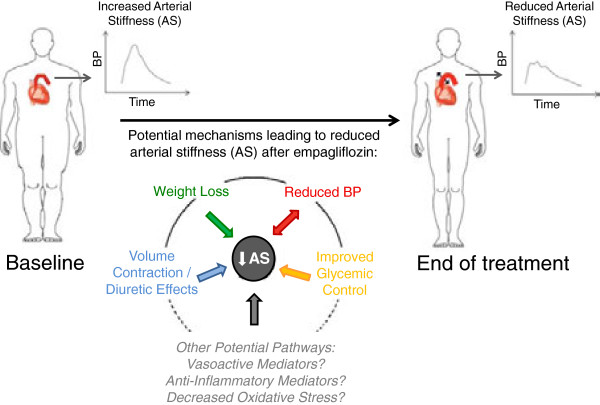
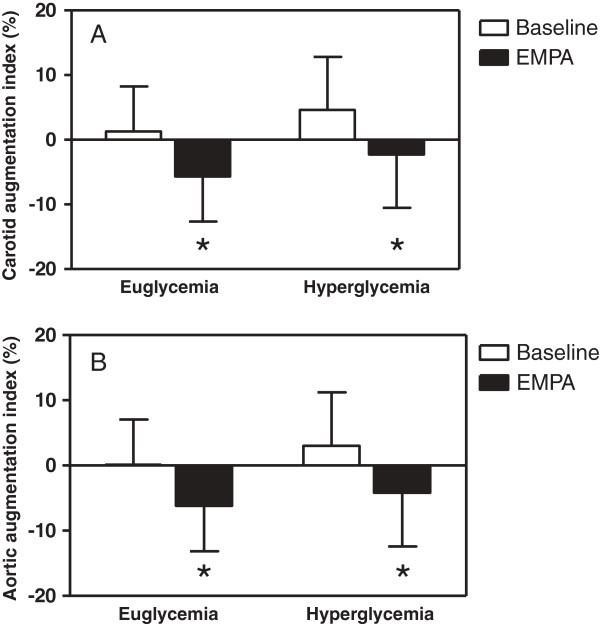
BACKGROUND: Individuals with type 1 diabetes mellitus are at high risk for the development of hypertension, contributing to cardiovascular complications. Hyperglycaemia-mediated neurohormonal activation increases arterial stiffness, and is an important contributing factor for hypertension. Since the sodium glucose cotransport-2 (SGLT2) inhibitor empagliflozin lowers blood pressure and HbA1c in type 1 diabetes mellitus, we hypothesized that this agent would also reduce arterial stiffness and markers of sympathetic nervous system activity. METHODS: Blood pressure, arterial stiffness, heart rate variability (HRV) and circulating adrenergic mediators were measured during clamped euglycaemia (blood glucose 4-6 mmol/L) and hyperglycaemia (blood glucose 9-11 mmol/L) in 40 normotensive type 1 diabetes mellitus patients. Studies were repeated after 8 weeks of empagliflozin (25 mg once daily). RESULTS: In response to empagliflozin during clamped euglycaemia, systolic blood pressure (111 ± 9 to 109 ± 9 mmHg, p = 0.02) and augmentation indices at the radial (-52% ± 16 to -57% ± 17, p = 0.0001), carotid (+1.3 ± 1 7.0 to -5.7 ± 17.0%, p < 0.0001) and aortic positions (+0.1 ± 13.4 to -6.2 ± 14.3%, p < 0.0001) declined. Similar effects on arterial stiffness were observed during clamped hyperglycaemia without changing blood pressure under this condition. Carotid-radial pulse wave velocity decreased significantly under both glycemic conditions (p ≤ 0.0001), while declines in carotid-femoral pulse wave velocity were only significant during clamped hyperglycaemia (5.7 ± 1.1 to 5.2 ± 0.9 m/s, p = 0.0017). HRV, plasma noradrenalin and adrenaline remained unchanged under both clamped euglycemic and hyperglycemic conditions. CONCLUSIONS: Empagliflozin is associated with a decline in arterial stiffness in young type 1 diabetes mellitus subjects. The underlying mechanisms may relate to pleiotropic actions of SGLT2 inhibition, including glucose lowering, antihypertensive and weight reduction effects. CLINICAL TRIAL REGISTRATION: NCT01392560.
Overview
The claims and statistics of this paper haven’t been checked yet.
Free: it reads the open-access text and checks the first 5 claims that cite a source we can check. Create a free account to check every claim.
Integrity signals
Registry
Cites
Statistics
Figures
Verification
Claims the paper makes
The claims and statistics of this paper haven’t been checked yet.
Free: it reads the open-access text and checks the first 5 claims that cite a source we can check. Create a free account to check every claim.
Claims other papers make about this one
Each is checked against this paper’s own text: does it say what the citing paper says it does?
The source backs part of the claim, not all of it — or backs it for a different population, condition or comparison.
In the citing paper
“Regardless of the underlying mechanisms, relatively modest reductions in BP with SGLT2 inhibition are unlikely to fully explain the substantial risk reductions in kidney failure and cardiovascular outcomes with these agents, 9,[35][36][37] a conclusion supported by the finding that less than 10% of treatment effects on kidney and cardiovascular outcomes were explained by change in systolic BP.”
From Blood Pressure Effects of Canagliflozin and Clinical Outcomes in Type 2 Diabetes and Chronic Kidney Disease: Insights From the CREDENCE Trial (2021) · cites this paper as [36]
Experimental — accuracy not yet measured
Self-check
Percentages, sums and reported differences re-computed from the paper’s own numbers.
The self-check needs the paper’s full text.
Citations
Cites
(1993) · New England Journal of Medicine · doi:10.1056/nejm199309303291401 · Cited by 24,667
Adler, A. I. (2000) · BMJ · doi:10.1136/bmj.321.7258.412 · Cited by 2,133 · cited 1×
“Figure 1 Physiological mechanisms implicated in arterial stiffness low lowering strategies also increase the risk of severe hypoglycemic events [15-17] and promote weight gain and sodium retention resulting in higher blood pressure [16-18], thereby mitigating the benefit that can be achieved through tight glycemic con…”
Mann, J. F., Schmieder, R. E., McQueen, M., Dyal, L., Schumacher, H., Pogue, J., Wang, X., Maggioni, A., Budaj, A., Chaithiraphan, S., et al. (2008) · The Lancet · doi:10.1016/s0140-6736(08)61236-2 · Cited by 1,589 · cited 1×
“Unfortunately, blockade of RAAS pathways provides incomplete protection against the development of diabetic complications [6] and dual RAAS blockade strategies may increase the risk of serious adverse effects such as acute kidney injury and hyperkalemia [7,8].”
Severe hypoglycemia and risks of vascular events and death
Zoungas, S., Patel, A., Chalmers, J., de Galan, B. E., Li, Q., Billot, L., Woodward, M., Ninomiya, T., Neal, B., MacMahon, S., et al. (2010) · New England Journal of Medicine · doi:10.1056/nejmoa1003795 · Cited by 1,471 · cited 1×
“Figure 1 Physiological mechanisms implicated in arterial stiffness low lowering strategies also increase the risk of severe hypoglycemic events [15-17] and promote weight gain and sodium retention resulting in higher blood pressure [16-18], thereby mitigating the benefit that can be achieved through tight glycemic con…”
Cherney, D. Z. I., Perkins, B. A., Soleymanlou, N., Maione, M., Lai, V., Lee, A., Fagan, N. M., Woerle, H. J., Johansen, O. E., Broedl, U. C., et al. (2014) · Circulation · doi:10.1161/circulationaha.113.005081 · Cited by 1,329
Self-citationSkyler, J. S., Bergenstal, R., Bonow, R. O., Buse, J., Deedwania, P., Gale, E. A. M., Howard, B. V., Kirkman, M. S., Kosiborod, M., Reaven, P., et al. (2009) · Diabetes Care · doi:10.2337/dc08-9026 · Cited by 881
Renal and retinal effects of enalapril and losartan in type 1 diabetes
Mauer, M., Zinman, B., Gardiner, R., Suissa, S., Sinaiko, A., Strand, T., Drummond, K., Donnelly, S., Goodyer, P., Gubler, M. C., et al. (2009) · New England Journal of Medicine · doi:10.1056/nejmoa0808400 · Cited by 791 · cited 2×
“Unfortunately, blockade of RAAS pathways provides incomplete protection against the development of diabetic complications [6] and dual RAAS blockade strategies may increase the risk of serious adverse effects such as acute kidney injury and hyperkalemia [7,8].”
Sodium-Glucose Cotransport Inhibition With Dapagliflozin in Type 2 Diabetes
List, J. F., Woo, V., Morales, E., Tang, W., & Fiedorek, F. T. (2009) · Diabetes Care · doi:10.2337/dc08-1863 · Cited by 698
The Diabetes Control and Complications (DCCT) Research Group (1995) · Kidney International · doi:10.1038/ki.1995.236 · Cited by 694
Barnett, A. H., Mithal, A., Manassie, J., Jones, R., Rattunde, H., Woerle, H. J., & Broedl, U. C. (2014) · The Lancet Diabetes & Endocrinology · doi:10.1016/s2213-8587(13)70208-0 · Cited by 574
Self-citation
Research works printed but not linked: 1
- Perkins BA Cherney DZI Partridge H Soleymanlou N Tschirhart H Zinman B Fagan N Kaspers S Woerle HJ Broedl UC The sodium glucose co-transporter-2 (SGLT2) inhibitor empagliflozin improves glycemic control in patients with type 1 diabetes: a single-arm clinical trial Diabetes Care 2013 in press
Cited by
Items 101–200 of 468
Tamargo, J. L. (2019) · European Cardiology Review · doi:10.15420/ecr.2018.34.2 · Cited by 76
Ejiri, K., Miyoshi, T., Kihara, H., Hata, Y., Nagano, T., Takaishi, A., Toda, H., Nanba, S., Nakamura, Y., Akagi, S., et al. (2020) · Journal of the American Heart Association · doi:10.1161/jaha.119.015103 · Cited by 81
Gager, G. M., von Lewinski, D., Sourij, H., Jilma, B., Eyileten, C., Filipiak, K., Hülsmann, M., Kubica, J., Postula, M. A., & Siller-Matula, J. M. (2021) · Biomedicine & Pharmacotherapy · doi:10.1016/j.biopha.2021.112169 · Cited by 75
Cardiovascular Benefits from Gliflozins: Effects on Endothelial Function
Salvatore, T., Caturano, A., Galiero, R., Martino, A. D., Albanese, G., Vetrano, E., Sardu, C., Marfella, R., Rinaldi, L., & Sasso, F. C. (2021) · Biomedicines · doi:10.3390/biomedicines9101356 · Cited by 75
“The first reported a decline in arterial stiffness in a group of young patients [127].”
Control of 24-hour blood pressure with SGLT2 inhibitors to prevent cardiovascular disease
Kario, K., Ferdinand, K. C., & O’Keefe, J. H. (2020) · Progress in Cardiovascular Diseases · doi:10.1016/j.pcad.2020.04.003 · Cited by 72
Renal physiology of glucose handling and therapeutic implications
Cherney, D. Z. I., Kanbay, M., & Lovshin, J. A. (2020) · Nephrology Dialysis Transplantation · doi:10.1093/ndt/gfz230 · Cited by 73
“Importantly, plasma volume contraction with SGLT2 inhibition is not associated with sympathetic nervous system activation or a reflex tachycardia [47], for reasons that are not yet understood, whereas older generation thiazide diuretics modestly raise heart rate [48, 49].”
Self-citationGlucose and Blood Pressure-Dependent Pathways–The Progression of Diabetic Kidney Disease
Patel, D. M., Bose, M., & Cooper, M. E. (2020) · International Journal of Molecular Sciences · doi:10.3390/ijms21062218 · Cited by 72
Herrington, W. G., Savarese, G., Haynes, R., Marx, N., Mellbin, L., Lund, L. H., Dendale, P., Seferovic, P., Rosano, G., Staplin, N., et al. (2021) · European Journal of Heart Failure · doi:10.1002/ejhf.2286 · Cited by 63
Impact of sodium–glucose cotransporter 2 inhibitors on blood pressure
Reed, J. (2016) · Vascular Health and Risk Management · doi:10.2147/vhrm.s111991 · Cited by 64
Metabolism of the failing heart and the impact of SGLT2 inhibitors
García‐Ropero, Á., Santos‐Gallego, C. G., Zafar, M. U., & Badimón, J. J. (2019) · Expert Opinion on Drug Metabolism & Toxicology · doi:10.1080/17425255.2019.1588886 · Cited by 71
“bolic changes, improvement in CV function by decreasing arterial stiffness and vascular resistance [46,47] and a direct natriuretic effect that reduces blood pressure (BP) [48].”
Current and emerging drug targets in heart failure treatment
Ghionzoli, N., Gentile, F., Franco, A. D., Castiglione, V., Aimo, A., Giannoni, A., Burchielli, S., Cameli, M., Emdin, M., & Vergaro, G. (2021) · Heart Failure Reviews · doi:10.1007/s10741-021-10137-2 · Cited by 72
Use of Empagliflozin in Recipients of Kidney Transplant: A Report of 8 Cases
Attallah, N., & Yassine, L. (2019) · Transplantation Proceedings · doi:10.1016/j.transproceed.2019.05.023 · Cited by 62
Singh, J. S., Fathi, A., Vickneson, K., Mordi, I. R., Mohan, M., Houston, J. G., Pearson, E. R., Struthers, A. D., & Lang, C. C. (2016) · Cardiovascular Diabetology · doi:10.1186/s12933-016-0419-0 · Cited by 68
“This class of drug has been shown to lower blood pressure (by 7–10 mmHg) [27, 28], reduce arterial stiffness [29], reduce urinary microalbuminuria [30] (a marker of CV risk) and reduce triglycerides and increase HDL and LDL cholesterol (without altering HDL/LDL ratios) [24].”
Sternlicht, H., & Bakris, G. L. (2019) · Current Hypertension Reports · doi:10.1007/s11906-019-0920-4 · Cited by 60
Blood Sugar Regulation for Cardiovascular Health Promotion and Disease Prevention
Schwarz, P. E. H., Timpel, P., Harst, L., Greaves, C. J., Ali, M. K., Lambert, J., Weber, M. B., Almedawar, M. M., & Morawietz, H. (2018) · Journal of the American College of Cardiology · doi:10.1016/j.jacc.2018.07.081 · Cited by 60
Cardiovascular Protection by Sodium Glucose Cotransporter 2 Inhibitors: Potential Mechanisms
Staels, B. (2017) · The American Journal of Cardiology · doi:10.1016/j.amjcard.2017.05.013 · Cited by 59
“Furthermore, reduced arterial stiffness observed in patients with T1DM following empagliflozin treatment has been reported to be unrelated to nitric oxide and systemic RAAS activity.(64) Regarding EMPA-REG OUTCOME, it has been suggested that empagliflozin may act via the nonclassic RAAS pathways.”
The heart failure burden of type 2 diabetes mellitus—a review of pathophysiology and interventions
Ofstad, A. P., Atar, D., Gullestad, L., Langslet, G., & Johansen, O. E. (2018) · Heart Failure Reviews · doi:10.1007/s10741-018-9685-0 · Cited by 59
Self-citationDiabetic nephropathy: newer therapeutic perspectives
Keri, K., Samji, N. S., & Blumenthal, S. S. (2018) · Journal of Community Hospital Internal Medicine Perspectives · doi:10.1080/20009666.2018.1500423 · Cited by 70
Value of circulating miRNA-21 in the diagnosis of subclinical diabetic cardiomyopathy
Tao, L., Huang, X., Xu, M., Qin, Z., Zhang, F., Hua, F., Jiang, X., & Wang, Y. (2020) · Molecular and Cellular Endocrinology · doi:10.1016/j.mce.2020.110944 · Cited by 63
“In non-DCM patients, such as patients with diabetic nephropathy, aortic stiffness and acute coronary syndrome (ACS), HbA1c% levels can become elevated nonspecifically (Patin et al., 2019; Cherney et al., 2014; Shichiri et al., 2000; James et al., 2010).”
Hypertension: Current trends and future perspectives
Hunter, P. G., Chapman, F. A., & Dhaun, N. (2021) · British Journal of Clinical Pharmacology · doi:10.1111/bcp.14825 · Cited by 95
SGLT2 Inhibitors: The Sweet Success for Kidneys
Dharia, A., Khan, A. A., Sridhar, V. S., & Cherney, D. Z. I. (2023) · Annual Review of Medicine · doi:10.1146/annurev-med-042921-102135 · Cited by 69
Self-citationHeise, T., Jordan, J., Wanner, C., Heer, M. A., Macha, S., Mattheus, M., Lund, S. S., Woerle, H. J., & Broedl, U. C. (2016) · Clinical Therapeutics · doi:10.1016/j.clinthera.2016.08.008 · Cited by 65
Self-citationEMPA-REG OUTCOME: The Nephrologist's Point of View
Wanner, C. (2017) · The American Journal of Medicine · doi:10.1016/j.amjmed.2017.04.007 · Cited by 57
“W anner EM PA-REG OU TCOM E: Nephrology S69 studies in T1DM and T2DM demonstrated an increase in circulating RAAS mediators (angiotensin II, aldosterone).31,38 Empagliflozin had no significant effects on vagal tone and sympathetic nervous system activity during clamped euglycemia and hyperglycemia in patients with T1D…”
Sodium-glucose cotransporter 2 inhibitors: extending the indication to non-diabetic kidney disease?
Dekkers, C. C. J., & Gansevoort, R. T. (2020) · Nephrology Dialysis Transplantation · doi:10.1093/ndt/gfz264 · Cited by 63
Glycolytic lactate in diabetic kidney disease
Darshi, M., Kugathasan, L., Maity, S., Sridhar, V. S., Fernandez, R. A., Limonte, C. P., Grajeda, B. I., Saliba, A., Zhang, G., Drel, V. R., et al. (2024) · JCI Insight · doi:10.1172/jci.insight.168825 · Cited by 68
“Blood glucose levels were maintained between 4 and 6 mM by euglycemic clamp and later between 9 and 11 mM by hyperglycemic clamp (22).”
Self-citationKimura, G. (2016) · Journal of the American Society of Hypertension · doi:10.1016/j.jash.2016.01.009 · Cited by 60
Patoulias, D., Papadopoulos, C. E., Stavropoulos, K., Zografou, I., Doumas, M. N., & Karagiannis, A. I. (2020) · Journal of Clinical Hypertension · doi:10.1111/jch.13831 · Cited by 72
Natali, A., Nesti, L., Fabiani, I., Calogero, E., & Bello, V. D. (2017) · Cardiovascular Diabetology · doi:10.1186/s12933-017-0615-6 · Cited by 59
Urinary adenosine excretion in type 1 diabetes
Rajasekeran, H., Lytvyn, Y., Bozovic, A., Lovshin, J. A., Diamandis, E., Cattran, D., Husain, M., Perkins, B. A., Advani, A., Reich, H. N., et al. (2017) · American Journal of Physiology-Renal Physiology · doi:10.1152/ajprenal.00043.2017 · Cited by 56
Self-citationEMPA-REG OUTCOME: The Nephrologist's Point of View
Wanner, C. (2017) · The American Journal of Cardiology · doi:10.1016/j.amjcard.2017.05.012 · Cited by 74
Pathophysiological Links Between Diabetes and Blood Pressure
Libianto, R., Batu, D., MacIsaac, R. J., Cooper, M. E., & Ekinci, E. I. (2018) · Canadian Journal of Cardiology · doi:10.1016/j.cjca.2018.01.010 · Cited by 71
Cardiometabolic effects of a new class of antidiabetic agents
Desouza, C. V., Gupta, N., & Patel, A. (2015) · Clinical Therapeutics · doi:10.1016/j.clinthera.2015.02.016 · Cited by 54
Ramirez, A. J., Sanchez, M. J., & Sanchez, R. A. (2018) · Journal of Hypertension · doi:10.1097/hjh.0000000000001907 · Cited by 63
Effects of Empagliflozin on Fluid Overload, Weight, and Blood Pressure in CKD
Mayne, K. J., Staplin, N., Keane, D. F., Wanner, C., Brenner, S., Cejka, V., Stegbauer, J., Judge, P. K., Preiss, D., Emberson, J., et al. (2023) · Journal of the American Society of Nephrology · doi:10.1681/asn.0000000000000271 · Cited by 66
“34 EMPA-KIDNEY now substantially extends these previous fi ndings by studying longer term effects (over 18 months) in a much larger number of participants in a placebo-controlled trial.”
Self-citationde Boer, S. A., Heerspink, H. J. L., Juárez‐Orozco, L. E., van Roon, A. M., Kamphuisen, P. W., Smit, A. J., Slart, R. H. J. A., Lefrandt, J. D., & Mulder, D. J. (2017) · Diabetes Obesity and Metabolism · doi:10.1111/dom.12925 · Cited by 59
Katakami, N., Mita, T., Yoshii, H., Shiraiwa, T., Yasuda, T., Okada, Y., Torimoto, K., Umayahara, Y., Kaneto, H., Osonoi, T., et al. (2021) · Cardiovascular Diabetology · doi:10.1186/s12933-020-01206-1 · Cited by 55
“A single-arm, prospective clinical trial in 42 patients with T1DM revealed that 8-week treatment with empagliflozin was associated with a decline in arterial stiffness as assessed by cfPWV and carotid-radial PWV [8].”
Ghosh, R. K., Bandyopadhyay, D., Hajra, A., Biswas, M., & Gupta, A. (2016) · International Journal of Cardiology · doi:10.1016/j.ijcard.2016.02.134 · Cited by 56
Margonato, D., Galati, G., Mazzetti, S., Cannistraci, R., Perseghin, G., Margonato, A., & Mortara, A. (2021) · Heart Failure Reviews · doi:10.1007/s10741-020-10024-2 · Cited by 53
Unraveling reno-protective effects of SGLT2 inhibition in human proximal tubular cells
Pirklbauer, M., Schupart, R., Fuchs, L., Staudinger, P., Corazza, U., Sallaberger, S., Leierer, J., Mayer, G. J., & Schramek, H. (2018) · American Journal of Physiology-Renal Physiology · doi:10.1152/ajprenal.00431.2018 · Cited by 57
Newman, A. A., Grimm, N. C., Wilburn, J. R., Schoenberg, H. M., Trikha, S. R. J., Luckasen, G. J., Biela, L. M., Melby, C. L., & Bell, C. (2019) · The Journal of Clinical Endocrinology & Metabolism · doi:10.1210/jc.2018-01741 · Cited by 50
“indicator of cardiac autonomic balance), or circulating catecholamines (56).”
Kario, K., Okada, K., Murata, M., Suzuki, D., Yamagiwa, K., Abe, Y., Usui, I., Tsuchiya, N., Iwashita, C., Harada, N., et al. (2020) · Journal of Clinical Hypertension · doi:10.1111/jch.13988 · Cited by 52
Why the endothelium? The endothelium as a target to reduce diabetes-associated vascular disease
Triggle, C. R., Ding, H., Marei, I., Anderson, T. J., & Hollenberg, M. D. (2020) · Canadian Journal of Physiology and Pharmacology · doi:10.1139/cjpp-2019-0677 · Cited by 49
Hypertension in Patients with Insulin Resistance: Etiopathogenesis and Management in Children
Tagi, V. M., Mainieri, F., & Chiarelli, F. (2022) · International Journal of Molecular Sciences · doi:10.3390/ijms23105814 · Cited by 51
“Data from the Candesartan in Heart failure: Assessment of Reduction in Mortality and Morbidity (CHARM) program, showed that an increase in HbA1C level of 1% was associated with a 25% increased risk of cardiovascular (CV) death, hospitalization for worsening heart failure, and all-cause death [88].”
InfluentialRahman, A., Hitomi, H., & Nishiyama, A. (2017) · Hypertension Research · doi:10.1038/hr.2016.193 · Cited by 50
Yoshikawa, T., Kishi, T., Shinohara, K., Takesue, K., Shibata, R., Sonoda, N., Inoguchi, T., Sunagawa, K., Tsutsui, H., & Hirooka, Y. (2017) · Hypertension Research · doi:10.1038/hr.2017.14 · Cited by 49
Yang, Y., Zhao, C., Ye, Y., Yu, M., & Qu, X. (2020) · Frontiers in Endocrinology · doi:10.3389/fendo.2020.00190 · Cited by 54
de Leeuw, A. E., & de Boer, R. A. (2016) · European Heart Journal - Cardiovascular Pharmacotherapy · doi:10.1093/ehjcvp/pvw009 · Cited by 46
“Additionally, empagliflozin treatment has been shown to decrease arterial stiffness and may also prevent the development of endothelial dysfunction in T1DM.(75,114)”
Inhibition of Sodium Glucose Cotransporters Improves Cardiac Performance
García‐Ropero, Á., Vargas-Delgado, A. P., Santos‐Gallego, C. G., & Badimón, J. J. (2019) · International Journal of Molecular Sciences · doi:10.3390/ijms20133289 · Cited by 49
“Interestingly, SGLT2 receptors are not expressed in the heart and that suggests an indirect effect on cardiac metabolism that remains still unknown [61].”
SGLT2 Inhibitors in Diabetic and Non-Diabetic Chronic Kidney Disease
Podestà, M. A., Sabiu, G., Galassi, A., Ciceri, P., & Cozzolino, M. G. (2023) · Biomedicines · doi:10.3390/biomedicines11020279 · Cited by 65
“This effect on blood pressure is maintained even at advanced CKD levels, probably due to the improvement of endothelial function and the reduction in sympathetic nerve activity that are recorded early in the course of therapy [27].”
Salsali, A., Kim, G.-H., Woerle, H. J., Broedl, U. C., & Hantel, S. (2016) · Diabetes Obesity and Metabolism · doi:10.1111/dom.12734 · Cited by 51
Self-citationSGLT2 inhibitors and the kidney: Effects and mechanisms
Tsimihodimos, V., Filippatos, T. D., & Elisaf, M. S. (2018) · Diabetes & Metabolic Syndrome: Clinical Research & Reviews · doi:10.1016/j.dsx.2018.06.003 · Cited by 46
El Masri, D., Ghosh, S., & Jaber, L. A. (2018) · Diabetes Research and Clinical Practice · doi:10.1016/j.diabres.2018.01.004 · Cited by 45
“Several published studies on the use of SGLT2 inhibitors in type 1 diabetes were excluded because they did not meet the inclusion criteria, with most studies being non-RCTs [35-41].”
Kadowaki, T., Haneda, M., Inagaki, N., Terauchi, Y., Taniguchi, A., Koiwai, K., Rattunde, H., Woerle, H. J., & Broedl, U. C. (2015) · Advances in Therapy · doi:10.1007/s12325-015-0198-0 · Cited by 55
Self-citationReducing Type 1 Diabetes Mortality: Role for Adjunctive Therapies?
Snaith, J. R., Holmes-Walker, D. J., & Greenfield, J. R. (2020) · Trends in Endocrinology & Metabolism · doi:10.1016/j.tem.2019.11.007 · Cited by 45
Hu, M., Cai, X., Yang, W., Zhang, S., Nie, L., & Ji, L. (2020) · Journal of the American Heart Association · doi:10.1161/jaha.119.015323 · Cited by 49
Barış, V. Ö., Dinçsoy, A. B., Gedikli, E., Zırh, S., Muftuoglu, S. F., & Erdem, A. (2021) · Cardiovascular Toxicology · doi:10.1007/s12012-021-09665-y · Cited by 53
Mechanisms of blood pressure reduction with sodium-glucose co-transporter 2 (SGLT2) inhibitors
Filippatos, T. D., Tsimihodimos, V., & Elisaf, M. (2016) · Expert Opinion on Pharmacotherapy · doi:10.1080/14656566.2016.1201073 · Cited by 47
“The decrease of BP levels with SGLT2 inhibitors, especially of SBP (an effect that can be speculated to be due to the reduction of blood volume and the decrease of pulse pressure and other markers of arterial stiffness [2,18]), might have played a role in the impressive cardiovascular results of the EMPA-REG OUTCOME.”
Scheen, A. J. (2016) · Diabetes Research and Clinical Practice · doi:10.1016/j.diabres.2016.09.016 · Cited by 55
Cherney, D. Z. I., & Perkins, B. A. (2014) · Canadian Journal of Diabetes · doi:10.1016/j.jcjd.2014.05.006 · Cited by 46
“As described elsewhere (12), the mechanisms responsible for blood pressure lowering are likely mediated by several factors, including diuretic effects, improved arterial compliance, weight loss, improved glycemic control and anti-inflammatory pathways (Figure 3).”
InfluentialSelf-citationDey, J. (2017) · Postgraduate Medicine · doi:10.1080/00325481.2017.1307081 · Cited by 47
Mechanisms of aerobic exercise impairment in diabetes: a narrative review
Wahl, M. P., Scalzo, R. L., Regensteiner, J. G., & Reusch, J. E. B. (2018) · Frontiers in Endocrinology · doi:10.3389/fendo.2018.00181 · Cited by 44
Gorenek, B., Boriani, G., Dan, G.-A., Fauchier, L., Fenelon, G., Huang, H., Kudaiberdieva, G., Lip, G. Y. H., Mahajan, R., Potpara, T., et al. (2018) · EP Europace · doi:10.1093/europace/euy051 · Cited by 43
Pharmacological Treatment in Diabetes Mellitus Type 1 – Insulin and What Else?
Otto-Buczkowska, E., & Jainta, N. (2017) · Intern J Endocrinol Metab · doi:10.5812/ijem.13008 · Cited by 53
“The beneficial effect was also noted in lowering high blood pressure (53).”
Trujillo, J. M., & Nuffer, W. A. (2017) · Pharmacotherapy: The Journal of Human Pharmacology and Drug Therapy · doi:10.1002/phar.1903 · Cited by 42
“It is also possible that SGLT2 inhibition exerts an anti inflammatory effect that could contribute to the observed reduction in arterial stiffness.(22) Because arterial stiffness is a surrogate marker of renal and cardiac clinical outcomes, SGLT2 inhibitor–induced reduction in arterial stiffness may be an important me…”
InfluentialMechanisms of Protective Effects of SGLT2 Inhibitors in Cardiovascular Disease and Renal Dysfunction
Liu, B., Wang, Y., Zhang, Y., & Yan, B. (2019) · Current Topics in Medicinal Chemistry · doi:10.2174/1568026619666190828161409 · Cited by 45
Empagliflozin, a sodium glucose co-transporter 2 inhibitor, in the treatment of type 1 diabetes
Lamos, E. M., Younk, L. M., & Davis, S. N. (2014) · Expert Opinion on Investigational Drugs · doi:10.1517/13543784.2014.909407 · Cited by 43
“Additionally, the study then investigated whether improved glycemic control with empagliflozin over an 8-week period would affect systemic hemodynamic effects [33].”
The EMPA-REG study: What has it told us? A diabetologist’s perspective
DeFronzo, R. A. (2015) · Journal of Diabetes and its Complications · doi:10.1016/j.jdiacomp.2015.10.013 · Cited by 44
“With respect to this, it should be noted that empagliflozin has been shown to reduce arterial stiffness in diabetic patients (Cherney et al., 2014).”
Potential role of sodium glucose cotransporter 2 inhibitors in the treatment of hypertension
Tikkanen, I., Chilton, R., & Johansen, O. E. (2016) · Current Opinion in Nephrology and Hypertension · doi:10.1097/mnh.0000000000000199 · Cited by 40
Self-citationSen, T., Scholtes, R. A., Greasley, P. J., Cherney, D. Z. I., Dekkers, C. C. J., Vervloet, M. G., Danser, A. H. J., Barbour, S. J., Karlsson, C., Hammarstedt, A., et al. (2022) · Diabetes Obesity and Metabolism · doi:10.1111/dom.14729 · Cited by 43
Self-citationLee, B. S., Holstein‐Rathlou, N., Sosnovtseva, O. V., & Sørensen, C. M. (2023) · American Journal of Physiology-Cell Physiology · doi:10.1152/ajpcell.00147.2023 · Cited by 42
White, J. R. (2015) · Annals of Pharmacotherapy · doi:10.1177/1060028015573564 · Cited by 40
Ibrahim, A., Ghaleb, R., Mansour, H. M., Hanafy, A., Mahmoud, N. M., Elsharef, M. A., Salama, M. K., Elsaughier, S. M., Abdel-Wahid, L., Mohamed, M. E., et al. (2020) · Frontiers in Cardiovascular Medicine · doi:10.3389/fcvm.2020.602251 · Cited by 45
“However, unlike traditional diuretics, their action involves limited activation of the neurohormonal system and insignificant changes in the electrolyte profile of the patient (55).”
Gallwitz, B. (2018) · European Endocrinology · doi:10.17925/ee.2018.14.1.17 · Cited by 37
Sen, T., Li, J., Neuen, B. L., Arnott, C. G., Neal, B., Perkovic, V., Mahaffey, K. W., Shaw, W., Canovatchel, W., Hansen, M. K., et al. (2021) · Journal of the American Heart Association · doi:10.1161/jaha.121.021661 · Cited by 35
Rajasekeran, H., Cherney, D. Z., & Lovshin, J. A. (2017) · Current Opinion in Nephrology and Hypertension · doi:10.1097/mnh.0000000000000343 · Cited by 37
Self-citationBrunton, S. (2015) · International Journal of Clinical Practice · doi:10.1111/ijcp.12675 · Cited by 45
Bekki, M., Tahara, N., Tahara, A., Igata, S., Honda, A., Sugiyama, Y., Nakamura, T., Sun, J., Kumashiro, Y., Matsui, T., et al. (2018) · Current Vascular Pharmacology · doi:10.2174/1570161116666180515154555 · Cited by 39
Ferreira, J. P., Fitchett, D., Ofstad, A. P., Kraus, B. J., Wanner, C., Zwiener, I., Zinman, B., Lauer, S., George, J. T., Rossignol, P., et al. (2020) · American Journal of Hypertension · doi:10.1093/ajh/hpaa073 · Cited by 41
Muzurović, E., & Mikhailidis, D. P. (2020) · Expert Opinion on Pharmacotherapy · doi:10.1080/14656566.2020.1795132 · Cited by 35
Eid, S., O’Brien, P. D., Hinder, L. M., Hayes, J. M., Mendelson, F. E., Zhang, H., Zeng, L., Kretzler, K. H., Narayanan, S., Abcouwer, S. F., et al. (2020) · Biology · doi:10.3390/biology9110347 · Cited by 40
“Herein, we did not observe a change in body weight with EMPA treatment, which is aligned with several other rodent studies [7,10–13,33,34], but contrasts with reported weight loss in patients [35] and an increase in body weight in two mouse reports [8,9].”
Liu, H., Sridhar, V. S., Montemayor, D., Lovblom, L. E., Lytvyn, Y., Ye, H., Kim, J., Ali, M. T., Scarr, D., Lawler, P. R., et al. (2021) · Diabetes Obesity and Metabolism · doi:10.1111/dom.14489 · Cited by 39
Self-citationAre SGLT2 Inhibitors Reasonable Antihypertensive Drugs and Renoprotective?
Lovshin, J. A., & Gilbert, R. E. (2015) · Current Hypertension Reports · doi:10.1007/s11906-015-0551-3 · Cited by 37
Tamez, H. E., Tamez, A. L., Garza, L. A., Hernandez, M. I., & Polanco, A. C. (2015) · Journal of Diabetes & Metabolic Disorders · doi:10.1186/s40200-015-0210-x · Cited by 34
“These drugs improve glycemic control, promote weight loss and lower arterial tension; meanwhile, SGLT-2 studies in DM1 are scarce or short-timed [5–8].”
Antihypertensive effects of SGLT2 inhibitors in type 2 diabetes
Muskiet, M. H. A., van Bommel, E. J. M., & van Raalte, D. H. (2015) · The Lancet Diabetes & Endocrinology · doi:10.1016/s2213-8587(15)00457-x · Cited by 34
New and old agents in the management of diabetic nephropathy
Lytvyn, Y., Bjornstad, P., Pun, N., & Cherney, D. Z. I. (2016) · Current Opinion in Nephrology & Hypertension · doi:10.1097/mnh.0000000000000214 · Cited by 36
Self-citationBrown, A., Lang, C. C., McCrimmon, R. J., & Struthers, A. D. (2017) · BMC Cardiovascular Disorders · doi:10.1186/s12872-017-0663-6 · Cited by 35
“Data from a mechanistic trial has also demonstrated that empagliflozin reduced arterial stiffness in patients with type 1 diabetes mellitus [43].”
Røder, M. E. (2017) · Therapeutic Advances in Chronic Disease · doi:10.1177/2040622317735283 · Cited by 40
Disruption of energy utilization in diabetic cardiomyopathy; a mini review
Nirengi, S., da Silva, C. P. V., & Stanford, K. I. (2020) · Current Opinion in Pharmacology · doi:10.1016/j.coph.2020.08.015 · Cited by 37
Bjornstad, P., Greasley, P. J., Wheeler, D. C., Chertow, G. M., Langkilde, A. M., Heerspink, H. J. L., & van Raalte, D. H. (2021) · Journal of Cardiac Failure · doi:10.1016/j.cardfail.2021.07.003 · Cited by 42
“(57) Arterial stiffness, measured by pulse wave velocity (PWV), decreased in response to 8 weeks of empagliflozin 25 mg in an open-label, prospective clinical trial in young adults with type 1 diabetes mellitus.(58) Consistent with these data, a post hoc analysis from phase 3 trials in adults with T2D demonstrated red…”
Jiang, Y., Yang, P., Fu, L., Sun, L., Shen, W., & Wu, Q. (2022) · Frontiers in Endocrinology · doi:10.3389/fendo.2022.802992 · Cited by 41
“Moreover, it is important to note that SGLT2 inhibition is associated with reduced aortic stiffness (11) and cardiac structure and function improvement (12).”
Sodium-glucose co-transporter 2 inhibitors in patients with chronic kidney disease
Solomon, J., Festa, M. C., Chatzizisis, Y. S., Samanta, R., Suri, R. S., & Mavrakanas, T. A. (2022) · Pharmacology & Therapeutics · doi:10.1016/j.pharmthera.2022.108330 · Cited by 37
Sodium glucose transporter 2 (SGLT2) inhibition and ketogenesis
Kalra, S., Sahay, R. K., & Gupta, Y. (2015) · Indian Journal of Endocrinology and Metabolism · doi:10.4103/2230-8210.157859 · Cited by 35
“[4] Various authors have described pleiotropic, nonglycemic effects, such as on arterial stiffness and heart rate variability, in patients with type 1 diabetes.[5] The nephroprotective effects of SGLT2i are also been explored in current literature, and open up exciting vistas for research.”
Iordan, L., Gaiţă, L., Timar, R. Z., Avram, V. F., Sturza, A., & Timar, B. (2024) · International Journal of Molecular Sciences · doi:10.3390/ijms25137057 · Cited by 37
Perkins, B. A., Cherney, D. Z. I., Soleymanlou, N., Lee, J. A., Partridge, H., Tschirhart, H., Zinman, B., Mazze, R., Fagan, N., Kaspers, S., et al. (2015) · PLOS ONE · doi:10.1371/journal.pone.0141085 · Cited by 32
“In the pivotal 8-week single arm, open-label adjunctive-to-insulin renal mechanistic pilot trial of empagliflozin in 40 subjects with T1DM, improvements in HbA1C, hypoglycemic risk, and weight loss were observed.[10, 16, 17] To further characterize the glycemic effects of empagliflozin, we explored diurnal glycemic pa…”
Self-citationTanaka, A., Shimabukuro, M., Okada, Y., Taguchi, I., Yamaoka‐Tojo, M., Tomiyama, H., Teragawa, H., Sugiyama, S., Yoshida, H., Sato, Y., et al. (2017) · Cardiovascular Diabetology · doi:10.1186/s12933-017-0532-8 · Cited by 37
“In addition, SGLT2 inhibitors can potentially reduce SNS activity that is augmented in part due to hyperglycemia [41, 48], although empagliflozin did not affect SNS activity in younger patients with type 1 diabetes [46].”
Impact of empagliflozin in patients with diabetes and heart failure
Pham, D. D., Rocha, N. D. A., McGuire, D. K., & Neeland, I. J. (2016) · Trends in Cardiovascular Medicine · doi:10.1016/j.tcm.2016.07.008 · Cited by 35
“Several mechanisms have been postulated (Figure) including effects on osmotic diuresis and natriuresis contributing to blood pressure lowering without a compensatory increase in sympathetic nervous system activation (22), decreased arterial stiffness and vascular resistance (23), improvements in weight and visceral ad…”
Deerochanawong, C., Chan, S. P., Matawaran, B. J., Sheu, W. H., Chan, J. C. N., Man, N. H., Suastika, K., Khoo, C. M., Yoon, K., Luk, A. O. Y., et al. (2019) · Diabetes Obesity and Metabolism · doi:10.1111/dom.13819 · Cited by 32
“shown to reduce arterial stiffness and to improve vascular endothelial function, respectively, which may contribute to BP lowering.(101,102) Arterial stiffness is associated with an increased risk of CV death, especially in patients with T2DM and those at high CV risk.”
Effects of dapagliflozin and gliclazide on the cardiorenal axis in people with type 2 diabetes
van Bommel, E. J. M., Smits, M. M., Ruiter, D., Muskiet, M. H. A., Kramer, M. H. H., Nieuwdorp, M., Touw, D. J., Heerspink, H. J. L., Joles, J. A., & van Raalte, D. H. (2020) · Journal of Hypertension · doi:10.1097/hjh.0000000000002480 · Cited by 30
Madonna, R., Barachini, S., Moscato, S., Ippolito, C., Mattii, L., Lenzi, C., Balistreri, C. R., Zucchi, R., & Caterina, R. D. (2021) · Vascular Pharmacology · doi:10.1016/j.vph.2021.106949 · Cited by 31
Potential Use of SGLT-2 Inhibitors in Obstructive Sleep Apnea: A new treatment on the horizon
Tanrıöver, C., Uçku, D., Akyol, M., Çevik, E., Kanbay, A., Sridhar, V. S., Cherney, D. Z. I., & Kanbay, M. (2022) · Sleep And Breathing · doi:10.1007/s11325-022-02606-1 · Cited by 36
“There are several mechanisms proposed for the anti-hypertensive effects of SGLT2 inhibitors including osmotic diuresis and natriuresis [30], weight loss, and effects on vascular stiffness [31] as a result of hypothesized indirect effects on nitric oxide [32].”
Self-citation
Metadata
- Authors
- Cherney, D. Z., Perkins, B. A., Soleymanlou, N., Har, R., Fagan, N., Johansen, O., Woerle, H.-J., von Eynatten, M., & Broedl, U. C.
- Affiliations
- University Health Network (CA)
- Boehringer Ingelheim (Canada) (CA)
- Boehringer Ingelheim (United States) (US)
- Boehringer Ingelheim (Germany) (DE)
- Corresponding author
- Cherney, David ZI
- Venue
- Cardiovascular Diabetology
- Published
- 2014
- Volume
- 13
- Issue
- 1
- Pages
- 28
- ISSN
- 1475-2840 (ISSN-L)
- PMC
- PMC3915232
- OpenAlex
- W2148513135
- Cited by
- 470
- References
- 63
- Citations by year
- 2026: 11 · 2025: 19 · 2024: 27 · 2023: 30 · 2022: 40 · 2021: 52 · 2020: 55 · 2019: 46 · 2018: 49 · 2017: 46 · 2016: 49 · 2015: 33 · 2014: 12
- FWCI
- 32.07
- Type
- journal article
- Language
- en
- Open access
- gold
- doi.org
- Locations
- Cardiovascular Diabetology (publishedVersion)
- Europe PMC (PubMed Central) (publishedVersion, cc-by)
- PubMed Central (publishedVersion, cc-by)
- PubMed (publishedVersion)
- TSpace (University of Toronto) (submittedVersion)
- Funders
- American Society of Nephrology
- Heart and Stroke Foundation of Canada
- Canadian Diabetes Association
- Kidney Foundation of Canada
- Topics
- Health Sciences › Medicine › Cardiology and Cardiovascular Medicine › Cardiovascular Health and Disease Prevention
- Health Sciences › Medicine › Endocrinology, Diabetes and Metabolism › Diabetes Treatment and Management
- Health Sciences › Medicine › Cardiology and Cardiovascular Medicine › Blood Pressure and Hypertension Studies
- Keywords
- empagliflozin, type 1 diabetes, arterial stiffness, heart rate variability, SGLT2 inhibitors, hyperglycemia, pulse wave velocity, blood pressure, sympathetic activity, norepinephrine, epinephrine, hypertension, cardiovascular complications, neurohormonal activation, augmentation index
- MeSH terms
- Adult, Benzhydryl Compounds, Blood Pressure, Diabetes Mellitus, Type 1, Female, Glucosides, Heart Rate, Humans, Male, Prospective Studies, Cohort Studies, Treatment Outcome, Young Adult, Vascular Stiffness
About these checks
Registry, retraction, Cites and statistics results are computed, not judged, with one exception: a printed reference that no index lists is read once by a model before it counts as a citation error. Claims are extracted by a model and kept only when their quote appears verbatim in the text; each cited source is then checked, with a model’s help, for whether it says what the claim relies on. Those verdicts can be wrong — read the claim’s quote and the cited source before relying on one.
Statistics and arithmetic are recomputed, not judged.
Confidence bands are shown only for fields calibrated on our annotated test set. None is calibrated yet, so no band is shown.
What counts as a claim ›How we measure confidence ›How we check this ›
Are you an author, or do you see a problem with this page? Request a review
Data sources
Bibliographic data: Semantic Scholar, OpenAlex, Crossref.
Contains information from the Semantic Scholar Academic Graph Datasets, made available under the ODC Attribution License (ODC-BY 1.0).
Semantic Scholar’s data is described in: Kinney, R., et al. (2023). The Semantic Scholar Open Data Platform. arXiv:2301.10140.
