

The effect of empagliflozin on arterial stiffness and heart rate variability in subjects with uncomplicated type 1 diabetes mellitus
Open accessThe DOI matches its Crossref record; 63 of the 63 references it cites were found in a registry or an index.
Abstract
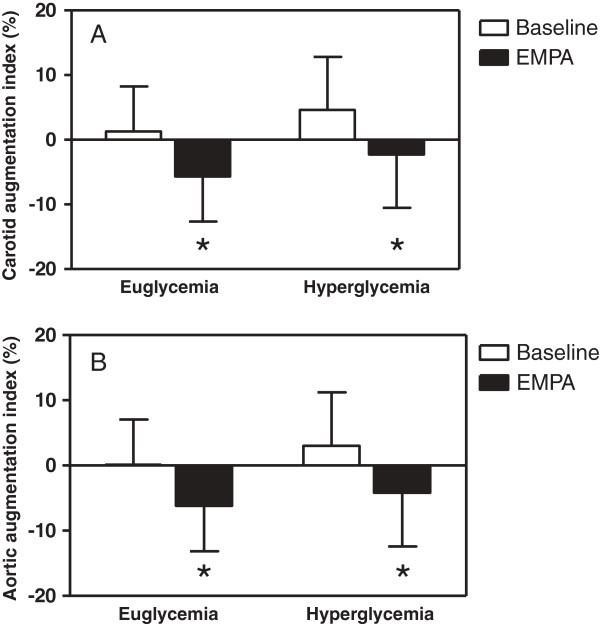
BACKGROUND: Individuals with type 1 diabetes mellitus are at high risk for the development of hypertension, contributing to cardiovascular complications. Hyperglycaemia-mediated neurohormonal activation increases arterial stiffness, and is an important contributing factor for hypertension. Since the sodium glucose cotransport-2 (SGLT2) inhibitor empagliflozin lowers blood pressure and HbA1c in type 1 diabetes mellitus, we hypothesized that this agent would also reduce arterial stiffness and markers of sympathetic nervous system activity. METHODS: Blood pressure, arterial stiffness, heart rate variability (HRV) and circulating adrenergic mediators were measured during clamped euglycaemia (blood glucose 4-6 mmol/L) and hyperglycaemia (blood glucose 9-11 mmol/L) in 40 normotensive type 1 diabetes mellitus patients. Studies were repeated after 8 weeks of empagliflozin (25 mg once daily). RESULTS: In response to empagliflozin during clamped euglycaemia, systolic blood pressure (111 ± 9 to 109 ± 9 mmHg, p = 0.02) and augmentation indices at the radial (-52% ± 16 to -57% ± 17, p = 0.0001), carotid (+1.3 ± 1 7.0 to -5.7 ± 17.0%, p < 0.0001) and aortic positions (+0.1 ± 13.4 to -6.2 ± 14.3%, p < 0.0001) declined. Similar effects on arterial stiffness were observed during clamped hyperglycaemia without changing blood pressure under this condition. Carotid-radial pulse wave velocity decreased significantly under both glycemic conditions (p ≤ 0.0001), while declines in carotid-femoral pulse wave velocity were only significant during clamped hyperglycaemia (5.7 ± 1.1 to 5.2 ± 0.9 m/s, p = 0.0017). HRV, plasma noradrenalin and adrenaline remained unchanged under both clamped euglycemic and hyperglycemic conditions. CONCLUSIONS: Empagliflozin is associated with a decline in arterial stiffness in young type 1 diabetes mellitus subjects. The underlying mechanisms may relate to pleiotropic actions of SGLT2 inhibition, including glucose lowering, antihypertensive and weight reduction effects. CLINICAL TRIAL REGISTRATION: NCT01392560.
Overview
The claims and statistics of this paper haven’t been checked yet.
Free: it reads the open-access text and checks the first 5 claims that cite a source we can check. Create a free account to check every claim.
Integrity signals
Registry
Cites
Statistics
Figures
Verification
Claims the paper makes
The claims and statistics of this paper haven’t been checked yet.
Free: it reads the open-access text and checks the first 5 claims that cite a source we can check. Create a free account to check every claim.
Claims other papers make about this one
Each is checked against this paper’s own text: does it say what the citing paper says it does?
The source backs part of the claim, not all of it — or backs it for a different population, condition or comparison.
In the citing paper
“Regardless of the underlying mechanisms, relatively modest reductions in BP with SGLT2 inhibition are unlikely to fully explain the substantial risk reductions in kidney failure and cardiovascular outcomes with these agents, 9,[35][36][37] a conclusion supported by the finding that less than 10% of treatment effects on kidney and cardiovascular outcomes were explained by change in systolic BP.”
From Blood Pressure Effects of Canagliflozin and Clinical Outcomes in Type 2 Diabetes and Chronic Kidney Disease: Insights From the CREDENCE Trial (2021) · cites this paper as [36]
Experimental — accuracy not yet measured
Self-check
Percentages, sums and reported differences re-computed from the paper’s own numbers.
The self-check needs the paper’s full text.
Citations
Cites
(1993) · New England Journal of Medicine · doi:10.1056/nejm199309303291401 · Cited by 24,667
Adler, A. I. (2000) · BMJ · doi:10.1136/bmj.321.7258.412 · Cited by 2,133 · cited 1×
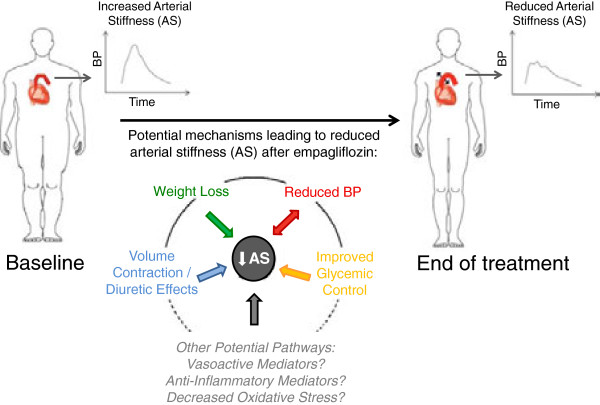
“Figure 1 Physiological mechanisms implicated in arterial stiffness low lowering strategies also increase the risk of severe hypoglycemic events [15-17] and promote weight gain and sodium retention resulting in higher blood pressure [16-18], thereby mitigating the benefit that can be achieved through tight glycemic con…”
Mann, J. F., Schmieder, R. E., McQueen, M., Dyal, L., Schumacher, H., Pogue, J., Wang, X., Maggioni, A., Budaj, A., Chaithiraphan, S., et al. (2008) · The Lancet · doi:10.1016/s0140-6736(08)61236-2 · Cited by 1,589 · cited 1×
“Unfortunately, blockade of RAAS pathways provides incomplete protection against the development of diabetic complications [6] and dual RAAS blockade strategies may increase the risk of serious adverse effects such as acute kidney injury and hyperkalemia [7,8].”
Severe hypoglycemia and risks of vascular events and death
Zoungas, S., Patel, A., Chalmers, J., de Galan, B. E., Li, Q., Billot, L., Woodward, M., Ninomiya, T., Neal, B., MacMahon, S., et al. (2010) · New England Journal of Medicine · doi:10.1056/nejmoa1003795 · Cited by 1,471 · cited 1×
“Figure 1 Physiological mechanisms implicated in arterial stiffness low lowering strategies also increase the risk of severe hypoglycemic events [15-17] and promote weight gain and sodium retention resulting in higher blood pressure [16-18], thereby mitigating the benefit that can be achieved through tight glycemic con…”
Cherney, D. Z. I., Perkins, B. A., Soleymanlou, N., Maione, M., Lai, V., Lee, A., Fagan, N. M., Woerle, H. J., Johansen, O. E., Broedl, U. C., et al. (2014) · Circulation · doi:10.1161/circulationaha.113.005081 · Cited by 1,329
Self-citationSkyler, J. S., Bergenstal, R., Bonow, R. O., Buse, J., Deedwania, P., Gale, E. A. M., Howard, B. V., Kirkman, M. S., Kosiborod, M., Reaven, P., et al. (2009) · Diabetes Care · doi:10.2337/dc08-9026 · Cited by 881
Renal and retinal effects of enalapril and losartan in type 1 diabetes
Mauer, M., Zinman, B., Gardiner, R., Suissa, S., Sinaiko, A., Strand, T., Drummond, K., Donnelly, S., Goodyer, P., Gubler, M. C., et al. (2009) · New England Journal of Medicine · doi:10.1056/nejmoa0808400 · Cited by 791 · cited 2×
“Unfortunately, blockade of RAAS pathways provides incomplete protection against the development of diabetic complications [6] and dual RAAS blockade strategies may increase the risk of serious adverse effects such as acute kidney injury and hyperkalemia [7,8].”
Sodium-Glucose Cotransport Inhibition With Dapagliflozin in Type 2 Diabetes
List, J. F., Woo, V., Morales, E., Tang, W., & Fiedorek, F. T. (2009) · Diabetes Care · doi:10.2337/dc08-1863 · Cited by 698
The Diabetes Control and Complications (DCCT) Research Group (1995) · Kidney International · doi:10.1038/ki.1995.236 · Cited by 694
Barnett, A. H., Mithal, A., Manassie, J., Jones, R., Rattunde, H., Woerle, H. J., & Broedl, U. C. (2014) · The Lancet Diabetes & Endocrinology · doi:10.1016/s2213-8587(13)70208-0 · Cited by 574
Self-citation
Research works printed but not linked: 1
- Perkins BA Cherney DZI Partridge H Soleymanlou N Tschirhart H Zinman B Fagan N Kaspers S Woerle HJ Broedl UC The sodium glucose co-transporter-2 (SGLT2) inhibitor empagliflozin improves glycemic control in patients with type 1 diabetes: a single-arm clinical trial Diabetes Care 2013 in press
Cited by
Items 301–400 of 468
Multiple Benefits of Empagliflozin in PCOS: Evidence from a Preclinical Rat Model
Rakic, D., Jakovljevic, V. L., Zivkovic, V., Uzelac, J. J., Jovic, N., Muric, M. D., Pindović, B., Dimitrijević, A., Arsenijević, P. S., Rakic, J., et al. (2024) · Pathophysiology · doi:10.3390/pathophysiology31040041 · Cited by 11
Case Reports That Illustrate the Efficacy of SGLT2 Inhibitors in the Type 1 Diabetic Patient
Bell, D. S. H. (2015) · Case Reports in Endocrinology · doi:10.1155/2015/676191 · Cited by 11
Nuevos hipoglucemiantes orales y riesgo cardiovascular. Cruzando la frontera metabólica
Dalama, B., & Mesa, J. (2016) · Revista Española de Cardiología · doi:10.1016/j.recesp.2016.07.029 · Cited by 12
What Makes Sodium-Glucose Co-Transporter-2 Inhibitors Stand out in Heart Failure?
Khan, M. S., & Vaduganathan, M. (2020) · Current Diabetes Reports · doi:10.1007/s11892-020-01347-3 · Cited by 12
Sodium-Glucose Co-Transporter 2 Inhibitors in Heart Failure—Current Evidence in Special Populations
Moady, G., Gal, T. B., & Atar, S. (2023) · Life · doi:10.3390/life13061256 · Cited by 12
“The reduction in blood pressure is suggested to be secondary to improving endothelial function and decreasing arterial stiffness and sympathetic activity (discussed below) and unrelated to volume depletion or natriuresis [42,43].”
Singh, P. K., Goyal, L., Mallick, D. C., Surani, S., & Yashi, K. (2023) · Journal of Clinical Medicine · doi:10.3390/jcm12196202 · Cited by 13
“SGLT-2 inhibitors also cause diuresis and natriuresis, which may cause a reduction in preload [13,14].”
Kugathasan, L., Sridhar, V. S., Tommerdahl, K. L., Xu, C., Bjornstad, P., Advani, A., & Cherney, D. Z. I. (2024) · Metabolism · doi:10.1016/j.metabol.2024.155785 · Cited by 12
Self-citationChen, M., Xie, C., Gao, H., Zheng, H., Chen, Q., & Fang, J. (2016) · BMJ Open · doi:10.1136/bmjopen-2015-010252 · Cited by 16
Cardiovascular outcomes in diabetic kidney disease: insights from recent clinical trials
Rocha, N. A., & McCullough, P. A. (2017) · Kidney International Supplements · doi:10.1016/j.kisu.2017.10.004 · Cited by 11
Rodbard, H. W., Giaccari, A., Cariou, B., Garg, S. K., Davies, M. J., Seth, K., & Sawhney, S. (2021) · Diabetes and Vascular Disease Research · doi:10.1177/1479164121995928 · Cited by 12
Arterial Stiffness and Type 1 Diabetes: The Current State of Knowledge
Kulecki, M., Uruska, A. A., Naskręt, D., & Zozulińska‐Ziółkiewicz, D. (2021) · Current Diabetes Reviews · doi:10.2174/1573399817666210614113827 · Cited by 12
New Oral Hypoglycemic Agents and Cardiovascular Risk. Crossing the Metabolic Border
Dalama, B., & Mesa, J. (2016) · Revista Española de Cardiología (English Edition) · doi:10.1016/j.rec.2016.07.008 · Cited by 15
John, E. E., Travlos, C. K., Luu, J., Lemay, S., Suri, R. S., & Mavrakanas, T. A. (2025) · Clinical Journal of the American Society of Nephrology · doi:10.2215/cjn.0000000693 · Cited by 11
Extra‐glycaemic properties of empagliflozin
Solini, A. (2015) · Diabetes/Metabolism Research and Reviews · doi:10.1002/dmrr.2666 · Cited by 18
“improvement of pulse-wave velocity was also documented, in the absence of any variation in cathecolamines levels [39].”
SGLT2 Inhibitors: New Hope for the Treatment of Acute Myocardial Infarction?
Wu, Y., Wang, S., & Wang, L. (2022) · American Journal of Cardiovascular Drugs · doi:10.1007/s40256-022-00545-6 · Cited by 14
“A study found that empagliflozin decreased pulse wave velocity (PWV) and augmentation index (AIx), which have prognostic value for clinical outcomes of CVD and diabetic cardiovascular complications [41, 42].”
Yamagishi, S., & Matsui, T. (2016) · Rejuvenation Research · doi:10.1089/rej.2015.1738 · Cited by 11
Sanchez, R. A., Sanabria, H. D., Santos, C. D. L., & Ramirez, A. J. (2015) · World Journal of Diabetes · doi:10.4239/wjd.v6.i11.1186 · Cited by 10
Ferrannini, G., & Rydén, L. (2018) · Clinical Science · doi:10.1042/cs20171374 · Cited by 10
Takahashi, K., Nakamura, A., Furusawa, S., Yokozeki, K., Sugawara, H., Yanagisawa, H., Akikawa, K., & Kikuchi, H. (2020) · Journal of Clinical & Translational Endocrinology · doi:10.1016/j.jcte.2020.100244 · Cited by 13
An evaluation of empagliflozin and it’s applicability to hypertension as a therapeutic option
Herat, L. Y., Matthews, V. B., Magno, A. L., Kiuchi, M. G., Carnagarin, R., & Schlaich, M. P. (2020) · Expert Opinion on Pharmacotherapy · doi:10.1080/14656566.2020.1751815 · Cited by 11
Arterial Hypertension: Novel Pharmacological Targets and Future Perspectives
Popa, I. P., Clim, A., Pînzariu, A. C., Lazăr, C. I., Popa, Ș., Tudorancea, I. M., Moscalu, M., Șerban, D. N., Șerban, I. L., Costache-Enache, I.-I., et al. (2024) · Journal of Clinical Medicine · doi:10.3390/jcm13195927 · Cited by 11
“…lowering are associated with the natriuretic effect [45], alterations of the renin–angiotensin–aldosterone system [46], improved arterial stiffness [47,48], reduced sympathetic system activity (which is over-expressed in response to hyperglycemia) [49], improved circadian rhythm [50], reduced…”
Gliflozins in hypertension: basic mechanisms and clinical insights
Rieg, T., Liu, R., & Staruschenko, A. (2025) · American Journal of Physiology-Renal Physiology · doi:10.1152/ajprenal.00119.2025 · Cited by 10
Fletcher, R. A., Arnott, C. G., Rockenschaub, P., Schutte, A. E., Carpenter, L., Vaduganathan, M., Agarwal, R., Bakris, G. L., Chang, T. I., Heerspink, H. J. L., et al. (2023) · Journal of the American Heart Association · doi:10.1161/jaha.122.028516 · Cited by 11
Kugathasan, L., Sridhar, V. S., Lovblom, L. E., Matta, S., Saliba, A., Debnath, S., Alakwaa, F., Nair, V., Bjornstad, P., Kretzler, M., et al. (2023) · Diabetes · doi:10.2337/db23-0694 · Cited by 10
Self-citationChiang, J., Chen, C., Tseng, F., Chi, Y., Huang, K., & Yang, W. (2015) · Cardiovascular Diabetology · doi:10.1186/s12933-015-0175-6 · Cited by 9
Does SGLT2 Inhibition Affect Sympathetic Nerve Activity in Type 2 Diabetes?
Dimova, R. B., & Tankova, T. I. (2020) · Hormone and Metabolic Research · doi:10.1055/a-1298-4205 · Cited by 12
Kráľová, E., Marušáková, M., Hadová, K., Křenek, P., & Klimas, J. (2021) · Journal of Pharmacy and Pharmacology · doi:10.1093/jpp/rgab005 · Cited by 9
Pollock, C. A., & Neuen, B. L. (2021) · Advances in Chronic Kidney Disease · doi:10.1053/j.ackd.2021.02.006 · Cited by 11
Paredes, S., Matta-Coelho, C., Monteiro, A. M., Brás, A., Marques, O., Alves, M., & Ribeiro, L. V. P. T. (2016) · HORMONES · doi:10.14310/horm.2002.1671 · Cited by 10
Cardiovascular Outcomes of New Medications for Type 2 Diabetes
Trujillo, J. M., Wettergreen, S. A., Nuffer, W. A., Ellis, S. L., & McDermott, M. T. (2016) · Diabetes Technology & Therapeutics · doi:10.1089/dia.2016.0295 · Cited by 8
Is GFR decline induced by SGLT2 inhibitor of clinical importance?
Günes-Altan, M., Bosch, A., Striepe, K., Bramlage, P., Schiffer, M., Schmieder, R. E., & Kannenkeril, D. (2024) · Cardiovascular Diabetology · doi:10.1186/s12933-024-02223-0 · Cited by 12
“Cherney et al. previously reported a decrease in arterial stiffness in 40 subjects with type 1 diabetes after 8 weeks of empagliflozin treatment [37].”
Meybodi, S. M., Karimi, M. A., Mousazadeh, K., Pakmehr, S., Anar, M. A., Alizadeh, A., Poudineh, M., Zerangian, N., Rahmanian, M., Fathi, M., et al. (2024) · American Journal of Cardiovascular Disease · doi:10.62347/aapz2726 · Cited by 12
Beernink, J. M., Jongs, N., Mosterd, C. M., Scholtes, R. A., Caldwell‐McGee, A., Casillas, D. I., Driscoll, L. M., Greasley, P. J., Karlsson, C., Hammarstedt, A., et al. (2025) · Diabetes Obesity and Metabolism · doi:10.1111/dom.16478 · Cited by 11
Self-citationWu, J., Zhao, X., Chen, H., & Zhu, S. (2022) · Journal of Diabetes and its Complications · doi:10.1016/j.jdiacomp.2022.108352 · Cited by 9
Jia, H., Bao, P., Yao, S., Zhang, X., Mu, J., Hu, G., Du, M., Chu, C., Zhang, X., Wang, L., et al. (2023) · Hypertension Research · doi:10.1038/s41440-023-01301-2 · Cited by 10
Kugathasan, L., Sridhar, V. S., Lytvyn, Y., Lovblom, L. E., Perkins, B. A., Advani, A., & Cherney, D. Z. I. (2024) · Diabetes Research and Clinical Practice · doi:10.1016/j.diabres.2024.111764 · Cited by 8
Self-citationFallatah, W., Brema, I. A., Alobedallah, A., Alkhathami, R., Zaheer, S., Almalki, E., Almehthel, M. S., ALZAHRANI, S. H., & Almalki, M. (2022) · Avicenna Journal of Medicine · doi:10.1055/s-0041-1742196 · Cited by 8
Vascular Smooth Muscle as a Target for Novel Therapeutics
Porter, K. E., & Riches‐Suman, K. (2015) · Current Diabetes Reports · doi:10.1007/s11892-015-0647-9 · Cited by 8
Blood Pressure and Cardiovascular Effects of New and Emerging Antidiabetic Agents
Balfour, P. C., Rodríguez, C. J., & Ferdinand, K. C. (2014) · Current Hypertension Reports · doi:10.1007/s11906-014-0455-7 · Cited by 9
Saha, S., & Saha, S. (2020) · PubMed Central · Cited by 11
Shah, S. R., Iqbal, S. M., Alweis, R. L., & Roark, S. F. (2018) · Expert Review of Clinical Pharmacology · doi:10.1080/17512433.2019.1552830 · Cited by 10
Lim, S. K. (2019) · Diabetes Obesity and Metabolism · doi:10.1111/dom.13696 · Cited by 9
“Thus, accumulated evidence supports the efficacy of SGLT2 inhibitors and SGLT2/1 co-inhibitor as adjunctive therapy to insulin in patients with T1D.”
InfluentialCVOTs: What did the endocrinologist learn?
Valensi, P. E., & Prévost, G. (2019) · Diabetes Research and Clinical Practice · doi:10.1016/j.diabres.2019.107947 · Cited by 6
Krämer, B. K., Hauske, S. J., CHILTON, R. J., Mann, J. F. E., Gullestad, L. L., FITCHETT, D. H., Mattheus, M., Steubl, D., & Wanner, C. (2023) · Journal of Diabetes and its Complications · doi:10.1016/j.jdiacomp.2023.108588 · Cited by 7
Pioli, M. R., Ritter, A. M. V., & Modolo, R. (2017) · American Journal of Hypertension · doi:10.1093/ajh/hpx204 · Cited by 8
Interpretation of the central aortic pressure waveform in elderly patients with aortic stenosis
Hungerford, S. L., Adji, A. I., & Kapur, N. K. (2023) · American Journal of Physiology-Heart and Circulatory Physiology · doi:10.1152/ajpheart.00050.2023 · Cited by 9
OLIVEROS, R. A., Pham, S. V., Bailey, S. R., & CHILTON, R. J. (2014) · touchREVIEWS in Endocrinology · doi:10.17925/ee.2014.10.02.117 · Cited by 6
Peripheral Artery Disease in Diabetes Mellitus: Focus on Novel Treatment Options
Demarchi, A., Somaschini, A., Cornara, S., & Androulakis, E. S. (2020) · Current Pharmaceutical Design · doi:10.2174/1389201021666201126143217 · Cited by 8
Nelson, A. J., Harrington, J., Kolkailah, A. A., Pagidipati, N. J., & McGuire, D. K. (2022) · Heart Failure Clinics · doi:10.1016/j.hfc.2022.03.007 · Cited by 6
SGLT-2 inhibitors in Diabetic Kidney Disease: What Lies Behind their Renoprotective Properties?
Georgianos, P. I., Divani, M., Eleftheriadis, T., Mertens, P. R., & Liakopoulos, V. (2018) · Current Medicinal Chemistry · doi:10.2174/0929867325666180524114033 · Cited by 8
Doumani, G., Theofilis, P., Vordoni, A., Thymis, V., Liapis, G., Smirloglou, D., & Kalaitzidis, R. (2025) · International Journal of Molecular Sciences · doi:10.3390/ijms26178224 · Cited by 9
Abdel‐Rahman, S. M., Al-Shiab, R., Shah, E., Güldan, M., Ak, A. B., Yilmaz, Z. Y., Fidan, D. G., Özbek, L., & Kanbay, M. (2026) · Diabetes Obesity and Metabolism · doi:10.1111/dom.70506 · Cited by 7
Dimitriadis, K. S., Pitsiori, D., Alexiou, P., Pyrpyris, N., Sakalidis, A., Beneki, E., Iliakis, P., Tatakis, F., Theofilis, P., Tsioufis, P., et al. (2025) · Journal of Cardiovascular Pharmacology · doi:10.1097/fjc.0000000000001644 · Cited by 8
Efficacy and safety of Sodium-Glucose-Transporter-2 inhibitors in kidney transplant patients
Jenssen, T. G. (2021) · Current Opinion in Nephrology & Hypertension · doi:10.1097/mnh.0000000000000749 · Cited by 5
“Furthermore, SGLT2 inhibition seems to alleviate arterial stiffness, at least in patients with type 1 [26] or type 2 [27] diabetes, and uric acid is also reduced [28].”
Gharabaghi, M. A. M. Z., Rezvanfar, M. R., Saeedi, N., Aghajani, F., Alirezaei, M., Yarahmadi, P., & Nakhostin-Ansari, A. (2022) · Clinical Diabetes and Endocrinology · doi:10.1186/s40842-022-00142-1 · Cited by 5
Johri, N., Matreja, P. S., John, D., Dutta, S., Parida, A. K., & Sarma, S. N. (2022) · Current Molecular Pharmacology · doi:10.2174/1874467216666221017123333 · Cited by 5
Weir, M. R. (2019) · Postgraduate Medicine · doi:10.1080/00325481.2019.1624582 · Cited by 7
“Reductions in arterial stiffness and vascular resistance with SGLT-2is are thought to contribute to the observed improvements in renal and CV outcomes [15,65,66].”
Anastasiou, G., Hatziagelaki, E. E., & Liberopoulos, E. N. (2021) · Journal of Cardiovascular Pharmacology · doi:10.1097/fjc.0000000000001011 · Cited by 6
Bapat, P., Dhaliwal, S., Song, C., Zhang, Y., Scarr, D., Bakhsh, A., Budhram, D., Verhoeff, N. J., Weisman, A., Fralick, M., et al. (2025) · Diabetes Care · doi:10.2337/dc25-0125 · Cited by 4
Self-citationEffect of Empagliflozin on Whole Body, Cardiac, and Renal Sympathetic Outflows in Type 2 Diabetes
Reutens, A. T., Lekamlage, D. H., Salim, A., Shaw, J. E., Esler, M., Cooper, M. E., & Kaye, D. M. (2025) · JACC Advances · doi:10.1016/j.jacadv.2025.102304 · Cited by 6
The anti-hypertensive effects of sodium-glucose cotransporter-2 inhibitors
Kugathasan, L., Dubrofsky, L., Advani, A., & Cherney, D. Z. I. (2022) · Expert Review of Cardiovascular Therapy · doi:10.1080/14779072.2023.2159810 · Cited by 5
“Three phase 3 clinical trials evaluated the glycemic efficacy of SGLT2 inhibitors as an adjunctive therapy to insulin in a T1D cohort.”
InfluentialSelf-citationEffects of Sodium-Glucose Co-Transporter-2 Inhibitors on Markers of Vascular Damage
Kourtidou, C., Rafailidis, V. D., Varouktsi, G., Kanakis, E., Liakopoulos, V., Vyzantiadis, T., Savopoulos, C. G., Marinaki, S., Stangou, M. J., & Τζιόμαλος, Κ. (2023) · Journal of Personalized Medicine · doi:10.3390/jpm13030536 · Cited by 5
“Similarly, AIx and AIx@75 improved after 8 weeks of empaglifozin administration in 40 normotensive patients with type 1 diabetes [13].”
Takahashi, J., & Fukumoto, Y. (2025) · Heart and Vessels · doi:10.1007/s00380-025-02592-w · Cited by 5
“SGLT2 inhibitors lower blood pressure without causing an increase in heart rate, indicating a potential suppression of sympathetic activity [24].”
Carotid Doppler ultrasonographic findings of dapagliflozin use in type 2 diabetic patients
Önmez, A., Gökosmanoğlu, F., Bayçelebi, G., & Arıkan, A. A. (2020) · The Aging Male · doi:10.1080/13685538.2020.1758657 · Cited by 4
Schumacher, C. (2022) · Journal of Pharmacy Practice · doi:10.1177/08971900221142686 · Cited by 4
Scarr, D., Lovblom, L. E., Ye, H., Liu, H., BAKHSH, A. M. K., Verhoeff, N. J., Wolever, T. M. S., Lawler, P. R., Sharma, K., Cherney, D. Z. I., et al. (2023) · Diabetes Research and Clinical Practice · doi:10.1016/j.diabres.2023.111031 · Cited by 4
Self-citationNedogoda, S. V., Barykina, I. N., Salasyuk, A. S., Санина, Т. Н., Смирнова, В. О., & Popova, E. A. (2020) · Russian Journal of Cardiology · doi:10.15829/1560-4071-2020-3766 · Cited by 5
Ofstad, A. P., Ulimoen, G. R., Orvik, E., Birkeland, K. I., Gullestad, L. L., Fagerland, M. W., & Johansen, O. E. (2017) · Journal of International Medical Research · doi:10.1177/0300060517707674 · Cited by 4
Self-citationThe Application of Sodium-Glucose Cotransporter 2 Inhibitors to Chronic Kidney Disease Stage 4
Koguchi, A., Adachi, H., & Yanai, H. (2017) · Journal of Clinical Medicine Research · doi:10.14740/jocmr3220w · Cited by 4
“Reduced blood pressure, arterial stiffness and vascular resistance [15, 16]”
Saha, S., & Saha, S. (2020) · Journal of Diabetes & Metabolic Disorders · doi:10.1007/s40200-020-00544-x · Cited by 4
“This hyperglycemia occurs due to the autoimmune destruction of insulinproducing pancreatic beta cells and plays a vital role in the pathogenesis of diabetic complications [3].”
SGLT2 Inhibitors: Emerging Opportunities for the Treatment of Myocardial Infarction
Nandave, M. (2024) · Springer eBooks · doi:10.1007/978-981-97-7568-2_4 · Cited by 4
Saad, M. S. (2018) · Annals of Translational Medicine · doi:10.21037/atm.2017.11.08 · Cited by 4
“Other proposed theories for the reduction of heart failure with empagliflozin includes a potential beneficial effect on the metabolic syndrome through weight reduction (18,19), and modest reduction in systolic BP (13,16), as well and cardiac oxygen demand (20).”
Sridhar, V. S., Kugathasan, L., Lytvyn, Y., Deng, Y., Liu, H., Lovblom, L. E., TSE, J. M., Nardone, M., Floras, J. S., Osuntokun, T., et al. (2025) · Hypertension · doi:10.1161/hypertensionaha.125.25955 · Cited by 3
Self-citationZhang, X., Zhang, Y., & Hu, Y. (2022) · Frontiers in Cardiovascular Medicine · doi:10.3389/fcvm.2022.1039348 · Cited by 6
“In an 8-week, openlabel, prospective clinical trial (NCT01392560) (97), the novel oral hypoglycemic agents, EMPA, could significantly reduce the parameters of vascular sclerosis, including radial augmentation Index, various sclerosis Index and aortic augmentation index.”
Sodium glucose cotransporter 2 inhibitors in the management of heart failure: Veni, Vidi, and Vici
Bhandari, M., Pradhan, A. K., Vishwakarma, P., Singh, A., & Sethi, R. (2024) · World Journal of Cardiology · doi:10.4330/wjc.v16.i10.550 · Cited by 4
“Studies have suggested that SGLT-2is decrease only interstitial fluid and not plasma volume and thus can act synergistically[12,13].”
Chou, O. H. I., Luo, Z., Chung, C. T., Chan, J. S. K., Li, H., Lakhani, I., Lee, S., Lau, D. H. H., Zhang, Q., Liu, T., et al. (2025) · Journal of the American Heart Association · doi:10.1161/jaha.123.034175 · Cited by 6
Sodium-glucose cotransporter-2 inhibitors: Moving beyond the glycemic treatment goal
Garodia, N., Gupta, V., Canovatchel, W. J., Lokesh, B., & Santani, R. (2017) · Indian Journal of Endocrinology and Metabolism · doi:10.4103/ijem.ijem_85_17 · Cited by 3
“[46,83,84] Cumulatively, all these effects have been associated with a reduction in arterial stiffness and lowering of blood pressure.[84,85]”
Akimoto, H., Takahashi, Y., & Asai, S. (2021) · YAKUGAKU ZASSHI · doi:10.1248/yakushi.20-00259 · Cited by 3
Sabirov, I. S., Murkamilov, I. T., & Fomin, V. V. (2021) · Complex Issues of Cardiovascular Diseases · doi:10.17802/2306-1278-2021-10-3-79-89 · Cited by 9
Inflammation in Diabetic Kidney Disease: Focus on New Therapeutic Considerations
Leehey, D. J., & Zhang, X. (2023) · Medical Research Archives · doi:10.18103/mra.v11i2.3614 · Cited by 3
Peppa, Μ., Manta, A., Mavroeidi, I., Asimakopoulou, A., Syrigos, A., Nastos, C., Pikoulis, E. A., & Κόλλιας, Α. (2023) · Pharmaceutics · doi:10.3390/pharmaceutics15112526 · Cited by 5
Tamanaha, T., Makino, H., Son, C., Koezuka, R., Tochiya, M., Omura‐Ohata, Y., Takekawa, T., Matsubara, M., Noguchi, M., Tomita, T., et al. (2024) · Diabetes Therapy · doi:10.1007/s13300-024-01571-0 · Cited by 3
“The reduction in blood pressure in the absence of increasing heart rate caused by SGLT2 inhibitors may be indirectly associated with a reduction in sympathetic nervous system activ‑ ity [8].”
Sodium-Glucose Cotransporter-2 Inhibitors, Reverse J-Curve Pattern, and Mortality in Heart Failure
Imprialos, K. P., Stavropoulos, K., & Papademetriou, V. (2019) · Heart Failure Clinics · doi:10.1016/j.hfc.2019.06.004 · Cited by 3
Novel blood glucose lowering therapies for managing type 1 diabetes in paediatric patients
Naciu, A. M., & Pozzilli, P. (2018) · Expert Opinion on Pharmacotherapy · doi:10.1080/14656566.2018.1441288 · Cited by 3
Jiménez, D. L., Huelgas, R. G., Romero, A. J. F., Chozas, J. M. L., de Isla, L. P., & Miramontes‐González, J. P. (2018) · Revista Clínica Española · doi:10.1016/j.rce.2018.09.021 · Cited by 3
Jiménez, D. L., Huelgas, R. G., Romero, A. J. F., Chozas, J. M. L., de Isla, L. P., & Miramontes‐González, J. P. (2019) · Revista Clínica Española (English Edition) · doi:10.1016/j.rceng.2019.01.001 · Cited by 3
Dissanayake, H. A., Dilrukshi, S., Ratnasamy, V., Soysa, P., Samarathunga, T., Bandara, P., Silva, L. D., & Katulanda, P. (2022) · Primary care diabetes · doi:10.1016/j.pcd.2022.11.005 · Cited by 3
Hypertension Treatment in Diabetes
Bensimhon, H. F., & Cavender, M. A. (2019) · Heart Failure Clinics · doi:10.1016/j.hfc.2019.06.008 · Cited by 4
Kountouri, A., Ikonomidis, I., Katogiannis, K., Thymis, J., Pavlidis, G., Korakas, E., Pliouta, L., Agapitou, V., Liatis, S., Petrovski, G., et al. (2026) · Diabetes Technology & Therapeutics · doi:10.1177/15209156261417289 · Cited by 2
Bahardoust, M., Rad, F. N., Mousavi, S., Shamohammadi, M., Haghmoradi, M., & Ghaffari, A. (2026) · Endocrinology Diabetes & Metabolism · doi:10.1002/edm2.70203 · Cited by 2
“The mechanisms of empagliflozin renal effects are likely to be multifactorial, although direct effects on the renal vasculature may play a major role [61–63].”
Histology of Cryopreserved Neonatal Rat Testes After Intratesticular Allotransplantation
Deng, B., Kireev, V. A., Melentyeva, K. V., Kovalenko, I., & Pakhomov, O. V. (2020) · Problems of Cryobiology and Cryomedicine · doi:10.15407/cryo30.01.034 · Cited by 2
Song, H., Kim, Y. R., Lee, S. E., Nam, H., Kim, H., Kyoung, D., & Kim, K. (2022) · Reviews in Cardiovascular Medicine · doi:10.31083/j.rcm2309303 · Cited by 2
“This reduces sympathetic nervous system overdrive [17], oxidative stress, inflammation [18] and vascular stiffness [19].”
SGLT2 Inhibitor: A Cardio-Renal Metabolic Pill
Krishnan, R., Subramanian, R., & Selvarajan, R. (2023) · International Journal of Health Sciences and Research · doi:10.52403/ijhsr.20230119 · Cited by 2
Abiri, B., Ahmadi, A. R., Hosseinpanah, F., Valizadeh, A., Zarghi, A., & Valizadeh, M. (2024) · Eating and Weight Disorders - Studies on Anorexia Bulimia and Obesity · doi:10.1007/s40519-024-01692-2 · Cited by 3
Amani‐Beni, R., Darouei, B., Shafie, D., Mortaheb, M., Malakoutikhah, M., Ebrahimi, A., Heidari-Hasanabadi, S., Rad, M. R., Dabaghi, G. G., Mazaheri‐Tehrani, S., et al. (2025) · BMC Cardiovascular Disorders · doi:10.1186/s12872-025-04704-w · Cited by 8
“However, SGLT2 inhibitors minimally activate the neurohormonal system and cause insignificant changes in the patient’s electrolyte profile, which differs from traditional diuretics [19, 42].”
Kountz, D. S. (2017) · Postgraduate Medicine · doi:10.1080/00325481.2017.1313074 · Cited by 2
“The mechanisms contributing to BP-lowering in SGLT2 inhibitors are likely to include the associated diuretic effects,[54, 55] weight reduction,[56] and decreased arterial stiffness.[57] It has also been postulated that a shift in myocardial and renal metabolic substrate from fat and glucose oxidation toward the utiliz…”
Sodium-glucose Co-transporter-2 Inhibitors in Type 1 Diabetes—a Dangerous Ally
Priya, G., Kalra, S., & Bhambri, V. (2017) · US Endocrinology · doi:10.17925/use.2017.13.02.75 · Cited by 2
“SGLT2 is expressed in pancreatic α-cells, and SGLT2 inhibitors increase glucagon secretion directly through ATP-sensitive potassium (KATP) channel activation.45 The resultant increase in glucagon/insulin ratio further promotes ketogenesis.30 Figure 1 delineates the potential mechanisms by which SGLT2 inhibitors may in…”
InfluentialAkkuş, O., Akkuş, G., & Kaypaklı, O. (2018) · Endocrine Metabolic & Immune Disorders - Drug Targets · doi:10.2174/1871530319666181218121508 · Cited by 2
Alkagiet, S., & Τζιόμαλος, Κ. (2020) · World Journal of Diabetes · doi:10.4239/wjd.v11.i5.150 · Cited by 2
Koo, B. K. (2021) · Journal of Obesity & Metabolic Syndrome · doi:10.7570/jomes20133 · Cited by 2
Metadata
- Authors
- Cherney, D. Z., Perkins, B. A., Soleymanlou, N., Har, R., Fagan, N., Johansen, O., Woerle, H.-J., von Eynatten, M., & Broedl, U. C.
- Affiliations
- University Health Network (CA)
- Boehringer Ingelheim (Canada) (CA)
- Boehringer Ingelheim (United States) (US)
- Boehringer Ingelheim (Germany) (DE)
- Corresponding author
- Cherney, David ZI
- Venue
- Cardiovascular Diabetology
- Published
- 2014
- Volume
- 13
- Issue
- 1
- Pages
- 28
- ISSN
- 1475-2840 (ISSN-L)
- PMC
- PMC3915232
- OpenAlex
- W2148513135
- Cited by
- 470
- References
- 63
- Citations by year
- 2026: 11 · 2025: 19 · 2024: 27 · 2023: 30 · 2022: 40 · 2021: 52 · 2020: 55 · 2019: 46 · 2018: 49 · 2017: 46 · 2016: 49 · 2015: 33 · 2014: 12
- FWCI
- 32.07
- Type
- journal article
- Language
- en
- Open access
- gold
- doi.org
- Locations
- Cardiovascular Diabetology (publishedVersion)
- Europe PMC (PubMed Central) (publishedVersion, cc-by)
- PubMed Central (publishedVersion, cc-by)
- PubMed (publishedVersion)
- TSpace (University of Toronto) (submittedVersion)
- Funders
- American Society of Nephrology
- Heart and Stroke Foundation of Canada
- Canadian Diabetes Association
- Kidney Foundation of Canada
- Topics
- Health Sciences › Medicine › Cardiology and Cardiovascular Medicine › Cardiovascular Health and Disease Prevention
- Health Sciences › Medicine › Endocrinology, Diabetes and Metabolism › Diabetes Treatment and Management
- Health Sciences › Medicine › Cardiology and Cardiovascular Medicine › Blood Pressure and Hypertension Studies
- Keywords
- empagliflozin, type 1 diabetes, arterial stiffness, heart rate variability, SGLT2 inhibitors, hyperglycemia, pulse wave velocity, blood pressure, sympathetic activity, norepinephrine, epinephrine, hypertension, cardiovascular complications, neurohormonal activation, augmentation index
- MeSH terms
- Adult, Benzhydryl Compounds, Blood Pressure, Diabetes Mellitus, Type 1, Female, Glucosides, Heart Rate, Humans, Male, Prospective Studies, Cohort Studies, Treatment Outcome, Young Adult, Vascular Stiffness
About these checks
Registry, retraction, Cites and statistics results are computed, not judged, with one exception: a printed reference that no index lists is read once by a model before it counts as a citation error. Claims are extracted by a model and kept only when their quote appears verbatim in the text; each cited source is then checked, with a model’s help, for whether it says what the claim relies on. Those verdicts can be wrong — read the claim’s quote and the cited source before relying on one.
Statistics and arithmetic are recomputed, not judged.
Confidence bands are shown only for fields calibrated on our annotated test set. None is calibrated yet, so no band is shown.
What counts as a claim ›How we measure confidence ›How we check this ›
Are you an author, or do you see a problem with this page? Request a review
Data sources
Bibliographic data: Semantic Scholar, OpenAlex, Crossref.
Contains information from the Semantic Scholar Academic Graph Datasets, made available under the ODC Attribution License (ODC-BY 1.0).
Semantic Scholar’s data is described in: Kinney, R., et al. (2023). The Semantic Scholar Open Data Platform. arXiv:2301.10140.
