

The effect of empagliflozin on arterial stiffness and heart rate variability in subjects with uncomplicated type 1 diabetes mellitus
Open accessThe DOI matches its Crossref record; 63 of the 63 references it cites were found in a registry or an index.
Abstract
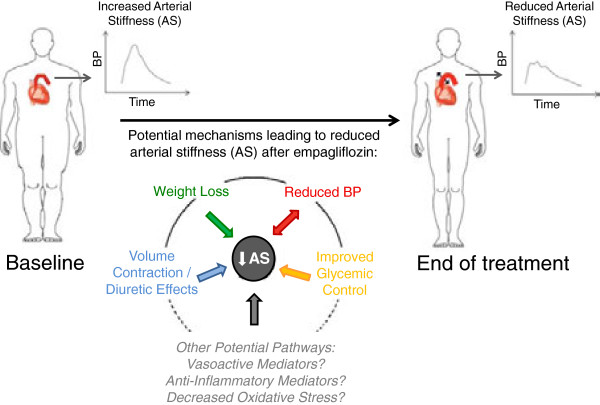
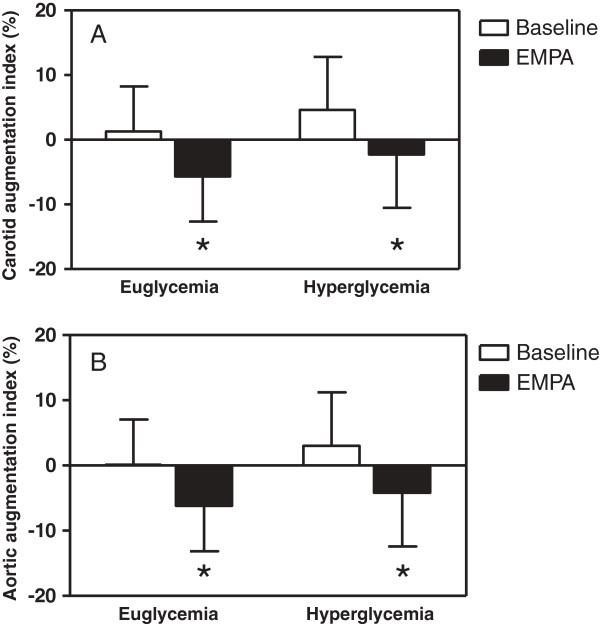
BACKGROUND: Individuals with type 1 diabetes mellitus are at high risk for the development of hypertension, contributing to cardiovascular complications. Hyperglycaemia-mediated neurohormonal activation increases arterial stiffness, and is an important contributing factor for hypertension. Since the sodium glucose cotransport-2 (SGLT2) inhibitor empagliflozin lowers blood pressure and HbA1c in type 1 diabetes mellitus, we hypothesized that this agent would also reduce arterial stiffness and markers of sympathetic nervous system activity. METHODS: Blood pressure, arterial stiffness, heart rate variability (HRV) and circulating adrenergic mediators were measured during clamped euglycaemia (blood glucose 4-6 mmol/L) and hyperglycaemia (blood glucose 9-11 mmol/L) in 40 normotensive type 1 diabetes mellitus patients. Studies were repeated after 8 weeks of empagliflozin (25 mg once daily). RESULTS: In response to empagliflozin during clamped euglycaemia, systolic blood pressure (111 ± 9 to 109 ± 9 mmHg, p = 0.02) and augmentation indices at the radial (-52% ± 16 to -57% ± 17, p = 0.0001), carotid (+1.3 ± 1 7.0 to -5.7 ± 17.0%, p < 0.0001) and aortic positions (+0.1 ± 13.4 to -6.2 ± 14.3%, p < 0.0001) declined. Similar effects on arterial stiffness were observed during clamped hyperglycaemia without changing blood pressure under this condition. Carotid-radial pulse wave velocity decreased significantly under both glycemic conditions (p ≤ 0.0001), while declines in carotid-femoral pulse wave velocity were only significant during clamped hyperglycaemia (5.7 ± 1.1 to 5.2 ± 0.9 m/s, p = 0.0017). HRV, plasma noradrenalin and adrenaline remained unchanged under both clamped euglycemic and hyperglycemic conditions. CONCLUSIONS: Empagliflozin is associated with a decline in arterial stiffness in young type 1 diabetes mellitus subjects. The underlying mechanisms may relate to pleiotropic actions of SGLT2 inhibition, including glucose lowering, antihypertensive and weight reduction effects. CLINICAL TRIAL REGISTRATION: NCT01392560.
Overview
The claims and statistics of this paper haven’t been checked yet.
Free: it reads the open-access text and checks the first 5 claims that cite a source we can check. Create a free account to check every claim.
Integrity signals
Registry
Cites
Statistics
Figures
Verification
Claims the paper makes
The claims and statistics of this paper haven’t been checked yet.
Free: it reads the open-access text and checks the first 5 claims that cite a source we can check. Create a free account to check every claim.
Claims other papers make about this one
Each is checked against this paper’s own text: does it say what the citing paper says it does?
The source backs part of the claim, not all of it — or backs it for a different population, condition or comparison.
In the citing paper
“Regardless of the underlying mechanisms, relatively modest reductions in BP with SGLT2 inhibition are unlikely to fully explain the substantial risk reductions in kidney failure and cardiovascular outcomes with these agents, 9,[35][36][37] a conclusion supported by the finding that less than 10% of treatment effects on kidney and cardiovascular outcomes were explained by change in systolic BP.”
From Blood Pressure Effects of Canagliflozin and Clinical Outcomes in Type 2 Diabetes and Chronic Kidney Disease: Insights From the CREDENCE Trial (2021) · cites this paper as [36]
Experimental — accuracy not yet measured
Self-check
Percentages, sums and reported differences re-computed from the paper’s own numbers.
The self-check needs the paper’s full text.
Citations
Cites
(1993) · New England Journal of Medicine · doi:10.1056/nejm199309303291401 · Cited by 24,667
Adler, A. I. (2000) · BMJ · doi:10.1136/bmj.321.7258.412 · Cited by 2,133 · cited 1×
“Figure 1 Physiological mechanisms implicated in arterial stiffness low lowering strategies also increase the risk of severe hypoglycemic events [15-17] and promote weight gain and sodium retention resulting in higher blood pressure [16-18], thereby mitigating the benefit that can be achieved through tight glycemic con…”
Mann, J. F., Schmieder, R. E., McQueen, M., Dyal, L., Schumacher, H., Pogue, J., Wang, X., Maggioni, A., Budaj, A., Chaithiraphan, S., et al. (2008) · The Lancet · doi:10.1016/s0140-6736(08)61236-2 · Cited by 1,589 · cited 1×
“Unfortunately, blockade of RAAS pathways provides incomplete protection against the development of diabetic complications [6] and dual RAAS blockade strategies may increase the risk of serious adverse effects such as acute kidney injury and hyperkalemia [7,8].”
Severe hypoglycemia and risks of vascular events and death
Zoungas, S., Patel, A., Chalmers, J., de Galan, B. E., Li, Q., Billot, L., Woodward, M., Ninomiya, T., Neal, B., MacMahon, S., et al. (2010) · New England Journal of Medicine · doi:10.1056/nejmoa1003795 · Cited by 1,471 · cited 1×
“Figure 1 Physiological mechanisms implicated in arterial stiffness low lowering strategies also increase the risk of severe hypoglycemic events [15-17] and promote weight gain and sodium retention resulting in higher blood pressure [16-18], thereby mitigating the benefit that can be achieved through tight glycemic con…”
Cherney, D. Z. I., Perkins, B. A., Soleymanlou, N., Maione, M., Lai, V., Lee, A., Fagan, N. M., Woerle, H. J., Johansen, O. E., Broedl, U. C., et al. (2014) · Circulation · doi:10.1161/circulationaha.113.005081 · Cited by 1,329
Self-citationSkyler, J. S., Bergenstal, R., Bonow, R. O., Buse, J., Deedwania, P., Gale, E. A. M., Howard, B. V., Kirkman, M. S., Kosiborod, M., Reaven, P., et al. (2009) · Diabetes Care · doi:10.2337/dc08-9026 · Cited by 881
Renal and retinal effects of enalapril and losartan in type 1 diabetes
Mauer, M., Zinman, B., Gardiner, R., Suissa, S., Sinaiko, A., Strand, T., Drummond, K., Donnelly, S., Goodyer, P., Gubler, M. C., et al. (2009) · New England Journal of Medicine · doi:10.1056/nejmoa0808400 · Cited by 791 · cited 2×
“Unfortunately, blockade of RAAS pathways provides incomplete protection against the development of diabetic complications [6] and dual RAAS blockade strategies may increase the risk of serious adverse effects such as acute kidney injury and hyperkalemia [7,8].”
Sodium-Glucose Cotransport Inhibition With Dapagliflozin in Type 2 Diabetes
List, J. F., Woo, V., Morales, E., Tang, W., & Fiedorek, F. T. (2009) · Diabetes Care · doi:10.2337/dc08-1863 · Cited by 698
The Diabetes Control and Complications (DCCT) Research Group (1995) · Kidney International · doi:10.1038/ki.1995.236 · Cited by 694
Barnett, A. H., Mithal, A., Manassie, J., Jones, R., Rattunde, H., Woerle, H. J., & Broedl, U. C. (2014) · The Lancet Diabetes & Endocrinology · doi:10.1016/s2213-8587(13)70208-0 · Cited by 574
Self-citation
Research works printed but not linked: 1
- Perkins BA Cherney DZI Partridge H Soleymanlou N Tschirhart H Zinman B Fagan N Kaspers S Woerle HJ Broedl UC The sodium glucose co-transporter-2 (SGLT2) inhibitor empagliflozin improves glycemic control in patients with type 1 diabetes: a single-arm clinical trial Diabetes Care 2013 in press
Cited by
Empagliflozin, Cardiovascular Outcomes, and Mortality in Type 2 Diabetes
Zinman, B., Wanner, C., Lachin, J. M., Fitchett, D., Bluhmki, E., Hantel, S., Mattheus, M., Devins, T., Johansen, O. E., Woerle, H. J., et al. (2015) · New England Journal of Medicine · doi:10.1056/nejmoa1504720 · Cited by 12,315
Self-citationEmpagliflozin and Progression of Kidney Disease in Type 2 Diabetes
Wanner, C., Inzucchi, S. E., Lachin, J. M., Fitchett, D., von Eynatten, M., Mattheus, M., Johansen, O. E., Woerle, H. J., Broedl, U. C., & Zinman, B. (2016) · New England Journal of Medicine · doi:10.1056/nejmoa1515920 · Cited by 3,655
Self-citation2023 ESC guidelines for the management of cardiovascular disease in patients with diabetes.
Marx, N., Federici, M., Schütt, K., Müller-Wieland, D., Ajjan, R. A., Antunes, M. J., Christodorescu, R. M., Crawford, C., Di Angelantonio, E., Eliasson, B., et al. (2023) · European Heart Journal · doi:10.1093/eurheartj/ehad192 · Cited by 1,642
Heerspink, H. J. L., Perkins, B. A., Fitchett, D. H., Husain, M., & Cherney, D. Z. I. (2016) · Circulation · doi:10.1161/circulationaha.116.021887 · Cited by 1,376
Self-citationMechanisms of Cardiorenal Effects of Sodium-Glucose Cotransporter 2 Inhibitors
Zelniker, T. A., & Braunwald, E. (2020) · Journal of the American College of Cardiology · doi:10.1016/j.jacc.2019.11.031 · Cited by 566
Effects of SGLT2 Inhibitors on Kidney and Cardiovascular Function
Vallon, V., & Verma, S. (2021) · Annual Review of Physiology · doi:10.1146/annurev-physiol-031620-095920 · Cited by 516
Chilton, R., Tikkanen, I., Cannon, C. P., Crowe, S., Woerle, H. J., Broedl, U. C., & Johansen, O. E. (2015) · Diabetes, Obesity and Metabolism · doi:10.1111/dom.12572 · Cited by 507
“The reduction in the DP (or RPP), a marker of cardiac workload, observed with empagliflozin was driven by reduction in SBP; empagliflozin had a neutral effect on heart rate in this analysis, consistent with the results of previous trials in patients with T2DM and with the results of a study on the effects of empaglifl…”
Self-citationEmpagliflozin Reduces Blood Pressure in Patients With Type 2 Diabetes and Hypertension
Tikkanen, I., Narko, K., Zeller, C., Green, A., Salsali, A., Broedl, U. C., & Woerle, H. J. (2015) · Diabetes Care · doi:10.2337/dc14-1096 · Cited by 468
Self-citationSGLT-2 inhibitors and cardiovascular risk: Proposed pathways and review of ongoing outcome trials
Inzucchi, S. E., Zinman, B., Wanner, C., Ferrari, R., Fitchett, D., Hantel, S., Espadero, R.-M., Woerle, H.-J., Broedl, U. C., & Johansen, O. E. (2015) · Diabetes and Vascular Disease Research · doi:10.1177/1479164114559852 · Cited by 399
Self-citationProbing SGLT2 as a therapeutic target for diabetes: basic physiology and consequences
Gallo, L. A., Wright, E. M., & Vallon, V. (2015) · Diabetes and Vascular Disease Research · doi:10.1177/1479164114561992 · Cited by 395
Renoprotective effects of sodium-glucose cotransporter-2 inhibitors
Heerspink, H. J. L., Kosiborod, M., Inzucchi, S. E., & Cherney, D. Z. I. (2018) · Kidney International · doi:10.1016/j.kint.2017.12.027 · Cited by 393
Self-citationSolini, A., Giannini, L., Seghieri, M., Vitolo, E., Taddei, S., Ghiadoni, L., & Bruno, R. M. (2017) · Cardiovascular Diabetology · doi:10.1186/s12933-017-0621-8 · Cited by 373
“Dedicated studies, performed with more sophisticated and reproducible techniques [30], are needed to elucidate this crucial issue, though some neutral results were found in type 1 diabetic patients [31] and in animals [32].”
Empagliflozin as Adjunctive to Insulin Therapy in Type 1 Diabetes: The EASE Trials
Rosenstock, J., Marquard, J., Laffel, L. M., Neubacher, D., Kaspers, S., Cherney, D. Z., Zinman, B., Skyler, J. S., George, J., Soleymanlou, N., et al. (2018) · Diabetes Care · doi:10.2337/dc18-1749 · Cited by 363
Self-citationThe SGLT2 inhibitor empagliflozin improves the primary diabetic complications in ZDF rats
Steven, S., Oelze, M., Hanf, A., Kröller-Schön, S., Kashani, F., Roohani, S., Welschof, P., Kopp, M., Gödtel-Armbrust, U., Xia, N., et al. (2017) · Redox Biology · doi:10.1016/j.redox.2017.06.009 · Cited by 298
SGLT2 Inhibitors and Cardiovascular Risk: Lessons Learned From the EMPA-REG OUTCOME Study
Abdul-Ghani, M., Del Prato, S., Chilton, R., & DeFronzo, R. A. (2016) · Diabetes Care · doi:10.2337/dc16-0041 · Cited by 295
“Consistent with this hypothesis, empagliflozin has been shown to reduce aortic stiffness in subjects with diabetes, possibly by reducing oxidative stress or suppressing inflammation (41).”
DeFronzo, R. A., Lewin, A., Patel, S., Liu, D., Kaste, R., Woerle, H. J., & Broedl, U. C. (2015) · Diabetes Care · doi:10.2337/dc14-2364 · Cited by 296
“increased urinary glucose excretion (5), and blood pressure reductions with empagliflozin may be due to osmotic diuretic effects, weight loss, reduced arterial stiffness, and/or direct vascular effects (7,17,18).”
Self-citationOelze, M., Kröller-Schön, S., Welschof, P., Jansen, T., Hausding, M., Mikhed, Y., Stamm, P., Mader, M., Zinßius, E., Agdauletova, S., et al. (2014) · PLoS ONE · doi:10.1371/journal.pone.0112394 · Cited by 293
“The proof of concept that empagliflozin is effective in lowering glucose and sparing insulin has been recently demonstrated in a preclinical model of STZinduced type 1 diabetes [22] but also in human studies [36,37].”
Shigiyama, F., Kumashiro, N., Miyagi, M., Ikehara, K., Kanda, E., Uchino, H., & Hirose, T. (2017) · Cardiovascular Diabetology · doi:10.1186/s12933-017-0564-0 · Cited by 249
“It has also been reported that SGLT2 inhibitors, through their blood pressure lowering effects, can improve arterial stiffness [15].”
Anker, S. D., Butler, J., Filippatos, G. S., Jamal, W., Salsali, A., Schnee, J., Kimura, K., Zeller, C., George, J., Brueckmann, M., et al. (2019) · European Journal of Heart Failure · doi:10.1002/ejhf.1596 · Cited by 250
Cherney, D. Z. I., Cooper, M. E., Tikkanen, I., Pfarr, E., Johansen, O. E., Woerle, H. J., Broedl, U. C., & Lund, S. S. (2018) · Kidney International · doi:10.1016/j.kint.2017.06.017 · Cited by 243
Self-citationMaack, C., Lehrke, M., Backs, J., Heinzel, F. R., Hulot, J.-S., Marx, N., Paulus, W. J., Rossignol, P., Taegtmeyer, H., Bauersachs, J., et al. (2018) · European Heart Journal · doi:10.1093/eurheartj/ehy596 · Cited by 246
“Finally, antiinflammatory and anti-oxidative properties were observed.(139) In the EMPA-REG OUTCOME trial, empagliflozin reduced the”
Ma, J., Li, Y., Yang, X., Liu, K., Zhang, X., Zuo, X., Ye, R., Wang, Z., Shi, R., Meng, Q., et al. (2023) · Signal Transduction and Targeted Therapy · doi:10.1038/s41392-023-01430-7 · Cited by 243
“However, this mechanism remains controversial since several studies suggested that SGLT-2 inhibitors did not affect HRV or plasma adrenergic markers.(479,484)”
Zinman, B., Inzucchi, S. E., Lachin, J. M., Wanner, C., Ferrari, R., Fitchett, D., Bluhmki, E., Hantel, S., Kempthorne-Rawson, J., Newman, J., et al. (2014) · Cardiovascular Diabetology · doi:10.1186/1475-2840-13-102 · Cited by 239
Self-citationCardiac and Renal Effects of Sodium-Glucose Co-Transporter 2 Inhibitors in Diabetes
Zelniker, T. A., & Braunwald, E. (2018) · Journal of the American College of Cardiology · doi:10.1016/j.jacc.2018.06.040 · Cited by 236
“Other possible mechanisms include nephron remodeling, improvement in endothelial function, reduction in arterial stiffness, and loss of body weight, the last resulting from caloric loss through glycosuria (200 kcal/day for a daily loss of 50 g glucose) (38,40,41).”
Yau, K., Dharia, A., Alrowiyti, I., & Cherney, D. Z. I. (2022) · Kidney International Reports · doi:10.1016/j.ekir.2022.04.094 · Cited by 223
Self-citationConcept of Extremes in Vascular Aging: From Early Vascular Aging to Supernormal Vascular Aging
Laurent, S., Boutouyrie, P., Cunha, P. G., Lacolley, P., & Nilsson, P. M. (2019) · Hypertension · doi:10.1161/hypertensionaha.119.12655 · Cited by 225
Combination therapy with GLP ‐1 receptor agonist and SGLT2 inhibitor
DeFronzo, R. A. (2017) · Diabetes, Obesity and Metabolism · doi:10.1111/dom.12982 · Cited by 192
“excretion and intravascular volume depletion), (2) postload reduction (resulting from decrease in blood pressure) and (3) decreased aortic stiffness.(45) (Other potential mechanisms are reviewed in Ref-”
Empagliflozin attenuates diabetic tubulopathy by improving mitochondrial fragmentation and autophagy
Lee, Y. H., Kim, S. H., Kang, J. M., Heo, J. H., Kim, D.-J., Park, S. H., Sung, M., Kim, J., Oh, J., Yang, D. H., et al. (2019) · American Journal of Physiology-Renal Physiology · doi:10.1152/ajprenal.00565.2018 · Cited by 189
Initial Combination of Empagliflozin and Linagliptin in Subjects With Type 2 Diabetes
Lewin, A., DeFronzo, R. A., Patel, S., Liu, D., Kaste, R., Woerle, H. J., & Broedl, U. C. (2015) · Diabetes Care · doi:10.2337/dc14-2365 · Cited by 188
Self-citationKoepsell, H. (2017) · Pharmacology & Therapeutics · doi:10.1016/j.pharmthera.2016.10.017 · Cited by 187
Sodium-glucose co-transporter 2 inhibitor therapy: mechanisms of action in heart failure
Joshi, S. S., Singh, T., Newby, D. E., & Singh, J. (2021) · Heart · doi:10.1136/heartjnl-2020-318060 · Cited by 178
Extraglycemic Effects of SGLT2 Inhibitors: A Review of the Evidence
Bonora, B. M., Avogaro, A., & Fadini, G. P. (2020) · Diabetes, Metabolic Syndrome and Obesity: Targets and Therapy · doi:10.2147/dmso.s233538 · Cited by 177
“reduced arterial stiffness parameters, such as carotid radial pulse wave velocity and radial augmentation index.(93) Furthermore, an acute treatment with dapagliflozin, but not hydrochlorothiazide, significantly improved systemic”
Sonesson, C., Johansson, P. A., Johnsson, E., & Gause-Nilsson, I. (2016) · Cardiovascular Diabetology · doi:10.1186/s12933-016-0356-y · Cited by 176
“of obesity and T2DM indicates that empagliflozin may improve CV injury and remodelling, vascular dysfunction, and cognitive decline [66]; in addition to reducing arterial stiffness in young patients with T1DM [67].”
Cherney, D., Lund, S. S., Perkins, B. A., Groop, P.-H., Cooper, M. E., Kaspers, S., Pfarr, E., Woerle, H. J., & von Eynatten, M. (2016) · Diabetologia · doi:10.1007/s00125-016-4008-2 · Cited by 174
“SGLT2 inhibition reduces BP and arterial stiffness, effects that have been associated with renal protection [27].”
Self-citationLeng, W., Ouyang, X., Lei, X., Wu, M., Chen, L., Wu, Q., Deng, W., & Liang, Z. (2016) · Mediators of Inflammation · doi:10.1155/2016/6305735 · Cited by 172
“In addition, there are trials showing that SGLT-2 inhibitors can reduce inflammatory markers in the serumandorgans and thus decrease the degree of arteriosclerosis in the diabetic animal models [20, 21].”
SGLT2 Inhibitors as a Therapeutic Option for Diabetic Nephropathy
Kawanami, D., Matoba, K., Takeda, Y., Nagai, Y., Akamine, T., Yokota, T., Sango, K., & Utsunomiya, K. (2017) · International Journal of Molecular Sciences · doi:10.3390/ijms18051083 · Cited by 168
“They revealed that empagliflozin reduced the renal blood flow and renal vascular resistance and enhanced the glucosuric responses, likely reflecting an increase in the afferent arteriolar tone because of an increase in the distal tubular solute delivery in T1D patients [56].”
InfluentialMizuno, M., Kuno, A., Yano, T., Miki, T., Oshima, H., Sato, T., Nakata, K., Kimura, Y., Tanno, M., & Miura, T. (2018) · Physiological Reports · doi:10.14814/phy2.13741 · Cited by 169
“2014), reduction in ventricular afterload by blood pressure lowering (Cherney et al. 2014), and inhibition of Na–H exchange in cardiomyocytes (Bertero et al.”
Antihypertensive and Renal Mechanisms of SGLT2 (Sodium-Glucose Linked Transporter 2) Inhibitors
Wilcox, C. S. (2020) · Hypertension · doi:10.1161/hypertensionaha.119.11684 · Cited by 167
Marx, N., & McGuire, D. K. (2016) · European Heart Journal · doi:10.1093/eurheartj/ehw110 · Cited by 165
“suggest that empagliflozin reduces carotid-radial pulse wave velocity also without inducing a reflex sympathomimetic activity.(46)”
The New Biology of Diabetic Kidney Disease—Mechanisms and Therapeutic Implications
Lytvyn, Y., Bjornstad, P., van Raalte, D. H., Heerspink, H. L., & Cherney, D. Z. I. (2020) · Endocrine Reviews · doi:10.1210/endrev/bnz010 · Cited by 165
Self-citationButler, J., Hamo, C. E., Filippatos, G., Pocock, S. J., Bernstein, R. A., Brueckmann, M., Cheung, A. K., George, J. T., Green, J. B., Januzzi, J. L., et al. (2017) · European Journal of Heart Failure · doi:10.1002/ejhf.933 · Cited by 164
Self-citationA kidney perspective on the mechanism of action of sodium glucose co-transporter 2 inhibitors
Sen, T., & Heerspink, H. J. L. (2021) · Cell Metabolism · doi:10.1016/j.cmet.2021.02.016 · Cited by 161
Cardiac effects of SGLT2 inhibitors: the sodium hypothesis
Bertero, E., Prates Roma, L., Ameri, P., & Maack, C. (2018) · Cardiovascular Research · doi:10.1093/cvr/cvx149 · Cited by 160
“in heart rate, suggesting that treatment with these drugs does not lead to reflex sympathetic activation.(24) Moreover, by inhibiting glucose-coupled Naþ reabsorption in the proximal tubule, SGLT2 inhibitors may restore”
Lahnwong, C., Chattipakorn, S. C., & Chattipakorn, N. (2018) · Cardiovascular Diabetology · doi:10.1186/s12933-018-0745-5 · Cited by 161
Škrtić, M., Yang, G. K., Perkins, B. A., Soleymanlou, N., Lytvyn, Y., von Eynatten, M., Woerle, H. J., Johansen, O. E., Broedl, U. C., Hach, T., et al. (2014) · Diabetologia · doi:10.1007/s00125-014-3396-4 · Cited by 159
Self-citationEndothelial response to glucose: dysfunction, metabolism, and transport
Clyne, A. M. (2021) · Biochemical Society Transactions · doi:10.1042/bst20200611 · Cited by 156
Ott, C., Jumar, A., Striepe, K., Friedrich, S., Karg, M. V., Bramlage, P., & Schmieder, R. E. (2017) · Cardiovascular Diabetology · doi:10.1186/s12933-017-0510-1 · Cited by 149
“demonstrated decreases in aortic and carotid AIx from baseline after 8 weeks of empagliflozin treatment [15].”
Empagliflozin Improves Left Ventricular Diastolic Dysfunction in a Genetic Model of Type 2 Diabetes
Hammoudi, N., Jeong, D., Singh, R., Farhat, A., Komajda, M., Mayoux, E., Hajjar, R., & Lebeche, D. (2017) · Cardiovascular Drugs and Therapy · doi:10.1007/s10557-017-6734-1 · Cited by 148
“Empagliflozin has also been shown to improve arterial stiffness in type 1 diabetes individuals [19].”
Gallo, L. A., Ward, M. S., Fotheringham, A. K., Zhuang, A., Borg, D. J., Flemming, N. B., Harvie, B. M., Kinneally, T. L., Yeh, S.-M., McCarthy, D. A., et al. (2016) · Scientific Reports · doi:10.1038/srep26428 · Cited by 143
Diabetic cardiomyopathy: prevalence, determinants and potential treatments
Gulsin, G. S., Athithan, L., & McCann, G. P. (2019) · Therapeutic Advances in Endocrinology and Metabolism · doi:10.1177/2042018819834869 · Cited by 158
Vascular ageing: moving from bench towards bedside
Climie, R. E., Alastruey, J., Mayer, C. C., Schwarz, A., Laučytė-Cibulskienė, A., Voicehovska, J., Bianchini, E., Bruno, R. M., Charlton, P. H., Grillo, A., et al. (2023) · European Journal of Preventive Cardiology · doi:10.1093/eurjpc/zwad028 · Cited by 167
García‐Ropero, Á., Badimón, J. J., & Santos‐Gallego, C. G. (2018) · Expert Opinion on Drug Metabolism & Toxicology · doi:10.1080/17425255.2018.1551877 · Cited by 161
“In this regard, empagliflozin, for instance has demonstrated to have favorable effects on markers of arterial stiffness and vascular resistance [105,106].”
Georgianos, P. I., & Agarwal, R. (2019) · Diabetes Care · doi:10.2337/dc18-2207 · Cited by 130
“ment in nitric oxide bioactivity are less likely mechanistic explanations for cardiovascular protection in light of studies showing that these neuro-hormonal pathways remain unchanged in response to SGLT-2 inhibition (1,24,27).”
Durante, W., Behnammanesh, G., & Peyton, K. J. (2021) · International Journal of Molecular Sciences · doi:10.3390/ijms22168786 · Cited by 139
Rajasekeran, H., Lytvyn, Y., & Cherney, D. Z. I. (2016) · Kidney International · doi:10.1016/j.kint.2015.12.038 · Cited by 129
Self-citationMancia, G., Cannon, C. P., Tikkanen, I., Zeller, C., Ley, L., Woerle, H. J., Broedl, U. C., & Johansen, O. E. (2016) · Hypertension · doi:10.1161/hypertensionaha.116.07703 · Cited by 128
Self-citationScholtes, R. A., Muskiet, M. H. A., van Baar, M. J. B., Hesp, A. C., Greasley, P. J., Karlsson, C., Hammarstedt, A., Arya, N., van Raalte, D. H., & Heerspink, H. J. L. (2021) · Diabetes Care · doi:10.2337/dc20-2604 · Cited by 125
Kidney-Protective Effects of SGLT2 Inhibitors
Palmer, B. F., & Clegg, D. J. (2022) · Clinical Journal of the American Society of Nephrology · doi:10.2215/cjn.09380822 · Cited by 137
Effect of SGLT2 Inhibitors on the Sympathetic Nervous System and Blood Pressure
Scheen, A. J. (2019) · Current Cardiology Reports · doi:10.1007/s11886-019-1165-1 · Cited by 122
Sodium–Glucose Cotransporter 2 Inhibition and Diabetic Kidney Disease
Alicic, R. Z., Neumiller, J. J., Johnson, E. J., Dieter, B., & Tuttle, K. R. (2019) · Diabetes · doi:10.2337/dbi18-0007 · Cited by 121
Javed, Z., Papageorgiou, M., Deshmukh, H., Rigby, A. S., Qamar, U., Abbas, J., Khan, A. Y., Kilpatrick, E. S., Atkin, S. L., & Sathyapalan, T. (2019) · Clinical Endocrinology · doi:10.1111/cen.13968 · Cited by 121
Energy balance and metabolic changes with sodium‐glucose co‐transporter 2 inhibition
Rajeev, S. P., Cuthbertson, D. J., & Wilding, J. P. H. (2016) · Diabetes, Obesity and Metabolism · doi:10.1111/dom.12578 · Cited by 116
“These mechanisms lead to short-term reductions in SBP, while renal remodelling [40] and reduced arterial stiffness [41] are likely to mediate longer-term blood pressure reductions.”
The Effects of Sodium-Glucose Cotransporter 2 Inhibitors on Sympathetic Nervous Activity
Wan, N., Rahman, A., Hitomi, H., & Nishiyama, A. (2018) · Frontiers in Endocrinology · doi:10.3389/fendo.2018.00421 · Cited by 115
Ye, N., Jardine, M. J., Oshima, M., Hockham, C., Heerspink, H. J. L., Agarwal, R., Bakris, G., Schutte, A. E., Arnott, C., Chang, T. I., et al. (2021) · Circulation · doi:10.1161/circulationaha.120.048740 · Cited by 115
Majewski, C., & Bakris, G. L. (2015) · Diabetes Care · doi:10.2337/dc14-1596 · Cited by 115
“(7) studied patients with type 1 diabetes”
Initial Combination of Empagliflozin and Metformin in Patients With Type 2 Diabetes
Hadjadj, S., Rosenstock, J., Meinicke, T., Woerle, H. J., & Broedl, U. C. (2016) · Diabetes Care · doi:10.2337/dc16-0522 · Cited by 115
Self-citationEffect of SGLT2-Inhibitors on Epicardial Adipose Tissue: A Meta-Analysis
Masson, W. M., Cobo, A. L., & Nogueira, J. P. (2021) · Cells · doi:10.3390/cells10082150 · Cited by 130
“nonhemodynamic mechanisms: reduction in blood pressure and vascular stiffness [10], restoration of the tubuloglomerular feedback [11], reduction in workload regarding ATP production [12], anti-inflammatory and antifibrotic effects, and reduction in oxidative stress [13].”
Management of post‐transplant diabetes: immunosuppression, early prevention, and novel antidiabetics
Hecking, M., Sharif, A., Eller, K., & Jenssen, T. G. (2020) · Transplant International · doi:10.1111/tri.13783 · Cited by 125
Ferdinand, K. C., Izzo, J. L., Lee, J., Meng, L., George, J., Salsali, A., & Seman, L. (2019) · Circulation · doi:10.1161/circulationaha.118.036568 · Cited by 105
Brown, E. E., Rajeev, S. P., Cuthbertson, D. J., & Wilding, J. P. H. (2019) · Diabetes Obesity and Metabolism · doi:10.1111/dom.13650 · Cited by 117
“In patients with type 1 diabetes, empagliflozin reduced arterial stiffness measured by aortic pulse wave velocity, but the results could not be explained by any of the typical metabolic characteristics associated with arterial stiffness.(73) Postulated mechanisms explaining reduced arterial stiffness after treatment w…”
SGLT2 inhibitors and cardioprotection: a matter of debate and multiple hypotheses
Filippatos, T. D., Liontos, A., Papakitsou, I., & Elisaf, M. (2019) · Postgraduate Medicine · doi:10.1080/00325481.2019.1581971 · Cited by 117
“muscle and endothelial function [50,51], thus possibly resulting in CV risk reduction.”
Direct cardiovascular impact of SGLT2 inhibitors: mechanisms and effects
Kaplan, A., Abidi, E., EL‐Yazbi, A. F., Eid, A. H., Booz, G. W., & Zouein, F. A. (2018) · Heart Failure Reviews · doi:10.1007/s10741-017-9665-9 · Cited by 115
Ortega, R., Collado, A., Selles, F., Navarro, H. G., Sanz, M., Real, J. T., & Piqueras, L. (2019) · Arteriosclerosis Thrombosis and Vascular Biology · doi:10.1161/atvbaha.119.312659 · Cited by 113
Jordan, J., Tank, J., Heusser, K., Heise, T., Wanner, C., Heer, M., Macha, S., Mattheus, M., Lund, S. S., Woerle, H. J., et al. (2017) · Journal of the American Society of Hypertension · doi:10.1016/j.jash.2017.07.005 · Cited by 102
Self-citationFioretto, P., Giaccari, A., & Sesti, G. (2015) · Cardiovascular Diabetology · doi:10.1186/s12933-015-0297-x · Cited by 116
“Dapagliflozin is also expected to be effective as an adjunct to insulin for the treatment of T1DM, and may be particularly appropriate in patients with T1DM treated with high doses of insulin or who need weight loss.”
InfluentialEffects of Sodium-Glucose Cotransporter 2 Inhibitors on Water and Sodium Metabolism
Tang, J., Ye, L., Yan, Q., Zhang, X., & Wang, L. (2022) · Frontiers in Pharmacology · doi:10.3389/fphar.2022.800490 · Cited by 120
Lunder, M., Janić, M., Japelj, M., Juretič, A., Janež, A., & Šabović, M. (2018) · Cardiovascular Diabetology · doi:10.1186/s12933-018-0797-6 · Cited by 105
SGLT2 inhibitors: their potential reduction in blood pressure
Maliha, G., & Townsend, R. R. (2014) · Journal of the American Society of Hypertension · doi:10.1016/j.jash.2014.11.001 · Cited by 97
“As arterial stiffness, glycemic control, and blood pressure are interconnected parameters (60), improvement of glycemic control with SGLT2 inhibitors has been proposed as a long term mechanism underlying blood pressure improvement with the class (more elastic arteries can accommodate the same flows with lower pressure…”
SGLT2 Inhibitors and Ketone Metabolism in Heart Failure
Saucedo‐Orozco, H., Voorrips, S. N., Yurista, S. R., de Boer, R. A., & Westenbrink, B. D. (2022) · Journal of Lipid and Atherosclerosis · doi:10.12997/jla.2022.11.1.1 · Cited by 114
SGLT2 Inhibitors and Mechanisms of Hypertension
Briasoulis, A., Al Dhaybi, O., & Bakris, G. L. (2018) · Current Cardiology Reports · doi:10.1007/s11886-018-0943-5 · Cited by 94
Empagliflozin in the treatment of type 2 diabetes: evidence to date
Shubrook, J. H., Baradar-Bokaie, B., & Adkins, S. (2015) · Drug Design Development and Therapy · doi:10.2147/dddt.s69926 · Cited by 112
Cardiovascular Protection by Sodium Glucose Cotransporter 2 Inhibitors: Potential Mechanisms
Staels, B. (2017) · The American Journal of Medicine · doi:10.1016/j.amjmed.2017.04.009 · Cited by 92
“Furthermore, reduced arterial stiffness observed in patients with T1DM following empagliflozin treatment has been reported to be unrelated to nitric oxide and systemic RAAS activity.(64) Regarding EMPA-REG OUTCOME, it has been suggested that empagliflozin may act via the nonclassic RAAS pathways.”
Chen, J., Fan, F., Wang, J. Y., Long, Y., Gao, C. L., Stanton, R. C., & Xu, Y. (2017) · Scientific Reports · doi:10.1038/srep44128 · Cited by 91
Mima, A. (2018) · Journal of Diabetes and its Complications · doi:10.1016/j.jdiacomp.2018.04.011 · Cited by 94
Dapagliflozin Attenuates Cardiac Remodeling in Mice Model of Cardiac Pressure Overload
Shi, L., Zhu, D., Wang, S., Jiang, A., & Li, F. (2019) · American Journal of Hypertension · doi:10.1093/ajh/hpz016 · Cited by 82
Sodium Glucose Cotransporter-2 Inhibition and Cardiorenal Protection
Cherney, D. Z., Odutayo, A., Aronson, R., Ezekowitz, J., & Parker, J. D. (2019) · Journal of the American College of Cardiology · doi:10.1016/j.jacc.2019.09.022 · Cited by 81
Self-citationSugiyama, S., Jinnouchi, H., Kurinami, N., Hieshima, K., Yoshida, A., Jinnouchi, K., Nishimura, H., Suzuki, T., MIYAMOTO, F., Kajiwara, K., et al. (2018) · Internal Medicine · doi:10.2169/internalmedicine.0701-17 · Cited by 92
“Recent clinical studies have shown that SGLT2 inhibitors have beneficial effects on the vascular function in patients with DM (10-12).”
Early changes in cardiovascular structure and function in adolescents with type 1 diabetes
Bradley, T. J., Slorach, C., Mahmud, F. H., Dunger, D. B., Deanfield, J. E., Deda, L., Elia, Y. T., Har, R. L. H., Hui, W., Moineddin, R., et al. (2016) · Cardiovascular Diabetology · doi:10.1186/s12933-016-0351-3 · Cited by 96
Self-citationThe Pleiotropic Effects of Sodium–Glucose Cotransporter-2 Inhibitors: Beyond the Glycemic Benefit
Patel, D. K., & Strong, J. (2019) · Diabetes Therapy · doi:10.1007/s13300-019-00686-z · Cited by 79
SGLT inhibitor adjunct therapy in type 1 diabetes
McCrimmon, R. J., & Henry, R. R. (2018) · Diabetologia · doi:10.1007/s00125-018-4671-6 · Cited by 77
Baker, H. E., Kiel, A. M., Luebbe, S. T., Simon, B. R., Earl, C. C., Regmi, A., Roell, W. C., Mather, K. J., Tune, J. D., & Goodwill, A. G. (2019) · Basic Research in Cardiology · doi:10.1007/s00395-019-0733-2 · Cited by 79
Michel, M. C., Mayoux, E., & Vallon, V. (2015) · Naunyn-Schmiedeberg s Archives of Pharmacology · doi:10.1007/s00210-015-1134-1 · Cited by 78
Saad, M. S., Mahmoud, A. N., Elgendy, I. Y., Abu‐Zaid, A., Barakat, A. F., Elgendy, A. Y., Al‐Ani, M. A., Mentias, A. G., Nairooz, R. S., Bavry, A. A., et al. (2016) · International Journal of Cardiology · doi:10.1016/j.ijcard.2016.11.181 · Cited by 76
Renal and Vascular Effects of Combined SGLT2 and Angiotensin-Converting Enzyme Inhibition
Lytvyn, Y., Kimura, K. A., Peter, N., LAI, V. S., TSE, J. M., Cham, L., Perkins, B. A., Soleymanlou, N., & Cherney, D. Z. I. (2022) · Circulation · doi:10.1161/circulationaha.122.059150 · Cited by 81
Self-citationImprialos, K. P., Sarafidis, P. A., & Karagiannis, A. I. (2015) · Journal of Hypertension · doi:10.1097/hjh.0000000000000719 · Cited by 71
Papadopoulou, E., Loutradis, C., Tzatzagou, G., Kotsa, K., Zografou, I., Minopoulou, I., Theodorakopoulou, M. P., Τσάπας, Α., Karagiannis, A. I., & Sarafidis, P. A. (2020) · Journal of Hypertension · doi:10.1097/hjh.0000000000002690 · Cited by 74
“However, until the design of this study, effects of an SGLT-2 inhibitor on arterial stiffness were reported only in a sub-analysis of a work in 40 normotensive type-1 diabetes mellitus patients, in which empagliflozin was associated with large decreases of PWV (up to 1m/s), measured during euglycemic and hyperglycemic…”
New Diabetes Therapies and Diabetic Kidney Disease Progression: the Role of SGLT-2 Inhibitors
Dekkers, C. C. J., Gansevoort, R. T., & Heerspink, H. J. L. (2018) · Current Diabetes Reports · doi:10.1007/s11892-018-0992-6 · Cited by 82
SGLT2 inhibitors in patients with type 2 diabetes and renal disease: overview of current evidence
Davidson, J. A. (2019) · Postgraduate Medicine · doi:10.1080/00325481.2019.1601404 · Cited by 82
“Other contributory mechanisms for potential renal benefits of SGLT2 inhibitors may include reductions in arterial stiffness [70] and vascular”
Sodium–Glucose Cotransporter 2 Inhibitors: A Case Study in Translational Research
Beitelshees, A. L., Leslie, B. R., & Taylor, S. I. (2019) · Diabetes · doi:10.2337/dbi18-0006 · Cited by 78
“(50) reported that empagliflozin did not change circulating catecholamine levels in patients with type 1 diabetes.”
Cardiovascular and Renal Benefits of SGLT2 Inhibitors: A Narrative Review
Rabizadeh, S., Nakhjavani, M., & Esteghamati, A. (2019) · Intern J Endocrinol Metab · doi:10.5812/ijem.84353 · Cited by 81
“The EMPA REG trial showed a strong association between hemoglobin or hematocrit and reduced heart failure and the risk of death (26, 44-46).”
Metadata
- Authors
- Cherney, D. Z., Perkins, B. A., Soleymanlou, N., Har, R., Fagan, N., Johansen, O., Woerle, H.-J., von Eynatten, M., & Broedl, U. C.
- Affiliations
- University Health Network (CA)
- Boehringer Ingelheim (Canada) (CA)
- Boehringer Ingelheim (United States) (US)
- Boehringer Ingelheim (Germany) (DE)
- Corresponding author
- Cherney, David ZI
- Venue
- Cardiovascular Diabetology
- Published
- 2014
- Volume
- 13
- Issue
- 1
- Pages
- 28
- ISSN
- 1475-2840 (ISSN-L)
- PMC
- PMC3915232
- OpenAlex
- W2148513135
- Cited by
- 470
- References
- 63
- Citations by year
- 2026: 11 · 2025: 19 · 2024: 27 · 2023: 30 · 2022: 40 · 2021: 52 · 2020: 55 · 2019: 46 · 2018: 49 · 2017: 46 · 2016: 49 · 2015: 33 · 2014: 12
- FWCI
- 32.07
- Type
- journal article
- Language
- en
- Open access
- gold
- doi.org
- Locations
- Cardiovascular Diabetology (publishedVersion)
- Europe PMC (PubMed Central) (publishedVersion, cc-by)
- PubMed Central (publishedVersion, cc-by)
- PubMed (publishedVersion)
- TSpace (University of Toronto) (submittedVersion)
- Funders
- American Society of Nephrology
- Heart and Stroke Foundation of Canada
- Canadian Diabetes Association
- Kidney Foundation of Canada
- Topics
- Health Sciences › Medicine › Cardiology and Cardiovascular Medicine › Cardiovascular Health and Disease Prevention
- Health Sciences › Medicine › Endocrinology, Diabetes and Metabolism › Diabetes Treatment and Management
- Health Sciences › Medicine › Cardiology and Cardiovascular Medicine › Blood Pressure and Hypertension Studies
- Keywords
- empagliflozin, type 1 diabetes, arterial stiffness, heart rate variability, SGLT2 inhibitors, hyperglycemia, pulse wave velocity, blood pressure, sympathetic activity, norepinephrine, epinephrine, hypertension, cardiovascular complications, neurohormonal activation, augmentation index
- MeSH terms
- Adult, Benzhydryl Compounds, Blood Pressure, Diabetes Mellitus, Type 1, Female, Glucosides, Heart Rate, Humans, Male, Prospective Studies, Cohort Studies, Treatment Outcome, Young Adult, Vascular Stiffness
About these checks
Registry, retraction, Cites and statistics results are computed, not judged, with one exception: a printed reference that no index lists is read once by a model before it counts as a citation error. Claims are extracted by a model and kept only when their quote appears verbatim in the text; each cited source is then checked, with a model’s help, for whether it says what the claim relies on. Those verdicts can be wrong — read the claim’s quote and the cited source before relying on one.
Statistics and arithmetic are recomputed, not judged.
Confidence bands are shown only for fields calibrated on our annotated test set. None is calibrated yet, so no band is shown.
What counts as a claim ›How we measure confidence ›How we check this ›
Are you an author, or do you see a problem with this page? Request a review
Data sources
Bibliographic data: Semantic Scholar, OpenAlex, Crossref.
Contains information from the Semantic Scholar Academic Graph Datasets, made available under the ODC Attribution License (ODC-BY 1.0).
Semantic Scholar’s data is described in: Kinney, R., et al. (2023). The Semantic Scholar Open Data Platform. arXiv:2301.10140.
