

Fabrication and in vitro deployment of a laser-activated shape memory polymer vascular stent
Open accessThe DOI matches its Crossref record; 46 of the 46 references it cites were found in a registry or an index.
Abstract
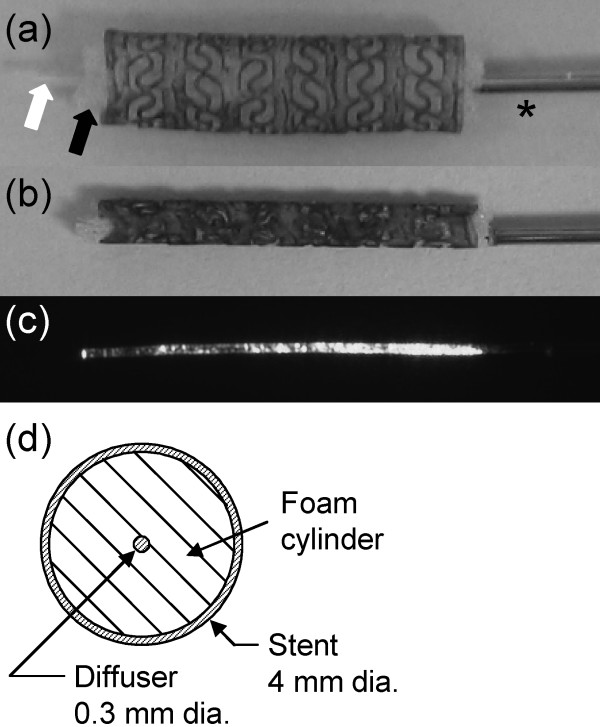
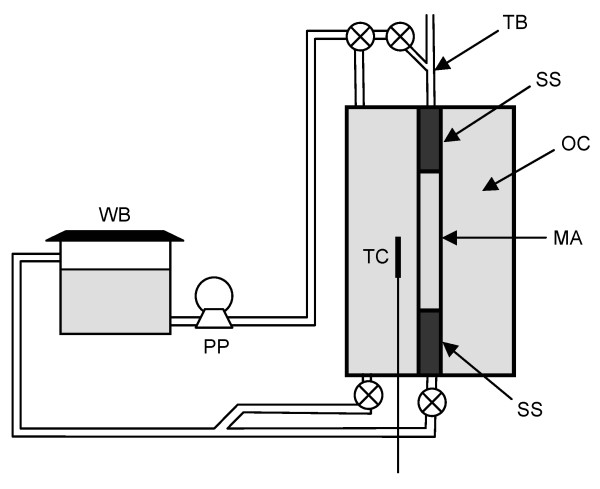
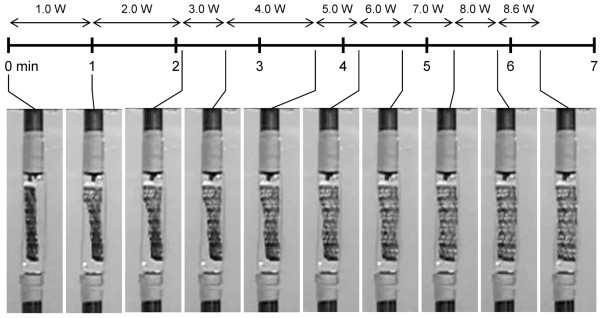
Background: Vascular stents are small tubular scaffolds used in the treatment of arterial stenosis (narrowing of the vessel). Most vascular stents are metallic and are deployed either by balloon expansion or by self-expansion. A shape memory polymer (SMP) stent may enhance flexibility, compliance, and drug elution compared to its current metallic counterparts. The purpose of this study was to describe the fabrication of a laser-activated SMP stent and demonstrate photothermal expansion of the stent in an in vitro artery model. Methods: A novel SMP stent was fabricated from thermoplastic polyurethane. A solid SMP tube formed by dip coating a stainless steel pin was laser-etched to create the mesh pattern of the finished stent. The stent was crimped over a fiber-optic cylindrical light diffuser coupled to an infrared diode laser. Photothermal actuation of the stent was performed in a water-filled mock artery. Results: At a physiological flow rate, the stent did not fully expand at the maximum laser power (8.6 W) due to convective cooling. However, under zero flow, simulating the technique of endovascular flow occlusion, complete laser actuation was achieved in the mock artery at a laser power of ~8 W. Conclusion: We have shown the design and fabrication of an SMP stent and a means of light delivery for photothermal actuation. Though further studies are required to optimize the device and assess thermal tissue damage, photothermal actuation of the SMP stent was demonstrated.
Overview
The claims and statistics of this paper haven’t been checked yet.
Free: it reads the open-access text and checks the first 5 claims that cite a source we can check. Create a free account to check every claim.
Integrity signals
Registry
Cites
Statistics
Figures
Verification
Claims the paper makes
The claims and statistics of this paper haven’t been checked yet.
Free: it reads the open-access text and checks the first 5 claims that cite a source we can check. Create a free account to check every claim.
Claims other papers make about this one
Each is checked against this paper’s own text: does it say what the citing paper says it does?
The source backs part of the claim, not all of it — or backs it for a different population, condition or comparison.
In the citing paper
“While working in principle, when setting the water flow rates to values relevant for in vivo applications, the required temperature and, therefore, a complete shape recovery, has not yet been obtained, even at laser powers up to approximately 8 W due to cooling by the surrounding medium.”
From Shape-memory polymers as a technology platform for biomedical applications (2010) · cites this paper as [105]
Experimental — accuracy not yet measured
Self-check
Percentages, sums and reported differences re-computed from the paper’s own numbers.
The self-check needs the paper’s full text.
Citations
Cites
(2013) · doi:10.1016/c2009-0-02433-7 · Cited by 5,127
Optical properties of the clearest natural waters (200–800 nm)
Smith, R. C., & Baker, K. S. (1981) · Applied Optics · doi:10.1364/ao.20.000177 · Cited by 1,756
Optical-Thermal Response of Laser-Irradiated Tissue
(2011) · Springer eBooks · doi:10.1007/978-90-481-8831-4 · Cited by 1,424 · cited 1×
“Due to the different physical properties of water and blood [25-30] (see Table 1), heat transfer between the laser-heated stent and the surrounding fluid is not necessarily identical for the two fluids.”
BackgroundKoerner, H., Price, G., Pearce, N. A., Alexander, M., & Vaia, R. A. (2004) · Nature Materials · doi:10.1038/nmat1059 · Cited by 1,034 · cited 4×
“Light absorption has been shown to be an effective heating mechanism for actuating SMPs [10,11,19,20].”
BackgroundInfluentialHandbook of Heat Transfer Fundamentals
Rohsenow, W. M., Hartnett, J. P., & Ganić, E. N. (1985) · Medical Entomology and Zoology · Cited by 815
Yakacki, C. M., Shandas, R., Lanning, C., Rech, B., Eckstein, A., & Gall, K. (2007) · Biomaterials · doi:10.1016/j.biomaterials.2007.01.030 · Cited by 618 · cited 1×
“One group has reported complete shape recovery of prototype SMP stents designed to expand at body temperature, noting that the recovery can be controlled by varying the glass transition temperature, polymer crosslink density, and stent geometry [40].”
BackgroundCHAPMAN, A. J. (1960) · Cited by 494
Inductively Heated Shape Memory Polymer for the Magnetic Actuation of Medical Devices
Buckley, P. R., McKinley, G. H., Wilson, T. S., Small, W., Benett, W. J., Bearinger, J. P., McElfresh, M. W., & Maitland, D. J. (2006) · IEEE Transactions on Biomedical Engineering · doi:10.1109/tbme.2006.877113 · Cited by 361 · cited 1×
“In addition to light absorption, various heating mechanisms may be employed for thermally activated SMP devices including electrical (Joule) heating [20,37,38], inductive heating [39], and heated fluid flush.”
Self-citationThermomechanics of the shape memory effect in polymers for biomedical applications
Gall, K., Yakacki, C. M., Liu, Y., Shandas, R., Willett, N., & Anseth, K. S. (2005) · Journal of Biomedical Materials Research Part A · doi:10.1002/jbm.a.30296 · Cited by 351 · cited 2×
“SMP has been shown to have promising applications in intravascular medical devices for thrombectomy [10,11], aneurysm embolization [12,13], and as vascular stents [14].”
BackgroundMethodNew Frontiers in Cardiology: Drug-Eluting Stents: Part I
Sousa, J. E., Serruys, P. W., & Costa, M. A. (2003) · Circulation · doi:10.1161/01.cir.0000069330.41022.90 · Cited by 349
Research works printed but not linked: 3
- Donnelly RJ Anderson HL Fluid dynamics A Physicist's Desk Reference: The Second Edition of Physics Vade Mecum 1989 New York: American Institute of Physics 196 209
- Anderson HL Cohen ER Anderson HL General section A Physicist's Desk Reference: The Second Edition of Physics Vade Mecum 1989 New York: American Institute of Physics 37 39
- Kays WM Perkins HC Rohsenow WM, Hartnett JP, Ganic EN Forced convection, internal flows in ducts Handbook of Heat Transfer Fundamentals 1985 7 2 New York: McGraw-Hill 1 7
Cited by
Shape-memory polymers and their composites: stimulus methods and applications
Leng, J., Lan, X., Liu, Y., & Du, S. (2011) · Progress in Materials Science · doi:10.1016/j.pmatsci.2011.03.001 · Cited by 1,495
A review of stimuli-responsive shape memory polymer composites
Meng, H., & Li, G. (2013) · Polymer · doi:10.1016/j.polymer.2013.02.023 · Cited by 1,190
Stimulus-responsive shape memory materials: a review
Sun, L., Huang, W. M., Ding, Z., Zhao, Y., Wang, C. C., Purnawali, H., & Tang, C. (2012) · Materials & Design · doi:10.1016/j.matdes.2011.04.065 · Cited by 1,105
Shape memory polymers and their composites in aerospace applications: a review
Liu, Y., Du, H., Liu, L., & Leng, J. (2014) · Smart Materials and Structures · doi:10.1088/0964-1726/23/2/023001 · Cited by 1,056
Shape memory polymers: Past, present and future developments
Hager, M. D., Bode, S., Weber, C., & Schubert, U. S. (2015) · Progress in Polymer Science · doi:10.1016/j.progpolymsci.2015.04.002 · Cited by 950
Mather, P. T., Luo, X., & Rousseau, I. A. (2009) · Annual Review of Materials Research · doi:10.1146/annurev-matsci-082908-145419 · Cited by 911
“Baer and coworkers (86) developed and studied a prototype vascular stent and deployment testing system that utilized a Tg-based thermoplastic SMPU, Diaplex MM5520, doped with a light-absorbing Pt-based dye.”
Background3D Printing of Shape Memory Polymers for Flexible Electronic Devices
Zarek, M., Layani, M., Cooperstein, I., Sachyani, E., Cohn, D., & Magdassi, S. (2016) · Advanced Materials · doi:10.1002/adma.201503132 · Cited by 903
Shape-memory polymers as a technology platform for biomedical applications
Lendlein, A., Behl, M., Hiebl, B., & Wischke, C. (2010) · Expert Review of Medical Devices · doi:10.1586/erd.10.8 · Cited by 469
Biomedical applications of thermally activated shape memory polymers
Small, IV, Singhal, P., Wilson, T. S., & Maitland, D. J. (2010) · Journal of Materials Chemistry · doi:10.1039/b923717h · Cited by 450
Self-citationShape‐Memory Polymers for Biomedical Applications
Delaey, J., Dubruel, P., & Van Vlierberghe, S. (2020) · Advanced Functional Materials · doi:10.1002/adfm.201909047 · Cited by 407
Self-folding polymeric containers for encapsulation and delivery of drugs
Fernandes, R., & Gracias, D. H. (2012) · Advanced Drug Delivery Reviews · doi:10.1016/j.addr.2012.02.012 · Cited by 285
“While many of these shape memory polymers have several attractive properties for drug delivery applications such as biocompatibility and biodegradability [64, 65], the structures formed have been primarily macroscopic such as mm to cm scale sutures [66], stents [67], cubes [68] and electrodes [69].”
BackgroundPhotothermally and magnetically controlled reconfiguration of polymer composites for soft robotics
Liu, J. A.-C., Gillen, J. H., Mishra, S. R., Evans, E. E., & Tracy, J. B. (2019) · Science Advances · doi:10.1126/sciadv.aaw2897 · Cited by 264
Evaluation of a degradable shape-memory polymer network as matrix for controlled drug release
Wischke, C., Neffe, A. T., Steuer, S., & Lendlein, A. (2009) · Journal of Controlled Release · doi:10.1016/j.jconrel.2009.05.027 · Cited by 248
“Potential applications are, among others, stents [7,8], selftightening suture materials [9], intelligent electrodes [10], or thrombectomy devices [11].”
BackgroundShape-Memory Polymers and Shape-Changing Polymers
Behl, M., Zotzmann, J., & Lendlein, A. (2009) · Advances in Polymer Science · doi:10.1007/12_2009_26 · Cited by 214
Light activated shape memory polymers and composites: A review
Herath, M., Epaarachchi, J., Islam, M., Fang, L., & Leng, J. (2020) · European Polymer Journal · doi:10.1016/j.eurpolymj.2020.109912 · Cited by 192
Thermally actuated shape-memory polymers: Experiments, theory, and numerical simulations
Srivastava, V., Chester, S. A., & Anand, L. (2010) · Journal of the Mechanics and Physics of Solids · doi:10.1016/j.jmps.2010.04.004 · Cited by 191
“Shape-memory polymers have been proposed as potential materials for stents which expand and/or support blood vessels, and several experimental demonstrations of this concept have been published in the literature (e.g., Wache et al., 2003; Yakacki et al., 2007; Baer et al., 2007b).”
BackgroundZhang, B., Zhang, W., Zhang, Z., Zhang, Y.-F., Hingorani, H., Liu, Z., Liu, J., & Ge, Q. (2019) · ACS Applied Materials & Interfaces · doi:10.1021/acsami.9b00359 · Cited by 190
“42,54,55 Here, we printed a stent with both SM and self-healing e ff ects.”
Responsive Biomaterials: Advances in Materials Based on Shape‐Memory Polymers
Hardy, J. G., Palma, M., Wind, S. J., & Biggs, M. J. (2016) · Advanced Materials · doi:10.1002/adma.201505417 · Cited by 169
Biomimetic coatings for bone tissue engineering of critical-sized defects
Liu, Y., Wu, G., & de Groot, K. (2010) · Journal of The Royal Society Interface · doi:10.1098/rsif.2010.0115.focus · Cited by 170
Shape-Memory Polymers for Biomedical Applications
Yakacki, C. M., & Gall, K. (2009) · Advances in polymer science · doi:10.1007/12_2009_23 · Cited by 168
A thermodynamic framework for the modeling of crystallizable shape memory polymers
Barot, G., Rao, I. J., & Rajagopal, K. R. (2008) · International Journal of Engineering Science · doi:10.1016/j.ijengsci.2007.11.008 · Cited by 163
Recent Insights Into the Biomedical Applications of Shape‐memory Polymers
Serrano, M. C., & Ameer, G. A. (2012) · Macromolecular Bioscience · doi:10.1002/mabi.201200097 · Cited by 162
Shape-memory polymers with multiple transitions: complex actively moving polymers
Zhao, Q., Behl, M., & Lendlein, A. (2013) · Soft Matter · doi:10.1039/c2sm27077c · Cited by 141
Neuss, S., Blomenkamp, I., Stainforth, R., Boltersdorf, D., Jansen, M., Butz, N., Perez-Bouza, A., & Knüchel, R. (2009) · Biomaterials · doi:10.1016/j.biomaterials.2008.12.027 · Cited by 151
“Vascular stents [8,9], suture materials [10],”
A review of fused deposition modelling for 3D printing of smart polymeric materials and composites
Mustapha, K. B., & Metwalli, K. M. (2021) · European Polymer Journal · doi:10.1016/j.eurpolymj.2021.110591 · Cited by 124
Xiao, R., & Huang, W. (2020) · Macromolecular Bioscience · doi:10.1002/mabi.202000108 · Cited by 120
Biomimetic micro/nano structures for biomedical applications
Xiang, T., Hou, J., Xie, H. Q., Liu, X., Gong, T., & Zhou, S. (2020) · Nano Today · doi:10.1016/j.nantod.2020.100980 · Cited by 106
Light-responsive shape memory polymer composites
Wang, Y., Wang, Y., Wei, Q., & Zhang, J. (2022) · European Polymer Journal · doi:10.1016/j.eurpolymj.2022.111314 · Cited by 95
Jamshidi, P., Panwisawas, C., Langi, E., Cox, S. C., Feng, J., Zhao, L., & Attallah, M. M. (2022) · Journal of Alloys and Compounds · doi:10.1016/j.jallcom.2022.164681 · Cited by 92
Microstructure and Phase Behavior of POSS/PCL Shape Memory Nanocomposites
Alvarado‐Tenorio, B., Romo‐Uribe, A., & Mather, P. T. (2011) · Macromolecules · doi:10.1021/ma2005662 · Cited by 92
Wan, X., Wei, H., Zhang, F., Liu, Y., & Leng, J. (2019) · Journal of Applied Polymer Science · doi:10.1002/app.48177 · Cited by 85
Stimuli-responsive smart materials for biomedical applications
Lin, C. H., Yang, M., Zhang, F., Liu, Y., & JinSong, L. E. N. G. (2025) · Materials Science and Engineering R Reports · doi:10.1016/j.mser.2025.101126 · Cited by 91
Dong, C., & Malliaras, G. G. (2025) · Advanced Materials · doi:10.1002/adma.202417325 · Cited by 89
Kolesov, I. S., Kratz, K. L., Lendlein, A., & Radusch, H. (2009) · Polymer · doi:10.1016/j.polymer.2009.09.062 · Cited by 88
Auxetic Coronary Stent Endoprosthesis: Fabrication and Structural Analysis
Amin, F., Ali, M. N., Ansari, U., Mir, M., Minhas, M. A., & Shahid, W. (2015) · Journal of Applied Biomaterials & Functional Materials · doi:10.5301/jabfm.5000213 · Cited by 85
“A stent is a small medical device comprising an expandable mesh-like tubular structure that when implanted acts as a scaffold (4) and maintains the luminal patency of a stenosed artery by opening the narrow coronary artery (5).”
BackgroundOptimization of the shape memory effect in shape memory polymers
Sun, L., Huang, W. M., Wang, C. C., Zhao, Y., Ding, Z., & Purnawali, H. (2011) · Journal of Polymer Science Part A: Polymer Chemistry · doi:10.1002/pola.24794 · Cited by 82
Sezer, A. D. (2016) · InTech eBooks · doi:10.5772/60475 · Cited by 81
Porous shape memory polymers: Design and applications
Hasan, S. M., Nash, L. D., & Maitland, D. J. (2016) · Journal of Polymer Science Part B Polymer Physics · doi:10.1002/polb.23982 · Cited by 79
Self-citationA Review on Manufacturing and Post-Processing Technology of Vascular Stents
Jiang, W., Zhao, W., Zhou, T., Wang, L., & Qiu, T. (2022) · Micromachines · doi:10.3390/mi13010140 · Cited by 69
“[50] designed and fabricated a novel laseractivated shape memory polymer stent, and the deformation of the fabricated stents was calibrated in a water-filled artery model in vitro.”
MethodShape‐Memory Effect of Micro‐/Nanoparticles from Thermoplastic Multiblock Copolymers
Wischke, C., Schossig, M., & Lendlein, A. (2013) · Small · doi:10.1002/smll.201202213 · Cited by 67
Fei, G., Li, G., Wu, L., & Xia, H. (2012) · Soft Matter · doi:10.1039/c2sm07357a · Cited by 65
Phase change materials in microactuators: Basics, applications and perspectives
Wilhelm, E., Richter, C., & Rapp, B. E. (2018) · Sensors and Actuators A Physical · doi:10.1016/j.sna.2018.01.043 · Cited by 66
Liu, R., Xu, S., Luo, X., & Liu, Z. (2020) · Polymers · doi:10.3390/polym12081784 · Cited by 64
“fabricated the light-activated SMP stent by thermoplastic polyurethane [15,16].”
MethodPartially constrained recovery of (meth)acrylate shape‐memory polymer networks
Lakhera, N., Yakacki, C. M., Nguyen, T. D., & Frick, C. P. (2012) · Journal of Applied Polymer Science · doi:10.1002/app.36612 · Cited by 56
Biomedical applications of shape-memory polymers: how practically useful are they?
Wong, Y., Kong, J. F., Widjaja, L. K., & Venkatraman, S. S. (2014) · Science China Chemistry · doi:10.1007/s11426-013-5061-z · Cited by 56
Ashton, J. H., Mertz, J. A. M., Harper, J. L., Slepian, M. J., Mills, J. L., McGrath, D. V., & Geest, J. P. V. (2010) · Acta Biomaterialia · doi:10.1016/j.actbio.2010.09.004 · Cited by 55
“Such a system has been developed for paving PCL within the vasculature of animal models [5], and a similar approach is being developed to actuate shape-memory polymers in the treatment of cerebral aneurysms [41] and arterial stenosis [42].”
MethodExperimental study of polymeric stent fabrication using homemade 3D printing system
Zhao, D., Zhou, R., Sun, J., Li, H., & Jin, Y. (2019) · Polymer Engineering and Science · doi:10.1002/pen.25091 · Cited by 54
Effect of physical aging on the shape-memory behavior of amorphous networks
Choi, J., Ortega, A. M., Xiao, R., Yakacki, C. M., & Nguyen, T. D. (2012) · Polymer · doi:10.1016/j.polymer.2012.03.066 · Cited by 53
Shape transformable bifurcated stents
Kim, T., & Lee, Y. (2018) · Scientific Reports · doi:10.1038/s41598-018-32129-3 · Cited by 50
Application and Development of Shape Memory Micro/Nano Patterns
Li, W., Liu, J., Chen, L., Wei, W., Qian, K., Liu, Y., & Leng, J. (2021) · Small · doi:10.1002/smll.202105958 · Cited by 49
Redesigning the modern applied medical sciences and engineering with shape memory polymers
Basak, S. (2021) · Advanced Composites and Hybrid Materials · doi:10.1007/s42114-021-00216-1 · Cited by 47
“8 The shape morphing of the SMP in a mock artery (zero flow) as a function of the increasing laser power, reproduced with permission from [40], copyright reserved BioMedical Engineering OnLine 2007 231 Advanced Composites and Hybrid Materials (2021) 4:223–234”
MethodImpact of shape-memory programming on mechanically-driven recovery in polymers
Yakacki, C. M., Nguyen, T. D., Likos, R., Lamell, R., Guigou, D., & Gall, K. (2011) · Polymer · doi:10.1016/j.polymer.2011.08.027 · Cited by 47
Wischke, C., Neffe, A. T., Steuer, S., & Lendlein, A. (2010) · European Journal of Pharmaceutical Sciences · doi:10.1016/j.ejps.2010.06.003 · Cited by 46
Fulati, A., Uto, K., & Ebara, M. (2022) · Polymers · doi:10.3390/polym14214740 · Cited by 45
“Shape-memory polymers (SMPs) are representative smart polymers and have been extensively studied in the past few decades owing to their unique capability of recovering their permanent original shapes from a temporarily fixed shape when actuated by various external stimuli, such as heat [1–3], light [4,5], lasers [6,7]…”
BackgroundFabrication and characterization of cylindrical light diffusers comprised of shape memory polymer
Small, W., Buckley, P. R., Wilson, T. S., Loge, J. M., Maitland, K. D., & Maitland, D. J. (2008) · Journal of Biomedical Optics · doi:10.1117/1.2904952 · Cited by 41
“dovascular prototype devices including embolic foams to fill aneurysms(8,9) and self-expanding stents.(10) The diffuser is gen-”
BackgroundSelf-citationPolyurethane shape-memory polymers for biomedical applications
Fu, Y., Huang, W., Luo, J., & Lu, H. B. (2015) · Elsevier eBooks · doi:10.1016/b978-0-85709-698-2.00009-x · Cited by 43
Polymeric Biomaterials for Implantable Prostheses
Dang, T. T., Nikkhah, M., Memić, A., & Khademhosseini, A. (2014) · Elsevier eBooks · doi:10.1016/b978-0-12-396983-5.00020-x · Cited by 42
Smart and Biodegradable Polymers in Tissue Engineering and Interventional Devices: A Brief Review
Dallaev, R. (2025) · Polymers · doi:10.3390/polym17141976 · Cited by 39
Wischke, C., Neffe, A. T., Steuer, S., Engelhardt, E., & Lendlein, A. (2010) · Macromolecular Bioscience · doi:10.1002/mabi.201000089 · Cited by 37
Cheng, X., Kondyurin, A. V., Bao, S., Bilek, M., & Ye, L. (2017) · Applied Surface Science · doi:10.1016/j.apsusc.2017.04.179 · Cited by 35
Hong, S., Cha, J., & Kim, J. (2020) · Polymer Testing · doi:10.1016/j.polymertesting.2020.106852 · Cited by 34
Garg, H., Mohanty, J., Gupta, P., Das, A., Tripathi, B. P., & Kumar, B. (2020) · Macromolecular Materials and Engineering · doi:10.1002/mame.202000215 · Cited by 33
Shape Memory Polymer-Based Endovascular Devices: Design Criteria and Future Perspective
Pineda‐Castillo, S. A., Stiles, A. M., Bohnstedt, B. N., Lee, H., Liu, Y., & Lee, C. (2022) · Polymers · doi:10.3390/polym14132526 · Cited by 32
“; they used a polyurethane SMP to fabricate a vascular stent with photothermal actuation [81].”
BackgroundMethodCheng, X., Fei, J., Kondyurin, A. V., Fu, K., Ye, L., Bilek, M., & Bao, S. (2019) · Materials Science and Engineering C · doi:10.1016/j.msec.2019.02.032 · Cited by 30
Mailen, R. W., Wagner, C. H., Bang, R. S., Zikry, M. A., Dickey, M. D., & Genzer, J. (2019) · Smart Materials and Structures · doi:10.1088/1361-665x/ab030a · Cited by 30
Joseph, T. M., Thomas, M. G., Mahapatra, D. K., Unni, A. B., Kianfar, E., Haponiuk, J. T., & Thomas, S. (2025) · Case Studies in Chemical and Environmental Engineering · doi:10.1016/j.cscee.2025.101165 · Cited by 27
Osička, J., Ilčíková, M., Mrlík, M., Minařík, A., Pavlínek, V., & Mosnáček, J. (2017) · Polymers · doi:10.3390/polym9070264 · Cited by 26
“They are utilized as tactile devices [2,3], artificial muscles [4], vascular stents [5], intravascular embolic coils [6], micro-grippers [7], and micro-motors [8].”
Recent advances for phase-transition materials for actuators
Ma, H., Xiao, X., Zhang, X., & Liu, K. (2020) · Journal of Applied Physics · doi:10.1063/5.0020596 · Cited by 26
Mailen, R. W., Dickey, M. D., Genzer, J., & Zikry, M. A. (2017) · Journal of Polymer Science Part B Polymer Physics · doi:10.1002/polb.24372 · Cited by 26
Remote actuation of light activated shape memory polymers via D-shaped optical fibres
Herath, M., Epaarachchi, J. A., Islam, M. M., Zhang, F., Leng, J., Fang, L., Yan, C., Peng, G., & Schade, W. (2020) · Smart Materials and Structures · doi:10.1088/1361-665x/ab72ea · Cited by 26
Pandini, S., Riccò, T., Borboni, A., Bodini, I., Vetturi, D., Cambiaghi, D., Toselli, M., Paderni, K., Messori, M., Pilati, F., et al. (2014) · Journal of Materials Engineering and Performance · doi:10.1007/s11665-014-1033-5 · Cited by 25
Stent’s Manufacturing Field: Past, Present, and Future Prospects
Guerra, A. J., & Ciurana, J. (2019) · IntechOpen eBooks · doi:10.5772/intechopen.81668 · Cited by 25
“[48] described the fabrication of a laser-activated shape memory polymer (SMP) stent and demonstrated photothermal expansion of the stent in an in vitro artery model.”
BackgroundPineda‐Castillo, S. A., Luo, J., Lee, H., Bohnstedt, B. N., Liu, Y., & Lee, C. (2021) · Advanced Engineering Materials · doi:10.1002/adem.202100322 · Cited by 25
Shape memory polymers: From materials to emerging biomedical applications
Khan, N. H., Ali, M. S. M., & Hasan, M. N. (2025) · European Polymer Journal · doi:10.1016/j.eurpolymj.2025.114460 · Cited by 26
Staszczak, M., Urbański, L., Cristea, M., Ionita, D. G., & Pieczyska, E. A. (2024) · Polymers · doi:10.3390/polym16020219 · Cited by 24
Smart Delivery Systems with Shape Memory and Self-Folding Polymers
Erkeçoglu, S., Sezer, A. D., & Bucak, Ş. (2016) · InTech eBooks · doi:10.5772/62199 · Cited by 23
Wang, J., Kunkel, R., Luo, J., Li, Y., Liu, H., Bohnstedt, B. N., Liu, Y., & Lee, C. (2019) · Polymers · doi:10.3390/polym11040631 · Cited by 23
Weems, A. C., Raymond, J. E., Easley, A. D., Wierzbicki, M. A., Gustafson, T. P., Monroe, M. B. B., & Maitland, D. J. (2017) · RSC Advances · doi:10.1039/c6ra28165f · Cited by 22
Self-citationTriple Shape Memory Polymers: Constitutive Modeling and Numerical Simulation
Moon, S., Rao, I. J., & Chester, S. A. (2016) · Journal of Applied Mechanics · doi:10.1115/1.4033380 · Cited by 22
Introduction to Shape-Memory Polymers
Safranski, D. L. (2017) · Elsevier eBooks · doi:10.1016/b978-0-323-37797-3.00001-4 · Cited by 21
Defize, T., Riva, R., Thomassin, J., Jérôme, C., & Alexandre, M. (2011) · Macromolecular Symposia · doi:10.1002/masy.201100036 · Cited by 21
Magnetic resonance flow velocity and temperature mapping of a shape memory polymer foam device
Small, W., Gjersing, E. L., Herberg, J. L., Wilson, T. S., & Maitland, D. J. (2009) · BioMedical Engineering OnLine · doi:10.1186/1475-925x-8-42 · Cited by 21
“Such catheter-delivered devices include expandable stents [7,8], microactuators for retrieving blood clots in ischemic stroke patients [9,10], and embolic coils [11] and foams [12,13] for filling aneurysms.”
BackgroundSelf-citationOverview of Shape-Memory Polymers
Behl, M., & Lendlein, A. (2010) · CRC Press eBooks · doi:10.1201/9781420090208-c1 · Cited by 21
Kalita, H., & Karak, N. (2014) · Polymer International · doi:10.1002/pi.4674 · Cited by 20
4D Printed Bifurcated Stents with Kirigami-Inspired Structures
Kim, D., Kim, T., & Lee, Y. (2019) · Journal of Visualized Experiments · doi:10.3791/59746 · Cited by 20
Ouchi, S., Niiyama, E., Sugo, K., Uto, K., Takenaka, S., Kikuchi, A., & Ebara, M. (2021) · Biomaterials Science · doi:10.1039/d1bm00780g · Cited by 19
Polyurethane–magnetite composite shape-memory polymer: Thermal properties
Weidenfeller, B., & Anhalt, M. (2012) · Journal of Thermoplastic Composite Materials · doi:10.1177/0892705712458446 · Cited by 19
Soria, F., de la Cruz, J. E., Aparicio, T. F., Budia, A., Serrano, Á., & Sanchez-Margallo, F. M. (2021) · Translational Andrology and Urology · doi:10.21037/tau-21-19 · Cited by 18
“The heparin coating of the BraidStent-H was carried out using the dip coating technique (14).”
MethodEryıldız, M. (2023) · Journal of Materials Engineering and Performance · doi:10.1007/s11665-023-07946-x · Cited by 18
Zhao, X., Dang, Y., Deng, J., & Zhang, J. (2013) · Colloid & Polymer Science · doi:10.1007/s00396-013-3057-z · Cited by 18
“Other specific external stimuli like IR [9], laser [10] and magnetic field [11], and microwave irradiation [12] have been used to heat indirectly.”
BackgroundModelling and simulation of the expansion of a shape memory polymer stent
Liu, R., McGinty, S., Cui, F., Luo, X., & Liu, Z. (2019) · Engineering Computations · doi:10.1108/ec-10-2018-0462 · Cited by 17
Toughening mechanism of heterogeneous aliphatic polyurethanes
Malakooti, M. H., Anderson, P. L., & Sodano, H. A. (2014) · Polymer · doi:10.1016/j.polymer.2014.03.002 · Cited by 17
Smart shape memory polymers and their significance in biomedical applications: A review
Singhwane, A., Jaiswal, A., Chaturvedi, K., Mili, M., Pal, K., Mohapatra, R. K., Khan, M. A., Bhargaw, H. N., Srivastava, A. K., & Verma, S. (2023) · Polymers for Advanced Technologies · doi:10.1002/pat.6138 · Cited by 16
A medicated shape memory composite of grafting tannin/poly(l-lactide)
Wei, J., Qu, R., Wang, Y., Liu, L., Yang, J., Xu, H., Hu, X., & Song, X. (2022) · International Journal of Biological Macromolecules · doi:10.1016/j.ijbiomac.2022.04.074 · Cited by 16
3D printed polymeric stent design: Mechanical testing and computational modeling
Canalejo-Codina, F., Cano-Morenilla, M., Martorell, J., Balcells, M., Pegueroles, M., & García‐Granada, A. (2024) · Materials & Design · doi:10.1016/j.matdes.2024.113395 · Cited by 14
Design and finite element simulation of shape memory polyurethane self-deforming structures
Zhang, X., Li, J., Liang, Z., & Kan, Q. (2022) · Engineering Failure Analysis · doi:10.1016/j.engfailanal.2022.106446 · Cited by 13
Fulati, A., Uto, K., Iwanaga, M., Watanabe, M., & Ebara, M. (2022) · Advanced Healthcare Materials · doi:10.1002/adhm.202200050 · Cited by 13
Smart materials strategy for vascular challenges targeting in-stent restenosis: a critical review
Zhang, K., Liang, W., Chen, X., & Mang, J. (2025) · Regenerative Biomaterials · doi:10.1093/rb/rbaf020 · Cited by 12
Early research of shape memory polymer vascular stents
Jeewantha, L. H. J., Epaarachchi, J. A., Forster, E., Islam, M. M., & Jinsong, L. (2022) · eXPRESS Polymer Letters · doi:10.3144/expresspolymlett.2022.66 · Cited by 12
“[85] proposed further optimisation and performance enhancement can be carried out by adjusting the laser power and dye concentration which is more favourable to blood.”
BackgroundMethodInfluentialAntimicrobial PVA Hydrogels with Tunable Mechanical Properties and Antimicrobial Release Profiles
Greene, C., Beaman, H. T., Stinfort, D., Ramezani, M., & Monroe, M. B. B. (2023) · Journal of Functional Biomaterials · doi:10.3390/jfb14040234 · Cited by 12
Metadata
- Authors
- Baer, G. M., Small, W., Wilson, T. S., Benett, W. J., Matthews, D. L., Hartman, J., & Maitland, D. J.
- Affiliations
- University of California, Davis (US)
- Lawrence Livermore National Laboratory (US)
- Kaiser Permanente (US)
- Corresponding author
- Small, Ward
- Venue
- BioMedical Engineering OnLine
- Published
- 2007-11-27
- Volume
- 6
- Issue
- 1
- Pages
- 43-43
- ISSN
- 1475-925X (ISSN-L)
- PMC
- PMC2211751
- OpenAlex
- W2161662294
- Cited by
- 159
- References
- 45
- Citations by year
- 2026: 3 · 2025: 15 · 2024: 3 · 2023: 6 · 2022: 11 · 2021: 6 · 2020: 13 · 2019: 13 · 2018: 2 · 2017: 12 · 2016: 8 · 2015: 9 · 2014: 9 · 2013: 8 · 2012: 8
- FWCI
- 15.26
- Type
- journal article
- Language
- en
- Open access
- gold
- doi.org
- Licence
- cc-by
- creativecommons.org/licenses/by/2.0 (tdm)
- Locations
- BioMedical Engineering OnLine (publishedVersion, cc-by)
- PubMed Central (publishedVersion, cc-by)
- PubMed (publishedVersion)
- OSTI OAI (U.S. Department of Energy Office of Scientific and Technical Information) (submittedVersion)
- University of North Texas Digital Library (University of North Texas) (submittedVersion)
- DOAJ (DOAJ: Directory of Open Access Journals) (submittedVersion, cc-by-sa)
- Funders
- National Science Foundation (0120999)
- U.S. Department of Energy (W-7405, -7405-ENG-48, W‐7405‐ENG‐48)
- National Institutes of Health (W-7405-ENG-48)
- University of California, Davis (PHY0120999)
- National Institute of Biomedical Imaging and Bioengineering (R01EB000462)
- Lawrence Livermore National Laboratory (W-7405-ENG 48, W-7405-ENG)
- Topics
- Physical Sciences › Engineering › Mechanical Engineering › Advanced Materials and Mechanics
- Health Sciences › Medicine › Cardiology and Cardiovascular Medicine › Coronary Interventions and Diagnostics
- Physical Sciences › Materials Science › Polymers and Plastics › Polymer composites and self-healing
- Keywords
- photothermal actuation, thermoplastic polyurethane, vascular stents, arterial stenosis, laser etching, dip coating, convective cooling, light delivery
- MeSH terms
- Blood Vessel Prosthesis, Equipment Design, Lasers, Molecular Conformation, Polymers, Stainless Steel, Stents, Equipment Failure Analysis, Coated Materials, Biocompatible
About these checks
Registry, retraction, Cites and statistics results are computed, not judged, with one exception: a printed reference that no index lists is read once by a model before it counts as a citation error. Claims are extracted by a model and kept only when their quote appears verbatim in the text; each cited source is then checked, with a model’s help, for whether it says what the claim relies on. Those verdicts can be wrong — read the claim’s quote and the cited source before relying on one.
Statistics and arithmetic are recomputed, not judged.
Confidence bands are shown only for fields calibrated on our annotated test set. None is calibrated yet, so no band is shown.
What counts as a claim ›How we measure confidence ›How we check this ›
Are you an author, or do you see a problem with this page? Request a review
Data sources
Bibliographic data: Semantic Scholar, OpenAlex, Crossref.
Contains information from the Semantic Scholar Academic Graph Datasets, made available under the ODC Attribution License (ODC-BY 1.0).
Semantic Scholar’s data is described in: Kinney, R., et al. (2023). The Semantic Scholar Open Data Platform. arXiv:2301.10140.
