

Fabrication and in vitro deployment of a laser-activated shape memory polymer vascular stent
Open accessThe DOI matches its Crossref record; 46 of the 46 references it cites were found in a registry or an index.
Abstract
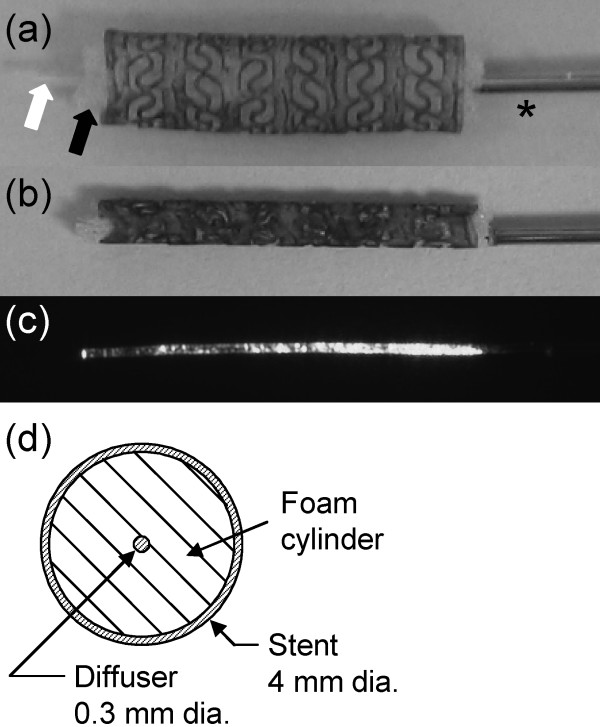
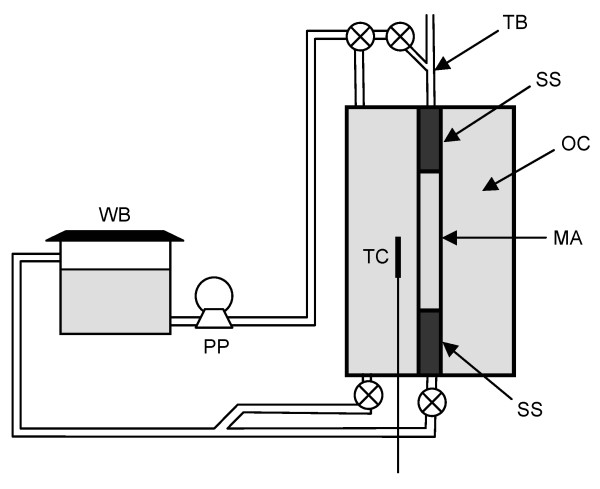
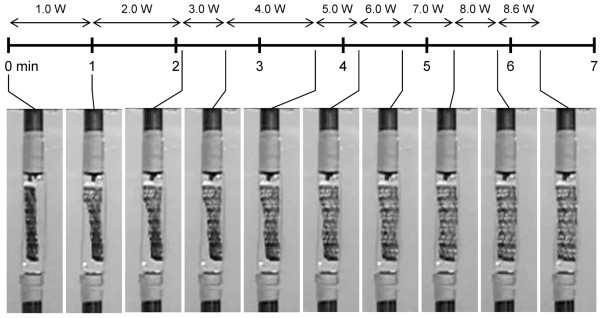
Background: Vascular stents are small tubular scaffolds used in the treatment of arterial stenosis (narrowing of the vessel). Most vascular stents are metallic and are deployed either by balloon expansion or by self-expansion. A shape memory polymer (SMP) stent may enhance flexibility, compliance, and drug elution compared to its current metallic counterparts. The purpose of this study was to describe the fabrication of a laser-activated SMP stent and demonstrate photothermal expansion of the stent in an in vitro artery model. Methods: A novel SMP stent was fabricated from thermoplastic polyurethane. A solid SMP tube formed by dip coating a stainless steel pin was laser-etched to create the mesh pattern of the finished stent. The stent was crimped over a fiber-optic cylindrical light diffuser coupled to an infrared diode laser. Photothermal actuation of the stent was performed in a water-filled mock artery. Results: At a physiological flow rate, the stent did not fully expand at the maximum laser power (8.6 W) due to convective cooling. However, under zero flow, simulating the technique of endovascular flow occlusion, complete laser actuation was achieved in the mock artery at a laser power of ~8 W. Conclusion: We have shown the design and fabrication of an SMP stent and a means of light delivery for photothermal actuation. Though further studies are required to optimize the device and assess thermal tissue damage, photothermal actuation of the SMP stent was demonstrated.
Overview
The claims and statistics of this paper haven’t been checked yet.
Free: it reads the open-access text and checks the first 5 claims that cite a source we can check. Create a free account to check every claim.
Integrity signals
Registry
Cites
Statistics
Figures
Verification
Claims the paper makes
The claims and statistics of this paper haven’t been checked yet.
Free: it reads the open-access text and checks the first 5 claims that cite a source we can check. Create a free account to check every claim.
Claims other papers make about this one
Each is checked against this paper’s own text: does it say what the citing paper says it does?
The source backs part of the claim, not all of it — or backs it for a different population, condition or comparison.
In the citing paper
“While working in principle, when setting the water flow rates to values relevant for in vivo applications, the required temperature and, therefore, a complete shape recovery, has not yet been obtained, even at laser powers up to approximately 8 W due to cooling by the surrounding medium.”
From Shape-memory polymers as a technology platform for biomedical applications (2010) · cites this paper as [105]
Experimental — accuracy not yet measured
Self-check
Percentages, sums and reported differences re-computed from the paper’s own numbers.
The self-check needs the paper’s full text.
Citations
Cites
(2013) · doi:10.1016/c2009-0-02433-7 · Cited by 5,127
Optical properties of the clearest natural waters (200–800 nm)
Smith, R. C., & Baker, K. S. (1981) · Applied Optics · doi:10.1364/ao.20.000177 · Cited by 1,756
Optical-Thermal Response of Laser-Irradiated Tissue
(2011) · Springer eBooks · doi:10.1007/978-90-481-8831-4 · Cited by 1,424 · cited 1×
“Due to the different physical properties of water and blood [25-30] (see Table 1), heat transfer between the laser-heated stent and the surrounding fluid is not necessarily identical for the two fluids.”
BackgroundKoerner, H., Price, G., Pearce, N. A., Alexander, M., & Vaia, R. A. (2004) · Nature Materials · doi:10.1038/nmat1059 · Cited by 1,034 · cited 4×
“Light absorption has been shown to be an effective heating mechanism for actuating SMPs [10,11,19,20].”
BackgroundInfluentialHandbook of Heat Transfer Fundamentals
Rohsenow, W. M., Hartnett, J. P., & Ganić, E. N. (1985) · Medical Entomology and Zoology · Cited by 815
Yakacki, C. M., Shandas, R., Lanning, C., Rech, B., Eckstein, A., & Gall, K. (2007) · Biomaterials · doi:10.1016/j.biomaterials.2007.01.030 · Cited by 618 · cited 1×
“One group has reported complete shape recovery of prototype SMP stents designed to expand at body temperature, noting that the recovery can be controlled by varying the glass transition temperature, polymer crosslink density, and stent geometry [40].”
BackgroundCHAPMAN, A. J. (1960) · Cited by 494
Inductively Heated Shape Memory Polymer for the Magnetic Actuation of Medical Devices
Buckley, P. R., McKinley, G. H., Wilson, T. S., Small, W., Benett, W. J., Bearinger, J. P., McElfresh, M. W., & Maitland, D. J. (2006) · IEEE Transactions on Biomedical Engineering · doi:10.1109/tbme.2006.877113 · Cited by 361 · cited 1×
“In addition to light absorption, various heating mechanisms may be employed for thermally activated SMP devices including electrical (Joule) heating [20,37,38], inductive heating [39], and heated fluid flush.”
Self-citationThermomechanics of the shape memory effect in polymers for biomedical applications
Gall, K., Yakacki, C. M., Liu, Y., Shandas, R., Willett, N., & Anseth, K. S. (2005) · Journal of Biomedical Materials Research Part A · doi:10.1002/jbm.a.30296 · Cited by 351 · cited 2×
“SMP has been shown to have promising applications in intravascular medical devices for thrombectomy [10,11], aneurysm embolization [12,13], and as vascular stents [14].”
BackgroundMethodNew Frontiers in Cardiology: Drug-Eluting Stents: Part I
Sousa, J. E., Serruys, P. W., & Costa, M. A. (2003) · Circulation · doi:10.1161/01.cir.0000069330.41022.90 · Cited by 349
Photothermal properties of shape memory polymer micro‐actuators for treating stroke*
Maitland, D. J., Metzger, M. F., Schumann, D., Lee, A., & Wilson, T. S. (2002) · Lasers in Surgery and Medicine · doi:10.1002/lsm.10007 · Cited by 332 · cited 2×
“Light absorption has been shown to be an effective heating mechanism for actuating SMPs [10,11,19,20].”
BackgroundSelf-citationStructure and properties of shape-memory polyurethane block copolymers
Takahashi, T., Hayashi, N., & Hayashi, S. (1996) · Journal of Applied Polymer Science · doi:10.1002/(sici)1097-4628(19960516)60:7<1061::aid-app18>3.0.co;2-3 · Cited by 326 · cited 1×
“The composition is proprietary, but it is known that the material is a segmented polyurethane with a microphase separated morphology consisting of a hard phase and a soft phase [21].”
BackgroundCold hibernated elastic memory foams for endovascular interventions
Metcalfe, A., Desfaits, A.-C., Salazkin, I., Yahia, L., Sokolowski, W. M., & Raymond, J. (2003) · Biomaterials · doi:10.1016/s0142-9612(02)00362-9 · Cited by 307 · cited 1×
“SMP has been shown to have promising applications in intravascular medical devices for thrombectomy [10,11], aneurysm embolization [12,13], and as vascular stents [14].”
MethodLaser-activated shape memory polymer intravascular thrombectomy device
Small IV, W., Wilson, T. S., Benett, W. J., Loge, J. M., & Maitland, D. J. (2005) · Optics Express · doi:10.1364/opex.13.008204 · Cited by 265 · cited 2×
“SMP has been shown to have promising applications in intravascular medical devices for thrombectomy [10,11], aneurysm embolization [12,13], and as vascular stents [14].”
BackgroundMethodSelf-citationLee, A. J., Mowbray, P. I., Lowe, G. D. O., Rumley, A., Fowkes, F. G. R., & Allan, P. L. (1998) · Circulation · doi:10.1161/01.cir.97.15.1467 · Cited by 230 · cited 1×
“Due to the different physical properties of water and blood [ 25-30 ] (see Table 1), heat transfer between the laser-heated stent and the surrounding fluid is not necessarily identical for the two fluids.”
BackgroundMills, A. F. (1999) · Cited by 185
Role of stent design and coatings on restenosis and thrombosis
Hara, H., Nakamura, M., Palmaz, J. C., & Schwartz, R. S. (2006) · Advanced Drug Delivery Reviews · doi:10.1016/j.addr.2006.01.022 · Cited by 177 · cited 1×
“Though improvements in design and coating with drug-eluting agents have resulted in smaller, safer, and more biocompatible stents with reduced rates of restenosis [4], several drawbacks associated with the use of metallic stents still exist.”
BackgroundFormation and structure of polyacrylamide gels
Naghash, H. J., & Okay, O. (1996) · Journal of Applied Polymer Science · doi:10.1002/(sici)1097-4628(19960516)60:7<971::aid-app7>3.0.co;2-j · Cited by 166
Shape‐memory behavior of thermally stimulated polyurethane for medical applications
Baer, G., Wilson, T. S., Matthews, D. L., & Maitland, D. J. (2007) · Journal of Applied Polymer Science · doi:10.1002/app.25567 · Cited by 164 · cited 3×
“Our previous investigation of the thermomechanical properties of shape memory polyurethane revealed high recovery strains, which are needed for large shape changes during stent deployment [15].”
BackgroundSelf-citationLong-term outcomes and predictors of iliac angioplasty with selective stenting
Kudo, T., Chandra, F. A., & Ahn, S. S. (2005) · Journal of Vascular Surgery · doi:10.1016/j.jvs.2005.05.002 · Cited by 150 · cited 1×
“They are now widely used in conjunction with transluminal angioplasty in the treatment of arterial stenosis (narrowing of the vessel) to prevent acute vessel closure and late restenosis in a variety of large vessels such as coronary arteries [1], carotid arteries [2], and iliac arteries [3].”
BackgroundSmall, W., Buckley, P. R., Wilson, T. S., Benett, W. J., Hartman, J., Saloner, D., & Maitland, D. J. (2007) · IEEE Transactions on Biomedical Engineering · doi:10.1109/tbme.2006.889771 · Cited by 124 · cited 2×
“SMP has been shown to have promising applications in intravascular medical devices for thrombectomy [10,11], aneurysm embolization [12,13], and as vascular stents [14].”
MethodSelf-citationRate process model for arterial tissue thermal damage: Implications on vessel photocoagulation
Agah, R., Pearce, J. A., Welch, A. J., & Motamedi, M. (1994) · Lasers in Surgery and Medicine · doi:10.1002/lsm.1900150205 · Cited by 118
Simple photon diffusion analysis of the effects of multiple scattering on pulse oximetry
Schmitt, J. M. (1991) · IEEE Transactions on Biomedical Engineering · doi:10.1109/10.137285 · Cited by 118 · cited 1×
“Due to their different values of absorption coefficient (µa) near the laser wavelength of 810 nm, photothermal actuation of the stent will proceed differently in water (µ a = 0.0021 mm-1 [34]) than blood (µa = 0.466 mm-1 [ 35 ]).”
BackgroundInfluentialDRUG-ELUTING BIORESORBABLE STENTS FOR VARIOUS APPLICATIONS
Zilberman, M., & Eberhart, R. C. (2006) · Annual Review of Biomedical Engineering · doi:10.1146/annurev.bioeng.8.013106.151418 · Cited by 112 · cited 2×
“The glassy modulus of this SMP (~800 MPa) lies in the range of reported values for balloon-expandable polymer stents, which starts at 400 MPa (for applications requiring low mechanical strength, such as neural stenting) and extends up to 7 GPa [22].”
BackgroundResultCollapse pressures of biodegradable stents
Venkatraman, S. S., Poh, T. L., Tjong, V., Mak, K. H., & Boey, F. (2003) · Biomaterials · doi:10.1016/s0142-9612(02)00640-3 · Cited by 108 · cited 1×
“Finally, drug embedding in polymer stents has already been demonstrated [18].”
BackgroundShape memory polymers based on uniform aliphatic urethane networks
Wilson, T. S., Bearinger, J. P., Herberg, J. L., Marion, J. E., Wright, W. J., Evans, C. L., & Maitland, D. J. (2007) · Journal of Applied Polymer Science · doi:10.1002/app.26593 · Cited by 102 · cited 1×
“The diffuser was fabricated by casting an SMP formulation developed in-house [23] over the distal end of a 100 μm core diameter silica optical fiber (FIP100110125, Polymicro Technologies, LLC) using a tubular mold made of Teflon.”
MethodSelf-citationDiffusion model of the optical absorbance of whole blood
Steinke, J. M., & Shepherd, A. P. (1988) · Journal of the Optical Society of America A · doi:10.1364/josaa.5.000813 · Cited by 98 · cited 1×
“For blood, the absorption mean free path is 2.1 mm, which is approximately equal to the radius of the fully expanded stent (note that scattering in blood is highly forward-directed with the average cosine of the scattering angle = 0.98 [ 36 ]).”
BackgroundInfluentialSmall, W., Metzger, M. F., Wilson, T. S., & Maitland, D. J. (2005) · IEEE Journal of Selected Topics in Quantum Electronics · doi:10.1109/jstqe.2005.857748 · Cited by 84 · cited 5×
“Light absorption has been shown to be an effective heating mechanism for actuating SMPs [10,11,19,20].”
BackgroundMethodResultInfluentialSelf-citationPolyurethane Shape‐Memory Polymers Demonstrate Functional Biocompatibility In Vitro
Cabanlit, M., Maitland, D., Wilson, T., Simon, S., Wun, T., Gershwin, M. E., & Van de Water, J. (2007) · Macromolecular Bioscience · doi:10.1002/mabi.200600177 · Cited by 69 · cited 2×
“Ongoing biocompatibility studies have shown that the material has minimal effect on triggering an inflammatory response, activating platelets and neutrophils, and inducing thrombogenesis in vitro [17].”
BackgroundSelf-citationSmall, W., Wilson, T. S., Buckley, P. R., Benett, W. J., Loge, J. M., Hartman, J., & Maitland, D. J. (2007) · IEEE Transactions on Biomedical Engineering · doi:10.1109/tbme.2007.892921 · Cited by 61 · cited 1×
“thermally activated SMP devices including electrical (Joule) heating [20,37,38], inductive heating [39], and heated fluid flush.”
BackgroundSelf-citationState of the art in coronary intervention
Holmes, D. R. (2003) · The American Journal of Cardiology · doi:10.1016/s0002-9149(02)03150-8 · Cited by 55
Rylander, M. N., Diller, K. R., Wang, S., & Aggarwal, S. J. (2005) · Journal of Biomechanical Engineering · doi:10.1115/1.1993661 · Cited by 49 · cited 1×
“A similar model for arterial endothelial cell damage [42] indicates that cell damage would occur in less than a second at 55°C.”
BackgroundAngioplasty and stenting of intracranial stenosis
Hartmann, M., & Jansen, O. (2005) · Current Opinion in Neurology · doi:10.1097/00019052-200502000-00009 · Cited by 48
Drug-Eluting Stents: The Price Is Not Right
Eisenberg, M. J. (2006) · Circulation · doi:10.1161/circulationaha.106.646190 · Cited by 44
Merci®Retriever in acute stroke treatment
Katz, J. M., & Gobin, Y. P. (2006) · Expert Review of Medical Devices · doi:10.1586/17434440.3.3.273 · Cited by 38 · cited 1×
“In practice, stents are generally placed under blood flow; however, certain other medical interventional devices, such as the MERCI Retriever for clot extraction in cerebral arteries [46], incorporate a protection mechanism to block blood flow during the intervention.”
BackgroundRolland, P. H., Mekkaoui, C., Vidal, V., Berry, J. L., Moore, J. E., Moreno, M. R., Amabile, P. G., & Bartoli, J. (2004) · European Journal of Vascular and Endovascular Surgery · doi:10.1016/j.ejvs.2004.06.018 · Cited by 32 · cited 1×
“Second, compliance mismatch due to the stiffness of metallic stents at the arterial wall may potentially be a contributing factor in restenosis based on trapped proliferating cells observed for a stent with compliancematched ends [7].”
BackgroundOrr, C., & Eberhart, R. C. (1995) · Springer eBooks · doi:10.1007/978-1-4757-6092-7_11 · Cited by 31
Volume and density changes of biological fluids with temperature
Hinghofer-Szalkay, H. G. (1985) · Journal of Applied Physiology · doi:10.1152/jappl.1985.59.6.1686 · Cited by 31 · cited 1×
“Due to the different physical properties of water and blood [25-30] (see Table 1), heat transfer between the laser-heated stent and the surrounding fluid is not necessarily identical for the two fluids.”
Background(2007) · PubMed Central · Cited by 24
Self-citationSchebesch, K.-M., Simka, S., Woertgen, C., Brawanski, A. T., & Rothoerl, R. D. (2004) · Acta Neurochirurgica · doi:10.1007/s00701-004-0324-2 · Cited by 23 · cited 1×
“6 W for several minutes when the flow rate was increased to 180 ml/min, a value in the range of reported flows in the internal carotid artery [24].”
BackgroundHigashida, R. T., & Meyers, P. M. (2006) · Neuroradiology · doi:10.1007/s00234-006-0071-6 · Cited by 22
Absence of biological damage from prolonged exposure to intravascular ultrasound: A swine model
Soltani, A., Singhal, R., García-Alcaráz, J. L., & Raju, N. R. (2006) · Ultrasonics · doi:10.1016/j.ultras.2006.10.004 · Cited by 19 · cited 1×
“However, standard intravascular catheter insertion and manipulation, as is used in conventional stent placement, is also known to damage the endothelial cell layer [43].”
BackgroundTechniques of carotid artery stenting: the state of the art.
Al‐Mubarak, N., Gs, R., Iyer, S. S., Jj, V., & New, G. (2000) · PubMed · Cited by 19
Oornen, A., van Erven, L., Vandenbroucke, W. V. A., Verdaasdonk, R. M., Slager, C. J., Thornsen, S. L., & Borst, C. (1990) · Lasers in Surgery and Medicine · doi:10.1002/lsm.1900100410 · Cited by 18 · cited 1×
“Following acute injury (mechanical or thermal) to the vessel wall and/or endothelial layer, long-term arterial recovery has been shown [44,45].”
BackgroundThermal-perfusion balloon coronary angioplasty: In vivo evaluation
Buller, C. E. H., Culp, S. C., Sketch, M. H., Phillips, H. R., Virmani, R., & Stack, R. S. (1993) · American Heart Journal · doi:10.1016/0002-8703(93)90079-o · Cited by 7 · cited 1×
“Following acute injury (mechanical or thermal) to the vessel wall and/or endothelial layer, long-term arterial recovery has been shown [44,45].”
BackgroundWiskirchen, J., Pusich, B., Krämer, U., König, C., TRÜBENBACH, J., Tepe, G., Claussen, C. D., & Duda, S. H. (2002) · Investigative Radiology · doi:10.1097/00004424-200206000-00008 · Cited by 4 · cited 1×
“In addition, the glassy modulus of SMP is lower than those of SMAs and stainless steel by a factor of at least 10 and 100, respectively, potentially yielding a more flexible and compliant structure depending on the amount of material and the stent design pattern [16].”
Background
Research works printed but not linked: 3
- Donnelly RJ Anderson HL Fluid dynamics A Physicist's Desk Reference: The Second Edition of Physics Vade Mecum 1989 New York: American Institute of Physics 196 209
- Anderson HL Cohen ER Anderson HL General section A Physicist's Desk Reference: The Second Edition of Physics Vade Mecum 1989 New York: American Institute of Physics 37 39
- Kays WM Perkins HC Rohsenow WM, Hartnett JP, Ganic EN Forced convection, internal flows in ducts Handbook of Heat Transfer Fundamentals 1985 7 2 New York: McGraw-Hill 1 7
Cited by
Shape-memory polymers and their composites: stimulus methods and applications
Leng, J., Lan, X., Liu, Y., & Du, S. (2011) · Progress in Materials Science · doi:10.1016/j.pmatsci.2011.03.001 · Cited by 1,495
A review of stimuli-responsive shape memory polymer composites
Meng, H., & Li, G. (2013) · Polymer · doi:10.1016/j.polymer.2013.02.023 · Cited by 1,190
Stimulus-responsive shape memory materials: a review
Sun, L., Huang, W. M., Ding, Z., Zhao, Y., Wang, C. C., Purnawali, H., & Tang, C. (2012) · Materials & Design · doi:10.1016/j.matdes.2011.04.065 · Cited by 1,105
Shape memory polymers and their composites in aerospace applications: a review
Liu, Y., Du, H., Liu, L., & Leng, J. (2014) · Smart Materials and Structures · doi:10.1088/0964-1726/23/2/023001 · Cited by 1,056
Shape memory polymers: Past, present and future developments
Hager, M. D., Bode, S., Weber, C., & Schubert, U. S. (2015) · Progress in Polymer Science · doi:10.1016/j.progpolymsci.2015.04.002 · Cited by 950
Metadata
- Authors
- Baer, G. M., Small, W., Wilson, T. S., Benett, W. J., Matthews, D. L., Hartman, J., & Maitland, D. J.
- Affiliations
- University of California, Davis (US)
- Lawrence Livermore National Laboratory (US)
- Kaiser Permanente (US)
- Corresponding author
- Small, Ward
- Venue
- BioMedical Engineering OnLine
- Published
- 2007-11-27
- Volume
- 6
- Issue
- 1
- Pages
- 43-43
- ISSN
- 1475-925X (ISSN-L)
- PMC
- PMC2211751
- OpenAlex
- W2161662294
- Cited by
- 159
- References
- 45
- Citations by year
- 2026: 3 · 2025: 15 · 2024: 3 · 2023: 6 · 2022: 11 · 2021: 6 · 2020: 13 · 2019: 13 · 2018: 2 · 2017: 12 · 2016: 8 · 2015: 9 · 2014: 9 · 2013: 8 · 2012: 8
- FWCI
- 15.26
- Type
- journal article
- Language
- en
- Open access
- gold
- doi.org
- Licence
- cc-by
- creativecommons.org/licenses/by/2.0 (tdm)
- Locations
- BioMedical Engineering OnLine (publishedVersion, cc-by)
- PubMed Central (publishedVersion, cc-by)
- PubMed (publishedVersion)
- OSTI OAI (U.S. Department of Energy Office of Scientific and Technical Information) (submittedVersion)
- University of North Texas Digital Library (University of North Texas) (submittedVersion)
- DOAJ (DOAJ: Directory of Open Access Journals) (submittedVersion, cc-by-sa)
- Funders
- National Science Foundation (0120999)
- U.S. Department of Energy (W-7405, -7405-ENG-48, W‐7405‐ENG‐48)
- National Institutes of Health (W-7405-ENG-48)
- University of California, Davis (PHY0120999)
- National Institute of Biomedical Imaging and Bioengineering (R01EB000462)
- Lawrence Livermore National Laboratory (W-7405-ENG 48, W-7405-ENG)
- Topics
- Physical Sciences › Engineering › Mechanical Engineering › Advanced Materials and Mechanics
- Health Sciences › Medicine › Cardiology and Cardiovascular Medicine › Coronary Interventions and Diagnostics
- Physical Sciences › Materials Science › Polymers and Plastics › Polymer composites and self-healing
- Keywords
- photothermal actuation, thermoplastic polyurethane, vascular stents, arterial stenosis, laser etching, dip coating, convective cooling, light delivery
- MeSH terms
- Blood Vessel Prosthesis, Equipment Design, Lasers, Molecular Conformation, Polymers, Stainless Steel, Stents, Equipment Failure Analysis, Coated Materials, Biocompatible
About these checks
Registry, retraction, Cites and statistics results are computed, not judged, with one exception: a printed reference that no index lists is read once by a model before it counts as a citation error. Claims are extracted by a model and kept only when their quote appears verbatim in the text; each cited source is then checked, with a model’s help, for whether it says what the claim relies on. Those verdicts can be wrong — read the claim’s quote and the cited source before relying on one.
Statistics and arithmetic are recomputed, not judged.
Confidence bands are shown only for fields calibrated on our annotated test set. None is calibrated yet, so no band is shown.
What counts as a claim ›How we measure confidence ›How we check this ›
Are you an author, or do you see a problem with this page? Request a review
Data sources
Bibliographic data: Semantic Scholar, OpenAlex, Crossref.
Contains information from the Semantic Scholar Academic Graph Datasets, made available under the ODC Attribution License (ODC-BY 1.0).
Semantic Scholar’s data is described in: Kinney, R., et al. (2023). The Semantic Scholar Open Data Platform. arXiv:2301.10140.
