

Knowns and unknowns on burden of disease due to chemicals: a systematic review
Open accessThe DOI matches its Crossref record; 86 of the 87 references it cites were found in a registry or an index, and 1 are not checked yet.
Abstract
Background: Continuous exposure to many chemicals, including through air, water, food, or other media and products results in health impacts which have been well assessed, however little is known about the total disease burden related to chemicals. This is important to know for overall policy actions and priorities. In this article the known burden related to selected chemicals or their mixtures, main data gaps, and the link to public health policy are reviewed. Methods: A systematic review of the literature for global burden of disease estimates from chemicals was conducted. Global disease due to chemicals was estimated using standard methodology of the Global Burden of Disease. Results: In total, 4.9 million deaths (8.3% of total) and 86 million Disability-Adjusted Life Years (DALYs) (5.7% of total) were attributable to environmental exposure and management of selected chemicals in 2004. The largest contributors include indoor smoke from solid fuel use, outdoor air pollution and second-hand smoke, with 2.0, 1.2 and 0.6 million deaths annually. These are followed by occupational particulates, chemicals involved in acute poisonings, and pesticides involved in self-poisonings, with 375,000, 240,000 and 186,000 annual deaths, respectively. Conclusions: The known burden due to chemicals is considerable. This information supports decision-making in programmes having a role to play in reducing human exposure to toxic chemicals. These figures present only a number of chemicals for which data are available, therefore, they are more likely an underestimate of the actual burden. Chemicals with known health effects, such as dioxins, cadmium, mercury or chronic exposure to pesticides could not be included in this article due to incomplete data and information. Effective public health interventions are known to manage chemicals and limit their public health impacts and should be implemented at national and international levels.
Overview
The claims and statistics of this paper haven’t been checked yet.
Free: it reads the open-access text and checks the first 5 claims that cite a source we can check. Create a free account to check every claim.
Integrity signals
Registry
Cites
Statistics
Figures
Verification
Claims the paper makes
The claims and statistics of this paper haven’t been checked yet.
Free: it reads the open-access text and checks the first 5 claims that cite a source we can check. Create a free account to check every claim.
Claims other papers make about this one
Each is checked against this paper’s own text: does it say what the citing paper says it does?
The source backs part of the claim, not all of it — or backs it for a different population, condition or comparison.
In the citing paper
“In LMICs, there is no credible, comprehensive, quantified evidence on the overall impact of chemicals in food on human health [48] but there is solid evidence that some health impacts occur, and there is suspicion that impacts could be substantial.”
From Food Safety in Low and Middle Income Countries (2015) · cites this paper as [48]
Experimental — accuracy not yet measuredThe source backs part of the claim, not all of it — or backs it for a different population, condition or comparison.
In the citing paper
“No credible, comprehensive, quantified evidence on the impact of agricultural chemicals in food on human health in LMIC currently exists (Käferstein, 1997;Prüss-Ustün et al., 2011)”
From Burden of foodborne disease in low-income and middle-income countries and opportunities for scaling food safety interventions (2023) · cites this paper as Prüss-Ustün et al., 2011
Experimental — accuracy not yet measured
Self-check
Percentages, sums and reported differences re-computed from the paper’s own numbers.
The self-check needs the paper’s full text.
Citations
Cites
Lung cancer, cardiopulmonary mortality, and long-term exposure to fine particulate air pollution
Pope III, C. A. (2002) · JAMA · doi:10.1001/jama.287.9.1132 · Cited by 8,447 · cited 1×
“Examples include lead and hypertension or cardiovascular effects [49,50]; lead and children’s intellectual function [51,52]; outdoor air pollution and cardiopulmonary disease [53]; second-hand smoke and related outcomes [27,28,54]; arsenic in drinking-water and related outcomes [55]; occupational exposure and lung can…”
BackgroundThe World Health Report 2002 - Reducing Risks, Promoting Healthy Life
Not Available, N. A. (2003) · Education for Health: Change in Learning & Practice · doi:10.1080/1357628031000116808 · Cited by 6,046
Higgins, S. M. F., Macken, A. P., Cullen, W., Saunders, J., Dunne, C. P., & O’Gorman, C. S. (2013) · PubMed · doi:10.34961/9953 · Cited by 4,808
Kay, H. (1980) · Journal of Clinical Pathology · doi:10.1136/jcp.33.6.608-c · Cited by 3,809
Selected major risk factors and global and regional burden of disease
Ezzati, M., Lopez, A. D., Rodgers, A., Vander Hoorn, S., & Murray, C. J. (2002) · The Lancet · doi:10.1016/s0140-6736(02)11403-6 · Cited by 3,594
Lanphear, B. P., Hornung, R., Khoury, J., Yolton, K., Baghurst, P., Bellinger, D. C., Canfield, R. L., Dietrich, K. N., Bornschein, R., Greene, T., et al. (2005) · Environmental Health Perspectives · doi:10.1289/ehp.7688 · Cited by 2,205 · cited 2×
“Examples include lead and hypertension or cardiovascular effects [49,50]; lead and children’s intellectual function [51,52]; outdoor air pollution and cardiopulmonary disease [53]; second-hand smoke and related outcomes [27,28,54]; arsenic in drinking-water and related outcomes [55]; occupational exposure and lung can…”
BackgroundDevelopmental neurotoxicity of industrial chemicals
Grandjean, P., & Landrigan, P. (2006) · The Lancet · doi:10.1016/s0140-6736(06)69665-7 · Cited by 1,984
Öberg, M., Jaakkola, M. S., Woodward, A., Peruga, A., & Prüss-Ustün, A. (2011) · The Lancet · doi:10.1016/s0140-6736(10)61388-8 · Cited by 1,939 · cited 3×
“arsenic [11,37] (b) international databases or systematic reviews of survey data, such as for indoor air pollution [46] and second-hand smoke [29] (c) systematic reviews of bio-monitoring data, such as blood lead levels [31,47], or (d) international databases or systematic reviews of occupational exposures by sector o…”
Background(2006) · PsycEXTRA Dataset · doi:10.1037/e601432007-001 · Cited by 1,880
Who Regional Office for Europe (2006) · Cited by 1,526
Tobacco smoke and involuntary smoking.
(2004) · PubMed Central · Cited by 1,374
O’Hollaren, M. T., Bardana, E. J., & Montanaro, A. J. (1991) · Cited by 1,355
Handbook of Pesticide Toxicology
(2001) · Elsevier eBooks · doi:10.1016/b978-0-12-426260-7.x5000-9 · Cited by 1,322 · cited 1×
“endocrine disruption, neurotoxicity, kidney/liver damage) by exposure to pesticides [16].”
BackgroundPetrusevski, B., Sharma, S. K., Shordt, K., Schippers, J. C., & van Wijk, C. (2009) · Cited by 1,275
Journal of Epidemiology and Community Health
(1982) · International Journal of Epidemiology · doi:10.1093/ije/11.2.201 · Cited by 1,255
Lead Exposure and Cardiovascular Disease—A Systematic Review
Navas-Acien, A., Guallar, E., Silbergeld, E. K., & Rothenberg, S. J. (2007) · Environmental Health Perspectives · doi:10.1289/ehp.9785 · Cited by 1,112 · cited 2×
“Examples include lead and hypertension or cardiovascular effects [49,50]; lead and children’s intellectual function [51,52]; outdoor air pollution and cardiopulmonary disease [53]; second-hand smoke and related outcomes [27,28,54]; arsenic in drinking-water and related outcomes [55]; occupational exposure and lung can…”
BackgroundMortality from Ship Emissions: A Global Assessment
Corbett, J. J., Winebrake, J. J., Green, E. H., Kasibhatla, P., Eyring, V., & Lauer, A. (2007) · Environmental Science & Technology · doi:10.1021/es071686z · Cited by 1,083 · cited 1×
“4%) 60,000 NA 2002; B [95]”
PROPORTION OF DISEASE CAUSED OR PREVENTED BY A GIVEN EXPOSURE, TRAIT OR INTERVENTION1
MIETTINEN, O. S. (1974) · American Journal of Epidemiology · doi:10.1093/oxfordjournals.aje.a121617 · Cited by 1,036 · cited 1×
“In most disease burden estimates for risk factors, the basic method can be summarized in the following steps: (a) estimating the exposure distribution in a population; (b) selecting one or more appropriate relative risk estimates from the literature, generally from a recent metaanalysis; and (c) estimating the populat…”
MethodThe occurrence of lung cancer in man.
Ml, L. (1953) · PubMed · Cited by 981
The global distribution of fatal pesticide self-poisoning: Systematic review
Gunnell, D., Eddleston, M., Phillips, M. R., & Konradsen, F. (2007) · BMC Public Health · doi:10.1186/1471-2458-7-357 · Cited by 969 · cited 4×
“Total unintentional poisonings would amount to 346,000 deaths and 7,445,000 DALYs[12] 2004; C [13]”
BackgroundMethodInfluentialPrüss‐Üstün, A., & Corvalán, C. (2006) · DigitalGeorgetown (Georgetown University Library) · Cited by 930
Comparative quantification of health risks conceptual framework and methodological issues
Murray, C. J., Ezzati, M., Lopez, A. D., Rodgers, A., & Vander Hoorn, S. (2003) · Population Health Metrics · doi:10.1186/1478-7954-1-1 · Cited by 887
American thoracic society statement: occupational contribution to the burden of airway disease
(2003) · American Journal of Respiratory and Critical Care Medicine · doi:10.1164/rccm.167.5.787 · Cited by 874
A review of human carcinogens—Part F: Chemical agents and related occupations
Baan, R., Grosse, Y., Straif, K., Secretan, B., El Ghissassi, F., Bouvard, V., Benbrahim-Tallaa, L., Guha, N., Freeman, C., Galichet, L., et al. (2009) · The Lancet Oncology · doi:10.1016/s1470-2045(09)70358-4 · Cited by 874
Patterns and problems of deliberate self-poisoning in the developing world
Eddleston, M. (2000) · QJM · doi:10.1093/qjmed/93.11.715 · Cited by 828 · cited 1×
“Poisonings Accidental ingestion of household products, occupational exposures and accidents, intentional self-harm by ingestion of pesticides Unintentional poisonings, self-inflicted injuries [92-94] Prüss-Ustün et al.”
BackgroundEnvironmental and chemical carcinogenesis
Wogan, G. N., Hecht, S. S., Felton, J. S., Conney, A. H., & Loeb, L. A. (2004) · Seminars in Cancer Biology · doi:10.1016/j.semcancer.2004.06.010 · Cited by 656 · cited 1×
“Numerous cancer sites, including of the lung, skin, liver, brain, kidney, prostate, bone marrow, bladder [79-82]”
BackgroundLow-Level Lead Exposure and Children′s IQ: A Metaanalysis and Search for a Threshold
Schwartz, J. (1994) · Environmental Research · doi:10.1006/enrs.1994.1020 · Cited by 654 · cited 1×
“Examples include lead and hypertension or cardiovascular effects [49,50]; lead and children’s intellectual function [51,52]; outdoor air pollution and cardiopulmonary disease [53]; second-hand smoke and related outcomes [27,28,54]; arsenic in drinking-water and related outcomes [55]; occupational exposure and lung can…”
BackgroundEnvironmental and Occupational Medicine.
(1983) · Annals of Internal Medicine · doi:10.7326/0003-4819-98-6-1042_1 · Cited by 616
Hayes' Handbook of Pesticide Toxicology
(2010) · Elsevier eBooks · doi:10.1016/c2009-1-03818-0 · Cited by 601
Grund, S. C., Hanusch, K., & Wolf, H. U. (2008) · Ullmann's Encyclopedia of Industrial Chemistry · doi:10.1002/14356007.a03_113.pub2 · Cited by 571
The global burden of disease in 1990: summary results, sensitivity analysis and future directions.
Murray, C. J. L., López, A. D., & Jamison, D. T. T. (1994) · Europe PMC (PubMed Central) · Cited by 518
Health Effects of Dioxin Exposure: A 20-Year Mortality Study
Bertazzi, P. A. (2001) · American Journal of Epidemiology · doi:10.1093/aje/153.11.1031 · Cited by 504
Wigle, D. T., Arbuckle, T. E., Turner, M. C., Bérubé, A., Yang, Q., Liu, S., & Krewski, D. (2008) · Journal of Toxicology and Environmental Health, Part B · doi:10.1080/10937400801921320 · Cited by 466 · cited 2×
“Cognitive development, mental retardation, Parkinson disease, Attention-deficit disorder, Minamata disease [51,78,83,84]”
BackgroundEnvironmental Cardiology: Studying Mechanistic Links Between Pollution and Heart Disease
Bhatnagar, A. (2006) · Circulation Research · doi:10.1161/01.res.0000243586.99701.cf · Cited by 452 · cited 1×
“Cardiovascular diseases Ultrafine particles in polluted air, lead, arsenic, cadmium, mercury, pollutant gases, solvents, pesticides, second-hand smoke Ischaemic heart disease, cerebrovascular disease [28,49,85]”
BackgroundLongnecker, M. P., Klebanoff, M. A., Zhou, H., & Brock, J. W. (2001) · The Lancet · doi:10.1016/s0140-6736(01)05329-6 · Cited by 451 · cited 1×
“Perinatal conditions Maternal exposure to pesticides or other chemicals Low-birth-weight and preterm infants [73-76]”
BackgroundBenetti, A. D. (2007) · Engenharia Sanitaria e Ambiental · doi:10.1590/s1413-41522007000200001 · Cited by 423
The impact of pesticide regulations on suicide in Sri Lanka
Gunnell, D., Fernando, R., Hewagama, M., Priyangika, W. D. D., Konradsen, F., & Eddleston, M. (2007) · International Journal of Epidemiology · doi:10.1093/ije/dym164 · Cited by 378 · cited 1×
“Current evidence supports that suicide rates could be significantly reduced through limiting access to lethal means, among other methods [17,18].”
BackgroundEnvironmental and Occupational Causes of Cancer: New Evidence 2005-2007
Clapp, R. W., Jacobs, M. M., & Loechler, E. L. (2008) · Reviews on Environmental Health · doi:10.1515/reveh.2008.23.1.1 · Cited by 371 · cited 1×
“Numerous cancer sites, including of the lung, skin, liver, brain, kidney, prostate, bone marrow, bladder [79-82]”
BackgroundHealth Effects of Arsenic and Chromium in Drinking Water: Recent Human Findings
Smith, A. H., & Steinmaus, C. M. (2009) · Annual Review of Public Health · doi:10.1146/annurev.publhealth.031308.100143 · Cited by 369 · cited 1×
“Other effects of long-term exposure are peripheral neuropathy, gastrointestinal symptoms, diabetes, reproductive effects, enlarged liver, bone marrow depression, destruction of erythrocytes, high blood pressure and cardiovascular disease [34-36].”
BackgroundLifestyle-related factors and environmental agents causing cancer: An overview
Irigaray, P., Newby, J. A., Clapp, R., Hardell, L., Howard, V., Montagnier, L., Epstein, S., & Belpomme, D. (2007) · Biomedicine & Pharmacotherapy · doi:10.1016/j.biopha.2007.10.006 · Cited by 368 · cited 1×
“Numerous cancer sites, including of the lung, skin, liver, brain, kidney, prostate, bone marrow, bladder [79-82]”
BackgroundFluoride in Drinking Water: A Scientific Review of EPA's Standards
Earth, D. O. (2007) · Cited by 347
Axelrad, D. A., Bellinger, D. C., Ryan, L. M., & Woodruff, T. J. (2007) · Environmental Health Perspectives · doi:10.1289/ehp.9303 · Cited by 320 · cited 1×
“Cognitive development, mental retardation, Parkinson disease, Attention-deficit disorder, Minamata disease [51,78,83,84]”
BackgroundGlobal approach to reducing lead exposure and poisoning
MEYER, P., BROWN, M., & FALK, H. (2008) · Mutation Research/Reviews in Mutation Research · doi:10.1016/j.mrrev.2008.03.003 · Cited by 291 · cited 1×
“Other significant sources of lead exposure however persist and continue to contribute significantly to the overall disease burden [32,33].”
BackgroundMortality for Certain Diseases in Areas with High Levels of Arsenic in Drinking Water
Tsai, S.-M., Wang, T.-N., & Ko, Y.-C. (1999) · Archives of Environmental Health: An International Journal · doi:10.1080/00039899909602258 · Cited by 282 · cited 1×
“Examples include lead and hypertension or cardiovascular effects [49,50]; lead and children’s intellectual function [51,52]; outdoor air pollution and cardiopulmonary disease [53]; second-hand smoke and related outcomes [27,28,54]; arsenic in drinking-water and related outcomes [55]; occupational exposure and lung can…”
BackgroundSteenland, K., Burnett, C., Lalich, N., Ward, E., & Hurrell, J. (2003) · American Journal of Industrial Medicine · doi:10.1002/ajim.10216 · Cited by 267 · cited 1×
“Examples include lead and hypertension or cardiovascular effects [49,50]; lead and children’s intellectual function [51,52]; outdoor air pollution and cardiopulmonary disease [53]; second-hand smoke and related outcomes [27,28,54]; arsenic in drinking-water and related outcomes [55]; occupational exposure and lung can…”
BackgroundFewtrell, L. J., Prüss-Üstün, A., Landrigan, P., & Ayuso-Mateos, J. L. (2004) · Environmental Research · doi:10.1016/s0013-9351(03)00132-4 · Cited by 259 · cited 1×
“arsenic [11,37] (b) international databases or systematic reviews of survey data, such as for indoor air pollution [46] and second-hand smoke [29] (c) systematic reviews of bio-monitoring data, such as blood lead levels [31,47], or (d) international databases or systematic reviews of occupational exposures by sector o…”
BackgroundForest fires, air pollution, and mortality in Southeast Asia
Sastry, N. (2002) · Demography · doi:10.1353/dem.2002.0009 · Cited by 249 · cited 1×
“caused by forest fires [ 25 ] or indoor combustion of solid fuels, may also contribute to global health impacts and have not been estimated.”
BackgroundMass Lead Intoxication from Informal Used Lead-Acid Battery Recycling in Dakar, Senegal
Haefliger, P., Mathieu-Nolf, M., Lociciro, S., Ndiaye, C., Coly, M., Diouf, A., Faye, A. L., Sow, A., Tempowski, J., Pronczuk, J., et al. (2009) · Environmental Health Perspectives · doi:10.1289/ehp.0900696 · Cited by 229 · cited 1×
“Other significant sources of lead exposure however persist and continue to contribute significantly to the overall disease burden [32,33].”
BackgroundSelf-citationEnvironmental contaminants as etiologic factors for diabetes.
Longnecker, M. P., & Daniels, J. L. (2001) · Environmental Health Perspectives · doi:10.1289/ehp.01109s6871 · Cited by 224 · cited 1×
“Diabetes Type II [86-89]”
Linking dioxins to diabetes: epidemiology and biologic plausibility.
Remillard, R. B. J., & Bunce, N. J. (2002) · Environmental Health Perspectives · doi:10.1289/ehp.02110853 · Cited by 202 · cited 1×
“Diabetes Type II [86-89]”
Review of occupational lung carcinogens
Steenland, K., Loomis, D., Shy, C., & Simonsen, N. (1996) · American Journal of Industrial Medicine · doi:10.1002/(sici)1097-0274(199605)29:5<474::aid-ajim6>3.0.co;2-m · Cited by 192 · cited 1×
“Examples include lead and hypertension or cardiovascular effects [49,50]; lead and children’s intellectual function [51,52]; outdoor air pollution and cardiopulmonary disease [53]; second-hand smoke and related outcomes [27,28,54]; arsenic in drinking-water and related outcomes [55]; occupational exposure and lung can…”
BackgroundHaenel, H. (1989) · Food / Nahrung · doi:10.1002/food.19890331018 · Cited by 186
Mercury: assessing the environmental burden of disease at national and local levels.
Poulin, J., Gibb, H. J., & Prüss‐Üstün, A. (2012) · Cited by 183
Epidemiologic evidence of diabetogenic effect of arsenic
Tseng, C.-H., Tseng, C.-P., Chiou, H.-Y., Hsueh, Y.-M., Chong, C.-K., & Chen, C.-J. (2002) · Toxicology Letters · doi:10.1016/s0378-4274(02)00085-1 · Cited by 173 · cited 1×
“Diabetes mellitus Arsenic, N-3-pyridylmethyl-N’-p-nitrophenyl urea (rodenticide), 2,3,7,8-Tetrachlorodibenzo-p-dioxin. Diabetes Type II [ 86-89 ]”
BackgroundChronic obstructive pulmonary disease (COPD) and occupational exposures.
Boschetto, P., Quintavalle, S., Miotto, D., Cascio, N. L., Zeni, E., & Mapp, C. E. (2006) · Journal of Occupational Medicine and Toxicology · doi:10.1186/1745-6673-1-11 · Cited by 172
Pesticides as a cause of occupational skin diseases in farmers.
Śpiewak, R. (2001) · PubMed · Cited by 171
A Quantitative Analysis of Prenatal Methyl Mercury Exposure and Cognitive Development
Cohen, J. T., Bellinger, D. C., & Shaywitz, B. A. (2005) · American Journal of Preventive Medicine · doi:10.1016/j.amepre.2005.06.007 · Cited by 171 · cited 1×
“Transplacental exposure of the foetus may also occur [42].”
BackgroundCurrent Occupational & Environmental Medicine
LaDou, J. (2003) · Cited by 164
Lead, Blood Pressure, and Cardiovascular Disease in Men
Schwartz, J. (1995) · Archives of Environmental Health: An International Journal · doi:10.1080/00039896.1995.9955010 · Cited by 159 · cited 2×
“Examples include lead and hypertension or cardiovascular effects [49,50]; lead and children’s intellectual function [51,52]; outdoor air pollution and cardiopulmonary disease [53]; second-hand smoke and related outcomes [27,28,54]; arsenic in drinking-water and related outcomes [55]; occupational exposure and lung can…”
BackgroundWhyatt, R. M., Camann, D., Perera, F. P., Rauh, V., Tang, D. L., Kinney, P. L., Garfinkel, R. S., Andrews, H., Hoepner, L., & Barr, D. B. (2005) · Toxicology and Applied Pharmacology · doi:10.1016/j.taap.2004.11.027 · Cited by 152 · cited 1×
“Perinatal conditions Maternal exposure to pesticides or other chemicals Low-birth-weight and preterm infants [ 73-76 ]”
BackgroundPrinciples for evaluating health risks in children associated with exposure to chemicals
Louis, G. M. B. (2006) · Cited by 142
An Aggregate Public Health Indicator to Represent the Impact of Multiple Environmental Exposures
de Hollander, A. E. M., Melse, J. M., Lebret, E., & Kramers, P. G. N. (1999) · Epidemiology · doi:10.1097/00001648-199909000-00030 · Cited by 132 · cited 1×
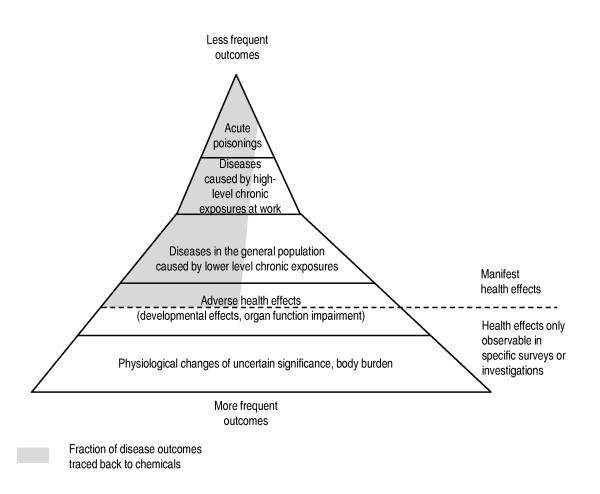
“Figure 3 Occurrence and detection of health impacts from chemicals Adapted from [64,65].”
BackgroundAflatoxin, Hepatitis and Worldwide Liver Cancer Risks
Henry, S. H., Bosch, F. X., & Bowers, J. C. (2002) · Advances in experimental medicine and biology · doi:10.1007/978-1-4615-0629-4_24 · Cited by 129 · cited 1×
“Numerous cancer sites, including of the lung, skin, liver, brain, kidney, prostate, bone marrow, bladder [79-82]”
BackgroundThe global burden of non‐malignant respiratory disease due to occupational airborne exposures
Driscoll, T., Nelson, D. I., Steenland, K., Leigh, J., Concha‐Barrientos, M., Fingerhut, M., & Prüss‐Üstün, A. (2005) · American Journal of Industrial Medicine · doi:10.1002/ajim.20210 · Cited by 128 · cited 2×
“The estimated health impacts were 375,000 deaths and 3,804,000 DALYs from COPD, and 29,000 deaths and 1,061,000 DALYs from asbestosis, silicosis and pneumoconiosis in 2004 [14,20].”
BackgroundGilliland, F. D., & Mandel, J. S. (1996) · American Journal of Industrial Medicine · doi:10.1002/(sici)1097-0274(199605)29:5<491::aid-ajim7>3.0.co;2-p · Cited by 120
Maternal Pesticide Exposure and Pregnancy Outcome
Nurminen, T. (1995) · Journal of Occupational and Environmental Medicine · doi:10.1097/00043764-199508000-00008 · Cited by 112 · cited 1×
“Congenital anomalies Maternal exposure to pesticides, polychlorinated biphenyls (PCBs), polychlorinated dibenzofurans (PCDFs), lead, mercury, other endocrine disruptors Various birth defects [77,78]”
BackgroundOccupational asthma in the developing and industrialised world: a review.
Jeebhay, M. F., & Quirce, S. (2007) · PubMed · Cited by 109
The Effect of Arsenic Mitigation Interventions on Disease Burden in Bangladesh
Lokuge, K., Smith, W. T., Caldwell, B. K., Dear, K. B. G., & Milton, A. H. (2004) · Environmental Health Perspectives · doi:10.1289/ehp.6866 · Cited by 107 · cited 6×
“The health impacts of exposure to arsenic in drinking water have been estimated for Bangladesh [11].”
BackgroundMethodInfluentialProfessional cleaning and asthma
Jaakkola, J. J. K., & Jaakkola, M. S. (2006) · Current Opinion in Allergy and Clinical Immunology · doi:10.1097/01.all.0000216849.64828.55 · Cited by 103 · cited 1×
“Second-hand smoke; occupational exposures to cleaning-agents, pesticides, hairdressing chemicals etc. Asthma onset and exacerbation [28, 70-72 ]”
BackgroundOccupational hazards and pregnancy outcomes
Zhang, J., Cai, W., & Lee, D. J. (1992) · American Journal of Industrial Medicine · doi:10.1002/ajim.4700210312 · Cited by 93 · cited 1×
“Perinatal conditions Maternal exposure to pesticides or other chemicals Low-birth-weight and preterm infants [73-76]”
BackgroundAn attempt to estimate the global burden of disease due to fluoride in drinking water
Fewtrell, L., Smith, S., Kay, D., & Bartram, J. (2006) · Journal of Water and Health · doi:10.2166/wh.2006.0036 · Cited by 90 · cited 1×
“Excessive fluoride concentrations in drinking water was estimated to have caused about 47 million of dental fluorosis cases and 20 million skeletal fluorosis cases in 17 countries (in terms of prevalence, based on point estimates published between 1953 and 2000) [39].”
BackgroundQuoc, B. (2012) · Air Pollution - Monitoring, Modelling and Health · doi:10.5772/32956 · Cited by 86 · cited 2×
“5) as an index for common mixtures of urban air pollution [24].”
BackgroundHealth Aspects of Air Pollution
Magistrale, V. (1992) · Springer eBooks · doi:10.1007/978-3-642-76051-8_4 · Cited by 76
Environmental Contaminants as Etiologic Factors for Diabetes
Longnecker, M. P., & Daniels, J. L. (2001) · Environmental Health Perspectives · doi:10.2307/3454649 · Cited by 64
Global Health Impacts and Costs Due to Mercury Emissions
Spadaro, J. V., & Rabl, A. (2008) · Risk Analysis · doi:10.1111/j.1539-6924.2008.01041.x · Cited by 63 · cited 1×
“These results are however not comparable to estimates of deaths and DALYs [41,43].”
ResultAgricultural pesticide exposure and perinatal mortality in central Sudan.
Taha, T. E., & Gray, R. H. (1993) · Europe PMC (PubMed Central) · Cited by 47
Bardana, E. J. (2008) · Journal of Allergy and Clinical Immunology · doi:10.1016/j.jaci.2007.08.005 · Cited by 45 · cited 2×
“Other effects of long-term exposure are peripheral neuropathy, gastrointestinal symptoms, diabetes, reproductive effects, enlarged liver, bone marrow depression, destruction of erythrocytes, high blood pressure and cardiovascular disease [ 34-36 ].”
BackgroundPresgrave, R. D. F., Camacho, L. A. B., & Bôas, M. H. S. V. (2008) · Cadernos de Saúde Pública · doi:10.1590/s0102-311x2008001200019 · Cited by 45
Fewtrell, L., Fuge, R., & Kay, D. (2005) · Journal of Water and Health · doi:10.2166/wh.2005.0011 · Cited by 41 · cited 2×
“arsenic [11,37] (b) international databases or systematic reviews of survey data, such as for indoor air pollution [46] and second-hand smoke [29] (c) systematic reviews of bio-monitoring data, such as blood lead levels [31,47], or (d) international databases or systematic reviews of occupational exposures by sector o…”
BackgroundDoes ‘No Pesticide’ Reduce Suicides?
Vijayakumar, L., & Satheesh-Babu, R. (2009) · International Journal of Social Psychiatry · doi:10.1177/0020764008095340 · Cited by 37 · cited 1×
“Current evidence supports that suicide rates could be significantly reduced through limiting access to lethal means, among other methods [ 17 ,18].”
BackgroundMethodology for assessment of Environmental burden of disease
Kay, D., Prüss, A., & Corvalán, C. (2000) · Cited by 36
Environmental and Occupational Medicine
Rumm, P. D. (1995) · Military Medicine · doi:10.1093/milmed/160.4.a4b · Cited by 28
Principles and methods for assessing autoimmunity associated with exposure to chemicals
Hypersensitivity, A. (2006) · World Health Organization eBooks · Cited by 18
Household chemicals--common cause of unintentional poisoning.
Klepac, T., Bušljeta, I., Macan, J., Plavec, D., & Turk, R. (2000) · PubMed · Cited by 15
Human biomonitoring programmes and activities in the European Union
Viso, A., Casteleyn, L., Biot, P., & Eilstein, D. (2009) · Journal of Epidemiology & Community Health · doi:10.1136/jech.2008.083709 · Cited by 14 · cited 1×
“To improve exposure information, bio-monitoring initiatives are developing, and should continue improving large-scale exposure information [61,62].”
BackgroundPrinciples and Methods for Assessing Autoimmunity Associated with Exposure to Chemicals
Ipcs (2006) · Cited by 14
393. CAREX: A New International Information System for Occupational Exposure to Carcinogens
Kauppinen, T., Toikkanen, J., & Pedersen, D. H. (1999) · AIHce 1997 - Taking Responsibility...Building Tomorrow's Profession Papers · doi:10.3320/1.2765537 · Cited by 7
Research works printed but not linked: 9
- International Programme on Chemical Safety Human exposure assessment Environmental Health Criteria, No. 214 2000 Geneva: World Health Organization http://www.inchem.org/documents/ehc/ehc/ehc214.htm
- Murray C Lopez AD The global burden of disease 1996 Geneva: World Health Organization, Harvard School of Public Health, World Bank
- Concha-Barrientos M Imel Nelson D Driscoll T Steenland NK Punnett L Fingerhut MA Prüss-Üstün A Leigh J Tak SW Corvalàn C Ezzati M, Lopez AD, Rodgers A, Murray CJL Selected occupational risk factors Comparative quantification of health risks 2004 World Health Organization
- Smith KR Mehta S Maeusezahl-Feuz M Ezzati M, Lopez AD, Rodgers A, Murray CJL Indoor air pollution from solid household fuels Comparative quantification of health risks 2004 World Health Organization
- Prüss-Ustün A Fewtrell L Landrigan P Ayuso-Mateos JL Ezzati M, Lopez AD, Rodgers A, Murray CJL Lead exposure Comparative quantification of health risks 2004 World Health Organization
- Cohen J Bellinger DC Shaywitz B A quantitative analysis of prenatal methyl mercury exposure and cognitive development Am J Prev Med 2005 29 353 65 10.1016/j.amepre.2005.06.007 16242602 · DOI
- McCartor A Becker D Blacksmith Institute's world's worst pollution problems report 2010 2010 New York: Blacksmith Institute http://www.worstpolluted.org/2010-report.html Accessed November 16, 2010
- Commission of the European Communities Commission staff working paper "Regulation of the European Parliament and of the Council concerning the Registration, Evaluation, Authorisation and Restrictions of Chemicals (REACH), establishing a European Chemicals Agency and amending Directive 1999/45/EC and Regulation (EC) on Persistent Organic Pollutants "1 Extended impact assessment" 2003 Brussels COM(2003)644 final
- Klaassen C Casarett Doull's Toxicology The Basic Science of Poisons 2008 7 USA: McGraw Hill http://www.mcgraw-hill.co.uk/html/0071470514.html
Cited by
The Lancet Commission on pollution and health
Landrigan, P. J., Fuller, R., Acosta, N. J. R., Adeyi, O., Arnold, R., Basu, N. (., Baldé, A. B., Bertollini, R., Bose-O'Reilly, S., Boufford, J. I., et al. (2018) · The Lancet · doi:10.1016/s0140-6736(17)32345-0 · Cited by 4,929
Self-citationWhitmee, S., Haines, A., Beyrer, C., Boltz, F., Capon, A. G., de Souza Dias, B. F., Ezeh, A., Frumkin, H., Gong, P., Head, P., et al. (2015) · The Lancet · doi:10.1016/s0140-6736(15)60901-1 · Cited by 2,998
A review of toxicity and mechanisms of individual and mixtures of heavy metals in the environment
Wu, X., Cobbina, S. J., Mao, G., Xu, H., Zhang, Z., & Yang, L. (2016) · Environmental Science and Pollution Research · doi:10.1007/s11356-016-6333-x · Cited by 1,078
Food Safety in Low and Middle Income Countries
Grace, D. (2015) · International Journal of Environmental Research and Public Health · doi:10.3390/ijerph120910490 · Cited by 544
“In LMICs, there is no credible, comprehensive, quantified evidence on the overall impact of chemicals in food on human health [48] but there is solid evidence that some health impacts occur, and there is suspicion that impacts could be substantial.”
BackgroundEnvironmental Burden of Disease in Europe: Assessing Nine Risk Factors in Six Countries
Hänninen, O., Knol, A. B., Jantunen, M., Lim, T.-A., Conrad, A., Rappolder, M., Carrer, P., Fanetti, A.-C., Kim, R., Buekers, J., et al. (2014) · Environmental Health Perspectives · doi:10.1289/ehp.1206154 · Cited by 474
Metadata
- Authors
- Prüss-Ustün, A., Vickers, C., Haefliger, P., & Bertollini, R.
- Affiliations
- World Health Organization (CH)
- World Health Organization Regional Office for Europe (DK)
- ORCID
- Bertollini, Roberto
- Venue
- Environmental Health
- Published
- 2011-01-21
- Volume
- 10
- Issue
- 1
- Pages
- 9-9
- ISSN
- 1476-069X (ISSN-L)
- PMC
- PMC3037292
- OpenAlex
- W2145280832
- Cited by
- 397
- References
- 87
- Citations by year
- 2026: 14 · 2025: 14 · 2024: 34 · 2023: 17 · 2022: 43 · 2021: 31 · 2020: 30 · 2019: 24 · 2018: 38 · 2017: 24 · 2016: 26 · 2015: 40 · 2014: 25 · 2013: 16 · 2012: 12
- FWCI
- 3.53
- Type
- journal article
- Language
- en
- Open access
- gold
- doi.org
- Licence
- cc-by
- creativecommons.org/licenses/by/2.0 (tdm)
- creativecommons.org/licenses/by/2.0 (vor)
- Locations
- Environmental Health (publishedVersion, cc-by)
- PubMed Central (publishedVersion, cc-by)
- PubMed (publishedVersion)
- DOAJ (DOAJ: Directory of Open Access Journals) (submittedVersion)
- Funders
- Astellas Pharma US
- Topics
- Social Sciences › Health › Occupational Health and Global Justice
- Physical Sciences › Environmental Science › Health, Toxicology and Mutagenesis › Toxic Organic Pollutants Impact
- Physical Sciences › Environmental Science › Health, Toxicology and Mutagenesis › Public Health and Environmental Issues
- Keywords
- disease burden, toxic chemicals, environmental exposure, global burden of disease, disability-adjusted life years, solid fuel use, outdoor air pollution, passive smoking, acute poisoning, pesticide self-poisoning, chemical mixtures, public health policy, data gaps
- MeSH terms
- Disease, Environmental Pollutants, Environmental Pollution, Epidemiology, Humans, Mortality, Public Health, Public Policy, Occupational Exposure, Risk Assessment
About these checks
Registry, retraction, Cites and statistics results are computed, not judged, with one exception: a printed reference that no index lists is read once by a model before it counts as a citation error. Claims are extracted by a model and kept only when their quote appears verbatim in the text; each cited source is then checked, with a model’s help, for whether it says what the claim relies on. Those verdicts can be wrong — read the claim’s quote and the cited source before relying on one.
Statistics and arithmetic are recomputed, not judged.
Confidence bands are shown only for fields calibrated on our annotated test set. None is calibrated yet, so no band is shown.
What counts as a claim ›How we measure confidence ›How we check this ›
Are you an author, or do you see a problem with this page? Request a review
Data sources
Bibliographic data: Semantic Scholar, OpenAlex, Crossref.
Contains information from the Semantic Scholar Academic Graph Datasets, made available under the ODC Attribution License (ODC-BY 1.0).
Semantic Scholar’s data is described in: Kinney, R., et al. (2023). The Semantic Scholar Open Data Platform. arXiv:2301.10140.
