

The DOI matches its Crossref record; 44 of the 55 references it cites were found in a registry or an index.
Mesothelin confers pancreatic cancer cell resistance to TNF-α-induced apoptosis through Akt/PI3K/NF-κB activation and IL-6/Mcl-1 overexpression
Open accessAbstract
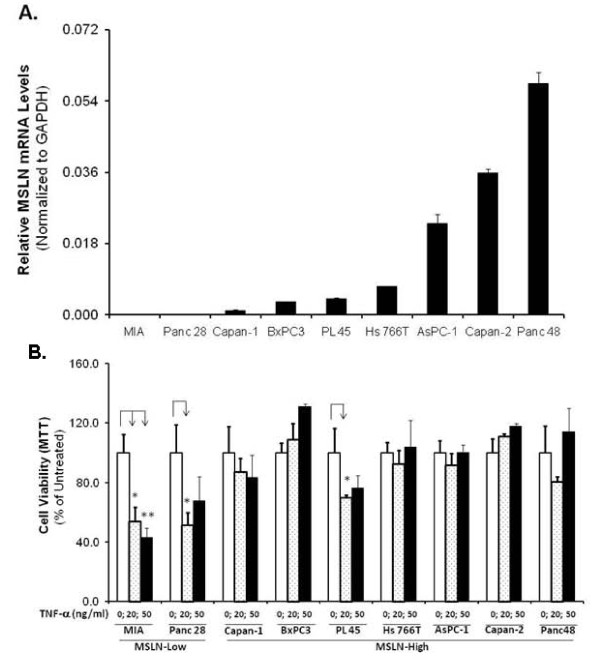
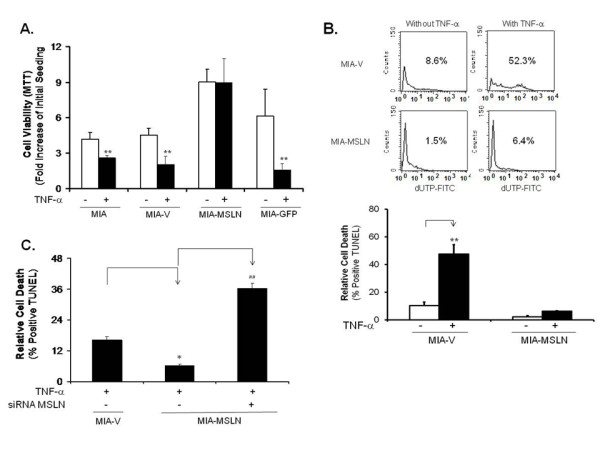
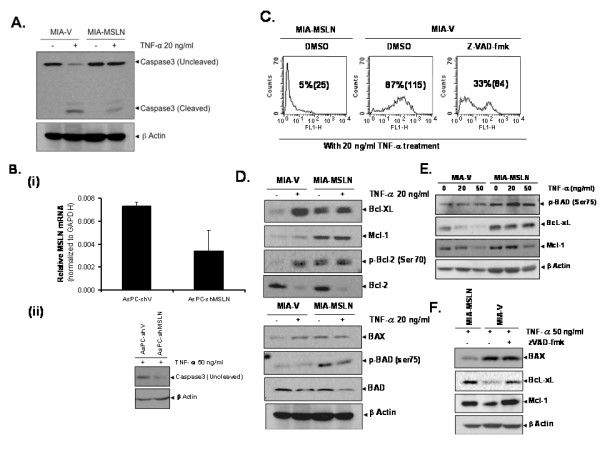
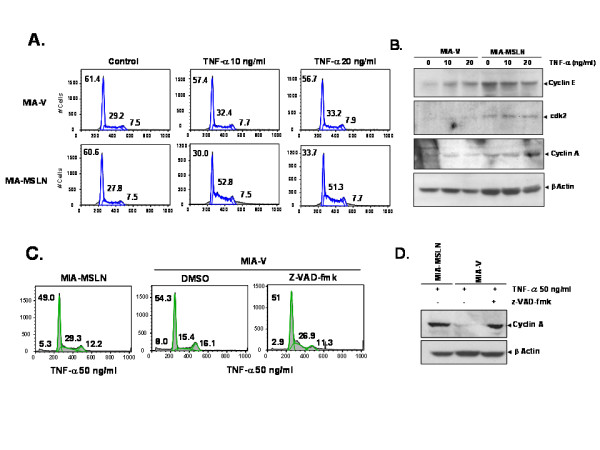
Background: Previous studies showed that mesothelin (MSLN) plays important roles in survival of pancreatic cancer (PC) cells under anchorage dependent/independent conditions as well as resistance to chemotherapy. The recent success of intratumorally-injected adeno-encoded, chemo/radiation-inducible-promoter driven hTNF-α, (TNFerade) + gemcitabine in pre-clinical models of PC have renewed interest in use of TNF-α as a therapeutic component. To help find additional factors which might affect the therapy, we examined the resistance of MSLN-overexpressing pancreatic cancer cell lines to TNF-α-induced growth inhibition/apoptosis. Methods: Stable MSLN overexpressing MIA PaCa-2 cells (MIA-MSLN), stable MSLN-silenced AsPC-1 cells (AsPC-shMSLN) and other pancreatic cells (MIA-PaCa2, Panc 28, Capan-1, BxPC3, PL 45, Hs 766T, AsPC-1, Capan-2, Panc 48) were used. NF-κB activation was examined by western blots and luciferase reporter assay. TNF-α induced growth inhibition/apoptosis was measured by MTT, TUNEL assay and caspase activation. IL-6 was measured using luminex based assay. Results: Compared to low endogenous MSLN-expressing MIA PaCa-2 and Panc 28 cells, high endogenous MSLN-expressing Capan-1, BxPC3, PL 45, Hs 766T, AsPC-1, Capan-2, Panc 48 cells were resistant to TNF-α induced growth inhibition. Stable MSLN overexpressing MIA-PaCa2 cells (MIA-MSLN) were resistant to TNF-α-induced apoptosis while stable MSLN-silenced AsPC1 cells (AsPC-shMSLN) were sensitive. Interestingly, TNF-α-treated MIA-MSLN cells showed increased cell cycle progression and cyclin A induction, both of which were reversed by caspase inhibition. We further found that MIA-MSLN cells showed increased expression of anti-apoptotic Bcl-XL and Mcl-1; deactivated (p-Ser 75 ) BAD, and activated (p-Ser 70 ) Bcl-2. Constitutively activated NF-κB and Akt were evident in MIA-MSLN cells that could be suppressed by MSLN siRNA with a resultant increase in sensitivity of TNF-α induced apoptosis. Blocking NF-κB using IKK inhibitor wedelolactone also increased sensitivity to TNF-α-mediated cytotoxicity with concomitant decrease in Mcl-1. Blocking Akt using PI3K inhibitor also had a likewise effect presumably affecting cell cycle. MIA-MSLN cells produced increased IL-6 and were increased furthermore by TNF-α treatment. SiRNA-silencing of IL-6 increased TNF-α sensitivity of MIA-MSLN cells. Conclusions: Our study delineates a MSLN-Akt-NF-κB-IL-6-Mcl-1 survival axis that may be operative in PC cells, and might help cancer cells' survival in the highly inflammatory milieu evident in PC. Further, for the success of TNFerade + gemcitabine to be successful, we feel the simultaneous inhibition of components of this axis is also essential.
Overview
The claims and statistics of this paper haven’t been checked yet.
Run the check — free, no account needed. It reads the open-access text and checks the sources it cites.
Integrity signals
Registry
Cites
Statistics
Figures
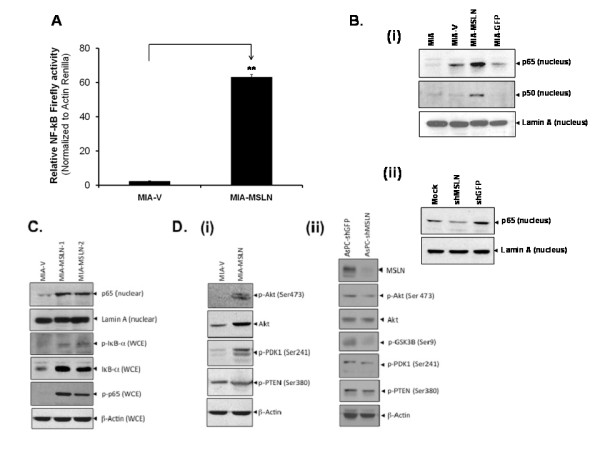
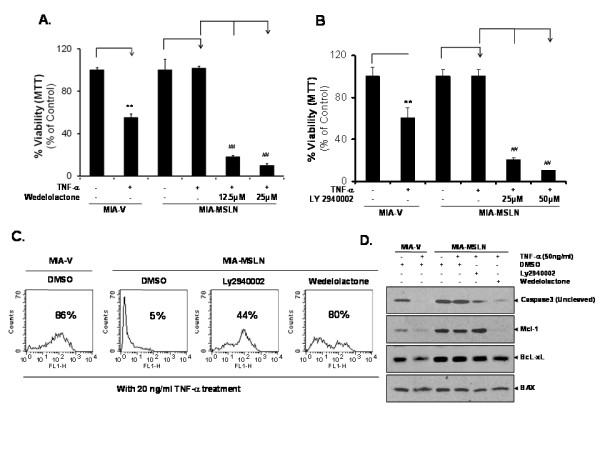
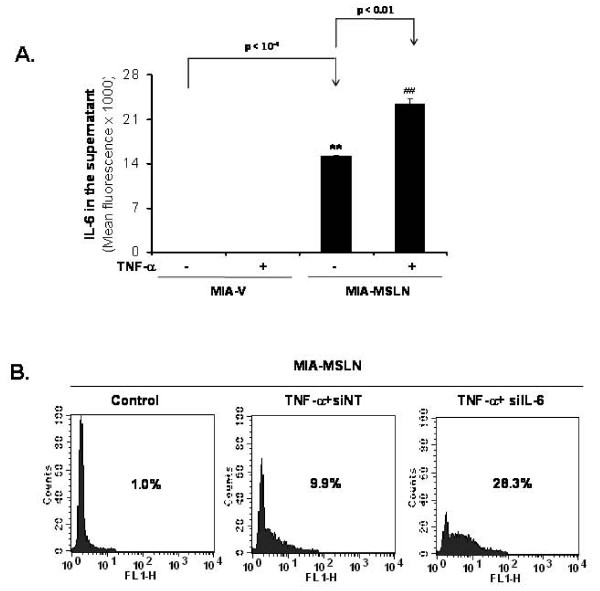
Verification
Claims the paper makes
The claims and statistics of this paper haven’t been checked yet.
Run the check — free, no account needed. It reads the open-access text and checks the sources it cites.
Claims other papers make about this one
Each is checked against this paper’s own text: does it say what the citing paper says it does?
The cited source says what the claim attributes to it.
In the citing paper
“It confers pancreatic cancer cell resistance to TNFα-induced apoptosis through NF-κB activation and the enhanced expression of IL-6 (319).”
From IL-6 in inflammation, autoimmunity and cancer (2021) · cites this paper as [319]
Self-check
Percentages, sums and reported differences re-computed from the paper’s own numbers.
The self-check needs the paper’s full text.
Citations
Cites
An endotoxin-induced serum factor that causes necrosis of tumors
Carswell, E. A., Old, L. J., Kassel, R. L., Green, S., Fiore, N., & Williamson, B. (1975) · Proceedings of the National Academy of Sciences · doi:10.1073/pnas.72.9.3666 · Cited by 4,532 · cited 1×
“TNF-a was identified as a cytokine that induces tumor necrosis/regression in animals [9].”
BackgroundThe Bcl2 family: regulators of the cellular life-or-death switch
Cory, S., & Adams, J. M. (2002) · Nature Reviews Cancer · doi:10.1038/nrc883 · Cited by 4,032 · cited 1×
“Dephosphorylated BAD promotes apoptosis by binding and sequestering Bcl-2 and/or Bcl-XL away from proapoptotic Bax/Bak proteins [22,23].”
BackgroundSignalling pathways of the TNF superfamily: a double-edged sword
Aggarwal, B. B. (2003) · Nature Reviews Immunology · doi:10.1038/nri1184 · Cited by 2,793 · cited 2×
“TNF-a induces NF- B activation in most cells [17,18] but this is not always sufficient to avoid the pro-apoptotic effects of TNF-a; rather, a constitutive activation of NF- B seems to be necessary [20].”
BackgroundInflammation and cancer: how hot is the link?
Aggarwal, B. B., Shishodia, S., Sandur, S. K., Pandey, M. K., & Sethi, G. (2006) · Biochemical Pharmacology · doi:10.1016/j.bcp.2006.06.029 · Cited by 1,312 · cited 8×
“Another interesting observation is that TNF-a induces MIA-MSLN cells to go into cell cycle rather than stalling the process, similar to previous reports of auto/paracrine growth stimulation by TNF-a [17].”
BackgroundResultInfluentialWang, C.-Y., Cusack, J. C., Liu, R., & Baldwin, A. S. (1999) · Nature Medicine · doi:10.1038/7410 · Cited by 986 · cited 1×
“However, a large percentage of patients and/or cell lines are resistant to TNF-a treatment [14,15].”
BackgroundTNF-α in promotion and progression of cancer
Balkwill, F. R. (2006) · Cancer and Metastasis Reviews · doi:10.1007/s10555-006-9005-3 · Cited by 919
Bcl-2 family proteins and cancer
Yip, K. W., & Reed, J. C. (2008) · Oncogene · doi:10.1038/onc.2008.307 · Cited by 913 · cited 1×
“Bcl-2 regulates apoptosis by heterodimerization with its pro-apoptotic partner, Bax, to maintain mitochondrial integrity [40].”
BackgroundMammalian cell-cycle regulation: several Cdks, numerous cyclins and diverse compensatory mechanisms
Satyanarayana, A., & Kaldis, P. (2009) · Oncogene · doi:10.1038/onc.2009.170 · Cited by 800 · cited 1×
“We further examined S-phase promoting cyclins A/E [28] and cdk2.”
BackgroundTumour necrosis factor-α as a tumour promoter
Szlosarek, P. W., Charles, K. A., & Balkwill, F. R. (2006) · European Journal of Cancer · doi:10.1016/j.ejca.2006.01.012 · Cited by 367
Mesothelin targeted cancer immunotherapy.
Hassan, R., & Ho, M. (2008) · European Journal of Cancer · doi:10.1016/j.ejca.2007.08.028 · Cited by 337 · cited 1×
“The importance of mesothelin (MSLN) as a biomarker and preferred immunotherapeutic target is steadily growing for many cancers, including pancreatic cancer (PC) [1-3].”
BackgroundYang, H., Bocchetta, M., Kroczynska, B., Elmishad, A. G., Chen, Y., Liu, Z., Bubici, C., Mossman, B. T., Pass, H. I., Testa, J. R., et al. (2006) · Proceedings of the National Academy of Sciences · doi:10.1073/pnas.0604008103 · Cited by 322 · cited 1×
“The ability of normal mesothelial and mesothelioma cells [36-38] to survive/proliferate in presence of TNF-a is intriguing.”
BackgroundGiri, D. K., & Aggarwal, B. B. (1998) · Journal of Biological Chemistry · doi:10.1074/jbc.273.22.14008 · Cited by 297 · cited 2×
“Literature shows that blocking NF- B activation can overcome TNF-a resistance [17], although a constitutive NF- B activation, rather than the inducible one, has been suggested to be more important [20].”
BackgroundSurvival factor-mediated BAD phosphorylation raises the mitochondrial threshold for apoptosis.
Datta, S. R., Ranger, A., Lin, M. Z., Sturgill, J., Ma, Y.-C., Cowan, C. W., Dikkes, P., Korsmeyer, S., & Greenberg, M. (2002) · Developmental Cell · doi:10.1016/s1534-5807(02)00326-x · Cited by 295 · cited 17×
“Our results demonstrate that MSLN overexpression leads to constitutive NF- B/Akt activation resulting in resistance to TNF-a mediated cytotoxicity, presumably through de-activation of BAD, activation of Bcl-2 and upregulation of Mcl-1, in an IL-6 dependent manner.”
BackgroundInfluentialRicci, M., Kim, S.-H., Ogi, K., Plastaras, J. P., Ling, J., Wang, W., Jin, Z., Liu, Y. Y., Dicker, D. T., Chiao, P. J., et al. (2007) · Cancer Cell · doi:10.1016/j.ccr.2007.05.006 · Cited by 260 · cited 1×
“Although primarily a Stat3 regulated gene, NF- B regulated Mcl-1 is responsible for TRAIL resistance in various tumors [44,45] including the MSLN-high PC cell line BxPC-3 [46].”
BackgroundHow BAD phosphorylation is good for survival
Downward, J. (1999) · Nature Cell Biology · doi:10.1038/10026 · Cited by 250 · cited 1×
“Dephosphorylated BAD promotes apoptosis by binding and sequestering Bcl-2 and/or Bcl-XL away from proapoptotic Bax/Bak proteins [22,23].”
BackgroundSurvival function of ERK1/2 as IL-3-activated, staurosporine-resistant Bcl2 kinases.
Deng, X., Ruvolo, P., Carr, B. K., & May, W. (2000) · Proceedings of the National Academy of Sciences of the United States of America · doi:10.1073/pnas.97.4.1578 · Cited by 244 · cited 1×
“Phosphorylation of Bcl-2 at Ser70 is necessary for its anti-apoptotic function [41].”
BackgroundKoorstra, J.-B. M., Hustinx, S. R., Offerhaus, G. J. A., & Maitra, A. (2008) · Pancreatology · doi:10.1159/000123838 · Cited by 191 · cited 1×
“In pancreatic cancer, it was suggested that MSLN is up-regulated following K-RAS, p53, p16 mutations [6], denoting its advantage in surviving early genotoxic insult.”
BackgroundHigh mesothelin correlates with chemoresistance and poor survival in epithelial ovarian carcinoma
Cheng, W.-F., Huang, C.-Y., Chang, M.-C., Hu, Y.-H., Chiang, Y.-C., Chen, Y.-Y., Hsieh, C.-Y., & Chen, C.-A. (2009) · British Journal of Cancer · doi:10.1038/sj.bjc.6604964 · Cited by 161 · cited 1×
“Evidence suggests that MSLN confers resistance to anoikis in breast cancer [4] and chemotherapy (platinum + cyclophosphamide/paclitaxel) in ovarian cancer [5].”
BackgroundSelf-citationA note of caution for the doctor on duty: take the acute attack in chronic pancreatitis seriously!
Murphy, J., Criddle, D., Sherwood, M. W., Chvanov, M., McLaughlin, E., Gerasimenko, J., Raraty, M., Ghaneh, P., Neoptolemos, J., Gerasmenko, O. V., et al. (2007) · Journal of Internal Medicine · doi:10.1111/j.1365-2796.2007.01873.x · Cited by 161 · cited 5×
“The importance of mesothelin (MSLN) as a biomarker and preferred immunotherapeutic target is steadily growing for many cancers, including pancreatic cancer (PC) [1-3].”
BackgroundMethodInfluentialChoi, S.-E., Choi, K.-M., Yoon, I., Shin, J., Kim, J.-S., Park, W., Han, D. J., Kim, S.-C., Ahn, C., Kim, J., et al. (2004) · Transplant Immunology · doi:10.1016/j.trim.2004.04.001 · Cited by 129 · cited 2×
“IL-6 also protects pancreatic islet beta cells from TNF-a-induced cell death [32].”
BackgroundHuang, S., & Sinicrope, F. A. (2008) · Cancer Research · doi:10.1158/0008-5472.can-07-2508 · Cited by 121 · cited 3×
“S1, TNF-a treatment did not affect viability in either BxPC-3 or AsPC-1 at any of these FBS concentrations.”
BackgroundBharadwaj, U., Marin-Muller, C., Li, M., Chen, C., & Yao, Q. (2011) · Carcinogenesis · doi:10.1093/carcin/bgr075 · Cited by 118 · cited 4×
“MIAMSLN) express increased IL-6 at both mRNA/protein levels [31].”
BackgroundInfluentialSelf-citationBai, J., Sui, J., Demirjian, A. N., Vollmer, C. M., Marasco, W. A., & Callery, M. P. (2005) · Cancer Research · doi:10.1158/0008-5472.can-04-3502 · Cited by 114 · cited 1×
“Previous data [14,34] and ours presented here show that PC cell lines Capan-1, BxPC3, PL 45, Hs 766T, AsPC-1, Capan-2, Panc 48 cells are resistant to TNF-a.”
ResultBharadwaj, U., Li, M., Chen, C., & Yao, Q. C. (2008) · Molecular Cancer Research · doi:10.1158/1541-7786.mcr-08-0095 · Cited by 109
Self-citationUehara, N., Matsuoka, Y., & Tsubura, A. (2008) · Molecular Cancer Research · doi:10.1158/1541-7786.mcr-07-0254 · Cited by 107
Cavarretta, I. T. R., Neuwirt, H., Untergasser, G., Moser, P. L., Zaki, M. H., Steiner, H., Rumpold, H. F., Fuchs, D., Hobisch, A., Nemeth, J. A., et al. (2006) · Oncogene · doi:10.1038/sj.onc.1210097 · Cited by 105 · cited 2×
“Autocrine IL-6induced Mcl-1 could protect prostate cancer cells from apoptosis [33].”
BackgroundSchmiegel, W., Roeder, C., Schmielau, J., Rodeck, U., & Kalthoff, H. (1993) · Proceedings of the National Academy of Sciences of the United States of America · doi:10.1073/pnas.90.3.863 · Cited by 104 · cited 2×
“TNF-a was found to support pancreatic cancer cell growth through epidermal growth factor receptor (EGFR) and transforming growth factor (TGF-a) expression [19].”
BackgroundRegulation of Bcl2 Phosphorylation and Potential Significance for Leukemic Cell Chemoresistance
Deng, X., Kornblau, S. M., Ruvolo, P. P., & May, W. S. (2000) · JNCI Monographs · doi:10.1093/oxfordjournals.jncimonographs.a024254 · Cited by 102 · cited 1×
“Another significant aspect is increased phosphorylation of anti-apoptotic molecule Bcl-2 at Ser70 position in its positive regulatory loop enhancing its anti-apoptotic action [21].”
BackgroundIn vivo hepatocyte proliferation is inducible through a TNF and IL-6-independent pathway
Ledda-Columbano, G. M., Curto, M., Piga, R., Zedda, A. I., Menegazzi, M., Sartori, C., Shinozuka, H., Bluethmann, H., Poli, V, Ciliberto, G., et al. (1998) · Oncogene · doi:10.1038/sj.onc.1202018 · Cited by 96 · cited 1×
“In fact, studies reveal that co-operative action of IL-6 and TNFa induces proliferation during liver regeneration after multiple partial hepatectomy [49].”
BackgroundWang, X., Chen, W.-S., Zeng, W., Bai, L., Tesfaigzi, Y., Belinsky, S., & Lin, Y. (2008) · Molecular Cancer Therapeutics · doi:10.1158/1535-7163.mct-07-2183 · Cited by 95
Liu, C.-J., Lo, J.-F., Kuo, C.-H., Chu, C.-H., Chen, L.-M., Tsai, F.-J., Tsai, C.-H., Tzang, B., Kuo, W.-W., & Huang, C.-Y. (2009) · Journal of Cellular and Molecular Medicine · doi:10.1111/j.1582-4934.2009.00669.x · Cited by 90
Bergmann, A. (2002) · Developmental Cell · doi:10.1016/s1534-5807(02)00328-3 · Cited by 84 · cited 1×
“BAD is a pro-apoptotic Bcl-2 family member coordinating survival and mitochondrial cell death signals [42].”
BackgroundGordon, G., Mani, M., Mukhopadhyay, L., Dong, L., Yeap, B. Y., Dj, S., & Bueno, R. (2007) · The Journal of Pathology · doi:10.1002/path.2120 · Cited by 68 · cited 1×
“The ability of normal mesothelial and mesothelioma cells [36-38] to survive/proliferate in presence of TNF-a is intriguing.”
BackgroundMesothelin inhibits paclitaxel-induced apoptosis through the PI3K pathway.
Chang, M., Chen, C.-A., Hsieh, C.-Y., Lee, C.-N., Su, Y.-D., Hu, Y.-H., & Cheng, W.-F. (2009) · Biochemical Journal · doi:10.1042/bj20082196 · Cited by 68 · cited 1×
“MSLN-induced Mcl-1 upregulation has been reported in taxol resistant ovarian cancer cells [47] indicating its importance in MSLN induced protection from various apoptotic stimuli.”
BackgroundSelf-citationMurugesan, S., King, C., Osborn, R., Fairweather, W., O'Reilly, E., Thornton, M., & Wei, L. L. (2009) · Cancer Gene Therapy · doi:10.1038/cgt.2009.32 · Cited by 57 · cited 2×
“gemcitabine in pre-clinical models of PC without metastasis at diagnosis) is largely devoid of the toxicity issue and has generated renewed interest in TNF- a treatment [12,13].”
BackgroundTranslation of the radio- and chemo-inducible TNFerade vector to the treatment of human cancers
Weichselbaum, R., & Kufe, D. (2009) · Cancer Gene Therapy · doi:10.1038/cgt.2009.37 · Cited by 37 · cited 1×
“gemcitabine in pre-clinical models of PC without metastasis at diagnosis) is largely devoid of the toxicity issue and has generated renewed interest in TNF- a treatment [12,13].”
BackgroundRegulation of apoptosis by lethal cytokines in human mesothelial cells.
Catalan, M., Subirá, D., Reyero, A., Selgas, R., Ortiz-Gonzalez, A., Egido, J., & Ortiz, A. (2003) · Kidney International · doi:10.1046/j.1523-1755.2003.00062.x · Cited by 34 · cited 1×
“The ability of normal mesothelial and mesothelioma cells [36-38] to survive/proliferate in presence of TNF-a is intriguing.”
BackgroundSchmiegel, W., Caesar, J., Kalthoff, H., Greten, H., Schreiber, H., & Thiele, H. (1988) · doi:10.1097/00006676-198804000-00012 · Cited by 31
Lyu, M., Kurzrock, R., & Rosenblum, M. (2008) · Biochemical Pharmacology · doi:10.1016/j.bcp.2007.10.013 · Cited by 28 · cited 2×
“Previous data [14,34] and ours presented here show that PC cell lines Capan-1, BxPC3, PL 45, Hs 766T, AsPC-1, Capan-2, Panc 48 cells are resistant to TNF-a.”
BackgroundResultQiu, J., Xiao, J., Han, C., Li, N., Shen, X., Jiang, H., & Cao, X. (2010) · Journal of Biological Chemistry · doi:10.1074/jbc.m110.111898 · Cited by 25
Spyridopoulos, I., Mayer, P., Shook, K., Axel, D., Viebahn, R., & Karsch, K. (2001) · Cardiovascular Research · doi:10.1016/s0008-6363(01)00196-1 · Cited by 23 · cited 2×
“Loss of cyclin A and G1-cell cycle arrest was found to precede cell-killing by TNF-a in endothelial cells [26].”
BackgroundTNF accelerates the S‐phase of the cell cycle in tumor cells
Volland, S., Amtmann, E., & Sauer, G. (1994) · International Journal of Cancer · doi:10.1002/ijc.2910560515 · Cited by 18 · cited 2×
“TNF-a promoted cell cycle progression and cyclin A synthesis in serum starved HeLa cells to rescue them from pro-apoptotic effects [27].”
BackgroundChao, O. S., & Clément, M. (2006) · Oncogene · doi:10.1038/sj.onc.1209421 · Cited by 17 · cited 18×
“Our results demonstrate that MSLN overexpression leads to constitutive NF- B/Akt activation resulting in resistance to TNF-a mediated cytotoxicity, presumably through de-activation of BAD, activation of Bcl-2 and upregulation of Mcl-1, in an IL-6 dependent manner.”
BackgroundInfluentialExpression and localization of mesothelin in developing rat pancreas
Hou, L.-Q., Wang, Y.-H., Liu, L.-J., Guo, J., Teng, L., Cao, L.-H., Shi, H., Yuan, L., & Wei, D. (2008) · Development, Growth and Differentiation · doi:10.1111/j.1440-169x.2008.01047.x · Cited by 5 · cited 1×
“Incidentally, MSLN is highly expressed in the islet beta cells of developing rat pancreas [48] leading one to speculate its role in IL-6 production and subsequent TNF-a protection.”
Background
Research works printed but not linked: 6
- Li M, Bharadwaj U, Zhang R, Zhang S, Mu H, Fisher WE, Brunicardi FC, Chen C, Yao Q: Mesothelin is a malignant factor and therapeutic vaccine target for pancreatic cancer. Mol Cancer Ther. 2008, 7: 286-296. 10.1158/1535-7163.MCT-07-0483 · DOI
- Fernandez A, Marin MC, McDonnell T, Ananthaswamy HN: Differential sensitivity of normal and Ha-ras-transformed C3H mouse embryo fibroblasts to tumor necrosis factor: induction of bcl-2, c-myc, and manganese superoxide dismutase in resistant cells. Oncogene. 1994, 9: 2009-2017.
- Komori A, Yatsunami J, Suganuma M, Okabe S, Abe S, Sakai A, Sasaki K, Fujiki H: Tumor necrosis factor acts as a tumor promoter in BALB/3T3 cell transformation. Cancer Res. 1993, 53: 1982-1985.
- Eisenmann KM, VanBrocklin MW, Staffend NA, Kitchen SM, Koo HM: Mitogen-activated protein kinase pathway-dependent tumor-specific survival signaling in melanoma cells through inactivation of the proapoptotic protein bad. Cancer Res. 2003, 63: 8330-8337.
- Argani P, Iacobuzio-Donahue C, Ryu B, Rosty C, Goggins M, Wilentz RE, Murugesan SR, Leach SD, Jaffee E, Yeo CJ: Mesothelin is overexpressed in the vast majority of ductal adenocarcinomas of the pancreas: identification of a new pancreatic cancer marker by serial analysis of gene expression (SAGE). Clin Cancer Res. 2001, 7: 3862-3868.
- Kalthoff H, Roeder C, Humburg I, Thiele HG, Greten H, Schmiegel W: Modulation of platelet-derived growth factor A- and B-chain/c-sis mRNA by tumor necrosis factor and other agents in adenocarcinoma cells. Oncogene. 1991, 6: 1015-1021.
Cited by
Sorted by citations
IL-6 in inflammation, autoimmunity and cancer
Hirano, T. (2021) · International Immunology · doi:10.1093/intimm/dxaa078 · Cited by 1,453
The Journal of Clinical Investigation
Witkin, E. M. (2016) · Journal of the American Dietetic Association · doi:10.1016/0002-8223(94)92394-9 · Cited by 920
Mesothelin-Targeted CARs: Driving T Cells to Solid Tumors
Morello, A., Sadelain, M., & Adusumilli, P. S. (2015) · Cancer Discovery · doi:10.1158/2159-8290.cd-15-0583 · Cited by 491
“Overexpression of MSLN alone is sufficient to constitutively activate the NFκB, MAPK, and PI3K intracellular pathways promoting cell proliferation and resistance to apoptosis (25).”
BackgroundMesothelin Immunotherapy for Cancer: Ready for Prime Time?
Hassan, R., Thomas, A., Alewine, C., Le, D., Jaffee, E., & Pastan, I. (2016) · Journal of Clinical Oncology · doi:10.1200/jco.2016.68.3672 · Cited by 301
Targeting Apoptosis Pathways in Cancer and Perspectives with Natural Compounds from Mother Nature
Millimouno, F. M., Dong, J., Liu, Y., Li, J., & Li, X. (2014) · Cancer Prevention Research · doi:10.1158/1940-6207.capr-14-0136 · Cited by 276
Metadata
- Authors
- Bharadwaj, U., Marin-Muller, C., Li, M., Chen, C., & Yao, Q.
- Affiliations
- Baylor College of Medicine (US)
- Corresponding author
- Yao, Qizhi
- Venue
- Molecular Cancer
- Published
- 2011-08-31
- Volume
- 10
- Issue
- 1
- Pages
- 106-106
- ISSN
- 1476-4598 (ISSN-L)
- PMC
- PMC3175472
- OpenAlex
- W2102073127
- Cited by
- 151
- References
- 55
- Citations by year
- 2026: 9 · 2025: 19 · 2024: 13 · 2023: 7 · 2022: 10 · 2021: 13 · 2020: 17 · 2019: 14 · 2018: 6 · 2017: 10 · 2016: 6 · 2015: 6 · 2014: 5 · 2013: 6 · 2012: 10
- FWCI
- 3.31
- Type
- journal article
- Language
- en
- Open access
- gold
- doi.org
- Licence
- cc-by
- Locations
- Molecular Cancer (publishedVersion, cc-by)
- Europe PMC (PubMed Central) (publishedVersion, cc-by)
- PubMed Central (publishedVersion, cc-by)
- PubMed (publishedVersion)
- DOAJ (DOAJ: Directory of Open Access Journals) (submittedVersion)
- Funders
- National Institutes of Health
- National Cancer Institute (CA140828, R21CA140828)
- Topics
- Health Sciences › Medicine › Oncology › Pancreatic and Hepatic Oncology Research
- Life Sciences › Biochemistry, Genetics and Molecular Biology › Molecular Biology › Cell death mechanisms and regulation
- Life Sciences › Biochemistry, Genetics and Molecular Biology › Molecular Biology › Signaling Pathways in Disease
- Keywords
- mesothelin, pancreatic cancer, TNF-α, apoptosis resistance, interleukin-6, Mcl-1, Bcl-xL, Bad phosphorylation, cell cycle progression, cyclin A, caspase activation, gemcitabine, chemosensitization, tumor microenvironment
- MeSH terms
- Phosphoinositide-3 Kinase Inhibitors, Mesothelin, Antineoplastic Agents, Cell Survival, Chromones, Coumarins, Enzyme Activation, Humans, Morpholines, Pancreatic Neoplasms, Recombinant Proteins, Tumor Necrosis Factor-alpha, Interleukin-6, Gene Expression, S Phase, NF-kappa B, Apoptosis, Genes, Reporter, Drug Resistance, Neoplasm, Proto-Oncogene Proteins c-bcl-2, Phosphatidylinositol 3-Kinases, Cyclin A, Protein Transport, RNA Interference, Cell Line, Tumor, Luciferases, Renilla, Apoptosis Regulatory Proteins, Proto-Oncogene Proteins c-akt, I-kappa B Kinase, Caspase 3, Gene Knockdown Techniques, GPI-Linked Proteins, Myeloid Cell Leukemia Sequence 1 Protein
About these checks
Registry, retraction, Cites and statistics results are computed, not judged, with one exception: a printed reference that no index lists is read once by a model before it counts as a citation error. Claims are extracted by a model and kept only when their quote appears verbatim in the text; each cited source is then checked, with a model’s help, for whether it says what the claim relies on. Those verdicts can be wrong — read the claim’s quote and the cited source before relying on one.
Statistics and arithmetic are recomputed, not judged.
Confidence bands are shown only for fields calibrated on our annotated test set. None is calibrated yet, so no band is shown.
What counts as a claim ›How we measure confidence ›How we check this ›
Are you an author, or do you see a problem with this page? Request a review
