

The DOI matches its Crossref record; 76 of the 76 references it cites were found in a registry or an index.
Canonical Wnt signaling is antagonized by noncanonical Wnt5a in hepatocellular carcinoma cells
Open accessAbstract
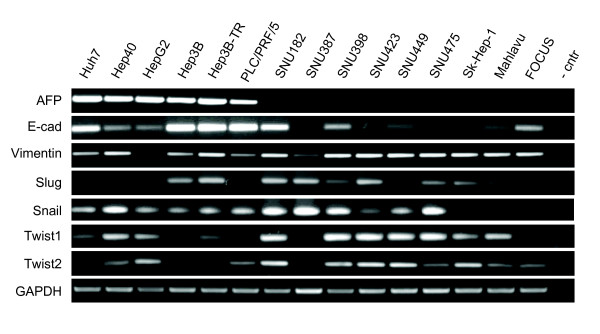
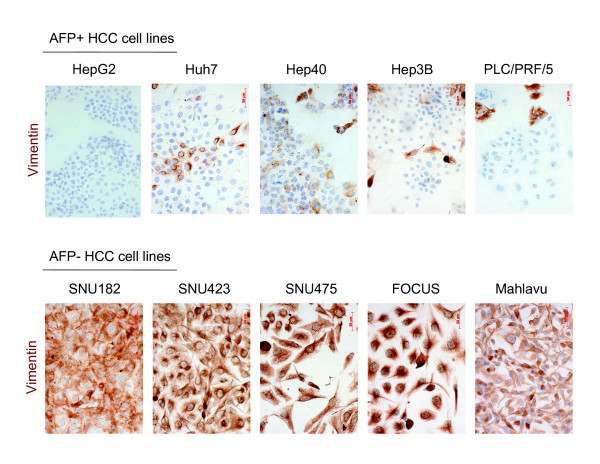
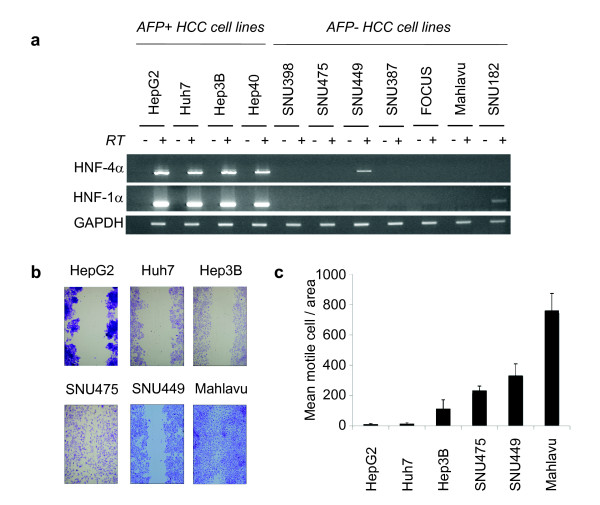
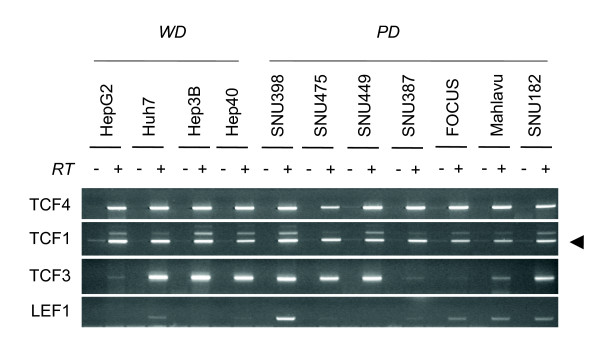
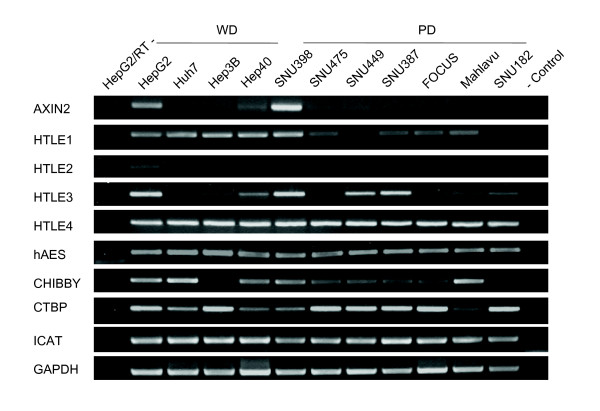
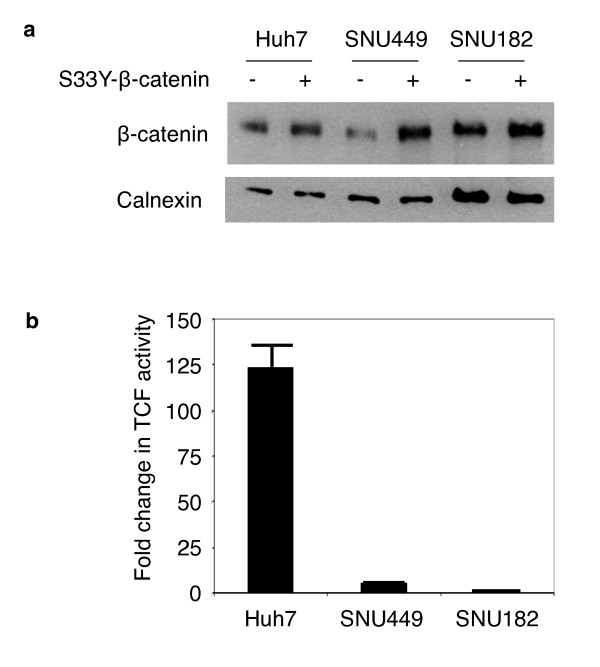
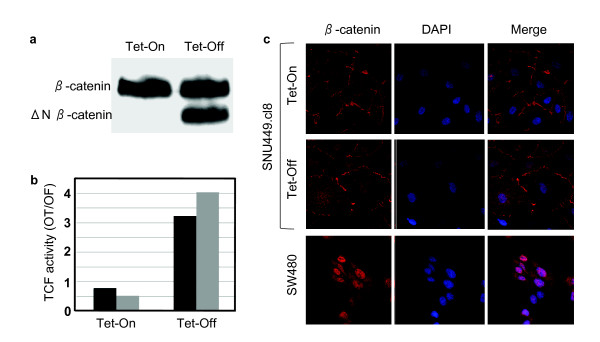
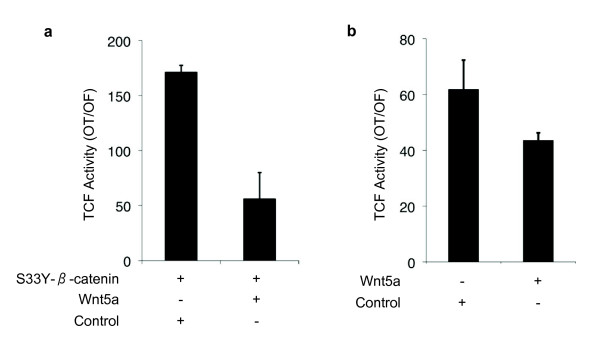
Background: β-catenin mutations that constitutively activate the canonical Wnt signaling have been observed in a subset of hepatocellular carcinomas (HCCs). These mutations are associated with chromosomal stability, low histological grade, low tumor invasion and better patient survival. We hypothesized that canonical Wnt signaling is selectively activated in well-differentiated, but repressed in poorly differentiated HCCs. To this aim, we characterized differentiation status of HCC cell lines and compared their expression status of Wnt pathway genes, and explored their activity of canonical Wnt signaling. Results: We classified human HCC cell lines into "well-differentiated" and "poorly differentiated" subtypes, based on the expression of hepatocyte lineage, epithelial and mesenchymal markers. Poorly differentiated cell lines lost epithelial and hepatocyte lineage markers, and overexpressed mesenchymal markers. Also, they were highly motile and invasive. We compared the expression of 45 Wnt pathway genes between two subtypes. TCF1 and TCF4 factors, and LRP5 and LRP6 co-receptors were ubiquitously expressed. Likewise, six Frizzled receptors, and canonical Wnt3 ligand were expressed in both subtypes. In contrast, canonical ligand Wnt8b and noncanonical ligands Wnt4, Wnt5a, Wnt5b and Wnt7b were expressed selectively in well- and poorly differentiated cell lines, respectively. Canonical Wnt signaling activity, as tested by a TCF reporter assay was detected in 80% of well-differentiated, contrary to 14% of poorly differentiated cell lines. TCF activity generated by ectopic mutant β-catenin was weak in poorly differentiated SNU449 cell line, suggesting a repressive mechanism. We tested Wnt5a as a candidate antagonist. It strongly inhibited canonical Wnt signaling that is activated by mutant β-catenin in HCC cell lines. Conclusion: Differential expression of Wnt ligands in HCC cells is associated with selective activation of canonical Wnt signaling in well-differentiated, and its repression in poorly differentiated cell lines. One potential mechanism of repression involved Wnt5a, acting as an antagonist of canonical Wnt signaling. Our observations support the hypothesis that Wnt pathway is selectively activated or repressed depending on differentiation status of HCC cells. We propose that canonical and noncanonical Wnt pathways have complementary roles in HCC, where the canonical signaling contributes to tumor initiation, and noncanonical signaling to tumor progression.
Overview
The claims and statistics of this paper haven’t been checked yet.
Run the check — free, no account needed. It reads the open-access text and checks the sources it cites.
Integrity signals
Registry
Cites
Statistics
Figures
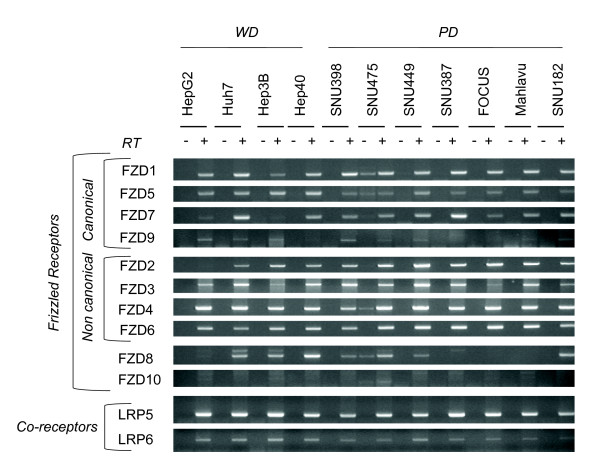
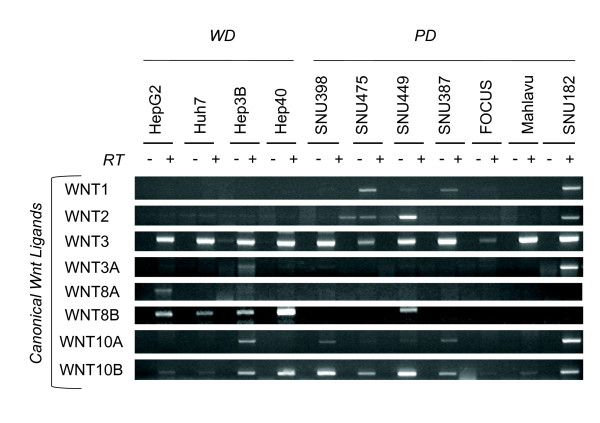
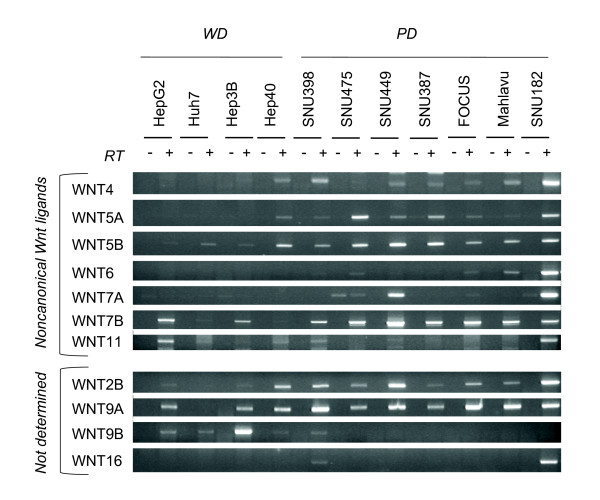
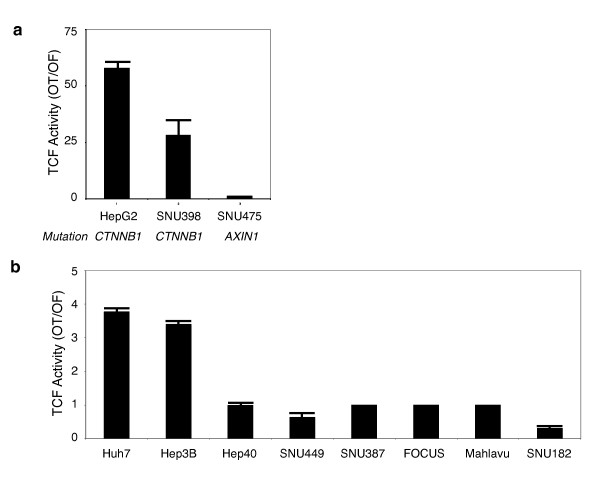
Verification
Claims the paper makes
The claims and statistics of this paper haven’t been checked yet.
Run the check — free, no account needed. It reads the open-access text and checks the sources it cites.
Claims other papers make about this one
Each is checked against this paper’s own text: does it say what the citing paper says it does?
The source backs part of the claim, not all of it — or backs it for a different population, condition or comparison.
In the citing paper
“Huh7 and SNU387 have no known mutations in β-catenin or other Wnt-related gens (27, 28).”
From Wnt-Pathway Activation in Two Molecular Classes of Hepatocellular Carcinoma and Experimental Modulation by Sorafenib (2012) · cites this paper as [27]
Experimental — accuracy not yet measured
Self-check
Percentages, sums and reported differences re-computed from the paper’s own numbers.
The self-check needs the paper’s full text.
Citations
Cites
The basics of epithelial-mesenchymal transition
Kalluri, R., & Weinberg, R. A. (2009) · Journal of Clinical Investigation · doi:10.1172/jci39104 · Cited by 10,196
Activation of β-Catenin-Tcf Signaling in Colon Cancer by Mutations in β-Catenin or APC
Morin, P. J., Sparks, A. B., Kořínek, V., Barker, N., Clevers, H. C., Vogelstein, B., & Kinzler, K. W. (1997) · Science · doi:10.1126/science.275.5307.1787 · Cited by 4,000
Wnt signalling in stem cells and cancer
Reya, T., & Clevers, H. (2005) · Nature · doi:10.1038/nature03319 · Cited by 3,666
Molecular pathogenesis of human hepatocellular carcinoma
Thorgeirsson, S. S., & Grisham, J. W. (2002) · Nature Genetics · doi:10.1038/ng0802-339 · Cited by 1,456
Purified Wnt5a Protein Activates or Inhibits β-Catenin–TCF Signaling Depending on Receptor Context
Mikels, A. J., & Nusse, R. (2006) · PLoS Biology · doi:10.1371/journal.pbio.0040115 · Cited by 1,244
Intestinal polyposis in mice with a dominant stable mutation of the β‐catenin gene
Harada, N., Tamai, Y., Ishikawa, T., Sauer, B., Takaku, K., Oshima, M., & Taketo, M. M. (1999) · The EMBO Journal · doi:10.1093/emboj/18.21.5931 · Cited by 1,212
Yamashita, T., Ji, J., Budhu, A., Forgues, M., Yang, W., Wang, H., Jia, H., Ye, Q., Qin, L., Wauthier, E., et al. (2008) · Gastroenterology · doi:10.1053/j.gastro.2008.12.004 · Cited by 1,142
Munemitsu, S. M., Albert, I., Souza, B., Rubinfeld, B., & Polakis, P. G. (1995) · Proceedings of the National Academy of Sciences · doi:10.1073/pnas.92.7.3046 · Cited by 1,021
Satoh, S., Daigo, Y., Furukawa, Y., Kato, T., Miwa, N., Nishiwaki, T., Kawasoe, T., Ishiguro, H., Fujita, M., Tokino, T., et al. (2000) · Nature Genetics · doi:10.1038/73448 · Cited by 960
Mining the Wnt pathway for cancer therapeutics
Barker, N., & Clevers, H. C. (2006) · Nature Reviews Drug Discovery · doi:10.1038/nrd2154 · Cited by 752
Cited by
Sorted by citations
Items 201–217 of 217
Molecular mechanisms and clinical implications of Wnt pathway inhibition
Wang, R., & Wang, P. (2025) · Biochemical and Biophysical Research Communications · doi:10.1016/j.bbrc.2025.152806
Tong, Q., Yi, M., Kong, P., Xu, L., Huang, W., Niu, Y., Gan, X., Zhan, H., Tian, R., & Yan, D. (2022) · Figshare · doi:10.6084/m9.figshare.21009597
Tong, Q., Yi, M., Kong, P., Xu, L., Huang, W., Niu, Y., Gan, X., Zhan, H., Tian, R., & Yan, D. (2022) · Figshare · doi:10.6084/m9.figshare.21009594
Tong, Q., Yi, M., Kong, P., Xu, L., Huang, W., Niu, Y., Gan, X., Zhan, H., Tian, R., & Yan, D. (2022) · Figshare · doi:10.6084/m9.figshare.21009606
Additional file 1 of SAMD13 serves as a useful prognostic biomarker for hepatocellular carcinoma
Yoo, W., Kim, S., & Noh, K. (2023) · Figshare · doi:10.6084/m9.figshare.24571896
Additional file 3 of SAMD13 serves as a useful prognostic biomarker for hepatocellular carcinoma
Yoo, W., Kim, S., & Noh, K. (2024) · Figshare · doi:10.6084/m9.figshare.26640295
Additional file 2 of SAMD13 serves as a useful prognostic biomarker for hepatocellular carcinoma
Yoo, W., Kim, S., & Noh, K. (2024) · Figshare · doi:10.6084/m9.figshare.24572129
Piorońska, W., Nwosu, Z. C., Han, M., Büttner, M., Ebert, M. P., Dooley, S., & Meyer, C. (2021) · Figshare · doi:10.6084/m9.figshare.16590467
Tong, Q., Yi, M., Kong, P., Xu, L., Huang, W., Niu, Y., Gan, X., Zhan, H., Tian, R., & Yan, D. (2022) · Figshare · doi:10.6084/m9.figshare.21009600
Huge, N., Reinkens, T., Buurman, R., Sandbothe, M., Bergmann, A., Wallaschek, H., Vajen, B., Stalke, A., Decker, M., Eilers, M., et al. (2022) · Figshare · doi:10.6084/m9.figshare.19778235
Zhou, Y., He, C., Xu, M., Huang, J., Hu, Y., Zhou, W., Zhou, X., Zhu, H., Liu, Y., Zhang, D., et al. (2026) · Journal of Translational Medicine · doi:10.1186/s12967-026-07866-z
Wang, B., Xue, J., Bian, Y., Deng, J., Liu, B., Li, N., Zhu, L., Xiao, J., Liu, C., & Liu, H. (2026) · Frontiers in Cell and Developmental Biology · doi:10.3389/fcell.2026.1740081
Implication de l’hormone de croissance autocrine dans le cancer du sein humain
Vouyovitch, C. M. (2010) · theses.fr (ABES) · doi:10.70675/02bc38b5z1ae3z4a7ezba22z7fbdb5c68286
Carmona, S. (2017) · theses.fr (ABES) · doi:10.70675/f95cdb23zecb6z4543z9164ze58fd37f2268
Chambers, A., Reeves, M., Shrestha, A. P., Yarrapatni, S., Duarte, S. M., & Zarrinpar, A. (2026) · Current Oncology · doi:10.3390/curroncol33100576
Behnke, M. K. (2012) · VCU Scholars Compass (Virginia Commonwealth University) · doi:10.25772/gt0a-et79
Metadata
- Authors
- Yuzugullu, H., Benhaj, K., Ozturk, N., Senturk, S., Celik, E., Toylu, A., Tasdemir, N., Yilmaz, M., Erdal, E., Akcali, K. C., Atabey, N., & Ozturk, M.
- Affiliations
- Bilkent University (TR)
- Dokuz Eylül University (TR)
- Venue
- Molecular Cancer
- Published
- 2009-10-22
- Volume
- 8
- Issue
- 1
- Pages
- 90-90
- ISSN
- 1476-4598 (ISSN-L)
- PMC
- PMC2770486
- OpenAlex
- W2152347253
- Cited by
- 215
- References
- 76
- Citations by year
- 2026: 5 · 2025: 12 · 2024: 9 · 2023: 16 · 2022: 14 · 2021: 21 · 2020: 19 · 2019: 9 · 2018: 13 · 2017: 9 · 2016: 17 · 2015: 21 · 2014: 13 · 2013: 9 · 2012: 13
- FWCI
- 3.76
- Type
- journal article
- Language
- en
- Open access
- gold
- doi.org
- Licence
- cc-by
- Locations
- Molecular Cancer (publishedVersion, cc-by)
- PubMed Central (publishedVersion, cc-by)
- PubMed (publishedVersion)
- Bilkent University Institutional Repository (Bilkent University) (submittedVersion)
- Carolina Digital Repository (University of North Carolina at Chapel Hill) (submittedVersion)
- HAL (submittedVersion, other-oa)
- Carolina Digital Repository (University of North Carolina at Chapel Hill) (submittedVersion, cc-by)
- DOAJ (DOAJ: Directory of Open Access Journals) (submittedVersion)
- UNC Libraries
- Funders
- Kræftens Bekæmpelse
- Türkiye Bilimsel ve Teknolojik Araştırma Kurumu
- Türkiye Bilimler Akademisi
- Topics
- Life Sciences › Biochemistry, Genetics and Molecular Biology › Molecular Biology › Wnt/β-catenin signaling in development and cancer
- Health Sciences › Medicine › Oncology › Cancer Cells and Metastasis
- Life Sciences › Biochemistry, Genetics and Molecular Biology › Molecular Biology › Signaling Pathways in Disease
- Keywords
- hepatocellular carcinoma, Wnt/β-catenin signaling, non-canonical Wnt signaling, Wnt5a, CTNNB1 mutation, tumor differentiation, TCF transcription factors, Frizzled receptors, tumor invasion, tumor progression
- MeSH terms
- Wnt-5a Protein, Cell Differentiation, Cell Nucleus, Carcinoma, Hepatocellular, Humans, Immunohistochemistry, Ligands, Liver Neoplasms, Mutation, Neoplasm Proteins, Proto-Oncogene Proteins, Receptors, LDL, Biomarkers, Tumor, Signal Transduction, Gene Expression Regulation, Neoplastic, Genes, Reporter, Autocrine Communication, Cell Line, Tumor, Wnt Proteins, Frizzled Receptors, TCF Transcription Factors
About these checks
Registry, retraction, Cites and statistics results are computed, not judged, with one exception: a printed reference that no index lists is read once by a model before it counts as a citation error. Claims are extracted by a model and kept only when their quote appears verbatim in the text; each cited source is then checked, with a model’s help, for whether it says what the claim relies on. Those verdicts can be wrong — read the claim’s quote and the cited source before relying on one.
Statistics and arithmetic are recomputed, not judged.
Confidence bands are shown only for fields calibrated on our annotated test set. None is calibrated yet, so no band is shown.
What counts as a claim ›How we measure confidence ›How we check this ›
Are you an author, or do you see a problem with this page? Request a review
