

Incorporation of EPA and DHA into plasma phospholipids in response to different omega-3 fatty acid formulations--a comparative bioavailability study of fish oil vs. krill oil
Open accessThe DOI matches its Crossref record; 27 of the 28 references it cites were found in a registry or an index.
Abstract
BACKGROUND: Bioavailability of omega-3 fatty acids (FA) depends on their chemical form. Superior bioavailability has been suggested for phospholipid (PL) bound omega-3 FA in krill oil, but identical doses of different chemical forms have not been compared. METHODS: In a double-blinded crossover trial, we compared the uptake of three EPA+DHA formulations derived from fish oil (re-esterified triacylglycerides [rTAG], ethyl-esters [EE]) and krill oil (mainly PL). Changes of the FA compositions in plasma PL were used as a proxy for bioavailability. Twelve healthy young men (mean age 31 y) were randomized to 1680 mg EPA+DHA given either as rTAG, EE or krill oil. FA levels in plasma PL were analyzed pre-dose and 2, 4, 6, 8, 24, 48, and 72 h after capsule ingestion. Additionally, the proportion of free EPA and DHA in the applied supplements was analyzed. RESULTS: The highest incorporation of EPA+DHA into plasma PL was provoked by krill oil (mean AUC0-72 h: 80.03 ± 34.71%*h), followed by fish oil rTAG (mean AUC0-72 h: 59.78 ± 36.75%*h) and EE (mean AUC0-72 h: 47.53 ± 38.42%*h). Due to high standard deviation values, there were no significant differences for DHA and the sum of EPA+DHA levels between the three treatments. However, a trend (p = 0.057) was observed for the differences in EPA bioavailability. Statistical pair-wise group comparison's revealed a trend (p = 0.086) between rTAG and krill oil. FA analysis of the supplements showed that the krill oil sample contained 22% of the total EPA amount as free EPA and 21% of the total DHA amount as free DHA, while the two fish oil samples did not contain any free FA. CONCLUSION: Further studies with a larger sample size carried out over a longer period are needed to substantiate our findings and to determine differences in EPA+DHA bioavailability between three common chemical forms of LC n-3 FA (rTAG, EE and krill oil). The unexpected high content of free EPA and DHA in krill oil, which might have a significant influence on the availability of EPA+DHA from krill oil, should be investigated in more depth and taken into consideration in future trials.
Overview
The claims and statistics of this paper haven’t been checked yet.
Free: it reads the open-access text and checks the first 5 claims that cite a source we can check. Create a free account to check every claim.
Integrity signals
Registry
Cites
Statistics
Figures
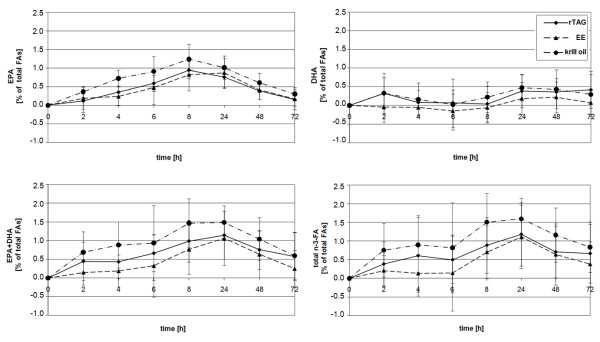
Verification
Claims the paper makes
The claims and statistics of this paper haven’t been checked yet.
Free: it reads the open-access text and checks the first 5 claims that cite a source we can check. Create a free account to check every claim.
Claims other papers make about this one
Each is checked against this paper’s own text: does it say what the citing paper says it does?
The source backs part of the claim, not all of it — or backs it for a different population, condition or comparison.
In the citing paper
“The amount and ratio of EPA and DHA differ in various supplements, resulting in different bioavailability and absorption rates. 142 , 143 , 144”
From Association Between Omega-3 Fatty Acid Intake and Dyslipidemia: A Continuous Dose-Response Meta-Analysis of Randomized Controlled Trials (2023) · cites this paper as [142]
Experimental — accuracy not yet measuredThe cited source says what the claim attributes to it.
In the citing paper
“The FFA formulation has greater bioavailability compared with the ethyl esters”
From The Forgotten Lipids: Triglycerides, Remnant Cholesterol, and Atherosclerotic Cardiovascular Disease Risk (2019) · cites this paper as [151]
In the citing paper
“In contrast to most other algal food constituents, the bioaccessibility of DHA and EPA in algal-derived oils and extracts is well quantified for humans, ranging from ∼50 to 100 % depending on the matrix (Haug et al. 2011; Schuchardt et al. 2011).”
From Algae as nutritional and functional food sources: revisiting our understanding. (2017) · cites this paper as Schuchardt et al. 2011
Self-check
Percentages, sums and reported differences re-computed from the paper’s own numbers.
The self-check needs the paper’s full text.
Citations
Cites
Koletzko, B., Lien, E., Agostoni, C., Böhles, H., Campoy, C., Cetin, I., Decsi, T., Dudenhausen, J. W., Dupont, C., Forsyth, S., et al. (2008) · Journal of Perinatal Medicine · doi:10.1515/jpm.2008.001 · Cited by 707
Omega-3 polyunsaturated fatty acids and cardiovascular diseases.
Lavie, C. J., Milani, R. V., Mehra, M. R., & Ventura, H. O. (2009) · Journal of the American College of Cardiology · doi:10.1016/j.jacc.2009.02.084 · Cited by 644 · cited 1×
“Scientific and regulatory bodies recommend an increased intake of EPA+DHA for cardiovascular prevention or during pregnancy [1-3].”
BackgroundKris-Etherton, P. M., Harris, W. S., & Appel, L. J. (2003) · Arteriosclerosis, Thrombosis, and Vascular Biology · doi:10.1161/01.atv.0000057393.97337.ae · Cited by 596
Influence of emulsifier type on in vitro digestibility of lipid droplets by pancreatic lipase
Mun, S., Decker, E. A., & McClements, D. J. (2007) · Food Research International · doi:10.1016/j.foodres.2007.01.007 · Cited by 454 · cited 1×
“As a result, PL influence the surface composition of fat droplets, which possibly facilitates the binding of hydrolyzing enzymes and hence the digestion [22].”
BackgroundMori, T. A., Bao, D. Q., Burke, V., Puddey, I. B., & Beilin, L. J. (1999) · Hypertension · doi:10.1161/01.hyp.34.2.253 · Cited by 407 · cited 1×
“Of note, systolic blood pressure declined only in the menhaden oil group, possibly reflecting the fact that DHA, but not EPA, lowers blood pressure [17].”
BackgroundDietary reference intakes for DHA and EPA
Kris-Etherton, P. M., Grieger, J. A., & Etherton, T. D. (2009) · Prostaglandins, Leukotrienes and Essential Fatty Acids · doi:10.1016/j.plefa.2009.05.011 · Cited by 404 · cited 1×
“Scientific and regulatory bodies recommend an increased intake of EPA+DHA for cardiovascular prevention or during pregnancy [1-3].”
BackgroundHuman absorption of fish oil fatty acids as triacylglycerols, free acids, or ethyl esters
Lawson, L. D., & Hughes, B. G. (1988) · Biochemical and Biophysical Research Communications · doi:10.1016/s0006-291x(88)80718-6 · Cited by 359 · cited 2×
“Smaller trials carried out earlier had inconsistent results [8-13].”
ResultUlven, S. M., Kirkhus, B., Lamglait, A., Basu, S., Elind, E., Haider, T., Berge, K., Vik, H., & Pedersen, J. I. (2011) · Lipids · doi:10.1007/s11745-010-3490-4 · Cited by 303 · cited 3×
“[15] analyzed total plasma FA composition, we used changes in plasma PL FA composition after a single dose treatment as a proxy for bioavailability.”
BackgroundMethodInfluentialThe omega-3 index as a risk factor for coronary heart disease
Harris, W. S. (2008) · The American Journal of Clinical Nutrition · doi:10.1093/ajcn/87.6.1997s · Cited by 297 · cited 1×
“67 g/d) leads to a faster and higher increase of the omega-3 index - the percentage of EPA and DHA in red cell membranes reflecting the long-term intake and n-3 FA status of an individual [5] - when consumed as rTAG than when consumed as EE [6].”
BackgroundBioavailability of marine n-3 fatty acid formulations
Dyerberg, J., Madsen, P., Møller, J. M., Aardestrup, I., & Schmidt, E. B. (2010) · Prostaglandins, Leukotrienes and Essential Fatty Acids · doi:10.1016/j.plefa.2010.06.007 · Cited by 256 · cited 3×
“Our results were in line with data from a short-term study of two weeks duration measuring the FA compositions of serum cholesterol-esters, TAG and phospholipids (PL): relative bioavailability of EPA+DHA from rTAG was superior (124%) compared with cod liver oil (100%), whereas the bioavailability from EE was inferior…”
BackgroundResultInfluential
Cited by
Items 101–200 of 323
Preparation and Characterization of Microemulsions Based on Antarctic Krill Oil
Zhao, J., Jiang, K., Chen, Y., Chen, J., Zheng, Y., Yu, H., & Zhu, J. (2020) · Marine Drugs · doi:10.3390/md18100492 · Cited by 39
“As the main component of the cell membrane is primarily phospholipids (PL), as compared to fish oil (FO), the long-chain ω-3 PUFAs in krill oil, such as eicosapentaenoic acid (EPA) and docosahexaenoic acid (DHA), are more easily absorbed and utilized by the human body due to the combination with PL, while DHA and EPA…”
BackgroundLi, K., & Ôlsen, Y. (2015) · Aquaculture · doi:10.1016/j.aquaculture.2015.05.005 · Cited by 39
Ding, L., Zhang, T., Che, H., Zhang, L., Xue, C., Chang, Y., & Wang, Y. (2018) · European Journal of Lipid Science and Technology · doi:10.1002/ejlt.201700490 · Cited by 38
Andraka, J. M., Sharma, N., & Marchalant, Y. (2019) · Neuroscience Research · doi:10.1016/j.neures.2019.08.001 · Cited by 37
Marine lipids as a source of high-quality fatty acids and antioxidants
Cretton, M., Malanga, G., Sobczuk, T. M., & Mazzuca, M. (2022) · Food Reviews International · doi:10.1080/87559129.2022.2042555 · Cited by 37
Changes in lipid class content and composition of Isochrysis sp. (T-Iso) grown in batch culture
Nalder, T. D., Miller, M. R., & Packer, M. A. (2015) · Aquaculture International · doi:10.1007/s10499-015-9884-9 · Cited by 37
“Calculations were calibrated using an external standard containing triacylglycerol (TAG, tripalmitin), free fatty acid (FFA, palmitic acid), diacylgylcerol (DAG, 1,2-dipalmitoyl-racglycerol) and phospholipid (L-a-phosphatidylcholine).”
BackgroundInfluentialAndersen, C. J., Lee, J., Blesso, C. N., Carr, T. P., & Fernández, M. L. (2014) · Nutrients · doi:10.3390/nu6072650 · Cited by 36
Omega-3 fatty acids and changes in LBM: alone or in synergy for better muscle health?
McDonald, C. J., Bauer, J. D., & Capra, S. M. (2012) · Canadian Journal of Physiology and Pharmacology · doi:10.1139/cjpp-2012-0304 · Cited by 35
“Trials have indicated that a hierarchy of LCn-3 uptake exists for different preparations, such that pre-emulsified LCn-3s from fish and normal krill oil are taken up more effectively than LCn-3s as reesterified triglycerides (marine triglycerides) (Garaiova et al. 2007; Haug et al. 2011; Schuchardt et al. 2011; Ulven…”
BackgroundXi, X., Feng, X., Shi, N., Ma, X., Lin, H., & Han, Y. (2016) · Journal of Molecular Catalysis B Enzymatic · doi:10.1016/j.molcatb.2016.01.011 · Cited by 35
Fukunaga, K., Hosomi, R., Fukao, M., Miyauchi, K., Kanda, S., Nishiyama, T., & Yoshida, M. (2016) · Lipids · doi:10.1007/s11745-016-4118-0 · Cited by 34
Yang, A., Ye, Y., Liu, Q., Xu, J., Li, R., Xu, M., Wang, X., Fu, S., & Yu, R. (2025) · Insects · doi:10.3390/insects16090970 · Cited by 33
Wang, J., Ossemond, J., Jardin, J., Briard‐Bion, V., Henry, G., Gouar, Y. L., Ménard, O., Lê, S., Madadlou, A., Dupont, D., et al. (2022) · Food Research International · doi:10.1016/j.foodres.2022.112112 · Cited by 33
Buddhachat, K., Siengdee, P., Chomdej, S., Soontornvipart, K., & Nganvongpanit, K. (2017) · In Vitro Cellular & Developmental Biology - Animal · doi:10.1007/s11626-016-0125-y · Cited by 34
“However, animal sources, especially marine animals such as fish, krill, and green-lipped mussel (GLM), have particularly high amounts of the omega-3 PUFAs DHA and EPA (Murphy et al. 2002; Schuchardt et al. 2011).”
BackgroundInfluentialZhang, L., Wang, D., Wen, M., Du, L., Xue, C., Wang, J., Xu, J., & Wang, Y. (2016) · Journal of Functional Foods · doi:10.1016/j.jff.2016.10.022 · Cited by 32
Omega-3 PUFAs slow organ aging through promoting energy metabolism
Xiong, Y., Li, X., Liu, J., Luo, P., Zhang, H., Zhou, H., Ling, X., Zhang, M., Ye, L., Chen, Q., et al. (2024) · Pharmacological Research · doi:10.1016/j.phrs.2024.107384 · Cited by 31
Pham, T.-P.-T., Hoang, T.-V., Cao, P.-T.-N., Le, T.-T.-D., Ho, V.-T.-N., Vu, T.-M.-H., Le, T.-H.-T., Pham, H.-T.-X., Tran, T.-T., Mafruhah, O. R., et al. (2024) · Food Chemistry X · doi:10.1016/j.fochx.2024.101880 · Cited by 31
Liu, S., Hu, W. X., Fang, Y., Cai, Y., Zhang, J., Liu, J., & Ding, Y. (2019) · RSC Advances · doi:10.1039/c9ra06238f · Cited by 31
Investigating the potential of fish oil as a nutraceutical in an animal model of early life stress
Egerton, S., Donoso, F., Fitzgerald, P., Gite, S., Fouhy, F., Whooley, J., Dinan, T. G., Cryan, J. F., Culloty, S. C., Ross, R. P., et al. (2020) · Nutritional Neuroscience · doi:10.1080/1028415x.2020.1753322 · Cited by 32
West, A. L., Burdge, G. C., & Calder, P. C. (2016) · British Journal Of Nutrition · doi:10.1017/s0007114516002713 · Cited by 31
“There are claims of enhanced bioavailability of n-3 fatty acids provided as phospholipids((26,27)).”
Lapointe, J.-F., Harvey, L., Aziz, S., Jordan, H., Hegele, R. A., & Lemieux, P. (2019) · Clinical Therapeutics · doi:10.1016/j.clinthera.2019.01.017 · Cited by 31
Bjørndal, B., Vik, R., Brattelid, T., Vigerust, N. F., Burri, L., Bohov, P., Nygard, O. K., Skorve, J., & Berge, R. K. (2012) · Metabolism · doi:10.1016/j.metabol.2012.03.012 · Cited by 32
“A study comparing the uptake of eicosapentaenoic acid (EPA) and docosahexaenoic acid (DHA) from fish oil or krill oil in healthy men was inconclusive, but showed a tendency to increased incorporation into plasma phospholipids by krill oil [14].”
BackgroundKroupova, P., van Schothorst, E. M., Keijer, J., Bunschoten, A., Vodička, M., Irodenko, I., Oseeva, M., Žáček, P., Kopecký, J., Rossmeisl, M., et al. (2020) · Nutrients · doi:10.3390/nu12072037 · Cited by 30
“Importantly, improved bioavailability of DHA and especially EPA in plasma following Omega-3 administration as PL was demonstrated in both human subjects [19,20] and laboratory rodents [21].”
BackgroundInfluentialPossible Health Effects of a Wax Ester Rich Marine Oil
Schots, P. C., Pedersen, A. M., Eilertsen, K., Olsen, R. L., & Larsen, T. S. (2020) · Frontiers in Pharmacology · doi:10.3389/fphar.2020.00961 · Cited by 30
“Modified from Pedersen et al. (2014b) and Falk-Petersen et al. (2009). nd, not detected; SFA, saturated fatty acid; MUFA, monounsaturated fatty acids; PUFA, polyunsaturated fatty acids; WE, wax ester; TAG, triacylglycerol; PL, phospholipid.”
BackgroundInfluentialNutritional benefits of omega-3 fatty acids
Calder, P. C. (2013) · Elsevier eBooks · doi:10.1533/9780857098863.1.3 · Cited by 33
Miller, M. R., Quek, S.-Y., Staehler, K., Nalder, T., & Packer, M. A. (2014) · Aquaculture Research · doi:10.1111/are.12107 · Cited by 29
Murota, K., Takagi, M., Watanabe, Y., Tokumura, A., & Ohkubo, T. (2017) · Prostaglandins Leukotrienes and Essential Fatty Acids · doi:10.1016/j.plefa.2017.06.011 · Cited by 29
McDonnell, S. L., French, C., Baggerly, C. A., & Harris, W. S. (2019) · Nutrition Research · doi:10.1016/j.nutres.2019.09.001 · Cited by 30
Ford, N. A., Rossi, E. L., Barnett, K., Yang, P., Bowers, L. W., Hidaka, B. H., Kimler, B. F., Carlson, S. E., Shureiqi, I., deGraffenried, L. A., et al. (2015) · Cancer Prevention Research · doi:10.1158/1940-6207.capr-15-0018 · Cited by 29
“Moreover, the tissue levels of DHA and EPAattained in this study are in thephysiologic range (25, 26) and were matched with women receiving daily supplementation with 4 g of EPAþDHA per day (14).”
BackgroundGutiérrez-Pliego, L. E., Martínez‐Carrillo, B. E., Reséndiz‐Albor, A. A., Arciniega-Martínez, I. M., Escoto‐Herrera, J. A., Rosales-Gómez, C., & Valdés‐Ramos, R. (2018) · Journal of Lipids · doi:10.1155/2018/4765358 · Cited by 29
“Moreover, the supplementation with EPA (eicosapentaenoic acid) for 12 weeks has been shown to modify the fatty acids composition of the phospholipids of plasma, platelets, neutrophils, monocytes, and T and B lymphocytes [12].”
BackgroundZahran, E., Elbahnaswy, S., Ibrahim, I. R., & Khaled, A. A. (2021) · Aquaculture Reports · doi:10.1016/j.aqrep.2021.100911 · Cited by 28
Ivanova, Z., Bjørndal, B., Григорова, Н., Rusenov, A. G., Vachkova, Е., Berge, K., Burri, L., Berge, R. K., Stanilova, S. A., Milanova, A., et al. (2014) · European Journal of Nutrition · doi:10.1007/s00394-014-0782-0 · Cited by 28
“The clinical studies demonstrate that KO improves blood lipid profile, changes endocannabinoid concentration, reduces oxidative damage and increases blood level of n-3 PUFAs [15, 23–27].”
BackgroundFlynn, K. R., Martin, L. L., Ackland, M. L., & Torriero, A. A. J. (2016) · Langmuir · doi:10.1021/acs.langmuir.6b01984 · Cited by 28
Omega-3 polyunsaturated fatty acids and corneal nerve health: Current evidence and future directions
Britten‐Jones, A. C., Craig, J. P., & Downie, L. E. (2022) · The Ocular Surface · doi:10.1016/j.jtos.2022.10.006 · Cited by 27
Jin, D., Qu, Y., Lu, W., Ge, L., Wang, H., Xue, J., Deng, D., Zhang, Q., Cheng, K., Yang, H., et al. (2024) · Food Hydrocolloids · doi:10.1016/j.foodhyd.2024.110426 · Cited by 27
Seafood lipids and cardiovascular health
Cardoso, C. L., Afonso, C. M., & Bandarra, N. M. (2016) · Nutrire · doi:10.1186/s41110-016-0008-8 · Cited by 27
“In krill oil, which is rich in PLs, it has been claimed that its FA bioavailability is higher on the basis of in vivo studies [50–52].”
BackgroundCaffrey, C., Leamy, A., O’Sullivan, E., Zabetakis, I., Lordan, R., & Nasopoulou, C. (2023) · Marine Drugs · doi:10.3390/md21110549 · Cited by 26
“The bioavailability of the samples did not differ, which suggests that the phospholipids were not absorbed any better than that of the triglycerides [132,133].”
BackgroundWhy is Antactic krill (Euphasia superba) oil on the spotlight? A review
Shahidi, F., & Abad, A. (2024) · Food Production Processing and Nutrition · doi:10.1186/s43014-024-00260-6 · Cited by 27
“The n-3 PUFAs linked with PLs in KO are believed to offer higher bioavailability than TAGs in FO, thus potentially playing a more active role in regulating emotional symptoms (Sampalis et al., 2003; Schuchardt et al., 2011).”
BackgroundLi, D., Zhou, D., Zhu, B., Chi, Y., Li-ming, S., Dong, X., Qin, L., Qiao, W., & Murata, Y. (2013) · Journal of the Science of Food and Agriculture · doi:10.1002/jsfa.6072 · Cited by 27
The comparison of krill oil extracted through ethanol–hexane method and subcritical method
Sun, W., Shi, B., Xue, C., & Jiang, X. (2019) · Food Science & Nutrition · doi:10.1002/fsn3.914 · Cited by 25
“Some studies show that plasma levels of EPA and DHA increased with the consumption of KO rather than FO (Costanzo et al., 2016; Ramprasath, Eyal, Zchut, & Jones, 2013; Ramprasath, Inbal, Sigalit, & Jones Peter, 2014).”
BackgroundInfluentialYaghmur, A., Lotfi, S., Ariabod, S. A., Bor, G., Gontsarik, M., & Salentinig, S. (2019) · Frontiers in Bioengineering and Biotechnology · doi:10.3389/fbioe.2019.00384 · Cited by 25
“It was proposed that binding ω-3 PUFAs to phospholipids facilitates their incorporation into cell membranes (Bunea et al., 2004; Maki et al., 2009; Schuchardt et al., 2011; Ulven et al., 2011; Ramprasath et al., 2013).”
BackgroundÁcido docosahexaenoico (DHA), un ácido graso esencial a nivel cerebral
Rodrigo Valenzuela, B., Jessica Morales, P., Julio Sanhueza, C., & Alfonso Valenzuela, B. (2013) · Revista chilena de nutrición · doi:10.4067/s0717-75182013000400009 · Cited by 25
Vidal, E., Jun, B., Gordon, W. C., Maire, M., Martine, L., Gregoire, S., Khoury, S., Cabaret, S., Berdeaux, O., Acar, N., et al. (2020) · Journal of Lipid Research · doi:10.1194/jlr.ra120001057 · Cited by 24
Gázquez, A., & Larqué, E. (2021) · Nutrients · doi:10.3390/nu13020511 · Cited by 24
Yen, H., Wei, H.-J., & Lin, C. (2015) · Free Radical Research · doi:10.3109/10715762.2015.1014812 · Cited by 24
Anedda, R., Piga, C., Santercole, V., Spada, S., Bonaglini, E., Cappuccinelli, R., Mulas, G., Roggio, T., & Uzzau, S. (2012) · Food Chemistry · doi:10.1016/j.foodchem.2012.11.098 · Cited by 23
“…fatty acids (n-3 EPA + n-3 DHA) in the form of PL leads to the highest incorporation of these FA in human plasma PL compared with TAG and ethyl-esters forms (Schuchardt et al., 2011), there is interest in characterising both TAG:PL ratio and the FA composition of TAG and PL in farmed fish.”
BackgroundClinical safety evaluation of marine oil derived from Calanus finmarchicus
Tande, K. S., Vo, T. D., & Lynch, B. S. (2016) · Regulatory Toxicology and Pharmacology · doi:10.1016/j.yrtph.2016.05.030 · Cited by 25
Balakrishnan, J., Dhavamani, S., Sadasivam, S. G., Arumugam, M., Vellaikumar, S., Ramalingam, J., & Shanmugam, K. (2019) · Journal of the Science of Food and Agriculture · doi:10.1002/jsfa.9884 · Cited by 23
Murru, E., Lopes, P. A., Carta, G., Manca, C., Abolghasemi, A., Guil‐Guerrero, J. L., Prates, J. A. M., & Banni, S. (2021) · Nutrients · doi:10.3390/nu13020625 · Cited by 23
“Interestingly, the inhibition of ∆6-desaturase by ALA from LSO, but not from Buglos, induced a significant decrease of 16% AA levels in brain with respect to the control diet, suggesting that a difference of 27% of dietary ALA may significantly influence AA levels, while the decrease of AA by dietary FO may be attribu…”
BackgroundSjövall, P., Rossmeisl, M., Hanrieder, J., Kuda, O., Kopecký, J., & Bryhn, M. (2015) · Analytical and Bioanalytical Chemistry · doi:10.1007/s00216-015-8515-7 · Cited by 24
Wang, D., Wu, F., Wen, M., Ding, L., Du, L., Xue, C., Xu, J., & Wang, Y. (2018) · Journal of Food Science · doi:10.1111/1750-3841.14017 · Cited by 22
Sung, H., Sinclair, A. J., Huynh, K., Smith, A., Mellett, N. A., Meikle, P. J., & Su, X. Q. (2019) · Nutrition · doi:10.1016/j.nut.2019.03.021 · Cited by 22
Zhao, Y., Shi, H.-H., Wang, C., Yang, J., Xue, C., Jiang, X., Chen, G.-D., Zhang, T., & Wang, Y. (2020) · Food Chemistry · doi:10.1016/j.foodchem.2020.128958 · Cited by 21
[Phospholipids: properties and health effects].
Torres, J., & Durán‐Agüero, S. (2014) · Nutrición Hospitalaria · doi:10.3305/nh.2015.31.1.7961 · Cited by 21
Lee, M.-F., Lai, C., Cheng, A., Hou, J.-S., Badmaev, V., Ho, C., & Pan, M. (2014) · Journal of Functional Foods · doi:10.1016/j.jff.2014.10.015 · Cited by 21
Marsaoui, N., Naghmouchi, K., Baah, J., Raies, A. M., & Laplante, S. (2015) · Applied Biochemistry and Biotechnology · doi:10.1007/s12010-015-1621-3 · Cited by 21
“An attractive way of obtaining EPA and DHA as phospholipids is to incorporate the fatty acids into inexpensive natural sources of phospholipids such as soybean lecithin by enzymatic transesterification [2].”
BackgroundTylichová, Z., Slavík, J., Cigánek, M., Ovesná, P., Krčmář, P., Straková, N., Machala, M., Kozubík, A., Hofmanová, J., & Vondráček, J. (2017) · Journal of Cellular Biochemistry · doi:10.1002/jcb.26641 · Cited by 21
“This has been previously reported, for example, for n-3 PUFAs bound in PLs in krill oil (high bioavailability), as compared with natural fish oil where EPA and DHA are bound in TAGs.28,29 Recent clinical trials have reported a rapid incorporation of EPA and DHA from oral nutrition supplements into colonic tissue of co…”
BackgroundAthanázio-Heliodoro, J. C., Delgado, C. H. O., Fernandes, C. J. D. C., Zanutto-Elgui, M. R., do Prado, D. Z., da Silva, R. A., Facanali, R., Zambuzzi, W. F., Marques, M. O. M., & Fleuri, L. F. (2018) · Preparative Biochemistry & Biotechnology · doi:10.1080/10826068.2018.1476879 · Cited by 21
“The biological activities may also be extended to natural and re-esterified triglycerides, as well as to ethyl esters.([5,7,8]) Recently, different sources and application of lipases have been studied.”
BackgroundAmorim, T. L., de la Fuente, M. Á., de Oliveira, M. A. L., & Gómez‐Cortés, P. (2021) · ACS Food Science & Technology · doi:10.1021/acsfoodscitech.0c00122 · Cited by 20
“Moreover, Schuchardt et al. (2011) 9 confirmed that the highest incorporation of EPA+DHA into plasma was promoted by re-esterified TAG (59.78”
InfluentialLin, L., Wang, C., Jiang, S., Li, R., Zhang, T., Xue, C., Yanagita, T., Jiang, X., & Wang, Y. (2020) · Food Science and Human Wellness · doi:10.1016/j.fshw.2020.01.002 · Cited by 20
Heath, R. J., & Wood, T. R. (2021) · International Journal of Molecular Sciences · doi:10.3390/ijms222111826 · Cited by 20
“, 2011 [145] Adult humans Plasma phospholipids 72 h Two FO products containing DHA as either ethyl-ester or re-esterified TG compared against KO Nonsignificant differences in AUC and maximum plasma phospholipid concentration of DHA between all groups.”
BackgroundMethodYu, X., Wang, Q., Lu, W., Zhang, M., Chen, K., Xue, J., Zhao, Q., Wang, P., Luo, P., & Shen, Q. (2021) · Journal of Agricultural and Food Chemistry · doi:10.1021/acs.jafc.1c01709 · Cited by 19
Novel marine bioactives: application in functional foods, nutraceuticals, and pharmaceuticals
Shahidi, F., & Santhiravel, S. (2022) · Journal of Food Bioactives · doi:10.31665/jfb.2022.18316 · Cited by 19
Marsaoui, N., Laplante, S., Raies, A. M., & Naghmouchi, K. (2013) · World Journal of Microbiology and Biotechnology · doi:10.1007/s11274-013-1388-z · Cited by 19
“Another way of obtaining EPA and DHA as phospholipids is of course to incorporate the fatty acids into inexpensive natural sources of phospholipids such as soybean lecithin by enzymatic transesterification (Schuchardt et al. 2011).”
BackgroundKrill Oil for Cardiovascular Risk Prevention: Is it for Real?
Backes, J. M., & Howard, P. A. (2014) · Hospital Pharmacy · doi:10.1310/hpj4910-907 · Cited by 19
Zhang, C., Zhou, M., Zhang, T., Cong, P., Xu, J., Xue, C., Yanagita, T., Wei, Z., & Wang, Y. (2021) · Journal of Oleo Science · doi:10.5650/jos.ess20212 · Cited by 18
Marine oils: Complex, confusing, confounded?
Albert, B. B., Cameron‐Smith, D., Garg, M. L., Derraik, J. G. B., Hofman, P. L., & Cutfield, W. S. (2016) · Journal of Nutrition & Intermediary Metabolism · doi:10.1016/j.jnim.2016.03.003 · Cited by 19
Zhao, H., Wu, S., Luo, Z., Liu, H., Sun, J., & Jin, X. (2022) · Clinical Nutrition · doi:10.1016/j.clnu.2022.09.004 · Cited by 17
Encapsulation of DHA oils for better bioavailability: A review from the practical aspect
Jala, R. C. R., Zhang, H., Yang, M., Guo, R., Li, S., Xu, X., Yang, D., & Xu, X. (2025) · Journal of the American Oil Chemists Society · doi:10.1002/aocs.12952 · Cited by 17
Hals, P., Wang, X., Piscitelli, F., Marzo, V. D., & Xiao, Y. (2017) · Lipids in Health and Disease · doi:10.1186/s12944-017-0414-9 · Cited by 18
“However, other literature has indicated a more efficient uptake of these omega-3 FAs when given as krill oil than with fish oil [21, 22], resulting in higher omega-3 indices after dose-corrections.”
Xie, H., Zhao, G., Wu, Z., Li, D., Zhao, M., Li, A., Liu, H., Zhou, D., & Zhu, B. (2020) · Journal of the Science of Food and Agriculture · doi:10.1002/jsfa.10774 · Cited by 17
Dalheim, L., Svenning, J. B., & Olsen, R. L. (2021) · PLoS ONE · doi:10.1371/journal.pone.0252125 · Cited by 17
Park, S., Yu, H., & Ahn, S. (2021) · Foods · doi:10.3390/foods11010041 · Cited by 17
Gene regulation of lipid and phospholipid metabolism in Atlantic cod (Gadus morhua) larvae
Li, K., Östensen, M., Attramadal, K. J. K., Winge, P., Sparstad, T., Bones, A. M., Vadstein, Ô., Kjørsvik, E., & Ôlsen, Y. (2015) · Comparative Biochemistry and Physiology Part B Biochemistry and Molecular Biology · doi:10.1016/j.cbpb.2015.08.006 · Cited by 17
Rauch, B. H., & Senges, J. (2012) · Frontiers in Physiology · doi:10.3389/fphys.2012.00057 · Cited by 17
“The various kinds of Ω-3 formulations being used (re-esterified triacylglycerides, ethyl-esters or phospholipids; Neubronner et al., 2011; Schuchardt et al., 2011).”
Bettjeman, B., Hofman, K., Burgess, E. J., Perry, N. B., & Killeen, D. P. (2018) · Journal of the American Oil Chemists Society · doi:10.1002/aocs.12086 · Cited by 17
Apostolidis, E., Karayannakidis, P. D., & Lee, C. M. (2015) · Journal of Aquatic Food Product Technology · doi:10.1080/10498850.2013.878890 · Cited by 17
“Recent clinical trials showed that phospholipid-bound omega-3 fatty acids in krill oil were more bioavailable than triglyceride-bound ones in fish oil (Maki et al., 2009; Schuchardt et al., 2011).”
BackgroundCardioprotective effects of omega 3 fatty acids: origin of the variability
Roy, J., & Guennec, J. L. (2016) · Journal of Muscle Research and Cell Motility · doi:10.1007/s10974-016-9459-z · Cited by 16
Ramsvik, M. S., Bjørndal, B., Bruheim, I. A., Bohov, P., & Berge, R. K. (2015) · Marine Drugs · doi:10.3390/md13074375 · Cited by 15
Gao, Q., Yu, X., Wei, J., Hu, X., & Ren, L. (2025) · Enzyme and Microbial Technology · doi:10.1016/j.enzmictec.2025.110600 · Cited by 14
The effect of krill oil on longevity and locomotion: a pilot study
Shi, J., Wang, Y., Jiang, F., Liu, Y., & Xu, Y. (2021) · Molecular Omics · doi:10.1039/d1mo00373a · Cited by 14
Öz, M., Uçak, İ., & Nayik, G. A. (2022) · Elsevier eBooks · doi:10.1016/b978-0-323-89779-2.00004-1 · Cited by 14
Gupta, C., Prakash, D., & Gupta, S. L. (2016) · Advanced in Food Technology and Nutritional Sciences - Open Journal · doi:10.17140/aftnsoj-2-132 · Cited by 14
Hübel, C., Herle, M., Ferreira, D. L. S., Abdulkadir, M., Bryant‐Waugh, R., Loos, R. J. F., Bulik, C. M., Lawlor, D. A., & Micali, N. (2021) · Scientific Reports · doi:10.1038/s41598-021-90644-2 · Cited by 14
Encapsulation of Docosahexaenoic Acid Oil Substantially Improves the Oxylipin Profile of Rat Tissues
Wang, J., Ossemond, J., Gouar, Y. L., Boissel, F., Dupont, D., & Pédrono, F. (2022) · Frontiers in Nutrition · doi:10.3389/fnut.2021.812119 · Cited by 13
Fish Oils | Composition and Health Effects
Jacobsen, C. (2015) · Elsevier eBooks · doi:10.1016/b978-0-12-384947-2.00295-6 · Cited by 13
Lin, Y., Yin, W., & Liu, G. (2020) · International Journal of Food Science & Technology · doi:10.1111/ijfs.14683 · Cited by 13
Miller, M. R., Kruger, M. C., Wynne, C., Waaka, D., Li, W., Frampton, C., Wolber, F. M., & Eason, C. (2020) · Marine Drugs · doi:10.3390/md18110524 · Cited by 13
“These two distinct periods have been previously reported in a high PL n-3 LC PUFA bioavailability study [32].”
ResultDjuricic, I. D., Mazic, S. D., Kotur‐Stevuljević, J., Djordjevic, V. R., & Sobajic, S. S. (2014) · Nutrition Research · doi:10.1016/j.nutres.2013.12.008 · Cited by 13
“[44] Schuchardt JP, Schneider I, Meyer H, Neubronner J, von Schacky C, Hahn A.”
BackgroundComparative Analysis of the Antioxidant and Anti-Inflammatory Effects of Krill and Fish Oil
Sarıyer, E. T., Baş, M., & Yüksel, M. (2025) · International Journal of Molecular Sciences · doi:10.3390/ijms26157360 · Cited by 12
Ahmmed, F., Gordon, K. C., Killeen, D. P., & Fraser‐Miller, S. J. (2023) · Molecules · doi:10.3390/molecules28093695 · Cited by 12
Plasma levels of EPA and DHA after ingestion of a single dose of EPA and DHA ethyl esters
Schmieta, H. M., Greupner, T., Schneider, I., Wrobel, S. A., Christa, V., Kutzner, L., Hahn, A., Harris, W. S., Schebb, N. H., & Schuchardt, J. P. (2024) · Lipids · doi:10.1002/lipd.12417 · Cited by 12
“Our results align with previous studies showing a quicker rise in several blood biomarkers of EPA compared to DHA following a single dose of EPA + DHA mixtures (Chevalier et al., 2021; Metherel et al., 2009; Schneider et al., 2011; Schuchardt et al., 2011).”
InfluentialSelf-citationMarangoni, F., & Poli, A. (2013) · International Journal of Cardiology · doi:10.1016/j.ijcard.2013.06.039 · Cited by 12
Attri, N., Arora, D., Saini, R., Chandel, M., Suthar, P., & Dhiman, A. (2024) · Food Science and Biotechnology · doi:10.1007/s10068-024-01737-3 · Cited by 12
“Numerous studies, both in animals and humans, had also suggested that krill oil may be better than fish oil in improving plasma and red blood cell, n-3 PUFA levels and also improving cardiovascular disease risk markers (Ramprasath et al., 2015; Schuchardt et al., 2011).”
InfluentialAhmad, M. F., Alsayegh, A. A., Khanam, A., Ahmed, A., Raposo, A., Bantun, F., Zeyaullah, M., Babalghith, A. O., Aldairi, A. F., Mozaffar, B., et al. (2025) · Journal of the Science of Food and Agriculture · doi:10.1002/jsfa.70346 · Cited by 11
“79 Monoacylglycerols (MAGs) are lipid molecules consisting of a single fatty acid sequence linked to a glycerol backbone, usually formed through the digestion of dietary TGs.”
Zhang, N., Zhuo, C., Liu, B., Ye, W., Tao, L., Zheng, L., Chen, L., Deng, Z., Li, G., Gong, Z., et al. (2019) · European Journal of Lipid Science and Technology · doi:10.1002/ejlt.201900187 · Cited by 11
Hussein, J., Medhat, D., El‐Bana, M. A., El‐Naggar, M. E., Omara, E. A. A., & El‐Daly, S. M. (2024) · Journal of Drug Delivery Science and Technology · doi:10.1016/j.jddst.2024.105796 · Cited by 11
Gigliotti, J. C., Benedito, V. A., Livengood, R. H., Oldaker, C., Nanda, N., & Tou, J. C. L. (2013) · Food and Nutrition Sciences · doi:10.4236/fns.2013.49a1020 · Cited by 11
“Krill oil has become increasingly popular due to reported greater bioavailability of n-3 PUFAs in phospholipid form [10].”
BackgroundKuroe, M., Kamogawa, H., Hosokawa, M., & Miyashita, K. (2015) · Lipids · doi:10.1007/s11745-015-4086-9 · Cited by 11
“MGDG and DGDG digestion is known to be based on lipase hydrolysis of pancreatic juice, similar to TAG digestion [21, 22]; however, the ALA absorption as these GL may be different from that of TAG because several studies have reported different absorption rates of EPA and DHA in different ester forms, such as TAG, PL,…”
BackgroundResultInfluentialGuarneiri, L. L., Wilcox, M. L., & Maki, K. C. (2023) · Nutrition · doi:10.1016/j.nut.2023.112090 · Cited by 10
Couëdelo, L., Lennon, S., Abrous, H., Chamekh-Coelho, I., Bouju, C., Griffon, H., Vaysse, C., Larvol, L., & Breton, G. (2024) · Nutrients · doi:10.3390/nu16071014 · Cited by 10
“Interestingly, a study comparing TGs vs. PLs for n-3 vectorization found that the molecular form had no influence on net intestinal absorption of FAs but did influence their incorporation into lymph [16,37] and plasma lipids, altering the size and composition of lipoproteins [18,23,38].”
Background
Metadata
- Authors
- Schuchardt, J., Schneider, I., Meyer, H., Neubronner, J., von Schacky, C., & Hahn, A.
- Affiliations
- Leibniz University Hannover (DE)
- Corresponding author
- Schuchardt, Jan
- Venue
- Lipids in Health and Disease
- Published
- 2011
- Volume
- 10
- Issue
- 1
- Pages
- 145
- ISSN
- 1476-511X (ISSN-L)
- PMC
- PMC3168413
- OpenAlex
- W2142533350
- Cited by
- 291
- References
- 28
- Citations by year
- 2026: 13 · 2025: 16 · 2024: 16 · 2023: 12 · 2022: 15 · 2021: 22 · 2020: 21 · 2019: 26 · 2018: 22 · 2017: 11 · 2016: 21 · 2015: 30 · 2014: 26 · 2013: 27 · 2012: 13
- FWCI
- 19.48
- Type
- journal article
- Language
- en
- Open access
- gold
- doi.org
- Licence
- cc-by
- Locations
- Lipids in Health and Disease (publishedVersion, cc-by)
- Europe PMC (PubMed Central) (publishedVersion, cc-by)
- PubMed Central (publishedVersion, cc-by)
- PubMed (publishedVersion)
- Institutional Repository of Leibniz Universität Hannover (Leibniz Universität Hannover) (submittedVersion, cc-by-nc-nd)
- DOAJ (DOAJ: Directory of Open Access Journals) (submittedVersion, cc-by-sa)
- Open access LMU (Ludwid Maxmilian's Universitat Munchen) (submittedVersion)
- Leibniz Universität Hannover (cc-by)
- Funders
- Gottfried Wilhelm Leibniz Universität Hannover
- Ludwig-Maximilians-Universität München
- Leibniz-Gemeinschaft
- Topics
- Health Sciences › Nursing › Nutrition and Dietetics › Fatty Acid Research and Health
- Physical Sciences › Chemistry › Organic Chemistry › Edible Oils Quality and Analysis
- Life Sciences › Agricultural and Biological Sciences › Aquatic Science › Aquaculture Nutrition and Growth
- Keywords
- omega-3 fatty acids, EPA, docosahexaenoic acid, bioavailability, krill oil, fish oil, ethyl esters, free fatty acids, plasma phospholipids, n-3 long-chain polyunsaturated fatty acids, dietary supplement formulation, healthy young men, crossover trial
- MeSH terms
- Adult, Animals, Chemistry, Pharmaceutical, Docosahexaenoic Acids, Double-Blind Method, Fish Oils, Humans, Male, Phospholipids, Eicosapentaenoic Acid, Area Under Curve, Euphausiacea
About these checks
Registry, retraction, Cites and statistics results are computed, not judged, with one exception: a printed reference that no index lists is read once by a model before it counts as a citation error. Claims are extracted by a model and kept only when their quote appears verbatim in the text; each cited source is then checked, with a model’s help, for whether it says what the claim relies on. Those verdicts can be wrong — read the claim’s quote and the cited source before relying on one.
Statistics and arithmetic are recomputed, not judged.
Confidence bands are shown only for fields calibrated on our annotated test set. None is calibrated yet, so no band is shown.
What counts as a claim ›How we measure confidence ›How we check this ›
Are you an author, or do you see a problem with this page? Request a review
Data sources
Bibliographic data: Semantic Scholar, OpenAlex, Crossref.
Contains information from the Semantic Scholar Academic Graph Datasets, made available under the ODC Attribution License (ODC-BY 1.0).
Semantic Scholar’s data is described in: Kinney, R., et al. (2023). The Semantic Scholar Open Data Platform. arXiv:2301.10140.
