

The DOI matches its Crossref record; 34 of the 35 references it cites were found in a registry or an index.
A UK validation of a general measure of subjective well-being: the modified BBC subjective well-being scale (BBC-SWB)
Open accessAbstract
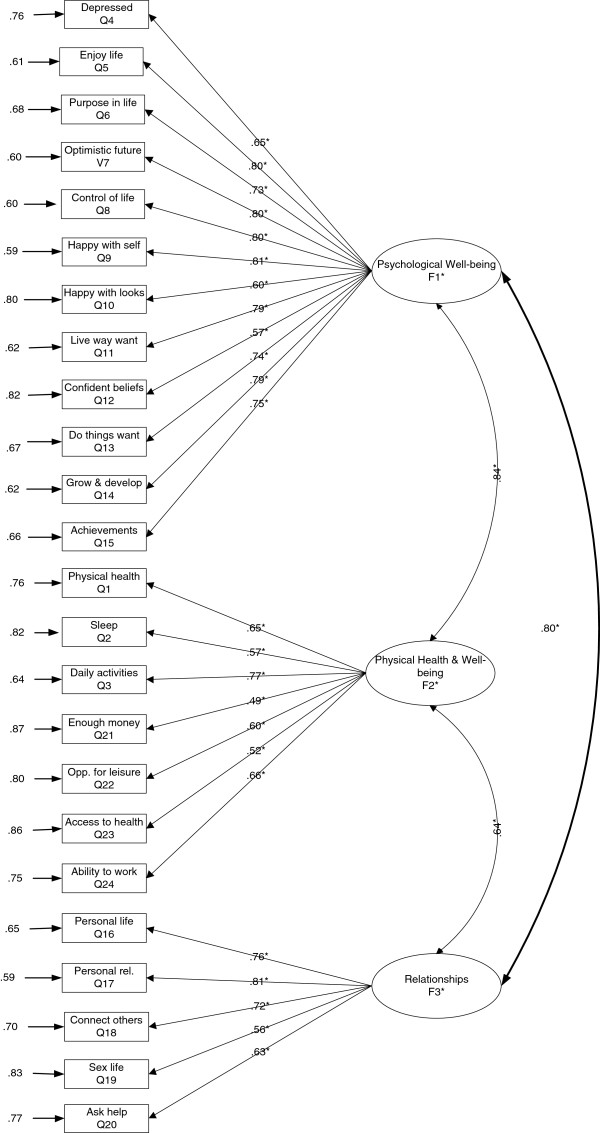
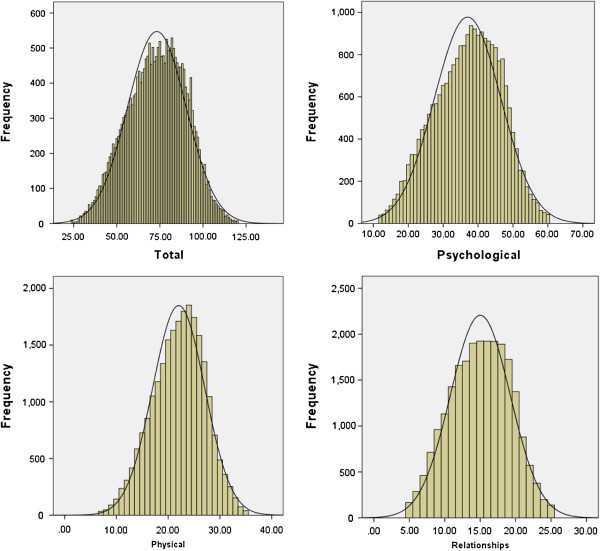
BACKGROUND: The BBC Subjective Well-being scale (BBC-SWB) is a recently developed questionnaire designed to measure people's subjective experiences across the wide breadth of domains commonly included in definitions of well-being. Although it has previously been shown to be a reliable and valid measure of subjective well-being in the general population with good psychometric properties, a limitation of the initial version was that it was developed using responses on a 4-point Likert-style scale. This paper presents the psychometric properties, validity and reliability of a revised version of the scale conducted using 5-point Likert-style responses and tests the hypothesis that the scale measures three underlying dimensions of well-being; psychological; physical health; and relationships. METHODS: A sample of 23,341 participants completed the revised BBC-SWB as part of an on-line open-access battery of self-report measures. Confirmatory factor analysis was used to test the pre-hypothesised three factor structure, and internal consistency was investigated using Cronbach's alpha. Concurrent validity was assessed through analysis of correlations with demographic variables, scores on the Goldberg Anxiety and Depression Scales, and the List of Threatening Experiences Questionnaire. RESULTS: Confirmatory factor analysis supported three factor structure of the measure in the whole sample and for subsamples of males and females. Both the total 24-item scale and the three subscales had good internal consistency, showed no evidence of floor and ceiling effects and correlated significantly with measures of concurrent validity. CONCLUSIONS: This study provided further confirmation of the validity and utility of the BBC Subjective Well-being scale. The modified version is a reliable and valid measure for the online assessment of subjective well-being in the general population with good psychometric properties.
Overview
The claims and statistics of this paper haven’t been checked yet.
Run the check — free, no account needed. It reads the open-access text and checks the sources it cites.
Integrity signals
Registry
Cites
Statistics
Figures
Verification
Claims the paper makes
The claims and statistics of this paper haven’t been checked yet.
Run the check — free, no account needed. It reads the open-access text and checks the sources it cites.
Claims other papers make about this one
Each is checked against this paper’s own text: does it say what the citing paper says it does?
In the citing paper
“Greater specificity was provided by definitions that partitioned well-being into a subjective domain, and a separate objective domain.42”
From Review of 99 self-report measures for assessing well-being in adults: exploring dimensions of well-being and developments over time (2016) · cites this paper as [42]
Self-check
Percentages, sums and reported differences re-computed from the paper’s own numbers.
The self-check needs the paper’s full text.
Citations
Cites
Coefficient Alpha and the Internal Structure of Tests
Cronbach, L. J. (1951) · Psychometrika · doi:10.1007/bf02310555 · Cited by 43,931
The satisfaction with life scale
Diener, E., Emmons, R. A., Larsen, R. J., & Griffin, S. (1985) · Journal of Personality Assessment · doi:10.1207/s15327752jpa4901_13 · Cited by 31,768 · cited 1×
“In addition, measures of subjective well-being have been developed such as the Diener scale [15] which focuses on beliefs and attitudes related to well-being, and the Lyubomirsky scale [16] which assesses an individual’s sense of comparison with peers; although they fail to serve as adequate replacements to measures o…”
BackgroundAlternative Ways of Assessing Model Fit
Browne, M. W., & Cudeck, R. (1992) · Sociological Methods & Research · doi:10.1177/0049124192021002005 · Cited by 27,200
Comparative fit indexes in structural models.
Bentler, P. M. (1990) · Psychological Bulletin · doi:10.1037/0033-2909.107.2.238 · Cited by 25,266 · cited 11×
“Whilst this revealed an acceptable fit of the data; (S-B χ2 = (249, N = 23, 341) = 25204.8, P < 0.001; RCFI = .909; RMSEA = .066 (.065-.066), it was not as good fit as the hypothesised three-factor model.”
MethodInfluentialConvergent and discriminant validation by the multitrait-multimethod matrix.
Campbell, D. T., & Fiske, D. W. (1959) · Psychological Bulletin · doi:10.1037/h0046016 · Cited by 17,116 · cited 1×
“85 indicate that the factors are measuring different underlying constructs [33].”
BackgroundEuroQol: a new facility for the measurement of health-related quality of life
(1990) · Health Policy · doi:10.1016/0168-8510(90)90421-9 · Cited by 15,736
Happiness is everything, or is it? Explorations on the meaning of psychological well-being.
Ryff, C. D. (1989) · Journal of Personality and Social Psychology · doi:10.1037/0022-3514.57.6.1069 · Cited by 14,847 · cited 3×
“Items were chosen to reflect the four domains (physical health, psychological health, social relationships and environment) of the WHOQOL-BREF [13], and the six domains (self-acceptance, autonomy, environmental mastery, purpose in life, positive relations with others and personal growth) of the Psychological Well-Bein…”
BackgroundMethodThe structure of psychological well-being revisited.
Ryff, C. D., & Keyes, C. L. M. (1995) · Journal of Personality and Social Psychology · doi:10.1037//0022-3514.69.4.719 · Cited by 10,285
EQS : structural equations program manual
Bentler, P. M. (1989) · Medical Entomology and Zoology · Cited by 9,669
Testing Structural Equation Models.
Clogg, C. C., Bollen, K. A., & Long, J. S. (1995) · Social Forces · doi:10.2307/2580595 · Cited by 8,246
Cited by
Sorted by citations
Linton, M.-J., Dieppe, P., & Medina-Lara, A. (2016) · BMJ Open · doi:10.1136/bmjopen-2015-010641 · Cited by 638
“Greater specificity was provided by definitions that partitioned wellbeing into a subjective domain, and a separate objective domain.(42)”
BackgroundAllen, J. J., & Anderson, C. A. (2018) · Computers in Human Behavior · doi:10.1016/j.chb.2018.02.034 · Cited by 210
Measuring Well-Being in Sport Performers: Where are We Now and How do we Progress?
Giles, S., Fletcher, D., Arnold, R., Ashfield, A., & Harrison, J. (2020) · Sports Medicine · doi:10.1007/s40279-020-01274-z · Cited by 145
Causal and mediating factors for anxiety, depression and well-being
Kinderman, P., Tai, S., Pontin, E. E., Schwannauer, M., Jarman, I. H., & Lisboa, P. J. G. (2015) · The British Journal of Psychiatry · doi:10.1192/bjp.bp.114.147553 · Cited by 106
Self-citationPeach, H. D., Gaultney, J. F., & Gray, D. D. (2016) · Cogent Psychology · doi:10.1080/23311908.2016.1168768 · Cited by 90
“A study (Pontin et al., 2013) validated the scale in a sample of 23,341 participants and demonstrated significant correlations with scores on the Goldberg Anxiety and Depression Scales and the List of Threatening Experiences Questionnaire.”
MethodWell-being and self-efficacy in a sample of undergraduate nurse students: A small survey study
Priesack, A., & Alcock, J. (2015) · Nurse Education Today · doi:10.1016/j.nedt.2015.01.022 · Cited by 91
“Further development of the BBC Well-being questionnaire with a larger UK sample has superseded the instrument used here by increasing the Likert scale to five points to improve the approximation of an interval scale, in addition to very slight rewording of some items, thus further research should employ the new instru…”
MethodA statistical meta-analysis of the wellbeing literature
Eger, R. J., & Maridal, J. H. (2015) · International Journal of Wellbeing · doi:10.5502/ijw.v5i2.4 · Cited by 83
Happiness and pro-environmental consumption behaviors
Nguyen, H. V., Le, M. T. T., Pham, C. H., & Cox, S. S. (2022) · Journal of Economics and Development · doi:10.1108/jed-07-2021-0116 · Cited by 74
Association between Social Integration and Health among Internal Migrants in ZhongShan, China
Lin, Y., Zhang, Q., Chen, W., Shi, J., Han, S., Song, X., Xu, Y., & Ling, L. (2016) · PLoS ONE · doi:10.1371/journal.pone.0148397 · Cited by 71
A scoping review of well-being measures: conceptualisation and scales for overall well-being
Zhang, W., Balloo, K., Hosein, A., & Medland, E. (2024) · BMC Psychology · doi:10.1186/s40359-024-02074-0 · Cited by 108
“However, two years later, this scale with the same dimensions and items was revised to assess an individual’s subjective well-being [139].”
BackgroundXiao, Z., & Huang, J.-H. (2022) · Frontiers in Psychology · doi:10.3389/fpsyg.2022.861527 · Cited by 68
Khalid, A., Qadir, F., Chan, S. W. Y., & Schwannauer, M. (2018) · Journal of Mental Health · doi:10.1080/09638237.2018.1521919 · Cited by 69
“Notably, there has been evidence, albeit limited, that has suggested higher rates of CMDs among adolescents residing in low- and middleincome countries (LMIC; Fleitlich-Bilyk & Goodman, 2004), although inconsistent findings have also been reported (Pontin et al., 2013).”
BackgroundSelf-citationMeng, R., Li, J., Wang, Z., Zhang, D., Liu, B., Luo, Y., Hu, Y., & Yu, C. (2020) · Health and Quality of Life Outcomes · doi:10.1186/s12955-020-01307-1 · Cited by 58
Evaluating rural viability and well-being: Evidence from marginal areas in Tuscany
Casini, L., Boncinelli, F., Gerini, F., Romano, C., Scozzafava, G., & Contini, C. (2021) · Journal of Rural Studies · doi:10.1016/j.jrurstud.2021.01.002 · Cited by 53
Lamont, A. M., & Ranaweera, N. A. (2019) · Applied Research in Quality of Life · doi:10.1007/s11482-019-09734-z · Cited by 52
“For both surveys, the second part comprised the 24-item BBC subjective wellbeing scale (BBC-SWS; Pontin et al. 2013) used to measure subjective wellbeing in three main domains: (1) psychological (e.g. ‘Do you feel optimistic about the future?’)”
MethodResultInfluentialThe Relationship between Brand Attachment and Consumers' Emotional Well-Being
Aureliano-Silva, L., Strehlau, S., & Strehlau, V. I. (2018) · Journal of Relationship Marketing · doi:10.1080/15332667.2017.1391058 · Cited by 36
Нисоновна, О. В., Semya, G. V., Prokopyeva, L. M., & Kolesnikova, U. V. (2020) · Psychological Science and Education · doi:10.17759/pse.2020250604 · Cited by 26
Does Consumption of Organic Foods Contribute to Korean Consumers’ Subjective Well-Being?
Lee, H.-J. (2019) · Sustainability · doi:10.3390/su11195496 · Cited by 23
“Well-being viewed from the hedonic approach can be called subjective well-being, which is related to a person’s own assessment of his or her well-being; it is a person’s assessment of his or her environmental situation and behavioral response, and subjective outcomes of a person’s well-being assessment process [23].”
BackgroundCaycho‐Rodríguez, T., Ventura‐León, J., Azabache-Alvarado, K., Reyes-Bossio, M. A., & Cabrera-Orosco, I. (2020) · Revista Ciencias de la Salud · doi:10.12804/revistas.urosario.edu.co/revsalud/a.9797 · Cited by 21
“En la literatura sobre el tema se observan diversos instrumentos para medir el bs general o aspectos particulares que, a su vez, se han desarrollado para una población general o específica (14).”
BackgroundThomas, R., Williams, M. M. A., Aldous, J. W. F., Yanagisawa, Y., Kumar, R., Forsyth, R., & Chater, A. (2022) · COVID · doi:10.3390/covid2040031 · Cited by 21
“Primary end points were the differences in mean symptom from days 1 to 30 between the two groups measured by the validated Chalder Fatigue Scale (CFS) (Figure A1 in Appendix A), the Cough Symptom Score (CSS) (Table A1 in Appendix A) and the Subjective Well-being Score (SWB) (Table A2 in Appendix A) [114,115].”
MethodPsycho-neuro-biological Correlates of Beta Activity
Leaf, C., Turner, R., Wasserman, C. S., Paulson, R. M., Kopooshian, N., Lynch, G., & Leaf, A. (2023) · NeuroRegulation · doi:10.15540/nr.10.1.11 · Cited by 19
Saha, S. G., Basu, S., & Pandit, D. (2020) · Social Indicators Research · doi:10.1007/s11205-020-02493-7 · Cited by 23
STUDY ON SUBJECTIVE WELL-BEING OF DIFFERENT GROUPS OF POPULATION DURING THE 2022 WAR IN UKRAINE
Карамушка, Л. М., Креденцер, О. В., Tereshchenko, K. V., Delton, Y., Арефнія, С., & Paskevska, I. (2022) · Wiadomości Lekarskie · doi:10.36740/wlek202208107 · Cited by 18
“It is important, in our opinion, that the model of subjective well-being is based on an integrative approach and contains physical, psychological and social components [7; 12].”
InfluentialKaramushka, L., Терещенко, К., & Креденцер, О. В. (2022) · Організаційна психологія Економічна психологія · doi:10.31108/2.2022.3.27.8 · Cited by 18
Husain, W., Ijaz, F., Husain, M. A., Zulfiqar, M., & Khalique, J. (2024) · OBM Integrative and Complementary Medicine · doi:10.21926/obm.icm.2401011 · Cited by 17
Lee, Y. J., Pang, S. F. H., Choi, H. C., Yu, M., & Lee, H. (2024) · Tourism and Hospitality Research · doi:10.1177/14673584241293900 · Cited by 15
“Psychological well-being was measured with two scales: the Subjective Well-being Scale by the British Broadcasting Corporation (Pontin et al., 2013) and the WHOQOL-BREF Scale by the World Health Organization (WHO, 2013).”
Bartosiak, A., Lee, J. E., & Loibl, C. (2025) · PLOS ONE · doi:10.1371/journal.pone.0319034 · Cited by 16
“Psychological wellbeing was measured with 12 items, such as “I feel happy with myself as a person” [94].”
Exploring Relationships Between Electronic Dance Music Event Participation and Well-being
Cannon, J. W., & Greasley, A. (2021) · Music & Science · doi:10.1177/2059204321997102 · Cited by 17
“It may be fruitful for future research in this area to employ the more recently developed, comprehensive 24-item BBC subjective wellbeing scale (BBC-SWB, Pontin et al., 2013).”
MethodFinuf, K. D., Lopez, S., & Carney, M. T. (2021) · American Journal of Hospice and Palliative Medicine® · doi:10.1177/10499091211045612 · Cited by 15
“Subjective well-being was measured using the psychological and physical health and well-being subscales from the BBC Subjective Well-being scale.(33) Coworker and supervisor support was measured using 7 items from Yang et al(34) Participants could answer an optional open-ended question regarding their experiences.”
MethodHabib, H. A., Hussain, S., & Habib, N. A. (2020) · Sir Syed Journal of Education & Social Research (SJESR) · doi:10.36902/sjesr-vol3-iss3-2020(42-48 · Cited by 13
Chiang, Y., Gao, D.-R., Li, X., Lee, C., Sun, X., & Chen, C.-T. (2021) · Journal of Urban Planning and Development · doi:10.1061/(asce)up.1943-5444.0000740 · Cited by 11
Green, S. E., & Vice, B. (2017) · Emerald Group Publishing Limited eBooks · doi:10.1108/s1479-354720170000010010 · Cited by 10
What makes locked-down students happy: The sense of mattering and subjective well-being
Wang, H., & Prihadi, K. D. (2022) · International Journal of Evaluation and Research in Education (IJERE) · doi:10.11591/ijere.v11i1.22578 · Cited by 10
Coping with fibromyalgia during the COVID-19 pandemic: adjustment and wellbeing
Bacon, A. M., White, L., & Norman, A. (2021) · Psychology and Health · doi:10.1080/08870446.2021.2013484 · Cited by 9
“BBC Subjective Wellbeing Scale (BBC-SWB; Pontin et al, 2013).”
MethodIfroh, R. H., Gai, X., Rabiautsani, M. A., & Han, X. (2024) · Journal of Education and Health Promotion · doi:10.4103/jehp.jehp_1988_23 · Cited by 8
Reysen, S., Plante, C. N., Chadborn, D. P., Roberts, S. E., & Gerbasi, K. C. (2021) · Leisure/Loisir · doi:10.1080/14927713.2021.1971553 · Cited by 7
“Subsequently the authors conducted further validation of the measure with a 5-point scale, from 1 = never to 5 = almost always (Pontin et al., 2013).”
MethodAli, S. B., Ahmad, M. J., Ramzan, I., Ali, M., & Khan, K. (2022) · Frontiers in Psychology · doi:10.3389/fpsyg.2022.915667 · Cited by 11
“Wellbeing has been subdivided into subjective, objective, social, psychological, physical, and community wellbeing (Wilkinson, 1979; Kashdan et al., 2008; Burke et al., 2010; Pontin et al., 2013).”
BackgroundAre the attention checks embedded in delay discounting tasks a valid marker for data quality?
Almog, S., Ferreiro, A. V., Berry, M. S., & Rung, J. M. (2023) · Experimental and Clinical Psychopharmacology · doi:10.1037/pha0000645 · Cited by 7
Seo, Y. (2023) · Asia-Pacific Journal of Regional Science · doi:10.1007/s41685-023-00310-w · Cited by 7
“They figured out that personal and social factors act on SWB, for example, health, income, occupation, and so on (Pontin et al. 2013; Gaspar and Balancho 2017).”
BackgroundJenkins, M. (2018) · Social Indicators Research · doi:10.1007/s11205-018-1989-x · Cited by 7
Development of the Stressors among Parents in Youth Sport Survey (SPYSS)
Tamminen, K. A., Bonk, D., Eckardt, V. C., Sutherland, S., & McEwen, C. E. (2023) · Psychology of sport and exercise · doi:10.1016/j.psychsport.2023.102541 · Cited by 6
Asatsa, S., Ringen, E. J., Kapitány, R., Ngaari, S. M., Makunda, J., Gichimu, E. W., & Lew‐Levy, S. (2025) · Proceedings of the Royal Society B Biological Sciences · doi:10.1098/rspb.2025.0213 · Cited by 6
“[62] did not focus on bereaved individuals; in our case, responses to this question may reflect the immediate emotional impact of recent bereavement rather than overall well-being.”
InfluentialAssessing a Structured Mental Fitness Program for Academic Acute Care Surgeons: A Pilot Study
Bhat, S. G., Nagaraj, M. B., Balentine, C. J., Hogan, T. P., Meier, J., Prince, H. B., AbdelFattah, K. R., Zeh, H. J., & Lévi, B. (2023) · Journal of Surgical Research · doi:10.1016/j.jss.2023.09.052 · Cited by 6
Santi, G., Williams, T., Mellalieu, S. D., Wadey, R., & Carraro, A. (2024) · Psychology of sport and exercise · doi:10.1016/j.psychsport.2024.102656 · Cited by 8
Velykodna, M., Charyieva, O., Kvitka, N., Mitchenko, K., Шило, О. С., & Tkachenko, O. (2024) · Mental Health and Social Inclusion · doi:10.1108/mhsi-11-2023-0118 · Cited by 6
Trends in Marriage Migration and the Well-Being of Southeast Asian Wives in South Korea
Nho, C. R., & Lee, E. (2016) · Journal of Social Welfare and Human Rights · doi:10.15640/jswhr.v4n2a2 · Cited by 6
“Although there is no single agreed definition, well-being generally includes multiple domains of human functionality, including life satisfaction, the absence of negative emotions and a sense of security (Pontin et al., 2013).”
BackgroundSubjective Well-Being of Persons with Type 2 Diabetes Mellitus
Altun, İ., Demirhan, Y., Erkek, Y., Karatoprak, A. P., & Çetinarslan, B. (2014) · Population Health Management · doi:10.1089/pop.2014.0013 · Cited by 5
Examining the Well-being of Citizens' Satisfaction: Comparing smart cities in Malaysia and China
Chong, K. M., Subramaniam, G., Zhou, B., & Separa, L. A. C. (2023) · Environment-Behaviour Proceedings Journal · doi:10.21834/ebpj.v8i24.4636 · Cited by 5
Testing a Mediation Model of Dispositional Optimism, Mindful Self-Care, and Subjective Well-Being
Ang, C. (2024) · Psychological Reports · doi:10.1177/00332941241269548 · Cited by 5
“The Modi fi ed BBC-Subjective Well-Being Scale (BBC-SWB; Pontin et al., 2013) is a 24-item scale that assesses SWB across three subscales: Physical Health (seven items; e.g., “ Are you happy with the quality of your sleep ” ), Psychological Well-Being (12 items; e.g., “ Do you feel you have a…”
Crocker, T., & Padilla, Y. C. (2016) · Families in Society The Journal of Contemporary Social Services · doi:10.1606/1044-3894.2016.97.16 · Cited by 5
Peran Grit pada Subjective Well-Being Siswa Madrasah Aliyah di Pesantren
Badi'ah, N. (2021) · Indonesian Psychological Research · doi:10.29080/ipr.v3i1.398 · Cited by 5
Subjective Well-Being in University Students.
Altun, İ., Özbağ, G. K., & Arlı, E. (2014) · PubMed Central · Cited by 5
Velykodna, M., Tkachenko, O., Шило, О. С., Mitchenko, K., Miroshnyk, Z., Kvitka, N., & Charyieva, O. (2024) · Mental Health Review Journal · doi:10.1108/mhrj-01-2024-0006 · Cited by 8
Öztürk, Z., Turan, G. B., & Dönmez, O. (2024) · Nursing Open · doi:10.1002/nop2.70044 · Cited by 4
“Pontin et al. (2013), similar to these studies, found that the TABLE 2 SCSRFQ, BRS VE SWSC total scores, mean scores of the patients and confidence intervals.”
ResultDoes consumerism increase subjective well-being? The case of Egyptian millennials
Yassin, D., & Ghoneim, H. (2024) · Management & Sustainability An Arab Review · doi:10.1108/msar-12-2023-0060 · Cited by 4
Livelihood capital access and sustainable livelihood outcomes of park adjacent communities in Uganda
Kiconco, M., Nelmapius, A., Venter, E., & Alinda, K. (2025) · IIMBG Journal of Sustainable Business and Innovation · doi:10.1108/ijsbi-06-2024-0029 · Cited by 7
How Do Urban Neighbourhoods Impact Parents’ Subjective Well-being?
Poikolainen, J., & Honkanen, K. (2020) · Nordic Journal of Social Research · doi:10.7577/njsr.2198 · Cited by 4
“Background variables are supposed to correlate with subjective well-being, and the statistical conclusions are drawn from these correlations (Diener, Inglehart, & Tay, 2013; Pontin et al., 2013).”
BackgroundOsman, A., Owusu, M. T., Anu, S. K., Essandoh, S., Aboansi, J., & Abdullai, D. (2022) · Resources Policy · doi:10.1016/j.resourpol.2022.103023 · Cited by 4
Карамушка, Л. М. (2023) · Організаційна психологія Економічна психологія · doi:10.31108/2.2023.1.28.2 · Cited by 4
Cheng, W. L. S., Tang, A. C. Y., Tsang, M. C.-M., Wong, L. L.-K., & Körlin, D. (2023) · Trials · doi:10.1186/s13063-023-07645-x · Cited by 7
“The 24-item BBC Subjective Well-being Scale (BBC-SWB) will be used to measure the participants’ subjective experiences of general well-being [34].”
BackgroundMethodKnots and black holes: why we’re all prone to madness and what we can do about it
Kinderman, P. (2016) · Humanities and Social Sciences Communications · doi:10.1057/palcomms.2016.74 · Cited by 4
“Relationships and a sense of meaning and purpose in life are perhaps the most significant predictors of life satisfaction (Pontin et al., 2013).”
BackgroundSelf-citationNaseer, P. M., Islam, S. B., & Darzi, M. A. (2025) · International Journal of Spa and Wellness · doi:10.1080/24721735.2025.2543646 · Cited by 3
“…perceived ease of access, three items from Yazdanpanah et al. (2015) to measure perceived health benefits, four items from İçli et al. (2019) to measure organic food consumption, four items each for physical emotional and social wellbeing from Pontin et al. (2013) and Ismael and Ploeger (2020).”
Chen, Y., Feng, X., Ali, S. K. S., & Zulnaidi, H. (2025) · PLoS ONE · doi:10.1371/journal.pone.0323731 · Cited by 3
Health literacy and subjective well-being amongst university students: moderating role of gender
Rashid, I., Amin, F., Lone, A. H., & Gulzar, S. S. (2023) · Health Education · doi:10.1108/he-01-2023-0008 · Cited by 4
Indonesian Farmers’ Subjective Well-being: Determinants and Effect on Discounting Behaviour
Begho, T., & Odeniyi, K. A. (2024) · Millennial Asia · doi:10.1177/09763996231222568 · Cited by 3
“However, the latter takes a more central role in psychology, economics and the social sciences (Pontin et al., 2013).”
Habit Formation and Automaticity: Psychoneurobiological Correlates of Gamma Activity
Leaf, C., Wasserman, C. S., Leaf, A., Kopooshian, N., Turner, R., & Paulson, R. M. (2024) · NeuroRegulation · doi:10.15540/nr.11.1.2 · Cited by 5
Relationship between Teacher Work Motivation and Well-being at Different Stages of covid-19 Lockdown
Карамушка, Л. М., Креденцер, О. В., Терещенко, К., Лазос, Г., & Клочко, А. О. (2021) · SOCIAL WELFARE INTERDISCIPLINARY APPROACH · doi:10.15388/sw.2021.11.12 · Cited by 5
Megherbi-moulay, O., Jullian, B., Franchitto, N., Igier, V., & Sordes, F. (2025) · Applied Research in Quality of Life · doi:10.1007/s11482-025-10439-9 · Cited by 2
Arizabal, J. J. R., & Yabut, H. J. (2025) · SAGE Open · doi:10.1177/21582440251369989 · Cited by 2
“The researchers utilize the BBC-Subjective Well-Being Scale (Pontin et al., 2013), which measures feelings of subjective well-being.”
InfluentialHappiness: A Novel Outcome Measure in Stroke?
Wijeratne, T., Sales, C., Wijeratne, C., & Jakovljević, M. (2021) · Therapeutics and Clinical Risk Management · doi:10.2147/tcrm.s307587 · Cited by 2
Impact of environmental awareness and organic consumption on consumer subjective well-being
Tamulienė, V., & Pilelienė, L. (2023) · Business and management · doi:10.3846/bm.2023.980 · Cited by 2
“Latter results regarding the presupposed impact of consumer behavior regarding the consumption of organic foods on consumer subjective well-being might be led by the fact that well-being is a multidimensional concept encompassing multiple domains of human functioning (Pontin et al., 2013), defined as a state “in which…”
BackgroundКреденцер, О. В. (2023) · Kyiv journal of modern psychology and psychotherapy · doi:10.48020/mppj.2023.01.05 · Cited by 2
Singh, S. (2024) · Journal of Advances in Management Research · doi:10.1108/jamr-03-2024-0119 · Cited by 2
Dong, Y., Sun, Y., Wang, D., & Waygood, E. O. D. (2024) · Journal of Transport & Health · doi:10.1016/j.jth.2024.101923 · Cited by 2
Psychological Well-being of Cancer Patients
Mustafin, R. N., & Kalyuzhny, E. A. (2024) · Clinical Psychology and Special Education · doi:10.17759/cpse.2024130302 · Cited by 3
Curtis, C. A., Hurley, L., & Farmer, G. L. (2021) · American Journal of Evaluation · doi:10.1177/1098214020921954 · Cited by 2
“The concern raised by implementing these assessments in practice is whether or not the outcomes associated with them are generalizable across racial groups (Bradley & Corwyn, 2004), especially considering the various measures of SWB that exist (Pontin et al., 2013).”
BackgroundShoeib, A. M. (2021) · International Journal of research in Educational Sciences · doi:10.29009/ijres.4.2.2 · Cited by 2
Tekaya, B., & Khadraoui, M. (2022) · Journal of Nonprofit & Public Sector Marketing · doi:10.1080/10495142.2022.2133065 · Cited by 1
“There are different concepts relating to the term “well-being,” such as life satisfaction and social functioning (Pontin et al., 2013).”
BackgroundKiconco, M., Alinda, K., Mwebaza, S., & Ssemata, R. (2025) · Tourism Critiques Practice and Theory · doi:10.1108/trc-09-2024-0052 · Cited by 5
Горошко, В. І., Khomenko, Y. G., & Horoshko, A. I. (2025) · Polski Merkuriusz Lekarski · doi:10.36740/merkur202502111 · Cited by 1
Morinaj, J., Thurn, C., & Vilser, M. (2026) · Personality and Individual Differences · doi:10.1016/j.paid.2026.113845 · Cited by 1
Guo, Z., Nova-Díaz, D. M., Lipman, S. A., & Roijen, L. H. (2025) · Health and Quality of Life Outcomes · doi:10.1186/s12955-025-02418-3 · Cited by 1
“Two are for the general population without age limits [81, 82], and the Pemberton Happiness Index was developed for individuals aged 16–60 [76].”
Tamminen, K. A., Hutt, K., Dunn, R. C., Crook, R., Edwards, D., & John, B. (2025) · Musicae Scientiae · doi:10.1177/10298649251385736 · Cited by 1
“The BBC Subjective Well-being scale is a questionnaire designed to measure individual subjective experiences of well-being (Pontin et al., 2013).”
Hidayah, R., Solichah, N., Chiedu, C. C., Jannah, M., Mu’awanah, E., Bukhori, B., & Mazaya, S. N. K. (2026) · Islamic Guidance and Counseling Journal · doi:10.25217/0020269727200 · Cited by 1
Examining Whether Body Image Dissatisfaction is a Predictor of Risky Sexual Behavior
Greenhill, N., & Nebel-Schwalm, F. A. (2015) · Digital Commons at Illinois Wesleyan University (Illinois Wesleyan University) · Cited by 1
عمران, ف. م. ع. (2023) · مجلة الإرشاد النفسی · doi:10.21608/cpc.2023.309905 · Cited by 1
Карамушка, Л. М., Креденцер, О. В., Tereshchenko, K. V., Delton, Y., Лазос, Г., & Paskevska, I. (2023) · Polski Merkuriusz Lekarski · doi:10.36740/merkur202304114 · Cited by 7
Mental health and well-being of staff in business organizations under conditions of uncertainty
Tereshchenko, K. V. (2023) · Організаційна психологія Економічна психологія · doi:10.31108/2.2023.2.29.11 · Cited by 1
Family Physician Motivation and Well-Being in the Digital Era
Neufeld, A., Бабенко, О., & Bhella, V. S. (2023) · The Annals of Family Medicine · doi:10.1370/afm.3031 · Cited by 1
“22 All variables were standardized and univariate normality was confirmed by examining skewness and kurtosis.”
MethodVirtual Care Integration: Balancing Physician Well-Being
LaPlante, G., Бабенко, О., & Neufeld, A. (2024) · PRiMER · doi:10.22454/primer.2024.690812 · Cited by 1
ACADEMIC STRESS AND EMOTIONAL INTELLIGENCE AS THE PREDICTOR OF SUBJECTIVE WELL-BEING
Oktarisa, F., Dessyrianti, R. F., Wilda, M. A., & Deviona, N. (2023) · Jurnal RAP (Riset Aktual Psikologi Universitas Negeri Padang) · doi:10.24036/rapun.v14i1.122927 · Cited by 3
Leaf, C., Turner, R. P., Paulson, R. M., Lynch, G., & Leaf, A. (2024) · Current Psychology · doi:10.1007/s12144-024-06360-3 · Cited by 1
“While our Factor 2: Awareness did not correlate with our construct validity and predictive measures in Study 2, this is most probably due to the lack of corresponding awareness and mindfulness factors present in the BBC-SWB (Pontin et al., 2013), HADS-A, and HADS-B instruments (Bjelland et al., 2002), highlighting onc…”
InfluentialUnderstanding the Structure of Subjective Well-Being: A Study with Brazilian Adults
Peixoto, E. M., Romano, A. R., Zanini, D. S., & Noronha, A. P. P. (2024) · Trends in Psychology · doi:10.1007/s43076-024-00421-z · Cited by 1
Subjective Well-Being Factors in Students
Doriza, S., Ilwana, H. F., & Nugraheni, P. L. (2024) · Journal of Family Sciences · doi:10.29244/jfs.v9i2.57290 · Cited by 1
Suffolk Libraries: enhancing well-being within its community
Millett, A. C., Burrows, K., Caldwell, N. H. M., & Richards, S. (2025) · The Journal of Positive Psychology · doi:10.1080/17439760.2025.2502484 · Cited by 1
“The most consistently used method is through psychometric testing (e.g. Casas, 2017; Kállay & Rus, 2014; Pontin et al., 2013).”
İşyeri Mutluluğunun Duygusal Emeğe Etkisinde Algılanan Yönetici Desteğinin Aracı Rolü
ÖZER, K. (2025) · Mevzu – Sosyal Bilimler Dergisi · doi:10.56720/mevzu.1661664 · Cited by 1
Khan, M. M., Yasin, G., & Hussain, M. (2025) · Qlantic journal of social sciences. · doi:10.55737/qjss.vi-iv.25453 · Cited by 1
Castro-Valencia, A. M., Ruiz, M. G. H., López, F. G. A., & Campos, P. C. (2022) · Journal of Higher Education Theory and Practice · doi:10.33423/jhetp.v22i16.5607 · Cited by 1
mHealth in Physical Therapy Practice: What Consumers Want?
Oberoi, M., & Rathod, P. V. (2022) · Asian Pacific Journal of Health Sciences · doi:10.21276/apjhs.2022.9.4s.02 · Cited by 1
Metadata
- Authors
- Pontin, E., Schwannauer, M., Tai, S., & Kinderman, P.
- Affiliations
- University of Liverpool (GB)
- University of Edinburgh (GB)
- University of Manchester (GB)
- Corresponding author
- Pontin, Eleanor
- Venue
- Health and Quality of Life Outcomes
- Published
- 2013
- Volume
- 11
- Issue
- 1
- Pages
- 150
- ISSN
- 1477-7525 (ISSN-L)
- PMC
- PMC3868314
- OpenAlex
- W2141240900
- Cited by
- 134
- References
- 35
- Citations by year
- 2026: 12 · 2025: 17 · 2024: 21 · 2023: 21 · 2022: 16 · 2021: 13 · 2020: 9 · 2019: 3 · 2018: 7 · 2017: 1 · 2016: 6 · 2015: 5 · 2014: 3
- FWCI
- 6.98
- Type
- journal article
- Language
- en
- Open access
- gold
- doi.org
- Licence
- cc-by
- Locations
- Health and Quality of Life Outcomes (publishedVersion, cc-by)
- Europe PMC (PubMed Central) (publishedVersion, cc-by)
- PubMed Central (publishedVersion, cc-by)
- PubMed (publishedVersion)
- Edinburgh Research Explorer (University of Edinburgh) (submittedVersion, cc-by)
- Topics
- Social Sciences › Psychology › Social Psychology › Psychological Well-being and Life Satisfaction
- Social Sciences › Decision Sciences › Management Science and Operations Research › Psychometric Methodologies and Testing
- Health Sciences › Health Professions › General Health Professions › Health, psychology, and well-being
- Keywords
- subjective well-being, psychometric validation, scale revision, factor structure, psychological well-being, physical health, interpersonal relationships, concurrent validity, reliability statistics, general population
- MeSH terms
- Adolescent, Adult, Aged, Factor Analysis, Statistical, Female, United Kingdom, Humans, Male, Middle Aged, Personal Satisfaction, Surveys and Questionnaires, Young Adult
About these checks
Registry, retraction, Cites and statistics results are computed, not judged, with one exception: a printed reference that no index lists is read once by a model before it counts as a citation error. Claims are extracted by a model and kept only when their quote appears verbatim in the text; each cited source is then checked, with a model’s help, for whether it says what the claim relies on. Those verdicts can be wrong — read the claim’s quote and the cited source before relying on one.
Statistics and arithmetic are recomputed, not judged.
Confidence bands are shown only for fields calibrated on our annotated test set. None is calibrated yet, so no band is shown.
What counts as a claim ›How we measure confidence ›How we check this ›
Are you an author, or do you see a problem with this page? Request a review
