

Internal construct validity of the Warwick-Edinburgh Mental Well-being Scale (WEMWBS): a Rasch analysis using data from the Scottish Health Education Population Survey
Open accessThe DOI matches its Crossref record; 31 of the 31 references it cites were found in a registry or an index.
Abstract
BACKGROUND: The Warwick-Edinburgh Mental Well-Being Scale (WEMWBS) was developed to meet demand for instruments to measure mental well-being. It comprises 14 positively phrased Likert-style items and fulfils classic criteria for scale development. We report here the internal construct validity of WEMWBS from the perspective of the Rasch measurement model. METHODS: The model was applied to data collected from 779 respondents in Wave 12 (Autumn 2006) of the Scottish Health Education Population Survey. Respondents were aged 16-74 (average 41.9) yrs. RESULTS: Initial fit to model expectations was poor. The items 'I've been feeling good about myself', 'I've been interested in new things' and 'I've been feeling cheerful' all showed significant misfit to model expectations, and were deleted. This led to a marginal improvement in fit to the model. After further analysis, more items were deleted and a strict unidimensional seven item scale (the Short Warwick Edinburgh Mental Well-Being Scale (SWEMWBS)) was resolved. Many items deleted because of misfit with model expectations showed considerable bias for gender. Two retained items also demonstrated bias for gender but, at the scale level, cancelled out. One further retained item 'I've been feeling optimistic about the future' showed bias for age. The correlation between the 14 item and 7 item versions was 0.954.Given fit to the Rasch model, and strict unidimensionality, SWEMWBS provides an interval scale estimate of mental well-being. CONCLUSION: A short 7 item version of WEMWBS was found to satisfy the strict unidimensionality expectations of the Rasch model, and be largely free of bias. This scale, SWEMWBS, provides a raw score-interval scale transformation for use in parametric procedures. In terms of face validity, SWEMWBS presents a more restricted view of mental well-being than the 14 item WEMWBS, with most items representing aspects of psychological and eudemonic well-being, and few covering hedonic well-being or affect. However, robust measurement properties combined with brevity make SWEMWBS preferable to WEMWBS at present for monitoring mental well-being in populations. Where face validity is an issue there remain arguments for continuing to collect data on the full 14 item WEMWBS.
Overview
The claims and statistics of this paper haven’t been checked yet.
Free: it reads the open-access text and checks the first 5 claims that cite a source we can check. Create a free account to check every claim.
Integrity signals
Registry
Cites
Statistics
Figures
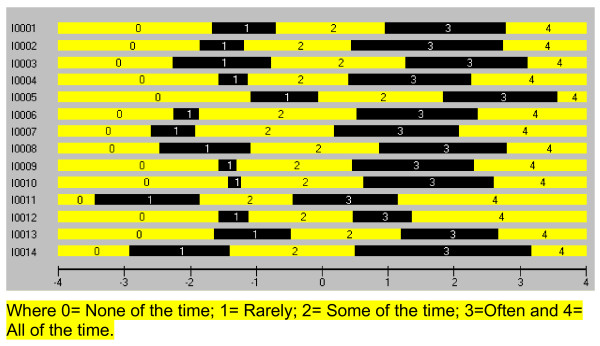
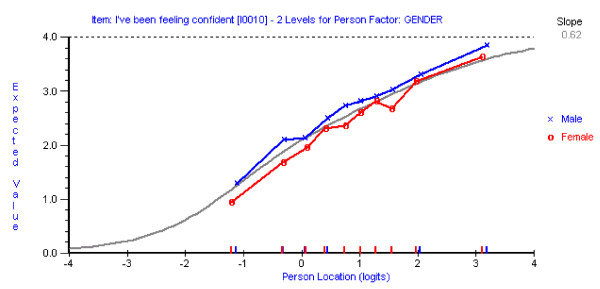
Verification
Claims the paper makes
The claims and statistics of this paper haven’t been checked yet.
Free: it reads the open-access text and checks the first 5 claims that cite a source we can check. Create a free account to check every claim.
Claims other papers make about this one
Each is checked against this paper’s own text: does it say what the citing paper says it does?
The source backs part of the claim, not all of it — or backs it for a different population, condition or comparison.
In the citing paper
“The WEMWBS with both its 14-and short 7-item versions, measures holistic aspects of well-being. The dimensions include eudemonic aspects, hedonic aspects, psychological functioning, and subjective well-being [32,33].”
From A Virtual Reality-Assisted Cognitive Behavioral Therapy for and With Inuit in Québec: Protocol for a Proof-of-Concept Randomized Controlled Trial (2023) · cites this paper as [33]
Experimental — accuracy not yet measuredThe source backs part of the claim, not all of it — or backs it for a different population, condition or comparison.
In the citing paper
“to high internal consistency (r=.87) and the short version has acceptable test-retest reliability (r=.66, 95% CI 0.59-0.72) [44,45].”
From Feasibility and effectiveness of a web-based positive psychology program for youth mental health: Randomized controlled trial (2014) · cites this paper as [44]
Experimental — accuracy not yet measuredThe source backs part of the claim, not all of it — or backs it for a different population, condition or comparison.
In the citing paper
“Psychometric data of the measure on the original WEMWBS for adolescents has indicated satisfactory to high internal consistency (r=.87) and the short version has acceptable test-retest reliability (r=.66, 95% CI 0.59-0.72) [44,45].”
From Feasibility and effectiveness of a web-based positive psychology program for youth mental health: Randomized controlled trial (2014) · cites this paper as [44]
Experimental — accuracy not yet measuredThe source backs part of the claim, not all of it — or backs it for a different population, condition or comparison.
In the citing paper
“Well-being was measured using the 7-item Short Warwick–Edinburgh Mental Well-Being Scale [SWEMWBS] (score range 7 to 35) [29]. Total scores were transformed (as per set out in [29]) to facilitate the use of parametric statistical analyses. Higher scores represent greater well-being (Cronbach’s α = 0.78).”
From The effect of a therapeutic smartphone application on suicidal ideation in young adults: Findings from a randomized controlled trial in Australia. (2022) · cites this paper as [29]
Experimental — accuracy not yet measuredThe cited source says what the claim attributes to it.
In the citing paper
“The SWEMWBS has high internal consistency (Cronbach α=.84 in the general population).”
From Feasibility and Preliminary Efficacy of Digital Interventions for Depressive Symptoms in Working Adults: Multiarm Randomized Controlled Trial (2023) · cites this paper as [51]
6 more claims about this paper
Create a free account to see every claim other papers make about this one.
Self-check
Percentages, sums and reported differences re-computed from the paper’s own numbers.
The self-check needs the paper’s full text.
Citations
Cites
Coefficient Alpha and the Internal Structure of Tests
Cronbach, L. J. (1951) · Psychometrika · doi:10.1007/bf02310555 · Cited by 43,931
On Happiness and Human Potentials: A Review of Research on Hedonic and Eudaimonic Well-Being
Ryan, R. M., & Deci, E. L. (2001) · Annual Review of Psychology · doi:10.1146/annurev.psych.52.1.141 · Cited by 11,567
Probabilistic Models for Some Intelligence and Attainment Tests
(1961) · Information and Control · doi:10.1016/s0019-9958(61)80061-2 · Cited by 6,939
SPSS Survival Manual: A Step by Step Guide to Data Analysis using IBM SPSS
Pallant, J. (2020) · Routledge eBooks · doi:10.4324/9781003117407 · Cited by 5,201
The Warwick-Edinburgh Mental Well-being Scale (WEMWBS): development and UK validation
Tennant, R., Hiller, L., Fishwick, R., Platt, S., Joseph, S., Weich, S., Parkinson, J., Secker, J., & Stewart-Brown, S. (2007) · Health and Quality of Life Outcomes · doi:10.1186/1477-7525-5-63 · Cited by 5,031
Self-citationA Rasch model for partial credit scoring
Masters, G. N. (1982) · Psychometrika · doi:10.1007/bf02296272 · Cited by 3,782
Multiple significance tests: the Bonferroni method
Bland, J. M., & Altman, D. G. (1995) · BMJ · doi:10.1136/bmj.310.6973.170 · Cited by 3,341
A Rating Formulation for Ordered Response Categories
Andrich, D. (1978) · Psychometrika · doi:10.1007/bf02293814 · Cited by 2,970
Best Test Design. Rasch Measurement.
Wright, B. D., & Stone, M. H. (1979) · Medical Entomology and Zoology · Cited by 2,125
Differential Item Functioning.
Gudgeon, A. C., Holland, P. W., & Wainer, H. (1994) · The Statistician · doi:10.2307/2348590 · Cited by 2,091
Research works printed but not linked: 8
- World Health Organisation: Strengthening mental health pro- motion. Geneva; World Health Organisation; 2001.
- Nunally JC: Psychometric theory. New York: McGraw-Hill; 1978.
- Pallant JF: SPSS Survival Manual. Second edition. Maidenhead: Open University Press; 2005.
- Guttman LA: The basis for Scalogram analysis. In Studies in social psychology in World War II: Measurement and Prediction Volume 4. Edited by: Stouffer SA, Guttman LA, Suchman FA, Lazarsfeld PF, Star SA, Clausen JA. Princeton: Princeton University Press; 1950:60-90.
- Wright BD, Stone G: Best test design. Chicago: MESA Press; 1979.
- Tennant A, Pallant JF: DIF matters: A practical approach to test if Differential Item Functioning (DIF) makes a difference. Rasch Measurement Transactions 2007, 20:1082-1084.
- Tennant A, Pallant JF: Multidimensionality matters. Rasch Meas- urement Transactions 2006, 20:1048-1051.
- Andrich D, Lyne A, Sheridon B, Luo G: RUMM 2020. Perth: RUMM Laboratory; 2003.
Cited by
Items 701–800 of 1,001
Exposing the impact of Citizens Advice Bureau services on health: a realist evaluation protocol
Forster, N., Dalkin, S. M., Lhussier, M., Hodgson, P., & Carr, S. M. (2016) · BMJ Open · doi:10.1136/bmjopen-2015-009887 · Cited by 10
Aimola, L., Jasim, S., Tripathi, N., Bassett, P., Quirk, A., Worrall, A., Tucker, S., Holder, S., & Crawford, M. (2018) · BMC Health Services Research · doi:10.1186/s12913-018-3797-z · Cited by 8
Stress, wellbeing, and help seeking in first year university studentsPreprint
Dingle, G. A., Vidas, D., & Hong, M. (2021) · PsyArXiv (OSF Preprints) · doi:10.31234/osf.io/85scz · Cited by 11
Öksüz, H., Ertural, H., Çini, A., Satıcı, S. A., & Deniz, M. E. (2023) · doi:10.22541/au.168907683.38496268/v1 · Cited by 8
The impact of care farming in the UK
Leck, C. (2013) · Worcester Research and Publications (University of Worcester) · Cited by 16
Dunn, A., Alvarez, J., Arbon, A., Bremner, S., Elsby-Pearson, C., Emsley, R., Jones, C., Lawrence, P., Lester, K. J., Majdandžić, M., et al. (2022) · JMIR Research Protocols · doi:10.2196/40707 · Cited by 7
Virtual group–based mindfulness for autistic adults: A randomized controlled trial
Lunsky, Y., Carter, M., Hutton, S., Wozniak, J., Chen, S., & Weiss, J. A. (2025) · Autism · doi:10.1177/13623613251340101 · Cited by 7
Roulston, A., Mackle, D., Ross, J., Montgomery, L., MacDermott, D., Boyle, S., McFadden, P., & Hayes, D. (2025) · The British Journal of Social Work · doi:10.1093/bjsw/bcaf152 · Cited by 10
Stuttard, L., Hewitt, C. E., Fairhurst, C. M., Weatherly, H. L. A., Walker, S., Longo, F., Maddison, J., Boyle, P., & Beresford, B. (2020) · JMIR Research Protocols · doi:10.2196/15452 · Cited by 7
Ferrell, A., Levstek, M., & Banerjee, R. A. (2023) · The Journal of Creative Behavior · doi:10.1002/jocb.608 · Cited by 11
Harris, P. R., & Easterbrook, M. J. (2024) · Journal of Community & Applied Social Psychology · doi:10.1002/casp.2774 · Cited by 8
Dunfee, M., Bush, H., Leger, K. A., Hilbert, T., Brancato, C. J., & Haynes, E. N. (2024) · TechTrends · doi:10.1007/s11528-024-00957-y · Cited by 8
Qayum, M., Li, W., & Sohail, M. T. (2024) · Water · doi:10.3390/w16223225 · Cited by 7
Castelino, A., Dawson, S., Li, P., Thompson, Z., Tamplin, J., Watt, B., Archbold, J., Lamb, K. E., Braat, S., Sousa, T. V., et al. (2025) · Alzheimer s & Dementia · doi:10.1002/alz.70124 · Cited by 7
Chao, J., Siu, A. M. H., Leung, O., Lo, A., Chu, M. H.-W., Lee, W. K., Auw, C., Lee, V., & Chien, C. (2018) · Journal of Mental Health · doi:10.1080/09638237.2018.1521931 · Cited by 8
Asif, M., Tariq, S., & Khoso, A. B. (2020) · International Journal of Technical Research & Science · doi:10.30780/ijtrs.v05.i03.004 · Cited by 7
Connor, C., Yap, M. B. H., Warwick, J., Birchwood, M. J., Valliere, N. D., Madan, J. J., Melvin, G. A., Padfield, E., Patterson, P. H., Petrou, S., et al. (2022) · Trials · doi:10.1186/s13063-022-06563-8 · Cited by 7
Self-citationLi, S., Achilles, M. R., Subotic-Kerry, M., Werner‐Seidler, A., Newby, J. M., Batterham, P. J., Christensen, H. M., Mackinnon, A. J., & O’Dea, B. (2022) · BMC Psychiatry · doi:10.1186/s12888-022-04383-3 · Cited by 9
Bad parents? evaluating judgements of infant homicides
Sparks, B., Vione, K. C., & Fido, D. (2023) · Psychiatry Psychology and Law · doi:10.1080/13218719.2023.2206876 · Cited by 7
Stable or Fluid? An Investigation Into Female Student Athlete Basketball Players’ Well-Being
Columbus, A., Mack, D. E., Wilson, P. M., & Chimera, N. J. (2023) · Case Studies in Sport and Exercise Psychology · doi:10.1123/cssep.2022-0023 · Cited by 7
Keetharuth, A. D., Gray, L. A., McGrane, E., Worboys, H. M., & Orozco-Leal, G. (2024) · Health and Quality of Life Outcomes · doi:10.1186/s12955-023-02220-z · Cited by 7
Norman, T. L., Bourne, A., Amos, N., Power, J., Anderson, J., Lim, G., Carman, M., & Meléndez‐Torres, G. J. (2024) · Drug and Alcohol Review · doi:10.1111/dar.13814 · Cited by 7
Teacher Stress and Mental Health During the COVID-19 Pandemic: Differences by Teaching Modality
Leger, K. A., Haynes, E. N., Hilbert, T., Maras, J., Brancato, C. J., & Bush, H. (2024) · School Psychology Review · doi:10.1080/2372966x.2024.2317700 · Cited by 7
Brown, C. E. B., Richardson, K. E., Pizzirani, B., Hughes, S. D., Atkins, L., Pitt, J., Yücel, M., & Segrave, R. A. (2024) · Frontiers in Psychiatry · doi:10.3389/fpsyt.2024.1379396 · Cited by 10
Impact of Work and Family Conflicts on Productivity and Well-Being during Remote Work
Goullet, D., Sciulli, N., & Snell, T. (2022) · Journal of workplace behavior. · doi:10.70580/jwb.03.01.0111 · Cited by 8
Davidson, C. J., Kam, A., Needham, F., & Stansfield, A. J. (2015) · Advances in Autism · doi:10.1108/aia-08-2015-0010 · Cited by 7
Human Factors Multi-technique Approach to Teenage Engagement in Digital Technologies Health Research
Lang, A. R., Craven, M. P., Atkinson, S., Simons, L., Cobb, S. V. G., & Mazzola, M. (2016) · Human-computer interaction series · doi:10.1007/978-3-319-33450-9_4 · Cited by 8
Students’ Mindset and Subjective Well-being during the Period of “Emerging Adulthood”
Хачатурова, М., Yerofeyeva, V. G., & Анатольевич, Б. В. (2022) · Psychological Science and Education · doi:10.17759/pse.2022270110 · Cited by 7
Adapted Behavioural Activation for Bipolar Depression: A Randomised Multiple Baseline Case Series
Wright, K. A., Mostazir, M., Bailey, E., Dunn, B. D., O’Mahen, H., Sibsey, M., & Thomas, Z. (2022) · Brain Sciences · doi:10.3390/brainsci12101407 · Cited by 8
Vafeiadou, A., Bowling, N. C., Hammond, C., & Banissy, M. J. (2022) · Health Psychology Open · doi:10.1177/20551029221137008 · Cited by 7
Nurdiyanto, F. A., Harjanti, E. P., & Laban, R. W. (2023) · Persona Jurnal Psikologi Indonesia · doi:10.30996/persona.v11i2.6900 · Cited by 7
Mason, S. J., Downing, A., Wright, P., Bottomley, S. E., Winterbottom, A. P., Glaser, A., & Catto, J. W. F. (2019) · BMJ Open · doi:10.1136/bmjopen-2019-030850 · Cited by 7
Jónsdóttir, U. S., Thordardottir, E. B., Aspelund, T., Jónmundsson, Þ., & Einarsdóttir, K. (2019) · European Journal of Public Health · doi:10.1093/eurpub/ckz192 · Cited by 7
Shepherd, K., Pritty, B., Tickle, A., & Moghaddam, N. (2023) · International Journal of Mental Health and Addiction · doi:10.1007/s11469-021-00729-2 · Cited by 6
Keetharuth, A. D., Mukuria, C., Peasgood, T., & Wailoo, A. (2025) · Value in Health · doi:10.1016/j.jval.2025.07.028 · Cited by 11
Slabu, L., Coombes, E., Mangiacotti, A. M. A., Hadar, T., & Franco, F. (2025) · Frontiers in Psychiatry · doi:10.3389/fpsyt.2025.1707023 · Cited by 6
Walsh, C., Bunting, L., Davidson, G., Mulholland, C. C., McCartan, C. J., Doherty, N. N., & Shevlin, M. E. (2025) · BMJ Public Health · doi:10.1136/bmjph-2025-003360 · Cited by 7
Hope, V. D., Timpson, H., Porcellato, L. A., Brett, C. E., Harrison, R., Hunt, A. M., Bigland, C., Leavey, C., Hay, G., & Saini, P. (2023) · BMJ Open · doi:10.1136/bmjopen-2022-068818 · Cited by 6
Chen, Z. F., Sun, R., & Tao, W. (2024) · Asian Journal of Communication · doi:10.1080/01292986.2024.2315587 · Cited by 7
Tanimoto, A. S., Richter, A., Bujacz, A., & Lindfors, P. (2024) · Scandinavian Journal of Psychology · doi:10.1111/sjop.13064 · Cited by 6
Sun, Y., Ho, S. Y., Chan, C. S., Wang, M. P., Wan, A., Xu, Y., Lai, A. Y. K., & Lam, T. H. (2024) · Journal of Primary Care & Community Health · doi:10.1177/21501319241281567 · Cited by 8
Yesberg, J. A., Fenn, L., & Sargeant, E. (2025) · Corrections · doi:10.1080/23774657.2025.2493692 · Cited by 7
Tirrell, J. M., Keces, N., Abbasi‐Asl, R., Dowling, E. M., Hasse, A., Mackin, M., Olander, K., Douglas, K., Kibbedi, P. N., Wanyama, J. R., et al. (2025) · Journal of Moral Education · doi:10.1080/03057240.2025.2484038 · Cited by 6
Donaldson, C., Hawkins, J. L., & Moore, G. F. (2025) · School Mental Health · doi:10.1007/s12310-025-09776-9 · Cited by 7
Aldus, C. F., Pope, I., Brainard, J. S., Ruston, A., Hughes, G., & Everden, P. (2022) · Journal of Evaluation in Clinical Practice · doi:10.1111/jep.13797 · Cited by 7
Neill, R. D., McFadden, P., Manthorpe, J., Mallett, J., Currie, D., Schroder, H. S., Ravalier, J. M., Nicholl, P., Moriarty, J., McGrory, S., et al. (2023) · BioMed · doi:10.3390/biomed3030030 · Cited by 8
Psychometric Evaluation of the Warwick-Edinburgh Mental Well-Being Scale on Indonesian Students
Ramadhana, M. R. (2023) · Journal An-Nafs Kajian Penelitian Psikologi · doi:10.33367/psi.v8i2.3817 · Cited by 8
Butter, S., Shevlin, M. E., Miller, J. G., McBride, O., Hartman, T. K., Bentall, R. P., Bennett, K. M., Murphy, J., Mason, L., Martínez, A. P., et al. (2024) · Discover Mental Health · doi:10.1007/s44192-024-00071-8 · Cited by 7
Soraci, P., Bevan, N., Griffiths, M. D., Pisanti, R., Servidio, R. C., Ferrari, A., Bernardo, C. D., & Pakpour, A. H. (2024) · BMC Psychology · doi:10.1186/s40359-024-02177-8 · Cited by 7
Teacher Mental Health and Wellbeing: What, Why and How
Dixon, J. (2023) · Education Research and Perspectives · doi:10.70953/erpv50.23006 · Cited by 10
Fung, S.-F., Zeng, G., Chuang, H.-L. H., Li, S.-M., Lee, J., & Tse, J. C. L. (2025) · Frontiers in Psychology · doi:10.3389/fpsyg.2025.1422065 · Cited by 6
Clarà, M., Vallés, A., Franch, A., Rodríguez, J. L. C., Silva, P., & Cavalcante, S. (2025) · Contemporary Educational Psychology · doi:10.1016/j.cedpsych.2025.102354 · Cited by 7
Overcoming the Paradox of Measuring Self‐Awareness Development by Focusing on Outcomes
Sutton, A., & Carey, S. (2025) · Human Resource Development Quarterly · doi:10.1002/hrdq.21565 · Cited by 8
Relationship Support Interventions Evaluation
Spielhofer, T., Corlyon, J., Durbin, B., SMITH, M. A., Stock, L., & Gieve, M. (2014) · Cited by 10
Wilson, M. J., Gwyther, K., Swann, R., Casey, K., Keele, S. M., Rubinstein, A., & Rice, S. (2021) · International Journal of Men s Social and Community Health · doi:10.22374/ijmsch.v4i1.52 · Cited by 7
Sharpe, R. A., Russell, N., Andrews, R., Curry, W. B., & Williams, A. J. (2021) · Families Relationships and Societies · doi:10.1332/204674321x16375716648890 · Cited by 6
Moral distress in advanced practice nurses during the COVID-19 pandemic
Wood, E., King, R., Taylor, B. H., Robertson, S., Senek, M., Tod, A., & Ryan, T. (2022) · Nursing Standard · doi:10.7748/ns.2022.e11885 · Cited by 9
Wiedemann, A., Bhatti, J., Hook, R. W., Neufeld, S., Bullmore, E. T., Dolan, R. J., Goodyer, I. M., Fonagy, P., Jones, P. B., Chamberlain, S. R., et al. (2023) · International Journal of Epidemiology · doi:10.1093/ije/dyad095 · Cited by 6
Pointon‐Haas, J., Byrom, N., Foster, J., Hayes, C., & Oates, J. (2023) · Education Sciences · doi:10.3390/educsci13090962 · Cited by 9
Husted, M. M., Beck, A. M., & Ulrikkeholm, L. K. (2019) · Clinical Rehabilitation · doi:10.1177/0269215519837742 · Cited by 9
Laslett, B., & Uphill, M. A. (2020) · Case Studies in Sport and Exercise Psychology · doi:10.1123/cssep.2019-0048 · Cited by 6
Consumption coping with ageing: Individual factors underlying the use of anti‐ageing products
Pleyers, G., & Vermeulen, N. (2021) · Journal of Consumer Behaviour · doi:10.1002/cb.1926 · Cited by 7
Jayaram, M., Chang Wang, B. S., Shauver, M. J., Wang, L., & Chung, K. C. (2021) · Plastic & Reconstructive Surgery · doi:10.1097/prs.0000000000008317 · Cited by 6
Vella‐Brodrick, D., & Delbosc, A. (2011) · Emerald Group Publishing Limited eBooks · doi:10.1108/9781780522012-007 · Cited by 6
Singing for Mental Health and Wellbeing: Findings from West Kent and Medway
Clift, S. M., Manship, S., & Stephens, L. (2015) · Create (Canterbury Christ Church University) · doi:10.13140/rg.2.1.5084.2008 · Cited by 8
Ahrnberg, H., Appelqvist‐Schmidlechner, K., Mustonen, P., Fröjd, S. A., & Aktan–Collan, K. (2022) · Journal of Child and Adolescent Mental Health · doi:10.2989/17280583.2023.2277770 · Cited by 6
Clustering change patterns among learners of an online Recovery College in Quebec
Rapisarda, F., Briand, C., Vallée, C., Vachon, B., & Lefay, G. (2025) · Frontiers in Psychiatry · doi:10.3389/fpsyt.2025.1534349 · Cited by 5
Xiao, M., Wang, Y., Zhuang, Y., Luo, Y., Liu, L., Lin, Y., Gao, D., & Xu, J. (2025) · Frontiers in Psychology · doi:10.3389/fpsyg.2025.1571275 · Cited by 5
Medvedev, O. N., & Krägeloh, C. U. (2025) · Springer eBooks · doi:10.1007/978-3-031-47219-0_4 · Cited by 5
Hellmann, S. S., Vægter, H. B., Handberg, G., Petersen, P. L., Kurita, G. P., Sjøgren, P., Thygesen, L. C., & Ekholm, O. (2025) · European Journal of Pain · doi:10.1002/ejp.70138 · Cited by 5
Geldhof, G. J., Novak, M., King, S., Šutić, L., Nichols, M. J., & Mihić, J. (2025) · International Journal of Behavioral Development · doi:10.1177/01650254251382292 · Cited by 12
Wade, L., Beauchamp, M. R., Nathan, N., Smith, J. J., Leahy, A. A., Bao, R., Kennedy, S. G., Boyer, J., Diallo, T. M. O., Beacroft, S., et al. (2026) · Contemporary Educational Psychology · doi:10.1016/j.cedpsych.2026.102444 · Cited by 5
Hasan, M. K. C., Stanmore, E., & Todd, C. J. (2019) · INTERNATIONAL JOURNAL OF CARE SCHOLARS · doi:10.31436/ijcs.v2i2.128 · Cited by 5
Neill, R. D., Wake, J., Ohwa, M., Manthorpe, J., Gillen, P. A., & McFadden, P. (2022) · Psych · doi:10.3390/psych4040062 · Cited by 6
Gunst, A., Ryömä, I., Andersson, M., Laine, M., & Jern, P. (2022) · The Prison Journal · doi:10.1177/00328855221139867 · Cited by 5
Rana, M., Chand, P., & Negi, S. K. (2023) · FIIB Business Review · doi:10.1177/23197145231184938 · Cited by 6
Wong, D. K., Miller, H. L., Lawson, D. W., Borschmann, K., Armstrong, A., Sathananthan, N., Kamberis, N., Skaliotis, J., & Power, E. (2024) · Disability and Rehabilitation · doi:10.1080/09638288.2024.2315510 · Cited by 6
Wu, Y., Yan, W., Wu, Y., & Peng, K. (2024) · Journal of Research on Adolescence · doi:10.1111/jora.12944 · Cited by 5
Advanced nurse practitioner well‐being: A 4‐year cohort mixed methods study
Wood, E., King, R., Robertson, S., Tod, A., Senek, M., Taylor, B. H., & Ryan, T. (2024) · Nursing Open · doi:10.1002/nop2.2218 · Cited by 6
Jónsdóttir, E. K., Sigurvinsdóttir, R., Ullman, S. E., & Ásgeirsdóttir, B. B. (2024) · Nordic Psychology · doi:10.1080/19012276.2024.2380983 · Cited by 5
Walburn, J., Norton, S., Sarkany, R., Canfield, M., Sainsbury, K., McCrone, P., Araújo‐Soares, V., Morgan, M., Boadu, J., Foster, L., et al. (2024) · British Journal of Dermatology · doi:10.1093/bjd/ljae393 · Cited by 5
A generational relational model of nature and mental wellbeing: results of a qualitative analysis
Bunce, H. L. I., & Owens, M. (2025) · Frontiers in Psychology · doi:10.3389/fpsyg.2025.1469507 · Cited by 6
Aarø, L. E., Knapstad, M., & Smith, O. R. F. (2025) · BMC Psychiatry · doi:10.1186/s12888-025-06922-0 · Cited by 6
Stepanous, J., Irizar, P., Mills-Webb, K., Kapadia, D., Cheng, Q., Marquez, J., & Humphrey, N. (2025) · SSM - Mental Health · doi:10.1016/j.ssmmh.2025.100535 · Cited by 7
Thilsing, T., Sønderlund, A. L., Søndergaard, J., Svensson, N. H., Christensen, J. R., Thomsen, J. L., Hvidt, N. C., & Larsen, L. B. (2020) · JMIR Public Health and Surveillance · doi:10.2196/16083 · Cited by 5
Use of Health Services Among People Living Alone in Finland
Solin, P., Pasanen, T., Mankinen, K., Martelin, T. P., & Tamminen, N. (2021) · Health Services Insights · doi:10.1177/11786329211043955 · Cited by 5
Sarkany, R., Norton, S., Canfield, M., Morgan, M., Foster, L., Sainsbury, K., Araújo‐Soares, V., Wulf, H. C., Weinman, J. A., & Walburn, J. (2022) · Journal of Medical Genetics · doi:10.1136/jmedgenet-2021-108323 · Cited by 6
Kuusi, T., Viertiö, S., Helenius, A., & Niemelä, K. (2022) · International Journal of Environmental Research and Public Health · doi:10.3390/ijerph19169866 · Cited by 7
Morowatisharifabad, M. A., Iranpour, A., & Rajabalipour, M. (2024) · Health Scope · doi:10.5812/healthscope-145770 · Cited by 5
Bishop, F. L., Howick, J., Vennik, J. L., Bostock, J., Little, P. S., Mallen, C. D., Morrison, L. G., Steele, M., Stuart, B. L., Hughes, S. F., et al. (2025) · PLoS ONE · doi:10.1371/journal.pone.0324649 · Cited by 5
Limiting long-term illness and subjective well-being in families
Booker, C. L., & Sacker, A. (2012) · Longitudinal and Life Course Studies · doi:10.14301/llcs.v3i1.160 · Cited by 5
Woods, B. T., Williams, J., Diep, M., Parker, R., James, J., & Diggle, J. (2020) · Aging & Mental Health · doi:10.1080/13607863.2020.1765315 · Cited by 6
Ting, K. T., Tam, W., & Jacobsen, P. C. (2020) · International Journal of Mental Health Systems · doi:10.1186/s13033-020-00415-1 · Cited by 6
Pontoppidan, M., Nygaard, L., Thorsager, M., Friis-Hansen, M., Davis, D. L., & Nohr, E. A. (2022) · Trials · doi:10.1186/s13063-022-06022-4 · Cited by 6
Selvaraj, P., Krishnamoorthy, A., Vivekanandhan, S., & Manoharan, H. (2022) · Heliyon · doi:10.1016/j.heliyon.2022.e09327 · Cited by 5
Understanding Health Trajectories among Unpaid Cares in the United Kingdom
Cartagena‐Farias, J., & Brimblecombe, N. (2022) · Journal of Long-Term Care · doi:10.31389/jltc.124 · Cited by 7
Jong, A., Riddleston, L., Mathur, M., Duncan, K. B., Lalioti, K., Fuhrmann, D., & Lau, J. Y. F. (2023) · Current Research in Behavioral Sciences · doi:10.1016/j.crbeha.2023.100133 · Cited by 6
Leading Through Covid-19: The Impact of Pandemic Stress and What Leaders Can Do About It
Fernandez, K. C., & Clerkin, C. (2021) · doi:10.35613/ccl.2021.2044 · Cited by 7
Keightley, S., Pollmann, A., Gardner, B., & Duncan, M. D. (2024) · Behavioral Sciences · doi:10.3390/bs14111039 · Cited by 4
Trait anxiety, dispositional hope and mental well-being: examining longitudinal mediation
Akat, M. (2025) · BMC Psychology · doi:10.1186/s40359-025-02864-0 · Cited by 4
Metadata
- Authors
- Stewart-Brown, S., Tennant, A., Tennant, R., Platt, S., Parkinson, J., & Weich, S.
- Affiliations
- University of Warwick (GB)
- Leeds General Infirmary (GB)
- Coventry (United Kingdom) (GB)
- University of Edinburgh (GB)
- National Health Service Scotland (GB)
- Corresponding author
- Stewart-Brown, Sarah
- Venue
- Health and Quality of Life Outcomes
- Published
- 2009-02-19
- Volume
- 7
- Issue
- 1
- Pages
- 15-15
- ISSN
- 1477-7525 (ISSN-L)
- PMC
- PMC2669062
- OpenAlex
- W2138241145
- Cited by
- 1,251
- References
- 31
- Citations by year
- 2026: 129 · 2025: 151 · 2024: 159 · 2023: 143 · 2022: 158 · 2021: 128 · 2020: 89 · 2019: 67 · 2018: 37 · 2017: 48 · 2016: 35 · 2015: 28 · 2014: 24 · 2013: 18 · 2012: 20
- FWCI
- 15.81
- Type
- journal article
- Language
- en
- Open access
- gold
- doi.org
- Licence
- cc-by
- creativecommons.org/licenses/by/2.0 (tdm)
- Locations
- Health and Quality of Life Outcomes (publishedVersion, cc-by)
- PubMed Central (publishedVersion, cc-by)
- PubMed (publishedVersion)
- White Rose Research Online (University of Leeds, The University of Sheffield, University of York) (acceptedVersion)
- Warwick Research Archive Portal (University of Warwick) (acceptedVersion)
- DOAJ (DOAJ: Directory of Open Access Journals) (submittedVersion, cc-by-sa)
- Open Scholarship Institutional Repository (Washington University in St. Louis) (submittedVersion, cc-by)
- Edinburgh Research Explorer (University of Edinburgh) (submittedVersion, cc-by)
- Funders
- NHS Health Scotland
- Topics
- Social Sciences › Decision Sciences › Management Science and Operations Research › Psychometric Methodologies and Testing
- Social Sciences › Psychology › Social Psychology › Psychological Well-being and Life Satisfaction
- Social Sciences › Psychology › Experimental and Cognitive Psychology › Mental Health Research Topics
- Keywords
- Warwick-Edinburgh Mental Well-being Scale, psychological well-being, Rasch model, unidimensionality, item misfit, gender bias, age bias, scale shortening, eudaimonic well-being
- MeSH terms
- Adolescent, Adult, Aged, Attitude to Health, Female, Health Education, Health Surveys, Humans, Male, Mental Health, Middle Aged, Psychometrics, Quality of Life, Surveys and Questionnaires, Scotland, Sensitivity and Specificity, Sex Factors, Reproducibility of Results, Young Adult
About these checks
Registry, retraction, Cites and statistics results are computed, not judged, with one exception: a printed reference that no index lists is read once by a model before it counts as a citation error. Claims are extracted by a model and kept only when their quote appears verbatim in the text; each cited source is then checked, with a model’s help, for whether it says what the claim relies on. Those verdicts can be wrong — read the claim’s quote and the cited source before relying on one.
Statistics and arithmetic are recomputed, not judged.
Confidence bands are shown only for fields calibrated on our annotated test set. None is calibrated yet, so no band is shown.
What counts as a claim ›How we measure confidence ›How we check this ›
Are you an author, or do you see a problem with this page? Request a review
Data sources
Bibliographic data: Semantic Scholar, OpenAlex, Crossref.
Contains information from the Semantic Scholar Academic Graph Datasets, made available under the ODC Attribution License (ODC-BY 1.0).
Semantic Scholar’s data is described in: Kinney, R., et al. (2023). The Semantic Scholar Open Data Platform. arXiv:2301.10140.
