

Internal construct validity of the Warwick-Edinburgh Mental Well-being Scale (WEMWBS): a Rasch analysis using data from the Scottish Health Education Population Survey
Open accessThe DOI matches its Crossref record; 31 of the 31 references it cites were found in a registry or an index.
Abstract
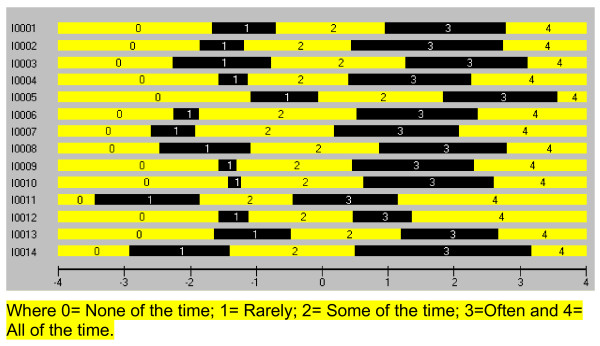
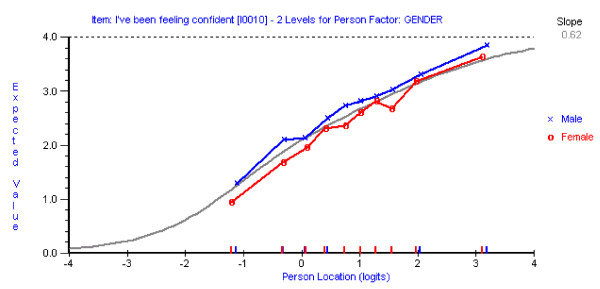
BACKGROUND: The Warwick-Edinburgh Mental Well-Being Scale (WEMWBS) was developed to meet demand for instruments to measure mental well-being. It comprises 14 positively phrased Likert-style items and fulfils classic criteria for scale development. We report here the internal construct validity of WEMWBS from the perspective of the Rasch measurement model. METHODS: The model was applied to data collected from 779 respondents in Wave 12 (Autumn 2006) of the Scottish Health Education Population Survey. Respondents were aged 16-74 (average 41.9) yrs. RESULTS: Initial fit to model expectations was poor. The items 'I've been feeling good about myself', 'I've been interested in new things' and 'I've been feeling cheerful' all showed significant misfit to model expectations, and were deleted. This led to a marginal improvement in fit to the model. After further analysis, more items were deleted and a strict unidimensional seven item scale (the Short Warwick Edinburgh Mental Well-Being Scale (SWEMWBS)) was resolved. Many items deleted because of misfit with model expectations showed considerable bias for gender. Two retained items also demonstrated bias for gender but, at the scale level, cancelled out. One further retained item 'I've been feeling optimistic about the future' showed bias for age. The correlation between the 14 item and 7 item versions was 0.954.Given fit to the Rasch model, and strict unidimensionality, SWEMWBS provides an interval scale estimate of mental well-being. CONCLUSION: A short 7 item version of WEMWBS was found to satisfy the strict unidimensionality expectations of the Rasch model, and be largely free of bias. This scale, SWEMWBS, provides a raw score-interval scale transformation for use in parametric procedures. In terms of face validity, SWEMWBS presents a more restricted view of mental well-being than the 14 item WEMWBS, with most items representing aspects of psychological and eudemonic well-being, and few covering hedonic well-being or affect. However, robust measurement properties combined with brevity make SWEMWBS preferable to WEMWBS at present for monitoring mental well-being in populations. Where face validity is an issue there remain arguments for continuing to collect data on the full 14 item WEMWBS.
Overview
The claims and statistics of this paper haven’t been checked yet.
Free: it reads the open-access text and checks the first 5 claims that cite a source we can check. Create a free account to check every claim.
Integrity signals
Registry
Cites
Statistics
Figures
Verification
Claims the paper makes
The claims and statistics of this paper haven’t been checked yet.
Free: it reads the open-access text and checks the first 5 claims that cite a source we can check. Create a free account to check every claim.
Claims other papers make about this one
Each is checked against this paper’s own text: does it say what the citing paper says it does?
The source backs part of the claim, not all of it — or backs it for a different population, condition or comparison.
In the citing paper
“The WEMWBS with both its 14-and short 7-item versions, measures holistic aspects of well-being. The dimensions include eudemonic aspects, hedonic aspects, psychological functioning, and subjective well-being [32,33].”
From A Virtual Reality-Assisted Cognitive Behavioral Therapy for and With Inuit in Québec: Protocol for a Proof-of-Concept Randomized Controlled Trial (2023) · cites this paper as [33]
Experimental — accuracy not yet measuredThe source backs part of the claim, not all of it — or backs it for a different population, condition or comparison.
In the citing paper
“to high internal consistency (r=.87) and the short version has acceptable test-retest reliability (r=.66, 95% CI 0.59-0.72) [44,45].”
From Feasibility and effectiveness of a web-based positive psychology program for youth mental health: Randomized controlled trial (2014) · cites this paper as [44]
Experimental — accuracy not yet measuredThe source backs part of the claim, not all of it — or backs it for a different population, condition or comparison.
In the citing paper
“Psychometric data of the measure on the original WEMWBS for adolescents has indicated satisfactory to high internal consistency (r=.87) and the short version has acceptable test-retest reliability (r=.66, 95% CI 0.59-0.72) [44,45].”
From Feasibility and effectiveness of a web-based positive psychology program for youth mental health: Randomized controlled trial (2014) · cites this paper as [44]
Experimental — accuracy not yet measuredThe source backs part of the claim, not all of it — or backs it for a different population, condition or comparison.
In the citing paper
“Well-being was measured using the 7-item Short Warwick–Edinburgh Mental Well-Being Scale [SWEMWBS] (score range 7 to 35) [29]. Total scores were transformed (as per set out in [29]) to facilitate the use of parametric statistical analyses. Higher scores represent greater well-being (Cronbach’s α = 0.78).”
From The effect of a therapeutic smartphone application on suicidal ideation in young adults: Findings from a randomized controlled trial in Australia. (2022) · cites this paper as [29]
Experimental — accuracy not yet measuredThe cited source says what the claim attributes to it.
In the citing paper
“The SWEMWBS has high internal consistency (Cronbach α=.84 in the general population).”
From Feasibility and Preliminary Efficacy of Digital Interventions for Depressive Symptoms in Working Adults: Multiarm Randomized Controlled Trial (2023) · cites this paper as [51]
6 more claims about this paper
Create a free account to see every claim other papers make about this one.
Self-check
Percentages, sums and reported differences re-computed from the paper’s own numbers.
The self-check needs the paper’s full text.
Citations
Cites
Coefficient Alpha and the Internal Structure of Tests
Cronbach, L. J. (1951) · Psychometrika · doi:10.1007/bf02310555 · Cited by 43,931
On Happiness and Human Potentials: A Review of Research on Hedonic and Eudaimonic Well-Being
Ryan, R. M., & Deci, E. L. (2001) · Annual Review of Psychology · doi:10.1146/annurev.psych.52.1.141 · Cited by 11,567
Probabilistic Models for Some Intelligence and Attainment Tests
(1961) · Information and Control · doi:10.1016/s0019-9958(61)80061-2 · Cited by 6,939
SPSS Survival Manual: A Step by Step Guide to Data Analysis using IBM SPSS
Pallant, J. (2020) · Routledge eBooks · doi:10.4324/9781003117407 · Cited by 5,201
The Warwick-Edinburgh Mental Well-being Scale (WEMWBS): development and UK validation
Tennant, R., Hiller, L., Fishwick, R., Platt, S., Joseph, S., Weich, S., Parkinson, J., Secker, J., & Stewart-Brown, S. (2007) · Health and Quality of Life Outcomes · doi:10.1186/1477-7525-5-63 · Cited by 5,031
Self-citationA Rasch model for partial credit scoring
Masters, G. N. (1982) · Psychometrika · doi:10.1007/bf02296272 · Cited by 3,782
Multiple significance tests: the Bonferroni method
Bland, J. M., & Altman, D. G. (1995) · BMJ · doi:10.1136/bmj.310.6973.170 · Cited by 3,341
A Rating Formulation for Ordered Response Categories
Andrich, D. (1978) · Psychometrika · doi:10.1007/bf02293814 · Cited by 2,970
Best Test Design. Rasch Measurement.
Wright, B. D., & Stone, M. H. (1979) · Medical Entomology and Zoology · Cited by 2,125
Differential Item Functioning.
Gudgeon, A. C., Holland, P. W., & Wainer, H. (1994) · The Statistician · doi:10.2307/2348590 · Cited by 2,091
Research works printed but not linked: 8
- World Health Organisation: Strengthening mental health pro- motion. Geneva; World Health Organisation; 2001.
- Nunally JC: Psychometric theory. New York: McGraw-Hill; 1978.
- Pallant JF: SPSS Survival Manual. Second edition. Maidenhead: Open University Press; 2005.
- Guttman LA: The basis for Scalogram analysis. In Studies in social psychology in World War II: Measurement and Prediction Volume 4. Edited by: Stouffer SA, Guttman LA, Suchman FA, Lazarsfeld PF, Star SA, Clausen JA. Princeton: Princeton University Press; 1950:60-90.
- Wright BD, Stone G: Best test design. Chicago: MESA Press; 1979.
- Tennant A, Pallant JF: DIF matters: A practical approach to test if Differential Item Functioning (DIF) makes a difference. Rasch Measurement Transactions 2007, 20:1082-1084.
- Tennant A, Pallant JF: Multidimensionality matters. Rasch Meas- urement Transactions 2006, 20:1048-1051.
- Andrich D, Lyne A, Sheridon B, Luo G: RUMM 2020. Perth: RUMM Laboratory; 2003.
Cited by
Items 101–200 of 1,001
Older People Going Online: Its Value and Before-After Evaluation of Volunteer Support
Jones, R. B., Ashurst, E. J., Atkey, J., & Duffy, B. (2015) · Journal of Medical Internet Research · doi:10.2196/jmir.3943 · Cited by 93
Thompson, C. W., Aspinall, P., & Roe, J. J. (2014) · Procedia - Social and Behavioral Sciences · doi:10.1016/j.sbspro.2014.10.036 · Cited by 100
Roe, J. J., Aspinall, P., & Thompson, C. W. (2017) · Frontiers in Psychology · doi:10.3389/fpsyg.2017.01760 · Cited by 101
Vaingankar, J., Subramaniam, M., Chong, S. A., Abdin, E., Orlando Edelen, M., Picco, L., Lim, Y. W., Phua, M. Y., Chua, B. Y., Tee, J. Y., et al. (2011) · Health and Quality of Life Outcomes · doi:10.1186/1477-7525-9-92 · Cited by 89
Olds, T., Burton, N. W., Sprod, J. A., Maher, C. A., Ferrar, K., Brown, W. J., van Uffelen, J. G. Z., & Dumuid, D. (2018) · PLoS ONE · doi:10.1371/journal.pone.0199605 · Cited by 100
Strauss, C., Gu, J., Montero-Marin, J., Whittington, A., Chapman, C., & Kuyken, W. (2021) · International Journal of Clinical and Health Psychology · doi:10.1016/j.ijchp.2021.100227 · Cited by 88
Living alone and positive mental health: a systematic review
Tamminen, N., Kettunen, T., Martelin, T. P., Reinikainen, J., & Solin, P. (2019) · Systematic Reviews · doi:10.1186/s13643-019-1057-x · Cited by 98
Lyons, A., Pitts, M. K., & Grierson, J. (2013) · Journal of Aging and Health · doi:10.1177/0898264313495562 · Cited by 98
Wut, T. M., Lee, S. W., & Xu, J. B. (2022) · International Journal of Environmental Research and Public Health · doi:10.3390/ijerph191811799 · Cited by 111
Melendez-Torres, G. J., Hewitt, G., Hallingberg, B., Anthony, R., Collishaw, S., Hall, J., Murphy, S., & Moore, G. (2019) · Health and Quality of Life Outcomes · doi:10.1186/s12955-019-1204-z · Cited by 75
Silva, R. A., Rogers, K. R., & Buckley, T. J. (2018) · Environmental Science & Technology · doi:10.1021/acs.est.8b01781 · Cited by 90
Keech, J. J., Cole, K., Hagger, M. S., & Hamilton, K. (2020) · Psychology and Health · doi:10.1080/08870446.2020.1743841 · Cited by 93
Williams, A. J., Maguire, K., Morrissey, K., Taylor, T., & Wyatt, K. M. (2020) · BMC Public Health · doi:10.1186/s12889-020-09078-6 · Cited by 83
Stewart-Brown, S. L. (2012) · Springer eBooks · doi:10.1007/978-94-007-5195-8_7 · Cited by 83
Self-citationBöhnke, J. R., & Croudace, T. J. (2016) · British Journal of Psychiatry · doi:10.1192/bjp.bp.115.165530 · Cited by 78
Cleary, A., Roiko, A., Burton, N. W., Fielding, K. S., Murray, Z., & Turrell, G. (2019) · Health & Place · doi:10.1016/j.healthplace.2019.102201 · Cited by 79
Potts, C., Lindström, F., Bond, R., Mulvenna, M., Booth, F., Ennis, E., Parding, K., Kostenius, C., Broderick, T., Boyd, K., et al. (2023) · Journal of Medical Internet Research · doi:10.2196/43051 · Cited by 63
Measuring the civic duty to vote: A proposal
Blais, A., & Galais, C. (2015) · Electoral Studies · doi:10.1016/j.electstud.2015.11.003 · Cited by 92
Benson, T., Sladen, J., Liles, A., & Potts, H. W. W. (2019) · BMJ Open Quality · doi:10.1136/bmjoq-2018-000394 · Cited by 77
Harris, S. L., & Tao, H. (2021) · Journal of Religion and Health · doi:10.1007/s10943-021-01203-y · Cited by 85
Bartram, D. J., Sinclair, J. M., & Baldwin, D. S. (2013) · Quality of Life Research · doi:10.1007/s11136-012-0144-4 · Cited by 76
Morgan, K., Meléndez‐Torres, G. J., Bond, A. R. F., Hawkins, J. L., Hewitt, G., Murphy, S., & Moore, G. F. (2019) · International Journal of Environmental Research and Public Health · doi:10.3390/ijerph16071107 · Cited by 84
Social support, bullying, school-related stress and mental health in adolescence
Ringdal, R., Espnes, G. A., Eilertsen, M. B., Bjørnsen, H. N., & Moksnes, U. K. (2020) · Nordic Psychology · doi:10.1080/19012276.2019.1710240 · Cited by 85
Ford, K., Bellis, M. A., Hughes, K. E., Barton, E. R., & Newbury, A. (2020) · Health & Justice · doi:10.1186/s40352-020-00115-5 · Cited by 86
Appelqvist‐Schmidlechner, K., Vaara, J. P., HÄKKINEN, A. H., Vasankari, T. J., Mäkinen, J., Mäntysaari, M., & Kyröläinen, H. (2017) · American Journal of Health Promotion · doi:10.1177/0890117117746336 · Cited by 75
Kalok, A. H. M., Sharip, S., Hafizz, A. M. H. A., Zainuddin, Z. M., & Shafiee, M. N. (2020) · International Journal of Environmental Research and Public Health · doi:10.3390/ijerph17228522 · Cited by 74
Bass, M., Dawkin, M., Muncer, S., Vigurs, S., & Bostock, J. (2016) · Journal of Mental Health · doi:10.3109/09638237.2015.1124401 · Cited by 77
Curl, A., & Mason, P. (2018) · Transportation Research Part A Policy and Practice · doi:10.1016/j.tra.2018.11.008 · Cited by 85
Crone, D., O'Connell, E. E., Tyson, P., Clark‐Stone, F., Opher, S., & James, D. V. B. (2012) · International Journal of Mental Health Nursing · doi:10.1111/j.1447-0349.2012.00862.x · Cited by 73
The importance of manager support for the mental health and well-being of ambulance personnel
Petrie, K., Gayed, A., Bryan, B. T., Deady, M., Madan, I., Savic, A., Wooldridge, Z., Counson, I., Calvo, R. A., Glozier, N., et al. (2018) · PLOS ONE · doi:10.1371/journal.pone.0197802 · Cited by 72
Ng, S., Lo, A. W. Y., Leung, T. K. S., Chan, F. S. M., Wong, A., Lam, R. W. T., & Tsang, D. K. Y. (2014) · PubMed · Cited by 72
Torok, M., Han, J., McGillivray, L., Wong, Q., Werner-Seidler, A., O’Dea, B., Calear, A., & Christensen, H. (2022) · PLoS Medicine · doi:10.1371/journal.pmed.1003978 · Cited by 71
Medvedev, O. N., & Krägeloh, C. U. (2022) · Springer eBooks · doi:10.1007/978-3-030-77644-2_4-1 · Cited by 70
Using triangulation to assess a suite of tools to measure community severance
Mindell, J. S., Anciães, P. R., Dhanani, A., Stockton, J. C., Jones, P., Haklay, M., Groce, N. E., Scholes, S., & Vaughan, L. (2017) · Journal of Transport Geography · doi:10.1016/j.jtrangeo.2017.02.013 · Cited by 69
Kotera, Y., & Sheffield, D. (2020) · SN Comprehensive Clinical Medicine · doi:10.1007/s42399-020-00309-w · Cited by 68
Mental Health and Wellbeing in Young People in the UK during Lockdown (COVID-19)
Owens, M., Townsend, E., Hall, E., Bhatia, T., Fitzgibbon, R., & Miller-Lakin, F. (2022) · International Journal of Environmental Research and Public Health · doi:10.3390/ijerph19031132 · Cited by 75
A web-based adolescent positive psychology program in schools: randomized controlled trial
Burckhardt, R., Manicavasagar, V., Batterham, P. J., Miller, L. M., Talbot, E., & Lum, A. (2015) · Journal of Medical Internet Research · doi:10.2196/jmir.4329 · Cited by 67
Rice, S., O'Bree, B., Wilson, M., McEnery, C., Lim, M. H., Hamilton, M., Gleeson, J., Bendall, S., D'Alfonso, S., Russon, P., et al. (2020) · Internet Interventions · doi:10.1016/j.invent.2020.100323 · Cited by 67
Community-based exercise programs for cancer survivors: a scoping review of practice-based evidence
Covington, K. R., Hidde, M. C., Pergolotti, M., & Leach, H. J. (2019) · Supportive Care in Cancer · doi:10.1007/s00520-019-05022-6 · Cited by 73
Defeyter, M. A., Stretesky, P. B., Long, M. A., Furey, S., Reynolds, C. J., Porteous, D., Dodd, A., Mann, E., Kemp, A., Fox, J., et al. (2021) · Frontiers in Public Health · doi:10.3389/fpubh.2021.646916 · Cited by 75
Rippon, D., Shepherd, J., Wakefield, S., Lee, A., & Pollet, T. V. (2022) · Journal of Mental Health · doi:10.1080/09638237.2022.2069695 · Cited by 74
Coventry, P. A., Neale, C., Dyke, A., Pateman, R. M., & Cinderby, S. (2019) · International Journal of Environmental Research and Public Health · doi:10.3390/ijerph16152712 · Cited by 75
Marmara, J., Zarate, D., Vassallo, J. S., Patten, R. K., & Stavropoulos, V. (2022) · BMC Psychology · doi:10.1186/s40359-022-00720-z · Cited by 73
Liverpool, S., Moinuddin, M., Aithal, S., Owen, M. B., Bracegirdle, K., Caravotta, M., Walker, R., Murphy, C., & Karkou, V. (2023) · PLoS ONE · doi:10.1371/journal.pone.0280689 · Cited by 72
Personal well-being networks, social capital and severe mental illness: exploratory study
Sweet, D., Byng, R., Webber, M., Enki, D. G., Porter, I. H., LARSEN, J. A., Huxley, P. J., & Pinfold, V. (2018) · The British Journal of Psychiatry · doi:10.1192/bjp.bp.117.203950 · Cited by 73
Cuca, Y. P., Shumway, M., Machtinger, E. L., Davis, K., Khanna, N., Cocohoba, J. M., & Dawson-Rose, C. S. (2019) · Women s Health Issues · doi:10.1016/j.whi.2019.06.001 · Cited by 69
Clarke, J., & Draper, S. (2020) · Internet Interventions · doi:10.1016/j.invent.2019.100293 · Cited by 65
Bartram, D. J., Yadegarfar, G., Sinclair, J., & Baldwin, D. S. (2010) · The Veterinary Journal · doi:10.1016/j.tvjl.2010.02.010 · Cited by 70
Further evidence that singing fosters mental health and wellbeing: the West Kent and Medway project
Clift, S. M., Manship, S., & Stephens, L. (2017) · Mental Health and Social Inclusion · doi:10.1108/mhsi-11-2016-0034 · Cited by 68
English Translation and Validation of the Ikigai-9 in a UK Sample
Fido, D., Kotera, Y., & Asano, K. (2019) · International Journal of Mental Health and Addiction · doi:10.1007/s11469-019-00150-w · Cited by 72
Problematic Smartphone Use and Mental Health in Chinese Adults: A Population-Based Study
Guo, N., Luk, T. T., Ho, S. Y., Lee, J. J., Shen, C., Oliffe, J. L., Chan, S. S. C., Lam, T. H., & Wang, M. P. (2020) · International Journal of Environmental Research and Public Health · doi:10.3390/ijerph17030844 · Cited by 72
Alanko, K., & Lund, H. (2019) · Young · doi:10.1177/1103308819850039 · Cited by 71
Lyons, A., Alba, B., Waling, A., Minichiello, V., Hughes, M., Barrett, C., Fredriksen‐Goldsen, K. I., Edmonds, S., & Blanchard, M. (2019) · Ageing and Society · doi:10.1017/s0144686x19001533 · Cited by 64
Crisp, D. A., Rickwood, D., Martin, B., & Byrom, N. (2020) · Australian Journal of Education · doi:10.1177/0004944120910498 · Cited by 66
Þórisdóttir, I. E., Agustsson, G., Oskarsdottir, S. Y., Kristjánsson, Á. L., Ásgeirsdóttir, B. B., Sigfúsdóttir, I. D., Valdimarsdottir, H. B., Allegrante, J. P., & Halldorsdottir, T. (2023) · The Lancet Child & Adolescent Health · doi:10.1016/s2352-4642(23)00022-6 · Cited by 68
Psychiatric risks for worsened mental health after psychedelic use
Marrocu, A., Kettner, H., Weiss, B., Zeifman, R. J., Erritzoe, D., & Carhart-Harris, R. L. (2024) · Journal of Psychopharmacology · doi:10.1177/02698811241232548 · Cited by 60
Sun, Y., Luk, T. T., Wang, M. P., Shen, C., Ho, S. Y., Viswanath, K., Chan, S. S. C., & Lam, T. H. (2019) · Quality of Life Research · doi:10.1007/s11136-019-02218-5 · Cited by 63
Kraiss, J. T., Kohlhoff, M., & ten Klooster, P. M. (2022) · Current Psychology · doi:10.1007/s12144-022-02942-1 · Cited by 66
Gillen, P. A., Neill, R. D., Mallett, J., Moriarty, J., Manthorpe, J., Schroder, H. S., Currie, D., McGrory, S., Nicholl, P., Ravalier, J. M., et al. (2022) · PLoS ONE · doi:10.1371/journal.pone.0274036 · Cited by 66
Thomson, L. J. M., & Chatterjee, H. J. (2014) · Journal of Applied Arts and Health · doi:10.1386/jaah.5.1.29_1 · Cited by 60
Dong, A., Chen, X., Zhu, L., Shi, L., Cai, Y., Shi, B., Shao, L., & Guo, W. (2016) · Journal of Psychiatric and Mental Health Nursing · doi:10.1111/jpm.12344 · Cited by 62
Ettenberger, M., & Ardila, Y. M. B. (2018) · The Arts in Psychotherapy · doi:10.1016/j.aip.2018.03.001 · Cited by 66
Horticultural therapy program for people with mental illness: A mixed-method evaluation
Siu, A. M. H., Kam, M., & Mok, I. (2020) · International Journal of Environmental Research and Public Health · doi:10.3390/ijerph17030711 · Cited by 59
Group singing in bereavement: effects on mental health, self-efficacy, self-esteem and well-being
Fancourt, D. E., Finn, S., Warran, K., & Wiseman, T. (2019) · BMJ Supportive & Palliative Care · doi:10.1136/bmjspcare-2018-001642 · Cited by 68
Cogan, N. A., Kennedy, C., Beck, Z., McInnes, L., MacIntyre, G., Morton, L., Tanner, G., & Kołacz, J. (2022) · Health & Social Care in the Community · doi:10.1111/hsc.13992 · Cited by 63
Fang, Z. (2024) · Sustainability · doi:10.3390/su162310723 · Cited by 66
Moore, G. F., Anthony, R., Hawkins, J. L., Godwin, J. V., Murphy, S., Hewitt, G., & Meléndez‐Torres, G. J. (2020) · British Educational Research Journal · doi:10.1002/berj.3616 · Cited by 58
Appelqvist‐Schmidlechner, K., Vaara, J. P., Vasankari, T. J., HÄKKINEN, A. H., Mäntysaari, M., & Kyröläinen, H. (2020) · BMC Public Health · doi:10.1186/s12889-020-09175-6 · Cited by 64
Huang, D., Tian, M., & Yuan, L. (2023) · The Science of The Total Environment · doi:10.1016/j.scitotenv.2023.161819 · Cited by 58
Development and validation of PozQoL: a scale to assess quality of life of PLHIV
Brown, G., Mikołajczak, G., Lyons, A., Power, J., Drummond, F., Cogle, A., Allan, B., Cooper, C., & O’Connor, S. (2018) · BMC Public Health · doi:10.1186/s12889-018-5433-6 · Cited by 59
Milicev, J., McCann, M., Simpson, S. A., Biello, S. M., & Gardani, M. (2023) · Current Psychology · doi:10.1007/s12144-021-02309-y · Cited by 56
Lyons, A., Alba, B., Waling, A., Minichiello, V., Hughes, M., Barrett, C., Fredriksen‐Goldsen, K. I., Savage, T., & Edmonds, S. (2021) · Aging & Mental Health · doi:10.1080/13607863.2021.1978927 · Cited by 56
Social bonds are related to health behaviors and positive well-being globally
Tunçgenç, B., van Mulukom, V., & Newson, M. (2023) · Science Advances · doi:10.1126/sciadv.add3715 · Cited by 60
Chiumento, A., Mukherjee, I., Chandna, J., Dutton, C., Rahman, A., & Bristow, K. (2018) · BMC Public Health · doi:10.1186/s12889-018-5661-9 · Cited by 65
Santos, J. J. A. D., Costa, T. A. D., Guilherme, J. H., Silva, W. C. D., Abentroth, L. R. L., Krebs, J. A., & Sotoriva, P. (2015) · Revista da Associação Médica Brasileira · doi:10.1590/1806-9282.61.03.209 · Cited by 55
Development and psychometric validation of a novel scale for measuring ‘psychedelic preparedness’
McAlpine, R. G., Blackburne, G., & Kamboj, S. K. (2024) · Scientific Reports · doi:10.1038/s41598-024-53829-z · Cited by 59
Siblings of Persons with Disabilities: A Systematic Integrative Review of the Empirical Literature
Levante, A., Martis, C., Prete, C. M. D., Martino, P., Primiceri, P., & Lecciso, F. (2024) · Clinical Child and Family Psychology Review · doi:10.1007/s10567-024-00502-6 · Cited by 63
Understanding Society: early findings from the first wave of the UK's household longitudinal study
McFall, S. L., & Garrington, C. (2011) · Open Access at Essex (University of Essex) · Cited by 92
Interventions with potential to improve the mental health and wellbeing of UK veterinary surgeons
Bartram, D. J., Sinclair, J., & Baldwin, D. S. (2010) · Veterinary Record · doi:10.1136/vr.b4796 · Cited by 65
Nandi, M., Sarkar, S., Mondal, R. K., Ghosal, M., & Hazra, A. (2012) · Indian Journal of Medical Sciences · doi:10.4103/0019-5359.110850 · Cited by 68
Development of a Short-Form Measure of Science and Technology Self-efficacy Using Rasch Analysis
Lamb, R. L., Vallett, D., & Annetta, L. A. (2014) · Journal of Science Education and Technology · doi:10.1007/s10956-014-9491-y · Cited by 62
Digital Intervention for Problematic Smartphone Use
Kent, S. C., Masterson, C., Ali, R., Parsons, C. E., & Bewick, B. M. (2021) · International Journal of Environmental Research and Public Health · doi:10.3390/ijerph182413165 · Cited by 59
Collis, A., & Eggers, F. (2022) · PLoS ONE · doi:10.1371/journal.pone.0272416 · Cited by 70
Irvine, K. N., Fisher, J. C., Bentley, P. R., Nawrath, M., Dallimer, M., Austen, G. E., Fish, R. D., & Davies, Z. G. (2022) · Journal of Environmental Psychology · doi:10.1016/j.jenvp.2022.101921 · Cited by 55
Patient Reported Outcome Measure of Spiritual Care as Delivered by Chaplains
Snowden, A., & Telfer, I. (2017) · Journal of Health Care Chaplaincy · doi:10.1080/08854726.2017.1279935 · Cited by 54
Strauss, C., Lea, L., Hayward, M., Forrester, E., Leeuwerik, T., Jones, A.-M., & Rosten, C. (2018) · Journal of Anxiety Disorders · doi:10.1016/j.janxdis.2018.04.007 · Cited by 48
Guo, N., Wang, M. P., Luk, T. T., Ho, S. Y., Fong, D. Y. T., Chan, S. S.-C., & Lam, T. H. (2019) · Journal of Behavioral Addictions · doi:10.1556/2006.8.2019.39 · Cited by 51
Houghton, S., Hattie, J., Carroll, A., Wood, L., & Baffour, B. (2016) · Journal of Psychologists and Counsellors in Schools · doi:10.1017/jgc.2016.1 · Cited by 53
Sense of Coherence in Association with Stress Experience and Health in Adolescents
Moksnes, U. K., & Espnes, G. A. (2020) · International Journal of Environmental Research and Public Health · doi:10.3390/ijerph17093003 · Cited by 56
Dimmock, J. A., Krause, A. E., Rebar, A. L., & Jackson, B. (2021) · Psychology and Health · doi:10.1080/08870446.2021.1921178 · Cited by 58
Mental health during the COVID-19 pandemic in two longitudinal UK population cohorts
Kwong, A. S. F., Pearson, R. M., Adams, M. J., Northstone, K., Tilling, K., Smith, D., Fawns-Ritchie, C., Bould, H., Warne, N., Zammit, S., et al. (2020) · doi:10.1101/2020.06.16.20133116 · Cited by 53
Bullying, social support and adolescents’ mental health: Results from a follow-up study
Ringdal, R., Bjørnsen, H. N., Espnes, G. A., Eilertsen, M. B., & Moksnes, U. K. (2020) · Scandinavian Journal of Public Health · doi:10.1177/1403494820921666 · Cited by 64
Rogers, K., Dodds, C., Campbell, M., & Young, A. M. (2018) · Health and Quality of Life Outcomes · doi:10.1186/s12955-018-0976-x · Cited by 58
Venturo‐Conerly, K. E., Osborn, T. L., Wasil, A. R., Le, H., Corrigan, E., Wasanga, C., & Weisz, J. R. (2021) · Trials · doi:10.1186/s13063-021-05736-1 · Cited by 51
Vivat, B., Young, T., Winstanley, J. B., Arrarás, J. I., Black, K., Boyle, F. M., Brédart, A., Costantini, A., Guo, J., Irarrázaval, M. E., et al. (2017) · European Journal of Cancer Care · doi:10.1111/ecc.12697 · Cited by 56
Anciães, P. R., Stockton, J. C., Ortegón-Sánchez, A., & Scholes, S. (2019) · Travel Behaviour and Society · doi:10.1016/j.tbs.2019.01.006 · Cited by 51
Peasgood, T., Bhardwaj, A., Brazier, J. E., Biggs, K., Coghill, D., Daley, D., Cooper, C. L., Silva, C. D., Harpin, V., Hodgkins, P., et al. (2020) · Journal of Attention Disorders · doi:10.1177/1087054720925899 · Cited by 56
Persson, M., Sandy, J. R., Waylen, A. E., Wills, A. K., Al-Ghatam, R., Ireland, A. J., Hall, A. J., Hollingworth, W., Jones, T., Peters, T. J., et al. (2015) · Orthodontics and Craniofacial Research · doi:10.1111/ocr.12104 · Cited by 50
Wu, J., Long, D., Hafez, N., Maloney, J., Lim, Y., & Samji, H. (2023) · International Journal of Mental Health Nursing · doi:10.1111/inm.13201 · Cited by 49
Neuroception of psychological safety scale (NPSS): validation with a UK based adult community sample
Cogan, N. A., Morton, L., Campbell, J. R., Fitzpatrick, L. I., Lamb, D., Kock, J. H. D., Ali, A., Young, D., & Porges, S. W. (2025) · European Journal of Psychotraumatology · doi:10.1080/20008066.2025.2490329 · Cited by 52
Metadata
- Authors
- Stewart-Brown, S., Tennant, A., Tennant, R., Platt, S., Parkinson, J., & Weich, S.
- Affiliations
- University of Warwick (GB)
- Leeds General Infirmary (GB)
- Coventry (United Kingdom) (GB)
- University of Edinburgh (GB)
- National Health Service Scotland (GB)
- Corresponding author
- Stewart-Brown, Sarah
- Venue
- Health and Quality of Life Outcomes
- Published
- 2009-02-19
- Volume
- 7
- Issue
- 1
- Pages
- 15-15
- ISSN
- 1477-7525 (ISSN-L)
- PMC
- PMC2669062
- OpenAlex
- W2138241145
- Cited by
- 1,251
- References
- 31
- Citations by year
- 2026: 129 · 2025: 151 · 2024: 159 · 2023: 143 · 2022: 158 · 2021: 128 · 2020: 89 · 2019: 67 · 2018: 37 · 2017: 48 · 2016: 35 · 2015: 28 · 2014: 24 · 2013: 18 · 2012: 20
- FWCI
- 15.81
- Type
- journal article
- Language
- en
- Open access
- gold
- doi.org
- Licence
- cc-by
- creativecommons.org/licenses/by/2.0 (tdm)
- Locations
- Health and Quality of Life Outcomes (publishedVersion, cc-by)
- PubMed Central (publishedVersion, cc-by)
- PubMed (publishedVersion)
- White Rose Research Online (University of Leeds, The University of Sheffield, University of York) (acceptedVersion)
- Warwick Research Archive Portal (University of Warwick) (acceptedVersion)
- DOAJ (DOAJ: Directory of Open Access Journals) (submittedVersion, cc-by-sa)
- Open Scholarship Institutional Repository (Washington University in St. Louis) (submittedVersion, cc-by)
- Edinburgh Research Explorer (University of Edinburgh) (submittedVersion, cc-by)
- Funders
- NHS Health Scotland
- Topics
- Social Sciences › Decision Sciences › Management Science and Operations Research › Psychometric Methodologies and Testing
- Social Sciences › Psychology › Social Psychology › Psychological Well-being and Life Satisfaction
- Social Sciences › Psychology › Experimental and Cognitive Psychology › Mental Health Research Topics
- Keywords
- Warwick-Edinburgh Mental Well-being Scale, psychological well-being, Rasch model, unidimensionality, item misfit, gender bias, age bias, scale shortening, eudaimonic well-being
- MeSH terms
- Adolescent, Adult, Aged, Attitude to Health, Female, Health Education, Health Surveys, Humans, Male, Mental Health, Middle Aged, Psychometrics, Quality of Life, Surveys and Questionnaires, Scotland, Sensitivity and Specificity, Sex Factors, Reproducibility of Results, Young Adult
About these checks
Registry, retraction, Cites and statistics results are computed, not judged, with one exception: a printed reference that no index lists is read once by a model before it counts as a citation error. Claims are extracted by a model and kept only when their quote appears verbatim in the text; each cited source is then checked, with a model’s help, for whether it says what the claim relies on. Those verdicts can be wrong — read the claim’s quote and the cited source before relying on one.
Statistics and arithmetic are recomputed, not judged.
Confidence bands are shown only for fields calibrated on our annotated test set. None is calibrated yet, so no band is shown.
What counts as a claim ›How we measure confidence ›How we check this ›
Are you an author, or do you see a problem with this page? Request a review
Data sources
Bibliographic data: Semantic Scholar, OpenAlex, Crossref.
Contains information from the Semantic Scholar Academic Graph Datasets, made available under the ODC Attribution License (ODC-BY 1.0).
Semantic Scholar’s data is described in: Kinney, R., et al. (2023). The Semantic Scholar Open Data Platform. arXiv:2301.10140.
