

Internal construct validity of the Warwick-Edinburgh Mental Well-being Scale (WEMWBS): a Rasch analysis using data from the Scottish Health Education Population Survey
Open accessThe DOI matches its Crossref record; 31 of the 31 references it cites were found in a registry or an index.
Abstract
BACKGROUND: The Warwick-Edinburgh Mental Well-Being Scale (WEMWBS) was developed to meet demand for instruments to measure mental well-being. It comprises 14 positively phrased Likert-style items and fulfils classic criteria for scale development. We report here the internal construct validity of WEMWBS from the perspective of the Rasch measurement model. METHODS: The model was applied to data collected from 779 respondents in Wave 12 (Autumn 2006) of the Scottish Health Education Population Survey. Respondents were aged 16-74 (average 41.9) yrs. RESULTS: Initial fit to model expectations was poor. The items 'I've been feeling good about myself', 'I've been interested in new things' and 'I've been feeling cheerful' all showed significant misfit to model expectations, and were deleted. This led to a marginal improvement in fit to the model. After further analysis, more items were deleted and a strict unidimensional seven item scale (the Short Warwick Edinburgh Mental Well-Being Scale (SWEMWBS)) was resolved. Many items deleted because of misfit with model expectations showed considerable bias for gender. Two retained items also demonstrated bias for gender but, at the scale level, cancelled out. One further retained item 'I've been feeling optimistic about the future' showed bias for age. The correlation between the 14 item and 7 item versions was 0.954.Given fit to the Rasch model, and strict unidimensionality, SWEMWBS provides an interval scale estimate of mental well-being. CONCLUSION: A short 7 item version of WEMWBS was found to satisfy the strict unidimensionality expectations of the Rasch model, and be largely free of bias. This scale, SWEMWBS, provides a raw score-interval scale transformation for use in parametric procedures. In terms of face validity, SWEMWBS presents a more restricted view of mental well-being than the 14 item WEMWBS, with most items representing aspects of psychological and eudemonic well-being, and few covering hedonic well-being or affect. However, robust measurement properties combined with brevity make SWEMWBS preferable to WEMWBS at present for monitoring mental well-being in populations. Where face validity is an issue there remain arguments for continuing to collect data on the full 14 item WEMWBS.
Overview
The claims and statistics of this paper haven’t been checked yet.
Free: it reads the open-access text and checks the first 5 claims that cite a source we can check. Create a free account to check every claim.
Integrity signals
Registry
Cites
Statistics
Figures
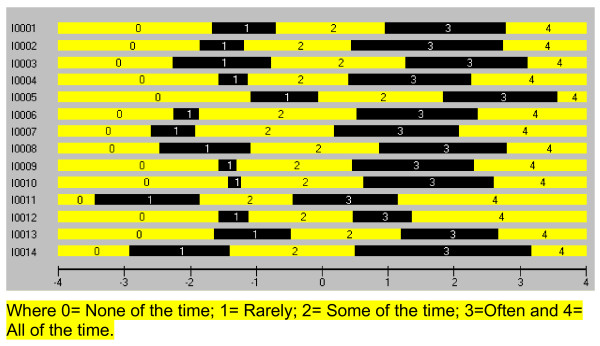
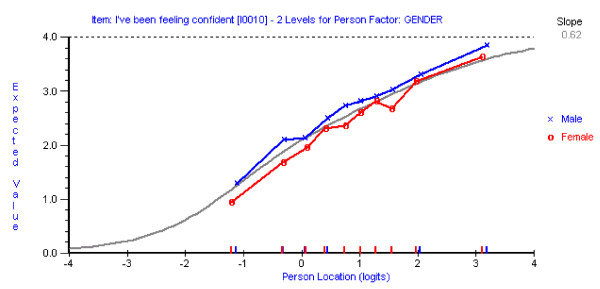
Verification
Claims the paper makes
The claims and statistics of this paper haven’t been checked yet.
Free: it reads the open-access text and checks the first 5 claims that cite a source we can check. Create a free account to check every claim.
Claims other papers make about this one
Each is checked against this paper’s own text: does it say what the citing paper says it does?
The source backs part of the claim, not all of it — or backs it for a different population, condition or comparison.
In the citing paper
“The WEMWBS with both its 14-and short 7-item versions, measures holistic aspects of well-being. The dimensions include eudemonic aspects, hedonic aspects, psychological functioning, and subjective well-being [32,33].”
From A Virtual Reality-Assisted Cognitive Behavioral Therapy for and With Inuit in Québec: Protocol for a Proof-of-Concept Randomized Controlled Trial (2023) · cites this paper as [33]
Experimental — accuracy not yet measuredThe source backs part of the claim, not all of it — or backs it for a different population, condition or comparison.
In the citing paper
“to high internal consistency (r=.87) and the short version has acceptable test-retest reliability (r=.66, 95% CI 0.59-0.72) [44,45].”
From Feasibility and effectiveness of a web-based positive psychology program for youth mental health: Randomized controlled trial (2014) · cites this paper as [44]
Experimental — accuracy not yet measuredThe source backs part of the claim, not all of it — or backs it for a different population, condition or comparison.
In the citing paper
“Psychometric data of the measure on the original WEMWBS for adolescents has indicated satisfactory to high internal consistency (r=.87) and the short version has acceptable test-retest reliability (r=.66, 95% CI 0.59-0.72) [44,45].”
From Feasibility and effectiveness of a web-based positive psychology program for youth mental health: Randomized controlled trial (2014) · cites this paper as [44]
Experimental — accuracy not yet measuredThe source backs part of the claim, not all of it — or backs it for a different population, condition or comparison.
In the citing paper
“Well-being was measured using the 7-item Short Warwick–Edinburgh Mental Well-Being Scale [SWEMWBS] (score range 7 to 35) [29]. Total scores were transformed (as per set out in [29]) to facilitate the use of parametric statistical analyses. Higher scores represent greater well-being (Cronbach’s α = 0.78).”
From The effect of a therapeutic smartphone application on suicidal ideation in young adults: Findings from a randomized controlled trial in Australia. (2022) · cites this paper as [29]
Experimental — accuracy not yet measuredThe cited source says what the claim attributes to it.
In the citing paper
“The SWEMWBS has high internal consistency (Cronbach α=.84 in the general population).”
From Feasibility and Preliminary Efficacy of Digital Interventions for Depressive Symptoms in Working Adults: Multiarm Randomized Controlled Trial (2023) · cites this paper as [51]
6 more claims about this paper
Create a free account to see every claim other papers make about this one.
Self-check
Percentages, sums and reported differences re-computed from the paper’s own numbers.
The self-check needs the paper’s full text.
Citations
Cites
Coefficient Alpha and the Internal Structure of Tests
Cronbach, L. J. (1951) · Psychometrika · doi:10.1007/bf02310555 · Cited by 43,931
On Happiness and Human Potentials: A Review of Research on Hedonic and Eudaimonic Well-Being
Ryan, R. M., & Deci, E. L. (2001) · Annual Review of Psychology · doi:10.1146/annurev.psych.52.1.141 · Cited by 11,567
Probabilistic Models for Some Intelligence and Attainment Tests
(1961) · Information and Control · doi:10.1016/s0019-9958(61)80061-2 · Cited by 6,939
SPSS Survival Manual: A Step by Step Guide to Data Analysis using IBM SPSS
Pallant, J. (2020) · Routledge eBooks · doi:10.4324/9781003117407 · Cited by 5,201
The Warwick-Edinburgh Mental Well-being Scale (WEMWBS): development and UK validation
Tennant, R., Hiller, L., Fishwick, R., Platt, S., Joseph, S., Weich, S., Parkinson, J., Secker, J., & Stewart-Brown, S. (2007) · Health and Quality of Life Outcomes · doi:10.1186/1477-7525-5-63 · Cited by 5,031
Self-citationA Rasch model for partial credit scoring
Masters, G. N. (1982) · Psychometrika · doi:10.1007/bf02296272 · Cited by 3,782
Multiple significance tests: the Bonferroni method
Bland, J. M., & Altman, D. G. (1995) · BMJ · doi:10.1136/bmj.310.6973.170 · Cited by 3,341
A Rating Formulation for Ordered Response Categories
Andrich, D. (1978) · Psychometrika · doi:10.1007/bf02293814 · Cited by 2,970
Best Test Design. Rasch Measurement.
Wright, B. D., & Stone, M. H. (1979) · Medical Entomology and Zoology · Cited by 2,125
Differential Item Functioning.
Gudgeon, A. C., Holland, P. W., & Wainer, H. (1994) · The Statistician · doi:10.2307/2348590 · Cited by 2,091
Research works printed but not linked: 8
- World Health Organisation: Strengthening mental health pro- motion. Geneva; World Health Organisation; 2001.
- Nunally JC: Psychometric theory. New York: McGraw-Hill; 1978.
- Pallant JF: SPSS Survival Manual. Second edition. Maidenhead: Open University Press; 2005.
- Guttman LA: The basis for Scalogram analysis. In Studies in social psychology in World War II: Measurement and Prediction Volume 4. Edited by: Stouffer SA, Guttman LA, Suchman FA, Lazarsfeld PF, Star SA, Clausen JA. Princeton: Princeton University Press; 1950:60-90.
- Wright BD, Stone G: Best test design. Chicago: MESA Press; 1979.
- Tennant A, Pallant JF: DIF matters: A practical approach to test if Differential Item Functioning (DIF) makes a difference. Rasch Measurement Transactions 2007, 20:1082-1084.
- Tennant A, Pallant JF: Multidimensionality matters. Rasch Meas- urement Transactions 2006, 20:1048-1051.
- Andrich D, Lyne A, Sheridon B, Luo G: RUMM 2020. Perth: RUMM Laboratory; 2003.
Cited by
Items 201–300 of 1,001
Well-being among hotel managers: A study on the influence of job stressors and cognitive reappraisal
Haver, A., Olsen, E., & Akerjordet, K. (2019) · International Journal of Contemporary Hospitality Management · doi:10.1108/ijchm-11-2017-0737 · Cited by 55
Wade, M., Mann, S., Copeland, R. J., & Steele, J. (2019) · Journal of Epidemiology & Community Health · doi:10.1136/jech-2019-212674 · Cited by 52
Patient-reported outcome measures for life engagement in mental health: a systematic review
McIntyre, R. S., Ismail, Z., Watling, C. P., Weiss, C., Meehan, S. R., Musingarimi, P., & Thase, M. E. (2022) · Journal of Patient-Reported Outcomes · doi:10.1186/s41687-022-00468-5 · Cited by 48
Mental wellbeing and physical activity levels: A prospective cohort study
Román, J. E. I., Ekholm, O., Algren, M. H., Koyanagi, A., Stewart-Brown, S. L., Hall, E. E., Stubbs, B., Koushede, V., Thygesen, L. C., & Santini, Z. I. (2022) · Mental health and physical activity · doi:10.1016/j.mhpa.2022.100498 · Cited by 51
Self-citationCogan, N. A., Campbell, J. R., Morton, L., Young, D., & Porges, S. W. (2024) · International Journal of Environmental Research and Public Health · doi:10.3390/ijerph21121551 · Cited by 49
Finbråten, H. S., Pettersen, K. S., Wilde‐Larsson, B., Nordström, G. M., Trollvik, A., & Guttersrud, Ø. (2017) · Journal of Advanced Nursing · doi:10.1111/jan.13342 · Cited by 57
Aksoy, O., Bann, D., Fluharty, M., & Nandi, A. (2021) · American Journal of Epidemiology · doi:10.1093/aje/kwab133 · Cited by 52
Bellis, M. A., Lowey, H., Hughes, K. E., Deacon, L., Stansfield, J., & Perkins, C. (2012) · BMC Public Health · doi:10.1186/1471-2458-12-492 · Cited by 56
Stevens, J., Butterfield, C., Whittington, A., & Holttum, S. (2018) · International Journal of Environmental Research and Public Health · doi:10.3390/ijerph15061170 · Cited by 54
Fino, E., & Sun, S. (2021) · Personality and Individual Differences · doi:10.1016/j.paid.2021.111444 · Cited by 52
Henderson‐Wilson, C., Sia, K.-L., Veitch, J., Staiger, P. K., Davidson, P., & Nicholls, P. (2017) · International Journal of Environmental Research and Public Health · doi:10.3390/ijerph14050529 · Cited by 57
McFadden, P., Neill, R. D., Mallett, J., Manthorpe, J., Gillen, P. A., Moriarty, J., Currie, D., Schroder, H. S., Ravalier, J. M., Nicholl, P., et al. (2021) · The British Journal of Social Work · doi:10.1093/bjsw/bcab198 · Cited by 51
Hatton‐Bowers, H., Clark, C. A. C., Parra, G. R., Calvi, J. L., Bird, M. Y., Avari, P., Foged, J., & Smith, J. P. (2022) · Early Childhood Education Journal · doi:10.1007/s10643-022-01386-3 · Cited by 51
Mallett, R., Coyle, C., Kuang, Y., & Gillanders, D. T. (2021) · Journal of Contextual Behavioral Science · doi:10.1016/j.jcbs.2021.09.003 · Cited by 46
Diggs, D. T., Deniz, E., & Toseeb, U. (2024) · Development and Psychopathology · doi:10.1017/s0954579424001184 · Cited by 56
Pinfold, V., Sweet, D., Porter, I., Quinn, C., Byng, R., Griffiths, C., Billsborough, J., Enki, D. G., Chandler, R., Webber, M., et al. (2015) · Health Services and Delivery Research · doi:10.3310/hsdr03050 · Cited by 54
Lyons, A., Fletcher, G., & Bariola, E. (2016) · Group Dynamics Theory Research and Practice · doi:10.1037/gdn0000041 · Cited by 48
Karjalainen, P., Kiviruusu, O. H., Aronen, E. T., & Santalahti, P. (2018) · Children and Youth Services Review · doi:10.1016/j.childyouth.2018.12.004 · Cited by 50
Massey, H. C., Kandala, N.-B., Davis, C., Harper, C. M., Gorczynski, P. F., & Denton, H. (2020) · Lifestyle Medicine · doi:10.1002/lim2.12 · Cited by 50
Effects of Shinrin-Yoku Retreat on Mental Health: a Pilot Study in Fukushima, Japan
Kotera, Y., & Fido, D. (2021) · International Journal of Mental Health and Addiction · doi:10.1007/s11469-021-00538-7 · Cited by 53
OLIVE, L. S., Rice, S., Butterworth, M., Clements, M., & Purcell, R. (2021) · Sports Medicine - Open · doi:10.1186/s40798-021-00352-4 · Cited by 46
Childhood happiness and violence: a retrospective study of their impacts on adult well-being
Bellis, M. A., Hughes, K. E., Jones, A. C., Perkins, C., & McHale, P. (2013) · BMJ Open · doi:10.1136/bmjopen-2013-003427 · Cited by 56
Bellis, M. A., Hughes, K. E., Cresswell, K., & Ford, K. (2023) · BMJ Open · doi:10.1136/bmjopen-2023-072916 · Cited by 51
Petersen, K. J., Qualter, P., Humphrey, N., Damsgaard, M. T., & Madsen, K. R. (2023) · Journal of Child and Family Studies · doi:10.1007/s10826-023-02677-y · Cited by 50
Vereschagin, M., Wang, A. Y., Richardson, C. G., Xie, H., Munthali, R. J., Hudec, K. L., Leung, C., Wojcik, K. D., Munro, L., Halli, P., et al. (2024) · Journal of Medical Internet Research · doi:10.2196/54287 · Cited by 34
Carey, S., & Sutton, A. (2024) · Teaching and Teacher Education · doi:10.1016/j.tate.2024.104699 · Cited by 49
Hunter, S. C., Houghton, S., & Wood, L. (2015) · The Australian Educational and Developmental Psychologist · doi:10.1017/edp.2015.12 · Cited by 43
Recovery Colleges; how effective are they?
Ebrahim, S., Glascott, A., Mayer, H., & Gair, E. (2018) · The Journal of Mental Health Training Education and Practice · doi:10.1108/jmhtep-09-2017-0056 · Cited by 45
Thatcher, A., Adamson, K., Bloch, L. G., & Kalantzis, A. (2020) · Journal of Environmental Psychology · doi:10.1016/j.jenvp.2020.101487 · Cited by 50
Sarasjärvi, K. K., Vuolanto, P. H., Solin, P., Appelqvist‐Schmidlechner, K., Tamminen, N., Elovainio, M. J., & Therman, S. (2022) · Scandinavian Journal of Public Health · doi:10.1177/14034948221075433 · Cited by 54
Unwin, J., Delon, C., Giæver, H., Kennedy, C., Painschab, M., Sandin, F., Poulsen, C. S., & Wiss, D. A. (2022) · Frontiers in Psychiatry · doi:10.3389/fpsyt.2022.1005523 · Cited by 46
The importance of belonging for well-being in college students
Romeo, I., Stanislaw, H., McCreary, J., & Hawley, M. (2024) · PLOS mental health. · doi:10.1371/journal.pmen.0000057 · Cited by 47
Fancourt, D. E., Warran, K., Finn, S., & Wiseman, T. (2019) · BMJ Open · doi:10.1136/bmjopen-2018-026995 · Cited by 47
Social determinants of mental health during a year of the COVID-19 pandemic
Minihan, S., Orben, A. C., Songco, A., Fox, E., Ladouceur, C. D., Mewton, L. R., Moulds, M. L., Pfeifer, J. H., van Harmelen, A., & Schweizer, S. (2022) · Development and Psychopathology · doi:10.1017/s0954579422000396 · Cited by 50
Wiedemann, A., Štochl, J., Neufeld, S., Fritz, J., Bhatti, J., Hook, R. W., Bullmore, E. T., Dolan, R. J., Goodyer, I. M., Fonagy, P., et al. (2022) · Scientific Reports · doi:10.1038/s41598-022-21053-2 · Cited by 50
Transformation of Rasch model logits for enhanced interpretability
Ekstrand, J., Westergren, A., Årestedt, K., Hellström, A., & Hagell, P. (2022) · BMC Medical Research Methodology · doi:10.1186/s12874-022-01816-1 · Cited by 46
Measuring Population Mental Health
OECD (2023) · OECD eBooks · doi:10.1787/5171eef8-en · Cited by 53
Loot boxes, gambling-related risk factors, and mental health in Mainland China: A large-scale survey
Xiao, L. Y., Fraser, T. C., Nielsen, R. K. L., & Newall, P. W. S. (2023) · Addictive Behaviors · doi:10.1016/j.addbeh.2023.107860 · Cited by 50
The effect of brief exposure to virtual nature on mental wellbeing in adolescents
Owens, M., & Bunce, H. L. I. (2023) · Scientific Reports · doi:10.1038/s41598-023-44717-z · Cited by 43
‘Chaplains for well-being’ in primary care: analysis of the results of a retrospective study
Kevern, P., & Hill, L. (2014) · Primary Health Care Research & Development · doi:10.1017/s1463423613000492 · Cited by 43
Brick, N., Breslin, G., Shevlin, M. E., & Shannon, S. (2022) · Psychology of sport and exercise · doi:10.1016/j.psychsport.2022.102274 · Cited by 47
Camouflaging, internalized stigma, and mental health in the general population
Ai, W., Cunningham, W. A., & Lai, M. (2024) · International Journal of Social Psychiatry · doi:10.1177/00207640241260020 · Cited by 50
Widnall, E., Price, A., Trompetter, H. R., & Dunn, B. D. (2019) · Cognitive Therapy and Research · doi:10.1007/s10608-019-10041-y · Cited by 43
Butler, N., Quigg, Z., Bates, R., Sayle, M., & Ewart, H. (2019) · Journal of Gambling Studies · doi:10.1007/s10899-019-09902-8 · Cited by 48
A survey of psychological practitioner workplace well‐being
Summers, E., Morris, R. C., Bhutani, G., Rao, A., & Clarke, J. C. (2020) · Clinical Psychology & Psychotherapy · doi:10.1002/cpp.2509 · Cited by 46
Working conditions and well-being in UK social care and social work during COVID-19
Ravalier, J. M., McFadden, P., Gillen, P. A., Mallett, J., Nicholl, P., Neill, R. D., Manthorpe, J., Moriarty, J., Schroder, H. S., & Currie, D. (2022) · Journal of Social Work · doi:10.1177/14680173221109483 · Cited by 46
Anthony, R., Moore, G. F., Page, N., Hewitt, G., Murphy, S., & Meléndez‐Torres, G. J. (2021) · Quality of Life Research · doi:10.1007/s11136-021-02896-0 · Cited by 47
Smyth, N., Thorn, L., Wood, C., Hall, D., & Lister, C. (2022) · Healthcare · doi:10.3390/healthcare10060978 · Cited by 46
Griffith, G. J., & Jones, K. (2019) · Social Science & Medicine · doi:10.1016/j.socscimed.2019.112638 · Cited by 45
Budzynski‐Seymour, E., Conway, R. E., Wade, M., Lucas, A., Jones, M. A., Mann, S., & Steele, J. (2020) · Journal of Physical Activity and Health · doi:10.1123/jpah.2019-0431 · Cited by 46
Langran, C., Mantzourani, E., Hughes, L., Hall, K., & Willis, S. C. (2022) · Exploratory Research in Clinical and Social Pharmacy · doi:10.1016/j.rcsop.2022.100104 · Cited by 45
Getting the measure of remote e-working: a revision and further validation of the E-work life scale
Charalampous, M., Grant, C. A., & Tramontano, C. (2022) · Employee Relations · doi:10.1108/er-11-2021-0483 · Cited by 49
Impact of childhood experience and adult well-being on eating preferences and behaviours
Russell, S., Hughes, K. E., & Bellis, M. A. (2016) · BMJ Open · doi:10.1136/bmjopen-2015-007770 · Cited by 50
Child and Adolescent Well-Being: Global Trends, Challenges and Opportunities
Marquez, J., Taylor, L., Boyle, L., Zhou, W., Neve, J.-E. D., & Report, W. H. (2024) · Oxford University Research Archive (ORA) (University of Oxford) · doi:10.18724/whr-91b0-ek06 · Cited by 75
Poerio, G. L., & Totterdell, P. (2020) · Psychosocial Intervention · doi:10.5093/pi2019a16 · Cited by 44
Lereya, S. T., Patalay, P., & Deighton, J. (2022) · JCPP Advances · doi:10.1002/jcv2.12074 · Cited by 45
The Prevalence of Mental Ill Health in Elite Counter-Strike Athletes
Birch, P. D. J., Smith, M. J., Arumuham, A., de Gortari, A. B. O., & Sharpe, B. T. (2024) · Journal of Electronic Gaming and Esports · doi:10.1123/jege.2024-0006 · Cited by 40
Generative AI–powered mental wellness chatbot for college student mental wellness: open trial
Reyes-Portillo, J. A., So, A., McAlister, K., Nicodemus, C., Golden, A., Jacobson, C., & Huberty, J. (2025) · JMIR Formative Research · doi:10.2196/71923 · Cited by 25
Appleton, A., James, R., & LARSEN, J. A. (2018) · International Journal of Environmental Research and Public Health · doi:10.3390/ijerph15071333 · Cited by 44
Fancourt, D. E., & Perkins, R. (2018) · BMJ Open · doi:10.1136/bmjopen-2017-021251 · Cited by 48
Developing the resilient project professional: examining the student experience
Turner, M., Scott‐Young, C. M., & Holdsworth, S. (2018) · International Journal of Managing Projects in Business · doi:10.1108/ijmpb-01-2018-0001 · Cited by 42
Dispositional Mindfulness and Serenity: Their Unique Relations with Stress and Mental Well-being
Soysa, C. K., Zhang, F., Parmley, M., & Lahikainen, K. (2020) · Journal of Happiness Studies · doi:10.1007/s10902-020-00282-0 · Cited by 43
The individual, place, and wellbeing – a network analysis
McElroy, E., Ashton, M., Bagnall, A., Comerford, T., McKeown, M., Patalay, P., Pennington, A., South, J., Wilson, T. J., & Corcoran, R. (2021) · BMC Public Health · doi:10.1186/s12889-021-11553-7 · Cited by 45
Childhood Trauma and Suicide: Associations Between Impulsivity, Executive Functioning, and Stress
Rogerson, O., Baguley, T. S., & O'Connor, D. B. (2022) · Crisis · doi:10.1027/0227-5910/a000886 · Cited by 43
Fong, J. S. Y., Hui, A. N. N., Ho, K. M., Chan, A. K. M., & Lee, A. S. Y. (2022) · Medicine · doi:10.1097/md.0000000000031253 · Cited by 44
Football metaphor and mental well-being: An evaluation of theIt's a Goal!programme
Spandler, H., McKeown, M., Roy, A., & Hurley, M. A. (2013) · Journal of Mental Health · doi:10.3109/09638237.2013.819420 · Cited by 39
Lang, C. P., Boucaut, A., Guppy, M., & Johnston, L. M. (2021) · Child Care Health and Development · doi:10.1111/cch.12897 · Cited by 44
Nature-Based Meditation, Rumination and Mental Wellbeing
Owens, M., & Bunce, H. L. I. (2022) · International Journal of Environmental Research and Public Health · doi:10.3390/ijerph19159118 · Cited by 43
Wilding, S., Downing, A., Wright, P., Selby, P. J., Watson, E. K., Wagland, R., Donnelly, D. W., Hounsome, L. S., Butcher, H., Mason, M. D., et al. (2019) · Quality of Life Research · doi:10.1007/s11136-019-02212-x · Cited by 40
Essau, C. A., & de la Torre‐Luque, A. (2021) · Progress in Neuro-Psychopharmacology and Biological Psychiatry · doi:10.1016/j.pnpbp.2021.110330 · Cited by 40
Black, L., Panayiotou, M., & Humphrey, N. (2021) · Development and Psychopathology · doi:10.1017/s0954579421000225 · Cited by 43
The impact of common factors on coaching outcomes
Molyn, J., de Haan, E., van der Veen, R., & Gray, D. E. (2021) · Coaching An International Journal of Theory Research and Practice · doi:10.1080/17521882.2021.1958889 · Cited by 39
Kotera, Y., Maybury, S., Liu, G., Colman, R. D., Lieu, J., & Dosedlová, J. (2022) · Healthcare · doi:10.3390/healthcare10112135 · Cited by 48
From objectivity to subjectivity: conceptualization and measurement of well-being in mental health
Schrank, B., Riches, S., Coggins, T., Tylee, A. T., & Slade, M. (2013) · Neuropsychiatry · doi:10.2217/npy.13.58 · Cited by 43
Cruwys, T., Haslam, C., Rathbone, J. A., Williams, E., & Haslam, S. A. (2021) · Journal of Affective Disorders · doi:10.1016/j.jad.2021.08.029 · Cited by 37
Can Ikigai Predict Anxiety, Depression, and Well-being?
Wilkes, J., Garip, G., Kotera, Y., & Fido, D. (2022) · International Journal of Mental Health and Addiction · doi:10.1007/s11469-022-00764-7 · Cited by 43
Sarasjärvi, K. K., Elovainio, M. J., Appelqvist‐Schmidlechner, K., Solin, P., Tamminen, N., & Therman, S. (2023) · Psychiatry Research · doi:10.1016/j.psychres.2023.115465 · Cited by 41
Mullens, F., & Laurijssen, I. (2024) · BMC Public Health · doi:10.1186/s12889-024-19161-x · Cited by 47
Lyons, A., Fletcher, G., Farmer, J., Kenny, A. J., Bourke, L., Carra, K. A., & Bariola, E. (2016) · BMC Psychology · doi:10.1186/s40359-016-0121-8 · Cited by 42
Cross-cultural validation of the Social Media Disorder scale
Fung, S.-F. (2019) · Psychology Research and Behavior Management · doi:10.2147/prbm.s216788 · Cited by 40
Rakhimov, A., Ong, J. C., Realo, A., & Tang, N. K. Y. (2022) · Current Psychology · doi:10.1007/s12144-021-02661-z · Cited by 41
Nioi, A., Roe, J. J., Gow, A. J., McNair, D., & Aspinall, P. (2017) · HERD Health Environments Research & Design Journal · doi:10.1177/1937586717697650 · Cited by 38
Differential contribution of the five facets of mindfulness to well-being and psychological distress
Roemer, A., Sutton, A., Grimm, C., & Medvedev, O. N. (2021) · Mindfulness · doi:10.1007/s12671-020-01535-y · Cited by 36
Pet and owner personality and mental wellbeing associate with attachment to cats and dogs
Ståhl, A., Salonen, M. K., Hakanen, E., Mikkola, S., Sulkama, S., Lahti, J. M. T., & Lohi, H. (2023) · iScience · doi:10.1016/j.isci.2023.108423 · Cited by 36
Qureshi, F. H., Khawaja, S., Sokić, K., Bach, M. P., & Meško, M. (2024) · Systems · doi:10.3390/systems12080281 · Cited by 49
Álvarez‐Jiménez, M., Nicholas, J., Valentine, L., Liu, P., Mangelsdorf, S. N., Baker, S., Gilbertson, T., O'Loughlin, G., McEnery, C., McGorry, P. D., et al. (2024) · Acta Psychiatrica Scandinavica · doi:10.1111/acps.13751 · Cited by 42
The Relationship Between Attachment to Pets and Mental Health and Wellbeing: A Systematic Review
Northrope, K., Shnookal, J., Ruby, M. B., & Howell, T. J. (2025) · Animals · doi:10.3390/ani15081143 · Cited by 42
Mavali, S., Mahmoodi, H., Sarbakhsh, P., & Shaghaghi, A. (2020) · Psychology Research and Behavior Management · doi:10.2147/prbm.s256323 · Cited by 36
de Winckel, A. V., Patre, D. D., Rigoni, M., Fiecas, M. J. A., Hendrickson, T. J., Larson, M., Jagadeesan, B., Mueller, B. A., Elvendahl, W., Streib, C. D., et al. (2020) · Scientific Reports · doi:10.1038/s41598-020-77272-y · Cited by 40
Giebel, C. M., Morley, N., & Komuravelli, A. (2021) · Health & Social Care in the Community · doi:10.1111/hsc.13297 · Cited by 40
García-Campayo, J., Barceló-Soler, A., Martínez-Rubio, D., Navarrete, J., Pérez-Aranda, A., Feliu-Soler, A., Luciano, J. V., Baer, R., Kuyken, W., & Montero-Marin, J. (2024) · Assessment · doi:10.1177/10731911231203966 · Cited by 35
Anthony, R., Young, H., Hewitt, G., Sloan, L., Moore, G. F., Murphy, S., & Cook, S. (2022) · Child and Adolescent Mental Health · doi:10.1111/camh.12610 · Cited by 40
Butler, C. W., Hamlin, I., Richardson, M., Lowe, M., & Fox, R. (2024) · Biological Conservation · doi:10.1016/j.biocon.2024.110497 · Cited by 38
Bisseling, E. M., Schellekens, M. P. J., Jansen, E. T. M., van Laarhoven, H. W. M., Prins, J. B., & Speckens, A. E. M. (2017) · Supportive Care in Cancer · doi:10.1007/s00520-017-3714-8 · Cited by 34
Aarestrup, A. K., Væver, M. S., Petersen, J., Røhder, K., & Schiøtz, M. L. (2020) · BMC Psychology · doi:10.1186/s40359-020-00407-3 · Cited by 38
Catarino, A. I., Mahu, E., Severin, M. I., Akpetou, L. K., Annasawmy, P. A., Asuquo, F. E., Beckman, F., Benomar, M., Jaya-Ram, A., Malouli, M., et al. (2023) · Frontiers in Marine Science · doi:10.3389/fmars.2023.1126895 · Cited by 38
Fjaestad, S. L., Mackelprang, J. L., Sugiyama, T., Chandrabose, M., Owen, N. G., Turrell, G., & Kingsley, J. (2023) · Journal of Environmental Psychology · doi:10.1016/j.jenvp.2023.101993 · Cited by 38
Dunn, B. D., Widnall, E., Reed, N., Taylor, R. S., Owens, C. V., Spencer, A. E., Kraag, G., Kok, G., Geschwind, N., Wright, K. A., et al. (2019) · Pilot and Feasibility Studies · doi:10.1186/s40814-019-0438-1 · Cited by 36
Arts on prescription: observed changes in anxiety, depression, and well-being across referral cycles
Sumner, R. C., Crone, D., Hughes, S., & James, D. V. B. (2021) · Public Health · doi:10.1016/j.puhe.2020.12.008 · Cited by 40
Wepf, H., Joseph, S., & Leu, A. (2021) · Journal of Youth and Adolescence · doi:10.1007/s10964-021-01478-0 · Cited by 36
Metadata
- Authors
- Stewart-Brown, S., Tennant, A., Tennant, R., Platt, S., Parkinson, J., & Weich, S.
- Affiliations
- University of Warwick (GB)
- Leeds General Infirmary (GB)
- Coventry (United Kingdom) (GB)
- University of Edinburgh (GB)
- National Health Service Scotland (GB)
- Corresponding author
- Stewart-Brown, Sarah
- Venue
- Health and Quality of Life Outcomes
- Published
- 2009-02-19
- Volume
- 7
- Issue
- 1
- Pages
- 15-15
- ISSN
- 1477-7525 (ISSN-L)
- PMC
- PMC2669062
- OpenAlex
- W2138241145
- Cited by
- 1,251
- References
- 31
- Citations by year
- 2026: 129 · 2025: 151 · 2024: 159 · 2023: 143 · 2022: 158 · 2021: 128 · 2020: 89 · 2019: 67 · 2018: 37 · 2017: 48 · 2016: 35 · 2015: 28 · 2014: 24 · 2013: 18 · 2012: 20
- FWCI
- 15.81
- Type
- journal article
- Language
- en
- Open access
- gold
- doi.org
- Licence
- cc-by
- creativecommons.org/licenses/by/2.0 (tdm)
- Locations
- Health and Quality of Life Outcomes (publishedVersion, cc-by)
- PubMed Central (publishedVersion, cc-by)
- PubMed (publishedVersion)
- White Rose Research Online (University of Leeds, The University of Sheffield, University of York) (acceptedVersion)
- Warwick Research Archive Portal (University of Warwick) (acceptedVersion)
- DOAJ (DOAJ: Directory of Open Access Journals) (submittedVersion, cc-by-sa)
- Open Scholarship Institutional Repository (Washington University in St. Louis) (submittedVersion, cc-by)
- Edinburgh Research Explorer (University of Edinburgh) (submittedVersion, cc-by)
- Funders
- NHS Health Scotland
- Topics
- Social Sciences › Decision Sciences › Management Science and Operations Research › Psychometric Methodologies and Testing
- Social Sciences › Psychology › Social Psychology › Psychological Well-being and Life Satisfaction
- Social Sciences › Psychology › Experimental and Cognitive Psychology › Mental Health Research Topics
- Keywords
- Warwick-Edinburgh Mental Well-being Scale, psychological well-being, Rasch model, unidimensionality, item misfit, gender bias, age bias, scale shortening, eudaimonic well-being
- MeSH terms
- Adolescent, Adult, Aged, Attitude to Health, Female, Health Education, Health Surveys, Humans, Male, Mental Health, Middle Aged, Psychometrics, Quality of Life, Surveys and Questionnaires, Scotland, Sensitivity and Specificity, Sex Factors, Reproducibility of Results, Young Adult
About these checks
Registry, retraction, Cites and statistics results are computed, not judged, with one exception: a printed reference that no index lists is read once by a model before it counts as a citation error. Claims are extracted by a model and kept only when their quote appears verbatim in the text; each cited source is then checked, with a model’s help, for whether it says what the claim relies on. Those verdicts can be wrong — read the claim’s quote and the cited source before relying on one.
Statistics and arithmetic are recomputed, not judged.
Confidence bands are shown only for fields calibrated on our annotated test set. None is calibrated yet, so no band is shown.
What counts as a claim ›How we measure confidence ›How we check this ›
Are you an author, or do you see a problem with this page? Request a review
Data sources
Bibliographic data: Semantic Scholar, OpenAlex, Crossref.
Contains information from the Semantic Scholar Academic Graph Datasets, made available under the ODC Attribution License (ODC-BY 1.0).
Semantic Scholar’s data is described in: Kinney, R., et al. (2023). The Semantic Scholar Open Data Platform. arXiv:2301.10140.
