

Veaselaircdhation of the Spanish version of the Chronic Pain Acceptance Questionnaire (CPAQ) for the assessment of acceptance in fibromyalgia
Open accessThe DOI matches its Crossref record; 37 of the 38 references it cites were found in a registry or an index; none of the 20 sources its claims cite is checked for support yet.
Abstract
BACKGROUND: The aim of this study was to validate a Spanish version of the Chronic Pain Acceptance Questionnaire (CPAQ). Pain acceptance is the process of giving up the struggle with pain and learning to live a worthwhile life despite it. The Chronic Pain Acceptance Questionnaire (CPAQ) is the questionnaire most often used to measure pain acceptance in chronic pain populations. METHODS: A total of 205 Spanish patients diagnosed with fibromyalgia syndrome who attended our pain clinic were asked to complete a battery of psychometric instruments: the Pain Visual Analogue Scale (PVAS) for pain intensity, the Hospital Anxiety and Depression Scale (HADS), the Medical Outcome Study Short Form 36 (SF-36), the Pain Catastrophising Scale (PCS) and the Fibromyalgia Impact Questionnaire (FIQ). RESULTS: Analysis of results showed that the Spanish CPAQ had good test-retest reliability (intraclass correlation coefficient 0.83) and internal consistency reliability (Cronbach's alpha: 0.83). The Spanish CPAQ score significantly correlated with pain intensity, anxiety, depression, pain catastrophising, health status and physical and psychosocial disability. The Scree plot and a Principal Components Factor analysis confirmed the same two-factor construct as the original English CPAQ. CONCLUSION: The Spanish CPAQ is a reliable clinical assessment tool with valid construct validity for the acceptance measurement among a sample of Spanish fibromyalgia patients. This study will make it easier to assess pain acceptance in Spanish populations with fibromyalgia.
Overview
CoChat Summary
TL;DR
This study translated and validated the Spanish CPAQ in 205 fibromyalgia patients and found it had good reliability and construct validity. The Spanish version reproduced the original two-factor structure and showed meaningful correlations with pain, mood, disability, and health-status measures.
Key findings
- In 205 Spanish patients with fibromyalgia, the Spanish CPAQ showed good test-retest reliability: overall intraclass correlation coefficient (ICC) = 0.83 (95% CI 0.79–0.86); subscales were 0.85 for Activity engagement and 0.82 for Pain willingness.
- Internal consistency was good: Cronbach’s α = 0.83.
- Factor analysis supported the original two-factor structure, with the two factors explaining 27.4% and 13.4% of total variance, and a combined 40.7%.
- CPAQ scores were significantly correlated with pain intensity, anxiety, depression, pain catastrophising, health status, and physical/psychosocial disability; the FIQ showed the highest correlation with the CPAQ.
Methods
- Cross-sectional validation study in 205 fibromyalgia patients attending a pain clinic and fibromyalgia unit in Spain during 2009; inclusion required ACR criteria for primary fibromyalgia, and a subsample of 64 patients completed test-retest assessment over 2 weeks.
- Participants completed the Spanish CPAQ plus PVAS, HADS, SF-36, PCS, and FIQ; 200 patients from the Spanish Association of Fibromyalgia were also asked a face-validity question.
- Analyses included Pearson correlations, Cronbach’s alpha, intraclass correlation coefficients, and principal components/factor analysis with varimax rotation.
Limitations
- The authors state that correlation methods cannot unambiguously determine whether acceptance leads to less disability/distress or vice versa.
- They note the sample was recruited from specialised clinics, so it may not be representative of all fibromyalgia patients.
- Evident from the text: the validation was conducted in a fibromyalgia-only sample, so generalizability to other chronic pain populations is not established in this paper.
Model-written summary. Check it against the paper before relying on it.
Integrity signals
Registry
Cites
Statistics
Figures
Verification
Claims the paper makes
0 Valid · 0 Not valid · 10 Not checked · 22 Own results and interpretations
A result the paper reports from its own data — it cites no other source for it, so there is none to check. The quote shows it is in the paper.
In the paper
“The CPAQ total score and the subscale for activity engagement were significantly correlated with all of the other psychometric instruments, including the VAS, HADS, PCS, FIQ and SF36.”
§ Validation of the Spanish version of the Chronic Pain Acceptance Questionnaire (CPAQ) for the assessment of acceptance in fibromyalgia > Results
plainstates an association- Asserted: passes — The authors put it forward as true.
- Checkable: passes — It can be checked against evidence.
- Load-bearing: passes — The paper’s conclusions depend on it.
- Based: passes — The paper gives a reason why it holds.
A result the paper reports from its own data — it cites no other source for it, so there is none to check. The quote shows it is in the paper.
In the paper
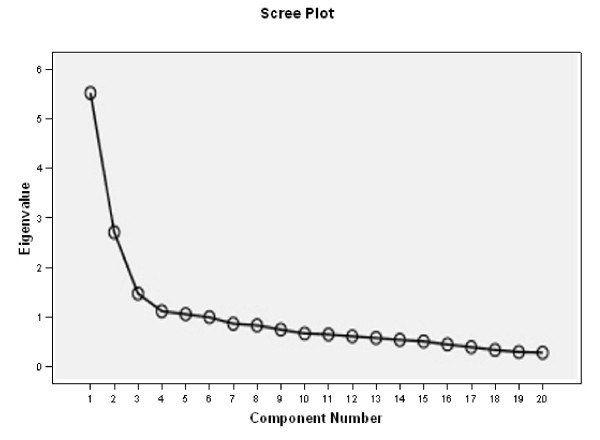
“The Scree plot and a Principal Components Factor analysis confirmed the same two-factor construct as the original English CPAQ.”
- Also stated in: § Results · hedged
“The Scree Plot (Figure 1) indicated that a two-factor solution was optimal.”
- Also stated in: § Discussion · hedged
“The Scree plot indicated a two-factor construct of the translated questionnaire similar to its original English version.”
§ Validation of the Spanish version of the Chronic Pain Acceptance Questionnaire (CPAQ) for the assessment of acceptance in fibromyalgia > Abstract > Results
plainstates an association- Asserted: passes — The authors put it forward as true.
- Checkable: passes — It can be checked against evidence.
- Load-bearing: passes — The paper’s conclusions depend on it.
- Based: passes — The paper gives a reason why it holds.
- Also stated in: § Results · hedged
A result the paper reports from its own data — it cites no other source for it, so there is none to check. The quote shows it is in the paper.
In the paper
“A total of 93.5% (187 out of 200) of them agreed.”
§ Validation of the Spanish version of the Chronic Pain Acceptance Questionnaire (CPAQ) for the assessment of acceptance in fibromyalgia > Results
plainn = 200- Asserted: passes — The authors put it forward as true.
- Checkable: passes — It can be checked against evidence.
- Load-bearing: passes — The paper’s conclusions depend on it.
- Based: passes — The paper gives a reason why it holds.
A result the paper reports from its own data — it cites no other source for it, so there is none to check. The quote shows it is in the paper.
In the paper
“Activity engagement (ICC: 0.85; 95% CI: 0.81-0.89)”
§ Validation of the Spanish version of the Chronic Pain Acceptance Questionnaire (CPAQ) for the assessment of acceptance in fibromyalgia > Results
plain- Asserted: passes — The authors put it forward as true.
- Checkable: passes — It can be checked against evidence.
- Load-bearing: passes — The paper’s conclusions depend on it.
- Based: passes — The paper gives a reason why it holds.
A result the paper reports from its own data — it cites no other source for it, so there is none to check. The quote shows it is in the paper.
In the paper
“internal consistency reliability (Cronbach's α: 0.83)”
- Also stated in: § Results · plain
“Cronbach's α for the CPAQ was 0.83.”
- Also stated in: § Discussion · plain
“internal consistency reliability (Cronbach's α 0.83)”
§ Validation of the Spanish version of the Chronic Pain Acceptance Questionnaire (CPAQ) for the assessment of acceptance in fibromyalgia > Abstract > Results
plain- Asserted: passes — The authors put it forward as true.
- Checkable: passes — It can be checked against evidence.
- Load-bearing: passes — The paper’s conclusions depend on it.
- Based: passes — The paper gives a reason why it holds.
- Also stated in: § Results · plain
12 more claims
Create a free account to see all 32 claims and to verify the 20 references still open.
- It may state two separate claims as one. 10
- Probably not a substantial claim. 6
Claims other papers make about this one
Each is checked against this paper’s own text: does it say what the citing paper says it does?
The source backs part of the claim, not all of it — or backs it for a different population, condition or comparison.
In the citing paper
“The CPAQ has good internal consistency (Cronbach's alpha=0.78) and adequate test-retest reliability (34).”
From Identifying mindfulness and acceptance as mediators between negative affect, functional disability and emotional distress in patients with fibromyalgia (2021) · cites this paper as [34]
Experimental — accuracy not yet measuredThe cited source says what the claim attributes to it.
In the citing paper
“The Spanish version of the CPAQ has shown adequate test-retest reliability, internal consistency, and construct validity (Rodero et al. 2010).”
From Efficacy of Combined Cognitive-Behavioral Therapy for Insomnia and Pain in Patients with Fibromyalgia: A Randomized Controlled Trial (2018) · cites this paper as Rodero et al. 2010
The cited source says what the claim attributes to it.
In the citing paper
“The validity and reliability of this instrument has been demonstrated [42].”
From Does Pain Acceptance Contribute to Improved Functionality through Walking in Women with Fibromyalgia? Looking at Depressive Comorbidity (2023) · cites this paper as [42]
The cited source says what the claim attributes to it.
In the citing paper
“The CPAQ-SV shows good internal consistency (α = 0.83). Two studies on the CPAQ-SV [45,47] have supported the validity of the 20-item version.”
The cited source says what the claim attributes to it.
In the citing paper
“The validated Spanish version of CPAQ was used [48].”
From Effectiveness of cognitive behaviour therapy for the treatment of catastrophisation in patients with fibromyalgia: A randomised controlled trial (2011) · cites this paper as [48]
Citations
Cites
The Hospital Anxiety and Depression Scale
Zigmond, A. S., & Snaith, R. P. (1983) · Acta Psychiatrica Scandinavica · doi:10.1111/j.1600-0447.1983.tb09716.x · Cited by 47,139
(1998) · Cited by 36,049
The american college of rheumatology 1990 criteria for the classification of fibromyalgia
Wolfe, F., Smythe, H. A., Yunus, M. B., Bennett, R. M., Bombardier, C., Goldenberg, D. L., Tugwell, P., Campbell, S. M., Abeles, M., Clark, P., et al. (1990) · Arthritis & Rheumatism · doi:10.1002/art.1780330203 · Cited by 9,563
The Pain Catastrophizing Scale: Development and validation.
Sullivan, M. J. L., Bishop, S. R., & Pivik, J. (1995) · Psychological Assessment · doi:10.1037//1040-3590.7.4.524 · Cited by 8,227 · cited 1×
“Pain Catastrophising Scale (PCS) The PCS is a 13-item scale designed to assess the catastrophising cognitions of individuals by asking them to reflect on thoughts or feelings associated with present painful experiences [24].”
BackgroundGuillemin, F., Bombardier, C., & Beaton, D. (1993) · Journal of Clinical Epidemiology · doi:10.1016/0895-4356(93)90142-n · Cited by 6,060 · cited 1×
“We have followed the usual guidelines for cross-cultural adaptations [19].”
Method(1999) · Cited by 5,934
Validating the SF-36 health survey questionnaire: new outcome measure for primary care.
Brazier, J. E., Harper, R., Jones, N. M., O'Cathain, A., Thomas, K. J., Usherwood, T., & Westlake, L. (1992) · BMJ · doi:10.1136/bmj.305.6846.160 · Cited by 4,653 · cited 1×
“Medical Outcome Study Short Form 36 (SF-36) The Medical Outcome Study Short Form 36 (SF-36) is a 36-item instrument designed to measure general health status and health-related quality of life [22].”
Method(1991) · PubMed · Cited by 1,837
Acceptance of chronic pain: component analysis and a revised assessment method
McCracken, L. M., Vowles, K. E., & Eccleston, C. (2004) · Pain · doi:10.1016/j.pain.2003.10.012 · Cited by 1,101 · cited 10×
“Previous research studies [5,9,12,13] show that acceptance of pain and willingness to act in its presence are associated with reports of lower pain intensity, less pain-related anxiety and avoidance, less depression, less physical and psychosocial disability, more daily uptime and better work status.”
BackgroundMethodResultInfluential(1995) · PubMed · Cited by 950
Research works printed but not linked: 4
- Hayes SC Jacobsen N A contextual approach to therapeutic change. Psychotherapists in Clinical Practice: Cognitive and Behavioural Perspectives 1987 New York: Guildford Press 327 387
- Geiser DS A comparison of acceptance-focused and control-focused psychological treatments in a chronic pain treatment centre 1992 University of Nevada-Reno; Unpublished doctoral dissertation
- Tejero A Guimerá EM Farré JM Peri JM Clinical use of HADS in psychiatric samples: a sensitivity, reliability and validity study (in Spanish) Rev Dep Psiquiatr Fac Med Barc 1986 13 233 238
- McCracken LM Contextual cognitive-behavioural therapy for chronic pain 2005 Seattle, WA: IASP Press
Cited by
Luciano, J. V., Guallar, J. A., Aguado, J., López-del-Hoyo, Y., Olivan, B., Magallón, R., Alda, M., Serrano-Blanco, A., Gili, M., & Garcia-Campayo, J. (2014) · PAIN · doi:10.1016/j.pain.2013.12.029 · Cited by 183
Self-citationEffects of Mindfulness Meditation on Chronic Pain: A Randomized Controlled Trial
la Cour, P., & Petersen, M. (2015) · Pain Medicine · doi:10.1111/pme.12605 · Cited by 163
Girbés, E. L., Dueñas, L., Barbero, M., Falla, D., Baert, I. A. C., Meeus, M., Sánchez‐Frutos, J., Aguilella, L., & Nijs, J. (2016) · Physical Therapy · doi:10.2522/ptj.20150492 · Cited by 156
A meta-analysis of fear-avoidance and pain intensity: the paradox of chronic pain
Kroska, E. B. (2016) · Scandinavian Journal of Pain · doi:10.1016/j.sjpain.2016.06.011 · Cited by 128
Rodero, B., Luciano, J. V., Montero‐Marín, J., Casanueva, B., Palacin, J. C., Gili, M., del Hoyo, Y. L., Serrano‐Blanco, A., & García‐Campayo, J. (2012) · Journal of Psychosomatic Research · doi:10.1016/j.jpsychores.2012.05.011 · Cited by 141
Self-citationRamírez‐Maestre, C., & Esteve, R. (2014) · Journal of Pain · doi:10.1016/j.jpain.2014.02.006 · Cited by 118
Lami, M. J., Martínez, M. P., Miró, E., Sánchez, A. I., & Guzmán, M. A. (2018) · Journal of Clinical Psychology in Medical Settings · doi:10.1007/s10880-018-9543-1 · Cited by 82
Validity and reliability of the Spanish version of the 10-item CD-RISC in patients with fibromyalgia
Notario-Pacheco, B., Martínez-Vizcaíno, V., Trillo-Calvo, E., Pérez-Yus, M., Serrano-Parra, D., & García-Campayo, J. (2014) · Health and Quality of Life Outcomes · doi:10.1186/1477-7525-12-14 · Cited by 79
“83) [53].”
Self-citationAlda, M., Luciano, J. V., Andrés, E., Serrano-Blanco, A., Rodero, B., del Hoyo, Y. L., Roca, M., Moreno, S., Magallón, R., & García-Campayo, J. (2011) · Arthritis Research & Therapy · doi:10.1186/ar3496 · Cited by 77
“The validated Spanish version of CPAQ was used [48].”
BackgroundMethodSelf-citationFish, R. A., Hogan, M. J., Morrison, T. G., Stewart, I., & McGuire, B. E. (2013) · The Journal of Pain · doi:10.1016/j.jpain.2012.11.004 · Cited by 73
“Furthermore, questions have been raised about the exact nature of the relationship between the subscales, with some studies suggesting 2 related factors and others finding 2 independent, unrelated factors.(2,38,45) Finally, the meaningfulness of the construct under examination, in this case, pain acceptance, needs to…”
Rovner, G., Ã…restedt, K., Gerdle, B., Börsbo, B., & McCracken, L. (2014) · Journal of Rehabilitation Medicine · doi:10.2340/16501977-1227 · Cited by 70
“It has been translated and validated into German (11), Spanish (12), chinese (13) Swedish (14), Persian (15) and Korean (16).”
BackgroundEinfluss von Depression auf das Fibromyalgiesyndrom: Eine systematische Literaturanalyse
Lange, M., & Petermann, F. (2010) · Der Schmerz · doi:10.1007/s00482-010-0937-8 · Cited by 83
Short-term improvement following dry needle stimulation of tender points in fibromyalgia
Casanueva, B., Rivas, P. V., Rodero, B., Quintial, C., Llorca, J., & González-Gay, M. Á. (2013) · Rheumatology International · doi:10.1007/s00296-013-2759-3 · Cited by 76
“The maximum possible total score is 120, with a higher score indicating better acceptance [15].”
BackgroundSelf-citationLami, M. J., Martínez, M. P., Miró, E., Sánchez, A. I., Prados, G., Cáliz, R., & Vlaeyen, J. W. S. (2018) · Cognitive Therapy and Research · doi:10.1007/s10608-017-9875-4 · Cited by 69
Ramírez-Maestre, C., Esteve, R., & López-Martínez, A. (2014) · Annals of Behavioral Medicine · doi:10.1007/s12160-014-9619-6 · Cited by 63
“Two studies on the CPAQ-SV [25, 26] have supported the validity of a 20-item version with two subscales corresponding to two independent factors.”
MethodInfluentialXu, X., Ou, M., Xie, C., Cheng, Q., & Chen, Y. (2019) · Pain Research and Management · doi:10.1155/2019/9458683 · Cited by 63
Bendayan, R., Esteve, R., & Blanca, M. J. (2012) · British Journal of Health Psychology · doi:10.1111/j.2044-8287.2011.02039.x · Cited by 54
Rodero, B., Casanueva, B., Luciano, J. V., Gili, M., Serrano-Blanco, A., & García-Campayo, J. (2011) · BMC Musculoskeletal Disorders · doi:10.1186/1471-2474-12-143 · Cited by 54
“Previous work has pointed out the possibility of fibromyalgia patients showing fewer acceptance scores than other pain conditions [28], so this would also explain the lack of a greater difference between measures.”
BackgroundSelf-citationCebolla, A., Luciano, J. V., DeMarzo, M. P., Navarro-Gil, M., & Campayo, J. G. (2013) · Health and Quality of Life Outcomes · doi:10.1186/1477-7525-11-6 · Cited by 47
“The Spanish version of the scale has been validated [33], showing sufficient test-retest reliability and internal consistency.”
MethodSelf-citationRodero, B., Pereira, J. P., Pérez-Yus, M. C., Casanueva, B., Serrano-Blanco, A., Rodrigues da Cunha Ribeiro, M. J., Luciano, J. V., & Garcia-Campayo, J. (2013) · Health and Quality of Life Outcomes · doi:10.1186/1477-7525-11-62 · Cited by 46
“The Spanish version of the CPAQ has been validated by our team and achieves adequate reliability [31].”
MethodSelf-citationEsteve, R., & Ramírez-Maestre, C. (2013) · Annals of Behavioral Medicine · doi:10.1007/s12160-013-9499-1 · Cited by 37
“Two studies on the CPAQ-SV [45, 46] have supported the validity of a 20-item version with two subscales corresponding to two independent factors.”
MethodInfluentialBaranoff, J. A., Hanrahan, S. J., Burke, A. L. J., & Connor, J. P. (2016) · International Journal of Behavioral Medicine · doi:10.1007/s12529-015-9496-9 · Cited by 28
Questões epistemológicas e bioéticas da prevenção quaternária
Oliveira, C. C., & Reis, A. P. M. G. (2012) · Physis Revista de Saúde Coletiva · doi:10.1590/s0103-73312012000400012 · Cited by 34
Esteve, R., Ramírez‐Maestre, C., & López-Martínez, A. E. (2011) · International Journal of Behavioral Medicine · doi:10.1007/s12529-011-9216-z · Cited by 32
Monticone, M., Ferrante, S., Rocca, B., Nava, T., Parini, C., & Cerri, C. (2013) · Spine · doi:10.1097/brs.0b013e3182917299 · Cited by 27
Martínez, M. P., Sánchez, A. I., Prados, G., Lami, M. J., Villar, B., & Miró, E. (2021) · The Spanish Journal of Psychology · doi:10.1017/sjp.2021.30 · Cited by 24
Liu, Y., Wang, L., Wei, Y., Wang, X., Xu, T., & Sun, J. (2016) · Medicine · doi:10.1097/md.0000000000004339 · Cited by 19
“However, the 20-item CPAQ has been widely validated in many countries, including Germany,([19]) Spain,([20]) Australia,([8]) Sweden,([21]) Italy,([6]) Finland,([22]) Korea,([10]) and Iran([23]).”
Eide, H., Leren, L., & Sørebø, Ø. (2017) · Disability and Rehabilitation · doi:10.1080/09638288.2016.1198427 · Cited by 19
“[21] The instrument has been shown to have adequate psychometric characteristics, and the two-factor structure has been replicated in German,[22] Cantonese,[23] Spanish,[24] Korean,[16] Finnish,[17] Persian [18] and Swedish [25] versions.”
MethodEsteve, R., Marcos, E., Reyes-Pérez, Á., López-Martínez, A. E., & Ramírez-Maestre, C. (2021) · International Journal of Environmental Research and Public Health · doi:10.3390/ijerph18063054 · Cited by 17
“Pain Acceptance We applied the Spanish version of the questionnaire (CPAQ-SV) [45,46].”
MethodInfluentialValidation of the Danish language Injustice Experience Questionnaire
la Cour, P., Smith, A. A., & Schultz, R. (2015) · Journal of Health Psychology · doi:10.1177/1359105315616178 · Cited by 19
“However, given the high test-retest correlations from the English and Spanish validations (Rodero et al., 2010; Sullivan et al., 2008), we have no reason to assume that there would be a problem regarding the Danish version.”
BackgroundMethodResultInfluentialEcija, C., Catala, P., Lopez-Gomez, I., Bedmar, D., & Peñacoba, C. (2022) · Clinical Nursing Research · doi:10.1177/10547738211034307 · Cited by 16
“The Spanish version has shown adequate test–retest reliability (intraclass correlation coefficient .83), internal consistency (Cronbach’s α: .83), and construct validity (Rodero et al., 2010).”
MethodThe Persian Version of the Chronic Pain Acceptance Questionnaire
Mesgarian, F., Asghari, A., Shaeiri, M. R., & Broumand, A. (2013) · Clinical Psychology & Psychotherapy · doi:10.1002/cpp.1769 · Cited by 16
“So far, the original English version of the CPAQ has been translated into several languages including Chinese (Ning, Chiming, Mae, & Ping, 2008), Spanish (Rodero et al., 2010), German (Nilges, Köster, & Schmidt, 2007), Swedish (Wicksell, Melin, & Olsson, 2009) and Italian (Bernini, Pennato, Cosci, & Berrocal, 2010).”
BackgroundResultInfluentialMartínez-Calderón, J., Flores-Cortés, M., Clavero-Cano, S., Morales‐Asencio, J. M., Jensen, M. P., Rondón-Ramos, A., Díaz-Cerrillo, J. L., Ariza-Hurtado, G. R., & Luque-Suárez, A. (2020) · Journal of Clinical Medicine · doi:10.3390/jcm9103252 · Cited by 22
Cho, S., Heiby, E. M., McCracken, L. M., Moon, D. E., & Lee, J.-H. (2011) · Quality of Life Research · doi:10.1007/s11136-011-0010-9 · Cited by 15
“Studies of the CPAQ consistently support its two-factor structure and adequate psychometric properties in different countries [10–15].”
MethodValidity and Reliability of the Turkish Chronic Pain Acceptance Questionnaire
Akmaz, H. E., Uyar, M., Yıldırım, Y., & Korhan, E. A. (2018) · Balkan Medical Journal · doi:10.4274/balkanmedj.2016.1998 · Cited by 14
Catala, P., Gutierrez, L., Écija, C., Serrano del Moral, Á., & Peñacoba, C. (2021) · International Journal of Environmental Research and Public Health · doi:10.3390/ijerph182413148 · Cited by 13
Baranoff, J., Hanrahan, S. J., Kapur, D., & Connor, J. P. (2014) · Journal of Behavioral Medicine · doi:10.1007/s10865-013-9502-0 · Cited by 13
Huysmans, E., Baeyens, J., Dueñas, L., Falla, D., Meeus, M., Roose, E. C. S., Nijs, J., & Girbés, E. L. (2021) · Physical Therapy · doi:10.1093/ptj/pzab197 · Cited by 13
Catalá, P., Blanco, S., Perez-Calvo, S., Luque-Reca, O., Bedmar, D., & Peñacoba, C. (2021) · Frontiers in Psychology · doi:10.3389/fpsyg.2021.658974 · Cited by 9
“While the level of personal competence depends on health, sensory capacity, motor performance, and cognitive abilities, environmental demand is determined by actual and perceived physical characteristics (Lawton, 1977; Rousseau et al., 2002).”
BackgroundSupport for the Spanish version of the CPAQ-8 as a measure of chronic pain acceptance
Sánchez‐Rodríguez, E., de la Vega, R., Racine, M., Roy, R., Jensen, M. P., & Miró, J. (2019) · Journal of Evaluation in Clinical Practice · doi:10.1111/jep.13092 · Cited by 9
McLennan, A. I. G., Winters, E. M., Gagnon, M. M., & Hadjistavropoulos, T. (2024) · Clinical Psychology Review · doi:10.1016/j.cpr.2024.102513 · Cited by 10
Otero-Ketterer, E., Peñacoba, C., Valera‐Calero, J. A., Galán-del-Río, F., & Ortega‐Santiago, R. (2023) · Musculoskeletal Science and Practice · doi:10.1016/j.msksp.2023.102744 · Cited by 14
Han, X., Geffen, S., Browning, M., Kenardy, J. A., & Geffen, G. M. (2011) · Clinical Psychologist · doi:10.1111/j.1742-9552.2011.00032.x · Cited by 8
Validation of the Danish‐language chronic pain acceptance questionnaire
la Cour, P., & Højsted, J. (2015) · Acta Anaesthesiologica Scandinavica · doi:10.1111/aas.12567 · Cited by 9
Maurel, S., Rodero, B., del Hoyo, Y. L., Luciano, J. V., Andres, E. M., Roca, M., del Moral, R., Ruiz-Lancina, Y., & García‐Campayo, J. (2011) · BMC Musculoskeletal Disorders · doi:10.1186/1471-2474-12-4 · Cited by 18
“Pain acceptance scale [32] Acceptation of pain Baseline Research”
MethodSelf-citationMaurel, S., Sáez-Francàs, N., Calvo, N., Alegre-Martín, J., & Castro-Marrero, J. (2021) · Clinical and Experimental Rheumatology · doi:10.55563/clinexprheumatol/uzzejn · Cited by 10
Luque-Suárez, A., Falla, D., Barbero, M., Galán, C. P., Derboni, M., Giuffrida, V., & Martínez-Calderón, J. (2022) · BMC Musculoskeletal Disorders · doi:10.1186/s12891-022-05700-3 · Cited by 7
Écija, C., Catalá, P., Gutiérrez, L., Grajera, M. J. A., & Peñacoba, C. (2022) · Clinical Nursing Research · doi:10.1177/10547738221122670 · Cited by 6
“The Chronic Pain Acceptance Questionnaire (CPAQ) (Rodero et al., 2010) was used.”
MethodNavarrete, J., Rodríguez‐Freire, C., Sanabria‐Mazo, J. P., Martínez‐Rubio, D., McCracken, L. M., Gallego, A., Sundström, F., Serrat, M., Alonso, J., Feliu‐Soler, A., et al. (2024) · European Journal of Pain · doi:10.1002/ejp.4704 · Cited by 9
Self-citationFibromialgia. ¿Qué deben saber y evaluar los profesionales de Enfermería?
Medrano, J. C. R., & Rojas, J. G. (2011) · DOAJ (DOAJ: Directory of Open Access Journals) · Cited by 6
Ramírez‐Maestre, C., López-Martínez, A. E., & Esteve, R. (2021) · PLoS ONE · doi:10.1371/journal.pone.0251586 · Cited by 8
“We will apply the Spanish version of the questionnaire (CPAQ-SV) [67, 68].”
MethodInfluentialThe Contribution of the Psychologist in the Assessment and Treatment of Fibromyalgia
Luciano, J. V., Neblett, R., Peñacoba, C., Suso‐Ribera, C., & McCracken, L. M. (2023) · Current Treatment Options in Rheumatology · doi:10.1007/s40674-023-00200-4 · Cited by 12
Self-citationSalaberría, K., Ruiz‐Iriondo, M., Pérez, J. I., Barandiarán, A., & Iruín, Á. (2022) · PsyCh Journal · doi:10.1002/pchj.617 · Cited by 7
de la Coba, P., Rodríguez-Valverde, M., & Hernández-López, M. (2022) · Internet Interventions · doi:10.1016/j.invent.2022.100561 · Cited by 5
Maire, C., Miró, E., Sánchez, A. I., Cáliz, R., & Martínez, M. P. (2025) · BMC Psychology · doi:10.1186/s40359-025-03429-x · Cited by 8
Maurel, S., Giménez‐Llort, L., Alegre, J., & Castro‐Marrero, J. (2023) · Biomedicines · doi:10.3390/biomedicines11102867 · Cited by 9
Einfluss von Depression auf das Fibromyalgiesyndrom: Eine systematische Literaturanalyse
Lange, M., & Petermann, F. (2010) · Der Schmerz · Cited by 5
Izquierdo-Alventosa, R., Inglés, M., Cortés‐Amador, S., Muñoz‐Gómez, E., Mollà‐Casanova, S., Gimeno-Mallench, L., Chirivella, J., & Serra‐Añó, P. (2024) · Medicina Clínica · doi:10.1016/j.medcli.2023.12.016 · Cited by 6
Cluster headache, beyond the pain: a comparative cross-sectional study
de Terán, J. D., Sastre-Real, M., Lobato-Pérez, L., Navarro-Fernández, G., Elizagaray-García, I., & Gil‐Martínez, A. (2021) · Neurological Sciences · doi:10.1007/s10072-020-04996-0 · Cited by 5
The paradox of wellbeing: what happens among women with fibromyalgia? The effect of cognitive fusion
Peñacoba, C., Écija, C., Furlong, L. V., Catalá, P., & Suso‐Ribera, C. (2021) · Aging & Mental Health · doi:10.1080/13607863.2021.1977238 · Cited by 5
“Engagement in activities despite pain (eudaimonic wellbeing) We used the Spanish version of Chronic Pain Acceptance Questionnaire (Rodero et al., 2010) in fibromyalgia patients to evaluate the patient’s engagement in daily activities.”
MethodModrego, M., Morillo, H., López-Montoyo, A., Correa, M., Borao, L., & García‐Campayo, J. (2016) · Mindfulness & Compassion · doi:10.1016/j.mincom.2016.09.002 · Cited by 6
Self-citationCastaño-Asins, J. R., Sanabria-Mazo, J. P., Luciano, J. V., Barceló-Soler, A., Martín-López, L. M., Del Arco-Churruca, A., Lafuente-Baraza, J., Bulbena, A., Pérez-Solà, V., & Montes-Pérez, A. (2023) · Journal of Clinical Medicine · doi:10.3390/jcm12124066 · Cited by 3
“The Chronic Pain Acceptance Questionnaire (CPAQ) [70,71] consists of 20 items that assess 2 main factors: “willingness or involvement in activities” (activity engagement) and “acceptance or openness to pain” (pain willingness).”
BackgroundSelf-citationIntegrated Care for Pain Management Among Hispanic Populations
Sherwood, G. D., & McNeill, J. A. (2016) · Springer eBooks · doi:10.1007/978-3-319-42533-7_12 · Cited by 3
Alonso-Fernández, M., Gillanders, D. T., López‐López, A., Matías‐Pompa, B., Losada‐Baltar, A., & González, J. L. (2021) · Clinical Gerontologist · doi:10.1080/07317115.2021.1929628 · Cited by 4
“This instrument was translated into Spanish in previous studies and showed good psychometric properties; good test–retest reliability, internal consistency reliability and an adequate convergent and discriminant validities (González, Fernández, & Torres, 2010; Rodero et al., 2010).”
MethodPeñacoba, C., Ecija, C., Gutiérrez, L., & Catalá, P. (2023) · International Journal of Environmental Research and Public Health · doi:10.3390/ijerph20065005 · Cited by 2
Al-Arfaj, S. K., Abdallah, A. F., & Abdulla, F. A. (2023) · Disability and Rehabilitation · doi:10.1080/09638288.2023.2293987 · Cited by 2
Ebrahimi, A., Afshar-Zanjani, H., Goli, F., Rohafza, H. R., & Dehsorkh, H. N. (2022) · International Journal of Body, Mind and Culture · doi:10.22122/ijbmc.v8i1.251 · Cited by 1
Ordóñez-Hernández, C. A., Contreras-Estrada, M. I., & Baltazar, R. G. (2017) · Ciencia & trabajo · doi:10.4067/s0718-24492017000100026 · Cited by 1
Depresión en pacientes con enfermedades autoinmunes más frecuentes en reumatología
Barguil-Díaz, I. C., Gómez-Mejía, C., Ramírez-González, J. A., & Zapata-Carmona, S. C. (2012) · Medicina U.P.B.
Fibromyalgia. What should nursing professionals know and evaluate?
Medrano, J. C. R., & Rojas, J. G. (2011) · Investigación y Educación en Enfermería · doi:10.17533/udea.iee.4805 · Cited by 21
Analiza notranje strukture slovenske oblike Vprašalnika o sprejemanju bolečine (CPAQ)
Horvat, B., Jamnik, H., Vidmar, G., Sočan, G., & Mramor, M. (2014) · Psihološka obzorja · doi:10.20419/2014.23.410 · Cited by 1
Navarro, J., Lopez-del Hoyo, Y., Vergara, T. P. M., Magallón-Botaya, R. M., Marijuán, P. C., & de Salud, S. A. (2013)
Barguil-Díaz, I. C., Gómez-Mejía, C., Ramírez-González, J. A., & Zapata-Carmona, S. C. (2012)
Pain Acceptance and its Related Social Determinants of Health in Patients with Cancer
Nouri, M., Nejad, N. B., Namadian, M., & Faghihzadeh, E. (2023) · Preventive Care In Nursing and Midwifery Journal · doi:10.61186/pcnm.13.2.50 · Cited by 1
Izquierdo-Alventosa, R., Inglés, M., Cortés‐Amador, S., Muñoz‐Gómez, E., Mollà‐Casanova, S., Gimeno-Mallench, L., Chirivella, J., & Serra‐Añó, P. (2024) · Medicina Clínica (English Edition) · doi:10.1016/j.medcle.2023.12.022
Kłosowska, J., Niedbał, M., Budzisz, A., Łaska, I. A., Bajcar, E. A., Badzińska, J., Bieniek, H., Brączyk, J., Rubanets, D., Wiercioch‐Kuzianik, K., et al. (2025) · Experimental Gerontology · doi:10.1016/j.exger.2025.112886
Labbé, S., Verges, A. J., Cumsille, P. E., Román, C., Padilla, P., Huerta, I., Flores-Torres, J., Durán, J., & Gómez‐Pérez, L. (2026) · Journal of Bodywork and Movement Therapies · doi:10.1016/j.jbmt.2026.06.026
Martín‐Valero, R., Ruiz-Moreno, A. M., Gallardo-García, P. J., Colmena, M. D. M., Pagan, C. M., González-Rojas, P., & Quiñonero, P. O. (2026) · Journal of Personalized Medicine · doi:10.3390/jpm16070378
Lorenzo-Gallego, L., Diciolla, N. S., Ramos-Gómez, F., Prieto-Gómez, V., González, A. C., & Torres-Lacomba, M. (2026) · Current Oncology · doi:10.3390/curroncol33090567
Metadata
- Authors
- Rodero, B., García-Campayo, J., Casanueva, B., del Hoyo, Y. L., Serrano-Blanco, A., & Luciano, J. V.
- Affiliations
- Hospital Universitario Miguel Servet (ES)
- Red de Investigación en Actividades Preventivas y Promoción de la Salud (ES)
- ORCID
- Luciano, Juan V
- Venue
- Health and Quality of Life Outcomes
- Published
- 2010-04-12
- Volume
- 8
- Issue
- 1
- Pages
- 37-37
- ISSN
- 1477-7525 (ISSN-L)
- PMC
- PMC2876109
- OpenAlex
- W2130536896
- Cited by
- 79
- References
- 38
- Citations by year
- 2026: 3 · 2025: 2 · 2024: 4 · 2023: 7 · 2022: 5 · 2021: 10 · 2020: 1 · 2019: 1 · 2018: 3 · 2017: 2 · 2016: 6 · 2015: 3 · 2014: 7 · 2013: 9 · 2012: 5
- FWCI
- 5.47
- Type
- journal article
- Language
- en
- Open access
- gold
- doi.org
- Licence
- cc-by
- Locations
- Health and Quality of Life Outcomes (publishedVersion, cc-by)
- Europe PMC (PubMed Central) (publishedVersion, cc-by)
- PubMed Central (publishedVersion, cc-by)
- PubMed (publishedVersion)
- DOAJ (DOAJ: Directory of Open Access Journals) (submittedVersion)
- Funders
- Instituto de Salud Carlos III (PI09/90301)
- Topics
- Health Sciences › Medicine › Psychiatry and Mental health › Fibromyalgia and Chronic Fatigue Syndrome Research
- Health Sciences › Health Professions › Physical Therapy, Sports Therapy and Rehabilitation › Musculoskeletal pain and rehabilitation
- Social Sciences › Psychology › Clinical Psychology › Mindfulness and Compassion Interventions
- Keywords
- Chronic Pain Acceptance Questionnaire, pain acceptance, fibromyalgia, Spanish translation, psychometric validation, test-retest reliability, construct validity, pain catastrophizing, anxiety and depression, health-related quality of life, disability
- MeSH terms
- Adult, Aged, Anxiety, Chronic Disease, Depression, Female, Fibromyalgia, Humans, Language, Male, Middle Aged, Pain Measurement, Psychometrics, Surveys and Questionnaires, Spain, Reproducibility of Results
About these checks
Registry, retraction, Cites and statistics results are computed, not judged, with one exception: a printed reference that no index lists is read once by a model before it counts as a citation error. Claims are extracted by a model and kept only when their quote appears verbatim in the text; each cited source is then checked, with a model’s help, for whether it says what the claim relies on. Those verdicts can be wrong — read the claim’s quote and the cited source before relying on one.
A language model drew the claims from the paper on 2026-10-11, under version 3 of the claim definition (model deepseek-v4.1-flash, prompt extract-v3).
A second model labelled each claim on 2026-10-11 (model jev-1.13-20260917, definition revision gold-guideline-v0.2).
Statistics and arithmetic are recomputed, not judged.
Confidence bands are shown only for fields calibrated on our annotated test set. None is calibrated yet, so no band is shown.
What counts as a claim ›How we measure confidence ›How we check this ›
Are you an author, or do you see a problem with this page? Request a review
Data sources
Bibliographic data: Semantic Scholar, OpenAlex, Crossref.
Contains information from the Semantic Scholar Academic Graph Datasets, made available under the ODC Attribution License (ODC-BY 1.0).
Semantic Scholar’s data is described in: Kinney, R., et al. (2023). The Semantic Scholar Open Data Platform. arXiv:2301.10140.
