

The DOI matches its Crossref record; 50 of the 51 references it cites were found in a registry or an index.
Type D personality in the general population: a systematic review of health status, mechanisms of disease, and work-related problems
Open accessAbstract
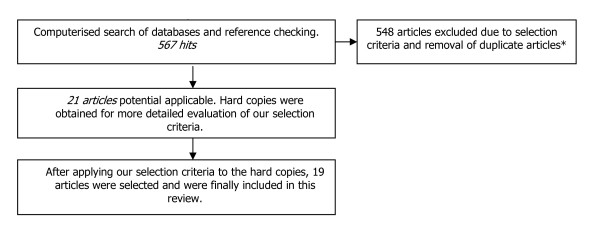
BACKGROUND: The objective was to review all available literature concerning Type D (distressed) personality among the general population and to discuss its implications for research on health status, disease-promoting mechanisms and work-related problems in non-clinical populations. METHODS: A computerized search of the literature was performed independently and in duplicate by both investigators on December 21st, 2009. Published research reports were included if they studied Type D personality among the general population. Nineteen articles were selected and they were subjected to an 11-item standardised quality checklist by both investigators. RESULTS: The methodological quality of the selected studies was adequate to high. The studies included in this review showed that the presence of Type D characteristics had a negative impact on mental health status (more symptoms of depression, anxiety, post-traumatic stress disorder, mental distress, passive coping, and less social support) and physical health status (more somatic complaints, lower health status, more influenza-like illness reporting). Other studies reported on behavioral and biological mechanisms of disease in apparently healthy individuals with a Type D personality. Finally, some studies also showed a negative effect of Type D personality on work-related problems (higher absence-leave, higher levels of vital exhaustion and burnout, and more work-related stress). CONCLUSIONS: Type D personality is a vulnerability factor for general psychological distress that affects mental and physical health status and is associated with disease-promoting mechanisms and work-related problems in apparently healthy individuals.
Overview
The claims and statistics of this paper haven’t been checked yet.
Run the check — free, no account needed. It reads the open-access text and checks the sources it cites.
Integrity signals
Registry
Cites
Statistics
Figures
Verification
Claims the paper makes
The claims and statistics of this paper haven’t been checked yet.
Run the check — free, no account needed. It reads the open-access text and checks the sources it cites.
Claims other papers make about this one
Each is checked against this paper’s own text: does it say what the citing paper says it does?
In the citing paper
“While many studies have documented poorer general health correlates of Type D in community (rather than CVD) samples [154, 155]”
From Personality and Longevity: Knowns, Unknowns, and Implications for Public Health and Personalized Medicine (2011) · cites this paper as [155]
Self-check
Percentages, sums and reported differences re-computed from the paper’s own numbers.
The self-check needs the paper’s full text.
Citations
Cites
DS14: Standard Assessment of Negative Affectivity, Social Inhibition, and Type D Personality
Denollet, J. (2005) · Psychosomatic Medicine · doi:10.1097/01.psy.0000149256.81953.49 · Cited by 1,583 · cited 6×
“Moreover, Type D personality is based on normal personality traits rather than psychopathology which implies that it should be prevalent in the general population as well [1], and that it may have an adverse effect on the perceived health status as reported by individuals from the general population.”
BackgroundMethodInfluentialSelf-citationPersonality as independent predictor of long-term mortality in patients with coronary heart disease
Denollet, J., Rombouts, H., Gillebert, T. C., Brutsaert, D. L., Sys, S. U., Brutsaert, D. L., & Stroobant, N. (1996) · The Lancet · doi:10.1016/s0140-6736(96)90007-0 · Cited by 679 · cited 3×
“These studies in cardiovascular patients have shown that Type D personality is an independent predictor of negative health outcomes such as poor health status, (recurrent) myocardial infarction, and increased risk of mortality [4-7].”
BackgroundSelf-citationQuality of life among long-term breast cancer survivors: A systematic review
Mols, F., Vingerhoets, A. J. J. M., Coebergh, J. W., & van de Poll-Franse, L. V. (2005) · European Journal of Cancer · doi:10.1016/j.ejca.2005.05.017 · Cited by 585 · cited 1×
“The checklist was based on established criteria lists for systematic reviews [27,28].”
MethodSelf-citationInadequate Response to Treatment in Coronary Heart Disease
Denollet, J., Vaes, J., & Brutsaert, D. L. (2000) · Circulation · doi:10.1161/01.cir.102.6.630 · Cited by 388 · cited 2×
“These studies in cardiovascular patients have shown that Type D personality is an independent predictor of negative health outcomes such as poor health status, (recurrent) myocardial infarction, and increased risk of mortality [4-7].”
BackgroundSelf-citationPersonality and Mortality After Myocardial Infarction
Denollet, J., Sys, S. U., & Brutsaert, D. L. (1995) · Psychosomatic Medicine · doi:10.1097/00006842-199511000-00011 · Cited by 310 · cited 1×
“Although the majority of studies on Type D personality has focussed on cardiovascular [1,3-7,29-34], or other medical populations [35], this systematic review indicates that Type D may negatively affect health status of apparently healthy individuals from the general population as well.”
BackgroundSelf-citationType D personality, cardiac events, and impaired quality of life: a review
Pedersen, S. S., & Denollet, J. (2003) · European Journal of Cardiovascular Prevention & Rehabilitation · doi:10.1097/00149831-200308000-00005 · Cited by 284
Self-citationType D personality is related to cardiovascular and neuroendocrine reactivity to acute stress
Habra, M. E., Linden, W., Anderson, J. C., & Weinberg, J. (2003) · Journal of Psychosomatic Research · doi:10.1016/s0022-3999(02)00553-6 · Cited by 253 · cited 9×
“Accordingly, Type D was associated with increased cardiac output [25], heightened systolic and diastolic blood pressure reactivity [11], and dampened heart rate reactivity during experimental stress.”
BackgroundMethodInfluentialType-D personality mechanisms of effect: The role of health-related behavior and social support
Williams, L., O’Connor, R. C., Howard, S., Hughes, B. M., Johnston, D. W., Hay, J. L., O'Connor, D. B., Lewis, C. A., Ferguson, E., Sheehy, N. P., et al. (2007) · Journal of Psychosomatic Research · doi:10.1016/j.jpsychores.2007.06.008 · Cited by 245 · cited 8×
“Furthermore, the studies included in this review showed that people with a Type D personality more often reported mental health disorders [17] as well as lower levels of social support [26] compared to non-Type D adults.”
BackgroundMethodResultInfluentialPolman, R. C. J., Borkoles, E., & Nicholls, A. R. (2009) · British Journal of Health Psychology · doi:10.1348/135910709x479069 · Cited by 178 · cited 5×
“Various studies showed that individuals from the general population with a Type D personality experienced more symptoms of distress, depression and anxiety compared to non-Type D’s [9,13,18,19,23-25].”
BackgroundMethodInfluentialValidity of the Type D personality construct in Danish post-MI patients and healthy controls
Pedersen, S. S., & Denollet, J. (2004) · Journal of Psychosomatic Research · doi:10.1016/s0022-3999(03)00614-7 · Cited by 170 · cited 1×
“Although the majority of studies on Type D personality has focussed on cardiovascular [1,3-7,29-34], or other medical populations [35], this systematic review indicates that Type D may negatively affect health status of apparently healthy individuals from the general population as well.”
Self-citation
Research works printed but not linked: 1
- Schiffer AA Denollet J Widdershoven JW Hendriks EH Smith OR Failure to consult for symptoms of heart failure in patients with a type-D personality Heart 2007 93 7 814 818 10.1136/hrt.2006.102822 17344329 PMC1994460 · DOI
Cited by
Sorted by citations
Items 201–286 of 286
Dahl, A. A., Smeland, K. B., Eikeland, S. A., Fagerli, U., Bersvendsen, H. S., Fosså, A., & Kiserud, C. E. (2024) · Acta Oncologica · doi:10.2340/1651-226x.2024.40312 · Cited by 2
“In a review of 19 studies with samples from the general populations of several countries, the prevalence of DP varied between 17% and 39%, indicating sampling and cultural variations of the DP prevalence [27].”
BackgroundD TİPİ KİŞİLİK ÖZELLİKLERİ VE İKİNCİL TRAVMATİK STRES: DUYGU DÜZENLEME GÜÇLÜĞÜNÜN ARACI ROLÜ
Koç, M. S., & Ateş, A. (2024) · HUMANITAS - Uluslararası Sosyal Bilimler Dergisi · doi:10.20304/humanitas.1466242 · Cited by 2
Karaminia, R., Soltani, M. A. T., & Bagherian-Sararoudi, R. (2013) · Europe PMC (PubMed Central) · Cited by 2
Type D, coping and self-care in chronic heart failure patients
van der Ree, R., M.Sc, M. U., Schiffer, A. A., Rodijk, E., Weevers, M., & Linssen, G. C. M. (2013) · Cited by 2
Type D personality as a predictor of smoking cessation failure in smoking high school adolescents
Kim, S. R., Kim, H. Y., Kim, H. K., & Kim, H. K. (2018) · Psychology in the Schools · doi:10.1002/pits.22190 · Cited by 2
Rana, S., Pugh, P. C., Wyss, J. M., Clinton, S. M., & Kerman, I. A. (2018) · Physiology & Behavior · doi:10.1016/j.physbeh.2018.12.005 · Cited by 2
“Futhermore, blunted cardiovascular reactivity is also associated with Type D personality profile [52], which is characterized by prominent negative affectivity and social withdrawal [69].”
BackgroundChristensen, J. O., Nielsen, M. B., Finne, L. B., & Knardahl, S. (2019) · PLoS ONE · doi:10.1371/journal.pone.0215719 · Cited by 3
Relationship between Negative Affectivity and Severity of Irritable Bowel Syndrome (IBS) Symptoms
Bagherian-Sararoudi, R., Kalantari, H., Afshar, H., Daghaghzadeh, H., Abotalebian, F., Falah, J., & Adibi, P. (2012) · DOAJ (DOAJ: Directory of Open Access Journals) · Cited by 2
Wang, S., Zhao, L., Jia, X., Yin, X., Tan, X., Lyu, J., & Sun, H. (2021) · Personality and Individual Differences · doi:10.1016/j.paid.2021.110811 · Cited by 6
Herrera, A. M. T., Bahamón, M. J., Alarcón-Vásquez, Y., Vinaccia, S., González-Gutiérrez, O., Barrios, D. Q., & Solano, H. L. (2023) · Acta Colombiana de Psicología · doi:10.14718/acp.2023.26.2.11 · Cited by 3
“…negativo en el estado de salud mental incluyendo síntomas de depresión, ansiedad, trastorno de estrés postraumático, angustia men - tal, afrontamiento pasivo y menos apoyo social, así como efecto en la salud física que se refleja en un aumento de las quejas somáticas ( Mols & Denollet, 2010).”
BackgroundBatool, R., Mubeen, A., Halim, S., & Ikram, L. (2024) · Qlantic Journal of Social Sciences and Humanities · doi:10.55737/qjssh.775135370 · Cited by 2
Bae, S. H., & Park, J. (2019) · Korean Journal of Adult Nursing · doi:10.7475/kjan.2019.31.3.219 · Cited by 2
“대상자를 중점으로[19] D유형 성격이 건강상태에 미치는 영향 에 대한 체계적 문헌고찰 연구가 보고되기도 하였다.”
Kumar, D., Kaur, G., Bansal, R., Tuteja, C., Kumar, A., & Farswal, A. (2019) · International Journal of Community Medicine and Public Health · doi:10.18203/2394-6040.ijcmph20193469 · Cited by 2
Urso, J. (2011) · Digital Library of Theses and Dissertations (Universidade de São Paulo) · doi:10.11606/t.47.2011.tde-30112011-103946 · Cited by 2
Mali, S., Khajehmougahi, N., Hajatnia, S., Farsham, A., Hasibi, E., & Bidaki, R. (2021) · Hospital Practices and Research · doi:10.34172/hpr.2021.20 · Cited by 1
3. La personnalité comme facteur de vulnérabilité
Bruchon-Schweitzer, M., & Boujut, É. (2021) · Dunod eBooks · doi:10.3917/dunod.bruch.2021.01.0195 · Cited by 1
Influences of Type D Personality, Depression, and Stress on Quality of Life in Migraine Patients
Jo, E.-H., Lee, S.-J., Jo, J.-H., & Oh, S. (2022) · Journal of Korean Academy of Fundamentals of Nursing · doi:10.7739/jkafn.2022.29.3.316 · Cited by 1
Impact of Patient Personality on Adherence to Oral Anticancer Medications: An Opportunity?
Jafari, M., Shahverdian, A., Sadigh, G., & Etten, R. A. V. (2024) · JMIR Cancer · doi:10.2196/57199 · Cited by 3
“In particular, the type D personality is a trait associated with negative emotions such as worrying, and a lack of social interaction out of fear of disapproval (Textbox 1) [26-28].”
BackgroundÇıkrıkçı, Ö., & Erzen, E. (2026) · Journal of Technology in Behavioral Science · doi:10.1007/s41347-026-00667-7 · Cited by 1
Florczyk, I., Stokłosa, M., Więckiewicz, G., Dębski, P. G., & Gorczyca, P. W. (2026) · Frontiers in Psychiatry · doi:10.3389/fpsyt.2026.1866935 · Cited by 1
Poursharifi, H., Alipour, A., Zare, H., Ardakani, M. A., & Sheybani, K. H. A. (2013) · Cited by 1
La personnalité comme facteur de vulnérabilité
Bruchon-Schweitzer, M., & Boujut, É. (2014) · Dunod eBooks · doi:10.3917/dunod.bruch.2014.01.0195 · Cited by 1
Wu, R.-J., Lai, Y., Sheu, J., & Shun, S. (2015) · DOAJ (DOAJ: Directory of Open Access Journals) · doi:10.6323/jcrp.2015.2.3.04 · Cited by 1
Demirci, S., Gürler, S., & Demirci, K. (2016) · Cukurova Medical Journal (Çukurova Üniversitesi Tıp Fakültesi Dergisi) · doi:10.17826/cukmedj.237506 · Cited by 1
Managing Anger and Resolving Conflicts
Romas, J. A., & Sharma, M. (2017) · Elsevier eBooks · doi:10.1016/b978-0-12-811295-3.00005-x · Cited by 1
An Ecological Studybased on Textile Sensory Platforms to Improve Safety and Well-Being at Work
Paradiso, R., Crupi, R., Pacelli, M., Saunder, M., & Cuervo, G. (2019) · Annual International Conference of the IEEE Engineering in Medicine and Biology Society (EMBC) · doi:10.1109/embc.2019.8856968 · Cited by 1
Type D personality, clinical characteristics and working life among cancer survivors
Hamzah, S. R., Muda, Z., Musa, S. N. S., & Razali, A. B. M. (2021) · Kontakt · doi:10.32725/kont.2021.033 · Cited by 1
“Previous studies have shown Type D personality to be an important predictor of health-related quality of life and disease-specific health status beyond clinical characteristics (Denollet et al., 2010; Mols and Denollet, 2010), and this trait might possibly lead to poor behaviours (Denollet, 2005).”
ResultGrassi, L. G., Nanni, M. G., & Riba, M. (2014) · Springer eBooks · doi:10.1007/978-3-642-40134-3_3 · Cited by 1
Mataczyńska, A., & Kucharska, K. (2022) · Neuropsychiatria i Neuropsychologia · doi:10.5114/nan.2022.124698 · Cited by 1
Type D personality in obese patients, including selected aspects of body image
Buczkowska, M., Górski, M. K., Malinowska-Borowska, J., Buczkowski, K., & Nowak, P. G. (2023) · Medycyna Ogólna i Nauki o Zdrowiu · doi:10.26444/monz/171431 · Cited by 1
Рамилевна, Г. В., Газизовна, М. Э., Эльдусовна, Н. А., & Искандаровна, С. Л. (2023) · The Bulletin of Contemporary Clinical Medicine · doi:10.20969/vskm.2023.16(3).7-14 · Cited by 1
“Распро - страненность этого типа личности варьируется в пределах 17–38 % в общей популяции [9] и 26–53% у кардиологических больных [10].”
Gębska, M., Mielcarska, S., Dalewski, B., Pałka, Ł., Weber‐Nowakowska, K., & Kołodziej, Ł. (2023) · doi:10.56984/8zg20bzsv · Cited by 1
When Mind & Body Meet: Lifelong Learning for Flourishing
Blair, R. (2018) · Journal of Educational Leadership in Action · doi:10.62608/2164-1102.1044 · Cited by 2
“Further studies have shown that having a distressed personality (characterized by high co-occurrence of negative affect and social inhibition) puts one at risk for psychological distress that correlates with disease promoting mechanisms (Mols & Denollet, 2010).”
BackgroundFine, J. J., Valois, R. F., & Kammermann, S. K. (2024) · American Journal of Health Education · doi:10.1080/19325037.2024.2390400 · Cited by 1
“…with both fatal (Pedersen & Denollet, 2003) and nonfatal (noncardiac chest pain) events (Campbell et al., 2017; Kuijpers et al., 2007) and have more work-related problems (e.g., as higher absentee-ism, more somatization, and report more work-related burnout and stress) (Mols & Denollet, 2010).”
Saleem, S., Saleem, T., & Waheed, Q. (2016) · The Professional Medical Journal · doi:10.17957/tpmj/16.3548 · Cited by 1
CORRELATION BETWEEN TYPE D PERSONALITY TRAITS AND PROBLEM SOLVING IN STUDENTS
Sudraba, V., & Strīķe, I. (2020) · SOCIETY INTEGRATION EDUCATION Proceedings of the International Scientific Conference · doi:10.17770/sie2020vol6.5026 · Cited by 1
“…ir cieši saistīta ar depresijas un trauksmes simptomiem, hronisku spriedzi, pesimismu, sociālā atbalsta trūkumu, zemāku subjektīvo labklājību un pašapziņu, neapmierinātību ar dzīvi, zemāku dzīves kvalitāti un sliktu ķermeņa tēlu (Mols & Denollet, 2010; Kim et al., 2017; Borkoles et al., 2018).”
Kobrosly, R. W. (2013) · UR Research (University of Rochester) · Cited by 1
Sikter, A., & Ricci, R. (2011) · IntechOpen eBooks · doi:10.5772/22581
“A person having type D personality is predisposed to several organic diseases, e.g. to coronary heart disease (Mols & Denollet, 2010).”
BackgroundSvansdóttir, E. (2012) · Research portal (Tilburg University)
D-tyypin persoonallisuus ja työkuormitus työtyytyväisyyden selittäjinä
Pekurinen, J. (2015) · Työväentutkimus Vuosikirja
5 Ischemische hart- en vaatziekten
Hoogwegt, M. T., Schiffer, A. A., Smolderen, K. G. E., & Denollet, J. (2012) · Bohn Stafleu van Loghum eBooks · doi:10.1007/978-90-313-9890-4_5
Self-citationThe Effect of Attentional Bias Modification on the Cardiovascular Stress Reactivity
段, 文. (2012) · Asian Case Reports in Vascular Medicine · doi:10.12677/acrvm.2012.11003
“部分研究者将视线转向了个体心理层面,A 型人 格(Type A)([32])和 D 型人格(Type D)([33-36])被认为与心血 管疾病的发病率有极高的相关性,但人格属于比较稳 定的心理特质,短时间内不会被轻易改变,因此一般”
Sumin, A. N., Raĭkh, O. I., Владимировна, И. Е., & Artamonova, G. V. (2015) · Russian Journal of Preventive Medicine · doi:10.17116/profmed201518658-65
Personality and academic performance outcomes: the mediating role of engagement
Yates, J. A. (2017) · Illinois Digital Environment for Access to Learning and Scholarship (University of Illinois at Urbana-Champaign)
Rutkowska, K., Bergier, J., & Kasprowicz, M. (2017) · Human Movement · doi:10.1515/humo-2017-0047
The Role of Personality in the Development of Health Disparities during Late-mid Life
McClendon, J. (2018) · Open Scholarship Institutional Repository (Washington University in St. Louis) · doi:10.7936/e7kw-yc32
“Studies suggest that Type D personality, which is associated with negative affect and social inhibition, increases reactivity to stress and is associated with negative health outcomes (Mols & Denollet, 2010).”
BackgroundThe Primacy of Motivation in Preoperative Optimization
McAnally, H. B., & Darnall, B. D. (2019) · Oxford University Press eBooks · doi:10.1093/med/9780190920142.003.0003
PSYCHIATRIC INTERVIEW OF PATIENTS WITH CANCER
Zubkova, Y. N., Kurmukov, I. A., Obukhova, O. A., & Kashia, S. R. (2019) · Siberian Journal of Oncology · doi:10.21294/1814-4861-2019-18-4-85-91
Panić, D., Nešić, M., & Pesic, M. H. (2019) · ГОДИШЊАК ЗА ПСИХОЛОГИЈУ · doi:10.46630/gpsi.18.2019.01
“The results are in line with previous studies examining Type D in the general population, which established its association with poor health status and the frequent presence of various somatic symptoms (Jellesma, 2008; Mols & Denollet, 2010).”
ResultAz egészség és a személyiségvonások kapcsolata, pszichoszomatikus rendellenességek
Szatmári, A. (2021) · Acta Sana · doi:10.14232/actasana.2021.1.3-14
Chen, W. J., & Chou, F. H.-C. (2021) · Taiwanese Journal of Psychiatry · doi:10.4103/tpsy.tpsy_15_21
Kılıç, M., USLUKILIÇ, G., Esenkaya, D., & Miniksar, Ö. H. (2021) · Sağlık ve Hemşirelik Yönetimi Dergisi · doi:10.54304/shyd.2021.05945
Managing anger and resolving conflicts
Romas, J. A., & Sharma, M. (2022) · Elsevier eBooks · doi:10.1016/b978-0-323-98812-4.00014-0
Prins, J. B., & Gielissen, M. F. M. (2012) · Bohn Stafleu van Loghum eBooks · doi:10.1007/978-90-313-9890-4_6
Cross-Cultural Confirmation of the Type D Personality Construct
Rodriguez, L. (2019) · Online Journal of Cardiology Research & Reports · doi:10.33552/ojcrr.2019.02.000526
Saleem, S., Saleem, T., & Waheed, Q. (2016) · The Professional Medical Journal · doi:10.29309/tpmj/2016.23.12.1815
Frailty and quality of life in older adults with cancer
Scheepers, E. R. M. (2022) · Utrecht University Repository (Utrecht University) · doi:10.33540/495
العرجان, ا. د. ج., ذيب, م. ع., & الکیلانی, د. غ. م. خ. (2018) · المجلة العلمیة للتربیة البدنیة وعلوم الریاضة جامعة حلوان · doi:10.21608/jsbsh.2018.234991
The relationship between Type D personality and impulsivity in university students
Yıldız, M., Karatekir, Ş. G., & Hıdıroğlu, S. (2023) · Journal of Contemporary Medicine · doi:10.16899/jcm.1187428
Mousavi, M., Taheri, M. A., Amjadian, S., & Riazi, G. H. (2022) · The Scientific Journal of Cosmointel · doi:10.61450/joci.v1i2.21
بررسی اثرگذاری میدان شعوری فرادرمانی بر پارامترهای تغییرپذیری ضربان قلب
موسوی, م. س., طاهری, م. ع., امجدیان, س., & ریاضی, غ. (2022) · ژورنال علمی کازمواینتل · doi:10.61450/joci.fa.v1i2.89
Kim, S., & Hyun, M. (2023) · Korean Journal of Stress Research · doi:10.17547/kjsr.2023.31.4.197
The Relationship Between Type D Personality, Bedtime Procrastination and Sleep Quality
Uygur, H., Demiröz, D., Uygur, Ö. F., & DUMAN, A. (2024) · Genel Tıp Dergisi · doi:10.54005/geneltip.1370039
Burnout among emergency physicians : from detection to prevention
Somville, F. J. M. P. (2024) · doi:10.63028/10067/2052510151162165141
Personality Traits and Patient Satisfaction in Hypothyroidism
McAninch, E. A. (2024) · Clinical Thyroidology · doi:10.1089/ct.2024;36.272-275
Gamage, C. K. W., de Zoysa, P. T., Balasuriya, A., & Fernando, N. (2024) · Discover Mental Health · doi:10.1007/s44192-024-00080-7
“Understanding the relationship between Type D personality and these mental health disorders can guide treatment approaches and interventions to enhance overall patient outcomes [49].”
BackgroundEl malestar psicológico durante el Covid-19 en la UAEM
Díaz, N. B., Paz-Rodríguez, F., Mayo, A. R. P., & Nieto, N. R. (2024) · Religación Press eBooks · doi:10.46652/religacionpress.156.c187
العمري, إ. س., & السيد, ف. خ. (2025) · مجلة العلوم التربوية و النفسية · doi:10.26389/ajsrp.m261224
Luspe, R. R., & Limbadan, N. Z. (2025) · European Journal of Arts Humanities and Social Sciences · doi:10.59324/ejahss.2025.2(4).04
“Similarly, Denollet later identified "Type D" (chronic worry, social inhibition, negative affectivity), which was linked to general distress (Denollet, 2000; Kupper & Denollet, 2018; Mols & Denollet, 2010; Moryś et al., 2015).”
Managing anger and resolving conflicts
Romas, J. A., & Sharma, M. (2025) · Elsevier eBooks · doi:10.1016/b978-0-443-36739-7.00008-0
Veys, F., Schyvens, A.-M., Volder, I. D., Gastel, A. V., Dieltjens, M., Vroegop, A. V. M. T., Vanderveken, O. M., & Verbraecken, J. A. (2025) · ERJ Open Research · doi:10.1183/23120541.00714-2025
“These traits have been associated with increased health complaints, suboptimal interactions with medical staff, and unwillingness to consult or to get follow-up on medical advice [14, 15].”
Fathi, M., Kananifar, N., Atashpour, S. H., Bardideh, F., & Atashpour, S. S. (2025) · Scientific Reports · doi:10.1038/s41598-025-23148-y
Risk Factors for Social Exclusion and Stigma in a Group of Non-Hospitalised Patients with COVID-19
Becerril-Serna, G., Franco‐Cendejas, R., & Paz-Rodríguez, F. (2025) · International Journal of Environmental Research and Public Health · doi:10.3390/ijerph22121775
“Type D personality has been described as the trend to experience an increased occurrence of negative affectivity and social inhibition and may negatively affect health status [20].”
Şimşek, M. H., Korkmaz, U., & Aslan, S. (2025) · Research Square · doi:10.21203/rs.3.rs-8181318/v1
Type D personality and ill-health among Swedish adolescents
Condén, E. (2013) · KTH Publication Database DiVA (KTH Royal Institute of Technology)
Gębska, M., Pałka, Ł., Chmielewski, D., Weber‐Nowakowska, K., Seweryn, P., & Dalewski, B. (2026) · Frontiers in Psychology · doi:10.3389/fpsyg.2025.1710640
Alpaydın, T., Yılmaz, M. F., Alpaydın, M. T., & Torul, D. (2026) · CRANIO® · doi:10.1080/08869634.2026.2619916
“Furthermore, previous research has demonstrated that Type D personality is associated with emotional stress and so, can potentially and in association represent equally a risk factor condition to TMD development [30,31].”
Papola, D., Turri, G., Tedeschi, F., Barbui, C., Ostuzzi, G., & Pedrazzani, C. (2026) · European Journal of Psychiatry · doi:10.1016/j.ejpsy.2026.100361
Tığlı, A., Baykuş, Y., Cilingir, B., Akıncı, G. E., Şener, N., Değirmenci, Y. E., Gürkan, E., Karakoç, O., TEKCAN, G., & Deniz, R. (2026) · Postgraduate Medicine · doi:10.1080/00325481.2026.2696099
“In the literature, the prevalence of Type D personality in the general population ranges from approximately 13% to 39% [2,33,34].”
Nakhebi, O. A. S. A., Șușan, R. M., Mihai, A., Bumbu, G. A., Mindru, F. M., Mornoş, C., & ENĂTESCU, V. R. (2026) · Diseases · doi:10.3390/diseases14070244
Type A and Type D Personality in Cardiovascular Health: A Narrative Review
Banceu, D., Suciu, H., & Bănceu, C. (2026) · Healthcare · doi:10.3390/healthcare14142199
“It is currently considered a risk factor for psychological discomfort and is linked to disease-promoting pathways in healthy individuals [76].”
Gul, A., van Geest, S., Kuijper, B., van der Plas, A. A., & Vleggeert-Lankamp, C. L. A. (2026) · Frontiers in Human Neuroscience · doi:10.3389/fnhum.2026.1887901
“Individuals scoring high on both personality traits are classified as having a Type D personality (Mols and Denollet, 2010).”
Stokłosa, I., Gorczyca, P. W., & Więckiewicz, G. (2026) · Sexes · doi:10.3390/sexes7040058
Metadata
- Authors
- Mols, F., & Denollet, J.
- Affiliations
- Tilburg University (NL)
- Corresponding author
- Mols, Floortje
- Venue
- Health and Quality of Life Outcomes
- Published
- 2010
- Volume
- 8
- Issue
- 1
- Pages
- 9
- ISSN
- 1477-7525 (ISSN-L)
- PMC
- PMC2822747
- OpenAlex
- W2148986482
- Cited by
- 287
- References
- 51
- Citations by year
- 2026: 11 · 2025: 13 · 2024: 17 · 2023: 19 · 2022: 18 · 2021: 25 · 2020: 18 · 2019: 21 · 2018: 25 · 2017: 10 · 2016: 16 · 2015: 23 · 2014: 8 · 2013: 20 · 2012: 21
- FWCI
- 3.35
- Type
- journal article
- Language
- en
- Open access
- gold
- doi.org
- Licence
- cc-by
- Locations
- Health and Quality of Life Outcomes (publishedVersion, cc-by)
- PubMed Central (publishedVersion, cc-by)
- Research portal (Tilburg University) (publishedVersion, other-oa)
- PubMed (publishedVersion)
- Data Archiving and Networked Services (DANS) (submittedVersion, other-oa)
- DOAJ (DOAJ: Directory of Open Access Journals) (submittedVersion)
- Topics
- Health Sciences › Medicine › Cardiology and Cardiovascular Medicine › Cardiac Health and Mental Health
- Health Sciences › Medicine › Psychiatry and Mental health › Psychosomatic Disorders and Their Treatments
- Social Sciences › Psychology › Clinical Psychology › Personality Traits and Psychology
- Keywords
- Type D personality, health status, mental health, physical health, work-related problems, burnout, occupational stress, absenteeism, passive coping, social support, vulnerability factors, general population
- MeSH terms
- Disease, Female, Health Status, Humans, Male, Personality, Surveys and Questionnaires, Temperament, Work
About these checks
Registry, retraction, Cites and statistics results are computed, not judged, with one exception: a printed reference that no index lists is read once by a model before it counts as a citation error. Claims are extracted by a model and kept only when their quote appears verbatim in the text; each cited source is then checked, with a model’s help, for whether it says what the claim relies on. Those verdicts can be wrong — read the claim’s quote and the cited source before relying on one.
Statistics and arithmetic are recomputed, not judged.
Confidence bands are shown only for fields calibrated on our annotated test set. None is calibrated yet, so no band is shown.
What counts as a claim ›How we measure confidence ›How we check this ›
Are you an author, or do you see a problem with this page? Request a review
