

Increasing community health worker productivity and effectiveness: a review of the influence of the work environment
Open accessThe DOI matches its Crossref record; 27 of the 29 references it cites were found in a registry or an index.
Abstract
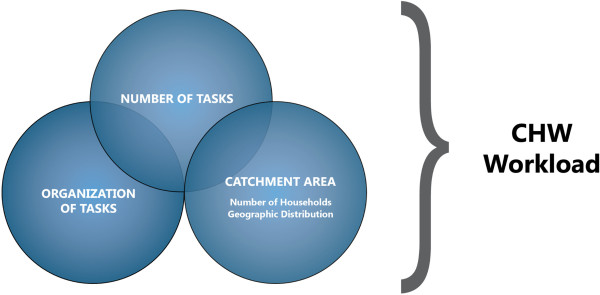
BACKGROUND: Community health workers (CHWs) are increasingly recognized as a critical link in improving access to services and achieving the health-related Millennium Development Goals. Given the financial and human resources constraints in developing countries, CHWs are expected to do more without necessarily receiving the needed support to do their jobs well. How much can be expected of CHWs before work overload and reduced organizational support negatively affect their productivity, the quality of services, and in turn the effectiveness of the community-based programmes that rely on them? This article presents policy-makers and programme managers with key considerations for a model to improve the work environment as an important approach to increase CHW productivity and, ultimately, the effectiveness of community-based strategies. METHODS: A desk review of selective published and unpublished articles and reports on CHW programs in developing countries was conducted to analyse and organize findings on the elements that influence CHW productivity. The search was not exhaustive but rather was meant to gather information on general themes that run through the various documents to generate perspectives on the issue and provide evidence on which to formulate ideas. After an initial search for key terminology related to CHW productivity, a snowball technique was used where a reference in one article led to the discovery of additional documents and reports. RESULTS: CHW productivity is determined in large part by the conditions under which they work. Attention to the provision of an enabling work environment for CHWs is essential for achieving high levels of productivity. We present a model in which the work environment encompasses four essential elements-workload, supportive supervision, supplies and equipment, and respect from the community and the health system-that affect the productivity of CHWs. We propose that when CHWs have a manageable workload in terms of a realistic number of tasks and clients, an organized manner of carrying out these tasks, a reasonable geographic distance to cover, the needed supplies and equipment, a supportive supervisor, and respect and acceptance from the community and the health system, they can function more productively and contribute to an effective community-based strategy. CONCLUSIONS: As more countries look to scale up CHW programmes or shift additional tasks to CHWs, it is critical to pay attention to the elements that affect CHW productivity during programme design as well as implementation. An enabling work environment is crucial to maximize CHW productivity. Policy-makers, programme managers, and other stakeholders need to carefully consider how the productivity elements related to the work environment are defined and incorporated in the overall CHW strategy. Establishing a balance among the four elements that constitute a CHW's work environment will help make great strides in improving the effectiveness and quality of the services provided by CHWs.
Overview
The claims and statistics of this paper haven’t been checked yet.
Free: it reads the open-access text and checks the first 5 claims that cite a source we can check. Create a free account to check every claim.
Integrity signals
Registry
Cites
Statistics
Figures

Verification
Claims the paper makes
The claims and statistics of this paper haven’t been checked yet.
Free: it reads the open-access text and checks the first 5 claims that cite a source we can check. Create a free account to check every claim.
Claims other papers make about this one
Each is checked against this paper’s own text: does it say what the citing paper says it does?
The source backs part of the claim, not all of it — or backs it for a different population, condition or comparison.
In the citing paper
“CHWs are overburdened as they are expected to accomplish more although they may not obtain the required support to perform their duties well, such as supportive supervision, training, remuneration, transportation, supplies and equipment, and respect from the community and health system [8].”
From Using mobile phones to improve community health workers performance in low-and-middle-income countries (2020) · cites this paper as [8]
Experimental — accuracy not yet measuredThe cited source says what the claim attributes to it.
In the citing paper
“A supportive work environment, motivation, and competency building are the key factors identified by the framework for strengthening CHW performance [8,9].”
In the citing paper
“This strategy can foster HWs’ motivation to change and promote positive attitudes and behaviours that ultimately improve women’s experiences and health outcomes around childbirth [69–71].”
From Health workers’ perspectives on the quality of maternal and newborn health care around the time of childbirth: Results of the Improving MAternal Newborn carE in the EURO Region (IMAgiNE EURO) project in 12 countries of the World Health Organization European Region (2024) · cites this paper as [70]
Self-check
Percentages, sums and reported differences re-computed from the paper’s own numbers.
The self-check needs the paper’s full text.
Citations
Cites
Achieving child survival goals: potential contribution of community health workers
Haines, A., Sanders, D., Lehmann, U., Rowe, A. K., Lawn, J. E., Jan, S., Walker, D. G., & Bhutta, Z. (2007) · The Lancet · doi:10.1016/s0140-6736(07)60325-0 · Cited by 911 · cited 3×
“provide a supportive environment for CHWs [26].”
BackgroundInfluentialEthiopian Journal of Health Development
Ejhd, E. (2018) · Ethiopian Journal of Health Development · Cited by 906
Baqui, A. H., El-Arifeen, S., Darmstadt, G. L., Ahmed, S., Williams, E. K., Seraji, H. R., Mannan, I., Rahman, S. M., Shah, R., Saha, S. K., et al. (2008) · The Lancet · doi:10.1016/s0140-6736(08)60835-1 · Cited by 588 · cited 1×
“all births because of their high workload, travel distances, and difficulty receiving timely notification of deliveries” [34].”
BackgroundOutcome Effectiveness of Community Health Workers: An Integrative Literature Review
Swider, S. M. (2002) · Public Health Nursing · doi:10.1046/j.1525-1446.2002.19003.x · Cited by 502 · cited 1×
“Success is more likely when CHWs have a clear job description that defines a limited number of tasks [25].”
BackgroundImproving health worker performance : in search of promising practices
Dieleman, M. A., & Harnmeijer, J. W. (2006) · Data Archiving and Networked Services (DANS) · Cited by 296
Bhattacharyya, K., WINCH, P. J., LeBan, K., & Tien, M.-H. (2001) · Cited by 293
Hermann, K., Van Damme, W., Pariyo, G. W., Schouten, E., Assefa, Y., Cirera, A., & Massavon, W. (2009) · Human Resources for Health · doi:10.1186/1478-4491-7-31 · Cited by 252
What difference does ("good") HRM make?
Buchan, J. (2004) · Human Resources for Health · doi:10.1186/1478-4491-2-6 · Cited by 222
Standing, H., & Chowdhury, A. M. R. (2008) · Social Science & Medicine · doi:10.1016/j.socscimed.2008.01.046 · Cited by 173 · cited 1×
“For example, BRAC’s Shasthya Shebikas in Bangladesh have a broad set of job responsibilities to accomplish and yet are considered highly productive and effective in their work [41,42].”
BackgroundCelletti, F., Wright, A., Palen, J., Frehywot, S., Markus, A., Greenberg, A., de Aguiar, R. A. T., Campos, F., Buch, E., & Samb, B. (2010) · AIDS · doi:10.1097/01.aids.0000366082.68321.d6 · Cited by 155 · cited 3×
“Offering CHWs supportive supervision within the structures and functions of the health team demonstrated better outcomes [2].”
BackgroundInfluential
Research works printed but not linked: 15
- Bhutta ZA Lassi ZS Pariyo G Huicho L Global experience of community health workers for delivery of health related Millennium Development Goals: a systematic review, country case studies, and recommendations for integration into national health systems 2010 Geneva, WHO/Global Health Workforce Alliance
- Lehmann U Sanders D Community health workers: what do we know about them? The state of the evidence on programmes, activities, costs and impact on health outcomes of using community health workers 2007 Geneva, WHO Department for Health
- Gilroy KE Winch P Management of sick children by community health workers:intervention models and programme examples 2006 Geneva, WHO/UNICEF
- Ruwoldt P Hassett P Zanzibar health care worker productivity study: preliminary study findings 2007 Chapel Hill, NC, Capacity Project
- Crigler L Hill K Furth R Bjerregaard D Community Health Worker Assessment and Improvement Matrix (CHW AIM): A Toolkit for Improving Community Health Worker Programs and Services 2011 USAID Health Care Improvement Project, Bethesda, MD University Research Co., LLC (URC)
- Ruwoldt P Stilwell B Schaefer L Achieving a more efficient health care workforce. Capacity Project. Presentation at the October 2006 USAID Global Health Mini-University 2006 http://www.login.mini-university.org/connect/d_connect_itemframer.cfm?vsDTTitle=click%20here%2E%2E%2E&dseq=12475&dtseq=49645&emdisc=2&mkey=public1108&vbDTA=0&viNA=0&vsDTA=&PAN=1&bDTC=0&blog=0&vsSH=A
- International Council of Nurses Nurse retention and recruitment: developing a motivated workforce 2005 ICN/WHO, Geneva
- Strachan D Health focused community based agents: motivation and incentives SCALE Project 2010 http://www.malariaconsortium.org/inscale/downloads/motivation-and-incentives-for-community-based-agents-daniel-strachen.pdf. November 8, 2011
- Global Health Work force Alliance Community health workers: key messages 2010 Global Consultation on Community Health Workers, Montreux, Switzerland
- Abbatt F Scaling up health and education workers: community health workers 2005 London, DFID Health Systems Resource Centre
- Perry H Freeman P Gupta S Rassekh BM Community-Based Primary Health Care Working Group, International Health Section. How effective is community-based primary health care in improving the health of children? Summary findings, report to the expert review panel 2009 American Public Health Association, Washington, DC
- Kadzandira JM Chilowa WR The role of health surveillance assistants (HSAs) in the delivery of health services and immunisation in Malawi. Zomba 2001 Centre of Social Science, University of Malawi, Malawi
- UNICEF Evaluation report. Voices from the community in the Sultanate of Oman: local women’s perceptions of community support group volunteers 2000 UNICEF, Oman, Oman
- UNICEF What works for children in South Asia: community health workers 2004 UNICEF South Asia, Katmandu, Nepal
- Ahmed F Community empowerment through micro-finance to improve community health: BRAC’s experience in Bangladesh WHO/SEARO Regional Conference on Revitalizing Primary Health Care 2008 WHO/SEAR, Jakarta 6–8 August 2008. WHO/SEAR, 2008 (http://www.searo.who.int/LinkFiles/Conference_Panel-D1.pdf.)
Cited by
Items 201–300 of 382
Thu, N. T. H., McDonald, F., Witter, S., & Wilson, A. J. (2017) · International Journal of Health Policy and Management · doi:10.15171/ijhpm.2017.134 · Cited by 7
Kozuki, N., & Wuliji, T. (2018) · BMC Health Services Research · doi:10.1186/s12913-018-3131-9 · Cited by 10
“CHW and CHV performance has been studied extensively [5, 7, 8], but fewer studies have examined their productivity [5, 9].”
BackgroundUse of Health Information Technology among Patient Navigators in Community Health Interventions.
Haque, S. N., Ebron, S., Bailey, B., & Blumenfeld, B. H. (2019) · Europe PMC (PubMed Central) · Cited by 12
Gopalakrishnan, L., Patil, S. R., Fernald, L. C. H., Walker, D. M., & Diamond‐Smith, N. (2025) · PLoS ONE · doi:10.1371/journal.pone.0326971 · Cited by 13
“Leveraging CHW capabilities and performance can overcome health system challenges and expand program outreach [40], expediting advancements toward achieving Universal Health Coverage (UHC).”
Okereke, E., Eluwa, G., Akinola, A., Suleiman, I. K., Unumeri, G., & Adebajo, S. B. (2021) · BMC Research Notes · doi:10.1186/s13104-021-05671-z · Cited by 11
“Jaskiewicz W and her colleague defined productivity as healthcare services provided by a healthcare worker over a given period of time [18].”
BackgroundBaynes, C. D., Kanté, A. M., Exavery, A., Tani, K., Sikustahili, G., Mushi, H., Baraka, J., Ramsey, K., Sherr, K., Weiner, B. J., et al. (2023) · PLOS Global Public Health · doi:10.1371/journal.pgph.0002050 · Cited by 11
Mahdia, A. (2024) · Management Studies and Business Journal (PRODUCTIVITY) · doi:10.62207/phea4z38 · Cited by 18
“Providing a safe and healthy working environment is integral to sustainable development and is vital for maximizing productivity in various settings (Kabir et al., 2018; Jaskiewicz & Tulenko, 2012).”
BackgroundSadat, R., & Naser, A. M. (2015) · Global Health Communication · doi:10.1080/23762004.2016.1199939 · Cited by 6
“Workload is a function of the number of households that needs to be covered by each VCM in the catchment area and the distance among the households (Jaskiewicz & Tulenko, 2012).”
BackgroundIshizumi, A., Sutton, R., Mansaray, A., Parmley, L., Eleeza, O., Kulkarni, S., Sesay, T., Conklin, L. M., Wallace, A. S., Akinjeji, A., et al. (2021) · Frontiers in Public Health · doi:10.3389/fpubh.2021.767200 · Cited by 9
“Previous research suggests that CHWs in LMICs tend to be inundated with many tasks (22, 33, 38), which reinforces the results of our assessment.”
ResultDahal, U., Tamang, R. L., Dræbel, T. A., Neupane, D., Koirala, S., Soti, P. B., & Gyawali, B. (2023) · PLOS Global Public Health · doi:10.1371/journal.pgph.0002632 · Cited by 8
Franz, L., Viljoen, M., Askew, S., Brown, M., Dawson, G., Martino, J. M. D., Sapiro, G., Sebolai, K., Seris, N., Shabalala, N., et al. (2024) · PLoS ONE · doi:10.1371/journal.pone.0291883 · Cited by 8
Visagie, B. B., & Pillay, J. (2017) · Health SA Gesondheid · doi:10.1016/j.hsag.2017.04.001 · Cited by 6
Hill, Z. E., Scheelbeek, P., Hamza, Y. A., Amare, Y., & Schellenberg, J. (2020) · Global Health Science and Practice · doi:10.9745/ghsp-d-19-00410 · Cited by 6
“” As such, they can have increased acceptance, respect, and status.(13,14,21,23,24) Trust in CHWs as outsiders can be part of a broader system of hierarchical trust in authorities,(21) which may result in community members feeling obliged to follow advice from CHWs(26) and may reduce a community’s ability to make info…”
BackgroundChesoli, R. N., Mutiso, J. M., & Wamalwa, M. (2020) · Open Agriculture · doi:10.1515/opag-2020-0045 · Cited by 10
“… 399 Social media plays a role in continued professional development ( Jaskiewicz and Tulenko 2012 ) , and health workers received information that they can reread some other time, building their capacity and con fi…”
BackgroundTesfau, Y. B., Gebrehiwot, T. G., Godefay, H., & Kahsay, A. B. (2022) · PLoS ONE · doi:10.1371/journal.pone.0265301 · Cited by 7
Jafree, S. R., Khawar, A., Momina, A. U., & Mahmood, Q. K. (2022) · Primary Health Care Research & Development · doi:10.1017/s1463423622000081 · Cited by 8
“We may derive that even when CHWs are prepared for infection control and management, their response may not be optimal, unless they have organizational, supervisor and coworker support (Jaskiewicz and Tulenko, 2012; Rabbani et al., 2016b; Cometto et al., 2018).”
BackgroundThe effect of epilepsy self-management on productivity at work
Saraç, E., & Yıldız, E. (2024) · Epilepsy & Behavior · doi:10.1016/j.yebeh.2024.109839 · Cited by 5
Adhikari, T. B., Gyawali, B., Rijal, A., Sapkota, A., Högman, M., Karki, A., Sigsgaard, T., Neupane, D., & Kallestrup, P. (2022) · PLOS Global Public Health · doi:10.1371/journal.pgph.0000253 · Cited by 8
“The widely discussed remuneration and overburdening of CHWs with multiple roles is a matter of concern and also revealed in our qualitative findings [34, 37].”
BackgroundBabughirana, G., Gerards, S. M. P. L., Mokori, A., Baigereza, I. C., Magala, A. B., Kwikiriza, R., Alum, V., Mukiza, D., Kremers, S., & Gubbels, J. S. (2023) · Sexual & Reproductive Healthcare · doi:10.1016/j.srhc.2023.100845 · Cited by 5
Siddiqi, D. A., Miraj, F., Munir, M., Naz, N., Shaikh, A. F., Khan, A. W., Dossa, S., Nadeem, I., Hargraves, M., Urban, J., et al. (2024) · Medical Humanities · doi:10.1136/medhum-2022-012576 · Cited by 9
“They frequently report dissatisfaction, occupational stress and security concerns, and suffer work burn-out and fatigue (Jaskiewicz and Tulenko 2012).”
Jongdeepaisal, M., Sirimatayanant, M., Khonputsa, P., Hein, P. S., Buback, L., Beyeler, N., Chebbi, A., & Maude, R. J. (2024) · PLOS Global Public Health · doi:10.1371/journal.pgph.0003597 · Cited by 7
Mohapatra, S., Girish, N., & Senthil Kumaran, D. (2017) · JOURNAL OF CLINICAL AND DIAGNOSTIC RESEARCH · doi:10.7860/jcdr/2017/24691.9530 · Cited by 7
Watson, G., Patel, K., Leng, D., Vanna, D., Khut, S., Prak, M., & Turner, C. (2020) · BMJ Open · doi:10.1136/bmjopen-2019-035449 · Cited by 7
Irenso, A. A., Letta, S., Chemeda, A. S., Asfaw, A., Egata, G., Assefa, N., Campbell, K. J., & Laws, R. (2021) · Nutrients · doi:10.3390/nu13030838 · Cited by 5
“The productivity of community health workers such as HEWs and HDA leaders depends on knowledge and skills, motivation, and their work environment (supportive supervision and workload) [56].”
Backgroundde Bruijn, A. L. (2021) · Cambridge University Press eBooks · doi:10.1017/9781108759458.044 · Cited by 16
Rabbani, F., Khan, H. A., Piryani, S., Pradhan, N. A., Shaukat, N., Feroz, A. S., & Perveen, S. (2021) · Journal of Multidisciplinary Healthcare · doi:10.2147/jmdh.s334844 · Cited by 6
“Indeed, studies on CHWs have found that lay workers function more productively when they have a manageable workload, a reasonable geographic distance to cover, adequate supplies and equipment, a supportive supervisor, and community acceptance.(12,42,43) This study had some limitations, and the findings should be viewe…”
BackgroundPenagos, Y., & Arrivillaga, M. (2021) · Gerencia y Políticas de Salud · doi:10.11144/javeriana.rgps20.pips · Cited by 13
“El PSC es un facilitador intercultural al ser un nexo entre el equipo de salud y las comunidades indígenas (28,29) y su efectividad depende de una adecuada articulación con la red de atención, capacitación, seguimiento y remuneración (30,31).”
BackgroundImpact of Quality of Work Life on Turnover Intention: A Study on Private Health Care Units in Odisha
Nayak, T. (2016) · Cited by 12
Opportunities for human resources for health and rehabilitation: a response to Jesus et al.
Power, J., McVeigh, J., Gilmore, B., & MacLachlan, M. (2017) · Human Resources for Health · doi:10.1186/s12960-017-0244-x · Cited by 6
A Community-Based Intervention for Hypertension in Rural South Asia
Hejjaji, V., & Khetan, A. K. (2020) · New England Journal of Medicine · doi:10.1056/nejmc2006112 · Cited by 5
Holmes, L., Fenta, T. B., Haile, A., Lith, L. M. V., Burgess, S., Vandermark, J., Babalola, S. O., Amare, H., Tilahun, A., Shattuck, D. C., et al. (2025) · Studies in Family Planning · doi:10.1111/sifp.70000 · Cited by 4
Burgess, S., Fenta, T. B., Haile, A., Souffrant, J., Shattuck, D. C., Lith, L. M. V., Moore, J. R., & Hendrickson, Z. M. (2025) · BMC Women s Health · doi:10.1186/s12905-025-03744-w · Cited by 5
“Though this approach can be effective, task shifting can generate new challenges; CHWs can become overburdened [54].”
Godana, K. T., Birhanu, Z., Germossa, G. N., Eba, K., Hailu, F. B., Assefa, Y. A., Damme, W. V., & Decat, P. (2025) · PLoS ONE · doi:10.1371/journal.pone.0324377 · Cited by 7
“Additionally, in Peru, trust fostered a sense of empowerment and ownership over health initiatives, leading to sustainable improvements [95].”
Zanchetta, M. S., Mésenge, C., Hared, A., & Elisme, M. P. (2018) · Santé Publique · doi:10.3917/spub.185.0535 · Cited by 4
Chinkhumba, J., Low, D., Ziphondo, E., Msowoya, L., Rao, D. W., Smith, J. S., Schouten, E. J., Mwapasa, V., Gadama, L. A., Barnabas, R. V., et al. (2022) · BMC Health Services Research · doi:10.1186/s12913-022-08577-z · Cited by 6
“Discussion Multi-tasking of CHWs to increase population coverage with innovative community-based interventions may come at a cost to core CHWs services such as delivery of expanded program of immunisation and integrated management of childhood illness [12].”
BackgroundGadhavi, K., Pandit, N. B., & Pankaj, N. (2024) · Cureus · doi:10.7759/cureus.56667 · Cited by 4
Dewa, C. S., Che, Z., Guggenbickler, A. M., Phan, R. Q., & Pollock, B. (2022) · PLoS ONE · doi:10.1371/journal.pone.0270488 · Cited by 4
“A safe, supportive, and community-based work environment is of great benefit to workforces in terms of physical and mental well-being and sense of community [18].”
BackgroundJiang, Q., Wang, B., Qian, Y., Emmers, D., Li, S., Pappas, L., Tsai, E., Sun, L., Singh, M. K., Fernald, L. C. H., et al. (2023) · BMJ Open · doi:10.1136/bmjopen-2023-076644 · Cited by 5
“⇒ The rapid urbanisation in China could lead to potential attrition of a substantial portion of the sample due to rural- to-urban migration.”
BackgroundAlroy, K. A., Gwom, L. C., Ndongo, C. B., Kenmoe, S., Monamele, C. G., Clara, A. W., Whitaker, B., Manga, H., Tayimetha, C. Y., Tseuko, D., et al. (2020) · Influenza and Other Respiratory Viruses · doi:10.1111/irv.12684 · Cited by 4
Ziabari, S. S. H., & Shakerian, S. (2020) · International Journal of Community Medicine and Public Health · doi:10.18203/2394-6040.ijcmph20200411 · Cited by 4
“supportive supervision was a one of the most important factors in creating and maintaining an enabling work field.(1)”
BackgroundBaseline Assessment of Primary Healthcare Delivery Through Subcenters of Northern India
Goel, S., Verma, M., Kishore, K., Upadhyay, K., & Sharma, V. (2019) · Cureus · doi:10.7759/cureus.6391 · Cited by 4
Amponsah, S. B., Osei, E., & Aikins, M. (2020) · BioMed Research International · doi:10.1155/2020/1259323 · Cited by 4
“Jaskiewicz contended that Community Health Workers (CHWs) have special supervision needs, usually because of the short duration of their training and mostly because they practice alone and are required to reach out to families in the communities [8].”
BackgroundSlow Work: The Mainstream Concept
Silvestre, M. J., Gonçalves, S. P., & Velez, M. J. (2024) · Social Sciences · doi:10.3390/socsci13030178 · Cited by 6
“Moreover, overwork for long working hours has negative implications on the quality of life of workers and does not translate into greater productivity for organisations or better workers’ performance (Babbar and Aspelin 1998; Burke 2009; Jaskiewicz and Tulenko 2012; Panigrahi 2016).”
BackgroundPrimary Healthcare Under One Roof: Way Out of Primary Healthcare Dilemma
Ogunmodede, O. T., Kolawole, I. O., Ohaeri, B. M., & Babarimisa, O. (2024) · British Journal of Multidisciplinary and Advanced Studies · doi:10.37745/bjmas.2022.04109 · Cited by 4
“Furthermore, community health workers have a vital role in the effectiveness of PHCUOR and should be provided with sufficient training and assistance to provide necessary healthcare services and promote health education among communities (Jaskiewicz & Tulenko, 2012).”
BackgroundMelo, E. A., Probst, L. F., Guerra, L. M., Tagliaferro, E. P. D. S., De‐Carli, A. D., & Pereira, A. C. (2021) · BMC Public Health · doi:10.1186/s12889-021-12319-x · Cited by 5
“Worldwide, CHAs are seen as an important link to increase the access of communities to services, especially for people living in areas of greater vulnerability and, thus, to accelerate and sustain the progress in meeting health targets in Sustainable Development Goals (SDGs) [36, 37].”
BackgroundSuryani, N. P., Agustina, H. R., Eriyani, T., & Setyorini, D. (2023) · Jurnal Aisyah Jurnal Ilmu Kesehatan · doi:10.30604/jika.v8i3.2005 · Cited by 3
“…using a manual search technique to find grey literature through search engines such as Google Scholar and nursing organization websites and adapted the snowball technique to identify additional sources following the used references and recommended sources (Jaskiewicz & Tulenko, 2012; Wohlin, 2014).”
Pothapragada, T. M., Onge, J. M. S., & Brooks, J. V. (2019) · Journal of Ambulatory Care Management · doi:10.1097/jac.0000000000000303 · Cited by 3
“Organizational dynamics are an important component in the job satisfaction of CHWs that can directly affect the ability of those CHWs to perform their roles effectively (Jaskiewicz & Tulenko, 2012).”
BackgroundResultDrivers of Cordial Employee Relations: The Study of a State-owned Public Sector Undertaking
Sahoo, R., & Sahoo, C. K. (2018) · Management and Labour Studies · doi:10.1177/0258042x18754428 · Cited by 3
“Jaskiewicz and Tulenko (2012) examined that safe and healthy work Source: Authors’ own. environment will enable workers to give their best and perform effectively and efficiently.”
BackgroundPatro, C. S. (2019) · Advances in business strategy and competitive advantage book series · doi:10.4018/978-1-7998-0357-7.ch017 · Cited by 3
Supportive Supervision for Community Health Workers: A Systems-Thinking Approach
Coyle, C., Travers, Á., Creaner, M., Mariam, D. H., & Vallières, F. (2022) · Oxford University Press eBooks · doi:10.1093/oso/9780198799498.003.0004 · Cited by 6
Malaria prevention and control in Ethiopia
Kassa, D. H. (2014) · Unisa Institutional Repository (University of South Africa) · Cited by 5
Bigirimana, J. B., & Luginaah, I. (2020) · Research Square · doi:10.21203/rs.3.rs-44141/v1 · Cited by 3
Siddiqi, D. A., Memon, M., Miraj, F., Iftikhar, S., Shah, M. T., Hargraves, M., Urban, J., & Chandir, S. (2025) · Journal of Moral Education · doi:10.1080/03057240.2025.2484039 · Cited by 2
“Productivity in the health sector can be defined as the services provided by health workers over a given period of time (Jaskiewicz & Tulenko, 2012).”
Bibhakar, P., Sinha, M., & Baba, W. (2025) · Discover Public Health · doi:10.1186/s12982-025-00931-w · Cited by 6
Lin, J. T., Hsieh, J.-H. E., Wang, P.-C. P., & Lin, C.-W. D. (2025) · Humanities and Social Sciences Communications · doi:10.1057/s41599-025-06043-9 · Cited by 7
“To ensure thoroughness, our research process also involved the “ snowball ” technique by reviewing additional sources cited within the articles and existing studies on the impact of VR on well-being (Jaskiewicz & Tulenko, 2012; Pham et al., 2014; Zhou et al., 2024).”
Kagwanja, N., Oyando, R., Hassan, S., Diallo, B. A., Badjie, J., Lucinde, R. K., Mumba, N., Kinyanjui, S., Perel, P., Etyang, A. O., et al. (2026) · Health Policy and Planning · doi:10.1093/heapol/czag020 · Cited by 6
“Studies from Cameroon, Mozambique, and Zambia report similar healthcare provider concerns around quality of care (Yakam and Gruénais 2009, Ferrinho et al. 2012) and increased workload (Jaskiewicz and Tulenko 2012).”
Khodaveisi, M., Jafari, A., Omidi, A., & Roshanaei, G. (2017) · Journal of Health Promotion Managment · doi:10.21859/jhpm-06041 · Cited by 2
Landudjama, L., Rachmawati, S. D., & Zuhriyah, L. (2021) · Australasian Emergency Care · doi:10.1016/j.auec.2021.03.003 · Cited by 2
STRESS AMONG LADY HEALTH WORKERS: A SPECIAL REVIEW OF PAKISTAN
Hashim, M., Manj, Y. N., & Cheema, M. T. (2021) · Pakistan Journal of Social Research · doi:10.52567/pjsr.v3i3.273 · Cited by 3
Chham, S., Ir, P., van Olmen, J., Buffel, V., Sok, N., Hay, V., van de Put, W. A. C. M., Damme, W. V., & Wouters, E. (2026) · PLoS ONE · doi:10.1371/journal.pone.0351958 · Cited by 3
“Previous studies have pointed out that the essential elements for an effective work environment for CHWs include supplies and equipment, supportive supervision, and respect from the community [23,37].”
Munyai, O., Mudau, A. G., & Mashau, N. S. (2024) · MethodsX · doi:10.1016/j.mex.2024.102850 · Cited by 4
“Community Health Worker (CHW) is an all-encompassing term to mean a health care worker who received standardized training outside the normal medical curricula and has a defined role in community health and the larger health system [ 6 ].”
BackgroundGupta, S., Chatterjee, A., Singhal, K., Pakhare, A. P., & Joshi, A. (2025) · Cureus · doi:10.7759/cureus.86648 · Cited by 3
“While multitasking is often unavoidable in such settings, it significantly adds to the workload and dilutes the quality of supervision [41,45-48].”
'Community engagement: the ‘C’ at the heart of CMAM'
Gray, N., & Bedford, J. (2014) · Cited by 5
Developing Capacity in Nutrition
Fanzo, J., & Graziose, M. M. (2017) · Springer eBooks · doi:10.1007/978-3-319-43739-2_4 · Cited by 3
Horsman, K. L., Sullivan, M., & Giacumo, L. A. (2021) · Performance Improvement Quarterly · doi:10.1002/piq.21370 · Cited by 2
CONFLICT OF DOMESTIC AND PROFESSIONAL DUTIES AMONG LADY HEALTH WORKERS
Din, N. S. U., Jabeen, T., & Meer, Y. (2021) · Pakistan Journal of Social Research · doi:10.52567/pjsr.v3i3.225 · Cited by 4
Suhartana, S., & Yuniawati (2022) · Croatian journal of forest engineering · doi:10.5552/crojfe.2023.1724 · Cited by 2
“Jaskiewicz and Tulenko (2012) state that the health system affects the productivity of community health workers.”
BackgroundEmpowering Community Health Workers With Scripted Medicine: Design Science Research Study
Staehelin, D., Schmid, D., Gerber, F., Dolata, M., & Schwabe, G. (2025) · JMIR Human Factors · doi:10.2196/57545 · Cited by 3
“However, CHW acceptance and overall health outcomes also depend on the quality of the social interactions between CHWs and their clients [52,53].”
InfluentialAlibhai, A., Kipp, W. E., Saunders, L. D., Rubaale, T., Mill, J., & Konde-Lule, J. K. (2016) · Global Public Health · doi:10.1080/17441692.2016.1170179 · Cited by 2
“Jaskiewicz and Tulenko (2012) found that distances that CHWs have to travel reduce productivity, which may relate to the effect we found on treatment outcomes.”
BackgroundTulchinsky, T. H., Varavikova, E. A., & Cohen, M. J. (2023) · Elsevier eBooks · doi:10.1016/b978-0-12-822957-6.00001-6 · Cited by 2
An analysis of health service delivery performance in Rwanda
Lannes, L. (2015) · London School of Economics and Political Science Theses Online (London School of Economics and Political Science) · Cited by 3
Panday, S. (2016) · White Rose eTheses Online (University of Leeds, The University of Sheffield, University of York) · Cited by 4
Valente, E. P., Mariani, I., Bomben, A., Morano, S., Gemperle, M., Otelea, M. R., Miani, C., Elden, H., Sarantaki, A., Costa, R., et al. (2024) · Journal of Global Health · doi:10.7189/jogh.14.04164 · Cited by 2
OPIMBI, O. A., Kathuri‐Ogola, L., & Muriithi, J. K. (2021) · Strategic Journal of Business & Change Management · doi:10.61426/sjbcm.v8i2.1996 · Cited by 1
Juneja, S., & Kumar, A. (2021) · Indian Journal of Community Health · doi:10.47203/ijch.2021.v33i03.020 · Cited by 1
Factors of labor productivity of employees of a cardiology medical organization
Popsuyko, A. N., Алексеевна, Б. Е., Макаров, С. А., MOROZOVA, E. A., & Artamonova, G. V. (2022) · Lomonosov Economics Journal · doi:10.38050/01300105202239 · Cited by 1
Motivational Factors on Job Productivity: Case Southeast Asia Nonprofit Organization
(2024) · Quality - Access to Success · doi:10.47750/qas/25.200.32 · Cited by 2
A Case Study of India's Agricultural Supply Chain
Kalidhasan, M. (2023) · SKIPS Anveshan · doi:10.53031/skips.4.2.2023.11 · Cited by 1
Yadav, P., Kumar, A., & Kansal, S. (2024) · Indian Journal of Community Health · doi:10.47203/ijch.2024.v36i03.008 · Cited by 1
“The study findings are generally aligned with published research in the field (12-13) Nevertheless, the present findings also suggest that the success of any program is more likely when frontline health workers have a clear job description that defines a limited number of tasks to perform through…”
BackgroundResultGendemeh, C., Khajuria, A., & Gendemeh, F. B. (2025) · Santosh University Journal of Health Sciences · doi:10.4103/sujhs.sujhs_21_25 · Cited by 1
Roy, R., Chopra, A., Lall, G., Jangra, D., Maganti, M., Patel, V., & Divan, G. (2026) · PLOS Global Public Health · doi:10.1371/journal.pgph.0005434 · Cited by 3
“While there is consensus to implement such parenting programs at scale, existing child care systems are inadequately resourced and overstretched [5] and may overburden existing CBWs and impact their performance if due attention is not given to their work environment [6].”
Kistnasamy, C., & Baldavoo, K. (2026) · Economics Management and Sustainability · doi:10.14254/jems.2026.11-1.10 · Cited by 1
“The search involved pooling relevant papers and using a “snowball” method , reviewing references within found papers to identify further studies (Hepplestone et al., 2011; Jaskiewicz & Tulenko, 2012).”
CRS implementation from Western to the Islamic Perspective: Maqasid al-Shari‘ah and Maslahah
Zubaidah, S., & Mudrifah, M. (2019) · KnE Social Sciences · doi:10.18502/kss.v3i13.4245 · Cited by 5
“From an Islamic perspective, the distribution and utilization of natural resources for business purposes must ensure that no environmental damage is carried out (Arsad et al., 2015; Beekun & Badawi, 2005; Jaskiewicz & Tulenko, 2012; Solangi, Islam, Saidur, Rahim, & Fayaz, 2011).”
BackgroundPatro, C. S. (2021) · IGI Global eBooks · doi:10.4018/978-1-6684-2405-6.ch025 · Cited by 1
Molina, P., Cerda, R., Rojas, D. A. E., Véjar, L. I., & Espinoza, Y. P. A. G. (2022) · Global Health Promotion · doi:10.1177/17579759221076583 · Cited by 6
“Así también, demasiadas actividades reducirían la calidad de estas y la productividad del PCS, obligándolo a priorizar sus actividades en función de factores como la factibilidad o la preferencia (27).”
BackgroundDewi, P. S., & Alviani, D. (2023) · Jurnal Manajemen Bisnis · doi:10.18196/mb.v14i2.17648 · Cited by 5
A Start-Up’s Performance Through Digital Marketing
Rajalakshmi, V. (2023) · SKIPS Anveshan · doi:10.53031/skips.4.2.2023.02 · Cited by 1
Human Resource Planning and Change Management: A Study on ‘HR’ Analytics for Sustainable Businesses
Kumar, M. A., & Prabhakar, P. V. V. (2023) · SKIPS Anveshan · doi:10.53031/skips.4.2.2023.09 · Cited by 1
Pollution, Information, and Migration
Wang, M.-D., & Ding, Z. (2025) · Asian Development Review · doi:10.1142/s0116110525400025 · Cited by 1
Village health work in the primary healthcare of Zimbabwe: Health workers’ perspectives
Munyai, O., Mudau, A. G., & Mashau, N. S. (2025) · PLoS ONE · doi:10.1371/journal.pone.0326956 · Cited by 1
“…VHWs value healthcare system recognition in terms of improved financial and nonfinancial incentives, an enabling work environment, supportive supervision and mentorship [31,32] Click or tap here to enter text.. Integrating VHWs into the healthcare system was also reportedly effective in Nigeria.”
Enhancing the Utility of Community Health Workers in Disaster Preparedness, Resiliency, and Recovery
Nicholls, K., Picou, J. S., & Lowman, J. (2014) · International Oil Spill Conference Proceedings · doi:10.7901/2169-3358-2014.1.170 · Cited by 3
Impacts of community lay-leader health worker training and practice (Uttarakhand, India)
Butcher, N., & Grills, N. (2017) · Christian Journal for Global Health · doi:10.15566/cjgh.v4i2.162 · Cited by 1
Hoffmann, R. (2019) · Journal of Global Health · doi:10.7189/jogh.09.010435 · Cited by 2
Dixit, S. (2020) · International Journal of Nursing & Midwifery Research · doi:10.24321/2455.9318.201926 · Cited by 1
Henry, J. V. (2021) · Oxford University Press eBooks · doi:10.1093/oso/9780198866244.003.0007 · Cited by 1
Din, N. S. U., & Jabeen, T. (2023) · Pakistan Journal of Applied Social Sciences · doi:10.46568/pjass.v14i1.686 · Cited by 1
“…not very much satisfied with the attitude and services of health care facility staff available at different community level health care centers (2012), which found that the performance of Community Health Workers (CHWs) is influenced by the acknowledgement and recognition of services of CHWs…”
BackgroundShega, S. A. (2014) · University of the Witwatersrand, Johannesburg Institutional Repository on DSpace (University of the Witwatersrand, Johannesburg) · Cited by 2
Gupta, S., Chatterjee, A., Joshi, A., & Pakhare, A. P. (2021) · Preprints.org · doi:10.20944/preprints202111.0454.v1 · Cited by 1
“Logistic constraints – such as financial and mobility – have been found to be a common bottleneck across settings (8,23,28,30,31).”
Background
Metadata
- Authors
- Jaskiewicz, W., & Tulenko, K.
- Affiliations
- IntraHealth International (US)
- Corresponding author
- Jaskiewicz, Wanda
- ORCID
- Jaskiewicz, Wanda
- Venue
- Human Resources for Health
- Published
- 2012-09-27
- Volume
- 10
- Issue
- 1
- Pages
- 38-38
- ISSN
- 1478-4491 (ISSN-L)
- PMC
- PMC3472248
- OpenAlex
- W2115117400
- Cited by
- 381
- References
- 29
- Citations by year
- 2026: 16 · 2025: 17 · 2024: 30 · 2023: 49 · 2022: 32 · 2021: 41 · 2020: 33 · 2019: 28 · 2018: 30 · 2017: 24 · 2016: 21 · 2015: 22 · 2014: 26 · 2013: 12
- FWCI
- 33.09
- Type
- journal article
- Language
- en
- Open access
- gold
- doi.org
- Licence
- cc-by
- creativecommons.org/licenses/by/2.0 (tdm)
- Locations
- Human Resources for Health (publishedVersion, cc-by)
- Europe PMC (PubMed Central) (publishedVersion, cc-by)
- PubMed Central (publishedVersion, cc-by)
- PubMed (publishedVersion)
- DOAJ (DOAJ: Directory of Open Access Journals) (submittedVersion)
- Funders
- United States Agency for International Development
- Topics
- Health Sciences › Medicine › Public Health, Environmental and Occupational Health › Global Health Workforce Issues
- Health Sciences › Medicine › Pediatrics, Perinatology and Child Health › Global Maternal and Child Health
- Health Sciences › Medicine › Public Health, Environmental and Occupational Health › Healthcare Systems and Practices
- Keywords
- community health workers, work environment, workload, supportive supervision, community acceptance, community health programs, healthcare workers, developing countries
About these checks
Registry, retraction, Cites and statistics results are computed, not judged, with one exception: a printed reference that no index lists is read once by a model before it counts as a citation error. Claims are extracted by a model and kept only when their quote appears verbatim in the text; each cited source is then checked, with a model’s help, for whether it says what the claim relies on. Those verdicts can be wrong — read the claim’s quote and the cited source before relying on one.
Statistics and arithmetic are recomputed, not judged.
Confidence bands are shown only for fields calibrated on our annotated test set. None is calibrated yet, so no band is shown.
What counts as a claim ›How we measure confidence ›How we check this ›
Are you an author, or do you see a problem with this page? Request a review
Data sources
Bibliographic data: Semantic Scholar, OpenAlex, Crossref.
Contains information from the Semantic Scholar Academic Graph Datasets, made available under the ODC Attribution License (ODC-BY 1.0).
Semantic Scholar’s data is described in: Kinney, R., et al. (2023). The Semantic Scholar Open Data Platform. arXiv:2301.10140.
