

Increasing community health worker productivity and effectiveness: a review of the influence of the work environment
Open accessThe DOI matches its Crossref record; 27 of the 29 references it cites were found in a registry or an index.
Abstract
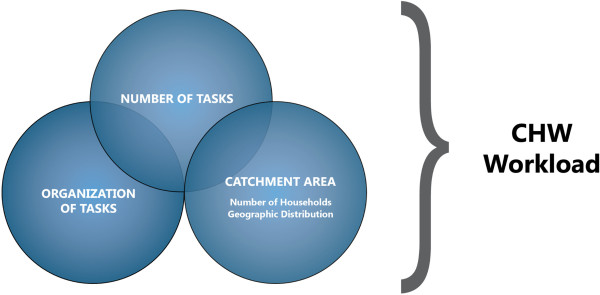
BACKGROUND: Community health workers (CHWs) are increasingly recognized as a critical link in improving access to services and achieving the health-related Millennium Development Goals. Given the financial and human resources constraints in developing countries, CHWs are expected to do more without necessarily receiving the needed support to do their jobs well. How much can be expected of CHWs before work overload and reduced organizational support negatively affect their productivity, the quality of services, and in turn the effectiveness of the community-based programmes that rely on them? This article presents policy-makers and programme managers with key considerations for a model to improve the work environment as an important approach to increase CHW productivity and, ultimately, the effectiveness of community-based strategies. METHODS: A desk review of selective published and unpublished articles and reports on CHW programs in developing countries was conducted to analyse and organize findings on the elements that influence CHW productivity. The search was not exhaustive but rather was meant to gather information on general themes that run through the various documents to generate perspectives on the issue and provide evidence on which to formulate ideas. After an initial search for key terminology related to CHW productivity, a snowball technique was used where a reference in one article led to the discovery of additional documents and reports. RESULTS: CHW productivity is determined in large part by the conditions under which they work. Attention to the provision of an enabling work environment for CHWs is essential for achieving high levels of productivity. We present a model in which the work environment encompasses four essential elements-workload, supportive supervision, supplies and equipment, and respect from the community and the health system-that affect the productivity of CHWs. We propose that when CHWs have a manageable workload in terms of a realistic number of tasks and clients, an organized manner of carrying out these tasks, a reasonable geographic distance to cover, the needed supplies and equipment, a supportive supervisor, and respect and acceptance from the community and the health system, they can function more productively and contribute to an effective community-based strategy. CONCLUSIONS: As more countries look to scale up CHW programmes or shift additional tasks to CHWs, it is critical to pay attention to the elements that affect CHW productivity during programme design as well as implementation. An enabling work environment is crucial to maximize CHW productivity. Policy-makers, programme managers, and other stakeholders need to carefully consider how the productivity elements related to the work environment are defined and incorporated in the overall CHW strategy. Establishing a balance among the four elements that constitute a CHW's work environment will help make great strides in improving the effectiveness and quality of the services provided by CHWs.
Overview
The claims and statistics of this paper haven’t been checked yet.
Free: it reads the open-access text and checks the first 5 claims that cite a source we can check. Create a free account to check every claim.
Integrity signals
Registry
Cites
Statistics
Figures

Verification
Claims the paper makes
The claims and statistics of this paper haven’t been checked yet.
Free: it reads the open-access text and checks the first 5 claims that cite a source we can check. Create a free account to check every claim.
Claims other papers make about this one
Each is checked against this paper’s own text: does it say what the citing paper says it does?
The source backs part of the claim, not all of it — or backs it for a different population, condition or comparison.
In the citing paper
“CHWs are overburdened as they are expected to accomplish more although they may not obtain the required support to perform their duties well, such as supportive supervision, training, remuneration, transportation, supplies and equipment, and respect from the community and health system [8].”
From Using mobile phones to improve community health workers performance in low-and-middle-income countries (2020) · cites this paper as [8]
Experimental — accuracy not yet measuredThe cited source says what the claim attributes to it.
In the citing paper
“A supportive work environment, motivation, and competency building are the key factors identified by the framework for strengthening CHW performance [8,9].”
In the citing paper
“This strategy can foster HWs’ motivation to change and promote positive attitudes and behaviours that ultimately improve women’s experiences and health outcomes around childbirth [69–71].”
From Health workers’ perspectives on the quality of maternal and newborn health care around the time of childbirth: Results of the Improving MAternal Newborn carE in the EURO Region (IMAgiNE EURO) project in 12 countries of the World Health Organization European Region (2024) · cites this paper as [70]
Self-check
Percentages, sums and reported differences re-computed from the paper’s own numbers.
The self-check needs the paper’s full text.
Citations
Cites
Achieving child survival goals: potential contribution of community health workers
Haines, A., Sanders, D., Lehmann, U., Rowe, A. K., Lawn, J. E., Jan, S., Walker, D. G., & Bhutta, Z. (2007) · The Lancet · doi:10.1016/s0140-6736(07)60325-0 · Cited by 911 · cited 3×
“provide a supportive environment for CHWs [26].”
BackgroundInfluentialEthiopian Journal of Health Development
Ejhd, E. (2018) · Ethiopian Journal of Health Development · Cited by 906
Baqui, A. H., El-Arifeen, S., Darmstadt, G. L., Ahmed, S., Williams, E. K., Seraji, H. R., Mannan, I., Rahman, S. M., Shah, R., Saha, S. K., et al. (2008) · The Lancet · doi:10.1016/s0140-6736(08)60835-1 · Cited by 588 · cited 1×
“all births because of their high workload, travel distances, and difficulty receiving timely notification of deliveries” [34].”
BackgroundOutcome Effectiveness of Community Health Workers: An Integrative Literature Review
Swider, S. M. (2002) · Public Health Nursing · doi:10.1046/j.1525-1446.2002.19003.x · Cited by 502 · cited 1×
“Success is more likely when CHWs have a clear job description that defines a limited number of tasks [25].”
BackgroundImproving health worker performance : in search of promising practices
Dieleman, M. A., & Harnmeijer, J. W. (2006) · Data Archiving and Networked Services (DANS) · Cited by 296
Bhattacharyya, K., WINCH, P. J., LeBan, K., & Tien, M.-H. (2001) · Cited by 293
Hermann, K., Van Damme, W., Pariyo, G. W., Schouten, E., Assefa, Y., Cirera, A., & Massavon, W. (2009) · Human Resources for Health · doi:10.1186/1478-4491-7-31 · Cited by 252
What difference does ("good") HRM make?
Buchan, J. (2004) · Human Resources for Health · doi:10.1186/1478-4491-2-6 · Cited by 222
Standing, H., & Chowdhury, A. M. R. (2008) · Social Science & Medicine · doi:10.1016/j.socscimed.2008.01.046 · Cited by 173 · cited 1×
“For example, BRAC’s Shasthya Shebikas in Bangladesh have a broad set of job responsibilities to accomplish and yet are considered highly productive and effective in their work [41,42].”
BackgroundCelletti, F., Wright, A., Palen, J., Frehywot, S., Markus, A., Greenberg, A., de Aguiar, R. A. T., Campos, F., Buch, E., & Samb, B. (2010) · AIDS · doi:10.1097/01.aids.0000366082.68321.d6 · Cited by 155 · cited 3×
“Offering CHWs supportive supervision within the structures and functions of the health team demonstrated better outcomes [2].”
BackgroundInfluential
Research works printed but not linked: 15
- Bhutta ZA Lassi ZS Pariyo G Huicho L Global experience of community health workers for delivery of health related Millennium Development Goals: a systematic review, country case studies, and recommendations for integration into national health systems 2010 Geneva, WHO/Global Health Workforce Alliance
- Lehmann U Sanders D Community health workers: what do we know about them? The state of the evidence on programmes, activities, costs and impact on health outcomes of using community health workers 2007 Geneva, WHO Department for Health
- Gilroy KE Winch P Management of sick children by community health workers:intervention models and programme examples 2006 Geneva, WHO/UNICEF
- Ruwoldt P Hassett P Zanzibar health care worker productivity study: preliminary study findings 2007 Chapel Hill, NC, Capacity Project
- Crigler L Hill K Furth R Bjerregaard D Community Health Worker Assessment and Improvement Matrix (CHW AIM): A Toolkit for Improving Community Health Worker Programs and Services 2011 USAID Health Care Improvement Project, Bethesda, MD University Research Co., LLC (URC)
- Ruwoldt P Stilwell B Schaefer L Achieving a more efficient health care workforce. Capacity Project. Presentation at the October 2006 USAID Global Health Mini-University 2006 http://www.login.mini-university.org/connect/d_connect_itemframer.cfm?vsDTTitle=click%20here%2E%2E%2E&dseq=12475&dtseq=49645&emdisc=2&mkey=public1108&vbDTA=0&viNA=0&vsDTA=&PAN=1&bDTC=0&blog=0&vsSH=A
- International Council of Nurses Nurse retention and recruitment: developing a motivated workforce 2005 ICN/WHO, Geneva
- Strachan D Health focused community based agents: motivation and incentives SCALE Project 2010 http://www.malariaconsortium.org/inscale/downloads/motivation-and-incentives-for-community-based-agents-daniel-strachen.pdf. November 8, 2011
- Global Health Work force Alliance Community health workers: key messages 2010 Global Consultation on Community Health Workers, Montreux, Switzerland
- Abbatt F Scaling up health and education workers: community health workers 2005 London, DFID Health Systems Resource Centre
- Perry H Freeman P Gupta S Rassekh BM Community-Based Primary Health Care Working Group, International Health Section. How effective is community-based primary health care in improving the health of children? Summary findings, report to the expert review panel 2009 American Public Health Association, Washington, DC
- Kadzandira JM Chilowa WR The role of health surveillance assistants (HSAs) in the delivery of health services and immunisation in Malawi. Zomba 2001 Centre of Social Science, University of Malawi, Malawi
- UNICEF Evaluation report. Voices from the community in the Sultanate of Oman: local women’s perceptions of community support group volunteers 2000 UNICEF, Oman, Oman
- UNICEF What works for children in South Asia: community health workers 2004 UNICEF South Asia, Katmandu, Nepal
- Ahmed F Community empowerment through micro-finance to improve community health: BRAC’s experience in Bangladesh WHO/SEARO Regional Conference on Revitalizing Primary Health Care 2008 WHO/SEAR, Jakarta 6–8 August 2008. WHO/SEAR, 2008 (http://www.searo.who.int/LinkFiles/Conference_Panel-D1.pdf.)
Cited by
Items 301–382 of 382
Mental health for all: enhancing implementation of mental health task sharing globally
Dev, S. (2021) · Digital Repository Service (Northeastern University) · doi:10.17760/d20416628 · Cited by 1
Kanyaru, J. M., Njeru, M. K., Muli, B. M., & Micheni, R. (2026) · Research Square · doi:10.21203/rs.3.rs-8732386/v1 · Cited by 1
Biles, J. M., Biles, B. J., & McMillan, F. (2015) · Student Success · doi:10.5204/intjfyhe.v6i1.221
Hope and despair 3/3: pluses and minuses for community health assistants in rural Zambia
Zulu, J. M., Michelo, C., Kinsman, J., Hurtig, A., & Zulu, J. M. (2016) · British Journal of Healthcare Assistants · doi:10.12968/bjha.2016.10.1.31 · Cited by 1
عباچی, ا. (2016) · Modern Applied Science · doi:10.5539/mas.v10n5p21 · Cited by 1
“Jaskiewicz & Tulenko (2012) in their research on “Increasing community health worker productivity and effectiveness” concluded that an organized manner of carrying out tasks, a reasonable geographic distance to cover, the needed supplies and equipment, a supportive supervisor, and respect and…”
BackgroundPredictors of community health workers retention in service in Makueni County, Kenya
Kithuka, P. (2014) · Kenyatta University Institutional Repository (Kenyatta University) · Cited by 3
Mpshane, S. (2017) · UpSpace Institutional Repository (University of Pretoria)
The Higher Price of Cigarettes and Students’ Intention to Stop Smoking
Widati, S., & Solekhah, S. A. (2017) · Annual Meeting of the Indonesian Health Economics Association (INAHEA) · doi:10.5220/0007030103420346
The community health worker (CHW)
Lankester, T. (2019) · Oxford University Press eBooks · doi:10.1093/med/9780198806653.003.0008 · Cited by 1
Tsolekile, L. P. (2018) · University of the Western Cape Electronic Theses and Dissertations Repository (University of the Western Cape) · Cited by 1
Abdel-All, M. (2019) · The Sydney eScholarship Repository (The University of Sydney)
Factors Affecting the Motivation and Productivity at the Workplace
Maqsood, Z., Sardar, I., & Kumar, B. (2020) · Advances in religious and cultural studies (ARCS) book series · doi:10.4018/978-1-7998-3737-4.ch011
Haq, Z. U. (2013) · Scholar Commons (University of South Carolina) · Cited by 1
Ergonomic analysis through good manufacturing practice (gmp) training (case: Binjai MSME)
Huda, L. N., & Athaullah, R. (2021) · E3S Web of Conferences · doi:10.1051/e3sconf/202133205002
Kelley, M. C., & Fancourt, N. P. M. (2021) · Oxford University Press eBooks · doi:10.1093/oso/9780198866244.003.0011 · Cited by 2
Bank, W. (2014) · World Bank, Washington, DC eBooks · doi:10.1596/978-1-4648-0342-0_ch8
The Relationship of Leadership Productivity and Work Environment on Local Labor Productivity
Saad, S., Zaimah, R., & Lyndon, N. (2023) · International Journal of Academic Research in Business and Social Sciences · doi:10.6007/ijarbss/v13-i5/17135 · Cited by 1
Coulibaly, G. L., Farand, L., & Champagne, F. (2023) · Santé Publique · doi:10.3917/spub.232.0183 · Cited by 1
Well-Being of Academics During COVID-19: Findings from a Quick Scoping Review
Prakash, N., & Radhakrishnan, S. (2023) · Human Arenas · doi:10.1007/s42087-023-00374-2
Saúde bucal na Atenção Primária à Saúde
Melo, E. A. (2022) · doi:10.47749/t/unicamp.2022.1244929
Work Environment and Employee Productivity: The Role of Job Satisfaction
Boahen, P. A. N., Duah, E., Ababio, E., & Appiah‐Kubi, E. (2023) · European Journal of Business and Management · doi:10.7176/ejbm/15-19-06
Chaomuang, N., Panya, R., Saokaew, S., & Umnuaypornlert, A. (2024) · Journal of the American Pharmacists Association · doi:10.1016/j.japh.2024.02.003 · Cited by 1
"Investigating the Cultural Motives of Sri Lankans Towards Propensity of International Outshopping"
Mello, G., & Weerasekera, S. (2023) · SKIPS Anveshan · doi:10.53031/skips.4.2.2023.22
Pawar, V. S., Narkhede, S. P., & Patil, K. T. (2023) · SKIPS Anveshan · doi:10.53031/skips.4.2.2023.21
Lalwani, G., & Arora, P. (2023) · SKIPS Anveshan · doi:10.53031/skips.4.2.2023.20
Revealing the Digital Shopper: A Comprehensive Review of Consumer Behaviour in Online Shopping
Vyas, D. M., & Vyas, H. D. (2023) · SKIPS Anveshan · doi:10.53031/skips.4.2.2023.15 · Cited by 2
Neve, S. S., & Warke, N. P. (2023) · SKIPS Anveshan · doi:10.53031/skips.4.2.2023.01
"The Relationship Between A Reward System & Employee Performance, Motivation as A Mediating Factor"
Kaur, R., & Kaur, R. (2023) · SKIPS Anveshan · doi:10.53031/skips.4.2.2023.13 · Cited by 2
ESG Practices at Global Level and its Impact on Investment and Behavioral Finance
Bhatt, K., & Patel, J. (2023) · SKIPS Anveshan · doi:10.53031/skips.4.2.2023.05 · Cited by 1
The Impact of Work Environment on Employee’s Productivity: An Empirical Study of GACL Limited
Sanghavi, H. (2023) · SKIPS Anveshan · doi:10.53031/skips.4.2.2023.08 · Cited by 1
Parikh, M. S., & Jani, J. M. (2023) · SKIPS Anveshan · doi:10.53031/skips.4.2.2023.18 · Cited by 1
Impact of Capital Structure on Profitability of GSFC Ltd.
Patel, H., Virparia, V., & Goswami, V. (2023) · SKIPS Anveshan · doi:10.53031/skips.4.2.2023.17
Tallore, T. P., & Rao, M. (2023) · SKIPS Anveshan · doi:10.53031/skips.4.2.2023.07
Pant, M., Nigade, V., Gattani, A., Tiwari, S., & Dangi, J. (2023) · SKIPS Anveshan · doi:10.53031/skips.4.2.2023.04 · Cited by 1
A Study on Trends in Advanced Marketing Strategies
Iliyas, M. (2023) · SKIPS Anveshan · doi:10.53031/skips.4.2.2023.12 · Cited by 1
Ravichandran, R., & Laxman Rao, G. (2023) · SKIPS Anveshan · doi:10.53031/skips.4.2.2023.03
Totla, N., & Rathaur, S. (2023) · SKIPS Anveshan · doi:10.53031/skips.4.2.2023.16
"Anthology: Smart Factory 4.O "
Lᴏᴋsʜᴀɴᴀ, M. E., & Rᴀʜᴜʟ, R. (2023) · SKIPS Anveshan · doi:10.53031/skips.4.2.2023.19
Sustainable Initiatives During Economic Crisis: Insights from Multinational Enterprises in Sri Lanka
Weerasekera, S. (2023) · SKIPS Anveshan · doi:10.53031/skips.4.2.2023.06 · Cited by 1
Title: E-Wallet Adoption Trends: Unraveling Consumer Preferences in Financial Transactions
Upadhyay, D., & Pandit, R. (2023) · SKIPS Anveshan · doi:10.53031/skips.4.2.2023.23
A Study on Green Initiatives by Automobile Companies in India
Karthika, J. (2023) · SKIPS Anveshan · doi:10.53031/skips.4.2.2023.14
FAKTOR FAKTOR YANG MEMPENGARUHI PROSES RECOVERY PADA ORANG DENGAN SKIZOFRENIA : SCOPING REVIEW
Widianti, E., Suryani, N. P. A., Nirmala, N. M., Yulianti, N. D., Azizah, P. N., & Hendrawati, H. (2022) · Jurnal Cakrawala Ilmiah · doi:10.53625/jcijurnalcakrawalailmiah.v2i3.4033
“Teknik snowball mengacu pada penggunaan daftar referensi atau kutipan literatur yang ada dalam hasil pencarian untuk menemukan artikel relevan lainnya yang mungkin terlewatkan oleh strategi pencarian atau diindeks dengan buruk (Jaskiewicz & Tulenko, 2012).”
BackgroundBudget Policy, Productivity: A Case of public health centers in Indonesia
Mardaleta, Putra, Z., Muzakir, Damrus, & Yusnaidi (2024) · International Journal of Research Publications · doi:10.47119/ijrp1001481520246442 · Cited by 1
Mohseni, F., Zare, F., Garmabi, B., Azizi, A., & Mirrezaie, S. M. (2024) · Journal of Substance Use · doi:10.1080/14659891.2024.2356583
“Monitoring and paying attention to the health of medical employees improves the quality of health services in the community (Jaskiewicz & Tulenko, 2012).”
Bhattarai, S., & van Teijlingen, E. (2024) · Journal of Manmohan Memorial Institute of Health Sciences · doi:10.3126/jmmihs.v9i1.68640 · Cited by 1
“Generally, being over working has a negative impact in the overall productivity of workers [19, 20].”
BackgroundNyabundi, A. A., Nyambedha, E. O., Merten, S., & Ombere, S. O. (2024) · Humanities and Social Sciences Communications · doi:10.1057/s41599-024-04124-9 · Cited by 1
“Jaskiewicz and Tulenko (2012) noted that CHVs need support in supervision, training, remu-neration, transportation, supplies, equipment, and respect from the community and health system.”
Wang, D., Boutain, D. M., Kim, E., Lim, S., & Nofziger, R. M. (2025) · Family & Community Health · doi:10.1097/fch.0000000000000434
Biks, G. A., Shiferie, F., Negash, K., Tsegaye, D. A., Damtew, A., Berhanu, G., Ewnetie, S., Abate, T., Ralph-Opara, U., Alemayehu, W. A., et al. (2025) · doi:10.12688/verixiv.845.1
Assessing the General Health System of Cyprus: a questionnaire analysis based on public perception
Evripides, G., & Christodoulides, P. (2025) · Archives of Public Health · doi:10.1186/s13690-025-01654-9 · Cited by 2
Agustian, Syaifuddin, S., & Lubis, F. R. A. (2025) · International Journal of Computational and Experimental Science and Engineering · doi:10.22399/ijcesen.3222
Yong, N. B., Flore, N. N., Niba, L. L., & Teke, G. N. (2025) · medRxiv · doi:10.1101/2025.08.28.25334621
Krishnaratne, S., Hamon, J. K., Hoyt, J., Chantler, T., Landegger, J., Spilotros, N., Demissie, S. D., Mohammed, S., & Webster, J. (2021) · Figshare · doi:10.6084/m9.figshare.13545128
Ogutu, M., Muraya, K., Mockler, D., & Darker, C. (2021) · Figshare · doi:10.6084/m9.figshare.17087860
Chinkhumba, J., Low, D., Ziphondo, E., Msowoya, L., Rao, D., Smith, J. S., Schouten, E. J., Mwapasa, V., Gadama, L. A., Barnabas, R. V., et al. (2022) · Figshare · doi:10.6084/m9.figshare.21200758
Aron, M. B., Ndambo, M. K., Munyaneza, F., Mulwafu, M., Makungwa, H., Nhlema, B., & Connolly, E. (2023) · Figshare · doi:10.6084/m9.figshare.23583702
Ndambo, M. K., Munyaneza, F., Aron, M. B., Nhlema, B., & Connolly, E. (2022) · Figshare · doi:10.6084/m9.figshare.19164398
Tikkanen, R. S., Closser, S., Prince, J., Chand, P., & Justice, J. (2024) · Figshare · doi:10.6084/m9.figshare.25599861
Straw, C., Antelo, V. S., Kohler, R. E., Paolino, M., Viswanath, K., & Arrossi, S. (2024) · Figshare · doi:10.6084/m9.figshare.26562286
Thomas, L. S., Buch, E., & Pillay, Y. (2021) · Figshare · doi:10.6084/m9.figshare.14059666
Ndambo, M. K., Munyaneza, F., Aron, M. B., Nhlema, B., & Connolly, E. (2022) · Figshare · doi:10.6084/m9.figshare.19164395
Straw, C., Antelo, V. S., Kohler, R. E., Paolino, M., Viswanath, K., & Arrossi, S. (2024) · Figshare · doi:10.6084/m9.figshare.26562292
Straw, C., Antelo, V. S., Kohler, R. E., Paolino, M., Viswanath, K., & Arrossi, S. (2024) · Figshare · doi:10.6084/m9.figshare.26562289
Pesse Valente, E., Mariani, I., Bomben, A., Morano, S., Gemperle, M., Oțelea, M. R., Miani, C., Elden, H., Sarantaki, A., Costa, R., et al. (2024) · Zürcher Hochschule für Angewandte Wissenschaften digital collection (Zurich University of Applied Sciences) · doi:10.21256/zhaw-31456
Thomas, L. S., Buch, E., & Pillay, Y. (2021) · Figshare · doi:10.6084/m9.figshare.14059669
Melo, E. A., Probst, L. F., Guerra, L. M., Tagliaferro, E. P. D. S., De‐Carli, A. D., & Pereira, A. C. (2021) · Figshare · doi:10.6084/m9.figshare.17149636
Thomas, L. S., Buch, E., & Pillay, Y. (2021) · Figshare · doi:10.6084/m9.figshare.14059663
Okereke, E., Eluwa, G., Akinola, A., Suleiman, I., Unumeri, G., & Adebajo, S. (2021) · Figshare · doi:10.6084/m9.figshare.14889808
Okereke, E., Eluwa, G., Akinola, A., Suleiman, I., Unumeri, G., & Adebajo, S. (2021) · Figshare · doi:10.6084/m9.figshare.14889811
Evaluating National Health Systems: The Case of the General Health System of Cyprus Through a Survey
Evripides, G., & Christodoulides, P. (2026) · Health Science Reports · doi:10.1002/hsr2.71539 · Cited by 1
Arora, H., Goel, S., Yadav, R., Sharma, V. L., & Sharma, V. (2026) · Indian Journal of Community Medicine · doi:10.4103/ijcm.ijcm_419_25
“[19] This observation aligns with findings by Ojakaa D (2009), [20] highlighting the positive impact of collaborative and well‑supported environments on improving health workers’ performance.”
Zhao, Y., Lee, D., & Bala, H. (2026) · Production and Operations Management · doi:10.1177/10591478261433367 · Cited by 1
“Following previous healthcare studies (Hasan et al., 2021; Jaskiewicz and Tulenko, 2012), we define healthcare professionals’ productivity as the volume of health-care services provided (outputs) relative to the number of healthcare professionals employed (labor inputs).”
InfluentialNghikevali, D. M., Ashipala, D. O., & Amadhila, J. (2026) · Health SA Gesondheid · doi:10.4102/hsag.v31i0.3245
Rokicki, S., Won, S. H., & Kantor, L. M. (2026) · Journal of Primary Care & Community Health · doi:10.1177/21501319261426753
“34”
Godana, K. T., Birhanu, Z., Nemera, G., Eba, K., Hailu, F. B., Assefa, Y. A., Damme, W. V., & Decat, P. (2026) · PLoS ONE · doi:10.1371/journal.pone.0351989
Ngari, M. M., Chea, S. K., Mwamsidu, C. M., Sanga, D., Katana, G. G., Thuva, F. M., Onyango, G. U., Kamau, C., & Abdullahi, O. A. (2026) · medRxiv · doi:10.64898/2026.07.28.26359180
Khajuria, S., & Sudan, F. K. (2026) · Discover Public Health · doi:10.1186/s12982-026-02424-w
“The effectiveness of global community health workforces depends directly on financial incentives that arrive on time and keep their promised value, according to [9].”
InfluentialMwesiga, M. D., Irumba, L. C., Low, C. S. L., van Veen, C., van de Weijer, N., Gros, S., van de Ven, D., Linsen, W., Zalwango, J., Basirika, D., et al. (2026) · Palliative Care and Social Practice · doi:10.1177/26323524261473935
“36,38,39 Finally, coordination needs a national body to harmonise NGOs, secure funding for training and stipends, and pilot community recognition programmes to boost morale and sustainability.”
InfluentialHarjana, N. P. A., Basuki, A. D., Miranda, A. V., Mufida, R., Sophiani, L., Asmara, R., & Rastuti, M. (2026) · Research Square · doi:10.21203/rs.3.rs-10938890/v1
Nabwera, H., Parekh, M., Gaetean, B. K., Were, F., Agbla, S. C., Barsosio, H. C., Tindi, L., Boga, M., Kimani, M., Juma, D., et al. (2026) · International Health · doi:10.1093/inthealth/ihag076
Metadata
- Authors
- Jaskiewicz, W., & Tulenko, K.
- Affiliations
- IntraHealth International (US)
- Corresponding author
- Jaskiewicz, Wanda
- ORCID
- Jaskiewicz, Wanda
- Venue
- Human Resources for Health
- Published
- 2012-09-27
- Volume
- 10
- Issue
- 1
- Pages
- 38-38
- ISSN
- 1478-4491 (ISSN-L)
- PMC
- PMC3472248
- OpenAlex
- W2115117400
- Cited by
- 381
- References
- 29
- Citations by year
- 2026: 16 · 2025: 17 · 2024: 30 · 2023: 49 · 2022: 32 · 2021: 41 · 2020: 33 · 2019: 28 · 2018: 30 · 2017: 24 · 2016: 21 · 2015: 22 · 2014: 26 · 2013: 12
- FWCI
- 33.09
- Type
- journal article
- Language
- en
- Open access
- gold
- doi.org
- Licence
- cc-by
- creativecommons.org/licenses/by/2.0 (tdm)
- Locations
- Human Resources for Health (publishedVersion, cc-by)
- Europe PMC (PubMed Central) (publishedVersion, cc-by)
- PubMed Central (publishedVersion, cc-by)
- PubMed (publishedVersion)
- DOAJ (DOAJ: Directory of Open Access Journals) (submittedVersion)
- Funders
- United States Agency for International Development
- Topics
- Health Sciences › Medicine › Public Health, Environmental and Occupational Health › Global Health Workforce Issues
- Health Sciences › Medicine › Pediatrics, Perinatology and Child Health › Global Maternal and Child Health
- Health Sciences › Medicine › Public Health, Environmental and Occupational Health › Healthcare Systems and Practices
- Keywords
- community health workers, work environment, workload, supportive supervision, community acceptance, community health programs, healthcare workers, developing countries
About these checks
Registry, retraction, Cites and statistics results are computed, not judged, with one exception: a printed reference that no index lists is read once by a model before it counts as a citation error. Claims are extracted by a model and kept only when their quote appears verbatim in the text; each cited source is then checked, with a model’s help, for whether it says what the claim relies on. Those verdicts can be wrong — read the claim’s quote and the cited source before relying on one.
Statistics and arithmetic are recomputed, not judged.
Confidence bands are shown only for fields calibrated on our annotated test set. None is calibrated yet, so no band is shown.
What counts as a claim ›How we measure confidence ›How we check this ›
Are you an author, or do you see a problem with this page? Request a review
Data sources
Bibliographic data: Semantic Scholar, OpenAlex, Crossref.
Contains information from the Semantic Scholar Academic Graph Datasets, made available under the ODC Attribution License (ODC-BY 1.0).
Semantic Scholar’s data is described in: Kinney, R., et al. (2023). The Semantic Scholar Open Data Platform. arXiv:2301.10140.
