

The DOI matches its Crossref record; 25 of the 25 references it cites were found in a registry or an index.
The promise of competency-based education in the health professions for improving global health
Open accessAbstract
Competency-based education (CBE) provides a useful alternative to time-based models for preparing health professionals and constructing educational programs. We describe the concept of 'competence' and 'competencies' as well as the critical curricular implications that derive from a focus on 'competence' rather than 'time'. These implications include: defining educational outcomes, developing individualized learning pathways, setting standards, and the centrality of valid assessment so as to reflect stakeholder priorities. We also highlight four challenges to implementing CBE: identifying the health needs of the community, defining competencies, developing self-regulated and flexible learning options, and assessing learners for competence. While CBE has been a prominent focus of educational reform in resource-rich countries, we believe it has even more potential to align educational programs with health system priorities in more resource-limited settings. Because CBE begins with a careful consideration of the competencies desired in the health professional workforce to address health care priorities, it provides a vehicle for integrating the health needs of the country with the values of the profession.
Overview
The claims and statistics of this paper haven’t been checked yet.
Run the check — free, no account needed. It reads the open-access text and checks the sources it cites.
Integrity signals
Registry
Cites
Statistics
Figures
Verification
Claims the paper makes
The claims and statistics of this paper haven’t been checked yet.
Run the check — free, no account needed. It reads the open-access text and checks the sources it cites.
Claims other papers make about this one
Each is checked against this paper’s own text: does it say what the citing paper says it does?
The cited source says what the claim attributes to it.
In the citing paper
“The implementation of OSCE-style assessment demonstrates strong alignment with competency-based education (CBE) frameworks, which emphasise demonstration of specific, measurable skills rather than written articulation [29,30].”
From Clinical assessment meets laboratory science: adapting OSCE methodology for authentic biosciences evaluation in the age of generative AI (2025) · cites this paper as [30]
Self-check
Percentages, sums and reported differences re-computed from the paper’s own numbers.
The self-check needs the paper’s full text.
Citations
Cites
Frenk, J., Chen, L., Bhutta, Z. A., Cohen, J., Crisp, N., Evans, T., Fineberg, H., Garcia, P., Ke, Y., Kelley, P., et al. (2010) · The Lancet · doi:10.1016/s0140-6736(10)61854-5 · Cited by 5,960
The assessment of clinical skills/competence/performance
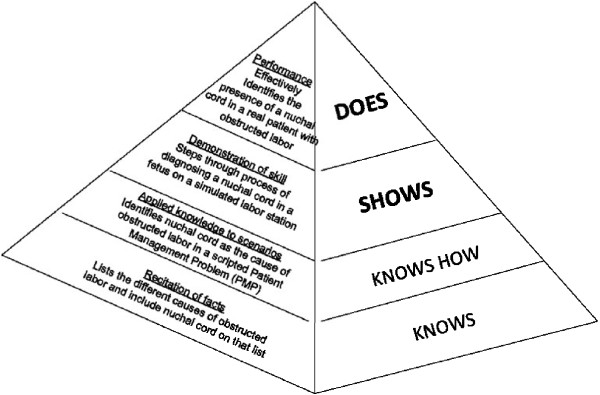
Miller, G. E. (1990) · Academic Medicine · doi:10.1097/00001888-199009000-00045 · Cited by 4,883
Defining and Assessing Professional Competence
Epstein, R. M. (2002) · JAMA · doi:10.1001/jama.287.2.226 · Cited by 3,114
Assessment in medical education
Epstein, R. M. (2007) · New England Journal of Medicine · doi:10.1056/nejmra054784 · Cited by 1,872
ten Cate, O., & Scheele, F. (2007) · Academic Medicine · doi:10.1097/acm.0b013e31805559c7 · Cited by 1,162
Workplace-based assessment as an educational tool: AMEE Guide No. 31
Norcini, J., & Burch, V. (2007) · Medical Teacher · doi:10.1080/01421590701775453 · Cited by 984
The effectiveness of self‐directed learning in health professions education: a systematic review
Murad, M. H., Yglesias, F. C., Varkey, P., Prokop, L. J., & Murad, A. L. (2010) · Medical Education · doi:10.1111/j.1365-2923.2010.03750.x · Cited by 454
The relationship between competence and performance: implications for assessing practice performance
Rethans, J.-J., Norcini, J. J., Maldonado, M. B., Blackmore, D. E., Jolly, B. C., LaDuca, T., Lew, S. R., Page, G. G., & Southgate, L. J. (2002) · Medical Education · doi:10.1046/j.1365-2923.2002.01316.x · Cited by 405
Setting standards on educational tests
Norcini, J. J. (2003) · Medical Education · doi:10.1046/j.1365-2923.2003.01495.x · Cited by 315
Defining characteristics of educational competencies
Albanese, M. A., Mejicano, G. C., Mullan, P. B., Kokotailo, P. K., & Gruppen, L. D. (2008) · Medical Education · doi:10.1111/j.1365-2923.2007.02996.x · Cited by 300
Self-citation
Cited by
Sorted by citations
Items 201–300 of 356
Climate change professionals’ perspectives on the competencies for One Health graduates
McMullen, C. K., Clow, K. M., Aenishaenslin, C., Lackeyram, D., Gandhi, R. K., & Parmley, E. J. (2025) · Research Directions One Health · doi:10.1017/one.2025.3 · Cited by 3
Competency-Based Education in Medical Internship: Integrative Review
Teixeira, L. C., Pellis, I. C., Teixeira, É. F. S., Vaz, R. S., & Prado, M. R. M. (2020) · Journal of Education and Training Studies · doi:10.11114/jets.v8i7.4863 · Cited by 3
Development and Validation of a New Competency Framework for Athletic Therapy in Canada
Lafave, M. R., Owen, J. M., Eubank, B., & DeMont, R. G. (2021) · Athletic Training Education Journal · doi:10.4085/1947-380x-20-080 · Cited by 3
Cho, M., & Choi, M. (2021) · Nursing Open · doi:10.1002/nop2.1021 · Cited by 3
Nguyen, A. T. H., Kunaviktikul, W., Stone, T. E., Sripusanapan, A., Thungjaroenkul, P., & Pham, D. T. T. (2022) · F1000Research · doi:10.12688/f1000research.122867.1 · Cited by 3
[Development of the INSABI educational strategy: a lesson learned from the COVID-19 epidemic].
Toledo-Ortiz, R., González-Rojas, J. M., Molina-Vallejo, L. E., Mendoza-Velásquez, J. J., Romero-Casillas, Y., Cano-Collado, L. A., la Rosa-Cruz, S. A. D., Juárez-Medel, C. A., & González-Bonilla, C. R. (2023) · PubMed Central · Cited by 3
Muganzi, D. J., Kintu, T. M., Nakandi, R. M., Atulinda, L., Atim, I. K., Mwaka, F., Kizza, B., & Ngonzi, J. N. J. (2024) · BMC Medical Education · doi:10.1186/s12909-024-06456-1 · Cited by 3
A Systematic Review of Competency-Based Education Effort in the Health Professions
Wu, W., Martin, B. C., & Chen, N. (2016) · Advances in higher education and professional development book series · doi:10.4018/978-1-5225-0932-5.ch018 · Cited by 3
Holmqvist, M., Button, P., & Heath, O. J. (2019) · Canadian Psychology/Psychologie canadienne · doi:10.1037/cap0000180 · Cited by 3
Steinmair, D., Zervos, K., Wong, G., & Löffler‐Stastka, H. (2022) · World Journal of Psychiatry · doi:10.5498/wjp.v12.i2.333 · Cited by 3
Forbes, R., & Mandrusiak, A. (2018) · Journal of Physical Therapy Education · doi:10.1097/jte.0000000000000074 · Cited by 3
Thakuria, B., Bordoloi, P., & Pathak, P. (2024) · Current Medical Issues · doi:10.4103/cmi.cmi_29_24 · Cited by 2
Padilla-Delgado, L. M., Tafur, X. F. V., & Obando, J. F. R. (2024) · Cogent Education · doi:10.1080/2331186x.2024.2393519 · Cited by 2
Tsega, G., Woldie, M. K., Yismaw, G., & Degu, G. (2025) · PLoS ONE · doi:10.1371/journal.pone.0315415 · Cited by 2
Lin, G. S. S., Sim, A. Y. Y., Sana, E. A., & Johnson, G. U. (2025) · Journal of Yeungnam Medical Science · doi:10.12701/jyms.2025.42.43 · Cited by 3
Kes, L., van Wesel, F., Saunders-Smits, G., & Specht, M. M. (2026) · Cogent Education · doi:10.1080/2331186x.2026.2726606 · Cited by 2
Sahu, P. K., Bisong, S., & Addae, J. I. (2017) · Bulletin of Pharmaceutical Research · doi:10.21276/bpr.2017.7.2.1 · Cited by 2
Pawar, R., Vagha, S. J., Pande, V., & Chaudhary, S. M. (2022) · Asian Journal of Medical Sciences · doi:10.3126/ajms.v13i8.44666 · Cited by 2
Speaking the Same Language: A Call for Standardized Lactation Terminology in the United States
Strong, G. D., Gober, M., & Walker, M. (2022) · Journal of Human Lactation · doi:10.1177/08903344221131041 · Cited by 2
Development of human resources for health in Tanzania
Amani, P. J., Ngowi, R., & Dratler, S. (2017) · eajahme · doi:10.58498/eajahme.v1i1.5 · Cited by 2
Ding, W., Guan, Y., Peterhans, B., Hoffmann, A., & Zhou, X. (2023) · Global Health Research and Policy · doi:10.1186/s41256-023-00327-w · Cited by 2
Saudi nursing students’ academic resilience and positive mental health during the COVID-19 pandemic
Alshammari, M. H. (2023) · International Journal of ADVANCED AND APPLIED SCIENCES · doi:10.21833/ijaas.2023.10.024 · Cited by 2
A Typology of US Public Health Work-Education Programs
White, K. M., Drainoni, M., Elliott, P. A., Hurley, M., Cunnington, S., & Greece, J. A. (2024) · Journal of Public Health Management and Practice · doi:10.1097/phh.0000000000002079 · Cited by 2
Walters, A. J., Ng, N., Latimer‐Cheung, A. E., & Tomasone, J. R. (2025) · Adapted Physical Activity Quarterly · doi:10.1123/apaq.2024-0141 · Cited by 2
Negi, G., Harsh, M., Chauhan, V. D., Kalra, V., Agarwal, P., & Kusum, A. (2015) · International Journal of Applied and Basic Medical Research · doi:10.4103/2229-516x.162254 · Cited by 2
Martin, I. B. K., DeVos, E., Jordan, J., Malya, R. R., Tupesis, J. P., Bentley, S., Flemister, A., & Kapur, G. B. (2016) · Apple Academic Press eBooks · doi:10.1201/9781315365787-14 · Cited by 2
Fernandes, L., & Mesquita, A. M. (2018) · Journal of Education and Health Promotion · doi:10.4103/jehp.jehp_75_16 · Cited by 2
Lotter, K., Kidritsch, A., Aftenberger, H., Mayrhofer, G., Polanz, K., Riedl, T., Seiringer, L., Wess, T., Winkler, A., Wolf, B., et al. (2020) · International Journal of Health Professions · doi:10.2478/ijhp-2020-0007 · Cited by 2
Peterson, C. K., Randhawa, K. A., Shaw, L. E., Shobbrook, M., Moss, J., Edmunds, L. V., Potter, D., Pallister, S., & Webster, M. (2022) · Journal of Chiropractic Humanities · doi:10.1016/j.echu.2022.05.001 · Cited by 2
From humble beginnings … the evolution of the FRACS (Urology)
Pirpiris, A., Chung, A. S. J., & Rashid, P. (2017) · ANZ Journal of Surgery · doi:10.1111/ans.13881 · Cited by 2
A multi-university study on the predictors of academic resilience of Saudi nursing students
Alshammari, M. H. (2023) · International Journal of ADVANCED AND APPLIED SCIENCES · doi:10.21833/ijaas.2023.11.003 · Cited by 2
Competency-Based Medical Education in India: A Brief Review
Bhutani, N., Bhutani, N., & Arora, D. (2024) · International Journal of Recent Innovations in Medicine and Clinical Research · doi:10.18231/j.ijrimcr.2024.010 · Cited by 1
Soma, M., Scebold, J., Vasa, A. M., Fitzgerald, T. A., Tyner, K., Lalam, S. K., Beach, S., & Ashraf, M. S. (2024) · Antimicrobial Stewardship & Healthcare Epidemiology · doi:10.1017/ash.2024.32 · Cited by 1
Evaluation of a competency-based CPD programme for pharmacists on asthma care: a feasibility study
Wong, P. H. H., Chau, C. I., Hu, H., & Ung, C. O. L. (2025) · Saudi Pharmaceutical Journal · doi:10.1007/s44446-025-00021-7 · Cited by 1
Nexhip, A., Robinson, K. M., Prasad, N., & Riley, M. M. (2025) · Health Information Management Journal · doi:10.1177/18333583251371255 · Cited by 1
Wootton, M., Linn, K., Myo, K., Maconochie, I. K., Sajjanhar, T., & Han, A. M. (2025) · BMJ Paediatrics Open · doi:10.1136/bmjpo-2025-003744 · Cited by 1
Building Practical Skills in Implementation and Dissemination Science: A Competency-Based Curriculum
Elbur, A. I. (2025) · Journal of Medical Education and Curricular Development · doi:10.1177/23821205251393856 · Cited by 1
Pace, J., & Bartlett, A. D. (2025) · Currents in Pharmacy Teaching and Learning · doi:10.1016/j.cptl.2025.102556 · Cited by 1
Competências essenciais em medicina de família e comunidade para a graduação médica
D'Abreu, N. B., Rizzetto, J. H. S., de Matos, B. P., & Bragança, J. F. (2026) · Revista Brasileira de Medicina de Família e Comunidade · doi:10.5712/rbmfc20(47)4849 · Cited by 1
Xing, W., Ju, H., Pei, C., Guo, Y. G., Tian, L., Ling, H., Guo, T., Cao, B., & Ma, J. (2026) · BMC Medical Education · doi:10.1186/s12909-026-08711-z · Cited by 1
Adopting Pain Management Competencies
Koebner, I. J., & Herr, K. (2013) · Pain Medicine · doi:10.1111/pme.12136 · Cited by 1
Shan, K. (2015) · Arrow - TU Dublin (Technological University Dublin) · doi:10.21427/d7v300 · Cited by 1
Rose, S., Shah, B. J., Onken, J. E., DeCross, A. J., Davis, M. H., Jain, R., Kim, L. S., Persley, K., Pfeil, S. A., & Marks, L. N. (2015) · Clinical Gastroenterology and Hepatology · doi:10.1016/j.cgh.2015.08.016 · Cited by 1
Best Safety Practices Now and in the Future
Edwards, B. D. (2016) · Springer eBooks · doi:10.1007/978-3-319-40400-4_5 · Cited by 1
Development and Implementation of a Competency-Based Curriculum in Undergraduate Nursing Education
Muraraneza, C. (2021) · Springer eBooks · doi:10.1007/978-3-030-78181-1_5 · Cited by 1
A Matrix-Based Guideline to Chemical Engineering Curricular Revision
Kamandhari, H. H., Ponce, S. L., Rodríguez-Zúñiga, Ú. F., & Pantoja, P. A. (2022) · International Journal of Engineering Pedagogy (iJEP) · doi:10.3991/ijep.v12i3.27323 · Cited by 1
Varghese, R., Manickam, N., & Mohanraj, A. (2023) · Journal of Current Research in Scientific Medicine · doi:10.4103/jcrsm.jcrsm_21_23 · Cited by 1
Learning In and About Interprofessional Teams and Wider Collaborations
Thistlethwaite, J. E., & McLarnon, N. (2023) · Springer eBooks · doi:10.1007/978-981-99-3420-1_4 · Cited by 1
Piyasena, P., Dhanapala, M., & Banduthilake, K. (2023) · The Pan-American Journal of Ophthalmology · doi:10.4103/pajo.pajo_37_23 · Cited by 1
Sheffer, C. E., Shevorykin, A., Lemos, R. F., Vantucci, D., Carl, E. M., Bensch, L., Marion, M., Erwin, D. O., Smith, P. H., Williams, J. M., et al. (2023) · Substance Abuse · doi:10.1177/08897077231200987 · Cited by 1
DIGITAL TRANSFORMATION IN HEALTHCARE EDUCATION: PREPARING MEDICAL MANAGERS FOR THE FUTURE
Nalyvaiko, O., & Bachuk, O. (2024) · OPEN EDUCATIONAL E-ENVIRONMENT OF MODERN UNIVERSITY · doi:10.28925/2414-0325.2024.177 · Cited by 1
Ryan, S. M., & Beck, D. E. (2018) · TechTrends · doi:10.1007/s11528-018-0274-9 · Cited by 2
Furness, L., Tynan, A., & Pighills, A. (2018) · Internet Journal of Allied Health Sciences and Practice · doi:10.46743/1540-580x/2018.1725 · Cited by 1
Non-ventilator health care-associated pneumonia (NV-HAP): Taking action to improve NV-HAP outcomes
Davila, S. (2020) · American Journal of Infection Control · doi:10.1016/j.ajic.2020.03.004 · Cited by 1
How to Best Prepare Pharmacy Students for Disaster Management: A Qualitative Study
Wiedyaningsih, C., Nugroho, A. K., Widyakusuma, N. N., & Prasetyo, S. D. (2023) · Disaster Medicine and Public Health Preparedness · doi:10.1017/dmp.2022.289 · Cited by 1
Zhou, Y., Wieringa, T. H., Brouwer, J., Diemers, A. D., & Bos, N. A. (2023) · BMC Medical Education · doi:10.1186/s12909-023-04341-x · Cited by 1
Haque, S., Marques, I. T., Stankutė, I., Bikniūtė, I., Staišiūnaitė, A., & Czabanowska, K. (2023) · South Eastern European Journal of Public Health · doi:10.56801/seejph.vi.238 · Cited by 1
Competency-Based Medical Education and Breast Disease
Lind, D. S., & Jasra, B. (2021) · HCA Healthcare Journal of Medicine · doi:10.36518/2689-0216.1329 · Cited by 1
Editorial: Opportunities and challenges of interprofessional collaboration and education, volume II
Thistlethwaite, J. E., Gilbert, J., Breitbach, A. P., Mohammed, C. A., Müller-Schilling, M., & Schlosser‐Hupf, S. (2025) · Frontiers in Medicine · doi:10.3389/fmed.2025.1598331 · Cited by 1
Careau, E., Savard, I., & Witteman, H. O. (2013) · Medical Science Educator · doi:10.1007/bf03341664
Educação basEada Em compEtências
Fonseca, A. M., & de Oliveira, M. C. (2013) · Portuguese National Funding Agency for Science, Research and Technology (RCAAP Project by FCT)
Puchkova, V. V. (2016) · Research Result Social Studies and Humanities · doi:10.18413/2408-932x-2016-2-1-77-82
Sepako, E. (2018) · SUNScholar (Stellenbosch University)
Cerda-Díaz, L., Carolina, R., Cerda-Díaz, E., Giovanni, O., & Antúnez‐Riveros, M. A. (2018) · Advances in intelligent systems and computing · doi:10.1007/978-3-319-96098-2_68
Jairath, N. K., Fessell, D. P., & Heung, M. (2019) · Michigan Journal of Medicine · doi:10.3998/mjm.13761231.0004.104
Abdelnour, H. M. (2020) · University of the Western Cape Electronic Theses and Dissertations Repository (University of the Western Cape)
Exploring standards of assessment for MHPE programs in Pakistan: Perspective of program directors
Ali, L., Yasmeen, R., & Liaquat, A. (2020) · Journal of Shifa Tameer-e-Millat University · doi:10.32593/jstmu/vol3.iss1.66
Necessary Skills for Effective Preceptors
Roberts, R. M., Butler, K. L., & Phillips, H. J. (2019) · ASHP eBooks · doi:10.37573/9781585286270.003
Time for Change: Insight from the Learning Sciences to Inform Dietitian Education and Credentialing
Whelan, M. (2018) · Journal of Critical Dietetics · doi:10.32920/cd.v4i1.711
Australian chiropractic students' perceptions of education: validation of a questionnaire.
Innes, S. I., Stomski, N. J., Leboeuf‐Yde, C., & Walker, B. F. (2021) · PubMed Central
Chuenkongkaew, W. L., & Wibulpolprasert, S. (2021) · doi:10.1093/med/9780198816805.003.0103
Leading Research in Interprofessional Health Education and Collaborative Medical Practice
Baatar, A., Sandag, O., & Sumberzul, N. (2018) · Central Asian Journal of Medical Sciences · doi:10.24079/cajms.2018.09.001
Muhammad, R., Zahid, M. N., Khan, N. A., Siddiqi, M. U. R., Khan, N. B., & Akhtar, U. A. (2021) · Sustainable Leadership and Academic Excellence International Conference (SLAE) · doi:10.1109/slae54202.2021.9788086
COMPETENCE-BASED ASSESSMENT TOOLS IN FAMILY AND COMMUNITY MEDICINE RESIDENCE: INTEGRATIVE REVIEW
Ibañez, B. M., Pereira, G. V. A., Teixeira, É. F. S., Durand, A. C. M., dos Reis, C. D. S., Siminatto, D. C. B., Vieira, G. S., Bolfe, I., Barbosa, L. D. A. L., Moro, M. J., et al. (2022) · International Journal of Health Science · doi:10.22533/at.ed.1592672203115
Alternative Digital Credentials: UAE’s First Adopters’ Assessment and Evaluation Part (2)
Samar, E.-F. (2022) · International Journal of Learning Teaching and Educational Research · doi:10.26803/ijlter.21.11.11
Competency Driven Approach in Advancing Reforms Agenda: Reinventing India’s Public Health Education
ZODPEY, S. P., & Sharma, A. (2019) · Journal of Comprehensive Health · doi:10.53553/jch.v07i02.001
Piyasena, P., Pető, T., & Congdon, N. G. (2023) · Springer eBooks · doi:10.1007/978-3-031-24052-2_25
Library of Parliament’s Competency-Based New-Librarian Development Program
Fraser-Arnott, M., & Martyn, M. (2023) · Partnership The Canadian Journal of Library and Information Practice and Research · doi:10.21083/partnership.v18i1.7085
Madhva Prasad, S., Pentakota, A., Biswas, P., & Bhaskara, N. V. (2024) · The Journal of Obstetrics and Gynecology of India · doi:10.1007/s13224-024-01951-3
Pain education research: Advances, innovations, and challenges
(2024) · Frontiers research topics · doi:10.3389/978-2-8325-4792-2
Nováková, E., Volfová, A., Miovský, M., & Lososová, A. (2024) · Journal of Substance Use · doi:10.1080/14659891.2024.2417397
Gopalakrishnan, D. (2024) · Journal of Indian Society of Periodontology · doi:10.4103/jisp.jisp_414_24
Developing and Validating a Flipped Classroom Intervention to Improve CPR Competency
Azami, G., & Ebrahimy, B. (2025) · Critical Care Nursing Quarterly · doi:10.1097/cnq.0000000000000550
Maroufi, S. S., Bagheri, N., Majd, P. M., Saei, A., & Abolghasemi, J. (2025) · Journal of Education and Health Promotion · doi:10.4103/jehp.jehp_1368_23
Askarizadeh, N., Shaabani, S., Hemami, M., & Amini, N. (2025) · ̒Ulūm-i tarbiyyatī az dīdgāh-i Islām/̒Ulūm-i tarbiyyatī az dīdgāh-i Islām · doi:10.61186/jrds.22.1.75
Gunarmi, G. (2025) · Jurnal Ners · doi:10.31004/jn.v9i2.42356
Sawer, A., Sadler, T. J., Set, P. A. K., & Riede, P. (2025) · Clinical Radiology · doi:10.1016/j.crad.2025.106995
Kes, L., van Wesel, F., Saunders-Smits, G., & Specht, M. M. (2025) · Research Square · doi:10.21203/rs.3.rs-6429387/v1
Morris, P., McCloskey, R. M., McGill, A., Keeping‐Burke, L., Goudreau, A., Knight, H., Buckley, S., Mazerolle, D. M., & Jones, C. (2025) · JBI Evidence Synthesis · doi:10.11124/jbies-24-00255
Deori, R., & Das, M. (2025) · Indian Journal of Medical Biochemistry · doi:10.5005/jp-journals-10054-0294
Desenvolvimento de competências relacionais nos cursos públicos de terapia ocupacional no Brasil
Bregalda, M. M., & Mângia, E. F. (2025) · Cadernos Brasileiros de Terapia Ocupacional · doi:10.1590/2526-8910.ctoao398338671
Development of relational competencies in public occupational therapy programs in Brazil
Bregalda, M. M., & Mângia, E. F. (2025) · Cadernos Brasileiros de Terapia Ocupacional · doi:10.1590/2526-8910.ctoao398338672
MacKay, M., McAlpine, D., Grant, L. E., Papadopoulos, A., & McWhirter, J. E. (2025) · Journal of Public Health Research · doi:10.1177/22799036251390964
Technological Innovation in Health Professions Education
McDonald, P. L., Ruckert, E., Ekmekci, O., Barnett, J. S., & Straker, H. O. (2017) · Emerald Group Publishing Limited eBooks · doi:10.1108/978-1-68123-860-920251013
Navigating the Competency Revolution in Medical Education
Elmehdawi, R. R., Glessa, S. A., & Al-Areibi, A. (2025) · Libyan International Medical University Journal · doi:10.1055/s-0045-1813215
Kikomeko, P. K., Ochola, S., Kaaya, A. N., Ogada, I. A., Birungi, T. L., & Nakitto, P. (2021) · Figshare · doi:10.6084/m9.figshare.13655312
Ding, W., Guan, Y., Peterhans, B., Hoffmann, A., & Zhou, X.-N. (2024) · Figshare · doi:10.6084/m9.figshare.26634759
Kikomeko, P. K., Ochola, S., Kaaya, A. N., Ogada, I. A., Birungi, T. L., & Nakitto, P. (2021) · Figshare · doi:10.6084/m9.figshare.13655321
Ding, W., Guan, Y., Peterhans, B., Hoffmann, A., & Zhou, X.-N. (2024) · Figshare · doi:10.6084/m9.figshare.26634756
Metadata
- Authors
- Gruppen, L. D., Mangrulkar, R. S., & Kolars, J. C.
- Affiliations
- University of Michigan (US)
- Corresponding author
- Gruppen, Larry D
- Venue
- Human Resources for Health
- Published
- 2012-11-16
- Volume
- 10
- Issue
- 1
- Pages
- 43-43
- ISSN
- 1478-4491 (ISSN-L)
- PMC
- PMC3543172
- OpenAlex
- W2150618433
- Cited by
- 356
- References
- 25
- Citations by year
- 2026: 40 · 2025: 32 · 2024: 46 · 2023: 31 · 2022: 23 · 2021: 32 · 2020: 30 · 2019: 20 · 2018: 31 · 2017: 15 · 2016: 15 · 2015: 15 · 2014: 12 · 2013: 14
- FWCI
- 12.67
- Type
- journal article
- Language
- en
- Open access
- gold
- doi.org
- Licence
- Locations
- Human Resources for Health (publishedVersion, cc-by)
- PubMed Central (publishedVersion, cc-by)
- PubMed (publishedVersion)
- Deep Blue (University of Michigan) (submittedVersion)
- DOAJ (DOAJ: Directory of Open Access Journals) (submittedVersion)
- Topics
- Social Sciences › Education › Innovations in Medical Education
- Health Sciences › Health Professions › General Health Professions › Health and Medical Education
- Social Sciences › Business, Management and Accounting › Organizational Behavior and Human Resource Management › Competency Development and Evaluation
- Keywords
- competency-based education, health professions education, global health, competency definition, curriculum development, educational outcomes, competency assessment, student self-regulation, resource-limited settings, health workforce development, educational reform
About these checks
Registry, retraction, Cites and statistics results are computed, not judged, with one exception: a printed reference that no index lists is read once by a model before it counts as a citation error. Claims are extracted by a model and kept only when their quote appears verbatim in the text; each cited source is then checked, with a model’s help, for whether it says what the claim relies on. Those verdicts can be wrong — read the claim’s quote and the cited source before relying on one.
Statistics and arithmetic are recomputed, not judged.
Confidence bands are shown only for fields calibrated on our annotated test set. None is calibrated yet, so no band is shown.
What counts as a claim ›How we measure confidence ›How we check this ›
Are you an author, or do you see a problem with this page? Request a review
