

Algorithms for enhancing public health utility of national causes-of-death data
Open accessThe DOI matches its Crossref record; 39 of the 42 references it cites were found in a registry or an index.
Abstract
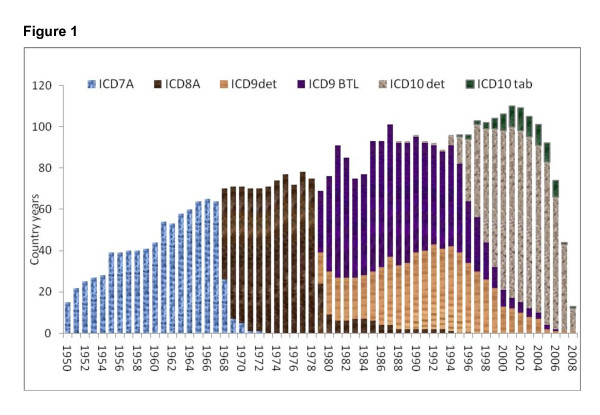
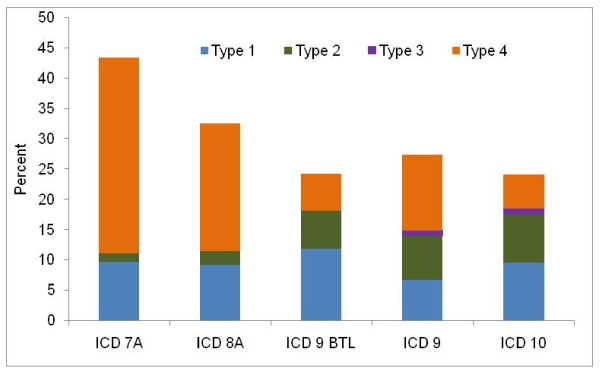
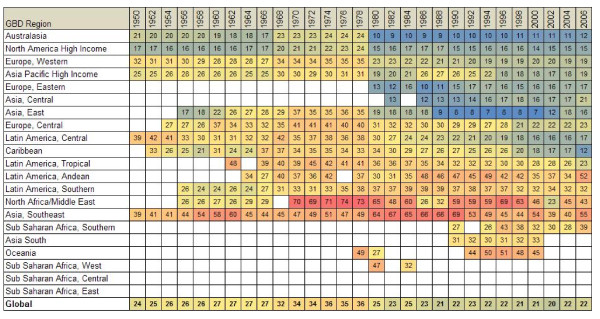
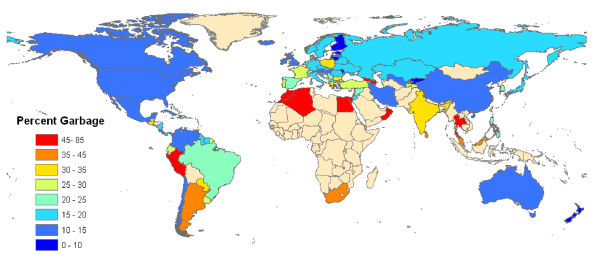
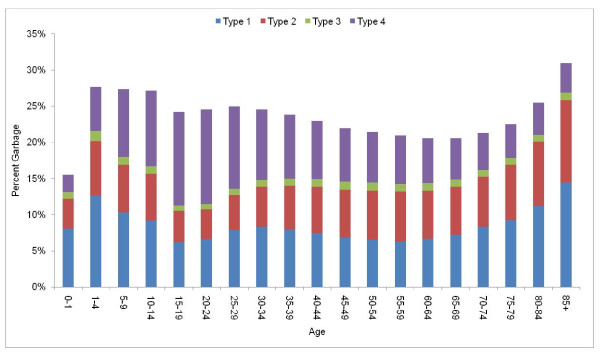
BACKGROUND: Coverage and quality of cause-of-death (CoD) data varies across countries and time. Valid, reliable, and comparable assessments of trends in causes of death from even the best systems are limited by three problems: a) changes in the International Statistical Classification of Diseases and Related Health Problems (ICD) over time; b) the use of tabulation lists where substantial detail on causes of death is lost; and c) many deaths assigned to causes that cannot or should not be considered underlying causes of death, often called garbage codes (GCs). The Global Burden of Disease Study and the World Health Organization have developed various methods to enhance comparability of CoD data. In this study, we attempt to build on these approaches to enhance the utility of national cause-of-death data for public health analysis. METHODS: Based on careful consideration of 4,434 country-years of CoD data from 145 countries from 1901 to 2008, encompassing 743 million deaths in ICD versions 1 to 10 as well as country-specific cause lists, we have developed a public health-oriented cause-of-death list. These 56 causes are organized hierarchically and encompass all deaths. Each cause has been mapped from ICD-6 to ICD-10 and, where possible, they have also been mapped to the International List of Causes of Death 1-5. We developed a typology of different classes of GCs. In each ICD revision, GCs have been identified. Target causes to which these GCs should be redistributed have been identified based on certification practice and/or pathophysiology. Proportionate redistribution, statistical models, and expert algorithms have been developed to redistribute GCs to target codes for each age-sex group. RESULTS: The fraction of all deaths assigned to GCs varies tremendously across countries and revisions of the ICD. In general, across all country-years of data available, GCs have declined from more than 43% in ICD-7 to 24% in ICD-10. In some regions, such as Australasia, GCs in 2005 are as low as 11%, while in some developing countries, such as Thailand, they are greater than 50%. Across different age groups, the composition of GCs varies tremendously - three classes of GCs steadily increase with age, but ambiguous codes within a particular disease chapter are also common for injuries at younger ages. The impact of redistribution is to change the number of deaths assigned to particular causes for a given age-sex group. These changes alter ranks across countries for any given year by a number of different causes, change time trends, and alter the rank order of causes within a country. CONCLUSIONS: By mapping CoD through different ICD versions and redistributing GCs, we believe the public health utility of CoD data can be substantially enhanced, leading to an increased demand for higher quality CoD data from health sector decision-makers.
Overview
The claims and statistics of this paper haven’t been checked yet.
Free: it reads the open-access text and checks the first 5 claims that cite a source we can check. Create a free account to check every claim.
Integrity signals
Registry
Cites
Statistics
Figures
Verification
Claims the paper makes
The claims and statistics of this paper haven’t been checked yet.
Free: it reads the open-access text and checks the first 5 claims that cite a source we can check. Create a free account to check every claim.
Claims other papers make about this one
Each is checked against this paper’s own text: does it say what the citing paper says it does?
The source backs part of the claim, not all of it — or backs it for a different population, condition or comparison.
In the citing paper
“The phenomenon of misattribution of indirect maternal causes of death, resulting in underestimation of 20-90% of maternal deaths, has been described in a number of settings. 25-30”
From Global causes of maternal death: a WHO systematic analysis (2014) · cites this paper as [27]
Experimental — accuracy not yet measuredThe cited source says what the claim attributes to it.
In the citing paper
“For the GBD 2010, we identified causes that should not be assigned as underlying cause of death at a much more detailed level.50”
In the citing paper
“there is still uncertainty surrounding the redistribution algorithms employed [13].”
From Liver cirrhosis mortality in 187 countries between 1980 and 2010: a systematic analysis (2014) · cites this paper as [13]
Self-check
Percentages, sums and reported differences re-computed from the paper’s own numbers.
The self-check needs the paper’s full text.
Citations
Cites
Bulletin of the World Health Organization
van der Sande, M. A. B., Walraven, G. E. L., Milligan, P. J., BANYA, W. A. S., CEESAY, S. M., Nyan, O. A., & McAdam, K. P. W. J. (2001) · Bulletin of the World Health Organization · Cited by 7,097
(1996) · Cited by 6,884
Mortality by cause for eight regions of the world: Global Burden of Disease Study
Murray, C. J., & Lopez, A. D. (1997) · The Lancet · doi:10.1016/s0140-6736(96)07493-4 · Cited by 4,043 · cited 1×
“causes of death; for this reason, WHO and other analysts have sought to reassign deaths coded to GCs to other causes following various methods [11-16].”
BackgroundBulletin of the World Health Organization
Frick, K. D., Lynch, M. C., West, S. K., Muñoz, B., & Mkocha, H. A. (2003) · Bulletin of the World Health Organization · Cited by 2,660
Global Burden of Disease and Risk Factors
(2006) · World Bank, Washington, DC eBooks · doi:10.1596/978-0-8213-6262-4 · Cited by 2,605
(2005) · Europe PMC (PubMed Central) · Cited by 1,975
Bulletin of the World Health Organization
(2006) · Bulletin of the World Health Organization · doi:10.2471/blt.00.00000 · Cited by 1,602
(2001) · PubMed · Cited by 612
The Kaohsiung Journal of Medical Sciences
(2019) · The Kaohsiung Journal of Medical Sciences · doi:10.1002/(issn)2410-8650 · Cited by 446
Mortality Patterns in National Populations. With Special Reference to Recorded Causes of Death
Preston, S. H. (1977) · Population (French Edition) · doi:10.2307/1532019 · Cited by 208
Research works printed but not linked: 8
- Farr W Letter to the Registrar-General Second Annual Report of the Registrar-General of births, deaths, and marriages in England 1840 London: Printed by W. Clowes for H.M.S.O
- World Health Organization International Statistical Classification of Diseases and Related Health Problems, Tenth Revision Instruction Manual 2004 Geneva, World Health Organization
- Rooney C Griffiths C Cook L The implementation of ICD-10 for cause of death coding - some preliminary results from the bridge coding study HEALTH STATISTICS QUARTERLY 2002 31 41
- Mathers CD Stein C Mafat D Rao C Mie Inoue Tomijima N Bernard C Lopez AD Murray CJL Global Burden of Disease 2000: Version 2 methods and results. Geneva 2002
- World Health Organization Global Burden of Disease: 2004 update. Geneva 2008
- Canadian Perinatal Surveillance System, Maternal Health Study Group, Health C Special report on maternal mortality and severe morbidity in Canada: enhanced surveillance: the path to prevention 2004 [Ottawa]: Health Canada
- Lewis G Drife JO Botting BJ Why mothers die: 1997-1999: the fifth report 2001 London: RCOG Press
- Lewis G Drife JO Confidential Enquiry into Maternal and Child Health (CEMACH) Why mothers die 2000-2002: the sixth report on the Confidential Enquiries into Maternal Deaths in the United Kingdom 2004 London: RCOG Press
Cited by
Items 201–300 of 440
Trust Nyondo, Msigwa, G., Muñoz, D. C., Kabadi, G., Macha, T., Karugendo, E., Mugasa, J., Semu, G., Levira, F., Fruchtman, C. S., et al. (2021) · BMC Health Services Research · doi:10.1186/s12913-021-06189-7 · Cited by 24
“These are usually termed “ garbage ” ICD-10 codes [26 – 28].”
BackgroundMcLain, A. C., Frongillo, E. A., Hess, S. Y., & Piwoz, E. (2018) · Advances in Nutrition · doi:10.1093/advances/nmy094 · Cited by 16
“Garbage coding is an algorithm used to redistribute reported CODs that cannot or should not be the underlying COD (32).”
MethodTeixeira, R. A., Ishitani, L. H., de Souza, M. D. F. M., Pinto, E. P., Katikireddi, S. V., & Malta, D. C. (2020) · Revista Brasileira de Epidemiologia · doi:10.1590/1980-549720210004.supl.1 · Cited by 19
“Ciênc Saúde Coletiva 2017; 22(10): 3193-203.”
Argaiz, E. R., Morales‐Juárez, L., Razo, C., Ong, L., Rafferty, Q., Rincón-Pedrero, R., & Gamba, G. (2023) · Gaceta Médica de México · doi:10.24875/gmm.23000393 · Cited by 48
Grave, C., Bonaldi, C., Carcaillon‐Bentata, L., Gabet, A., Halimi, J., Tzourio, C., Béjot, Y., Torres, M. J., Steg, P. G., Durand‐Zaleski, I., et al. (2024) · Hypertension · doi:10.1161/hypertensionaha.124.23760 · Cited by 17
“13,46,52 The development of these methods could make it possible to specify some indicators.”
Mandacarú, P. M. P., Andrade, A. L., Rocha, M. S., Aguiar, F. P., Nogueira, M. S. M., Girodo, A. M., Pedrosa, A. A. G., de Oliveira, V. L. A., Alves, M. M. M., Paixão, L. M. M. M., et al. (2017) · Accident Analysis & Prevention · doi:10.1016/j.aap.2017.06.018 · Cited by 16
“…high percentage of instances of hospitalization cause, and also due to the underlying cause of death being recorded as ill-defined (Chapter XVIII ICD-10) and as garbage codes (ICD-10: V89, V99, Y32) (Gawryszewski et al., 2005; Mello Jorge et al., 2012; Naghavi et al., 2010; Tomimatsu et al., 2009).”
BackgroundEstudo de carga global de doença 2015: resumo dos métodos utilizados
(2017) · Revista Brasileira de Epidemiologia · doi:10.1590/1980-5497201700050002 · Cited by 19
Chiang, Y.-W., Wu, S., Luo, C.-W., Chen, S., Chen, C., Chen, W., Chang, C., Chen, C., & Kuan, Y. (2021) · International Journal of Environmental Research and Public Health · doi:10.3390/ijerph18189939 · Cited by 16
“So, this does not affect our results [52].”
ResultLife Expectancy in the Russian Arctic: Regional Features and Growth Reserves
Provorova, A., & Губина, О. В. (2022) · Arctic Ecology and Economy · doi:10.25283/2223-4594-2022-1-6-18 · Cited by 15
“Изучение динамики структуры смертности приводит к выводу о необходимости формирования социального ответа на происходящие изменения [10], которые выражаются в обеспечении эффективной политики здоровьесбережения [11].”
Loss of life expectancy due to stroke and its subtypes in urban and rural areas in China, 2005–2020
Wang, Z., Liu, W. Y., Ren, Y. L., Zhang, C., Yang, J., Wang, L., Zhou, M., Yin, P., Hao, J., & Ma, Q. (2023) · Stroke and Vascular Neurology · doi:10.1136/svn-2022-001968 · Cited by 19
Nassereldine, H., Compton, K., Li, Z., Baumann, M. M., Kelly, Y. O., Motte‐Kerr, W. L., Daoud, F., Rodriquez, E. J., Mensah, G. A., Nápoles, A. M., et al. (2024) · The Lancet Public Health · doi:10.1016/s2468-2667(24)00131-2 · Cited by 19
Kendrick, P., Kelly, Y. O., Baumann, M. M., Kahn, E., Compton, K., Schmidt, C., Sylte, D. O., Li, Z., Motte‐Kerr, W. L., Daoud, F., et al. (2024) · The Lancet Public Health · doi:10.1016/s2468-2667(24)00122-1 · Cited by 18
Comparison of crude and adjusted mortality rates from leading causes of death in northeastern Brazil
França, E. B., Rao, C., de Abreu, D. M. X., de Souza, M. D. F. M., & López, A. D. (2012) · Revista Panamericana de Salud Pública · doi:10.1590/s1020-49892012000400002 · Cited by 14
Balieiro, P. C. D. S., da Silva, L. C. F., Sampaio, V. D. S., do Monte, E. X., Pereira, E. M. D. S., de Queiroz, L. A. F., Saraiva, R., & Costa, A. J. L. (2019) · Ciência & Saúde Coletiva · doi:10.1590/1413-81232020251.27182017 · Cited by 18
Cause of death trends among adults with and without cerebral palsy in the United States, 2013–2017
Stevens, J., Turk, M. A., & Landes, S. D. (2021) · Annals of Physical and Rehabilitation Medicine · doi:10.1016/j.rehab.2021.101553 · Cited by 18
Liu, Y. E., Lemos, E. F., Gonçalves, C. C. M., de Oliveira, R. D., Santos, A. D. S., Morais, A. O. D. P., Croda, M. G., Alves, M. D. L. D., Croda, J., Walter, K. S., et al. (2021) · PLoS Medicine · doi:10.1371/journal.pmed.1003789 · Cited by 18
“To enhance comparability with other cause-of-death 248 analyses, we mapped ICD-10 codes to public health cause-of-death categories using a previously defined list 249 that builds on methods used by the Global Burden of Disease Study [29], with some exceptions (see Appendix).”
MethodKanté, A. M., Nathan, R., Helleringer, S., Mrema, S., Levira, F., Masanja, H., de Savigny, D., Abdulla, S., & Phillips, J. F. (2014) · Malaria Journal · doi:10.1186/1475-2875-13-180 · Cited by 18
“[22] and Abdullah et al.”
[Underestimation of mortality caused by traffic in Mexico: an analysis at the subnational level].
Pérez‐Núñez, R., Mojarro-Íñiguez, M., Mendoza-García, M. E., Rosas-Osuna, S. R., & Híjar, M. C. (2016) · PubMed · Cited by 15
Collaborators, G. U. H. D., Strassle, P. D., Kendrick, P., Baumann, M. M., Kelly, Y. O., Li, Z., Schmidt, C. A., Sylte, D. O., Compton, K., Bertolacci, G. J., et al. (2025) · JAMA Network Open · doi:10.1001/jamanetworkopen.2024.62069 · Cited by 20
Self-citationMcCaw‐Binns, A., Holder, Y., & Mullings, J. (2015) · Journal of Clinical Epidemiology · doi:10.1016/j.jclinepi.2014.11.026 · Cited by 16
Peppin, J. F., Coleman, J. J., Paladini, A., & Varrassi, G. (2021) · Cureus · doi:10.7759/cureus.18012 · Cited by 15
UK health performance: findings of the Global Burden of Disease Study 2010
Murray, C. (2013) · BDJ · doi:10.1038/sj.bdj.2013.400 · Cited by 14
Does quality control of death certificates in hospitals have an impact on cause of death statistics?
Alfsen, G. C., & Lyckander, L. G. (2013) · Tidsskrift for Den norske legeforening · doi:10.4045/tidsskr.12.0943 · Cited by 17
Where have all the gun deaths gone?
Matzopoulos, R., Groenewald, P., Abrahams, N., & Bradshaw, D. (2016) · South African Medical Journal · doi:10.7196/samj.2016.v106i6.10379 · Cited by 14
“the National Burden of Disease Study in SA and the Global Burden of Disease Study) adjust and model death registration data to account for underreporting and misclassification and to reallocate poorly defined ‘garbage codes’.[17,18] For the second National Burden of Disease Study, the South African Medical Research Co…”
Ng, T.-C. V., Lo, W., Ku, C.-C., Lu, T., & Lin, H.-H. (2019) · American Journal of Public Health · doi:10.2105/ajph.2019.305439 · Cited by 15
Non-communicable diseases are key to further narrow gender gap in life expectancy in Shanghai, China
Chen, H., Zhou, Y., Sun, L., Chen, Y., Qu, X., Chen, H., Rajbhandari‐Thapa, J., & Xiao, S. (2020) · BMC Public Health · doi:10.1186/s12889-020-08932-x · Cited by 14
Kyu, H. H., Jahagirdar, D., Cunningham, M. W., Walters, M. K., Brewer, E. D., Novotney, A., Wool, E. E., Dippenaar, I. N., Sharara, F., Han, C., et al. (2021) · Journal of the International AIDS Society · doi:10.1002/jia2.25791 · Cited by 16
“However, despite the availability of ICD coding rules on systematic selection of the underlying cause of death [1,4], misclassification of deaths in ICD-coded vital registration data is common [5].”
BackgroundSelf-citationMokdad, A. H., Dwyer‐Lindgren, L., Bertozzi-Villa, A., Stubbs, R. W., Morozoff, C., Shirude, S., Finegold, S., Callender, C. S. K. H., Naghavi, M., & Murray, C. J. L. (2022) · Population Health Metrics · doi:10.1186/s12963-022-00285-4 · Cited by 16
Self-citationReliability of cause of death coding: an international comparison
Antini, C., Rajs, D., Muñoz-Quezada, M. T., Lucero, B. A., & HEISS, G. M. (2015) · Cadernos de Saúde Pública · doi:10.1590/0102-311x00099814 · Cited by 13
Orenstein, L. A. V., Orenstein, E. W., Tegueté, I., Kodio, M., Tapia, M. D., Sow, S. O., & Levine, M. M. (2012) · PLoS ONE · doi:10.1371/journal.pone.0046638 · Cited by 14
“Regions of Sub-Saharan Africa were defined by the Global Burden of Disease Study [28].”
BackgroundRodríguez, J. M., Campuzano-Rincón, J. C., & Híjar, M. C. (2011) · Salud Pública de México · doi:10.1590/s0036-36342011000400006 · Cited by 13
de Lima, R. B., Frederes, A., de Souza, M. D. F. M., da Cunha, C. C., Adair, T., & França, E. B. (2019) · Revista Brasileira de Epidemiologia · doi:10.1590/1980-549720190004.supl.3 · Cited by 13
Bierrenbach, A. L., Alencar, G. P., Minto, C. M., de Souza, M. D. F. M., Policena, G. M., & França, E. B. (2019) · Cadernos de Saúde Pública · doi:10.1590/0102-311x00135617 · Cited by 15
Martins, W. D. A., Rosa, M. L. G., de Matos, R. C., Silva, W. D. D. S., Filho, E. M. D. S., Jorge, A. J. L., Ribeiro, M. L., & Silva, E. N. (2020) · PubMed Central · doi:10.6084/m9.figshare.12027753 · Cited by 14
Healthy Life Expectancy in the Context of the United Nations Decade of Healthy Ageing
Syndyashkina, E. (2022) · Analysis and Forecasting IMEMO Journal · doi:10.20542/afij-2022-1-40-53 · Cited by 13
“Многие исследователи отмечают ряд сложностей и ограничений применения такой методики [7; 8].”
Chen, Y., Li, J., Gong, Y., & Yin, X. (2025) · BMC Medicine · doi:10.1186/s12916-025-04333-2 · Cited by 16
“Detailed methods on the estimation process for infectious syndromes and AMR have been published previously [3], and Additional file 1 also includes a comprehensive description (Additional file 1: Estimation steps) [3, 14–”
Stolpe, S., & Stang, A. (2019) · Bundesgesundheitsblatt - Gesundheitsforschung - Gesundheitsschutz · doi:10.1007/s00103-019-03050-5 · Cited by 15
Examining sex differences in the completeness of Peruvian CRVS data and adult mortality estimates
Castanheira, H., & da Silva, J. H. C. M. (2022) · Genus · doi:10.1186/s41118-021-00151-5 · Cited by 11
“For example, several of the Sustainable Development Goals are directly related to causes of deaths, which require reliable information on individual cause of death following the International Statistical Classification of Diseases and Related Health Problems (ICD) (Naghavi et al., 2010).”
BackgroundInfluentialFoco, E. (2016) · Cited by 10
Zhao, C., Choi, C. Y., Laws, P. J., Gourley, M., Dobson, A. J., Driscoll, T., Kirkland, L., Moon, L., & Juckes, R. (2021) · International Journal of Epidemiology · doi:10.1093/ije/dyab093 · Cited by 10
Causas de defunción mal definidas en las provincias de Argentina, 2001-2013
(UNC), C. D. I. Y. E. S. C. Y. S. (. C. N. D. I. C. Y. T. (. U. N. D. C., & Ribotta, B. S. (2016) · Memorias del Instituto de Investigaciones en Ciencias de la Salud · doi:10.18004/mem.iics/1812-9528/2016.014(03)86-095 · Cited by 23
“Por ello, y en términos de evaluación indirecta, en las provincias de Argentina también puede tenerse presente el análisis de los llamados códigos “basura” (26,27), causas “imprecisas” (28) o “poco útiles” de defunción (29).”
França, E. B., Ishitani, L. H., Teixeira, R. A., da Cunha, C. C., & de Souza, M. D. F. M. (2019) · Revista Brasileira de Epidemiologia · doi:10.1590/1980-549720190010.supl.3 · Cited by 11
Martins, W. D. A., Rosa, M. L. G., de Matos, R. C., Silva, W. D. D. S., Filho, E. M. D. S., Jorge, A. J. L., Ribeiro, M. L., & Silva, E. N. (2019) · Arquivos Brasileiros de Cardiologia · doi:10.36660/abc.20180304 · Cited by 14
Impact of Mexican Road Safety Strategies implemented in the context of the UN’s Decade of Action
Pérez‐Núñez, R., Hidalgo-Solórzano, E. D. C., & Híjar, M. C. (2021) · Accident Analysis & Prevention · doi:10.1016/j.aap.2021.106227 · Cited by 10
Coding for causes of death: the need to address issues (consensus statement)
Drapkina, O. M., Samorodskaya, I. V., Cherkasov, S. N., Kakorina, E. P., & Zayratyants, O. V. (2021) · Russian Journal of Preventive Medicine · doi:10.17116/profmed20212409166 · Cited by 10
França, E. B., Ishitani, L. H., Carneiro, M., Machado, Í. E., Nascimento, B. R., Martins‐Melo, F. R., Teixeira, R., Noronha, K., Andrade, M. V., Molina, I., et al. (2023) · Public Health · doi:10.1016/j.puhe.2023.11.034 · Cited by 9
Self-citationMinhas, A. M. K., Al-Kindi, S. G., Spall, H. G. C. V., & Abramov, D. (2025) · Circulation Cardiovascular Quality and Outcomes · doi:10.1161/circoutcomes.124.011459 · Cited by 17
Unlocking Novel Therapeutic Potential of Angiotensin II Receptor Blockers
Chatzipieris, F. P., Mavromoustakou, K., Matsoukas, J., & Mavromoustakos, T. (2025) · International Journal of Molecular Sciences · doi:10.3390/ijms26188819 · Cited by 12
“Cardiovascular disease (CVD) remains the leading cause of death and disability globally and in many cases, acute coronary syndrome (ACS) serves as the initial clinical presentation of CVD [164–166].”
Analysis of causes of death using verbal autopsies and vital registration in Hidalgo, Mexico
Ramírez-Villalobos, D., Stewart, A., Romero, M., Gómez, S., Flaxman, A. D., & Hernández, B. (2019) · PLoS ONE · doi:10.1371/journal.pone.0218438 · Cited by 8
Ishitani, L. H., da Cunha, C. C., Ladeira, R. M., Corrêa, P. R. L., dos Santos, M. R., Rego, M. A. S., Neto, D. D. L. R., Taniguchi, M., Lehrer, C., Paixão, L. M. M. M., et al. (2019) · Revista Brasileira de Epidemiologia · doi:10.1590/1980-549720190014.supl.3 · Cited by 9
Оценка качества статистики смертности по причинам в регионах России
Юмагузин, В. В., & Vinnik, M. V. (2023) · Monitoring obŝestvennogo mneniâ: èkonomičeskie i socialʹnye peremeny · doi:10.14515/monitoring.2023.2.2368 · Cited by 13
Argaiz, E. R., Morales‐Juárez, L., Razo, C., Ong, L., Rafferty, Q., Rincón-Pedrero, R., & Gamba, G. (2024) · Gaceta Médica de México · doi:10.24875/gmm.m24000830 · Cited by 19
Sayed, A., Michos, E. D., Návar, A. M., Virani, S. S., Brewer, L. C., & Manson, J. E. (2025) · Circulation Cardiovascular Quality and Outcomes · doi:10.1161/circoutcomes.124.011648 · Cited by 9
Moran, A. E., & Odden, M. C. (2012) · Revista Española de Cardiología · doi:10.1016/j.recesp.2012.06.017 · Cited by 16
Parkin, L., Paul, C., & Herbison, P. (2014) · International Journal of Cardiology · doi:10.1016/j.ijcard.2014.03.150 · Cited by 10
“Similarly, cause of death coding in theMortality Collection is subject to ICD coding conventions and the quality of such coding was recently found to be very good [31].”
The Health Impact Fund: How Might It Work for Novel Anticoagulants in Atrial Fibrillation?
Banerjee, A., & Pogge, T. W. (2014) · Global Heart · doi:10.1016/j.gheart.2014.01.005 · Cited by 9
Foreman, K. J., Li, G., Best, N., & Ezzati, M. (2016) · Journal of the Royal Statistical Society Series C (Applied Statistics) · doi:10.1111/rssc.12157 · Cited by 11
“…of undetermined intent and ill-defined injuries) to valid medical causes, using an approach that is similar to recent population-based studies (Naghavi et al., 2010; Stevens et al., 2010) and based on the information on the sequence of contributing causes of death that is available in each…”
BackgroundMethodSelf-citationAnalyse der Kodierungsqualität der Leichenschauscheine und Obduktionsraten in Chemnitz, 2010–2013
Illing, G., Lessig, R., & Stang, A. (2019) · Das Gesundheitswesen · doi:10.1055/a-0820-3452 · Cited by 9
Ways to solve the problem of heart failure statistics in clinical practice
Boytsov, S. A., Drapkina, O. M., Zayratyants, O. V., Kakorina, E. P., & Samorodskaya, I. V. (2020) · Kardiologiia · doi:10.18087/cardio.2020.10.n1039 · Cited by 9
Mortalidade por câncer de boca e orofaringe: efeito idade-período-coorte, Brasil, 1983–2017
Perea, L. M. E., Antunes, J. L. F., & Peres, M. A. (2021) · Revista de Saúde Pública · doi:10.11606/s1518-8787.2021055003093 · Cited by 17
Using time-series analysis to predict disease counts with structural trend changes
Talaei‐Khoei, A., & Wilson, J. M. (2019) · Information Processing & Management · doi:10.1016/j.ipm.2018.11.004 · Cited by 10
Vargas-Herrera, J., Meneses, G., & Cortez-Escalante, J. J. (2022) · Journal of Medical Internet Research · doi:10.2196/34858 · Cited by 12
“In 2016, the coverage of deaths with medical certification of the causes of death in Peru was 56% [6] and the quality, measured as the proportion of codes of causes of death in the International Classification of Diseases classified as “garbage code,” was among the highest in the world [7].”
BackgroundXu, Y., Liu, W., Long, Z., Wang, L., Zhou, M., & Yin, P. (2023) · BMC Cancer · doi:10.1186/s12885-023-11258-7 · Cited by 11
“In our study, we used a theoretical minimal risk reference life table to calculate YLL of pancreatic cancer during 2005 to 2020 [12].”
MethodTemporal Patterns of Exposure to Asbestos and Risk of Asbestosis
Farioli, A., Violante, F. S., Vecchia, C. L., Negri, E., Pelucchi, C., Spatari, G., Boffetta, P., & Pira, E. (2018) · Journal of Occupational and Environmental Medicine · doi:10.1097/jom.0000000000001260 · Cited by 10
Drapkina, O. M., Samorodskaya, I. V., Валентиновна, Б. Е., & Старинская, М. А. (2019) · Russian Journal of Preventive Medicine · doi:10.17116/profmed20192201122 · Cited by 8
Silva, D. A. S. (2020) · PeerJ · doi:10.7717/peerj.10192 · Cited by 8
“Previous publications on this project describe the details of this modeling (GBD 2017 Causes of Death Collaborators, 2018; GBD 2017 Mortality Collaborators, 2018; Silva et al., 2019; Naghavi et al., 2010).”
MethodSecondary Data Analysis of National Surveys in Japan Toward Improving Population Health
Ikeda, N. (2016) · Journal of Epidemiology · doi:10.2188/jea.je20150319 · Cited by 11
Konfino, J., Fernández, A., Penko, J. M., Mason, A., Martínez, E., Coxson, P. G., Heller, D. J., Moran, A. E., Bibbins-Domingo, K. B., Pérez‐Stable, E. J., et al. (2016) · Journal of General Internal Medicine · doi:10.1007/s11606-016-3907-8 · Cited by 8
“We used the total CHD deaths in ages 35–84 years, which included definite CHD deaths (International Statistical Classification of Diseases and Related Health Problems, 10th revision [ICD-10] codes I20–I25) plus a percentage of poorly defined deaths (named “garbage” codes) that could be attributed to CHD (ICD-10 codes…”
MethodComparing U.S. Injury Death Estimates from GBD 2015 and CDC WONDER
Wu, Y., Cheng, X., Ning, P., Cheng, P., Schwebel, D. C., & Hu, G. (2018) · International Journal of Environmental Research and Public Health · doi:10.3390/ijerph15010087 · Cited by 8
“In the estimation process, common parameter values, such as redistribution proportions for deaths with garbage codes, are applied to all countries and for all years [3,5].”
MethodUsing multiple cause of death information to eliminate garbage codes
Fihel, A., & Muszyńska, M. M. (2021) · Demographic Research · doi:10.4054/demres.2021.45.11 · Cited by 15
“Other studies first employ expert judgement to establish possible medical associations between causes of deaths and then verify these associations on the basis of empirical data (Ahern et al. 2011; Naghavi et al. 2010).”
BackgroundCódigos garbage declarados como causas de morte nas estatísticas de saúde
França, E. B. (2019) · Revista Brasileira de Epidemiologia · doi:10.1590/1980-549720190001.supl.3 · Cited by 8
Distribution of garbage codes in the Mortality Information System, Brazil, 2000 to 2020
de Aquino, É. C., Borowicc, S., Alves-Souza, S. N., Teixeira, R. A., Ishitani, L. H., Malta, D. C., & Neto, O. L. D. M. (2025) · Ciência & Saúde Coletiva · doi:10.1590/1413-81232025303.09442023 · Cited by 10
Kiadaliri, A., & Englund, M. (2016) · BMC Musculoskeletal Disorders · doi:10.1186/s12891-016-1024-9 · Cited by 7
“It has been suggested that several MSD should not be considered as underlying cause of death (defined as “garbage codes”, Table 4 in Appendix) [29].”
BackgroundInfluentialProfile of cause of death assigned to adults on antiretroviral therapy in Soweto
Karstaedt, A. (2012) · South African Medical Journal · doi:10.7196/samj.5369 · Cited by 7
Adair, T., Kippen, R. J., Naghavi, M., & López, A. D. (2019) · PLoS ONE · doi:10.1371/journal.pone.0214578 · Cited by 10
“[11] Data for the period 1980–2016 underwent the GBD adjustment process, which includes: re-assigning ‘garbage’ or impossible causes of death to other causes (such as senility, heart failure or septicaemia) to improve the specificity and diagnostic accuracy of the cause of death data; ‘noise reduction’ to handle probl…”
MethodSelf-citationT-Cell Immune Dysregulation and Mortality in Women With Human Immunodeficiency Virus
Peters, B. A., Moon, J., Hanna, D. B., Kutsch, O., Fischl, M. A., Moran, C. A., Adimora, A. A., Gange, S. J., Roan, N. R., Michel, K. G., et al. (2021) · The Journal of Infectious Diseases · doi:10.1093/infdis/jiab433 · Cited by 7
Reporting Down syndrome on the death certificate for Alzheimer disease/unspecified dementia deaths
Landes, S. D., Finan, J. M., & Turk, M. A. (2023) · PLoS ONE · doi:10.1371/journal.pone.0281763 · Cited by 8
“Despite the importance of the underlying cause of death, the reporting of this illness or injury is not always straightforward [2, 19].”
BackgroundMalta, D. C., Saltarelli, R. M. F., Veloso, G. A., Gomes, C. S., Filho, A. M. S., Vieira, E. W. R., Felisbino-Mendes, M. S., Naghavi, M., & Ribeiro, A. L. P. (2024) · Public Health · doi:10.1016/j.puhe.2023.12.012 · Cited by 12
Self-citationMathers, C. D., & Hogan, D. R. (2015) · International Journal of Epidemiology · doi:10.1093/ije/dyv162 · Cited by 7
Seasonality as a risk factor for deaths in Parkinson's disease
Fonseca, M. C. M., Sansone, D., Farah, D., FIORINI, A. C., Scorza, C. A., & Scorza, F. A. (2024) · Clinics · doi:10.1016/j.clinsp.2024.100506 · Cited by 9
“[96 − 98] The high incidence of diagnoses that provide poor information about the underlying cause of death, dubbed “ Garbage Codes ” (GCs), [99] is a prominent issue of the causes of death registry ’ s data quality.”
Lozano, R., Cahuana-Hurtado, L., Chilian-Herrera, O. L., Bautista-Arredondo, S. A., Contreras-Loya, D., Franco‐Marina, F., & González-Vilchis, J. J. (2015) · Salud Pública de México · doi:10.21149/spm.v57s2.7602 · Cited by 6
Self-citationRedistributing deaths by ill-defined and unspecified causes on cancer mortality in Brazil
Bigoni, A., da Cunha, A. R., & Antunes, J. L. F. (2021) · Revista de Saúde Pública · doi:10.11606/s1518-8787.2021055003319 · Cited by 7
“The GBD 2010 Study used the method proposed in Naghavi et al 2010 to identify garbage codes in death certificates5.”
MethodPark, S., & Kim, S. H. (2022) · INQUIRY The Journal of Health Care Organization Provision and Financing · doi:10.1177/00469580221081433 · Cited by 8
“Causes that cannot or should not be considered a UCOD, classified as a type 1 garbage code, usually occur mainly in elderly patients, where the definitive cause of death is difficult to identify, and were found on up to 10% of all DCs in previous studies.(6,13) In this study, type 1 garbage codes decreased from 12% in…”
BackgroundMethodInfluentialDevleesschauwer, B., Scohy, A., Pauw, R. D., Gorasso, V., Kongs, A., Neirynck, E., Verduyckt, P., Wyper, G. M. A., & den Borre, L. V. (2023) · Archives of Public Health · doi:10.1186/s13690-023-01163-7 · Cited by 10
“…most well-known meth-ods was developed by Naghavi and colleagues within the framework of the Global Burden of Disease (GBD) study integrating fractional reassignment of death due to multiple causes, proportional reassignment, regression models, and redistribution based on fixed proportions [10].”
Backgroundda Silva, J. A. C., Yamaki, V. N., de Oliveira, J. P. S., Teixeira, R. K. C., Santos, F. A. F., & Hosoume, V. S. N. (2013) · Revista da Associação Médica Brasileira (English Edition) · doi:10.1016/s2255-4823(13)70484-3 · Cited by 6
Are cause of death data for Shanghai fit for purpose? A retrospective study of medical records
Chen, L., Xia, T., Yuan, Z., Rampatige, R., Chen, J., Li, H., Adair, T., Yu, H., Bratschi, M. W., Setel, P., et al. (2022) · BMJ Open · doi:10.1136/bmjopen-2020-046185 · Cited by 7
Postmortem Diagnostic Overshadowing: Reporting Cerebral Palsy on Death Certificates
Landes, S. D., Stevens, J., & Turk, M. A. (2022) · Journal of Health and Social Behavior · doi:10.1177/00221465221078313 · Cited by 7
“…errors in reporting the underlying cause of death (UCOD)—the disease or injury leading to death—deaths in the United States are frequently ascribed to conditions that do not cause death (Foreman, Naghavi, and Ezzati 2016), reducing the benefit and effectiveness of this data (Naghavi et al. 2010).”
BackgroundMethodological issues and results of assessment of the global burden of disease (literature review)
Samorodskaya, I. V., Ватолина, М. А., & Boytsov, S. A. (2015) · Russian Journal of Preventive Medicine · doi:10.17116/profmed201518140-45 · Cited by 6
Update of the cardiovascular disease policy model to predict cardiovascular events in Argentina.
Salgado, M. V., Coxson, P. G., Konfino, J., Penko, J. M., Irazola, V. E., Gutiérrez, L., Fernández, A., & Mejía, R. M. (2019) · PubMed · Cited by 6
Trends in maternal mortality in Latin America and the caribbean: a joinpoint analysis
Quiroz-Acuña, L., Rios-García, W., Quispe‐Vicuña, C., Ybaseta-Medina, J., Fuentes‐Mendoza, J. M., & Torres-Román, J. S. (2025) · BMC Women s Health · doi:10.1186/s12905-025-03919-5 · Cited by 9
“As described, issues such as underregis-tration and misclassification of deaths—particularly in countries with less robust health information systems— may lead to underestimation of maternal mortality rates [41, 42].”
Zhang, Y., Joshy, G., Bishop, K., Adair, T., Ho, W., Sheehan, K., Gourley, M., Jackson, R., Nguyen, M. T. H., Banks, E., et al. (2025) · International Journal of Epidemiology · doi:10.1093/ije/dyaf112 · Cited by 6
“Additionally, GBD data processing redistributes ‘ill-defined’ causes of death (e.g. heart failure [ICD-10 code I50]) to causes with greater policy utility [8, 18].”
McLaughlin, D., & López, A. D. (2019) · Revista Brasileira de Epidemiologia · doi:10.1590/1980-549720190016.supl.3 · Cited by 5
La cobertura de muertes con certificación médica en el Perú, 2012 -2019
Vargas-Herrera, J., Monzón, J. A. M., Wong, L. L., & Miki, J. (2022) · Anales de la Facultad de Medicina · doi:10.15381/anales.v83i2.23011 · Cited by 5
Sulo, G., Ellingsen, C. L., Sulo, E., Naghavi, M., & Vollset, S. E. (2022) · Scandinavian Journal of Public Health · doi:10.1177/14034948221137123 · Cited by 5
“The term ‘target code’ refers to medical conditions, to which the ‘HF deaths’ should in principle be reassigned, based on pathophysiology or an assessment of certification practice [13].”
BackgroundSelf-citationProposta metodológica para avaliação de registros de óbitos por COVID-19
Paes, N. A., Ferreira, A. M. S., & Moura, L. D. A. (2023) · Cadernos de Saúde Pública · doi:10.1590/0102-311xpt096722 · Cited by 6
“Para redistribuição de Códigos Garbage para casos de COVID-19, o estudo seguiu a abordagem conceitual descrita em detalhes por Naghavi et al. 5 , que tem sido amplamente utilizada e não mudou desde o estudo Carga Global de Doenças (GBD) 22 .”
Todesursachenstatistik – wie Fehlinterpretationen von Mortalitätsdaten vermieden werden
Stolpe, S., & Kowall, B. (2024) · Bundesgesundheitsblatt - Gesundheitsforschung - Gesundheitsschutz · doi:10.1007/s00103-024-03986-3 · Cited by 5
Risk and causes of death between 40 and 70 years of age in the Nordic countries 1951–2010
Vollset, S. E. (2013) · Scandinavian Journal of Public Health · doi:10.1177/1403494813491032 · Cited by 7
“It is well known cause-of-death data for international comparison studies suffers problems due to differences in certification and coding practice as well as autopsy rates over time and among countries [29,30].”
BackgroundHajizadeh, N., Pourhoseingholi, M. A., Baghestani, A. R., Abadi, A., & Ghoreshi, B. (2016) · Gastroenterology and hepatology from bed to bench. · Cited by 5
Peralta, A., Benach, J., Espinel-Flores, V., Gotsens, M., Borrell, C., & Marí-Dell’Olmo, M. (2019) · Epidemiology · doi:10.1097/ede.0000000000001146 · Cited by 5
Las asfixias accidentales en México: un problema de salud pública oculto
Pérez‐Núñez, R., & Vera-López, J. D. (2019) · Gaceta Sanitaria · doi:10.1016/j.gaceta.2019.05.003 · Cited by 5
Metadata
- Authors
- Naghavi, M., Makela, S., Foreman, K., O'Brien, J., Pourmalek, F., & Lozano, R.
- Affiliations
- University of Washington (US)
- Corresponding author
- Naghavi, Mohsen
- Venue
- Population Health Metrics
- Published
- 2010-05-10
- Volume
- 8
- Issue
- 1
- Pages
- 9-9
- ISSN
- 1478-7954 (ISSN-L)
- PMC
- PMC2873308
- OpenAlex
- W2005743411
- Semantic Scholar
- 826b0b315a7a9c33e080adc15cff76df84465819
- Cited by
- 440
- References
- 42
- Citations by year
- 2026: 21 · 2025: 27 · 2024: 28 · 2023: 31 · 2022: 27 · 2021: 35 · 2020: 50 · 2019: 51 · 2018: 30 · 2017: 25 · 2016: 26 · 2015: 19 · 2014: 25 · 2013: 14 · 2012: 18
- FWCI
- 26.89
- Type
- journal article
- Language
- en
- Open access
- gold
- doi.org
- Licence
- cc-by
- creativecommons.org/licenses/by/2.0 (tdm)
- Locations
- Population Health Metrics (publishedVersion, cc-by)
- Europe PMC (PubMed Central) (publishedVersion, cc-by)
- PubMed Central (publishedVersion, cc-by)
- PubMed (publishedVersion)
- DOAJ (DOAJ: Directory of Open Access Journals) (submittedVersion, cc-by-sa)
- Funders
- Bill and Melinda Gates Foundation
- Institute for Health Metrics and Evaluation
- Pan American Health Organization
- Topics
- Health Sciences › Health Professions › Health Information Management › Medical Coding and Health Information
- Social Sciences › Demography › Insurance, Mortality, Demography, Risk Management
- Health Sciences › Medicine › Public Health, Environmental and Occupational Health › Global Health and Epidemiology
- Keywords
- cause of death data, garbage codes, ICD revision, underlying cause of death, cause of death classification, age and sex differences, disease surveillance, Global Burden of Disease Study, data comparability, mortality trends, developing countries, expert algorithms
About these checks
Registry, retraction, Cites and statistics results are computed, not judged, with one exception: a printed reference that no index lists is read once by a model before it counts as a citation error. Claims are extracted by a model and kept only when their quote appears verbatim in the text; each cited source is then checked, with a model’s help, for whether it says what the claim relies on. Those verdicts can be wrong — read the claim’s quote and the cited source before relying on one.
Statistics and arithmetic are recomputed, not judged.
Confidence bands are shown only for fields calibrated on our annotated test set. None is calibrated yet, so no band is shown.
What counts as a claim ›How we measure confidence ›How we check this ›
Are you an author, or do you see a problem with this page? Request a review
Data sources
Bibliographic data: Semantic Scholar, OpenAlex, Crossref.
Contains information from the Semantic Scholar Academic Graph Datasets, made available under the ODC Attribution License (ODC-BY 1.0).
Semantic Scholar’s data is described in: Kinney, R., et al. (2023). The Semantic Scholar Open Data Platform. arXiv:2301.10140.
