

Algorithms for enhancing public health utility of national causes-of-death data
Open accessThe DOI matches its Crossref record; 39 of the 42 references it cites were found in a registry or an index.
Abstract
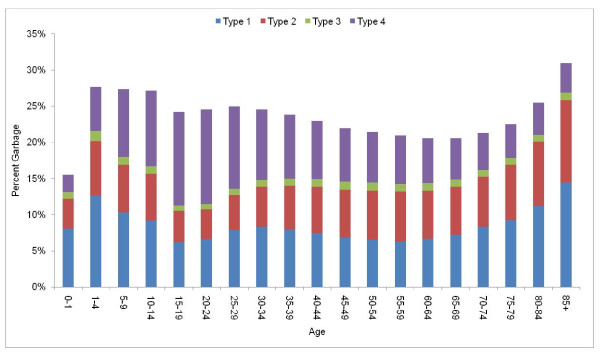
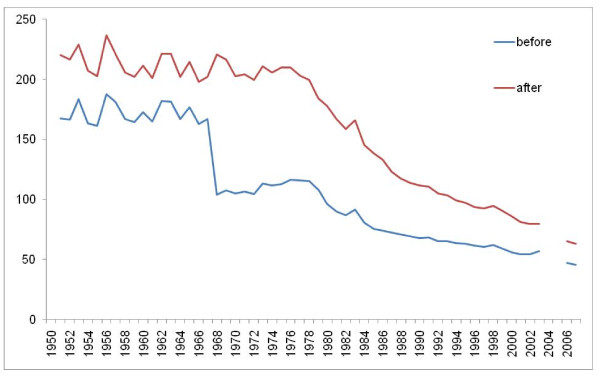
BACKGROUND: Coverage and quality of cause-of-death (CoD) data varies across countries and time. Valid, reliable, and comparable assessments of trends in causes of death from even the best systems are limited by three problems: a) changes in the International Statistical Classification of Diseases and Related Health Problems (ICD) over time; b) the use of tabulation lists where substantial detail on causes of death is lost; and c) many deaths assigned to causes that cannot or should not be considered underlying causes of death, often called garbage codes (GCs). The Global Burden of Disease Study and the World Health Organization have developed various methods to enhance comparability of CoD data. In this study, we attempt to build on these approaches to enhance the utility of national cause-of-death data for public health analysis. METHODS: Based on careful consideration of 4,434 country-years of CoD data from 145 countries from 1901 to 2008, encompassing 743 million deaths in ICD versions 1 to 10 as well as country-specific cause lists, we have developed a public health-oriented cause-of-death list. These 56 causes are organized hierarchically and encompass all deaths. Each cause has been mapped from ICD-6 to ICD-10 and, where possible, they have also been mapped to the International List of Causes of Death 1-5. We developed a typology of different classes of GCs. In each ICD revision, GCs have been identified. Target causes to which these GCs should be redistributed have been identified based on certification practice and/or pathophysiology. Proportionate redistribution, statistical models, and expert algorithms have been developed to redistribute GCs to target codes for each age-sex group. RESULTS: The fraction of all deaths assigned to GCs varies tremendously across countries and revisions of the ICD. In general, across all country-years of data available, GCs have declined from more than 43% in ICD-7 to 24% in ICD-10. In some regions, such as Australasia, GCs in 2005 are as low as 11%, while in some developing countries, such as Thailand, they are greater than 50%. Across different age groups, the composition of GCs varies tremendously - three classes of GCs steadily increase with age, but ambiguous codes within a particular disease chapter are also common for injuries at younger ages. The impact of redistribution is to change the number of deaths assigned to particular causes for a given age-sex group. These changes alter ranks across countries for any given year by a number of different causes, change time trends, and alter the rank order of causes within a country. CONCLUSIONS: By mapping CoD through different ICD versions and redistributing GCs, we believe the public health utility of CoD data can be substantially enhanced, leading to an increased demand for higher quality CoD data from health sector decision-makers.
Overview
The claims and statistics of this paper haven’t been checked yet.
Free: it reads the open-access text and checks the first 5 claims that cite a source we can check. Create a free account to check every claim.
Integrity signals
Registry
Cites
Statistics
Figures
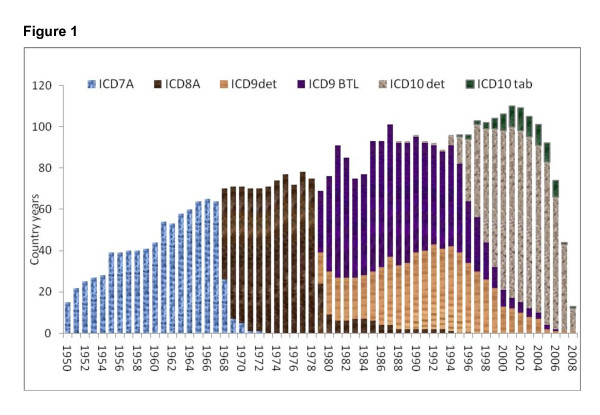
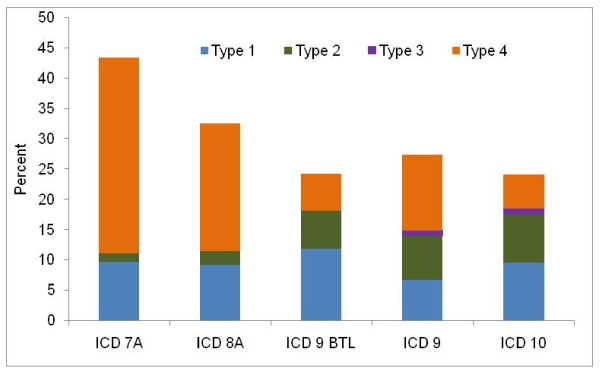
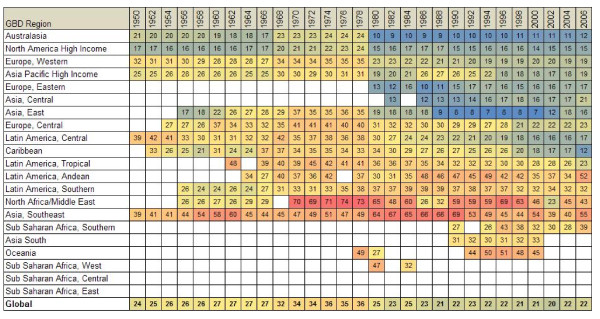
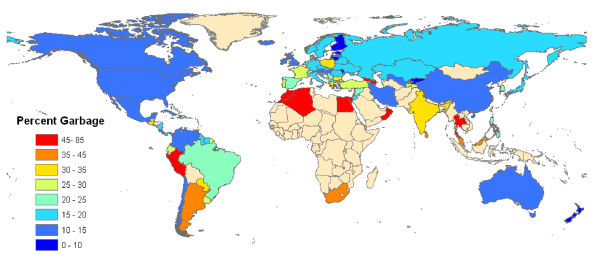
Verification
Claims the paper makes
The claims and statistics of this paper haven’t been checked yet.
Free: it reads the open-access text and checks the first 5 claims that cite a source we can check. Create a free account to check every claim.
Claims other papers make about this one
Each is checked against this paper’s own text: does it say what the citing paper says it does?
The source backs part of the claim, not all of it — or backs it for a different population, condition or comparison.
In the citing paper
“The phenomenon of misattribution of indirect maternal causes of death, resulting in underestimation of 20-90% of maternal deaths, has been described in a number of settings. 25-30”
From Global causes of maternal death: a WHO systematic analysis (2014) · cites this paper as [27]
Experimental — accuracy not yet measuredThe cited source says what the claim attributes to it.
In the citing paper
“For the GBD 2010, we identified causes that should not be assigned as underlying cause of death at a much more detailed level.50”
In the citing paper
“there is still uncertainty surrounding the redistribution algorithms employed [13].”
From Liver cirrhosis mortality in 187 countries between 1980 and 2010: a systematic analysis (2014) · cites this paper as [13]
Self-check
Percentages, sums and reported differences re-computed from the paper’s own numbers.
The self-check needs the paper’s full text.
Citations
Cites
Bulletin of the World Health Organization
van der Sande, M. A. B., Walraven, G. E. L., Milligan, P. J., BANYA, W. A. S., CEESAY, S. M., Nyan, O. A., & McAdam, K. P. W. J. (2001) · Bulletin of the World Health Organization · Cited by 7,097
(1996) · Cited by 6,884
Mortality by cause for eight regions of the world: Global Burden of Disease Study
Murray, C. J., & Lopez, A. D. (1997) · The Lancet · doi:10.1016/s0140-6736(96)07493-4 · Cited by 4,043 · cited 1×
“causes of death; for this reason, WHO and other analysts have sought to reassign deaths coded to GCs to other causes following various methods [11-16].”
BackgroundBulletin of the World Health Organization
Frick, K. D., Lynch, M. C., West, S. K., Muñoz, B., & Mkocha, H. A. (2003) · Bulletin of the World Health Organization · Cited by 2,660
Global Burden of Disease and Risk Factors
(2006) · World Bank, Washington, DC eBooks · doi:10.1596/978-0-8213-6262-4 · Cited by 2,605
(2005) · Europe PMC (PubMed Central) · Cited by 1,975
Bulletin of the World Health Organization
(2006) · Bulletin of the World Health Organization · doi:10.2471/blt.00.00000 · Cited by 1,602
(2001) · PubMed · Cited by 612
The Kaohsiung Journal of Medical Sciences
(2019) · The Kaohsiung Journal of Medical Sciences · doi:10.1002/(issn)2410-8650 · Cited by 446
Mortality Patterns in National Populations. With Special Reference to Recorded Causes of Death
Preston, S. H. (1977) · Population (French Edition) · doi:10.2307/1532019 · Cited by 208
Research works printed but not linked: 8
- Farr W Letter to the Registrar-General Second Annual Report of the Registrar-General of births, deaths, and marriages in England 1840 London: Printed by W. Clowes for H.M.S.O
- World Health Organization International Statistical Classification of Diseases and Related Health Problems, Tenth Revision Instruction Manual 2004 Geneva, World Health Organization
- Rooney C Griffiths C Cook L The implementation of ICD-10 for cause of death coding - some preliminary results from the bridge coding study HEALTH STATISTICS QUARTERLY 2002 31 41
- Mathers CD Stein C Mafat D Rao C Mie Inoue Tomijima N Bernard C Lopez AD Murray CJL Global Burden of Disease 2000: Version 2 methods and results. Geneva 2002
- World Health Organization Global Burden of Disease: 2004 update. Geneva 2008
- Canadian Perinatal Surveillance System, Maternal Health Study Group, Health C Special report on maternal mortality and severe morbidity in Canada: enhanced surveillance: the path to prevention 2004 [Ottawa]: Health Canada
- Lewis G Drife JO Botting BJ Why mothers die: 1997-1999: the fifth report 2001 London: RCOG Press
- Lewis G Drife JO Confidential Enquiry into Maternal and Child Health (CEMACH) Why mothers die 2000-2002: the sixth report on the Confidential Enquiries into Maternal Deaths in the United Kingdom 2004 London: RCOG Press
Cited by
Items 301–400 of 440
The importance of redistribution process of ill-defined deaths in national mortality database
Scohy, A., Lesnik, T., Devleesschauwer, B., & Haneef, R. (2025) · Archives of Public Health · doi:10.1186/s13690-025-01652-x · Cited by 4
“One of the most well-known methods within the framework of GBD, used to redistribute IDDs, such as regression models, redistribution based on fixed proportions, proportional reassignment, and fractional assignment of death due to multiple causes of death [6].”
Quantifying years of life lost in Australia: a multiple cause of death analysis
Joshy, G., Bishop, K., Li, H., Moran, L. L., Gourley, M., Welsh, J., Korda, R., Banks, E., Adair, T., & Rao, C. (2024) · International Journal of Epidemiology · doi:10.1093/ije/dyae177 · Cited by 3
Gu, Y., Hong, C., Weimin, Z., Qianping, P., & Liu, C. (2025) · BMJ Open · doi:10.1136/bmjopen-2024-094490 · Cited by 4
Ansteigende Sterblichkeit an Herzrhythmusstörungen in Deutschland?
Stolpe, S., Deckert, M., & Stang, A. (2019) · Das Gesundheitswesen · doi:10.1055/a-0977-3295 · Cited by 4
Cahuana-Hurtado, L., Gómez‐Dantés, H., la Cruz-Góngora, V. V. D., Chiquete, E., & Cantú-Brito, C. G. (2023) · Neuroepidemiology · doi:10.1159/000531537 · Cited by 4
A scoping review on the errors in medical certification of the cause of death in India
Singh, P., Khanna, D., Sharma, P., Vaza, Y., Anand, A., Budukh, A. M., Chaturvedi, P., & Pradhan, S. (2024) · The Indian Journal of Medical Research · doi:10.25259/ijmr_498_23 · Cited by 8
McCaw‐Binns, A., Mullings, J., & Holder, Y. (2015) · West Indian Medical Journal · doi:10.7727/wimj.2015.115 · Cited by 7
Wilkinson, J. D., Zebrowski, J. P., Hunter, J. A., Mensah, G. A., Ezzati, M., Forouzanfar, M. H., Colan, S. D., Towbin, J. A., Hsu, D. T., Mocumbi, A. O., et al. (2011) · Progress in Pediatric Cardiology · doi:10.1016/j.ppedcard.2011.06.011 · Cited by 4
“Further, estimates of mortality would be informed by disease-specific epidemiology as well as data from vital registration and sample registration, accounting for differences in assignment of underlying causes of deathwithin and across countries [12].”
BackgroundPremature Mortality From Noncommunicable Diseases in the Federated States of Micronesia, 2003-2012
Gopalani, S. V., Samo, M., Soaz, S., David, W. J., Mori, S., Luther, X.-N., & Carter, K. (2017) · Asia Pacific Journal of Public Health · doi:10.1177/1010539517696555 · Cited by 4
Bayesian adjustment of gastric cancer mortality rate in the presence of misclassification
Hajizadeh, N., Pourhoseingholi, M. A., Baghestani, A. R., Abadi, A., & Zali, M. R. (2017) · World Journal of Gastrointestinal Oncology · doi:10.4251/wjgo.v9.i4.160 · Cited by 3
Clustering of esophageal cancer among white men in the United States
Rubenstein, J. H., Morgenstern, H., & Longstreth, K. J. (2018) · Diseases of the Esophagus · doi:10.1093/dote/doy081 · Cited by 4
Qualidade dos dados de causas de morte no Sul do Brasil: a importância das causas garbage
Vidor, A. C., Conceição, M. B. M., Luhm, K. R., Alves, M. D. F. T., ARCENO, A. P., França, E. B., & de Abreu, D. M. X. (2019) · Revista Brasileira de Epidemiologia · doi:10.1590/1980-549720190003.supl.3 · Cited by 4
Dengue: actualidades y estándares en el manejo clínico. Revisión de tema
Pérez, N., & Amador-León, P. A. (2020) · Acta Colombiana de Cuidado Intensivo · doi:10.1016/j.acci.2020.04.007 · Cited by 4
Homicide in children under ten years old in México: A 20-year study
Rodríguez, J. M., Campuzano-Rincón, J. C., & Gómez, Y. O. (2021) · Colombia medica · doi:10.25100/cm.v52i3.4492 · Cited by 4
Chao, F., & Alkema, L. (2013) · Statistics and Public Policy · doi:10.1080/2330443x.2013.856148 · Cited by 4
“In these studies, VR misclassification errors were obtained through a cause-of-death reclassification algorithm (Naghavi et al., 2010).”
MethodPoggio, R. (2017) · International Journal of Sports and Exercise Medicine · doi:10.23937/2469-5718/1510056 · Cited by 5
Faith, J., Martopullo, I., Arndt, M. B., Letourneau, I. D., Aalruz, H., Abaraogu, U. O., Abbastabar, H., Razeq, N. M. I. A., Aziz, J. M. A., Abdulah, D. M., et al. (2026) · The Lancet Obstetrics Gynaecology & Women s Health · doi:10.1016/s3050-5038(26)00047-6 · Cited by 12
da Cunha, A. R., Bigoni, A., Antunes, J. L. F., & Hugo, F. N. (2022) · Brazilian Oral Research · doi:10.1590/1807-3107bor-2022.vol36.0117 · Cited by 3
Assessing discrepancies in estimates of road traffic deaths in Brazil
Bhalla, K. S., Job, S., Mitra, S., Harrison, J., Mbugua, L. W., Neki, K., Gutierrez, H. R., Balasubramaniyan, R., Winer, M., Vos, T., et al. (2023) · Injury Prevention · doi:10.1136/ip-2023-044871 · Cited by 3
Morais, G. A. Z., Miraglia, J. L., de Oliveira, B. Z., Mistro, S., Hisatugu, W. H., Greffin, D., Marques, C. B., Reis, E. P., de Lima, H. M., & Szlejf, C. (2023) · PLoS ONE · doi:10.1371/journal.pone.0290814 · Cited by 4
“…into four types: 1) Causes that cannot or should not be considered as a cause of death; 2) intermediate causes of deaths; 3) Immediate causes of death, which would be the last in the sequence of causes that led to death; 4) Non-specific causes within a large grouping of causes of death [24].”
InfluentialMethod for redistributing ill-defined causes of death
Grigoriev, P., Bonnet, F., & Perdrix, E. (2024) · Population Studies · doi:10.1080/00324728.2024.2332629 · Cited by 5
“…conducted by World Health Organization and Global Burden of Disease experts for the treat-ment of incomplete data and, in particular, for redis-tributing so-called ‘ garbage codes ’ (Murray and Lopez 1996, 1997; Mathers et al. 2002; Lopez et al. 2006; Naghavi et al. 2010; Johnson et al. 2021).”
Haneef, R., Scohy, A., Mahrouseh, N., Coudin, É., Constantinou, P., Rachas, A., Lesnik, T., Wyper, G. M. A., & Devleesschauwer, B. (2025) · BMC Public Health · doi:10.1186/s12889-025-23559-6 · Cited by 4
“Within the framework of the GBD study, one of the most well-known methods was developed by Naghavi and colleagues, integrating fractional reassignment of death due to multiple causes, proportional reassignment, regression models, and redistribution based on fixed proportions [10].”
Бойцов, С. А., Самородская, И. В., & Третьяков, В. В. (2015) · Russian Journal of Preventive Medicine · doi:10.17116/profmed20151834-11 · Cited by 3
“Так, по данным исследователей [14—16], участвовавших в разработке методик и программ для международного исследования по оценке потерь в результате глобального бремени болезней, использование показателей, зависящих от сложного статистического моделирования в отсутствие реальных результатов часто сопряжено с получением…”
Figueroa, C., Linhart, C., Dearie, C., Fusimalohi, L., Kupu, S., Morrell, S. L., & Taylor, R. J. (2023) · BMC Public Health · doi:10.1186/s12889-023-17294-z · Cited by 4
Stolpe, S., Kowall, B., & Stang, A. (2024) · European Journal of Epidemiology · doi:10.1007/s10654-023-01089-y · Cited by 3
“Recoding of garbage coded deaths should be mandatory [9].”
BackgroundRagab, H., McLellan, A. S., Bell, N. V. T., & Mustapha, A. M. (2020) · Pan African Medical Journal · doi:10.11604/pamj.2020.37.356.23607 · Cited by 3
Смертность от дорожно-транспортных происшествий в России: подходы к оценке, тенденции и перспективы
Ивановна, П. А., & Фаттахов, Т. А. (2019) · Демографическое обозрение · doi:10.17323/demreview.v6i3.9855 · Cited by 3
de Oliveira, C. M., Ciríaco, D. L., da Silva, C. F., Barros, H. C. S., da Cunha, C. C., & França, E. B. (2019) · Revista Brasileira de Epidemiologia · doi:10.1590/1980-549720190007.supl.3 · Cited by 3
Minto, C. M., Cascão, Â. M., Lima, S. K. C., Kuyumijian, F. G., Godoy, L. A. M., & de Souza, M. D. F. M. (2019) · Revista Brasileira de Epidemiologia · doi:10.1590/1980-549720190008.supl.3 · Cited by 3
[Burden of pediatric cancer in Jiangxi, China, in 2010 and 2015].
Xu, G., Chen, Y., Liu, J., Liu, S., Wang, P., Yang, J., & Huang, J.-L. (2018) · PubMed Central · doi:10.7499/j.issn.1008-8830.2018.01.005 · Cited by 3
Road traffic mortality in Russia: definitions, trends and perspectives
Ивановна, П. А., & Fattakhov, T. (2020) · Демографическое обозрение · doi:10.17323/demreview.v6i5.11463 · Cited by 3
Liu, L., Wang, X., Wang, C., Ma, X., Meng, X., Ning, B., Li, N., & Wan, X. (2022) · Research Square · doi:10.21203/rs.3.rs-1242825/v1 · Cited by 4
A study on garbage code redistribution methods for heart failure at city level by two approachesPreprint
Liu, L. Q., Cai, Z., Wang, X. W., Wang, C. P., Ma, X., Meng, X. F., Ning, B. F., Li, N., & Wan, X. (2023) · Research Square · doi:10.21203/rs.3.rs-3142379/v1 · Cited by 4
Demandas al sector salud ante las manifestaciones del cambio climático en Jalisco
Chávez, M. G. G., & Curiel-Ballesteros, A. (2021) · Revista Bio Ciencias · doi:10.15741/revbio.08.e884 · Cited by 2
Assessing the quality of cause-of-death reporting before and during the COVID-19 pandemic
Tai, S., Kawachi, I. I., & Lu, T.-H. (2024) · American Journal of Epidemiology · doi:10.1093/aje/kwae154 · Cited by 4
Temporal trends in mortality due to coronary heart disease in Germany from 1998 to 2023
Koch-Institut, R. (2025) · PubMed · doi:10.25646/13178 · Cited by 4
“Heart failure is a major complication of CHD that also contributes to CHD mortality [ 2 , 3 ].”
Camargo, J. T., Machuca, J. O., Hinerman, A. S., Rodriquez, E. J., Álvarez, C. S., Mensah, G. A., George, S. M., Bandiera, F. C., Li, Z., Sylte, D. O., et al. (2025) · Journal of the American Geriatrics Society · doi:10.1111/jgs.70042 · Cited by 2
“Previously established methods were used to reas-sign codes originally assigned as an underlying cause of death code that referred to an intermediate or immediate cause of death that was otherwise implausible or insufficiently specific to the likely true underlying causes of death [24, 25].”
Pregnancy-related death rates by county, race, and ethnicity in the US, 2000–2019
Zajdel, R. A., Rodriquez, E. J., Strassle, P. D., Mensah, G. A., Wei, G. S., Mensah, L. G., Kendrick, P., Compton, K., Kelly, Y. O., Baumann, M. M., et al. (2025) · Archives of Public Health · doi:10.1186/s13690-025-01688-z · Cited by 3
Surcolombiana, U., Arce, C. M., Kelly-Forbes, Y. S., & Andrés, S. D. S. S. (2018) · Revista Facultad Nacional de Salud Pública · doi:10.17533/udea.rfnsp.v36n3a07 · Cited by 3
“[14], y al presentar un porcentaje bajo de “códigos basura” entre 0 a 10 % [15].”
BackgroundRojas-Botero, M. L., Borrero-Ramírez, Y. E., & Fernández-Niño, J. A. (2022) · Salud UIS · doi:10.18273/saluduis.55.e:23015 · Cited by 7
Chaparro, P., Ordóñez‐Monak, I., Trujillo, N., Castañeda-Orjuela, C. A., & Arroyave, I. (2023) · Heliyon · doi:10.1016/j.heliyon.2023.e13050 · Cited by 2
“In general, physicians who have not had adequate training in the elaboration of the basic COD frequently use HF in death certificates [9].”
BackgroundIndriasih, E., Yulianti, A., Susianti, N., Tarigan, I. U., & Suryati, T. (2022) · International Conference on Industrial Engineering and Operations Management (IEOM) · doi:10.46254/eu05.20220236 · Cited by 2
Sousa, E. S. S., Sousa, M. E. S., Negreiros, R. A. M., Pereira, M., Brasil, A. W. D. L., Clementino, I. J., Eloy, L. R. C., de Azevêdo, S. S., & Lucena, R. B. (2024) · Pesquisa Veterinária Brasileira · doi:10.1590/1678-5150-pvb-7565 · Cited by 2
Assessment of a Regression Method to Reclassify Deaths Attributable to Heart Failure
Metcalf, P., Meyer, M. L., Suchindran, C., & HEISS, G. M. (2016) · Global Journal of Health Science · doi:10.5539/gjhs.v9n3p13 · Cited by 2
Even, C., Sagaon‐Teyssier, L., Pointreau, Y., Temam, S., Huguet, F., Geoffrois, L., Schwarzinger, M., & on behalf of the EPICORL Study Group (2021) · PLoS ONE · doi:10.1371/journal.pone.0246252 · Cited by 2
Heidari, A., Kabir, M. J., Khatirnamani, Z., & Gholami, M. (2023) · Journal of Research and Health · doi:10.32598/jrh.13.1.2055.1 · Cited by 2
The leading causes of death at home according to medical death certificates in the Moscow region
Drapkina, O. M., Kakorina, E. P., Samorodskaya, I. V., & Константиновна, Ч. Т. (2023) · Russian Journal of Preventive Medicine · doi:10.17116/profmed2023260617 · Cited by 2
Torres-Román, J. S., Julca-Marín, D., Ticona, D., Quispe‐Vicuña, C., Bazalar-Palacios, J., Ku, G. D. L. C., & Ybaseta-Medina, J. (2023) · Cancer Epidemiology · doi:10.1016/j.canep.2023.102485 · Cited by 3
Paratz, E. D., Spanos, C., Rowe, S. J., Fahy, L., Nehme, Z., Stub, D. A., Zentner, D., James, P. A., Pflaumer, A., Connell, V., et al. (2023) · Heart Lung and Circulation · doi:10.1016/j.hlc.2023.10.009 · Cited by 2
Estudo avaliativo do projeto de investigação de óbitos por códigos garbage na região Norte do Brasil
Benedetti, M. S. G., Saraty, S. B., Martins, A. G., de Miranda, M. J., & de Abreu, D. M. X. (2019) · Revista Brasileira de Epidemiologia · doi:10.1590/1980-549720190006.supl.3 · Cited by 2
“Data were tabulated using the Excel® program and the following indicators were calculated: (1) percentage of GC in relation to the total number of deaths; (2) percentage of GC that was investigated in relation to the total deaths from these causes; (3) percentage of GC that changed the underlying cause after investiga…”
MethodNew modelled estimates of maternal mortality – Authors' reply
Murray, C. (2010) · The Lancet · doi:10.1016/s0140-6736(10)60925-7 · Cited by 2
McCaw‐Binns, A., & Mullings, J. (2014) · Oxford University Press eBooks · doi:10.1093/obo/9780199756797-0095 · Cited by 2
Filho, A. M. S., de Lima, R. B., Merchán-Hamann, E., de Souza, M. D. F. M., Mikkelsen, L., Mahesh, P. K. B., & Adair, T. (2023) · Cadernos de Saúde Pública · doi:10.1590/0102-311xen097222 · Cited by 2
“(11) Brazil has important differences in quality of COD data between regions, observing less favorable situations in the poorest regions, such as North and Northeast.”
BackgroundSulo, G., Knudsen, A. K., Baravelli, C. M., Ellingsen, C. L., & Sulo, E. (2024) · Scandinavian Journal of Public Health · doi:10.1177/14034948241296239 · Cited by 3
“The term target code refers to the medical conditions to which “HF deaths” (i.e., deaths with HF listed incorrectly as UCoD) should in principle be reassigned to, based on the pathophysiology or an assessment of certification practices [14].”
Years of Life Lost due to Premature Mortality in Russia, 1990-2021
Ивановна, П. А., Фаттахов, Т. А., & Денисенко, М. Б. (2024) · Population and Economics · doi:10.3897/popecon.8.e112749 · Cited by 2
“On the one hand, the group includes a class that entirely belongs to the so-called ‘garbage’ codes of causes of death 7 [Naghavi et al., 2010] – symptoms, signs and abnormal clinical and laboratory findings, not elsewhere classified.”
Systematic Analysis for Global, Regional and National Cause-Specific Mortality
Yang, G. (2025) · Springer eBooks · doi:10.1007/978-981-96-5186-3_4 · Cited by 1
Lung Cancer Mortality by County, Race and/or Ethnicity, and Sex in the United States, 2000–2019
Hooshmand, S., Rodriquez, E. J., Strassle, P. D., Mensah, G. A., Choi, K., Hamilton-Mosely, K. R., George, S. M., Dwyer‐Lindgren, L., Mokdad, A. H., Kahn, E., et al. (2025) · Annals of the American Thoracic Society · doi:10.1513/annalsats.202504-398oc · Cited by 2
Liu, Z., Yu, L., Yan, F., Qi, J., Wang, L., Zhou, M., & Yin, P. (2025) · BMC Public Health · doi:10.1186/s12889-025-24834-2 · Cited by 2
“Garbage codes were redis-tributed by location-year-sex-age to the most likely causes of death, based on the method developed by Naghavi et al. [17].”
Yuan, L., Yin, P., He, M., Qi, J., Zhou, M., & Zhao, Y. (2026) · Chinese Medical Journal · doi:10.1097/cm9.0000000000003946 · Cited by 1
“[19] We calculated the proportion of each cause among all cases.”
Cardiovascular Disease Mortality by County, Race and/or Ethnic Population, United States, 2000-2019
Mensah, G. A., Dwyer‐Lindgren, L., Kelly, Y. O., Li, Z., McHugh, T. A., Johnson, C. O., Roth, G. A., Motte‐Kerr, W. L., Strassle, P. D., Choi, K., et al. (2026) · Journal of the American College of Cardiology · doi:10.1016/j.jacc.2026.07.010 · Cited by 2
RetractedMoran, A. E., & Odden, M. C. (2012) · Revista Española de Cardiología (English Edition) · doi:10.1016/j.rec.2012.06.007 · Cited by 1
“more than in the United States, a problem that has improved dramatically since the 1980s.(6) However, ill-defined coding”
BackgroundBertone, C. L., Torres, V. E., & Andrada, M. J. (2018) · Revista Brasileira de Estudos de População · doi:10.20947/s0102-3098a0048 · Cited by 1
Measuring the World's Health: How Good are Our Estimates?
Fullman, N., Flaxman, A. D., Leach‐Kemon, K., Rajaratnam, J. K., & Lozano, R. (2014) · Wiley eBooks · doi:10.1002/9781118509623.ch5 · Cited by 2
Self-citationTai, S., Cheon, S., Yamaoka, Y., & Lu, T. (2021) · SSRN Electronic Journal · doi:10.2139/ssrn.3990112 · Cited by 1
Long-term complication: Florida's death certification process and long-term care
Williams, L. S., Dewey, H., & Kapp, M. B. (2011) · International Journal of Risk & Safety in Medicine · doi:10.3233/jrs-2011-0537
“Because of the consequential use of medical information recorded on death certificates, accuracy is of the utmost importance [4].”
Evaluating New Health Technologies and Disease Burden in Developed Countries
Catalá-López, F., Gènova-Maleras, R., & García‐Altés, A. (2012) · Value in Health · doi:10.1016/j.jval.2012.04.009
“[11] Naghavi M, Makela S, Foreman K, et al.”
BackgroundRecord-linkage comparison of verbal autopsy and routine civil registration death certification
Bradshaw, D., Kabudula, C. W., Rao, C., Kahn, K., Mee, P., Tollman, S. M., López, A. D., & Vos, T. (2014)
Szücs, M., Grósz, D. P., & Sándor, J. (2016) · Orvosi Hetilap · doi:10.1556/650.2016.30398
Age-Standardized Mortality Rates in the Caribbean: One Source, Three Different Interpretations
Wolf, N. G., Morgan, C., & Flanigan, J. S. (2018) · Journal of Global Oncology · doi:10.1200/jgo.18.00010
Xaverius, P. K., Wambuguh, L., Ward, C., Salas, J., Alleman, E. R., Young, J., & Berkemeier, J. (2018) · Journal of Forensic Sciences · doi:10.1111/1556-4029.13785 · Cited by 1
“determined by personnel with limited training (8).”
Variation in Deaths From Intentional Injury and Substance Use—Reply
Dwyer‐Lindgren, L., Naghavi, M., & Murray, C. J. L. (2018) · JAMA · doi:10.1001/jama.2018.7339
Self-citationBertone, C. L., Torres, V. E., & Andrada, M. J. (2018) · Revista Brasileira de Estudos de População · doi:10.20947/s102-3098a0048
Методические вопросы и результаты оценки глобального бремени болезней (обзор литературы)
Ватолина, М. А., & Boytsov, S. A. (2015)
MORTALIDADE MATERNA: DISTRIBUIÇÃO E CAUSAS NO ESTADO DO PARÁ ENTRE OS ANOS 2012 A 2016.
Tsuchiyama, Y., Botelho, P. D. C., de Miranda, B. K. B., da Luz, M. G. Q., & Veras, A. P. (2019) · Revista de Educação Saúde e Ciências do Xingu
Modeling of Mortality in Elderly by Lung Cancer in the Northeast of Brazil
Carvalho, J. B., & Paes, N. A. (2020) · The Springer series on demographic methods and population analysis · doi:10.1007/978-3-030-44695-6_8
Statistical Inference on the Cure TimePreprint
Wang, Y., & Hung, H. (2020) · arXiv (Cornell University) · doi:10.48550/arxiv.2009.13129
“In this data structure, δ = 3 means that we know that the last observed time is T but do not know whether T = D or T = O, and δ = 3 often occurs in the case of uncertain cause of death from death certificate database (Naghavi et al., 2010).”
BackgroundCorrection Models of Pneumonia Mortality Rates in the Elderly in Brazil from 2005 to 2016
de Miranda, D. B. (2020) · Biomedical Journal of Scientific & Technical Research · doi:10.26717/bjstr.2020.29.004830
“It is observed that there are still quality problems in the registration of the basic cause of death in the Death Certificate (DO), with high percentages of little useful codes (garbage codes - GC), registered as the basic cause of death [5].”
BackgroundAnálise de óbitos residuais por causas externas em Cuiabá-MT
Maia, M. C. W., de Godoy, C. B., Camargo, C., de Souza, S. P. S., & de Oliveira, J. L. C. (2020) · Saúde Coletiva (Barueri) · doi:10.36489/saudecoletiva.2019v9i48p1320-1327
Causas de Muerte Poco Útiles en el Hospital de Atención Integral del Adulto Mayor, Quito 2018
Rosero, A. P. C., Benavides, M. Y. C., Aragón, C. V. A., & Muñoz, F. M. G. (2019) · Revista Médica HJCA · doi:10.14410/2019.11.3.ao.34
Editorial commentary: Alcohol and arrhythmias: Implications for burden of disease estimates
Rehm, J. T. (2021) · Trends in Cardiovascular Medicine · doi:10.1016/j.tcm.2021.05.003
Laurindo, A. D. M., Silva, A. V. D., Nascimento, A. T. B. D. S., dos Santos, E. M., do Nascimento, M. L. V., & Maia, L. T. D. S. (2021) · Brazilian Journal of Health Review · doi:10.34119/bjhrv4n6-136
Lindemann, C. M. (2021) · Digital Library of Theses and Dissertations (Universidade de São Paulo) · doi:10.11606/t.17.2021.tde-28012022-114535 · Cited by 1
Filho, A. M. S., de Lima, R. B., Merchán-Hamann, E., de Souza, M. D. F. M., Mikkelsen, L., Mahesh, P. K. B., & Adair, T. (2020) · Research Square · doi:10.21203/rs.2.21131/v1
Tovar, F. A. C. (2020) · Repositorio Institucional (Pontificia Universidad Javeriana) · doi:10.11144/javeriana.10554.21043
Aprimoramento das informações sobre óbito por causas externas no estado de São Paulo
Minto, C. M. (2022) · Digital Library of Theses and Dissertations (Universidade de São Paulo) · doi:10.11606/t.6.2022.tde-10102022-172337
Enfiyeci, Z. Y., & Çavlin, A. B. (2023) · Eskişehir Türk Dünyası Uygulama ve Araştırma Merkezi Halk Sağlığı Dergisi · doi:10.35232/estudamhsd.1165384
Heidari, A., alirezahei-dari7@gmail.com, Kabir, M. J., Khatirnamani, Z., Gholami, M., & Jafari, N. (2023) · Romanian Journal of Military Medicine · doi:10.55453/rjmm.2023.126.1.13
Estimation of excess mortality during COVID-19 pandemic based on death registry quality analysis.
Ferreira, A. M. S., Moura, L. D. A., & Paes, N. A. (2023) · Seven Editora eBooks · doi:10.56238/emerrelcovid19-050
Figueroa, C., Linhart, C., Dearie, C., Fusimalohi, L., Kupu, S., Morrell, S. L., & Taylor, R. J. (2023) · Research Square · doi:10.21203/rs.3.rs-3333241/v1
Devleesschauwer, B., Scohy, A., Pauw, R. D., Gorasso, V., Kongs, A., Neirynck, E., Verduyckt, P., Wyper, G. M. A., & den Borre, L. V. (2023) · Figshare · doi:10.6084/m9.figshare.24037346
Felisbino-Mendes, M. S., de Andrade, G. N., de Souza, J. B., Amorim, T., Martins, E. F., & Malta, D. C. (2024) · Public Health · doi:10.1016/j.puhe.2024.04.014
Rodríguez, J. M., Narváez, P. E. C., Hidalgo-Troya, A., & Piñeros-Garzón, F. S. (2025) · Traffic Injury Prevention · doi:10.1080/15389588.2025.2495863
“As Naghavi et al. (2010) noted, these codes provide little or no information about the primary cause of death, limiting the usefulness of mortality statistics.”
Códigos inútiles en los registros de mortalidad en Colombia para el periodo 2011 – 2023
Peña-Maldonado, C. J., Rincón, M., Rodríguez-Villamizar, L. A., Rodríguez, J. A. G., & Zambrano, V. M. H. (2025) · Salud & Sociedad Uptc : · doi:10.19053/uptc.2744953x.19146
Titi-Ofei, R., Kipruto, H., Atweam, D. K., Ofosu, A. A., & Rossier, C. (2025) · Healthcare · doi:10.3390/healthcare13182331 · Cited by 1
“Specifically, the estimation adopts Cause of Death Ensemble modeling (CODEm) and spatiotemporal Gaussian process regression to estimate age, sex, cause, and location-specific mortality [43].”
Ebnalameer, R. A., Alhassan, S. A., Alrashed, R. K., Alfarhan, A. A., Asiri, K. S., Alzoom, A. A., Almuqhem, M. B., & Kharaba, A. M. (2025) · Journal of Advanced Trends in Medical Research · doi:10.4103/atmr.atmr_20_25
Butchart, J., Yang, Y., Imms, C., Kavanagh, A. M., & Disney, G. (2025) · Disability and health journal · doi:10.1016/j.dhjo.2025.101976
Stroke-related mortality in Mahajanga, Madagascar in 2019: A study based on death notifications
Randrianasolo, R. O., Rajaonarison, L. A., Rasaholiarison, N. F., Rakotomanana, J. L., Razafimahefa, J., Zodaly, N., & Tehindrazanarivelo, A. D. (2025) · Vascular Diseases · doi:10.1016/j.vasdi.2025.11.001
França, E. B., Ishitani, L. H., Teixeira, R., Duncan, B. B., Marinho, F., & Naghavi, M. (2020) · Figshare · doi:10.6084/m9.figshare.13023345
Self-citation
Metadata
- Authors
- Naghavi, M., Makela, S., Foreman, K., O'Brien, J., Pourmalek, F., & Lozano, R.
- Affiliations
- University of Washington (US)
- Corresponding author
- Naghavi, Mohsen
- Venue
- Population Health Metrics
- Published
- 2010-05-10
- Volume
- 8
- Issue
- 1
- Pages
- 9-9
- ISSN
- 1478-7954 (ISSN-L)
- PMC
- PMC2873308
- OpenAlex
- W2005743411
- Semantic Scholar
- 826b0b315a7a9c33e080adc15cff76df84465819
- Cited by
- 440
- References
- 42
- Citations by year
- 2026: 21 · 2025: 27 · 2024: 28 · 2023: 31 · 2022: 27 · 2021: 35 · 2020: 50 · 2019: 51 · 2018: 30 · 2017: 25 · 2016: 26 · 2015: 19 · 2014: 25 · 2013: 14 · 2012: 18
- FWCI
- 26.89
- Type
- journal article
- Language
- en
- Open access
- gold
- doi.org
- Licence
- cc-by
- creativecommons.org/licenses/by/2.0 (tdm)
- Locations
- Population Health Metrics (publishedVersion, cc-by)
- Europe PMC (PubMed Central) (publishedVersion, cc-by)
- PubMed Central (publishedVersion, cc-by)
- PubMed (publishedVersion)
- DOAJ (DOAJ: Directory of Open Access Journals) (submittedVersion, cc-by-sa)
- Funders
- Bill and Melinda Gates Foundation
- Institute for Health Metrics and Evaluation
- Pan American Health Organization
- Topics
- Health Sciences › Health Professions › Health Information Management › Medical Coding and Health Information
- Social Sciences › Demography › Insurance, Mortality, Demography, Risk Management
- Health Sciences › Medicine › Public Health, Environmental and Occupational Health › Global Health and Epidemiology
- Keywords
- cause of death data, garbage codes, ICD revision, underlying cause of death, cause of death classification, age and sex differences, disease surveillance, Global Burden of Disease Study, data comparability, mortality trends, developing countries, expert algorithms
About these checks
Registry, retraction, Cites and statistics results are computed, not judged, with one exception: a printed reference that no index lists is read once by a model before it counts as a citation error. Claims are extracted by a model and kept only when their quote appears verbatim in the text; each cited source is then checked, with a model’s help, for whether it says what the claim relies on. Those verdicts can be wrong — read the claim’s quote and the cited source before relying on one.
Statistics and arithmetic are recomputed, not judged.
Confidence bands are shown only for fields calibrated on our annotated test set. None is calibrated yet, so no band is shown.
What counts as a claim ›How we measure confidence ›How we check this ›
Are you an author, or do you see a problem with this page? Request a review
Data sources
Bibliographic data: Semantic Scholar, OpenAlex, Crossref.
Contains information from the Semantic Scholar Academic Graph Datasets, made available under the ODC Attribution License (ODC-BY 1.0).
Semantic Scholar’s data is described in: Kinney, R., et al. (2023). The Semantic Scholar Open Data Platform. arXiv:2301.10140.
