

Algorithms for enhancing public health utility of national causes-of-death data
Open accessThe DOI matches its Crossref record; 39 of the 42 references it cites were found in a registry or an index.
Abstract
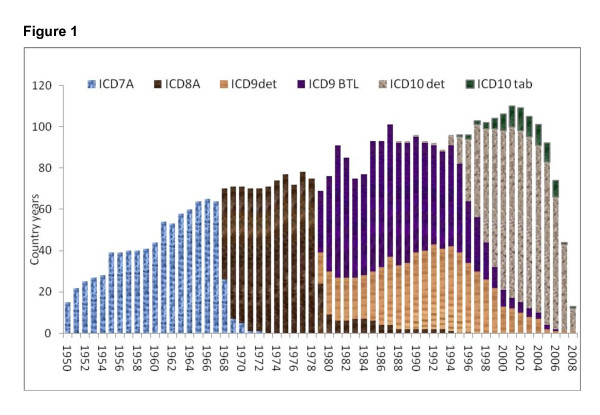
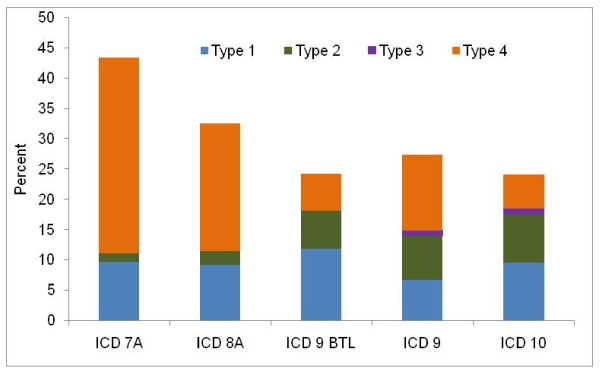
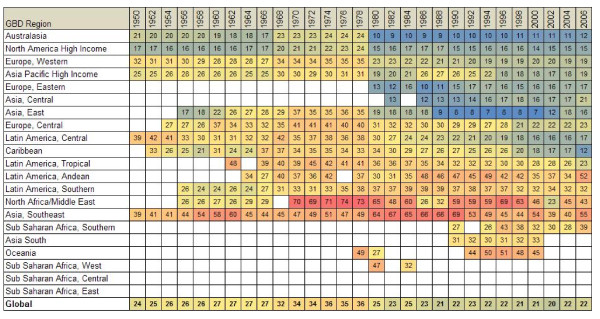
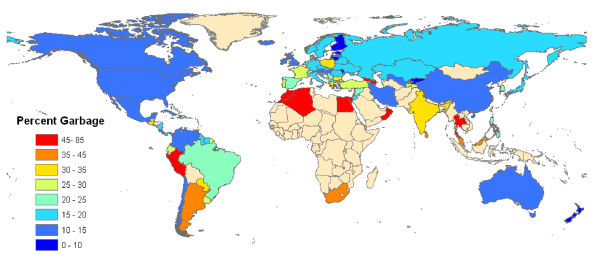
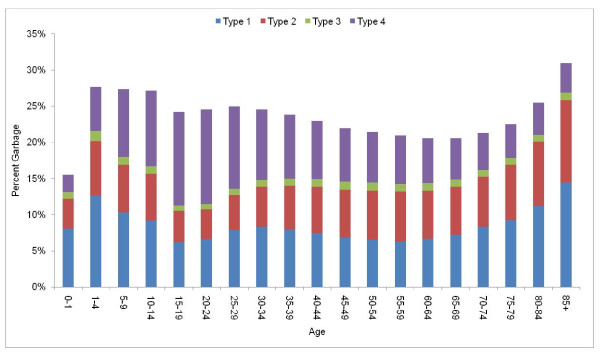
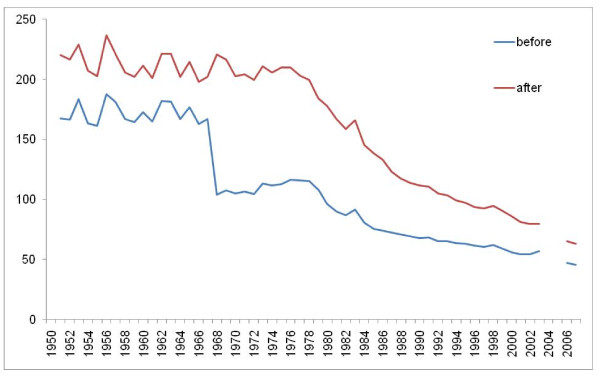
BACKGROUND: Coverage and quality of cause-of-death (CoD) data varies across countries and time. Valid, reliable, and comparable assessments of trends in causes of death from even the best systems are limited by three problems: a) changes in the International Statistical Classification of Diseases and Related Health Problems (ICD) over time; b) the use of tabulation lists where substantial detail on causes of death is lost; and c) many deaths assigned to causes that cannot or should not be considered underlying causes of death, often called garbage codes (GCs). The Global Burden of Disease Study and the World Health Organization have developed various methods to enhance comparability of CoD data. In this study, we attempt to build on these approaches to enhance the utility of national cause-of-death data for public health analysis. METHODS: Based on careful consideration of 4,434 country-years of CoD data from 145 countries from 1901 to 2008, encompassing 743 million deaths in ICD versions 1 to 10 as well as country-specific cause lists, we have developed a public health-oriented cause-of-death list. These 56 causes are organized hierarchically and encompass all deaths. Each cause has been mapped from ICD-6 to ICD-10 and, where possible, they have also been mapped to the International List of Causes of Death 1-5. We developed a typology of different classes of GCs. In each ICD revision, GCs have been identified. Target causes to which these GCs should be redistributed have been identified based on certification practice and/or pathophysiology. Proportionate redistribution, statistical models, and expert algorithms have been developed to redistribute GCs to target codes for each age-sex group. RESULTS: The fraction of all deaths assigned to GCs varies tremendously across countries and revisions of the ICD. In general, across all country-years of data available, GCs have declined from more than 43% in ICD-7 to 24% in ICD-10. In some regions, such as Australasia, GCs in 2005 are as low as 11%, while in some developing countries, such as Thailand, they are greater than 50%. Across different age groups, the composition of GCs varies tremendously - three classes of GCs steadily increase with age, but ambiguous codes within a particular disease chapter are also common for injuries at younger ages. The impact of redistribution is to change the number of deaths assigned to particular causes for a given age-sex group. These changes alter ranks across countries for any given year by a number of different causes, change time trends, and alter the rank order of causes within a country. CONCLUSIONS: By mapping CoD through different ICD versions and redistributing GCs, we believe the public health utility of CoD data can be substantially enhanced, leading to an increased demand for higher quality CoD data from health sector decision-makers.
Overview
The claims and statistics of this paper haven’t been checked yet.
Free: it reads the open-access text and checks the first 5 claims that cite a source we can check. Create a free account to check every claim.
Integrity signals
Registry
Cites
Statistics
Figures
Verification
Claims the paper makes
The claims and statistics of this paper haven’t been checked yet.
Free: it reads the open-access text and checks the first 5 claims that cite a source we can check. Create a free account to check every claim.
Claims other papers make about this one
Each is checked against this paper’s own text: does it say what the citing paper says it does?
The source backs part of the claim, not all of it — or backs it for a different population, condition or comparison.
In the citing paper
“The phenomenon of misattribution of indirect maternal causes of death, resulting in underestimation of 20-90% of maternal deaths, has been described in a number of settings. 25-30”
From Global causes of maternal death: a WHO systematic analysis (2014) · cites this paper as [27]
Experimental — accuracy not yet measuredThe cited source says what the claim attributes to it.
In the citing paper
“For the GBD 2010, we identified causes that should not be assigned as underlying cause of death at a much more detailed level.50”
In the citing paper
“there is still uncertainty surrounding the redistribution algorithms employed [13].”
From Liver cirrhosis mortality in 187 countries between 1980 and 2010: a systematic analysis (2014) · cites this paper as [13]
Self-check
Percentages, sums and reported differences re-computed from the paper’s own numbers.
The self-check needs the paper’s full text.
Citations
Cites
Bulletin of the World Health Organization
van der Sande, M. A. B., Walraven, G. E. L., Milligan, P. J., BANYA, W. A. S., CEESAY, S. M., Nyan, O. A., & McAdam, K. P. W. J. (2001) · Bulletin of the World Health Organization · Cited by 7,097
(1996) · Cited by 6,884
Mortality by cause for eight regions of the world: Global Burden of Disease Study
Murray, C. J., & Lopez, A. D. (1997) · The Lancet · doi:10.1016/s0140-6736(96)07493-4 · Cited by 4,043 · cited 1×
“causes of death; for this reason, WHO and other analysts have sought to reassign deaths coded to GCs to other causes following various methods [11-16].”
BackgroundBulletin of the World Health Organization
Frick, K. D., Lynch, M. C., West, S. K., Muñoz, B., & Mkocha, H. A. (2003) · Bulletin of the World Health Organization · Cited by 2,660
Global Burden of Disease and Risk Factors
(2006) · World Bank, Washington, DC eBooks · doi:10.1596/978-0-8213-6262-4 · Cited by 2,605
(2005) · Europe PMC (PubMed Central) · Cited by 1,975
Bulletin of the World Health Organization
(2006) · Bulletin of the World Health Organization · doi:10.2471/blt.00.00000 · Cited by 1,602
(2001) · PubMed · Cited by 612
The Kaohsiung Journal of Medical Sciences
(2019) · The Kaohsiung Journal of Medical Sciences · doi:10.1002/(issn)2410-8650 · Cited by 446
Mortality Patterns in National Populations. With Special Reference to Recorded Causes of Death
Preston, S. H. (1977) · Population (French Edition) · doi:10.2307/1532019 · Cited by 208
Research works printed but not linked: 8
- Farr W Letter to the Registrar-General Second Annual Report of the Registrar-General of births, deaths, and marriages in England 1840 London: Printed by W. Clowes for H.M.S.O
- World Health Organization International Statistical Classification of Diseases and Related Health Problems, Tenth Revision Instruction Manual 2004 Geneva, World Health Organization
- Rooney C Griffiths C Cook L The implementation of ICD-10 for cause of death coding - some preliminary results from the bridge coding study HEALTH STATISTICS QUARTERLY 2002 31 41
- Mathers CD Stein C Mafat D Rao C Mie Inoue Tomijima N Bernard C Lopez AD Murray CJL Global Burden of Disease 2000: Version 2 methods and results. Geneva 2002
- World Health Organization Global Burden of Disease: 2004 update. Geneva 2008
- Canadian Perinatal Surveillance System, Maternal Health Study Group, Health C Special report on maternal mortality and severe morbidity in Canada: enhanced surveillance: the path to prevention 2004 [Ottawa]: Health Canada
- Lewis G Drife JO Botting BJ Why mothers die: 1997-1999: the fifth report 2001 London: RCOG Press
- Lewis G Drife JO Confidential Enquiry into Maternal and Child Health (CEMACH) Why mothers die 2000-2002: the sixth report on the Confidential Enquiries into Maternal Deaths in the United Kingdom 2004 London: RCOG Press
Cited by
Items 101–200 of 440
Samuel, G. N., Chubb, J., & Derrick, G. (2021) · Journal of Empirical Research on Human Research Ethics · doi:10.1177/15562646211002744 · Cited by 67
“This may include, for example, researchers who are exploring how AI systems can help predict epidemics and disease outbreaks (Bengtsson et al., 2015; Harris et al., 2017; Naghavi et al., 2010), as well as various health and mental health states (for a review, see, e.g., Blasimme & Vayena, 2019).”
BackgroundSunshine, J. E., Meo, N., Kassebaum, N. J., Collison, M. L., Mokdad, A. H., & Naghavi, M. (2019) · JAMA Network Open · doi:10.1001/jamanetworkopen.2018.7041 · Cited by 68
Self-citationFrança, E. B., Ishitani, L. H., Teixeira, R. A., Duncan, B. B., Marinho, F., & Naghavi, M. (2020) · Population Health Metrics · doi:10.1186/s12963-020-00221-4 · Cited by 54
Self-citationDwyer‐Lindgren, L., Stubbs, R. W., Bertozzi-Villa, A., Morozoff, C., Callender, C. S. K. H., Finegold, S., Shirude, S., Flaxman, A. D., Laurent, A. A., Kern, E., et al. (2017) · The Lancet Public Health · doi:10.1016/s2468-2667(17)30165-2 · Cited by 61
Tracking US Health Care Spending by Health Condition and County
Dieleman, J. L., Beauchamp, M., Crosby, S. W., DeJarnatt, D., Johnson, E. K., Lescinsky, H., McHugh, T. A., Pollock, I., Sahu, M., Swart, V. M., et al. (2025) · JAMA · doi:10.1001/jama.2024.26790 · Cited by 62
Self-citationUnintentional drowning mortality in China, 2006–2013
Wang, L., Cheng, X., Yin, P., Cheng, P., Liu, Y., Schwebel, D. C., Liu, J., Qi, J., Zhou, M., & Hu, G. (2018) · Injury Prevention · doi:10.1136/injuryprev-2017-042713 · Cited by 53
Reflections on key methodological decisions in national burden of disease assessments
von der Lippe, E., Devleesschauwer, B., Gourley, M., Haagsma, J. A., Hilderink, H. B. M., Porst, M., Wengler, A., Wyper, G. M. A., & Grant, I. (2020) · Archives of Public Health · doi:10.1186/s13690-020-00519-7 · Cited by 56
“Methods used for this redistribution include regression models, fixed proportions, proportional reassignment, and fractional assignment of a death assigned to multiple causes [26].”
MethodHoa, N. P., Rao, C., Hoy, D. G., Hinh, N. D., Chúc, N. T. K., & Ngo, A. D. (2012) · Bulletin of the World Health Organization · doi:10.2471/blt.11.100750 · Cited by 56
Chen, H., Hao, L., Yang, C., Yan, B., Sun, Q., Sun, L., Chen, H., & Chen, Y. (2018) · BMC Public Health · doi:10.1186/s12889-018-5112-7 · Cited by 51
“Given the potential variation of data quality, the quality of data was evaluated across different years by a recommended method [28].”
MethodMethods for Estimating the Global Burden of Cerebrovascular Diseases
Roth, G. A., Johnson, C. O., Nguyen, G., Naghavi, M., Feigin, V. L., Murray, C. J. L., Forouzanfar, M. H., & Vos, T. (2015) · Neuroepidemiology · doi:10.1159/000441083 · Cited by 50
Self-citationGoldberg, D. S., Ross‐Driscoll, K., & Lynch, R. (2020) · Gastroenterology · doi:10.1053/j.gastro.2020.11.016 · Cited by 54
“13 We feel this maximized the most accurate capture of liver-related mortality, and was more expansive than the only other study evaluating county-level differences in mortality from liver disease that did not include HCC in the grouping of liver disease-related mortality, even though >90% of…”
ResultANACONDA: a new tool to improve mortality and cause of death data
Mikkelsen, L., Moesgaard, K., Hegnauer, M., & Lopez, A. D. (2020) · BMC Medicine · doi:10.1186/s12916-020-01521-0 · Cited by 49
Resultados preliminares del fortalecimiento del sistema informático nacional de defunciones
Vargas-Herrera, J., Ruiz, K. J. P., Nuñez, G. M. G., Miki, J., Pérez‐Lu, J. E., Huarcaya, W. V., Clapham, B., & Cortez-Escalante, J. J. (2018) · Revista Peruana de Medicina Experimental y Salud Pública · doi:10.17843/rpmesp.2018.353.3913 · Cited by 60
“reportaron que el Perú, junto a Omán, Egipto y Georgia, se encuentra entre los países que tienen una alta proporción (más de 45 %) de causas de muerte con códigos «garbage» de CIE 10, es decir, como causa de defunción «mal definidas o poco útiles» (12).”
BackgroundIburg, K. M., Mikkelsen, L., Adair, T., & López, A. D. (2020) · PLoS ONE · doi:10.1371/journal.pone.0237539 · Cited by 55
Redistribution of heart failure as the cause of death: the Atherosclerosis Risk in Communities Study
Snyder, M., Love, S.-A. M., Sorlie, P. D., Rosamond, W. D., Antini, C., Metcalf, P., Hardy, S. T., Suchindran, C., Shahar, E., & HEISS, G. M. (2014) · Population Health Metrics · doi:10.1186/1478-7954-12-10 · Cited by 52
“Efforts to improve the comparability and accuracy of cause of death statistics call for redistributing UCDs attributed to ill-defined codes [1,2,5,6].”
BackgroundMethodResultInfluentialIdentifying potential differences in cause-of-death coding practices across Russian regions
Danilova, I., Школьников, В. М., Jdanov, D. A., Meslé, F., & Vallin, J. (2016) · Population Health Metrics · doi:10.1186/s12963-016-0078-0 · Cited by 52
“codes distorts mortality statistics from the other (“nongarbage”) causes of death [60].”
BackgroundGlobal road fatality trends’ estimations based on country-wise micro level data
Almadani, H. M. (2017) · Accident Analysis & Prevention · doi:10.1016/j.aap.2017.11.035 · Cited by 50
Peralta, A., Benach, J., Borrell, C., Espinel-Flores, V., Cash‐Gibson, L., Queiroz, B. L., & Marí-Dell’Olmo, M. (2019) · Population Health Metrics · doi:10.1186/s12963-019-0183-y · Cited by 58
Lee, R.-G., Kim, Y. A., Park, S. Y., Oh, C., Kim, Y., & Oh, I. (2016) · Journal of Korean Medical Science · doi:10.3346/jkms.2016.31.s2.s121 · Cited by 47
Causes of Death Data in the Global Burden of Disease Estimates for Ischemic and Hemorrhagic Stroke
Truelsen, T., Krarup, L.-H., Iversen, H. K., Mensah, G. A., Feigin, V. L., Sposato, L. A., & Naghavi, M. (2015) · Neuroepidemiology · doi:10.1159/000441084 · Cited by 45
Self-citationGènova-Maleras, R., Catalá-López, F., de Larrea‐Baz, N. F., Álvarez-Martín, E., & Morant-Ginestar, C. (2011) · BMC Public Health · doi:10.1186/1471-2458-11-787 · Cited by 45
“Although local studies of the quality of the causes of death showed that mortality statistics in Spain appear to be reasonably reliable for being used for research and administrative purposes [27,28], recent interesting proposals for enhancing the algorithms of national causes of death data could have been included in…”
Consistent declining trends in stroke mortality in Brazil: mission accomplished?
Passos, V. M. D. A., Ishitani, L. H., Franco, G. C., Lana, G. C., de Abreu, D. M. X., Marinho, M. D. F. J., & França, E. B. (2016) · Arquivos de Neuro-Psiquiatria · doi:10.1590/0004-282x20160055 · Cited by 48
Tanaka, H., Toyokawa, S., Tamiya, N., Takahashi, H., Noguchi, H., & Kobayashi, Y. (2017) · BMJ Open · doi:10.1136/bmjopen-2016-015764 · Cited by 46
Landes, S. D., Stevens, J. D., & Turk, M. A. (2019) · BMJ Open · doi:10.1136/bmjopen-2018-026614 · Cited by 47
“Beyond general concerns with the overall accuracy of death certificate data, researchers express specific concern regarding the frequency in which the UCOD identifies a cause that is not valid or informative for public health and preventive care efforts aimed at reducing premature mortality.(2) 6 7 One such cause stre…”
BackgroundMethodInfluentialGBD 2010 country results: a global public good
(2013) · The Lancet · doi:10.1016/s0140-6736(13)60283-4 · Cited by 43
Mikkelsen, L., Iburg, K. M., Adair, T., Fürst, T., Hegnauer, M., von der Lippe, E., Moran, L. L., Nomura, S., Sakamoto, H., Shibuya, K., et al. (2020) · International Journal of Public Health · doi:10.1007/s00038-019-01325-x · Cited by 59
Paik, J. M., Golabi, P., Younossi, Y., Saleh, N., Nhyira, A., & Younossi, Z. M. (2021) · Hepatology Communications · doi:10.1002/hep4.1673 · Cited by 53
Wang, W., Yin, P., Liu, Y., Liu, J.-M., Wang, L., Qi, J., You, J., Lin, L., Meng, S., Wang, F., et al. (2021) · Chinese Medical Journal · doi:10.1097/cm9.0000000000001625 · Cited by 44
Trends in corrected lung cancer mortality rates in Brazil and regions
Malta, D. C., de Abreu, D. M. X., de Moura, L., Lana, G. C., Azevedo, G., & França, E. B. (2016) · Revista de Saúde Pública · doi:10.1590/s1518-8787.2016050006209 · Cited by 47
Kendrick, P., Kelly, Y. O., Baumann, M. M., Compton, K., Blacker, B. F., Daoud, F., Li, Z., Mouhanna, F., Nassereldine, H., Schmidt, C., et al. (2023) · The Lancet Regional Health - Americas · doi:10.1016/j.lana.2023.100547 · Cited by 59
Murphy, A., Johnson, C. O., Roth, G. A., Forouzanfar, M. H., Naghavi, M., Ng, M., Вачиковна, П. Н., Vos, T., Murray, C. J. L., & Moran, A. E. (2017) · Heart · doi:10.1136/heartjnl-2016-311142 · Cited by 54
Self-citationResearch Protocol to Evaluate the Effects of Alcohol Policy Changes in Lithuania
Rehm, J. T., Štelemėkas, M., & Badaras, R. (2018) · Alcohol and Alcoholism · doi:10.1093/alcalc/agy068 · Cited by 45
Lopez, A. D., & Adair, T. (2019) · Medical Journal of Australia · doi:10.5694/mja2.50144 · Cited by 39
Rehm, J. T., & Scafato, E. (2011) · Addiction · doi:10.1111/j.1360-0443.2010.03323.x · Cited by 45
“While research studies such as GBD try to reallocate these categories ex-post [40], it would be better to start harmonizing coding practices in the EU (see the efforts of ECHIM and WHO).”
MethodWengler, A., Rommel, A., Plaß, D., Gruhl, H., Leddin, J., Ziese, T., & von der Lippe, E. (2021) · Deutsches Ärzteblatt international · doi:10.3238/arztebl.m2021.0148 · Cited by 39
Long, Z., Wang, W., Liu, W., Wang, F., Meng, S., Liu, J., Liu, Y., Qi, J., Wang, L., Zhou, M., et al. (2022) · International Journal of Cancer · doi:10.1002/ijc.33998 · Cited by 39
“We used a theoretical minimal risk reference life table to calculate YLL of NPC from 2005 to 2020 in our study.(15)”
MethodHíjar, M., Chandran, A., Pérez-Núñez, R., Lunnen, J. C., Rodríguez-Hernández, J. M., & Hyder, A. (2012) · Traffic Injury Prevention · doi:10.1080/15389588.2011.631065 · Cited by 44
“Another proposed method for reallocating nonspecifically coded deaths is a consensus approach by an expert panel (Naghavi et al. 2010); this approach was not employed in this study.”
BackgroundMethodInfluentialGlobal Seasonal Influenza Mortality Estimates: A Comparison of 3 Different Approaches
Cozza, V., Campbell, H. J., Chang, H. H., Iuliano, A. D., Paget, J., Patel, N. N., Reiner, R. C., Troeger, C., Viboud, C. G., Bresee, J., et al. (2020) · American Journal of Epidemiology · doi:10.1093/aje/kwaa196 · Cited by 41
“Non-specific causes of death, such as sepsis or heart failure, were reallocated to specific causes of death (8), including LRI, according to regression models designed to assign specific causes (14).”
Streatfield, P. K., Khan, W. A., Bhuiya, A., Hanifi, S. M. A., Alam, N., Ouattara, M., Sanou, A., Sié, A., Lankoandé, B., Soura, A., et al. (2014) · Global Health Action · doi:10.3402/gha.v7.25363 · Cited by 48
“Although some studies have sought to reclassify so-called ‘garbage’ cause of death codes into more specific groupings (33), in reality the assignment of cause of death at the individual level is not something that can proceed with total certainty for every case, irrespective of the methods used, and this may be partic…”
GBD-2010 overestimates deaths from road injuries in OECD countries: new methods perform poorly
Bhalla, K. S., & Harrison, J. (2015) · International Journal of Epidemiology · doi:10.1093/ije/dyv019 · Cited by 38
Silva, D. A. S., Naghavi, M., Duncan, B. B., Schmidt, M. I., de Souza, M. D. F. M., & Malta, D. C. (2019) · Diabetology & Metabolic Syndrome · doi:10.1186/s13098-019-0419-9 · Cited by 42
Self-citationDados para a saúde: impacto na melhoria da qualidade da informação sobre causas de óbito no Brasil
de Souza, M. D. F. M., França, E. B., Teixeira, R. A., Ishitani, L. H., da Cunha, C. C., dos Santos, M. R., Frederes, A., Cortez-Escalante, J. J., & de Abreu, D. M. X. (2019) · Revista Brasileira de Epidemiologia · doi:10.1590/1980-549720190005.supl.3 · Cited by 55
Monasta, L., Alicandro, G., Pasovic, M., Cunningham, M., Armocida, B., Murray, C. J. L., Ronfani, L., Naghavi, M., Collaborators, G. 2. I. C. O. D., Monasta, L., et al. (2022) · European Journal of Public Health · doi:10.1093/eurpub/ckab194 · Cited by 42
Self-citationNassereldine, H., Compton, K., Kendrick, P., Li, Z., Baumann, M. M., Kelly, Y. O., Schmidt, C. A., Sylte, D. O., Motte‐Kerr, W. L., Daoud, F., et al. (2024) · The Lancet Public Health · doi:10.1016/s2468-2667(24)00002-1 · Cited by 40
Self-citationCardiovascular and Cerebrovascular Mortality Associated With Acute Exposure to PM 2.5 in Mexico City
Gutiérrez-Ávila, I., Rojas‐Bracho, L., Riojas‐Rodríguez, H., Kloog, I., Just, A. C., & Rothenberg, S. J. (2018) · Stroke · doi:10.1161/strokeaha.118.021034 · Cited by 41
Burden of Chagas disease in Brazil, 1990–2016: findings from the Global Burden of Disease Study 2016
Martins‐Melo, F. R., Carneiro, M., Ribeiro, A. L. P., Bezerra, J. M. T., & Werneck, G. L. (2019) · International Journal for Parasitology · doi:10.1016/j.ijpara.2018.11.008 · Cited by 48
Omar, M. A., Ganapathy, S. S., Anuar, M. F. M., Khoo, Y. Y., Jeevananthan, C., Awaluddin, S. M., Ling, M. Y. J., & Rao, C. (2019) · BMC Public Health · doi:10.1186/s12889-018-6384-7 · Cited by 38
Wada, K., & Gilmour, S. (2016) · Scientific Reports · doi:10.1038/srep22255 · Cited by 38
Trends in mortality due to diabetes in Brazil, 1996–2011
Schmidt, M. I., Duncan, B. B., Ishitani, L. H., Franco, G. C., de Abreu, D. M. X., Lana, G. C., & França, E. B. (2015) · Diabetology & Metabolic Syndrome · doi:10.1186/s13098-015-0105-5 · Cited by 35
“We defined the fraction of each specific ICD-10 garbage code to be redistributed to “target” diabetes codes, separately by sex, age and region, adapted from the list of garbage codes of GBD-2010, adding deaths redistributed from these garbage codes to those directly reported as due to diabetes [15, 16].”
Global mortality from conditions with skin manifestations
Boyers, L. N., Karimkhani, C., Naghavi, M., Sherwood, D., Margolis, D. J., Hay, R. J., Williams, H. C., Naldi, L., Coffeng, L. E., Weinstock, M. A., et al. (2014) · Journal of the American Academy of Dermatology · doi:10.1016/j.jaad.2014.08.022 · Cited by 31
Self-citationVidal-Bralo, L., Pérez-Pampín, E. M., Regueiro, C., Montes, A., Varela, R., Boveda, M. D., Gómez-Reino, J. J., & Gonzalez, A. (2017) · PLoS ONE · doi:10.1371/journal.pone.0180144 · Cited by 30
Garbage codes in the Norwegian Cause of Death Registry 1996–2019
Ellingsen, C. L., Alfsen, G. C., Ebbing, M., Pedersen, A. G., Sulo, G., Vollset, S. E., & Braut, G. S. (2022) · BMC Public Health · doi:10.1186/s12889-022-13693-w · Cited by 36
“The term “garbage codes” was introduced by Murray and Lopez in 1996 as part of the Global Burden of Disease (GBD) framework to describe codes that are not useful for public health analysis [5, 6].”
BackgroundMethodKonfino, J., Ferrante, D., Méjía, R., Coxson, P. G., Moran, A. E., Goldman, L., & Pérez‐Stable, E. J. (2012) · Tobacco Control · doi:10.1136/tobaccocontrol-2012-050599 · Cited by 36
“We calculated from our national statistics database total CHD deaths in ages 35–84 years, that included definite CHD deaths (codes I20–I25) plus a percentage of poorly defined deaths (named ‘garbage’ codes) that could be attributed to CHD deaths (I461, I469, I472, I490, I460, I500, I501, I509, I514, I515, I516, I519,…”
ResultQualidade da informação dos óbitos por causas externas em Fortaleza, Ceará, Brasil
de Messias, K. L. M., Júnior, J. P. B., Pegado, M. F. D. Q., de Oliveira, L. C., Peixoto, T. G., Sales, M. A. C., Filho, M. P. M., Ferreira, D. G., Lage, M. P. F., Freitas, T. P., et al. (2016) · Ciência & Saúde Coletiva · doi:10.1590/1413-81232015214.07922015 · Cited by 31
The quality of death certification practice in Greece.
Φιλιππάτος, Γ., Andriopoulos, P., Panoutsopoulos, G. I., Zyga, S., Souliotis, K. N., Gennimata, V., & Tsironi, M. (2016) · PubMed Central · Cited by 42
Silva, D. A. S., Tremblay, M. S., de Souza, M. D. F. M., Guerra, M. R., Mooney, M., Naghavi, M., & Malta, D. C. (2018) · Scientific Reports · doi:10.1038/s41598-018-29467-7 · Cited by 37
Self-citationHolvik, K., Ellingsen, C. L., Solbakken, S. M., Finnes, T. E., Talsnes, O., Grimnes, G., Tell, G. S., Søgaard, A. J., & Meyer, H. E. (2023) · BMC Geriatrics · doi:10.1186/s12877-023-03910-5 · Cited by 30
Gutiérrez-Ávila, I., Riojas‐Rodríguez, H., Colicino, E., Rush, J., Tamayo‐Ortiz, M., Borja‐Aburto, V. H., & Just, A. C. (2023) · Environmental Health · doi:10.1186/s12940-023-01024-4 · Cited by 39
“In general, inaccurate classification of death causes in Mexico is considered low [38].”
BackgroundKonfino, J., Mekonnen, T. A., Coxson, P. G., Ferrante, D., & Bibbins-Domingo, K. B. (2013) · PLoS ONE · doi:10.1371/journal.pone.0073824 · Cited by 38
“[22] We found a difference of less than 5% between the last total CVD deaths available from national statistics, compared with the first estimation of total CVD deaths from the CVD Policy Model.”
Acosta, E., Mehta, N., Myrskylä, M., & Ebeling, M. (2022) · The Journals of Gerontology: Series B · doi:10.1093/geronb/gbac032 · Cited by 29
Socioeconomic inequalities in breast cancer mortality in microregions of the Brazilian Northeast
Carvalho, J. B., & Paes, N. A. (2019) · Revista Brasileira de Saúde Materno Infantil · doi:10.1590/1806-93042019000200008 · Cited by 29
Wang, F., Wang, W., Yin, P., Liu, Y., Liu, J., Wang, L., Qi, J., You, J., Lin, L., & Zhou, M. (2022) · Journal of Diabetes Research · doi:10.1155/2022/1609267 · Cited by 32
Teixeira, R. A., Ishitani, L. H., França, E. B., Pinheiro, P. C., Martins, M. L., & Malta, D. C. (2020) · Revista Brasileira de Epidemiologia · doi:10.1590/1980-549720210003.supl.1 · Cited by 34
“Resultados: Observaram-se 38% de CG e diferenças regionais nas taxas de mortalidade, maiores no Nordeste e Sudeste e menores no Sul e CentroOeste.”
BackgroundInfluentialBartek, M. A., Kessler, L. G., Talbott, J. M. V., Nguyen, J., & Shalhub, S. (2019) · Journal of Vascular Surgery · doi:10.1016/j.jvs.2018.12.040 · Cited by 31
Patterns and changes in life expectancy in China, 1990-2016
Chen, H., Qian, Y., Dong, Y., Yang, Z., Guo, L., Liu, J., Shen, Q., & Wang, L. (2020) · PLoS ONE · doi:10.1371/journal.pone.0231007 · Cited by 32
“The so-called garbage codes were redistributed using the method established by Naghavi et al [16].”
MethodArroyo‐Quiroz, C., Barrientos‐Gutiérrez, T., O’Flaherty, M., Guzman-Castillo, M., Palacio-Mejía, L. S., Osorio-Saldarriaga, E., & Rodriguez-Rodriguez, A. Y. (2020) · BMC Public Health · doi:10.1186/s12889-020-8297-5 · Cited by 32
Wan, X., Ren, H., Ma, E., & Yang, G. (2017) · BMC Public Health · doi:10.1186/s12889-017-4558-3 · Cited by 26
“Therefore, in GBD 2015, using the same GC redistribution strategy of GBD 2010, the trend increased in China.”
MethodInfluentialMortality from Alcoholic Cardiomyopathy: Exploring the Gap between Estimated and Civil Registry Data
Manthey, J., & Rehm, J. T. (2019) · Journal of Clinical Medicine · doi:10.3390/jcm8081137 · Cited by 29
“The term garbage code has first been coined in 1996 and refers to all codes, which are not useful for public health analyses [13,14].”
BackgroundResultRebouças, P., Alves, F. J., Ferreira, A., Marques, L., Guimarães, N. S., Souza, G. R. D., Pinto, P. F. P. S., Teixeira, C., Ortelan, N., Silva, N., et al. (2025) · Ciência & Saúde Coletiva · doi:10.1590/1413-81232025301.08462023 · Cited by 24
Progress toward eliminating TB and HIV deaths in Brazil, 2001–2015: a spatial assessment
Ross, J. M., Henry, N. J., Dwyer‐Lindgren, L., Lobo, A. D. P., de Souza, F. M., Biehl, M. H., Ray, S. E., Reiner, R. C., Stubbs, R. W., Wiens, K. E., et al. (2018) · BMC Medicine · doi:10.1186/s12916-018-1131-6 · Cited by 29
Self-citationTai, S., Cheon, S., Yamaoka, Y., Chien, Y., & Lu, T. (2022) · BMC Public Health · doi:10.1186/s12889-022-13278-7 · Cited by 26
Abdul-Razak, S., Azzopardi, P. S., Patton, G. C., Mokdad, A. H., & Sawyer, S. M. (2017) · Journal of Adolescent Health · doi:10.1016/j.jadohealth.2017.05.014 · Cited by 24
Silva, D. A. S., Tremblay, M. S., de Souza, M. D. F. M., Mooney, M., Naghavi, M., & Malta, D. C. (2018) · PLoS ONE · doi:10.1371/journal.pone.0190943 · Cited by 28
Self-citationMasquelier, B., Pison, G., Rakotonirina, J., & Rasoanomenjanahary, A. (2019) · Population Health Metrics · doi:10.1186/s12963-019-0190-z · Cited by 23
The Ubuntu Way: Ensuring Ethical AI Integration in Health Research
Odero, B. A., Nderitu, D., & Samuel, G. N. (2024) · Wellcome Open Research · doi:10.12688/wellcomeopenres.23021.1 · Cited by 29
Joubert, J. D., Bradshaw, D., Kabudula, C. W., Rao, C., Kahn, K., Mee, P., Tollman, S. M., López, A. D., & Vos, T. (2014) · International Journal of Epidemiology · doi:10.1093/ije/dyu156 · Cited by 27
Redistributing ill-defined causes of death – a case study from the BURDEN 2020-project in Germany
the BURDEN 2020 study group, Wengler, A., Gruhl, H., Plaß, D., Leddin, J., Rommel, A., & von der Lippe, E. (2021) · Archives of Public Health · doi:10.1186/s13690-021-00535-1 · Cited by 30
Kilian, C., Carr, S., Schulte, B., & Manthey, J. (2022) · Drug and Alcohol Review · doi:10.1111/dar.13573 · Cited by 24
“First, the data in this study are based on causesof-death statistics, which are prone to inaccuracies [33].”
MethodFan, G., Zhou, Y., Zhou, F., Yu, Z., Gu, X., Zhang, X., Liu, Z., Zhou, M., & Cao, B. (2023) · The Lancet Regional Health - Western Pacific · doi:10.1016/j.lanwpc.2023.100968 · Cited by 31
Disease burden in Norway in 2016
Tollånes, M. C., Knudsen, A. K., Vollset, S. E., Kinge, J. M., Skirbekk, V., & Øverland, S. N. (2018) · Tidsskrift for Den norske legeforening · doi:10.4045/tidsskr.18.0274 · Cited by 33
Contemporary Asian Drug Policy: Insights and Opportunities for Change
Pardo, B., Kilmer, B., & Huang, W. (2019) · RAND Corporation eBooks · doi:10.7249/rr2733 · Cited by 27
“The consequences of HIV and hepatitis are among the top ten causes of death worldwide (Naghavi et al., 2010).”
BackgroundTaxas de mortalidade por câncer corrigidas para os idosos dos estados do Nordeste brasileiro
Carvalho, J. B., & Paes, N. A. (2019) · Ciência & Saúde Coletiva · doi:10.1590/1413-812320182410.03612018 · Cited by 21
Hanna, D. B., Ramaswamy, C., Kaplan, R. C., Kizer, J. R., Daskalakis, D., Anastos, K., & Braunstein, S. (2019) · Clinical Infectious Diseases · doi:10.1093/cid/ciz852 · Cited by 20
“Third, there are well-known limitations to the accuracy of causes of death listed on death certificates [33] and, therefore, causes may have been misclassified, particularly for some categories, like sudden cardiac death [34].”
BackgroundBurden of injuries in Vietnam: emerging trends from a decade of economic achievement
Nguyen, Q. A., Nguyen, T. H., Beardsley, J., Castle, C. D., Dang, A. K., Dingels, Z. V., Fox, J. T., Hoang, C. L., Lewycka, S. O., Liu, Z., et al. (2020) · Injury Prevention · doi:10.1136/injuryprev-2019-043352 · Cited by 25
“23 24 This process ensures that all deaths are accounted for and that every death has one underlying cause assigned.”
Cardoso, L. S. D. M., Teixeira, R. A., Ribeiro, A. L. P., & Malta, D. C. (2020) · Revista Brasileira de Epidemiologia · doi:10.1590/1980-549720210005.supl.1 · Cited by 20
Liu, W., Wang, W., Liu, J., Liu, Y., Meng, S., Wang, F., Long, Z., Qi, J., You, J., Lin, L., et al. (2021) · International Journal of COPD · doi:10.2147/copd.s330792 · Cited by 22
Declaração de óbito, compromisso no preenchimento. Avaliação em Belém – Pará, em 2010
da Silva, J. A. C., Yamaki, V. N., de Oliveira, J. P. S., Teixeira, R. K. C., Santos, F. A. F., & Hosoume, V. S. N. (2013) · Revista da Associação Médica Brasileira · doi:10.1016/j.ramb.2013.03.001 · Cited by 20
Hamavid, H., Birger, M., Bulchis, A. G., Lomsadze, L., Joseph, J., Baral, R., Bui, A. L., Horst, C., Johnson, E., & Dieleman, J. L. (2016) · PLOS ONE · doi:10.1371/journal.pone.0157912 · Cited by 19
“NIS facility charges exclude professional fees [18].”
BackgroundNoncommunicable disease burden in Brazil and its states from 1990 to 2021, with projections for 2030
Malta, D. C., Gomes, C. S., Veloso, G. A., Teixeira, R. A., Felisbino-Mendes, M. S., Brant, L. C. C., Prates, E. J. S., da Silva, A. G., de Souza, J. B., Duncan, B. B., et al. (2024) · Public Health · doi:10.1016/j.puhe.2024.09.006 · Cited by 28
Self-citationElements of a strategic approach for strengthening national mortality statistics programmes
Rao, C. (2019) · BMJ Global Health · doi:10.1136/bmjgh-2019-001810 · Cited by 21
Population health AI researchers’ perceptions of the public portrayal of AI: A pilot study
Samuel, G. N., Diedericks, H., & Derrick, G. (2020) · Public Understanding of Science · doi:10.1177/0963662520965490 · Cited by 27
“In population health research, researchers are exploring how AI systems can help predict epidemics and disease outbreaks (Bengtsson et al., 2015; Harris et al., 2017; Naghavi et al., 2010), as well as control current pandemics.”
BackgroundAssessing state level variation in signature authority and cause of death accuracy, 2005–2017
Stevens, J., & Landes, S. D. (2021) · Preventive Medicine Reports · doi:10.1016/j.pmedr.2020.101309 · Cited by 22
Lim, S. S., Carnahan, E., Nelson, E. C., Gillespie, C. W., Mokdad, A. H., Murray, C. J. L., & Fisher, E. S. (2015) · Population Health Metrics · doi:10.1186/s12963-015-0059-8 · Cited by 25
“The mortality rates have been adjusted for errors in cause of death assignment using previously described methods [22].”
MethodMamed, S. N., Ramos, A. M. D. O., de Araújo, V. E. M., de Jesus, W. S., Ishitani, L. H., & França, E. B. (2019) · Revista Brasileira de Epidemiologia · doi:10.1590/1980-549720190013.supl.3 · Cited by 19
Hu, G., & Mamady, K. (2014) · BMC Public Health · doi:10.1186/1471-2458-14-1010 · Cited by 18
“Early studies indicated that the proportionate method was useful for approximately redistributing injuries with unspecific codes to cause-specific injuries [2,11,12].”
MethodEllingsen, C. L., Ebbing, M., Alfsen, G. C., & Vollset, S. E. (2018) · Population Health Metrics · doi:10.1186/s12963-018-0176-2 · Cited by 24
Translating the WHO 25×25 goals into a UK context: the PROMISE modelling study
Cobiac, L. J., & Scarborough, P. (2017) · BMJ Open · doi:10.1136/bmjopen-2016-012805 · Cited by 24
“Deaths coded to heart failure (I50) were redistributed to the primary causes (eg, CHD, hypertensive heart disease, chronic obstructive pulmonary disease and chronic kidney disease).(46) Deaths were grouped into three age groups: <35, 35–64 and 65+.”
MethodTendência de mortalidade por câncer de pulmão em diferentes contextos urbanos do Brasil, 2000-2015*
Souza, G. D. S., Junger, W. L., & Silva, G. A. E. (2019) · Epidemiologia e Serviços de Saúde · doi:10.5123/s1679-49742019000300003 · Cited by 17
Factors responsible for mortality variation in the United States: A latent variable analysis
Tencza, C. J., Stokes, A., & Preston, S. H. (2014) · Demographic Research · doi:10.4054/demres.2014.31.2 · Cited by 21
“International Classification of Diseases versions 9 and 10 (Naghavi et al. 2010).”
MethodWengler, A., Rommel, A., Plaß, D., Gruhl, H., Leddin, J., Porst, M., Anton, A., & von der Lippe, E. (2019) · Bundesgesundheitsblatt - Gesundheitsforschung - Gesundheitsschutz · doi:10.1007/s00103-019-03054-1 · Cited by 17
Metadata
- Authors
- Naghavi, M., Makela, S., Foreman, K., O'Brien, J., Pourmalek, F., & Lozano, R.
- Affiliations
- University of Washington (US)
- Corresponding author
- Naghavi, Mohsen
- Venue
- Population Health Metrics
- Published
- 2010-05-10
- Volume
- 8
- Issue
- 1
- Pages
- 9-9
- ISSN
- 1478-7954 (ISSN-L)
- PMC
- PMC2873308
- OpenAlex
- W2005743411
- Semantic Scholar
- 826b0b315a7a9c33e080adc15cff76df84465819
- Cited by
- 440
- References
- 42
- Citations by year
- 2026: 21 · 2025: 27 · 2024: 28 · 2023: 31 · 2022: 27 · 2021: 35 · 2020: 50 · 2019: 51 · 2018: 30 · 2017: 25 · 2016: 26 · 2015: 19 · 2014: 25 · 2013: 14 · 2012: 18
- FWCI
- 26.89
- Type
- journal article
- Language
- en
- Open access
- gold
- doi.org
- Licence
- cc-by
- creativecommons.org/licenses/by/2.0 (tdm)
- Locations
- Population Health Metrics (publishedVersion, cc-by)
- Europe PMC (PubMed Central) (publishedVersion, cc-by)
- PubMed Central (publishedVersion, cc-by)
- PubMed (publishedVersion)
- DOAJ (DOAJ: Directory of Open Access Journals) (submittedVersion, cc-by-sa)
- Funders
- Bill and Melinda Gates Foundation
- Institute for Health Metrics and Evaluation
- Pan American Health Organization
- Topics
- Health Sciences › Health Professions › Health Information Management › Medical Coding and Health Information
- Social Sciences › Demography › Insurance, Mortality, Demography, Risk Management
- Health Sciences › Medicine › Public Health, Environmental and Occupational Health › Global Health and Epidemiology
- Keywords
- cause of death data, garbage codes, ICD revision, underlying cause of death, cause of death classification, age and sex differences, disease surveillance, Global Burden of Disease Study, data comparability, mortality trends, developing countries, expert algorithms
About these checks
Registry, retraction, Cites and statistics results are computed, not judged, with one exception: a printed reference that no index lists is read once by a model before it counts as a citation error. Claims are extracted by a model and kept only when their quote appears verbatim in the text; each cited source is then checked, with a model’s help, for whether it says what the claim relies on. Those verdicts can be wrong — read the claim’s quote and the cited source before relying on one.
Statistics and arithmetic are recomputed, not judged.
Confidence bands are shown only for fields calibrated on our annotated test set. None is calibrated yet, so no band is shown.
What counts as a claim ›How we measure confidence ›How we check this ›
Are you an author, or do you see a problem with this page? Request a review
Data sources
Bibliographic data: Semantic Scholar, OpenAlex, Crossref.
Contains information from the Semantic Scholar Academic Graph Datasets, made available under the ODC Attribution License (ODC-BY 1.0).
Semantic Scholar’s data is described in: Kinney, R., et al. (2023). The Semantic Scholar Open Data Platform. arXiv:2301.10140.
