

Mammalian Sirt1: insights on its biological functions
Open accessThe DOI matches its Crossref record; 83 of the 83 references it cites were found in a registry or an index.
Abstract
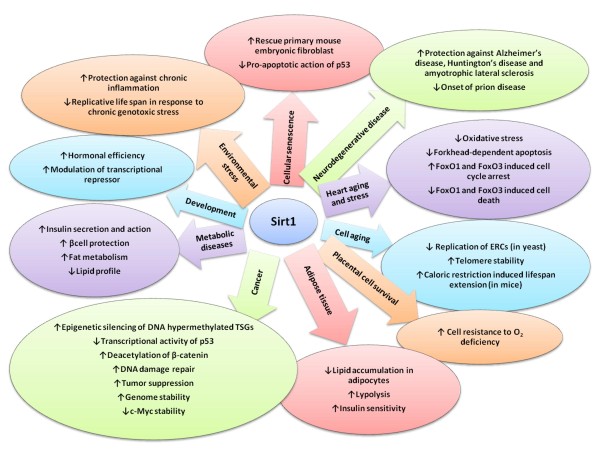
Sirt1 (member of the sirtuin family) is a nicotinamide adenosine dinucleotide (NAD)-dependent deacetylase that removes acetyl groups from various proteins. Sirt1 performs a wide variety of functions in biological systems. The current review focuses on the biological functions of Sirt1 in obesity-associated metabolic diseases, cancer, adipose tissue, aging, cellular senescence, cardiac aging and stress, prion-mediated neurodegeneration, inflammatory signaling in response to environmental stress, development and placental cell survival.
Overview
The claims and statistics of this paper haven’t been checked yet.
Free: it reads the open-access text and checks the first 5 claims that cite a source we can check. Create a free account to check every claim.
Integrity signals
Registry
Cites
Statistics
Figures
Verification
Claims the paper makes
The claims and statistics of this paper haven’t been checked yet.
Free: it reads the open-access text and checks the first 5 claims that cite a source we can check. Create a free account to check every claim.
Claims other papers make about this one
Each is checked against this paper’s own text: does it say what the citing paper says it does?
The source backs part of the claim, not all of it — or backs it for a different population, condition or comparison.
In the citing paper
“GLP-1 may improve the liver’s antioxidant capacity and metabolic function by activating Sirt1, thereby helping to alleviate the pathological changes associated with NASH.”
From Glucagon-like peptide-1 receptor: mechanisms and advances in therapy (2024) · cites this paper as [515]
Experimental — accuracy not yet measured
Self-check
Percentages, sums and reported differences re-computed from the paper’s own numbers.
The self-check needs the paper’s full text.
Citations
Cites
Lagouge, M., Argmann, C., Gerhart-Hines, Z., Meziane, H., Lerin, C., Daussin, F., Messadeq, N., Milne, J., Lambert, P., Elliott, P., et al. (2006) · Cell · doi:10.1016/j.cell.2006.11.013 · Cited by 4,057 · cited 1×
“Furthermore, CR upregulates Sirt1 in several mouse tissues and, importantly, in human muscle tissue [56-58].”
BackgroundTranscriptional silencing and longevity protein Sir2 is an NAD-dependent histone deacetylase
Imai, S.-I., Armstrong, C. M., Kaeberlein, M., & Guarente, L. (2000) · Nature · doi:10.1038/35001622 · Cited by 3,510 · cited 1×
“Sirt1 and its ortholog appear to have a key role in determining lifespan of yeast, flies, and mice [34-36].”
BackgroundStress-dependent regulation of FOXO transcription factors by the SIRT1 deacetylase
Brunet, A., Sweeney, L. B., Sturgill, J. F., Chua, K. F., Greer, P. L., Lin, Y., Tran, H., Ross, S. E., Mostoslavsky, R., Cohen, H. Y., et al. (2004) · Science · doi:10.1126/science.1094637 · Cited by 3,239 · cited 2×
“Thus, one way through which members of the Sir2 family of proteins may increase organismal longevity is by tipping FoxO dependent responses away from apoptosis and toward stress resistance [51].”
BackgroundhSIR2SIRT1 Functions as an NAD-Dependent p53 Deacetylase
Vaziri, H., Dessain, S. K., Eaton, E. N., Imai, S.-I., Frye, R. A., Pandita, T. K., Guarente, L., & Weinberg, R. A. (2001) · Cell · doi:10.1016/s0092-8674(01)00527-x · Cited by 2,659
Kaeberlein, M., McVey, M., & Guarente, L. (1999) · Genes & Development · doi:10.1101/gad.13.19.2570 · Cited by 2,253 · cited 3×
“Sirt1 and its ortholog appear to have a key role in determining lifespan of yeast, flies, and mice [34-36].”
BackgroundMammalian Sirtuins: Biological Insights and Disease Relevance
Haigis, M. C., & Sinclair, D. A. (2010) · Annual Review of Pathology: Mechanisms of Disease · doi:10.1146/annurev.pathol.4.110807.092250 · Cited by 2,085
Negative Control of p53 by Sir2α Promotes Cell Survival under Stress
Luo, J., Nikolaev, A. Y., Imai, S.-I., Chen, D., Su, F., Shiloh, A., Guarente, L., & Gu, W. (2001) · Cell · doi:10.1016/s0092-8674(01)00524-4 · Cited by 2,081
Sirt1 promotes fat mobilization in white adipocytes by repressing PPAR-γ
Picard, F., Kurtev, M., Chung, N., Topark-Ngarm, A., Senawong, T., Machado de Oliveira, R., Leid, M., McBurney, M. W., & Guarente, L. (2004) · Nature · doi:10.1038/nature02583 · Cited by 1,952
Calorie restriction promotes mammalian cell survival by inducing the SIRT1 deacetylase
Cohen, H. Y., Miller, C., Bitterman, K. J., Wall, N. R., Hekking, B., Kessler, B., Howitz, K. T., Gorospe, M., de Cabo, R., & Sinclair, D. A. (2004) · Science · doi:10.1126/science.1099196 · Cited by 1,924 · cited 1×
“Furthermore, CR upregulates Sirt1 in several mouse tissues and, importantly, in human muscle tissue [56-58].”
BackgroundSirtuins in mammals: insights into their biological function
Michan, S., & Sinclair, D. (2007) · Biochemical Journal · doi:10.1042/bj20070140 · Cited by 1,718
Cited by
Glucagon-like peptide-1 receptor: mechanisms and advances in therapy
Zheng, Z., Zong, Y., Ma, Y., Tian, Y., Pang, Y., Zhang, C., & Gao, J. (2024) · Signal Transduction and Targeted Therapy · doi:10.1038/s41392-024-01931-z · Cited by 1,036
Mechanisms of Dysfunction in the Aging Vasculature and Role in Age-Related Disease
Donato, A. J., Machin, D. R., & Lesniewski, L. A. (2018) · Circulation Research · doi:10.1161/circresaha.118.312563 · Cited by 688
Jamshed, H., Beyl, R., Della Manna, D., Yang, E., Ravussin, E., & Peterson, C. (2019) · Nutrients · doi:10.3390/nu11061234 · Cited by 664
Anti-cancer chalcones: Structural and molecular target perspectives
Mahapatra, D. K., Bharti, S. K., & Asati, V. (2015) · European Journal of Medicinal Chemistry · doi:10.1016/j.ejmech.2015.05.004 · Cited by 495
Sirtuins: guardians of mammalian healthspan
Giblin, W., Skinner, M. E., & Lombard, D. B. (2014) · Trends in Genetics · doi:10.1016/j.tig.2014.04.007 · Cited by 282
Natural Antioxidants: Multiple Mechanisms to Protect Skin From Solar Radiation
Dunaway, S., Odin, R., Zhou, L., Ji, L., Zhang, Y., & Kadekaro, A. L. (2018) · Frontiers in Pharmacology · doi:10.3389/fphar.2018.00392 · Cited by 280
“In the study, apocynin significantly decreased the UVB-induced activation of AP-1 and NF-kB in JB6 P+ cells and suppressed the promoter activity of UVB-induced COX-2.”
BackgroundInfluentialHuang, K., Huang, J., Xie, X., Wang, S., Chen, C., Shen, X., Liu, P., & Huang, H. (2013) · Free Radical Biology and Medicine · doi:10.1016/j.freeradbiomed.2013.07.029 · Cited by 269
BRCA Genes: The Role in Genome Stability, Cancer Stemness and Therapy Resistance
Gorodetska, I., Kozeretska, I., & Dubrovska, A. (2019) · Journal of Cancer · doi:10.7150/jca.30410 · Cited by 269
Teschke, R. (2018) · Biomedicines · doi:10.3390/biomedicines6040106 · Cited by 241
The ups and downs of caloric restriction and fasting: from molecular effects to clinical application
Hofer, S. J., Carmona‐Gutierrez, D., Mueller, M. I., & Madeo, F. (2022) · EMBO Molecular Medicine · doi:10.15252/emmm.202114418 · Cited by 209
Huang, K., Chen, C., Hao, J., Huang, J., Wang, S., Liu, P., & Huang, H. (2015) · Molecular and Cellular Endocrinology · doi:10.1016/j.mce.2014.08.014 · Cited by 209
Age-Associated Changes in the Immune System and Blood–Brain Barrier Functions
Erickson, M. A., & Banks, W. A. (2019) · International Journal of Molecular Sciences · doi:10.3390/ijms20071632 · Cited by 198
“Molecular mechanisms of BBB disruption in aging have been identified, and include reduced expression of sirtuin-1 [96], a de-acetylase enzyme which has been implicated in the regulation of lifespan, senescence, and inflammatory responses to environmental stress [97].”
BackgroundThe role of different SIRT1-mediated signaling pathways in toxic injury
Ren, Z., He, H., Zuo, Z., Xu, Z., Wei, Z., & Deng, J. (2019) · Cellular & Molecular Biology Letters · doi:10.1186/s11658-019-0158-9 · Cited by 190
Modulation of autophagy by melatonin and its receptors: implications in brain disorders
Zhu, C., Li, G., Lyu, H.-F., Lu, Y., Li, Y., & Zhang, X. (2024) · Acta Pharmacologica Sinica · doi:10.1038/s41401-024-01398-2 · Cited by 190
Lycopene: A Critical Review of Digestion, Absorption, Metabolism, and Excretion
Arballo, J., Amengual, J., & Erdman, J. W. (2021) · Antioxidants · doi:10.3390/antiox10030342 · Cited by 182
Sirtuins and Disease: The Road Ahead
Carafa, V., Nebbioso, A., & Altucci, L. (2012) · Frontiers in Pharmacology · doi:10.3389/fphar.2012.00004 · Cited by 178
Chronic myeloid leukemia stem cells
Houshmand, M., Simonetti, G., Circosta, P., Gaidano, V., Cignetti, A., Martinelli, G., Saglio, G., & Gale, R. P. (2019) · Leukemia · doi:10.1038/s41375-019-0490-0 · Cited by 177
Role of mitochondrial homeostasis and dynamics in Alzheimer's disease
Selfridge, J. E., E, L., Lu, J., & Swerdlow, R. H. (2013) · Neurobiology of Disease · doi:10.1016/j.nbd.2011.12.057 · Cited by 175
Guo, R., Liu, W., Liu, B., Zhang, B., Li, W., & Xu, Y. (2015) · International Journal of Cardiology · doi:10.1016/j.ijcard.2015.04.245 · Cited by 164
Sirtuins and their Biological Relevance in Aging and Age-Related Diseases
Zhao, L., Cao, J., Hu, K., He, X., Yun, D., Tong, T., & Han, L. (2020) · Aging and disease · doi:10.14336/ad.2019.0820 · Cited by 162
A SIRT1 Activator, Ginsenoside Rc, Promotes Energy Metabolism in Cardiomyocytes and Neurons
Huang, Q., Su, H., Qi, B., Wang, Y., Yan, K., Wang, X., Li, X., & Zhao, D. (2021) · Journal of the American Chemical Society · doi:10.1021/jacs.0c10836 · Cited by 162
Resveratrol and Ophthalmic Diseases
Abu-Amero, K., Kondkar, A., & Chalam, K. (2016) · Nutrients · doi:10.3390/nu8040200 · Cited by 162
“SIRT1 activation plays a critical role in signaling pathways related to apoptosis, autophagy, insulin sensitivity and benefits of caloric restriction diet [51,55].”
BackgroundPolidoro, L., Properzi, G., Marampon, F., Gravina, G. L., Festuccia, C., Cesare, E. D., Scarsella, L., Ciccarelli, C., ZANI, B. M., & Ferri, C. (2012) · Journal of Cardiovascular Translational Research · doi:10.1007/s12265-012-9436-x · Cited by 163
miR-195 regulates SIRT1-mediated changes in diabetic retinopathy
Mortuza, R., Feng, B., & Chakrabarti, S. (2014) · Diabetologia · doi:10.1007/s00125-014-3197-9 · Cited by 160
Li, J., Huang, Q., Long, X.-Q., Guo, X., Sun, X., Jin, X., Li, Z., Ren, T., Yuan, P., Huang, X., et al. (2017) · Oncogene · doi:10.1038/onc.2017.98 · Cited by 158
Huang, K., Gao, X., & Wei, W. (2017) · Experimental Cell Research · doi:10.1016/j.yexcr.2017.09.042 · Cited by 155
Exosomes in Human Breast Milk Promote EMT
Qin, W., Tsukasaki, Y., Dasgupta, S., Mukhopadhyay, N., Ikebe, M., & Sauter, E. R. (2016) · Clinical Cancer Research · doi:10.1158/1078-0432.ccr-16-0135 · Cited by 144
Regulation of Sirtuin Function by Posttranslational Modifications
Flick, F., & Lüscher, B. (2012) · Frontiers in Pharmacology · doi:10.3389/fphar.2012.00029 · Cited by 138
Yoo, J.-Y., Kim, T. H., Fazleabas, A. T., Palomino, W. A., Ahn, S. H., Tayade, C., Schammel, D. P., Young, S. L., Jeong, J.-W., & Lessey, B. A. (2017) · Scientific Reports · doi:10.1038/s41598-017-04577-w · Cited by 136
Shi, S., Lei, S., Tang, C., Wang, K., & Xia, Z. (2019) · Bioscience Reports · doi:10.1042/bsr20181614 · Cited by 135
SIRT1 protects against myocardial ischemia–reperfusion injury via activating eNOS in diabetic rats
Ding, M., Lei, J., Han, H.-C., Wei-bo, L., Qu, Y., Fu, E., Fu, F., & Wang, X. (2015) · Cardiovascular Diabetology · doi:10.1186/s12933-015-0299-8 · Cited by 133
Tu, Z., Moss‐Pierce, T., Ford, P. W., & Jiang, T. A. (2013) · Journal of Agricultural and Food Chemistry · doi:10.1021/jf400298c · Cited by 132
The impact of vitamin D on cancer: A mini review
Seraphin, G., Rieger, S., Hewison, M., Capobianco, E., & Lisse, T. S. (2023) · The Journal of Steroid Biochemistry and Molecular Biology · doi:10.1016/j.jsbmb.2023.106308 · Cited by 126
The role of SIRT1 in ocular aging
Mimura, T., Kaji, Y., Noma, H., Funatsu, H., & Okamoto, S. (2013) · Experimental Eye Research · doi:10.1016/j.exer.2013.07.017 · Cited by 124
SIRT1-FOXOs activity regulates diabetic complications
Jalgaonkar, M. P., Parmar, U. M., Kulkarni, Y. A., & Oza, M. J. (2021) · Pharmacological Research · doi:10.1016/j.phrs.2021.106014 · Cited by 125
Nowak, A. J., & Relja, B. (2020) · International Journal of Molecular Sciences · doi:10.3390/ijms21249407 · Cited by 119
Gu, L., Tao, X., Xu, Y., Han, X., Qi, Y., Xu, L., Yin, L., & Peng, J. (2015) · Toxicology and Applied Pharmacology · doi:10.1016/j.taap.2015.12.024 · Cited by 118
Regulation of Glucose Metabolism by NAD+ and ADP-Ribosylation
Hopp, A.-K., Grüter, P., & Hottiger, M. O. (2019) · Cells · doi:10.3390/cells8080890 · Cited by 114
Anti-tumor effects and cellular mechanisms of resveratrol
Han, G., Xia, J., Gao, J., Inagaki, Y., Tang, W., & Kokudo, N. (2015) · Drug Discoveries & Therapeutics · doi:10.5582/ddt.2015.01007 · Cited by 114
Arterial Stiffness Assessed by Cardio-Ankle Vascular Index
Namba, T., Masaki, N., Takase, B., & Adachi, T. K. (2019) · International Journal of Molecular Sciences · doi:10.3390/ijms20153664 · Cited by 115
Loss of SIRT1 in diabetes accelerates DNA damage-induced vascular calcification
Bartoli‐Leonard, F., Wilkinson, F. L., Schiro, A., Serracino‐Inglott, F., Alexander, M. Y., & Weston, R. (2020) · Cardiovascular Research · doi:10.1093/cvr/cvaa134 · Cited by 112
Deacetylation by SIRT1 Reprograms Inflammation and Cancer
Liu, T. F., & McCall, C. E. (2013) · Genes & Cancer · doi:10.1177/1947601913476948 · Cited by 111
Polyphenols and AGEs/RAGE axis. Trends and challenges
González, I., Morales, M. A., & Rojas, A. (2019) · Food Research International · doi:10.1016/j.foodres.2019.108843 · Cited by 110
Norwitz, N. G., Hu, M. T., & Clarke, K. (2019) · Frontiers in Nutrition · doi:10.3389/fnut.2019.00063 · Cited by 108
Zhou, F., Wang, Y., Zhang, C., & Wu, B. (2021) · Journal of Neuroinflammation · doi:10.1186/s12974-021-02172-5 · Cited by 107
Dorling, J. L., Martin, C. K., & Redman, L. M. (2020) · Ageing Research Reviews · doi:10.1016/j.arr.2020.101038 · Cited by 104
Mazucanti, C., Cabral-Costa, J., Vasconcelos, A., Andreotti, D., Scavone, C., & Kawamoto, E. (2015) · Current Topics in Medicinal Chemistry · doi:10.2174/1568026615666150610125715 · Cited by 102
Bugyei‐Twum, A., Ford, C., Civitarese, R., Seegobin, J., Advani, S. L., Desjardins, J., Kabir, G., Zhang, Y., Mitchell, M., Switzer, J., et al. (2018) · Cardiovascular Research · doi:10.1093/cvr/cvy131 · Cited by 102
DYRK1A: a down syndrome-related dual protein kinase with a versatile role in tumorigenesis
Laham, A. J., Saber-Ayad, M. M., & El‐Awady, R. (2020) · Cellular and Molecular Life Sciences · doi:10.1007/s00018-020-03626-4 · Cited by 99
Telomerase therapy reverses vascular senescence and extends lifespan in progeria mice
Mojiri, A., Walther, B. K., Jiang, C., Matrone, G., Holgate, R., Xu, Q., Morales, E., Wang, G., Gu, J., Wang, R., et al. (2021) · European Heart Journal · doi:10.1093/eurheartj/ehab547 · Cited by 97
Sirtuin 1 and Skin: Implications in Intrinsic and Extrinsic Aging—A Systematic Review
Bielach-Bazyluk, A., Zbroch, E., Myśliwiec, H., Rydzewska–Rosołowska, A., Kakareko, K., Flisiak, I., & Hryszko, T. (2021) · Cells · doi:10.3390/cells10040813 · Cited by 97
Mishra, P., Mittal, A. K., Kalonia, H., Madan, S., Ghosh, S., Sinha, J. K., & Rajput, S. K. (2020) · Current Neuropharmacology · doi:10.2174/1570159x18666200729111744 · Cited by 94
Brain Activation of SIRT1: Role in Neuropathology
Paraíso, A. F., Mendes, K. L., & Santos, S. H. S. (2013) · Molecular Neurobiology · doi:10.1007/s12035-013-8459-x · Cited by 94
SIRT1/PARP1 crosstalk: connecting DNA damage and metabolism
Luna, A., Aladjem, M. I., & Kohn, K. W. (2013) · Genome Integrity · doi:10.1186/2041-9414-4-6 · Cited by 93
The impact of hyperglycemia on the corneal epithelium: Molecular mechanisms and insight
Zhu, L., Titone, R., & Robertson, D. M. (2019) · The Ocular Surface · doi:10.1016/j.jtos.2019.06.007 · Cited by 93
Ibrahim, M. A., Albahlol, I. A., Wani, F. A., Tammam, A. A.-E., Kelleni, M. T., Sayeed, M. U., El‐Fadeal, N. M. A., & Mohamed, A. A. (2021) · Chemico-Biological Interactions · doi:10.1016/j.cbi.2021.109402 · Cited by 93
Epigenetic Therapies for Osteoarthritis
Grandi, F. C., & Bhutani, N. (2020) · Trends in Pharmacological Sciences · doi:10.1016/j.tips.2020.05.008 · Cited by 90
SIRT1: Harnessing multiple pathways to hinder NAFLD
Tian, C., Huang, R., & Xiang, M. (2024) · Pharmacological Research · doi:10.1016/j.phrs.2024.107155 · Cited by 89
Novel Role of Silent Information Regulator 1 in Myocardial Ischemia
Yang, Y., Duan, W., Li, Y., Jin, Z., Yan, J., Yu, S., & Yi, D. (2013) · Circulation · doi:10.1161/circulationaha.113.002480 · Cited by 89
Miller, R., Wentzel, A., & Richards, G. A. (2020) · Medical Hypotheses · doi:10.1016/j.mehy.2020.110044 · Cited by 87
SIRT1 and Autophagy: Implications in Endocrine Disorders
Kim, J. Y., Mondaca‐Ruff, D., Singh, S., & Wang, Y. (2022) · Frontiers in Endocrinology · doi:10.3389/fendo.2022.930919 · Cited by 82
Nguyen, G. T. T., Gertz, M., & Steegborn, C. (2013) · Chemistry & Biology · doi:10.1016/j.chembiol.2013.09.019 · Cited by 81
Role of nutraceutical SIRT1 modulators in AMPK and mTOR pathway: Evidence of a synergistic effect
Giovannini, L., & Bianchi, S. E. (2016) · Nutrition · doi:10.1016/j.nut.2016.09.008 · Cited by 82
Interferon regulatory factor 9 is a key mediator of hepatic ischemia/reperfusion injury
Wang, P., Zhang, R., Huang, L., Zhu, L., Jiang, D.-S., Chen, H., Zhang, Y., Tian, S., Zhang, X., Zhang, X.-D., et al. (2014) · Journal of Hepatology · doi:10.1016/j.jhep.2014.08.022 · Cited by 80
Luo, X.-Y., Qu, S.-L., Tang, Z., Zhang, Y. E., Liu, M., Peng, J., Tang, H. R., Yu, K., Zhang, C., Ren, Z., et al. (2014) · Clinica Chimica Acta · doi:10.1016/j.cca.2014.07.019 · Cited by 79
Harnessing the FOXO-SIRT1 axis: insights into cellular stress, metabolism, and aging
Gupta, S., Afzal, M., Agrawal, N., Almalki, W. H., Rana, M., Gangola, S., Chinni, S. V., Kumar.K, B., Ali, H., Singh, S. K., et al. (2025) · Biogerontology · doi:10.1007/s10522-025-10207-0 · Cited by 77
Li, G., Rivas, P., Bedolla, R. G., Thapa, D., Reddick, R. L., Ghosh, R., & Kumar, A. P. (2013) · Cancer Prevention Research · doi:10.1158/1940-6207.capr-12-0349 · Cited by 76
Koschmieder, S., & Vetrie, D. L. P. (2017) · Seminars in Cancer Biology · doi:10.1016/j.semcancer.2017.07.006 · Cited by 76
Yang, C., Yang, W., He, Z., Guo, J., Yang, X., Wang, R., & Li, H. (2021) · Frontiers in Pharmacology · doi:10.3389/fphar.2021.624402 · Cited by 77
Yanagisawa, S., Baker, J. R., Vuppusetty, C., Koga, T., Colley, T., Fenwick, P. S., Donnelly, L., Barnes, P. J., & Ito, K. (2018) · PLoS ONE · doi:10.1371/journal.pone.0193921 · Cited by 75
Huang, K., Chen, C., Hao, J., Huang, J., Liu, P., & Huang, H. (2014) · Endocrinology · doi:10.1210/en.2014-1381 · Cited by 74
Pérez‐Pinzón, M. A., & Koronowski, K. B. (2015) · Brain Circulation · doi:10.4103/2394-8108.162532 · Cited by 74
Becatti, M., Barygina, V. V., Mannucci, A., Emmi, G., Prisco, D., Lotti, T., Fiorillo, C., & Taddei, N. (2018) · International Journal of Molecular Sciences · doi:10.3390/ijms19061572 · Cited by 74
Iqbal, I. K., Bajeli, S., Sahu, S., Bhat, S. A., & Kumar, A. (2021) · Autophagy · doi:10.1080/15548627.2021.1876342 · Cited by 74
Yu, W.-C., Huang, R., & Chou, T. (2020) · Nutrients · doi:10.3390/nu12103068 · Cited by 73
Decreased Serum Sirtuin-1 in COPD
Yanagisawa, S., Papaioannou, A. Ι., Papaporfyriou, A., Baker, J. R., Vuppusetty, C., Loukides, S., Barnes, P. J., & Ito, K. (2017) · CHEST Journal · doi:10.1016/j.chest.2017.05.004 · Cited by 73
Geroprotectors as a novel therapeutic strategy for COPD, an accelerating aging disease
Ito, K., Colley, J. R., & Mercado, N. (2012) · International Journal of COPD · doi:10.2147/copd.s28250 · Cited by 73
Zhang, L., Chen, Z., Gong, W., Zou, Y., Xu, F., Chen, L., & Huang, H. (2018) · Frontiers in Pharmacology · doi:10.3389/fphar.2018.00512 · Cited by 72
Role of the AMPK/SIRT1 pathway in non‑alcoholic fatty liver disease (Review)
Anggreini, P., Kuncoro, H., Sumiwi, S. A., & Levita, J. (2022) · Molecular Medicine Reports · doi:10.3892/mmr.2022.12922 · Cited by 69
Resveratrol: Evidence for Its Nephroprotective Effect in Diabetic Nephropathy
Gowd, V., Kang, Q., Wang, Q., Wang, Q., Chen, F., & Cheng, K. (2020) · Advances in Nutrition · doi:10.1093/advances/nmaa075 · Cited by 67
Al-Qahtani, W. H., Alshammari, G. M., Ajarem, J. S., Al-Zahrani, A. Y., Alzuwaydi, A., Eid, R. A., & Yahya, M. A. (2021) · Biomedicine & Pharmacotherapy · doi:10.1016/j.biopha.2021.112594 · Cited by 66
Identification, stability and expression of Sirt1 antisense long non-coding RNA
Wang, Y., Pang, W.-J., Wei, N., Xiong, Y., Wu, W., Zhao, C., Shen, Q. W., & Yang, G.-S. (2014) · Gene · doi:10.1016/j.gene.2014.01.037 · Cited by 66
Alshammari, G. M., Al-Qahtani, W. H., AlFaris, N. A., Albekairi, N. A., Alqahtani, S., Eid, R. A., Yagoub, A. E. A., Al‐Harbi, L. N., & Yahya, M. A. (2021) · Biomedicine & Pharmacotherapy · doi:10.1016/j.biopha.2021.111862 · Cited by 68
Chung, Y.-H. (2012) · Oncology Reports · doi:10.3892/or.2012.1798 · Cited by 65
Regulation of Metabolic Plasticity in Cancer Stem Cells and Implications in Cancer Therapy
Papadaki, S., & Magklara, A. (2022) · Cancers · doi:10.3390/cancers14235912 · Cited by 64
Expression of SIRT1 and oxidative stress in diabetic dry eye.
Liu, H., Sheng, M., Liu, Y., Wang, P., Chen, Y., Chen, L., Wang, W., & Li, B. (2015) · Europe PMC (PubMed Central) · Cited by 63
The SIRT-1/Nrf2/HO-1 axis: Guardians of neuronal health in neurological disorders
Sethi, P., Mehan, S., Khan, Z., Maurya, P. K., Kumar, B., Kumar, A., Tiwari, A., Sharma, T., Gupta, G. D., Narula, A. S., et al. (2024) · Behavioural Brain Research · doi:10.1016/j.bbr.2024.115280 · Cited by 62
Wang, Y., Wang, Y., Cai, N., Xu, T., & He, F. (2021) · International Immunopharmacology · doi:10.1016/j.intimp.2021.107600 · Cited by 60
Yoshida, H., Meng, P., Matsumiya, T., Tanji, K., Hayakari, R., Xing, F., Wang, L. Y., Tsuruga, K., Tanaka, H., Mimura, J., et al. (2013) · Neuroscience Research · doi:10.1016/j.neures.2013.11.004 · Cited by 58
Role of Sirt1 Plays in Nucleus Pulposus Cells and Intervertebral Disc Degeneration
Guo, J., Shao, M., Lu, F., Jiang, J., & Xia, X. (2016) · Spine · doi:10.1097/brs.0000000000001954 · Cited by 58
Gay, N. H., Suwanjang, W., Ruankham, W., Songtawee, N., Wongchitrat, P., Prachayasittikul, V., Prachayasittikul, S., & Phopin, K. (2020) · RSC Advances · doi:10.1039/c9ra06056a · Cited by 57
Monceaux, K., Gressette, M., Karoui, A., Silva, J. P. D., Piquereau, J., Ventura‐Clapier, R., Garnier, A., Mericskay, M., & Lemaire, C. (2022) · International Journal of Molecular Sciences · doi:10.3390/ijms23126628 · Cited by 57
Decoding the Rosetta stone of mitonuclear communication
English, J., Son, J. M., Cardamone, M. D., Lee, C., & Perissi, V. (2020) · Pharmacological Research · doi:10.1016/j.phrs.2020.105161 · Cited by 55
“At the same time, the nuclear role of SIRT1 and its relationship with NAD+ have been widely studied in the context of mammalian physiology, stress response, aging and numerous diseases, including cancer and metabolic disorders (Alves-Fernandes and Jasiulionis, 2019; Haigis and Sinclair, 2010; Rahman and Islam, 2011; T…”
BackgroundBenard, A., Goossens‐Beumer, I. J., van Hoesel, A. Q., Horati, H., de Graaf, W., Putter, H., Zeestraten, E. C. M., Liefers, G., van de Velde, C. J. H., & Kuppen, P. J. K. (2015) · Histopathology · doi:10.1111/his.12534 · Cited by 55
Role of SIRT1 and Progesterone Resistance in Normal and Abnormal Endometrium
Kim, T. H., Young, S. L., Sasaki, T., Deaton, J. L., Schammel, D. P., Palomino, W. A., Jeong, J., & Lessey, B. A. (2021) · The Journal of Clinical Endocrinology & Metabolism · doi:10.1210/clinem/dgab753 · Cited by 55
SIRT1 Plays a Protective Role in Intervertebral Disc Degeneration in a Puncture-induced Rodent Model
Xia, X., Guo, J., Lu, F., & Jiang, J. (2015) · Spine · doi:10.1097/brs.0000000000000817 · Cited by 55
Stem Cell Senescence and Regenerative Paradigms
Beltrami, A. P., Cesselli, D., & Beltrami, C. A. (2012) · Clinical Pharmacology & Therapeutics · doi:10.1038/clpt.2011.262 · Cited by 54
Early aging and premature vascular aging in chronic kidney disease
Tanrıöver, C., Çöpür, S., Mutlu, A., Peltek, İ. B., Galassi, A., Ciceri, P., Cozzolino, M. G., & Kanbay, M. (2023) · Clinical Kidney Journal · doi:10.1093/ckj/sfad076 · Cited by 53
Ibrahim, W. W., & Rasheed, N. O. A. (2022) · Inflammopharmacology · doi:10.1007/s10787-022-01004-z · Cited by 52
The role of metabolic therapy in treating glioblastoma multiforme
Bost, J. W., Maroon, J. C., Seyfried, T. N., & Donohue, J. (2015) · Surgical Neurology International · doi:10.4103/2152-7806.155259 · Cited by 52
Metadata
- Authors
- Rahman, S., & Islam, R.
- Affiliations
- Islamic University (BD)
- Corresponding author
- Islam, Rezuanul
- ORCID
- Islam, Rezuanul
- Venue
- Cell Communication and Signaling
- Published
- 2011
- Volume
- 9
- Issue
- 1
- Pages
- 11
- ISSN
- 1478-811X (ISSN-L)
- PMC
- PMC3103488
- OpenAlex
- W2101720365
- Cited by
- 362
- References
- 83
- Citations by year
- 2026: 15 · 2025: 33 · 2024: 43 · 2023: 27 · 2022: 35 · 2021: 42 · 2020: 37 · 2019: 20 · 2018: 27 · 2017: 14 · 2016: 8 · 2015: 18 · 2014: 13 · 2013: 17 · 2012: 11
- FWCI
- 6.55
- Type
- journal article
- Language
- en
- Open access
- gold
- doi.org
- Licence
- cc-by
- Locations
- Cell Communication and Signaling (publishedVersion, cc-by)
- PubMed Central (publishedVersion, cc-by)
- PubMed (publishedVersion)
- DOAJ (DOAJ: Directory of Open Access Journals) (submittedVersion)
- Greater South Information System
- Topics
- Health Sciences › Medicine › Geriatrics and Gerontology › Sirtuins and Resveratrol in Medicine
- Health Sciences › Medicine › Physiology (medical) › Adipose Tissue and Metabolism
- Life Sciences › Biochemistry, Genetics and Molecular Biology › Molecular Biology › Nuclear Receptors and Signaling
- Keywords
- SIRT1, sirtuins, NAD+-dependent deacetylase, protein deacetylation, obesity, metabolic disorders, cancer, adipose tissue, aging, cellular senescence, cardiac aging, stress response, inflammation, placenta
About these checks
Registry, retraction, Cites and statistics results are computed, not judged, with one exception: a printed reference that no index lists is read once by a model before it counts as a citation error. Claims are extracted by a model and kept only when their quote appears verbatim in the text; each cited source is then checked, with a model’s help, for whether it says what the claim relies on. Those verdicts can be wrong — read the claim’s quote and the cited source before relying on one.
Statistics and arithmetic are recomputed, not judged.
Confidence bands are shown only for fields calibrated on our annotated test set. None is calibrated yet, so no band is shown.
What counts as a claim ›How we measure confidence ›How we check this ›
Are you an author, or do you see a problem with this page? Request a review
Data sources
Bibliographic data: Semantic Scholar, OpenAlex, Crossref.
Contains information from the Semantic Scholar Academic Graph Datasets, made available under the ODC Attribution License (ODC-BY 1.0).
Semantic Scholar’s data is described in: Kinney, R., et al. (2023). The Semantic Scholar Open Data Platform. arXiv:2301.10140.
