

Mammalian Sirt1: insights on its biological functions
Open accessThe DOI matches its Crossref record; 83 of the 83 references it cites were found in a registry or an index.
Abstract
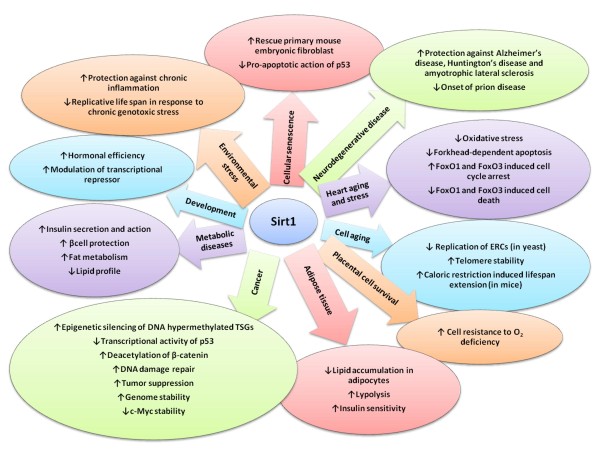
Sirt1 (member of the sirtuin family) is a nicotinamide adenosine dinucleotide (NAD)-dependent deacetylase that removes acetyl groups from various proteins. Sirt1 performs a wide variety of functions in biological systems. The current review focuses on the biological functions of Sirt1 in obesity-associated metabolic diseases, cancer, adipose tissue, aging, cellular senescence, cardiac aging and stress, prion-mediated neurodegeneration, inflammatory signaling in response to environmental stress, development and placental cell survival.
Overview
The claims and statistics of this paper haven’t been checked yet.
Free: it reads the open-access text and checks the first 5 claims that cite a source we can check. Create a free account to check every claim.
Integrity signals
Registry
Cites
Statistics
Figures
Verification
Claims the paper makes
The claims and statistics of this paper haven’t been checked yet.
Free: it reads the open-access text and checks the first 5 claims that cite a source we can check. Create a free account to check every claim.
Claims other papers make about this one
Each is checked against this paper’s own text: does it say what the citing paper says it does?
The source backs part of the claim, not all of it — or backs it for a different population, condition or comparison.
In the citing paper
“GLP-1 may improve the liver’s antioxidant capacity and metabolic function by activating Sirt1, thereby helping to alleviate the pathological changes associated with NASH.”
From Glucagon-like peptide-1 receptor: mechanisms and advances in therapy (2024) · cites this paper as [515]
Experimental — accuracy not yet measured
Self-check
Percentages, sums and reported differences re-computed from the paper’s own numbers.
The self-check needs the paper’s full text.
Citations
Cites
Lagouge, M., Argmann, C., Gerhart-Hines, Z., Meziane, H., Lerin, C., Daussin, F., Messadeq, N., Milne, J., Lambert, P., Elliott, P., et al. (2006) · Cell · doi:10.1016/j.cell.2006.11.013 · Cited by 4,057 · cited 1×
“Furthermore, CR upregulates Sirt1 in several mouse tissues and, importantly, in human muscle tissue [56-58].”
BackgroundTranscriptional silencing and longevity protein Sir2 is an NAD-dependent histone deacetylase
Imai, S.-I., Armstrong, C. M., Kaeberlein, M., & Guarente, L. (2000) · Nature · doi:10.1038/35001622 · Cited by 3,510 · cited 1×
“Sirt1 and its ortholog appear to have a key role in determining lifespan of yeast, flies, and mice [34-36].”
BackgroundStress-dependent regulation of FOXO transcription factors by the SIRT1 deacetylase
Brunet, A., Sweeney, L. B., Sturgill, J. F., Chua, K. F., Greer, P. L., Lin, Y., Tran, H., Ross, S. E., Mostoslavsky, R., Cohen, H. Y., et al. (2004) · Science · doi:10.1126/science.1094637 · Cited by 3,239 · cited 2×
“Thus, one way through which members of the Sir2 family of proteins may increase organismal longevity is by tipping FoxO dependent responses away from apoptosis and toward stress resistance [51].”
BackgroundhSIR2SIRT1 Functions as an NAD-Dependent p53 Deacetylase
Vaziri, H., Dessain, S. K., Eaton, E. N., Imai, S.-I., Frye, R. A., Pandita, T. K., Guarente, L., & Weinberg, R. A. (2001) · Cell · doi:10.1016/s0092-8674(01)00527-x · Cited by 2,659
Kaeberlein, M., McVey, M., & Guarente, L. (1999) · Genes & Development · doi:10.1101/gad.13.19.2570 · Cited by 2,253 · cited 3×
“Sirt1 and its ortholog appear to have a key role in determining lifespan of yeast, flies, and mice [34-36].”
BackgroundMammalian Sirtuins: Biological Insights and Disease Relevance
Haigis, M. C., & Sinclair, D. A. (2010) · Annual Review of Pathology: Mechanisms of Disease · doi:10.1146/annurev.pathol.4.110807.092250 · Cited by 2,085
Negative Control of p53 by Sir2α Promotes Cell Survival under Stress
Luo, J., Nikolaev, A. Y., Imai, S.-I., Chen, D., Su, F., Shiloh, A., Guarente, L., & Gu, W. (2001) · Cell · doi:10.1016/s0092-8674(01)00524-4 · Cited by 2,081
Sirt1 promotes fat mobilization in white adipocytes by repressing PPAR-γ
Picard, F., Kurtev, M., Chung, N., Topark-Ngarm, A., Senawong, T., Machado de Oliveira, R., Leid, M., McBurney, M. W., & Guarente, L. (2004) · Nature · doi:10.1038/nature02583 · Cited by 1,952
Calorie restriction promotes mammalian cell survival by inducing the SIRT1 deacetylase
Cohen, H. Y., Miller, C., Bitterman, K. J., Wall, N. R., Hekking, B., Kessler, B., Howitz, K. T., Gorospe, M., de Cabo, R., & Sinclair, D. A. (2004) · Science · doi:10.1126/science.1099196 · Cited by 1,924 · cited 1×
“Furthermore, CR upregulates Sirt1 in several mouse tissues and, importantly, in human muscle tissue [56-58].”
BackgroundSirtuins in mammals: insights into their biological function
Michan, S., & Sinclair, D. (2007) · Biochemical Journal · doi:10.1042/bj20070140 · Cited by 1,718
Mammalian SIRT1 Represses Forkhead Transcription Factors
Motta, M. C., Divecha, N., Lemieux, M., Kamel, C., Chen, D., Gu, W., Bultsma, Y., McBurney, M., & Guarente, L. (2004) · Cell · doi:10.1016/s0092-8674(04)00126-6 · Cited by 1,357
Mammalian sirtuins—emerging roles in physiology, aging, and calorie restriction
Haigis, M. C., & Guarente, L. P. (2006) · Genes & Development · doi:10.1101/gad.1467506 · Cited by 1,295 · cited 2×
“The list of Sirt1 substrates is continuously growing and includes several transcription factors: the tumor suppressor protein p53, members of the FoxO family (forkhead box factors regulated by insulin/Akt), HES1 (hairy and enhancer of split 1), HEY2 (hairy/enhancer-of-split related with YRPW motif 2), PPARg (peroxisom…”
BackgroundMetabolic control of muscle mitochondrial function and fatty acid oxidation through SIRT1/PGC‐1α
Gerhart‐Hines, Z., Rodgers, J. T., Bare, O., Lerin, C., Kim, S., Mostoslavsky, R., Alt, F. W., Wu, Z., & Puigserver, P. (2007) · The EMBO Journal · doi:10.1038/sj.emboj.7601633 · Cited by 1,294 · cited 2×
“Sirt1 is a functional regulator of PGC-1a that induces a metabolic gene transcription program of mitochondrial fatty acid oxidation [24].”
BackgroundExtended Longevity in Mice Lacking the Insulin Receptor in Adipose Tissue
Blüher, M., Kahn, B. B., & Kahn, C. R. (2003) · Science · doi:10.1126/science.1078223 · Cited by 1,155
Redox Regulation of Cellular Signalling
Kamata, H., & Hirata, H. (1999) · Cellular Signalling · doi:10.1016/s0898-6568(98)00037-0 · Cited by 1,148
Sirt1 Regulates Aging and Resistance to Oxidative Stress in the Heart
Alcendor, R. R., Gao, S., Zhai, P., Zablocki, D., Holle, E., Yu, X., Tian, B., Wagner, T., Vatner, S. F., & Sadoshima, J. (2007) · Circulation Research · doi:10.1161/01.res.0000267723.65696.4a · Cited by 1,147
Developmental defects and p53 hyperacetylation in Sir2 homolog (SIRT1)-deficient mice
Cheng, H.-L., Mostoslavsky, R., Saito, S., Manis, J. P., Gu, Y., Patel, P., Bronson, R., Appella, E., Alt, F. W., & Chua, K. F. (2003) · Proceedings of the National Academy of Sciences · doi:10.1073/pnas.1934713100 · Cited by 1,095 · cited 2×
“Both males and females that survive to adulthood are sterile, males have low sperm counts and females fail to ovulate, which is probably due to a hormonal inefficiency [79,53] (Figure”
BackgroundKim, D., Nguyen, M. D., Dobbin, M. M., Fischer, A., Sananbenesi, F., Rodgers, J. T., Delalle, I., Baur, J. A., Sui, G., Armour, S. M., et al. (2007) · The EMBO Journal · doi:10.1038/sj.emboj.7601758 · Cited by 1,074 · cited 1×
“Importantly, overexpression of Sirt1 also protects against Alzheimer’s disease, Huntington’s disease and amyotrophic lateral sclerosis in various model systems [70-73] (Figure 1), consistent with its proposed neuroprotective function.”
BackgroundIncreased Nuclear NAD Biosynthesis and SIRT1 Activation Prevent Axonal Degeneration
Araki, T., Sasaki, Y., & Milbrandt, J. (2004) · Science · doi:10.1126/science.1098014 · Cited by 1,060 · cited 1×
“Sirt1 may serve as a downstream effector of increased NAD biosynthesis and delay axonal degeneration in a mouse model of Wallerian degeneration [69].”
BackgroundCalorie restriction, SIRT1 and metabolism: understanding longevity
Bordone, L., & Guarente, L. (2005) · Nature Reviews Molecular Cell Biology · doi:10.1038/nrm1616 · Cited by 1,020
Purushotham, A., Schug, T. T., Xu, Q., Surapureddi, S., Guo, X., & Li, X. (2009) · Cell Metabolism · doi:10.1016/j.cmet.2009.02.006 · Cited by 1,003
Human SIR2 deacetylates p53 and antagonizes PML/p53-induced cellular senescence
Langley, E. (2002) · The EMBO Journal · doi:10.1093/emboj/21.10.2383 · Cited by 860
Sirt1 protects against high-fat diet-induced metabolic damage
Pfluger, P. T., Herranz, D., Velasco-Miguel, S., Serrano, M., & Tschöp, M. H. (2008) · Proceedings of the National Academy of Sciences · doi:10.1073/pnas.0802917105 · Cited by 818
Calorie restriction–the SIR2 connection
Guarente, L., & Picard, F. (2005) · Cell · doi:10.1016/j.cell.2005.01.029 · Cited by 793 · cited 1×
“Another way Sirt1 could be involved in stem cell aging via its central role in caloric restriction (CR)-induced lifespan extension [42,43] and its link to age-related reactive oxygen species (ROS) generation [44-46]; both are highly dependent on mitochondrial metabolism.”
BackgroundCalorie Restriction Increases Muscle Mitochondrial Biogenesis in Healthy Humans
Civitarese, A. E., Carling, S., Heilbronn, L. K., Hulver, M. H., Ukropcova, B., Deutsch, W. A., Smith, S. R., & Ravussin, E. (2007) · PLoS Medicine · doi:10.1371/journal.pmed.0040076 · Cited by 790
Impaired DNA Damage Response, Genome Instability, and Tumorigenesis in SIRT1 Mutant Mice
Wang, R.-H., Sengupta, K., Li, C., Kim, H.-S., Cao, L., Xiao, C., Kim, S., Xu, X., Zheng, Y., Chilton, B., et al. (2008) · Cancer Cell · doi:10.1016/j.ccr.2008.09.001 · Cited by 769
SIRT1 Improves Insulin Sensitivity under Insulin-Resistant Conditions by Repressing PTP1B
Sun, C., Zhang, F., Ge, X., Yan, T., Chen, X., Shi, X., & Zhai, Q. (2007) · Cell Metabolism · doi:10.1016/j.cmet.2007.08.014 · Cited by 766
How stem cells age and why this makes us grow old
Sharpless, N. E., & DePinho, R. A. (2007) · Nature Reviews Molecular Cell Biology · doi:10.1038/nrm2241 · Cited by 743
SIRT1 transgenic mice show phenotypes resembling calorie restriction
Bordone, L., Cohen, D., Robinson, A., Motta, M. C., Van Veen, E., Czopik, A., Steele, A. D., Crowe, H., Marmor, S., Luo, J., et al. (2007) · Aging Cell · doi:10.1111/j.1474-9726.2007.00335.x · Cited by 722
Sirt1 Regulates Insulin Secretion by Repressing UCP2 in Pancreatic β Cells
Bordone, L., Motta, M. C., Picard, F., Robinson, A., Jhala, U. S., Apfeld, J., McDonagh, T., Lemieux, M., McBurney, M., Szilvasi, A., et al. (2005) · PLoS Biology · doi:10.1371/journal.pbio.0040031 · Cited by 715 · cited 1×
“Regulation of UCP2 by Sirt1 may also be an important axis that is dysregulated by excess fat to contribute to obesity induced diabetes [10].”
SirT1 Gain of Function Increases Energy Efficiency and Prevents Diabetes in Mice
Banks, A. S., Kon, N., Knight, C., Matsumoto, M., Gutiérrez-Juárez, R., Rossetti, L., Gu, W., & Accili, D. (2008) · Cell Metabolism · doi:10.1016/j.cmet.2008.08.014 · Cited by 637
SIRT1 Deacetylates and Positively Regulates the Nuclear Receptor LXR
Li, X., Zhang, S., Blander, G., Tse, J. G., Krieger, M., & Guarente, L. (2007) · Molecular Cell · doi:10.1016/j.molcel.2007.07.032 · Cited by 634
Qin, W., Yang, T., Ho, L., Zhao, Z., Wang, J., Chen, L., Zhao, W., Thiyagarajan, M., MacGrogan, D., Rodgers, J. T., et al. (2006) · Journal of Biological Chemistry · doi:10.1074/jbc.m602909200 · Cited by 626
The Mammalian SIR2α Protein Has a Role in Embryogenesis and Gametogenesis
McBurney, M. W., Yang, X., Jardine, K., Hixon, M., Boekelheide, K., Webb, J. R., Lansdorp, P. M., & Lemieux, M. (2003) · Molecular and Cellular Biology · doi:10.1128/mcb.23.1.38-54.2003 · Cited by 611 · cited 2×
“Sirt1 has been implicated in CR-induced lifespan extension in mice (Figure 1) because Sirt1 gene deleted mice fail to display at least some of the phenotypes of CR mice [53], the most important of which is failure of CR to extend Rahman and Islam Cell Communication and Signaling 2011, 9:11”
BackgroundSIRT1 Controls Endothelial Angiogenic Functions During Vascular Growth
Potente, M., Ghaeni, L., Baldessari, D., Mostoslavsky, R., Rossig, L., Dequiedt, F., Haendeler, J., Mione, M., Dejana, E., Alt, F. W., et al. (2007) · Genes & Development · doi:10.1101/gad.435107 · Cited by 608 · cited 1×
“Overexpression of wild-type Sirt1, but not of a deacetylase-defective mutant of Sirt1 (Sirt1 H363Y) [18,19], increased the sproutforming and migratory activity of endothelial cells [23].”
BackgroundSir2 Regulates Skeletal Muscle Differentiation as a Potential Sensor of the Redox State
Fulco, M., Schiltz, R. L., Iezzi, S., King, M. T., Zhao, P., Kashiwaya, Y., Hoffman, E., Veech, R. L., & Sartorelli, V. (2003) · Molecular Cell · doi:10.1016/s1097-2765(03)00226-0 · Cited by 590
The SIRT1 deacetylase suppresses intestinal tumorigenesis and colon cancer growth.
Firestein, R., Blander, G., Michan, S., Oberdoerffer, P., Ogino, S., Campbell, J., Bhimavarapu, A., Luikenhuis, S., de Cabo, R., Fuchs, C., et al. (2008) · PLoS ONE · doi:10.1371/journal.pone.0002020 · Cited by 588 · cited 1×
“The data demonstrated that the reduction in tumor development is caused by the ability of Sirt1 to deacetylate b-catenin and promote cytoplasmic localization of the nuclear-localized oncogenic form of b-catenin [26].”
BackgroundSilent Information Regulator 1 Protects the Heart From Ischemia/Reperfusion
Hsu, C.-P., Zhai, P., Yamamoto, T., Maejima, Y., Matsushima, S., Hariharan, N., Shao, D., Takagi, H., Oka, S., & Sadoshima, J. (2010) · Circulation · doi:10.1161/circulationaha.110.958033 · Cited by 560
Mitochondria—A Nexus for Aging, Calorie Restriction, and Sirtuins?
Guarente, L. (2008) · Cell · doi:10.1016/j.cell.2008.01.007 · Cited by 513
Resveratrol rescues mutant polyglutamine cytotoxicity in nematode and mammalian neurons
Parker, J. A., Arango, M., Abderrahmane, S., Lambert, E., Tourette, C., Catoire, H., & Néri, C. (2005) · Nature Genetics · doi:10.1038/ng1534 · Cited by 512
DBC1 is a negative regulator of SIRT1
Kim, J.-E., Chen, J., & Lou, Z. (2008) · Nature · doi:10.1038/nature06500 · Cited by 505
Sirtuin Functions in Health and Disease
Yamamoto, H., Schoonjans, K., & Auwerx, J. (2007) · Molecular Endocrinology · doi:10.1210/me.2007-0079 · Cited by 480 · cited 2×
“The list of Sirt1 substrates is continuously growing and includes several transcription factors: the tumor suppressor protein p53, members of the FoxO family (forkhead box factors regulated by insulin/Akt), HES1 (hairy and enhancer of split 1), HEY2 (hairy/enhancer-of-split related with YRPW motif 2), PPARg (peroxisom…”
BackgroundNegative regulation of the deacetylase SIRT1 by DBC1
Zhao, W., Kruse, J.-P., Tang, Y., Jung, S. Y., Qin, J., & Gu, W. (2008) · Nature · doi:10.1038/nature06515 · Cited by 466
Fasting-dependent glucose and lipid metabolic response through hepatic sirtuin 1
Rodgers, J. T., & Puigserver, P. (2007) · Proceedings of the National Academy of Sciences · doi:10.1073/pnas.0702509104 · Cited by 466
SirT1 Regulates Energy Metabolism and Response to Caloric Restriction in Mice
Boily, G., Seifert, E. L., Bevilacqua, L., He, X. H., Sabourin, G., Estey, C., Moffat, C., Crawford, S., Saliba, S., Jardine, K., et al. (2008) · PLoS ONE · doi:10.1371/journal.pone.0001759 · Cited by 444 · cited 1×
“lifespan [54].”
SIRT1 Is Significantly Elevated in Mouse and Human Prostate Cancer
Huffman, D. M., Grizzle, W. E., Bamman, M. M., Kim, J.-S., Eltoum, I. A., Elgavish, A., & Nagy, T. R. (2007) · Cancer Research · doi:10.1158/0008-5472.can-07-0085 · Cited by 430
Increase in Activity During Calorie Restriction Requires Sirt1
Chen, D., Steele, A. D., Lindquist, S., & Guarente, L. (2005) · Science · doi:10.1126/science.1118357 · Cited by 419 · cited 1×
“Sirt1 and its ortholog appear to have a key role in determining lifespan of yeast, flies, and mice [34-36].”
BackgroundBradbury, C. A., Khanim, F. L., Hayden, R., Bunce, C. M., White, D. A., Drayson, M. T., Craddock, C., & Turner, B. M. (2005) · Leukemia · doi:10.1038/sj.leu.2403910 · Cited by 404
SIR3 and SIR4 proteins are required for the positioning and integrity of yeast telomeres
Palladino, F., Laroche, T., Gilson, E., Axelrod, A., Pillus, L., & Gasser, S. M. (1993) · Cell · doi:10.1016/0092-8674(93)90388-7 · Cited by 397
Inhibition of SIRT1 Reactivates Silenced Cancer Genes without Loss of Promoter DNA Hypermethylation
Pruitt, K., Zinn, R. L., Ohm, J. E., McGarvey, K. M., Kang, S.-H. L., Watkins, D. N., Herman, J. G., & Baylin, S. B. (2006) · PLoS Genetics · doi:10.1371/journal.pgen.0020040 · Cited by 387 · cited 1×
“Furthermore, Sirt1 inhibition causes re-expression of the E-cadherin gene (in breast and colon cancer cell lines), whose protein product complexes with b-catenin, and this gene reactivation collectively may suppress the constitutive activation of the WNT signaling pathway [22].”
BackgroundWalker, A. K., Yang, F., Jiang, K., Ji, J.-Y., Watts, J. L., Purushotham, A., Boss, O., Hirsch, M. L., Ribich, S., Smith, J. J., et al. (2010) · Genes & Development · doi:10.1101/gad.1901210 · Cited by 357 · cited 1×
“These findings may have important biomedical implications for the treatment of metabolic disorders associated with aberrant lipid/cholesterol homeostasis, including metabolic syndrome and atherosclerosis [9].”
BackgroundSIRT1 and p53, effect on cancer, senescence and beyond
Yi, J., & Luo, J. (2010) · Biochimica et Biophysica Acta (BBA) - Proteins and Proteomics · doi:10.1016/j.bbapap.2010.05.002 · Cited by 340
SirT1 inhibition reduces IGF-I/IRS-2/Ras/ERK1/2 signaling and protects neurons
Li, Y., Xu, W., McBurney, M. W., & Longo, V. D. (2008) · Cell Metabolism · doi:10.1016/j.cmet.2008.05.004 · Cited by 331
Insights into prion strains and neurotoxicity
Aguzzi, A., Heikenwalder, M., & Polymenidou, M. (2007) · Nature Reviews Molecular Cell Biology · doi:10.1038/nrm2204 · Cited by 329
SIRT1, Is It a Tumor Promoter or Tumor Suppressor?
Deng, C.-X. (2009) · International Journal of Biological Sciences · doi:10.7150/ijbs.5.147 · Cited by 321
Myeloid Deletion of SIRT1 Induces Inflammatory Signaling in Response to Environmental Stress
Schug, T. T., Xu, Q., Gao, H., Peres-da-Silva, A., Draper, D. W., Fessler, M. B., Purushotham, A., & Li, X. (2010) · Molecular and Cellular Biology · doi:10.1128/mcb.00657-10 · Cited by 320
Aging and disease: connections to sirtuins
Donmez, G., & Guarente, L. (2010) · Aging Cell · doi:10.1111/j.1474-9726.2010.00548.x · Cited by 311
Mammalian SIRT1 limits replicative life span in response to chronic genotoxic stress
Chua, K. F., Mostoslavsky, R., Lombard, D. B., Pang, W. W., Saito, S., Franco, S., Kaushal, D., Cheng, H.-L., Fischer, M. R., Stokes, N., et al. (2005) · Cell Metabolism · doi:10.1016/j.cmet.2005.06.007 · Cited by 258
Progressive loss of SIRT1 with cell cycle withdrawal
Sasaki, T., Maier, B., Bartke, A., & Scrable, H. (2006) · Aging Cell · doi:10.1111/j.1474-9726.2006.00235.x · Cited by 236
Function of the SIRT1 protein deacetylase in cancer
Stünkel, W., Peh, B. K., Tan, Y. C., Nayagam, V. M., Wang, X., Salto‐Tellez, M., Ni, B., Entzeroth, M., & Wood, J. (2007) · Biotechnology Journal · doi:10.1002/biot.200700087 · Cited by 235
A c-Myc–SIRT1 feedback loop regulates cell growth and transformation
Yuan, J., Minter-Dykhouse, K., & Lou, Z. (2009) · Journal of Cell Biology · doi:10.1083/jcb.200809167 · Cited by 232
Sakamoto, J., Miura, T., Shimamoto, K., & Horio, Y. (2004) · FEBS Letters · doi:10.1016/s0014-5793(03)01444-3 · Cited by 179
Cockell, M., Palladino, F., Laroche, T., Kyrion, G., Liu, C., Lustig, A. J., & Gasser, S. M. (1995) · The Journal of cell biology · doi:10.1083/jcb.129.4.909 · Cited by 178
Li, K., Casta, A., Wang, R., Lozada, E., Fan, W., Kane, S., Ge, Q., Gu, W., Orren, D., & Luo, J. (2008) · Journal of Biological Chemistry · doi:10.1074/jbc.m709707200 · Cited by 177
Resveratrol protects cardiomyocytes from hypoxia-induced apoptosis through the SIRT1–FoxO1 pathway
Chen, C.-J., Yu, W., Fu, Y.-C., Wang, X., Li, J.-L., & Wang, W. (2009) · Biochemical and Biophysical Research Communications · doi:10.1016/j.bbrc.2008.11.110 · Cited by 177
Diverse and dynamic functions of the Sir silencing complex
Guarente, L. (1999) · Nature Genetics · doi:10.1038/15458 · Cited by 174
A therapeutic role for sirtuins in diseases of aging?
WESTPHAL, C., DIPP, M., & GUARENTE, L. (2007) · Trends in Biochemical Sciences · doi:10.1016/j.tibs.2007.09.008 · Cited by 168
Takata, T., & Ishikawa, F. (2003) · Biochemical and Biophysical Research Communications · doi:10.1016/s0006-291x(02)03020-6 · Cited by 159
N-Myc Down-regulated Gene 1 Modulates the Response of Term Human Trophoblasts to Hypoxic Injury
Chen, B., Nelson, D. M., & Sadovsky, Y. (2006) · Journal of Biological Chemistry · doi:10.1074/jbc.m507330200 · Cited by 137
Oxygen sensing and oxidant/redox-related pathways
Haddad, J. J. (2004) · Biochemical and Biophysical Research Communications · doi:10.1016/j.bbrc.2004.02.162 · Cited by 137
A Review of Sirt1 and Sirt1 Modulators in Cardiovascular and Metabolic Diseases
Pillarisetti, S. (2008) · Recent Advances in Cardiovascular Drug Discovery (Formerly Recent Patents on Cardiovascular Drug Discovery) · doi:10.2174/157489008786263989 · Cited by 136
Molecular mechanisms of yeast aging
Sinclair, D. A., Mills, K. D., & Guarente, L. (1998) · Trends in Biochemical Sciences · doi:10.1016/s0968-0004(98)01188-8 · Cited by 123
Molecular links between aging and adipose tissue
Picard, F., & Guarente, L. (2005) · International Journal of Obesity · doi:10.1038/sj.ijo.0802912 · Cited by 115
Vinciguerra, M., Santini, M. P., Claycomb, W. C., Ladurner, A. G., & Rosenthal, N. (2009) · Aging · doi:10.18632/aging.100107 · Cited by 110
Sirt1 protects the heart from aging and stress
Hsu, C.-P., Odewale, I., Alcendor, R. R., & Sadoshima, J. (2008) · bchm · doi:10.1515/bc.2008.032 · Cited by 105
SIRT1: Tumor promoter or tumor suppressor?
Lim, C. (2006) · Medical Hypotheses · doi:10.1016/j.mehy.2006.01.050 · Cited by 97
Senawong, T., Peterson, V. J., & Leid, M. E. (2004) · Archives of Biochemistry and Biophysics · doi:10.1016/j.abb.2004.10.028 · Cited by 83
Correction: SIRT1 and Prostate Cancer
(2007) · Cancer Research · doi:10.1158/0008-5472.can-67-17-cor2 · Cited by 79
The role of calorie restriction and SIRT1 in prion-mediated neurodegeneration
Chen, D., Steele, A. D., Hutter, G., Bruno, J., Govindarajan, A., Easlon, E., Lin, S.-J., Aguzzi, A., Lindquist, S., & Guarente, L. (2008) · Experimental Gerontology · doi:10.1016/j.exger.2008.08.050 · Cited by 71
SirT1 in muscle physiology and disease: lessons from mouse models
Vinciguerra, M., Fulco, M., Ladurner, A., Sartorelli, V., & Rosenthal, N. (2010) · Disease Models & Mechanisms · doi:10.1242/dmm.004655 · Cited by 66
Sirtuin 1, stem cells, aging, and stem cell aging
Mantel, C., & Broxmeyer, H. E. (2008) · Current Opinion in Hematology · doi:10.1097/moh.0b013e3283043819 · Cited by 64
Porwol, T., Ehleben, W., Brand, V. B., & Acker, H. (2001) · Respiration Physiology · doi:10.1016/s0034-5687(01)00310-3 · Cited by 54
Liver X receptors as therapeutic targets in metabolism and atherosclerosis
Nomiyama, T., & Bruemmer, D. (2008) · Current Atherosclerosis Reports · doi:10.1007/s11883-008-0013-3 · Cited by 44
Cited by
Glucagon-like peptide-1 receptor: mechanisms and advances in therapy
Zheng, Z., Zong, Y., Ma, Y., Tian, Y., Pang, Y., Zhang, C., & Gao, J. (2024) · Signal Transduction and Targeted Therapy · doi:10.1038/s41392-024-01931-z · Cited by 1,036
Mechanisms of Dysfunction in the Aging Vasculature and Role in Age-Related Disease
Donato, A. J., Machin, D. R., & Lesniewski, L. A. (2018) · Circulation Research · doi:10.1161/circresaha.118.312563 · Cited by 688
Jamshed, H., Beyl, R., Della Manna, D., Yang, E., Ravussin, E., & Peterson, C. (2019) · Nutrients · doi:10.3390/nu11061234 · Cited by 664
Anti-cancer chalcones: Structural and molecular target perspectives
Mahapatra, D. K., Bharti, S. K., & Asati, V. (2015) · European Journal of Medicinal Chemistry · doi:10.1016/j.ejmech.2015.05.004 · Cited by 495
Sirtuins: guardians of mammalian healthspan
Giblin, W., Skinner, M. E., & Lombard, D. B. (2014) · Trends in Genetics · doi:10.1016/j.tig.2014.04.007 · Cited by 282
Metadata
- Authors
- Rahman, S., & Islam, R.
- Affiliations
- Islamic University (BD)
- Corresponding author
- Islam, Rezuanul
- ORCID
- Islam, Rezuanul
- Venue
- Cell Communication and Signaling
- Published
- 2011
- Volume
- 9
- Issue
- 1
- Pages
- 11
- ISSN
- 1478-811X (ISSN-L)
- PMC
- PMC3103488
- OpenAlex
- W2101720365
- Cited by
- 362
- References
- 83
- Citations by year
- 2026: 15 · 2025: 33 · 2024: 43 · 2023: 27 · 2022: 35 · 2021: 42 · 2020: 37 · 2019: 20 · 2018: 27 · 2017: 14 · 2016: 8 · 2015: 18 · 2014: 13 · 2013: 17 · 2012: 11
- FWCI
- 6.55
- Type
- journal article
- Language
- en
- Open access
- gold
- doi.org
- Licence
- cc-by
- Locations
- Cell Communication and Signaling (publishedVersion, cc-by)
- PubMed Central (publishedVersion, cc-by)
- PubMed (publishedVersion)
- DOAJ (DOAJ: Directory of Open Access Journals) (submittedVersion)
- Greater South Information System
- Topics
- Health Sciences › Medicine › Geriatrics and Gerontology › Sirtuins and Resveratrol in Medicine
- Health Sciences › Medicine › Physiology (medical) › Adipose Tissue and Metabolism
- Life Sciences › Biochemistry, Genetics and Molecular Biology › Molecular Biology › Nuclear Receptors and Signaling
- Keywords
- SIRT1, sirtuins, NAD+-dependent deacetylase, protein deacetylation, obesity, metabolic disorders, cancer, adipose tissue, aging, cellular senescence, cardiac aging, stress response, inflammation, placenta
About these checks
Registry, retraction, Cites and statistics results are computed, not judged, with one exception: a printed reference that no index lists is read once by a model before it counts as a citation error. Claims are extracted by a model and kept only when their quote appears verbatim in the text; each cited source is then checked, with a model’s help, for whether it says what the claim relies on. Those verdicts can be wrong — read the claim’s quote and the cited source before relying on one.
Statistics and arithmetic are recomputed, not judged.
Confidence bands are shown only for fields calibrated on our annotated test set. None is calibrated yet, so no band is shown.
What counts as a claim ›How we measure confidence ›How we check this ›
Are you an author, or do you see a problem with this page? Request a review
Data sources
Bibliographic data: Semantic Scholar, OpenAlex, Crossref.
Contains information from the Semantic Scholar Academic Graph Datasets, made available under the ODC Attribution License (ODC-BY 1.0).
Semantic Scholar’s data is described in: Kinney, R., et al. (2023). The Semantic Scholar Open Data Platform. arXiv:2301.10140.
