

TGF-β – an excellent servant but a bad master
Open accessThe DOI matches its Crossref record; 288 of the 288 references it cites were found in a registry or an index.
Abstract
The transforming growth factor (TGF-β) family of growth factors controls an immense number of cellular responses and figures prominently in development and homeostasis of most human tissues. Work over the past decades has revealed significant insight into the TGF-β signal transduction network, such as activation of serine/threonine receptors through ligand binding, activation of SMAD proteins through phosphorylation, regulation of target genes expression in association with DNA-binding partners and regulation of SMAD activity and degradation. Disruption of the TGF-β pathway has been implicated in many human diseases, including solid and hematopoietic tumors. As a potent inhibitor of cell proliferation, TGF-β acts as a tumor suppressor; however in tumor cells, TGF-β looses anti-proliferative response and become an oncogenic factor. This article reviews current understanding of TGF-β signaling and different mechanisms that lead to its impairment in various solid tumors and hematological malignancies.
Overview
The claims and statistics of this paper haven’t been checked yet.
Free: it reads the open-access text and checks the first 5 claims that cite a source we can check. Create a free account to check every claim.
Integrity signals
Registry
Cites
Statistics
Figures
Verification
Claims the paper makes
The claims and statistics of this paper haven’t been checked yet.
Free: it reads the open-access text and checks the first 5 claims that cite a source we can check. Create a free account to check every claim.
Claims other papers make about this one
Each is checked against this paper’s own text: does it say what the citing paper says it does?
In the citing paper
“Some mutations may also drive differential response to a stimulation, as is seen with some tumors in response to transforming growth factor beta (TGF-β)13.”
From Causal identification of single-cell experimental perturbation effects with CINEMA-OT (2023) · cites this paper as [13]
Self-check
Percentages, sums and reported differences re-computed from the paper’s own numbers.
The self-check needs the paper’s full text.
Citations
Cites
1 retracted
Liu, X.-Q., Rajput, A., Geng, L., Ongchin, M. C., Chaudhuri, A., & Wang, J. (2011) · Journal of Biological Chemistry · doi:10.1074/jbc.m111.221697 · Cited by 19 · cited 1×
“Therefore, it is plausible that such mutations contribute to favorable outcome in MSI patients [220].”
BackgroundRetractedHallmarks of Cancer: The Next Generation
Hanahan, D., & Weinberg, R. A. (2011) · Cell · doi:10.1016/j.cell.2011.02.013 · Cited by 66,590 · cited 1×
“There is a strong requirement for new diagnostic and treatment options as well as elucidation of how cells acquire the six essential phenotypes, or hallmarks, necessary to become fully malignant [1].”
BackgroundThe 2007 WHO Classification of Tumours of the Central Nervous System
Louis, D. N., Ohgaki, H., Wiestler, O. D., Cavenee, W. K., Burger, P. C., Jouvet, A., Scheithauer, B. W., & Kleihues, P. (2007) · Acta Neuropathologica · doi:10.1007/s00401-007-0243-4 · Cited by 15,397
Ostrom, Q. T., Gittleman, H., Farah, P., Ondracek, A., Chen, Y., Wolinsky, Y., Stroup, N. E., Kruchko, C., & Barnholtz-Sloan, J. S. (2013) · Neuro-Oncology · doi:10.1093/neuonc/not151 · Cited by 11,994
Epithelial–mesenchymal transitions in tumour progression
Thiery, J. P. (2002) · Nature Reviews Cancer · doi:10.1038/nrc822 · Cited by 6,628
CDK inhibitors: positive and negative regulators of G1-phase progression
Sherr, C. J., & Roberts, J. M. (1999) · Genes & Development · doi:10.1101/gad.13.12.1501 · Cited by 6,115 · cited 1×
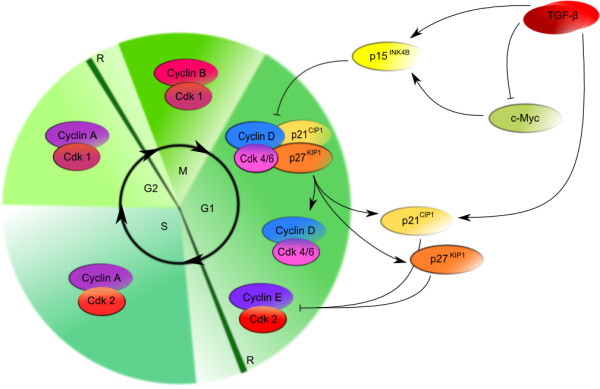
“p15 is a member of the INK4 family of CDK inhibitors, which binds to CDK4 and CDK6 subunits, inactivates their catalytic activity and prevents cyclin D-CDK4/6 complex formation [101,106].”
BackgroundMechanisms of TGF-β Signaling from Cell Membrane to the Nucleus
Shi, Y., & Massagué, J. (2003) · Cell · doi:10.1016/s0092-8674(03)00432-x · Cited by 5,857 · cited 1×
“pairs of TβRI and TβRII [52].”
Roberts, A. B., Sporn, M. B., Assoian, R. K., Smith, J. M., Roche, N. S., Wakefield, L. M., Heine, U. I., Liotta, L. A., Falanga, V, & Kehrl, J. H. (1986) · Proceedings of the National Academy of Sciences · doi:10.1073/pnas.83.12.4167 · Cited by 2,866 · cited 1×
“TGF-β was further described by Roberts and Sporn as a secreted polypeptide capable of inducing fibroblast growth and collagen production [7].”
BackgroundMassagué, J., Seoane, J., & Wotton, D. (2005) · Genes & Development · doi:10.1101/gad.1350705 · Cited by 2,452 · cited 2×
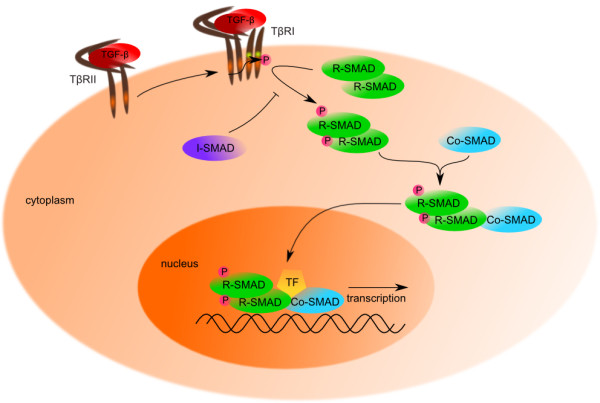
“SMAD3 and SMAD4 bind with their MH1 domain to SMAD-binding elements (SBE) on DNA, whereas the common splice form of SMAD2 does not bind to DNA (reviewed in [63]).”
BackgroundTGFβ Signaling in Growth Control, Cancer, and Heritable Disorders
Massagué, J., Blain, S. W., & Lo, R. S. (2000) · Cell · doi:10.1016/s0092-8674(00)00121-5 · Cited by 2,385
Cited by
Items 201–300 of 512
Zhang, Y., Ding, J., Liu, C., Luo, S., Gao, X., Wu, Y., Wang, J., Wang, X., Wu, X., Shen, W., et al. (2021) · Animals · doi:10.3390/ani11113021 · Cited by 20
“TGF-β is a signaling pathway mediated by transforming growth factors, which maintains the stability of the cell environment and promotes embryonic development, tissue repair, cell proliferation and differentiation, and immune regulation [26].”
BackgroundZhang, Y., Huo, L., Wei, Z., Tang, Q., & Sui, H. X. (2022) · Frontiers in Pharmacology · doi:10.3389/fphar.2022.862585 · Cited by 18
Koch, D. W., Schnabel, L. V., Ellis, I. M., Bates, R. E., & Berglund, A. K. (2022) · Stem Cell Research & Therapy · doi:10.1186/s13287-022-03172-9 · Cited by 20
Enamel and dental anomalies in latent‐transforming growth factor beta‐binding protein 3 mutant mice
Morkmued, S., Hemmerlé, J., Mathieu, É., Laugel-Haushalter, V., Dabovic, B., Rifkin, D. B., Dollé, P., Niederreither, K., & Bloch‐Zupan, A. (2017) · European Journal Of Oral Sciences · doi:10.1111/eos.12328 · Cited by 21
Potential function of TGF-β isoforms in maturation-stage ameloblasts
Okubo, M., Chiba, R., Karakida, T., Yamazaki, H., Yamamoto, R., Kobayashi, S., Niwa, T., Margolis, H. C., Nagano, T., Yamakoshi, Y., et al. (2019) · Journal of Oral Biosciences · doi:10.1016/j.job.2018.12.002 · Cited by 18
Wang, J., Wang, B., Du, H., Zhang, H., Li, H., Wang, F., & Zhao, X. (2019) · Poultry Science · doi:10.3382/ps/pez428 · Cited by 17
“In addition, the expression of TGF-β was significantly increased, which suggests that TGF-β is a regulator of cytokines and plays an important role in regulating immunity (Wahl, 2007; Kubiczkova et al., 2012).”
BackgroundSingh, M., Vaughn, C., Sasaninia, K., Yeh, C., Mehta, D. M., Khieran, I., & Venketaraman, V. (2020) · Journal of Clinical Medicine · doi:10.3390/jcm9092757 · Cited by 18
“Transforming growth factor β (TGF-β) is a peptide which performs an array of regulatory functions in cell proliferation, differentiation, and immunosuppression [29,57].”
BackgroundPancreatic ductal adenocarcinoma: Emerging therapeutic strategies
Osei‐Bordom, D., Serifis, N., Brown, Z. J., Hewitt, D. B., Lawal, G., Sachdeva, G. S., Cloonan, D. J., & Pawlik, T. M. (2022) · Surgical Oncology · doi:10.1016/j.suronc.2022.101803 · Cited by 18
New insights into fibrotic signaling in renal cell carcinoma
Chen, J., Yiu, W. H., Tang, P. M., & Tang, S. C. W. (2023) · Frontiers in Cell and Developmental Biology · doi:10.3389/fcell.2023.1056964 · Cited by 19
Zhang, W., Xu, T., Li, X., Zhang, Y., Zou, X., Chen, F., & Yue, L. (2023) · Frontiers in Cell and Developmental Biology · doi:10.3389/fcell.2023.1166934 · Cited by 20
Seo, J. H., Lee, H., Sim, D. Y., Park, J. E., Ahn, C., Park, S., Cho, A., Koo, J.-S., Shim, B. S., Kim, B., et al. (2023) · Phytotherapy Research · doi:10.1002/ptr.7871 · Cited by 17
Zhao, R., Dong, J., Liu, C., Li, M., Tan, R., Fei, C., Chen, Y., Yang, X., Shi, J., Xu, J., et al. (2024) · Matrix Biology · doi:10.1016/j.matbio.2024.01.005 · Cited by 18
TGF-β1 relieves epithelial–mesenchymal transition reduction in hypospadias induced by DEHP in rats
Zhou, Y., Huang, F., Liu, Y., Li, D., Zhou, Y., Shen, L., Long, C., Liu, X., & Wei, G. (2019) · Pediatric Research · doi:10.1038/s41390-019-0622-2 · Cited by 19
Ismail, M. M. F., Elzahabi, H. S. A., Ibrahim, R. S., & Mehany, A. B. M. (2020) · Bioorganic Chemistry · doi:10.1016/j.bioorg.2020.104368 · Cited by 19
Boby, N., Ransom, A. L., Pace, B. T., Williams, K. M., Mabee, C., Das, A., Srivastav, S., Porter, E. M., & Pahar, B. (2021) · Cells · doi:10.3390/cells10040806 · Cited by 19
“stringent regulation of its signaling pathways is necessary to ensure its proper and balanced physiological functions [3,4].”
BackgroundLord, D. M., Jaworski, J. A., Honey, D. M., Best, A., Park, A., Wei, R. R., & Qiu, H. (2018) · mAbs · doi:10.1080/19420862.2018.1426421 · Cited by 18
Simvastatin downregulates expression of TGF-βRII and inhibits proliferation of A549 cells via ERK
Li, S., Jia, S., Jiang, H., Wang, H., Xu, W., & Lv, C. (2015) · Tumor Biology · doi:10.1007/s13277-015-3134-7 · Cited by 17
“TGF-β is a multifunctional cytokine which evokes a variety of cellular responses by binding to cell surface receptors [6, 7].”
BackgroundThe role of transforming growth factor β in cervical carcinogenesis
Trugilo, K. P., Cebinelli, G. C. M., Castilha, E. P., da Silva, M. R., Berti, F. C. B., & de Oliveira, K. B. (2024) · Cytokine & Growth Factor Reviews · doi:10.1016/j.cytogfr.2024.10.006 · Cited by 17
Derakhshan, T. M., Hollers, E., Perniss, A., Ryan, T., McGill, A., Hacker, J., Bergmark, R. W., Bhattacharyya, N., Lee, S. E., Maxfield, A. Z., et al. (2025) · Journal of Clinical Investigation · doi:10.1172/jci174981 · Cited by 20
“Notably, although TGF-β 2 binds the TGF-β receptor with lower affinity than TGF-β 1, both isoforms direct human MC chemotaxis and inhibit their proliferation with similar potency (14, 15).”
State of art and limitations in genetic engineering to induce stable chondrogenic phenotype
Graceffa, V., Vinatier, C. S., Guicheux, J., Evans, C. H., Stoddart, M. J., Alini, M., & Zeugolis, D. I. (2018) · Biotechnology Advances · doi:10.1016/j.biotechadv.2018.07.004 · Cited by 18
“They are expressed in different cell types and are involved in chondrogenesis (Thorp et al., 1992; Pelton et al., 1991; Kubiczkova et al., 2012).”
BackgroundKim, S., Park, J., Lee, S.-A., Lee, J., Shin, J., & Lee, H. (2020) · International Forum of Allergy & Rhinology · doi:10.1002/alr.22525 · Cited by 16
Isoform specific anti-TGFβ therapy enhances antitumor efficacy in mouse models of cancer
Gupta, A., Budhu, S., Fitzgerald, K., Giese, R., Michel, A. O., Holland, A., Campesato, L. F., Snick, J. V., Uyttenhove, C., Ritter, G., et al. (2021) · Communications Biology · doi:10.1038/s42003-021-02773-z · Cited by 16
Bhat, A. S., Singh, N. A., Rymbai, E., Birendra, S., Saravanan, J., & Selvaraj, D. (2022) · Reproductive Sciences · doi:10.1007/s43032-022-01064-0 · Cited by 19
The contribution of the immune system to genitourinary fibrosis
Doersch, K. M., Barnett, D., Chase, A., Johnston, D., & Gabrielsen, J. S. (2022) · Experimental Biology and Medicine · doi:10.1177/15353702221090872 · Cited by 15
Implant Texture and Capsular Contracture: A Review of Cellular and Molecular Pathways
Wells, H. J., Yang, J. C. C., Edelstein‐Keshet, L., & Isaac, K. V. (2024) · Plastic & Reconstructive Surgery Global Open · doi:10.1097/gox.0000000000005802 · Cited by 16
“49 TGF-β 1 increases T helper cells’ differentiation when joined by IL-6, and it promotes IL-9-and IL-10-producing T cells when combined with IL-4.”
BackgroundHan, J. T., Sanders, J., Andrée, L., van Oirschot, B. A. J. A., Plachokova, A. S., van den Beucken, J. J. J. P., Leeuwenburgh, S. C. G., & Yang, F. (2024) · Tissue Engineering and Regenerative Medicine · doi:10.1007/s13770-024-00680-y · Cited by 18
“Previous studies reported that anti-inflammatory cytokines like TGF-b regulate the expression of cell adhesion molecules, such as integrins, and hence affect the adhesion of macrophages [35, 36].”
Hojski, A., Leitgeb, M., & Crnjac, A. (2015) · Radiology and Oncology · doi:10.1515/raon-2015-0002 · Cited by 16
Morphoregulatory pathways in prostate ductal development
Montano, M. M., & BUSHMAN, W. A. (2016) · Developmental Dynamics · doi:10.1002/dvdy.24478 · Cited by 19
Tomar, M. S., Kumar, S., Kumar, S., Gautam, P. K., Singh, R. K., Verma, P. K., Singh, S. P., & Acharya, A. (2017) · Immunological Investigations · doi:10.1080/08820139.2017.1368545 · Cited by 15
“TGF-β secreted by nTreg has dual function, and it may act as proto-oncogene or a tumor suppressor, depending on tumor stage and cell context (Kubiczkova et al., 2012).”
BackgroundBolognese, A. C., Yang, W.-L., Hansen, L. W., Sharma, A., Nicastro, J. M., Coppa, G. F., & Wang, P. (2018) · Frontiers in Immunology · doi:10.3389/fimmu.2018.00833 · Cited by 15
Biological insights into the rapid tissue regeneration of freshwater crayfish and crustaceans
Feleke, M., Bennett, S., Chen, J., Chandler, D., Hu, X., & Xu, J. (2021) · Cell Biochemistry and Function · doi:10.1002/cbf.3653 · Cited by 17
Ševčı́ková, S., Paszeková, H., Bešše, L., Sedlaříková, L., Kubaczková, V., Almáši, M., Pour, L., & Hájek, R. (2015) · Biomedical Papers · doi:10.5507/bp.2015.014 · Cited by 15
Sekihara, K., Saitoh, K., Yang, H., Kawashima, H., Kazuno, S., Kikkawa, M., Arai, H., Miida, T., Hayashi, N., Sasai, K., et al. (2018) · PLoS ONE · doi:10.1371/journal.pone.0199117 · Cited by 17
Khan, A., Alzahrani, H. A., Felemban, S. G., Algarni, A. S., Alenezi, A. B. S., Kamal, M., Rehman, Z. U., Asdaq, S. M. B., Ahmed, N., Alharbi, B., et al. (2025) · Biogerontology · doi:10.1007/s10522-025-10226-x · Cited by 16
A tumor-promoting role for soluble TβRIII in glioblastoma
Burghardt, I., Schroeder, J. J., Weiß, T., Gramatzki, D., & Weller, M. (2021) · Molecular and Cellular Biochemistry · doi:10.1007/s11010-021-04128-y · Cited by 15
Peixoto, D., Machado, M., Azeredo, R., & Costas, B. (2022) · Biology · doi:10.3390/biology11050764 · Cited by 18
“The anti-inflammatory cytokine TGFβ is a potent negative regulator of hematopoiesis, modulating the proliferation, differentiation and function of several cell types [54].”
BackgroundBreton, T. S., Murray, C. A., Huff, S. R., Phaneuf, A. M., Tripp, B. M., Patuel, S. J., Martyniuk, C. J., & DiMaggio, M. A. (2022) · Scientific Reports · doi:10.1038/s41598-022-13695-z · Cited by 14
Anwar, H. M., Salem, G. E. M., Lateef, H. M. A. E., Osman, A., Ghanem, S. K., Khan, H., Chavanich, S. A., & Darwish, A. (2024) · International Journal of Biological Macromolecules · doi:10.1016/j.ijbiomac.2024.131153 · Cited by 22
The timing of TGF-β inhibition affects the generation of antigen-specific CD8+ T Cells
Quatromoni, J. G., Suzuki, E., Okusanya, O. T., Judy, B. F., Bhojnagarwala, P. S., Venegas, O. G., Eruslanov, E. B., Predina, J. D., Albelda, S. Μ., & Singhal, S. K. (2013) · BMC Immunology · doi:10.1186/1471-2172-14-30 · Cited by 14
“TGF-β functions primarily as an immunosuppressive cytokine in the tumor microenvironment due to its ability to interfere with the generation, expansion, and function of anti-tumor immune cells [2-4,7].”
BackgroundRak, G. D., White, M. R., Augustine‐Rauch, K. A., Newsome, C., Graziano, M. J., & Schulze, G. E. (2020) · Journal of Applied Toxicology · doi:10.1002/jat.3954 · Cited by 14
Yamamoto, Y., & Ihara, M. (2016) · Neurochemistry International · doi:10.1016/j.neuint.2016.12.003 · Cited by 15
“…is generally considered to induce apoptosis and suppress proliferation and migration, via the p38 MAP kinase pathway, but opposing effects are observed via the TGF-b-SMAD3 pathway in VSMCs during intimal hyperplasia (Kubiczkova et al., 2012; Seay et al., 2005; Shi et al., 2014; Tsai et al., 2009).”
BackgroundHussain, A. F., Sulaiman, G. M., Dheeb, B. I., Hashim, A. J., Alrahman, E. S. A., Seddiq, S. H., & Khashman, B. M. (2018) · Journal of King Saud University - Science · doi:10.1016/j.jksus.2018.10.013 · Cited by 14
Neretti, N., Evans, S. A., Voan Teo, Y., Hinthorn, S. J., Clark, K., Ito, T., & Sedivy, J. M. (2023) · Aging Biology · doi:10.59368/agingbio.20230008 · Cited by 10
“Collagen deposition, extra cellular matrix remodeling, and WNT signaling are all regulated or co-activated by TGF-beta signaling 13,14,31,34 .”
Nair, R., Lannagan, T. R. M., Jackstadt, R., Andrusaite, A. T., Cole, J. J., Boyne, C., Nibbs, R. J. B., Sansom, O. J., & Milling, S. W. F. (2024) · OncoImmunology · doi:10.1080/2162402x.2024.2330194 · Cited by 13
“12,17 TGF-β also inhibits natural killer (NK), CD8 + T cells, M1-like macrophages, and N1 neutrophils and promotes the activity of T regulatory cells (Treg), M2-like macrophages, and N2 neutrophils near the TME, resulting in disease aggravation 18,19 Blocking circulating TGF-β inhibits immune…”
BackgroundPanebianco, C., Saracino, C., & Pazienza, V. (2014) · Tumor Biology · doi:10.1007/s13277-014-2075-x · Cited by 16
Wang, J., Chien, W., Chung, C., Liao, W.-I., Tsao, C., Wu, Y.-F., & Tsai, S. (2017) · Oncotarget · doi:10.18632/oncotarget.20181 · Cited by 13
“In tumor cells, TGF-β loses its anti-proliferative characteristics and becomes an oncogenic factor, which leads to impairments in its signaling pathway in various solid tumors and hematological malignancies [9].”
BackgroundGidaro, A., Manetti, R., Delitala, A., Soloski, M. J., Deliliers, G. L., Castro, D. D., Soldini, D., & Castelli, R. (2022) · Journal of Clinical Medicine · doi:10.3390/jcm11102720 · Cited by 14
“Thirty-two patients (26%) had higher values of TGF-β than the normal range (344–2382 pg/mL [15]), and five of them developed thrombotic events.”
BackgroundGao, H., Wang, X., Ma, H., Lin, S., Zhang, D., Wu, W., Liao, Z., Chen, M., Ye, H., Li, Q., et al. (2022) · Scientific Reports · doi:10.1038/s41598-022-25738-6 · Cited by 15
Effect of malaria components on blood mononuclear cells involved in immune response
Punsawad, C. (2013) · Asian Pacific Journal of Tropical Biomedicine · doi:10.1016/s2221-1691(13)60151-3 · Cited by 16
Karbyshev, M. S., Grigoryeva, E. S., Volkomorov, V. V., Kremmer, E., Huber, A., Larionova, I., Кайгородова, Е. В., Zavyalova, M. V., Kzhyshkowska, J. G., Чердынцева, Н. В., et al. (2017) · Pathology & Oncology Research · doi:10.1007/s12253-017-0247-x · Cited by 13
Vitiello, G. A. F., Amarante, M. K., Hirata, B. K. B., Campos, C. Z., de Oliveira, K. B., Guembarovski, R. L., & Watanabe, M. A. E. (2019) · Breast Cancer Research and Treatment · doi:10.1007/s10549-019-05370-1 · Cited by 13
Nagarajan, M., Maadurshni, G. B., & Manivannan, J. (2021) · Journal of Toxicology and Environmental Health · doi:10.1080/15287394.2021.1994492 · Cited by 12
Pineda-Cortel, M. R., Gonzalez-Suarez, C., Cabrera, J.-T., Daya, M. L., Bonifacio, R. B. L., Vergara, R. C., Dacanay, A. T. L., & Villavieja, A. (2024) · Plasmatology · doi:10.1177/26348535241277625 · Cited by 21
“18,19 Although mainly produced by the liver, IGF-1 is also found in platelet α -granules.”
Chiba-Ohkuma, R., Karakida, T., Yamamoto, R., & Yamakoshi, Y. (2025) · JBMR Plus · doi:10.1093/jbmrpl/ziaf104 · Cited by 15
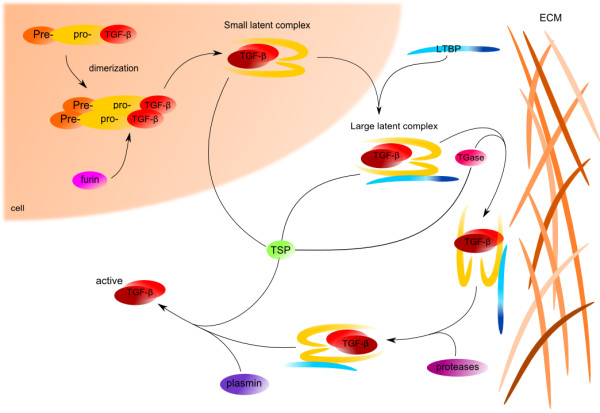
“5 It is produced as a precursor (pro-TGF-β ) consisting of 390 amino acids, and the 112 amino acids at the C-terminus form a dimer in active TGF-β .”
Jacobs, E. J., Newton, C. C., Silverman, D. T., Nogueira, L., Albanes, D., Männistö, S., Pollak, M., & Stolzenberg‐Solomon, R. Z. (2014) · Cancer Causes & Control · doi:10.1007/s10552-014-0409-z · Cited by 12
“TGF-b1 is a protein that plays an important role in many biological processes including cell proliferation and immune regulation [5].”
BackgroundMaskarinec, G., Ju, D., Fong, J., Horio, D. T., Chan, O. T. M., Loo, L. W. M., & Hernandez, B. Y. (2018) · BMC Cancer · doi:10.1186/s12885-018-5088-9 · Cited by 12
Ganjoo, S., Puebla‐Osorio, N., Nanez, S., Hsu, E. Y., Voss, T. A., Barsoumian, H. B., Duong, L. K., Welsh, J. W., & Cortez, M. A. (2022) · Frontiers in Immunology · doi:10.3389/fimmu.2022.1033642 · Cited by 15
“There are three known isoforms of TGF-b: TGF-b1, TGF-b2, and TGF-b3 (15).”
BackgroundŠušak, F., Vrsaljko, N., Vince, A., & Papić, N. (2023) · Microorganisms · doi:10.3390/microorganisms11061571 · Cited by 14
“TGF-β1 is a pleiotropic cytokine involved in various processes such as cellular proliferation, immune tolerance, wound healing, fibrosis, and tumor suppression [34].”
BackgroundA novel method for detection of pancreatic Ductal Adenocarcinoma using explainable machine learning
Aslam, M., Rajbdad, F., Azmat, S., Li, Z., Boudreaux, J. P., Thiagarajan, R., Yao, S., & Xu, J. (2024) · Computer Methods and Programs in Biomedicine · doi:10.1016/j.cmpb.2024.108019 · Cited by 14
Adnađević, T., Jovanović, V., Blagojević, J., Budinski, I., Čabrilo, B., Bjelić-Čabrilo, O., & Vujošević, M. (2014) · PLoS ONE · doi:10.1371/journal.pone.0112260 · Cited by 13
“Although MHC II-DRB gene has a role in immune process only, Tgf-b gene has a central role in the cell cycle progression by regulating transcription of cell cycle regulators in G1 phase [20].”
BackgroundŠčigalková, I., Bystroňová, J., Kovářová, L., Pravda, M., Velebný, V., Riabov, V., Klüter, H., Kzhyshkowska, J. G., & Vrana, N. E. (2019) · RSC Advances · doi:10.1039/c9ra02878a · Cited by 12
Kadam, A. H., Kandasamy, K., Buss, T., Cederstrom, B., Yang, C., Narayanapillai, S. C., Rodriguez, J., Levin, M. D., Koziol, J., Olenyuk, B. Z., et al. (2022) · PLoS ONE · doi:10.1371/journal.pone.0276462 · Cited by 12
The footprint of TGF-β in airway remodeling of the mustard lung
Shahriary, A., Seyedzadeh, M. H., Ahmadi, A., & Salimian, J. (2015) · Inhalation Toxicology · doi:10.3109/08958378.2015.1116645 · Cited by 11
“TGF-bs are secreted from several cell types such as T cells, macrophages, platelets, endothelial cells, keratinocytes and fibroblasts (Kubiczkova et al., 2012).”
BackgroundXing, Y., He, M., Su, Z., Yasinjan, F., Liu, J., Wang, H., Cui, J., & Hong, X. (2022) · Frontiers in Oncology · doi:10.3389/fonc.2022.1015236 · Cited by 13
“Although TGF-b can act as an EMT suppressor in premalignant stages of gliomas (29), the main regulatory mechanism for TGF-b is to promote EMT through the TGF-b/Smad pathway in progression stages (30, 31).”
BackgroundBariani, M. V., Cui, Y., Ali, M. K., Bai, T., Grimm, S. L., Coarfa, C., Walker, C. L., He, Y., Yang, Q., & Al-Hendy, A. A. (2023) · Cellular and Molecular Life Sciences · doi:10.1007/s00018-023-04928-z · Cited by 14
“However, in transformed cells these regulatory mechanisms are often lost, leading to tumor cells becoming resistant to the growth-inhibiting properties of TGFβ [91, 92].”
BackgroundJin, R., Xu, H., Zhou, M., Lin, F., Xu, W., & Xu, A. (2023) · Inflammation · doi:10.1007/s10753-023-01922-2 · Cited by 12
Study of expression of endoglin (CD105) in oral squamous cell carcinoma
Mahapatra, N., Rao, K. D. U., Ranganathan, K., Joshua, E., & Thavarajah, R. (2021) · Journal of Oral and Maxillofacial Pathology · doi:10.4103/jomfp.jomfp_13_21 · Cited by 11
Expression and Secretion of Circular RNAs in the Parasitic Nematode, Ascaris suum
Minkler, S. J., Loghry, H. J., Sondjaja, N. A., & Kimber, M. J. (2022) · Frontiers in Genetics · doi:10.3389/fgene.2022.884052 · Cited by 14
Modeling TGF-β in Early Stages of Cancer Tissue Dynamics
Ascolani, G., & Lió, P. (2014) · PLoS ONE · doi:10.1371/journal.pone.0088533 · Cited by 12
The Role of TGF-β, Activin and Follistatin in Inflammatory Bowel Disease
Esfahani, N. H., & Day, A. S. (2023) · Gastrointestinal Disorders · doi:10.3390/gidisord5020015 · Cited by 12
Abbas, N. A. T., Nafea, O. E., Mohammed, H. O., Samy, W. M., Abdelmageed, A. F., Afifi, R., & Hassan, H. A. (2023) · Life Sciences · doi:10.1016/j.lfs.2023.121692 · Cited by 13
Zhang, Q., Liu, H., Liu, C., Wang, Y., Huang, P., Wang, X., Ma, Y., Ma, L., & Ge, R.-L. (2024) · Stem Cells · doi:10.1093/stmcls/sxae032 · Cited by 10
Epigenetic regulation of TGF-β and vice versa in cancers – A review on recent developments
Naik, A., & Thakur, N. (2024) · Biochimica et Biophysica Acta (BBA) - Reviews on Cancer · doi:10.1016/j.bbcan.2024.189219 · Cited by 13
Aging: A struggle for beneficial to overcome negative factors made by muscle and bone
Welc, S. S., Brotto, M., White, K. E., & Bonewald, L. F. (2025) · Mechanisms of Ageing and Development · doi:10.1016/j.mad.2025.112039 · Cited by 11
Role of exosomes in transforming growth factor-β-mediated cancer cell plasticity and drug resistance
Ruksha, T. G., & Palkina, N. V. (2025) · Exploration of Targeted Anti-tumor Therapy · doi:10.37349/etat.2025.1002322 · Cited by 16
Ding, J., Tang, D., Zhang, Y., Gao, X., Du, C., Shen, W., Jin, S., & Zhu, J. (2022) · Marine Biotechnology · doi:10.1007/s10126-022-10186-0 · Cited by 12
“The TGF-β signaling pathway plays an important regulatory role in the growth, development, and differentiation of reproductive organs and cells, including the proliferation of spermatogonia, meiosis of spermatocytes, and spermatogenesis (Kubiczkova et al. 2012).”
BackgroundThrombo-Inflammation in COVID-19 and Sickle Cell Disease: Two Faces of the Same Coin
Chiang, K. C., Gupta, A., Sundd, P., & Krishnamurti, L. (2023) · Biomedicines · doi:10.3390/biomedicines11020338 · Cited by 11
Wahadat, M. J., van Tilburg, S. J., Mueller, Y. M., de Wit, H., van Helden-Meeuwsen, C. G., Langerak, A. W., Gruijters, M. J., Mubarak, A., Verkaaik, M., Katsikis, P. D., et al. (2023) · Lupus Science & Medicine · doi:10.1136/lupus-2022-000799 · Cited by 11
“Future studies should translate and simplify these tools by reducing the number of analytes that need to be measured, which will facilitate implementation in daily clinical practice.”
A role for platelets in metabolic reprogramming of tumor-associated macrophages
Kang, Y., Amoafo, E. B., Entsie, P., Beatty, G. L., & Liverani, E. (2023) · Frontiers in Physiology · doi:10.3389/fphys.2023.1250982 · Cited by 12
“Transforming growth factor-beta (TGF-β) is a ubiquitous, modulator of cellular responses under physiological conditions (Kubiczkova et al., 2012).”
BackgroundEslami, S. M., & Lü, X. (2024) · Journal of Controlled Release · doi:10.1016/j.jconrel.2024.10.035 · Cited by 10
Lyons, D. O., Plewes, M. R., & Pullen, N. (2018) · PLoS ONE · doi:10.1371/journal.pone.0207704 · Cited by 11
Puteri, M. U., Watanabe, Y., Wardhani, B. W. K., Amalia, R., Abdelaziz, M. O., & Kato, M. (2020) · Genes to Cells · doi:10.1111/gtc.12766 · Cited by 10
Gokavi, J., Sadawarte, S., Shelke, A., Kulkarni‐Kale, U., Thakar, M. R., & Saxena, V. (2021) · Viruses · doi:10.3390/v13112266 · Cited by 11
Smad‐induced alterations of matrix metabolism by a myristoyl tetra peptide
Kwon, H., Lee, Y. S., Kim, M. O., Chang, M. Y., Won, B. M., Jin, B. S., & Park, S. (2014) · Cell Biochemistry and Function · doi:10.1002/cbf.3070 · Cited by 10
“The TGF-β family of growth factors controls an immense number of cellular responses in development and homeostasis in most human tissues.(27) TGF-β exerts its effects on cell proliferation, differentiation and migration in part through its capacity to modulate the deposition of ECM components.”
BackgroundFatty Acids and Calcium Regulation in Prostate Cancer
Maly, I. V., & Hofmann, W. A. (2018) · Nutrients · doi:10.3390/nu10060788 · Cited by 11
Rossato, V. V., Silveira, D. A., Gupta, S., & Mombach, J. C. M. (2018) · Computers in Biology and Medicine · doi:10.1016/j.compbiomed.2018.11.025 · Cited by 10
Li, J., Lee, S., Zafar, R., Shin, E., & Choi, I. (2021) · Oncology Reports · doi:10.3892/or.2021.8080 · Cited by 11
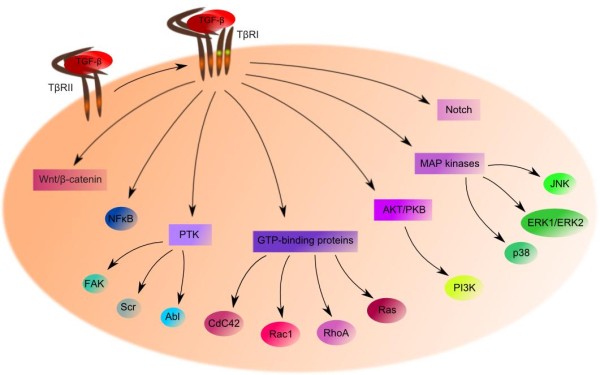
“Given that TGF-β/Smad4 regulates proto-oncogene Src (45), a non-receptor tyrosine kinase associated with advanced malignancy in human cancers, it is notable that NBCe1 is stimulated by Src (46).”
BackgroundTransforming growth factor-β micro-environment mediated immune cell functions in cervical cancer
Gnanagurusamy, J., Krishnamoorthy, S., & Muthusami, S. (2024) · International Immunopharmacology · doi:10.1016/j.intimp.2024.112837 · Cited by 10
Agostini, L. P., Stur, E., Garcia, F. M., Ventorim, D. P., Reis, R., Dettogni, R. S., Santos, E. V. W., Peterle, G. T., Maia, L. L., Mendes, S. O., et al. (2017) · Genetic Testing and Molecular Biomarkers · doi:10.1089/gtmb.2017.0180 · Cited by 10
“In tumor cells, TGF b protein lacks antiproliferative response and becomes an oncogenic factor (Kubiczkova et al. , 2012).”
Metabolic pathways in sporadic colorectal carcinogenesis: A new proposal
Balseiro, S., Faro, C., & Carvalho, L. (2021) · Medical Hypotheses · doi:10.1016/j.mehy.2021.110512 · Cited by 9
Pathway-Based Personalized Analysis of Pan-Cancer Transcriptomic Data
Pian, C., He, M., & Chen, Y. (2021) · Biomedicines · doi:10.3390/biomedicines9111502 · Cited by 11
“The TGF-β signaling pathway has multiple gene targets, and TGF-β performs its critical functions in proliferation and suppression by targeting the c-Myc, Cyclin A/B/D/E, CDK1/2/4/6, p15INK4B, p21CIP1, and p27KIP1 genes [34].”
BackgroundTGFβ Signaling in Myeloid Cells Promotes Lung and Liver Metastasis Through Different Mechanisms
Stefanescu, C., van Gogh, M., Roblek, M., Heikenwälder, M. F., & Borsig, L. (2021) · Frontiers in Oncology · doi:10.3389/fonc.2021.765151 · Cited by 12
“In advanced cancers, however; TGFb expression and activation strongly correlate with poor prognosis due to metastasis (4, 6).”
BackgroundFowler, E. W., van Venrooy, E. J., Witt, R. L., & Jia, X. (2022) · Scientific Reports · doi:10.1038/s41598-022-19253-x · Cited by 11
Gautam, K. A., Singh, P., Sankhwar, S., Sankhwar, P., Goel, A., & Rajender, S. (2015) · Cytokine · doi:10.1016/j.cyto.2015.05.017 · Cited by 9
Complex temporal changes in TGFβ oncogenic signaling drive thyroid carcinogenesis in a mouse model
Kim, D. W., Walker, R. L., Meltzer, P. S., & Cheng, S.-Y. (2013) · Carcinogenesis · doi:10.1093/carcin/bgt175 · Cited by 9
Ketamine Affects In Vitro Differentiation of Monocyte into Immature Dendritic Cells
Laudański, K., Qing, M., Oszkiel, H., Zawadka, M., Lapko, N., Nowak, Z., & Worthen, G. S. (2015) · Anesthesiology · doi:10.1097/aln.0000000000000783 · Cited by 11
Xiang, Y., Cai, C., Wu, Y., Yang, L., Ye, S., Zhao, H., & Zeng, C. (2020) · Evidence-based Complementary and Alternative Medicine · doi:10.1155/2020/9238428 · Cited by 9
“TGF-β1, which is one of three isoforms, is the most abundantly expressed one [33].”
BackgroundLi, X., Yang, H., Zhang, Y., Du, X., Yan, Z., Jiang, L., & Wu, B. (2021) · Experimental and Therapeutic Medicine · doi:10.3892/etm.2021.10482 · Cited by 12
Krzysiek-Mączka, G., Targosz, A., Wróbel, T., Paw, M., Szczyrk, U., Opiła, J., Strzałka, M., Wierdak, M., Major, P., Brzozowski, T., et al. (2022) · PubMed Central · Cited by 12
CAT192 Fab Insertion Mutant H2/L2
Lord, D. M., & Wei, R. R. (2017) · Worldwide Protein Data Bank · doi:10.2210/pdb6ao0/pdb · Cited by 9
Metadata
- Authors
- Kubiczkova, L., Sedlarikova, L., Hajek, R., & Sevcikova, S.
- Venue
- Journal of Translational Medicine
- Published
- 2012-09-03
- Volume
- 10
- Issue
- 1
- Pages
- 183-183
- ISSN
- 1479-5876 (ISSN-L)
- PMC
- PMC3494542
- OpenAlex
- W2142957616
- Cited by
- 511
- References
- 288
- Citations by year
- 2026: 12 · 2025: 38 · 2024: 58 · 2023: 64 · 2022: 67 · 2021: 62 · 2020: 39 · 2019: 23 · 2018: 24 · 2017: 36 · 2016: 20 · 2015: 29 · 2014: 26 · 2013: 13
- FWCI
- 1.98
- Type
- journal article
- Language
- en
- Open access
- gold
- doi.org
- Licence
- cc-by
- Locations
- Journal of Translational Medicine (publishedVersion, cc-by)
- PubMed Central (publishedVersion, cc-by)
- PubMed (publishedVersion)
- DOAJ (DOAJ: Directory of Open Access Journals) (submittedVersion, cc-by-sa)
- Topics
- Life Sciences › Biochemistry, Genetics and Molecular Biology › Molecular Biology › TGF-β signaling in diseases
- Life Sciences › Biochemistry, Genetics and Molecular Biology › Molecular Biology › Kruppel-like factors research
- Life Sciences › Biochemistry, Genetics and Molecular Biology › Molecular Biology › Signaling Pathways in Disease
- Keywords
- TGF-beta signaling, Smad proteins, TGF-beta receptor, tumor suppressor, solid tumors, hematologic malignancies, cell proliferation
- MeSH terms
- Humans, Neoplasms, Signal Transduction, Transforming Growth Factor beta
About these checks
Registry, retraction, Cites and statistics results are computed, not judged, with one exception: a printed reference that no index lists is read once by a model before it counts as a citation error. Claims are extracted by a model and kept only when their quote appears verbatim in the text; each cited source is then checked, with a model’s help, for whether it says what the claim relies on. Those verdicts can be wrong — read the claim’s quote and the cited source before relying on one.
Statistics and arithmetic are recomputed, not judged.
Confidence bands are shown only for fields calibrated on our annotated test set. None is calibrated yet, so no band is shown.
What counts as a claim ›How we measure confidence ›How we check this ›
Are you an author, or do you see a problem with this page? Request a review
Data sources
Bibliographic data: Semantic Scholar, OpenAlex, Crossref.
Contains information from the Semantic Scholar Academic Graph Datasets, made available under the ODC Attribution License (ODC-BY 1.0).
Semantic Scholar’s data is described in: Kinney, R., et al. (2023). The Semantic Scholar Open Data Platform. arXiv:2301.10140.
