

TGF-β – an excellent servant but a bad master
Open accessThe DOI matches its Crossref record; 288 of the 288 references it cites were found in a registry or an index.
Abstract
The transforming growth factor (TGF-β) family of growth factors controls an immense number of cellular responses and figures prominently in development and homeostasis of most human tissues. Work over the past decades has revealed significant insight into the TGF-β signal transduction network, such as activation of serine/threonine receptors through ligand binding, activation of SMAD proteins through phosphorylation, regulation of target genes expression in association with DNA-binding partners and regulation of SMAD activity and degradation. Disruption of the TGF-β pathway has been implicated in many human diseases, including solid and hematopoietic tumors. As a potent inhibitor of cell proliferation, TGF-β acts as a tumor suppressor; however in tumor cells, TGF-β looses anti-proliferative response and become an oncogenic factor. This article reviews current understanding of TGF-β signaling and different mechanisms that lead to its impairment in various solid tumors and hematological malignancies.
Overview
The claims and statistics of this paper haven’t been checked yet.
Free: it reads the open-access text and checks the first 5 claims that cite a source we can check. Create a free account to check every claim.
Integrity signals
Registry
Cites
Statistics
Figures
Verification
Claims the paper makes
The claims and statistics of this paper haven’t been checked yet.
Free: it reads the open-access text and checks the first 5 claims that cite a source we can check. Create a free account to check every claim.
Claims other papers make about this one
Each is checked against this paper’s own text: does it say what the citing paper says it does?
In the citing paper
“Some mutations may also drive differential response to a stimulation, as is seen with some tumors in response to transforming growth factor beta (TGF-β)13.”
From Causal identification of single-cell experimental perturbation effects with CINEMA-OT (2023) · cites this paper as [13]
Self-check
Percentages, sums and reported differences re-computed from the paper’s own numbers.
The self-check needs the paper’s full text.
Citations
Cites
1 retracted
Liu, X.-Q., Rajput, A., Geng, L., Ongchin, M. C., Chaudhuri, A., & Wang, J. (2011) · Journal of Biological Chemistry · doi:10.1074/jbc.m111.221697 · Cited by 19 · cited 1×
“Therefore, it is plausible that such mutations contribute to favorable outcome in MSI patients [220].”
BackgroundRetractedHallmarks of Cancer: The Next Generation
Hanahan, D., & Weinberg, R. A. (2011) · Cell · doi:10.1016/j.cell.2011.02.013 · Cited by 66,590 · cited 1×
“There is a strong requirement for new diagnostic and treatment options as well as elucidation of how cells acquire the six essential phenotypes, or hallmarks, necessary to become fully malignant [1].”
BackgroundThe 2007 WHO Classification of Tumours of the Central Nervous System
Louis, D. N., Ohgaki, H., Wiestler, O. D., Cavenee, W. K., Burger, P. C., Jouvet, A., Scheithauer, B. W., & Kleihues, P. (2007) · Acta Neuropathologica · doi:10.1007/s00401-007-0243-4 · Cited by 15,397
Ostrom, Q. T., Gittleman, H., Farah, P., Ondracek, A., Chen, Y., Wolinsky, Y., Stroup, N. E., Kruchko, C., & Barnholtz-Sloan, J. S. (2013) · Neuro-Oncology · doi:10.1093/neuonc/not151 · Cited by 11,994
Epithelial–mesenchymal transitions in tumour progression
Thiery, J. P. (2002) · Nature Reviews Cancer · doi:10.1038/nrc822 · Cited by 6,628
CDK inhibitors: positive and negative regulators of G1-phase progression
Sherr, C. J., & Roberts, J. M. (1999) · Genes & Development · doi:10.1101/gad.13.12.1501 · Cited by 6,115 · cited 1×
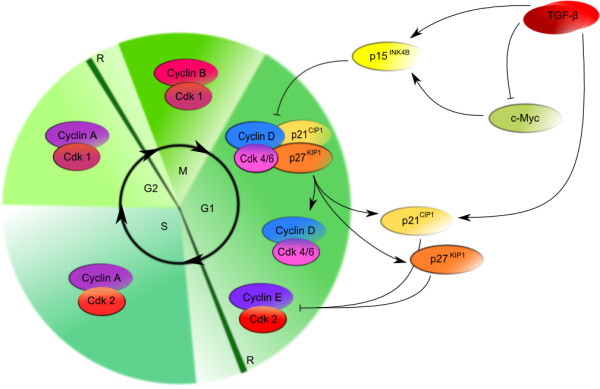
“p15 is a member of the INK4 family of CDK inhibitors, which binds to CDK4 and CDK6 subunits, inactivates their catalytic activity and prevents cyclin D-CDK4/6 complex formation [101,106].”
BackgroundMechanisms of TGF-β Signaling from Cell Membrane to the Nucleus
Shi, Y., & Massagué, J. (2003) · Cell · doi:10.1016/s0092-8674(03)00432-x · Cited by 5,857 · cited 1×
“pairs of TβRI and TβRII [52].”
Roberts, A. B., Sporn, M. B., Assoian, R. K., Smith, J. M., Roche, N. S., Wakefield, L. M., Heine, U. I., Liotta, L. A., Falanga, V, & Kehrl, J. H. (1986) · Proceedings of the National Academy of Sciences · doi:10.1073/pnas.83.12.4167 · Cited by 2,866 · cited 1×
“TGF-β was further described by Roberts and Sporn as a secreted polypeptide capable of inducing fibroblast growth and collagen production [7].”
BackgroundMassagué, J., Seoane, J., & Wotton, D. (2005) · Genes & Development · doi:10.1101/gad.1350705 · Cited by 2,452 · cited 2×
“SMAD3 and SMAD4 bind with their MH1 domain to SMAD-binding elements (SBE) on DNA, whereas the common splice form of SMAD2 does not bind to DNA (reviewed in [63]).”
BackgroundTGFβ Signaling in Growth Control, Cancer, and Heritable Disorders
Massagué, J., Blain, S. W., & Lo, R. S. (2000) · Cell · doi:10.1016/s0092-8674(00)00121-5 · Cited by 2,385
Cited by
Items 401–500 of 512
Fibrogenic Factors and Molecular Mechanisms
Kondaiah, P. (2023) · Textbooks in contemporary dentistry · doi:10.1007/978-3-031-12855-4_12 · Cited by 2
Isola, G., Santonocito, S., Leonardi, R. M., & Polizzi, A. (2023) · Springer eBooks · doi:10.1007/978-3-031-29765-6_4 · Cited by 2
Li, J., Lyu, B., & Song, Q. (2023) · Insects · doi:10.3390/insects14060515 · Cited by 2
“In humans, TGF-β signaling is complex and plays paradoxical roles in both tumor suppression and promotion, with ligands and receptors functioning differentially during different stages [41,42].”
BackgroundHarris, D. D., Sabe, S. A., Broadwin, M., Stone, C. R., Bellam, K. G., Malhotra, A., Abid, M. R., & Sellke, F. W. (2024) · PLoS ONE · doi:10.1371/journal.pone.0307922 · Cited by 2
“This could imply that TGF-beta is not activating pSMAD 2/3 at the receptor level, and the increased levels of TGF-beta could be mediating other functions, such as reducing inflammation [27].”
BackgroundKasprzycka, P., Ciemerych, M. A., & Zimowska, M. (2025) · Frontiers in Cell and Developmental Biology · doi:10.3389/fcell.2025.1592512 · Cited by 2
Kapral, M., Wawszczyk, J., Sośnicki, S., & Węglarz, L. (2013) · Mediators of Inflammation · doi:10.1155/2013/436894 · Cited by 2
“TβRIII is a coreceptor modulating intracellular TGF-βs activities [10].”
BackgroundScott, N. R., Thirunavukkarasu, S., Rangel‐Moreno, J., Griggs, D. W., & Khader, S. A. (2022) · Journal of Interferon & Cytokine Research · doi:10.1089/jir.2022.0027 · Cited by 2
Epiregulin expression and secretion is increased in castration-resistant prostate cancer
Wiesehöfer, M., Raczinski, B. B. G., Wiesehöfer, C., Dankert, J. T., Czyrnik, E. D., Spahn, M., Julio, M. K.-D., & Wennemuth, G. (2023) · Frontiers in Oncology · doi:10.3389/fonc.2023.1107021 · Cited by 3
“Frontiers in Oncology 07 SMAD2/3, which is activated via the TGF-b signaling pathway (24, 25).”
BackgroundKiesler, Z. G., Hunter, M. I., Balboula, A. Z., & Patterson, A. L. (2024) · Archives of Gynecology and Obstetrics · doi:10.1007/s00404-024-07435-z · Cited by 2
Molecular Biomarkers and Urinary Bladder Cancer (UBC)
Srivastava, A., Gautam, K. A., & Sankhwar, S. (2019) · Springer eBooks · doi:10.1007/978-981-13-5877-7_14 · Cited by 2
The Therapeutic Effects of Long-term Photobiomodulation on Aging in MicePreprint
Ahmet, I., Syed, S. B., Chakir, K., Morrell, C. H., Arany, P. R., & Lakatta, E. G. (2023) · bioRxiv (Cold Spring Harbor Laboratory) · doi:10.1101/2023.08.05.552116 · Cited by 2
“Considering the critical role TGF‐β in cellular degeneration, fibrosis, inflammation, regenerative capacity and metabolic functions in humans and mouse alike [34, 35], it is clear that TGF-β1 signaling is part of the mechanistic pathways of PBM.”
BackgroundWiener, R. J., Orins, H., & Costa, K. D. (2023) · bioRxiv (Cold Spring Harbor Laboratory) · doi:10.1101/2023.10.03.560723 · Cited by 2
Adetutu, A., Adegbola, P. I., & Aborisade, A. B. (2024) · Biological Trace Element Research · doi:10.1007/s12011-024-04177-6 · Cited by 1
“Both TGF-β and Erk 1/2 have important role in angiogenesis and in the repair of damaged tissue through activation of fibroblast release, which is involved in fibrotic process (Kubiczkova et al. 2012).”
Park, G.-C., Lee, I., Yun, J., Hwang, J. S., & Kim, D. (2024) · Nutrition Research · doi:10.1016/j.nutres.2024.06.002 · Cited by 1
ERK3 is involved in regulating cardiac fibroblast function
Sahadevan, P., Dingar, D. D., Nawaito, S. A., Nair, R. S., Trépanier, J., Sahmi, F., Shi, Y., Gillis, M., Sirois, M. G., Meloche, S., et al. (2024) · Physiological Reports · doi:10.14814/phy2.16108 · Cited by 3
A Comprehensive Review on Liver Regeneration Termination: A Non-Neglectable Phase
Chen, X. (2024) · Cytology and Genetics · doi:10.3103/s0095452724040030 · Cited by 1
“Studies have shown that TGF β 1 is a potent inhibitor of cell proliferation, and its deficiency or inhibition can distinctly accelerate the regeneration process in a 2/3 hepatectomy rodent model (Massagué, 2008; Kubiczkova et al., 2012; Zhang et al., 2021).”
Сергеевна, С. А., & Shcherbakova, S. A. (2024) · The Clinician · doi:10.17650/1818-8338-2024-18-3-k709 · Cited by 1
Marfan syndrome and multiple myeloma: A coincidence or tendency?
Turgutkaya, A. (2024) · Journal of Clinical Images and Medical Case Reports · doi:10.52768/2766-7820/3293 · Cited by 1
Transcriptome analysis of different stages of testis development in Portunus trituberculatus
Ni, K.-D., Wei, C., Zhu, J., Mu, C., Wang, C., & Hou, C.-C. (2025) · Comparative Biochemistry and Physiology Part D Genomics and Proteomics · doi:10.1016/j.cbd.2025.101453 · Cited by 1
Sousa, R. A. P., de Paula, J. H. N., da Silva, R. J., Teixeira, S. C., França, F. B. F., Gonçalves, A. H. L., da Silva, T. G., Granero-Rosa, M. J., da Silva, M. V., Gomes, M. D. L. M., et al. (2025) · Gut Pathogens · doi:10.1186/s13099-024-00676-y · Cited by 1
“TGF-β is a potent immunosuppressive cytokine that plays a crucial role in developing and regulating various immune cells [47].”
Wal, A., Rasheed, A., Wal, P., Bhise, M. R., Parmar, M., Nathiya, D., Sharma, R. K., & Gasmi, A. (2025) · Current Signal Transduction Therapy · doi:10.2174/0115743624339476250212114656 · Cited by 1
Tang, C., Wang, Y., Li, K., Feng, X., Zhang, J., Ma, Q., & Sun, C. (2025) · Chemical Engineering Journal · doi:10.1016/j.cej.2025.165770 · Cited by 1
Lyu, S., Vaes, R. D. W., Laven, I. E. W. G., Cortiula, F., Hendriks, L. E. L., Vooijs, M., & Ruysscher, D. D. (2025) · Frontiers in Oncology · doi:10.3389/fonc.2025.1625212 · Cited by 2
Mukae, M., Ko, J., Kwun, H., Baek, I., Lee, S. R., & Hong, E. (2025) · Life Sciences · doi:10.1016/j.lfs.2025.124000 · Cited by 2
Harnessing multispecific antibodies for next-generation cancer treatments
Liu, W.-Q., Xiao-li, Z., & Fan, X. (2026) · Pharmacology & Therapeutics · doi:10.1016/j.pharmthera.2026.109073 · Cited by 1
Hua, L., Xia, H., Zheng, W., & An, L. (2017) · Iranian Journal of Biotechnology · doi:10.15171/ijb.1308 · Cited by 1
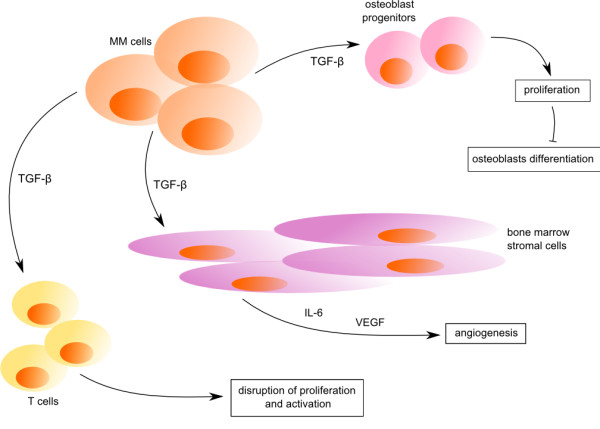
“For example, it has been reported that TGF- is the major inducer of the interleukin-6 (IL-6) and vascular endothelial growth factor (VEGF), and the increased production of TGF- is followed by the increased IL-6 and VEGF secretion related to tumor cell proliferation (25).”
BackgroundPatnaik, S., Sahoo, L., Mohanty, M., Bit, A., Meher, P. K., Das, S., Jayasankar, P., Saha, J. N., & Das, P. (2021) · Fish Physiology and Biochemistry · doi:10.1007/s10695-021-00973-2 · Cited by 2
Colella, M. P., Morini, B. C., Niemann, F. S., Lopes, M. R., Vigorito, A. C., Aranha, F., Machado‐Neto, J. A., Saad, S. O., & Favaro, P. M. B. (2021) · Transplant Immunology · doi:10.1016/j.trim.2021.101514 · Cited by 1
Dhaliwal, J. (2022) · Undergraduate Research in Natural and Clinical Science and Technology (URNCST) Journal · doi:10.26685/urncst.406 · Cited by 1
Metabolites of Trichoderma harzianum re-balance T-reg/Th-17 cytokine axis in epileptic rats
Alblihed, M. A. (2023) · Beni-Suef University Journal of Basic and Applied Sciences · doi:10.1186/s43088-023-00425-1 · Cited by 2
“TGF-beta can coordinate with other inflammatory cytokines (IL-6 and IL-21) to promote the development of Th-17 cells [58].”
BackgroundCell–biomaterials interactions: the role of growth factors
Brion, A., & Rammal, H. (2020) · Elsevier eBooks · doi:10.1016/b978-0-08-102967-1.00008-6 · Cited by 1
Comprehensive Analysis of TGF β & β – Catenin Components in Various Human Cancer Tissues
Daraghmeh, J., Mansour, B., Kmail, A. Y., & Daraghmeh, I. (2021) · Journal of Applied Biotechnology · doi:10.5296/jab.v9i1.18354 · Cited by 1
Artemieva, K. A., Богданова, И. М., Степанова, И. И., Stepanov, A. A., Tikhonova, N. B., Boltovskaya, M. N., Kalyuzhin, O. V., & Zemlyakov, A. E. (2021) · Immunologiya · doi:10.33029/0206-4952-2021-42-2-131-139 · Cited by 1
Cytokine Expression and Production Changes in Very Old Age
McNerlan, S., Ross, O. A., & Rea, I. M. (2017) · Springer eBooks · doi:10.1007/978-3-319-64597-1_40-1 · Cited by 1
Cytokine Expression and Production Changes in Very Old Age
McNerlan, S., Ross, O. A., & Rea, I. M. (2019) · Springer eBooks · doi:10.1007/978-3-319-99375-1_40 · Cited by 1
Vasconcellos, B. C., Tavares, L. C. T., Silva, D., Fonseca, F. O., Benetti, F., Sobrinho, A. P. R., & Tavares, W. L. F. (2023) · Restorative Dentistry & Endodontics · doi:10.5395/rde.2023.48.e6 · Cited by 1
“The effects of TGF-β are contradictory, depending on the context: for monocytes, TGF-β functions as a chemoattractant and an upregulator of an inflammatory response, while TGF-β also downregulates inflammatory cytokine production in monocytes and macrophages [37,38].”
BackgroundCooper, A. J., & Heist, R. S. (2023) · Hematology/Oncology Clinics of North America · doi:10.1016/j.hoc.2023.02.004 · Cited by 1
Transforming Growth Factor-β1 and Tumor Development
Dahl, L. (2023) · Science Insights · doi:10.15354/si.23.re298 · Cited by 1
The development and application of an antibody microarray as a diagnostic platform for COPD
Selvarajah, S. (2013) · Nottingham ePrints (University of Nottingham) · Cited by 1
Jones, D. (2014) · ThinkIR: The University of Louisville's Institutional Repository (University of Louisville) · doi:10.18297/etd/1745 · Cited by 1
“tumor promoter via induction of VEGF expression to promote tumor progression[66-68].”
BackgroundPotential involvement of epithelial-mesenchymal transition in the pathogenesis of periodontitis
Abdulkareem, A. A. (2017) · University of Birmingham Institutional Research Archive (University of Birmingham) · Cited by 5
Effect of hydrogen inhalation on IL-40 and SIgA in a Rat Model of Pulmonary Mucosal ImmunityPreprint
Ma, Y., Zhu, L., Zhao, Y., Sun, M., Sun, W., & Wang, J. (2020) · bioRxiv (Cold Spring Harbor Laboratory) · doi:10.1101/2020.06.29.177345 · Cited by 1
“A number of studies have shown that TGF-β1 antagonists can ameliorate lung function, reduce collagen deposition, ameliorate lung pathology and airway remodeling(28, 29).”
BackgroundOSBP-mediated cholesterol transfer determines epithelial polarity and associated cargo secretionPreprint
Kovács, D., Gay, A.-S., Fleuriot, L., Debayle, D., Araújo, A. R. D., Patel, A. J., Mesmin, B., Luton, F., & Antonny, B. (2021) · bioRxiv (Cold Spring Harbor Laboratory) · doi:10.1101/2021.12.09.471984 · Cited by 1
Musashi2 binds TGFβR1 regulates mastitis via TGFβ/Smad signaling pathway in dairy cowsPreprint
Lyu, C.-C., Yuan, B., Che, H.-Y., Yu, M., Zheng, Y., He, Y.-T., Ji, Z., Cong, S., Ji, X.-Y., Jiang, H., et al. (2022) · Research Square · doi:10.21203/rs.3.rs-2364816/v1 · Cited by 1
Lyu, C.-C., Yuan, B., Che, H.-Y., Yu, M., Zheng, Y., He, Y.-T., Ji, Z., Cong, S., Ji, X.-Y., Jiang, H., et al. (2023) · International Journal of Biological Macromolecules · doi:10.1016/j.ijbiomac.2023.125331 · Cited by 1
RetractedNutri Complex 150+: a new and effective approach to facial rejuvenationPreprint
Privitera, A., Ferruggia, G., Contino, M., Maugeri, S., Zimbone, M., Cardile, V., Caruso, G., & Brundo, M. V. (2024) · bioRxiv (Cold Spring Harbor Laboratory) · doi:10.1101/2024.10.05.616805 · Cited by 1
“TGF-b acts as a chemoattractant for monocytes and is described as the most potent chemoattractant for neutrophils [30, 31].”
BackgroundMunir, M. (2015) · University of Birmingham Institutional Research Archive (University of Birmingham) · Cited by 1
Genome-Wide Studies of Transcriptional Regulation in Human Liver Cells by High-throughput Sequencing
Bysani, M. (2013) · Uppsala University Publications (Uppsala University)
Transforming Growth Factor Beta: Role in Cell Growth and Differentiation
Serra, R. A. (2014) · Wiley eBooks · doi:10.1002/9780470015902.a0000934.pub3
The Molecular Toolbox: Dendrimer Decorated Biomaterials for Musculoskeletal Regeneration
Seelbach, R. J. (2015) · Dipòsit Digital de la Universitat de Barcelona (Universitat de Barcelona)
TRAF6 stimulates TGFβ-induced oncogenic signal transduction in cancer cells
Gudey, S. K. (2014) · DiVA at Umeå University (Umeå University)
The role of thymine DNA glycosylase (TDG) and DNA demethylation in TGF beta signaling
Maitland, M. E. R. (2015) · Scholarship@Western (Western University)
Chorna, I., Fedorenko, O. V., & Stoika, R. S. (2014) · Biopolymers and Cell · doi:10.7124/bc.00087e
Murtatha, A. (2016) · Libraries and Cultural Resources (University of Calgary) · doi:10.11575/prism/28083
Filonenko, K. (2015) · eDiss (Georg-August-Universität Göttingen) · doi:10.53846/goediss-4988 · Cited by 1
Gamal, Y. A., & Badawy, A. (2017) · Egyptian Journal of Pathology · doi:10.1097/01.xej.0000516728.62446.4b
“However, during tumor progression, sensitivity to these effects of TGF-b is frequently lost and, in later stages, TGF-b signaling has pro-oncogenic function (Kubiczkova et al., 2012).”
BackgroundPeres, R. S. (2017) · Digital Library of Theses and Dissertations (Universidade de São Paulo) · doi:10.11606/t.17.2017.tde-06012017-163133
Santos, M. I. D. L., Mirano‐Bascos, D., & Bernal, S. D. (2020) · Journal of Translational Autoimmunity · doi:10.1016/j.jtauto.2020.100037
RetractedFunction of MMP in periodontal ligament cells irradiated with Er:YAG laser
Niwa, T., Kobayashi, K., Yamakawa, S., Yamamoto, R., Nagano, T., Yamakoshi, Y., & Gomi, K. (2020) · Journal of Japanese Society for Laser Dentistry · doi:10.5984/jjpnsoclaserdent.30.1
Zhang, L., Tian, W., & Zhou, B. (2020) · DNA and Cell Biology · doi:10.1089/dna.2020.5654
“…et al. , 2011), esophageal squamous cell carcinoma (Yang et al. , 2016), colon cancer (Polakis, 2000; Fang and Richardson, 2005; Bertrand et al. , 2012; Kubiczkova et al. , 2012), thyroid cancer (Gov and Arga, 2017), which motivates us to explore the relationship between NEGR1 and lung cancer.”
Investigating a role for heterotrimeric G-proteins in activating TGFβ in asthma
Middlewick, R. (2020) · Nottingham ePrints (University of Nottingham)
Measurement of Cell Intrinsic TGF-β Activation Mediated by the Integrin αvβ8
Seed, R., & Nishimura, S. L. (2022) · BIO-PROTOCOL · doi:10.21769/bioprotoc.4385
Epstein-Barr Virus and Malaria Interactions: Immunology Perspective
Budiningsih, I., Middeldorp, J. M., Dachlan, Y. P., & Hadi, U. (2022) · HAYATI Journal of Biosciences · doi:10.4308/hjb.29.6.824-833
“TGF-β will be identified by many cells because most of the cells have specific receptors to bind this protein (Kubiczkova et al. 2012).”
BackgroundTsao, S. Y. (2022) · Clinical and Translational Discovery · doi:10.1002/ctd2.128
Altunok, T. H., Muchut, R. J., Iglesias, A. Á., & Yalçın, A. (2023) · Cell Biochemistry and Function · doi:10.1002/cbf.3856
“23,24 Given that TGF β 1 is the most abundant isoform and is ubiquitously expressed in most tissues, 25,26 we used TGF β 1 to promote 1B).”
MethodLi, J. (2023) · MOspace Institutional Repository (University of Missouri) · doi:10.32469/10355/97063 · Cited by 1
Rhinovirus protease cleavage of nucleoporins: perspective on implications for airway remodeling
Moorhouse, J., Val, N., Shahriari, S., Nelson, M. A., Ashby, R., & Ghildyal, R. (2024) · Frontiers in Microbiology · doi:10.3389/fmicb.2023.1321531
“TGF-β is part of a family of growth factors responsible for cell proliferation, tissue regulation, differentiation, and apoptosis (Kubiczkova et al., 2012; Walton et al., 2017).”
BackgroundThe Binding Nature of TGF-beta Chimeric Antigen Receptors, With Mutant Transforming Growth Factors
Shayeb, D. A. (2023) · Journal of Student Research · doi:10.47611/jsrhs.v12i4.5282
Epithelial TGF-β/β-Catenin Axis in Proximal Tubule Response to Chronic Kidney Disease
Khodo, S. N. (2024) · IntechOpen eBooks · doi:10.5772/intechopen.1004383 · Cited by 1
Wang, X., Yang, Y., Wang, Y., Zhao, T., Huang, T., Ren, Y., Hou, S., Yang, Y., Tian, J., Ao, R., et al. (2024) · SSRN Electronic Journal · doi:10.2139/ssrn.4784013
Emerging Anti-cancer Compounds and Immunomodulators for Pancreatic Cancer Treatment
(2024) · Frontiers research topics · doi:10.3389/978-2-8325-4848-6
Genomics of the TGF-beta subfamily in CancerPreprint
Choudhury, S. (2024) · Research Square · doi:10.21203/rs.3.rs-4332199/v1
Morsink, M. A. J., Koch, L. S., Hu, S., Weersma, R. K., van Goor, H., Bourgonje, A. R., & Broersen, K. (2024) · bioRxiv (Cold Spring Harbor Laboratory) · doi:10.1101/2024.05.13.593851
Bonmann, N. F. F., Mendonça, L. G. D., Ramos, I. S., Fritz, R., Gamarra, C. A., Duhatschek, D., de Oliveira, R. S. S., Scanavez, A. L. A., Belem, T. S., Lucy, M. C., et al. (2024) · Animals · doi:10.3390/ani14192832 · Cited by 1
“The LTBP4 gene, or latent transforming growth factor beta binding protein 4, encodes a binding protein for transforming growth factor beta (TGFB) [35], an important cytokine involved in both pro-and anti-inflammatory responses [36].”
BackgroundTHERAPEUTIC EFFICACY OF MYRTUS COMMUNIS IN SCIATIC NERVE INJURY: AN EXPERIMENTAL RESEARCH IN RATS
Demiral, G. Z., Saritas, Z. K., Börü, Ü. T., GÖRÜCÜ, F., Toksoy, C. K., Bülbül, A., Demirel, H. H., Koç, Y., & Yasar, Z. G. (2024) · Kocatepe tıp dergisi. · doi:10.18229/kocatepetip.1520464
Tacrolimus and diabetic rodent models
Qian, M., Guan, M., Wang, L., & Hu, N. (2025) · Pharmacological Reports · doi:10.1007/s43440-024-00693-3
Amusan, O. T., Lopez, R., Burks, E., Trammel, J., Raikhy, G., Guo, H., & Bodily, J. M. (2025) · Viruses · doi:10.3390/v17050598
Integrating Immunotherapy and Targeted Therapy with Radiation Therapy
Chilukuri, S. C., Gaikwad, U., Mullapally, S. K., Samanta, S., & Mohindra, P. (2025) · Springer eBooks · doi:10.1007/978-981-97-8389-2_10
Moskal, A., Myrczek, R., Wawro, M., Ruiz-Auladell, L., Baiges, A., Garcia, I., Gonzalez, F. M., Pujana, M. Á., Kochan, J. A., Hinz, A., et al. (2025) · American Journal Of Pathology · doi:10.1016/j.ajpath.2025.04.019
Kalita, B., & Coumar, M. S. (2025) · In Silico Pharmacology · doi:10.1007/s40203-025-00414-5 · Cited by 1
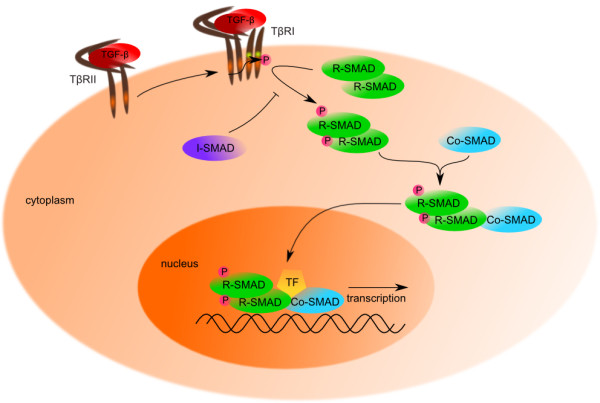
“In the SMAD pathway, TGFBR1 phosphorylates SMAD2 and SMAD3 proteins, which then form a complex with SMAD4 and translocate to the nucleus to regulate the transcription of genes involved in processes such as cell adhesion, migration, and proliferation (Kubiczkova et al. 2012 ; Rojas et al. 2010 ).”
The Interplay of Immune Response and Dental Enamel Formation in Health and Sickness
Gonçalves, J. D. L., Leme, R. D., de Sousa, J. I. T., de Queiroz, A. M., de Carvalho, F. K., & Paula‐Silva, F. W. G. (2025) · Advances in experimental medicine and biology · doi:10.1007/978-3-032-03176-1_27
Targeting cancer stem cells in hepatocellular cancer: a review
Khalid, H., Masoud, M. S., Qasim, M., Rahman, M. U., & Ashfaq, U. A. (2014) · European journal of oncology
손화경, Kim, D., Lim, Y., Kim, J., & Park, I. (2020) · Figshare · doi:10.6084/m9.figshare.13297183
손화경, Kim, D., Lim, Y., Kim, J., & Park, I. (2020) · Figshare · doi:10.6084/m9.figshare.13297177
손화경, Kim, D., Lim, Y., Kim, J., & Park, I. (2020) · Figshare · doi:10.6084/m9.figshare.13297186
손화경, Kim, D., Lim, Y., Kim, J., & Park, I. (2020) · Figshare · doi:10.6084/m9.figshare.13297180
손화경, Kim, D., Lim, Y., Kim, J., & Park, I. (2020) · Figshare · doi:10.6084/m9.figshare.13297165
손화경, Kim, D., Lim, Y., Kim, J., & Park, I. (2020) · Figshare · doi:10.6084/m9.figshare.13297171
손화경, Kim, D., Lim, Y., Kim, J., & Park, I. (2020) · Figshare · doi:10.6084/m9.figshare.13297162
손화경, Kim, D., Lim, Y., Kim, J., & Park, I. (2020) · Figshare · doi:10.6084/m9.figshare.13297174
Alblihed, M. A. (2023) · Figshare · doi:10.6084/m9.figshare.24741812
손화경, Kim, D., Lim, Y., Kim, J., & Park, I. (2020) · Figshare · doi:10.6084/m9.figshare.13297168
Kousehlou, F., Yasari, N., Vahdat, S., & Bagheri, F. (2025) · Cell & Tissue Journal · doi:10.61882/jct.16.3.263
LEM-Domain-Containing Inner Nuclear Membrane Proteins: Emerging Regulators of Intranuclear Signaling
Lee, B., Lee, H., & Shim, J. (2026) · International Journal of Molecular Sciences · doi:10.3390/ijms27020942
Cull, J., Pink, R. C., Samuel, P., & Brooks, S. A. (2026) · Journal of Histochemistry & Cytochemistry · doi:10.1369/00221554261416994
“33,34 Literature investigating changes in O-glycosylation following TGF-β treatment in the context of cancer metastasis is very limited.”
Caractérisation de la sénescence des cardiomyocytes et identification de marqueurs associés
Maggiorani, D. (2017) · theses.fr (ABES) · doi:10.70675/a58747bczd60bz4482za3b2z7ae33d26ffa4 · Cited by 1
“Dans sa forme canonique, l’activation de la voie TGFβ permet le recrutement des protéines SMAD2 et SMAD3 qui sont activées par phosphorylation puis transportées au noyau via SMAD4 afin d’activer la transcription des gènes cibles (Kubiczkova et al., 2012) (Figure 10).”
Background
Metadata
- Authors
- Kubiczkova, L., Sedlarikova, L., Hajek, R., & Sevcikova, S.
- Venue
- Journal of Translational Medicine
- Published
- 2012-09-03
- Volume
- 10
- Issue
- 1
- Pages
- 183-183
- ISSN
- 1479-5876 (ISSN-L)
- PMC
- PMC3494542
- OpenAlex
- W2142957616
- Cited by
- 511
- References
- 288
- Citations by year
- 2026: 12 · 2025: 38 · 2024: 58 · 2023: 64 · 2022: 67 · 2021: 62 · 2020: 39 · 2019: 23 · 2018: 24 · 2017: 36 · 2016: 20 · 2015: 29 · 2014: 26 · 2013: 13
- FWCI
- 1.98
- Type
- journal article
- Language
- en
- Open access
- gold
- doi.org
- Licence
- cc-by
- Locations
- Journal of Translational Medicine (publishedVersion, cc-by)
- PubMed Central (publishedVersion, cc-by)
- PubMed (publishedVersion)
- DOAJ (DOAJ: Directory of Open Access Journals) (submittedVersion, cc-by-sa)
- Topics
- Life Sciences › Biochemistry, Genetics and Molecular Biology › Molecular Biology › TGF-β signaling in diseases
- Life Sciences › Biochemistry, Genetics and Molecular Biology › Molecular Biology › Kruppel-like factors research
- Life Sciences › Biochemistry, Genetics and Molecular Biology › Molecular Biology › Signaling Pathways in Disease
- Keywords
- TGF-beta signaling, Smad proteins, TGF-beta receptor, tumor suppressor, solid tumors, hematologic malignancies, cell proliferation
- MeSH terms
- Humans, Neoplasms, Signal Transduction, Transforming Growth Factor beta
About these checks
Registry, retraction, Cites and statistics results are computed, not judged, with one exception: a printed reference that no index lists is read once by a model before it counts as a citation error. Claims are extracted by a model and kept only when their quote appears verbatim in the text; each cited source is then checked, with a model’s help, for whether it says what the claim relies on. Those verdicts can be wrong — read the claim’s quote and the cited source before relying on one.
Statistics and arithmetic are recomputed, not judged.
Confidence bands are shown only for fields calibrated on our annotated test set. None is calibrated yet, so no band is shown.
What counts as a claim ›How we measure confidence ›How we check this ›
Are you an author, or do you see a problem with this page? Request a review
Data sources
Bibliographic data: Semantic Scholar, OpenAlex, Crossref.
Contains information from the Semantic Scholar Academic Graph Datasets, made available under the ODC Attribution License (ODC-BY 1.0).
Semantic Scholar’s data is described in: Kinney, R., et al. (2023). The Semantic Scholar Open Data Platform. arXiv:2301.10140.
