

TGF-β – an excellent servant but a bad master
Open accessThe DOI matches its Crossref record; 288 of the 288 references it cites were found in a registry or an index.
Abstract
The transforming growth factor (TGF-β) family of growth factors controls an immense number of cellular responses and figures prominently in development and homeostasis of most human tissues. Work over the past decades has revealed significant insight into the TGF-β signal transduction network, such as activation of serine/threonine receptors through ligand binding, activation of SMAD proteins through phosphorylation, regulation of target genes expression in association with DNA-binding partners and regulation of SMAD activity and degradation. Disruption of the TGF-β pathway has been implicated in many human diseases, including solid and hematopoietic tumors. As a potent inhibitor of cell proliferation, TGF-β acts as a tumor suppressor; however in tumor cells, TGF-β looses anti-proliferative response and become an oncogenic factor. This article reviews current understanding of TGF-β signaling and different mechanisms that lead to its impairment in various solid tumors and hematological malignancies.
Overview
The claims and statistics of this paper haven’t been checked yet.
Free: it reads the open-access text and checks the first 5 claims that cite a source we can check. Create a free account to check every claim.
Integrity signals
Registry
Cites
Statistics
Figures
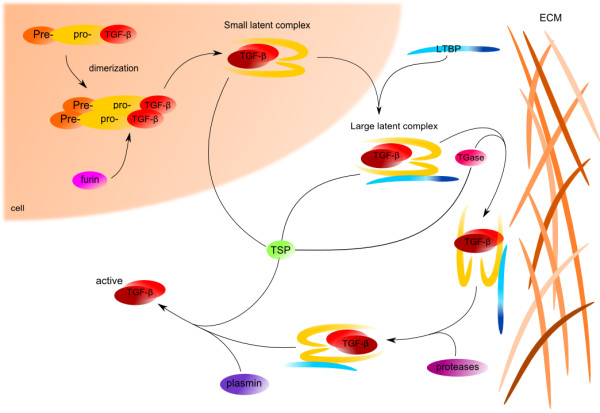
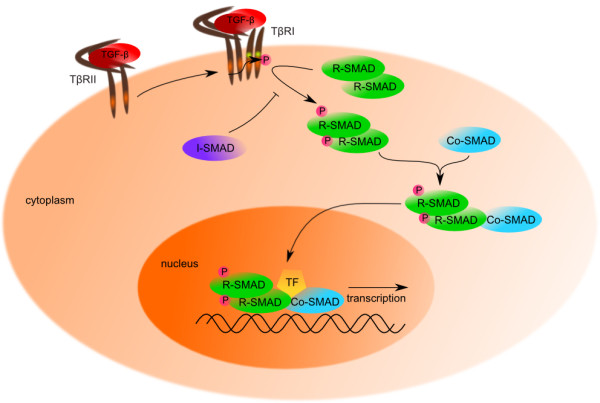
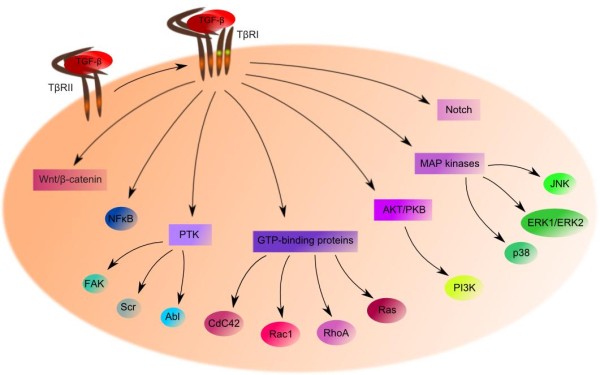
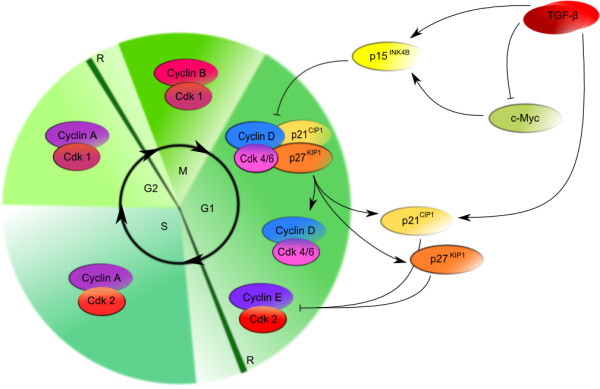
Verification
Claims the paper makes
The claims and statistics of this paper haven’t been checked yet.
Free: it reads the open-access text and checks the first 5 claims that cite a source we can check. Create a free account to check every claim.
Claims other papers make about this one
Each is checked against this paper’s own text: does it say what the citing paper says it does?
In the citing paper
“Some mutations may also drive differential response to a stimulation, as is seen with some tumors in response to transforming growth factor beta (TGF-β)13.”
From Causal identification of single-cell experimental perturbation effects with CINEMA-OT (2023) · cites this paper as [13]
Self-check
Percentages, sums and reported differences re-computed from the paper’s own numbers.
The self-check needs the paper’s full text.
Citations
Cites
1 retracted
Liu, X.-Q., Rajput, A., Geng, L., Ongchin, M. C., Chaudhuri, A., & Wang, J. (2011) · Journal of Biological Chemistry · doi:10.1074/jbc.m111.221697 · Cited by 19 · cited 1×
“Therefore, it is plausible that such mutations contribute to favorable outcome in MSI patients [220].”
BackgroundRetractedHallmarks of Cancer: The Next Generation
Hanahan, D., & Weinberg, R. A. (2011) · Cell · doi:10.1016/j.cell.2011.02.013 · Cited by 66,590 · cited 1×
“There is a strong requirement for new diagnostic and treatment options as well as elucidation of how cells acquire the six essential phenotypes, or hallmarks, necessary to become fully malignant [1].”
BackgroundThe 2007 WHO Classification of Tumours of the Central Nervous System
Louis, D. N., Ohgaki, H., Wiestler, O. D., Cavenee, W. K., Burger, P. C., Jouvet, A., Scheithauer, B. W., & Kleihues, P. (2007) · Acta Neuropathologica · doi:10.1007/s00401-007-0243-4 · Cited by 15,397
Ostrom, Q. T., Gittleman, H., Farah, P., Ondracek, A., Chen, Y., Wolinsky, Y., Stroup, N. E., Kruchko, C., & Barnholtz-Sloan, J. S. (2013) · Neuro-Oncology · doi:10.1093/neuonc/not151 · Cited by 11,994
Epithelial–mesenchymal transitions in tumour progression
Thiery, J. P. (2002) · Nature Reviews Cancer · doi:10.1038/nrc822 · Cited by 6,628
CDK inhibitors: positive and negative regulators of G1-phase progression
Sherr, C. J., & Roberts, J. M. (1999) · Genes & Development · doi:10.1101/gad.13.12.1501 · Cited by 6,115 · cited 1×
“p15 is a member of the INK4 family of CDK inhibitors, which binds to CDK4 and CDK6 subunits, inactivates their catalytic activity and prevents cyclin D-CDK4/6 complex formation [101,106].”
BackgroundMechanisms of TGF-β Signaling from Cell Membrane to the Nucleus
Shi, Y., & Massagué, J. (2003) · Cell · doi:10.1016/s0092-8674(03)00432-x · Cited by 5,857 · cited 1×
“pairs of TβRI and TβRII [52].”
Roberts, A. B., Sporn, M. B., Assoian, R. K., Smith, J. M., Roche, N. S., Wakefield, L. M., Heine, U. I., Liotta, L. A., Falanga, V, & Kehrl, J. H. (1986) · Proceedings of the National Academy of Sciences · doi:10.1073/pnas.83.12.4167 · Cited by 2,866 · cited 1×
“TGF-β was further described by Roberts and Sporn as a secreted polypeptide capable of inducing fibroblast growth and collagen production [7].”
BackgroundMassagué, J., Seoane, J., & Wotton, D. (2005) · Genes & Development · doi:10.1101/gad.1350705 · Cited by 2,452 · cited 2×
“SMAD3 and SMAD4 bind with their MH1 domain to SMAD-binding elements (SBE) on DNA, whereas the common splice form of SMAD2 does not bind to DNA (reviewed in [63]).”
BackgroundTGFβ Signaling in Growth Control, Cancer, and Heritable Disorders
Massagué, J., Blain, S. W., & Lo, R. S. (2000) · Cell · doi:10.1016/s0092-8674(00)00121-5 · Cited by 2,385
Cited by
Items 301–400 of 512
LRG1 Contributes to the Pathogenesis of Multiple Kidney Diseases: A Comprehensive Review
Chen, C., Zhang, J., Yu, T., Feng, H., Liao, J., & Jia, Y. (2024) · Kidney Diseases · doi:10.1159/000538443 · Cited by 12
TGF-β-induced fibrotic scar formation limits recovery of spinal cord injury
Pan, D., Wu, P., Noller, K., Cahan, P., & Cao, X. (2026) · Bone Research · doi:10.1038/s41413-026-00507-7 · Cited by 9
New Insight into Molecular and Hormonal Connection in Andrology
Francomano, D., Sanguigni, V., Capogrosso, P., Dehò, F., & Antonini, G. (2021) · International Journal of Molecular Sciences · doi:10.3390/ijms222111908 · Cited by 8
“Furthermore, elevated TGCT risk was associated with an SNP in the INHA gene, which encodes the inhibin alpha subunit, although its relationship with altering activin bioactivity remains to be elucidated [34].”
BackgroundWłodarczyk, A., Tręda, C., Rutkowska, A., Grot, D., Dobrewa, W., Kierasińska, A., Węgierska, M., Wasiak, T., Strózik, T., Rieske, P., et al. (2022) · International Journal of Molecular Sciences · doi:10.3390/ijms232012129 · Cited by 8
“For example, in physiological conditions, TGFβ is present in the form of an inactive precursor further activated by various mechanisms [36].”
BackgroundTrugilo, K. P., Cebinelli, G. C. M., Pereira, É. R., Okuyama, N. C. M., Cezar‐dos‐Santos, F., Castilha, E. P., Flauzino, T., Hoch, V. B.-B., Watanabe, M. A. E., Guembarovski, R. L., et al. (2022) · Cells · doi:10.3390/cells12010084 · Cited by 8
“In this context, we highlight the transforming growth factor-beta 1 (TGFB1), a pleiotropic cytokine that plays an important role in several biological processes, including cell replication, differentiation, apoptosis, angiogenesis, and immune system regulation [10,11].”
BackgroundHuang, C.-W., Lee, S.-Y., Du, C.-X., & Ku, H.-C. (2023) · Pharmacological Reports · doi:10.1007/s43440-023-00496-y · Cited by 8
Jin, Z., Huang, Z., Wu, C., Zhang, F., Gao, Y., Guo, S., Tao, X., Lu, S., Zhang, J., Huang, J., et al. (2024) · Computers in Biology and Medicine · doi:10.1016/j.compbiomed.2024.108221 · Cited by 11
Huang, W., Tang, L., Cai, Y., Zheng, Y., & Zhang, L. (2014) · Biochemical and Biophysical Research Communications · doi:10.1016/j.bbrc.2014.06.107 · Cited by 8
Study of TGF-β immune marker expression in mice exposed to Candida spp.
Dheeb, B. I., Hashim, S. S., Hussein, H. S., & Hamada, T. A. (2022) · AIP conference proceedings · doi:10.1063/5.0121945 · Cited by 16
Curry, T., Curtin, L., Esfandiarei, M., & Thomas, T. C. (2025) · Frontiers in Physiology · doi:10.3389/fphys.2024.1457034 · Cited by 9
Felicidade, I., Bocchi, M., Zaparolli, M. R., Carlos, L. D. O., Wagner, N. R. F., Campos, A. C. L., Ribeiro, L. R., Mantovani, M. S., Watanabe, M. A. E., & Vitiello, G. A. F. (2021) · Molecular Biology Reports · doi:10.1007/s11033-021-06640-2 · Cited by 8
Radhakrishnan, K., Luu, M., Iaria, J., Sutherland, J. M., McLaughlin, E. A., Zhu, H., & Loveland, K. L. (2023) · Cells · doi:10.3390/cells12071000 · Cited by 8
“TGF-β1 acts both as a tumour suppressor in initial cancer stages and as an oncogene in later stages, driving epithelial to mesenchymal transition (EMT) and tumour metastasis [92].”
BackgroundPlatelet-Specific Deletion of TGF-β1 Impairs Septic Thrombosis in Mice—Brief Report
Li, Y., Jiang, H., Li, X., Zhu, H., Dai, Y., Zhang, J., Sun, Y., Chu, X., Ju, W., Xu, M., et al. (2024) · Arteriosclerosis Thrombosis and Vascular Biology · doi:10.1161/atvbaha.124.322029 · Cited by 7
Widjaja, S. L., Salimo, H., Julianto, I., & Soetrisno (2021) · Saudi Journal of Biological Sciences · doi:10.1016/j.sjbs.2021.04.034 · Cited by 8
“…initiates TGF-b signaling to its serine/ threonine receptors through ligand binding, activation of SMAD proteins through phosphorylation, regulation of target genes expression in association with DNA-binding partners, and regula- tion of SMAD activity and degradation (Kubiczkova et al., 2012).”
BackgroundPeters, S., Kuespert, S., Wirkert, E., Heydn, R., Jurek, B., Johannesen, S. W., Hsam, O., Korte, S., Ludwig, F. T., Mecklenburg, L., et al. (2021) · Neurotherapeutics · doi:10.1007/s13311-021-01045-2 · Cited by 8
“TGFβ activates SMAD (also known as mothers against DPP homolog 1)-dependent (canonical) and SMAD-independent (non-canonical) signaling cascades through receptor subtypes I and II [23, 24].”
Interplay of LncRNA TUG1 and TGF-β/P53 Expression in Colorectal Cancer
Ibrahim, B., Gobran, M. A., Metwalli, A. M., Abd-Elhady, W., Tolba, A., & Omar, W. E. (2023) · Asian Pacific Journal of Cancer Prevention · doi:10.31557/apjcp.2023.24.11.3957 · Cited by 7
“Kubiczkova et al., (2012) agreed that TGF-β IHC expression is profoundly positive in CRC specimens especially in metastatic cases and higher node stage compared to normal tissue.”
BackgroundSingle-cell analysis of age-related changes in leukocytes of diabetic mouse hindpaws
Nichols, J. M., Pham, H. V., Lee, E. F., Mahalingam, R., & Shepherd, A. J. (2024) · Cellular and Molecular Life Sciences · doi:10.1007/s00018-024-05128-z · Cited by 8
“TGFβ is a pleiotropic cytokine with roles in adult tissue homeostasis and fibrosis [36].”
BackgroundStadnikova, A., Ďuďáková, Ľ., Skalická, P., Valenta, Z., Filipec, M., & Jirsová, K. (2017) · PLoS ONE · doi:10.1371/journal.pone.0175509 · Cited by 7
Influence of the Polymorphism C-509T in the TGFB1 Gene Promoter on the Response to Montelukast
Dragičević, S., Milošević, K., Nestorović, B., & Nikolić, A. (2017) · Pediatric Allergy Immunology and Pulmonology · doi:10.1089/ped.2017.0770 · Cited by 8
Straubel, D., Thielitz, A., Reinhold, A., Grüngreiff, K., & Reinhold, D. (2018) · Journal of Immunology Research · doi:10.1155/2018/5982169 · Cited by 9
“These include endoproteases like matrix metalloproteases (MMP) [28, 34].”
BackgroundXin, L., Jiang, M., Su, G., Xie, M., Chen, H., Liu, X., Xu, M., Zhang, G., & Gong, J. (2018) · Medicine · doi:10.1097/md.0000000000011876 · Cited by 7
“[10, 11] Furthermore, transforming growth factor beta1 (TGF-b1) polymorphism presented a higher TGF-b expression and was also shown to be associated with increased invasive breast cancer.”
BackgroundNair, A., Singh, R., Gautam, N., Saxena, S., Mittal, S., Shah, S. Z., & Talegaonkar, S. (2024) · Naunyn-Schmiedeberg s Archives of Pharmacology · doi:10.1007/s00210-024-03234-0 · Cited by 7
“The transforming growth factor-(TGF-β) signaling pathway serves a crucial role in governing diverse cellular processes, including cell growth, differentiation, proliferation, actin-fiber formation, metastasis, angiogenesis, apoptosis, and more (Figure 2) (Kubiczkova et al. 2012).”
PERİFERİK SİNİR YARALANMALARI, REJENERASYONU VE TEDAVİ SEÇENEKLERİ
Alkan, I., BEKAR, E., & Altunkaynak, B. Z. (2022) · Ahi Evran Medical Journal · doi:10.46332/aemj.975395 · Cited by 4
Akamp, T., Rosendahl, A., Galler, K. M., Wölflick, M., Buchalla, W., & Widbiller, M. (2023) · International Endodontic Journal · doi:10.1111/iej.13995 · Cited by 10
Dash, S. R., Das, C., Das, B., Jena, A. B., Paul, S., Sinha, S., Tripathy, J., & Kundu, C. N. (2024) · Nanomedicine · doi:10.2217/nnm-2023-0269 · Cited by 6
The effect of cancer cell-derived exosomal proteins on macrophage polarization: An in-depth review
Wadhonkar, K., Das, S., Subramanian, R., Sk, M. H., Singh, Y., & Baig, M. S. (2024) · Experimental Cell Research · doi:10.1016/j.yexcr.2024.114393 · Cited by 7
Shahrani, M. M. A., Abohassan, M., Alshahrani, M. Y., Gahtani, R. M., & Rajagopalan, P. (2025) · Biochemical and Biophysical Research Communications · doi:10.1016/j.bbrc.2024.151225 · Cited by 6
Varga‐Medveczky, Z., Kovács, N., Tóth, M. E., Sántha, M., Horváth, I., Bors, L. A., Fónagy, K., Imre, T., Szabó, P. T., Máthé, D., et al. (2021) · Frontiers in Neuroscience · doi:10.3389/fnins.2021.700729 · Cited by 7
Guhlich, M., Hubert, L., Mergler, C. P. N., Rave‐Fränk, M., Dröge, L. H., Leu, M., Schmidberger, H., Rieken, S., Hille, A., & Schirmer, M. (2021) · Cancers · doi:10.3390/cancers13215585 · Cited by 6
“Conversely, over-expression or over-activity of TGFβ signaling is a frequently observed feature in progressed malignant diseases, possibly explaining equivocal associations of TGFβ pathway genetic polymorphisms with cancer traits, as stimulation of TGFβ signaling immediately following irradiation was linked to anti-in…”
BackgroundAlzawi, A., Iftikhar, A., Shalgm, B., Jones, S., Ellis, I., & Islam, M. R. (2022) · Cancers · doi:10.3390/cancers14112606 · Cited by 7
“A new polypeptide called Sarcoma Growth Factor (SGF) was first discovered in retrovirus-transformed rat kidney fibroblasts cells, but soon it was apparent that this factor was a mixture of two distinct substances called TGF (transforming growth factor) α and β [66,67].”
BackgroundManaig, Y. J. Y., Criado‐Mesas, L., Esteve‐Codina, A., Mármol‐Sánchez, E., Castelló, A., Sánchez, A., & Folch, J. M. (2023) · PLoS ONE · doi:10.1371/journal.pone.0283231 · Cited by 7
Li, M., Luo, L., Xiong, Y., Wang, F., Xia, Y. Q., Zhang, Z., & Ke, J. (2023) · Current Medicinal Chemistry · doi:10.2174/0929867330666230505161041 · Cited by 6
Role of Non-Coding RNAs in TGF-β Signalling in Glioma
Shree, B., & Sharma, V. (2023) · Brain Sciences · doi:10.3390/brainsci13101376 · Cited by 8
“The signal through TGF β R1 is transduced downstream either through SMAD proteins—in the canonical TGF-β pathway or through other effectors like MAPK , ERK , and JUN kinase —in the non-canonical TGF-β pathway [20].”
BackgroundVitiello, G. A. F., Amarante, M. K., Oda, J. M. M., Hirata, B. K. B., de Oliveira, C. E. C., Campos, C. Z., de Oliveira, K. B., Guembarovski, R. L., & Watanabe, M. A. E. (2020) · Cytokine · doi:10.1016/j.cyto.2020.155079 · Cited by 6
Signaling Pathways Supporting Tumor Invasion in Head and Neck Squamous Cell Carcinoma
Michal Kidacki Heather, L. (2015) · Journal of Clinical & Experimental Pathology · doi:10.4172/2161-0681.1000227 · Cited by 7
“TGFβ/SMAD signaling can either suppress or support cancer progression [80, 81].”
BackgroundTransforming growth factor beta (TGF-β) activity in immuno-oncology studies
Gallo-Oller, G., Scala, M. D., Aranda, F., & Dotor, J. (2019) · Methods in enzymology on CD-ROM/Methods in enzymology · doi:10.1016/bs.mie.2019.06.008 · Cited by 7
Alfi, M. A., Naim, J., Ahmed, I., Kadir, M. F., Islam, S. M. A., Bhuiyan, M. A., & Islam, M. R. (2025) · Developmental Neurobiology · doi:10.1002/dneu.23004 · Cited by 5
Laudański, K., Zawadka, M., & Lapko, N. (2016) · Medical Science Monitor · doi:10.12659/msm.898256 · Cited by 5
Trelford, C. B., Ng, E., Campbell, C. I., & Guglielmo, G. M. D. (2021) · Cellular Signalling · doi:10.1016/j.cellsig.2021.110040 · Cited by 5
Expression of TGF-β/Smads in Cecum and Spleen of Chicken Infected with E. Tenella
Huang, J., Yin, H., Zhang, Y., Qiao, H., Su, L., & Wang, J. (2022) · Brazilian Journal of Poultry Science · doi:10.1590/1806-9061-2021-1446 · Cited by 7
Yabe, M., Karakida, T., Onuma, K., Yamamoto, R., Chiba-Ohkuma, R., Asada, S., Yamakoshi, Y., & Gomi, K. (2023) · Archives of Oral Biology · doi:10.1016/j.archoralbio.2023.105826 · Cited by 6
Singh, A. K., Salunkhe, S. A., Chitkara, D., & Mittal, A. (2024) · Biomaterials Advances · doi:10.1016/j.bioadv.2024.213935 · Cited by 5
Haider, M. B., Bapatla, A., Ismail, R., Chaudhary, A. J., Iqbal, S., & Haider, S. M. (2022) · International Journal of Medical Sciences · doi:10.7150/ijms.66533 · Cited by 5
“pro-oncogenic activity by overexpressing the transforming growth factor-beta (TGF-ß), causing impairment of signaling pathways and dysregulation of the immune system, thus, promoting the development and progression of aggressive malignancy [27].”
BackgroundYoshie, S., Murono, S., & Hazama, A. (2023) · International Journal of Molecular Sciences · doi:10.3390/ijms25010289 · Cited by 6
“There are three isoforms (TGF-β 1, - β 2, and - β 3) in mammals [41,42], and most studies to date have focused on TGF-β 1, which is the most prominent isoform.”
BackgroundGuo, L., Smith, J. A., Abelson, M. L., Louis, I. V.-S., Schiff, L. A., & Bohjanen, P. R. (2018) · PLoS ONE · doi:10.1371/journal.pone.0204622 · Cited by 6
Huang, S.-F., Wang, Y.-L., Chen, J., Huang, Y., Tai, S.-B., Chung, C., & Chen, C. (2021) · Phytomedicine · doi:10.1016/j.phymed.2021.153502 · Cited by 5
Soliman, A. M., Das, S., & Mahakkanukrauh, P. (2021) · Current Medicinal Chemistry · doi:10.2174/0929867328666210901122359 · Cited by 5
Urolithins and their possible implications for diabetic kidney
Kotewicz, M., & Lewko, B. (2022) · European Journal of Translational and Clinical Medicine · doi:10.31373/ejtcm/137918 · Cited by 5
Response of TGF-β isoforms in epithelial-mesenchymal transition of enamel epithelial cells
Miyakawa, Y., Chiba-Ohkuma, R., Karakida, T., Yamamoto, R., Kobayashi, S., Yamakoshi, Y., & Asada, Y. (2022) · Archives of Oral Biology · doi:10.1016/j.archoralbio.2022.105540 · Cited by 4
Jung, I., Cho, Y. J., Park, M., Park, K., Lee, S. H., Kim, W., Jeong, H., Lee, J. E., & Kim, G. (2023) · Scientific Reports · doi:10.1038/s41598-023-49790-y · Cited by 4
Chen, J., Yang, X., Huang, Y., Cao, X., Wu, Z., & Feng, Y. (2024) · Naunyn-Schmiedeberg s Archives of Pharmacology · doi:10.1007/s00210-024-03456-2 · Cited by 4
“SMADs occupy a pivotal position as sensors within the TGF-β1 signaling pathway, with their phosphorylation serving as a key event in the initiation of this pathway (Kubiczkova et al. 2012).”
Meyfarth, S. R. S., Ramirez, I., Silva‐Sousa, A. C., Proff, P., Gabardo, M. C. L., Sousa‐Neto, M. D., Baratto‐Filho, F., Küchler, É. C., Antunes, L. S., & Kirschneck, C. (2024) · Journal of Oral Biology and Craniofacial Research · doi:10.1016/j.jobcr.2024.09.013 · Cited by 5
Molecular structure and supramolecular assembly of a TGF-β1 mimetic oligopeptide
Lourenço, T. C., de Mello, L. R., Silva, B. B. S., & da Silva, E. R. (2020) · Journal of Molecular Structure · doi:10.1016/j.molstruc.2020.128691 · Cited by 4
MicroRNAs and hypospadias: A systematic review
Amoushahi, M., Jørgensen, P., Kjeldgaard, A. B., Padi, E., & Fossum, M. (2024) · Medicine International · doi:10.3892/mi.2024.206 · Cited by 5
CD105 (Endoglin) Expression as a Prognostic Marker in Aggressive Papillary Thyroid Carcinoma
Çordan, İ., & Günler, T. (2025) · Clinical Endocrinology · doi:10.1111/cen.15290 · Cited by 4
“Unlike other endothelial markers, CD105 is specifically associated with the tumour microenvironment and has emerged as a promising biomarker for assessing tumour angiogenesis and progression [6, 7].”
Ishibashi, C. M., de Oliveira, C. E. C., Guembarovski, R. L., Hirata, B. K. B., Vitiello, G. A. F., Guembarovski, A. L., Amarante, M. K., de Oliveira, K. B., Kishima, M. O., Ariza, C. B., et al. (2021) · Journal of Kidney Cancer and VHL · doi:10.15586/jkcvhl.v8i4.182 · Cited by 4
Almolakab, Z. M., El-Nesr, K. A., Mohamad, E. H., Elkaffas, R. H., & Nabil, A. (2022) · Beni-Suef University Journal of Basic and Applied Sciences · doi:10.1186/s43088-022-00211-5 · Cited by 5
“Other studies have found that hepatocellular carcinoma, colon, lung, and prostate cancer patients also have been reported to have elevated plasma levels of TGF-β1 in cancer patients and have a poor prognosis [85].”
BackgroundColombo, S. A. P., Thompson, S., Bancroft, A. J., & Grencis, R. K. (2022) · Parasite Immunology · doi:10.1111/pim.12936 · Cited by 4
Dynamics of transforming growth factor β signaling and therapeutic efficacy
Wu, S., Luwor, R. B., & Zhu, H. (2023) · Growth Factors · doi:10.1080/08977194.2023.2215335 · Cited by 5
Bansal, S. P., Pereira, T., Desai, R. S., Jena, A., Bobade, P. P., & Patil, M. (2023) · Cureus · doi:10.7759/cureus.42412 · Cited by 4
“Role of TGF- β1 and TGF- β3 in OSF Our study confirms previous research linking high levels of TGF-β1 to pathological tissue fibrosis, including OSF [3,4,11,12,14-24].”
BackgroundResultInfluentialNirwana, I. (2018) · Dental Journal (Majalah Kedokteran Gigi) · doi:10.20473/j.djmkg.v51.i4.p189-193 · Cited by 6
Kosyreva, A. M., Dzhalilova, D. S., Makarova, O. V., & Sladkopevtsev, A. S. (2019) · Medical Immunology (Russia) · doi:10.15789/1563-0625-2019-4-643-652 · Cited by 4
Augustine, T. N., Duarte, R. A. B., & Candy, G. P. (2020) · Anticancer Research · doi:10.21873/anticanres.14638 · Cited by 4
Association of mammographic density with blood DNA methylation
Lucia, R. M., Huang, W.-L., Alvarez, A., Masunaka, I. K., Ziogas, A., Goodman, D., Odegaard, A., Norden‐Krichmar, T. M., & Park, H. L. (2021) · Epigenetics · doi:10.1080/15592294.2021.1928994 · Cited by 5
Levels of transforming growth factor β 1 during first six months of peritoneal dialysis
Stojimirovic, B. B., Jovanović, N., Stankovic, J. T., Nešić, D., Brašanac, T., & Žunić-Božinovski, S. (2015) · Renal Failure · doi:10.3109/0886022x.2015.1010417 · Cited by 4
Naderi, N., Ebrahimzadeh, F., Jazebi, M., Namvar, A., Hashemi, M., & Bolhassani, A. (2018) · Hematology · doi:10.1080/10245332.2018.1498168 · Cited by 4
Wang, S., Xu, L., Zhang, Z., Wang, P., Zhang, R., He, H., & Chen, L. (2021) · Journal of Biomedical Nanotechnology · doi:10.1166/jbn.2021.3145 · Cited by 4
Dye, J. A., Nguyen, H. H., Stewart, E. J., Schladweiler, M. C. J., Ledbetter, A. D., & Miller, C. N. (2025) · American Journal of Physiology-Lung Cellular and Molecular Physiology · doi:10.1152/ajplung.00125.2025 · Cited by 3
Cao, Y., Xiong, Y., Duan, Z., Wei, Y., Wang, P., & Liu, D. (2025) · Ecotoxicology and Environmental Safety · doi:10.1016/j.ecoenv.2025.119177 · Cited by 4
Mecchi, L., Caron, M. M. J., Welting, T. J. M., & Stoddart, M. J. (2025) · Acta Biomaterialia · doi:10.1016/j.actbio.2025.12.029 · Cited by 4
Tumor cell stemness in gastrointestinal cancer: regulation and targeted therapy
Yang, K., & Yi, T. (2024) · Frontiers in Molecular Biosciences · doi:10.3389/fmolb.2023.1297611 · Cited by 5
“Transforming growth factor beta (TGF β ) is a cytokine widely expressed in normal tissues, serving key modulatory functions of cell growth, immune responses and intracellular communications (Kubiczkova et al., 2012).”
BackgroundGhosh, S., Tanbir, S. K. E., Mitra, T., & Roy, S. S. (2024) · Biochemistry and Cell Biology · doi:10.1139/bcb-2024-0010 · Cited by 5
The role of the TGF-β1 signaling pathway in the process of amelogenesis
Ma, X., Ma, Y., Lin, Z., & Ji, M. (2025) · Frontiers in Physiology · doi:10.3389/fphys.2025.1586769 · Cited by 4
The BAG3-HSP70-CHIP axis controls the degradation of TGFBR2 in cardiac fibroblasts
Morsink, M. A. J., Watkins, J. M., Zhu, K., Zhang, X., Luo, L. J., Fine, B. M., Wang, B. Z., & Vunjak‐Novakovic, G. (2025) · Journal of Molecular and Cellular Cardiology · doi:10.1016/j.yjmcc.2025.06.003 · Cited by 4
Alabi, F. A., Okpalanwaka, I. F., Oyegbesan, A., Okoyeocha, E. O. M., Oladejo, M., & Imodoye, S. O. (2025) · MedComm – Oncology · doi:10.1002/mog2.70027 · Cited by 9
Vaughan, J., Patel, M., Suchard, M. S., Gededzha, M. P., Ranchod, H., Howard, W., Snyman, T., & Wiggill, T. M. (2024) · Frontiers in Cellular and Infection Microbiology · doi:10.3389/fcimb.2024.1340096 · Cited by 4
Pehlivanlar, E., Çakır, D. A., Sanajou, S., Yalçın, H. T., Baydar, T., Erkekoğlu, P., Avci, H., & Şimşek, R. (2024) · TURKISH JOURNAL OF CHEMISTRY · doi:10.55730/1300-0527.3686 · Cited by 5
“Disruption of the TGF-β pathway has been implicated in many human diseases, including solid and hematopoietic tumors [51].”
BackgroundInvestigational drugs in early phase trials for myelofibrosis
Arora, S., Vachhani, P. J., & Bose, P. (2024) · Expert Opinion on Investigational Drugs · doi:10.1080/13543784.2024.2434696 · Cited by 4
“Transforming growth factor β (TGF β) is a cytokine that plays a key role in numerous physiological functions, including growth and differentiation of tissues, maintenance of homeostasis, wound healing, and angiogenesis [73].”
Meshkovska, Y., Dzhuraeva, B., Godugu, C., Pooladanda, V., & Thatikonda, S. (2025) · 3 Biotech · doi:10.1007/s13205-025-04272-y · Cited by 3
“It depends on the target gene, cellular context, and the extracellular and intracellular responses of the signal transduction sys-tem (Kubiczkova et al. 2012).”
Vitiello, G. A. F., Guembarovski, R. L., de Oliveira, C. E. C., Amarante, M. K., Perim, A. D. L., & Watanabe, M. A. E. (2015) · Brazilian Archives of Biology and Technology · doi:10.1590/s1516-8913201500287 · Cited by 3
“All isoforms activate intracellular receptor-regulated Smads (R-Smads: Smad2 and Smad3) through interaction with TGFβ receptors (TβRI and TβRII) and thereby regulate cells’ gene expression profile and phenotype (Kubiczkova et al. 2012).”
BackgroundInfluentialThe Role of TGF-β in Gastrointestinal Cancers
Wang, H., Gong, X., Xu, J., & Xie, R. (2018) · Journal of Cancer Science & Therapy · doi:10.4172/1948-5956.1000566 · Cited by 3
Shehata, M. M., Sallam, A.-A. M., Naguib, M. G., & EL-Mesallamy, H. O. (2021) · Cancer Biomarkers · doi:10.3233/cbm-200927 · Cited by 3
“Interestingly, it was reported that TERT, beyond its well-known canonical role in telomeres, may be involved in epigenetic modifications or the modulation of chromatin structure, which indirectly affect gene expression [13].”
Vitiello, G. A. F., Amarante, M. K., Crespigio, J., Hirata, B. K. B., Pereira, N. D. S., de Oliveira, K. B., Guembarovski, R. L., & Watanabe, M. A. E. (2021) · Surgical and Experimental Pathology · doi:10.1186/s42047-021-00097-0 · Cited by 4
Role of transforming growth factor-β in airway remodelling in bronchiolitis obliterans
Wang, Z. (2023) · Growth Factors · doi:10.1080/08977194.2023.2239356 · Cited by 5
“Almost all cells, including endothelial cells, epithelial cells, macrophages, monocytes, neutrophils, platelets, lymphocytes, eosinophils, mast cells, smooth muscle cells, and fibroblasts can secrete TGF-b (Bartram and Speer 2004; Kocwin et al. 2016; Kubiczkova et al. 2012).”
BackgroundRamzan, A., Yousaf, M. A., Rashid, M. U., Basheera, S., & Malkani, N. (2023) · Journal of Biomolecular Structure and Dynamics · doi:10.1080/07391102.2023.2268198 · Cited by 3
“It has 7 exons that result in three isoforms; TGF-b 1 , TGF-b 2 , and TGF-b 3 (Kubiczkova et al., 2012).”
Chang, W., Renaut, P., & Pretorius, C. (2020) · BMJ Case Reports · doi:10.1136/bcr-2020-236855 · Cited by 3
Rosas, E., & Richer, J. K. (2021) · Springer eBooks · doi:10.1007/978-3-030-73856-3_9 · Cited by 4
Genetic, Genomic, and Heritable Components of Benign Prostatic Hyperplasia
Makedon, A. M., Sempson, S., Hargis, P. A., & Lloyd, G. L. (2023) · Current Bladder Dysfunction Reports · doi:10.1007/s11884-023-00697-4 · Cited by 3
“The transforming growth factor (TGF-β) family of growth factors are involved in numerous cellular signaling pathways in the cell, including cell proliferation, differentiation, and apoptosis [13].”
BackgroundCytokine Networks and Cancer Stem Cells
Liongue, C., Ward, A. C., Duan, W., & Shigdar, S. L. (2015) · Springer eBooks · doi:10.1007/978-3-319-21030-8_3 · Cited by 3
TGF-β1 polymorphisms -509 C>T and +915 G>C and risk of pancreatic cancer.
Farahbakhsh, F. B., Mojarad, E. N., Azimzadeh, P., Goudarzi, F., Alizadeh, A. H. M., Haghazali, M., Lamouki, R. M., & Aghdaei, H. A. (2017) · Gastroenterology and hepatology from bed to bench. · Cited by 9
Esmaeli, M., & Ghanbari, A. (2025) · Current Women s Health Reviews · doi:10.2174/0115734048332611250106075111 · Cited by 2
The Multifaceted Role of miR-211 in Health and Disease
Parra, J. R., Grand, Z. A., Gonzalez, G., Perera, R. J., Pandeya, D. R., Weiler, T., & Chapagain, P. P. (2025) · Biomolecules · doi:10.3390/biom15081109 · Cited by 2
“Similarly, overexpression of IGF2R enhances invasive potential, while elevated TGFBR2 levels facilitate immune evasion and fibrosis, contributing to tumor progression [79,92]. miR-211’s role in tumorigenesis is highly context-dependent and can vary significantly depending on the cancer type.”
AAV Assembled Capsids Are Produced in Cells Blocked From Cell Cycle Progression
Mullick, A., Morasse, A., Leclerc, M., Liu, Z., Liu, Q. Y., Leclerc, S., Momcilovic, M., Viau, A., & Kamen, A. (2025) · Biotechnology and Bioengineering · doi:10.1002/bit.70111 · Cited by 3
“Moreover, upregulation of THBS1(Gutierrez and Gutierrez 2021) has been shown to activate latent TGFB1, a key negative regulator of the cell cycle (Kubiczkova et al. 2012).”
Peng, Z., Li, Y., Wang, Y., Yu, M., Lyu, Y., Chen, F., Huang, Y., & Ding, Y. (2025) · Biomedicines · doi:10.3390/biomedicines13123032 · Cited by 2
“TGF-β can activate Smad proteins through phosphorylation to regulate the development of EMT and affect the formation of the tubular urethra [41,42].”
Structural and functional analysis of the TGF-β mimic, TGM-2: an immunomodulatory helminth protein
Yaah, N. E., Cunningham, K. T., Singh, S. P., Ciancia, C., Sanders, A., Lilla, S., Mukundan, A., Ghogomu, S. M., Hinck, A. P., & Maizels, R. M. (2025) · Genes and Immunity · doi:10.1038/s41435-025-00372-0 · Cited by 2
“TGF-β is known to be highly pivotal for driving immune regulation [19, 20].”
The Signaling Networks of TIM-3, TGF-β, and STING in Glioblastoma
Ahmady, F., Carnie, B. M. H., Anderson, G. E. C., Achari, E., Sharma, A., Achuthan, A. A., Kannourakis, G., & Luwor, R. B. (2026) · Cells · doi:10.3390/cells15110991 · Cited by 2
“The recruitment of inflammatory cells and fibroblasts through TGF-β interacting with the TME may heavily contribute to the cancer’s aggressive phenotype [128].”
Rataan, A. O., Xu, Y., Geary, S. M., Zakharia, Y., Kamel, E. S., Rustum, Y. M., & Salem, A. K. (2024) · Cancer Treatment and Research Communications · doi:10.1016/j.ctarc.2025.100864 · Cited by 5
Kauliņš, R., Rozite, L. R., Pilmane, M., & Pētersons, A. (2021) · Diagnostics · doi:10.3390/diagnostics11020289 · Cited by 2
“Transforming growth factor-beta (TGF-β) is a pleiotropic cytokine involved in development, various cellular responses and homeostasis of most human tissues [10].”
BackgroundKittiwattanokhun, A., Innajak, S., Tashiro, E., Imoto, M., & Watanapokasin, R. Y. (2022) · Scientia Pharmaceutica · doi:10.3390/scipharm90020030 · Cited by 2
“In general, TGF-β1 also has other functions that not only induce EMT but also regulate cell differentiation, proliferation, and survival in various cell types [8].”
BackgroundTikaradze, E., Sharashenidze, G., Ormotsadze, G., TSIMAKURIDZE, M., Burjanadze, G., CHKHIKVISHVILI, I., Kalmakhelidze, S., Gabunia, T., & Sanikidze, T. V. (2022) · Asian Pacific Journal of Cancer Prevention · doi:10.31557/apjcp.2022.23.6.2127 · Cited by 4
“…the important role of the inflammation in the interaction between the tumor cells and host cells and in the coordination of the tumor progression (Kubiczkova et al., 2012), it can be assumed that there is a causal relationship between the relatively high level of the onco-incidences in village…”
Background
Metadata
- Authors
- Kubiczkova, L., Sedlarikova, L., Hajek, R., & Sevcikova, S.
- Venue
- Journal of Translational Medicine
- Published
- 2012-09-03
- Volume
- 10
- Issue
- 1
- Pages
- 183-183
- ISSN
- 1479-5876 (ISSN-L)
- PMC
- PMC3494542
- OpenAlex
- W2142957616
- Cited by
- 511
- References
- 288
- Citations by year
- 2026: 12 · 2025: 38 · 2024: 58 · 2023: 64 · 2022: 67 · 2021: 62 · 2020: 39 · 2019: 23 · 2018: 24 · 2017: 36 · 2016: 20 · 2015: 29 · 2014: 26 · 2013: 13
- FWCI
- 1.98
- Type
- journal article
- Language
- en
- Open access
- gold
- doi.org
- Licence
- cc-by
- Locations
- Journal of Translational Medicine (publishedVersion, cc-by)
- PubMed Central (publishedVersion, cc-by)
- PubMed (publishedVersion)
- DOAJ (DOAJ: Directory of Open Access Journals) (submittedVersion, cc-by-sa)
- Topics
- Life Sciences › Biochemistry, Genetics and Molecular Biology › Molecular Biology › TGF-β signaling in diseases
- Life Sciences › Biochemistry, Genetics and Molecular Biology › Molecular Biology › Kruppel-like factors research
- Life Sciences › Biochemistry, Genetics and Molecular Biology › Molecular Biology › Signaling Pathways in Disease
- Keywords
- TGF-beta signaling, Smad proteins, TGF-beta receptor, tumor suppressor, solid tumors, hematologic malignancies, cell proliferation
- MeSH terms
- Humans, Neoplasms, Signal Transduction, Transforming Growth Factor beta
About these checks
Registry, retraction, Cites and statistics results are computed, not judged, with one exception: a printed reference that no index lists is read once by a model before it counts as a citation error. Claims are extracted by a model and kept only when their quote appears verbatim in the text; each cited source is then checked, with a model’s help, for whether it says what the claim relies on. Those verdicts can be wrong — read the claim’s quote and the cited source before relying on one.
Statistics and arithmetic are recomputed, not judged.
Confidence bands are shown only for fields calibrated on our annotated test set. None is calibrated yet, so no band is shown.
What counts as a claim ›How we measure confidence ›How we check this ›
Are you an author, or do you see a problem with this page? Request a review
Data sources
Bibliographic data: Semantic Scholar, OpenAlex, Crossref.
Contains information from the Semantic Scholar Academic Graph Datasets, made available under the ODC Attribution License (ODC-BY 1.0).
Semantic Scholar’s data is described in: Kinney, R., et al. (2023). The Semantic Scholar Open Data Platform. arXiv:2301.10140.
