

Phase I safety trial of intravenous ascorbic acid in patients with severe sepsis.
Open accessThe DOI matches its Crossref record; 37 of the 38 references it cites were found in a registry or an index.
Abstract
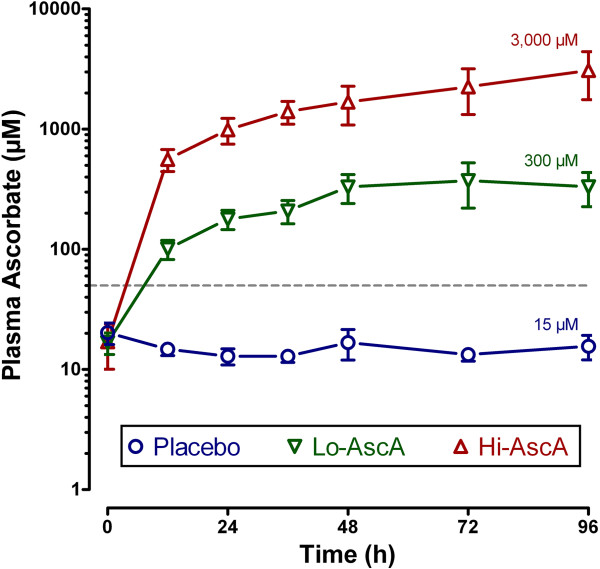
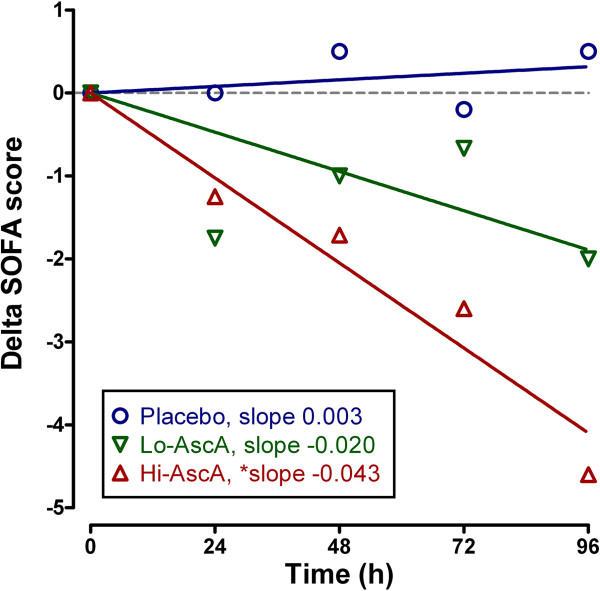
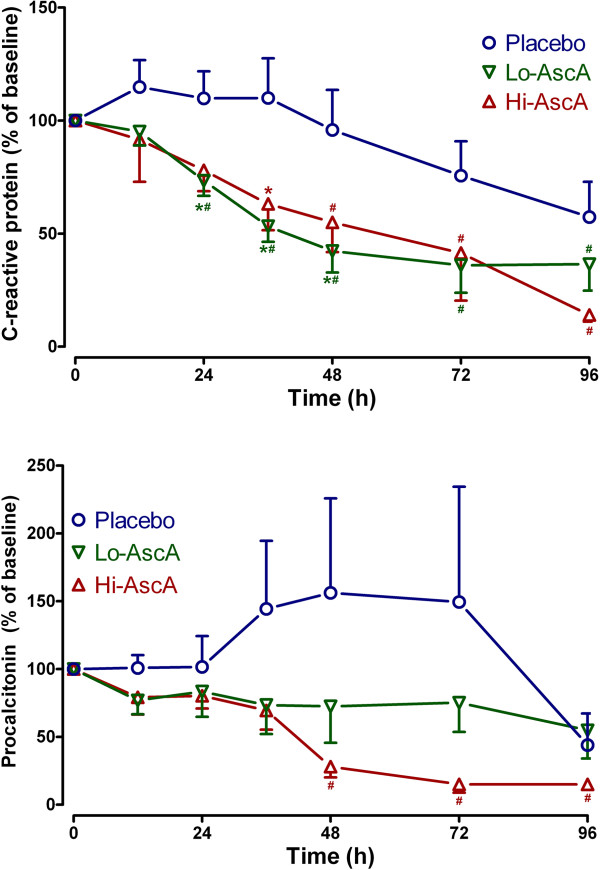
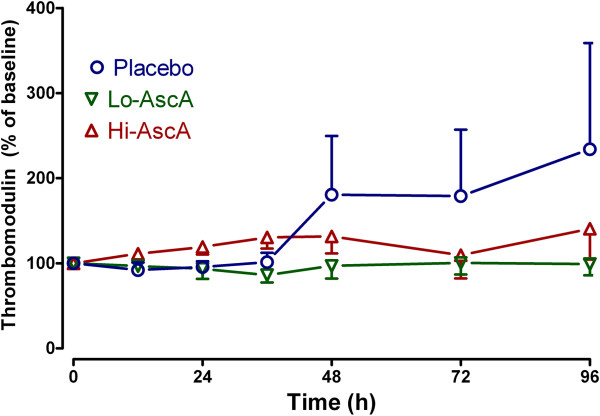
BACKGROUND: Parenterally administered ascorbic acid modulates sepsis-induced inflammation and coagulation in experimental animal models. The objective of this randomized, double-blind, placebo-controlled, phase I trial was to determine the safety of intravenously infused ascorbic acid in patients with severe sepsis. METHODS: Twenty-four patients with severe sepsis in the medical intensive care unit were randomized 1:1:1 to receive intravenous infusions every six hours for four days of ascorbic acid: Lo-AscA (50 mg/kg/24 h, n = 8), or Hi-AscA (200 mg/kg/24 h, n = 8), or Placebo (5% dextrose/water, n = 8). The primary end points were ascorbic acid safety and tolerability, assessed as treatment-related adverse-event frequency and severity. Patients were monitored for worsened arterial hypotension, tachycardia, hypernatremia, and nausea or vomiting. In addition Sequential Organ Failure Assessment (SOFA) scores and plasma levels of ascorbic acid, C-reactive protein, procalcitonin, and thrombomodulin were monitored. RESULTS: Mean plasma ascorbic acid levels at entry for the entire cohort were 17.9 ± 2.4 μM (normal range 50-70 μM). Ascorbic acid infusion rapidly and significantly increased plasma ascorbic acid levels. No adverse safety events were observed in ascorbic acid-infused patients. Patients receiving ascorbic acid exhibited prompt reductions in SOFA scores while placebo patients exhibited no such reduction. Ascorbic acid significantly reduced the proinflammatory biomarkers C-reactive protein and procalcitonin. Unlike placebo patients, thrombomodulin in ascorbic acid infused patients exhibited no significant rise, suggesting attenuation of vascular endothelial injury. CONCLUSIONS: Intravenous ascorbic acid infusion was safe and well tolerated in this study and may positively impact the extent of multiple organ failure and biomarkers of inflammation and endothelial injury. TRIAL REGISTRATION: ClinicalTrials.gov identifier NCT01434121.
Overview
The claims and statistics of this paper haven’t been checked yet.
Free: it reads the open-access text and checks the first 5 claims that cite a source we can check. Create a free account to check every claim.
Integrity signals
Registry
Cites
Statistics
Figures
Verification
Claims the paper makes
The claims and statistics of this paper haven’t been checked yet.
Free: it reads the open-access text and checks the first 5 claims that cite a source we can check. Create a free account to check every claim.
Claims other papers make about this one
Each is checked against this paper’s own text: does it say what the citing paper says it does?
The source backs part of the claim, not all of it — or backs it for a different population, condition or comparison.
In the citing paper
“First, CITRIS-ALI as proposed was based on a previously performed phase 1 safety trial of vitamin C administered to patients in the very early stages of severe sepsis, not ARDS.15”
From Effect of Vitamin C Infusion on Organ Failure and Biomarkers of Inflammation and Vascular Injury in Patients With Sepsis and Severe Acute Respiratory Failure (2019) · cites this paper as [15]
Experimental — accuracy not yet measuredThe source backs part of the claim, not all of it — or backs it for a different population, condition or comparison.
In the citing paper
“The one study in septic patients included in this meta-analysis showed a positive impact of vitamin C on the extent of organ failure, biomarkers of inflammation and endothelial injury [82].”
From Nutrition in Sepsis: A Bench-to-Bedside Review. (2020) · cites this paper as [82]
Experimental — accuracy not yet measuredThe cited source says what the claim attributes to it.
In the citing paper
“Delayed quantification of these biomarkers in CITRIS-ALI compared with early vitamin C infusion in severe sepsis may explain results discordant with those of previous studies of vitamin C in severe sepsis.15”
From Effect of Vitamin C Infusion on Organ Failure and Biomarkers of Inflammation and Vascular Injury in Patients With Sepsis and Severe Acute Respiratory Failure (2019) · cites this paper as [15]
Experimental — accuracy not yet measuredThe cited source says what the claim attributes to it.
In the citing paper
“The selection of the primary outcomes was based on a previously performed phase 1 trial.15”
The check wasn’t confident either way, so it gives no verdict — never disputed.
In the citing paper
“In accordance with these calculations, CITRIS-ALI enrolled 170 patients (85 per group) to allow for 10% dropouts, providing a statistical power of 80%, with an α < .05.”
From Effect of Vitamin C Infusion on Organ Failure and Biomarkers of Inflammation and Vascular Injury in Patients With Sepsis and Severe Acute Respiratory Failure (2019) · cites this paper as [15]
Experimental — accuracy not yet measured
1 more claim about this paper
Create a free account to see every claim other papers make about this one.
Self-check
Percentages, sums and reported differences re-computed from the paper’s own numbers.
The self-check needs the paper’s full text.
Citations
Cites
Harris, P. A., Taylor, R., Thielke, R., Payne, J., Gonzalez, N., & Conde, J. G. (2009) · Journal of Biomedical Informatics · doi:10.1016/j.jbi.2008.08.010 · Cited by 51,384 · cited 5×
“Patients were screened and enrolled following admission to the Medical Respiratory Intensive Care Unit in the VCU Medical Center, Richmond, Virginia.”
MethodInfluentialVincent, J. L., Moreno, R., Takala, J., Willatts, S., De Mendonça, A., Bruining, H., Reinhart, C. K., Suter, P. M., & Thijs, L. G. (1996) · Intensive Care Medicine · doi:10.1007/bf01709751 · Cited by 11,674
The epidemiology of sepsis in the United States from 1979 through 2000
Martin, G. S., Mannino, D. M., Eaton, S., & Moss, M. (2003) · New England Journal of Medicine · doi:10.1056/nejmoa022139 · Cited by 5,841
Serial Evaluation of the SOFA Score to Predict Outcome in Critically Ill Patients
Ferreira, F. L. (2001) · JAMA · doi:10.1001/jama.286.14.1754 · Cited by 2,862
Sepsis in European intensive care units: Results of the SOAP study*
Vincent, J.-L., Sakr, Y., Sprung, C. L., Ranieri, V. M., Reinhart, K., Gerlach, H., Moreno, R., Carlet, J., Le Gall, J.-R., & Payen, D. (2006) · Critical Care Medicine · doi:10.1097/01.ccm.0000194725.48928.3a · Cited by 2,836 · cited 1×
“Tens of thousands of lives are lost across the world annually due to severe sepsis [1,38-40].”
BackgroundDrotrecogin Alfa (Activated) in Adults with Septic Shock
Ranieri, V. M., Thompson, B. T., Barie, P. S., Dhainaut, J.-F., Douglas, I. S., Finfer, S., Gårdlund, B., Marshall, J. C., Rhodes, A., Artigas, A., et al. (2012) · New England Journal of Medicine · doi:10.1056/nejmoa1202290 · Cited by 1,309
Moreno, R., Vincent, J.-L., Matos, R., Mendonça, A., Cantraine, F., Thijs, L., Takala, J., Sprung, C., Antonelli, M., Bruining, H., et al. (1999) · Intensive Care Medicine · doi:10.1007/s001340050931 · Cited by 1,058
Vitamin C pharmacokinetics: Implications for oral and intravenous use
Padayatty, S. J., Sun, H., Wang, Y., Riordan, H. D., Hewitt, S. M., Katz, A., Wesley, R. A., & Levine, M. (2004) · Annals of Internal Medicine · doi:10.7326/0003-4819-140-7-200404060-00010 · Cited by 992 · cited 2×
“Padayatty and colleagues showed that high-level ascorbic acid plasma concentrations could only be achieved by intravenous administration [15].”
BackgroundRandomized, Prospective Trial of Antioxidant Supplementation in Critically Ill Surgical Patients
Nathens, A. B., Neff, M. J., Jurkovich, G. J., Klotz, P., Farver, K., Ruzinski, J. T., Radella, F., Garcia, I., & Maier, R. V. (2002) · Annals of Surgery · doi:10.1097/00000658-200212000-00014 · Cited by 536
C-Reactive Protein Levels Correlate With Mortality and Organ Failure in Critically Ill Patientsa
Lobo, S. M. A., Lobo, F. R. M., Bota, D. P., Lopes-Ferreira, F., Soliman, H. M., Meélot, C., & Vincent, J.-L. (2003) · Chest · doi:10.1378/chest.123.6.2043 · Cited by 448 · cited 1×
“reported that patients with CRP levels greater than 10 mg/dL at ICU admission exhibited significantly higher rates of multiple organ failure as well as higher mortality rates [34].”
BackgroundAdult-population incidence of severe sepsis in Australian and New Zealand intensive care units
Finfer, S., Bellomo, R., Lipman, J., French, C., Dobb, G., & Myburgh, J. (2004) · Intensive Care Medicine · doi:10.1007/s00134-004-2157-0 · Cited by 442 · cited 1×
“Tens of thousands of lives are lost across the world annually due to severe sepsis [1,38-40].”
BackgroundTanaka, H. (2000) · Archives of Surgery · doi:10.1001/archsurg.135.3.326 · Cited by 438 · cited 2×
“infused ascorbic acid continuously at 66 mg/kg/hour for the first 24 hours in patients with greater than 50% surface area burns and showed significantly reduced burn capillary permeability [17].”
BackgroundBrazilian Sepsis Epidemiological Study (BASES study)
Silva, E., Pedro, M. D. A., Sogayar, A. C. B., Mohovic, T., Silva, C. L. O., Janiszewski, M., Cal, R. G. R., de Sousa, É. F., Abe, T. P., de Andrade, J., et al. (2004) · Critical Care · doi:10.1186/cc2892 · Cited by 418 · cited 1×
“Tens of thousands of lives are lost across the world annually due to severe sepsis [1,38-40].”
BackgroundMuckart, D. J. J., & Bhagwanjee, S. (1997) · Critical Care Medicine · doi:10.1097/00003246-199711000-00014 · Cited by 384 · cited 1×
“Severe sepsis was defined as: 1) Presence of a systemic inflammatory response: (fever: >38°C or hypothermia: <36°C (core temp only), heart rate > 90 beats/min, leukocytosis: >12,000 WBC/μL or leukopenia: <4,000 WBC/μL or >10% band forms) [23], 2) Suspected or proven infection, and 3) Presence of sepsisinduced organ dy…”
BackgroundProcalcitonin increase in early identification of critically ill patients at high risk of mortality*
Jensen, J. U., Heslet, L., Jensen, T. H., Espersen, K., Steffensen, P., & Tvede, M. (2006) · Critical Care Medicine · doi:10.1097/01.ccm.0000239116.01855.61 · Cited by 380 · cited 14×
“Jensen and colleagues found that high maximal procalcitonin levels were an early independent predictor of all-cause mortality in a 90-day followup period after intensive care unit admission [20].”
BackgroundMethodInfluentialPhase I clinical trial of i.v. ascorbic acid in advanced malignancy
Hoffer, L. J., Levine, M., Assouline, S., Melnychuk, D., Padayatty, S. J., Rosadiuk, K., Rousseau, C., Robitaille, L., & Miller, W. H. (2008) · Annals of Oncology · doi:10.1093/annonc/mdn377 · Cited by 375 · cited 1×
“intravenously administered up to 90 grams of ascorbic acid 3 times weekly to patients with advanced malignancy with no adverse events [30].”
BackgroundBorrelli, E., Roux-Lombard, P., Grau, G. E., Girardin, E., Ricou, B., Dayer, J.-M., & Suter, P. M. (1996) · Critical Care Medicine · doi:10.1097/00003246-199603000-00006 · Cited by 349 · cited 3×
“Prior studies [13,14,26], and the current study show that subnormal plasma ascorbic acid levels are a predictable feature in patients with severe sepsis.”
BackgroundResultSchorah, C., Downing, C., Piripitsi, A., Gallivan, L., Al-Hazaa, A., Sanderson, M., & Bodenham, A. (1996) · The American Journal of Clinical Nutrition · doi:10.1093/ajcn/63.5.760 · Cited by 313 · cited 1×
“Prior studies show that patients with severe sepsis exhibit significantly reduced plasma ascorbic acid levels upon admission to intensive care [31].”
BackgroundVitamin C Suppresses TNFα-Induced NFκB Activation by Inhibiting IκBα Phosphorylation
Cárcamo, J. M., Pedraza, A., Bórquez-Ojeda, O., & Golde, D. W. (2002) · Biochemistry · doi:10.1021/bi0263210 · Cited by 280 · cited 1×
“As we and others have shown in basic investigations [10,11,37], by inhibiting NFκB activation, ascorbic acid could potentially attenuate the “cytokine storm” that arises due to NFκB driven genes known to be activated in sepsis.”
BackgroundMechanisms of attenuation of abdominal sepsis induced acute lung injury by ascorbic acid.
Fisher, B. J., Kraskauskas, D., Martin, E. J., Farkas, D., Wegelin, J. A., Brophy, D., Ward, K. R., Voelkel, N. F., Fowler, A. A., & Natarajan, R. (2012) · American Journal of Physiology-Lung Cellular and Molecular Physiology · doi:10.1152/ajplung.00300.2011 · Cited by 231 · cited 2×
“Recently, we showed that parenterally infusing ascorbic acid at a concentration of 200 mg/kg attenuated vascular lung injury in septic mice by multiple mechanisms, including attenuation of the proinflammatory mediators, enhanced alveolar epithelial barrier function, increased alveolar fluid clearance, and prevention o…”
BackgroundSelf-citationA Multicenter Randomized Trial of Atorvastatin Therapy in Intensive Care Patients with Severe Sepsis
Kruger, P., Bailey, M., Bellomo, R., Cooper, D. J., Harward, M., Higgins, A., Howe, B., Jones, D., Joyce, C., Kostner, K., et al. (2013) · American Journal of Respiratory and Critical Care Medicine · doi:10.1164/rccm.201209-1718oc · Cited by 220
Quenot, J.-P., Binquet, C., Kara, F., Martinet, O., Ganster, F., Navellou, J.-C., Castelain, V., Barraud, D., Cousson, J., Louis, G., et al. (2013) · Critical Care · doi:10.1186/cc12598 · Cited by 215
Ascorbyl radical formation in patients with sepsis: Effect of ascorbate loading
Galley, H. F., Davies, M. J., & Webster, N. R. (1996) · Free Radical Biology and Medicine · doi:10.1016/0891-5849(95)02022-5 · Cited by 199 · cited 4×
“Prior studies [13,14,26], and the current study show that subnormal plasma ascorbic acid levels are a predictable feature in patients with severe sepsis.”
BackgroundInfluentialBeale, R. J., Sherry, T., Lei, K., Campbell-Stephen, L., McCook, J., Smith, J., Venetz, W., Alteheld, B., Stehle, P., & Schneider, H. (2008) · Critical Care Medicine · doi:10.1097/01.ccm.0000297954.45251.a9 · Cited by 182 · cited 2×
“Organ dysfunction analysis was based on the evolution (slopes) of the delta daily total SOFA score (change in daily total SOFA score compared with day 0) over 4 study days by comparing the regression coefficients using Student’s t-test [28,29].”
MethodAscorbic acid attenuates lipopolysaccharide-induced acute lung injury.
Fisher, B. J., Seropian, I. M., Kraskauskas, D., Thakkar, J. N., Voelkel, N. F., Fowler, A. A., & Natarajan, R. (2011) · Critical Care Medicine · doi:10.1097/ccm.0b013e3182120cb8 · Cited by 178 · cited 2×
“Recently, we showed that parenterally infusing ascorbic acid at a concentration of 200 mg/kg attenuated vascular lung injury in septic mice by multiple mechanisms, including attenuation of the proinflammatory mediators, enhanced alveolar epithelial barrier function, increased alveolar fluid clearance, and prevention o…”
BackgroundSelf-citationKarlsson, S., Heikkinen, M., Pettilä, V., Alila, S., Väisänen, S., Pulkki, K., Kolho, E., Ruokonen, E., & the Finnsepsis Study Group (2010) · Critical Care · doi:10.1186/cc9327 · Cited by 168
Thrombomodulin: protectorate God of the vasculature in thrombosis and inflammation
Ito, T., & Maruyama, I. (2011) · Journal of Thrombosis and Haemostasis · doi:10.1111/j.1538-7836.2011.04319.x · Cited by 159 · cited 1×
“Elevated soluble TM in the circulation indicates endothelial cell injury [35].”
BackgroundSakr, Y., Lobo, S. M., Moreno, R. P., Gerlach, H., Ranieri, V. M., Michalopoulos, A., Vincent, J.-L., & the SOAP Investigators (2012) · Critical Care · doi:10.1186/cc11868 · Cited by 153
Ascorbate prevents microvascular dysfunction in the skeletal muscle of the septic rat
Armour, J., Tyml, K., Lidington, D., & Wilson, J. X. (2001) · Journal of Applied Physiology · doi:10.1152/jappl.2001.90.3.795 · Cited by 138 · cited 1×
“and arteriolar responsiveness to vasoconstrictors in septic animals [8,9].”
BackgroundLin, S., Wang, Y.-M., Lin, H.-C., Lee, K., Huang, C., Liu, C., Wang, C., & Kuo, H.-P. (2008) · Critical Care Medicine · doi:10.1097/ccm.0b013e31816537d8 · Cited by 119 · cited 1×
“reported that increased TM levels correlated with the extent of organ failure and mortality in patients with sepsis [36].”
BackgroundBiomarkers in the Critically Ill Patient: C-reactive Protein
Vincent, J., Donadello, K., & Schmit, X. (2011) · Critical Care Clinics · doi:10.1016/j.ccc.2010.12.010 · Cited by 115 · cited 18×
“Abbreviations AscA: Ascorbic acid; CRP: C-reactive protein; PCT: Procalcitonin; SOFA: Sequential organ failure assessment; TM: Thrombomodulin.”
BackgroundMethodInfluentialClinical trials of mediator-directed therapy in sepsis: what have we learned?
Marshall, J. C. (2000) · Intensive Care Medicine · doi:10.1007/s001340051122 · Cited by 113 · cited 1×
“15,000 patients studied and over 1 billion dollars in study costs effective sepsis therapy remains elusive [4,5].”
BackgroundAscorbate inhibits NADPH oxidase subunit p47phox expression in microvascular endothelial cells
Wu, F. Y., Schuster, D. P., Tyml, K., & Wilson, J. X. (2006) · Free Radical Biology and Medicine · doi:10.1016/j.freeradbiomed.2006.10.033 · Cited by 102
Wu, F. Y., Wilson, J. X., & Tyml, K. (2004) · Free Radical Biology and Medicine · doi:10.1016/j.freeradbiomed.2004.06.025 · Cited by 102 · cited 1×
“and arteriolar responsiveness to vasoconstrictors in septic animals [8,9].”
BackgroundAttenuation of Sepsis‐Induced Organ Injury in Mice by Vitamin C
Fisher, B. J., Kraskauskas, D., Martin, E. J., Farkas, D., Puri, P., Massey, H. D., Idowu, M. O., Brophy, D. F., Voelkel, N. F., Fowler, A. A., et al. (2014) · Journal of Parenteral and Enteral Nutrition · doi:10.1177/0148607113497760 · Cited by 88
Self-citationImmunomodulatory therapy for sepsis: an update
Christaki, E., Anyfanti, P., & Opal, S. M. (2011) · Expert Review of Anti-infective Therapy · doi:10.1586/eri.11.122 · Cited by 65 · cited 1×
“15,000 patients studied and over 1 billion dollars in study costs effective sepsis therapy remains elusive [4,5].”
BackgroundZhou, G., Kamenos, G., Pendem, S., Wilson, J. X., & Wu, F. (2012) · American Journal of Physiology-Regulatory, Integrative and Comparative Physiology · doi:10.1152/ajpregu.00153.2011 · Cited by 57 · cited 1×
“Sepsis-induced ascorbic acid destruction permits uncontrolled oxidant activity which amplifies tissue injury [14,32,33].”
Background
Research works printed but not linked: 3
- Sawyer MAJ, Mike JJ, Chavin K: Antioxidant therapy and survival in ARDS [abstract]. Crit Care Med. 1989, 17: S153-
- Fowler AA, Fisher BJ, DeWilde C, Priday A, Syed A, Farthing CA, Larus TL, Knowlson S, Natarajan R: Parenteral vitamin C attenuates markers of organ injury and inflammation in severe sepsis [abstract]. Am J Respir Crit Care Med. 2012, 185 (2012): A6718-
- Urbaniak GC, Plous S: Research randomizer (version 3.0). 2010, http://www.randomizer.org ,
Cited by
ESPEN guideline on clinical nutrition in the intensive care unit.
Singer, P., Blaser, A. R., Berger, M. M., Alhazzani, W., Calder, P. C., Casaer, M. P., Hiesmayr, M., Mayer, K., Montejo, J. C., Pichard, C., et al. (2019) · Clinical Nutrition · doi:10.1016/j.clnu.2018.08.037 · Cited by 2,904
“Further trials are ongoing [292]: in 24 patients randomized to vitamin C doses of 50e200 mg/kg/kg or placebo, no adverse safety events were observed in ascorbic acid-infused patients.”
Weiss, S. L., Peters, M. J., Alhazzani, W., Agus, M. S. D., Flori, H. R., Inwald, D. P., Nadel, S., Schlapbach, L. J., Tasker, R. C., Argent, A. C., et al. (2020) · Pediatric Critical Care Medicine · doi:10.1097/pcc.0000000000002198 · Cited by 1,228
Acute respiratory distress syndrome
Meyer, N. J., Gattinoni, L., & Calfee, C. S. (2021) · The Lancet · doi:10.1016/s0140-6736(21)00439-6 · Cited by 1,144
Hydrocortisone, Vitamin C, and Thiamine for the Treatment of Severe Sepsis and Septic Shock
Marik, P. E., Khangoora, V., Rivera, R., Hooper, M. H., & Catravas, J. (2017) · Chest · doi:10.1016/j.chest.2016.11.036 · Cited by 887
Fowler, A. A., Truwit, J. D., Hite, R. D., Morris, P. E., DeWilde, C., Priday, A., Fisher, B., Thacker, L. R., Natarajan, R., Brophy, D. F., et al. (2019) · JAMA · doi:10.1001/jama.2019.11825 · Cited by 836
Self-citation
Metadata
- Authors
- Nursing, M. R. I. C. U., Fowler, A. A., Syed, A. A., Knowlson, S., Sculthorpe, R., Farthing, D., DeWilde, C., Farthing, C. A., Larus, T. L., Martin, E., Brophy, D. F., Gupta, S., Fisher, B. J., & Natarajan, R.
- Affiliations
- Virginia Commonwealth University (US)
- Corresponding author
- Fowler, Alpha A
- ORCID
- Venue
- Journal of Translational Medicine
- Published
- 2014-01-31
- Volume
- 12
- Issue
- 1
- Pages
- 32-32
- ISSN
- 1479-5876 (ISSN-L)
- PMC
- PMC3937164
- OpenAlex
- W2152465977
- Semantic Scholar
- 646231fa09c1477bfe965e9d2db97391ffe0d727
- Cited by
- 573
- References
- 38
- Citations by year
- 2026: 16 · 2025: 30 · 2024: 38 · 2023: 52 · 2022: 76 · 2021: 105 · 2020: 94 · 2019: 58 · 2018: 46 · 2017: 26 · 2016: 13 · 2015: 13 · 2014: 4
- FWCI
- 17.39
- Type
- journal article
- Language
- en
- Open access
- gold
- doi.org
- Licence
- cc-by
- creativecommons.org/licenses/by/2.0 (tdm)
- Locations
- Journal of Translational Medicine (publishedVersion, cc-by)
- Europe PMC (PubMed Central) (publishedVersion, cc-by)
- PubMed Central (publishedVersion, cc-by)
- PubMed (publishedVersion)
- VCU Scholars Compass (Virginia Commonwealth University) (submittedVersion, cc-by)
- Funders
- Thomas F. and Kate Miller Jeffress Memorial Trust
- National Institutes of Health (UL1TR000058)
- National Heart, Lung, and Blood Institute (UM1HL116885)
- National Center for Advancing Translational Sciences
- Topics
- Health Sciences › Nursing › Nutrition and Dietetics › Vitamin C and Antioxidants Research
- Health Sciences › Medicine › Critical Care and Intensive Care Medicine › Sepsis Diagnosis and Treatment
- Health Sciences › Nursing › Nutrition and Dietetics › Clinical Nutrition and Gastroenterology
- Keywords
- intravenous ascorbic acid, severe sepsis, vitamin C, drug safety and tolerability, plasma ascorbic acid levels, SOFA score, C-reactive protein, procalcitonin, thrombomodulin, endothelial injury, inflammation, multiple organ failure
- MeSH terms
- Adult, Aged, Aged, 80 and over, Ascorbic Acid, C-Reactive Protein, Calcitonin, Demography, Female, Humans, Infusions, Intravenous, Male, Middle Aged, Multiple Organ Failure, Placebos, Protein Precursors, Biomarkers, Calcitonin Gene-Related Peptide, Thrombomodulin, Sepsis
About these checks
Registry, retraction, Cites and statistics results are computed, not judged, with one exception: a printed reference that no index lists is read once by a model before it counts as a citation error. Claims are extracted by a model and kept only when their quote appears verbatim in the text; each cited source is then checked, with a model’s help, for whether it says what the claim relies on. Those verdicts can be wrong — read the claim’s quote and the cited source before relying on one.
Statistics and arithmetic are recomputed, not judged.
Confidence bands are shown only for fields calibrated on our annotated test set. None is calibrated yet, so no band is shown.
What counts as a claim ›How we measure confidence ›How we check this ›
Are you an author, or do you see a problem with this page? Request a review
Data sources
Bibliographic data: Semantic Scholar, OpenAlex, Crossref.
Contains information from the Semantic Scholar Academic Graph Datasets, made available under the ODC Attribution License (ODC-BY 1.0).
Semantic Scholar’s data is described in: Kinney, R., et al. (2023). The Semantic Scholar Open Data Platform. arXiv:2301.10140.
