

Phase I safety trial of intravenous ascorbic acid in patients with severe sepsis.
Open accessThe DOI matches its Crossref record; 37 of the 38 references it cites were found in a registry or an index.
Abstract
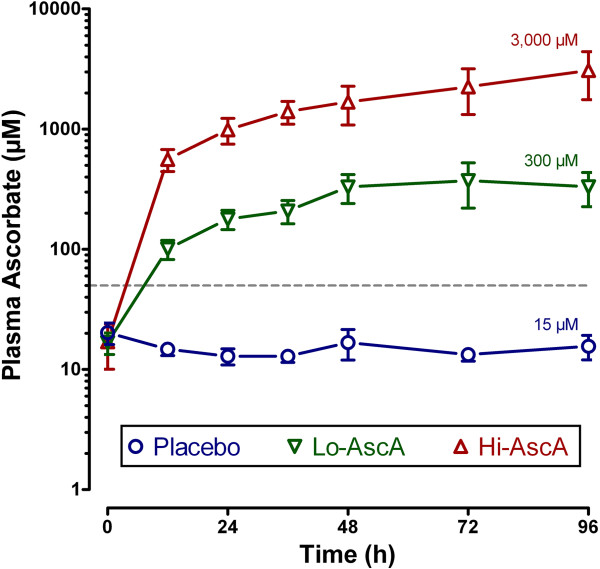
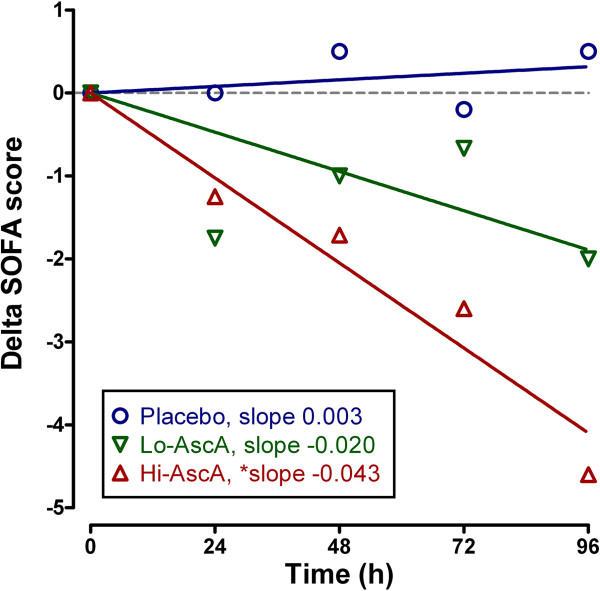
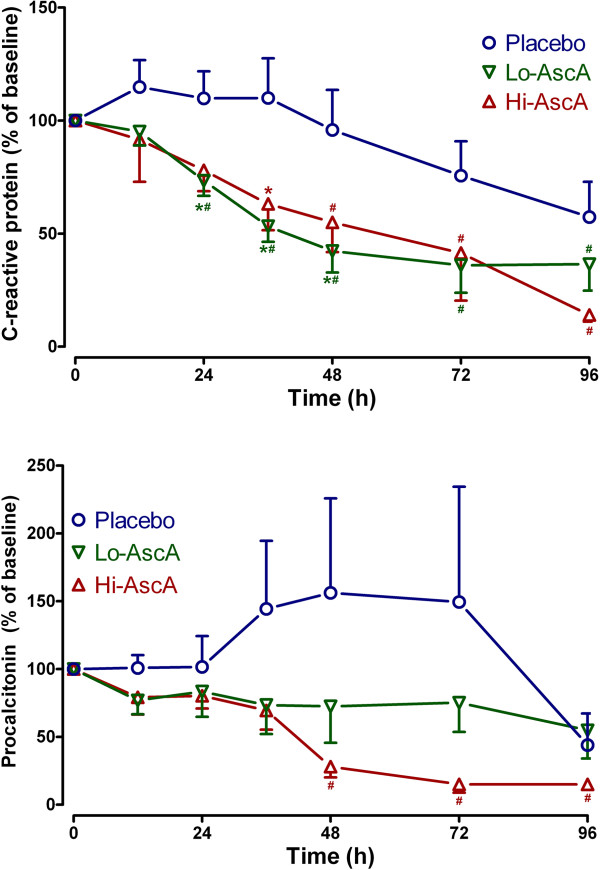
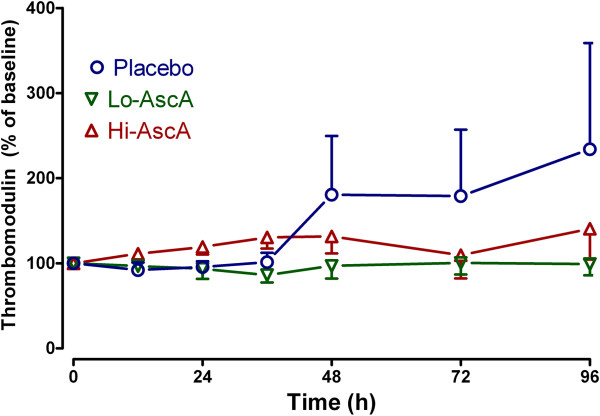
BACKGROUND: Parenterally administered ascorbic acid modulates sepsis-induced inflammation and coagulation in experimental animal models. The objective of this randomized, double-blind, placebo-controlled, phase I trial was to determine the safety of intravenously infused ascorbic acid in patients with severe sepsis. METHODS: Twenty-four patients with severe sepsis in the medical intensive care unit were randomized 1:1:1 to receive intravenous infusions every six hours for four days of ascorbic acid: Lo-AscA (50 mg/kg/24 h, n = 8), or Hi-AscA (200 mg/kg/24 h, n = 8), or Placebo (5% dextrose/water, n = 8). The primary end points were ascorbic acid safety and tolerability, assessed as treatment-related adverse-event frequency and severity. Patients were monitored for worsened arterial hypotension, tachycardia, hypernatremia, and nausea or vomiting. In addition Sequential Organ Failure Assessment (SOFA) scores and plasma levels of ascorbic acid, C-reactive protein, procalcitonin, and thrombomodulin were monitored. RESULTS: Mean plasma ascorbic acid levels at entry for the entire cohort were 17.9 ± 2.4 μM (normal range 50-70 μM). Ascorbic acid infusion rapidly and significantly increased plasma ascorbic acid levels. No adverse safety events were observed in ascorbic acid-infused patients. Patients receiving ascorbic acid exhibited prompt reductions in SOFA scores while placebo patients exhibited no such reduction. Ascorbic acid significantly reduced the proinflammatory biomarkers C-reactive protein and procalcitonin. Unlike placebo patients, thrombomodulin in ascorbic acid infused patients exhibited no significant rise, suggesting attenuation of vascular endothelial injury. CONCLUSIONS: Intravenous ascorbic acid infusion was safe and well tolerated in this study and may positively impact the extent of multiple organ failure and biomarkers of inflammation and endothelial injury. TRIAL REGISTRATION: ClinicalTrials.gov identifier NCT01434121.
Overview
The claims and statistics of this paper haven’t been checked yet.
Free: it reads the open-access text and checks the first 5 claims that cite a source we can check. Create a free account to check every claim.
Integrity signals
Registry
Cites
Statistics
Figures
Verification
Claims the paper makes
The claims and statistics of this paper haven’t been checked yet.
Free: it reads the open-access text and checks the first 5 claims that cite a source we can check. Create a free account to check every claim.
Claims other papers make about this one
Each is checked against this paper’s own text: does it say what the citing paper says it does?
The source backs part of the claim, not all of it — or backs it for a different population, condition or comparison.
In the citing paper
“First, CITRIS-ALI as proposed was based on a previously performed phase 1 safety trial of vitamin C administered to patients in the very early stages of severe sepsis, not ARDS.15”
From Effect of Vitamin C Infusion on Organ Failure and Biomarkers of Inflammation and Vascular Injury in Patients With Sepsis and Severe Acute Respiratory Failure (2019) · cites this paper as [15]
Experimental — accuracy not yet measuredThe source backs part of the claim, not all of it — or backs it for a different population, condition or comparison.
In the citing paper
“The one study in septic patients included in this meta-analysis showed a positive impact of vitamin C on the extent of organ failure, biomarkers of inflammation and endothelial injury [82].”
From Nutrition in Sepsis: A Bench-to-Bedside Review. (2020) · cites this paper as [82]
Experimental — accuracy not yet measuredThe cited source says what the claim attributes to it.
In the citing paper
“Delayed quantification of these biomarkers in CITRIS-ALI compared with early vitamin C infusion in severe sepsis may explain results discordant with those of previous studies of vitamin C in severe sepsis.15”
From Effect of Vitamin C Infusion on Organ Failure and Biomarkers of Inflammation and Vascular Injury in Patients With Sepsis and Severe Acute Respiratory Failure (2019) · cites this paper as [15]
Experimental — accuracy not yet measuredThe cited source says what the claim attributes to it.
In the citing paper
“The selection of the primary outcomes was based on a previously performed phase 1 trial.15”
The check wasn’t confident either way, so it gives no verdict — never disputed.
In the citing paper
“In accordance with these calculations, CITRIS-ALI enrolled 170 patients (85 per group) to allow for 10% dropouts, providing a statistical power of 80%, with an α < .05.”
From Effect of Vitamin C Infusion on Organ Failure and Biomarkers of Inflammation and Vascular Injury in Patients With Sepsis and Severe Acute Respiratory Failure (2019) · cites this paper as [15]
Experimental — accuracy not yet measured
1 more claim about this paper
Create a free account to see every claim other papers make about this one.
Self-check
Percentages, sums and reported differences re-computed from the paper’s own numbers.
The self-check needs the paper’s full text.
Citations
Cites
Harris, P. A., Taylor, R., Thielke, R., Payne, J., Gonzalez, N., & Conde, J. G. (2009) · Journal of Biomedical Informatics · doi:10.1016/j.jbi.2008.08.010 · Cited by 51,384 · cited 5×
“Patients were screened and enrolled following admission to the Medical Respiratory Intensive Care Unit in the VCU Medical Center, Richmond, Virginia.”
MethodInfluentialVincent, J. L., Moreno, R., Takala, J., Willatts, S., De Mendonça, A., Bruining, H., Reinhart, C. K., Suter, P. M., & Thijs, L. G. (1996) · Intensive Care Medicine · doi:10.1007/bf01709751 · Cited by 11,674
The epidemiology of sepsis in the United States from 1979 through 2000
Martin, G. S., Mannino, D. M., Eaton, S., & Moss, M. (2003) · New England Journal of Medicine · doi:10.1056/nejmoa022139 · Cited by 5,841
Serial Evaluation of the SOFA Score to Predict Outcome in Critically Ill Patients
Ferreira, F. L. (2001) · JAMA · doi:10.1001/jama.286.14.1754 · Cited by 2,862
Sepsis in European intensive care units: Results of the SOAP study*
Vincent, J.-L., Sakr, Y., Sprung, C. L., Ranieri, V. M., Reinhart, K., Gerlach, H., Moreno, R., Carlet, J., Le Gall, J.-R., & Payen, D. (2006) · Critical Care Medicine · doi:10.1097/01.ccm.0000194725.48928.3a · Cited by 2,836 · cited 1×
“Tens of thousands of lives are lost across the world annually due to severe sepsis [1,38-40].”
BackgroundDrotrecogin Alfa (Activated) in Adults with Septic Shock
Ranieri, V. M., Thompson, B. T., Barie, P. S., Dhainaut, J.-F., Douglas, I. S., Finfer, S., Gårdlund, B., Marshall, J. C., Rhodes, A., Artigas, A., et al. (2012) · New England Journal of Medicine · doi:10.1056/nejmoa1202290 · Cited by 1,309
Moreno, R., Vincent, J.-L., Matos, R., Mendonça, A., Cantraine, F., Thijs, L., Takala, J., Sprung, C., Antonelli, M., Bruining, H., et al. (1999) · Intensive Care Medicine · doi:10.1007/s001340050931 · Cited by 1,058
Vitamin C pharmacokinetics: Implications for oral and intravenous use
Padayatty, S. J., Sun, H., Wang, Y., Riordan, H. D., Hewitt, S. M., Katz, A., Wesley, R. A., & Levine, M. (2004) · Annals of Internal Medicine · doi:10.7326/0003-4819-140-7-200404060-00010 · Cited by 992 · cited 2×
“Padayatty and colleagues showed that high-level ascorbic acid plasma concentrations could only be achieved by intravenous administration [15].”
BackgroundRandomized, Prospective Trial of Antioxidant Supplementation in Critically Ill Surgical Patients
Nathens, A. B., Neff, M. J., Jurkovich, G. J., Klotz, P., Farver, K., Ruzinski, J. T., Radella, F., Garcia, I., & Maier, R. V. (2002) · Annals of Surgery · doi:10.1097/00000658-200212000-00014 · Cited by 536
C-Reactive Protein Levels Correlate With Mortality and Organ Failure in Critically Ill Patientsa
Lobo, S. M. A., Lobo, F. R. M., Bota, D. P., Lopes-Ferreira, F., Soliman, H. M., Meélot, C., & Vincent, J.-L. (2003) · Chest · doi:10.1378/chest.123.6.2043 · Cited by 448 · cited 1×
“reported that patients with CRP levels greater than 10 mg/dL at ICU admission exhibited significantly higher rates of multiple organ failure as well as higher mortality rates [34].”
Background
Research works printed but not linked: 3
- Sawyer MAJ, Mike JJ, Chavin K: Antioxidant therapy and survival in ARDS [abstract]. Crit Care Med. 1989, 17: S153-
- Fowler AA, Fisher BJ, DeWilde C, Priday A, Syed A, Farthing CA, Larus TL, Knowlson S, Natarajan R: Parenteral vitamin C attenuates markers of organ injury and inflammation in severe sepsis [abstract]. Am J Respir Crit Care Med. 2012, 185 (2012): A6718-
- Urbaniak GC, Plous S: Research randomizer (version 3.0). 2010, http://www.randomizer.org ,
Cited by
ESPEN guideline on clinical nutrition in the intensive care unit.
Singer, P., Blaser, A. R., Berger, M. M., Alhazzani, W., Calder, P. C., Casaer, M. P., Hiesmayr, M., Mayer, K., Montejo, J. C., Pichard, C., et al. (2019) · Clinical Nutrition · doi:10.1016/j.clnu.2018.08.037 · Cited by 2,904
“Further trials are ongoing [292]: in 24 patients randomized to vitamin C doses of 50e200 mg/kg/kg or placebo, no adverse safety events were observed in ascorbic acid-infused patients.”
Weiss, S. L., Peters, M. J., Alhazzani, W., Agus, M. S. D., Flori, H. R., Inwald, D. P., Nadel, S., Schlapbach, L. J., Tasker, R. C., Argent, A. C., et al. (2020) · Pediatric Critical Care Medicine · doi:10.1097/pcc.0000000000002198 · Cited by 1,228
Acute respiratory distress syndrome
Meyer, N. J., Gattinoni, L., & Calfee, C. S. (2021) · The Lancet · doi:10.1016/s0140-6736(21)00439-6 · Cited by 1,144
Hydrocortisone, Vitamin C, and Thiamine for the Treatment of Severe Sepsis and Septic Shock
Marik, P. E., Khangoora, V., Rivera, R., Hooper, M. H., & Catravas, J. (2017) · Chest · doi:10.1016/j.chest.2016.11.036 · Cited by 887
Fowler, A. A., Truwit, J. D., Hite, R. D., Morris, P. E., DeWilde, C., Priday, A., Fisher, B., Thacker, L. R., Natarajan, R., Brophy, D. F., et al. (2019) · JAMA · doi:10.1001/jama.2019.11825 · Cited by 836
Self-citationVitamin C: The known and the unknown and Goldilocks
Padayatty, S., & Levine, M. (2016) · Oral Diseases · doi:10.1111/odi.12446 · Cited by 753
Weiss, S. L., Peters, M. J., Alhazzani, W., Agus, M. S. D., Flori, H. R., Inwald, D. P., Nadel, S., Schlapbach, L. J., Tasker, R. C., Argent, A. C., et al. (2020) · Intensive Care Medicine · doi:10.1007/s00134-019-05878-6 · Cited by 606
Berger, M. M., Shenkin, A., Schweinlin, A., Amrein, K., Augsburger, M., Biesalski, H.-K., Bischoff, S. C., Casaer, M. P., Gundogan, K., Lepp, H.-L., et al. (2022) · Clinical Nutrition · doi:10.1016/j.clnu.2022.02.015 · Cited by 615
Fujii, T., Luethi, N., Young, P. J., Frei, D. R., Eastwood, G. M., French, C. J., Deane, A. M., Shehabi, Y., Hajjar, L. A., Oliveira, G., et al. (2020) · JAMA · doi:10.1001/jama.2019.22176 · Cited by 466
Carr, A. C., Rosengrave, P. C., Bayer, S., Chambers, S., Mehrtens, J., & Shaw, G. M. (2017) · Critical Care · doi:10.1186/s13054-017-1891-y · Cited by 413
“Furthermore, administration of vitamin C to septic patients has been shown to lower C-reactive protein and other pro-inflammatory biomarkers, as well as to decrease organ failure [45, 46].”
BackgroundImpact of Childhood Malnutrition on Host Defense and Infection
Ibrahim, M. K., Zambruni, M., Melby, C. L., & Melby, P. C. (2017) · Clinical Microbiology Reviews · doi:10.1128/cmr.00119-16 · Cited by 344
Intravenous Vitamin C in Adults with Sepsis in the Intensive Care Unit
Lamontagne, F., Masse, M.-H., Menard, J., Sprague, S., Pinto, R., Heyland, D. K., Cook, D. J., Battista, M.-C., Day, A. G., Guyatt, G. H., et al. (2022) · New England Journal of Medicine · doi:10.1056/nejmoa2200644 · Cited by 350
The Pharmacokinetics of Vitamin C
Lykkesfeldt, J., & Tveden-Nyborg, P. (2019) · Nutrients · doi:10.3390/nu11102412 · Cited by 344
“Whether reestablishing normal vitC status in critically ill patients has a significant clinical impact on disease prognosis remains to be established, but promising results are emerging [113,114] and controlled trials are under way.”
BackgroundThe effects of sepsis on endothelium and clinical implications
Dolmatova, E. V., Wang, K., Mandavilli, R., & Griendling, K. K. (2021) · Cardiovascular Research · doi:10.1093/cvr/cvaa070 · Cited by 317
Role of Oxidative Stress and Mitochondrial Dysfunction in Sepsis and Potential Therapies
Mantzarlis, K., Tsolaki, V., & Zakynthinos, E. (2017) · Oxidative Medicine and Cellular Longevity · doi:10.1155/2017/5985209 · Cited by 311
“In a phase I safety trial of intravenous AA in patients with severe sepsis, infusion was safe and well tolerated [75].”
BackgroundEffect of high-dose Ascorbic acid on vasopressor′s requirement in septic shock
Khalili, H., Zabet, M., Mohammadi, M., & Ramezani, M. (2016) · Journal of Research in Pharmacy Practice · doi:10.4103/2279-042x.179569 · Cited by 287
“The dose and duration of intervention were selected based on the literature review.[15,17,19,20] Each dose of ascorbic acid was diluted in 50 ml of dextrose 5% solution and was administered as intravenous infusion over 30 min.”
InfluentialProtective Role for Antioxidants in Acute Kidney Disease
Dennis, J., & Witting, P. (2017) · Nutrients · doi:10.3390/nu9070718 · Cited by 291
“Also, a recent phase I study of the safety of pharmacological doses of parenteral vitamin C, demonstrated significantly reduced multiple organ failure and pro-inflammation biomarkers in severe sepsis [146].”
BackgroundCurrent status of potential therapeutic candidates for the COVID-19 crisis
Zhang, J., Xie, B., & Hashimoto, K. (2020) · Brain, Behavior, and Immunity · doi:10.1016/j.bbi.2020.04.046 · Cited by 283
Vitamin C Can Shorten the Length of Stay in the ICU: A Meta-Analysis
Hemilä, H., & Chalker, E. (2019) · Nutrients · doi:10.3390/nu11040708 · Cited by 257
“Trial [Reference] Country Settings N Route Vitamin CAdministration Control Group Time Dose (g/day) Duration (days) ICU Stay (days) Ventilation (hours) Mirmohammadsadeghi 2018 [121] Iran Cardiac 314 iv 1 4 2.2 Donovan 2012 [112] USA Cardiac 304 po 2 5 1.9 Bjordahl 2012 [111] USA Cardiac 185 po 2 5 4.3 33.6 Papoulidis 2…”
BackgroundMethodResultInfluentialCarr, A. C., Shaw, G. M., Fowler, A. A., & Natarajan, R. (2015) · Critical Care · doi:10.1186/s13054-015-1131-2 · Cited by 253
“30 min every 6 h for 96 h in 50 ml of 5 % dextrose and water [12].”
BackgroundMethodInfluentialSelf-citationPilot trial of high-dose vitamin C in critically ill COVID-19 patients
Zhang, J., Rao, X., Li, Y., Zhu, Y., Liu, F., Guo, G., Luo, G., Meng, Z., De Backer, D., Xiang, H., et al. (2021) · Annals of Intensive Care · doi:10.1186/s13613-020-00792-3 · Cited by 253
Moskowitz, A., Huang, D. T., Hou, P. C., Gong, J., Doshi, P. B., Grossestreuer, A. V., Andersen, L. W., Ngo, L., Sherwin, R. L., Berg, K. M., et al. (2020) · JAMA · doi:10.1001/jama.2020.11946 · Cited by 253
Antioxidants in Translational Medicine
Schmidt, H. H. H. W., Stocker, R., Vollbracht, C., Paulsen, G., Riley, D., Daiber, A., & Cuadrado, A. (2015) · Antioxidants & Redox Signaling · doi:10.1089/ars.2015.6393 · Cited by 228
“A recent phase-I study investigating primarily safety of high-dose vitamin C infusion reported also positive effects on inflammation and endothelial function (39).”
BackgroundEgi, M., Ogura, H., Yatabe, T., Atagi, K., Inoue, S., Iba, T., Kakihana, Y., Kawasaki, T., Kushimoto, S., Kuroda, Y., et al. (2021) · Journal of Intensive Care · doi:10.1186/s40560-021-00555-7 · Cited by 224
Schönrich, G., Raftery, M. J., & Samstag, Y. (2020) · Advances in Biological Regulation · doi:10.1016/j.jbior.2020.100741 · Cited by 220
Antioxidant Vitamins and Trace Elements in Critical Illness
Koekkoek, W. A. C. (., & van Zanten, A. R. H. (2016) · Nutrition in Clinical Practice · doi:10.1177/0884533616653832 · Cited by 203
Vitamin C—An Adjunctive Therapy for Respiratory Infection, Sepsis and COVID-19
Holford, P., Carr, A. C., Jovic, T. H., Ali, S. R., Whitaker, I. S., Marik, P. E., & Smith, A. D. (2020) · Nutrients · doi:10.3390/nu12123760 · Cited by 196
“Severe sepsis (n = 24) IV vitamin C (4 day): ↓ systemic organ failure score ↓ C-reactive protein, procalcitonin, thrombomodulin [30] • Placebo (n = 8) 0 mg/kg bw/day”
Iglesias, J., Vassallo, A. V., Patel, V. V., Sullivan, J. B., Cavanaugh, J., & Elbaga, Y. (2020) · Chest · doi:10.1016/j.chest.2020.02.049 · Cited by 187
The Emerging Role of Vitamin C as a Treatment for Sepsis
Kashiouris, M. G., L’Heureux, M., Cable, C. A., Fisher, B. J., Leichtle, S. W., & Fowler, A. A. (2020) · Nutrients · doi:10.3390/nu12020292 · Cited by 177
Self-citationCerullo, G., Negro, M., Parimbelli, M., Pecoraro, M., Perna, S., Liguori, G., Rondanelli, M., Cena, H., & D’Antona, G. (2020) · Frontiers in Immunology · doi:10.3389/fimmu.2020.574029 · Cited by 158
Vitamin C promotes wound healing through novel pleiotropic mechanisms
Mohammed, B. M., Fisher, B. J., Kraskauskas, D., Ward, S., Wayne, J. S., Brophy, D. F., Fowler, A. A., Yager, D. R., & Natarajan, R. (2016) · International Wound Journal · doi:10.1111/iwj.12484 · Cited by 169
“We and others have shown that parenteral VitC is advantageous in bypassing these limitations to produce and sustain adequate plasma levels (30,31).”
BackgroundSelf-citationVitamin C for the treatment of sepsis: The scientific rationale
Marik, P. E. (2018) · Pharmacology & Therapeutics · doi:10.1016/j.pharmthera.2018.04.007 · Cited by 164
“No adverse effects were noted with the very high dosages of vitamin C. Fowler et al. performed a pilot study in 24 patients with severe sepsis and septic shock (Fowler et al., 2014).”
BackgroundInfluentialVitamin C Pharmacokinetics in Critically Ill Patients
de Grooth, H.-J., Manubulu-Choo, W.-P., Zandvliet, A. S., Spoelstra - de Man, A. M. E., Girbes, A. R., Swart, E. L., & Oudemans-van Straaten, H. M. (2018) · Chest · doi:10.1016/j.chest.2018.02.025 · Cited by 164
Hwang, S. Y., Ryoo, S. M., Park, J. E., Jo, Y. H., Jang, D., Suh, G. J., Kim, T., Kim, Y., Kim, S., Cho, H., et al. (2020) · Intensive Care Medicine · doi:10.1007/s00134-020-06191-3 · Cited by 176
JamaliMoghadamSiahkali, S., Zarezade, B., Koolaji, S., SeyedAlinaghi, S., Zendehdel, A., Tabarestani, M., Sekhavati Moghadam, E., Abbasian, L., Dehghan Manshadi, S. A., Salehi, M., et al. (2021) · European Journal of Medical Research · doi:10.1186/s40001-021-00490-1 · Cited by 156
Moskowitz, A. L., Andersen, L. W., Huang, D. T., Berg, K. M., Grossestreuer, A. V., Marik, P. E., Sherwin, R. L., Hou, P. C., Becker, L. B., Cocchi, M. N., et al. (2018) · Critical Care · doi:10.1186/s13054-018-2217-4 · Cited by 169
“There also appeared to be a dose–response relationship, with patients who received higher dose ascorbic acid having more rapid clinical improvement [9].”
BackgroundResultOverview of the possible role of vitamin C in management of COVID-19
Abobaker, A., Alzwi, A., & Alraied, A. H. A. (2020) · Pharmacological Reports · doi:10.1007/s43440-020-00176-1 · Cited by 178
The Emerging Role of Vitamin C in the Prevention and Treatment of COVID-19
Carr, A. C., & Rowe, S. (2020) · Nutrients · doi:10.3390/nu12113286 · Cited by 155
Elke, G., Hartl, W. H., Kreymann, K. G., Adolph, M., Felbinger, T. W., Graf, T., de Heer, G., Heller, A. R., Kampa, U., Mayer, K., et al. (2019) · Clinical Nutrition ESPEN · doi:10.1016/j.clnesp.2019.05.002 · Cited by 144
Liu, F., Zhu, Y., Zhang, J., Li, Y., & Peng, Z. (2020) · BMJ Open · doi:10.1136/bmjopen-2020-039519 · Cited by 147
“15 36 Regarding patients with sepsis or ARDS, a phase I trial of IVC in patients with severe sepsis 37 reported that VC significantly reduced multiorgan failure scores and circulating injury biomarker levels.”
Wesselink, E., Koekkoek, W. A. C., Grefte, S., Witkamp, R. F., & van Zanten, A. R. H. (2018) · Clinical Nutrition · doi:10.1016/j.clnu.2018.08.032 · Cited by 156
Vollbracht, C., & Kraft, K. (2022) · Frontiers in Pharmacology · doi:10.3389/fphar.2022.899198 · Cited by 168
“Studies in critically ill patients observe that a sufficiently high iv vitamin C dose (Fowler et al., 2014), administered early (Frommelt et al.”
BackgroundMethodZhao, S., Chen, F., Yin, Q., Wang, D., Han, W., & Zhang, Y. (2020) · Frontiers in Physiology · doi:10.3389/fphys.2020.571810 · Cited by 151
Nutrition in Sepsis: A Bench-to-Bedside Review.
De Waele, E., Malbrain, M. L. N. G., & Spapen, H. (2020) · Nutrients · doi:10.3390/nu12020395 · Cited by 135
“The one study in septic patients included in this meta-analysis showed a positive impact of vitamin C on the extent of organ failure, biomarkers of inflammation and endothelial injury [82].”
ResultCombined Treatment With Hydrocortisone, Vitamin C, and Thiamine for Sepsis and Septic Shock
Chang, P., Liao, Y., Guan, J., Guo, Y., Zhao, M. F., Hu, J., Zhou, J., Wang, H., Cen, Z., Tang, Y., et al. (2020) · CHEST Journal · doi:10.1016/j.chest.2020.02.065 · Cited by 163
Lipidomics in translational research and the clinical significance of lipid-based biomarkers
Stephenson, D., Hoeferlin, L. A., & Chalfant, C. E. (2017) · Translational research · doi:10.1016/j.trsl.2017.06.006 · Cited by 153
Lin, Y., Xu, Y., & Zhang, Z. (2020) · Inflammation · doi:10.1007/s10753-020-01233-w · Cited by 139
“[128] Likewise, an RCT comprising 28 patients with septic shock demonstrated that intravenous ascorbic acid infusion (25 mg/kg/6 h for 72 h) significantly reduced the dose and duration of vasopressors and 28-day mortality.”
BackgroundVitamin C supplementation in the critically ill patient
Berger, M. M., & Oudemans-van Straaten, H. M. (2015) · Current Opinion in Clinical Nutrition and Metabolic Care · doi:10.1097/mco.0000000000000148 · Cited by 133
Vitamin C: should we supplement?
Spoelstra-de Man, A. M. E., Elbers, P. W. G., & Oudemans-Van Straaten, H. M. (2018) · Current Opinion in Critical Care · doi:10.1097/mcc.0000000000000510 · Cited by 129
SARS-CoV-2 Mediated Endothelial Dysfunction: The Potential Role of Chronic Oxidative Stress
Chang, R. P., Mamun, A., Dominic, A., & Le, N. (2021) · Frontiers in Physiology · doi:10.3389/fphys.2020.605908 · Cited by 147
Kim, W.-Y., Jo, E.-J., Eom, J. S., Mok, J., Kim, M.-H., Kim, K. U., Park, H.-K., Lee, M. K., & Lee, K. (2018) · Journal of Critical Care · doi:10.1016/j.jcrc.2018.07.004 · Cited by 130
“To the best of our knowledge, this study confirms and expands the findings of previous studies that suggest that adjunct intravenous vitamin C, corticosteroid, and thiamine therapy improve the survival and outcomes of patients with critical illness [8-10, 15-17, 34].”
BackgroundResultHemilä, H., & Chalker, E. (2020) · Journal of Intensive Care · doi:10.1186/s40560-020-0432-y · Cited by 131
Marik, P. E. (2018) · Nutrients · doi:10.3390/nu10111762 · Cited by 139
Glucocorticoids in Sepsis: To Be or Not to Be
Vandewalle, J., & Libert, C. (2020) · Frontiers in Immunology · doi:10.3389/fimmu.2020.01318 · Cited by 132
Vitamin C in the Treatment of COVID-19
Milani, G. P., Macchi, M., & Guz‐Mark, A. (2021) · Nutrients · doi:10.3390/nu13041172 · Cited by 124
Kumar, S., Saxena, J., Srivastava, V. K., Kaushik, S., Singh, H., Abo‐EL‐Sooud, K., Abdel‐Daim, M. M., Jyoti, A., & Saluja, R. (2022) · Vaccines · doi:10.3390/vaccines10101575 · Cited by 145
Vitamin therapy in critically ill patients: focus on thiamine, vitamin C, and vitamin D
Amrein, K., Oudemans-van Straaten, H. M., & Berger, M. M. (2018) · Intensive Care Medicine · doi:10.1007/s00134-018-5107-y · Cited by 114
Antioxidant, anti-inflammatory and immunomodulatory roles of vitamins in COVID-19 therapy
Pisoschi, A. M., Pop, A., Iordache, F., Stanca, L., Geicu, O. I., Bilteanu, L., & Serban, A. I. (2022) · European Journal of Medicinal Chemistry · doi:10.1016/j.ejmech.2022.114175 · Cited by 108
Making sense of early high-dose intravenous vitamin C in ischemia/reperfusion injury
de Man, A., Elbers, P., & Straaten, H. M. O. (2018) · Critical Care · doi:10.1186/s13054-018-1996-y · Cited by 131
“vitamin C was associated with earlier recovery from organ failure in a small randomized controlled trial (RCT) with the most pronounced effect in the highest dose group [3], and with”
BackgroundMethodFujii, T., Salanti, G., Belletti, A., Bellomo, R., Carr, A. C., Furukawa, T. A., Luethi, N., Luo, Y., Putzu, A., Sartini, C., et al. (2021) · Intensive Care Medicine · doi:10.1007/s00134-021-06558-0 · Cited by 118
Dalfino, L., Puntillo, F., Ondok, M. J. M., Mosca, A., Monno, R., Coppolecchia, S., Spada, M. L., Bruno, F., & Brienza, N. (2015) · Clinical Infectious Diseases · doi:10.1093/cid/civ717 · Cited by 108
“vention of new organ failures, by mitigating the microcirculatory impairment induced by oxidative injury [37, 38].”
Bozonet, S., Carr, A., Pullar, J., & Vissers, M. (2015) · Nutrients · doi:10.3390/nu7042574 · Cited by 102
“in-depth investigations into the effect of vitamin C on neutrophil function are warranted, particularly in individuals with depleted vitamin C status, such as critically ill patients [55,56].”
Wani, S. J., Mufti, S. A., Jan, R. A., Shah, S. U., Qadri, S. M., Khan, U. H., Bagdadi, F. S., Mehfooz, N., & Koul, P. A. (2020) · Scandinavian Journal of Infectious Diseases · doi:10.1080/23744235.2020.1718200 · Cited by 104
“Treatment of vitamin c deficiency has been shown to decrease SOFA scores, procalcitonin and C-reactive protein which can translate to decreases in organ failure [39].”
BackgroundFowler III, A. A., Kim, C., Lepler, L., Malhotra, R., Debesa, O., Natarajan, R., Fisher, B. J., Syed, A., DeWilde, C., Priday, A., et al. (2017) · World Journal of Critical Care Medicine · doi:10.5492/wjccm.v6.i1.85 · Cited by 99
“Vitamin C dosages utilized in the treatment of the patient we describe in this case report arose from our previous human studies, infusing high dose intravenous vitamin C into critically ill patients with severe sepsis [18] and in our preclinical studies [19] [20] [21] .”
BackgroundMethodSelf-citationAbellán-Llobregat, A., González-Gaitán, C., Vidal, L., Canals, A., & Morallón, E. (2018) · Biosensors and Bioelectronics · doi:10.1016/j.bios.2018.02.047 · Cited by 92
Challenges in the management of septic shock: a narrative review
Backer, D. D., Cecconi, M., Lipman, J., Machado, F. R., Myatra, S. N., Ostermann, M., Perner, A., Teboul, J., Vincent, J., & Walley, K. R. (2019) · Intensive Care Medicine · doi:10.1007/s00134-019-05544-x · Cited by 102
Possible application of high-dose vitamin C in the prevention and therapy of coronavirus infection
Hoang, B. X., Shaw, G., Fang, W., & Han, B. (2020) · Journal of Global Antimicrobial Resistance · doi:10.1016/j.jgar.2020.09.025 · Cited by 90
A simple method for plasma total vitamin C analysis suitable for routine clinical laboratory use
Robitaille, L., & Hoffer, L. J. (2015) · Nutrition Journal · doi:10.1186/s12937-016-0158-9 · Cited by 88
Endothelial Activation and Microcirculatory Disorders in Sepsis
Raia, L., & Zafrani, L. (2022) · Frontiers in Medicine · doi:10.3389/fmed.2022.907992 · Cited by 113
Gao, D., Xu, M., Wang, G., Lv, J., Ma, X., Guo, Y., Zhang, D., Yang, H., Jiang, W., Deng, F., et al. (2021) · Aging · doi:10.18632/aging.202557 · Cited by 92
Egi, M., Ogura, H., Yatabe, T., Atagi, K., Inoue, S., Iba, T., Kakihana, Y., Kawasaki, T., Kushimoto, S., Kuroda, Y., et al. (2021) · Acute Medicine & Surgery · doi:10.1002/ams2.659 · Cited by 96
Litwak, J., Cho, N. H., Nguyen, H., Moussavi, K., & Bushell, T. (2019) · Journal of Clinical Medicine · doi:10.3390/jcm8040478 · Cited by 85
“Treatment of hypovitaminosis has been shown to decrease SOFA scores, PCT, C-reactive protein, and thrombomodulin levels, which can translate to decreases in organ failure, inflammation, and endothelial injury [19].”
BackgroundRawat, D., Roy, A., Maitra, S., Gulati, A., Khanna, P., & Baidya, D. K. (2021) · Diabetes & Metabolic Syndrome Clinical Research & Reviews · doi:10.1016/j.dsx.2021.102324 · Cited by 93
Wang, Y., Lin, H., Lin, B., & Lin, J. (2019) · Annals of Intensive Care · doi:10.1186/s13613-019-0532-9 · Cited by 85
“Ra nd om se qu en ce g en er at ion (s ele cti on b ias ) Ferrón-Celma 2009 + Fowler 2014 + Galley 1997 ?”
Vitamin C: The next Step in Sepsis Management?
Teng, J., Pourmand, A., & Mazer-Amirshahi, M. (2018) · Journal of Critical Care · doi:10.1016/j.jcrc.2017.09.031 · Cited by 82
Kuhn, S.-O., Meissner, K., Mayes, L. M., & Bartels, K. (2018) · Current Opinion in Anaesthesiology · doi:10.1097/aco.0000000000000549 · Cited by 82
“Since the beginning of the last century, it is known that in critically ill patients, protective antioxidants, and vitamin C (ascorbic acid) levels in particular, are low [19,20].”
Menon, V. P., Mohamed, Z. U., Prasannan, P., Moni, M., Edathadathil, F., Prasanna, P., Menon, A., Balachandran, S., Greeshma, C., Sathyapalan, D. T., et al. (2020) · Indian Journal of Critical Care Medicine · doi:10.5005/jp-journals-10071-23517 · Cited by 113
“Enterococcus 6 (8) 4 (67) 3 (50) 3 (50)”
InfluentialHarm of IV High-Dose Vitamin C Therapy in Adult Patients: A Scoping Review
Yanase, F., Fujii, T., Naorungroj, T., Belletti, A., Luethi, N., Carr, A. C., Young, P. J., & Bellomo, R. (2020) · Critical Care Medicine · doi:10.1097/ccm.0000000000004396 · Cited by 89
The relationship between vitamin C status, the gut-liver axis, and metabolic syndrome
Traber, M. G., Buettner, G. R., & Bruno, R. S. (2018) · Redox Biology · doi:10.1016/j.redox.2018.101091 · Cited by 87
Chavarría, A. P., Vázquez, R. R. V., Domínguez‐Cherit, G., Bello, H. H., Suastegui, H. C., Moreno-Castañeda, L., Estrada, G., Hernández, F., González-Marcos, O., Saucedo‐Orozco, H., et al. (2021) · Computational and Structural Biotechnology Journal · doi:10.1016/j.csbj.2021.02.009 · Cited by 83
“Low levels of Vit C are present in patients with septic shock [43].”
Putzu, A., Daems, A.-M., Lopez-Delgado, J. C., Giordano, V. F., & Landoni, G. (2019) · Critical Care Medicine · doi:10.1097/ccm.0000000000003700 · Cited by 77
Meduri, G. U., & Chrousos, G. P. (2020) · Frontiers in Endocrinology · doi:10.3389/fendo.2020.00161 · Cited by 84
“In a phase I safety trial, intravenous ascorbic acid infusion was safe, well-tolerated, and associated with improvement in multiple organ dysfunction and decreased biomarkers of inflammation and endothelial injury (281).”
BackgroundVitamin C supplementation in the critically ill: A systematic review and meta-analysis
Zhang, M., & Jativa, D. F. (2018) · SAGE Open Medicine · doi:10.1177/2050312118807615 · Cited by 76
Refractory septic shock: our pragmatic approach
Nandhabalan, P., Ioannou, N., Meadows, C. I. S., & Wyncoll, D. L. A. (2018) · Critical Care · doi:10.1186/s13054-018-2144-4 · Cited by 82
DGEM-Leitlinie: „Klinische Ernährung in der Intensivmedizin“
Elke, G., Hartl, W. H., Kreymann, K. G., Adolph, M., Felbinger, T. W., Graf, T., de Heer, G., Heller, A. R., Kampa, U., Mayer, K., et al. (2018) · Aktuelle Ernährungsmedizin · doi:10.1055/a-0713-8179 · Cited by 86
ESPEN practical short micronutrient guideline
Berger, M. M., Shenkin, A., Dizdar, O. S., Amrein, K., Augsburger, M. P., Biesalski, H. K., Bischoff, S. C., Casaer, M. P., Gündoğan, K., Lepp, H.-L., et al. (2024) · Clinical Nutrition · doi:10.1016/j.clnu.2024.01.030 · Cited by 93
Vitamin C to Improve Organ Dysfunction in Cardiac Surgery Patients—Review and Pragmatic Approach
Hill, A., Borosch, S., Benstoem, C., Neubauer, C., Meybohm, P., Langlois, P. L., Adhikari, N. K. J., Heyland, D. K., & Stoppe, C. (2018) · Nutrients · doi:10.3390/nu10080974 · Cited by 85
“Fowler et al observed a lower rate of organ dysfunction as assessed by the sequential organ failure assessment (SOFA) score and a reduced 28-day mortality after the application of vitamin C in patients with sepsis and multi-organ-failure, whereas an influence on the ICU-LOS was not observed [51].”
BackgroundMethodHager, D. N., Hooper, M. H., Bernard, G. R., Busse, L. W., Ely, E. W., Fowler, A. A., Gaieski, D. F., Hall, A. J., Hinson, J. S., Jackson, J. C., et al. (2019) · Trials · doi:10.1186/s13063-019-3254-2 · Cited by 77
Self-citationKim, S. R., Ha, Y. M., Kim, Y. M., Park, E., Kim, J. W., Park, S. W., Kim, H. J., Chung, H., & Chang, K. C. (2015) · Biochemical Pharmacology · doi:10.1016/j.bcp.2015.04.007 · Cited by 73
Reversal of the Pathophysiological Responses to Gram-Negative Sepsis by Megadose Vitamin C
Lankadeva, Y. R., Peiris, R. M., Okazaki, N., Birchall, I. E., Trask-Marino, A. L., Dornom, A., Vale, T. A. M., Evans, R. G., Yanase, F., Bellomo, R., et al. (2020) · Critical Care Medicine · doi:10.1097/ccm.0000000000004770 · Cited by 73
Targeting Oxidative Stress in Septic Acute Kidney Injury: From Theory to Practice
Ow, C. P. C., Trask-Marino, A. L., Betrie, A. H., Evans, R. G., May, C. N., & Lankadeva, Y. R. (2021) · Journal of Clinical Medicine · doi:10.3390/jcm10173798 · Cited by 82
Rosengrave, P., Spencer, E. S., Williman, J. A., Mehrtens, J. E., Morgan, S., Doyle, T., Heyden, K. V. D., Morris, A., Shaw, G. M., & Carr, A. C. (2022) · Critical Care · doi:10.1186/s13054-022-03900-w · Cited by 76
“Various trials administering intravenous vitamin C to patients with sepsis and septic shock have indicated decreased vasopressor requirements [5, 8–10], improved sequential organ failure assessment (SOFA) scores [4, 9], decreased ICU length of stay [8, 11], and decreased mortality [5, 9, 11].”
BackgroundMethodInfluentialMortality in septic patients treated with vitamin C: a systematic meta-analysis
Scholz, S. S., Borgstedt, R., Ebeling, N., Menzel, L. C., Jansen, G., & Rehberg, S. W. (2021) · Critical Care · doi:10.1186/s13054-020-03438-9 · Cited by 76
Belsky, J. B., Wira, C. R., Jacob, V., Sather, J. E., & Lee, P. J. (2018) · Nutrition Research Reviews · doi:10.1017/s0954422418000124 · Cited by 69
Ascorbic acid attenuates endothelial permeability triggered by cell-free hemoglobin
Kuck, J. L., Bastarache, J. A., Shaver, C. M., Fessel, J. P., Dikalov, S., May, J. M., & Ware, L. B. (2017) · Biochemical and Biophysical Research Communications · doi:10.1016/j.bbrc.2017.11.058 · Cited by 70
Parenteral Provision of Micronutrients to Adult Patients: An Expert Consensus Paper
Blaauw, R., Osland, E., Sriram, K., Ali, A., Allard, J. P., Ball, P., Chan, L., Jurewitsch, B., Coughlin, K. L., Manzanares, W., et al. (2019) · Journal of Parenteral and Enteral Nutrition · doi:10.1002/jpen.1525 · Cited by 77
Kim, H.-J., Shaqeel, A., Han, S., Kang, J., Yun, J., Lee, M., Lee, S., Kim, J., Noh, S., Choi, M., et al. (2021) · ACS Applied Materials & Interfaces · doi:10.1021/acsami.1c09879 · Cited by 67
History of scurvy and use of vitamin C in critical illness: A narrative review
Dresen, E., Lee, Z., Hill, A., Notz, Q., Patel, J. J., & Stoppe, C. (2022) · Nutrition in Clinical Practice · doi:10.1002/ncp.10914 · Cited by 78
Usefulness of Antioxidants as Adjuvant Therapy for Septic Shock: A Randomized Clinical Trial
Aisa-Álvarez, A., Soto, M. E., Guarner‐Lans, V., Camarena-Alejo, G., Franco-Granillo, J., Martínez-Rodríguez, E. A., Ávila, R. G., Pech, L. M., & Pérez-Torres, I. (2020) · Medicina · doi:10.3390/medicina56110619 · Cited by 67
“This was related with the severity of organ failure and mortality [17].”
BackgroundResultEvaluating Vitamin C in Septic Shock: A Randomized Controlled Trial of Vitamin C Monotherapy*
Wacker, D. A., Burton, S. L., Berger, J. P., Hegg, A. J., Heisdorffer, J., Wang, Q., Medcraft, E. J., & Reilkoff, R. A. (2022) · Critical Care Medicine · doi:10.1097/ccm.0000000000005427 · Cited by 63
Metadata
- Authors
- Nursing, M. R. I. C. U., Fowler, A. A., Syed, A. A., Knowlson, S., Sculthorpe, R., Farthing, D., DeWilde, C., Farthing, C. A., Larus, T. L., Martin, E., Brophy, D. F., Gupta, S., Fisher, B. J., & Natarajan, R.
- Affiliations
- Virginia Commonwealth University (US)
- Corresponding author
- Fowler, Alpha A
- ORCID
- Venue
- Journal of Translational Medicine
- Published
- 2014-01-31
- Volume
- 12
- Issue
- 1
- Pages
- 32-32
- ISSN
- 1479-5876 (ISSN-L)
- PMC
- PMC3937164
- OpenAlex
- W2152465977
- Semantic Scholar
- 646231fa09c1477bfe965e9d2db97391ffe0d727
- Cited by
- 573
- References
- 38
- Citations by year
- 2026: 16 · 2025: 30 · 2024: 38 · 2023: 52 · 2022: 76 · 2021: 105 · 2020: 94 · 2019: 58 · 2018: 46 · 2017: 26 · 2016: 13 · 2015: 13 · 2014: 4
- FWCI
- 17.39
- Type
- journal article
- Language
- en
- Open access
- gold
- doi.org
- Licence
- cc-by
- creativecommons.org/licenses/by/2.0 (tdm)
- Locations
- Journal of Translational Medicine (publishedVersion, cc-by)
- Europe PMC (PubMed Central) (publishedVersion, cc-by)
- PubMed Central (publishedVersion, cc-by)
- PubMed (publishedVersion)
- VCU Scholars Compass (Virginia Commonwealth University) (submittedVersion, cc-by)
- Funders
- Thomas F. and Kate Miller Jeffress Memorial Trust
- National Institutes of Health (UL1TR000058)
- National Heart, Lung, and Blood Institute (UM1HL116885)
- National Center for Advancing Translational Sciences
- Topics
- Health Sciences › Nursing › Nutrition and Dietetics › Vitamin C and Antioxidants Research
- Health Sciences › Medicine › Critical Care and Intensive Care Medicine › Sepsis Diagnosis and Treatment
- Health Sciences › Nursing › Nutrition and Dietetics › Clinical Nutrition and Gastroenterology
- Keywords
- intravenous ascorbic acid, severe sepsis, vitamin C, drug safety and tolerability, plasma ascorbic acid levels, SOFA score, C-reactive protein, procalcitonin, thrombomodulin, endothelial injury, inflammation, multiple organ failure
- MeSH terms
- Adult, Aged, Aged, 80 and over, Ascorbic Acid, C-Reactive Protein, Calcitonin, Demography, Female, Humans, Infusions, Intravenous, Male, Middle Aged, Multiple Organ Failure, Placebos, Protein Precursors, Biomarkers, Calcitonin Gene-Related Peptide, Thrombomodulin, Sepsis
About these checks
Registry, retraction, Cites and statistics results are computed, not judged, with one exception: a printed reference that no index lists is read once by a model before it counts as a citation error. Claims are extracted by a model and kept only when their quote appears verbatim in the text; each cited source is then checked, with a model’s help, for whether it says what the claim relies on. Those verdicts can be wrong — read the claim’s quote and the cited source before relying on one.
Statistics and arithmetic are recomputed, not judged.
Confidence bands are shown only for fields calibrated on our annotated test set. None is calibrated yet, so no band is shown.
What counts as a claim ›How we measure confidence ›How we check this ›
Are you an author, or do you see a problem with this page? Request a review
Data sources
Bibliographic data: Semantic Scholar, OpenAlex, Crossref.
Contains information from the Semantic Scholar Academic Graph Datasets, made available under the ODC Attribution License (ODC-BY 1.0).
Semantic Scholar’s data is described in: Kinney, R., et al. (2023). The Semantic Scholar Open Data Platform. arXiv:2301.10140.
