

Effect of carbohydrate mouth rinsing on multiple sprint performance
Open accessThe DOI matches its Crossref record; 35 of the 35 references it cites were found in a registry or an index.
Abstract
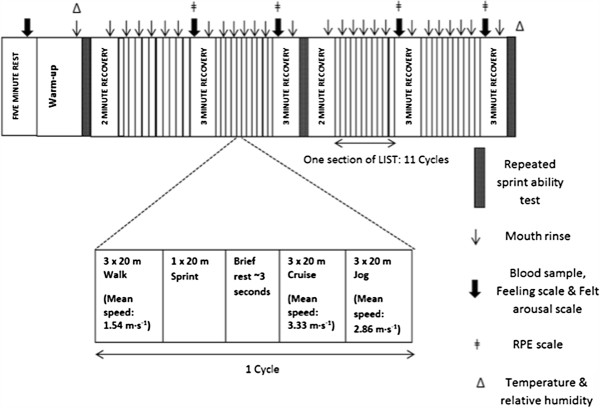
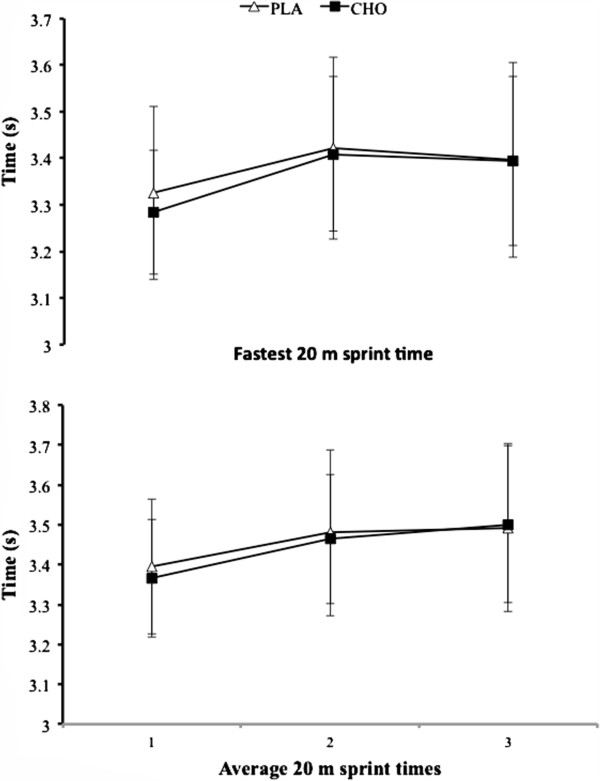
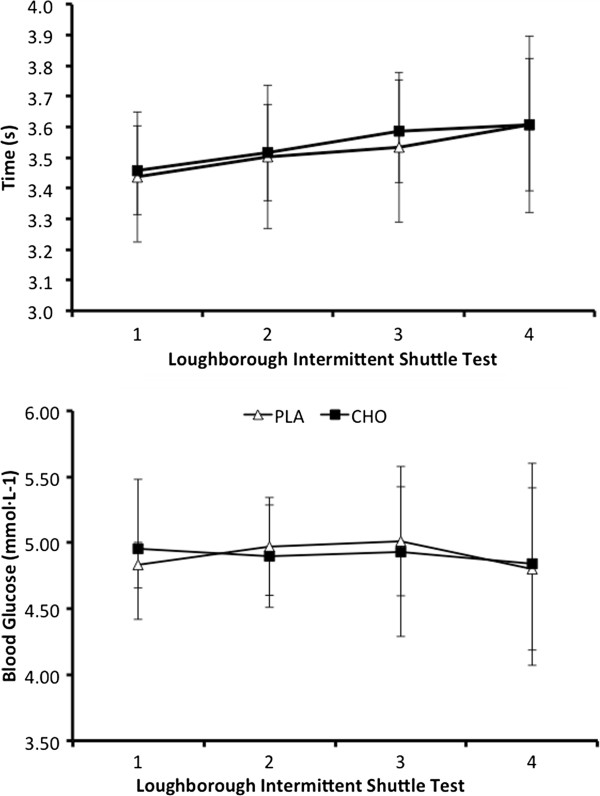
BACKGROUND: Research suggests that carbohydrate mouth rinsing (CMR) improves endurance performance; yet, little is known regarding the effect of CMR on multiple sprint efforts. As many sports involve multiple sprinting efforts, followed by periods of recovery, the aim of our current study was to investigate the influence of CMR on multiple sprint performance. METHODS: We recruited eight active males (Age; 22 ± 1 y; 75.0 ± 8.8 kg; estimated VO2max 52.0 ± 3.0 ml/kg/min) to participate in a randomly assigned, double-blind, counterbalanced study administering a CMR (6.4% Maltodextrin) or similarly flavoured placebo solution. Primary outcomes for our study included: (a) time for three repeated sprint ability tests (RSA) and (b) the Loughborough Intermittent Shuttle Test (LIST). Time was expressed in seconds (sec). Secondary outcomes included ratings of perceived exertion (RPE) and blood glucose concentration. Tertiary outcomes included two psychological assessments designed to determine perceived activation (i.e., arousal) and pleasure-displeasure after each section of the LIST. We analysed our data using a two-way analysis of variance (ANOVA) for repeated measures, a Bonferroni adjusted post hoc t-test to determine significant differences in treatment, and a liberal 90% confidence interval between treatment conditions. Effect sizes were calculated between trials and interpreted as ≤ 0.2 trivial, > 0.2 small, > 0.6 moderate, > 1.2 large, > 2 very large and > 4 extremely large. Data are means ± SD. Overall statistical significance was set as P < 0.05; yet, modified accordingly when Bonferroni adjustments were made. RESULTS: Overall, we observed no significant difference in average (3.46 ± 0.2 vs. 3.44 ± 0.17; P = 0.11) or fastest time (3.38 ± 0.2 vs. 3.37 ± 0.2; P = 0.39) in the RSA test for the placebo vs. CMR conditions, respectively. Similar findings were also noted for the placebo vs. CMR, respectively, during the LIST test (3.52 ± 0.2 vs. 3.54 ± 0.2 sec; P = 0.63). Despite a significantly higher within group RPE during the 3rd and 4th sections of the LIST (< 0.05), no between group differences were otherwise noted. No differences were noted for blood glucose concentrations throughout the testing protocol. Lastly, from a psychological perspective, we observed no differences in pleasure-displeasure or perceived activation. CONCLUSIONS: The results of our current study suggest that CMR does not improve exercise performance, RPE or perceived pleasure-displeasure during high intensity activity requiring repeated, intermittent, sprint efforts.
Overview
The claims and statistics of this paper haven’t been checked yet.
Free: it reads the open-access text and checks the first 5 claims that cite a source we can check. Create a free account to check every claim.
Integrity signals
Registry
Cites
Statistics
Figures
Verification
Claims the paper makes
The claims and statistics of this paper haven’t been checked yet.
Free: it reads the open-access text and checks the first 5 claims that cite a source we can check. Create a free account to check every claim.
Claims other papers make about this one
Each is checked against this paper’s own text: does it say what the citing paper says it does?
The cited source says what the claim attributes to it.
In the citing paper
“While this concept is still emerging, some [449–452] but not all [453–455] of the studies have supported the ability of carbohydrate mouth rinsing to increase performance.”
From ISSN exercise & sports nutrition review update: research & recommendations (2018) · cites this paper as [453]
Self-check
Percentages, sums and reported differences re-computed from the paper’s own numbers.
The self-check needs the paper’s full text.
Citations
Cites
Psychophysical bases of perceived exertion
BORG, G. A. V. (1982) · Medicine & Science in Sports & Exercise · doi:10.1249/00005768-198205000-00012 · Cited by 16,580
Cohen, J. (1992) · Psychological Bulletin · doi:10.1037//0033-2909.112.1.155 · Cited by 8,771
Making Meaningful Inferences About Magnitudes
Batterham, A. M., & Hopkins, W. G. (2006) · International Journal of Sports Physiology and Performance · doi:10.1123/ijspp.1.1.50 · Cited by 2,183 · cited 8×
“Paton CD, Hopkins WG, Vollebregt L: Little effect of caffeine ingestion on repeated sprints in team-sport athletes.”
BackgroundMethodInfluentialNot what, but how one feels: the measurement of affect during exercise
Hardy, C. J., & Rejeski, W. J. (1989) · Journal of Sport and Exercise Psychology · doi:10.1123/jsep.11.3.304 · Cited by 1,607 · cited 1×
“The feeling scale (FS) was used to measure the dimension of pleasure-displeasure [19].”
MethodA progressive shuttle run test to estimate maximal oxygen uptake.
Ramsbottom, R., Brewer, J., & Williams, C. (1988) · British Journal of Sports Medicine · doi:10.1136/bjsm.22.4.141 · Cited by 773 · cited 1×
“imal oxygen uptake [15].”
Bogdanis, G. C., Nevill, M. E., Boobis, L. H., & Lakomy, H. K. (1996) · Journal of Applied Physiology · doi:10.1152/jappl.1996.80.3.876 · Cited by 691 · cited 1×
“Specifically, other mechanisms of fatigue seen during teamgame sport such as alterations in intramuscular phosphates and the reduction in phosphocreatine may have negated any ergogenic influence of the CMR [26,27].”
BackgroundMetamotivational dominance: A multimethod validation of reversal theory constructs.
Svebak, S., & Murgatroyd, S. (1985) · Journal of Personality and Social Psychology · doi:10.1037//0022-3514.48.1.107 · Cited by 638 · cited 1×
“the participant’s perceived arousal [17].”
How to interpret changes in an athletic performance test
Hopkins, W. W. (2004) · Medical Entomology and Zoology · Cited by 608
Carbohydrate sensing in the human mouth: effects on exercise performance and brain activity
Chambers, E. S., Bridge, M. W., & Jones, D. A. (2009) · The Journal of Physiology · doi:10.1113/jphysiol.2008.164285 · Cited by 594 · cited 3×
“endurance performance during cycling [6] and running”
BackgroundInfluentialCarbohydrate intake during exercise and performance
Jeukendrup, A. E. (2004) · Nutrition · doi:10.1016/j.nut.2004.04.017 · Cited by 490
Cited by
ISSN exercise & sports nutrition review update: research & recommendations
Kerksick, C. M., Wilborn, C. D., Roberts, M. D., Smith-Ryan, A., Kleiner, S. M., Jäger, R., Collins, R., Cooke, M., Davis, J. N., Galvan, E., et al. (2018) · Journal of the International Society of Sports Nutrition · doi:10.1186/s12970-018-0242-y · Cited by 945
Collins, J., Maughan, R. J., Gleeson, M., Bilsborough, J., Jeukendrup, A., Morton, J. P., Phillips, S. M., Armstrong, L., Burke, L. M., Close, G. L., et al. (2021) · British Journal of Sports Medicine · doi:10.1136/bjsports-2019-101961 · Cited by 303
“50 The implications for foot-ball are still unclear, 51 but the use of CHO mouth rinsing during breaks in match play (eg, half-time, extra-time, injury stoppages, medical breaks) could potentially enhance performance in situations where CHO consumption is limited by gastrointestinal concerns.”
Lane, S. C., Bird, S. R., Burke, L. M., & Hawley, J. A. (2013) · Applied Physiology, Nutrition, and Metabolism · doi:10.1139/apnm-2012-0300 · Cited by 147
Effects of caffeine and carbohydrate mouth rinses on repeated sprint performance
Beaven, C. M., Maulder, P., Pooley, A., Kilduff, L., & Cook, C. (2013) · Applied Physiology, Nutrition, and Metabolism · doi:10.1139/apnm-2012-0333 · Cited by 146
Acute Effects of Carbohydrate Supplementation on Intermittent Sports Performance
Baker, L., Rollo, I., Stein, K., & Jeukendrup, A. (2015) · Nutrients · doi:10.3390/nu7075249 · Cited by 132
“Dorling and Earnest [68] found no effect of mouth rinsing a 6.”
BackgroundInfluentialCreatine monohydrate supplementation on lower-limb muscle power in Brazilian elite soccer players
Claudino, J. G., Mezêncio, B., Amaral, S., Zanetti, V., Benatti, F., Roschel, H., Gualano, B., Amadio, A. C., & Serrão, J. C. (2014) · Journal of the International Society of Sports Nutrition · doi:10.1186/1550-2783-11-32 · Cited by 78
“In addition, jumping performance data were analyzed using a contemporary magnitudebased inferences approach [29] in order to detect small effects of practical importance in an applied setting, a technique which is becoming increasingly common in an exercise performance research [30-33].”
MethodClarke, N. D., Kornilios, E., & Richardson, D. L. (2015) · Journal of Strength and Conditioning Research · doi:10.1519/jsc.0000000000000945 · Cited by 71
“Carbohydrate rinsing has also been reported to have no effect on repeated sprint ability (6,10).”
BackgroundDolan, P., Witherbee, K. E., Peterson, K. M., & Kerksick, C. M. (2017) · Journal of Strength and Conditioning Research · doi:10.1519/jsc.0000000000001819 · Cited by 54
“Similar to this study, performance and perceived rate of exertion were not improved as a result of carbohydrate mouth rinsing (10).”
BackgroundResultInfluentialLee, C.-L., Cheng, C.-F., Astorino, T. A., Lee, C.-J., Huang, H.-W., & Chang, W.-D. (2014) · Journal of the International Society of Sports Nutrition · doi:10.1186/1550-2783-11-17 · Cited by 50
“[27], who found the CAF and (or) CHO mouth rinse can rapidly enhance initial cycle sprint power production; however, recent study [57] reported that the CHO mouth rinse could not improve performance during simulated team-sport exercise (i.”
BackgroundCarbohydrate mouth rinse improves morning high‐intensity exercise performance
Clarke, N. D., Hammond, S., Kornilios, E., & Mundy, P. D. (2017) · European Journal of Sport Science · doi:10.1080/17461391.2017.1333159 · Cited by 39
“The results of this study concur with those of Gant et al. (2010), who indicated similar effects following orally rinsing CHO on isometric elbow flexion, Jensen et al. (2015) who reported decreased torque attenuation following CHO mouth rinsing in a fatigued state, and Peart (2016), who concluded a trivial to small ov…”
BackgroundResultInfluentialCarbohydrate Mouth Rinse Counters Fatigue Related Strength Reduction
Jensen, M. B., Stellingwerff, T., & Klimstra, M. D. (2014) · International Journal of Sport Nutrition and Exercise Metabolism · doi:10.1123/ijsnem.2014-0061 · Cited by 44
“None of the 12 participants were able to clearly distinguish a taste differences between WASH and PLA solutions.”
BackgroundBastos‐Silva, V. J., Melo, A. D. A., Lima‐Silva, A. E., Moura, F. A., Bertuzzi, R., & de Araujo, G. (2016) · Nutrients · doi:10.3390/nu8030049 · Cited by 45
“Additionally, other studies on CHO mouth rinse and power exercises [23], field testing with multiple sprints [24], or maximum strength [25], did not find beneficial effects.”
BackgroundEffects of various concentrations of carbohydrate mouth rinse on cycling performance in a fed state
Devenney, S., Collins, K. D., & Shortall, M. (2016) · European Journal of Sport Science · doi:10.1080/17461391.2016.1196735 · Cited by 45
“…mouth rinsing on performance have focused on cycling performance, there have been studies which have investigated the effects of CHO mouth rinsing on other endurance sports (Dorling & Earnest, 2013; Kasper et al., 2016; Rollo, Cole, Miller, & Williams, 2010; Rollo, Williams, Gant, & Nute, 2008).”
BackgroundMethodInfluentialQuantifying the Effect of Carbohydrate Mouth Rinsing on Exercise Performance
Peart, D. J. (2016) · The Journal of Strength and Conditioning Research · doi:10.1519/jsc.0000000000001741 · Cited by 40
“08 N Dorling and Earnest (16) 8 active males Repeated sprint ability test (6.”
CARBOHYDRATE MOUTH RINSE: PERFORMANCE EFFECTS AND MECHANISMS
Jeukendrup, A. E., Rollo, I., & Carter, J. M. (2013) · Cited by 49
Hartley, C., Carr, A., Bowe, S. J., Bredie, W. L. P., & Keast, R. S. J. (2022) · Sports Medicine · doi:10.1007/s40279-022-01658-3 · Cited by 34
“Unlike cycling-based exercise tests, where tests are typically conducted on a cycle ergometer, research methods in runningbased studies were mixed, using stationary treadmill running [41, 83, 86] and self-paced running indoors [43, 72, 75, 81, 82] and outdoors [73].”
BackgroundInfluentialPřibyslavská, V., Scudamore, E. M., Johnson, S. L., Green, J. M., Stevenson-Wilcoxson, M. C., Lowe, J. B., & O'Neal, E. K. (2015) · European Journal of Sport Science · doi:10.1080/17461391.2015.1020345 · Cited by 40
“…in 27 mouth rinses during each trial, trivial differences were observed between CMR and PLA on mean and fastest sprint times during repeated sprint ability test and mean sprint times during a Loughborough Intermittent Shuttle Test in eight recreationally active males (Dorling & Earnest, 2013).”
BackgroundMethodInfluentialNutritional Recommendations for Water Polo
Cox, G. R., Mujika, I., & van den Hoogenband, C. R. (2014) · International Journal of Sport Nutrition and Exercise Metabolism · doi:10.1123/ijsnem.2014-0003 · Cited by 39
“…improve sustained running and cycling performance in protocols of approximately 45–75 min (Cermak and van Loon, 2013), results from studies adopting an intermittent test protocol with a duration similar to that of a water polo game are equivocal (Phillips et al., 2012; Dorling & Earnest, 2013).”
BackgroundEffect of Carbohydrate Mouth Rinse on Training Load Volume in Resistance Exercises
Bastos‐Silva, V. J., Prestes, J., & Geraldes, A. A. R. (2017) · The Journal of Strength and Conditioning Research · doi:10.1519/jsc.0000000000002092 · Cited by 28
“Some studies have shown that a CHO mouth rinse is effective in shortduration and high-intensity exercises (4,9,22); however, other investigations have shown the opposite (8,10,12,21).”
New Insights into Enhancing Maximal Exercise Performance Through the Use of a Bitter Tastant
Gam, S., Guelfi, K. J., & Fournier, P. A. (2016) · Sports Medicine · doi:10.1007/s40279-016-0522-0 · Cited by 28
Clarke, N. D., Thomas, J. R., Kagka, M., Ramsbottom, R., & Delextrat, A. A. (2016) · The Journal of Strength and Conditioning Research · doi:10.1519/jsc.0000000000001531 · Cited by 30
“solutions on both running and cycling performance has been studied previously (9,11,14,22,24,26).”
BackgroundEffects of acute carbohydrate ingestion on anaerobic exercise performance
Krings, B. M., Rountree, J. A., McAllister, M. J., Cummings, P. M., Peterson, T. J., Fountain, B. J., & Smith, J. W. (2016) · Journal of the International Society of Sports Nutrition · doi:10.1186/s12970-016-0152-9 · Cited by 30
“The mouth rinse technique has been shown to increase performance during endurance activities [37–40], but to have no significant changes in performance when completing repeated sprints [41], muscular strength and muscular endurance [42, 43].”
BackgroundGough, L. A., Faghy, M. A., Clarke, N. D., Kelly, A. L., Cole, M., & Foo, W. L. (2022) · Science and Medicine in Football · doi:10.1080/24733938.2021.2021277 · Cited by 25
“…a RAST test using cycling report ergogenic effects following either CAFMR or CHOMR (or in combination) mouth rinse (Beaven et al. 2013), whilst those more akin to the current study using a longer duration exercise and a running modality report non-significant findings (Dorling and Earnest 2013).”
BackgroundMethodPainelli, V. D. S., Brietzke, C., Franco‐Alvarenga, P. E., Canestri, R., Vinícius, Í., & Pires, F. O. (2022) · SAGE Open Medicine · doi:10.1177/20503121221098120 · Cited by 22
Carbohydrate Mouth Rinse Improves Relative Mean Power During Multiple Sprint Performance
Simpson, G. W., PRITCHETT, R. C., O'Neal, E. K., Hoskins, G., & Pritchett, K. L. (2018) · International journal of exercise science · doi:10.70252/crpx1180 · Cited by 23
“Dorling and Earnest (11) saw no difference in RPE when comparing treatments.”
BackgroundResultInfluentialEffect of Carbohydrate Intake on Maximal Power Output and Cognitive Performances
Pomportes, L., Brisswalter, J., Hays, A., & Davranche, K. (2016) · Sports · doi:10.3390/sports4040049 · Cited by 21
“In a study employing a Loughborough Intermittent Shuttle Test (LIST) protocol (mimicking the demands of soccer and similar team sports), Dorlin and Earnest [9] found no effect of mouth rinsing 6.”
InfluentialEffects of carbohydrate mouth rinse and caffeine on high-intensity interval running in a fed state
Devenney, S., Mangan, S., Shortall, M., & Collins, K. D. (2017) · Applied Physiology, Nutrition, and Metabolism · doi:10.1139/apnm-2017-0458 · Cited by 18
“…have primarily been focused on cycling performance (Beelen et al. 2009; Carter et al. 2004; Chong et al. 2011; Lesniak et al. 2016), studies have shifted some focus to investigating the effects of CMR on other endurance sports (Dorling and Earnest 2013; Kasper et al. 2016; Rollo et al. 2008, 2010).”
Nehme, R., de Branco, F. M. S., Vieira, P. F., Guimarães, A. V. C., Gomes, G. K., Teixeira, G. P., Rodrigues, P. H. M., Junior, L. M. D. C., Puga, G. M., Saunders, B., et al. (2021) · International Journal of Sport Nutrition and Exercise Metabolism · doi:10.1123/ijsnem.2021-0174 · Cited by 16
An assessment of the nutritional intake of soccer referees
Reñón, C. M., & Collado, P. S. (2015) · Journal of the International Society of Sports Nutrition · doi:10.1186/s12970-015-0068-9 · Cited by 19
“Sportspeople who consume a diet rich in carbohydrates were found to be able to undertake 33% more high-intensity running during a game, and a diet with 65% carbohydrates was observed to improve performance when compared with alternatives in which carbohydrate consumption amounted to only 30% of the total diet [21-23].”
BackgroundRowlatt, G., Bottoms, L. M., Edmonds, C. J., & Buscombe, R. M. (2016) · European Journal of Sport Science · doi:10.1080/17461391.2016.1251497 · Cited by 18
Carbohydrate Mouth Rinsing Does Not Prevent the Decline in Maximal Strength After Fatiguing Exercise
Black, C. D., Schubert, D. J., Szczyglowski, M. K., & Wren, J. D. (2018) · The Journal of Strength and Conditioning Research · doi:10.1519/jsc.0000000000002444 · Cited by 15
Pomportes, L., & Brisswalter, J. (2020) · Science & Sports · doi:10.1016/j.scispo.2020.06.001 · Cited by 21
Black, C. D., Haskins, K. R., Bemben, M. G., & Larson, R. D. (2021) · The Journal of Strength and Conditioning Research · doi:10.1519/jsc.0000000000004162 · Cited by 13
“Studies have shown CHO mouth rinsing to both improve (3,28) and have no effect (8,13,23,27) on short-term sprint performance.”
BackgroundRunning Performance With Nutritive and Nonnutritive Sweetened Mouth Rinses
Hawkins, K. R., Krishnan, S., Ringos, L., Garcia, V., & Cooper, J. A. (2017) · International Journal of Sports Physiology and Performance · doi:10.1123/ijspp.2016-0577 · Cited by 15
Shirai, A., Wadazumi, T., Hirata, Y., Hamada, N., & Hongu, N. K. (2022) · Sports · doi:10.3390/sports10040051 · Cited by 16
“In contrast, Dorling and Earnest found no effect after 60 min of high-intensity exercise [24].”
BackgroundKaruk, H. N., Nalçakan, G. R., & Pekünlü, E. (2021) · European Journal of Sport Science · doi:10.1080/17461391.2021.1907449 · Cited by 14
“…the effect of CHO-MR method in short-duration and high-intensity exercise are controversial: while some studies state positive effects (Phillips, Findlay, Kavaliauskas, & Grant, 2014), some do not (Chong, Guelfi, & Fournier, 2011; Clarke, Kornilios, & Richardson, 2015; Dorling & Earnest, 2013).”
BackgroundMethodEffects of post-activation potentiation and carbohydrate mouth rinse on repeated sprint ability
de Oliveira, J. J., Verlengia, R., Barbosa, C. G. R., Sindorf, M. A. G., da Rocha, G. L., Lopes, C. R., & Crisp, A. H. (2019) · Journal of Human Sport and Exercise · doi:10.14198/jhse.2019.141.13 · Cited by 16
“Moreover, most studies found no significant difference in the performance of sprints after CHO mouth rinse (Bortollotiet al., 2013; Dorling and Earnest, 2013; Přibyslavskáet al., 2015).”
BackgroundWashif, J. A., Hébert‐Losier, K., Chamari, K., & Beaven, C. M. (2021) · Biology of Sport · doi:10.5114/biolsport.2022.109959 · Cited by 13
“Similarly, CHO mouth-rinsing does not improve multiple sprint performance and RPE during a field-based sprint test among physically active males [27].”
BackgroundCARBOHYDRATE: THE FOOTBALL FUEL
Rollo, I. (2014) · Cited by 10
Effects of Carbohydrate Mouth Rinsing on Upper Body Resistance Exercise Performance
Krings, B. M., Shepherd, B. D., Waldman, H. S., McAllister, M. J., & Smith, J. W. (2019) · International Journal of Sport Nutrition and Exercise Metabolism · doi:10.1123/ijsnem.2019-0073 · Cited by 10
Foo, W. L., Tester, E., Close, G. L., Areta, J. L., & Morton, J. P. (2025) · Sports Medicine · doi:10.1007/s40279-025-02224-3 · Cited by 9
Central effects of mouth rinses on endurance and strength performance
Tan, S. H., Khong, T. K., Selvanayagam, V. S., & Yusof, A. (2023) · European Journal of Applied Physiology · doi:10.1007/s00421-023-05350-w · Cited by 6
“Similar findings have been reported by Beaven et al. (2013) and Dorling and Earnest (2013), suggesting that multiple rinses over the course of multiple sets of exercise performance may be necessary to maintain high-performance outcomes (Jeukendrup et al. 2013).”
Mouth Rinsing Cabohydrates Serially does not Improve Repeated Sprint Time
Tomko, P. M., Laurent, C. M., Fullenkamp, A. M., Voth, N. R., & Young, C. A. (2019) · Journal of Human Kinetics · doi:10.2478/hukin-2018-0076 · Cited by 6
“Dorling and Earnest (2013), Bortolotti et al.”
BackgroundResultInfluentialNyman, D. L. E., Gamble, A. S. D., Bigg, J. L., Boyd, L. A., Vanderheyden, A. J., & Spriet, L. L. (2022) · Frontiers in Nutrition · doi:10.3389/fnut.2022.792708 · Cited by 9
“CHO MR did not affect repeated sprint performance in male soccer and rugby players (28), but it did prolong the onset of fatigue and reduce perceptions of effort in increasing-speed shuttle running to exhaustion in male lacrosse players (30).”
BackgroundCarbohydrate Oral Rinsing, Cycling Performance and Individual Complex Carbohydrate Taste Sensitivity
Hartley, C., Carr, A. J., Roberts, S., Bredie, W. L. P., & Keast, R. (2024) · Nutrients · doi:10.3390/nu16030459 · Cited by 8
The effect of carbohydrate mouth rinse on intermittent sprint performance in soccer players
Karayiğit, R., Karabıyık, H., Yaşli, B. Ç., Koz, M., & Ersöz, G. (2017) · Ortadoğu Tıp Dergisi · doi:10.21601/ortadogutipdergisi.359888 · Cited by 8
Dean, E., Osborne, A., Subar, D. A., Hendrickse, P. W., & Gaffney, C. J. (2025) · Experimental Physiology · doi:10.1113/ep093136 · Cited by 6
“This effect size was chosen for glucose, reflecting mixed findings in prior research on repeat maximal exercise (Dorling & Earnest, 2013; Krings et al., 2017; Vigh-Larsen et al., 2024), where carbohydrate ingestion produced trivial to moderate effects on metabolism and performance.”
High-Intensity Intermittent Exercise and Mouth Rinsing: A Systematic Review and Meta-Analysis
Suen, M., Tsang, J. H., Wong, P.-S., O'Reilly, J., & Poon, E. T. (2026) · International Journal of Sport Nutrition and Exercise Metabolism · doi:10.1123/ijsnem.2025-0135 · Cited by 3
Şahin, B. Ö., Yüzbaşıoğlu, Y., & Nalçakan, G. R. (2024) · Avrasya Spor Bilimleri ve Eğitim Dergisi · doi:10.47778/ejsse.1515897 · Cited by 5
Bowling, L. R., Scudamore, E. M., Church, J. B., & Scudamore, V. (2025) · International journal of exercise science · doi:10.70252/sjxt6980 · Cited by 4
The effect of carbohydrate mouth rinse on a 30-minute arm cranking performance
Andersson, H., SINCLAIR, J. K., Knight, A., Buscombe, R. M., Edmonds, C. J., & Bottoms, L. M. (2016) · Comparative Exercise Physiology · doi:10.3920/cep150032 · Cited by 2
The Effect of Carbonhydrate Mouth Rinse on the Endurance Performance in Football Players
Mazman, B., & Yetgin, M. K. (2024) · CBÜ Beden Eğitimi ve Spor Bilimleri Dergisi · doi:10.33459/cbubesbd.1399602 · Cited by 1
“…are still unclear, the use of a CHO solution as a mouth rinse during game breaks (e.g., half-time, overtime, injury interruptions) is thought to potentially improve performance when CHO consumption is limited due to gastrointestinal concerns (Collins et al., 2020; Dorling and Earnest, 2013).”
BackgroundBailey, E., Clarke, N. D., Cole, M., Gough, L. A., Newbury, J. W., & Roberts, C. J. (2025) · Performance Nutrition · doi:10.1186/s44410-025-00002-w · Cited by 2
“These findings are consistent with other studies investigating the effect of CHO-MR on RPE during a Loughbor-ough Intermittent Shuttle Test [8] and a repeated-sprint cycling protocol [14].”
InfluentialBastos‐Silva, V. J., LEARSI, S. K., Melo, A. D. A., Lima‐Silva, A. E., & de Araújo, G. G. (2016) · Revista de Nutrição · doi:10.1590/1678-98652016000500007 · Cited by 1
Carbohydrate Mouth Rinsing Duration Impact on Fatigue and Recovery from Repeated Sprint Exercise
Tomko, P. M. (2017) · OhioLink ETD Center (Ohio Library and Information Network) · Cited by 1
ARTI GO DE REVISÃO: POSSÍVEIS EFEITOS ERGOGÊNICOS DO ENXÁGUE BUCAL COM CARBOIDRATO
Gomes, L. P. D. S., do Nascimento, M. V. S., Chagas, B. L. F., Barbosa, M. R., Geraldes, A. A. R., & Moura, I. S. C. (2016) · Caderno de Graduação - Ciências Biológicas e da Saúde - UNIT - SERGIPE
Jensen, M. (2018) · UVic’s Research and Learning Repository (University of Victoria) · Cited by 1
The Effect of Various Carbohydrate Concentrations Mouth Rinsing on Intermittent Running Performance
Idrus, N. A., Bakar, A. H. A., Razak, M. F. P. A., Rosli, N. M., Kassim, A. F. M., & Kamaruddin, H. K. (2020) · Lecture notes in bioengineering · doi:10.1007/978-981-15-3270-2_42
Nyman, D. L. E. (2021) · The Atrium (University of Guelph)
Francelino, L. F. G. D. S., dos Santos, L. E. G., Lopes‐Silva, J. P., & Bastos‐Silva, V. J. (2026) · Applied Physiology, Nutrition, and Metabolism · doi:10.1139/apnm-2025-0434
Pomportes, L. (2018) · theses.fr (ABES) · doi:10.70675/5b696972z0644z4b6fz88fez69d9b8cf6241
Zalagkitis, C., Kraniotaki, A., Simitzis, N., Dallas, K., Moustogiannis, A., Chatzinikita, E., Paradisis, G. P., Τέντα, Ρ., Maridaki, M. D., Veskoukis, A. S., et al. (2026) · Nutrients · doi:10.3390/nu18183099
Mendonça, M. E. D. F., Nehme, R., Mariano, I. M., Vieira, P. F., de Branco, F. M. S., Ferreira, M. C., Carvalho, V. S., Simões, B. O., Morais, D. M., Puga, G. M., et al. (2026) · Research in Sports Medicine · doi:10.1080/15438627.2026.2736778
Metadata
- Authors
- Dorling, J. L., & Earnest, C. P.
- Affiliations
- University of Bath (GB)
- Corresponding author
- Earnest, Conrad P
- Venue
- Journal of the International Society of Sports Nutrition
- Publisher
- Informa UK Limited
- Published
- 2013-01-03
- Volume
- 10
- Issue
- 1
- Pages
- 41-41
- ISSN
- 1550-2783 (ISSN-L)
- PMC
- PMC3849766
- OpenAlex
- W2142404234
- Cited by
- 63
- References
- 35
- Citations by year
- 2026: 4 · 2025: 4 · 2024: 3 · 2023: 1 · 2022: 4 · 2021: 6 · 2020: 3 · 2019: 2 · 2018: 6 · 2017: 7 · 2016: 11 · 2015: 4 · 2014: 5 · 2013: 2
- FWCI
- 7.52
- Type
- journal article
- Language
- en
- Open access
- gold
- doi.org
- Licence
- Locations
- Journal of the International Society of Sports Nutrition (publishedVersion, cc-by)
- Europe PMC (PubMed Central) (publishedVersion, cc-by)
- PubMed Central (publishedVersion, cc-by)
- PubMed (publishedVersion)
- ENLIGHTEN (Jurnal Bimbingan dan Konseling Islam) (acceptedVersion)
- Funders
- University of Bath
- Topics
- Health Sciences › Medicine › Orthopedics and Sports Medicine › Sports Performance and Training
- Health Sciences › Nursing › Nutrition and Dietetics › Muscle metabolism and nutrition
- Health Sciences › Medicine › Physiology (medical) › Cardiovascular and exercise physiology
- Keywords
- maltodextrin, repeated sprint ability, sprint performance, blood glucose, rating of perceived exertion, endurance performance, male athletes, Loughborough Intermittent Shuttle Test
About these checks
Registry, retraction, Cites and statistics results are computed, not judged, with one exception: a printed reference that no index lists is read once by a model before it counts as a citation error. Claims are extracted by a model and kept only when their quote appears verbatim in the text; each cited source is then checked, with a model’s help, for whether it says what the claim relies on. Those verdicts can be wrong — read the claim’s quote and the cited source before relying on one.
Statistics and arithmetic are recomputed, not judged.
Confidence bands are shown only for fields calibrated on our annotated test set. None is calibrated yet, so no band is shown.
What counts as a claim ›How we measure confidence ›How we check this ›
Are you an author, or do you see a problem with this page? Request a review
Data sources
Bibliographic data: Semantic Scholar, OpenAlex, Crossref.
Contains information from the Semantic Scholar Academic Graph Datasets, made available under the ODC Attribution License (ODC-BY 1.0).
Semantic Scholar’s data is described in: Kinney, R., et al. (2023). The Semantic Scholar Open Data Platform. arXiv:2301.10140.
