

Undenatured type II collagen (UC-II®) for joint support: a randomized, double-blind, placebo-controlled study in healthy volunteers
Open accessThe DOI matches its Crossref record; 62 of the 64 references it cites were found in a registry or an index.
Abstract
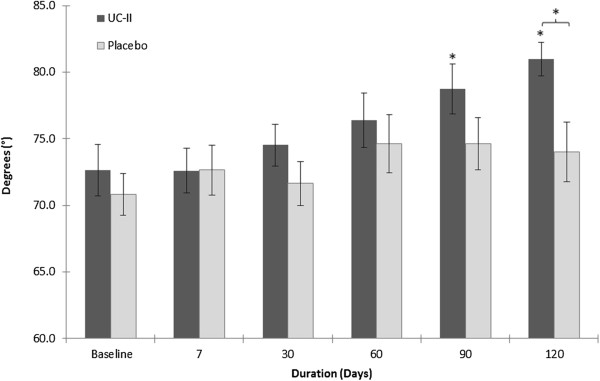
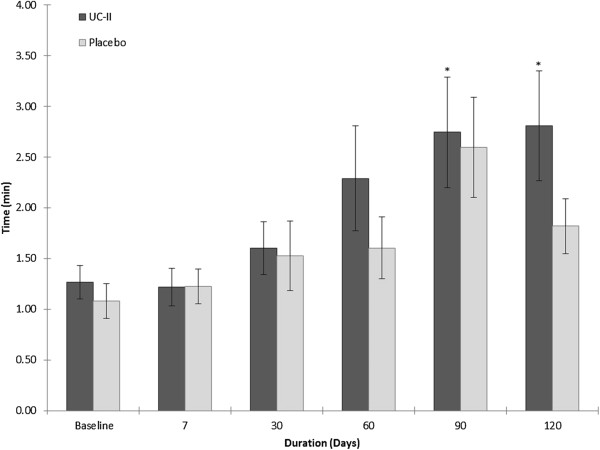
BACKGROUND: UC-II contains a patented form of undenatured type II collagen derived from chicken sternum. Previous preclinical and clinical studies support the safety and efficacy of UC-II in modulating joint discomfort in osteoarthritis and rheumatoid arthritis. The purpose of this study was to assess the efficacy and tolerability of UC-II in moderating joint function and joint pain due to strenuous exercise in healthy subjects. METHODS: This randomized, double-blind, placebo-controlled study was conducted in healthy subjects who had no prior history of arthritic disease or joint pain at rest but experienced joint discomfort with physical activity. Fifty-five subjects who reported knee pain after participating in a standardized stepmill performance test were randomized to receive placebo (n = 28) or the UC-II (40 mg daily, n = 27) product for 120 days. Joint function was assessed by changes in degree of knee flexion and knee extension as well as measuring the time to experiencing and recovering from joint pain following strenuous stepmill exertion. RESULTS: After 120 days of supplementation, subjects in the UC-II group exhibited a statistically significant improvement in average knee extension compared to placebo (81.0 ± 1.3º vs 74.0 ± 2.2º; p = 0.011) and to baseline (81.0 ± 1.3º vs 73.2 ± 1.9º; p = 0.002). The UC-II cohort also demonstrated a statistically significant change in average knee extension at day 90 (78.8 ± 1.9º vs 73.2 ± 1.9º; p = 0.045) versus baseline. No significant change in knee extension was observed in the placebo group at any time. It was also noted that the UC-II group exercised longer before experiencing any initial joint discomfort at day 120 (2.8 ± 0.5 min, p = 0.019), compared to baseline (1.4 ± 0.2 min). By contrast, no significant changes were seen in the placebo group. No product related adverse events were observed during the study. At study conclusion, five individuals in the UC-II cohort reported no pain during or after the stepmill protocol (p = 0.031, within visit) as compared to one subject in the placebo group. CONCLUSIONS: Daily supplementation with 40 mg of UC-II was well tolerated and led to improved knee joint extension in healthy subjects. UC-II also demonstrated the potential to lengthen the period of pain free strenuous exertion and alleviate the joint pain that occasionally arises from such activities.
Overview
The claims and statistics of this paper haven’t been checked yet.
Free: it reads the open-access text and checks the first 5 claims that cite a source we can check. Create a free account to check every claim.
Integrity signals
Registry
Cites
Statistics
Figures
Verification
Claims the paper makes
The claims and statistics of this paper haven’t been checked yet.
Free: it reads the open-access text and checks the first 5 claims that cite a source we can check. Create a free account to check every claim.
Claims other papers make about this one
Each is checked against this paper’s own text: does it say what the citing paper says it does?
The cited source says what the claim attributes to it.
In the citing paper
“Meanwhile, other ingredients including undenatured type II collagen (UC-II) may be helpful as well although more research is needed involving athletic applications [694, 695].”
From ISSN exercise & sports nutrition review update: research & recommendations (2018) · cites this paper as [695]
Self-check
Percentages, sums and reported differences re-computed from the paper’s own numbers.
The self-check needs the paper’s full text.
Citations
Cites
Aletaha, D., Neogi, T., Silman, A. J., Funovits, J., Felson, D. T., Bingham, C. O., Birnbaum, N. S., Burmester, G. R., Bykerk, V. P., Cohen, M. D., et al. (2010) · Arthritis & Rheumatism · doi:10.1002/art.27584 · Cited by 9,619 · cited 1×
“Only healthy adults who presented with no knee joint pain at rest and no diagnosable markers indicative of active arthritic disease, as outlined by the American College of Rheumatology (ACR) guidelines [31,32], were admitted into the study.”
BackgroundAltman, R., Asch, E., Bloch, D., Bole, G., Borenstein, D., Brandt, K., Christy, W., Cooke, T. D., Greenwald, R., Hochberg, M., et al. (1986) · Arthritis & Rheumatism · doi:10.1002/art.1780290816 · Cited by 6,777
Gait Analysis: Normal and Pathological Function
(1992) · JAMA: The Journal of the American Medical Association · doi:10.1001/jama.1992.03490220101046 · Cited by 3,875
Coombes, J. L., Siddiqui, K. R. R., Arancibia-Cárcamo, C. V., Hall, J., Sun, C.-M., Belkaid, Y., & Powrie, F. (2007) · The Journal of Experimental Medicine · doi:10.1084/jem.20070590 · Cited by 2,710 · cited 1×
“A special class of CD103 dendritic cells, found almost exclusively in the GALT, facilitates this process [48,50].”
BackgroundReference Equations for the Six-Minute Walk in Healthy Adults
ENRIGHT, P. L., & SHERRILL, D. L. (1998) · American Journal of Respiratory and Critical Care Medicine · doi:10.1164/ajrccm.158.5.9710086 · Cited by 2,204
Outcome Measures for Health Education and Other Health Care Interventions
Lorig, K., Stewart, A., Ritter, P., González, V., Laurent>, D., & Lynch, J. (1996) · doi:10.4135/9781452232966 · Cited by 1,132
Pelletier, J.-P., Martel-Pelletier, J., & Abramson, S. B. (2001) · Arthritis & Rheumatism · doi:10.1002/1529-0131(200106)44:6<1237::aid-art214>3.0.co;2-f · Cited by 1,072 · cited 1×
“This view has changed in recent years due to a growing body of evidence suggesting that both OA and normal chondrocyte biology appears to be regulated by some of the same cytokines and chemokines that regulate inflammation [5,6,55].”
BackgroundImmunisation against heterologous type II collagen induces arthritis in mice
Courtenay, J. S., Dallman, M. J., Dayan, A. D., Martin, A., & Mosedale, B. (1980) · Nature · doi:10.1038/283666a0 · Cited by 1,025 · cited 1×
“The above description of how UC-II might modulate joint function is most easily understood in the context of RA given that the CIA animal model resembles this disease most closely [27,28,54].”
BackgroundPro‐ and anti‐inflammatory cytokine balance in strenuous exercise in humans
Ostrowski, K., Rohde, T., Asp, S., Schjerling, P., & Pedersen, B. K. (1999) · The Journal of Physiology · doi:10.1111/j.1469-7793.1999.287ad.x · Cited by 1,014 · cited 1×
“[15] showed that healthy individuals express up to 27-fold greater concentrations of the anti-inflammatory cytokine IL-10 in blood following a marathon run when compared to IL-10 blood levels at rest.”
BackgroundTGF-β: A Master of All T Cell Trades
Li, M. O., & Flavell, R. A. (2008) · Cell · doi:10.1016/j.cell.2008.07.025 · Cited by 893
Joint Structure and Function: A Comprehensive Analysis
Levangie, P. K., & Norkin, C. C. (2006) · Medical Entomology and Zoology · Cited by 868
Loeser, R. F. (2009) · Osteoarthritis and Cartilage · doi:10.1016/j.joca.2009.03.002 · Cited by 726
Effects of Oral Administration of Type II Collagen on Rheumatoid Arthritis
Trentham, D. E., Dynesius-Trentham, R. A., Orav, E. J., Combitchi, D., Lorenzo, C., Sewell, K. L., Hafler, D. A., & Weiner, H. L. (1993) · Science · doi:10.1126/science.8378772 · Cited by 624 · cited 2×
“[25] demonstrated that UC-II effectively enhances joint comfort and flexibility thereby improving the quality of life (QoL) in both OA and RA subjects, respectively.”
BackgroundResultKnee injury and Osteoarthritis Outcome Score (KOOS) ‐ validation of a Swedish version
Roos, E. M., Roos, H. P., Ekdahl, C., & Lohmander, L. S. (1998) · Scandinavian Journal of Medicine & Science in Sports · doi:10.1111/j.1600-0838.1998.tb00465.x · Cited by 598 · cited 1×
“The KOOS survey is a validated instrument consisting of 42 questions that are classified into sub-scales such as symptoms, stiffness, pain, daily activities, recreational activities and quality of life [34].”
Biomechanical factors in osteoarthritis
Guilak, F. (2011) · Best Practice & Research Clinical Rheumatology · doi:10.1016/j.berh.2011.11.013 · Cited by 594 · cited 2×
“Such studies suggest that strenuous exercise may activate some of the same physiological processes that occur in arthritic disease [2-4].”
BackgroundWeiner, H. L., da Cunha, A. P., Quintana, F., & Wu, H. (2011) · Immunological Reviews · doi:10.1111/j.1600-065x.2011.01017.x · Cited by 535
Weiner, H. L. (1994) · Proceedings of the National Academy of Sciences · doi:10.1073/pnas.91.23.10762 · Cited by 450
Nagler-Anderson, C., Bober, L. A., Robinson, M. E., Siskind, G. W., & Thorbecke, G. J. (1986) · Proceedings of the National Academy of Sciences · doi:10.1073/pnas.83.19.7443 · Cited by 351 · cited 3×
“The above description of how UC-II might modulate joint function is most easily understood in the context of RA given that the CIA animal model resembles this disease most closely [27,28,54].”
BackgroundMethodEarly diagnosis to enable early treatment of pre-osteoarthritis
Chu, C. R., Williams, A. A., Coyle, C. H., & Bowers, M. E. (2012) · Arthritis Research & Therapy · doi:10.1186/ar3845 · Cited by 253 · cited 1×
“Healthy subjects would not be expected to present with significant alterations in their inflammatory biomarker profile as they lack clinical disease [59].”
BackgroundMillwardâSadler, S. J., Wright, M. O., Davies, L. W., Nuki, G., & Salter, D. M. (2000) · Arthritis & Rheumatism · doi:10.1002/1529-0131(200009)43:9<2091::aid-anr21>3.0.co;2-c · Cited by 230 · cited 1×
“The secretion of this autocrine molecule not only helps in shifting chondrocyte metabolism towards the synthesis of aggrecan and type II collagen, it also downregulates production of nitric oxide (NO) and various MMPs and aggrecanases [10-12].”
BackgroundPincus, T., Koch, G. G., Sokka, T., Lefkowith, J., Wolfe, F., Jordan, J. M., Luta, G., Callahan, L. F., Wang, X., Schwartz, T., et al. (2001) · Arthritis & Rheumatism · doi:10.1002/1529-0131(200107)44:7<1587::aid-art282>3.0.co;2-x · Cited by 229 · cited 1×
“It should be noted that the average age of the study participants was approximately 46 years which is about 16 years younger than the average age observed in many OA studies [36-38].”
ResultECM stiffness primes the TGFβ pathway to promote chondrocyte differentiation
Allen, J. L., Cooke, M. E., & Alliston, T. (2012) · Molecular Biology of the Cell · doi:10.1091/mbc.e12-03-0172 · Cited by 194
Mechanical Overload Induces VEGF in Cartilage Discs via Hypoxia-Inducible Factor
Pufe, T., Lemke, A. K., Kurz, B., Petersen, W. J., Tillmann, B. N., Grodzinsky, A. J., & Mentlein, R. (2004) · American Journal Of Pathology · doi:10.1016/s0002-9440(10)63109-4 · Cited by 179 · cited 1×
“Mechanically stressed chondrocytes also produce a number of other molecules known to participate in inflammatory responses, including prostoglandin E2, NO, and vascular endothelial growth factor [14].”
BackgroundMillward-Sadler, S. J., Wright, M. O., Lee, H.-S., Nishida, K., Caldwell, H., Nuki, G., & Salter, D. M. (1999) · The Journal of Cell Biology · doi:10.1083/jcb.145.1.183 · Cited by 175 · cited 1×
“By contrast, normal chondrocytes produce the anti-inflammatory cytokine IL-4 when mechanically stimulated under moderate and dynamic conditions [9].”
BackgroundAgarwal, S., Deschner, J., Long, P., Verma, A., Hofman, C., Evans, C. H., & Piesco, N. P. (2004) · Arthritis & Rheumatism · doi:10.1002/art.20601 · Cited by 160 · cited 1×
“This in vitro catabolic response is mediated by changes in the phosphorylation, the expression, or the translocation of several transcription factors to the cell nucleus including NF-κB, p38 MAPK, Akt, and ERK [7,8].”
BackgroundHonda, K., Ohno, S., Tanimoto, K., Ijuin, C., Tanaka, N., Doi, T., Kato, Y., & Tanne, K. (2000) · European Journal of Cell Biology · doi:10.1078/0171-9335-00089 · Cited by 160 · cited 2×
“When normal chondrocytes undergo strenuous mechanical stimulation under static conditions, their physiology shifts towards ECM breakdown, as indicated by the upregulation of several metalloproteinases (MMPs), such as MMP-13 as well as tumor necrosis factor (TNF)-α, interleukin (IL)-1β, IL-6, and various aggrecanases […”
BackgroundTGF-b signaling in chondrocytes
Tian-Fang, L. (2005) · Frontiers in bioscience · doi:10.2741/1563 · Cited by 149 · cited 1×
“Another protein released by dynamically compressed chondrocytes is transforming growth factor (TGF)-β [16-18].”
BackgroundAhmed, M. B., Belhadj Hmida, N., Moes, N., Buyse, S., Abdeladhim, M., Louzir, H., & Cerf-Bensussan, N. (2009) · The Journal of Immunology · doi:10.4049/jimmunol.0801792 · Cited by 148 · cited 1×
“The phenomenon of oral tolerance has also been demonstrated in humans, and appears to involve a similar set of T regulators [30,51-53].”
BackgroundSignalling cascades in mechanotransduction: cell–matrix interactions and mechanical loading
Ramage, L., Nuki, G., & Salter, D. M. (2009) · Scandinavian Journal of Medicine & Science in Sports · doi:10.1111/j.1600-0838.2009.00912.x · Cited by 148 · cited 4×
“When normal chondrocytes undergo strenuous mechanical stimulation under static conditions, their physiology shifts towards ECM breakdown, as indicated by the upregulation of several metalloproteinases (MMPs), such as MMP-13 as well as tumor necrosis factor (TNF)-α, interleukin (IL)-1β, IL-6, and various aggrecanases […”
BackgroundInfluentialPetrella, R. J., DiSilvestro, M. D., & Hildebrand, C. (2002) · Archives of Internal Medicine · doi:10.1001/archinte.162.3.292 · Cited by 148 · cited 1×
“It should be noted that the average age of the study participants was approximately 46 years which is about 16 years younger than the average age observed in many OA studies [36-38].”
ResultCrowley, D. C., Lau, F. C., Sharma, P., Evans, M., Guthrie, N., Bagchi, M., Bagchi, D., Dey, D. K., & Raychaudhuri, S. P. (2009) · International Journal of Medical Sciences · doi:10.7150/ijms.6.312 · Cited by 141 · cited 3×
“This finding corroborates the efficacy of undenatured type II collagen in improving joint comfort in osteoarthritic conditions [26].”
BackgroundResultSelf-citationKiviranta, I., Tammi, M., Jurvelin, J. S., Arokoski, J., Säämänen, A., & Helminen, H. J. (1992) · Clinical Orthopaedics and Related Research · doi:10.1097/00003086-199210000-00046 · Cited by 138 · cited 2×
“Such studies suggest that strenuous exercise may activate some of the same physiological processes that occur in arthritic disease [2-4].”
BackgroundIL-4 alone and in combination with IL-10 protects against blood-induced cartilage damage
van Meegeren, M. E., Roosendaal, G., Jansen, N. W. D., Wenting, M. J. G., van Wesel, A. C. W., van Roon, J. A. G., & Lafeber, F. P. J. G. (2012) · Osteoarthritis and Cartilage · doi:10.1016/j.joca.2012.04.002 · Cited by 135
Berg, V., Sveinbjörnsson, B., Bendiksen, S., Brox, J., Meknas, K., & Figenschau, Y. (2010) · Arthritis Research & Therapy · doi:10.1186/ar3215 · Cited by 131
Donovan, J. C. H., & Slingerland, J. M. (2000) · Breast Cancer Research · doi:10.1186/bcr43 · Cited by 129 · cited 1×
“This factor is secreted by many cell types and is known to interfere with the cell cycle and arrest differentiation [19].”
BackgroundTransforming Growth Factor Beta: An Autocrine Regulator of Chondrocytes
Rosier, R. N., O’Keefe, R. J., Crabb, I. D., & Puzas, J. E. (1989) · Connective Tissue Research · doi:10.3109/03008208909023900 · Cited by 125 · cited 1×
“With regard to chondrocytes, TGF-β induces cell proliferation in vitro and slows terminal differentiation into hypertrophic cells [20].”
Backgroundvan Beuningen, H. M., van der Kraan, P. M., Arntz, O. J., & van den Berg, W. B. (1993) · Annals of the Rheumatic Diseases · doi:10.1136/ard.52.3.185 · Cited by 123
Bagchi, D., Misner, B., Bagchi, M., Kothari, S., Downs, B. W., Fafard, R. D., & Preuss, H. G. (2002) · PubMed · Cited by 106
Physical exercise as a human model of limited inflammatory response
Shek, P. N., & Shephard, R. J. (1998) · Canadian Journal of Physiology and Pharmacology · doi:10.1139/cjpp-76-5-589 · Cited by 102
Caminiti, L., Passalacqua, G., Barberi, S., Vita, D., Barberio, G., Luca, R. D., & Pajno, G. B. (2009) · Allergy and Asthma Proceedings · doi:10.2500/aap.2009.30.3221 · Cited by 91 · cited 1×
“The phenomenon of oral tolerance has also been demonstrated in humans, and appears to involve a similar set of T regulators [30,51-53].”
BackgroundDynamic Compression of Chondrocyte-Agarose Constructs Reveals New Candidate Mechanosensitive Genes
Bougault, C., Aubert‐Foucher, E., Paumier, A., Perrier‐Groult, E., Huot, L., Hot, D., Duterque‐Coquillaud, M., & Mallein‐Gérin, F. (2012) · PLoS ONE · doi:10.1371/journal.pone.0036964 · Cited by 87 · cited 1×
“Another protein released by dynamically compressed chondrocytes is transforming growth factor (TGF)-β [16-18].”
BackgroundBiomechanics and healing response of the meniscus
Kawamura, S., Lotito, K., & Rodeo, S. A. (2003) · Operative Techniques in Sports Medicine · doi:10.1053/otsm.2003.35899 · Cited by 87 · cited 2×
“Such studies suggest that strenuous exercise may activate some of the same physiological processes that occur in arthritic disease [2-4].”
BackgroundMüller, R. D., John, T., Kohl, B., Oberholzer, A., Gust, T. C., Hostmann, A., Hellmuth, M., LaFace, D., Hutchins, B., Laube, G., et al. (2008) · Cytokine · doi:10.1016/j.cyto.2008.10.012 · Cited by 81 · cited 1×
“in context with normal chondrocyte physiology, suggests that activated T regulator cells, specific for undenatured type II collagen, home to an overstressed knee joint where their release of the anti-inflammatory cytokines, IL-10 and TGF-β reverse the catabolic changes caused by strenuous exertion [13,21,57].”
BackgroundAcute bowel ischemia: CT findings
Angelelli, G., Scardapane, A., Memeo, M., Ianora, A. A. S., & Rotondò, A. (2004) · European Journal of Radiology · doi:10.1016/j.ejrad.2003.11.013 · Cited by 78
Heiden, T. L., Lloyd, D. G., & Ackland, T. R. (2009) · Journal of Orthopaedic & Sports Physical Therapy · doi:10.2519/jospt.2009.3079 · Cited by 73 · cited 1×
“recovery from pain was not achieved); n = 20 in placebo group (n = 6 drop of OA there is an apparent preferential loss of knee extension over knee flexion, and this loss has been shown to correlate with WOMAC pain scores [45,46].”
ResultTong, T., Zhao, W., Wu, Y.-Q., Chang, Y., Wang, Q., Zhang, L.-L., & Wei, W. (2009) · Inflammation Research · doi:10.1007/s00011-009-0109-4 · Cited by 71 · cited 5×
“This effect may be attributable to the finding that microgram quantities of undenatured type II collagen moderate CIA in both the rat and the mouse via the induction of T regulator cells [27,28,48].”
BackgroundMethodInfluentialLow dose native type II collagen prevents pain in a rat osteoarthritis model
Di Cesare Mannelli, L., Micheli, L., Zanardelli, M., & Ghelardini, C. (2013) · BMC Musculoskeletal Disorders · doi:10.1186/1471-2474-14-228 · Cited by 71
Ilan, Y., Zigmond, E., Lalazar, G., Dembinsky, A., Ben Ya’acov, A., Hemed, N., Kasis, I., Axelrod, E., Zolotarov, L., Klein, A., et al. (2010) · Journal of Clinical Immunology · doi:10.1007/s10875-009-9323-7 · Cited by 67 · cited 1×
“The phenomenon of oral tolerance has also been demonstrated in humans, and appears to involve a similar set of T regulators [30,51-53].”
BackgroundYorimitsu, M., Nishida, K., Shimizu, A., Doi, H., Miyazawa, S., Komiyama, T., Nasu, Y., Yoshida, A., Watanabe, S., & Ozaki, T. (2008) · Osteoarthritis and Cartilage · doi:10.1016/j.joca.2007.11.006 · Cited by 61
Predisease: When Does it Make Sense?
Viera, A. J. (2011) · Epidemiologic Reviews · doi:10.1093/epirev/mxr002 · Cited by 54 · cited 1×
“In the same way that nominally elevated blood levels of lipids, glucose plus high blood pressure and obesity can be predictive of future progression to diabetes and heart disease [41], the development of joint pain upon strenuous exercise may be indicative of possible future joint problems.”
BackgroundMR imaging findings in early osteoarthritis of the knee
Karachalios, T. S., Zibis, A. H., Papanagiotou, P., Karantanas, A. H., Malizos, Κ. Ν., & Roidis, N. T. (2004) · European Journal of Radiology · doi:10.1016/j.ejrad.2004.01.018 · Cited by 45 · cited 1×
“In addition, MRI imaging of the early osteoarthritic knee has shown that initial changes in knee structure appear to center on articular cartilage erosions (fibrillations) about the patella and other weight bearing regions of the knee [47].”
BackgroundSerrão, P. R. M. D. S., Gramani‐Say, K., Lessi, G. C., & Mattiello, S. M. (2012) · Brazilian Journal of Physical Therapy · doi:10.1590/s1413-35552012005000031 · Cited by 45 · cited 1×
“recovery from pain was not achieved); n = 20 in placebo group (n = 6 drop of OA there is an apparent preferential loss of knee extension over knee flexion, and this loss has been shown to correlate with WOMAC pain scores [45,46].”
ResultDoi, H., Nishida, K., Yorimitsu, M., Komiyama, T., Kadota, Y., Tetsunaga, T., Yoshida, A., Kubota, S., Takigawa, M., & Ozaki, T. (2008) · PubMed · doi:10.18926/amo/30956 · Cited by 40 · cited 2×
“The secretion of this autocrine molecule not only helps in shifting chondrocyte metabolism towards the synthesis of aggrecan and type II collagen, it also downregulates production of nitric oxide (NO) and various MMPs and aggrecanases [10-12].”
BackgroundPark, M.-J., Park, K.-S., Park, H.-S., Cho, M., Hwang, S., Min, S., Park, M., Park, S., & Kim, H. (2012) · Cellular Immunology · doi:10.1016/j.cellimm.2012.06.009 · Cited by 37 · cited 2×
“A special class of CD103 dendritic cells, found almost exclusively in the GALT, facilitates this process [48,50].”
BackgroundShelbourne, K. D., Biggs, A., & Gray, T. (2007) · Europe PMC (PubMed Central) · Cited by 33
Safety and toxicological evaluation of undenatured type II collagen
Marone, P. A., Lau, F. C., Gupta, R. C., Bagchi, M., & Bagchi, D. (2010) · Toxicology Mechanisms and Methods · doi:10.3109/15376511003646440 · Cited by 29
Self-citationBrandtzæg, P. (2009) · Nestlé Nutrition Institute Workshop series · doi:10.1159/000235781 · Cited by 23 · cited 1×
“This is an ongoing normal physiological process that protects the alimentary tract against untoward immunological damage [29,30].”
BackgroundIncreasing knee range of motion using a unique sustained method.
Shah, N. (2008) · PubMed · Cited by 16
Immunological Tolerance: Mechanisms
Zouali, M. (2014) · Wiley eBooks · doi:10.1002/9780470015902.a0000950.pub3 · Cited by 8 · cited 1×
“In addition, the IL-10 and TGF-β produced by these T regulators may tilt the TH balance in the knee joint towards TH2 [30,58] responses which preferentially result in IL-4 production further fostering a shift in chondrocyte metabolism towards ECM replenishment.”
BackgroundImmunological Tolerance: Mechanisms
Zouali, M. (2001) · Wiley eBooks · doi:10.1038/npg.els.0000950 · Cited by 5
Gravellese (2000) · Pure Amsterdam UMC · doi:10.1002/1529-0131(200002)43:2 · Cited by 2
Modulation of TGF-β signaling by proinflammatory cytokines in articular chondrocytes
Roman‐Blas, J. A., Stokes, D. G., & Jiménez, S. A. (2007) · Osteoarthritis and Cartilage · doi:10.1016/j.joca.2007.04.011 · Cited by 1
Research works printed but not linked: 1
- Likert R A technique for the measurement of attitudes Arch Psychol 1932 10 1 55
Cited by
ISSN exercise & sports nutrition review update: research & recommendations
Kerksick, C. M., Wilborn, C. D., Roberts, M. D., Smith-Ryan, A., Kleiner, S. M., Jäger, R., Collins, R., Cooke, M., Davis, J. N., Galvan, E., et al. (2018) · Journal of the International Society of Sports Nutrition · doi:10.1186/s12970-018-0242-y · Cited by 945
“Meanwhile, other ingredients including undenatured type II collagen (UC-II) may be helpful as well although more research is needed involving athletic applications [694, 695].”
BackgroundLugo, J. P., Saiyed, Z. M., & Lane, N. E. (2015) · Nutrition Journal · doi:10.1186/s12937-016-0130-8 · Cited by 168
“More recently, a statistically significant improvement in knee joint function over placebo was also reported in a clinical study comprising a group of healthy individuals, supplemented with UC-II, and who developed transient knee joint pain upon strenuous exercise [7].”
MethodResultSelf-citationSun‐Waterhouse, D., Zhao, M., & Waterhouse, G. I. N. (2014) · Food and Bioprocess Technology · doi:10.1007/s11947-014-1326-6 · Cited by 159
“Both gelatin and collagen are inexpensive ingredients for joint health and sports nutrition (Cole 2000; Lugo et al. 2013).”
BackgroundMethodKhatri, M., Naughton, R. J., Clifford, T., Harper, L. D., & Corr, L. (2021) · Amino Acids · doi:10.1007/s00726-021-03072-x · Cited by 124
Castori, M., Morlino, S., Pascolini, G., Blundo, C., & Grammatico, P. (2015) · American Journal of Medical Genetics Part C: Seminars in Medical Genetics · doi:10.1002/ajmg.c.31431 · Cited by 98
Metadata
- Authors
- Lugo, J. P., Saiyed, Z. M., Lau, F. C., Molina, J. P. L., Pakdaman, M. N., Shamie, A. N., & Udani, J. K.
- Affiliations
- InterHealth Nutraceuticals 94510 Benicia CA USA
- Medicus Research LLC 28720 Roadside Drive, Suite 310 91301 Agoura Hills CA USA
- UCLA Medical Center (US)
- Northridge Hospital Medical Center (US)
- Corresponding author
- Udani, Jay K
- Venue
- Journal of the International Society of Sports Nutrition
- Publisher
- Informa UK Limited
- Published
- 2013-01-03
- Volume
- 10
- Issue
- 1
- Pages
- 48-48
- ISSN
- 1550-2783 (ISSN-L)
- PMC
- PMC4015808
- OpenAlex
- W2166080010
- Cited by
- 82
- References
- 64
- Citations by year
- 2026: 4 · 2025: 8 · 2024: 7 · 2023: 14 · 2022: 13 · 2021: 10 · 2020: 9 · 2019: 5 · 2018: 5 · 2017: 1 · 2015: 4 · 2014: 2
- FWCI
- 1.64
- Type
- journal article
- Language
- en
- Open access
- gold
- doi.org
- Licence
- Locations
- Journal of the International Society of Sports Nutrition (publishedVersion, cc-by)
- Europe PMC (PubMed Central) (publishedVersion, cc-by)
- PubMed Central (publishedVersion, cc-by)
- PubMed (publishedVersion)
- eScholarship (California Digital Library) (submittedVersion)
- Topics
- Health Sciences › Medicine › Rheumatology › Osteoarthritis Treatment and Mechanisms
- Health Sciences › Health Professions › Physical Therapy, Sports Therapy and Rehabilitation › Musculoskeletal pain and rehabilitation
- Health Sciences › Medicine › Pharmacology (medical) › Pharmacological Effects of Medicinal Plants
- Keywords
- undenatured type II collagen, joint support, knee pain, knee extension, joint function, dietary supplementation, tolerability, healthy volunteers, osteoarthritis, rheumatoid arthritis
About these checks
Registry, retraction, Cites and statistics results are computed, not judged, with one exception: a printed reference that no index lists is read once by a model before it counts as a citation error. Claims are extracted by a model and kept only when their quote appears verbatim in the text; each cited source is then checked, with a model’s help, for whether it says what the claim relies on. Those verdicts can be wrong — read the claim’s quote and the cited source before relying on one.
Statistics and arithmetic are recomputed, not judged.
Confidence bands are shown only for fields calibrated on our annotated test set. None is calibrated yet, so no band is shown.
What counts as a claim ›How we measure confidence ›How we check this ›
Are you an author, or do you see a problem with this page? Request a review
Data sources
Bibliographic data: Semantic Scholar, OpenAlex, Crossref.
Contains information from the Semantic Scholar Academic Graph Datasets, made available under the ODC Attribution License (ODC-BY 1.0).
Semantic Scholar’s data is described in: Kinney, R., et al. (2023). The Semantic Scholar Open Data Platform. arXiv:2301.10140.
