

The effect of protein timing on muscle strength and hypertrophy: a meta-analysis
Open accessThe DOI matches its Crossref record; 70 of the 71 references it cites were found in a registry or an index; none of the 44 sources its claims cite is checked for support yet.
Abstract
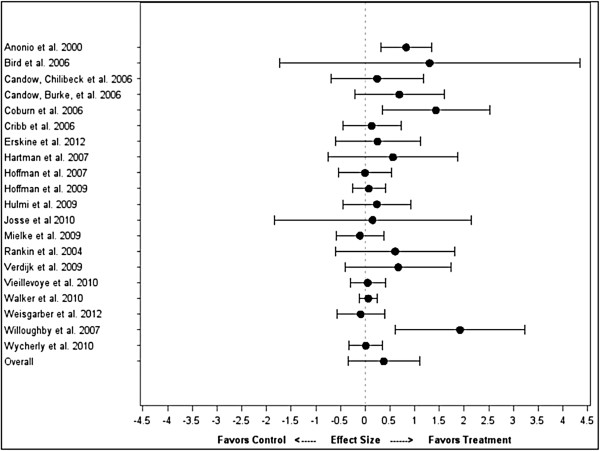
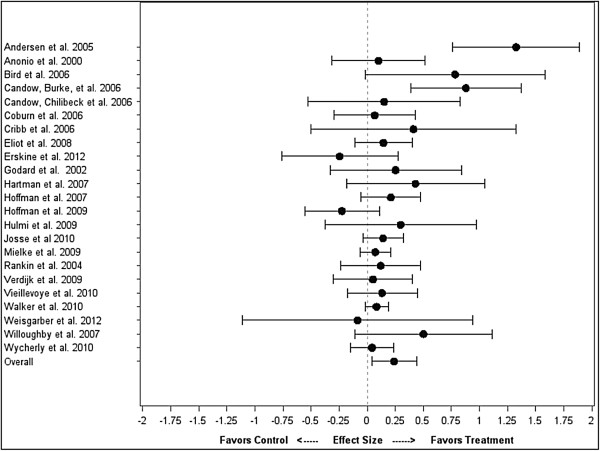
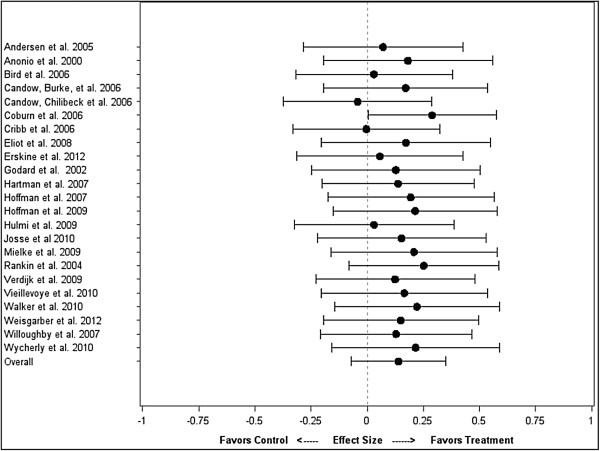
Protein timing is a popular dietary strategy designed to optimize the adaptive response to exercise. The strategy involves consuming protein in and around a training session in an effort to facilitate muscular repair and remodeling, and thereby enhance post-exercise strength- and hypertrophy-related adaptations. Despite the apparent biological plausibility of the strategy, however, the effectiveness of protein timing in chronic training studies has been decidedly mixed. The purpose of this paper therefore was to conduct a multi-level meta-regression of randomized controlled trials to determine whether protein timing is a viable strategy for enhancing post-exercise muscular adaptations. The strength analysis comprised 478 subjects and 96 ESs, nested within 41 treatment or control groups and 20 studies. The hypertrophy analysis comprised 525 subjects and 132 ESs, nested with 47 treatment or control groups and 23 studies. A simple pooled analysis of protein timing without controlling for covariates showed a small to moderate effect on muscle hypertrophy with no significant effect found on muscle strength. In the full meta-regression model controlling for all covariates, however, no significant differences were found between treatment and control for strength or hypertrophy. The reduced model was not significantly different from the full model for either strength or hypertrophy. With respect to hypertrophy, total protein intake was the strongest predictor of ES magnitude. These results refute the commonly held belief that the timing of protein intake in and around a training session is critical to muscular adaptations and indicate that consuming adequate protein in combination with resistance exercise is the key factor for maximizing muscle protein accretion.
Overview
CoChat Summary
TL;DR
This meta-analysis of randomized trials found that protein timing around resistance training did not significantly improve strength or hypertrophy after controlling for covariates. Total protein intake, not timing, was the strongest predictor of hypertrophy effect size.
Key findings
- Strength analysis included 478 subjects, 96 effect sizes, 41 treatment/control groups, and 20 studies. Treatment vs control was not significant in the basic model (difference = 0.38 ± 0.36; CI: -0.34, 1.10; P = 0.30), full model (difference = 0.28 ± 0.40; CI: -0.52, 1.07; P = 0.49), or reduced model (difference = 0.39 ± 0.36; CI: -0.34, 1.11; P = 0.29).
- Hypertrophy analysis included 525 subjects, 132 effect sizes, 47 treatment/control groups, and 23 studies. A simple pooled analysis showed a significant treatment advantage (difference = 0.24 ± 0.10; CI: 0.04, 0.44; P = 0.02), but this disappeared in the full model (difference = 0.16 ± 0.11; CI: -0.07, 0.38; P = 0.18) and reduced model (difference = 0.14 ± 0.11; CI: -0.07, 0.35; P = 0.20).
- Total protein intake was the strongest predictor of hypertrophy effect size (estimate = 0.41 ± 0.14; CI: 0.14, 0.69; P = 0.004), with about a 0.2 increase in effect size per 0.5 g/kg increase in protein ingestion. In unmatched studies, average intake was 1.33 g/kg/day for controls vs 1.66 g/kg/day for treatment; in matched studies, 1.91 vs 1.81 g/kg/day.
- Sub-analyses did not materially change outcomes: for fat-free mass, treatment vs control was not significant (difference = 0.08 ± 0.07; CI: -0.07, 0.24; P = 0.27) while protein intake remained a predictor (estimate = 0.39 ± 0.07; P < 0.001); for cross-sectional area, treatment vs control was not significant (difference = 0.14 ± 0.16; CI: -0.17, 0.46; P = 0.37) while protein intake remained a predictor (estimate = 0.55 ± 0.24; P = 0.02).
Methods
- Systematic searches of PubMed and Google Scholar up to March 2013 identified randomized controlled or crossover trials involving protein timing, defined as ≥6 g essential amino acids ≤1 hour pre- and/or post-resistance exercise vs a control not consuming protein <2 hours pre/post; training had to last ≥6 weeks and measure dynamic strength and/or hypertrophy. Studies scoring ≥5 on the PEDro scale were included; 23 studies were analyzed, with an average PEDro score of 8.7.
- Effect sizes were calculated as pretest-posttest change divided by pretest SD. Hierarchical linear mixed models modeled variation between studies and between treatment/control groups nested within studies, with group-level fixed predictors; separate analyses were run for strength and hypertrophy.
- The full model controlled for group class, protein matching, training status, blinding, gender, age, body mass, and study duration; model reduction used AICC and likelihood ratio tests. Interaction models examined treatment by protein matching and treatment by training status, and hypertrophy sub-analyses separated cross-sectional area and fat-free mass.
Limitations
- The paper states that control-group meal timing varied widely, from 2 hours post-workout to many hours later, making it difficult to determine whether a clear anabolic window exists. It also states that most subjects were inexperienced with resistance training, only 4 studies used trained subjects, and statistical power for training-status interactions was low.
- The paper states that cross-sectional area and fat-free mass data were pooled for the main hypertrophy analysis, though sub-analyses did not materially change results, and that there was a paucity of timing studies matching protein intake.
- The paper acknowledges that causality cannot be directly drawn, so it remains possible that protein timing produced a positive effect and the associated increase in protein intake was coincidental; only 3 matched-protein studies met inclusion criteria, limiting firm conclusions.
Model-written summary. Check it against the paper before relying on it.
Integrity signals
Registry
Cites
Statistics
Figures
Verification
Claims the paper makes
0 Valid · 0 Not valid · 28 Not checked · 80 Own results and interpretations
A result the paper reports from its own data — it cites no other source for it, so there is none to check. The quote shows it is in the paper.
In the paper
“Total protein intake (in g/kg) was the strongest predictor of ES magnitude (estimate = 0.41 ± 0.14; CI: 0.14, 0.69; P = 0.004).”
§ The effect of protein timing on muscle strength and hypertrophy: a meta-analysis > Results > Reduced model: hypertrophy
plainstates an association- Asserted: passes — The authors put it forward as true.
- Checkable: passes — It can be checked against evidence.
- Load-bearing: passes — The paper’s conclusions depend on it.
- Based: passes — The paper gives a reason why it holds.
A result the paper reports from its own data — it cites no other source for it, so there is none to check. The quote shows it is in the paper.
In the paper
“The weighted mean strength ES across all studies and groups was 1.39 ± 0.24 (CI: 0.88, 1.90).”
§ The effect of protein timing on muscle strength and hypertrophy: a meta-analysis > Results > Study characteristics
plainn = 478- Asserted: passes — The authors put it forward as true.
- Checkable: passes — It can be checked against evidence.
- Load-bearing: passes — The paper’s conclusions depend on it.
- Based: passes — The paper gives a reason why it holds.
A result the paper reports from its own data — it cites no other source for it, so there is none to check. The quote shows it is in the paper.
In the paper
“For hypertrophy, the mean ES was significantly greater in the treatment compared to the control (difference = 0.24 ± 0.10; CI: 0.04, 0.44; P = 0.02).”
§ The effect of protein timing on muscle strength and hypertrophy: a meta-analysis > Results > Basic model
plainstates a cause- Asserted: passes — The authors put it forward as true.
- Checkable: passes — It can be checked against evidence.
- Load-bearing: passes — The paper’s conclusions depend on it.
- Based: passes — The paper gives a reason why it holds.
- Rests on 2 assumptions not shown here.
A result the paper reports from its own data — it cites no other source for it, so there is none to check. The quote shows it is in the paper.
In the paper
“After the model reduction procedure, only training status and blinding remained as significant covariates.”
§ The effect of protein timing on muscle strength and hypertrophy: a meta-analysis > Results > Reduced model: strength
plainstates an association- Asserted: passes — The authors put it forward as true.
- Checkable: passes — It can be checked against evidence.
- Load-bearing: unclear — It is unclear whether the paper’s conclusions depend on it.
- Based: passes — The paper gives a reason why it holds.
A result the paper reports from its own data — it cites no other source for it, so there is none to check. The quote shows it is in the paper.
In the paper
“The mean ES for treatment was 0.49 ± 0.08 (CI: 0.33, 0.66).”
§ The effect of protein timing on muscle strength and hypertrophy: a meta-analysis > Results > Reduced model: hypertrophy
plain- Asserted: passes — The authors put it forward as true.
- Checkable: passes — It can be checked against evidence.
- Load-bearing: unclear — It is unclear whether the paper’s conclusions depend on it.
- Based: passes — The paper gives a reason why it holds.
62 more claims
Create a free account to see all 108 claims and to verify the 44 references still open.
- Probably not a substantial claim. 24
- It may state two separate claims as one. 21
- The quote only partly states this claim. 1
Claims other papers make about this one
Each is checked against this paper’s own text: does it say what the citing paper says it does?
The source backs part of the claim, not all of it — or backs it for a different population, condition or comparison.
In the citing paper
“This lack of agreement on the efficacy of protein supplementation6–12 is likely due to the use of divergent study inclusion criteria and inclusion of subjects with differing: ages, training statuses, total protein intakes, protein sources and protein doses.”
From A systematic review, meta-analysis and meta-regression of the effect of protein supplementation on resistance training-induced gains in muscle mass and strength in healthy adults (2018) · cites this paper as [6]
Experimental — accuracy not yet measuredThe source backs part of the claim, not all of it — or backs it for a different population, condition or comparison.
In the citing paper
“Despite a large volume of work in this area, narrative reviews1–5 and even meta-analyses6–12 yield conflicting results as to the actual effectiveness of protein supplementation to enhance RET-mediated gains in muscle mass and strength.”
From A systematic review, meta-analysis and meta-regression of the effect of protein supplementation on resistance training-induced gains in muscle mass and strength in healthy adults (2018) · cites this paper as [6]
Experimental — accuracy not yet measuredThe source backs part of the claim, not all of it — or backs it for a different population, condition or comparison.
In the citing paper
“Our analysis, and those from others,6 leads us to conclude that the specifics of protein supplementation (eg, timing, postexercise protein dose or protein source) play a minor, if any, role in determining RET-induced gains in FFM and strength over a period of weeks.”
From A systematic review, meta-analysis and meta-regression of the effect of protein supplementation on resistance training-induced gains in muscle mass and strength in healthy adults (2018) · cites this paper as [6]
Experimental — accuracy not yet measuredThe source backs part of the claim, not all of it — or backs it for a different population, condition or comparison.
In the citing paper
“To the best of our knowledge, this is the first study synthesizing this data from RCTs, as previous meta-analysis pooled data from studies that were not designed to compare protein supplementation before and after training [14,15].”
From Does Protein Ingestion Timing Affect Exercise-Induced Adaptations? A Systematic Review with Meta-Analysis (2025) · cites this paper as [14]
Experimental — accuracy not yet measured
4 more claims about this paper
Create a free account to see every claim other papers make about this one.
Self-check
Percentages, sums and reported differences re-computed from the paper’s own numbers.
Each contradiction between two passages listed here was confirmed by an independent check.
Rated major: it would touch a result — a value a result rests on, reported and recomputed p-values on opposite sides of the significance level, two passages that conflict with no sign which is right, or a cited work retracted before this paper was published.
In the paper
§ The effect of protein timing on muscle strength and hypertrophy: a meta-analysis > Results > Reduced model: hypertrophy
“After the model reduction procedure, total protein intake, study duration, and blinding remained as significant covariates.”
§ The effect of protein timing on muscle strength and hypertrophy: a meta-analysis > Methodology > Statistical analyses
“A full model was then created with the following predictors: the class of the group (treatment or control), whether or not the groups were protein matched, training status (experienced or novice), blinding (double, single, or none), gender (male, female, or mixed), age (young or old), body mass in kg, and the duration of the study in weeks.”
Rated minor: it would not touch a result — a value no result rests on, a p-value that stays on the same side of the significance level, or a conflict that is clerical, resolved elsewhere in the paper, or outside its own findings.
In the paper
§ The effect of protein timing on muscle strength and hypertrophy: a meta-analysis > Discussion
“For FFM, the difference between treatment and control was not significant (P = 0.27), with a ES difference of -0.08.”
§ The effect of protein timing on muscle strength and hypertrophy: a meta-analysis > Results > Hypertrophy sub-analyses
“For FFM, there was no significant difference between treatment and control (difference = 0.08 ± 0.07; CI: -0.07, 0.24; P = 0.27).”
Rated minor: it would not touch a result — a value no result rests on, a p-value that stays on the same side of the significance level, or a conflict that is clerical, resolved elsewhere in the paper, or outside its own findings.
In the paper
§ The effect of protein timing on muscle strength and hypertrophy: a meta-analysis > Discussion
“For CSA, the difference between treatment and control was not significant (P = 0.37), with a ES difference of -0.14.”
§ The effect of protein timing on muscle strength and hypertrophy: a meta-analysis > Results > Hypertrophy sub-analyses
“For CSA, there was no significant difference between treatment and control (difference = 0.14 ± 0.16; CI: -0.17, 0.46; P = 0.37).”
Citations
Cites
Model selection and multimodel inference: a practical information-theoretic approach.
Guthery, F. S., Burnham, K. P., & Anderson, D. R. (2003) · The Journal of Wildlife Management · doi:10.2307/3802723 · Cited by 41,495
Regression and time series model selection in small samples
HURVICH, C. M., & TSAI, C.-L. (1989) · Biometrika · doi:10.1093/biomet/76.2.297 · Cited by 6,586 · cited 2×
“The final model represented the reduced model with the lowest Akaike’s Information Corrected Criterion (AICC) [55] and that was not significantly different (P > 0.05) from the full model when compared using a likelihood ratio test (LRT).”
MethodInfluentialThe Handbook of Research Synthesis and Meta-Analysis
(2019) · doi:10.7758/9781610448864 · Cited by 4,553
Model Selection and Inference: A Practical Information-Theoretic Approach
Strawderman, R. L., Burnham, K. P., & Anderson, D. R. (2000) · Journal of the American Statistical Association · doi:10.2307/2669574 · Cited by 4,194
Morris, S. B., & DeShon, R. P. (2002) · Psychological Methods · doi:10.1037/1082-989x.7.1.105 · Cited by 2,502 · cited 5×
“The sampling variance for each ES was estimated according to Morris and DeShon [51].”
BackgroundMethodInfluentialModel Selection and Inference: A Practical Information-Theoretic Approach
Beier, P., Burnham, K. P., & Anderson, D. R. (2001) · The Journal of Wildlife Management · doi:10.2307/3803117 · Cited by 2,440
Greenhalgh, T., & Peacock, R. (2005) · BMJ · doi:10.1136/bmj.38636.593461.68 · Cited by 2,045 · cited 2×
“methods outlined by Greenhalgh and Peacock [25], the reference lists of articles retrieved in the search were”
MethodAdvanced methods in meta‐analysis: multivariate approach and meta‐regression
van Houwelingen, H. C., Arends, L. R., & Stijnen, T. (2002) · Statistics in Medicine · doi:10.1002/sim.1040 · Cited by 1,580
Evidence for physiotherapy practice: A survey of the Physiotherapy Evidence Database (PEDro)
Moseley, A. M., Herbert, R. D., Sherrington, C., & Maher, C. G. (2002) · Australian Journal of Physiotherapy · doi:10.1016/s0004-9514(14)60281-6 · Cited by 911 · cited 2×
“Only those studies scoring ≥5 on the PEDro scale–a value considered to be of moderate to high quality [27]were accepted for analysis.”
BackgroundMethodA random‐effects regression model for meta‐analysis
Berkey, C. S., Hoaglin, D. C., Mosteller, F., & Colditz, G. A. (1995) · Statistics in Medicine · doi:10.1002/sim.4780140406 · Cited by 879 · cited 1×
“[57].”
Cermak, N. M., Res, P. T., de Groot, L. C., Saris, W. H., & van Loon, L. J. (2012) · The American Journal of Clinical Nutrition · doi:10.3945/ajcn.112.037556 · Cited by 827 · cited 3×
“[24], who found that protein supplementation alone produced beneficial adaptations when combined with resistance training.”
BackgroundResultInfluentialInternational Society of Sports Nutrition position stand: protein and exercise
Campbell, B., Kreider, R. B., Ziegenfuss, T., La Bounty, P., Roberts, M., Burke, D., Landis, J., Lopez, H., & Antonio, J. (2007) · Journal of the International Society of Sports Nutrition · doi:10.1186/1550-2783-4-8 · Cited by 716
Postexercise net protein synthesis in human muscle from orally administered amino acids
Tipton, K. D., Ferrando, A. A., Phillips, S. M., Doyle, D., & Wolfe, R. R. (1999) · American Journal of Physiology-Endocrinology and Metabolism · doi:10.1152/ajpendo.1999.276.4.e628 · Cited by 616 · cited 1×
“A number of studies support the superiority of protein timing for stimulating increases in acute protein synthesis pursuant to resistance training when compared to placebo [6-9].”
BackgroundThe handbook of research synthesis and meta-analysis, 2nd ed.
Cooper, H. M., Hedges, L. V., & Valentine, J. C. (2009) · Cited by 541
Esmarck, B., Andersen, J. L., Olsen, S., Richter, E. A., Mizuno, M., & Kjær, M. (2001) · The Journal of Physiology · doi:10.1111/j.1469-7793.2001.00301.x · Cited by 540 · cited 1×
“Of these studies, 3 did not meet criteria for sufficient supplemental protein intake [28-30] and in another the timing of consumption was outside the defined post-workout range [31].”
BackgroundDietary protein for athletes: From requirements to optimum adaptation
Phillips, S. M., & Van Loon, L. J. C. (2011) · Journal of Sports Sciences · doi:10.1080/02640414.2011.619204 · Cited by 530 · cited 1×
“Background Protein timing is a popular dietary strategy designed to optimize the adaptive response to exercise [1].”
BackgroundRasmussen, B. B., Tipton, K. D., Miller, S. L., Wolf, S. E., & Wolfe, R. R. (2000) · Journal of Applied Physiology · doi:10.1152/jappl.2000.88.2.386 · Cited by 523 · cited 1×
“A number of studies support the superiority of protein timing for stimulating increases in acute protein synthesis pursuant to resistance training when compared to placebo [6-9].”
BackgroundHartman, J. W., Tang, J. E., Wilkinson, S. B., Tarnopolsky, M. A., Lawrence, R. L., Fullerton, A. V., & Phillips, S. M. (2007) · The American Journal of Clinical Nutrition · doi:10.1093/ajcn/86.2.373 · Cited by 498 · cited 1×
“, [41] 56 untrained young men 17.”
International Society of Sports Nutrition position stand: Nutrient timing
Kerksick, C., Harvey, T., Stout, J., Campbell, B., Wilborn, C., Kreider, R., Kalman, D., Ziegenfuss, T., Lopez, H., Landis, J., et al. (2008) · Journal of the International Society of Sports Nutrition · doi:10.1186/1550-2783-5-17 · Cited by 456
Essential amino acids and muscle protein recovery from resistance exercise
Børsheim, E., Tipton, K. D., Wolf, S. E., & Wolfe, R. R. (2002) · American Journal of Physiology-Endocrinology and Metabolism · doi:10.1152/ajpendo.00466.2001 · Cited by 422
Research Synthesis and Meta-Analysis
Cooper, H., Patall, E., & Lindsay, J. (2009) · The SAGE Handbook of Applied Social Research Methods · doi:10.4135/9781483348858.n11 · Cited by 397
Ingestion of Casein and Whey Proteins Result in Muscle Anabolism after Resistance Exercise
TIPTON, K. D., ELLIOTT, T. A., CREE, M. G., WOLF, S. E., SANFORD, A. P., & WOLFE, R. R. (2004) · Medicine & Science in Sports & Exercise · doi:10.1249/01.mss.0000147582.99810.c5 · Cited by 350 · cited 1×
“A number of studies support the superiority of protein timing for stimulating increases in acute protein synthesis pursuant to resistance training when compared to placebo [6-9].”
BackgroundEarly signaling responses to divergent exercise stimuli in skeletal muscle from well-trained humans
Coffey, V. G., Zhong, Z., Shield, A., Canny, B. J., Chibalin, A. V., Zierath, J. R., & Hawley, J. A. (2006) · The FASEB Journal · doi:10.1096/fj.05-4809fje · Cited by 336
Peterson, M. D., Rhea, M. R., & Alvar, B. A. (2005) · The Journal of Strength and Conditioning Research · doi:10.1519/r-16874.1 · Cited by 303 · cited 1×
“ently to the demands of resistance training compared with those who lack training experience [65].”
BackgroundThe Efficiency of Simulation-Based Multiple Comparisons
Edwards, D., & Berry, J. J. (1987) · Biometrics · doi:10.2307/2531545 · Cited by 298 · cited 1×
“Adjustment for post hoc multiple comparisons was performed using a simulation-based procedure [58].”
MethodIndependent and Combined Effects of Amino Acids and Glucose after Resistance Exercise
MILLER, S. L., TIPTON, K. D., CHINKES, D. L., WOLF, S. E., & WOLFE, R. R. (2003) · Medicine & Science in Sports & Exercise · doi:10.1249/01.mss.0000053910.63105.45 · Cited by 283 · cited 1×
“with amino acid ingestion [12], with a majority of studies failing to demonstrate any such benefit [13-15].”
BackgroundEffects of Supplement Timing and Resistance Exercise on Skeletal Muscle Hypertrophy
CRIBB, P. J., & HAYES, A. (2006) · Medicine & Science in Sports & Exercise · doi:10.1249/01.mss.0000233790.08788.3e · Cited by 270 · cited 3×
“Candow, Chilibeck, et al., [40] 29 untrained older men Multi-ingredient supplement containing a protein dose of 0.3 g/kg immediately before exercise and a CHObased placebo immediately after, or the reverse order of the latter, or placebo before & after exercise No Air-displacement plethysmography, ultrasound Progressi…”
BackgroundMethodInfluentialVerdijk, L. B., Jonkers, R. A., Gleeson, B. G., Beelen, M., Meijer, K., Savelberg, H. H., Wodzig, W. K., Dendale, P., & van Loon, L. J. (2009) · The American Journal of Clinical Nutrition · doi:10.3945/ajcn.2008.26626 · Cited by 253 · cited 1×
“, [21] 28 untrained elderly men 10 g casein hydrolysate or placebo consumed immediately before and after exercise No DXA, CT, and muscle biopsy Progressive resistance training consisting leg press and knee extension performed 3 days/ wk for 12 wks 1 RM leg press & leg extension strength increased, with no significant…”
MethodJoint position statement: nutrition and athletic performance
(2001) · Scandinavian Journal of Medicine & Science in Sports · doi:10.1046/j.1524-4725.2001.110310_2.x · Cited by 253
Lemon, P. W., Tarnopolsky, M. A., MacDougall, J. D., & Atkinson, S. A. (1992) · Journal of Applied Physiology · doi:10.1152/jappl.1992.73.2.767 · Cited by 241
Tipton, K. (1999) · The Journal of Nutritional Biochemistry · doi:10.1016/s0955-2863(98)00087-4 · Cited by 231 · cited 1×
“The essential amino acids, in particular, are believed primarily responsible for enhancing this response, with little to no contribution seen from provision of nonessential amino acids [10,11].”
BackgroundAndersen, L. L., Tufekovic, G., Zebis, M. K., Crameri, R. M., Verlaan, G., Kjær, M., Suetta, C., Magnusson, P., & Aagaard, P. (2005) · Metabolism · doi:10.1016/j.metabol.2004.07.012 · Cited by 228
Willoughby, D. S., Stout, J. R., & Wilborn, C. D. (2007) · Amino Acids · doi:10.1007/s00726-006-0398-7 · Cited by 227 · cited 2×
“peri-workout period promotes increases in muscle strength and/or hypertrophy [16-19], others have not”
BackgroundMethodNutrition and Athletic Performance
(2000) · Medicine and Science in Sports and Exercise · doi:10.1097/00005768-200012000-00025 · Cited by 211
Hulmi, J. J., Kovanen, V., Selänne, H., Kraemer, W. J., Häkkinen, K., & Mero, A. A. (2009) · Amino Acids · doi:10.1007/s00726-008-0150-6 · Cited by 189 · cited 2×
“, [18] 31 untrained young men 15 g whey isolate or placebo consumed immediately before and after exercise No MRI, muscle biopsy Progressive, periodized total body resistance training consisting of exercises for all major muscle groups trained performed 2 days/ wk for 21 wks Strength increased similarly in the protein…”
BackgroundMethodBody Composition and Strength Changes in Women with Milk and Resistance Exercise
JOSSE, A. R., TANG, J. E., TARNOPOLSKY, M. A., & PHILLIPS, S. M. (2010) · Medicine & Science in Sports & Exercise · doi:10.1249/mss.0b013e3181c854f6 · Cited by 181 · cited 1×
“, [45] 20 untrained young women 18 g protein within milk or an isocaloric maltodextrin placebo immediately after exercise and again 1 hr later No DXA Progressive, periodized resistance training consisting of exercises for all major muscle groups performed 5 days/wk for 12 wks 1 RM strength increased similarly in both…”
MethodEffect of Whey and Soy Protein Supplementation Combined with Resistance Training in Young Adults
Candow, D. G., Burke, N. C., Smith-Palmer, T., & Burke, D. G. (2006) · International Journal of Sport Nutrition and Exercise Metabolism · doi:10.1123/ijsnem.16.3.233 · Cited by 180 · cited 1×
“, [39] 27 untrained young men & women Whey (1.”
BackgroundCarbohydrate Does Not Augment Exercise-Induced Protein Accretion versus Protein Alone
STAPLES, A. W., BURD, N. A., WEST, D. W. D., CURRIE, K. D., ATHERTON, P. J., MOORE, D. R., RENNIE, M. J., MACDONALD, M. J., BAKER, S. K., & PHILLIPS, S. M. (2011) · Medicine & Science in Sports & Exercise · doi:10.1249/mss.0b013e31820751cb · Cited by 162 · cited 1×
“with amino acid ingestion [12], with a majority of studies failing to demonstrate any such benefit [13-15].”
BackgroundProtein supplementation before and after resistance training in older men
Candow, D. G., Chilibeck, P. D., Facci, M., Abeysekara, S., & Zello, G. A. (2006) · European Journal of Applied Physiology · doi:10.1007/s00421-006-0223-8 · Cited by 158 · cited 1×
“, [40] 29 untrained older men Multi-ingredient supplement containing a protein dose of 0.”
BackgroundKERKSICK, C. M., RASMUSSEN, C. J., LANCASTER, S. L., MAGU, B., SMITH, P., MELTON, C., GREENWOOD, M., ALMADA, A. L., EARNEST, C. P., & KREIDER, R. B. (2006) · Journal of Strength and Conditioning Research · doi:10.1519/00124278-200608000-00028 · Cited by 156 · cited 1×
“Of these studies, 3 did not meet criteria for sufficient supplemental protein intake [28-30] and in another the timing of consumption was outside the defined post-workout range [31].”
BackgroundKoopman, R., Beelen, M., Stellingwerff, T., Pennings, B., Saris, W. H. M., Kies, A. K., Kuipers, H., & van Loon, L. J. C. (2007) · American Journal of Physiology-Endocrinology and Metabolism · doi:10.1152/ajpendo.00135.2007 · Cited by 150 · cited 1×
“with amino acid ingestion [12], with a majority of studies failing to demonstrate any such benefit [13-15].”
BackgroundNutrient timing revisited: is there a post-exercise anabolic window?
Aragon, A. A., & Schoenfeld, B. J. (2013) · Journal of the International Society of Sports Nutrition · doi:10.1186/1550-2783-10-5 · Cited by 139
Self-citationOgasawara, R., Kobayashi, K., Tsutaki, A., Lee, K., Abe, T., Fujita, S., Nakazato, K., & Ishii, N. (2013) · Journal of Applied Physiology · doi:10.1152/japplphysiol.01161.2012 · Cited by 138 · cited 1×
“ted resistance exercise attenuates anabolic intracellular signaling in rodents [66] and humans [67], conceivably”
BackgroundBeyond the Zone: Protein Needs of Active Individuals
Lemon, P. W. R. (2000) · Journal of the American College of Nutrition · doi:10.1080/07315724.2000.10718974 · Cited by 137 · cited 1×
“rate and the need to sustain greater lean mass rather than increased fuel utilization [62].”
BackgroundHoffman, J. R., Ratamess, N. A., Tranchina, C. P., Rashti, S. L., Kang, J., & Faigenbaum, A. D. (2009) · International Journal of Sport Nutrition and Exercise Metabolism · doi:10.1123/ijsnem.19.2.172 · Cited by 123 · cited 1×
“, [20] 33 welltrained young men Supplement containing 42 g protein (milk/ collagen blend) and 2 g carbohydrate consumed either immediately before and after exercise or in the early morning and late evening Yes DXA Progressive resistance training consisting exercises for the major muscle groups peformed 4 days/ wk for…”
MethodBird, S. P., Tarpenning, K. M., & Marino, F. E. (2006) · European Journal of Applied Physiology · doi:10.1007/s00421-005-0127-z · Cited by 122
Bemben, M. G., Witten, M. S., Carter, J. M., Eliot, K. A., Knehans, A. W., & Bemben, D. A. (2010) · The Journal of nutrition, health and aging · doi:10.1007/s12603-009-0124-8 · Cited by 120
Holm, L., Olesen, J. L., Matsumoto, K., Doi, T., Mizuno, M., Alsted, T. J., Mackey, A. L., Schwarz, P., & Kjær, M. (2008) · Journal of Applied Physiology · doi:10.1152/japplphysiol.00935.2007 · Cited by 109 · cited 1×
“Of these studies, 3 did not meet criteria for sufficient supplemental protein intake [28-30] and in another the timing of consumption was outside the defined post-workout range [31].”
BackgroundEffect of Post-Exercise Supplement Consumption on Adaptations to Resistance Training
Rankin, J. W., Goldman, L. P., Puglisi, M. J., Nickols-Richardson, S. M., Earthman, C. P., & Gwazdauskas, F. C. (2004) · Journal of the American College of Nutrition · doi:10.1080/07315724.2004.10719375 · Cited by 90 · cited 1×
“, [35] 13 untrained young men Chocolate milk (providing a protein dose of 0.”
BackgroundMultilevel Models for Meta-Analysis
(2003) · Multilevel Modeling · doi:10.4324/9781410606747-9 · Cited by 88
Stimulation of muscle anabolism by resistance exercise and ingestion of leucine plus protein
Tipton, K. D., Elliott, T. A., Ferrando, A. A., Aarsland, A. A., & Wolfe, R. R. (2009) · Applied Physiology, Nutrition, and Metabolism · doi:10.1139/h09-006 · Cited by 83 · cited 1×
“A number of studies support the superiority of protein timing for stimulating increases in acute protein synthesis pursuant to resistance training when compared to placebo [6-9].”
BackgroundAntónio, J., Sanders, M. S., Ehler, L. A., Uelmen, J. A., Raether, J., & Stout, J. R. (2000) · Nutrition · doi:10.1016/s0899-9007(00)00434-2 · Cited by 80 · cited 1×
“, [33] 19 untrained young women 18.”
Eliot, K. A., Knehans, A. W., Bemben, D. A., Witten, M. S., Carter, J., & Bemben, M. G. (2008) · The Journal of nutrition, health and aging · doi:10.1007/bf02982622 · Cited by 78 · cited 1×
“, [43] 42 untrained older men 35 g whey protein + CHO-electrolyte solution, or whey/ CHO + 5 g creatine, or creatine-only, or CHO placebo No DXA and bioelectrical impedance Progressive resistance training consisting of exercise for all major muscle groups performed Not measured No significant effects of any of the whe…”
MethodOral amino-acid provision does not affect muscle strength or size gains in older men
GODARD, M. P., WILLIAMSON, D. L., & TRAPPE, S. W. (2002) · Medicine & Science in Sports & Exercise · doi:10.1097/00005768-200207000-00012 · Cited by 76 · cited 1×
“, [34] 17 untrained older men (60–80 y) 12 g of essential amino acids and 72 g (total) of fructose and dextrose consumed immediately after exercise No Computed tomography (CT).”
BackgroundCOBURN, J. W., HOUSH, D. J., HOUSH, T. J., MALEK, M. H., BECK, T. W., CRAMER, J. T., JOHNSON, G. O., & DONLIN, P. E. (2006) · Journal of Strength and Conditioning Research · doi:10.1519/00124278-200605000-00009 · Cited by 75 · cited 1×
“, [38] 33 untrained young men 20 g whey + 6.”
BackgroundElkins, M. R., Herbert, R. D., Moseley, A. M., Sherrington, C., & Maher, C. (2010) · Cardiopulmonary Physical Therapy Journal · doi:10.1097/01823246-201021030-00005 · Cited by 71 · cited 1×
“Study quality was then assessed with the PEDro scale, which has been shown to be a valid measure of the methodologic quality of RCTs [26] and possesses acceptable inter-rater reliability [27].”
MethodTiming of creatine or protein supplementation and resistance training in the elderly
Candow, D. G., & Chilibeck, P. D. (2008) · Applied Physiology, Nutrition, and Metabolism · doi:10.1139/h07-139 · Cited by 60 · cited 2×
“workout period is critical to muscular adaptations [3-5].”
BackgroundVieillevoye, S., POORTMANS, J. R., Duchateau, J., & Carpentier, A. (2010) · European Journal of Applied Physiology · doi:10.1007/s00421-010-1520-9 · Cited by 58 · cited 1×
“, [47] 29 untrained young men 15 g EAA + 15 g saccharose.”
BackgroundGlynn, E. L., Fry, C. S., Timmerman, K. L., Drummond, M. J., Volpi, E., & Rasmussen, B. B. (2013) · The Journal of Nutrition · doi:10.3945/jn.112.168203 · Cited by 52
Walker, T. B., Smith, J., Herrera, M., Lebegue, B., Pinchak, A., & Fischer, J. (2010) · International Journal of Sport Nutrition and Exercise Metabolism · doi:10.1123/ijsnem.20.5.409 · Cited by 47 · cited 1×
“, [46] 30 moderately trained men and women 19.”
Background(2007) · Europe PMC (PubMed Central) · Cited by 46
Moore, D. R., Del Bel, N. C., Nizi, K. I., Hartman, J. W., Tang, J. E., Armstrong, D., & Phillips, S. M. (2007) · The Journal of Nutrition · doi:10.1093/jn/137.4.985 · Cited by 46 · cited 1×
“gen utilization [63], although this hypothesis needs”
Whey Protein Does Not Enhance the Adaptations to Elbow Flexor Resistance Training
ERSKINE, R. M., FLETCHER, G., HANSON, B., & FOLLAND, J. P. (2012) · Medicine & Science in Sports & Exercise · doi:10.1249/mss.0b013e318256c48d · Cited by 45 · cited 1×
“, [48] 33 untrained young men 20 g whey protein or placebo consumed immediately before and after exercise No MRI 4-6 sets of elbow flexion performed 3 days/wk for 12 weeks No significant differences in maximal isometric voluntary force or 1 RM strength between groups No significant differences in muscle CSA between gr…”
MethodWeisgarber, K. D., Candow, D. G., & Vogt, E. S. M. (2012) · International Journal of Sport Nutrition and Exercise Metabolism · doi:10.1123/ijsnem.22.6.463 · Cited by 38 · cited 1×
“, [49] 17 untrained young men and women Whey protein dosed at 0.”
BackgroundBurk, A., Timpmann, S., Medijainen, L., Vähi, M., & Ööpik, V. (2009) · Nutrition Research · doi:10.1016/j.nutres.2009.03.008 · Cited by 35
Changes in Body Composition with Yogurt Consumption during Resistance Training in Women
White, K. M., Bauer, S. J., Hartz, K. K., & Baldridge, M. (2009) · International Journal of Sport Nutrition and Exercise Metabolism · doi:10.1123/ijsnem.19.1.18 · Cited by 35 · cited 1×
“Of these studies, 3 did not meet criteria for sufficient supplemental protein intake [28-30] and in another the timing of consumption was outside the defined post-workout range [31].”
BackgroundLemon, P. W. R., Berardi, J. M., & Noreen, E. E. (2002) · Current Sports Medicine Reports · doi:10.1249/00149619-200208000-00005 · Cited by 27 · cited 2×
“workout period is critical to muscular adaptations [3-5].”
BackgroundNutrient Timing: The Future of Sports Nutrition
Ivy, J. L., & Portman, R. (2004) · Medical Entomology and Zoology · Cited by 26
Mielke, M. M., Housh, T. J., Malek, M. H., Beck, T. W., Schmidt, R. J., Johnson, G. O., & Housh, D. J. (2009) · Cited by 16
Wycherley, T. P., Noakes, M., Clifton, P. M., Cleanthous, X., Keogh, J. B., & Brinkworth, G. D. (2010) · Diabetes, Obesity and Metabolism · doi:10.1111/j.1463-1326.2010.01307.x · Cited by 14 · cited 1×
“, [22] 34 untrained, older men & women w/ type 2 diabetes 21 g protein, 0.”
Explaining heterogeneity in meta-analysis: a comparison of methods
Thompson, S. G., & Sharp, S. J. (1999) · Statistics in Medicine · doi:10.1002/(sici)1097-0258(19991030)18:20
Cited by
Sarcopenic obesity in older adults: aetiology, epidemiology and treatment strategies
Batsis, J. A., & Villareal, D. T. (2018) · Nature Reviews Endocrinology · doi:10.1038/s41574-018-0062-9 · Cited by 1,382
Morton, R. W., Murphy, K. T., McKellar, S. R., Schoenfeld, B. J., Henselmans, M., Helms, E., Aragon, A. A., Devries, M. C., Banfield, L., Krieger, J. W., et al. (2018) · British Journal of Sports Medicine · doi:10.1136/bjsports-2017-097608 · Cited by 1,269
“This lack of agreement on the efficacy of protein supplementation 6–12 is likely due to the use of divergent study inclusion criteria and inclusion of subjects with differing: ages, training statuses, total protein intakes, protein sources and protein doses.”
BackgroundMethodInfluentialSelf-citationEASL Clinical Practice Guidelines on nutrition in chronic liver disease
Merli, M., Berzigotti, A., Zelber-Sagi, S., Dasarathy, S., Montagnese, S., Genton, L., Plauth, M., & Parés, A. (2019) · Journal of Hepatology · doi:10.1016/j.jhep.2018.06.024 · Cited by 1,130
“Nutrient supplementation following physical activity is beneficial in physiological states, but whether such an intervention is beneficial in cirrhosis is currently unknown.(119,120) Continued impaired functional capacity and reduced peak oxygen consumption are associated with decreased survival and poor post-transpla…”
International Society of Sports Nutrition Position Stand: protein and exercise
Jäger, R., Kerksick, C. M., Campbell, B. I., Cribb, P. J., Wells, S. D., Skwiat, T. M., Purpura, M., Ziegenfuss, T. N., Ferrando, A. A., Arent, S. M., et al. (2017) · Journal of the International Society of Sports Nutrition · doi:10.1186/s12970-017-0177-8 · Cited by 873
“However, others have advocated that the total daily intake of protein might be as important or more important [32].”
BackgroundInternational society of sports nutrition position stand: nutrient timing
Kerksick, C. M., Arent, S., Schoenfeld, B. J., Stout, J. R., Campbell, B., Wilborn, C. D., Taylor, L., Kalman, D., Smith-Ryan, A. E., Kreider, R. B., et al. (2017) · Journal of the International Society of Sports Nutrition · doi:10.1186/s12970-017-0189-4 · Cited by 622
“[126] critically examined the efficacy surrounding post-exercise protein administration.”
BackgroundSelf-citation
Metadata
- Authors
- Schoenfeld, B. J., Aragon, A. A., & Krieger, J. W.
- Affiliations
- Lehman College (US)
- California State University, Northridge (US)
- Weightology, LLC Issaquah WA USA
- Corresponding author
- Schoenfeld, Brad Jon
- Venue
- Journal of the International Society of Sports Nutrition
- Publisher
- Informa UK Limited
- Published
- 2013-01-03
- Volume
- 10
- Issue
- 1
- Pages
- 53-53
- ISSN
- 1550-2783 (ISSN-L)
- PMC
- PMC3879660
- OpenAlex
- W2111942374
- Cited by
- 201
- References
- 71
- Citations by year
- 2026: 14 · 2025: 21 · 2024: 15 · 2023: 12 · 2022: 6 · 2021: 11 · 2020: 21 · 2019: 16 · 2018: 22 · 2017: 28 · 2016: 17 · 2015: 11 · 2014: 7
- FWCI
- 1.34
- Type
- journal article
- Language
- en
- Open access
- gold
- doi.org
- Licence
- Locations
- Journal of the International Society of Sports Nutrition (publishedVersion, cc-by)
- Europe PMC (PubMed Central) (publishedVersion, cc-by)
- PubMed Central (publishedVersion, cc-by)
- PubMed (publishedVersion)
- CUNY Academic Works (City University of New York) (submittedVersion)
- Topics
- Health Sciences › Nursing › Nutrition and Dietetics › Muscle metabolism and nutrition
- Health Sciences › Medicine › Orthopedics and Sports Medicine › Sports Performance and Training
- Life Sciences › Biochemistry, Genetics and Molecular Biology › Molecular Biology › Muscle Physiology and Disorders
- Keywords
- protein timing, muscle strength, muscle hypertrophy, resistance training, protein intake, muscle protein accretion, exercise adaptation
About these checks
Registry, retraction, Cites and statistics results are computed, not judged, with one exception: a printed reference that no index lists is read once by a model before it counts as a citation error. Claims are extracted by a model and kept only when their quote appears verbatim in the text; each cited source is then checked, with a model’s help, for whether it says what the claim relies on. Those verdicts can be wrong — read the claim’s quote and the cited source before relying on one.
A language model drew the claims from the paper on 2026-11-23, under version 3 of the claim definition (model deepseek-v4.1-flash, prompt extract-v3).
A second model labelled each claim on 2026-11-23 (model jev-1.13-20260917, definition revision gold-guideline-v0.2).
Statistics and arithmetic are recomputed, not judged.
Confidence bands are shown only for fields calibrated on our annotated test set. None is calibrated yet, so no band is shown.
What counts as a claim ›How we measure confidence ›How we check this ›
Are you an author, or do you see a problem with this page? Request a review
Data sources
Bibliographic data: Semantic Scholar, OpenAlex, Crossref.
Contains information from the Semantic Scholar Academic Graph Datasets, made available under the ODC Attribution License (ODC-BY 1.0).
Semantic Scholar’s data is described in: Kinney, R., et al. (2023). The Semantic Scholar Open Data Platform. arXiv:2301.10140.
