

Cardiovascular and ride time-to-exhaustion effects of an energy drink
Open accessThe DOI matches its Crossref record; 52 of the 52 references it cites were found in a registry or an index.
Abstract
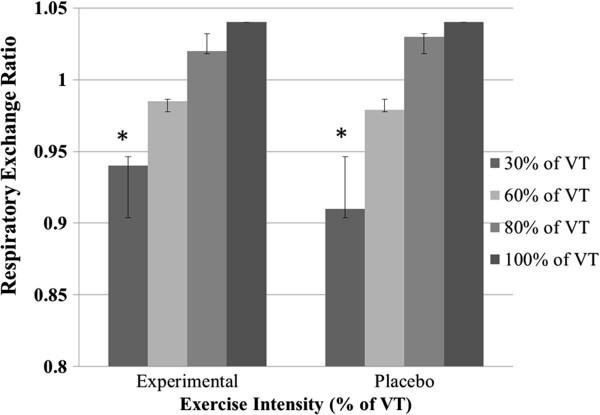
BACKGROUND: Currently, there are few studies on the cardiovascular and fatigue effects of commercially available energy drinks. This study investigated the effects of Monster energy drink (Monster Beverage Corporation, Corona, California), on resting heart rate (HR), heart rate variability (HRV), ride time-to-exhaustion, peak exercise HR, respiratory exchange ratio (RER), and peak rating of perceived exertion (RPE). METHODS: The study used a double-blind, randomized, placebo controlled, crossover design. After an 8-hr fast, 15 subjects consumed Monster Energy Drink (ED standardized to 2.0 mg * kg-1 caffeine) or a flavor-matched placebo preexercise. Resting HR and HRV were determined. After an initial submaximal workload for 30 minutes, subjects completed 10 min at 80% ventilatory threshold (VT) and rode until volitional fatigue at 100% VT. RESULTS: Resting HR was significantly different (ED: 65+/-10 bpm vs. placebo: 58+/-8 bpm, p = 0.02), but resting HRV was not different between the energy drink and placebo trials. Ride time-to-exhaustion was not significantly different between trials (ED: 45.5+/- 9.8 vs. placebo: 43.8+/-9.3 min, p = 0.62). No difference in peak RPE (ED: 9.1 +/- 0.5 vs. placebo: 9.0 +/- 0.8, p = 1.00) nor peak HR (ED: 177 +/- 11 vs. placebo: 175 +/- 12, p = 0.73) was seen. The RER at 30% of VT was significantly different (ED: 0.94 +/- 0.06 vs. placebo: 0.91 +/- 0.05, p = 0.046), but no difference between the two conditions were seen at the other intensities. CONCLUSION: Although preexercise ingestion of the energy drink does increase resting HR there was no alteration in HRV parameters. Ride time-to-exhaustion was not enhanced.
Overview
The claims and statistics of this paper haven’t been checked yet.
Free: it reads the open-access text and checks the first 5 claims that cite a source we can check. Create a free account to check every claim.
Integrity signals
Registry
Cites
Statistics
Figures
Verification
Claims the paper makes
The claims and statistics of this paper haven’t been checked yet.
Free: it reads the open-access text and checks the first 5 claims that cite a source we can check. Create a free account to check every claim.
Claims other papers make about this one
Each is checked against this paper’s own text: does it say what the citing paper says it does?
The cited source says what the claim attributes to it.
In the citing paper
“A FC de repouso foi maior quando os indivíduos ingeriam a BE, em comparação à ingestão de placebo (BE: 65+10bpm vs. Placebo: 58+8bpm, p=0,02), embora os índices da VFC (RMSSD, SDNN, PNN50, FC, LF e LF/HF) mantiveram-se sem alteração significativa. 17”
The check wasn’t confident either way, so it gives no verdict — never disputed.
In the citing paper
“Até o presente momento, estudos que avaliaram os efeitos das BEs sobre a recuperação da FC não os comparou entre populações de diferentes perfis cardiorrespiratórios. 14 - 17”
From Efeitos Agudos da Bebida Energética sobre Parâmetros Autonômicos e Cardiovasculares em Indivíduos com Diferentes Capacidades Cardiorrespiratórias: Um Ensaio Controlado, Randomizado, Crossover e Duplo Cego (2022) · cites this paper as [17]
Experimental — accuracy not yet measured
Self-check
Percentages, sums and reported differences re-computed from the paper’s own numbers.
The self-check needs the paper’s full text.
Citations
Cites
Heart Rate Variability: Standards of Measurement, Physiological Interpretation, and Clinical Use
Electrophysiology, T. F. O. T. E. S. O. C. T. N. A. (1996) · Circulation · doi:10.1161/01.cir.93.5.1043 · Cited by 17,159
Psychophysical bases of perceived exertion
BORG, G. A. V. (1982) · Medicine & Science in Sports & Exercise · doi:10.1249/00005768-198205000-00012 · Cited by 16,580 · cited 1×
“Rating of perceived exertion (RPE) was obtained at the end of each stage using the 10-point Borg category scale [28].”
MethodHeart rate variability: Standards of measurement, physiological interpretation, and clinical use
Malik, M., Bigger, J. T., Camm, A. J., Kleiger, R. E., Malliani, A., Moss, A. J., & Schwartz, P. J. (1996) · European Heart Journal · doi:10.1093/oxfordjournals.eurheartj.a014868 · Cited by 15,289
Physiological actions of taurine
Huxtable, R. J. (1992) · Physiological Reviews · doi:10.1152/physrev.1992.72.1.101 · Cited by 2,595 · cited 2×
“Taurine has been shown to moderate the flow of cations, especially calcium, across the cell membranes, thus protecting the heart muscle from both high and low concentrations [18,19].”
BackgroundBody composition from fluid spaces and density: analysis of methods. 1961.
Siri, W. E. (1993) · PubMed · Cited by 2,573
Physiology of Sport and Exercise
Wilmore, J. H., Costill, D. L., & Gleim, G. W. (1995) · Medicine & Science in Sports & Exercise · doi:10.1249/00005768-199505000-00024 · Cited by 2,174
Exercise physiology: Human bioenergetics and its applications
Brooks, G. A. (1984) · Medical Entomology and Zoology · Cited by 1,182
Montano, N., Ruscone, T. G., Porta, A., Lombardi, F., Pagani, M., & Malliani, A. (1994) · Circulation · doi:10.1161/01.cir.90.4.1826 · Cited by 1,108 · cited 1×
“Heart rate variability may serve as a method to further investigate the cardiac effects of these drinks as it allows quantification of sympathovagal balance [43,44].”
MethodSympathovagal Balance: A Critical Appraisal
Eckberg, D. L. (1997) · Circulation · doi:10.1161/01.cir.96.9.3224 · Cited by 1,087
Caffeine and Exercise: Metabolism, Endurance and Performance
Graham, T. E. (2001) · Sports Medicine · doi:10.2165/00007256-200131110-00002 · Cited by 819
Respiratory sinus arrhythmia: noninvasive measure of parasympathetic cardiac control
Katona, P. G., & Jih, F. (1975) · Journal of Applied Physiology · doi:10.1152/jappl.1975.39.5.801 · Cited by 792 · cited 1×
“Paced breathing was performed to reduce the potential confounding effects of respiratory variation on HRV measures [31].”
BackgroundA new air displacement method for the determination of human body composition
DEMPSTER, P., & AITKENS, S. (1995) · Medicine & Science in Sports & Exercise · doi:10.1249/00005768-199512000-00017 · Cited by 678 · cited 3×
“Thoracic gas volume was estimated according to the methods described by Dempster and Aitkens [26].”
MethodInfluentialDoherty, M., & Smith, P. M. (2005) · Scandinavian Journal of Medicine & Science in Sports · doi:10.1111/j.1600-0838.2005.00445.x · Cited by 513 · cited 1×
“A meta-analysis in 2005 [42] on caffeine found that it reduced RPE during exercise by 5.”
MethodEffects of caffeine ingestion on metabolism and exercise performance.
COSTILL, D. L., Dalsky, G. P., & Fink, W. J. (1978) · PubMed · Cited by 498
Carbohydrate intake during exercise and performance
Jeukendrup, A. E. (2004) · Nutrition · doi:10.1016/j.nut.2004.04.017 · Cited by 490
Metabolic, Catecholamine, and Exercise Performance Responses to Various Doses of Caffeine
Graham, T. E., & Spriet, L. L. (1995) · Journal of Applied Physiology · doi:10.1152/jappl.1995.78.3.867 · Cited by 488 · cited 1×
“[9,33,35-40], although Cox et al.”
Caffeine and Anaerobic Performance: Ergogenic Value and Mechanisms of Action
Davis, J. K., & Green, J. M. (2009) · Sports Medicine · doi:10.2165/11317770-000000000-00000 · Cited by 449
Caffeine and sports performance
Burke, L. M. (2008) · Applied Physiology Nutrition and Metabolism · doi:10.1139/h08-130 · Cited by 442 · cited 1×
“[9,33,35-40], although Cox et al.”
The effects of red bull energy drink on human performance and mood
Alford, C., Cox, H., & Wescott, R. (2001) · Amino Acids · doi:10.1007/s007260170021 · Cited by 403 · cited 2×
“; licensee BioMed Central Commons Attribution License (http://creativec reproduction in any medium, provided the or performance [10], increased bench-press muscle endurance [11], decreased sprint times [13], and increased exercise time at 65-75% of maximum heart rate (HR) on a cycle ergometer [12].”
BackgroundResultNutritional supplement use among college athletes and their sources of information
Froiland, K., Koszewski, W., Hingst, J., & Kopecky, L. (2004) · International Journal of Sport Nutrition and Exercise Metabolism · doi:10.1123/ijsnem.14.1.104 · Cited by 386 · cited 1×
“Background After a multivitamin, energy drinks (ED) are the most popular dietary supplement in the young adult population [1,2].”
BackgroundA New Approach for the Determination of Ventilatory and Lactate Thresholds
Cheng, B., Kuipers, H., Snyder, A., Keizer, H., Jeukendrup, A., & Hesselink, M. (1992) · International Journal of Sports Medicine · doi:10.1055/s-2007-1021309 · Cited by 371 · cited 1×
“Analyzed gas samples were used to determine peak aerobic capacity (VO2 peak) and the ventilatory threshold (VT) by the Dmax method [29].”
MethodPerformance and metabolic responses to a high caffeine dose during prolonged exercise
Graham, T. E., & Spriet, L. L. (1991) · Journal of Applied Physiology · doi:10.1152/jappl.1991.71.6.2292 · Cited by 338 · cited 1×
“Caffeine and carbohydrates taken separately have been previously shown to increase exercise duration and capacity [5-9].”
BackgroundEffect of different protocols of caffeine intake on metabolism and endurance performance
Cox, G. R., Desbrow, B., Montgomery, P. G., Anderson, M. E., Bruce, C. R., Macrides, T. A., Martin, D. T., Moquin, A., Roberts, A., Hawley, J. A., et al. (2002) · Journal of Applied Physiology · doi:10.1152/japplphysiol.00249.2002 · Cited by 309 · cited 1×
“[41] did show a decreased time during a time trial performance undertaken at the end of a prolonged cycling bout with a low dose at approximately 1.”
BackgroundCaffeine ingestion and muscle metabolism during prolonged exercise in humans
Spriet, L. L., MacLean, D. A., Dyck, D. J., Hultman, E., Cederblad, G., & Graham, T. E. (1992) · American Journal of Physiology-Endocrinology and Metabolism · doi:10.1152/ajpendo.1992.262.6.e891 · Cited by 302 · cited 1×
“[9,33,35-40], although Cox et al.”
Safety issues associated with commercially available energy drinks
Clauson, K. A., Shields, K. M., McQueen, C. E., & Persad, N. (2008) · Journal of the American Pharmacists Association · doi:10.1331/japha.2008.07055 · Cited by 299 · cited 1×
“Despite their popularity, sparse data exists to support the efficacy and cardiovascular effects, especially in younger adults, which is the target audience [3].”
BackgroundEffect of caffeinated drinks on substrate metabolism, caffeine excretion, and performance
Kovacs, E. M. R., Stegen, J. H. C. H., & Brouns, F. (1998) · Journal of Applied Physiology · doi:10.1152/jappl.1998.85.2.709 · Cited by 265 · cited 1×
“[9,33,35-40], although Cox et al.”
The Effect of Different Dosages of Caffeine on Endurance Performance Time
Pasman, W., van Baak, M., Jeukendrup, A., & de Haan, A. (1995) · International Journal of Sports Medicine · doi:10.1055/s-2007-972996 · Cited by 260 · cited 1×
“[9,33,35-40], although Cox et al.”
Revised Physical Activity Readiness Questionnaire.
Adams, R. (1999) · PubMed · Cited by 209
International Society of Sports Nutrition position stand: energy drinks
Campbell, B., Wilborn, C., La Bounty, P., Taylor, L., Nelson, M. T., Greenwood, M., Ziegenfuss, T. N., Lopez, H. L., Hoffman, J. R., Stout, J. R., et al. (2013) · Journal of the International Society of Sports Nutrition · doi:10.1186/1550-2783-10-1 · Cited by 198 · cited 2×
“The ISSN Position Stand [33] stated that indiscriminant use of energy drinks, especially if more than one serving per day, may lead to adverse events and harmful side effects.”
BackgroundSelf-citationImproved Cycling Time-Trial Performance after Ingestion of a Caffeine Energy Drink
Ivy, J. L., Kammer, L., Ding, Z., Wang, B., Bernard, J. R., Liao, Y.-H., & Hwang, J. (2009) · International Journal of Sport Nutrition and Exercise Metabolism · doi:10.1123/ijsnem.19.1.61 · Cited by 165 · cited 4×
“; licensee BioMed Central Commons Attribution License (http://creativec reproduction in any medium, provided the or performance [10], increased bench-press muscle endurance [11], decreased sprint times [13], and increased exercise time at 65-75% of maximum heart rate (HR) on a cycle ergometer [12].”
BackgroundResultInfluentialForbes, S. C., Candow, D. G., Little, J. P., Magnus, C., & Chilibeck, P. D. (2007) · International Journal of Sport Nutrition and Exercise Metabolism · doi:10.1123/ijsnem.17.5.433 · Cited by 145
Nutritional supplementation and anabolic steroid use in adolescents
HOFFMAN, J. R., FAIGENBAUM, A. D., RATAMESS, N. A., ROSS, R., KANG, J., & TENENBAUM, G. (2008) · Medicine & Science in Sports & Exercise · doi:10.1249/mss.0b013e31815a5181 · Cited by 140 · cited 1×
“Background After a multivitamin, energy drinks (ED) are the most popular dietary supplement in the young adult population [1,2].”
BackgroundSteinke, L., Lanfear, D. E., Dhanapal, V., & Kalus, J. S. (2009) · Annals of Pharmacotherapy · doi:10.1345/aph.1l614 · Cited by 139 · cited 2×
“[17] however demonstrated that HR was reduced 30 minutes after subjects consumed 75 mg of caffeine.”
BackgroundEffects of red bull energy drink on repeated sprint performance in women athletes
Astorino, T. A., Matera, A. J., Basinger, J., Evans, M., Schurman, T., & Marquez, R. (2011) · Amino Acids · doi:10.1007/s00726-011-0900-8 · Cited by 138 · cited 2×
“Other studies though [11,14,15], have failed to show any beneficial effect.”
BackgroundResultBichler, A., Swenson, A., & Harris, M. A. (2006) · Amino Acids · doi:10.1007/s00726-005-0302-x · Cited by 132 · cited 2×
“Bichler and colleagues [20] investigated the combination of caffeine and taurine vs.”
BackgroundThe health effects of stimulant drinks
Finnegan, D. (2003) · Nutrition Bulletin · doi:10.1046/j.1467-3010.2003.00345.x · Cited by 129 · cited 1×
“Since their inception, energy drinks have been suspected of leading to an increased risk of cardiac issues [45].”
BackgroundCoso, J. D., Portillo, J., Muñoz, G., Abián‐Vicén, J., Gonzalez-Millán, C., & Muñoz‐Guerra, J. (2013) · Amino Acids · doi:10.1007/s00726-013-1473-5 · Cited by 116 · cited 2×
“; licensee BioMed Central Commons Attribution License (http://creativec reproduction in any medium, provided the or performance [10], increased bench-press muscle endurance [11], decreased sprint times [13], and increased exercise time at 65-75% of maximum heart rate (HR) on a cycle ergometer [12].”
BackgroundResultHibino, G., Moritani, T., Kawada, T., & Fushiki, T. (1997) · Journal of Nutrition · doi:10.1093/jn/127.7.1422 · Cited by 108 · cited 1×
“Caffeine is known to increase vagal autonomic nerve activity in resting subjects [48,49].”
BackgroundCandow, D. G., Kleisinger, A. K., Grenier, S., & Dorsch, K. D. (2009) · Journal of Strength and Conditioning Research · doi:10.1519/jsc.0b013e3181a026c2 · Cited by 94 · cited 3×
“Other studies though [11,14,15], have failed to show any beneficial effect.”
BackgroundMethodResultYeragani, V. K., Krishnan, S., Engels, H. J., & Gretebeck, R. (2005) · Depression and Anxiety · doi:10.1002/da.20061 · Cited by 74 · cited 2×
“Caffeine is known to increase vagal autonomic nerve activity in resting subjects [48,49].”
BackgroundAcute effects of caffeine on heart rate variability in habitual caffeine consumers
Rauh, R., Burkert, M., Siepmann, M., & Mueck‐Weymann, M. (2006) · Clinical Physiology and Functional Imaging · doi:10.1111/j.1475-097x.2006.00663.x · Cited by 70
Denadai, B. S., & Denadai, M. L. D. R. (1998) · Brazilian Journal of Medical and Biological Research · doi:10.1590/s0100-879x1998000400017 · Cited by 67 · cited 1×
“[39] used a dose of around 3 mg · kgBM and showed that in untrained subjects who exercised below their anaerobic threshold, caffeine increased ride TTE and reduced perceived exertion.”
MethodCarbohydrate ingestion and muscle glycogen depletion during marathon and ultramarathon racing
Noakes, T. D., Lambert, E. V., Lambert, M., McArthur, P. S., Myburgh, K. H., & Benadé, A. (1988) · European Journal of Applied Physiology · doi:10.1007/bf00417997 · Cited by 61 · cited 1×
“Caffeine and carbohydrates taken separately have been previously shown to increase exercise duration and capacity [5-9].”
BackgroundBurrows, T., Pursey, K., Neve, M., & Stanwell, P. (2013) · Nutrition Reviews · doi:10.1111/nure.12005 · Cited by 61 · cited 1×
“A recent review on energy drinks [46] regarding safety concluded that there is not enough data currently to allow a definitive dietary recommendation to be made regarding safe levels of ED consumption, and recommended caution.”
BackgroundWiklund, U., Karlsson, M., Öström, M., & Messner, T. (2009) · Clinical Physiology and Functional Imaging · doi:10.1111/j.1475-097x.2008.00837.x · Cited by 58 · cited 1×
“[47] showed a decreased LF/HF ratio and a tendency to increased HF power (increased vagal modulation).”
BackgroundKang, J., Robertson, R. J., Goss, F. L., DaSilva, S. G., Visich, P., Suminski, R. R., Utter, A. C., & Denys, B. G. (1996) · Perceptual and Motor Skills · doi:10.2466/pms.1996.82.2.495 · Cited by 45 · cited 1×
“Caffeine and carbohydrates taken separately have been previously shown to increase exercise duration and capacity [5-9].”
BackgroundMiller, S. L., Maresh, C. M., Armstrong, L. E., Ebbeling, C. B., Lennon, S., & Rodriguez, N. R. (2002) · International Journal of Sport Nutrition and Exercise Metabolism · doi:10.1123/ijsnem.12.4.384 · Cited by 38 · cited 10×
“The RER at 60% VT (ED: 0.99 ± 0.05 vs. placebo: 0.98 ± 0.05, p =0.60), 80% of VT (ED: 1.02 ± 0.07 vs. placebo: 1.03 ± 0.07, p = 0.51), and 100% of VT (ED: 1.04 ± 0.09 vs. placebo: 1.04 ± 0.08, p = 0.62) were not significantly different between the two conditions (Figure 1).”
MethodInfluentialReview: Myocardial Physiological Effects of Taurine and Their Significance
Schaffer, S. W., & Azuma, J. (1992) · Advances in experimental medicine and biology · doi:10.1007/978-1-4615-3436-5_13 · Cited by 33 · cited 2×
“Taurine has been shown to moderate the flow of cations, especially calcium, across the cell membranes, thus protecting the heart muscle from both high and low concentrations [18,19].”
BackgroundThe acute effects of two energy drinks on endurance performance in female athlete students
Kazemi, F., Gaeini, A. A., Kordi, M. R., & Rahnama, N. (2009) · Sport Sciences for Health · doi:10.1007/s11332-009-0077-7 · Cited by 15 · cited 1×
“[32] demon-”
Willoughby, S. R., Sciscio, P. D., Prabhu, A., Roberts-Thomson, R., Schultz, C., Sanders, P., & Worthley, M. I. (2009) · Heart Lung and Circulation · doi:10.1016/j.hlc.2009.05.653 · Cited by 4 · cited 2×
“[16] found HR was unaffected one hour after 50 young adults consumed one 250 ml (8 oz) can of sugar-free Red Bull (approximately 80 mg of caffeine).”
BackgroundShah, S. A., Lacey, C. S., Riddock, I. C., Lee, M., & Dargush, A. E. (2013) · Circulation · doi:10.1161/circ.127.suppl_12.ap324 · Cited by 2
(1996) · PubMed
Cited by
Energy Drink Consumption : Beneficial and Adverse Health Effects
Alsunni, A. A. (2015) · International Journal of Health Sciences · doi:10.12816/0031237 · Cited by 167
“(52) A recent study (53) evaluated the acute”
BackgroundSouza, D. B., Del Coso, J., Casonatto, J., & Polito, M. D. (2017) · European Journal of Nutrition · doi:10.1007/s00394-016-1331-9 · Cited by 169
International society of sports nutrition position stand: Energy drinks and energy shots
Jagim, A. R., Harty, P. S., Tinsley, G. M., Kerksick, C. M., Gonzalez, A. M., Kreider, R. B., Arent, S. M., Jager, R., Smith-Ryan, A. E., Stout, J. R., et al. (2023) · Journal of the International Society of Sports Nutrition · doi:10.1080/15502783.2023.2171314 · Cited by 98
“In contrast, several investigations have reported null findings when examining the effects of ED on endurance exercise performance [145,159,168,171-176].”
Taurine and skeletal muscle function
Spriet, L. L., & Whitfield, J. (2015) · Current Opinion in Clinical Nutrition and Metabolic Care · doi:10.1097/mco.0000000000000135 · Cited by 90
Gutiérrez-Hellín, J., & Varillas-Delgado, D. (2021) · Nutrients · doi:10.3390/nu13030715 · Cited by 67
“[82] also reported that there was no significant difference in the time-to-exhaustion between placebo and energy drink trials (43.”
Background
Metadata
- Authors
- Nelson, M. T., Biltz, G. R., & Dengel, D. R.
- Affiliations
- University of Minnesota (US)
- Corresponding author
- Nelson, Michael T
- Venue
- Journal of the International Society of Sports Nutrition
- Publisher
- Informa UK Limited
- Published
- 2014-08-15
- Volume
- 11
- Issue
- 1
- Pages
- 2-2
- ISSN
- 1550-2783 (ISSN-L)
- PMC
- PMC3937107
- OpenAlex
- W2131278878
- Semantic Scholar
- 08fb9be93b33651802b00154258c883244d60479
- Cited by
- 41
- References
- 52
- Citations by year
- 2026: 1 · 2025: 3 · 2024: 4 · 2023: 3 · 2022: 4 · 2021: 7 · 2020: 6 · 2019: 3 · 2017: 1 · 2016: 3 · 2015: 3 · 2014: 3
- FWCI
- 2.43
- Type
- journal article
- Language
- en
- Open access
- gold
- doi.org
- Licence
- Locations
- Journal of the International Society of Sports Nutrition (publishedVersion, cc-by)
- Europe PMC (PubMed Central) (publishedVersion, cc-by)
- PubMed Central (publishedVersion, cc-by)
- PubMed (publishedVersion)
- Topics
- Health Sciences › Medicine › Pharmacology (medical) › Coffee research and impacts
- Health Sciences › Medicine › Physiology (medical) › Cardiovascular and exercise physiology
- Health Sciences › Medicine › Physiology (medical) › Thermoregulation and physiological responses
- Keywords
- energy drinks, caffeine, resting heart rate, heart rate variability, time to exhaustion, exercise fatigue, respiratory exchange ratio, rating of perceived exertion, peak heart rate, ventilatory threshold
About these checks
Registry, retraction, Cites and statistics results are computed, not judged, with one exception: a printed reference that no index lists is read once by a model before it counts as a citation error. Claims are extracted by a model and kept only when their quote appears verbatim in the text; each cited source is then checked, with a model’s help, for whether it says what the claim relies on. Those verdicts can be wrong — read the claim’s quote and the cited source before relying on one.
Statistics and arithmetic are recomputed, not judged.
Confidence bands are shown only for fields calibrated on our annotated test set. None is calibrated yet, so no band is shown.
What counts as a claim ›How we measure confidence ›How we check this ›
Are you an author, or do you see a problem with this page? Request a review
Data sources
Bibliographic data: Semantic Scholar, OpenAlex, Crossref.
Contains information from the Semantic Scholar Academic Graph Datasets, made available under the ODC Attribution License (ODC-BY 1.0).
Semantic Scholar’s data is described in: Kinney, R., et al. (2023). The Semantic Scholar Open Data Platform. arXiv:2301.10140.
