

Creatine monohydrate supplementation on lower-limb muscle power in Brazilian elite soccer players
Open accessThe DOI matches its Crossref record; 39 of the 39 references it cites were found in a registry or an index.
Abstract
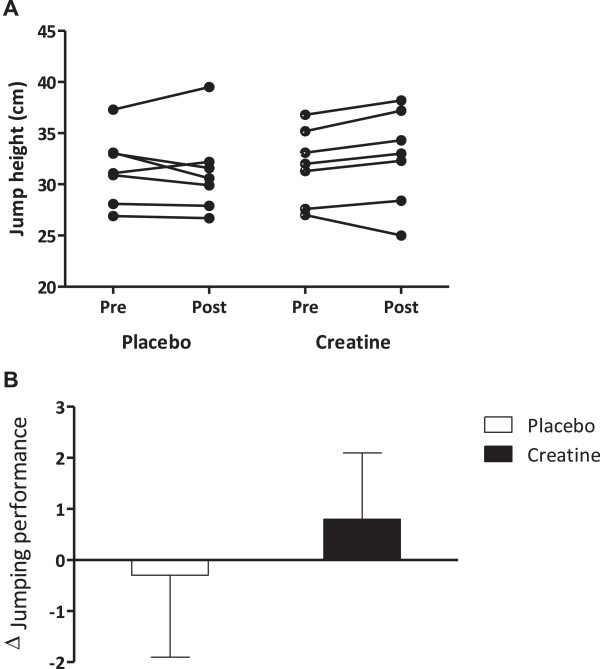
BACKGROUND: Studies involving chronic creatine supplementation in elite soccer players are scarce. Therefore, the aim of this study was to examine the effects of creatine monohydrate supplementation on lower-limb muscle power in Brazilian elite soccer players (n = 14 males) during pre-season training. FINDINGS: This was a randomized, double-blind, placebo-controlled parallel-group study. Brazilian professional elite soccer players participated in this study. During the pre-season (7 weeks), all the subjects underwent a standardized physical and specific soccer training. Prior to and after either creatine monohydrate or placebo supplementation, the lower-limb muscle power was measured by countermovement jump performance. The Jumping performance was compared between groups at baseline (p = 0.99). After the intervention, jumping performance was lower in the placebo group (percent change = - 0.7%; ES = - 0.3) than in the creatine group (percent change = + 2.4%; ES = + 0.1), but it did not reach statistical significance (p = 0.23 for time x group interaction). Fisher's exact test revealed that the proportion of subjects that experienced a reduction in jumping performance was significantly greater in the placebo group than in the creatine group (5 and 1, respectively; p = 0.05) after the training. The magnitude-based inferences demonstrated that placebo resulted in a possible negative effect (50%) in jumping performance, whereas creatine supplementation led to a very likely trivial effect (96%) in jumping performance in the creatine group. CONCLUSIONS: Creatine monohydrate supplementation prevented the decrement in lower-limb muscle power in elite soccer players during a pre-season progressive training.
Overview
The claims and statistics of this paper haven’t been checked yet.
Free: it reads the open-access text and checks the first 5 claims that cite a source we can check. Create a free account to check every claim.
Integrity signals
Registry
Cites
Statistics
Figures
Verification
Claims the paper makes
The claims and statistics of this paper haven’t been checked yet.
Free: it reads the open-access text and checks the first 5 claims that cite a source we can check. Create a free account to check every claim.
Claims other papers make about this one
Each is checked against this paper’s own text: does it say what the citing paper says it does?
The source backs part of the claim, not all of it — or backs it for a different population, condition or comparison.
In the citing paper
“The remaining study, Claudino et al. [42] failed to report any improvements in lower body power production after 14 male adolescent soccer athletes completed a one-week loading and a six-week maintenance dose phase.”
From Creatine Supplementation in Children and Adolescents (2021) · cites this paper as [42]
Experimental — accuracy not yet measuredThe source backs part of the claim, not all of it — or backs it for a different population, condition or comparison.
In the citing paper
“synthesized from the amino acids arginine, glycine, and methionine and stored about 95% in the skeletal muscle and can be found in the free form or linked to a phosphate molecule (phosphocreatine) [7]”
From Dietary and Ergogenic Supplementation to Improve Elite Soccer Players’ Performance (2021) · cites this paper as [7]
Experimental — accuracy not yet measuredIn the citing paper
“Almost all interventions showed performance improvements such as sprint ability, muscular strength, power output, sport-specific skills, and repeated high-intensity efforts, with no reported side effects [46,47,48,49,50,51,52].”
From Use of Nutritional Strategies, Bioactive Compounds, and Dietary Supplements in Young Athletes: From Evidence to Potential Risks—A Narrative Review (2025) · cites this paper as [47]
In the citing paper
“Studies in young athletes (ages 14.3–20), quantitatively very limited compared to the number of interventions conducted in adults, primarily examined swimmers and soccer players, with no adverse effects observed [46,47,48,49,50,51,52,86].”
From Use of Nutritional Strategies, Bioactive Compounds, and Dietary Supplements in Young Athletes: From Evidence to Potential Risks—A Narrative Review (2025) · cites this paper as [47]
Self-check
Percentages, sums and reported differences re-computed from the paper’s own numbers.
The self-check needs the paper’s full text.
Citations
Cites
American College of Sports Medicine position stand
Otis, C. L. (1997) · Medical Entomology and Zoology · Cited by 4,407
Progression Models in Resistance Training for Healthy Adults
(2009) · Medicine & Science in Sports & Exercise · doi:10.1249/mss.0b013e3181915670 · Cited by 4,332
Progression Models in Resistance Training for Healthy Adults
(2002) · Medicine and Science in Sports and Exercise · doi:10.1097/00005768-200202000-00027 · Cited by 2,979
Creatine and Creatinine Metabolism
Wyss, M., & Kaddurah-Daouk, R. (2000) · Physiological Reviews · doi:10.1152/physrev.2000.80.3.1107 · Cited by 2,950 · cited 1×
“Additionally, it may function as an ATP “shuttle”, transferring mitochondrial ATP to the cytosol [1].”
BackgroundMaking Meaningful Inferences About Magnitudes
Batterham, A. M., & Hopkins, W. G. (2006) · International Journal of Sports Physiology and Performance · doi:10.1123/ijspp.1.1.50 · Cited by 2,183 · cited 1×
“Qualitative descriptors were assigned to the quantitative percentile scores as follows: 25-75% possible; 75-95% likely; 95-99% very likely; >99% almost certain [34,35].”
MethodUse of RPE-Based Training Load in Soccer
IMPELLIZZERI, F. M., RAMPININI, E., COUTTS, A. J., SASSI, A., & MARCORA, S. M. (2004) · Medicine & Science in Sports & Exercise · doi:10.1249/01.mss.0000128199.23901.2f · Cited by 1,179 · cited 1×
“; duration, in minutes, of the training session) [18].”
BackgroundDoes plyometric training improve vertical jump height? A meta-analytical review
Markovic, G. (2007) · British Journal of Sports Medicine · doi:10.1136/bjsm.2007.035113 · Cited by 553 · cited 1×
“, horizontal, vertical, and depth jumping) during resistance training sessions, as this type of training can positively affect lower-limb power [16].”
BackgroundHopkins, W. G. (2007) · Cited by 497
Effect of creatine supplementation on body composition and performance: a meta-analysis
Branch, J. D. (2003) · International Journal of Sport Nutrition and Exercise Metabolism · doi:10.1123/ijsnem.13.2.198 · Cited by 309 · cited 1×
“Previous reports support the use of jumping to measure the effects of creatine on lower limb performance [10,23-25].”
ResultBALSOM, P. D., SÖDERLUND, K., SJÖDIN, B., & EKBLOM, B. (1995) · Acta Physiologica Scandinavica · doi:10.1111/j.1748-1716.1995.tb09914.x · Cited by 292 · cited 3×
“The main mechanism underlying the beneficial effects of creatine shown in the current study could be a putative increase in the muscle phosphorylcreatine concentration, which could remain elevated during multiple exercise bouts, possibly offsetting the normal decrease in force production that occurs over the course of…”
Background
Research works printed but not linked: 2
- Reilly T Training specificity for soccer Int J Appl Sports Sci 2005 17 17 25
- Hopkins WG Probabilities of clinical or practical significance Sportscience 2002 6 sportsci.org/jour/0201/wghprob.htm
Cited by
ISSN exercise & sports nutrition review update: research & recommendations
Kerksick, C. M., Wilborn, C. D., Roberts, M. D., Smith-Ryan, A., Kleiner, S. M., Jäger, R., Collins, R., Cooke, M., Davis, J. N., Galvan, E., et al. (2018) · Journal of the International Society of Sports Nutrition · doi:10.1186/s12970-018-0242-y · Cited by 945
Kreider, R. B., Kalman, D. S., Antonio, J., Ziegenfuss, T. N., Wildman, R., Collins, R., Candow, D. G., Kleiner, S. M., Almada, A. L., & Lopez, H. L. (2017) · Journal of the International Society of Sports Nutrition · doi:10.1186/s12970-017-0173-z · Cited by 1,057
The countermovement jump to monitor neuromuscular status: A meta-analysis
Claudino, J. G., Cronin, J., Mezêncio, B., McMaster, D. T., McGuigan, M., Tricoli, V., Amadio, A. C., & Serrão, J. C. (2017) · Journal of Science and Medicine in Sport · doi:10.1016/j.jsams.2016.08.011 · Cited by 649
Self-citationCreatine in health and disease
Kreider, R. B., & Stout, J. R. (2021) · Nutrients · doi:10.3390/nu13020447 · Cited by 227
“The improvement in performance has generally been 10–20% on various high-intensity exercise tasks [97] that include lifetime fitness activities like fitness/weight training [77,84,91,98–108], golf [109], volleyball [110], soccer [82,111,112], softball [113], ice hockey [114], running [115–119], and swimming [73,74,120…”
BackgroundPerformance-Enhancing Substances in Sports: A Review of the Literature
Momaya, A. M., Fawal, M., & Estes, R. (2015) · Sports Medicine · doi:10.1007/s40279-015-0308-9 · Cited by 174
“[44] examined chronic (7 weeks) creatine supplementation in elite soccer players.”
BackgroundRamírez-Campillo, R., González-Jurado, J. A., Martínez, C., Nakamura, F. Y., Peñailillo, L., Meylan, C. M. P., Caniuqueo, A., Cañas-Jamet, R., Moran, J., Alonso-Martínez, A. M., et al. (2016) · Journal of Science and Medicine in Sport · doi:10.1016/j.jsams.2015.10.005 · Cited by 118
Kreider, R. B., Jäger, R., & Purpura, M. (2022) · Nutrients · doi:10.3390/nu14051035 · Cited by 103
“Improvements in performance have been reported in individuals participating in weight training [55,89,95,103–113], running [114–118], soccer [87,119,120], swimming [79,80,121–124], volleyball [125], softball [126], ice hockey [127], golf [128], among others [24].”
BackgroundButts, J., Jacobs, B., & Silvis, M. (2018) · Sports Health: A Multidisciplinary Approach · doi:10.1177/1941738117737248 · Cited by 100
Mielgo-Ayuso, J., Calleja-Gonzalez, J., Marqués-Jiménez, D., Caballero-García, A., Córdova, A., & Fernández-Lázaro, D. (2019) · Nutrients · doi:10.3390/nu11040757 · Cited by 91
“…re po rti ng (re po rti ng b ia s) O th er b ia s Mujika et al. 2 00 [ 7] embe t l. 6] Cox et al. 2 02 [21] Biwer et al. 20 3 [15] Ostojic 2004 [ 8] Claudino et al. 2014 [20] Williams et al. 2014 [16] Ramírez-Campillo et al. 2015 [19] Yáñez-Silva et al. 2017 [7] Nutrients 2019, 11, x FOR PEER…”
BackgroundMethodInfluentialNutrition and Supplementation in Soccer
Oliveira, C., Ferreira, D., Caetano, C., Granja, D., Pinto, R., Mendes, B., & Sousa, M. (2017) · Sports · doi:10.3390/sports5020028 · Cited by 72
“, competitions that take place in just one or a few days), creatine ingestion (20 g/day for six days) can augment dietary carbohydrate mediated muscle glycogen supercompensation during the initial 24 h of recovery (sustaining it on the next five days) following prolonged exhaustive exercise [274].”
BackgroundWu, S.-H., Chen, K., Hsu, C., Chen, H.-C., Chen, J., Yu, S.-Y., & Shiu, Y.-J. (2022) · Nutrients · doi:10.3390/nu14061255 · Cited by 90
“05) in the creatine group when compared to the placebo control group [25].”
ResultCreatine Supplementation in Children and Adolescents
Jagim, A. R., & Kerksick, C. M. (2021) · Nutrients · doi:10.3390/nu13020664 · Cited by 61
“2014 (Brazil) [42] 14 male Brazilian elite soccer players (18.”
BackgroundMethodInfluentialMarshall, R. P., Droste, J.-N., Gießing, J., & Kreider, R. B. (2022) · Nutrients · doi:10.3390/nu14030529 · Cited by 57
Systematic review of the use of “magnitude-based inference” in sports science and medicine
Lohse, K. R., Sainani, K. L., Taylor, J. A., Butson, M. L., Knight, E., & Vickers, A. J. (2020) · PLoS ONE · doi:10.1371/journal.pone.0235318 · Cited by 54
Role of creatine supplementation in exercise-induced muscle damage: A mini review
Kim, J., Lee, J., Kim, S., Yoon, D., Kim, J., & Sung, D. J. (2015) · Journal of Exercise Rehabilitation · doi:10.12965/jer.150237 · Cited by 35
“cise performance such as explosive muscle power (Claudino et al., 2014; Zuniga et al., 2012) and increased lean body mass after resistance exercise (Candow et al.”
BackgroundSafety of Creatine Supplementation in Active Adolescents and Youth: A Brief Review
Jagim, A. R., Stecker, R. A., Harty, P. S., Erickson, J. L., & Kerksick, C. M. (2018) · Frontiers in Nutrition · doi:10.3389/fnut.2018.00115 · Cited by 35
Sampaio, C. R. S. F., Aidar, F. J., Ferreira, A. R. P., dos Santos, J. L., Marçal, A. C., de Matos, D. G., de Souza, R. F., Moreira, O. C., Guerra, I., Filho, J. F., et al. (2020) · Nutrients · doi:10.3390/nu12092492 · Cited by 45
“Moreover, in previous studies, Cr supplementat on, in the short term, hasnot demonstratedeffects on specific stre gth levels related to diff rent sport [26,27].”
BackgroundResultAntonio, J., Brown, A. F., Candow, D. G., Chilibeck, P. D., Ellery, S. J., Forbes, S. C., Gualano, B., Jagim, A. R., Kerksick, C., Kreider, R. B., et al. (2025) · Journal of the International Society of Sports Nutrition · doi:10.1080/15502783.2024.2441760 · Cited by 33
Self-citationZajac, A., Golas, A., Chycki, J., Halz, M., & Michalczyk, M. M. (2020) · Nutrients · doi:10.3390/nu12102961 · Cited by 32
“[23], after a 7-week period of CrM supplementation in 14 Brazilian elite soccer players, observed a lack of decline in the strength of the muscles of the lower extremities compared with a control group.”
BackgroundMethodInfluentialAutoregulating Jump Performance to Induce Functional Overreaching
Claudino, J. G., Cronin, J. B., Mezêncio, B., Pinho, J. P., Pereira, C., Mochizuki, L., Amadio, A. C., & Serrão, J. C. (2016) · The Journal of Strength and Conditioning Research · doi:10.1519/jsc.0000000000001325 · Cited by 44
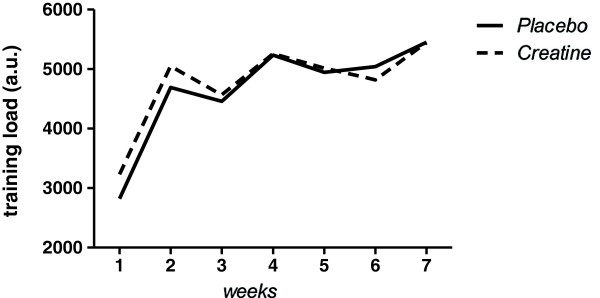
“Total training load, hereafter called training load, was the summation (in arbitrary units) of the technical/physical/tactical training loads and the resistance training loads per week according to previously described criteria (7,40).”
MethodSelf-citationFernández-Landa, J., Santibañez-Gutierrez, A., Todorović, N., Štajer, V., & Ostojić, S. M. (2023) · Sports Medicine · doi:10.1007/s40279-023-01823-2 · Cited by 44
Doma, K., Ramachandran, A. K., Boullosa, D. A., & Connor, J. D. (2022) · Sports Medicine · doi:10.1007/s40279-022-01640-z · Cited by 36
“[30] 1 1 1 1 1 1 0 1 1 0 1 1 1 1 1 13/16 Good Hayward et al.”
ResultATAKAN, M. M., Karavelioğlu, M. B., Harmancı, H., Cook, M., & Bulut, S. (2018) · Science & Sports · doi:10.1016/j.scispo.2018.11.003 · Cited by 42
The use of creatine supplements in the military
Havenetidis, K. (2016) · Journal of the Royal Army Medical Corps · doi:10.1136/jramc-2014-000400 · Cited by 22
Molina‐López, J., Pérez, A. B., Gamarra-Morales, Y., Vázquez‐Lorente, H., Herrera‐Quintana, L., Sánchez-Oliver, A. J., & Planells, E. (2023) · Nutrition · doi:10.1016/j.nut.2023.112239 · Cited by 25
Varillas‐Delgado, D. (2024) · Nutrients · doi:10.3390/nu16152511 · Cited by 26
“Previous research suggests that creatine supplementation can improve strength, power, and work capacity during short, high-intensity periods, which may translate into improved performance on the field [66–68].”
BackgroundDietetic-nutritional, physical and physiological recovery methods post-competition in team sports
Terrados, N., Mielgo‐Ayuso, J., Delextrat, A. A., Ostojić, S. M., & Calleja-González, J. (2019) · The Journal of Sports Medicine and Physical Fitness · doi:10.23736/s0022-4707.18.08169-0 · Cited by 29
Hummer, E. T., Suprak, D. N., Buddhadev, H. H., Brilla, L. R., & Juan, J. G. S. (2019) · Journal of the International Society of Sports Nutrition · doi:10.1186/s12970-019-0291-x · Cited by 21
“increasing lean body mass, and, in some cases, increasing lower extremity power output primarily seen in cycling [9, 12, 13].”
BackgroundCreatine supplementation can improve impact control in high-intensity interval training
da Silva Azevedo, A. P., Michelone Acquesta, F., Lancha Jr., A. H., Bertuzzi, R., Poortmans, J. R., Amadio, A. C., & Cerca Serrão, J. (2019) · Nutrition · doi:10.1016/j.nut.2018.09.020 · Cited by 14
Self-citationInterest of creatine supplementation in soccer
Miny, K., Burrowes, J., & Jidovtseff, B. (2017) · Science & Sports · doi:10.1016/j.scispo.2016.11.001 · Cited by 13
Systematic Review of the use of “Magnitude-Based Inference” in Sports Science and MedicinePreprint
Lohse, K. R., Sainani, K. L., Taylor, J. A., Butson, M. L., Knight, E., & Vickers, A. J. (2020) · SportRxiv (OSF Preprints) · doi:10.31236/osf.io/wugcr · Cited by 16
Dietary and Ergogenic Supplementation to Improve Elite Soccer Players’ Performance
Fernandes, H. (2021) · Annals of Nutrition and Metabolism · doi:10.1159/000516397 · Cited by 12
RetractedKazeminasab, F., Kerchi, A. B., Sharafifard, F., Zarreh, M., Forbes, S. C., CAMERA, D. M., Lanhers, C., Wong, A., Nordvall, M., Bagheri, R., et al. (2025) · Nutrients · doi:10.3390/nu17172748 · Cited by 24
Song, L., Wei, L., Si, T., Guo, H. X., & Yang, C. (2015) · The Journal of Chemical Thermodynamics · doi:10.1016/j.jct.2015.09.011 · Cited by 13
Huerta Ojeda, Á., Jofré-Saldía, E., Torres-Banduc, M., Galdames Maliqueo, S., Barahona-Fuentes, G., Cofré Acevedo, C., Lizana Romero, G., de Villa Garduño, R., Riquelme Vera, G., Vera Paredes, P., et al. (2024) · Nutrients · doi:10.3390/nu16091324 · Cited by 11
“Future research should include these variables and a review and analysis of the individual responses to the different doses of administration that appear in the scientific evidence.”
BackgroundMor, A., Acar, K., Yılmaz, A. K., & Arslanoğlu, E. (2021) · Journal of Men s Health · doi:10.31083/jomh.2021.058 · Cited by 14
De Zan, D., Eletti, F., Fiore, G., Di Girolamo, E., Bozzini, G. G. M., Perico, V., Tosi, M., Norsa, L., Zuccotti, G., & Verduci, E. (2025) · Nutrients · doi:10.3390/nu17132194 · Cited by 11
Creatine Monohydrate Supplementation: Considerations for Cognitive Performance in Athletes
Machek, S. B., & Bagley, J. R. (2018) · Strength and conditioning journal · doi:10.1519/ssc.0000000000000369 · Cited by 11
“(12) 14 male Brazilian elite soccer players RPE-based load increases in resistance training and soccer training”
BackgroundTaşkın, S., Celik, T., Demiryürek, Ş., Türedi, S., & Taşkın, A. (2022) · PubMed Central · doi:10.22038/ijbms.2022.65047.14321 · Cited by 17
Mangine, G. T., VanDusseldorp, T. A., Hester, G. M., Julian, J. M., & Feito, Y. (2020) · Journal of the International Society of Sports Nutrition · doi:10.1186/s12970-020-00359-4 · Cited by 14
Kim, J. (2021) · International Journal of Environmental Research and Public Health · doi:10.3390/ijerph18136919 · Cited by 16
“[11] reported that 7 weeks of preseason creatine supplementation improved soccer players’ jump performance.”
BackgroundAn Update on Effects of Creatine Supplementation on Performance: A Review
Dorrell, H. F., Gee, T., & Middleton, G. (2016) · Sports Nutrition and Therapy · doi:10.4172/2473-6449.1000107 · Cited by 9
“Specifically, there is strong evidence to suggest CR increased power output [43], repeated sprint ability [60], maximal strength [50] and FFM [11].”
BackgroundPadilha, C. S., Cella, P. S., Salles, L. R., & Deminice, R. (2017) · Fisioterapia em Movimento · doi:10.1590/1980-5918.030.004.ar01 · Cited by 9
Effects of Low-Dose Creatine Monohydrate on Muscle Strength and Endurance
Neto, J. D. O. V., da Silva, C. A., Lima, A. B., de Souza, F. J. R., Pinto, D. V., Araujo, J. D. S., Assumpção, C. D. O., & Daher, E. D. F. (2018) · Asian Journal of Sports Medicine · doi:10.5812/asjsm.62739 · Cited by 12
Nutrition in team sports Takım sporlarında beslenme
Eskici, G. (2015) · Journal of Human Sciences · doi:10.14687/v12i2.3190 · Cited by 20
The emerging and evolving evidence supporting creatine as an ergogenic aid: history and applications
Kerksick, C. M., Gonzalez, D. E., Stout, J. R., Forbes, S., Candow, D. G., Ziegenfuss, T. N., Marshall, R. P., Schwesig, R., & Kreider, R. B. (2026) · Journal of the International Society of Sports Nutrition · doi:10.1080/15502783.2026.2646627 · Cited by 9
“…performance, such as sprinting, jumping ability [135], and enhanced resistance to fatigue, independent of age and gender, in the pre-season period [136,137] To this point, Mujika et al. [135] found improved sprint performance in creatine-supplemented soccer players, and Claudino et al. [136]…”
Effects of creatine supplementation on muscle strength gains—a meta-analysis and systematic review
Zhang, H., Lan, T., Yan, X., Gu, H., Li, Y., & He, E. (2025) · PeerJ · doi:10.7717/peerj.20380 · Cited by 13
“…that Cr supplementation exerts positive effects on muscle strength enhancement across the general population ( Smith et al., 1998 ; Lamontagne-Lacasse, Nadon & Goulet, 2011 ; Zuniga et al., 2012 ; Cooper et al., 2012 ; Claudino et al., 2014 ; Lanhers et al., 2017 ; Fernández-Landa et al., 2019 ).”
Futbol y creatina, una revisión sistemática (Soccer and creatine, a systematic review)
Guevara, V. M., Montalva-Valenzuela, F., Andrades-Ramírez, O., Vargas, J. J. N., Flores, I., & Castillo-Paredes, A. (2023) · Retos · doi:10.47197/retos.v51.97367 · Cited by 8
“…g/kg de peso por 7 días en fase de carga seguido de 5g/d por 07 días en fase de mantenimiento (Simpson et al., 2019), 20g/d por 7 días en fase de carga sin fase de mantenimiento (Mohebbi et al., 2012; Williams et al., 2014) y con fase de mantenimiento de 5g/d por 6 semanas (Claudino et al., 2014).”
BackgroundInfluentialGarcia, M. P., Longobardi, I., Saito, T., Miranda, M. S., Roschel, H., & Gualano, B. (2025) · Journal of the International Society of Sports Nutrition · doi:10.1080/15502783.2025.2591782 · Cited by 4
“Claudino et al. [6], in a randomized placebo-controlled trial, demonstrated that creatine supplementation (20 g/day for one week, followed by 5 g/day for six weeks) prevented declines in lower-limb muscle power in elite soccer players during the pre-season.”
Self-citationSleep, nutrition, and supplements: Implications for athletes
Charest, J., & Grandner, M. A. (2024) · Elsevier eBooks · doi:10.1016/b978-0-12-822969-9.00002-x · Cited by 5
Allahyari, P., Shekari, S., Kavkani, B. A., Ahmadzadeh, M., Ardekanizadeh, N. H., Saeedirad, Z., Hesari, M. G., Bahar, B., Shafaei, H., Mohseni, G. K., et al. (2025) · Journal of Basic and Clinical Physiology and Pharmacology · doi:10.1515/jbcpp-2024-0077 · Cited by 7
VALENTA, S., PSOTTA, R., & HRABAL, J. (2022) · Acta Salus Vitae · doi:10.58743/asv2022vol10no1.279 · Cited by 2
“In soccer players, both mentioned CrS benefits were confirmed by several studies (e.g. Claudino et al., 2014; Cox et al., 2002; Mujika et al., 2000; RamírezCampillo et al., 2016; Yaňez-Siva et al., 2017), but not all (Williams et al., 2014).”
BackgroundPerformance Enhancing Supplements and Cardiovascular Health
Singh, M., Givens, M., Singh, T. K., & Rao, P. (2025) · Current Treatment Options in Cardiovascular Medicine · doi:10.1007/s11936-025-01086-2 · Cited by 6
Estrázulas, J. A., dos Santos, F. P., Machado, A. J. T., Legnani, E., Bertuzzi, R., & Lima‐Silva, A. E. (2024) · Journal of the American Nutrition Association · doi:10.1080/27697061.2024.2373189 · Cited by 8
(Na, I. T. S. A. C. C. M. P. B. W. S. C., (Kre-Alkalyn, ). T. A. P. O. 1. W. U., Pharmaceutical, (. B. A. A., Billings, monohydrate, M. O. G. C. I. C., analysis, C. E. A. C. M. F. F. (. S. O. E. W. P. A. R. F. S. S. T. R. R. A. C. A. F. P., creatines, L. C. M. W. A. T. A. G. C. A. P. O. A. B. N.-5. F. T. A. M. A. D. W. R. A. C. W. M. F. T. 4. D. T. O., & each., U. 6. L. O. (2015) · Integrative Molecular Medicine · doi:10.15761/imm.1000141 · Cited by 3
“Creatine supplementation has been shown to be capable of reducing decrement of lower-limb power in elite soccer players during training [14,15].”
BackgroundNutritional Supplements for Strength and Power Athletes
Wilborn, C. (2015) · Springer eBooks · doi:10.1007/978-3-319-18230-8_10 · Cited by 2
Nutrition knowledge levels and nutritional supplement beliefs of professional karate athletes
Göbel, P. (2023) · Journal of Health Sciences and Medicine · doi:10.32322/jhsm.1198884 · Cited by 6
“(34) found that creatine supplementation prevented the training-induced gradual decrease in lower extremity performance during pre-season progressive training in professional elite football players.”
BackgroundAcute Effects of Different Creatine Supplementation Methods on Anaerobic Performance
Yapıcı, A. (2023) · Akdeniz Spor Bilimleri Dergisi · doi:10.38021/asbid.1249053 · Cited by 3
Günay, E., & Yıldız, G. (2016) · Spor Bilimleri Araştırmaları Dergisi · doi:10.25307/jssr.277954 · Cited by 4
Therapeutic effects of creatine supplementation in patients with type II diabetes
OSKROBA, A., Pawlina, M., Orzechowska, A., Ziętara, K. J., Pawełczak, N., Raksa, K., ZIELONKA, B., KOWALCZYK, I., Pawłowski, P., & STAWIKOWSKI, C. (2023) · Journal of Education Health and Sport · doi:10.12775/jehs.2023.16.01.008 · Cited by 2
Análise da importância da nutrição no desempenho do atleta profissional de futebol
Silva, D. D. S., & da Silva, M. C. (2023) · Research Society and Development · doi:10.33448/rsd-v12i6.42107 · Cited by 4
Treinadores apresentam maior conhecimento em Nutrição Básica do que em Nutrição Esportiva
Chagas, B. L. F., do Nascimento, M. V. S., Raposo, O. F. F., & Netto, R. S. M. (2016) · Dialnet (Universidad de la Rioja) · Cited by 1
Amorim, S., Gomes, H., & Teixeira, V. H. (2017) · Springer eBooks · doi:10.1007/978-3-662-53924-8_53 · Cited by 1
Fernandes, V. A. R., Belozo, F. L., Conte, M., & Caldeira, E. J. (2020) · Revista Brasileira de Fisiologia do Exercício · doi:10.33233/rbfe.v18i4.3237 · Cited by 3
Pedrosa, I., Lúcia, C. M. D., da Silva, A. G., Rodrigues, P. H. S., Dias, F. A. M., Barbosa, P. D. F., & Marins, J. C. B. (2022) · Archivos de medicina del deporte: revista de la Federación Española de Medicina del Deporte y de la Confederación Iberoamericana de Medicina del Deporte · doi:10.18176/archmeddeporte.00092 · Cited by 3
Effects of Creatine-Electrolyte Supplement on Power and Strength Performance
Hummer, E. T. (2016) · Western CEDAR (Western Washington University) · doi:10.25710/fnn6-qd53
Controle de carga de treinamento: uma abordagem biomecânica
Claudino, J. G. (2016) · Digital Library of Theses and Dissertations (Universidade de São Paulo) · doi:10.11606/t.39.2016.tde-25082016-131832 · Cited by 1
Self-citationGage, M. (2017) · Digital Commons - Michigan Tech (Michigan Technological University) · doi:10.37099/mtu.dc.etdr/335 · Cited by 1
Ayudas ergogénicas en jugadores de fútbol profesional: Revisión Sistemática
Almendáriz-Villarán, A., & Sánchez-Oliver, A. J. (2018) · e-Motion Revista de Educación Motricidad e Investigación · doi:10.33776/remo.v0i11.3472 · Cited by 1
“En otro estudio, Claudino et al. (2014) investigaron los efectos de la suplementación de monohidrato de creatina.”
BackgroundInfluentialSánchez, V. G. T., Delgado‐Olivares, L., Ariza‐Ortega, J. A., & Polo, A. O. (2021) · Educación y Salud Boletín Científico Instituto de Ciencias de la Salud Universidad Autónoma del Estado de Hidalgo · doi:10.29057/icsa.v9i18.6519 · Cited by 2
Futbolda Kullanılan Ergojenik Destekler ve Performans Üzerindeki Etkileri
Kenger, E. B., BAYAR, D., ARSLAN, E., & Karahan, T. Ö. (2022) · International Journal of Sport Exercise & Training Sciences · doi:10.18826/useeabd.1104040
Trends in Creatine Supplementation for Athletes: A Systematic Review
Nag, S. (2023) · International Journal of Science and Research (IJSR) · doi:10.21275/sr23904095023
“In a randomized study [18], it was found that Creatine monohydrate supplementation prevented the decrement in lower-limb muscle power in elite soccer players during a pre-season progressive training.”
BackgroundFlórez, J. F., Osorio, R. D. M., Cely, W. F. C., Galán, C. A. M., & Reyes, J. (2024) · ACTIVIDAD FÍSICA Y DESARROLLO HUMANO · doi:10.24054/afdh.v15i1.3145
Bai, X., & Xu, T. (2026) · Journal of the International Society of Sports Nutrition · doi:10.1080/15502783.2026.2695133
Kick, Sweat, Protect: Kidney Health Through the Lens of Soccer (Football)
Jhaveri, D., Wanchoo, A., Izzedine, H., & Gudsoorkar, P. (2026) · Kidney Medicine · doi:10.1016/j.xkme.2026.101469 · Cited by 1
Qin, K., & Wu, J. (2026) · Frontiers in Nutrition · doi:10.3389/fnut.2026.1915252
“…with creatine during pre-season training did not yield a statistically significant enhancement in countermovement jump performance among elite soccer athletes, it was associated with attenuation of the decline in lower-limb power that is typically observed during periods of intensive training (78).”
InfluentialCreatine supplementation in soccer players: a systematic review
Ashtary‐Larky, D., Candow, D. G., António, J., Quiceno, C., Angelini, F., Forbes, S. C., Moradi, S., Kazeminasab, F., & Bagheri, R. (2026) · Journal of the International Society of Sports Nutrition · doi:10.1080/15502783.2026.2735569
“Within-group numerical or statistically significant improvements were observed in the creatine conditions, but these findings do not demonstrate a treatment effect [30,47].”
Amorim, H. P. N., Sant’ana, S. B., Machek, S. B., Mielgo‐Ayuso, J., Fulbright, A., Paulucio, D., Cardaci, T. D., Pereira, R., & Machado, M. (2026) · Team Sports Studies · doi:10.1016/j.tss.2026.100022
Metadata
- Authors
- Claudino, J. G., Mezêncio, B., Amaral, S., Zanetti, V., Benatti, F., Roschel, H., Gualano, B., Amadio, A. C., & Serrão, J. C.
- Affiliations
- Universidade de São Paulo (BR)
- Department of Health and PerformanceRed Bull Brazil Football João Lúcio do Prado street, Km 10 13240-000 Jarinu SP Brazil
- School of Physical Education and Sport - Laboratory of BiomechanicsUniversity of Sao Paulo Av Mello de Moraes, 65 05508-030 Sao Paulo SP Brazil
- ORCID
- Venue
- Journal of the International Society of Sports Nutrition
- Publisher
- Informa UK Limited
- Published
- 2014-08-15
- Volume
- 11
- Issue
- 1
- Pages
- 32-32
- ISSN
- 1550-2783 (ISSN-L)
- PMC
- PMC4077550
- OpenAlex
- W2121466793
- Cited by
- 78
- References
- 37
- Citations by year
- 2026: 6 · 2025: 6 · 2024: 6 · 2023: 8 · 2022: 8 · 2021: 6 · 2020: 7 · 2019: 3 · 2018: 7 · 2017: 6 · 2016: 7 · 2015: 8
- FWCI
- 3.49
- Type
- journal article
- Language
- en
- Open access
- gold
- doi.org
- Licence
- Locations
- Journal of the International Society of Sports Nutrition (publishedVersion, cc-by)
- PubMed Central (publishedVersion, cc-by)
- PubMed (publishedVersion)
- Portuguese National Funding Agency for Science, Research and Technology (RCAAP Project by FCT) (publishedVersion)
- Funders
- Coordenação de Aperfeiçoamento de Pessoal de Nível Superior
- Conselho Nacional de Desenvolvimento Científico e Tecnológico
- Topics
- Health Sciences › Nursing › Nutrition and Dietetics › Muscle metabolism and nutrition
- Health Sciences › Medicine › Orthopedics and Sports Medicine › Sports Performance and Training
- Health Sciences › Medicine › Physiology (medical) › Biochemical effects in animals
- Keywords
- creatine monohydrate supplementation, lower limb muscle power, elite soccer players, countermovement jump, pre-season training, progressive training, placebo effect, magnitude-based inference
About these checks
Registry, retraction, Cites and statistics results are computed, not judged, with one exception: a printed reference that no index lists is read once by a model before it counts as a citation error. Claims are extracted by a model and kept only when their quote appears verbatim in the text; each cited source is then checked, with a model’s help, for whether it says what the claim relies on. Those verdicts can be wrong — read the claim’s quote and the cited source before relying on one.
Statistics and arithmetic are recomputed, not judged.
Confidence bands are shown only for fields calibrated on our annotated test set. None is calibrated yet, so no band is shown.
What counts as a claim ›How we measure confidence ›How we check this ›
Are you an author, or do you see a problem with this page? Request a review
Data sources
Bibliographic data: Semantic Scholar, OpenAlex, Crossref.
Contains information from the Semantic Scholar Academic Graph Datasets, made available under the ODC Attribution License (ODC-BY 1.0).
Semantic Scholar’s data is described in: Kinney, R., et al. (2023). The Semantic Scholar Open Data Platform. arXiv:2301.10140.
