

Examination of the efficacy of acute L-alanyl-L-glutamine ingestion during hydration stress in endurance exercise
Open accessThe DOI matches its Crossref record; 62 of the 62 references it cites were found in a registry or an index.
Abstract
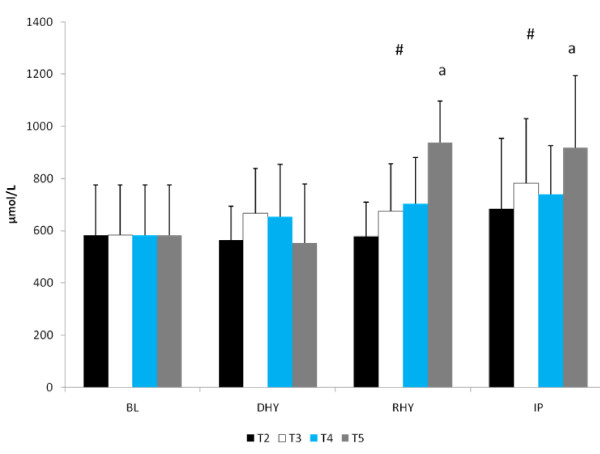
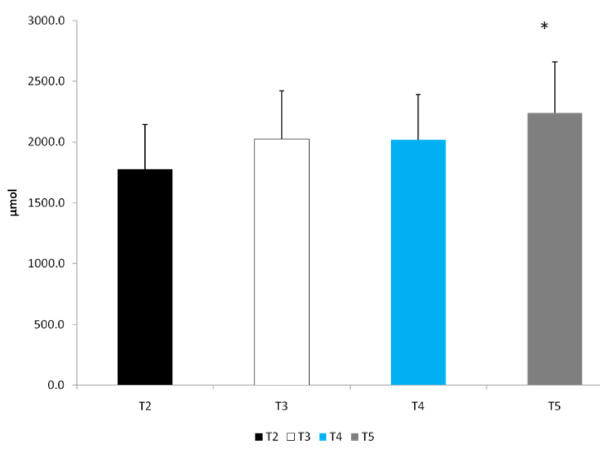
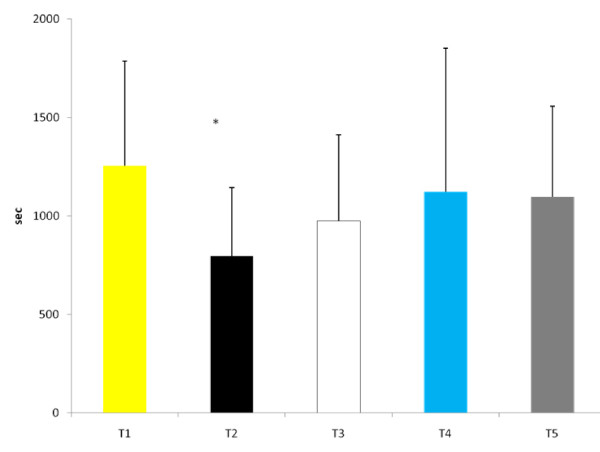
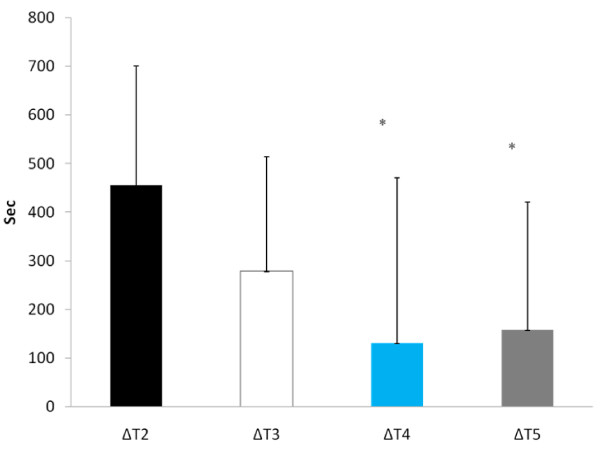
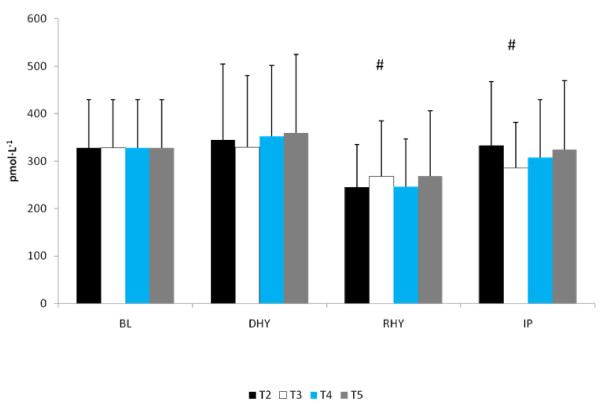
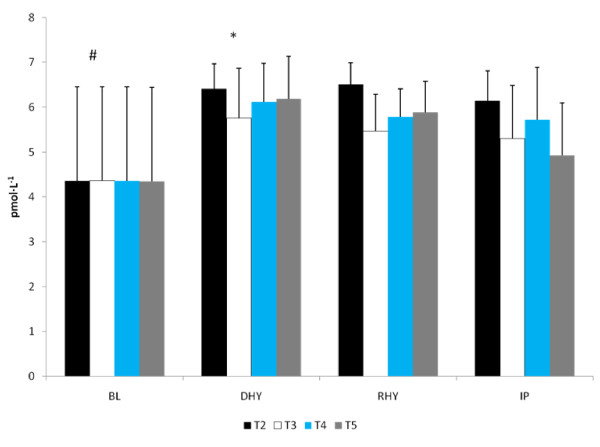
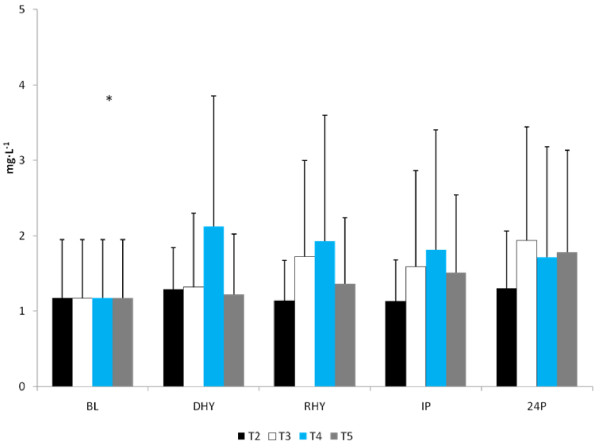
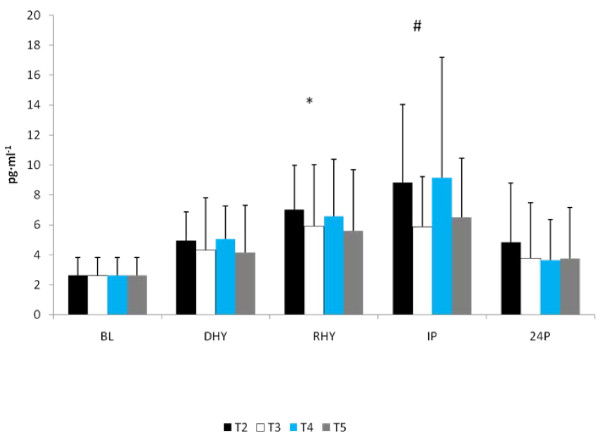
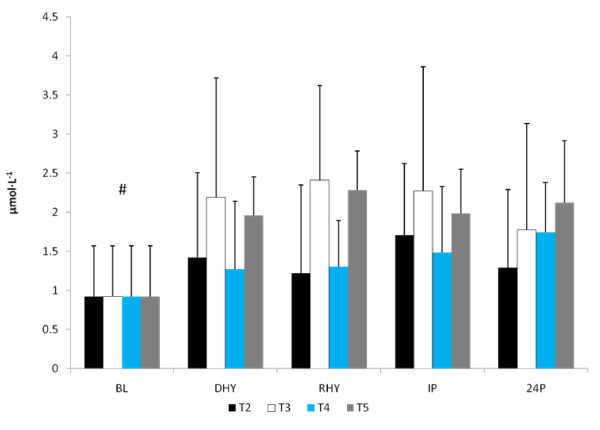
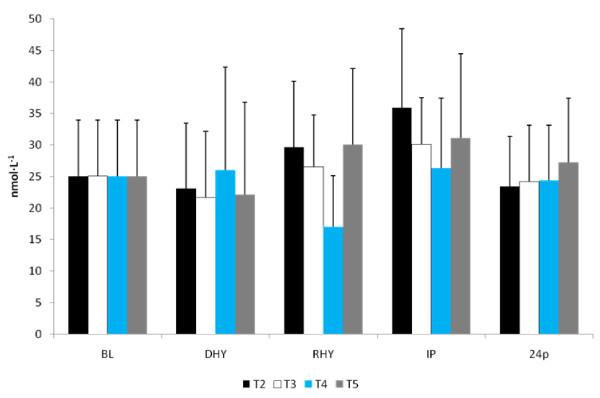
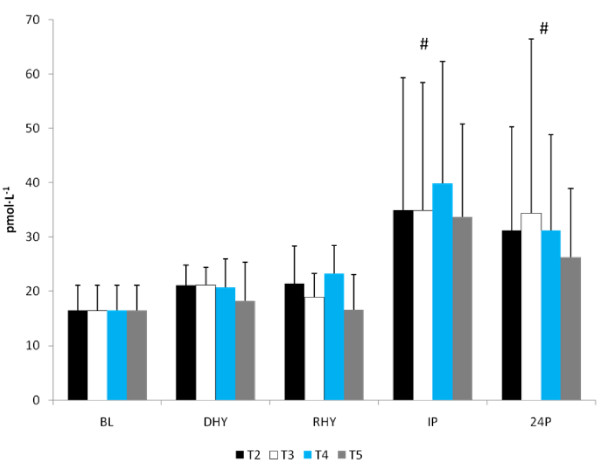
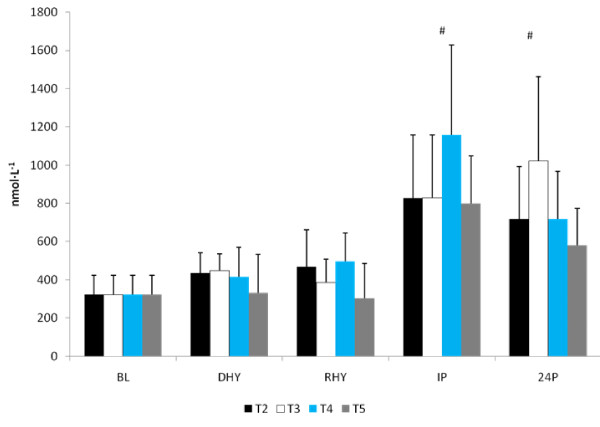
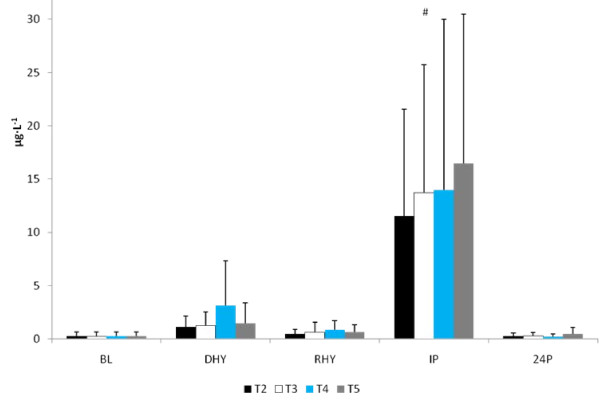
BACKGROUND: The effect of acute L-alanyl-L-glutamine (AG; Sustamine) ingestion on performance changes and markers of fluid regulation, immune, inflammatory, oxidative stress, and recovery was examined in response to exhaustive endurance exercise, during and in the absence of dehydration. METHODS: Ten physically active males (20.8 +/- 0.6 y; 176.8 +/- 7.2 cm; 77.4 +/- 10.5 kg; 12.3 +/- 4.6% body fat) volunteered to participate in this study. During the first visit (T1) subjects reported to the laboratory in a euhydrated state to provide a baseline (BL) blood draw and perform a maximal exercise test. In the four subsequent randomly ordered trials, subjects dehydrated to -2.5% of their baseline body mass. For T2, subjects achieved their goal weight and were not rehydrated. During T3 - T5, subjects reached their goal weight and then rehydrated to 1.5% of their baseline body mass by drinking either water (T3) or two different doses (T4 and T5) of the AG supplement (0.05 g.kg-1 and 0.2 g.kg-1, respectively). Subjects then exercised at a workload that elicited 75% of their VO2 max on a cycle ergometer. During T2 - T5 blood draws occurred once goal body mass was achieved (DHY), immediately prior to the exercise stress (RHY), and immediately following the exercise protocol (IP). Resting 24 hour (24P) blood samples were also obtained. Blood samples were analyzed for glutamine, potassium, sodium, aldosterone, arginine vasopressin (AVP), C-reactive protein (CRP), interleukin-6 (IL-6), malondialdehyde (MDA), testosterone, cortisol, ACTH, growth hormone and creatine kinase. Statistical evaluation of performance, hormonal and biochemical changes was accomplished using a repeated measures analysis of variance. RESULTS: Glutamine concentrations for T5 were significantly higher at RHY and IP than T2 - T4. When examining performance changes (difference between T2 - T5 and T1), significantly greater times to exhaustion occurred during T4 (130.2 +/- 340.2 sec) and T5 (157.4 +/- 263.1 sec) compared to T2 (455.6 +/- 245.0 sec). Plasma sodium concentrations were greater (p < 0.05) at RHY and IP for T2 than all other trials. Aldosterone concentrations at RHY and IP were significantly lower than that at BL and DHY. AVP was significantly elevated at DHY, RHY and IP compared to BL measures. No significant differences were observed between trials in CRP, IL-6, MDA, or in any of the other hormonal or biochemical measures. CONCLUSION: Results demonstrate that AG supplementation provided a significant ergogenic benefit by increasing time to exhaustion during a mild hydration stress. This ergogenic effect was likely mediated by an enhanced fluid and electrolyte uptake.
Overview
The claims and statistics of this paper haven’t been checked yet.
Free: it reads the open-access text and checks the first 5 claims that cite a source we can check. Create a free account to check every claim.
Integrity signals
Registry
Cites
Statistics
Figures
Verification
Claims the paper makes
The claims and statistics of this paper haven’t been checked yet.
Free: it reads the open-access text and checks the first 5 claims that cite a source we can check. Create a free account to check every claim.
Claims other papers make about this one
Each is checked against this paper’s own text: does it say what the citing paper says it does?
The source backs part of the claim, not all of it — or backs it for a different population, condition or comparison.
In the citing paper
“Collectively this research indicates that L-alanyl-L-glutamine at dosages ranging 300–1000 mg per 500 mL of fluid can favorably influence hydration status and performance when compared to no fluid ingestion or water only ingestion.”
From ISSN exercise & sports nutrition review update: research & recommendations (2018) · cites this paper as [524]
Experimental — accuracy not yet measured
Self-check
Percentages, sums and reported differences re-computed from the paper’s own numbers.
The self-check needs the paper’s full text.
Citations
Cites
Inflammation, aspirin, and the risk of cardiovascular disease in apparently healthy men
Ridker, P. M., Cushman, M., Stampfer, M. J., Tracy, R. P., & Hennekens, C. H. (1997) · New England Journal of Medicine · doi:10.1056/nejm199704033361401 · Cited by 5,504
Calculation of percentage changes in volumes of blood, plasma, and red cells in dehydration.
Dill, D. B., & Costill, D. L. (1974) · Journal of Applied Physiology · doi:10.1152/jappl.1974.37.2.247 · Cited by 3,384
Urinary Indices of Hydration Status
Armstrong, L. E., Maresh, C. M., Castellani, J. W., Bergeron, M. F., Kenefick, R. W., LaGasse, K. E., & Riebe, D. (1994) · International Journal of Sport Nutrition · doi:10.1123/ijsn.4.3.265 · Cited by 548 · cited 1×
“020 was defined as euhydration [18].”
Self-citationExercise-induced oxidative stress
ALESSIO, H. M. (1993) · Medicine & Science in Sports & Exercise · doi:10.1249/00005768-199302000-00010 · Cited by 514
The role of IL-6 in mediating the anti-inflammatory effects of exercise.
Petersen, A. M. W., & Pedersen, B. K. (2006) · PubMed · Cited by 436
Glutamine, arginine, and leucine signaling in the intestine
Marc Rhoads, J., & Wu, G. (2009) · Amino Acids · doi:10.1007/s00726-008-0225-4 · Cited by 362 · cited 1×
“AG appears to increase electrolyte and fluid uptake across the intestines by increasing ion transport through an enhanced signaling pathway within the intestinal mucosal cells [6,22].”
BackgroundDéchelotte, P., Hasselmann, M., Cynober, L., Allaouchiche, B., Coëffier, M., Hecketsweiler, B., Merle, V., Mazerolles, M., Samba, D., Guillou, Y. M., et al. (2006) · Critical Care Medicine · doi:10.1097/01.ccm.0000201004.30750.d1 · Cited by 326 · cited 1×
“Both glutamine and alanine/glutamine in combination have been shown to be effective for antioxidant defense during situations of severe illness [ 12-14 ].”
BackgroundMalm, C., Sjödin, B., Sjöberg, B., Lenkei, R., Renström, P., Lundberg, I. E., & Ekblom, B. (2004) · The Journal of Physiology · doi:10.1113/jphysiol.2003.056598 · Cited by 306 · cited 1×
“Previous studies have shown that CRP will increase in response to prolonged physical activity such as triathlons [35] and marathons [33] but not during shorter duration exercise [34, 36 ].”
BackgroundExercise and cytokines with particular focus on muscle-derived IL-6.
Pedersen, B. K., Steensberg, A., Fischer, C. P., Keller, C., Ostrowski, K., & Schjerling, P. (2001) · PubMed · Cited by 301
Muscle K+, Na+, and Cl− disturbances and Na+-K+ pump inactivation: implications for fatigue
McKenna, M. J., Bangsbo, J., & Renaud, J.-M. (2008) · Journal of Applied Physiology · doi:10.1152/japplphysiol.01037.2007 · Cited by 272
Cited by
ISSN exercise & sports nutrition review update: research & recommendations
Kerksick, C. M., Wilborn, C. D., Roberts, M. D., Smith-Ryan, A., Kleiner, S. M., Jäger, R., Collins, R., Cooke, M., Davis, J. N., Galvan, E., et al. (2018) · Journal of the International Society of Sports Nutrition · doi:10.1186/s12970-018-0242-y · Cited by 945
Glutamine as an Anti-Fatigue Amino Acid in Sports Nutrition
Coqueiro, A. Y., Rogero, M. M., & Tirapegui, J. (2019) · Nutrients · doi:10.3390/nu11040863 · Cited by 150
“[51] administered L-alanyl-L-glutamine, in two doses (0.”
Bond, P. (2016) · Journal of the International Society of Sports Nutrition · doi:10.1186/s12970-016-0118-y · Cited by 121
Amino Acids in Human and Animal Nutrition
Karau, A., & Grayson, I. (2014) · Advances in biochemical engineering, biotechnology · doi:10.1007/10_2014_269 · Cited by 102
The effect of diet components on the level of cortisol
Stachowicz, M., & Lebiedzińska, A. (2016) · European Food Research and Technology · doi:10.1007/s00217-016-2772-3 · Cited by 91
Gunzer, W., Konrad, M., & Pail, E. (2012) · Nutrients · doi:10.3390/nu4091187 · Cited by 72
“Otherwise the majority of following studies have failed to confirm initial findings or to show beneficial effects when supplementing glutamine to maintain glutamine levels during exercise on various immune parameters, such as s-IgA levels [109–111], post-exercise IL-6 levels [112,113], acute phase proteins [112], lymp…”
BackgroundImproved time to exhaustion following ingestion of the energy drink Amino Impact™
Walsh, A. L., Gonzalez, A. M., Ratamess, N. A., Kang, J., & Hoffman, J. R. (2010) · Journal of the International Society of Sports Nutrition · doi:10.1186/1550-2783-7-14 · Cited by 59
Self-citationWu, C., Kato, T. S., Ji, R., Zizola, C., Brunjes, D. L., Deng, Y., Akashi, H., Armstrong, H. F., Kennel, P. J., Thomas, T., et al. (2015) · Circulation: Heart Failure · doi:10.1161/circheartfailure.115.002073 · Cited by 40
“Previous studies have shown beneficial effects of the use of l-alanyl-l-glutamine when compared with the use of glutamine alone in critically ill patients,(38) after vascular surgery,(39) and in animal models of ischemia and reperfusion,(40) as well as endurance exercise.(41) Because of its high solubility, the dipept…”
MethodPérez-Castillo, Í. M., Williams, J. A. S., Chicharro, J. L., Mihic, N., Rueda, R., Bouzamondo, H., & Horswill, C. A. (2023) · Nutrients · doi:10.3390/nu16010017 · Cited by 58
“However, no changes in plasma osmolality, volume, or hormonal response were observed between treatments [144].”
BackgroundInfluentialHarris, R., Hoffman, J., Allsopp, A., & Routledge, N. B. H. (2012) · Nutrition Research · doi:10.1016/j.nutres.2012.02.003 · Cited by 39
Self-citationL-alanyl-L-glutamine ingestion maintains performance during a competitive basketball game
Hoffman, J. R., Williams, D. R., Emerson, N. S., Hoffman, M. W., Wells, A. J., McVeigh, D. M., McCormack, W. P., Mangine, G. T., Gonzalez, A. M., & Fragala, M. S. (2012) · Journal of the International Society of Sports Nutrition · doi:10.1186/1550-2783-9-4 · Cited by 36
Self-citationThe Beverage Hydration Index: Influence of Electrolytes, Carbohydrate and Protein
Millard-Stafford, M. L., Snow, T. K., Jones, M. L., & Suh, H. (2021) · Nutrients · doi:10.3390/nu13092933 · Cited by 45
“Previously, L-glutamine or L-alanyl glutamine were suggested to have benefits in absorption for clinical models of diarrhea [21,22] and potentially following exercise [23], as it is transported across the brush”
BackgroundMethodInfluentialSollanek, K. J., Tsurumoto, M., Vidyasagar, S., Kenefick, R. W., & Cheuvront, S. N. (2018) · American Journal of Clinical Nutrition · doi:10.1093/ajcn/nqy005 · Cited by 30
Raizel, R., & Tirapegui, J. (2018) · Nutrire · doi:10.1186/s41110-018-0087-9 · Cited by 26
Soria, M., Ansón, M., & Escanero, J. F. (2015) · Biological Trace Element Research · doi:10.1007/s12011-015-0466-5 · Cited by 28
“tent with findings of previous studies of exercise under rehydration conditions [51, 52].”
ResultFluid Balance, Hydration, and Athletic Performance
Meyer, F., Szygula, Z., & Wilk, B. (2016) · doi:10.1201/b19037 · Cited by 11
Effects of l-Alanyl-l-Glutamine Ingestion on One-Hour Run Performance
McCormack, W. P., Hoffman, J. R., Pruna, G. J., Jajtner, A. R., Townsend, J. R., Stout, J. R., Fragala, M. S., & Fukuda, D. H. (2015) · Journal of the American College of Nutrition · doi:10.1080/07315724.2015.1009193 · Cited by 16
“[16], in which ingestion of both a low and high dose of the alanine-glutamine dipeptide also resulted in significantly greater times to exhaustion compared to a no-hydration trial.”
BackgroundResultInfluentialSelf-citationNewsholme, P., Krause, M. D. S., Newsholme, E. A., Stear, S. J., Burke, L. M., & Castell, L. M. (2011) · British Journal of Sports Medicine · doi:10.1136/bjsm.2010.080978 · Cited by 23
Pruna, G. J., Hoffman, J. R., McCormack, W. P., Jajtner, A. R., Townsend, J. R., Bohner, J. D., La Monica, M. B., Wells, A. J., Stout, J. R., Fragala, M. S., et al. (2016) · European Journal of Sport Science · doi:10.1080/17461391.2014.969325 · Cited by 15
Self-citationZanghi, B. M., Robbins, P. J., Ramos, M. T., & Otto, C. M. (2018) · Frontiers in Veterinary Science · doi:10.3389/fvets.2018.00202 · Cited by 19
“In addition, other nutrition studies have indicated that amino acids in the form of small peptides (51) or whole protein sources from milk (46) can help offset hydration stress using an exercise model in people.”
BackgroundWang, W.-Y., Choi, R., Solares, G. J., Tseng, H., Ding, Z., Kim, K., & Ivy, J. (2015) · Amino Acids · doi:10.1007/s00726-015-1972-7 · Cited by 12
“A dipeptide containing glutamine also was reported to improve cycling exercise performance by increasing time to exhaustion (Hoffman et al. 2010).”
Zaplatosch, M. E., & Adams, W. M. (2020) · Nutrients · doi:10.3390/nu12092526 · Cited by 16
“Nine studies [30,57,80,81,84,85,88,90,93] measured serum cortisol, while 4 measured salivary cortisol [49,87,92,94].”
BackgroundResultInfluentialProteomics and metabolomics research in exercise and sport
Al‐Khelaifi, F., Abraham, D., Diboun, I., & Elrayess, M. A. (2019) · Elsevier eBooks · doi:10.1016/b978-0-12-816193-7.00023-3 · Cited by 11
Glutamine Supplementation: A Possible Strategy to Help Mitigate Health Risks of Heat‐Related Illness
Zuhl, M., Specht, J. W., Beatty, S., & Mermier, C. M. (2024) · Journal of Nutrition and Metabolism · doi:10.1155/jnme/1638244 · Cited by 7
Krömer, J. O., Dietmair, S., Jacob, S. S., & Nielsen, L. K. (2011) · Analytical Biochemistry · doi:10.1016/j.ab.2011.05.019 · Cited by 7
Biological variation of arginine vasopressin
Sollanek, K. J., Staab, J. S., Kenefick, R. W., & Cheuvront, S. N. (2020) · European Journal of Applied Physiology · doi:10.1007/s00421-020-04303-x · Cited by 7
Zanghi, B. M., & Gardner, C. L. (2018) · Frontiers in Veterinary Science · doi:10.3389/fvets.2018.00317 · Cited by 9
“Other nutrition studies have indicated that amino acids in the form of small peptides (23) or whole protein sources from milk (19) can help offset hydration stress when examined using an exercise model in people.”
BackgroundErgogenic Aids and the Female Athlete
Jordan, S. L., Naclerio, F., & Morales, J. B. (2023) · Springer eBooks · doi:10.1007/978-3-031-15485-0_23 · Cited by 2
Efeitos da suplementação de glutamina no exercício físico: Revisão sistemática
Simon, L., & Liberali, R. (2012) · LA Referencia (Red Federada de Repositorios Institucionales de Publicaciones Científicas) · Cited by 2
Parthimos, T. P., Schulpis, K. H., Loukas, Y. L., & Dotsikas, Y. (2020) · Sport Sciences for Health · doi:10.1007/s11332-020-00648-0 · Cited by 2
Vargas, A. (2015) · CRC Press eBooks · doi:10.1201/b19037-25 · Cited by 1
Utilização de proteína na prática esportiva
Lara, P. N. (2016) · Nutrição Brasil · doi:10.33233/nb.v15i1.108 · Cited by 2
Szuck, P., de Almeida Santos, D., Bom, R. P., Navarro, F., & Salgueirosa, F. D. M. (2011) · LA Referencia (Red Federada de Repositorios Institucionales de Publicaciones Científicas)
Leite, J. S. M. (2015) · Digital Library of Theses and Dissertations (Universidade de São Paulo) · doi:10.11606/d.9.2015.tde-10062015-170852
Vargas, A. (2016) · CRC Press eBooks · doi:10.1201/b19037-24
dos Santos, J. M. T., & Leite, M. (2015)
McCormack, W. P. (2014) · STARS (University of Central Florida)
Atashak, S., Kaveh, B., & Mohammad, G. (2013)
Goodarzizadeh, N., Shahrjerdi, A., Begum, K., & Amani, R. (2026) · International Journal of Preventive Medicine · doi:10.4103/ijpvm.ijpvm_114_23
“[10,11] Few studies have looked at the long‑term effects of Gln supplementation on hormonal changes during hard training.”
Abbott, K. C. (2014) · Scholarship@Western (Western University)
Metadata
- Authors
- Hoffman, J. R., Ratamess, N. A., Kang, J., Rashti, S. L., Kelly, N., Gonzalez, A. M., Stec, M., Anderson, S., Bailey, B. L., Yamamoto, L. M., Hom, L. L., Kupchak, B. R., Faigenbaum, A. D., & Maresh, C. M.
- Affiliations
- The College of New Jersey (US)
- University of Connecticut (US)
- Corresponding author
- Hoffman, Jay R
- Venue
- Journal of the International Society of Sports Nutrition
- Publisher
- Informa UK Limited
- Published
- 2010-01-05
- Volume
- 7
- Issue
- 1
- Pages
- 8-8
- ISSN
- 1550-2783 (ISSN-L)
- PMC
- PMC2851582
- OpenAlex
- W2122327011
- Cited by
- 41
- References
- 61
- Citations by year
- 2026: 2 · 2024: 1 · 2023: 2 · 2021: 1 · 2020: 3 · 2019: 2 · 2018: 5 · 2016: 5 · 2015: 7 · 2014: 4 · 2013: 1 · 2012: 4
- FWCI
- 2.99
- Type
- journal article
- Language
- en
- Open access
- gold
- doi.org
- Licence
- Locations
- Journal of the International Society of Sports Nutrition (publishedVersion, cc-by)
- PubMed Central (publishedVersion, cc-by)
- PubMed (publishedVersion)
- DOAJ (DOAJ: Directory of Open Access Journals) (submittedVersion, cc-by-sa)
- Funders
- State of New Jersey Department of Health
- Topics
- Health Sciences › Medicine › Physiology (medical) › Exercise and Physiological Responses
- Health Sciences › Nursing › Nutrition and Dietetics › Muscle metabolism and nutrition
- Health Sciences › Medicine › Physiology (medical) › Thermoregulation and physiological responses
- Keywords
- L-alanyl-L-glutamine, glutamine supplementation, dehydration, rehydration, endurance exercise, exercise performance, time to exhaustion, fluid regulation, vasopressin, aldosterone, C-reactive protein, interleukin-6, oxidative stress, malondialdehyde, cortisol, creatine kinase, immune response, electrolytes, growth hormone, ACTH
About these checks
Registry, retraction, Cites and statistics results are computed, not judged, with one exception: a printed reference that no index lists is read once by a model before it counts as a citation error. Claims are extracted by a model and kept only when their quote appears verbatim in the text; each cited source is then checked, with a model’s help, for whether it says what the claim relies on. Those verdicts can be wrong — read the claim’s quote and the cited source before relying on one.
Statistics and arithmetic are recomputed, not judged.
Confidence bands are shown only for fields calibrated on our annotated test set. None is calibrated yet, so no band is shown.
What counts as a claim ›How we measure confidence ›How we check this ›
Are you an author, or do you see a problem with this page? Request a review
Data sources
Bibliographic data: Semantic Scholar, OpenAlex, Crossref.
Contains information from the Semantic Scholar Academic Graph Datasets, made available under the ODC Attribution License (ODC-BY 1.0).
Semantic Scholar’s data is described in: Kinney, R., et al. (2023). The Semantic Scholar Open Data Platform. arXiv:2301.10140.
