

The DOI matches its Crossref record; 56 of the 57 references it cites were found in a registry or an index.
Probiotic supplementation affects markers of intestinal barrier, oxidation, and inflammation in trained men; a randomized, double-blinded, placebo-controlled trial
Open accessAbstract
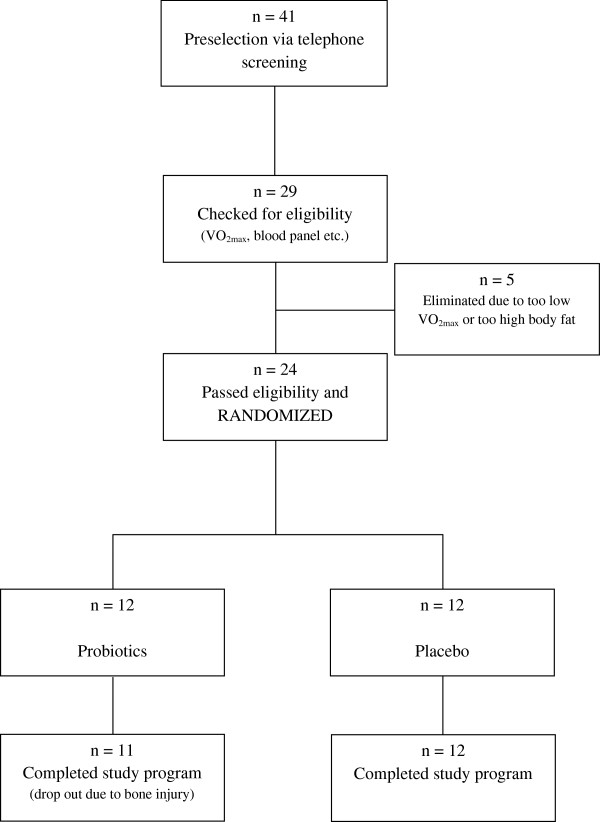
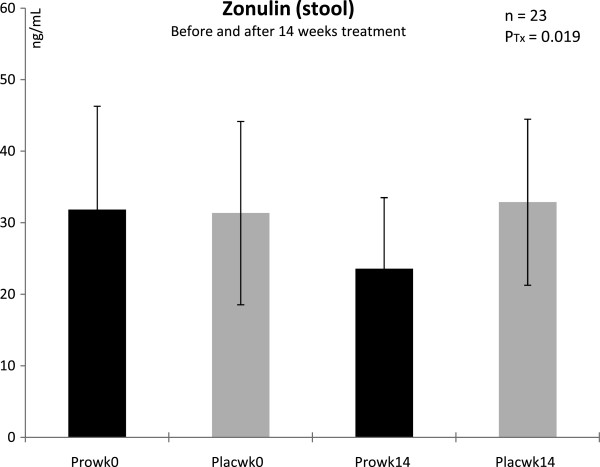
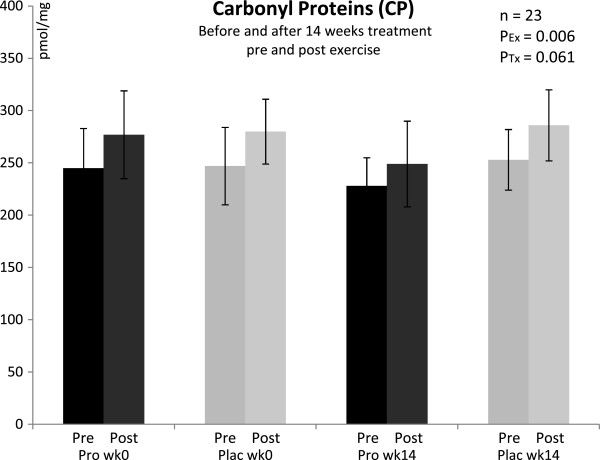
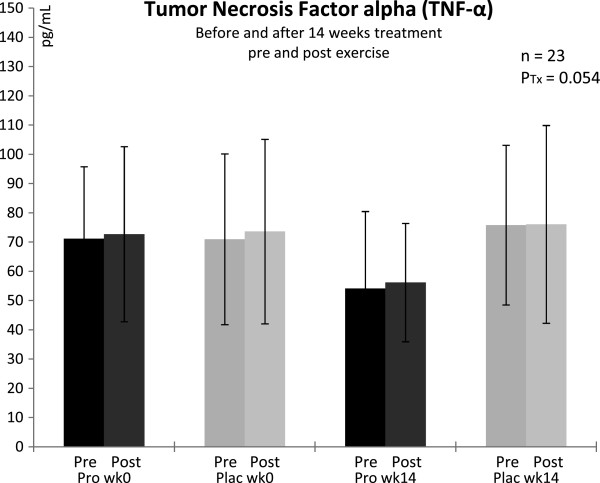
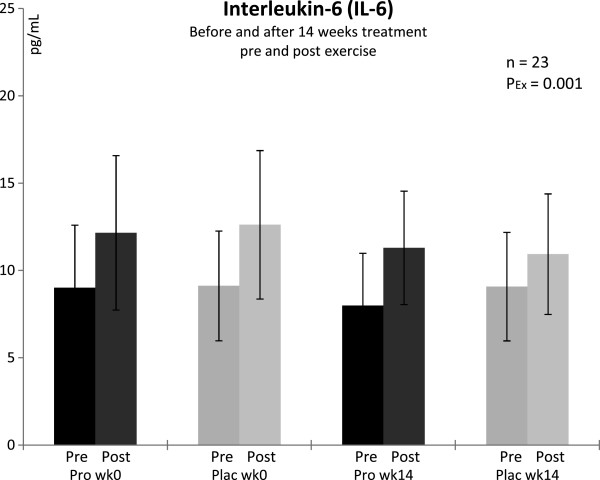
BACKGROUND: Probiotics are an upcoming group of nutraceuticals claiming positive effects on athlete's gut health, redox biology and immunity but there is lack of evidence to support these statements. METHODS: We conducted a randomized, double-blinded, placebo controlled trial to observe effects of probiotic supplementation on markers of intestinal barrier, oxidation and inflammation, at rest and after intense exercise. 23 trained men received multi-species probiotics (1010 CFU/day, Ecologic®Performance or OMNi-BiOTiC®POWER, n = 11) or placebo (n = 12) for 14 weeks and performed an intense cycle ergometry over 90 minutes at baseline and after 14 weeks. Zonulin and α1-antitrypsin were measured from feces to estimate gut leakage at baseline and at the end of treatment. Venous blood was collected at baseline and after 14 weeks, before and immediately post exercise, to determine carbonyl proteins (CP), malondialdehyde (MDA), total oxidation status of lipids (TOS), tumor necrosis factor-alpha (TNF-α), and interleukin-6 (IL-6). Statistical analysis used multifactorial analysis of variance (ANOVA). Level of significance was set at p < 0.05, a trend at p < 0.1. RESULTS: Zonulin decreased with supplementation from values slightly above normal into normal ranges (<30 ng/ml) and was significantly lower after 14 weeks with probiotics compared to placebo (p = 0.019). We observed no influence on α1-antitrypsin (p > 0.1). CP increased significantly from pre to post exercise in both groups at baseline and in the placebo group after 14 weeks of treatment (p = 0.006). After 14 weeks, CP concentrations were tendentially lower with probiotics (p = 0.061). TOS was slightly increased above normal in both groups, at baseline and after 14 weeks of treatment. There was no effect of supplementation or exercise on TOS. At baseline, both groups showed considerably higher TNF-α concentrations than normal. After 14 weeks TNF-α was tendentially lower in the supplemented group (p = 0.054). IL-6 increased significantly from pre to post exercise in both groups (p = 0.001), but supplementation had no effect. MDA was not influenced, neither by supplementation nor by exercise. CONCLUSIONS: The probiotic treatment decreased Zonulin in feces, a marker indicating enhanced gut permeability. Moreover, probiotic supplementation beneficially affected TNF-α and exercise induced protein oxidation. These results demonstrate promising benefits for probiotic use in trained men. CLINICAL TRIAL REGISTRY: http://www.clinicaltrials.gov, identifier: NCT01474629.
Overview
The claims and statistics of this paper haven’t been checked yet.
Run the check — free, no account needed. It reads the open-access text and checks the sources it cites.
Integrity signals
Registry
Cites
Statistics
Figures
Verification
Claims the paper makes
The claims and statistics of this paper haven’t been checked yet.
Run the check — free, no account needed. It reads the open-access text and checks the sources it cites.
Claims other papers make about this one
Each is checked against this paper’s own text: does it say what the citing paper says it does?
In the citing paper
“Specific probiotic strains can improve the integrity of the gut-barrier function in athletes.”
From International Society of Sports Nutrition Position Stand: Probiotics (2019) · cites this paper as [63]
In the citing paper
“For instance, in endurance-trained men, 14 weeks of a multi-species probiotic had no effect on VO2 max and maximum performance [63].”
From International Society of Sports Nutrition Position Stand: Probiotics (2019) · cites this paper as [63]
In the citing paper
“Lamprecht et al. [63] suggested that the supplemented probiotics may activate the TLR2 signaling pathway resulting in improved intestinal barrier function, thus reducing an athlete’s susceptibility to endotoxemia and associated cytokine production [137].”
From International Society of Sports Nutrition Position Stand: Probiotics (2019) · cites this paper as [63]
In the citing paper
“Zonulin concentrations decreased significantly from slightly above normal into the physiological range in subjects that supplemented with the probiotics.”
From International Society of Sports Nutrition Position Stand: Probiotics (2019) · cites this paper as [63]
In the citing paper
“This latter group included significantly decreased concentrations of zonulin [63] and endotoxin [77], as well as intestinal hyperpermeability [132] and duration of GI-symptom episode.”
From International Society of Sports Nutrition Position Stand: Probiotics (2019) · cites this paper as [63]
In the citing paper
“Chronic multistrain interventions have also been shown to reduce faecal zonulin levels by ~25% in endurance trained athletes, demonstrating improved GI barrier integrity [26].”
In the citing paper
“Additionally the use of a 14 week multistrain probiotic strategy significantly decreased faecal zonulin levels elsewhere, supporting improved tight junction stability [26].”
In the citing paper
“Chronic multi-strain interventions have also been shown to reduce fecal zonulin levels by ~ 25% in endurance-trained athletes, attributed to improved GI epithelial integrity [148].”
From International Society of Sports Nutrition Position Stand: nutritional considerations for single-stage ultra-marathon training and racing (2019) · cites this paper as [148]
In the citing paper
“Depending on the type of exercise, intensity, age and other factors, between 20-50% of athletes suffer gastrointestinal symptoms, which have been shown to increase with exercise intensity [60].”
From Exercise-induced stress behavior, gut-microbiota-brain axis and diet: a systematic review for athletes (2016) · cites this paper as [60]
Self-check
Percentages, sums and reported differences re-computed from the paper’s own numbers.
The self-check needs the paper’s full text.
Citations
Cites
Chemistry and biochemistry of 4-hydroxynonenal, malonaldehyde and related aldehydes
Esterbauer, H., Schaur, R. J., & Zollner, H. (1991) · Free Radical Biology and Medicine · doi:10.1016/0891-5849(91)90192-6 · Cited by 6,672
Calculation of percentage changes in volumes of blood, plasma, and red cells in dehydration.
Dill, D. B., & COSTILL, D. L. (1974) · Journal of Applied Physiology · doi:10.1152/jappl.1974.37.2.247 · Cited by 3,391
Stool form scale as a useful guide to intestinal transit time
Lewis, S. J., & Heaton, K. W. (1997) · Scandinavian Journal of Gastroenterology · doi:10.3109/00365529709011203 · Cited by 3,244
The anti-inflammatory effect of exercise
Petersen, A. M. W., & Pedersen, B. K. (2005) · Journal of Applied Physiology · doi:10.1152/japplphysiol.00164.2004 · Cited by 3,100 · cited 1×
“During exercise the production of IL-6 seems to be a TNF-independent pathway [53].”
BackgroundIntestinal barrier function: molecular regulation and disease pathogenesis
Groschwitz, K. R., & Hogan, S. P. (2009) · Journal of Allergy and Clinical Immunology · doi:10.1016/j.jaci.2009.05.038 · Cited by 1,775
Functional food science and gastrointestinal physiology and function
Salminen, S., Bouley, C., Boutron, M.-C., Cummings, J. H., Franck, A., Gibson, G. R., Isolauri, E., Moreau, M.-C., Roberfroid, M., & Rowland, I. (1998) · British Journal of Nutrition · doi:10.1079/bjn19980108 · Cited by 1,398
Regulation of Tight Junction Permeability by Intestinal Bacteria and Dietary Components1,2
Ulluwishewa, D., Anderson, R. C., McNabb, W. C., Moughan, P. J., Wells, J. M., & Roy, N. C. (2011) · The Journal of Nutrition · doi:10.3945/jn.110.135657 · Cited by 1,177
Fasano, A. (2011) · Physiological Reviews · doi:10.1152/physrev.00003.2008 · Cited by 1,063
Muscle‐derived interleukin‐6: mechanisms for activation and possible biological roles
FEBBRAIO, M. A., & PEDERSEN, B. K. (2002) · The FASEB Journal · doi:10.1096/fj.01-0876rev · Cited by 875
How sexually dimorphic are we? Review and synthesis
Blackless, M., Charuvastra, A., Derryck, A., Fausto‐Sterling, A., Lauzanne, K., & Lee, E. (2000) · American Journal of Human Biology · doi:10.1002/(sici)1520-6300(200003/04)12:2 · Cited by 867
Research works printed but not linked: 6
- West NP, 2009, Exerc Immunol Rev, 15, 107
- Anderson RC, 2010, FEMS Microbiol Lett, 309, 184
- Commission of experts of the German Society of Sports Medicine and Prevention, 2002, Guidelines for testing in sports medicine. Plane IV
- Dill DB, 1999, J Appl Physiol, 73, 1265
- Koning CJM, 2007, Am J Gastroenterol, 102, 1
- Jeukendrup AE, 2000, Clin Sci, 98, 47, 10.1042/CS19990258 · DOI · Paper page
Cited by
Sorted by citations
Items 101–200 of 256
Ahmadi, A. R., Sadeghian, M., Alipour, M., Taheri, S. A., Rahmani, S., & Abbasnezhad, A. (2020) · Iranian Journal of Public Health · doi:10.18502/ijph.v49i7.3575 · Cited by 32
Nutritional considerations to counteract gastrointestinal permeability during exertional heat stress
King, M. A., Rollo, I., & Baker, L. B. (2021) · Journal of Applied Physiology · doi:10.1152/japplphysiol.00072.2021 · Cited by 32
Addressing safety concerns of long-term probiotic use: In vivo evidence from a rat model
Hradická, P., Adamkova, P., Lenhardt, Ľ., Gancarčíková, S., Iannaccone, S. F., & Demečková, V. (2023) · Journal of Functional Foods · doi:10.1016/j.jff.2023.105521 · Cited by 31
An Updated View of the Effect of Probiotic Supplement on Sports Performance: A Detailed Review
Aykut, M. N., Erdoğan, E. N., Çelik, M. N., & Gürbüz, M. (2024) · Current Nutrition Reports · doi:10.1007/s13668-024-00527-x · Cited by 31
Axelrod, C. L., Brennan, C. J., Cresci, G., Paul, D., Hull, M. M., Fealy, C. E., & Kirwan, J. P. (2019) · Physiological Reports · doi:10.14814/phy2.14276 · Cited by 32
Targeting the Gut Microbiota to Improve Dietary Protein Efficacy to Mitigate Sarcopenia
Castro, E. D. M., Murphy, C. H., & Roche, H. M. (2021) · Frontiers in Nutrition · doi:10.3389/fnut.2021.656730 · Cited by 31
Dietary Strategies to Improve Exercise Performance by Modulating the Gut Microbiota
Zhang, L., Li, H., Song, Z., Liu, Y., & Zhang, X. (2024) · Foods · doi:10.3390/foods13111680 · Cited by 34
Effects of Probiotic Supplementation on Exercise and the Underlying Mechanisms
Zhang, L., Zhang, R., & Li, L. (2023) · Foods · doi:10.3390/foods12091787 · Cited by 31
The microplastic-crisis: Role of bacteria in fighting microplastic-effects in the digestive system
Pacher-Deutsch, C., Schweighofer, N., Hanemaaijer, M., Marut, W., Žukauskaitė, K., Horvath, A., & Stadlbauer, V. (2024) · Environmental Pollution · doi:10.1016/j.envpol.2024.125437 · Cited by 30
Michaličková, D., Kotur‐Stevuljević, J., Miljković, M., Dikic, N. V., Kostic-Vucicevic, M., Andjelkovic, M. V., Korićanac, V., & Djordjevic, B. I. (2018) · Journal of Human Kinetics · doi:10.1515/hukin-2017-0203 · Cited by 28
Probiotics and Gut Health in Athletes
Miles, M. P. (2020) · Current Nutrition Reports · doi:10.1007/s13668-020-00316-2 · Cited by 36
Mohr, A. E., Pugh, J., O'Sullivan, O., Black, K., Townsend, J. R., Pyne, D. B., Wardenaar, F. C., West, N. P., Whisner, C. M., & McFarland, L. V. (2022) · Frontiers in Nutrition · doi:10.3389/fnut.2022.809983 · Cited by 27
Möller, G. B., Goulart, M. J. V. D. C., Nicoletto, B. B., Alves, F. D., & Schneider, C. D. (2019) · International Journal of Sport Nutrition and Exercise Metabolism · doi:10.1123/ijsnem.2018-0227 · Cited by 27
Santibañez-Gutierrez, A., Fernández-Landa, J., Calleja-González, J., Delextrat, A. A., & Mielgo‐Ayuso, J. (2022) · Nutrients · doi:10.3390/nu14030622 · Cited by 29
Linninge, C., Jönsson, P., Bolinsson, H., Önning, G., Eriksson, J., Johansson, G. I., & Ahrné, S. (2018) · Biological Psychology · doi:10.1016/j.biopsycho.2018.08.013 · Cited by 25
Muscle and intestinal damage in triathletes
Tota, Ł. M., Piotrowska, A., Pałka, T., Morawska-Tota, M., Mikuľákova, W., Mucha, D., Palka, M. Z., & Pilch, W. (2019) · PLoS ONE · doi:10.1371/journal.pone.0210651 · Cited by 27
Evaluation of Probiotics for Warfighter Health and Performance
Agans, R., Giles, G. E., Goodson, M. S., Karl, J. P., Leyh, S. M., Mumy, K. L., Racicot, K., & Soares, J. W. (2020) · Frontiers in Nutrition · doi:10.3389/fnut.2020.00070 · Cited by 26
Tavares-Silva, E., Caris, A. V., dos Santos, S. A., Ravacci, G. R., & dos Santos, R. V. T. (2021) · Nutrients · doi:10.3390/nu13051478 · Cited by 30
Łoniewska, B., Węgrzyn, D., Adamek, K., Kaczmarczyk, M., Skonieczna‐Żydecka, K., Adler, G., Jankowska, A., Uzar, I., Kordek, A., Celewicz, M., et al. (2019) · Journal of Clinical Medicine · doi:10.3390/jcm8040473 · Cited by 25
Chantler, S., Griffiths, A., Matu, J., Davison, G., Holliday, A., & Jones, B. L. (2022) · PLoS ONE · doi:10.1371/journal.pone.0266379 · Cited by 31
Laghi, L., Zhu, C., Campagna, G., Rossi, G., Bazzano, M., & Laus, F. (2018) · Journal of Applied Physiology · doi:10.1152/japplphysiol.01131.2017 · Cited by 28
Łagowska, K., & Bajerska, J. (2021) · Journal of Athletic Training · doi:10.4085/592-20 · Cited by 24
Impact of Probiotics on the Performance of Endurance Athletes: A Systematic Review
Díaz-Jiménez, J., Sánchez-Sánchez, E., Ordóñez, F. J., Rosety, I., Díaz, A. J., Rosety-Rodríguez, M., Rosety, M. Á., & Brenes, F. (2021) · International Journal of Environmental Research and Public Health · doi:10.3390/ijerph182111576 · Cited by 24
Kapoor, M. P., Koido, M., Kawaguchi, M., Timm, D. A., Ozeki, M., Yamada, M., Mitsuya, T., & Ōkubo, T. (2020) · Journal of Functional Foods · doi:10.1016/j.jff.2020.104067 · Cited by 23
Hałasa, M., Maciejewska, D., Baśkiewicz-Hałasa, M., Safranow, K., & Stachowska, E. (2020) · Medicina · doi:10.3390/medicina56100495 · Cited by 35
Intestinal Microbiota Interventions to Enhance Athletic Performance—A Review
Patel, B. K., Patel, K. H., Lee, C. N., & Moochhala, S. (2024) · International Journal of Molecular Sciences · doi:10.3390/ijms251810076 · Cited by 30
Smith‐Ryan, A. E., Mock, M. G., Trexler, E. T., Hirsch, K. R., & Blue, M. N. M. (2018) · Applied Physiology, Nutrition, and Metabolism · doi:10.1139/apnm-2018-0645 · Cited by 26
The effect of exercise and diet on gut microbial diversity
Marlicz, W. M., & Łoniewski, I. (2014) · Gut · doi:10.1136/gutjnl-2014-307909 · Cited by 22
Ghorbani, Z., Shoaibinobarian, N., Noormohammadi, M., Taylor, K. S. M., Kazemi, A., Bonyad, A., Khoshdooz, S., Löber, U., & Forslund, S. K. (2025) · Pharmacological Research · doi:10.1016/j.phrs.2025.107780 · Cited by 30
Fang, J., Yan, W., Sun, X., & Chen, J. (2025) · Frontiers in Microbiology · doi:10.3389/fmicb.2025.1665551 · Cited by 23
Alterations in the mucosal immune system by a chronic exhausting exercise in Wistar rats
Ruíz-Iglesias, P., Estruel‐Amades, S., Camps‐Bossacoma, M., Massot‐Cladera, M., Castell, M., & Pérez-Cano, F. J. (2020) · Scientific Reports · doi:10.1038/s41598-020-74837-9 · Cited by 23
Chen, Y., Wang, I., Zhu, X., Chiu, W., & Chiu, Y.-S. (2021) · Frontiers in Nutrition · doi:10.3389/fnut.2021.623698 · Cited by 20
Peng, M., Yi, W., Murong, M., Peng, N., Tong, H., Jiang, M., Jin, D., Peng, S., Liang, W., Quan, J., et al. (2023) · Microbial Pathogenesis · doi:10.1016/j.micpath.2023.106028 · Cited by 21
Álvarez‐Herms, J., González, A., Corbi, F., Odriozola, I., & Odriozola, A. (2023) · AIMS Public Health · doi:10.3934/publichealth.2023049 · Cited by 22
Przewłócka, K., Folwarski, M., Kaczmarczyk, M., Skonieczna‐Żydecka, K., Palma, J., Bytowska, Z. K., Kujach, S., & Kaczor, J. J. (2023) · Frontiers in Nutrition · doi:10.3389/fnut.2023.1256226 · Cited by 20
Borkent, J., Ioannou, M., Neijzen, D., Haarman, B. C. M., & Sommer, I. E. (2024) · Schizophrenia Bulletin · doi:10.1093/schbul/sbae188 · Cited by 24
Hou, Y.-X., Xu, L., Song, S., Fan, W., Wu, Q., Tong, X., & Yan, H. (2021) · Frontiers in Molecular Neuroscience · doi:10.3389/fnmol.2021.634631 · Cited by 18
RetractedHeimer, M., Teschler, M., Schmitz, B., & Mooren, F. C. (2022) · Frontiers in Nutrition · doi:10.3389/fnut.2022.804046 · Cited by 24
Lee, M., Chen, M., Huang, H., Wu, W., Lee, Y.-W., Kuo, H.-C., & Huang, C. (2022) · Nutrients · doi:10.3390/nu14163308 · Cited by 19
Przewłócka, K., Kujach, S., Sawicki, P., Berezka, P., Bytowska, Z. K., Folwarski, M., Kowalski, K., & Kaczor, J. J. (2023) · Sports Medicine - Open · doi:10.1186/s40798-023-00576-6 · Cited by 22
The Microbiota-gut-immune-glia (MGIG) Axis in Major DepressionPreprint
Rudzki, L., & Maes, M. H. J. (2020) · Preprints.org · doi:10.20944/preprints202002.0084.v1 · Cited by 18
Ruíz-Iglesias, P., Massot‐Cladera, M., Rodríguez-Lagunas, M. J., Franch, À., Camps‐Bossacoma, M., Castell, M., & Pérez-Cano, F. J. (2022) · Frontiers in Nutrition · doi:10.3389/fnut.2022.861533 · Cited by 17
Imanian, B., Hemmatinafar, M., Daryanoosh, F., Koureshfard, N., Sadeghi, R., Niknam, A., Rezaei, R., & Qashqaei, A. (2024) · Journal of the International Society of Sports Nutrition · doi:10.1080/15502783.2024.2382165 · Cited by 18
The Role of the Gut Microbiome and Probiotics in Sports Performance: A Narrative Review Update
Jarrett, H., Medlin, S., & Morehen, J. C. (2025) · Nutrients · doi:10.3390/nu17040690 · Cited by 17
Choi, Y., Kim, N., Noh, G. T., Lee, J. Y., & Lee, D. H. (2020) · Gut and Liver · doi:10.5009/gnl19283 · Cited by 17
Mańkowska, K., Marchelek‐Myśliwiec, M., Kochan, P., Kosik-Bogacka, D. I., Konopka, T., Grygorcewicz, B., Roszkowska, P., Cecerska‐Heryć, E., Siennicka, A., Konopka, J., et al. (2022) · Archives of Microbiology · doi:10.1007/s00203-022-03111-5 · Cited by 16
Leech, B., Schloss, J. M., & Steel, A. (2019) · The Journal of Alternative and Complementary Medicine · doi:10.1089/acm.2018.0374 · Cited by 16
Prevention of excessive exercise‐induced adverse effects in rats withBacillus subtilisBSB3
Ducray, H. A. G., Globa, L. P., Pustovyy, O. M., Roberts, M. D., Rudisill, M. E., Vodyanoy, V. J., & Sorokulova, I. B. (2019) · Journal of Applied Microbiology · doi:10.1111/jam.14544 · Cited by 16
Smarkusz-Zarzecka, J., Ostrowska, L., Leszczyńska, J., & Cwalina, U. (2022) · International Journal of Environmental Research and Public Health · doi:10.3390/ijerph19159363 · Cited by 17
Dziewiecka, H., Buttar, H. S., Kasperska, A., Ostapiuk–Karolczuk, J., Domagalska, M., Cichoń-Woźniak, J., & Skarpańska-Stejnborn, A. (2022) · Nutrients · doi:10.3390/nu14122512 · Cited by 15
Neural Mechanisms of Exercise: Effects on Gut Miccrobiota and Depression
Yuan, T., Rocha, N., Paes, F., Arias-Carrión, Ó., Machado, S. E. D. C., & Filho, A. S. S. (2015) · CNS & Neurological Disorders - Drug Targets · doi:10.2174/1871527315666151111124729 · Cited by 15
Kuskunov, T., Tilkiyan, E. E., Doykov, D. I., Boyanov, K., Bivolarska, A. V., & Hristov, B. K. (2023) · Medicina · doi:10.3390/medicina59081383 · Cited by 14
Schmitz, L., Ferrari, N., Schwiertz, A., Rusch, K., Woestmann, U., Mahabir, E., & Gräf, C. (2019) · Pilot and Feasibility Studies · doi:10.1186/s40814-019-0459-9 · Cited by 15
Aparicio-Pascual, D., Clemente‐Suárez, V. J., Tornero-Aguilera, J. F., & Rubio-Zarapuz, A. (2025) · Sports Medicine - Open · doi:10.1186/s40798-025-00860-7 · Cited by 13
Hałasa, M., Maciejewska, D., Ryterská, K., Baśkiewicz-Hałasa, M., Safranow, K., & Stachowska, E. (2019) · Medicina · doi:10.3390/medicina55100710 · Cited by 13
Sureshkumar, S., Jung, S. K., Kim, D., Oh, K. B., Yang, H., Lee, H.-C., Jin, J. Y., Sun, L. H., Lee, S., & Byun, S. J. (2019) · 3 Biotech · doi:10.1007/s13205-019-1811-8 · Cited by 13
Kearns, R., Dooley, J. S. G., Matthews, M., & McNeilly, A. M. (2024) · Journal of the International Society of Sports Nutrition · doi:10.1080/15502783.2024.2388085 · Cited by 14
Zhu, S., Yu, Q., Xue, Y., Li, J., Huang, Y. C., Liu, W., Wang, G., Wang, L., Zhai, Q., Zhao, J., et al. (2025) · Food & Function · doi:10.1039/d4fo05835f · Cited by 14
Immunoinflammatory responses in gastrointestinal tract injury and recovery.
Verma, G., Marella, A., Shaquiquzzaman, M., & Alam, M. M. (2013) · Acta Biochimica Polonica · doi:10.18388/abp.2013_1964 · Cited by 12
Mohr, A., Pyne, D., Leite, G., Akins, D., & Pugh, J. (2022) · Journal of Sport and Health Science · doi:10.1016/j.jshs.2022.12.012 · Cited by 12
Ünsal, C., Ünsal, H., Eki̇ci̇, M., Yıldırım, E. K., Üner, A., Yıldız, M., Güleş, Ö., Aşıcı, G. S. E., Boyacıoğlu, M., Balkaya, M., et al. (2018) · Physiology International · doi:10.1556/2060.105.2018.4.25 · Cited by 11
Sureshkumar, S., Jung, S. K., Kim, D., Oh, K. B., Yang, H., Lee, H.-C., Jo, Y. J., Lee, H. S., Lee, S., & Byun, S. J. (2020) · Animal Science Journal · doi:10.1111/asj.13399 · Cited by 11
Maslova, E., Eisaiankhongi, L., Rigole, P., Coenye, T., & McCarthy, R. R. (2024) · npj Biofilms and Microbiomes · doi:10.1038/s41522-024-00518-4 · Cited by 9
Wardenaar, F. C., Schott, K. D., Mohr, A. E., Ortega‐Santos, C. P., & Connolly, J. E. (2023) · International Journal of Environmental Research and Public Health · doi:10.3390/ijerph20156453 · Cited by 10
Bertuccioli, A., Zonzini, G. B., Cazzaniga, M., Cardinali, M., Pierro, F. D., Gregoretti, A., Zerbinati, N., Guasti, L., Matera, M. R., Cavecchia, I., et al. (2024) · Microorganisms · doi:10.3390/microorganisms12040804 · Cited by 11
Microbiome and physical activity
Álvarez‐Herms, J., & Odriozola, A. (2024) · Advances in genetics · doi:10.1016/bs.adgen.2024.01.002 · Cited by 12
Kayacan, Y., Kola, A. Z., Guandalini, S., Yazar, H., & Söğüt, M. Ü. (2022) · Nutrients · doi:10.3390/nu14173555 · Cited by 10
Fernández‐Lázaro, D., Sánchez-Serrano, N., Rabail, R., Aadil, R. M., Mielgo‐Ayuso, J., Radesca, K., & Garrosa, E. (2023) · Applied Sciences · doi:10.3390/app13063448 · Cited by 9
Probiotic consumption and inflammatory markers in athletes: a systematic review and meta-analysis
Nazari, M., Faghfoori, Z., Ashabi, A., Arab, A., & Hajianfar, H. (2020) · International Journal of Food Properties · doi:10.1080/10942912.2020.1807566 · Cited by 9
Contemporary Advances in Sports Science
Taïar, R. (2021) · IntechOpen eBooks · doi:10.5772/intechopen.93203 · Cited by 8
Jendraszak, M., Gałęcka, M., Kotwicka, M., Schwiertz, A., Regdos, A., Pazgrat-Patan, M., & Andrusiewicz, M. (2022) · Biomolecules · doi:10.3390/biom12121781 · Cited by 9
The athlete gut microbiota: state of the art and practical guidance
Pérez-Castillo, Í. M., Sabag-Daigle, A., Chicharro, J. L., Mihic, N., Rueda, R., & Bouzamondo, H. (2024) · Beneficial Microbes · doi:10.1163/18762891-bja00007 · Cited by 8
Sukmawati, D., Adisyahputra, A., Al‐Ani, L. K. T., Husna, S. N. A., Afifah, Z. N., Sriherwanto, C., Surono, S., Setiarto, R. H. B., Nurjayadi, M., & Rahman, R. A. (2024) · Food Science and Biotechnology · doi:10.1007/s10068-024-01609-w · Cited by 7
Sport nutrition, redox homeostasis and toxicity in sport performance
Yfanti, C., Deli, C. K., Georgakouli, K., Fatouros, I. G., & Jamurtas, A. Z. (2019) · Current Opinion in Toxicology · doi:10.1016/j.cotox.2019.01.003 · Cited by 7
Riviere, A. J., Smith, K. S., Schaberg, M. N., Greene, M. W., & Frugé, A. D. (2022) · BMC Gastroenterology · doi:10.1186/s12876-022-02248-3 · Cited by 7
Bobga, T. P., Fossi, B. T., Taïwé, G. S., Nkanpira, K. T., Yolande, N. E., Ambe, N. F., Toukam, L. L., Wanyu, B. Y., & Ndip, L. (2022) · Saudi Journal of Pathology and Microbiology · doi:10.36348/sjpm.2022.v07i10.001 · Cited by 7
Leech, B., Schloss, J. M., & Steel, A. (2017) · European Journal of Integrative Medicine · doi:10.1016/j.eujim.2017.11.003 · Cited by 7
Protective Effects of Probiotics on Runners’ Mood: Immunometabolic Mechanisms Post-Exercise
Tavares-Silva, E., Lemos, V. D. A., de França, E., Silvestre, J. C., dos Santos, S. A., Ravacci, G. R., & dos Santos, R. V. T. (2024) · Nutrients · doi:10.3390/nu16213761 · Cited by 6
Quero-Calero, C. D., Abellán‐Aynés, O., Manonelles, P., & Ortega, E. (2022) · International Journal of Environmental Research and Public Health · doi:10.3390/ijerph19063421 · Cited by 7
Gallego, M. Á. M., Sánchez, M. G. C., Olmedo, M., Soto, A. B., Casasempere, S. Á., Nozal, P., Martínez‐Ojinaga, E., Arias, M. M., Losantos-García, I., & Molero-Luís, M. (2024) · Nutrients · doi:10.3390/nu16050684 · Cited by 8
Association between exercise and changes in gut microbiota profile: a review
Khaledi, M., Darvishi, M., Sameni, F., Shahrjerdi, S., Karami, E., Barahui, N., Hemmati, J., Hasheminasab, M. S., Sanae, M.-J., Akhavan‐Sigari, R., et al. (2023) · Sport Sciences for Health · doi:10.1007/s11332-023-01132-1 · Cited by 5
Földvári-Nagy, K. C., Simon, V., Csősz, C., Schnabel, T., Veres, D. S., Lenti, K., Földvári-Nagy, L., & Éliás, A. J. (2025) · Developments in Health Sciences · doi:10.1556/2066.2025.00081 · Cited by 5
Yang, G., Gao, L., Liu, Y., Xu, X., & Yang, W. (2025) · BMC Sports Science Medicine and Rehabilitation · doi:10.1186/s13102-025-01334-9 · Cited by 4
Effects of probiotics on strength and power performance in a trained population
Santibañez-Gutierrez, A., Fernández-Landa, J., Todorović, N., Calleja-González, J., Stojanović, M. D. M., & Mielgo‐Ayuso, J. (2023) · Kinesiology · doi:10.26582/k.55.1.7 · Cited by 4
Maymandinejad, I., Hemmatinafar, M., Jäger, R., Imanian, B., Jahromi, M. K., & Suzuki, K. (2025) · Nutrients · doi:10.3390/nu17142296 · Cited by 6
Maghsoumi‐Norouzabad, L., Karimi, A. B., Majd, S. A., Hosseini, L., & Shahi, F. (2025) · Europe PMC (PubMed Central) · doi:10.30476/ijms.2024.102363.3525 · Cited by 4
Smarkusz-Zarzecka, J., Ostrowska, L., & Witczak-Sawczuk, K. (2017) · PubMed · Cited by 4
Sevim, Y., Öztürk, H. N. O., & Ergün, M. (2023) · Journal of Research in Pharmacy · doi:10.29228/jrp.334 · Cited by 4
Antoni, C., Boqué, N., Nuria, C., Herrero, P., Jordi, M.-P., Arola, L., & Puiggròs, F. (2019) · Elsevier eBooks · doi:10.1016/b978-0-12-816193-7.00019-1 · Cited by 4
Kartaram, S. W., van Norren, K., Schoen, E. D., Teunis, M., Mensink, M., Verschuren, M. C. M., M’Rabet, L., der Vaart, I. B.-V., Mohrmann, K., Wittink, H. M., et al. (2020) · Frontiers in Physiology · doi:10.3389/fphys.2020.01006 · Cited by 4
Probiotics: An important player in the obesity management alone?
Pothuraju, R., & Hussain, S. A. (2017) · Obesity Medicine · doi:10.1016/j.obmed.2017.09.003 · Cited by 4
Mitochondria-associated programmed cell death in pancreatic β cell of T2DM
Zhang, Y., Wang, C., Zhang, P., Zhang, Q., Cao, Y., & Jiang, Z. (2026) · APOPTOSIS · doi:10.1007/s10495-026-02315-0 · Cited by 4
Rathi, A., Gaonkar, T., Dhar, D., Kallapura, G., & Jadhav, S. (2024) · Discover Applied Sciences · doi:10.1007/s42452-024-05815-3 · Cited by 3
Ünsal, H., Ünsal, C., Üner, A. G., Yıldırım, E. K., Eki̇ci̇, M., Balkaya, M., & Belge, F. (2016) · Kafkas Universitesi Veteriner Fakultesi Dergisi · doi:10.9775/kvfd.2016.15949 · Cited by 3
Biggio, F., Fattuoni, C., Mostallino, M. C., & Follesa, P. (2022) · Metabolites · doi:10.3390/metabo12080762 · Cited by 3
The Role of Probiotics in Sports
Nishihira, J. (2018) · Elsevier eBooks · doi:10.1016/b978-0-12-813922-6.00036-9 · Cited by 3
Ilahi, B. R., Handayani, Y., Azhari, Rastina, R., & Darniati (2025) · IOP Conference Series Earth and Environmental Science · doi:10.1088/1755-1315/1476/1/012083 · Cited by 2
Gut Microbiota and Endurance Exercıse
Ersoy, N., & Ersoy, G. (2018) · Archives of Health Science and Research · doi:10.17681/hsp.388229 · Cited by 2
İlktaç, H. Y., Kızıltan, G., Ozansoy, M., Kılıç, Ü., Toğay, S. Ö., Keskin, İ., Özdemir, E. M., & Günal, M. Y. (2021) · Clinical and Experimental Health Sciences · doi:10.33808/clinexphealthsci.865058 · Cited by 2
Keathley, J., White, J., & Reid, G. (2023) · Life · doi:10.3390/life13051124 · Cited by 2
Metadata
- Authors
- Lamprecht, M., Bogner, S., Schippinger, G., Steinbauer, K., Fankhauser, F., Hallstroem, S., Schuetz, B., & Greilberger, J. F.
- Affiliations
- Medical University of Graz (AT)
- SportchirurgiePlusCentre for Individual Sport Medicine and Surgery Graz Austria
- VRVis GmbH (Austria) (AT)
- Corresponding author
- Lamprecht, Manfred
- Venue
- Journal of the International Society of Sports Nutrition
- Publisher
- Informa UK Limited
- Published
- 2012-02-06
- Volume
- 9
- Issue
- 1
- Pages
- 45-45
- ISSN
- 1550-2783 (ISSN-L)
- PMC
- PMC3465223
- OpenAlex
- W2160904230
- Cited by
- 257
- References
- 57
- Citations by year
- 2026: 17 · 2025: 14 · 2024: 21 · 2023: 20 · 2022: 31 · 2021: 23 · 2020: 30 · 2019: 28 · 2018: 20 · 2017: 13 · 2016: 14 · 2015: 12 · 2014: 8 · 2013: 5 · 2012: 1
- FWCI
- 12.79
- Type
- journal article
- Language
- en
- Open access
- gold
- doi.org
- Licence
- Locations
- Journal of the International Society of Sports Nutrition (publishedVersion, cc-by)
- Europe PMC (PubMed Central) (publishedVersion, cc-by)
- PubMed Central (publishedVersion, cc-by)
- PubMed (publishedVersion)
- DOAJ (DOAJ: Directory of Open Access Journals) (submittedVersion)
- Topics
- Life Sciences › Agricultural and Biological Sciences › Food Science › Probiotics and Fermented Foods
- Health Sciences › Medicine › Physiology (medical) › Exercise and Physiological Responses
- Life Sciences › Agricultural and Biological Sciences › Animal Science and Zoology › Animal Nutrition and Physiology
- Keywords
- probiotics, probiotic supplementation, athletes, trained men, intestinal barrier, leaky gut, zonulin, alpha-1-antitrypsin, oxidative stress, lipid peroxidation, malondialdehyde, protein carbonyls, inflammation, TNF-α, interleukin-6, physical activity, gut health, nutraceuticals
About these checks
Registry, retraction, Cites and statistics results are computed, not judged, with one exception: a printed reference that no index lists is read once by a model before it counts as a citation error. Claims are extracted by a model and kept only when their quote appears verbatim in the text; each cited source is then checked, with a model’s help, for whether it says what the claim relies on. Those verdicts can be wrong — read the claim’s quote and the cited source before relying on one.
Statistics and arithmetic are recomputed, not judged.
Confidence bands are shown only for fields calibrated on our annotated test set. None is calibrated yet, so no band is shown.
What counts as a claim ›How we measure confidence ›How we check this ›
Are you an author, or do you see a problem with this page? Request a review
