

Patients with posttraumatic stress disorder exhibit an altered phenotype of regulatory T cells
Open accessThe DOI matches its Crossref record; 58 of the 59 references it cites were found in a registry or an index.
Abstract
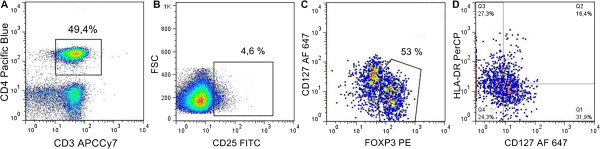
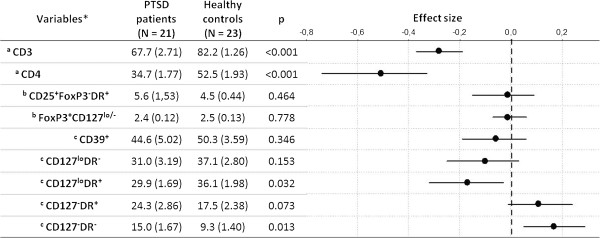
BACKGROUND: Regulatory T cells (Tregs) play a key role in immune homeostasis in vivo. Tregs have a critical role in preventing the development of autoimmune diseases and defects in Treg function are implicated in various autoimmune disorders. Individuals with posttraumatic stress disorder (PTSD) have higher prevalence of autoimmune disorders than the general population. We hypothesized that war veterans with PTSD would exhibit a decreased number and/or altered phenotype of Tregs. METHODS: We analyzed peripheral blood mononuclear cells (PBMCs) of patients with PTSD (N = 21) (mean age = 45.9) and age-matched healthy controls (N = 23) (mean age = 45.7) to determine the proportion of Tregs and their phenotype according to the expression of CD127 and HLA-DR markers which describe the differentiation stages of Tregs. In addition, we analyzed the expression of membrane ectoenzyme CD39 on Tregs of the study groups, an important component of the suppressive machinery of Tregs. RESULTS: We found no differences in the proportion of Tregs between PTSD patients and controls, but PTSD patients had a higher percentage of CD127(-)HLA-DR(-) Tregs and a lower percentage of CD127(lo)HLA-DR(+) Tregs compared to controls. There was no difference in expression of CD39 on Tregs of the study groups. CONCLUSIONS: Although the proportions of Tregs in PTSD patients were unchanged, we found that they exhibit a different phenotype of Tregs that might be less suppressive. Impaired differentiation and function of Tregs is likely involved in disruption of immune homeostasis in PTSD.
Overview
The claims and statistics of this paper haven’t been checked yet.
Free: it reads the open-access text and checks the first 5 claims that cite a source we can check. Create a free account to check every claim.
Integrity signals
Registry
Cites
Statistics
Figures
Verification
Claims the paper makes
The claims and statistics of this paper haven’t been checked yet.
Free: it reads the open-access text and checks the first 5 claims that cite a source we can check. Create a free account to check every claim.
Self-check
Percentages, sums and reported differences re-computed from the paper’s own numbers.
The self-check needs the paper’s full text.
Citations
Cites
Diagnostic and Statistical Manual of Mental Disorders
American Psychiatric Association (2013) · doi:10.1176/appi.books.9780890425596 · Cited by 116,369
Diagnostic and Statistical Manual of Mental Disorders
Williams, J. B. W., & First, M. (2013) · Encyclopedia of Social Work · doi:10.1093/acrefore/9780199975839.013.104 · Cited by 109,519
(1970) · Cited by 24,983
Psychometric properties of the Beck Depression Inventory: Twenty-five years of evaluation
Beck, A. T., Steer, R. A., & Carbin, M. G. (1988) · Clinical Psychology Review · doi:10.1016/0272-7358(88)90050-5 · Cited by 11,696 · cited 7×
“Out of 54 correlations performed between phenotype variables and psychometric test scores, only two were statistically significant (without corrections for multiple comparisons) – 1) BDI vs. CD127−HLA-DR− (Spearman R = −0.44, p = 0.045), and 2) LASC arousal vs. CD127loHLA-DR−(R = 0.46, p = 0.033).”
MethodInfluentialControl of Regulatory T Cell Development by the Transcription Factor Foxp3
Hori, S., Nomura, T., & Sakaguchi, S. (2003) · Science · doi:10.1126/science.1079490 · Cited by 8,187 · cited 1×
“vastly improved the identification of this subpopulation of T cells [2,3].”
BackgroundFoxp3 programs the development and function of CD4+CD25+ regulatory T cells
Fontenot, J. D., Gavin, M. A., & Rudensky, A. Y. (2003) · Nature Immunology · doi:10.1038/ni904 · Cited by 7,745 · cited 1×
“vastly improved the identification of this subpopulation of T cells [2,3].”
BackgroundThe development of a Clinician-Administered PTSD Scale
Blake, D. D., Weathers, F. W., Nagy, L. M., Kaloupek, D. G., Gusman, F. D., Charney, D. S., & Keane, T. M. (1995) · Journal of Traumatic Stress · doi:10.1002/jts.2490080106 · Cited by 5,024
The Role of Tumoral FOXP3 on Cell Proliferation, Migration, and Invasion in Gastric Cancer
Zhang, L., Xu, J., Zhang, X., Zhang, Y., Wang, L., Huang, X., & Xu, Z. (2017) · Cellular Physiology and Biochemistry · doi:10.1159/000479442 · Cited by 4,088
Bennett, C. L., Christie, J., Ramsdell, F., Brunkow, M. E., Ferguson, P. J., Whitesell, L., Kelly, T. E., Saulsbury, F. T., Chance, P. F., & Ochs, H. D. (2001) · Nature Genetics · doi:10.1038/83713 · Cited by 3,402
CD127 expression inversely correlates with FoxP3 and suppressive function of human CD4+ T reg cells
Liu, W., Putnam, A. L., Xu-yu, Z., Szot, G. L., Lee, M. R., Zhu, S., Gottlieb, P. A., Kapranov, P., Gingeras, T. R., de St. Groth, B. F., et al. (2006) · The Journal of Experimental Medicine · doi:10.1084/jem.20060772 · Cited by 2,606 · cited 1×
“Other markers such as low levels or lack of expression of IL-7 receptor CD127 have been suggested as useful in identifying peripheral Tregs [7].”
Background
Research works printed but not linked: 1
- World Health Organisation ICD-10, International Statistical Classification of Diseases and Health Related Problems, 10th Revision 1992 1 Geneva: World Health Organisation
Cited by
Inflammation in Fear- and Anxiety-Based Disorders: PTSD, GAD, and Beyond
Michopoulos, V., Powers, A., Gillespie, C. F., Ressler, K. J., & Jovanovic, T. (2017) · Neuropsychopharmacology · doi:10.1038/npp.2016.146 · Cited by 786
“…critical for containing pro-inflammatory responses and Th1 and Th17 cells activate inflammatory responses (Afzali et al, 2007), these alterations in the composition of T-cell subsets may act in aggregate to direct systemic inflammatory tone into an overdrive state in PTSD (Jergovic et al, 2014).”
BackgroundThe microbiome in posttraumatic stress disorder and trauma-exposed controls: an exploratory study
Hemmings, S. M. J., Malan-Müller, S., van den Heuvel, L. L., Demmitt, B. A., Stanislawski, M. A., Smith, D. G., Bohr, A. D., Stamper, C. E., Hyde, E. R., Morton, J. T., et al. (2017) · Psychosomatic Medicine · doi:10.1097/psy.0000000000000512 · Cited by 208
“Decreased immunoregulation, as evidenced by decreased frequency of Treg cells, or altered Treg function, may lead to overactive host immune defenses, increased gut permeability, colitis, and exaggerated PTSD symptoms after trauma exposure (11,12,14,22,23).”
Yang, J.-J., & Jiang, W. (2020) · Journal of Affective Disorders · doi:10.1016/j.jad.2020.02.044 · Cited by 136
Smith, A. K., Ratanatharathorn, A. D., Maihofer, A. X., Naviaux, R. K., Aiello, A. E., Amstadter, A. B., Ashley‐Koch, A. E., Baker, D. G., Beckham, J. C., Boks, M. P., et al. (2020) · Nature Communications · doi:10.1038/s41467-020-19615-x · Cited by 155
Co-morbidity of PTSD and immune system dysfunction: opportunities for treatment
Neigh, G. N., & Ali, F. F. (2016) · Current Opinion in Pharmacology · doi:10.1016/j.coph.2016.07.011 · Cited by 108
Microglial deletion and inhibition alleviate behavior of post-traumatic stress disorder in mice
Li, S., Liao, Y., Dong, Y., Li, X., Li, J., Cheng, Y., Cheng, J., & Yuan, Z. (2021) · Journal of Neuroinflammation · doi:10.1186/s12974-020-02069-9 · Cited by 128
Jergović, M., Bendelja, K., Savić Mlakar, A., Vojvoda, V., Aberle, N., Jovanovic, T., Rabatić, S., Sabioncello, A., & Vidović, A. (2015) · Frontiers in Psychiatry · doi:10.3389/fpsyt.2015.00049 · Cited by 63
“By analyzing Tregs in a random subset of PTSD patients from this study, we have found that they exhibit a different phenotype of Tregs that might be less suppressive (52).”
BackgroundMethodSelf-citationNatural disaster and immunological aging in a nonhuman primate
Watowich, M. M., Chiou, K. L., Montague, M. J., Simons, N. D., Horvath, J. E., Ruiz-Lambides, A. V., Martínez, M. I., Higham, J. P., Brent, L. J. N., Platt, M. L., et al. (2022) · Proceedings of the National Academy of Sciences · doi:10.1073/pnas.2121663119 · Cited by 59
The potential for treg-enhancing therapies in nervous system pathologies
Olson, K. E., Mosley, R. L., & Gendelman, H. E. (2022) · Clinical & Experimental Immunology · doi:10.1093/cei/uxac084 · Cited by 63
Ohno, I. (2017) · Allergology International · doi:10.1016/j.alit.2017.06.005 · Cited by 57
Young, M. B., Howell, L. L., Hopkins, L. S., Moshfegh, C. M., Yu, Z., Clubb, L. M., Seidenberg, J., Park, J., Swiercz, A. P., & Marvar, P. J. (2018) · Psychoneuroendocrinology · doi:10.1016/j.psyneuen.2018.05.012 · Cited by 48
“, 2013), and altered proportion or activity of T lymphocytes (Jergović et al., 2014; Lemieux et al., 2008).”
BackgroundResultInfluentialYassin, L. K., Skrabulyte-Barbulescu, J., Alshamsi, S. H., Saeed, S., Alkuwaiti, S. H., Almazrouei, S., Alnuaimi, A., BaniYas, S., Aldhaheri, D., Alderei, M., et al. (2025) · Frontiers in Aging Neuroscience · doi:10.3389/fnagi.2025.1667448 · Cited by 53
Petakh, P., Oksenych, V., Kamyshna, I. I., Boisak, I., Lyubomirskaya, K., & Kamyshnyi, O. (2024) · Frontiers in Immunology · doi:10.3389/fimmu.2024.1349883 · Cited by 41
Potential causal association between gut microbiome and posttraumatic stress disorder
He, Q., Wang, W., Xu, D., Xiong, Y., Tao, C., You, C., Ma, L., & Ma, J. (2024) · Translational Psychiatry · doi:10.1038/s41398-024-02765-7 · Cited by 33
The link between post-traumatic stress disorder and systemic lupus erythematosus
Goldschen, L., Ellrodt, J., Amonoo, H. L., Feldman, C. H., Case, S., Koenen, K. C., Kubzansky, L. D., & Costenbader, K. H. (2022) · Brain Behavior and Immunity · doi:10.1016/j.bbi.2022.12.012 · Cited by 35
Immune system regulation and role of the human leukocyte antigen in posttraumatic stress disorder
Katrinli, Ş., & Smith, A. K. (2021) · Neurobiology of Stress · doi:10.1016/j.ynstr.2021.100366 · Cited by 29
“Accordingly, expression of HLA genes was found to be altered in peripheral immune cells and in glial cells of those with psychiatric disorders (Jergovic et al., 2014; Bernstein et al., 2015; Goudriaan et al., 2014; Sinkus et al., 2013).”
Amoroso, M., Langgartner, D., Lowry, C. A., & Reber, S. O. (2021) · International Journal of Molecular Sciences · doi:10.3390/ijms222312938 · Cited by 31
Núñez-Ríos, D. L., Martínez‐Magaña, J. J., Nagamatsu, S. T., Andrade-Brito, D., Forero, D. A., Orozco, C. A., & Montalvo‐Ortiz, J. L. (2022) · Biomedicines · doi:10.3390/biomedicines10051107 · Cited by 28
Uncontrolled and under-diagnosed asthma in a Damascus shelter during the Syrian crisis
Mohammad, Y., Shaaban, R., Latifeh, Y., Khaddam, A., Sawaf, B., Zakaria, M. I., Al-Masalmeh, M. S., Fawaz, Y., Allaham, A., Almani, I., et al. (2017) · Journal of Thoracic Disease · doi:10.21037/jtd.2017.08.86 · Cited by 21
“It is plausible because individuals with PTSD exhibit an altered phenotype of regulatory T cells (12) and furthermore, it has been suggested that asthma onset can be linked to family/personal disasters (13) which is the case in these shelter dwellers (loss of home and/or family member).”
BackgroundKim, G. S., Smith, A. K., Xue, F., Michopoulos, V., Lori, A., Armstrong, D. L., Aiello, A. E., Koenen, K. C., Galea, S., Wildman, D. E., et al. (2019) · Brain Behavior and Immunity · doi:10.1016/j.bbi.2019.06.025 · Cited by 20
“…Vidovic, 2011; Vidovic, 2007; Jergovic, 2014), but more recent studies that further resolved T-cell subpopulations support PTSD-associated differences in T-cell composition indicative of pro-inflammatory skew (Sommershof, 2009; Zhou, 2014; Jergovic, 2014) and immunological aging (Aiello, 2016).”
MethodResultInflammation in Posttraumatic Stress Disorder: Dysregulation or Recalibration?
Patas, K., Baker, D. G., Chrousos, G. P., & Agorastos, A. (2023) · Current Neuropharmacology · doi:10.2174/1570159x21666230807152051 · Cited by 22
“Accordingly, a lower proportion of Treg cells [54, 56] and a less suppressive Treg phenotype in PTSD [57] hint at a disruption of immune homeostasis that may be further facilitating systemic inflammation and possibly pathological autoimmunity.”
BackgroundThe impact of conflict on asthma
Mohammad, Y., & Brough, G. (2019) · Journal of Thoracic Disease · doi:10.21037/jtd.2019.07.11 · Cited by 22
“A survey of internally displaced people during the Syrian war found that 44% of non-asthmatic civilian shelter dwellers reported episodes of wheezing, coughing and breathlessness at night, again indicating under-diagnosed asthma (1,9).”
BackgroundInfluentialKawano, T., Ouchi, R., Ishigaki, T., Masuda, C., Miyasaka, T., Ohkawara, Y., Ohta, N., Takayanagi, M., Takahashi, T., & Ohno, I. (2018) · International Archives of Allergy and Immunology · doi:10.1159/000488289 · Cited by 17
Lira, G. V. D. A. G., da Silva, G. A. P., Wandalsen, G. F., & SARINHO, E. S. C. (2022) · Allergologia et Immunopathologia · doi:10.15586/aei.v50i2.546 · Cited by 17
Smith, A. K., Ratanatharathorn, A. D., Maihofer, A. X., Naviaux, R. K., Aiello, A. E., Amstadter, A. B., Ashley‐Koch, A. E., Baker, D. G., Beckham, J. C., Boks, M. P., et al. (2019) · bioRxiv (Cold Spring Harbor Laboratory) · doi:10.1101/585109 · Cited by 14
Dai, Y., Tai, Y., Chang, Y.-T., Chen, T., & Chen, M. (2021) · Psychosomatic Medicine · doi:10.1097/psy.0000000000000920 · Cited by 13
Ouchi, R., Kawano, T., Yoshida, H., Ishii, M., Miyasaka, T., Ohkawara, Y., Takayanagi, M., Takahashi, T., & Ohno, I. (2018) · The Tohoku Journal of Experimental Medicine · doi:10.1620/tjem.246.155 · Cited by 13
Fraile‐Μartinez, O., Montero, C. G., Álvarez-Mon, M. Á., Casanova-Martín, C., Faber, D. F., Presa, M., Lahera, G., López-González, L., Díaz, R., Saz, J. V., et al. (2025) · Biological Psychiatry · doi:10.1016/j.biopsych.2025.01.014 · Cited by 12
Neurobehavioral Characterization of Perinatal Oxycodone-Exposed Offspring in Early Adolescence
Flores, A., Nguyen, N. M., Devanaboyina, M., Sanketh, S., Athota, P., Sankarasubramanian, J., Guda, C., Yelamanchili, S. V., & Pendyala, G. (2024) · Journal of Neuroimmune Pharmacology · doi:10.1007/s11481-024-10129-7 · Cited by 9
“However, clinical studies found T cells implicated in psycho-logically complex disorders such as Post-Traumatic Stress Disorder (PTSD) via T cell phenotyping in humans (Jergović et al. 2014).”
Reyes, A. A., & Chandler, D. J. (2023) · Neuroglia · doi:10.3390/neuroglia4020007 · Cited by 10
Xiong, Y., Wang, Z., & Young, M. R. (2019) · Frontiers in Psychiatry · doi:10.3389/fpsyt.2019.00693 · Cited by 5
“A lower proportion of CD4+ T-cells was also seen in a study of Croatian male combat Veterans compared to levels in healthy controls (19).”
BackgroundBrite, J., Miller‐Archie, S. A., & Cone, J. E. (2022) · International Journal of Environmental Research and Public Health · doi:10.3390/ijerph19116514 · Cited by 4
“One study found that war veterans with PTSD exhibited a different phenotype of Regulatory T cells (Tregs), which may prevent the development of autoimmune diseases, compared with healthy controls [37].”
BackgroundCavieres, G., Bozinovic, F., Bogdanovich, J. M., & Rivera, D. S. (2023) · Frontiers in Behavioral Neuroscience · doi:10.3389/fnbeh.2023.1239157 · Cited by 5
The Impact of War on Asthma, a Systematic Review and Meta‐Analysis: An EAACI Task Force Report
Rufo, J. C., Paciência, I., Jutel, M., Moreira, A. M., Annesi‐Maesano, I., Suojalehto, H., Zemelka‐Wiącek, M., Trikamjee, T., Demir, S., Eguíluz‐Gracia, I., et al. (2025) · Allergy · doi:10.1111/all.70038 · Cited by 3
“%) reported episodes of wheezing, coughing, and breathlessness at night [16, 17].”
Tinnitus and tinnitus disorder: Genetic, neurobiological, and clinical differentiation
Ridder, D. D., Kleinjung, T., Song, J., Adhia, D. B., Hall, M., Mohan, A., Vanneste, S., Londero, A., Weisz, N., Schlee, W., et al. (2026) · iScience · doi:10.1016/j.isci.2026.116080 · Cited by 8
FLI1 in PBMCs contributes to elevated inflammation in combat-related posttraumatic stress disorder
Li, P., Liu, L., Liu, S., Lu, Z., Halushka, P. V., Sidles, S. J., LaRue, A. C., Wang, Z., & Fan, H. (2024) · Frontiers in Psychiatry · doi:10.3389/fpsyt.2024.1436690 · Cited by 4
Mohan, M., Dahiya, A., Mannan, A., & Singh, T. G. (2025) · Molecular Neurobiology · doi:10.1007/s12035-025-05452-w · Cited by 3
“Research has shown a decrease in the incidence of regulatory T cells among patients diagnosed with PTSD, which may imply a connection between PTSD and FOXP3 expression (Jergović et al., 2014).”
InfluentialStress as a possible trigger in anti–N-methyl-ᴅ-aspartate receptor encephalitis: a case series
Ahmad, S. H., Kawoosa, A. R., Hassan, T. U., & Sanaie, B. A. (2024) · encephalitis · doi:10.47936/encephalitis.2024.00059 · Cited by 1
“One of the postulated pathways is based on the altered levels of regulatory T cells (Tregs) in anti-NMDAR encephalitis patients as well as in those with stress [16,17].”
BackgroundTan, J., Bai, S., Hu, G., Yin, Y., Guo, C., & Liu, L. (2025) · Medicine · doi:10.1097/md.0000000000045131 · Cited by 2
“[15] These findings suggest that inflammation and immune cells may play a role in the pathogenesis of PTSD and influence genetic susceptibility.”
Relationship between percentage of regulatory T-cells and dental amalgam fillings.
Khaliq, F., Afzal, N., Kashif, M., & Shahzad, F. (2016) · Journal Of Oral Research · doi:10.17126/joralres.2016.034
Meyer, T., von Boetticher, D., & Spitzer, C. (2017) · Trauma und Gewalt · doi:10.21706/tg-11-2-122
Mohammad, Y. (2018) · touchREVIEWS in Respiratory & Pulmonary Diseases · doi:10.17925/usrpd.2018.13.1.23
“This is important as it has been recognized that psychiatric disorders play a role in asthma onset, as stress deregulates the immune system.(9,10) When we reviewed the care provided for shelter dwellers, we were informed that they were visited by general practitioners (GPs) in mobile clinics from the Red Cross, and ha…”
BackgroundImmune to fear: With a little help from old friends
Forsythe, P. (2019) · Brain Behavior and Immunity · doi:10.1016/j.bbi.2019.02.019
The Immune System and Anxiety Disorders
Michopoulos, V., & Jovanović, T. (2021) · Cambridge University Press eBooks · doi:10.1017/9781108539623.013
(2024) · Elsevier eBooks · doi:10.1016/b978-0-443-23565-8.09996-8
Anisman, H., Hayley, S. P., & Kusnecov, A. W. (2024) · Elsevier eBooks · doi:10.1016/b978-0-443-23565-8.00010-7
Rheumatic autoimmune disease in relation to post-traumatic stress disease and traumatic brain injury
Scofield, R. H., Lawrence, S., Kurien, B. T., Gross, T. F., Sorocco, K., Prodan, C. I., & Lewis, V. M. (2025) · Frontiers in Lupus · doi:10.3389/flupu.2025.1553510
“T regulatory cells are also abnormal in PTSD patients (41).”
Li, S., Liao, Y., Dong, Y., Li, X., Li, J., Cheng, Y., Cheng, J., & Yuan, Z. (2021) · Figshare · doi:10.6084/m9.figshare.13525292
Kril, I., Паллаг, О. В., Yusko, L., Бурмей, С. А., & Boyko, N. (2026) · Proceedings of the Shevchenko Scientific Society Medical Sciences · doi:10.25040/ntsh2026.01.09
Metadata
- Authors
- Jergović, M., Bendelja, K., Vidović, A., Savić, A., Vojvoda, V., Aberle, N., Rabatić, S., Jovanovic, T., & Sabioncello, A.
- Affiliations
- University of Zagreb (HR)
- University Hospital Dubrava (HR)
- General Hospital Dr. Josip Benčević Slavonski Brod (HR)
- Institute of Immunology (HR)
- Corresponding author
- Jergović, Mladen
- Venue
- Allergy, Asthma & Clinical Immunology
- Published
- 2014-08-20
- Volume
- 10
- Issue
- 1
- Pages
- 43-43
- ISSN
- 1710-1484 (ISSN-L)
- 1710-1492
- PMC
- PMC4322511
- OpenAlex
- W2100407763
- Cited by
- 49
- References
- 59
- Citations by year
- 2026: 2 · 2025: 6 · 2024: 7 · 2023: 3 · 2022: 6 · 2021: 6 · 2020: 2 · 2019: 5 · 2018: 4 · 2017: 4 · 2016: 3 · 2015: 1
- FWCI
- 1.22
- Type
- journal article
- Language
- en
- Open access
- gold
- doi.org
- Licence
- cc-by
- Locations
- Allergy Asthma and Clinical Immunology (publishedVersion, cc-by)
- Europe PMC (PubMed Central) (publishedVersion, cc-by)
- PubMed Central (publishedVersion, cc-by)
- PubMed (publishedVersion)
- Topics
- Life Sciences › Immunology and Microbiology › Immunology › T-cell and B-cell Immunology
- Social Sciences › Psychology › Clinical Psychology › Posttraumatic Stress Disorder Research
- Life Sciences › Neuroscience › Behavioral Neuroscience › Stress Responses and Cortisol
- Keywords
- post-traumatic stress disorder, regulatory T cells, Treg phenotype, CD127, HLA-DR, CD39, immune homeostasis, war veterans, autoimmune disease, Treg suppressive function
About these checks
Registry, retraction, Cites and statistics results are computed, not judged, with one exception: a printed reference that no index lists is read once by a model before it counts as a citation error. Claims are extracted by a model and kept only when their quote appears verbatim in the text; each cited source is then checked, with a model’s help, for whether it says what the claim relies on. Those verdicts can be wrong — read the claim’s quote and the cited source before relying on one.
Statistics and arithmetic are recomputed, not judged.
Confidence bands are shown only for fields calibrated on our annotated test set. None is calibrated yet, so no band is shown.
What counts as a claim ›How we measure confidence ›How we check this ›
Are you an author, or do you see a problem with this page? Request a review
Data sources
Bibliographic data: Semantic Scholar, OpenAlex, Crossref.
Contains information from the Semantic Scholar Academic Graph Datasets, made available under the ODC Attribution License (ODC-BY 1.0).
Semantic Scholar’s data is described in: Kinney, R., et al. (2023). The Semantic Scholar Open Data Platform. arXiv:2301.10140.
