

Patients with posttraumatic stress disorder exhibit an altered phenotype of regulatory T cells
Open accessThe DOI matches its Crossref record; 58 of the 59 references it cites were found in a registry or an index.
Abstract
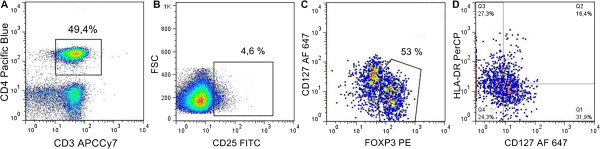
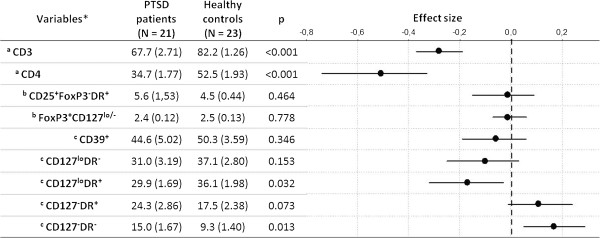
BACKGROUND: Regulatory T cells (Tregs) play a key role in immune homeostasis in vivo. Tregs have a critical role in preventing the development of autoimmune diseases and defects in Treg function are implicated in various autoimmune disorders. Individuals with posttraumatic stress disorder (PTSD) have higher prevalence of autoimmune disorders than the general population. We hypothesized that war veterans with PTSD would exhibit a decreased number and/or altered phenotype of Tregs. METHODS: We analyzed peripheral blood mononuclear cells (PBMCs) of patients with PTSD (N = 21) (mean age = 45.9) and age-matched healthy controls (N = 23) (mean age = 45.7) to determine the proportion of Tregs and their phenotype according to the expression of CD127 and HLA-DR markers which describe the differentiation stages of Tregs. In addition, we analyzed the expression of membrane ectoenzyme CD39 on Tregs of the study groups, an important component of the suppressive machinery of Tregs. RESULTS: We found no differences in the proportion of Tregs between PTSD patients and controls, but PTSD patients had a higher percentage of CD127(-)HLA-DR(-) Tregs and a lower percentage of CD127(lo)HLA-DR(+) Tregs compared to controls. There was no difference in expression of CD39 on Tregs of the study groups. CONCLUSIONS: Although the proportions of Tregs in PTSD patients were unchanged, we found that they exhibit a different phenotype of Tregs that might be less suppressive. Impaired differentiation and function of Tregs is likely involved in disruption of immune homeostasis in PTSD.
Overview
The claims and statistics of this paper haven’t been checked yet.
Free: it reads the open-access text and checks the first 5 claims that cite a source we can check. Create a free account to check every claim.
Integrity signals
Registry
Cites
Statistics
Figures
Verification
Claims the paper makes
The claims and statistics of this paper haven’t been checked yet.
Free: it reads the open-access text and checks the first 5 claims that cite a source we can check. Create a free account to check every claim.
Self-check
Percentages, sums and reported differences re-computed from the paper’s own numbers.
The self-check needs the paper’s full text.
Citations
Cites
Diagnostic and Statistical Manual of Mental Disorders
American Psychiatric Association (2013) · doi:10.1176/appi.books.9780890425596 · Cited by 116,369
Diagnostic and Statistical Manual of Mental Disorders
Williams, J. B. W., & First, M. (2013) · Encyclopedia of Social Work · doi:10.1093/acrefore/9780199975839.013.104 · Cited by 109,519
(1970) · Cited by 24,983
Psychometric properties of the Beck Depression Inventory: Twenty-five years of evaluation
Beck, A. T., Steer, R. A., & Carbin, M. G. (1988) · Clinical Psychology Review · doi:10.1016/0272-7358(88)90050-5 · Cited by 11,696 · cited 7×
“Out of 54 correlations performed between phenotype variables and psychometric test scores, only two were statistically significant (without corrections for multiple comparisons) – 1) BDI vs. CD127−HLA-DR− (Spearman R = −0.44, p = 0.045), and 2) LASC arousal vs. CD127loHLA-DR−(R = 0.46, p = 0.033).”
MethodInfluentialControl of Regulatory T Cell Development by the Transcription Factor Foxp3
Hori, S., Nomura, T., & Sakaguchi, S. (2003) · Science · doi:10.1126/science.1079490 · Cited by 8,187 · cited 1×
“vastly improved the identification of this subpopulation of T cells [2,3].”
BackgroundFoxp3 programs the development and function of CD4+CD25+ regulatory T cells
Fontenot, J. D., Gavin, M. A., & Rudensky, A. Y. (2003) · Nature Immunology · doi:10.1038/ni904 · Cited by 7,745 · cited 1×
“vastly improved the identification of this subpopulation of T cells [2,3].”
BackgroundThe development of a Clinician-Administered PTSD Scale
Blake, D. D., Weathers, F. W., Nagy, L. M., Kaloupek, D. G., Gusman, F. D., Charney, D. S., & Keane, T. M. (1995) · Journal of Traumatic Stress · doi:10.1002/jts.2490080106 · Cited by 5,024
The Role of Tumoral FOXP3 on Cell Proliferation, Migration, and Invasion in Gastric Cancer
Zhang, L., Xu, J., Zhang, X., Zhang, Y., Wang, L., Huang, X., & Xu, Z. (2017) · Cellular Physiology and Biochemistry · doi:10.1159/000479442 · Cited by 4,088
Bennett, C. L., Christie, J., Ramsdell, F., Brunkow, M. E., Ferguson, P. J., Whitesell, L., Kelly, T. E., Saulsbury, F. T., Chance, P. F., & Ochs, H. D. (2001) · Nature Genetics · doi:10.1038/83713 · Cited by 3,402
CD127 expression inversely correlates with FoxP3 and suppressive function of human CD4+ T reg cells
Liu, W., Putnam, A. L., Xu-yu, Z., Szot, G. L., Lee, M. R., Zhu, S., Gottlieb, P. A., Kapranov, P., Gingeras, T. R., de St. Groth, B. F., et al. (2006) · The Journal of Experimental Medicine · doi:10.1084/jem.20060772 · Cited by 2,606 · cited 1×
“Other markers such as low levels or lack of expression of IL-7 receptor CD127 have been suggested as useful in identifying peripheral Tregs [7].”
BackgroundAssessing psychological trauma and PTSD
(1997) · Choice Reviews Online · doi:10.5860/choice.34-5966 · Cited by 2,330
Seddiki, N., Santner-Nanan, B., Martinson, J., Zaunders, J., Sasson, S., Landay, A., Solomon, M., Selby, W., Alexander, S. I., Nanan, R., et al. (2006) · The Journal of Experimental Medicine · doi:10.1084/jem.20060468 · Cited by 1,512 · cited 1×
“T cells [12] and frequency of CD127 expressing cells within the FOXP3 population correlates with poor Treg function [13].”
BackgroundBorsellino, G., Kleinewietfeld, M., Di Mitri, D., Sternjak, A., Diamantini, A., Giometto, R., Höpner, S., Centonze, D., Bernardi, G., Dell'Acqua, M. L., et al. (2007) · Blood · doi:10.1182/blood-2006-12-064527 · Cited by 1,286 · cited 1×
“It is expressed by some Tregs and conveys suppression by hydrolyzing extracellular ATP released by damaged cells [14].”
BackgroundHori, S., Nomura, T., & Sakaguchi, S. (2017) · The Journal of Immunology · doi:10.1093/jimmunol/198.3.981 · Cited by 1,066
Transient expression of FOXP3 in human activated nonregulatory CD4 + T cells
Wang, J., Ioan‐Facsinay, A., van der Voort, E. I. H., Huizinga, T. W. J., & Toes, R. E. M. (2007) · European Journal of Immunology · doi:10.1002/eji.200636435 · Cited by 1,011 · cited 1×
“T cells that do not have regulatory properties [42].”
BackgroundChatila, T. A., Blaeser, F., Ho, N., Lederman, H. M., Voulgaropoulos, C., Helms, C., & Bowcock, A. M. (2000) · Journal of Clinical Investigation · doi:10.1172/jci11679 · Cited by 940 · cited 3×
“X-chromosome encoded transcription factor FOXP3 is necessary for the development and function of Tregs and humans with mutation leading to loss of function in the FOXP3 gene develop a fatal lymphoproliferative autoimmune disorder, IPEX (immune dysregulation, polyendocrinopathy, enteropathy, X-linked) [4,5].”
BackgroundInfluentialZiegler, S. F. (2006) · Annual Review of Immunology · doi:10.1146/annurev.immunol.24.021605.090547 · Cited by 922 · cited 1×
“Although expressed predominantly by Tregs, FOXP3 is not an exclusive marker of Tregs [6] as it is induced during T-cell receptor (TCR) stimulation in conventional CD4”
BackgroundRegulatory T cells: how do they suppress immune responses?
Sakaguchi, S., Wing, K., Onishi, Y., Prieto-Martin, P., & Yamaguchi, T. (2009) · International Immunology · doi:10.1093/intimm/dxp095 · Cited by 854 · cited 2×
“Tregs also produce various cytokines such as IL-10, IL-4, IL-35 and IL-13 which are involved in the suppression of the pro-inflammatory cytokine response [46,47].”
BackgroundCD4 + CD25 + Foxp3 + regulatory T cells induce alternative activation of human monocytes/macrophages
Tiemessen, M. M., Jagger, A. L., Evans, H. G., van Herwijnen, M. J. C., John, S., & Taams, L. S. (2007) · Proceedings of the National Academy of Sciences · doi:10.1073/pnas.0706832104 · Cited by 852 · cited 1×
“Additionally, Tregs can steer monocyte differentiation toward alternatively activated macrophages with strong anti-inflammatory potential [48].”
BackgroundResponse Variation following Trauma: A Translational Neuroscience Approach to Understanding PTSD
Yehuda, R., & LeDoux, J. (2007) · Neuron · doi:10.1016/j.neuron.2007.09.006 · Cited by 783 · cited 1×
“8–8% [17,18] but combat veterans or individuals exposed to war have a higher risk of developing PTSD with reported prevalence rates ranging between 1.”
BackgroundPosttraumatic stress disorder and physical illness: results from clinical and epidemiologic studies
BOSCARINO, J. A. (2004) · Annals of the New York Academy of Sciences · doi:10.1196/annals.1314.011 · Cited by 691 · cited 1×
“Several autoimmune or inflammatory disorders have been linked to PTSD, most notably rheumatoid arthritis [22], psoriasis and thyroid disease [23].”
BackgroundNiedbala, W., Wei, X., Cai, B., Hueber, A. J., Leung, B. P., McInnes, I. B., & Liew, F. Y. (2007) · European Journal of Immunology · doi:10.1002/eji.200737810 · Cited by 588 · cited 1×
“Tregs also produce various cytokines such as IL-10, IL-4, IL-35 and IL-13 which are involved in the suppression of the pro-inflammatory cytokine response [46,47].”
BackgroundCD39+Foxp3+ Regulatory T Cells Suppress Pathogenic Th17 Cells and Are Impaired in Multiple Sclerosis
Fletcher, J. M., Lonergan, R., Costelloe, L., Kinsella, K., Moran, B., O'Farrelly, C., Tubridy, N., & Mills, K. H. G. (2009) · The Journal of Immunology · doi:10.4049/jimmunol.0901881 · Cited by 476
Posttraumatic Stress Symptoms, Intrusive Thoughts, Loss, and Immune Function after Hurricane Andrew
Ironson, G., Wynings, C., Schneiderman, N., Baum, A., Rodriguez, M., Greenwood, D., Benight, C., Antoni, M., LaPerriere, A., Huang, H.-S., et al. (1997) · Psychosomatic Medicine · doi:10.1097/00006842-199703000-00003 · Cited by 435 · cited 1×
“We also found a decreased proportion of circulating helper T cells as in previous studies [37,40] in contrast to other studies that have found no differences [41] or higher numbers of helper T cells [39].”
ResultBoscarino, J. A. (2008) · Psychosomatic Medicine · doi:10.1097/psy.0b013e31817bccaf · Cited by 434 · cited 1×
“PTSD is associated with various biological and behavioral changes that constitute a higher risk for developing somatic illness [20] and higher mortality rates, especially from heart disease [21].”
BackgroundMHC Class II Expression Identifies Functionally Distinct Human Regulatory T Cells
Baecher-Allan, C., Wolf, E., & Hafler, D. A. (2006) · The Journal of Immunology · doi:10.4049/jimmunol.176.8.4622 · Cited by 421
Pace, T. W. W., & Heim, C. M. (2011) · Brain, Behavior, and Immunity · doi:10.1016/j.bbi.2010.10.003 · Cited by 321 · cited 3×
“fested by increased levels of pro-inflammatory cytokines (IL-1β, IL-6 and TNF-α) [24,25].”
BackgroundResultCD4+FOXP3+ T Regulatory Cells in Human Autoimmunity: More Than a Numbers Game
Long, S. A., & Buckner, J. H. (2011) · The Journal of Immunology · doi:10.4049/jimmunol.1003224 · Cited by 294 · cited 1×
“iphery [9].”
Assessing Psychological Trauma and PTSD
Serban, G. (1999) · American Journal of Psychotherapy · doi:10.1176/appi.psychotherapy.1999.53.2.273 · Cited by 253
Suppression of Cellular Immunity in Men With a Past History of Posttraumatic Stress Disorder
Kawamura, N., Kim, Y., & Asukai, N. (2001) · American Journal of Psychiatry · doi:10.1176/appi.ajp.158.3.484 · Cited by 225 · cited 2×
“The percentage of circulating T lymphocytes in PTSD patients was lower in comparison to healthy controls, which has been previously reported in men with a past history of PTSD [37].”
ResultPTSD after deployment to Iraq: conflicting rates, conflicting claims
Sundin, J., Fear, N. T., Iversen, A., Rona, R. J., & Wessely, S. (2010) · Psychological Medicine · doi:10.1017/s0033291709990791 · Cited by 214 · cited 1×
“4% and 31% [19].”
Spitzer, C., Barnow, S., Völzke, H., Wallaschofski, H., John, U., Freyberger, H. J., Löwe, B., & Grabe, H. J. (2010) · Journal of Psychiatric Research · doi:10.1016/j.jpsychires.2009.06.002 · Cited by 205 · cited 1×
“Although there are reports of low-grade inflammation determined by elevation of Creactive protein in PTSD patients [35,36], we found no difference in CRP levels between groups (Table 1).”
BackgroundWeinberg, A., Song, L.-Y., Wilkening, C., Sevin, A., Blais, B., Louzao, R., Stein, D., Defechereux, P., Durand, D., Riedel, E., et al. (2009) · Clinical and Vaccine Immunology · doi:10.1128/cvi.00342-08 · Cited by 194 · cited 1×
“However, this was not a concern, since T cell subpopulations have been shown to be well preserved by cryopreservation [33].”
BackgroundPosttraumatic Stress Disorder: Clinical Features, Pathophysiology, and Treatment
Vieweg, W. V. R., Julius, D. A., Fernandez, A., Beatty-Brooks, M., Hettema, J. M., & Pandurangi, A. K. (2006) · The American Journal of Medicine · doi:10.1016/j.amjmed.2005.09.027 · Cited by 186 · cited 1×
“8–8% [17,18] but combat veterans or individuals exposed to war have a higher risk of developing PTSD with reported prevalence rates ranging between 1.”
BackgroundBiomarkers of PTSD: Neuropeptides and immune signaling
Baker, D. G., Nievergelt, C. M., & O'Connor, D. T. (2012) · Neuropharmacology · doi:10.1016/j.neuropharm.2011.02.027 · Cited by 173 · cited 4×
“Since higher levels of IL-6 in PTSD patients have been reported in several studies [24] Tregs conversion to inflammatory Th17 cells is an additional possible mechanism of immune dysregulation that needs to be further studied.”
BackgroundResultInfluentialSubstantial reduction of naïve and regulatory T cells following traumatic stress
Sommershof, A., Aichinger, H., Engler, H., Adenauer, H., Catani, C., Boneberg, E.-M., Elbert, T., Groettrup, M., & Kolassa, I.-T. (2009) · Brain, Behavior, and Immunity · doi:10.1016/j.bbi.2009.07.003 · Cited by 172 · cited 4×
“Only one previous study [26] examined Tregs in PTSD patients and reported a 48% reduction of regulatory T cells (CD4CD25 FOXP3) in chronic PTSD.”
BackgroundResultInfluentialThe Los Angeles Symptom Checklist: A Self Report Measure of Posttraumatic Stress Disorder
King, L. A., King, D. W., Leskin, G., & Foy, D. W. (1995) · Assessment · doi:10.1177/1073191195002001001 · Cited by 170 · cited 7×
“Out of 54 correlations performed between phenotype variables and psychometric test scores, only two were statistically significant (without corrections for multiple comparisons) – 1) BDI vs. CD127−HLA-DR− (Spearman R = −0.44, p = 0.045), and 2) LASC arousal vs. CD127loHLA-DR−(R = 0.46, p = 0.033).”
MethodInfluentialBarrett, D. H., Doebbeling, C. C., Schwartz, D. A., Voelker, M. D., Falter, K. H., Woolson, R. F., & Doebbeling, B. N. (2002) · Psychosomatics · doi:10.1176/appi.psy.43.3.195 · Cited by 168 · cited 1×
“PTSD is associated with various biological and behavioral changes that constitute a higher risk for developing somatic illness [20] and higher mortality rates, especially from heart disease [21].”
BackgroundHuman regulatory T cells and autoimmunity
Costantino, C. M., Baecher‐Allan, C. M., & Hafler, D. A. (2008) · European Journal of Immunology · doi:10.1002/eji.200738104 · Cited by 158 · cited 2×
“FOXP3 expression is significantly higher in the HLA-DR Tregs and these cells exhibit earlier kinetics of responder T cells (Tresp) suppression than the HLA-DR subset [10].”
BackgroundSakaguchi, S., Sakaguchi, N., Asano, M., Itoh, M., & Toda, M. (2011) · PubMed · Cited by 150
The Link Between Post-traumatic Stress Disorder and Physical Comorbidities: A Systematic Review
Qureshi, S. U., Pyne, J. M., Magruder, K. M., Schulz, P. E., & Kunik, M. E. (2009) · Psychiatric Quarterly · doi:10.1007/s11126-009-9096-4 · Cited by 148 · cited 1×
“Several autoimmune or inflammatory disorders have been linked to PTSD, most notably rheumatoid arthritis [22], psoriasis and thyroid disease [23].”
BackgroundBoscarino, J. A., & Chang, J. (1999) · Psychosomatic Medicine · doi:10.1097/00006842-199905000-00019 · Cited by 136 · cited 2×
“We also found a decreased proportion of circulating helper T cells as in previous studies [37,40] in contrast to other studies that have found no differences [41] or higher numbers of helper T cells [39].”
ResultThymic Versus Induced Regulatory T Cells – Who Regulates the Regulators?
Povoleri, G. A. M., Scottà, C., Nova‐Lamperti, E., John, S., Lombardi, G., & Afzali, B. (2013) · Frontiers in Immunology · doi:10.3389/fimmu.2013.00169 · Cited by 125
Michel, L., Berthelot, L., Pettré, S., Wiertlewski, S., Lefrère, F., Braudeau, C., Brouard, S., Soulillou, J.-P., & Laplaud, D.-A. (2008) · Journal of Clinical Investigation · doi:10.1172/jci35365 · Cited by 107 · cited 1×
“T cells [12] and frequency of CD127 expressing cells within the FOXP3 population correlates with poor Treg function [13].”
BackgroundActivated T cells complicate the identification of regulatory T cells in rheumatoid arthritis
Aerts, N. E., Dombrecht, E. J., Ebo, D. G., Bridts, C. H., Stevens, W. J., & Clerck, L. S. D. (2008) · Cellular Immunology · doi:10.1016/j.cellimm.2008.04.008 · Cited by 93 · cited 1×
“CD127 is constitutively down-regulated on functional human Tregs, while it is highly expressed on effector/memory T cells although activated non-regulatory T cells have also been shown to down-regulate CD127 upon activation [43].”
BackgroundGOTOVAC, K., SABIONCELLO, A., RABATI´C, S., BERKI, T., & DEKARIS, D. (2003) · Clinical and Experimental Immunology · doi:10.1046/j.1365-2249.2003.02075.x · Cited by 92 · cited 1×
“In a previous study our group has shown that lymphocytes isolated from PTSD patients exhibited decreased intracellular glucocorticoid receptor (GCR) levels compared with controls [51], thus signaling through GCRs is a way that neuroendocrine alterations in PTSD could affect Tregs differentiation and function.”
BackgroundSelf-citationFreier, E., Weber, C., Nowottne, U., Horn, C., Bartels, K., Meyer, S., Hildebrandt, Y., Luetkens, T., Cao, Y., Pabst, C., et al. (2009) · Psychoneuroendocrinology · doi:10.1016/j.psyneuen.2009.10.005 · Cited by 90 · cited 1×
“Another study [27] showed a decreased number of Tregs in the peripheral blood of human subjects after an acute laboratory stressor.”
BackgroundSchmidt, D., Reber, S. O., Botteron, C., Barth, T. F. E., Peterlik, D., Uschold‐Schmidt, N., Männel, D. N., & Lechner, A. (2010) · Brain Behavior and Immunity · doi:10.1016/j.bbi.2010.04.014 · Cited by 85 · cited 1×
“Studies in mice showed that chronic psychosocial stress induced a reduction of regulatory T cells in peripheral lymph nodes, accompanied by increased T cell effector functions [28].”
BackgroundAdalid-Peralta, L. V., Fragoso, G., Fleury, A., & Sciutto, E. (2011) · International Journal of Biological Sciences · doi:10.7150/ijbs.7.1412 · Cited by 80 · cited 1×
“Glucocorticoids inhibit the ability of antigen presenting cells to stimulate effector T lymphocytes and favor Tregs cell induction [50].”
BackgroundRegulatory T cells Versus Th17: Differentiation of Th17 Versus Treg, Are They Mutually Exclusive?
Zheng, S. G. (2012) · Springer eBooks · doi:10.1007/978-3-0348-0522-3_6 · Cited by 78 · cited 1×
“Thymically derived Tregs were shown to be able to convert to Th17 cells [49] in the presence of IL-6.”
BackgroundALTEMUS, M., DHABHAR, F. S., & YANG, R. (2006) · Annals of the New York Academy of Sciences · doi:10.1196/annals.1364.013 · Cited by 67 · cited 1×
“We also found a decreased proportion of circulating helper T cells as in previous studies [37,40] in contrast to other studies that have found no differences [41] or higher numbers of helper T cells [39].”
ResultTelomere shortening and immune activity in war veterans with posttraumatic stress disorder
Jergović, M., Tomičević, M., Vidović, A., Bendelja, K., Savić, A., Vojvoda, V., Rac, D., Lovrić-Čavar, D., Rabatić, S., Jovanovic, T., et al. (2014) · Progress in Neuro-Psychopharmacology and Biological Psychiatry · doi:10.1016/j.pnpbp.2014.06.010 · Cited by 67 · cited 1×
“decresed [45] ex vivo proliferation of polyclonaly stimulated effector T cells in PTSD patients.”
BackgroundSelf-citationVidović, A., Vilibić, M., Sabioncello, A., Gotovac, K., Rabatić, S., Folnegović-Šmalc, V., & Dekaris, D. (2007) · PubMed Central · Cited by 64
Self-citationBaecher-Allan, C. M., Costantino, C. M., Cvetanovich, G. L., Ashley, C. W., Beriou, G., Dominguez-Villar, M., & Hafler, D. A. (2011) · The Journal of Immunology · doi:10.4049/jimmunol.1002502 · Cited by 52 · cited 1×
“These cells are non-mature Tregs [44] that are less suppressive than HLA-DR expressing cells and were found to be impaired in multiple sclerosis patients.”
BackgroundHemelen, D. V., Elberink, J. N. G. O., Heimweg, J., van Oosterhout, A. J. M., & Nawijn, M. C. (2009) · Journal of Immunological Methods · doi:10.1016/j.jim.2009.11.012 · Cited by 35
Sakaguchi, S., Sakaguchi, N., Asano, M., Itoh, M., & Toda, M. (2011) · The Journal of Immunology · doi:10.1093/jimmunol/186.7.3808 · Cited by 30
The Assessment of Military-Related PTSD.
Keane, T. M., Street, A. E., & Stafford, J. (2004) · Cited by 20
POSTTRAUMATIC STRESS DISORDER IS ASSOCIATED WITH HIGHER C-REACTIVE PROTEIN LEVELS
Vaccarino, V., Bremner, J. D., Afzal, N., Veledar, E., & Goldberg, J. (2010) · Journal of the American College of Cardiology · doi:10.1016/s0735-1097(10)61657-9 · Cited by 5 · cited 1×
“Although there are reports of low-grade inflammation determined by elevation of Creactive protein in PTSD patients [35,36], we found no difference in CRP levels between groups (Table 1).”
Background
Research works printed but not linked: 1
- World Health Organisation ICD-10, International Statistical Classification of Diseases and Health Related Problems, 10th Revision 1992 1 Geneva: World Health Organisation
Cited by
Inflammation in Fear- and Anxiety-Based Disorders: PTSD, GAD, and Beyond
Michopoulos, V., Powers, A., Gillespie, C. F., Ressler, K. J., & Jovanovic, T. (2017) · Neuropsychopharmacology · doi:10.1038/npp.2016.146 · Cited by 786
“…critical for containing pro-inflammatory responses and Th1 and Th17 cells activate inflammatory responses (Afzali et al, 2007), these alterations in the composition of T-cell subsets may act in aggregate to direct systemic inflammatory tone into an overdrive state in PTSD (Jergovic et al, 2014).”
BackgroundThe microbiome in posttraumatic stress disorder and trauma-exposed controls: an exploratory study
Hemmings, S. M. J., Malan-Müller, S., van den Heuvel, L. L., Demmitt, B. A., Stanislawski, M. A., Smith, D. G., Bohr, A. D., Stamper, C. E., Hyde, E. R., Morton, J. T., et al. (2017) · Psychosomatic Medicine · doi:10.1097/psy.0000000000000512 · Cited by 208
“Decreased immunoregulation, as evidenced by decreased frequency of Treg cells, or altered Treg function, may lead to overactive host immune defenses, increased gut permeability, colitis, and exaggerated PTSD symptoms after trauma exposure (11,12,14,22,23).”
Yang, J.-J., & Jiang, W. (2020) · Journal of Affective Disorders · doi:10.1016/j.jad.2020.02.044 · Cited by 136
Smith, A. K., Ratanatharathorn, A. D., Maihofer, A. X., Naviaux, R. K., Aiello, A. E., Amstadter, A. B., Ashley‐Koch, A. E., Baker, D. G., Beckham, J. C., Boks, M. P., et al. (2020) · Nature Communications · doi:10.1038/s41467-020-19615-x · Cited by 155
Co-morbidity of PTSD and immune system dysfunction: opportunities for treatment
Neigh, G. N., & Ali, F. F. (2016) · Current Opinion in Pharmacology · doi:10.1016/j.coph.2016.07.011 · Cited by 108
Metadata
- Authors
- Jergović, M., Bendelja, K., Vidović, A., Savić, A., Vojvoda, V., Aberle, N., Rabatić, S., Jovanovic, T., & Sabioncello, A.
- Affiliations
- University of Zagreb (HR)
- University Hospital Dubrava (HR)
- General Hospital Dr. Josip Benčević Slavonski Brod (HR)
- Institute of Immunology (HR)
- Corresponding author
- Jergović, Mladen
- Venue
- Allergy, Asthma & Clinical Immunology
- Published
- 2014-08-20
- Volume
- 10
- Issue
- 1
- Pages
- 43-43
- ISSN
- 1710-1484 (ISSN-L)
- 1710-1492
- PMC
- PMC4322511
- OpenAlex
- W2100407763
- Cited by
- 49
- References
- 59
- Citations by year
- 2026: 2 · 2025: 6 · 2024: 7 · 2023: 3 · 2022: 6 · 2021: 6 · 2020: 2 · 2019: 5 · 2018: 4 · 2017: 4 · 2016: 3 · 2015: 1
- FWCI
- 1.22
- Type
- journal article
- Language
- en
- Open access
- gold
- doi.org
- Licence
- cc-by
- Locations
- Allergy Asthma and Clinical Immunology (publishedVersion, cc-by)
- Europe PMC (PubMed Central) (publishedVersion, cc-by)
- PubMed Central (publishedVersion, cc-by)
- PubMed (publishedVersion)
- Topics
- Life Sciences › Immunology and Microbiology › Immunology › T-cell and B-cell Immunology
- Social Sciences › Psychology › Clinical Psychology › Posttraumatic Stress Disorder Research
- Life Sciences › Neuroscience › Behavioral Neuroscience › Stress Responses and Cortisol
- Keywords
- post-traumatic stress disorder, regulatory T cells, Treg phenotype, CD127, HLA-DR, CD39, immune homeostasis, war veterans, autoimmune disease, Treg suppressive function
About these checks
Registry, retraction, Cites and statistics results are computed, not judged, with one exception: a printed reference that no index lists is read once by a model before it counts as a citation error. Claims are extracted by a model and kept only when their quote appears verbatim in the text; each cited source is then checked, with a model’s help, for whether it says what the claim relies on. Those verdicts can be wrong — read the claim’s quote and the cited source before relying on one.
Statistics and arithmetic are recomputed, not judged.
Confidence bands are shown only for fields calibrated on our annotated test set. None is calibrated yet, so no band is shown.
What counts as a claim ›How we measure confidence ›How we check this ›
Are you an author, or do you see a problem with this page? Request a review
Data sources
Bibliographic data: Semantic Scholar, OpenAlex, Crossref.
Contains information from the Semantic Scholar Academic Graph Datasets, made available under the ODC Attribution License (ODC-BY 1.0).
Semantic Scholar’s data is described in: Kinney, R., et al. (2023). The Semantic Scholar Open Data Platform. arXiv:2301.10140.
