

Interaction between stress and the BDNFVal66Met polymorphism in depression: a systematic review and meta-analysis
Open accessThe DOI matches its Crossref record; 93 of the 93 references it cites were found in a registry or an index.
Abstract
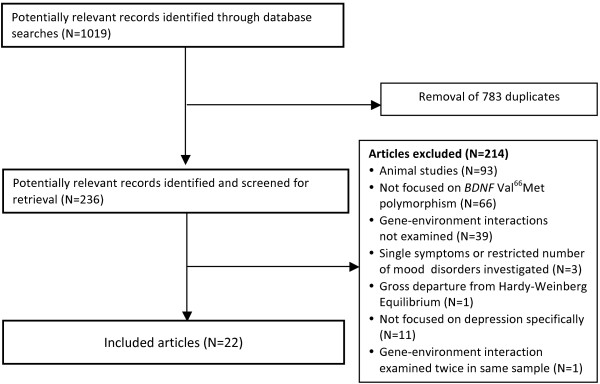
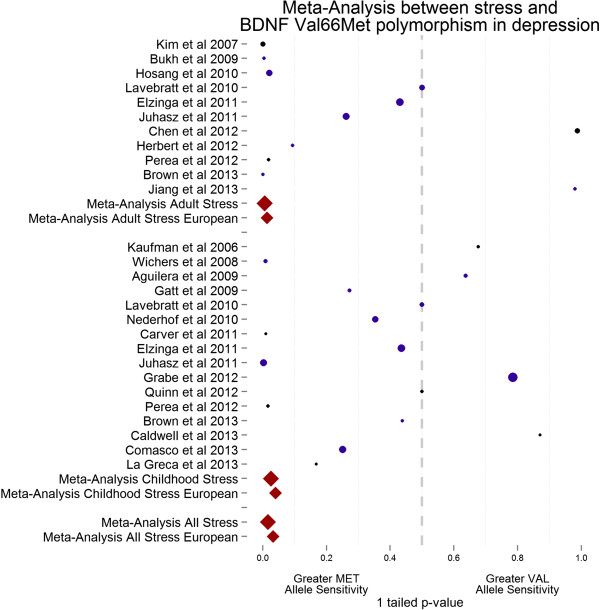
BACKGROUND: Major depression is a disabling psychiatric illness with complex origins. Life stress (childhood adversity and recent stressful events) is a robust risk factor for depression. The relationship between life stress and Val66Met polymorphism in the brain-derived neurotrophic factor (BDNF) gene has received much attention. The aim of the present work was to review and conduct a meta-analysis on the results from published studies examining this interaction. METHODS: A literature search was conducted using PsychINFO and PubMed databases until 22 November 2013. A total of 22 studies with a pooled total of 14,233 participants met the inclusion criteria, the results of which were combined and a meta-analysis performed using the Liptak-Stouffer z-score method. RESULTS: The results suggest that the Met allele of BDNF Val66Met significantly moderates the relationship between life stress and depression (P = 0.03). When the studies were stratified by type of environmental stressor, the evidence was stronger for an interaction with stressful life events (P = 0.01) and weaker for interaction of BDNF Val66Met with childhood adversity (P = 0.051). CONCLUSIONS: The interaction between BDNF and life stress in depression is stronger for stressful life events rather than childhood adversity. Methodological limitations of existing studies include poor measurement of life stress.
Overview
The claims and statistics of this paper haven’t been checked yet.
Free: it reads the open-access text and checks the first 5 claims that cite a source we can check. Create a free account to check every claim.
Integrity signals
Registry
Cites
Statistics
Figures
Verification
Claims the paper makes
The claims and statistics of this paper haven’t been checked yet.
Free: it reads the open-access text and checks the first 5 claims that cite a source we can check. Create a free account to check every claim.
Claims other papers make about this one
Each is checked against this paper’s own text: does it say what the citing paper says it does?
The source backs part of the claim, not all of it — or backs it for a different population, condition or comparison.
In the citing paper
“Yet again, several other meta-analyses did confirm the association between the val66met polymorphism and an increased susceptibility to mood disorders (Hosang et al. 2014; Li et al. 2016; Yan et al. 2014; Zou et al. 2010).”
From Neurotrophic factors and neuroplasticity pathways in the pathophysiology and treatment of depression (2018) · cites this paper as Hosang et al. 2014
Experimental — accuracy not yet measuredThe source backs part of the claim, not all of it — or backs it for a different population, condition or comparison.
In the citing paper
“In addition, several meta-analyses data confirm the association of the Val66Met polymorphism with an increase of susceptibility to develop mood disorders [200,201,202].”
From Neurotrophic Factor BDNF, Physiological Functions and Therapeutic Potential in Depression, Neurodegeneration and Brain Cancer (2020) · cites this paper as [200]
Experimental — accuracy not yet measuredThe cited source says what the claim attributes to it.
In the citing paper
“Another meta-analysis found that the Met allele significantly moderated the effect of stressful life events on MDD risk, suggesting that Met carriers are more genetically sensitive to adverse life experiences205.”
From Psychobiological factors of resilience and depression in late life (2019) · cites this paper as [205]
The check wasn’t confident either way, so it gives no verdict — never disputed.
In the citing paper
“BDNF single nucleotide polymorphism (val66met), however, is associated with the severity of depression in patients [64].”
From Brain-Derived Neurotrophic Factor in Brain Disorders: Focus on Neuroinflammation (2019) · cites this paper as [64]
Experimental — accuracy not yet measuredIn the citing paper
“Another meta-analysis found that the Met allele significantly moderated the effect of stressful life events on MDD risk, suggesting that Met carriers are more genetically sensitive to adverse life experiences205.”
From Psychobiological factors of resilience and depression in late life (2019) · cites this paper as [205]
Self-check
Percentages, sums and reported differences re-computed from the paper’s own numbers.
The self-check needs the paper’s full text.
Citations
Cites
Liberati, A., Altman, D. G., Tetzlaff, J., Mulrow, C., Gøtzsche, P. C., Ioannidis, J. P. A., Clarke, M., Devereaux, P. J., Kleijnen, J., & Moher, D. (2009) · PLoS Medicine · doi:10.1371/journal.pmed.1000100 · Cited by 28,164
von Elm, E., Altman, D. G., Egger, M., Pocock, S. J., Gøtzsche, P. C., Vandenbroucke, J. P., & Initiative, F. T. S. (2007) · PLoS Medicine · doi:10.1371/journal.pmed.0040296 · Cited by 23,020
von Elm, E., Altman, D. G., Egger, M., Pocock, S. J., Gøtzsche, P. C., & Vandenbroucke, J. P. (2007) · The Lancet · doi:10.1016/s0140-6736(07)61602-x · Cited by 21,320
Liberati, A., Altman, D. G., Tetzlaff, J., Mulrow, C., Gotzsche, P. C., Ioannidis, J. P. A., Clarke, M., Devereaux, P. J., Kleijnen, J., & Moher, D. (2009) · BMJ · doi:10.1136/bmj.b2700 · Cited by 17,648
Kessler, R. C., Chiu, W. T., Demler, O., & Walters, E. E. (2005) · Archives of General Psychiatry · doi:10.1001/archpsyc.62.6.617 · Cited by 12,052 · cited 1×
“Major depression has a lifetime prevalence of 17% [10] and is diagnosed based on the presentation of depressive”
BackgroundInfluence of life stress on depression: moderation by a polymorphism in the 5-HTT gene
Caspi, A., Sugden, K., Moffitt, T. E., Taylor, A., Craig, I. W., Harrington, H., McClay, J., Mill, J., Martin, J., Braithwaite, A., et al. (2003) · Science · doi:10.1126/science.1083968 · Cited by 8,120 · cited 3×
“There is strong evidence for an association between life stress and depression, research now focuses on identifying stress vulnerability factors in depression including genetic factors [31,32].”
BackgroundLopez, A. D., Mathers, C. D., Ezzati, M., Jamison, D. T., & Murray, C. J. (2006) · The Lancet · doi:10.1016/s0140-6736(06)68770-9 · Cited by 5,630 · cited 1×
“Major depression is considered one of the most burdensome diseases in the world [12] and it is projected that this illness will be the second leading cause of disease burden for developed countries by 2020 [13].”
BackgroundEgan, M. F., Kojima, M., Callicott, J. H., Goldberg, T. E., Kolachana, B. S., Bertolino, A., Zaitsev, E., Gold, B., Goldman, D., Dean, M., et al. (2003) · Cell · doi:10.1016/s0092-8674(03)00035-7 · Cited by 3,888
A Neurotrophic Model for Stress-Related Mood Disorders
Duman, R. S., & Monteggia, L. M. (2006) · Biological Psychiatry · doi:10.1016/j.biopsych.2006.02.013 · Cited by 3,375
Social Origins of Depression: A Study of Psychiatric Disorder in Women.
Schnitzer, P. K., Brown, G. W., & Harris, T. (1980) · Contemporary Sociology · doi:10.2307/2065631 · Cited by 3,053
Cited by
Items 201–300 of 316
Suppli, N. P., Bukh, J. D., Moffitt, T. E., Caspi, A., Johansen, C., Tjønneland, A. M., Kessing, L. V., & Dalton, S. O. (2017) · Depression and Anxiety · doi:10.1002/da.22660 · Cited by 7
“…risk alleles conditions in the most recent, largest meta-analysis of 5-HTTLPR (Sharpley et al., 2014) and corresponds to the total number of people in studies of the interaction between adult stressful life events and BDNF rs6265 polymorphism in another meta-analysis (Hosang et al., 2014).”
BackgroundInfluentialFan, M., Cao, T., Feng, Y., Su, M., Lin, J., Ran, M., & Fang, D. Z. (2017) · International Journal of Psychiatry in Clinical Practice · doi:10.1080/13651501.2017.1383440 · Cited by 7
Vrantsidis, D. M., Wuest, V., & Wiebe, S. A. (2022) · Clinical Child and Family Psychology Review · doi:10.1007/s10567-022-00387-3 · Cited by 8
Pérez-Gutiérrez, A. M., Rovira, P., Gutiérrez, B., Cervilla, J. A., Zarza-Rebollo, J. A., Molina, E., & Rivera, M. (2023) · Journal of Affective Disorders · doi:10.1016/j.jad.2023.10.024 · Cited by 7
Ras, L., de Groot, H., Stengs, C. H. M., & van Weissenbruch, R. (2015) · Annals of Allergy Asthma & Immunology · doi:10.1016/j.anai.2015.10.018 · Cited by 7
Koss, K. J., Cummings, E. M., Davies, P. T., Hetzel, S., & Cicchetti, D. (2016) · Journal of Clinical Child & Adolescent Psychology · doi:10.1080/15374416.2016.1220311 · Cited by 7
Physiological Resilience and the Impact on Health
Klinedinst, N. J., & Hackney, A. J. (2018) · Springer eBooks · doi:10.1007/978-3-030-04555-5_6 · Cited by 7
Gao, Y., Fu, L., & Shen, Y. (2024) · Sustainability · doi:10.3390/su16114772 · Cited by 6
Martin, L. I., Hemmings, S. M. J., Kidd, M., & Seedat, S. (2018) · European Journal of Psychotraumatology · doi:10.1080/20008198.2018.1472987 · Cited by 6
Zhao, Z., Sun, J., Liu, Y., Liu, M., & Tong, D. (2025) · Frontiers in Aging Neuroscience · doi:10.3389/fnagi.2025.1620172 · Cited by 5
Neuroimaging Advance in Depressive Disorder
Peng, D., & Yao, Z. (2019) · Advances in experimental medicine and biology · doi:10.1007/978-981-32-9271-0_3 · Cited by 5
Scotti-Muzzi, E., Chile, T., Vallada, H., Otaduy, M. C. G., & Soeiro‐de‐Souza, M. G. (2023) · Brain Imaging and Behavior · doi:10.1007/s11682-023-00757-7 · Cited by 5
“…distinct effect of the met allele in BD and HC in relation to ACC metabolites corroborates its known pleiotropic effect (Tsai, 2018), which depends on several factors such as brain region, cortical maturation stage (Camuso et al., 2022), ethnicity, age and sex (Hosang et al., 2014; Tsai, 2018).”
BackgroundEpigenetic Mechanisms in Depression
Lévesque, M. L., Szyf, M., & Booij, L. (2016) · Elsevier eBooks · doi:10.1016/b978-0-12-802456-0.00006-6 · Cited by 8
Erjavec, G. N., Štrac, D. Š., Tudor, L., Konjevod, M., Šagud, M., & Pivac, N. (2019) · Advances in experimental medicine and biology · doi:10.1007/978-981-32-9721-0_4 · Cited by 7
“Although not directly involved in the award system, the brain-derived neurotrophic factor (BDNF) is, through its role in a neuronal growth and differentiation, a gene candidate in OUD.”
InfluentialXavier, F. A. C., Barbieri, S. S., Popoli, M., & Ieraci, A. (2024) · Biology · doi:10.3390/biology13050303 · Cited by 4
“…variant reduces the activity-dependent release of BDNF [14] and has been correlated with reduced hippocampal volume, learning and memory deficits and augmented susceptibility to stress-related neuropsychiatric disorders [13,15], although these findings have not been confirmed in other studies [16].”
ResultThe Role of Sex in Genetic Association Studies of Depression
Hoth, K. F., Voorhies, K. R., Wu, A. C., Lange, C., Potash, J. B., & Lutz, S. M. (2022) · Journal of Psychiatry and Brain Science · doi:10.20900/jpbs.20220013 · Cited by 7
Prenatal programming of depression: cumulative risk or mismatch in the Ontario Child Health Study?
Savoy, C., & Lieshout, R. J. V. (2021) · Journal of Developmental Origins of Health and Disease · doi:10.1017/s2040174421000064 · Cited by 4
Are Noradrenergic Transmission Reducing Drugs Antidepressants?
Fitzgerald, P. J. (2021) · Frontiers in Behavioral Neuroscience · doi:10.3389/fnbeh.2021.673634 · Cited by 4
Epigenetic impact of chronic stress: BDNF exon IV gene methylation in high-risk professionals
Quaioto, B. R., de Souza, M. L. M., Borçoi, A. R., Mendes, S. O., Neto, L. C. B. S., Corrêa, C. H. P., Moreno, I. A. A., Olinda, A. S., Cunha, E. R., da Silva, P. A. V., et al. (2025) · Journal of Psychiatric Research · doi:10.1016/j.jpsychires.2025.06.018 · Cited by 3
Zhang, Y., Zhao, M., Song, S., Chen, Q., Meng, Y., Yu, X., Wei, W., Deng, W., Guo, W., Li, T., et al. (2026) · Translational Psychiatry · doi:10.1038/s41398-026-03865-2 · Cited by 3
Biomarkers of Depression: Potential Diagnostic Tools
Perković, M. N., Erjavec, G. N., Štrac, D. Š., & Pivac, N. (2017) · Springer eBooks · doi:10.1007/978-981-10-6577-4_3 · Cited by 5
Gene-Environment Interactions and Epigenetic Mechanisms in Depression
Jawahar, M. C., Toben, C. G., & Baune, B. T. (2019) · Elsevier eBooks · doi:10.1016/b978-0-12-813333-0.00003-2 · Cited by 4
Scholl, J. L., Graack, E. T., Ahrenholtz, M. S., Bosch, T. J., & Baugh, L. A. (2022) · IntechOpen eBooks · doi:10.5772/intechopen.102766 · Cited by 4
The Role of Brain-Derived Neurotrophic Factor in Psychiatric Disorders
Gupta, S., & Guleria, R. S. (2023) · Biochemistry · doi:10.5772/intechopen.112567 · Cited by 4
Lee, C., Lin, C.-Y., Strong, C., Chang, Y.-H., Lin, Y.-C., Hsieh, Y., Lin, Y.-F., & Tsai, M. (2024) · European Journal of Developmental Psychology · doi:10.1080/17405629.2024.2315765 · Cited by 3
“In children and adolescents, stressful life events have been shown to interact with the BDNF Val66Met polymorphism and be predictive of later depression (Hosang et al., 2014).”
BackgroundAssociation between genetic variants and depression in a Romanian cohort
Costache, A. C., Riza, A. L., Popescu, M., Streaţă, I., Dincă, M. E., Glăvan, D. G., Vladu, I. M., Udriştoiu, I., & Ioana, M. (2022) · Romanian Journal of Morphology and Embryology · doi:10.47162/rjme.62.2.15 · Cited by 3
“442G>A, childhood events and depression [37]; evidence is stronger for stressful life events [38].”
BackgroundPsychological and genetic parameters associated with the codependency: analytical review
Ермаков, П. Н., Денисова, Е. Г., & Kolenova, A. S. (2023) · Medico-Biological and Socio-Psychological Problems of Safety in Emergency Situations · doi:10.25016/2541-7487-2022-0-3-76-88 · Cited by 3
Allsopp, R., Hernández, L. M., & Taylor, M. K. (2024) · Scientific Reports · doi:10.1038/s41598-024-78033-x · Cited by 2
Vrantsidis, D. M., Wuest, V., & Wiebe, S. A. (2025) · Developmental Review · doi:10.1016/j.dr.2025.101201 · Cited by 2
BDNF–TrkB signaling as a therapeutic target in neuropsychiatric disorders
Hill, R., Du, X., & Wu, Y. C. (2014) · Journal of Receptor Ligand and Channel Research · doi:10.2147/jrlcr.s50404 · Cited by 6
“A recent meta-analysis suggests that the Met allele is associated with increased susceptibility to stressful life events and subsequent depression.(68) Another study observed a correlation between having the Met allele and increased chronicity of depression with a gene–dosage effect – Val/Met heterozygotes show interm…”
Gene-Environment Interactions, Stress, and Depression
Cohen‐Woods, S., & Harkess, K. N. (2016) · Springer eBooks · doi:10.1007/978-981-4560-53-5_41-2 · Cited by 2
Le esperienze sfavorevoli infantili Come affrontare il trauma in psicoterapia: il ruolo dell'EMDR
Onofri, A., Onofri, M., & D'Adamo, G. (2016) · PSICOBIETTIVO · doi:10.3280/psob2016-001002 · Cited by 2
Luoa, X., Fanga, T. Y., guoa, A. L., Yanga, X., Panga, Y. P., Rena, J., Newellc, K. A., Yubc, Y., Huangbc, X. F., & Liuac, Y. (2018) · Neuropsychiatry · doi:10.4172/neuropsychiatry.1000371 · Cited by 4
“Brain-derived neurotrophic factor, also known as BDNF, is widely believed to be involved in the pathophysiological processes of depression [11,12].”
BackgroundBiological Embedding of Childhood Maltreatment in Adult Depression
Jawahar, M. C., & Baune, B. T. (2018) · Elsevier eBooks · doi:10.1016/b978-0-12-811073-7.00017-9 · Cited by 2
Fox, E., & Keers, R. (2019) · Nebraska Symposium on Motivation/The Nebraska symposium on motivation · doi:10.1007/978-3-030-27473-3_4 · Cited by 3
Lu, W. D., Li, Y., & Wu, Y. (2024) · Computers in Human Behavior · doi:10.1016/j.chb.2024.108308 · Cited by 2
The BDNF Val66Met polymorphism and health‐related quality of life in youth with obesity
Goldfield, G. S., Cameron, J. D., Sigal, R. J., Kenny, G. P., Prud’homme, D., Ngu, M., Alberga, A. S., Doucette, S. P., Goldfield, D. B., Tulloch, H. E., et al. (2024) · Physiological Reports · doi:10.14814/phy2.16140 · Cited by 1
“…perhaps HRQoL) may be moderated by demographic factors (Gratacòs et al., 2007; Verhagen et al., 2010) and/or interact with many other environmental factors (i.e., life stress or childhood trauma) (Hosang et al., 2014; Zhao et al., 2018) resulting in complex gene–environment or epigenetic effects.”
BackgroundPolymorphic Variants of Neurotrophic Factor Genes in Affective Disorders: Pilot Study
Викторовна, М. Е., Vyalova, N. M., Paderina, D. Z., Roschina, O. V., Simutkin, G. G., Bokhan, N. A., & Ivanova, S. А. (2025) · International Journal of Molecular Sciences · doi:10.3390/ijms26167982 · Cited by 1
“G.H. Hosang et al. (2014) note that the BDNF gene may contain an impressive number of polymorphisms that may also influence the development of depression under unfavorable environmental conditions [37].”
Biological and Contextual Correlates of Cortisol Reactivity in Early Childhood
Kryski, K. R. (2014) · Scholarship@Western (Western University) · Cited by 3
Biomarker in der Depressionsbehandlung: mehr als nur Worte?
Bosch, O. G., & Breitenstein, B. (2015) · Zeitschrift für Psychiatrie Psychologie und Psychotherapie · doi:10.1024/1661-4747/a000244 · Cited by 3
[A psychosomatic theory of allergic sensitization; allergy as a quasi conditioned reaction].
Hansen, O. (1981) · PubMed · Cited by 3
Iqbal, M. U. N., Noor, F., & Khan, T. A. (2020) · BioSight · doi:10.46568/bios.v1i2.7 · Cited by 1
Nature, Nurture, and Their Interactions in Child Development and Behavior
Wang, P. P. (2018) · American Academy of PediatricsItasca, IL eBooks · doi:10.1542/9781610021357-2 · Cited by 1
Gene-Environment Interactions, Stress, and Depression
Cohen‐Woods, S., & Harkess, K. N. (2015) · Springer eBooks · doi:10.1007/978-981-4560-53-5_41-1 · Cited by 1
Anhedonia in Depression: Neurobiological and Genetic Aspects
Kibitov, A. O., & Mazo, G. E. (2022) · Neuroscience and Behavioral Physiology · doi:10.1007/s11055-022-01204-8 · Cited by 2
Amaya, L. J. D., & Restrepo-Castro, J. C. (2023) · IBRO Neuroscience Reports · doi:10.1016/j.ibneur.2023.03.005 · Cited by 1
Cui, W., Gong, L., Chen, C., Tang, J. Y., Jin, X., Li, Z., Jing, L., & Wen, G. (2023) · PubMed Central · doi:10.12122/j.issn.1673-4254.2023.06.22 · Cited by 1
Using a life-course approach to better understand depression in older age
Sjöberg, L. (2018) · Figshare · Cited by 1
Borges, P. V. (2021) · Digital Library of Theses and Dissertations (Universidade de São Paulo) · doi:10.11606/d.22.2021.tde-22032022-155125 · Cited by 2
Pytka, K., Sałaciak, K., Jagielska, A., Lustyk, K., Głuch‐Lutwin, M., Mordyl, B., Żmudzka, E., Janus, A., Koszałka, A., Detka, J., et al. (2025) · Research Square · doi:10.21203/rs.3.rs-7315313/v1 · Cited by 1
Phillips, J. L. (2015) · uO Research (University of Ottawa) · doi:10.20381/ruor-2800
“, 2008), the Met allele appears to moderate the relationship between stress and depression (Hosang et al., 2014).”
BackgroundTHE ROLE OF BDNF IN THE DEVELOPMENT OF DEPRESSIVE DISORDERS
Vyalova, N. M., & Levchuk, L. A. (2014) · CyberLeninK (CyberLeninka) · Cited by 7
Agnafors, S. (2016) · Linköping University medical dissertations · doi:10.3384/diss.diva-124209
“Many studies noted an interaction effect (Hwang et al., 2006; Strauss et al., 2005), and these results were confirmed by a recent meta-analysis (Hosang et al., 2014).”
INFANCIA Y ADOLESCENCIA: UNA VENTANA ABIERTA PARA LA PREVENCIÓN DE TRASTORNOS MENTALES
Arango, C., Serrano-Drozdowskyj, E., & Díaz‐Caneja, C. M. (2016) · Dialnet (Universidad de la Rioja)
Profiles of Reactivity to Bullying Victimization: Genetic and Family Environment Predictors
Eastman, M. L. (2016) · Carolina Digital Repository (University of North Carolina at Chapel Hill) · doi:10.17615/4aen-dx35
Investigation of community factors associated with child and adolescent depression
Stirling, K. (2016) · Cited by 2
Koljack, C. E. (2016) · CU Scholar (University of Colorado Boulder)
Rimay, T. (2017) · SZTE Repository of Dissertations (University of Szeged) · doi:10.14232/phd.3475
López, A. C. (2016) · Institutional Repository of the University of Granada (University of Granada) · Cited by 1
Misquitta, K. A. (2016) · TSpace (University of Toronto)
Azogu, I. (2017) · uO Research (University of Ottawa) · doi:10.20381/ruor-20891
Heiberg, H. (2017) · NVA (Nasjonalt vitenarkiv)
Martin, L. I. (2017) · SUNScholar (Stellenbosch University) · Cited by 1
Envolvimento do óxido nítrico na metilação do DNA induzida por estresse
Maciel, I. D. S. (2018) · Digital Library of Theses and Dissertations (Universidade de São Paulo) · doi:10.11606/t.17.2018.tde-25072018-094208
La valutazione scientifica della personalità. Evidenze empiriche e contesti ambientali
Porcelli, P. (2018) · Rassegna italiana di criminologia
Nobile, B. (2018) · theses.fr (ABES) · doi:10.70675/87dba01cze0bez43bbz81bbz4aaaaf900c80 · Cited by 1
Victoroff, J. (2019) · Cambridge University Press eBooks · doi:10.1017/9781139696432.009
DEPRESIÓN Y OBESIDAD: UNA RELACIÓN BIDIRECCIONAL
Chávez-Castillo, M., & Sánchez, M. E. (2018) · Ediciones Universidad Simón Bolívar eBooks · doi:10.17081/bonga.2273.3 · Cited by 1
Chatterjee, D. (2019) · TSpace (University of Toronto) · Cited by 1
Mental health and alcohol use disorder (AUD) comorbidity
Singh, A. K. (2020) · Elsevier eBooks · doi:10.1016/b978-0-12-819680-9.00003-2 · Cited by 1
Gene × Environment Interactions
Salminen, L. E., & Paul, R. H. (2020) · Wiley eBooks · doi:10.1002/9781119057840.ch38
Vrantsidis, D. M. (2021) · ERA: Education and Research Archive (University of Alberta) · doi:10.7939/r3-xgt1-ch23 · Cited by 1
Martinez‐Torteya, C., Figge, C. J., Gilchrist, M., Muzik, M., King, A. P. J., & Sorenson, M. (2019) · Development and Psychopathology · doi:10.1017/s0954579419001093
Gene-Environment Interactions, Stress, and Depression
Cohen‐Woods, S., & Harkess, K. N. (2016) · Springer eBooks · doi:10.1007/978-981-287-206-7_41
The Biological Mechanisms Underlying Major Depressive Disorder
Zonca, V. (2021) · Elsevier eBooks · doi:10.1016/b978-0-12-819641-0.00114-6
(2018) · Elsevier eBooks · doi:10.1016/b978-0-12-811351-6.00026-7
Faculty Opinions recommendation of Gene-environment interactions in severe mental illness.
RYBAKOWSKI, J. K. (2017) · Faculty Opinions – Post-Publication Peer Review of the Biomedical Literature · doi:10.3410/f.727614575.793539079
Adolescent Depressive Disorder and Gene Polymorphism
Seelent, E. M. (2023) · Science Insights · doi:10.15354/si.23.re327
“At the same time, BDNF Val66Met polymorphism can affect a person’s susceptibility to environmental stressors, such as stressful events, childhood adversity and trauma (35, 36).”
BackgroundScharfman, H. E. (2023) · eLife · doi:10.7554/elife.86022.sa0
Leitão, E. S. M. M. (2023) · Digital Library of Theses and Dissertations (Universidade de São Paulo) · doi:10.11606/t.5.2023.tde-22082023-162443
Костюк, С. А., Давидовский, С. В., Глинкина, Т. В., Ибрагимова, Ж. А., Владимировна, Р. Т., Poluyan, O. S., Давидовская, Я. С., & Марчук, С. И. (2023) · Академический журнал Западной Сибири · doi:10.32878/sibir.23-19-03(100)-3-9
Old Protein, New Medicine - Brain-Derived Neurotrophic Factor [Working Title]
Erbaş, O., & Altuntaş, İ. (2023) · Biochemistry · doi:10.5772/intechopen.111201
Anisman, H., Hayley, S. P., & Kusnecov, A. W. (2024) · Elsevier eBooks · doi:10.1016/b978-0-443-23565-8.00006-5
(2024) · Elsevier eBooks · doi:10.1016/b978-0-443-23565-8.09996-8
Son, Y.-S., Ko, E., & Jung, S. (2024) · Journal of Applied Biological Chemistry · doi:10.3839/jabc.2024.058
The Neurobiology of Late-Life Depression
Lee, K. J., Kim, H. J., & Kim, Y. (2025) · 신경정신의학 · doi:10.4306/jknpa.2025.64.3.164
Hamza, S., Haddad, N. I. A., & Gawwam, G. A. (2025) · AL-Kindy College Medical Journal · doi:10.47723/34cyc985
“Furthermore, multiple meta-analyses have provided evidence supporting the link between the Val66Met polymorphism and an elevated vulnerability to developing mood disorders 66 – 68 .”
Sandrini, L. (2019) · Archivio Istituzionale della Ricerca (Universita Degli Studi Di Milano) · doi:10.13130/sandrini-leonardo_phd2019-12-11
Crawford, C. A. (2023) · Purdue University Indianapolis (Indiana University) · doi:10.25394/pgs.22212100
sheikhian, N. (2024) · Memorial University Research Repository (Memorial University) · doi:10.48336/1h7x-m542
Factors Impacting Resiliency And Susceptibility To Social Stress
Rosenhauer, A. M. (2022) · Digital Archive @ GSU · doi:10.57709/24353740
Religiosidade, espiritualidade, desfechos clínicos e marcadores biológicos na depressão
Mosqueiro, B. P. (2020) · LA Referencia (Red Federada de Repositorios Institucionales de Publicaciones Científicas)
Zisner, A. R. (2018) · OhioLink ETD Center (Ohio Library and Information Network)
BDNF Val66Met Variant as a Genetic Risk Factor for Major Depressive Disorder in Saudis
Binmahfouz, L. S., Alkhaldi, M. F. S., Qutub, Y., Albeladi, S. A., Alzahrani, A. A., Eid, B. G., & Bagher, A. M. (2026) · Genetic Testing and Molecular Biomarkers · doi:10.1177/19450265261419292
“Moreover, gene – environment interaction studies suggest the Met allele ampli fi es the impact of adverse life events on depression risk, heightening vulnerability under stress (Hosang et al., 2014).”
Abualia, K., Cediel-Ulloa, A., Allsopp, P. J., Augustine, A. A., Bergquist, J., Bornehag, C., Bröberg, K., Caporale, N., Comasco, E., di Bernardo, D., et al. (2026) · Frontiers in Psychiatry · doi:10.3389/fpsyt.2026.1738584
“For example, genetic variants in SLC6A4 or BDNF have been linked to increased susceptibility to depression and anxiety disorders (63, 64, 106).”
Lisoway, A. J. (2025) · TSpace (University of Toronto)
Metadata
- Authors
- Hosang, G. M., Shiles, C., Tansey, K. E., McGuffin, P., & Uher, R.
- Affiliations
- University of London (GB)
- King's College London (GB)
- Dalhousie University (CA)
- Corresponding author
- Hosang, Georgina M
- Venue
- BMC Medicine
- Published
- 2014-01-16
- Volume
- 12
- Issue
- 1
- Pages
- 7-7
- ISSN
- 1741-7015 (ISSN-L)
- PMC
- PMC3912923
- OpenAlex
- W2115742198
- Cited by
- 292
- References
- 93
- Citations by year
- 2026: 10 · 2025: 8 · 2024: 20 · 2023: 19 · 2022: 19 · 2021: 20 · 2020: 22 · 2019: 28 · 2018: 32 · 2017: 30 · 2016: 31 · 2015: 35 · 2014: 16
- FWCI
- 4.26
- Type
- journal article
- Language
- en
- Open access
- gold
- doi.org
- Licence
- Locations
- BMC Medicine (publishedVersion, cc-by)
- Europe PMC (PubMed Central) (publishedVersion, cc-by)
- PubMed Central (publishedVersion, cc-by)
- PubMed (publishedVersion)
- ORCA Online Research @Cardiff (Cardiff University) (acceptedVersion)
- Queen Mary Research Online (Queen Mary University of London) (submittedVersion, cc-by)
- Funders
- Canada Research Chairs
- Medical Research Council
- Economic and Social Research Council (ES/H04678X/1, PTA-037-27-0165)
- Topics
- Life Sciences › Neuroscience › Cellular and Molecular Neuroscience › Neurotransmitter Receptor Influence on Behavior
- Life Sciences › Biochemistry, Genetics and Molecular Biology › Genetics › Genetic Associations and Epidemiology
- Life Sciences › Neuroscience › Behavioral Neuroscience › Stress Responses and Cortisol
- Keywords
- major depressive disorder, BDNF Val66Met polymorphism, brain-derived neurotrophic factor, life events, childhood adversity, gene-environment interaction, genetic susceptibility to depression
- MeSH terms
- Depression, Humans, Methionine, Polymorphism, Genetic, Stress, Psychological, Valine, Brain-Derived Neurotrophic Factor
About these checks
Registry, retraction, Cites and statistics results are computed, not judged, with one exception: a printed reference that no index lists is read once by a model before it counts as a citation error. Claims are extracted by a model and kept only when their quote appears verbatim in the text; each cited source is then checked, with a model’s help, for whether it says what the claim relies on. Those verdicts can be wrong — read the claim’s quote and the cited source before relying on one.
Statistics and arithmetic are recomputed, not judged.
Confidence bands are shown only for fields calibrated on our annotated test set. None is calibrated yet, so no band is shown.
What counts as a claim ›How we measure confidence ›How we check this ›
Are you an author, or do you see a problem with this page? Request a review
Data sources
Bibliographic data: Semantic Scholar, OpenAlex, Crossref.
Contains information from the Semantic Scholar Academic Graph Datasets, made available under the ODC Attribution License (ODC-BY 1.0).
Semantic Scholar’s data is described in: Kinney, R., et al. (2023). The Semantic Scholar Open Data Platform. arXiv:2301.10140.
