

Interaction between stress and the BDNFVal66Met polymorphism in depression: a systematic review and meta-analysis
Open accessThe DOI matches its Crossref record; 93 of the 93 references it cites were found in a registry or an index.
Abstract
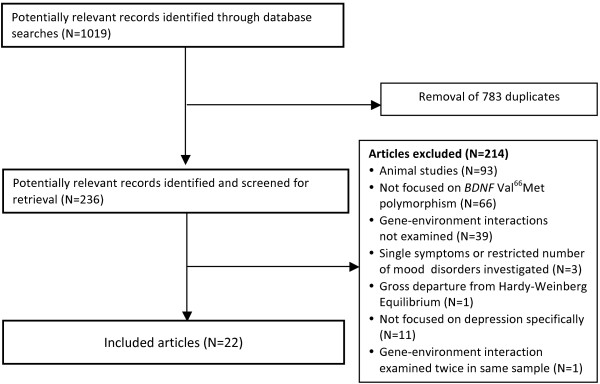
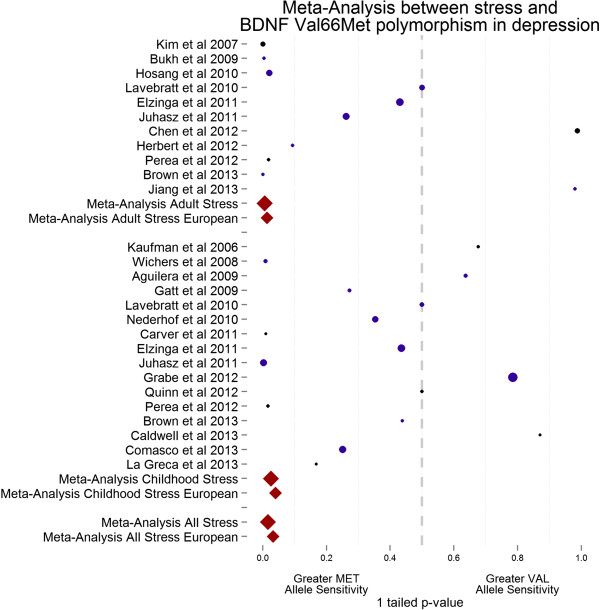
BACKGROUND: Major depression is a disabling psychiatric illness with complex origins. Life stress (childhood adversity and recent stressful events) is a robust risk factor for depression. The relationship between life stress and Val66Met polymorphism in the brain-derived neurotrophic factor (BDNF) gene has received much attention. The aim of the present work was to review and conduct a meta-analysis on the results from published studies examining this interaction. METHODS: A literature search was conducted using PsychINFO and PubMed databases until 22 November 2013. A total of 22 studies with a pooled total of 14,233 participants met the inclusion criteria, the results of which were combined and a meta-analysis performed using the Liptak-Stouffer z-score method. RESULTS: The results suggest that the Met allele of BDNF Val66Met significantly moderates the relationship between life stress and depression (P = 0.03). When the studies were stratified by type of environmental stressor, the evidence was stronger for an interaction with stressful life events (P = 0.01) and weaker for interaction of BDNF Val66Met with childhood adversity (P = 0.051). CONCLUSIONS: The interaction between BDNF and life stress in depression is stronger for stressful life events rather than childhood adversity. Methodological limitations of existing studies include poor measurement of life stress.
Overview
The claims and statistics of this paper haven’t been checked yet.
Free: it reads the open-access text and checks the first 5 claims that cite a source we can check. Create a free account to check every claim.
Integrity signals
Registry
Cites
Statistics
Figures
Verification
Claims the paper makes
The claims and statistics of this paper haven’t been checked yet.
Free: it reads the open-access text and checks the first 5 claims that cite a source we can check. Create a free account to check every claim.
Claims other papers make about this one
Each is checked against this paper’s own text: does it say what the citing paper says it does?
The source backs part of the claim, not all of it — or backs it for a different population, condition or comparison.
In the citing paper
“Yet again, several other meta-analyses did confirm the association between the val66met polymorphism and an increased susceptibility to mood disorders (Hosang et al. 2014; Li et al. 2016; Yan et al. 2014; Zou et al. 2010).”
From Neurotrophic factors and neuroplasticity pathways in the pathophysiology and treatment of depression (2018) · cites this paper as Hosang et al. 2014
Experimental — accuracy not yet measuredThe source backs part of the claim, not all of it — or backs it for a different population, condition or comparison.
In the citing paper
“In addition, several meta-analyses data confirm the association of the Val66Met polymorphism with an increase of susceptibility to develop mood disorders [200,201,202].”
From Neurotrophic Factor BDNF, Physiological Functions and Therapeutic Potential in Depression, Neurodegeneration and Brain Cancer (2020) · cites this paper as [200]
Experimental — accuracy not yet measuredThe cited source says what the claim attributes to it.
In the citing paper
“Another meta-analysis found that the Met allele significantly moderated the effect of stressful life events on MDD risk, suggesting that Met carriers are more genetically sensitive to adverse life experiences205.”
From Psychobiological factors of resilience and depression in late life (2019) · cites this paper as [205]
The check wasn’t confident either way, so it gives no verdict — never disputed.
In the citing paper
“BDNF single nucleotide polymorphism (val66met), however, is associated with the severity of depression in patients [64].”
From Brain-Derived Neurotrophic Factor in Brain Disorders: Focus on Neuroinflammation (2019) · cites this paper as [64]
Experimental — accuracy not yet measuredIn the citing paper
“Another meta-analysis found that the Met allele significantly moderated the effect of stressful life events on MDD risk, suggesting that Met carriers are more genetically sensitive to adverse life experiences205.”
From Psychobiological factors of resilience and depression in late life (2019) · cites this paper as [205]
Self-check
Percentages, sums and reported differences re-computed from the paper’s own numbers.
The self-check needs the paper’s full text.
Citations
Cites
Liberati, A., Altman, D. G., Tetzlaff, J., Mulrow, C., Gøtzsche, P. C., Ioannidis, J. P. A., Clarke, M., Devereaux, P. J., Kleijnen, J., & Moher, D. (2009) · PLoS Medicine · doi:10.1371/journal.pmed.1000100 · Cited by 28,164
von Elm, E., Altman, D. G., Egger, M., Pocock, S. J., Gøtzsche, P. C., Vandenbroucke, J. P., & Initiative, F. T. S. (2007) · PLoS Medicine · doi:10.1371/journal.pmed.0040296 · Cited by 23,020
von Elm, E., Altman, D. G., Egger, M., Pocock, S. J., Gøtzsche, P. C., & Vandenbroucke, J. P. (2007) · The Lancet · doi:10.1016/s0140-6736(07)61602-x · Cited by 21,320
Liberati, A., Altman, D. G., Tetzlaff, J., Mulrow, C., Gotzsche, P. C., Ioannidis, J. P. A., Clarke, M., Devereaux, P. J., Kleijnen, J., & Moher, D. (2009) · BMJ · doi:10.1136/bmj.b2700 · Cited by 17,648
Kessler, R. C., Chiu, W. T., Demler, O., & Walters, E. E. (2005) · Archives of General Psychiatry · doi:10.1001/archpsyc.62.6.617 · Cited by 12,052 · cited 1×
“Major depression has a lifetime prevalence of 17% [10] and is diagnosed based on the presentation of depressive”
BackgroundInfluence of life stress on depression: moderation by a polymorphism in the 5-HTT gene
Caspi, A., Sugden, K., Moffitt, T. E., Taylor, A., Craig, I. W., Harrington, H., McClay, J., Mill, J., Martin, J., Braithwaite, A., et al. (2003) · Science · doi:10.1126/science.1083968 · Cited by 8,120 · cited 3×
“There is strong evidence for an association between life stress and depression, research now focuses on identifying stress vulnerability factors in depression including genetic factors [31,32].”
BackgroundLopez, A. D., Mathers, C. D., Ezzati, M., Jamison, D. T., & Murray, C. J. (2006) · The Lancet · doi:10.1016/s0140-6736(06)68770-9 · Cited by 5,630 · cited 1×
“Major depression is considered one of the most burdensome diseases in the world [12] and it is projected that this illness will be the second leading cause of disease burden for developed countries by 2020 [13].”
BackgroundEgan, M. F., Kojima, M., Callicott, J. H., Goldberg, T. E., Kolachana, B. S., Bertolino, A., Zaitsev, E., Gold, B., Goldman, D., Dean, M., et al. (2003) · Cell · doi:10.1016/s0092-8674(03)00035-7 · Cited by 3,888
A Neurotrophic Model for Stress-Related Mood Disorders
Duman, R. S., & Monteggia, L. M. (2006) · Biological Psychiatry · doi:10.1016/j.biopsych.2006.02.013 · Cited by 3,375
Social Origins of Depression: A Study of Psychiatric Disorder in Women.
Schnitzer, P. K., Brown, G. W., & Harris, T. (1980) · Contemporary Sociology · doi:10.2307/2065631 · Cited by 3,053
Cited by
Synaptic plasticity and depression: new insights from stress and rapid-acting antidepressants
Duman, R. S., Aghajanian, G. K., Sanacora, G., & Krystal, J. H. (2016) · Nature Medicine · doi:10.1038/nm.4050 · Cited by 1,750
Colucci-D’Amato, L., Speranza, L., & Volpicelli, F. (2020) · International Journal of Molecular Sciences · doi:10.3390/ijms21207777 · Cited by 991
Reflecting on rumination: Consequences, causes, mechanisms and treatment of rumination
Watkins, E. R., & Roberts, H. (2020) · Behaviour Research and Therapy · doi:10.1016/j.brat.2020.103573 · Cited by 862
Brain-Derived Neurotrophic Factor in Brain Disorders: Focus on Neuroinflammation
Lima Giacobbo, B., Doorduin, J., Klein, H. C., Dierckx, R. A. J. O., Bromberg, E., & de Vries, E. F. J. (2019) · Molecular Neurobiology · doi:10.1007/s12035-018-1283-6 · Cited by 750
Brain-Derived Neurotrophic Factor Signaling in Depression and Antidepressant Action
Castrén, E., & Monteggia, L. M. (2021) · Biological Psychiatry · doi:10.1016/j.biopsych.2021.05.008 · Cited by 540
“There is evidence that Val66Met polymorphism might modulate the effects of early life adversity (44–47) or chronic stress on depression in adulthood (48).”
Phillips, C. (2017) · Neural Plasticity · doi:10.1155/2017/7260130 · Cited by 450
“This polymorphism is associated with decreased hippocampal volume in healthy persons [84–86], persons with MDD [87], and persons suffering an adverse response to stress [88].”
BackgroundBrain-derived neurotrophic factor in mood disorders and antidepressant treatments
Castrén, E., & Kojima, M. (2017) · Neurobiology of Disease · doi:10.1016/j.nbd.2016.07.010 · Cited by 337
“However, there are reports indicating that Met-allele carriers may be more sensitive to adverse experiences during early life (Bukh et al., 2009; Hosang et al., 2014).”
Etiology in psychiatry: embracing the reality of poly‐gene‐environmental causation of mental illness
Uher, R., & Zwicker, A. (2017) · World Psychiatry · doi:10.1002/wps.20436 · Cited by 331
Self-citationNeurotrophic factors and neuroplasticity pathways in the pathophysiology and treatment of depression
Levy, M. J. F., Boulle, F., Steinbusch, H. W., van den Hove, D. L. A., Kenis, G., & Lanfumey, L. (2018) · Psychopharmacology · doi:10.1007/s00213-018-4950-4 · Cited by 308
“Yet again, several other meta-analyses did confirm the association between the val66met polymorphism and an increased susceptibility to mood disorders (Hosang et al. 2014; Li et al. 2016; Yan et al. 2014; Zou et al. 2010).”
ResultGene-environment interaction and psychiatric disorders: Review and future directions
Assary, E., Vincent, J. P., Keers, R., & Pluess, M. (2018) · Seminars in Cell & Developmental Biology · doi:10.1016/j.semcdb.2017.10.016 · Cited by 275
An excitatory synapse hypothesis of depression
Thompson, S. M., Kallarackal, A. J., Kvarta, M. D., Van Dyke, A. M., LeGates, T. A., & Cai, X. (2015) · Trends in Neurosciences · doi:10.1016/j.tins.2015.03.003 · Cited by 265
Spine synapse remodeling in the pathophysiology and treatment of depression
Duman, C. H., & Duman, R. S. (2015) · Neuroscience Letters · doi:10.1016/j.neulet.2015.01.022 · Cited by 257
Gene–Environment Interactions in Severe Mental Illness
Uher, R. (2014) · Frontiers in Psychiatry · doi:10.3389/fpsyt.2014.00048 · Cited by 251
“A functional polymorphism (Val66Met) in the brain-derived neurotrophic factor (BDNF) gene has been reported to interact with stressful life events and childhood maltreatment in the development of depression, with Met allele carriers being more likely to develop depression after exposure to adversity (71, 107, 108).”
BackgroundSelf-citationComorbidity of Depression with Physical Disorders: Research and Clinical Implications
Kang, H.-J., Kim, S.-Y., Bae, K.-Y., Kim, S.-W., Shin, I.-S., Yoon, J.-S., & Kim, J.-M. (2015) · Chonnam Medical Journal · doi:10.4068/cmj.2015.51.1.8 · Cited by 226
“The met allele is related to a decrease in the activity-dependent secretion of BDNF(47) and to depression.(48) Additionally, because cytokines are responsible for the regulation of inflammatory responses in patients with physical disorders and/or depression, genes that affect cytokine production are also good candidat…”
BackgroundPsychobiological factors of resilience and depression in late life
Laird, K. T., Krause, B., Funes, C., & Lavretsky, H. (2019) · Translational Psychiatry · doi:10.1038/s41398-019-0424-7 · Cited by 229
Haase, J., & Brown, E. (2015) · Pharmacology & Therapeutics · doi:10.1016/j.pharmthera.2014.10.002 · Cited by 175
Gene–Environment Interaction in Major Depression: Focus on Experience-Dependent Biological Systems
Lopizzo, N., Bocchio Chiavetto, L., Cattane, N., Plazzotta, G., Tarazi, F. I., Pariante, C. M., Riva, M. A., & Cattaneo, A. (2015) · Frontiers in Psychiatry · doi:10.3389/fpsyt.2015.00068 · Cited by 161
The molecular neurobiology of chronic pain–induced depression
Humo, M., Lu, H., & Yalcin, I. (2019) · Cell and Tissue Research · doi:10.1007/s00441-019-03003-z · Cited by 163
Critical Issues in BDNF Val66Met Genetic Studies of Neuropsychiatric Disorders
Tsai, S.-J. (2018) · Frontiers in Molecular Neuroscience · doi:10.3389/fnmol.2018.00156 · Cited by 152
“A meta-analysis with a pooled total of 14,233 participants found that the Met allele significantly moderates the link between life stress and depression risk (Hosang et al., 2014).”
BackgroundDifferential Susceptibility of the Developing Brain to Contextual Adversity and Stress
Boyce, W. T. (2015) · Neuropsychopharmacology · doi:10.1038/npp.2015.294 · Cited by 174
Zhao, M., Chen, L., Yang, J., Han, D. H., Fang, D., Qiu, X., Yang, X., Qiao, Z., Ma, J., Wang, L., et al. (2017) · Journal of Affective Disorders · doi:10.1016/j.jad.2017.10.024 · Cited by 172
Genetic Determinants of Depression: Recent Findings and Future Directions
Dunn, E. C., Brown, R. C., Dai, Y., Rosand, J., Nugent, N. R., Amstadter, A. B., & Smoller, J. W. (2015) · Harvard Review of Psychiatry · doi:10.1097/hrp.0000000000000054 · Cited by 158
“For instance, a recent review found stronger evidence to support interactions with the BDNF Val66Met polymorphism and stressful life events compared to childhood adversity.(98) As we later discuss, genome-wide approaches to G E remain an important, but relatively unexplored, area.”
ResultBrain-derived neurotrophic factor and mental disorders
Lin, C.-C., & Huang, T.-L. (2020) · Biomedical Journal · doi:10.1016/j.bj.2020.01.001 · Cited by 143
“[53] Hosang GM, Shiles C, Tansey KE, McGuffin P, Uher R.”
BackgroundMethodMusliner, K. L., Seifuddin, F., Judy, J. A., Pirooznia, M., Goes, F. S., & Zandi, P. P. (2015) · Psychological Medicine · doi:10.1017/s0033291714002839 · Cited by 132
“…on other candidate genes, including the brain-derived neurotrophic factor (BDNF) gene (Kim et al. 2007; Bukh et al. 2009; Chen et al. 2012; Hosang et al. 2014), the dopamine receptor D2 (DRD2) gene (Elovainio et al. 2007), the corticotropin-releasing-hormone receptor type 1 (CRHR1) gene…”
BackgroundBDNF promoter methylation and genetic variation in late-life depression
Januar, V, Ancelin, M.-L., Ritchie, K., Saffery, R., & Ryan, J. (2015) · Translational Psychiatry · doi:10.1038/tp.2015.114 · Cited by 139
Unfolding the Role of BDNF as a Biomarker for Treatment of Depression
Rana, T., Behl, T., Sehgal, A., Srivastava, P., & BUNGAU, S. G. (2020) · Journal of Molecular Neuroscience · doi:10.1007/s12031-020-01754-x · Cited by 147
“2013) and in individuals with early-life stress (Hosang et al. 2014).”
BackgroundHing, B., Sathyaputri, L., & Potash, J. B. (2018) · American Journal of Medical Genetics Part B: Neuropsychiatric Genetics · doi:10.1002/ajmg.b.32616 · Cited by 137
“A meta-analysis that used 11 studies and a total of 7,594 individuals observed a significant interaction between the “A” allele with stressful life events (Hosang et al., 2014).”
MethodAntidepressant effect of taurine in chronic unpredictable mild stress-induced depressive rats
Wu, G.-F., Ren, S., Tang, R.-Y., Xu, C., Zhou, J.-Q., Lin, S.-M., Feng, Y., Yang, Q.-H., Hu, J.-M., & Yang, J.-C. (2017) · Scientific Reports · doi:10.1038/s41598-017-05051-3 · Cited by 124
Maul, S., Giegling, I., Fabbri, C., Corponi, F., Serretti, A., & Rujescu, D. (2020) · American Journal of Medical Genetics Part B: Neuropsychiatric Genetics · doi:10.1002/ajmg.b.32763 · Cited by 125
Mice with altered BDNF signaling as models for mood disorders and antidepressant effects
Lindholm, J. S. O., & Castrén, E. (2014) · Frontiers in Behavioral Neuroscience · doi:10.3389/fnbeh.2014.00143 · Cited by 114
“However, there is evidence for a higher sensitivity to stressful life events among Met-allele carriers (Kaufman et al., 2006; Hosang et al., 2014).”
Athira, K. V., Bandopadhyay, S., Samudrala, P. K., Naidu, V. G. M., Lahkar, M., & Chakravarty, S. (2019) · Current Neuropharmacology · doi:10.2174/1570159x17666191001142934 · Cited by 119
Murínová, J., Hlaváčová, N., Chmelová, M., & Riečanský, I. (2017) · Frontiers in Behavioral Neuroscience · doi:10.3389/fnbeh.2017.00101 · Cited by 110
“A common functional polymorphism in the BDNF gene (termed the Val66Met polymorphism) has been found to interact with stress exposure to affect risk of depression (Hosang et al., 2014), bipolar disorders (Hosang et al.”
BackgroundStress-sensitive antidepressant-like effects of ketamine in the mouse forced swim test
Fitzgerald, P. J., Yen, J. Y., & Watson, B. O. (2019) · PLOS ONE · doi:10.1371/journal.pone.0215554 · Cited by 94
Duclot, F., & Kabbaj, M. (2015) · Journal of Experimental Biology · doi:10.1242/jeb.107086 · Cited by 103
“Notably, Met carriers exhibit a higher risk of suicide attempts (Sarchiapone et al., 2008) and higher vulnerability to stressful life events than Val individuals (Brown et al., 2014; Hosang et al., 2014).”
BackgroundEvidence for the role of corticotropin-releasing factor in major depressive disorder
Waters, R. P., Rivalan, M., Bangasser, D. A., Deussing, J. M., Ising, M., Wood, S. K., Holsboer, F., & Summers, C. H. (2015) · Neuroscience & Biobehavioral Reviews · doi:10.1016/j.neubiorev.2015.07.011 · Cited by 93
“What is more, stressful events, both early and later in life, appear to be the causative link in gene-by-environment interactions that produce or exacerbate depression, through gene expression related to polymorphisms such as the BDNFVal66/Met, and the serotonin transporter 5-HTTLPR gene polymorphisms (Caspi et al., 2…”
BackgroundInfluentialGenetic variants in major depressive disorder: From pathophysiology to therapy
Gonda, X., Petschner, P., Eszlári, N., Baksa, D., Édes, A. E., Antal, P., Juhász, G., & Bagdy, G. (2018) · Pharmacology & Therapeutics · doi:10.1016/j.pharmthera.2018.09.002 · Cited by 102
Uher, R. (2013) · Social Psychiatry and Psychiatric Epidemiology · doi:10.1007/s00127-013-0801-0 · Cited by 101
Self-citationBDNF Release and Signaling Are Required for the Antidepressant Actions of GLYX-13
Kato, T., Fogaça, M. V., Deyama, S., Li, X.-Y., Fukumoto, K., & Duman, R. S. (2018) · Molecular Psychiatry · doi:10.1038/mp.2017.220 · Cited by 88
“These results may be clinically important as the Met polymorphism is found in approximately 25 percent of Caucasians (39,40), and the antidepressant response to ketamine is significantly reduced in BDNF Met patients, most of which were heterozygous Met carriers by approximately 50 percent compared to Val/Val patients…”
BackgroundAdvance in Stress for Depressive Disorder
Ding, Y., & Dai, J. (2019) · Advances in experimental medicine and biology · doi:10.1007/978-981-32-9271-0_8 · Cited by 98
Biomarker Approaches in Major Depressive Disorder Evaluated in the Context of Current Hypotheses
Jentsch, M. C., Van Buel, E. M., Bosker, F. J., Gladkevich, A. V., Klein, H. C., Oude Voshaar, R. C., Ruhé, H. G., Eisel, U. L., & Schoevers, R. A. (2015) · Biomarkers in Medicine · doi:10.2217/bmm.14.114 · Cited by 80
BDNF genetic variants and methylation: effects on cognition in major depressive disorder
Ferrer, A., Labad, J., Salvat-Pujol, N., Barrachina, M., Costas, J., Urretavizcaya, M., de Arriba-Arnau, A., Crespo, J. M., Soriano-Mas, C., Carracedo, Á., et al. (2019) · Translational Psychiatry · doi:10.1038/s41398-019-0601-8 · Cited by 84
Fabbri, C., Hosak, L., Mössner, R., Giegling, I., Mandelli, L., Bellivier, F., Claes, S., Collier, D. A., Corrales, A., Delisi, L. E., et al. (2017) · The World Journal of Biological Psychiatry · doi:10.1080/15622975.2016.1208843 · Cited by 81
“Conversely, the rs6265 Met allele was demonstrated to moderate the relationship between life stress and depression (Hosang et al. 2014; Gutierrez et al. 2015).”
BackgroundFani, N., King, T. Z., Shin, J., Srivastava, A., Brewster, R. C., Jovanovic, T., Bradley, B., & Ressler, K. J. (2016) · Depression and Anxiety · doi:10.1002/da.22483 · Cited by 80
“[14] The Val66Met polymorphism of the brain-derived neurotrophic factor gene, which has been consistently linked to depression,[15] and more recently, to PTSD,[16, 17] has also been associated with poorer integrity of the cingulum.”
BackgroundTang, B., Meng, W., Hägg, S., Burgess, S., & Jiang, X. (2021) · Pain · doi:10.1097/j.pain.0000000000002305 · Cited by 83
“SNP Val66Met in the BNDF gene, which encodes for brain-derived neurotrophic factor, has been shown to modify the relationship between life stress and depression 13 and increase the vulnerability to chronic multisite musculoskeletal pain.”
Park, Y., Nirajan, K. C., Paneque, A., & Cole, P. D. (2024) · International Journal of Molecular Sciences · doi:10.3390/ijms25126295 · Cited by 86
BDNFVal66met polymorphism: a potential bridge between depression and thrombosis
Amadio, P., Colombo, G. I., Tarantino, E., Gianellini, S., Ieraci, A., Brioschi, M., Banfi, C., Werba, J. P., Parolari, A., Lee, F. S., et al. (2015) · European Heart Journal · doi:10.1093/eurheartj/ehv655 · Cited by 80
Healthy minds 0–100 years: Optimising the use of European brain imaging cohorts (“Lifebrain”)
Walhovd, K. B., Fjell, A. M., Westerhausen, R., Nyberg, L. H., Ebmeier, K. P., Lindenberger, U., Bartrés‐Faz, D., Baaré, W. F. C., Siebner, H. R., Henson, R. N., et al. (2018) · European Psychiatry · doi:10.1016/j.eurpsy.2017.12.006 · Cited by 77
Hayley, S. P., Du, L., Litteljohn, D., Palkovits, M., Faludi, G., Merali, Z., Poulter, M. O., & Anisman, H. (2015) · Neuroscience Letters · doi:10.1016/j.neulet.2015.05.052 · Cited by 78
Orientin improves depression‐like behavior and BDNF in chronic stressed mice
Liu, Y., Lan, N., Ren, J., Wu, Y., Wang, S., Huang, X., & Yu, Y. (2015) · Molecular Nutrition & Food Research · doi:10.1002/mnfr.201400753 · Cited by 75
“More recently, a meta-analysis with a pooled total of 14,233 participants provided evidence for an interaction between the BDNF polymorphism and life stress in the causation of depression [15].”
BackgroundHacıoğlu, G., Şentürk, A., İnce, İ., & Alver, A. (2016) · PubMed Central · Cited by 84
Zhang, S., Zou, L., Chen, L.-Z., Yao, Y., Loprinzi, P. D., Parco Ming-fai, S. I. U., & Wei, G. (2019) · International Journal of Environmental Research and Public Health · doi:10.3390/ijerph16173033 · Cited by 65
“A randomized one-year aerobic exercise program for healthy older adults observed that exercise increased serum levels of BDNF and IGF-1 [61], which are protective neurobiological markers for emotional disorders [62,63].”
BackgroundRodent ketamine depression-related research: Finding patterns in a literature of variability
Polis, A. J., Fitzgerald, P. J., Hale, P. J., & Watson, B. O. (2019) · Behavioural Brain Research · doi:10.1016/j.bbr.2019.112153 · Cited by 68
O'Donnell, K. J., Glover, V., Holbrook, J. D., & O'Connor, T. G. (2014) · Development and Psychopathology · doi:10.1017/s095457941400100x · Cited by 57
Dugan, A. M., Parrott, J. M., Redus, L., Hensler, J. G., & O’Connor, J. C. (2016) · International Journal of Neuropsychopharmacology · doi:10.1093/ijnp/pyv089 · Cited by 60
“A single nucleotide polymorphism in the human bdnf gene (rs6265; val66met) is a risk factor associated with stress-precipitated psychiatric disorders, such as major depression (Hosang et al., 2014).”
BackgroundMosqueiro, B. P., Fleck, M. P. D. A., & da Rocha, N. S. (2019) · Frontiers in Psychiatry · doi:10.3389/fpsyt.2019.00671 · Cited by 61
“A recent meta-analysis showed the relationship between stressful life events and depression was significantly moderated by BDNF levels (24).”
BackgroundSharma, V., Singh, T. G., Kaur, A., Mannan, A., & Dhiman, S. (2022) · Neurochemical Research · doi:10.1007/s11064-022-03755-1 · Cited by 59
Biological correlates of early life stressful events in major depressive disorder
Silva, R. C., Maffioletti, E., Gennarelli, M., Baune, B. T., & Minelli, A. (2021) · Psychoneuroendocrinology · doi:10.1016/j.psyneuen.2020.105103 · Cited by 52
Xiao, D., Ye, X., Zhang, N., Ou, M., Guo, C., Zhang, B., Liu, Y., Wang, M., Yang, G., & Jing, C. (2015) · Scientific Reports · doi:10.1038/srep18083 · Cited by 65
BDNF plasma levels and genotype in depression and the response to electroconvulsive therapy
Ryan, K. M., Dunne, R. A., & McLoughlin, D. M. (2018) · Brain stimulation · doi:10.1016/j.brs.2018.05.011 · Cited by 64
Xu, L.-Z., Xu, D.-F., Han, Y., Liu, L.-J., Sun, C.-Y., Deng, J.-H., Zhang, R.-X., Yuan, M., Zhang, S.-Z., Li, Z.-M., et al. (2016) · International Journal of Neuropsychopharmacology · doi:10.1093/ijnp/pyw088 · Cited by 54
“…and treatment of depression and is involved in the therapeutic response to antidepressants (Shimizu et al., 2003; Duman and Monteggia, 2006; Frodl et al., 2007; Groves, 2007; Licinio et al., 2009; Autry et al., 2011; Duman and Aghajanian, 2014; Hosang et al., 2014; Molendijk et al., 2014).”
Backgroundde Assis, G. G., & Gasanov, E. V. (2019) · Frontiers in Neuroendocrinology · doi:10.1016/j.yfrne.2019.100784 · Cited by 64
Wunram, H. L., Hamacher, S., Hellmich, M., Volk, M., Jänicke, F., Reinhard, F., Bloch, W., Zimmer, P., Graf, C., Schönau, E., et al. (2018) · European Child & Adolescent Psychiatry · doi:10.1007/s00787-017-1071-2 · Cited by 56
“Furthermore, BDNF-genotype (BDNF-Val-66-Met polymorphism) is suspected to influence the response to anti-depressive treatment by exercise [14, 25, 30, 37, 53].”
BackgroundOh, N. S., Joung, J. Y., Lee, J. Y., Song, J. G., Oh, S., Kim, Y., Kim, H. W., & Kim, S. H. (2020) · Gut Microbes · doi:10.1080/19490976.2020.1756690 · Cited by 59
“Previous studies have indicated that the regulation of BDNF is closely associated with chronic stress-induced depressive disorders.(49) Several studies suggest the involvement of the corticosterone level and monoaminergic system in the regulation of BDNF expression.”
BackgroundMoreira, F. P., Fabião, J. D., Bittencourt, G., Wiener, C. D., Jansen, K., Oses, J. P., Quevedo, L. D. Á., Souza, L. D. M., Crispim, D., Portela, L. V., et al. (2015) · Psychiatric Genetics · doi:10.1097/ypg.0000000000000097 · Cited by 48
“As our results showed that the Met allele, in both homozygosis and heterozygosis, seems to be higher in participants with GAD, we carried out the analysis using the Met recessive model, similar to other studies evaluating the Val66Met polymorphism in the BDNF gene (Hosang et al., 2014).”
ResultJournal Peer Review and Editorial Evaluation: Cautious Innovator or Sleepy Giant?
Horbach, S. P. J. M., & Halffman, W. (2019) · Minerva · doi:10.1007/s11024-019-09388-z · Cited by 59
Huang, P., Dong, Z., Huang, W., Zhou, C., Zhong, W., Hu, P., Wen, G., Sun, X., Hua, H., Cao, H., et al. (2017) · Behavioural Brain Research · doi:10.1016/j.bbr.2017.05.032 · Cited by 54
“Currently, some mechanisms were investigated and suggested to contribute to depression include decrease in neurogenesis [21], neurotrophic hypothesis (including the BDNF Val66Met polymorphism) [22,23], changes in levels of serotonin and other monoamines [24], neuroinflammation and astrocyte activation [25], brain plas…”
BackgroundSystematic review and meta-analysis of genetic studies of late-life depression
Tsang, R. S. M., Mather, K. A., Sachdev, P. S., & Reppermund, S. (2017) · Neuroscience & Biobehavioral Reviews · doi:10.1016/j.neubiorev.2017.01.028 · Cited by 54
Jaworska, N., MacMaster, F. P., Foster, J. A., & Ramasubbu, R. (2016) · BMC Psychiatry · doi:10.1186/s12888-016-0777-x · Cited by 53
“Met allele carriers appear to be at greater risk for MDD development when exposed to stressful life events [19].”
BackgroundHuang, P., Gao, T., Dong, Z., Zhou, C., Lai, Y., Pan, T. S., Liu, Y., Zhao, X., Sun, X., Hua, H., et al. (2018) · Brain Research Bulletin · doi:10.1016/j.brainresbull.2018.06.019 · Cited by 55
Chaieb, L., Antal, A., Ambrus, G. G., & Paulus, W. (2014) · Neurogenetics · doi:10.1007/s10048-014-0393-1 · Cited by 53
“, depression, ADHD, and schizophrenia [14–17].”
Losenkov, I. S., Mulder, N. J. V., Levchuk, L. A., Vyalova, N. M., LOONEN, A. J. M., Bosker, F. J., Simutkin, G. G., Boiko, A. S., Bokhan, N. A., Wilffert, B., et al. (2020) · Frontiers in Psychiatry · doi:10.3389/fpsyt.2020.00038 · Cited by 54
“Moreover, according to other meta-analyses interesting results were obtained concerning an association with the results of drug treatment (more specifically in Asian gender and when treated with selective serotonin reuptake inhibitors; SSRIs) (15, 16) and vulnerability with life stress (17).”
ResultThe role of neurotrophic factors in novel, rapid psychiatric treatments
Kim, J., He, M. J., Widmann, A. K., & Lee, F. S. (2023) · Neuropsychopharmacology · doi:10.1038/s41386-023-01717-x · Cited by 51
“…meta-analysis of all the available human BDNF Met allele studies examining gene-environment interactions between the BDNF Met allele and life stressors showed that the Met allele signi fi cantly moderated the relationship between stressful life events and childhood adversity and depression [112].”
Backgroundde Sousa, C. N. S., Meneses, L. N., Vasconcelos, G. S., Silva, M. C. C., da Silva, J. C., Macêdo, D. S., de Lucena, D. F., & Vasconcelos, S. M. M. (2015) · Psychiatry Research · doi:10.1016/j.psychres.2015.08.042 · Cited by 52
“Studies suggest that this resistance to therapy is associated with a genetic polymorphism in BDNF gene (Egan et al., 2014; Cattaneo et al., 2013; El-hage et al., 2015) and the stress is one of the factors cited as causes of this polymorphism (Hosang et al., 2014).”
Ketamine’s rapid antidepressant effects are mediated by Ca2+-permeable AMPA receptors
Zaytseva, A., Bouckova, E., Wiles, M. J., Wustrau, M. H., Schmidt, I. G., Mendez-Vazquez, H., Khatri, L., & Kim, S. (2023) · eLife · doi:10.7554/elife.86022 · Cited by 48
“A common etiological element in the production of major depression in humans is exposure to significant and frequently chronic psychological stress or trauma (Bonde et al., 2016; Hosang et al., 2014).”
BackgroundThe Involvement of Genes in Adolescent Depression: A Systematic Review
Xia, L., & Yao, S. (2015) · Frontiers in Behavioral Neuroscience · doi:10.3389/fnbeh.2015.00329 · Cited by 49
“Results showed that the Met allele of BDNF Val66Met significantly moderates the relationship between life stress and depression (p = 0.03; Hosang et al., 2014).”
BackgroundInfluentialSzarowicz, C. A., Steece‐Collier, K., & Caulfield, M. E. (2022) · International Journal of Molecular Sciences · doi:10.3390/ijms23148011 · Cited by 47
Mehterov, N. H., Minchev, D. S., Gevezova, M., Sarafian, V. S., & Maes, M. H. J. (2022) · Molecular Neurobiology · doi:10.1007/s12035-022-02889-1 · Cited by 42
Lopes, I. S., Oliveira, I. C. M., Capibaribe, V. C. C., Valentim, J. T., da Silva, D. M. A., de Souza, A. G., de Araújo, M. A., Chaves, R. D. C., Gutierrez, S. J. C., Barbosa‐Filho, J. M., et al. (2018) · Neurochemistry International · doi:10.1016/j.neuint.2018.07.007 · Cited by 51
“According to several authors, resistance to treatment with antidepressants may be related to a polymorphism in the BDNF gene (Val66Met), which can be induced by stress and may affect the HPA axis function and cortisol levels after exposure to stress (Egan et al., 2003; Ibarguen-Vargas et al., 2009; Sanchez et al., 201…”
Val66Met polymorphism association with serum BDNF and inflammatory biomarkers in major depression
Caldieraro, M. A., McKee, M., Leistner-Segal, S., Vares, E. A., Kubaski, F., Spanemberg, L., Brusius-Facchin, A. C., Fleck, M. P., & Mischoulon, D. (2018) · The World Journal of Biological Psychiatry · doi:10.1080/15622975.2017.1347713 · Cited by 39
Interactions between FKBP5 variation and environmental stressors in adolescent Major Depression
Piechaczek, C., Greimel, E., Feldmann, L., Pehl, V., Allgaier, A., Frey, M., Freisleder, F. J., Halldorsdottir, T., Binder, E. B., Ising, M., et al. (2019) · Psychoneuroendocrinology · doi:10.1016/j.psyneuen.2019.03.025 · Cited by 41
Yoo, Y. K., Lee, J., Kim, J., Kim, G., Kim, S., Kim, J., Chun, H., Lee, J. H., Lee, C. J., & Hwang, K. S. (2016) · Scientific Reports · doi:10.1038/srep33694 · Cited by 41
Zhao, M., Yang, J., Wang, W., Ma, J., Zhang, J., Zhao, X., Qiu, X., Yang, X., Qiao, Z., Song, X., et al. (2017) · Scientific Reports · doi:10.1038/s41598-017-15168-0 · Cited by 39
Zhang, F., Zhu, X., Yu, P., Sheng, T., Wang, Y., & Ye, Y. (2022) · Neurochemistry International · doi:10.1016/j.neuint.2022.105343 · Cited by 39
Conway, C., Slavich, G. M., & Hammen, C. L. (2014) · Cognitive Therapy and Research · doi:10.1007/s10608-014-9657-1 · Cited by 41
“…BDNF gene–environment interactions may be more pronounced for childhood than for adulthood life stress (Perea et al. 2012), a recent metaanalytic review of 22 studies found that having a Met allele at the Val66Met locus is a reliable marker of risk for stressinduced depression (Hosang et al. 2014).”
BackgroundFan, Y., Luan, X., Wang, X., Li, H., Zhao, H., Li, S., Li, X., & Qiu, Z. (2024) · Brain Research Bulletin · doi:10.1016/j.brainresbull.2024.111143 · Cited by 37
“…BDNF gene comprises 11 exons and 9 functional promoters (Pruunsild et al., 2007), with the Val66Met polymorphism — one of the most studied single nucleotide polymorphism (SNP) (Tsai, 2018) — having a significant impact on stress-depression interactions (Hosang et al., 2014; Zhao et al., 2018).”
Lehto, K., Mäestu, J., Kiive, E., Veidebaum, T., & Harro, J. (2015) · European Neuropsychopharmacology · doi:10.1016/j.euroneuro.2015.12.029 · Cited by 37
“This is compatible with the outcome of a meta-analysis on major depression (Hosang et al., 2014), which found stronger BDNF Val66Met × life stress interactions with recent SLE-s than with childhood adversity.”
BackgroundResultInfluentialvan Calker, D., Serchov, T., Normann, C., & Biber, K. P. H. (2018) · Neuroscience & Biobehavioral Reviews · doi:10.1016/j.neubiorev.2018.03.014 · Cited by 36
“However, an interaction between the Val66Met polymorphism and stress in depressed patients may exist (Hosang et al., 2014).”
BackgroundCheng, Y. G., Wang, X., Yu, Y., Gu, J., Zhao, M., Fu, Q., Song, Y., & Liu, Y. (2022) · Neurochemical Research · doi:10.1007/s11064-022-03683-0 · Cited by 36
“A meta-analysis including 22 studies provided evidence in support of a negative correlation between BDNF and depression; that is, antidepressants increased BDNF in MDD patients, and the BDNF levels could be regarded as a biomarker for successful treatment [62, 63].”
BackgroundMethodYasuda, S., Yoshida, M., Yamagata, H., Iwanaga, Y., Suenaga, H., Ishikawa, K., Nakano, M., Okuyama, S., Furukawa, Y., Furukawa, S., et al. (2014) · Cellular and Molecular Neurobiology · doi:10.1007/s10571-014-0097-y · Cited by 34
“These results support a mechanism involving BDNF in depression with chronic pain (Hosang et al. 2014).”
ResultFusar‐Poli, L., Aguglia, A., Amerio, A., Orsolini, L., Salvi, V., Serafini, G., Volpe, U., Amore, M., & Aguglia, E. (2021) · Progress in Neuro-Psychopharmacology and Biological Psychiatry · doi:10.1016/j.pnpbp.2021.110342 · Cited by 36
Definitions and Concepts of Stress
Manosso, L. M., Gasparini, C. R., Réus, G. Z., & Pavlovic, Z. M. (2022) · Springer eBooks · doi:10.1007/978-3-030-87480-3_2 · Cited by 46
BDNF Val66met and 5-HTTLPR polymorphisms predict a human in vivo marker for brain serotonin levels
Fisher, P. M., Holst, K. K., Adamsen, D., Klein, A. B., Frøkjær, V. G., Jensen, P. S., Svarer, C., Gillings, N., Baaré, W. F. C., Mikkelsen, J. D., et al. (2014) · Human Brain Mapping · doi:10.1002/hbm.22630 · Cited by 46
“Furthermore, a recent meta-analysis reported that the metallele confers vulnerability to depression in the presence of stressful life events [Hosang et al., 2014].”
BackgroundFeurer, C., McGeary, J. E., Knopik, V. S., Brick, L. A. D., Palmer, R. H. C., & Gibb, B. E. (2017) · Journal of Abnormal Psychology · doi:10.1037/abn0000316 · Cited by 33
Barha, C. K., Liu-Ambrose, T. Y. L., Best, J. R., Yaffe, K. S., & Rosano, C. (2018) · Neurobiology of Aging · doi:10.1016/j.neurobiolaging.2018.10.021 · Cited by 34
“Based on previous findings, the following covariates and their interactions with time were also included as fixed effects: depression score (CES-D score), average self-reported time spent walking (minutes per week), age, education, diabetes status, and study site (Memphis, Pittsburgh) (Hosang et al., 2014; Kennedy et…”
BackgroundCarboni, L., Marchetti, L., Lauria, M., Gass, P., Vollmayr, B., Redfern, A. J., Jones, L., Razzoli, M., Malki, K., Begni, V., et al. (2018) · Neuropsychopharmacology · doi:10.1038/s41386-018-0117-6 · Cited by 32
“…that BDNF levels are altered in depressed patients (Molendijk et al , 2014), that the BDNFVal66Met polymorphism interacting with stress exposure is associated with MDD (Hosang et al , 2014) and that neurotrophic signaling is instrumental for antidepressant efficacy (Björkholm and Monteggia, 2016).”
BackgroundKovács, D., Gonda, X., Petschner, P., Édes, A. E., Eszlári, N., Bagdy, G., & Juhász, G. (2014) · Annals of General Psychiatry · doi:10.1186/1744-859x-13-17 · Cited by 33
“Met66 carriers showed a higher probability to develop depression if stressful life events were present [31].”
BackgroundZhang, L., Li, Z., Chen, J., Li, X., Zhang, J., & Belsky, J. (2015) · Journal of Youth and Adolescence · doi:10.1007/s10964-015-0378-x · Cited by 33
“Specifically, the Val version of BDNF appears to confer heightened susceptibility to environmental influences in the case of youth, whereas the Met version of BDNF operates in this manner with regard to depression and adversity in the case of adults (see meta-analysis in Hosang et al. 2014).”
BackgroundThe association of BDNF gene polymorphism with cognitive impairment in insomnia patients
Zaki, N. F. W., Saleh, E.-S., Elwasify, M., Mahmoud, E., Zaki, J., Spence, D. W., BaHammam, A. S., & Pandi-Perumal, S. R. (2018) · Progress in Neuro-Psychopharmacology and Biological Psychiatry · doi:10.1016/j.pnpbp.2018.07.025 · Cited by 30
McQuaid, R. J., Gabrys, R. L., McInnis, O. A., Anisman, H., & Matheson, K. (2019) · Frontiers in Psychiatry · doi:10.3389/fpsyt.2019.00151 · Cited by 31
“By example, it was reported that interactions between early-life adversity and the oxytocin receptor gene (OXTR) SNP rs5657 (55), and brain derived neurotrophic factor (BDNF) SNP (56, 57) were linked to depressed mood.”
BackgroundWhat can animal models tell us about depressive disorders?
Hoffman, K. L. (2015) · Elsevier eBooks · doi:10.1016/b978-0-08-100099-1.00002-9 · Cited by 34
Metadata
- Authors
- Hosang, G. M., Shiles, C., Tansey, K. E., McGuffin, P., & Uher, R.
- Affiliations
- University of London (GB)
- King's College London (GB)
- Dalhousie University (CA)
- Corresponding author
- Hosang, Georgina M
- Venue
- BMC Medicine
- Published
- 2014-01-16
- Volume
- 12
- Issue
- 1
- Pages
- 7-7
- ISSN
- 1741-7015 (ISSN-L)
- PMC
- PMC3912923
- OpenAlex
- W2115742198
- Cited by
- 292
- References
- 93
- Citations by year
- 2026: 10 · 2025: 8 · 2024: 20 · 2023: 19 · 2022: 19 · 2021: 20 · 2020: 22 · 2019: 28 · 2018: 32 · 2017: 30 · 2016: 31 · 2015: 35 · 2014: 16
- FWCI
- 4.26
- Type
- journal article
- Language
- en
- Open access
- gold
- doi.org
- Licence
- Locations
- BMC Medicine (publishedVersion, cc-by)
- Europe PMC (PubMed Central) (publishedVersion, cc-by)
- PubMed Central (publishedVersion, cc-by)
- PubMed (publishedVersion)
- ORCA Online Research @Cardiff (Cardiff University) (acceptedVersion)
- Queen Mary Research Online (Queen Mary University of London) (submittedVersion, cc-by)
- Funders
- Canada Research Chairs
- Medical Research Council
- Economic and Social Research Council (ES/H04678X/1, PTA-037-27-0165)
- Topics
- Life Sciences › Neuroscience › Cellular and Molecular Neuroscience › Neurotransmitter Receptor Influence on Behavior
- Life Sciences › Biochemistry, Genetics and Molecular Biology › Genetics › Genetic Associations and Epidemiology
- Life Sciences › Neuroscience › Behavioral Neuroscience › Stress Responses and Cortisol
- Keywords
- major depressive disorder, BDNF Val66Met polymorphism, brain-derived neurotrophic factor, life events, childhood adversity, gene-environment interaction, genetic susceptibility to depression
- MeSH terms
- Depression, Humans, Methionine, Polymorphism, Genetic, Stress, Psychological, Valine, Brain-Derived Neurotrophic Factor
About these checks
Registry, retraction, Cites and statistics results are computed, not judged, with one exception: a printed reference that no index lists is read once by a model before it counts as a citation error. Claims are extracted by a model and kept only when their quote appears verbatim in the text; each cited source is then checked, with a model’s help, for whether it says what the claim relies on. Those verdicts can be wrong — read the claim’s quote and the cited source before relying on one.
Statistics and arithmetic are recomputed, not judged.
Confidence bands are shown only for fields calibrated on our annotated test set. None is calibrated yet, so no band is shown.
What counts as a claim ›How we measure confidence ›How we check this ›
Are you an author, or do you see a problem with this page? Request a review
Data sources
Bibliographic data: Semantic Scholar, OpenAlex, Crossref.
Contains information from the Semantic Scholar Academic Graph Datasets, made available under the ODC Attribution License (ODC-BY 1.0).
Semantic Scholar’s data is described in: Kinney, R., et al. (2023). The Semantic Scholar Open Data Platform. arXiv:2301.10140.
