

The DOI matches its Crossref record; 82 of the 83 references it cites were found in a registry or an index.
A novel p38α MAPK inhibitor suppresses brain proinflammatory cytokine up-regulation and attenuates synaptic dysfunction and behavioral deficits in an Alzheimer's disease mouse model
Open accessAbstract
BACKGROUND: An accumulating body of evidence is consistent with the hypothesis that excessive or prolonged increases in proinflammatory cytokine production by activated glia is a contributor to the progression of pathophysiology that is causally linked to synaptic dysfunction and hippocampal behavior deficits in neurodegenerative diseases such as Alzheimer's disease (AD). This raises the opportunity for the development of new classes of potentially disease-modifying therapeutics. A logical candidate CNS target is p38 alpha MAPK, a well-established drug discovery molecular target for altering proinflammatory cytokine cascades in peripheral tissue disorders. Activated p38 MAPK is seen in human AD brain tissue and in AD-relevant animal models, and cell culture studies strongly implicate p38 MAPK in the increased production of proinflammatory cytokines by glia activated with human amyloid-beta (A beta) and other disease-relevant stressors. However, the vast majority of small molecule drugs do not have sufficient penetrance of the blood-brain barrier to allow their use as in vivo research tools or as therapeutics for neurodegenerative disorders. The goal of this study was to test the hypothesis that brain p38 alpha MAPK is a potential in vivo target for orally bioavailable, small molecules capable of suppressing excessive cytokine production by activated glia back towards homeostasis, allowing an improvement in neurologic outcomes. METHODS: A novel synthetic small molecule based on a molecular scaffold used previously was designed, synthesized, and subjected to analyses to demonstrate its potential in vivo bioavailability, metabolic stability, safety and brain uptake. Testing for in vivo efficacy used an AD-relevant mouse model. RESULTS: A novel, CNS-penetrant, non-toxic, orally bioavailable, small molecule inhibitor of p38 alpha MAPK (MW01-2-069A-SRM) was developed. Oral administration of the compound at a low dose (2.5 mg/kg) resulted in attenuation of excessive proinflammatory cytokine production in the hippocampus back towards normal in the animal model. Animals with attenuated cytokine production had reductions in synaptic dysfunction and hippocampus-dependent behavioral deficits. CONCLUSION: The p38 alpha MAPK pathway is quantitatively important in the A beta-induced production of proinflammatory cytokines in hippocampus, and brain p38 alpha MAPK is a viable molecular target for future development of potential disease-modifying therapeutics in AD and related neurodegenerative disorders.
Overview
The claims and statistics of this paper haven’t been checked yet.
Run the check — free, no account needed. It reads the open-access text and checks the sources it cites.
Integrity signals
Registry
Cites
Statistics
Figures
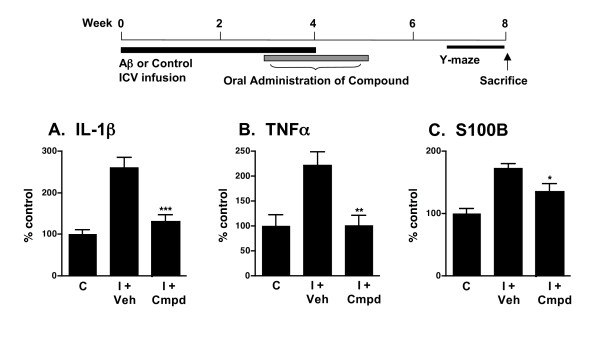
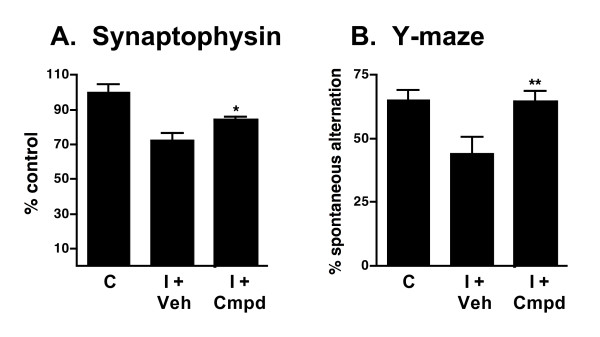
Verification
Claims the paper makes
The claims and statistics of this paper haven’t been checked yet.
Run the check — free, no account needed. It reads the open-access text and checks the sources it cites.
Claims other papers make about this one
Each is checked against this paper’s own text: does it say what the citing paper says it does?
The source backs part of the claim, not all of it — or backs it for a different population, condition or comparison.
In the citing paper
“First, p38α MAPK has been shown to mediate Aβ-induced expression of various proinflammatory cytokines/chemokines from microglial cells that causes neuroinflammation [25, 26, 29, 35].”
From Selective suppression of the α isoform of p38 MAPK rescues late-stage tau pathology (2016) · cites this paper as [35]
Experimental — accuracy not yet measuredThe source backs part of the claim, not all of it — or backs it for a different population, condition or comparison.
In the citing paper
“Targeted inactivation of p38α MAPK with small molecule inhibitors prevents the production of proinflammatory cytokines, reduces neurodegeneration, and improves neuronal and cognitive functions in rodent models of amyloid pathology [25, 26, 29, 35].”
From Selective suppression of the α isoform of p38 MAPK rescues late-stage tau pathology (2016) · cites this paper as [35]
Experimental — accuracy not yet measured
Self-check
Percentages, sums and reported differences re-computed from the paper’s own numbers.
The self-check needs the paper’s full text.
Citations
Cites
Amyloid oligomers exacerbate tau pathology in a mouse model of tauopathy
Selenica, M.-L. B., Brownlow, M., Jimenez, J. P., Lee, D. C., Pena, G., Dickey, C. A., Gordon, M. N., & Morgan, D. (2013) · Neurodegenerative Diseases · doi:10.1159/000337230 · Cited by 10,359
Kyriakis, J. M., & Avruch, J. (2001) · Physiological Reviews · doi:10.1152/physrev.2001.81.2.807 · Cited by 3,400
Hopkins, A. L., & Groom, C. R. (2002) · Nature Reviews Drug Discovery · doi:10.1038/nrd892 · Cited by 3,305
Antiinflammatory Action of Glucocorticoids — New Mechanisms for Old Drugs
Rhen, T., & Cidlowski, J. A. (2005) · New England Journal of Medicine · doi:10.1056/nejmra050541 · Cited by 3,149
Mechanisms involved in the side effects of glucocorticoids
SCHACKE, H. (2002) · Pharmacology & Therapeutics · doi:10.1016/s0163-7258(02)00297-8 · Cited by 1,847
Brain interleukin 1 and S-100 immunoreactivity are elevated in Down syndrome and Alzheimer disease.
Griffin, W. S., Stanley, L. C., Ling, C., White, L., MacLeod, V, Perrot, L. J., White, C. L., & Araoz, C. (1989) · Proceedings of the National Academy of Sciences · doi:10.1073/pnas.86.19.7611 · Cited by 1,777
Kaminska, B. (2005) · Biochimica et Biophysica Acta (BBA) - Proteins and Proteomics · doi:10.1016/j.bbapap.2005.08.017 · Cited by 1,285
p38 MAP kinases: key signalling molecules as therapeutic targets for inflammatory diseases
Kumar, S., Boehm, J. C., & Lee, J. C. (2003) · Nature Reviews Drug Discovery · doi:10.1038/nrd1177 · Cited by 1,199
Pardridge, W. M. (2007) · Drug Discovery Today · doi:10.1016/j.drudis.2006.10.013 · Cited by 1,191
Bhat, N. R., Zhang, P., Lee, J. C., & Hogan, E. L. (1998) · Journal of Neuroscience · doi:10.1523/jneurosci.18-05-01633.1998 · Cited by 714
Cited by
Sorted by citations
Items 101–200 of 225
Li, L., Alattar, A., Tan, Z., Shah, F. A., Ali, T., Alshaman, R., Koh, P., & Li, S. (2020) · Frontiers in Pharmacology · doi:10.3389/fphar.2020.01220 · Cited by 42
Khan, I., Saeed, K. M., Jo, M. G., & Kim, M. O. (2021) · Antioxidants · doi:10.3390/antiox10060892 · Cited by 43
Pharmacological Treatment for Heart Failure: A View From the Brain
Felder, R. B., Yu, Y., Zhang, Z.-H., & Wei, S.-G. (2009) · Clinical Pharmacology & Therapeutics · doi:10.1038/clpt.2009.117 · Cited by 42
Progress in the development of new drugs in Alzheimer's disease
Piau, A., Nourhashémi, F., Hein, C., Caillaud, C., & Vellas, B. (2011) · The Journal of nutrition, health and aging · doi:10.1007/s12603-011-0012-x · Cited by 32
Lee, Y. K., Choi, I. S., Ban, J. O., Lee, H. J., Lee, U. S., Han, S., Jung, J., Kim, Y. H., Kim, K. H., Oh, K., et al. (2010) · The Journal of Nutritional Biochemistry · doi:10.1016/j.jnutbio.2010.04.002 · Cited by 41
Yu, W., Wang, H., Ying, H., Yu, Y., Chen, D., Ge, W., & Shi, L. (2014) · International Immunopharmacology · doi:10.1016/j.intimp.2014.04.005 · Cited by 40
Yousif, N. M., de Oliveira, A. C. P., Brioschi, S., Hüell, M., Biber, K. P. H., & Fiebich, B. L. (2017) · Glia · doi:10.1002/glia.23276 · Cited by 40
miRNAs Identify Shared Pathways in Alzheimer’s and Parkinson’s Diseases
Sadlon, A., Takousis, P., Alexopoulos, P., Εvangelou, Ε., Prokopenko, I., & Perneczky, R. (2019) · Trends in Molecular Medicine · doi:10.1016/j.molmed.2019.05.006 · Cited by 40
Comprehensive Overview of Alzheimer’s Disease: Etiological Insights and Degradation Strategies
Singh, M. K., Shin, Y., Ju, S., Han, S., Kim, S. S., & Kang, I. (2024) · International Journal of Molecular Sciences · doi:10.3390/ijms25136901 · Cited by 43
Dai, H., Hu, W.-Y., Jiang, L.-H., Li, L., Gaung, X., & Xiao, Z. (2016) · Scientific Reports · doi:10.1038/srep27600 · Cited by 38
Self-citationShah, S. Z. A., Zhao, D., Hussain, T. A., & Yang, L. (2017) · Frontiers in Aging Neuroscience · doi:10.3389/fnagi.2017.00120 · Cited by 36
Schnöder, L., Gasparoni, G., Nordström, K. J. V., Schottek, A., Tomic, I., Christmann, A., Schäfer, K. H., Menger, M. D., Walter, J., Fassbender, K. C., et al. (2020) · The FASEB Journal · doi:10.1096/fj.201902731rr · Cited by 37
Neurobiology of Vascular Dementia
Enciu, A., Constantinescu, S. N., Popescu, L. M., Muresanu, D. F., & Popescu, B. O. (2011) · Journal of Aging Research · doi:10.4061/2011/401604 · Cited by 34
Mini review–vanadium-induced neurotoxicity and possible targets
Jaiswal, M. R., & Kale, P. P. (2019) · Neurological Sciences · doi:10.1007/s10072-019-04188-5 · Cited by 36
Flores‐Muñoz, C., Gómez, B., Mery, E., Mujica, P., Gajardo, I., Córdova, C., López-Espíndola, D., Duran-Aniotz, C. A., Hetz, C. A., Muñoz, P., et al. (2020) · Frontiers in Cellular Neuroscience · doi:10.3389/fncel.2020.00046 · Cited by 34
Yadav, R. K., Minz, E., & Mehan, S. (2021) · CNS & Neurological Disorders - Drug Targets · doi:10.2174/1871527320666210126113848 · Cited by 34
Advances in the development of kinase inhibitor therapeutics for Alzheimer's disease
Savage, M. J., & Gingrich, D. E. (2009) · Drug Development Research · doi:10.1002/ddr.20287 · Cited by 33
TLR-4-Dependent and -Independent Mechanisms of Fetal Brain Injury in the Setting of Preterm Birth
Breen, K. E., Brown, A. G., Burd, I. D., Chai, J., Friedman, A., & Elovitz, M. A. (2012) · Reproductive Sciences · doi:10.1177/1933719112438439 · Cited by 32
The Role of Beta-Adrenergic Receptor Blockers in Alzheimer’s Disease
Lương, K. V. Q., & Nguyễn, L. (2013) · American Journal of Alzheimer s Disease & Other Dementias® · doi:10.1177/1533317513488924 · Cited by 32
Anti-Neuroinflammatory Agents for the Treatment of Alzheimer’s Disease
Zhou, W., & Hu, W. (2013) · Future Medicinal Chemistry · doi:10.4155/fmc.13.125 · Cited by 31
Self-citationDaulatzai, M. A. (2016) · Europe PMC (PubMed Central) · Cited by 31
Heider, F., Ansideri, F., Tesch, R., Pantsar, T., Haun, U., Döring, E., Kudolo, M., Poso, A., Albrecht, W., Laufer, S., et al. (2019) · European Journal of Medicinal Chemistry · doi:10.1016/j.ejmech.2019.04.035 · Cited by 31
Alvariño, R., Alonso, E., Abbasov, M. E., Chaheine, C. M., Conner, M. L., Romo, D., Alfonso, A., & Botana, L. M. (2019) · ACS Chemical Neuroscience · doi:10.1021/acschemneuro.9b00329 · Cited by 31
Innate immunity in Alzheimer’s disease: the relevance of animal models?
Franco-Bocanegra, D., Nicoll, J. A. R., & Boche, D. (2017) · Journal of Neural Transmission · doi:10.1007/s00702-017-1729-4 · Cited by 32
More, S. V., Park, J., Kim, B.-W., Kumar, H., Lim, H.-W., Kang, S.-M., Koppula, S., Yoon, S., & Choi, D. (2013) · Journal of Pharmacological Sciences · doi:10.1254/jphs.12170fp · Cited by 29
Daulatzai, M. A. (2016) · Europe PMC (PubMed Central) · Cited by 60
RetractedNikkar, R., Esmaeili‐bandboni, A., Badrikoohi, M., & Babaei, P. (2022) · Metabolic Brain Disease · doi:10.1007/s11011-022-00940-7 · Cited by 31
Papaconstantinou, J., Wang, C. Z., Zhang, M., Yang, S. F., DeFord, J. H., Bulavin, D. V., & Ansari, N. H. (2015) · Aging · doi:10.18632/aging.100802 · Cited by 27
Tian, W., Heo, S., Kim, D.-W., Kim, I., Ahn, D., Tae, H., Kim, M.-K., & Park, B. (2021) · International Journal of Molecular Sciences · doi:10.3390/ijms22136946 · Cited by 30
Oncogenic Pathways in Neurodegenerative Diseases
Varela, L., & García-Rendueles, M. E. R. (2022) · International Journal of Molecular Sciences · doi:10.3390/ijms23063223 · Cited by 30
Almutary, A. G., Begum, M. Y., Kyada, A., Gupta, S. K., Jyothi, S. R., Chaudhary, K., Sharma, S., Sinha, A., Abomughaid, M. M., Imran, M., et al. (2024) · Ageing Research Reviews · doi:10.1016/j.arr.2024.102548 · Cited by 28
Wu, Z., & Nakanishi, H. (2015) · Journal of Immunology Research · doi:10.1155/2015/471342 · Cited by 27
Amirhamzeh, A., Vosoughi, M., Shafiee, A., & Amini, M. (2012) · Medicinal Chemistry Research · doi:10.1007/s00044-012-0124-9 · Cited by 27
Kinase Targets in Cns Drug Discovery
Gunosewoyo, H., Yu, L.-F., Munoz, L., & Kassiou, M. (2017) · Future Medicinal Chemistry · doi:10.4155/fmc-2016-0214 · Cited by 27
Self-citationKellom, M., Basselin, M., Keleshian, V. L., Chen, M., Rapoport, S. I., & Rao, J. S. (2012) · BMC Neuroscience · doi:10.1186/1471-2202-13-50 · Cited by 27
RetractedYun, H., Jin, P., Park, K., Hwang, J., Jeong, H., Kim, E.-C., Jung, J.-K., Oh, K., Hwang, B. Y., Han, S., et al. (2015) · Molecular Neurobiology · doi:10.1007/s12035-015-9208-0 · Cited by 26
p38 Inhibition Decreases Tau Toxicity in Microglia and Improves Their Phagocytic Function
Perea, J. R., Bolós, M., Cuadros, R., García, E., García‐Escudero, V., Hernández, F., McManus, R. M., Heneka, M. T., & Ávila, J. (2022) · Molecular Neurobiology · doi:10.1007/s12035-021-02715-0 · Cited by 24
The Role of CNI-1493 in the Function of Primary Microglia with Respect to Amyloid-β
Bach, J., Mengel, D., Wahle, T., Kautz, A., Balzer‐Geldsetzer, M., Al‐Abed, Y., Dodel, R. C., & Bacher, M. (2011) · Journal of Alzheimer s Disease · doi:10.3233/jad-2011-110179 · Cited by 23
Taki-Nakano, N., Kotera, J., & Ohta, H. (2016) · Biochemical and Biophysical Research Communications · doi:10.1016/j.bbrc.2016.04.060 · Cited by 24
Augustin, R., Lichtenthaler, S. F., Greeff, M., Hansen, J., Wurst, W., & Trümbach, D. (2011) · International Journal of Alzheimer s Disease · doi:10.4061/2011/154325 · Cited by 23
Blaise, E., Kümmerle, A. E., Hammoud, H., de Araújo‐Júnior, J. X., Bihel, F. J. ‐., Bourguignon, J., & Schmitt, M. (2014) · The Journal of Organic Chemistry · doi:10.1021/jo501930s · Cited by 22
Streptocyclinones A and B ameliorate Alzheimer's disease pathological processes in vitro
Alvariño, R., Alonso, E., Lacret, R., Oves‐Costales, D., Genilloud, O., Reyes, F., Alfonso, A., & Botana, L. M. (2018) · Neuropharmacology · doi:10.1016/j.neuropharm.2018.09.008 · Cited by 21
Neuroprotective effects of tetrandrine against vascular dementia
Chen, L., Lv, Y.-L., Wu, Z.-Z., Wu, B., Chen, L., Qin, G., Gui, B., & Zhou, J. (2016) · Neural Regeneration Research · doi:10.4103/1673-5374.179058 · Cited by 21
Munoz, L., Selig, R., Yeung, Y. T., Peifer, C., Hauser, D. R. J., & Laufer, S. (2010) · Analytical Biochemistry · doi:10.1016/j.ab.2010.02.016 · Cited by 20
Self-citationDoke, R. R., Lamkhade, G., Vinchurkar, K., & Singh, S. K. (2024) · ACS Pharmacology & Translational Science · doi:10.1021/acsptsci.4c00457 · Cited by 24
Zhou, W., Zhong, G., Rao, X., Xie, H., Zeng, S., Chi, T., Zou, L., Wu, D., & Hu, W. (2012) · ACS Medicinal Chemistry Letters · doi:10.1021/ml3001769 · Cited by 19
Self-citationValipour, M. (2023) · Phytotherapy Research · doi:10.1002/ptr.7902 · Cited by 18
Sadri, I., Nikookheslat, S. D., Karimi, P., Khani, M., & Nadimi, S. (2023) · Journal of Diabetes & Metabolic Disorders · doi:10.1007/s40200-023-01360-9 · Cited by 17
Tolédano, A., Rodríguez‐Casado, A., Álvarez, M., & Toledano‐Díaz, A. (2024) · Brain Sciences · doi:10.3390/brainsci14111101 · Cited by 19
Xing, B., Bachstetter, A. D., & Eldik, L. J. V. (2013) · PLoS ONE · doi:10.1371/journal.pone.0056852 · Cited by 17
Li, Y., Ba, M., Du, Y., Xia, C., Tan, S., Ng, K. P., & Ma, G. (2019) · Human & Experimental Toxicology · doi:10.1177/0960327119833742 · Cited by 17
Neuromodulatory Activity of Dietary Phenolics Derived from Corchorus olitorius L.
Wagdy, R., Abdel-Kader, R. M., El‐Khatib, A. H., Linscheid, M. W., Hamdi, N., & Handoussa, H. (2019) · Journal of Food Science · doi:10.1111/1750-3841.14587 · Cited by 20
Tipton, D. A., Carter, T. B., & Dabbous, M. K. (2013) · Journal of Periodontal Research · doi:10.1111/jre.12122 · Cited by 17
Valipour, M., Mohammadi, M., & Valipour, H. (2023) · Molecular Neurobiology · doi:10.1007/s12035-023-03829-3 · Cited by 16
Cerebrovascular Disorders: Role of Aging
Popa‐Wagner, A., Buga, A.-M., Turner, R. C., Rosen, C. L., & Toescu, E. C. (2012) · Journal of Aging Research · doi:10.1155/2012/128146 · Cited by 16
Sun, P., Hu, Y., Xing, Q., Deng, W., Ou, Y., Pan, G., Zhong, X., & Hu, W. (2020) · ACS Pharmacology & Translational Science · doi:10.1021/acsptsci.0c00073 · Cited by 15
Self-citationBachstetter, A. D., Xing, B., & Eldik, L. J. V. (2014) · Journal of Neuroinflammation · doi:10.1186/s12974-014-0175-6 · Cited by 15
Eldik, L. J. V., Sawaki, L. A., Bowen, K., Laskowitz, D. T., Noveck, R. J., Hauser, B., Jordan, L., Spears, T. G., Wu, H., Watt, K., et al. (2020) · Clinical Pharmacology in Drug Development · doi:10.1002/cpdd.795 · Cited by 14
Self-citationTormählen, N. M., Martorelli, M., Kühn, A., Maier, F., Guezguez, J., Burnet, M. W. M., Albrecht, W., Laufer, S., & Koch, P. (2021) · Journal of Medicinal Chemistry · doi:10.1021/acs.jmedchem.0c01773 · Cited by 14
Cavanagh, C., Colby-Milley, J., Farso, M. C., Krantic, S. M., & Quirion, R. (2011) · Future Neurology · doi:10.2217/fnl.11.50 · Cited by 15
Phytoceramide ameliorates ß-amyloid protein-induced memory impairment and neuronal death in mice
Jang, J. Y., Lee, H. K., Yoo, H.-S., & Seong, Y. H. (2017) · Archives of Pharmacal Research · doi:10.1007/s12272-017-0893-2 · Cited by 13
Low-frequency stimulation induces a durable long-term depression in young adult hyperthyroid rats
Tan, B., Bitiktas, S., Kavraal, Ş., Dursun, N., Dönmez‐Altuntaş, H., & Süer, C. (2016) · Neuroreport · doi:10.1097/wnr.0000000000000589 · Cited by 12
Lee, K.-H., Liu, Y.-J., Biswas, A., Ogawa, C., & Kobayashi, K. S. (2010) · Journal of Biological Chemistry · doi:10.1074/jbc.m110.108001 · Cited by 11
Chaudhury, S. S., & Mukhopadhyay, C. D. (2017) · International Journal of Neuroscience · doi:10.1080/00207454.2017.1398153 · Cited by 11
Zhu, A., Wu, Z., Meng, J., McGeer, P. L., Zhu, Y. Z., Nakanishi, H., & Wu, S. (2015) · Oxidative Medicine and Cellular Longevity · doi:10.1155/2015/792342 · Cited by 11
Xiao, H., Zhang, F.-R., Li, S., Guo, F., Jin-li, H., Wang, S.-C., Yu, J., Li, X., & Yang, H. (2024) · Biomedicine & Pharmacotherapy · doi:10.1016/j.biopha.2024.116219 · Cited by 10
Protective Effects of Colivelin Against Alzheimer's Disease in a PDAPP Mouse Model
Yin, R. L., Yin, K., Guo, Z., Zhang, Z., Chen, L., Cao, L., Li, Y., Wei, Y., Fu, X., & Shi, X. (2016) · Cellular Physiology and Biochemistry · doi:10.1159/000443064 · Cited by 10
RetractedHIV Glycoprotein Gp120 Impairs Fast Axonal Transport by Activating Tak1 Signaling Pathways
Berth, S. H., Mesnard, N. A., Wang, B., Kim, H., Song, Y., Sapar, M. L., Morfini, G. A., & Brady, S. T. (2016) · ASN NEURO · doi:10.1177/1759091416679073 · Cited by 10
Schwartz, D. L., Martin, T., & Nasir, N. S. (2005) · Cited by 10
Evolving significance of kinase inhibitors in the management of Alzheimer's disease
Ansari, M. M., Sahu, S. K., Singh, T. G., Singh, S. R. J., & Kaur, P. (2024) · European Journal of Pharmacology · doi:10.1016/j.ejphar.2024.176816 · Cited by 9
Kim, J., & Wong, P. K. Y. (2012) · Stem Cells Translational Medicine · doi:10.5966/sctm.2011-0063 · Cited by 9
Wang, S., Lu, H., Li, J., Zou, D., Wu, Y., & Wu, Y. (2017) · Tetrahedron Letters · doi:10.1016/j.tetlet.2017.01.083 · Cited by 9
Guan, C., Zhang, L., Fomo, K. N., Yang, J., Pfeiffer, N., & Grus, F. H. (2025) · Journal of Neuroinflammation · doi:10.1186/s12974-025-03482-8 · Cited by 12
Kinase Inhibitors for CNS Diseases: An Analysis of the Recent Patent Literature
Amigoni, F., Legnaghi, E., & Pevarello, P. (2012) · Pharmaceutical Patent Analyst · doi:10.4155/ppa.12.19 · Cited by 8
Chaudhary, O., Narayan, V., Lelis, F., Linz, B., Watkins, M., Veazey, R. S., & Aldovini, A. (2018) · PLoS Pathogens · doi:10.1371/journal.ppat.1007268 · Cited by 8
Bains, B. K., Greene, M. K., McGirr, L. M., DORMAN, J. H., Farrow, S. N., & Scott, C. J. (2016) · Journal of Interdisciplinary Nanomedicine · doi:10.1002/jin2.9 · Cited by 7
DNA-PK and P38 MAPK: A Kinase Collusion in Alzheimer’s Disease?
Kanungo, J. (2017) · Brain Disorders & Therapy · doi:10.4172/2168-975x.1000232 · Cited by 7
Braun, D. J., Frazier, H. N., Davis, V. A., Coleman, M. J., Rogers, C. B., & Eldik, L. J. V. (2023) · PLoS ONE · doi:10.1371/journal.pone.0286495 · Cited by 6
Vasco, V. R. L. (2023) · OBM Geriatrics · doi:10.21926/obm.geriatr.2302234 · Cited by 6
Zou, L., Qin, H., He, Y., Huang, H., Lu, Y., & Chu, X. (2012) · PubMed Central · doi:10.3969/j.issn.1673-5374.2012.14.007 · Cited by 6
Critical Review of P38 Map Kinase Inhibitors: A Bioanalytical Perspective
Wong, P. S. H., Hsieh, F., Pham, R., & James, C. A. (2011) · Bioanalysis · doi:10.4155/bio.11.290 · Cited by 6
Jing, L., Huang, Y., Ma, H., & Wang, H. (2022) · Neuroscience Letters · doi:10.1016/j.neulet.2022.136650 · Cited by 6
Bhat, A. R., Arya, A. K., Bhopale, V. M., Imtiyaz, Z., & Thom, S. R. (2024) · Journal of Neurophysiology · doi:10.1152/jn.00332.2024 · Cited by 5
Kim, J., Park, H., Lim, C.-M., Jeon, K.-B., Kim, S., Lee, J., Hong, J. T., Oh, D., Yang, Y. D., & Yoon, D. (2024) · BMB Reports · doi:10.5483/bmbrep.2024-0124 · Cited by 7
The Role of Caffeine in Neurodegenerative Diseases
Lương, K. V. Q., & Nguyễn, L. (2014) · Elsevier eBooks · doi:10.1016/b978-0-12-411462-3.00028-x · Cited by 5
Abrahams, A., Mouchet, N., Gouault, N., Dévéhat, F. L., Roch, M. L., Rouaud, I., Gilot, D., & Galibert, M. (2016) · Photochemical & Photobiological Sciences · doi:10.1039/c6pp00283h · Cited by 5
Tsui, H., Zeng, Q., Chen, K., & Zhang, X. (2017) · Elsevier eBooks · doi:10.1016/b978-0-12-409547-2.13815-6 · Cited by 5
Sheridan, C. (2009) · Nature Biotechnology · doi:10.1038/nbt0209-114 · Cited by 5
Recent Molecular Targets and their Ligands for the Treatment of Alzheimer Disease
Bayraktar, G., & Alptüzün, V. (2024) · Current Topics in Medicinal Chemistry · doi:10.2174/0115680266318722240809050235 · Cited by 4
Yoon, S., & Kim, Y. (2015) · Global Medical Genetics · doi:10.3934/genet.2015.3.230 · Cited by 5
Density, sound velocity and refractive index in the water + 1,2-dimethoxyethane system
Grande, M. D. C., Juliá, J. Á., Barrero, C. R., & Marschoff, C. M. (2014) · Physics and Chemistry of Liquids · doi:10.1080/00319104.2014.990964 · Cited by 4
Tripathi, S., Sharma, Y., & Kumar, D. (2024) · Protein and Peptide Letters · doi:10.2174/0109298665348075241121071614 · Cited by 3
Du, L., Sun, Y., Gan, Y., Wang, L., Li, X., Yan, S., Xiao, X. H., Li, S., & Jin, H. (2025) · Annals of Medicine · doi:10.1080/07853890.2025.2499700 · Cited by 3
Xue, D. A. I., Wu, J., Sun, X., Li, G., Cui, Y., & Liu, J. (2012) · Chin J Reprod Contracep · doi:10.1016/s1001-7844(13)60001-2 · Cited by 3
Progress in the development of new drugs in Alzheimer’s disease
Piau, A., Nourhashémi, F., Hein, C., Caillaud, C., & Vellas, B. J. (2010) · The journal of nutrition health & aging · doi:10.1007/s12603-010-0103-0 · Cited by 3
The P38MAPK/ATF2 signaling pathway is involved in PND in mice
Zhu, M., Long, S., Tao, Y., Zhang, Z., Zhou, Z., Wang, X., & Chen, W. (2023) · Experimental Brain Research · doi:10.1007/s00221-023-06730-6 · Cited by 3
Nedunuri, D., Adimulam, Y. B., & Reddi, K. K. (2016) · International Journal of Bioinformatics Research and Applications · doi:10.1504/ijbra.2016.075395 · Cited by 3
Cell-permeable p38 MAP kinase protects adult hippocampal neurons from cell death
Shigiyama, F., Hamanoue, M., Kobayashi, M., & Takamatsu, K. (2019) · Neuroscience Letters · doi:10.1016/j.neulet.2019.02.002 · Cited by 3
Jamwal, P., Nganthoinganbi, Y., Tsai, M., & Gurubrahamam, R. (2025) · The Journal of Organic Chemistry · doi:10.1021/acs.joc.4c02951 · Cited by 2
Hong, X., Wang, N., Leng, J., Xu, J., Qian, K., Zheng, Z., Tao, G., & Xiao, P. (2025) · Pharmaceuticals · doi:10.3390/ph18111600 · Cited by 2
Metadata
- Authors
- Munoz, L., Ranaivo, H. R., Roy, S. M., Hu, W., Craft, J. M., McNamara, L. K., Chico, L. W., Van Eldik, L. J., & Watterson, D. M.
- Affiliations
- Northwestern University (US)
- Corresponding author
- Watterson, D Martin
- Venue
- Journal of Neuroinflammation
- Published
- 2007-09-04
- Volume
- 4
- Issue
- 1
- Pages
- 21-21
- ISSN
- 1742-2094 (ISSN-L)
- PMC
- PMC2014744
- OpenAlex
- W2029663297
- Cited by
- 224
- References
- 83
- Citations by year
- 2026: 4 · 2025: 4 · 2024: 11 · 2023: 10 · 2022: 9 · 2021: 12 · 2020: 11 · 2019: 13 · 2018: 9 · 2017: 20 · 2016: 15 · 2015: 13 · 2014: 10 · 2013: 14 · 2012: 21
- FWCI
- 6.26
- Type
- journal article
- Language
- en
- Open access
- gold
- doi.org
- Licence
- cc-by
- Locations
- Journal of Neuroinflammation (publishedVersion, cc-by)
- PubMed Central (publishedVersion, cc-by)
- PubMed (publishedVersion)
- DOAJ (DOAJ: Directory of Open Access Journals) (submittedVersion, cc-by-sa)
- Funders
- Northwestern University
- National Institutes of Health
- National Institute on Aging (R01AG031311)
- Topics
- Life Sciences › Neuroscience › Cellular and Molecular Neuroscience › Alzheimer's disease research and treatments
- Life Sciences › Neuroscience › Neurology › Neuroinflammation and Neurodegeneration Mechanisms
- Life Sciences › Neuroscience › Cellular and Molecular Neuroscience › Neuroscience and Neuropharmacology Research
- Keywords
- Alzheimer's disease, inflammatory cytokines, glial activation, synaptic dysfunction, amyloid-beta, small molecule inhibitors, blood-brain barrier penetration, orally bioavailable drugs, disease-modifying therapy, neuroinflammation
- MeSH terms
- Alzheimer Disease, Animals, Behavior, Animal, Brain, Disease Models, Animal, Humans, Mice, Inbred C57BL, Pyridazines, Pyrimidines, Synapses, Drugs, Investigational, Up-Regulation, Cytokines, Inflammation Mediators, MAP Kinase Signaling System, Protein Kinase Inhibitors, Mitogen-Activated Protein Kinase 14, Mice
About these checks
Registry, retraction, Cites and statistics results are computed, not judged, with one exception: a printed reference that no index lists is read once by a model before it counts as a citation error. Claims are extracted by a model and kept only when their quote appears verbatim in the text; each cited source is then checked, with a model’s help, for whether it says what the claim relies on. Those verdicts can be wrong — read the claim’s quote and the cited source before relying on one.
Statistics and arithmetic are recomputed, not judged.
Confidence bands are shown only for fields calibrated on our annotated test set. None is calibrated yet, so no band is shown.
What counts as a claim ›How we measure confidence ›How we check this ›
Are you an author, or do you see a problem with this page? Request a review
