

The DOI matches its Crossref record; 82 of the 83 references it cites were found in a registry or an index.
A novel p38α MAPK inhibitor suppresses brain proinflammatory cytokine up-regulation and attenuates synaptic dysfunction and behavioral deficits in an Alzheimer's disease mouse model
Open accessAbstract
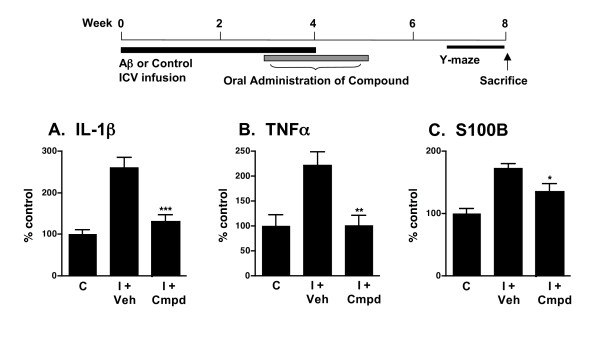
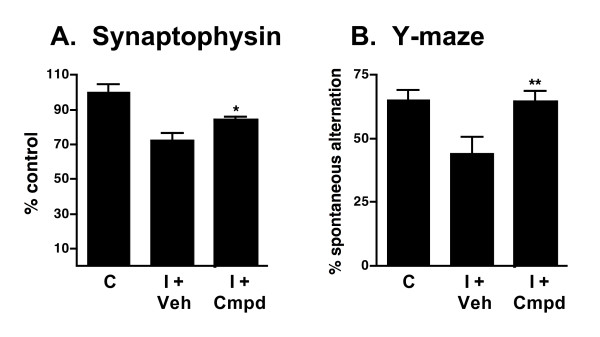
BACKGROUND: An accumulating body of evidence is consistent with the hypothesis that excessive or prolonged increases in proinflammatory cytokine production by activated glia is a contributor to the progression of pathophysiology that is causally linked to synaptic dysfunction and hippocampal behavior deficits in neurodegenerative diseases such as Alzheimer's disease (AD). This raises the opportunity for the development of new classes of potentially disease-modifying therapeutics. A logical candidate CNS target is p38 alpha MAPK, a well-established drug discovery molecular target for altering proinflammatory cytokine cascades in peripheral tissue disorders. Activated p38 MAPK is seen in human AD brain tissue and in AD-relevant animal models, and cell culture studies strongly implicate p38 MAPK in the increased production of proinflammatory cytokines by glia activated with human amyloid-beta (A beta) and other disease-relevant stressors. However, the vast majority of small molecule drugs do not have sufficient penetrance of the blood-brain barrier to allow their use as in vivo research tools or as therapeutics for neurodegenerative disorders. The goal of this study was to test the hypothesis that brain p38 alpha MAPK is a potential in vivo target for orally bioavailable, small molecules capable of suppressing excessive cytokine production by activated glia back towards homeostasis, allowing an improvement in neurologic outcomes. METHODS: A novel synthetic small molecule based on a molecular scaffold used previously was designed, synthesized, and subjected to analyses to demonstrate its potential in vivo bioavailability, metabolic stability, safety and brain uptake. Testing for in vivo efficacy used an AD-relevant mouse model. RESULTS: A novel, CNS-penetrant, non-toxic, orally bioavailable, small molecule inhibitor of p38 alpha MAPK (MW01-2-069A-SRM) was developed. Oral administration of the compound at a low dose (2.5 mg/kg) resulted in attenuation of excessive proinflammatory cytokine production in the hippocampus back towards normal in the animal model. Animals with attenuated cytokine production had reductions in synaptic dysfunction and hippocampus-dependent behavioral deficits. CONCLUSION: The p38 alpha MAPK pathway is quantitatively important in the A beta-induced production of proinflammatory cytokines in hippocampus, and brain p38 alpha MAPK is a viable molecular target for future development of potential disease-modifying therapeutics in AD and related neurodegenerative disorders.
Overview
The claims and statistics of this paper haven’t been checked yet.
Run the check — free, no account needed. It reads the open-access text and checks the sources it cites.
Integrity signals
Registry
Cites
Statistics
Figures
Verification
Claims the paper makes
The claims and statistics of this paper haven’t been checked yet.
Run the check — free, no account needed. It reads the open-access text and checks the sources it cites.
Claims other papers make about this one
Each is checked against this paper’s own text: does it say what the citing paper says it does?
The source backs part of the claim, not all of it — or backs it for a different population, condition or comparison.
In the citing paper
“First, p38α MAPK has been shown to mediate Aβ-induced expression of various proinflammatory cytokines/chemokines from microglial cells that causes neuroinflammation [25, 26, 29, 35].”
From Selective suppression of the α isoform of p38 MAPK rescues late-stage tau pathology (2016) · cites this paper as [35]
Experimental — accuracy not yet measuredThe source backs part of the claim, not all of it — or backs it for a different population, condition or comparison.
In the citing paper
“Targeted inactivation of p38α MAPK with small molecule inhibitors prevents the production of proinflammatory cytokines, reduces neurodegeneration, and improves neuronal and cognitive functions in rodent models of amyloid pathology [25, 26, 29, 35].”
From Selective suppression of the α isoform of p38 MAPK rescues late-stage tau pathology (2016) · cites this paper as [35]
Experimental — accuracy not yet measured
Self-check
Percentages, sums and reported differences re-computed from the paper’s own numbers.
The self-check needs the paper’s full text.
Citations
Cites
Amyloid oligomers exacerbate tau pathology in a mouse model of tauopathy
Selenica, M.-L. B., Brownlow, M., Jimenez, J. P., Lee, D. C., Pena, G., Dickey, C. A., Gordon, M. N., & Morgan, D. (2013) · Neurodegenerative Diseases · doi:10.1159/000337230 · Cited by 10,359
Kyriakis, J. M., & Avruch, J. (2001) · Physiological Reviews · doi:10.1152/physrev.2001.81.2.807 · Cited by 3,400
Hopkins, A. L., & Groom, C. R. (2002) · Nature Reviews Drug Discovery · doi:10.1038/nrd892 · Cited by 3,305
Antiinflammatory Action of Glucocorticoids — New Mechanisms for Old Drugs
Rhen, T., & Cidlowski, J. A. (2005) · New England Journal of Medicine · doi:10.1056/nejmra050541 · Cited by 3,149
Mechanisms involved in the side effects of glucocorticoids
SCHACKE, H. (2002) · Pharmacology & Therapeutics · doi:10.1016/s0163-7258(02)00297-8 · Cited by 1,847
Brain interleukin 1 and S-100 immunoreactivity are elevated in Down syndrome and Alzheimer disease.
Griffin, W. S., Stanley, L. C., Ling, C., White, L., MacLeod, V, Perrot, L. J., White, C. L., & Araoz, C. (1989) · Proceedings of the National Academy of Sciences · doi:10.1073/pnas.86.19.7611 · Cited by 1,777
Kaminska, B. (2005) · Biochimica et Biophysica Acta (BBA) - Proteins and Proteomics · doi:10.1016/j.bbapap.2005.08.017 · Cited by 1,285
p38 MAP kinases: key signalling molecules as therapeutic targets for inflammatory diseases
Kumar, S., Boehm, J. C., & Lee, J. C. (2003) · Nature Reviews Drug Discovery · doi:10.1038/nrd1177 · Cited by 1,199
Pardridge, W. M. (2007) · Drug Discovery Today · doi:10.1016/j.drudis.2006.10.013 · Cited by 1,191
Bhat, N. R., Zhang, P., Lee, J. C., & Hogan, E. L. (1998) · Journal of Neuroscience · doi:10.1523/jneurosci.18-05-01633.1998 · Cited by 714
Cited by
Sorted by citations
Pathological roles of MAPK signaling pathways in human diseases
Kim, E. K., & Choi, E.-J. (2010) · Biochimica et Biophysica Acta (BBA) - Molecular Basis of Disease · doi:10.1016/j.bbadis.2009.12.009 · Cited by 2,472
Rajmohan, R., & Reddy, P. H. (2016) · Journal of Alzheimer s Disease · doi:10.3233/jad-160612 · Cited by 730
Wild-type and mutant SOD1 share an aberrant conformation and a common pathogenic pathway in ALS
Bosco, D. A., Morfini, G. A., Karabacak, M., Song, Y., Gros‐Louis, F., Pasinelli, P., Goolsby, H., Fontaine, B. A., Lemay, N., McKenna-Yasek, D. M., et al. (2010) · Nature Neuroscience · doi:10.1038/nn.2660 · Cited by 685
Synaptic degeneration in Alzheimer disease
Tzioras, M., McGeachan, R. I., Durrant, C. S., & Spires-Jones, T. L. (2023) · Nature Reviews Neurology · doi:10.1038/s41582-022-00749-z · Cited by 504
Targeting p38 MAPK pathway for the treatment of Alzheimer's disease
Munoz, L., & Ammit, A. J. (2009) · Neuropharmacology · doi:10.1016/j.neuropharm.2009.11.010 · Cited by 381
Self-citationCanas, P. M., Porciúncula, L. O., Cunha, G. M. A., Silva, C. G., Machado, N. J., Oliveira, J. M. A., Oliveira, C. R., & Cunha, R. A. (2009) · Journal of Neuroscience · doi:10.1523/jneurosci.3728-09.2009 · Cited by 358
Inflammation, defective insulin signaling, and neuronal dysfunction in Alzheimer's disease
Ferreira, S. T., Clarke, J. R., Bomfim, T. R., & Felice, F. G. D. (2014) · Alzheimer s & Dementia · doi:10.1016/j.jalz.2013.12.010 · Cited by 363
Fang, F., Lue, L.-F., Yan, S., Xu, H., Luddy, J. S., Chen, D., Walker, D. G., Stern, D. M., Yan, S., Schmidt, A. M., et al. (2010) · The FASEB Journal · doi:10.1096/fj.09-139634 · Cited by 335
Reactive Astrogliosis after Spinal Cord Injury—Beneficial and Detrimental Effects
Karimi-Abdolrezaee, S., & Billakanti, R. (2012) · Molecular Neurobiology · doi:10.1007/s12035-012-8287-4 · Cited by 331
Buffo, A., Rolando, C., & Ceruti, S. (2009) · Biochemical Pharmacology · doi:10.1016/j.bcp.2009.09.014 · Cited by 338
Lee, J. K., & Kim, N. (2017) · Molecules · doi:10.3390/molecules22081287 · Cited by 326
Targeting protein kinases in central nervous system disorders
Chico, L. K., Eldik, L. J. V., & Watterson, D. M. (2009) · Nature Reviews Drug Discovery · doi:10.1038/nrd2999 · Cited by 298
Self-citationBachstetter, A. D., Xing, B., de Almeida, L., Dimayuga, E. R., Watterson, D. M., & Van Eldik, L. J. (2011) · Journal of Neuroinflammation · doi:10.1186/1742-2094-8-79 · Cited by 282
Self-citationShaping the Nrf2-ARE-related pathways in Alzheimer’s and Parkinson’s diseases
Fão, L., Mota, S. I., & Rego, A. C. (2019) · Ageing Research Reviews · doi:10.1016/j.arr.2019.100942 · Cited by 281
Neuroinflammation and Synaptic Loss
Rao, J. S., Kellom, M., Kim, H., Rapoport, S. I., & Reese, E. A. (2012) · Neurochemical Research · doi:10.1007/s11064-012-0708-2 · Cited by 271
The Role of p38 MAPK and Its Substrates in Neuronal Plasticity and Neurodegenerative Disease
Corrêa, S. A. L., & Eales, K. L. (2012) · Journal of Signal Transduction · doi:10.1155/2012/649079 · Cited by 258
Loftis, J. M., Huckans, M. S., & Morasco, B. J. (2009) · Neurobiology of Disease · doi:10.1016/j.nbd.2009.11.015 · Cited by 259
Nichol, K. E., Poon, W. W., Parachikova, A. I., Cribbs, D. H., Glabe, C. G., & Cotman, C. W. (2008) · Journal of Neuroinflammation · doi:10.1186/1742-2094-5-13 · Cited by 250
Role of p38/MAPKs in Alzheimer's Disease: Implications for Amyloid Beta Toxicity Targeted Therapy
Kheiri, G., Dolatshahi, M., Rahmani, F., & Rezaei, N. (2018) · Reviews in the Neurosciences · doi:10.1515/revneuro-2018-0008 · Cited by 211
Interleukins in glioblastoma pathophysiology: implications for therapy
Yeung, Y., McDonald, K., Grewal, T., & Munoz, L. (2012) · British Journal of Pharmacology · doi:10.1111/bph.12008 · Cited by 211
Self-citationFoster, P. P., Rosenblatt, K. P., & Kuljiš, R. O. (2011) · Frontiers in Neurology · doi:10.3389/fneur.2011.00028 · Cited by 220
Kim, T. I., Lee, Y. K., Park, S. G., Choi, I. S., Ban, J. O., Park, H. K., Nam, S.-Y., Yun, Y. W., Han, S., Oh, K. W., et al. (2009) · Free Radical Biology and Medicine · doi:10.1016/j.freeradbiomed.2009.09.008 · Cited by 194
Alzheimer's Disease: Redox Dysregulation As a Common Denominator for Diverse Pathogenic Mechanisms
Rommy von Bernhardi, M., & Eugenín, J. L. (2011) · Antioxidants and Redox Signaling · doi:10.1089/ars.2011.4082 · Cited by 193
Lloyd, E., Somera-Molina, K., Eldik, L. J. V., Watterson, D. M., & Wainwright, M. S. (2008) · Journal of Neuroinflammation · doi:10.1186/1742-2094-5-28 · Cited by 183
Self-citationImpaired insulin signalling and allostatic load in Alzheimer disease
Felice, F. G. D., Gonçalves, R. A., & Ferreira, S. T. (2022) · Nature reviews. Neuroscience · doi:10.1038/s41583-022-00558-9 · Cited by 183
Srinivasan, M., & Lahiri, D. K. (2015) · Expert Opinion on Therapeutic Targets · doi:10.1517/14728222.2014.989834 · Cited by 164
Amin, F. U., Shah, S. A., Badshah, H., Khan, M., & Kim, M. O. (2017) · Journal of Nanobiotechnology · doi:10.1186/s12951-016-0227-4 · Cited by 161
Nuclear factor‐kappa β as a therapeutic target for Alzheimer's disease
Jha, N. K., Jha, S. K., Kar, R., Nand, P., Swati, K., & Goswami, V. K. (2019) · Journal of Neurochemistry · doi:10.1111/jnc.14687 · Cited by 163
Bachstetter, A. D., & Eldik, L. J. V. (2010) · PubMed Central · Cited by 155
Role of TGFβ signaling in the pathogenesis of Alzheimer’s disease
von Bernhardi, R., Cornejo, F., Parada, G. E., & Eugenín, J. (2015) · Frontiers in Cellular Neuroscience · doi:10.3389/fncel.2015.00426 · Cited by 149
Schnöder, L., Hao, W., Qin, Y., Liu, S., Tomic, I., Liu, X., Fassbender, K. C., & Liu, Y. (2015) · Journal of Biological Chemistry · doi:10.1074/jbc.m115.695916 · Cited by 146
Selective suppression of the α isoform of p38 MAPK rescues late-stage tau pathology
Maphis, N., Jiang, S., Xu, G., Kokiko-Cochran, O. N., Roy, S. M., Van Eldik, L. J., Watterson, D. M., Lamb, B. T., & Bhaskar, K. (2016) · Alzheimer's Research & Therapy · doi:10.1186/s13195-016-0221-y · Cited by 147
Self-citationThe p38α MAPK Regulates Microglial Responsiveness to Diffuse Traumatic Brain Injury
Bachstetter, A. D., Rowe, R. K., Kaneko, M., Goulding, D. S., Lifshitz, J., & Eldik, L. J. V. (2013) · Journal of Neuroscience · doi:10.1523/jneurosci.5399-12.2013 · Cited by 131
Involvement of p38 MAPK in reactive astrogliosis induced by ischemic stroke
Choudhury, G. R., Ryou, M., Poteet, E. C., Wen, Y., He, R., Sun, F., Fang, Y., Jin, K., & Yang, S. (2014) · Brain Research · doi:10.1016/j.brainres.2014.01.013 · Cited by 124
Badshah, H., Ali, T., Rehman, S. U., Amin, F.-U., Ullah, F., Kim, T. H., & Kim, M. O. (2015) · Journal of Neuroimmune Pharmacology · doi:10.1007/s11481-015-9623-z · Cited by 125
Inhibition of Fast Axonal Transport by Pathogenic SOD1 Involves Activation of p38 MAP Kinase
Morfini, G. A., Bosco, D. A., Brown, H. E., Gatto, R. G., Kamińska, A., Song, Y., Molla, L., Baker, L. M., Marangoni, N., Berth, S. H., et al. (2013) · PLoS ONE · doi:10.1371/journal.pone.0065235 · Cited by 121
Self-citationMedeiros, R., Figueiredo, C. P., Pandolfo, P., Duarte, F. S., Prediger, R. D. S., Passos, G. F., & Calixto, J. B. (2010) · Behavioural Brain Research · doi:10.1016/j.bbr.2010.01.040 · Cited by 121
Kwon, S., Kim, J., Hong, S., Jung, Y., Kim, H., Lee, S., & Jang, C. (2011) · Neurochemistry International · doi:10.1016/j.neuint.2011.01.012 · Cited by 119
MKP-1 reduces Aβ generation and alleviates cognitive impairments in Alzheimer’s disease models
Du, Y., Du, Y., Zhang, Y., Huang, Z., Fu, M., Li, J., Pang, Y., Lei, P., Wang, Y. T., Song, W., et al. (2019) · Signal Transduction and Targeted Therapy · doi:10.1038/s41392-019-0091-4 · Cited by 117
Tai, L. M., Holloway, K., Male, D. K., Loughlin, J., & Romero, I. A. (2009) · Journal of Cellular and Molecular Medicine · doi:10.1111/j.1582-4934.2009.00717.x · Cited by 118
p38 MAP Kinase Inhibitors as Potential Therapeutic Drugs for Neural Diseases
Yasuda, S., Sugiura, H., Tanaka, H., Takigami, S., & Yamagata, K. (2011) · Central Nervous System Agents in Medicinal Chemistry · doi:10.2174/187152411794961040 · Cited by 112
Targeted Activation of Astrocytes: A Potential Neuroprotective Strategy
Escartin, C., & Bonvento, G. (2008) · Molecular Neurobiology · doi:10.1007/s12035-008-8043-y · Cited by 118
Han, Q., Lin, Q., Huang, P., Chen, M., Hu, X., Fu, H. Q., He, S., Shen, F., Zeng, H., & Deng, Y. (2017) · Journal of Neuroinflammation · doi:10.1186/s12974-017-0805-x · Cited by 110
TAM Receptors Affect Adult Brain Neurogenesis by Negative Regulation of Microglial Cell Activation
Ji, R., Tian, S., Lu, H. J., Lu, Q., Zheng, Y., Wang, X., Ding, J., Lu, Q., & Lu, Q. (2013) · The Journal of Immunology · doi:10.4049/jimmunol.1302229 · Cited by 110
Kaur, U., Banerjee, P., Bir, A., Sinha, M. S., Biswas, A., & Chakrabarti, S. (2015) · Current Topics in Medicinal Chemistry · doi:10.2174/1568026615666150114160543 · Cited by 108
Chen, J., Mao, K., Yu, H., Wen, Y., She, H., Yang, L., Zhang, H., Li, M., Wu, X., Ren, Y., et al. (2021) · Journal of Neuroinflammation · doi:10.1186/s12974-021-02349-y · Cited by 111
Li, T., Lu, L., Pember, E., Li, X., Zhang, B., & Zhu, Z. (2022) · Cells · doi:10.3390/cells11121925 · Cited by 109
Fang, F., Yu, Q., Arancio, O., Chen, D., Gore, S. S., Yan, S. S., & Yan, S. F. (2018) · Human Molecular Genetics · doi:10.1093/hmg/ddy017 · Cited by 103
Xing, B., Bachstetter, A. D., & Van Eldik, L. J. (2011) · Molecular Neurodegeneration · doi:10.1186/1750-1326-6-84 · Cited by 101
Roy, S. M., Grum-Tokars, V. L., Schavocky, J. P., Saeed, F., Staniszewski, A., Teich, A. F., Arancio, O., Bachstetter, A. D., Webster, S. J., Van Eldik, L. J., et al. (2015) · ACS Chemical Neuroscience · doi:10.1021/acschemneuro.5b00002 · Cited by 99
Self-citationHe, P., Ouyang, X.-P., Zhou, S., Yin, W., Tang, C., Laudon, M., & Tian, S. (2013) · Hormones and Behavior · doi:10.1016/j.yhbeh.2013.04.009 · Cited by 100
Neuroinflammation as a Potential Therapeutic Target in Alzheimer’s Disease
Liu, P., Wang, Y., Sun, Y., & Peng, G. (2022) · Clinical Interventions in Aging · doi:10.2147/cia.s357558 · Cited by 94
Recent developments of protein kinase inhibitors as potential AD therapeutics
Tell, V., & Hilgeroth, A. (2013) · Frontiers in Cellular Neuroscience · doi:10.3389/fncel.2013.00189 · Cited by 92
Yeung, Y. T., Bryce, N. S., Adams, S., Braidy, N., Konayagi, M., McDonald, K. L., Teo, C., Guillemin, G. J., Grewal, T., & Munoz, L. (2012) · Journal of Neuro-Oncology · doi:10.1007/s11060-012-0875-7 · Cited by 88
Self-citationAlam, J. J. (2015) · Journal of Alzheimer s Disease · doi:10.3233/jad-150277 · Cited by 91
Early Life Stress and Epigenetics in Late-onset Alzheimer’s Dementia: A Systematic Review
Lemche, E. (2018) · Current Genomics · doi:10.2174/1389202919666171229145156 · Cited by 84
Watterson, D. M., Grum-Tokars, V. L., Roy, S. M., Schavocky, J. P., Bradaric, B. D., Bachstetter, A. D., Xing, B., Dimayuga, E., Saeed, F., Zhang, H., et al. (2013) · PLoS ONE · doi:10.1371/journal.pone.0066226 · Cited by 80
Self-citationMedders, K. E., Sejbuk, N. E., Maung, R., Desai, M. K., & Kaul, M. (2010) · The Journal of Immunology · doi:10.4049/jimmunol.0902535 · Cited by 80
Shah, F. A., Li, T., Kury, L. T. A., Zeb, A., Khatoon, S., Liu, G., Yang, X., Liu, F., Yao, H., Khan, A., et al. (2019) · Frontiers in Neurology · doi:10.3389/fneur.2019.01178 · Cited by 77
Proximal inhibition of p38 MAPK stress signaling prevents distal axonopathy
Dapper, J. D., Crish, S. D., Pang, I.-H., & Calkins, D. J. (2013) · Neurobiology of Disease · doi:10.1016/j.nbd.2013.07.001 · Cited by 76
“For example, in animal models of Alzheimer's disease, small-molecule p38 MAPK inhibitors were effective at reducing pro-inflammatory cytokine production and synapse loss while improving behavioral performance (Hensley et al., 1999; Munoz et al., 2007; Munoz and Ammit 2010; Sun et al., 2003).”
Shah, F. A., Kury, L. A., Li, T., Zeb, A., Koh, P., Liu, F., Zhou, Q., Hussain, I., Khan, A., Jiang, Y., et al. (2019) · Frontiers in Pharmacology · doi:10.3389/fphar.2019.00663 · Cited by 76
RAGE is a key cellular target for A -induced perturbation in Alzheimer s disease
Yan, S. S. (2011) · Frontiers in Bioscience-Scholar · doi:10.2741/265 · Cited by 108
D’Mello, S. R. (2021) · International Journal of Molecular Sciences · doi:10.3390/ijms22115911 · Cited by 80
Kwon, S., Hong, S., Kim, J., Jung, Y., Kim, S. Y., Kim, H., Lee, S., & Jang, C. (2011) · Food and Chemical Toxicology · doi:10.1016/j.fct.2011.01.008 · Cited by 77
Cdk5 is a major regulator of p38 cascade: relevance to neurotoxicity in Alzheimer’s disease
Chang, K., de Pablo, Y., Lee, H., Lee, H., Smith, M. A., & Shah, K. (2010) · Journal of Neurochemistry · doi:10.1111/j.1471-4159.2010.06687.x · Cited by 77
Wang, Y., Lu, J. L., Wu, D., Zheng, Z., Zheng, Y., Wang, X., Ruan, J., Sun, X., Shan, Q., & Zhang, Z.-F. (2011) · Neurobiology of Learning and Memory · doi:10.1016/j.nlm.2011.03.010 · Cited by 74
Melchiorri, D., Merlo, S., Micallef, B., Borg, J.-J., & Dráfi, F. (2023) · Frontiers in Pharmacology · doi:10.3389/fphar.2023.1196413 · Cited by 73
Zhao, H., Wang, S., Qian, L., Jin, J., Li, H., Xu, Y., & Zhu, X. (2012) · CNS Neuroscience & Therapeutics · doi:10.1111/cns.12043 · Cited by 71
The p38-MK2-HuR pathway potentiates EGFRvIII–IL-1β-driven IL-6 secretion in glioblastoma cells
Gurgis, F., Yeung, Y.-T., Tang, M.-X., Heng, B., Buckland, M. E., Ammit, A., Haapasalo, J., Haapasalo, H., Guillemin, G. J., Grewal, T., et al. (2014) · Oncogene · doi:10.1038/onc.2014.225 · Cited by 70
Self-citationMAPK, β-amyloid and synaptic dysfunction: the role of RAGE
Origlia, N., Arancio, O., Domenici, L., & Yan, S. S. (2009) · Expert Review of Neurotherapeutics · doi:10.1586/ern.09.107 · Cited by 71
Sanderson, T. M., Hogg, E. L., Collingridge, G. L., & Corrêa, S. A. L. (2016) · Journal of Neurochemistry · doi:10.1111/jnc.13592 · Cited by 72
Colié, S., Sarroca, S., Palenzuela, R., García, I., Matheu, A., Corpas, R., Dotti, C. G., Esteban, J. A., Sanfeliu, C., & Nebreda, Á. R. (2017) · Scientific Reports · doi:10.1038/srep45306 · Cited by 64
Functional Aspects of Redox Control During Neuroinflammation
Rosales‐Corral, S., Reiter, R. J., Tan, D., Ortiz, G. G., & López-Armas, G. D. C. (2009) · Antioxidants and Redox Signaling · doi:10.1089/ars.2009.2629 · Cited by 66
Isofagomine In Vivo Effects in a Neuronopathic Gaucher Disease Mouse
Sun, Y., Ran, H., Liou, B., Quinn, B., Zamzow, M., Zhang, W., Bielawski, J., Kitatani, K., Setchell, K. D. R., Hannun, Y. A., et al. (2011) · PLoS ONE · doi:10.1371/journal.pone.0019037 · Cited by 64
Poulose, S. M., Bielinski, D. F., & Shukitt‐Hale, B. (2012) · The Journal of Nutritional Biochemistry · doi:10.1016/j.jnutbio.2012.06.009 · Cited by 61
Anti-epileptogenesis in rodent post-traumatic epilepsy models
Pitkänen, A., Bolkvadze, T., & Immonen, R. J. (2011) · Neuroscience Letters · doi:10.1016/j.neulet.2011.02.033 · Cited by 60
Roy, S. M., Minasov, G., Arancio, O., Chico, L. W., Eldik, L. J. V., Anderson, W. F., Pelletier, J. C., & Watterson, D. M. (2019) · Journal of Medicinal Chemistry · doi:10.1021/acs.jmedchem.9b00058 · Cited by 60
Self-citationALS-linked FUS exerts a gain of toxic function involving aberrant p38 MAPK activation
Sama, R. R. K., Fallini, C., Gatto, R. G., McKeon, J. E., Song, Y., Rotunno, M. S., Penaranda, S., Abdurakhmanov, I., Landers, J. E., Morfini, G. A., et al. (2017) · Scientific Reports · doi:10.1038/s41598-017-00091-1 · Cited by 60
Song, Y., Nagy, M., Ni, W., Tyagi, N. K., Fenton, W. A., López‐Giráldez, F., Overton, J. D., Horwich, A. L., & Brady, S. T. (2013) · Proceedings of the National Academy of Sciences · doi:10.1073/pnas.1303279110 · Cited by 59
Ghasemi, R., Zarifkar, A., Rastegar, K., Maghsoudi, N., & Moosavi, M. (2014) · European Journal of Pharmacology · doi:10.1016/j.ejphar.2013.11.034 · Cited by 58
Robson, M. J., Quinlan, M. A., Margolis, K. G., Gajewski-Kurdziel, P. A., Veenstra-VanderWeele, J. M., Gershon, M. D., Watterson, D. M., & Blakely, R. (2018) · Proceedings of the National Academy of Sciences · doi:10.1073/pnas.1809137115 · Cited by 58
Self-citationStrophanthidin Attenuates MAPK, PI3K/AKT/mTOR, and Wnt/β-Catenin Signaling Pathways in Human Cancers
Reddy, D., Ghosh, P., & Kumavath, R. (2020) · Frontiers in Oncology · doi:10.3389/fonc.2019.01469 · Cited by 56
Functional analyses of major cancer-related signaling pathways in Alzheimer's disease etiology
Guo, J., Cheng, J., North, B. J., & Wei, W. (2017) · Biochimica et Biophysica Acta (BBA) - Reviews on Cancer · doi:10.1016/j.bbcan.2017.07.001 · Cited by 55
Perea, J. R., Ávila, J., & Bolós, M. (2018) · Experimental Neurology · doi:10.1016/j.expneurol.2018.08.007 · Cited by 54
Stress-Activated Protein Kinases in Spinal Cord Injury: Focus on Roles of p38
Kasuya, Y., Umezawa, H., & Hatano, M. (2018) · International Journal of Molecular Sciences · doi:10.3390/ijms19030867 · Cited by 54
Kim, K. B., Lee, S., & Kim, J.-H. (2020) · Nutrition Research and Practice · doi:10.4162/nrp.2020.14.1.3 · Cited by 56
Li, L., Wu, X., Zhao, X.-J., Xu, L., Pan, C., & Zhang, Z. (2020) · Journal of Neuroinflammation · doi:10.1186/s12974-020-01744-1 · Cited by 56
Yadav, R. K., Mehan, S., Sahu, R., Kumar, S., Khan, A., Makeen, H. A., & Bratty, M. A. (2022) · Human & Experimental Toxicology · doi:10.1177/09603271221084276 · Cited by 54
Zheng, Y., Zhang, X., Zhang, R., Wang, Z., Gan, J., Gao, Q., Yang, L., Xu, P., & Jiang, X. (2023) · International Journal of Molecular Medicine · doi:10.3892/ijmm.2023.5314 · Cited by 52
Ashabi, G., Alamdary, S. Z., Ramin, M., & Khodagholi, F. (2012) · Basic & Clinical Pharmacology & Toxicology · doi:10.1111/bcpt.12000 · Cited by 49
Lim, H. J., Prajapati, R., Seong, S. H., Jung, H. A., & Choi, J. S. (2023) · ACS Omega · doi:10.1021/acsomega.2c06916 · Cited by 57
Nazmi, A., Dutta, K., & Basu, A. (2010) · PLoS neglected tropical diseases · doi:10.1371/journal.pntd.0000892 · Cited by 46
Lawson, S. K., Dobrikova, E. Y., Shveygert, M., & Gromeier, M. (2012) · Molecular and Cellular Biology · doi:10.1128/mcb.00695-12 · Cited by 47
Targeting dementias through cancer kinases inhibition
Fagiani, F., Lanni, C., Racchi, M., & Govoni, S. (2020) · Alzheimer's & Dementia: Translational Research & Clinical Interventions · doi:10.1002/trc2.12044 · Cited by 43
The PKR/P38/RIPK1 Signaling Pathway as a Therapeutic Target in Alzheimer’s Disease
Hugon, J., & Paquet, C. (2021) · International Journal of Molecular Sciences · doi:10.3390/ijms22063136 · Cited by 44
p38 MAPK: A Mediator of Hypoxia-Induced Cerebrovascular Inflammation
Sanchez, A. C., Tripathy, D., Yin, X., Desobry, K., Martinez, J. M., Riley, J., Gay, D., Luo, J., & Grammas, P. (2012) · Journal of Alzheimer s Disease · doi:10.3233/jad-2012-120829 · Cited by 46
The p38α mitogen-activated protein kinase as a central nervous system drug discovery target
Borders, A. S., de Almeida, L., Eldik, L. J. V., & Watterson, D. M. (2008) · BMC Neuroscience · doi:10.1186/1471-2202-9-s2-s12 · Cited by 43
Self-citationZhang, L., Sui, H., Liang, B., Wang, H., Qu, W., Yu, S., & Jin, Y. H. (2014) · Acta Pharmacologica Sinica · doi:10.1038/aps.2013.203 · Cited by 43
Ali, Y., Bradley, G., & Lu, H. (2017) · Scientific Reports · doi:10.1038/srep43846 · Cited by 43
Wang, B., Li, W., Jin, H., Nie, X., Shen, H., Li, E., & Wang, W. (2018) · Respiratory Physiology & Neurobiology · doi:10.1016/j.resp.2018.05.006 · Cited by 45
Metadata
- Authors
- Munoz, L., Ranaivo, H. R., Roy, S. M., Hu, W., Craft, J. M., McNamara, L. K., Chico, L. W., Van Eldik, L. J., & Watterson, D. M.
- Affiliations
- Northwestern University (US)
- Corresponding author
- Watterson, D Martin
- Venue
- Journal of Neuroinflammation
- Published
- 2007-09-04
- Volume
- 4
- Issue
- 1
- Pages
- 21-21
- ISSN
- 1742-2094 (ISSN-L)
- PMC
- PMC2014744
- OpenAlex
- W2029663297
- Cited by
- 224
- References
- 83
- Citations by year
- 2026: 4 · 2025: 4 · 2024: 11 · 2023: 10 · 2022: 9 · 2021: 12 · 2020: 11 · 2019: 13 · 2018: 9 · 2017: 20 · 2016: 15 · 2015: 13 · 2014: 10 · 2013: 14 · 2012: 21
- FWCI
- 6.26
- Type
- journal article
- Language
- en
- Open access
- gold
- doi.org
- Licence
- cc-by
- Locations
- Journal of Neuroinflammation (publishedVersion, cc-by)
- PubMed Central (publishedVersion, cc-by)
- PubMed (publishedVersion)
- DOAJ (DOAJ: Directory of Open Access Journals) (submittedVersion, cc-by-sa)
- Funders
- Northwestern University
- National Institutes of Health
- National Institute on Aging (R01AG031311)
- Topics
- Life Sciences › Neuroscience › Cellular and Molecular Neuroscience › Alzheimer's disease research and treatments
- Life Sciences › Neuroscience › Neurology › Neuroinflammation and Neurodegeneration Mechanisms
- Life Sciences › Neuroscience › Cellular and Molecular Neuroscience › Neuroscience and Neuropharmacology Research
- Keywords
- Alzheimer's disease, inflammatory cytokines, glial activation, synaptic dysfunction, amyloid-beta, small molecule inhibitors, blood-brain barrier penetration, orally bioavailable drugs, disease-modifying therapy, neuroinflammation
- MeSH terms
- Alzheimer Disease, Animals, Behavior, Animal, Brain, Disease Models, Animal, Humans, Mice, Inbred C57BL, Pyridazines, Pyrimidines, Synapses, Drugs, Investigational, Up-Regulation, Cytokines, Inflammation Mediators, MAP Kinase Signaling System, Protein Kinase Inhibitors, Mitogen-Activated Protein Kinase 14, Mice
About these checks
Registry, retraction, Cites and statistics results are computed, not judged, with one exception: a printed reference that no index lists is read once by a model before it counts as a citation error. Claims are extracted by a model and kept only when their quote appears verbatim in the text; each cited source is then checked, with a model’s help, for whether it says what the claim relies on. Those verdicts can be wrong — read the claim’s quote and the cited source before relying on one.
Statistics and arithmetic are recomputed, not judged.
Confidence bands are shown only for fields calibrated on our annotated test set. None is calibrated yet, so no band is shown.
What counts as a claim ›How we measure confidence ›How we check this ›
Are you an author, or do you see a problem with this page? Request a review
