

The DOI matches its Crossref record; 82 of the 83 references it cites were found in a registry or an index.
A novel p38α MAPK inhibitor suppresses brain proinflammatory cytokine up-regulation and attenuates synaptic dysfunction and behavioral deficits in an Alzheimer's disease mouse model
Open accessAbstract
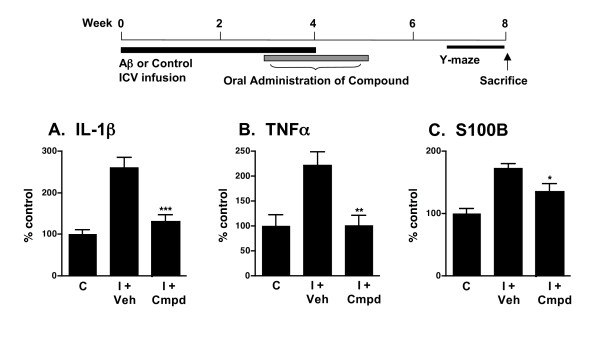
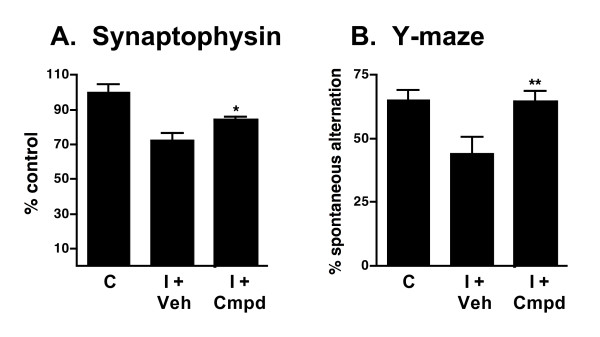
BACKGROUND: An accumulating body of evidence is consistent with the hypothesis that excessive or prolonged increases in proinflammatory cytokine production by activated glia is a contributor to the progression of pathophysiology that is causally linked to synaptic dysfunction and hippocampal behavior deficits in neurodegenerative diseases such as Alzheimer's disease (AD). This raises the opportunity for the development of new classes of potentially disease-modifying therapeutics. A logical candidate CNS target is p38 alpha MAPK, a well-established drug discovery molecular target for altering proinflammatory cytokine cascades in peripheral tissue disorders. Activated p38 MAPK is seen in human AD brain tissue and in AD-relevant animal models, and cell culture studies strongly implicate p38 MAPK in the increased production of proinflammatory cytokines by glia activated with human amyloid-beta (A beta) and other disease-relevant stressors. However, the vast majority of small molecule drugs do not have sufficient penetrance of the blood-brain barrier to allow their use as in vivo research tools or as therapeutics for neurodegenerative disorders. The goal of this study was to test the hypothesis that brain p38 alpha MAPK is a potential in vivo target for orally bioavailable, small molecules capable of suppressing excessive cytokine production by activated glia back towards homeostasis, allowing an improvement in neurologic outcomes. METHODS: A novel synthetic small molecule based on a molecular scaffold used previously was designed, synthesized, and subjected to analyses to demonstrate its potential in vivo bioavailability, metabolic stability, safety and brain uptake. Testing for in vivo efficacy used an AD-relevant mouse model. RESULTS: A novel, CNS-penetrant, non-toxic, orally bioavailable, small molecule inhibitor of p38 alpha MAPK (MW01-2-069A-SRM) was developed. Oral administration of the compound at a low dose (2.5 mg/kg) resulted in attenuation of excessive proinflammatory cytokine production in the hippocampus back towards normal in the animal model. Animals with attenuated cytokine production had reductions in synaptic dysfunction and hippocampus-dependent behavioral deficits. CONCLUSION: The p38 alpha MAPK pathway is quantitatively important in the A beta-induced production of proinflammatory cytokines in hippocampus, and brain p38 alpha MAPK is a viable molecular target for future development of potential disease-modifying therapeutics in AD and related neurodegenerative disorders.
Overview
The claims and statistics of this paper haven’t been checked yet.
Run the check — free, no account needed. It reads the open-access text and checks the sources it cites.
Integrity signals
Registry
Cites
Statistics
Figures
Verification
Claims the paper makes
The claims and statistics of this paper haven’t been checked yet.
Run the check — free, no account needed. It reads the open-access text and checks the sources it cites.
Claims other papers make about this one
Each is checked against this paper’s own text: does it say what the citing paper says it does?
The source backs part of the claim, not all of it — or backs it for a different population, condition or comparison.
In the citing paper
“First, p38α MAPK has been shown to mediate Aβ-induced expression of various proinflammatory cytokines/chemokines from microglial cells that causes neuroinflammation [25, 26, 29, 35].”
From Selective suppression of the α isoform of p38 MAPK rescues late-stage tau pathology (2016) · cites this paper as [35]
Experimental — accuracy not yet measuredThe source backs part of the claim, not all of it — or backs it for a different population, condition or comparison.
In the citing paper
“Targeted inactivation of p38α MAPK with small molecule inhibitors prevents the production of proinflammatory cytokines, reduces neurodegeneration, and improves neuronal and cognitive functions in rodent models of amyloid pathology [25, 26, 29, 35].”
From Selective suppression of the α isoform of p38 MAPK rescues late-stage tau pathology (2016) · cites this paper as [35]
Experimental — accuracy not yet measured
Self-check
Percentages, sums and reported differences re-computed from the paper’s own numbers.
The self-check needs the paper’s full text.
Citations
Cites
Amyloid oligomers exacerbate tau pathology in a mouse model of tauopathy
Selenica, M.-L. B., Brownlow, M., Jimenez, J. P., Lee, D. C., Pena, G., Dickey, C. A., Gordon, M. N., & Morgan, D. (2013) · Neurodegenerative Diseases · doi:10.1159/000337230 · Cited by 10,359
Kyriakis, J. M., & Avruch, J. (2001) · Physiological Reviews · doi:10.1152/physrev.2001.81.2.807 · Cited by 3,400
Hopkins, A. L., & Groom, C. R. (2002) · Nature Reviews Drug Discovery · doi:10.1038/nrd892 · Cited by 3,305
Antiinflammatory Action of Glucocorticoids — New Mechanisms for Old Drugs
Rhen, T., & Cidlowski, J. A. (2005) · New England Journal of Medicine · doi:10.1056/nejmra050541 · Cited by 3,149
Mechanisms involved in the side effects of glucocorticoids
SCHACKE, H. (2002) · Pharmacology & Therapeutics · doi:10.1016/s0163-7258(02)00297-8 · Cited by 1,847
Brain interleukin 1 and S-100 immunoreactivity are elevated in Down syndrome and Alzheimer disease.
Griffin, W. S., Stanley, L. C., Ling, C., White, L., MacLeod, V, Perrot, L. J., White, C. L., & Araoz, C. (1989) · Proceedings of the National Academy of Sciences · doi:10.1073/pnas.86.19.7611 · Cited by 1,777
Kaminska, B. (2005) · Biochimica et Biophysica Acta (BBA) - Proteins and Proteomics · doi:10.1016/j.bbapap.2005.08.017 · Cited by 1,285
p38 MAP kinases: key signalling molecules as therapeutic targets for inflammatory diseases
Kumar, S., Boehm, J. C., & Lee, J. C. (2003) · Nature Reviews Drug Discovery · doi:10.1038/nrd1177 · Cited by 1,199
Pardridge, W. M. (2007) · Drug Discovery Today · doi:10.1016/j.drudis.2006.10.013 · Cited by 1,191
Bhat, N. R., Zhang, P., Lee, J. C., & Hogan, E. L. (1998) · Journal of Neuroscience · doi:10.1523/jneurosci.18-05-01633.1998 · Cited by 714
Griffin, W. S. T., Sheng, J. G., Royston, M. C., Gentleman, S., McKenzie, J. E., Graham, D. I., Roberts, G. W., & Mrak, R. E. (1998) · Brain Pathology · doi:10.1111/j.1750-3639.1998.tb00136.x · Cited by 712
Interleukin 1 in the brain: biology, pathology and therapeutic target
Rothwell, N. J. (2000) · Trends in Neurosciences · doi:10.1016/s0166-2236(00)01661-1 · Cited by 671
Anti-TNF-α therapies: the next generation
Palladino, M. A., Bahjat, F. R., Theodorakis, E. A., & Moldawer, L. L. (2003) · Nature Reviews Drug Discovery · doi:10.1038/nrd1175 · Cited by 596
Glia and their cytokines in progression of neurodegeneration
Mrak, R. E., & Griffin, W. S. T. (2005) · Neurobiology of Aging · doi:10.1016/j.neurobiolaging.2004.05.010 · Cited by 592
Li, Y., Liu, L., Barger, S. W., & Griffin, W. S. T. (2003) · The Journal of Neuroscience · doi:10.1523/jneurosci.23-05-01605.2003 · Cited by 563
Minagar, A., Shapshak, P., Fujimura, R. K., Ownby, R., Heyes, M., & Eisdorfer, C. (2002) · Journal of the Neurological Sciences · doi:10.1016/s0022-510x(02)00207-1 · Cited by 536
Phenolic anti-inflammatory antioxidant reversal of Aβ-induced cognitive deficits and neuropathology
Frautschy, S. (2001) · Neurobiology of Aging · doi:10.1016/s0197-4580(01)00300-1 · Cited by 514
The druggable genome: an update
Russ, A., & Lampel, S. (2005) · Drug Discovery Today · doi:10.1016/s1359-6446(05)03666-4 · Cited by 421
Inflammatory Process in Parkinsons Disease: Role for Cytokines
Nagatsu, T., & Sawada, M. (2005) · Current Pharmaceutical Design · doi:10.2174/1381612053381620 · Cited by 412
The p38 MAP kinase pathway as a therapeutic target in inflammatory disease
Saklatvala, J. (2004) · Current Opinion in Pharmacology · doi:10.1016/j.coph.2004.03.009 · Cited by 408
Zhu, X., Rottkamp, C. A., Boux, H., Takeda, A., Perry, G., & Smith, M. A. (2000) · Journal of Neuropathology & Experimental Neurology · doi:10.1093/jnen/59.10.880 · Cited by 378
p38 Kinase Is Activated in the Alzheimer's Disease Brain
Hensley, K., Floyd, R. A., Zheng, N., Nael, R., Robinson, K. A., Nguyen, X., Pye, Q. N., Stewart, C. A., Geddes, J., Markesbery, W. R., et al. (1999) · Journal of Neurochemistry · doi:10.1046/j.1471-4159.1999.0722053.x · Cited by 373
The Biology of p38 Kinase: A Central Role in Inflammation
Schieven, G. L. (2005) · Current Topics in Medicinal Chemistry · doi:10.2174/1568026054985902 · Cited by 316
Ferrer, I., Gómez‐Isla, T., Puig, B., Freixes, M., Ribé, E. M., Dalfó, E., & Ávila, J. (2005) · Current Alzheimer Research · doi:10.2174/1567205052772713 · Cited by 309
An inflammatory review of Parkinson's disease
Orr, C. F., Rowe, D. B., & Halliday, G. M. (2002) · Progress in Neurobiology · doi:10.1016/s0301-0082(02)00127-2 · Cited by 309
Savage, M. J., Lin, Y.-G., Ciallella, J. R., Flood, D. G., & Scott, R. W. (2002) · The Journal of Neuroscience · doi:10.1523/jneurosci.22-09-03376.2002 · Cited by 291
Role of p38 and p44/42 mitogen‐activated protein kinases in microglia
Koistinaho, M., & Koıstınaho, J. (2002) · Glia · doi:10.1002/glia.10151 · Cited by 279
TNF-alpha modulation for treatment of Alzheimer's disease: a 6-month pilot study.
Tobinick, E. L., Gross, H., Weinberger, A., & Cohen, H. (2006) · PubMed · Cited by 271
Sheng, J. G., Ito, K., Skinner, R. D., Mrak, R. E., Rovnaghi, C. R., van Eldik, L. J., & Griffin, W. S. T. (1996) · Neurobiology of Aging · doi:10.1016/0197-4580(96)00104-2 · Cited by 269
Interleukin-1 mediates Alzheimer and Lewy body pathologies
Griffin, W. S. T., Liu, L., Li, Y., Mrak, R. E., & Barger, S. W. (2006) · Journal of Neuroinflammation · doi:10.1186/1742-2094-3-5 · Cited by 267
McDonald, D. R., Bamberger, M. E., Combs, C. K., & Landreth, G. E. (1998) · Journal of Neuroscience · doi:10.1523/jneurosci.18-12-04451.1998 · Cited by 259
Importance of MAPK pathways for microglial pro-inflammatory cytokine IL-1β production
Kim, S. H., Smith, C. J., & Eldik, L. J. V. (2003) · Neurobiology of Aging · doi:10.1016/s0197-4580(03)00126-x · Cited by 241
Lee, M. R., & Dominguez, C. (2005) · Current Medicinal Chemistry · doi:10.2174/092986705774462914 · Cited by 222
P38 MAP kinase is activated at early stages in Alzheimer's disease brain
Sun, A. (2003) · Experimental Neurology · doi:10.1016/s0014-4886(03)00180-8 · Cited by 219
Pyo, H., Jou, I., Jung, S., Hong, S., & Joe, E.-H. (1998) · Neuroreport · doi:10.1097/00001756-199803300-00020 · Cited by 217
Targeting IL-1 in inflammatory disease: new opportunities for therapeutic intervention
Braddock, M., & Quinn, A. (2004) · Nature Reviews Drug Discovery · doi:10.1038/nrd1342 · Cited by 214
Li, Y., Liu, L., Kang, J., Sheng, J. G., Barger, S. W., Mrak, R. E., & Griffin, W. S. T. (2000) · Journal of Neuroscience · doi:10.1523/jneurosci.20-01-00149.2000 · Cited by 210
Microglia as potential contributors to motor neuron injury in amyotrophic lateral sclerosis
Sargsyan, S. A., Monk, P. N., & Shaw, P. J. (2005) · Glia · doi:10.1002/glia.20210 · Cited by 207
Giovannini, M. G., Scali, C., Prosperi, C., Bellucci, A., Vannucchi, M. G., Rosi, S., Pepeu, G., & Casamenti, F. (2002) · Neurobiology of Disease · doi:10.1006/nbdi.2002.0538 · Cited by 190
Sheng, J. G., Jones, R. A., Zhou, X. Q., McGinness, J. M., Van Eldik, L. J., Mrak, R. E., & Griffin, W. S. T. (2001) · Neurochemistry International · doi:10.1016/s0197-0186(01)00041-9 · Cited by 176
Culbert, A. A., Skaper, S. D., Howlett, D. R., Evans, N. A., Facci, L., Soden, P. E., Seymour, Z. M., Guillot, F., Gaestel, M., & Richardson, J. C. (2006) · Journal of Biological Chemistry · doi:10.1074/jbc.m513646200 · Cited by 172
Chromatographic Retention Parameters in Medicinal Chemistry and Molecular Pharmacology
Nasal, A., Siluk, D., & Kaliszan, R. (2003) · Current Medicinal Chemistry · doi:10.2174/0929867033368268 · Cited by 167
Pei, J.-J., Braak, E., Braak, H., Grundke-Iqbal, I., Iqbal, K., Winblad, B., & Cowburn, R. F. (2001) · Journal of Alzheimer's Disease · doi:10.3233/jad-2001-3107 · Cited by 165
1 p38 MAP Kinase: Molecular Target for the Inhibition of Pro-inflammatory Cytokines
Adams, J. L., Badger, A. M., Kumar, S., & Lee, J. C. (2001) · Progress in medicinal chemistry · doi:10.1016/s0079-6468(08)70091-2 · Cited by 165
Activation of MKK6, an upstream activator of p38, in Alzheimer's disease
Zhu, X.-W., Rottkamp, C., Hartzler, A., Sun, Z., Takeda, A., Boux, H., Shimohama, S., Perry, G., & Smith, M. A. (2001) · Journal of Neurochemistry · doi:10.1046/j.1471-4159.2001.00597.x · Cited by 151
Interleukin-1 Promotes Expression and Phosphorylation of Neurofilament and tau Proteins in Vivo
Sheng, J. G., Zhu, S., Jones, R. A., Griffin, W. S. T., & Mrak, R. E. (2000) · Experimental Neurology · doi:10.1006/exnr.2000.7393 · Cited by 147
Innate immunity in amyotrophic lateral sclerosis
Moisse, K., & Strong, M. J. (2006) · Biochimica et Biophysica Acta (BBA) - Molecular Basis of Disease · doi:10.1016/j.bbadis.2006.03.001 · Cited by 144
Ranaivo, H. R., Craft, J. M., Hu, W., Guo, L., Wing, L. K., Eldik, L. J. V., & Watterson, D. M. (2006) · Journal of Neuroscience · doi:10.1523/jneurosci.4652-05.2006 · Cited by 137
Self-citatiońk, K. T. ́.-N., & Avdeel, A. (1996) · Journal of Pharmaceutical and Biomedical Analysis · doi:10.1016/0731-7085(96)01773-6 · Cited by 137
Peifer, C., Wagner, G. K., & Laufer, S. (2006) · Current Topics in Medicinal Chemistry · doi:10.2174/156802606775270323 · Cited by 127
Somera-Molina, K., Robin, B., Somera, C. A., Anderson, C., Stine, C. D., Koh, S., Behanna, H. A., Eldik, L. J. V., Watterson, D. M., & Wainwright, M. S. (2007) · Epilepsia · doi:10.1111/j.1528-1167.2007.01135.x · Cited by 123
Self-citationp38 MAP KINASE REGULATES TNF-α PRODUCTION IN HUMAN ASTROCYTES AND MICROGLIA BY MULTIPLE MECHANISMS
Lee, Y. B., Schrader, J. W., & Kim, S. U. (2000) · Cytokine · doi:10.1006/cyto.2000.0688 · Cited by 121
Neuroinflammation: a potential therapeutic target
Craft, J. M., Watterson, D. M., & Van Eldik, L. J. (2005) · Expert Opinion on Therapeutic Targets · doi:10.1517/14728222.9.5.887 · Cited by 116
Self-citationHuman amyloid β‐induced neuroinflammation is an early event in neurodegeneration
Craft, J. M., Watterson, D. M., & Eldik, L. J. V. (2005) · Glia · doi:10.1002/glia.20306 · Cited by 111
Self-citationThe p38 MAP kinase signaling pathway in Alzheimer's disease
Johnson, G. (2003) · Experimental Neurology · doi:10.1016/s0014-4886(03)00268-1 · Cited by 106
Similarity in drugs: reflections on analogue design
Wermuth, C. G. (2006) · Drug Discovery Today · doi:10.1016/j.drudis.2006.02.006 · Cited by 96
Craft, J. M., Watterson, D. M., Hirsch, E., & Van Eldik, L. J. (2005) · Journal of Neuroinflammation · doi:10.1186/1742-2094-2-15 · Cited by 96
Self-citationAminopyridazines inhibit β-amyloid-induced glial activation and neuronal damage in vivo
Craft, J. M., Watterson, D. M., Frautschy, S. A., & Eldik, L. J. V. (2004) · Neurobiology of Aging · doi:10.1016/j.neurobiolaging.2004.01.006 · Cited by 94
Self-citationVelentza, A. V., Wainwright, M. S., Zasadzki, M., Mirzoeva, S., Schumacher, A. M., Haiech, J., Focia, P. J., Egli, M., & Watterson, D. M. (2003) · Bioorganic & Medicinal Chemistry Letters · doi:10.1016/s0960-894x(03)00733-9 · Cited by 93
Self-citationDrug discovery: selecting the optimal approach
Sams‐Dodd, F. (2006) · Drug Discovery Today · doi:10.1016/j.drudis.2006.03.015 · Cited by 81
Jin, Y. H., Yan, E., Fan, Y., Zong, Z., Zhi-min, Q. I., & Li, Z. (2005) · Acta Pharmacologica Sinica · doi:10.1111/j.1745-7254.2005.00158.x · Cited by 78
Small Molecule p38 Inhibitors: Novel Structural Features and Advances from 2002-2005
Hynes, J. J., & Leftheris, K. (2005) · Current Topics in Medicinal Chemistry · doi:10.2174/1568026054985920 · Cited by 70
Franciosi, S., Ryu, J. K., Choi, H. B., Radov, L. A., Kim, S. U., & McLarnon, J. G. (2006) · Journal of Neuroscience · doi:10.1523/jneurosci.2490-06.2006 · Cited by 69
Ringheim, G. E., & Conant, K. E. (2003) · Journal of Neuroimmunology · doi:10.1016/j.jneuroim.2003.10.013 · Cited by 67
Hu, W., Ranaivo, H. R., Roy, S. M., Behanna, H. A., Wing, L. K., Munoz, L., Guo, L., Eldik, L. J. V., & Watterson, D. M. (2006) · Bioorganic & Medicinal Chemistry Letters · doi:10.1016/j.bmcl.2006.10.028 · Cited by 65
Self-citationFerrer, I. (2004) · Neurotoxicity Research · doi:10.1007/bf03033283 · Cited by 53
Craft, J. M., Watterson, D. M., Marks, A., & Eldik, L. J. V. (2005) · Glia · doi:10.1002/glia.20194 · Cited by 50
Self-citationSchumacher, A. M., Schavocky, J. P., Velentza, A. V., Mirzoeva, S., & Watterson, D. M. (2004) · Biochemistry · doi:10.1021/bi049589v · Cited by 46
Self-citationNew Methods in the Chemistry Pyridazones
Dury, K. (1965) · Angewandte Chemie International Edition in English · doi:10.1002/anie.196502921 · Cited by 43
Metabolic Stability Assessed by Liver Microsomes and Hepatocytes
Ackley, D. C., Rockich, K. T., & Baker, T. R. (2004) · Humana Press eBooks · doi:10.1385/1-59259-800-5:151 · Cited by 36
Eldik, L. J. V., Ranaivo, H. R., Hu, W., Craft, J. M., Guo, L., Wing, L. K., & Watterson, D. M. (2006) · Alzheimer s & Dementia · doi:10.1016/j.jalz.2006.05.2170 · Cited by 34
Self-citationCraft, J. M., Eldik, L. J. V., Zasadzki, M., Hu, W., & Watterson, D. M. (2004) · Journal of Molecular Neuroscience · doi:10.1385/jmn:24:1:115 · Cited by 31
Self-citationp38 Mitogen Activated Protein Kinase as a Therapeutic Target for Alzheimer's Disease
Dalrymple, S. A. (2002) · Journal of Molecular Neuroscience · doi:10.1385/jmn:19:3:295 · Cited by 30
Wing, L., Behanna, H. A., Eldik, L. J. V., Watterson, D. M., & Ranaivo, H. R. (2006) · Current Alzheimer Research · doi:10.2174/156720506777632844 · Cited by 28
Self-citationPhysical chemical characterization of drug substances
Streng, W. H. (1997) · Drug Discovery Today · doi:10.1016/s1359-6446(97)01077-5 · Cited by 28
Pyridazine Derivatives, IX. Synthesis of 2H-Pyridazin-3-ones with Aroylpiperazinyl Groups
Raviña, E., Terán, C., Santana, L., GARCIA‐DOMINGUEZ, N., & Estévez, I. (1990) · Heterocycles · doi:10.3987/com-90-5493 · Cited by 27
Research & market strategy: how choice of drug discovery approach can affect market position
Sams‐Dodd, F. (2007) · Drug Discovery Today · doi:10.1016/j.drudis.2007.02.014 · Cited by 24
Gene-regulating protein kinases as important anti-inflammatory targets
Bhagwat, S. S., Manning, A. M., Hoekstra, M. F., & Lewis, A. J. (1999) · Drug Discovery Today · doi:10.1016/s1359-6446(99)01402-6 · Cited by 19
Behanna, H. A., Watterson, D. M., & Ranaivo, H. R. (2006) · Biochimica et Biophysica Acta (BBA) - Molecular Cell Research · doi:10.1016/j.bbamcr.2006.08.007 · Cited by 14
Self-citationSotelo, E., Fraiz, N., Yáñez, M., Laguna, R., Cano, E., & Raviña, E. (2002) · Chemical and Pharmaceutical Bulletin · doi:10.1248/cpb.50.1574 · Cited by 10
pKa, Solubility, and Lipophilicity
Guo, Y., & Shen, H. (2004) · Humana Press eBooks · doi:10.1385/1-59259-800-5:001 · Cited by 9
Raviña, E., Terán, C., Santana, L., GARCIA‐DOMINGUEZ, N., & Estévez, I. (1991) · ChemInform · doi:10.1002/chin.199114187 · Cited by 2
Cited by
Sorted by citations
Pathological roles of MAPK signaling pathways in human diseases
Kim, E. K., & Choi, E.-J. (2010) · Biochimica et Biophysica Acta (BBA) - Molecular Basis of Disease · doi:10.1016/j.bbadis.2009.12.009 · Cited by 2,472
Rajmohan, R., & Reddy, P. H. (2016) · Journal of Alzheimer s Disease · doi:10.3233/jad-160612 · Cited by 730
Wild-type and mutant SOD1 share an aberrant conformation and a common pathogenic pathway in ALS
Bosco, D. A., Morfini, G. A., Karabacak, M., Song, Y., Gros‐Louis, F., Pasinelli, P., Goolsby, H., Fontaine, B. A., Lemay, N., McKenna-Yasek, D. M., et al. (2010) · Nature Neuroscience · doi:10.1038/nn.2660 · Cited by 685
Synaptic degeneration in Alzheimer disease
Tzioras, M., McGeachan, R. I., Durrant, C. S., & Spires-Jones, T. L. (2023) · Nature Reviews Neurology · doi:10.1038/s41582-022-00749-z · Cited by 504
Targeting p38 MAPK pathway for the treatment of Alzheimer's disease
Munoz, L., & Ammit, A. J. (2009) · Neuropharmacology · doi:10.1016/j.neuropharm.2009.11.010 · Cited by 381
Self-citation
Metadata
- Authors
- Munoz, L., Ranaivo, H. R., Roy, S. M., Hu, W., Craft, J. M., McNamara, L. K., Chico, L. W., Van Eldik, L. J., & Watterson, D. M.
- Affiliations
- Northwestern University (US)
- Corresponding author
- Watterson, D Martin
- Venue
- Journal of Neuroinflammation
- Published
- 2007-09-04
- Volume
- 4
- Issue
- 1
- Pages
- 21-21
- ISSN
- 1742-2094 (ISSN-L)
- PMC
- PMC2014744
- OpenAlex
- W2029663297
- Cited by
- 224
- References
- 83
- Citations by year
- 2026: 4 · 2025: 4 · 2024: 11 · 2023: 10 · 2022: 9 · 2021: 12 · 2020: 11 · 2019: 13 · 2018: 9 · 2017: 20 · 2016: 15 · 2015: 13 · 2014: 10 · 2013: 14 · 2012: 21
- FWCI
- 6.26
- Type
- journal article
- Language
- en
- Open access
- gold
- doi.org
- Licence
- cc-by
- Locations
- Journal of Neuroinflammation (publishedVersion, cc-by)
- PubMed Central (publishedVersion, cc-by)
- PubMed (publishedVersion)
- DOAJ (DOAJ: Directory of Open Access Journals) (submittedVersion, cc-by-sa)
- Funders
- Northwestern University
- National Institutes of Health
- National Institute on Aging (R01AG031311)
- Topics
- Life Sciences › Neuroscience › Cellular and Molecular Neuroscience › Alzheimer's disease research and treatments
- Life Sciences › Neuroscience › Neurology › Neuroinflammation and Neurodegeneration Mechanisms
- Life Sciences › Neuroscience › Cellular and Molecular Neuroscience › Neuroscience and Neuropharmacology Research
- Keywords
- Alzheimer's disease, inflammatory cytokines, glial activation, synaptic dysfunction, amyloid-beta, small molecule inhibitors, blood-brain barrier penetration, orally bioavailable drugs, disease-modifying therapy, neuroinflammation
- MeSH terms
- Alzheimer Disease, Animals, Behavior, Animal, Brain, Disease Models, Animal, Humans, Mice, Inbred C57BL, Pyridazines, Pyrimidines, Synapses, Drugs, Investigational, Up-Regulation, Cytokines, Inflammation Mediators, MAP Kinase Signaling System, Protein Kinase Inhibitors, Mitogen-Activated Protein Kinase 14, Mice
About these checks
Registry, retraction, Cites and statistics results are computed, not judged, with one exception: a printed reference that no index lists is read once by a model before it counts as a citation error. Claims are extracted by a model and kept only when their quote appears verbatim in the text; each cited source is then checked, with a model’s help, for whether it says what the claim relies on. Those verdicts can be wrong — read the claim’s quote and the cited source before relying on one.
Statistics and arithmetic are recomputed, not judged.
Confidence bands are shown only for fields calibrated on our annotated test set. None is calibrated yet, so no band is shown.
What counts as a claim ›How we measure confidence ›How we check this ›
Are you an author, or do you see a problem with this page? Request a review
