

The DOI matches its Crossref record; 69 of the 70 references it cites were found in a registry or an index.
Poly(ADP-ribose)polymerase-1 modulates microglial responses to amyloid β
Open accessAbstract
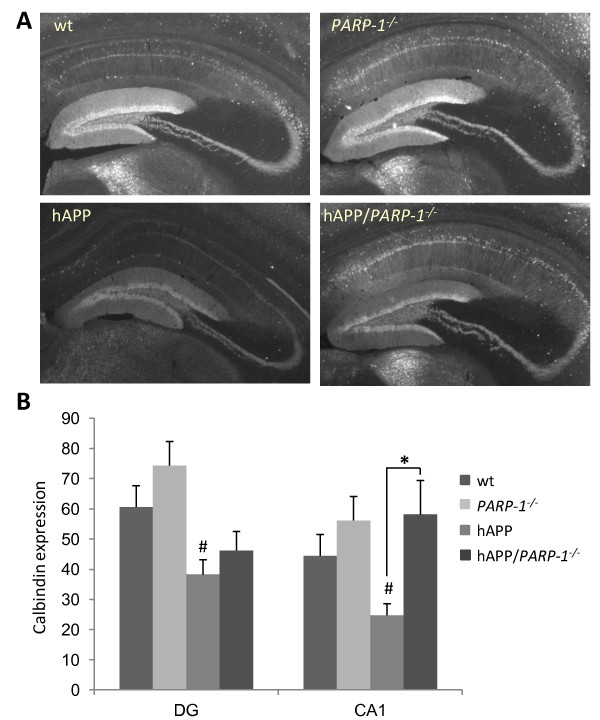
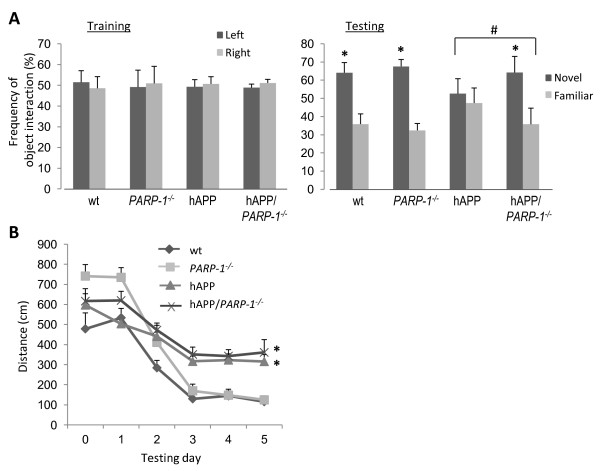
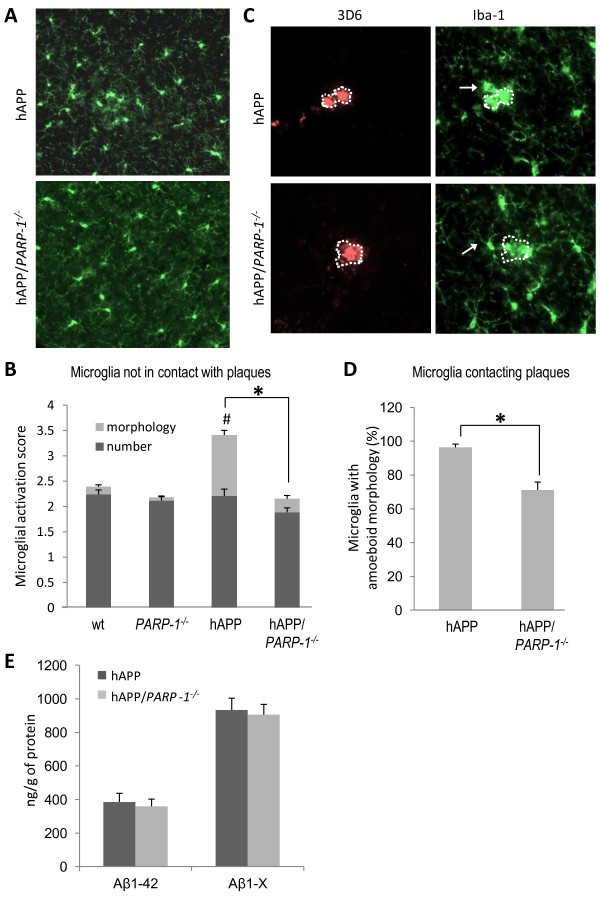
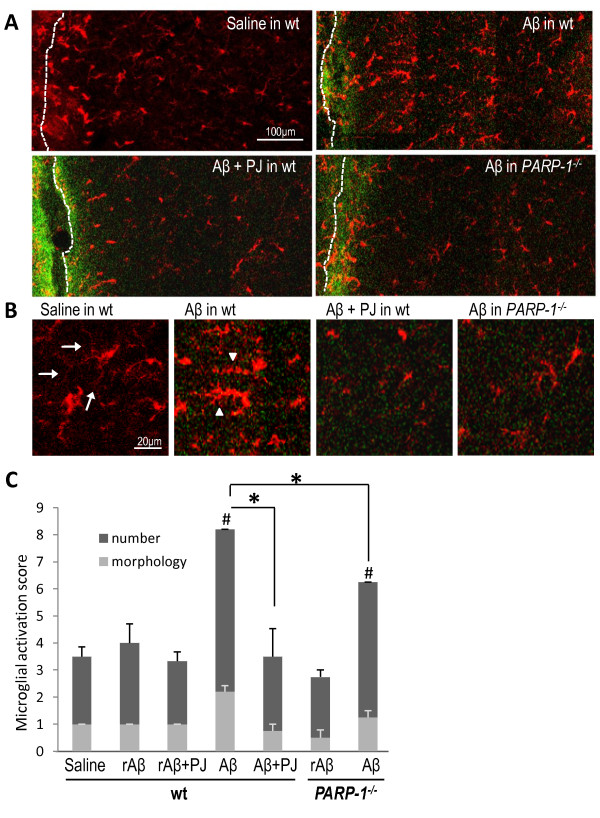
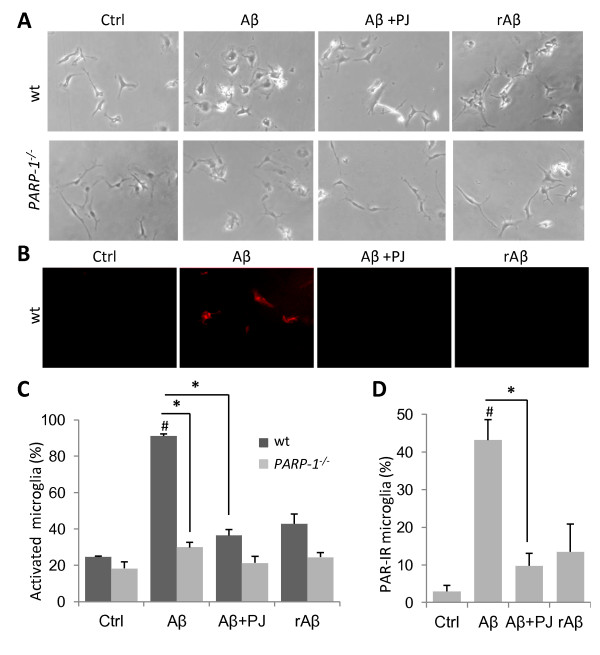
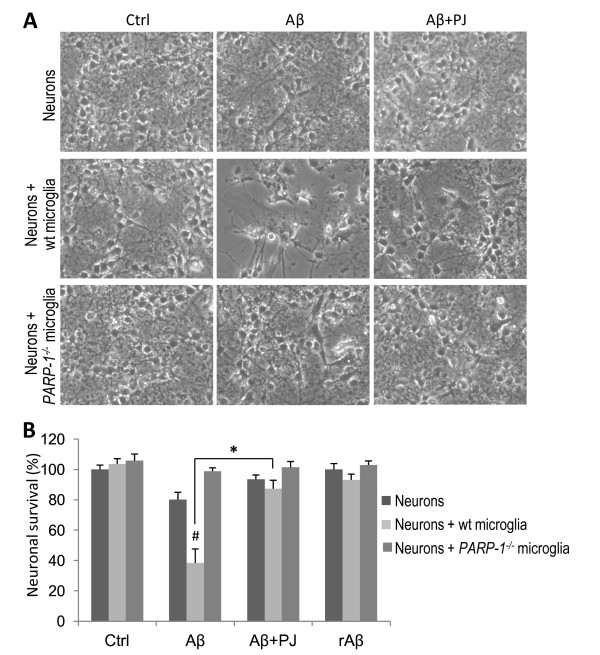
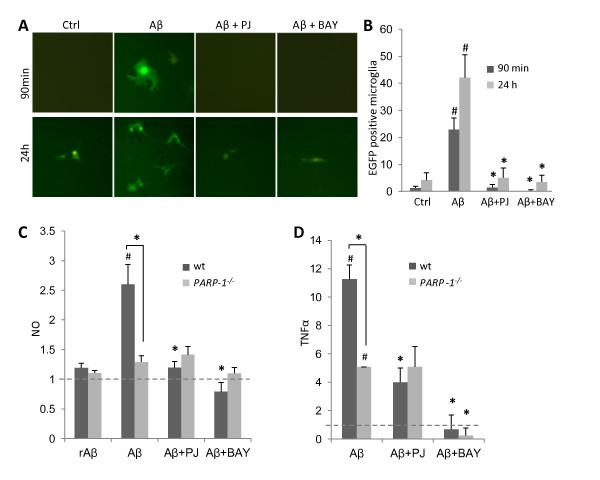
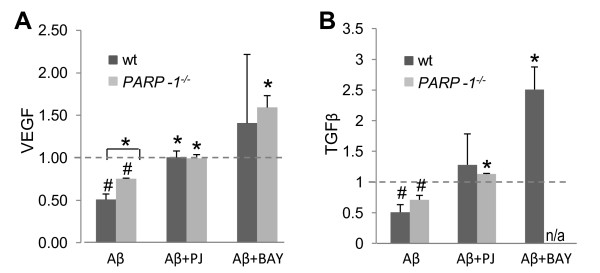
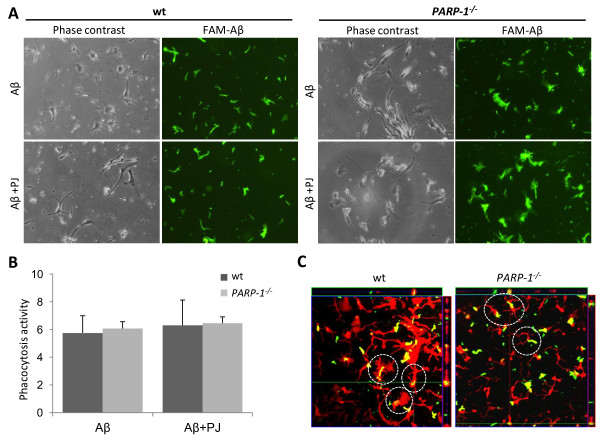
BACKGROUND: Amyloid β (Aβ) accumulates in Alzheimer's disease (AD) brain. Microglial activation also occurs in AD, and this inflammatory response may contribute to disease progression. Microglial activation can be induced by Aβ, but the mechanisms by which this occurs have not been defined. The nuclear enzyme poly(ADP-ribose) polymerase-1 (PARP-1) regulates microglial activation in response to several stimuli through its interactions with the transcription factor, NF-κB. The purpose of this study was to evaluate whether PARP-1 activation is involved in Aβ-induced microglial activation, and whether PARP-1 inhibition can modify microglial responses to Aβ. METHODS: hAPP(J20) mice, which accumulate Aβ with ageing, were crossed with PARP-1(-/-) mice to assess the effects of PARP-1 depletion on microglial activation, hippocampal synaptic integrity, and cognitive function. Aβ peptide was also injected into brain of wt and PARP-1(-/-) mice to directly determine the effects of PARP-1 on Aβ-induced microglial activation. The effect of PARP-1 on Aβ-induced microglial cytokine production and neurotoxicity was evaluated in primary microglia cultures and in microglia-neuron co-cultures, utilizing PARP-1(-/-) cells and a PARP-1 inhibitor. NF-κB activation was evaluated in microglia infected with a lentivirus reporter gene. RESULTS: The hAPP(J20) mice developed microglial activation, reduced hippocampal CA1 calbindin expression, and impaired novel object recognition by age 6 months. All of these features were attenuated in hAPP(J20)/PARP-1(-/-) mice. Similarly, Aβ(1-42) injected into mouse brain produced a robust microglial response in wild-type mice, and this was blocked in mice lacking PARP-1 expression or activity. Studies using microglial cultures showed that PARP-1 activity was required for Aβ-induced NF-κB activation, morphological transformation, NO release, TNFα release, and neurotoxicity. Conversely, PARP-1 inhibition increased release of the neurotrophic factors TGFβ and VEGF, and did not impair microglial phagocytosis of Aβ peptide. CONCLUSIONS: These results identify PARP-1 as a requisite and previously unrecognized factor in Aβ-induced microglial activation, and suggest that the effects of PARP-1 are mediated, at least in part, by its interactions with NF-κB. The suppression of Aβ-induced microglial activation and neurotoxicity by PARP-1 inhibition suggests this approach could be useful in AD and other disorders in which microglial neurotoxicity may contribute.
Overview
The claims and statistics of this paper haven’t been checked yet.
Run the check — free, no account needed. It reads the open-access text and checks the sources it cites.
Integrity signals
Registry
Cites
Statistics
Figures
Verification
Claims the paper makes
The claims and statistics of this paper haven’t been checked yet.
Run the check — free, no account needed. It reads the open-access text and checks the sources it cites.
Claims other papers make about this one
Each is checked against this paper’s own text: does it say what the citing paper says it does?
In the citing paper
“In vivo studies using various Alzheimer disease and Parkinson disease models have shown that loss of PARP1 protects from brain dysfunctions and cognitive decline170–174.”
From NAD+ metabolism and its roles in cellular processes during ageing (2021) · cites this paper as [170]
In the citing paper
“PARP1 activation is also associated with Alzheimer disease170,171 and Parkinson disease172,173 pathogenesis.”
From NAD+ metabolism and its roles in cellular processes during ageing (2021) · cites this paper as [170]
In the citing paper
“can mediate neuroinflammatory activity in AD (Kauppinen et al, 2011)”
From Mechanisms of DNA damage-mediated neurotoxicity in neurodegenerative disease (2022) · cites this paper as Kauppinen et al, 2011
Self-check
Percentages, sums and reported differences re-computed from the paper’s own numbers.
The self-check needs the paper’s full text.
Citations
Cites
Measurement of protein using bicinchoninic acid
Smith, P. K., Krohn, R. I., Hermanson, G. T., Mallia, A. K., Gartner, F. H., Provenzano, M. D., Fujimoto, E. K., Goeke, N. M., Olson, B. J., & Klenk, D. C. (1985) · Analytical Biochemistry · doi:10.1016/0003-2697(85)90442-7 · Cited by 18,482
The Amyloid Hypothesis of Alzheimer’s Disease: Progress and Problems on the Road to Therapeutics
Hardy, J., & Selkoe, D. J. (2002) · Science · doi:10.1126/science.1072994 · Cited by 13,864
Function and Activation of NF-kappaB in the Immune System
Baeuerle, P. A., & Henkel, T. (1994) · Annual Review of Immunology · doi:10.1146/annurev.iy.12.040194.001041 · Cited by 4,745
Inflammation and Alzheimer’s disease
Akiyama, H. (2000) · Neurobiology of Aging · doi:10.1016/s0197-4580(00)00124-x · Cited by 4,514
Microglia: a sensor for pathological events in the CNS
Kreutzberg, G. W. (1996) · Trends in Neurosciences · doi:10.1016/0166-2236(96)10049-7 · Cited by 4,396
NF-κB regulation in the immune system
Li, Q., & Verma, I. M. (2002) · Nature Reviews Immunology · doi:10.1038/nri910 · Cited by 4,007
Microglial physiology: unique stimuli, specialized responses
Ransohoff, R. M., & Perry, V. H. (2009) · Annual Review of Immunology · doi:10.1146/annurev.immunol.021908.132528 · Cited by 1,858
Mucke, L., Masliah, E., Yu, G.-Q., Mallory, M., Rockenstein, E. M., Tatsuno, G., Hu, K., Kholodenko, D., Johnson-Wood, K., & McConlogue, L. (2000) · The Journal of Neuroscience · doi:10.1523/jneurosci.20-11-04050.2000 · Cited by 1,856
Amyloid-β–induced neuronal dysfunction in Alzheimer's disease: from synapses toward neural networks
Palop, J. J., & Mucke, L. (2010) · Nature Neuroscience · doi:10.1038/nn.2583 · Cited by 1,651
Simard, A. R., Soulet, D., Gowing, G., Julien, J.-P., & Rivest, S. (2006) · Neuron · doi:10.1016/j.neuron.2006.01.022 · Cited by 1,265
Recognition memory and the medial temporal lobe: a new perspective
Squire, L. R., Wixted, J. T., & Clark, R. E. (2007) · Nature reviews. Neuroscience · doi:10.1038/nrn2154 · Cited by 1,059
Pierce, J. W., Schoenleber, R. W., Jesmok, G. J., Best, J. L., Moore, S. A., Collins, T., & Gerritsen, M. E. (1997) · Journal of Biological Chemistry · doi:10.1074/jbc.272.34.21096 · Cited by 1,044
Tikka, T., Fiebich, B. L., Goldsteins, G., Keinänen, R., & Koistinaho, J. (2001) · The Journal of Neuroscience · doi:10.1523/jneurosci.21-08-02580.2001 · Cited by 958
Microglial-produced nitric oxide and reactive nitrogen oxides mediate neuronal cell death
Boje, K. M., & Arora, P. K. (1992) · Brain Research · doi:10.1016/0006-8993(92)91004-x · Cited by 944
Microglia as neuroprotective, immunocompetent cells of the CNS
Streit, W. J. (2002) · Glia · doi:10.1002/glia.10154 · Cited by 919
Heterogeneity of Microglial Activation in the Innate Immune Response in the Brain
Colton, C. A. (2009) · Journal of Neuroimmune Pharmacology · doi:10.1007/s11481-009-9164-4 · Cited by 916
Mice lacking ADPRT and poly(ADP-ribosyl)ation develop normally but are susceptible to skin disease.Preprint
Wang, Z. Q., Auer, B., Stingl, L., Berghammer, H., Haidacher, D., Schweiger, M. R., & Wagner, E. F. (1995) · Genes & Development · doi:10.1101/gad.9.5.509 · Cited by 774
SIRT1 Protects against Microglia-dependent Amyloid-β Toxicity through Inhibiting NF-κB Signaling
Chen, J., Zhou, Y., Mueller-Steiner, S., Chen, L.-F., Kwon, H., Yi, S., Mucke, L., & Gan, L. (2005) · Journal of Biological Chemistry · doi:10.1074/jbc.m509329200 · Cited by 740
Self-citationCombs, C. K., Karlo, J. C., Kao, S.-C., & Landreth, G. E. (2001) · The Journal of Neuroscience · doi:10.1523/jneurosci.21-04-01179.2001 · Cited by 721
Elkabes, S., Dicicco-Bloom, E., & Black, I. (1996) · Journal of Neuroscience · doi:10.1523/jneurosci.16-08-02508.1996 · Cited by 697
TGF-β1 promotes microglial amyloid-β clearance and reduces plaque burden in transgenic mice
Wyss-Coray, T., Lin, C., Yan, F., Yu, G.-Q., Rohde, M., McConlogue, L., Masliah, E., & Mucke, L. (2001) · Nature Medicine · doi:10.1038/87945 · Cited by 587
Batchelor, P., Liberatore, G. T., Wong, J. Y. F., Porritt, M. J., Frerichs, F., Donnan, G. A., & Howells, D. W. (1999) · Journal of Neuroscience · doi:10.1523/jneurosci.19-05-01708.1999 · Cited by 576
Kraus, W. L., & Lis, J. T. (2003) · Cell · doi:10.1016/s0092-8674(03)00433-1 · Cited by 547
(1997) · doi:10.1073/pnas.94.4.1550 · Cited by 535
Guillemin, G. J., & Brew, B. J. (2003) · Journal of Leukocyte Biology · doi:10.1189/jlb.0303114 · Cited by 520
NSAIDs and Alzheimer disease: Epidemiological, animal model and clinical studies
McGeer, P. L., & McGeer, E. G. (2007) · Neurobiology of Aging · doi:10.1016/j.neurobiolaging.2006.03.013 · Cited by 498
The microglial "activation" continuum: from innate to adaptive responses
Town, T., Nikolic, V., & Tan, J. (2005) · Journal of Neuroinflammation · doi:10.1186/1742-2094-2-24 · Cited by 467
Different Contributions of the Hippocampus and Perirhinal Cortex to Recognition Memory
Wan, H., Aggleton, J. P., & Brown, M. W. (1999) · Journal of Neuroscience · doi:10.1523/jneurosci.19-03-01142.1999 · Cited by 449
Blocking TGF-β–Smad2/3 innate immune signaling mitigates Alzheimer-like pathology
Town, T., Laouar, Y., Pittenger, C., Mori, T., Szekely, C. A., Tan, J., Duman, R. S., & Flavell, R. A. (2008) · Nature Medicine · doi:10.1038/nm1781 · Cited by 422
Palop, J. J., Jones, B., Kekonius, L., Chin, J., Yu, G.-Q., Raber, J., Masliah, E., & Mucke, L. (2003) · Proceedings of the National Academy of Sciences · doi:10.1073/pnas.1133381100 · Cited by 402
Microglial Activation in Stroke: Therapeutic Targets
Yenari, M. A., Kauppinen, T. M., & Swanson, R. A. (2010) · Neurotherapeutics · doi:10.1016/j.nurt.2010.07.005 · Cited by 398
Self-citationCohen-Armon, M., Visochek, L., Rozensal, D., Kalal, A., Geistrikh, I., Klein, R., Bendetz-Nezer, S., Yao, Z., & Seger, R. (2007) · Molecular Cell · doi:10.1016/j.molcel.2006.12.012 · Cited by 329
The Enzymatic and DNA Binding Activity of PARP-1 Are Not Required for NF-κB Coactivator Function
Hassa, P. O., Covic, M., Hasan, S., Imhof, R., & Hottiger, M. O. (2001) · Journal of Biological Chemistry · doi:10.1074/jbc.m106528200 · Cited by 309
Choi, Y., Kim, H., Shin, K. Y., Kim, E., Kim, M., Kim, H.-S., Park, C. H., Jeong, Y. H., Yoo, J., Lee, J., et al. (2007) · Neuropsychopharmacology · doi:10.1038/sj.npp.1301377 · Cited by 296
Maezawa, I., Zimin, P. I., Wulff, H., & Jin, L. (2010) · Journal of Biological Chemistry · doi:10.1074/jbc.m110.135244 · Cited by 293
Ha, H. C., Hester, L. D., & Snyder, S. H. (2002) · Proceedings of the National Academy of Sciences · doi:10.1073/pnas.052712399 · Cited by 255
Floden, A. M., Li, S., & Combs, C. K. (2005) · Journal of Neuroscience · doi:10.1523/jneurosci.4998-04.2005 · Cited by 254
Increased poly(ADP-ribosyl)ation of nuclear proteins in Alzheimer's disease
Love, S., Barber, R., & Wilcock, G. K. (1999) · Brain · doi:10.1093/brain/122.2.247 · Cited by 254
Hassa, P. O., Buerki, C., Lombardi, C., Imhof, R., & Hottiger, M. O. (2003) · Journal of Biological Chemistry · doi:10.1074/jbc.m307957200 · Cited by 236
Minocycline inhibits poly(ADP-ribose) polymerase-1 at nanomolar concentrations
Alano, C. C., Kauppinen, T. M., Valls, A. V., & Swanson, R. A. (2006) · Proceedings of the National Academy of Sciences · doi:10.1073/pnas.0600554103 · Cited by 229
Self-citationMinocycline affects microglia activation, Aβ deposition, and behavior in APP‐tg mice
Seabrook, T. J., Jiang, L., Maier, M., & Lemere, C. A. (2006) · Glia · doi:10.1002/glia.20338 · Cited by 223
Chiarugi, A., & Moskowitz, M. A. (2003) · Journal of Neurochemistry · doi:10.1046/j.1471-4159.2003.01684.x · Cited by 216
Suh, S. W., Aoyama, K., Chen, Y., Garnier, P. E., Matsumori, Y., Gum, E. T., Liu, J., & Swanson, R. A. (2003) · Journal of Neuroscience · doi:10.1523/jneurosci.23-33-10681.2003 · Cited by 210
Self-citationThe glutamate transporters EAAT2 and EAAT3 mediate cysteine uptake in cortical neuron cultures
Chen, Y., & Swanson, R. A. (2003) · Journal of Neurochemistry · doi:10.1046/j.1471-4159.2003.01630.x · Cited by 194
Self-citationVascular endothelial growth factor in Alzheimer's disease and experimental cerebral ischemia
Kalaria, R. N., Cohen, D., Premkumar, D. R., Nag, S., LaManna, J. C., & Lust, W. D. (1998) · Molecular Brain Research · doi:10.1016/s0169-328x(98)00190-9 · Cited by 190
Kauppinen, T. M., & Swanson, R. A. (2005) · The Journal of Immunology · doi:10.4049/jimmunol.174.4.2288 · Cited by 181
Self-citationMartin, M. D. P. (2008) · Archives of Neurology · doi:10.1001/archneur.65.12.noc80051 · Cited by 181
Morgan, D., Gordon, M. N., Tan, J., Wilcock, D. M., & Rojiani, A. M. (2005) · Journal of Neuropathology & Experimental Neurology · doi:10.1097/01.jnen.0000178444.33972.e0 · Cited by 176
Regulation of microglial expression of integrins by poly(ADP-ribose) polymerase-1
Ullrich, O., Diestel, A., Eyüpoglu, I. Y., & Nitsch, R. (2001) · Nature Cell Biology · doi:10.1038/ncb1201-1035 · Cited by 175
Zinc Triggers Microglial Activation
Kauppinen, T. M., Higashi, Y., Suh, S. W., Escartin, C., Nagasawa, K., & Swanson, R. A. (2008) · The Journal of Neuroscience · doi:10.1523/jneurosci.1236-08.2008 · Cited by 174
Self-citationAlbasser, M. M., Poirier, G. L., & Aggleton, J. P. (2009) · European Journal of Neuroscience · doi:10.1111/j.1460-9568.2009.07042.x · Cited by 144
Chang, W.-J., & Álvarez-González, R. (2001) · Journal of Biological Chemistry · doi:10.1074/jbc.m104666200 · Cited by 137
Minocycline reduces the development of abnormal tau species in models of Alzheimer's disease
Noble, W., Garwood, C., Stephenson, J., Kinsey, A. M., Hanger, D., & Anderton, B. (2009) · The FASEB Journal · doi:10.1096/fj.08-113795 · Cited by 123
Ryu, J. K., Cho, T., Choi, H. B., Wang, Y. T., & McLarnon, J. G. (2009) · The Journal of Neuroscience · doi:10.1523/jneurosci.2888-08.2009 · Cited by 121
β-Amyloid Stimulates Murine Postnatal and Adult Microglia Cultures in a Unique Manner
Floden, A. M., & Combs, C. K. (2006) · The Journal of Neuroscience · doi:10.1523/jneurosci.4822-05.2006 · Cited by 118
Guthrie, K. M., Nguyen, T., & Gall, C. M. (1995) · The Journal of Comparative Neurology · doi:10.1002/cne.903520111 · Cited by 113
Nakajima, H., Nagaso, H., Kakui, N., Ishikawa, M., Hiranuma, T., & Hoshiko, S. (2004) · Journal of Biological Chemistry · doi:10.1074/jbc.m407923200 · Cited by 97
Zerfaoui, M., Suzuki, Y., Naura, A. S., Hans, C. P., Nichols, C. D., & Boulares, A. H. (2007) · Cellular Signalling · doi:10.1016/j.cellsig.2007.10.007 · Cited by 94
TGF-β Pathway as a Potential Target in Neurodegeneration and Alzheimers
Wyss-Coray, T. (2006) · Current Alzheimer Research · doi:10.2174/156720506777632916 · Cited by 85
Kauppinen, T. M., Suh, S. W., Berman, A., Hamby, A. M., & Swanson, R. A. (2009) · Journal of Cerebral Blood Flow & Metabolism · doi:10.1038/jcbfm.2009.9 · Cited by 84
Self-citationRegulation of NFAT by poly(ADP-ribose) polymerase activity in T cells
Valdor, R., Schreiber, V., Saenz, L., Martı́nez, T., Muñoz-Suano, A., Dominguez‐Villar, M., Ramı́rez, P., Parrilla, P., Aguado, E., & Garcia-Cozar, F. J. (2008) · Molecular Immunology · doi:10.1016/j.molimm.2007.10.044 · Cited by 78
Malm, T., Magga, J. M., Kuh, G. F., Vatanen, T., Koistinaho, M., & Koıstınaho, J. (2008) · Glia · doi:10.1002/glia.20726 · Cited by 56
Microglial activation depends on beta‐amyloid conformation: role of the formylpeptide receptor 2
Heurtaux, T., Michelucci, A., Losciuto, S., Gallotti, C., Felten, P., Dorban, G., Grandbarbe, L., Morga, E., & Heuschling, P. (2010) · Journal of Neurochemistry · doi:10.1111/j.1471-4159.2010.06783.x · Cited by 55
Kiefer, R., Gold, R., Gehrmann, J., Lindholm, D., Wekerle, H., & Kreutzberg, G. W. (1993) · Journal of Neuroscience Research · doi:10.1002/jnr.490360405 · Cited by 55
Poly (ADP‐ribose) polymerases (PARPs) 1‐3 regulate astrocyte activation
Phulwani, N. K., & Kielian, T. (2008) · Journal of Neurochemistry · doi:10.1111/j.1471-4159.2008.05403.x · Cited by 54
Minocycline does not affect amyloid β phagocytosis by human microglial cells
Familian, A., Eikelenboom, P., & Veerhuis, R. (2007) · Neuroscience Letters · doi:10.1016/j.neulet.2007.01.052 · Cited by 53
Boulares, H. A., Suzuki, Y., Zerfaoui, M., Naura, A. S., Hans, C. P., & Nichols, C. B. (2007) · The Journal of Immunology · Cited by 18
Induction of angiogenesis by platelet-activating factor in the rat striatum
Tran, K., Ryu, J., & McLarnon, J. (2005) · NeuroReport · doi:10.1097/01.wnr.0000179073.24412.7b · Cited by 10
Cited by
Sorted by citations
NAD+ metabolism and its roles in cellular processes during ageing
Covarrubias, A. J., Perrone, R., Grozio, A., & Verdin, E. (2021) · Nature Reviews Molecular Cell Biology · doi:10.1038/s41580-020-00313-x · Cited by 1,617
Kawabori, M., Kacimi, R., Kauppinen, T., Calosing, C., Kim, J. Y., Hsieh, C. L., Nakamura, M. C., & Yenari, M. A. (2015) · The Journal of Neuroscience · doi:10.1523/jneurosci.2620-14.2015 · Cited by 375
Self-citationOxidative and nitrative stress in neurodegeneration
Cobb, C. A., & Cole, M. P. (2015) · Neurobiology of Disease · doi:10.1016/j.nbd.2015.04.020 · Cited by 306
Flores, J., Noël, A., Foveau, B., Lynham, J., Lecrux, C., & LeBlanc, A. C. (2018) · Nature Communications · doi:10.1038/s41467-018-06449-x · Cited by 288
Neuronal cell death mechanisms in Alzheimer’s disease: An insight
Goel, P., Chakrabarti, S., Goel, K., Bhutani, K., Chopra, T., & Bali, S. (2022) · Frontiers in Molecular Neuroscience · doi:10.3389/fnmol.2022.937133 · Cited by 248
Metadata
- Authors
- Kauppinen, T. M., Suh, S., Higashi, Y., Berman, A. E., Escartin, C., Won, S., Wang, C., Cho, S.-H., Gan, L., & Swanson, R. A.
- Affiliations
- San Francisco VA Medical Center (US)
- University of California, San Francisco (US)
- Corresponding author
- Kauppinen, Tiina M
- ORCID
- Venue
- Journal of Neuroinflammation
- Published
- 2011
- Volume
- 8
- Issue
- 1
- Pages
- 152
- ISSN
- 1742-2094 (ISSN-L)
- PMC
- PMC3247192
- OpenAlex
- W2147930131
- Cited by
- 112
- References
- 70
- Citations by year
- 2026: 7 · 2025: 6 · 2024: 10 · 2023: 11 · 2022: 9 · 2021: 13 · 2020: 8 · 2019: 3 · 2018: 9 · 2017: 8 · 2016: 5 · 2015: 6 · 2014: 6 · 2013: 6 · 2012: 4
- FWCI
- 3.01
- Type
- journal article
- Language
- en
- Open access
- gold
- doi.org
- Licence
- cc-by
- Locations
- Journal of Neuroinflammation (publishedVersion, cc-by)
- Europe PMC (PubMed Central) (publishedVersion, cc-by)
- PubMed Central (publishedVersion, cc-by)
- PubMed (publishedVersion)
- HAL (submittedVersion)
- DOAJ (DOAJ: Directory of Open Access Journals) (submittedVersion)
- Funders
- U.S. Department of Veterans Affairs
- American Heart Association (SDG 0835222N)
- National Institutes of Health
- University of California, San Francisco
- National Institute on Aging (R01AG030207, AG030207-A2, R21AG029483, AG029483)
- National Institute of Neurological Disorders and Stroke (NS 041421, R01NS041421)
- Topics
- Life Sciences › Neuroscience › Neurology › Neuroinflammation and Neurodegeneration Mechanisms
- Life Sciences › Neuroscience › Cellular and Molecular Neuroscience › Alzheimer's disease research and treatments
- Life Sciences › Neuroscience › Neurology › Neurological Disease Mechanisms and Treatments
- Keywords
- PARP1, amyloid-beta, microglial activation, Alzheimer's disease, NF-κB, PARP1 inhibition, neuroinflammation, neurotoxicity, cognitive impairment, TNF-α, nitric oxide, TGF-beta, vascular endothelial growth factor, microglia-neuron co-culture
- MeSH terms
- Poly (ADP-Ribose) Polymerase-1, Animals, Behavior, Animal, Cells, Cultured, Hippocampus, Memory, Mice, Inbred C57BL, Neurons, Phagocytosis, Poly(ADP-ribose) Polymerases, Cytokines, Amyloid beta-Peptides, NF-kappa B, Microglia, Mice, Knockout, Coculture Techniques, Mice, Calbindins, S100 Calcium Binding Protein G
About these checks
Registry, retraction, Cites and statistics results are computed, not judged, with one exception: a printed reference that no index lists is read once by a model before it counts as a citation error. Claims are extracted by a model and kept only when their quote appears verbatim in the text; each cited source is then checked, with a model’s help, for whether it says what the claim relies on. Those verdicts can be wrong — read the claim’s quote and the cited source before relying on one.
Statistics and arithmetic are recomputed, not judged.
Confidence bands are shown only for fields calibrated on our annotated test set. None is calibrated yet, so no band is shown.
What counts as a claim ›How we measure confidence ›How we check this ›
Are you an author, or do you see a problem with this page? Request a review
